Harry Bingham's Blog
September 27, 2024
The House at the End of the World – Cover decision

Download "Lev in Glasgow" for FREE
For a limited period you can download “Lev in Glasgow” for free.
Find out more#top .flex_column.av-wj4ir3-88a95155c7288df24955f61e7406256a{margin-top:0px;margin-bottom:0px;}.flex_column.av-wj4ir3-88a95155c7288df24955f61e7406256a{border-radius:0px 0px 0px 0px;padding:0px 0px 0px 0px;}.responsive #top #wrap_all .flex_column.av-wj4ir3-88a95155c7288df24955f61e7406256a{margin-top:0px;margin-bottom:0px;}#top .av_textblock_section.av-30jrzj-363aacce6e829d937c3d6377a0beb516 .avia_textblock{font-size:27px;}The House at the End of the World: Cover Decision#top .hr.av-sith5b-06bb440efde7275c77d0074ca8effad6{margin-top:0px;margin-bottom:40px;}.hr.av-sith5b-06bb440efde7275c77d0074ca8effad6 .hr-inner{width:20%;max-width:45%;}
#top .av-special-heading.av-rs4edr-8d359dad0588c38b46c8ae580f613a6b{padding-bottom:10px;}body .av-special-heading.av-rs4edr-8d359dad0588c38b46c8ae580f613a6b .av-special-heading-tag .heading-char{font-size:25px;}.av-special-heading.av-rs4edr-8d359dad0588c38b46c8ae580f613a6b .av-subheading{font-size:15px;}COVER REVEAL: HOW I CHOSE THE COVER FOR FG#7
Here’s how the books look in North America …


Here’s how they look in the UK …


#top .hr.av-if3rov-17b6bbdba8b6cc4bc28b6210a6b387c5{margin-top:40px;margin-bottom:40px;}.hr.av-if3rov-17b6bbdba8b6cc4bc28b6210a6b387c5 .hr-inner{width:20%;max-width:45%;}
#top .av-special-heading.av-i160f3-c578981d0d30602a462a0cdecd81d3b1{padding-bottom:10px;}body .av-special-heading.av-i160f3-c578981d0d30602a462a0cdecd81d3b1 .av-special-heading-tag .heading-char{font-size:25px;}.av-special-heading.av-i160f3-c578981d0d30602a462a0cdecd81d3b1 .av-subheading{font-size:15px;}HERE’S WHAT I WANTED TO ACHIEVE …
The elevator pitch for this book is simply this:
 Homicide detective Used to think she was dead (Cotards) Murder investigation Secure psychiatric hospital 50 special forces veterans as inmates
The mood is dark, intelligent and although there will be violence (and swearing), the violence will be dark rather than gory.
The psychiatric hospital is on the extreme west coast of Wales, so the obvious design choices have to do with cliffs, waves, and buildings glimmering above. Obviously, there’s a strong female central character, so although most of my books haven’t featured a figure, the design could definitely accommodate one.
I asked my designer to come up with some ideas based on this general guidance. I sell more in the US than I do in the UK, so we’ll be following the US look, not the UK one. At that point, it was over to him to do his stuff …
#top .hr.av-e65xtb-559e221ee6050bf6b40820358d85a388{margin-top:40px;margin-bottom:40px;}.hr.av-e65xtb-559e221ee6050bf6b40820358d85a388 .hr-inner{width:20%;max-width:45%;}#top .av-special-heading.av-4n7hr-f5135eba287215016c5f64fe85bb6d90{padding-bottom:10px;}body .av-special-heading.av-4n7hr-f5135eba287215016c5f64fe85bb6d90 .av-special-heading-tag .heading-char{font-size:25px;}.av-special-heading.av-4n7hr-f5135eba287215016c5f64fe85bb6d90 .av-subheading{font-size:15px;}WHAT MY DESIGNER CAME BACK WITHMy long-time, incredibly talented designer is Arnie (who, by the way, is mostly a web-designer. He only got into cover design because of me and, though it’s quite a specialist field, still produces covers that glitter with conviction and intelligence. I love them.)
Here’s our top choice of image – great seascape, great building, great sense of adventure, nice use of character – and of course the typography and so on consistent with the very strong look so far in the series.
.avia-image-container.av-8yalvj-0d9a4afc96270ab4423fa3ab0eec8033 img.avia_image{box-shadow:none;}.avia-image-container.av-8yalvj-0d9a4afc96270ab4423fa3ab0eec8033 .av-image-caption-overlay-center{color:#ffffff;}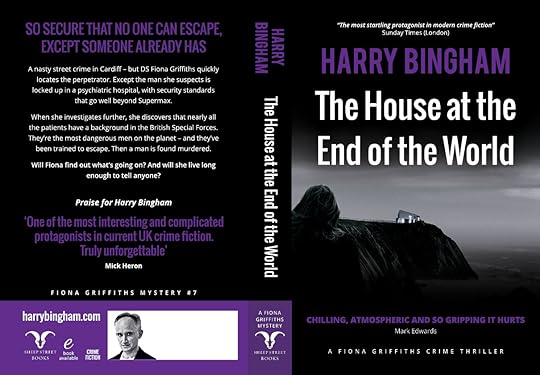 #top .hr.av-854snz-2734d7457b63fd08461cbc5cd6f01771{margin-top:40px;margin-bottom:40px;}.hr.av-854snz-2734d7457b63fd08461cbc5cd6f01771 .hr-inner{width:20%;max-width:45%;}#top .av-special-heading.av-5v9ozj-3bb4af3c0d564978d1c304bf25de8e49{padding-bottom:10px;}body .av-special-heading.av-5v9ozj-3bb4af3c0d564978d1c304bf25de8e49 .av-special-heading-tag .heading-char{font-size:25px;}.av-special-heading.av-5v9ozj-3bb4af3c0d564978d1c304bf25de8e49 .av-subheading{font-size:15px;}DISCARDED MOCK-UPS
Here are a couple of mock-ups discarded through the design process.
Do you approve of our final choice? Love it? Hate it? Or what. Let me know.


May 14, 2022
My experience with Blick Rothenberg
I just wanted to put up a short note that talked a little about my experience with Blick Rothenberg, the London accountancy firm.
They acted on behalf of my company, Jericho Writers Ltd, from 2019-2022. Our partner there charged £400 + VAT per hour. The firm is one of the largest accountancy practices in the UK. It had to be a kosher outfit, right?
Well – you decide. In April of 2020, we hired a new bookkeeper. He was well-qualified and seemed smart … but not much time had gone by before my CEO and I realised we lacked confidence in the numbers being generated. So we asked Blick Rothenberg for help. Specifically we told them that we lacked “confidence” in the data and asked them for “proper scrutiny”.
Which makes sense, right? You want accountancy help. You ask an accountant. We didn’t think we were being dumb.
(Oh, and if you want all this story in video form, then go watch “Blick Rothenberg – The Truth“. That’s me, telling it like it is.)
And – good news, bad news.
Good news: Blick Rothenberg made some technical corrections to the numbers. They worked closely with our bookkeeper. They said he was intelligent, focused and hard-working – their words.
The bad news? Well, it turned out that a massive amount of money had been stolen. (Not by Blicks; I can’t reveal the identity of the perpetrator because there’s a criminal investigation underway.) In some of the months where Blick Rothenberg had supposedly been scrutinising the data, well over 20% of the company’s revenues had been stolen. Because Blicks told us everything was fine, we didn’t investigate further and the perpetrator stole a further huge sum from us – a huge six figure amount.
When all this came to light, we told Blicks. They messed up and messed up badly. They’d want to put things right, no?
Well, it turned out that, no, they had no intention whatsoever of helping. They told us that they’d done nothing wrong, and offered us precisely £0.00 by way of financial compensation.
We said, OK, well, could we maybe resolve the dispute via arbitration, a far quicker and cheaper alternative to court? They said no, without really giving a meaningful reason. Since it would cost £125,000 to launch a lawsuit, and since we’d need about the same again to pay the other side’s costs, and since we don’t have that kind of money because some idiot stole it, that leaves us with no recourse at all.
Except to write posts like this, and make videos like the one above, and hope that public exposure / pressure tells in the end. Go watch that video and make my day. Thanks for reading.
June 19, 2017
“Ydy dy dad di yn dy dŷ du di?” A short guide to Welsh pronunciation

The way it used to be – how Britain looked in AD 400
As you’ll know if you’ve read The Deepest Grave (US link here, UK link here), the Welsh people are Celts – the race that once populated all the isles of Britain and Ireland.
When the Romans ruled in Britain, from 43 AD to 410 AD, the people under their jurisdiction were Celts, and those people spoke a mixture of languages that all shared a family resemblance to modern Welsh. (Gaelic, Cornish and Breton are all in the same fine family.)
Then the Romans left. The old order started to collapse. One Celtic king had the bright idea of bringing some German/Danish mercenaries over to help with incursions from some annoying tribes. And . . . whoops! Those mercenaries (Angles, Jutes and Saxons) took a look at their new home and decided they’d rather like to have it.
What happened next isn’t totally clear. Did the Angles/Jutes/Saxons simply slaughter and displace the Celts? or was the process more one of peaceful intermarriage, trade and assimilation? We don’t know.
In the British Dark Ages, not very much was written down and, what was written down, hasn’t mostly survived the fourteen or fifteen centuries to the present day. Did Arthur fight the invading Saxons and win a glorious victory at Mount Badon? We don’t know. I’d bet probably yes, but I wouldn’t bet very much.
About the Welsh language

A dolmen: They didn’t have these in Jutland.
What we do know is that by the time the dust settled – by, let’s say, the ninth century AD – Celtic speakers had been pushed into the far west and north of the country (Cornwall, Wales and Scotland, to be a little anachronistic about it). That left the Anglo-Saxons in charge of modern-day England . . . and indeed, the Angles, Saxons and Jutes started calling themselves Anglii, or English, to celebrate. (The Scots and Welsh, to this day, call them Saxons – Sais or Sassenach.)
The really weird thing about all this?
It’s that English has almost no traces of Celtic in it. All those centuries of slaughter / marriage / displacement and whatever else, made almost no mark on the English tongue. So there’s a small handful of Celtic words – like dolmen or loch – that still exist in English, but only really because they refer to geographical features that the Angles and Saxons didn’t have back home. Mostly though, English just bears no trace of the languages it shoved aside.
That’s weird, but it also helps explain why you have difficulty in pronouncing Welsh (assuming you aren’t Welsh, I mean.)
The simple fact is that your many-times-great English grandpas and grandmas didn’t bother with the exercise themselves. Their laziness is your impediment. If even a few hundred Celtic words continued to exist in English, you’d have a head start – but they don’t. Sorry!
How to pronounce Welsh consonants (the very, very short guide)
OK. So we start with some good news. Most consonants in Welsh sound exactly like their English counterparts.
B is a B.
C is a (hard) C, as in cat.
D – if there’s just one of them – is just a straightforward D.
As a matter of fact, in many ways, and because it’s much more consistent, Welsh is a rather easier language to pronounce than English. So unlike in English:
C is always hard, never soft (like carpet, not ice).
S is always soft (as in soft), never hard as in taser.
G is always hard as in goose, never soft as in gentle.
Easy right?
Only then it starts getting a little more tricksy.
The Welsh F denotes the English V of violet. So, in fact, English violet comes into Welsh as fioled.
Meanwhile, the Welsh FF denotes the English F sound. And that’s easy enough with a word like Cardiff, but looks a little odd with place names like Ffynnon Gynydd, a placename (meaning ‘holy well’) not far from where I grew up and where my mother still lives.

I climbed this mountain when I was three, so to my family this is always “Harry’s mountain”. In reality, it’s Mynydd Troed, with that lovely soft “th” sound at the end of Mynydd.
Another real curiosity to anglophone eyes is the Welsh DD, which equates to the English TH. Only – did you know? – English actually has two TH sounds, not one.
There’s the soft TH of think, a sound which Welsh handles with a simple TH. But then there’s the hard TH of them or there, and that becomes a DD in Welsh. So that Ffynnon Gynydd placename starts with a soft F sound and ends with a a soft TH one. Beautiful, no?
And then there are some consonants in Welsh which don’t really have any proper English equivalents.
The LL sound is kind of an HL one. So put the tip of your tongue on the roof of your mouth as though you were going to say “L” . . . but then try saying “H” instead. And then, as you say “H”, let that sound segue swiftly into an L. Do that, and you’re golden. My mother lives in a village called Llyswen, so you can practice on that.
On the letter R, you just need to make sure you always pronounce it, and always give it a bit of a roll. So English speakers (not Scots ones) are happy to leave the Rs in the darn barn more or less silent. You want to pronounce that R and give it some good Celtic wellie to get it moving nicely. (you can practice on bardd – meaning poet – to get you practised.)
Mostly though, your eye is more likely to be caught by the Welsh RH, as in Rhayader – a place that Fiona fans know as being a very bad place from which to be abducted. (See This Thing of Darkness; US link here, UK one here.) The Welsh RH is an aspirated R, so you need to roll that R, but aspirate it at the same time, as though you’re saying an H over the top of the R. Good luck with that, chum.
How to pronounce Welsh vowels
You know what? You really don’t want to know this.
It’s not even that the vowels themselves are so hard, it’s more that there’s a whole host of rules about when a particular vowel is long or short . . . and then some of the vowels (y, w) are tricksy, and then there are the dipthongs, and then again things can change according to where in the word you encounter them.
So.
For a supremely short and somewhat erratic guide, you can proceed as follows:
Short vowels:
a – Like a in tap
e – Like e in let
i – Like i in pit
o – Like o in pot
u – Same is i; it’s like the i in pit.
w – As in book.
y – Like uh in above (this is the “schwa”, which is actually very common in English – think the e in label.)
Long vowels:
a – Like a in father.
e – Like ae in aeroplane, but don’t let any “R” sound in there
i – Like the i in . . . well, this is the Fiona Griffiths website, right, so it’s got to be the i in police
o – Like aw in awkward.
w – Like oo in pool.
u and y – same as i.
Some Welsh tongue twisters
You’ve got everything so far, right? You’re feeling confident?
Good. In that case, you’re ready to crack a tooth on one of these. They’re taken from Omniglot and where you see a link, you can click on it to get an audio version of the bit of text in question.

Cold is the snow . . .
Oer yw eira ar Eryri.
Cold is the snow on Snowdon.
Caseg winau, coesau gwynion,
Croenen denau, carnau duon;
Carnau duon, croenen denau,
Coesau gwynion caseg winau.
Bay mare, white legs,
Scraggy skin, black hooves;
Black hooves, scraggy skin,
White legs, bay mare.
Chwaraeasoch chwe chŵn chwaraegar chwe chwibanau chwedlonol i chdi.
Six playful dogs played six fabulous whistles to you.
Magwyd Magi Madog mewn ffedog ond methwyd magu mab Magi Madog yn yr un ffedog ag y magwyd Magi Madog.
Magi Madog was brought up in an apron, but Magi Madog’s son could not be brought up in the same apron in which Magi Madog was brought up.
Ydy dy dei du di yn dy dŷ du di neu ydy dy dad di yn dy dŷ du di?
Is you black tie in your black house or is your dad in your black house?
Rowliodd lori Lowri lawr y lôn.
Lowri’s lorry rolled down the lane.
Mae Llewellyn y llyfrgellydd o Lanelli wedi llyfu llawer o lyfaint.
Llewellyn, the librarian from Llanelli, licked many toads.
Some examples of spoken Welsh
Oh, and if you want to hear Welsh being spoken, then here’s Ioan Gruffudd calling for more powers for the Welsh Assembly:
And here is actor, Rhys Ifans, speaking about Dylan Thomas, which is about as Welsh as it is humanly possible to get:
January 26, 2017
Get The Night Beat – FREE
 Her first night on patrol
Have you ever wondered how it all started for FIona?
What was it like for her – a young uniformed officer witnessing the troubled, late-night streets of Cardiff for the first time in her career?
Did she relish the experience? What did others make of her? And what happened when – for the first time in her police career – she saw violence, dealt with bloodshed?
This story tells you all. It’s FREE.
You can get it by clicking the book cover, or by going to this group giveaway page. You can get THE NIGHT BEAT direct from that page. You can also get, for free, an intriguing selection of other work from a wide range of other crime / thriller writers.
So go here. Get THE NIGHT BEAT. Get whatever other amazing work takes your fancy. And don’t forget to let me know what you think. I’m genuinely keen to find out…
FREE download of “The Night Beat”
Get your copy of my new story “The Night Beat” absolutley FREE
Everything comes to you via the security of Instafreebie
Download here
Share this entryShare on FacebookShare on TwitterShare on Google+Share on PinterestShare on LinkedinShare on VkShare on RedditShare by Mail
June 26, 2016
Interview with Fiona

The following transcript records a short interview between Harry Bingham, an author, and Fiona Griffiths, a young detective with the South Wales Police.
Fiona Griffiths is – allegedly – fictional and exists (again, according to the allegations) only in the pages of Harry’s books. Today they meet face to face for only the second time, this time in a central London coffee shop. Harry’s literary agent is sitting quietly in the corner keeping an eye on proceedings.
Harry Bingham: Hello. Lovely to see you again.
He rises to kiss her. But she avoids the kiss. Just sits abruptly.
HB: Can I get you anything?
Fiona Griffiths: (shrugs, blinks, waves her hands.)
HB: Don’t tell me. That’s Fiona-speak for ‘I’d love a peppermint tea, please.’
FG: You’re ‘my author’, right?
HB: No. I’m your author. No inverted commas. I. Am. Your. Author.
FG: Fine. So let’s go with that. Let’s just say you’re my no-inverted-commas author. In which case, I’d presume you know that I don’t like coffee. That I don’t drink any kind of caffeine. And that my hot beverage of choice is peppermint tea. So why ask?
HB: (Snappishly) Just there’s a thing called politeness, and . . .
Agent flashes HB a warning look and HB trails off. The agent goes to get the drinks. HB tries small talk, but FG makes it very hard going. The agent brings the drinks and goes back to his corner.
HB: You know why we’re here.
FG: You’ve got a book out.
HB: Yes.
FG: One that exploits my personal story for your commercial gain.
HB: OK. Don’t want to bang on about this. But I am your author.
FG: So – what? That means I have no will of my own, does it? In which case, I have to say it sounds like a pretty terrible book.
HB: It’s not a terrible book. Look, you’re a remarkable woman. In the course of your investigation, you experienced – and you achieved – some remarkable things.
FG: I’m a detective, yes? I did my job. I was called to a crime scene. I found the body of a young woman –
HB: In a country churchyard. At midnight. And the corpse was wearing a thin white dress on a wild October night.
FG: That is an accurate, if limp, summary of the facts, as they intially presented.
HB: You investigated further –
FG: Because it’s my job –
HB: And you discovered that the woman died as a result of natural causes. Fibrotic lungs and some kind of heart attack.
FG: Yes, and then I followed a clue – a barley seed – that led me to the Monastery of St. David at Llanglydwen. I also discovered that a girl, a teenager, had disappeared from the same valley some eight years before. Although she was presumed dead, no body was ever found.
HB: Which is a good dramatic set up, right? You find a corpse without a crime and, eight years earlier, in the same place, there was a crime without a corpse?
FG: So you’re praising yourself now? Telling me you’ve created an amazing plot.
HB: Look, I think the set-up is pretty good, if you really want to know. But I’m just trying to do my job. I’ve got a book out. And it’s not enough writing the damn thing, I’ve got publishers who want me to help market it. They want you to help market it.
FG: Me?
HB: Yes.
FG I’m a detective, remember? A detective, not some kind of marketing person. What do you want me to do? Wear a short skirt and a satin sash and stand in the centre of Cardiff, handing out samplers and shouting, ‘please buy that man’s book’?
HB: Well, you know what? That might actually help a bit. And I’m not that man. I’m your author.
FG: My author, right. So you claim that this is your book? Your story.
HB: I don’t just claim it, Fiona. It’s my damn name on the cover.
FG: And mine.
HB: Right, and yours, but –
FG: But you want to tell me that you’re my author. And that it’s your book. And your story.
HB: Yes.
FG: In which case – you sent me there.
HB: What? To the monastery?
FG: There, yes. But I meant up that hill. To that little pool which never emptied, no matter how much you drained it. And it was you who sent me into that tunnel. That cave.
HB: (Gently) Look, I know. I know that was hard.
FG: And I did it. I entered that cave, because it was my job and my duty to do so.
HB: (Still gently) Your job and your duty, yes. But perhaps it was also your compulsion. Your obsession. Because I’ve never known you let an investigation drop.
FG: Yes. My obsession too, I know that. But it was frightening in there. Very frightening. And when the collapse happened, I didn’t know if . . .
HB: I know.
FG: And that wasn’t even the worst. The worst was in Llanglydwen later. When the walls started rising around me and I saw that ring of faces and I thought . . .
HB: I know.
FG: And I do all that for you. I go to those places and I do what I have to do and I solve the case and I nail the bad guys. But oh no. That’s never enough, is it? You want me to sell your damn books. Books that I never even wanted you to write.
HB: You do know I would never abandon you? I take you to some scary places, I know that, but I have always got you out. I will always look after you.
FG: I have shotgun pellets in my leg. Little embedded pellets that I’ll have in me for ever. That’s what looking after me involves, does it? That’s your version of nice?
HB: Fiona, I . . .
FG: OK. OK. (She stands abruptly. She hasn’t touched her tea.) Please buy this man’s book. (To the agent) What’s it called?
Agent: It’s called The Dead House. It’s available in all good bookshops and, I hope, plenty of bad ones too.
FG: Right. So: please buy this man’s book. It’s called The Dead House. It’s got corpses and it’s got me and it’s got some of the scariest things I’ve ever been involved with. And if you’re worried that this whole thing might actually be a really crappy way to treat somebody, you don’t have to worry because I’m just a fictional fucking character and nobody actually has to give a damn.
(Long, long pause. Her eyes shine as though close to tears.)
FG: So. We’re done?
HB: We’re done. Thank you.
FG leaves as abruptly and awkwardly as she arrived.
HB: (In a whisper) And sorry, Fiona. I’m really sorry.
The Dead House is available:
In the United States here
In the United Kingdom here
In Canada here
And a whole lot of other places too: please consult your local retailers.
April 12, 2015
This Thing of Darkness - cover reveal
 Folks
FolksYou've been extraordinarily generous in your comments about Strange Death. My personal favourites:
"She is similar to Lisbeth Salander, an intelligent but profoundly damaged young woman, but Fiona is less hostile and more curious, sort of a good guy sociopath." -- Audrey, Amazon.com [The best reviews illuminate something for the writer, and this one did. "less hostile and more curious ... a good guy sociopath" - that's acute, that is.]
"DON'T read The Strange Death if you have a weak heart, unless you are bent on suicide by thriller." Peter J Earle, Amazon.com [OK, that's not particularly illuminating, but it IS funny. I wish I'd written that . . . only not about my own book, obviously.]
"Fiona, who has only cried once in her adult life, is portrayed with great psychological depth without being dark. Even though Fiona battles with her identity and borderline psychosis, I never found her depressing. She is a strong woman. A survivor ... What I found particularly clever is the way that, at times, she shifts in and out of referring to herself in the third person, showing confusion rather than describing the fog. In fact, as much as this is a story of the search for a criminal mastermind, it’s a story of Fiona’s search for her identity."-- Loretta Milan, from Literarylightbox.com [I love that, about the book being a search for F's identity, because that's totally true. If you read that about a book, of course, you'd think it was deadly dull, but with Fiona around - I hope - things are unlikely to stay dull for long!]
And in amongst the nice comments - just two things I wanted to pick up on:
1) A fair few of you have been upset by The Thing that happens at the end of the book. You know. With Fiona and that guy. The one you wanted her to . . . But rest assured, I don't want Fiona to be unhappy and alone for the rest of her fictional life. It's just that (sorry!) I have to treat you like four-year-olds with sugar cravings. You want all the good things now and yes, yes, you can have them EVENTUALLY. But you won't enjoy it as much if you aren't made to wait. And, no, I'm not going to tell you how that particular storyline pans out.
2) You want me to write faster. Hey - I'm trying, I'm trying. Truth is, it does take at least a year to write something half-decent (and I do aim for more than half). But because there was a long pause between LOVE STORY and STRANGE DEATH, I'm making up by bringing out Fiona Griffiths #4, THIS THING OF DARKNESS, this summer - July in fact. If you're on my mailing list (join here), I'll let you know when the book's out. After that, I'll be bringing one out a year until Fiona or I run out of puff.
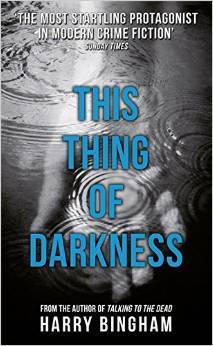 The US cover is shown at the very top of this post. The British cover - same theme, not surprisingly! - is shown left.
What can I tell you about the book without giving the game away? Well, hey ho, Fiona gets assigned to the most boring job in all of policing. (She complains of becoming a "librarian of crime".) But she pleads with her boss that she should be allowed to pursue a couple of very old, very cold, very unpromising cases on the side. Her boss is foolish enough to say yes . . . and needless to say things don't stay boring for long.
In the shenanigans that follow, there is some water involved and some rock and a very modern twist on a classic old-style crime. Also, if any of you are thinking of setting foot on a large moving object any time when Fiona is close by . . . well, just don't do it. It really, really isn't safe.
Also: I've played a little game with some of the character names in my book. Probably 99% of readers won't even notice, but there'll be a tiny minority of people who do notice and have some fun figuring out exactly what I've been up to. I've also included a little set of quiz questions in the back of the book. First person to email me with a full set of correct answers can get a little package of signed books from me. Release date is 2nd July. The book will be available for pre-order very soon. Thanks for sticking with me! Oh, and do sign up to the mailing list if you haven't already.
This Thing of Darkness – cover reveal

Folks, you’ve been extraordinarily generous in your comments about Strange Death. My personal favourites:
“She is similar to Lisbeth Salander, an intelligent but profoundly damaged young woman, but Fiona is less hostile and more curious, sort of a good guy sociopath.” — Audrey, Amazon.com [The best reviews illuminate something for the writer, and this one did. “less hostile and more curious … a good guy sociopath” – that’s acute, that is.]
“DON’T read The Strange Death if you have a weak heart, unless you are bent on suicide by thriller.” Peter J Earle, Amazon.com [OK, that’s not particularly illuminating, but it IS funny. I wish I’d written that . . . only not about my own book, obviously.]
“Fiona, who has only cried once in her adult life, is portrayed with great psychological depth without being dark. Even though Fiona battles with her identity and borderline psychosis, I never found her depressing. She is a strong woman. A survivor … What I found particularly clever is the way that, at times, she shifts in and out of referring to herself in the third person, showing confusion rather than describing the fog. In fact, as much as this is a story of the search for a criminal mastermind, it’s a story of Fiona’s search for her identity.” — Loretta Milan, from Literarylightbox.com [I love that, about the book being a search for F’s identity, because that’s totally true. If you read that about a book, of course, you’d think it was deadly dull, but with Fiona around – I hope – things are unlikely to stay dull for long!]
A couple of things
And in amongst the nice comments – just two things I wanted to pick up on:
A fair few of you have been upset by The Thing that happens at the end of the book. You know. With Fiona andthat guy. The one you wanted her to . . . But rest assured, I don’t want Fiona to be unhappy and alone for the rest of her fictional life. It’s just that (sorry!) I have to treat you like four-year-olds with sugar cravings. You want all the good things now and yes, yes, you can have them EVENTUALLY. But you won’t enjoy it as much if you aren’t made to wait. And, no, I’m not going to tell you how that particular storyline pans out.
You want me to write faster. Hey – I’m trying, I’m trying. Truth is, it does take at least a year to write something half-decent (and I do aim for more than half). But because there was a long pause between LOVE STORY and STRANGE DEATH, I’m making up by bringing out Fiona Griffiths #4, THIS THING OF DARKNESS, this summer – July in fact. If you’re on my mailing list (join here), I’ll let you know when the book’s out. After that, I’ll be bringing one out a year until Fiona or I run out of puff.

The British cover
The US cover is shown at the very top of this post. The British cover – same theme, not surprisingly! – is shown left.
What can I tell you about the book without giving the game away? Well, hey ho, Fiona gets assigned to the most boring job in all of policing. (She complains of becoming a “librarian of crime”.) But she pleads with her boss that she should be allowed to pursue a couple of very old, very cold, very unpromising cases on the side. Her boss is foolish enough to say yes . . . and needless to say things don’t stay boring for long.
In the shenanigans that follow, there is some water involved and some rock and a very modern twist on a classic old-style crime. Also, if any of you are thinking of setting foot on a large moving object any time when Fiona is close by . . . well, just don’t do it. It really, really isn’t safe.
Also: I’ve played a little game with some of the character names in my book. Probably 99% of readers won’t even notice, but there’ll be a tiny minority of people who do notice and have some fun figuring out exactly what I’ve been up to. I’ve also included a little set of quiz questions in the back of the book. First person to email me with a full set of correct answers can get a little package of signed books from me. Release date is 2nd July. The book will be available for pre-order very soon. Thanks for sticking with me! Oh, and do sign up to the mailing list if you haven’t already.
FREE download of “Lev in Glasgow”
Get your copy of this scintillating new story “Lev in Glasgow” – plus mystery bonus gift – absolutely FREE
Find out more
Share this entryShare on FacebookShare on TwitterShare on Google+Share on PinterestShare on LinkedinShare on VkShare on RedditShare by Mail
February 22, 2015
Big Publishing and Me (15): Reflections, reflections
 I’m Harry Bingham. I’ve never previously written in detail about my adventures in the land of publishing, but here it is: the full story. I hope it’s of interest.
These blog posts are timed to coincide with the release of The Strange Death of Fiona Griffiths in the US, and if you would like to buy that book you may do so here.
"Exceptional . . . absorbing . . . Fiona's narrative sears the page"-- Kirkus Reviews
[<. <.]
Time to conclude.
You’ll have your own views, thoughts and reflections, but here are some of mine - split over two blog posts, because otherwise this post would be cumbersomely long.
Cheating authors is bad
Let’s start with the obvious. HarperCollins should not have acquired a novel from me on the basis of (a) an advance and (b) an undertaking as to future marketing support, if they had no firm intention of delivering (b). That’s not commerce; it’s theft. I don’t mean that their behaviour falls under some legal definition of theft, but that it is its moral equivalent. It’s cheating. It’s fraud. It’s totally wrong.
The same thing when Fourth Estate asked me to write one book, allowed me to spend three long months writing it, then changed their mind without offering compensation for my wasted time. They would never treat their employees like that. What on earth makes them believe it’s OK to treat their authors that way? It’s not OK. It’s like theft, except they didn’t even end up with anything worth having. Dumb theft.
In the first case - the marketing commitments that weren't - I should be clear that all big British publishers used to do the same thing. They realised the practice was inappropriate and they stopped doing it. So some credit to them for that.
In the second instance: well, the issue is more tricky. Fourth Estate is, as I hope I've said, a very good imprint, a leader in its niche. So the fact that their attention to an author was sometimes shoddy should really just remind us that publishers, too often, forget to think hard enough about the author's interests, the author's issues, the author's financial position . . . an issue big enough that it deserves a header of its own.
Publishing is a competitive industry . . . except where it comes to authorial talent
If I'm right that most big publishers are sometimes guilty of neglecting to think about their authors' legitimate interests, one has to ask why. Here are three possible explanations, each of which has some merit:
the conglomerate publishers went through a long period of rationalising and industrialising various back-office and retail-facing functions, and consequently lost focus on the author-facing side of thingseditors have come under more pressure, so their relationships with authors simply aren't what they were. There just isn't the time in the day - and competitive pressures mean those good old days will never return. (Also, of course, the good old days were flawed in their way, maybe more flawed.)Publishers have a relentless focus on the book, the product in hand. That's good in some ways, but has its downsides.I think most publishers would agree, to a greater or lesser extent, with all those three propositions. Yet I think those explanations miss the central issue, which is this.
Publishers are used to plenty of competitive pressure and they're flexible and committed in responding. So, for example, the industry has adjusted to the rise of Amazon, the growth of ebooks, the importance of social media and very much else. But publishers are NOT used to the idea that authors themselves can be a source of competitive pressure. There just isn't much authorial churn (that is, authors leaving one publisher for another). Most authorial careers are short, but those that endure tend to join an author to one, or at most two, publishers for a very long time. When John Le Carre upped sticks and left Hodder for Penguin, it made national news exactly because those things are rare and not routine: not part of the ordinary cycle of the book trade.
But why not? Why shouldn't publishers poach authors the way football clubs poach strikers? Isn't that the nature of competition? Why should it be considered 'disreputable' for agents to compete against each other for a particular author? Why did the Association for Authors Agents for a long time prohibit its members from just such competition? (A prohibition which, by the way, was almost certainly illegal.)
And although that kind of hustle is considered rather ungentlemanly in the industry - Andrew Wylie, who does compete, is nicknamed the Jackal - it's important to note that the lack of competition benefits publishers not authors. Competition for a commodity in limited supply increases the price of that commodity. Which would be nice, if you happen to be the commodity in question.
In summary then, publishers aren't used to competing for authors (except around the auction of debut books, where competition can certainly be fierce.) In consequence, publishers' thought and attention tends to be on all those other good things - retailers, marketing channels, &c &c - where publishers are notably flexible, innovative and competitive. But that means once an author is signed to a firm, he or she can feel somewhat taken for granted. Most authors aren't represented by Wylie-style agents. Very few big publishers will actively seek to poach another's authors. If that's not a recipe for neglect, I don't know what is.
Publishing is not the same as printing
Bloomsbury was, I think, taken aback by my failure to appreciate its services. Their team printed up my book, made it available on Amazon, and (usually) handed it out to any booksellers who asked for it. The book sold whatever it sold and the firm handed me my stipulated royalties. What issue could I possibly have?
Yet any self-publishing company in the world can print a book and stick it on Amazon. There are some loathsome, dishonest, vanity-type presses that seek to inveigle authors into paying far more for those services than they should. But there are other companies that do an honest job, for an honest fee – and leave the author space to earn 100% of all ebook royalties (not 25%) and 100% of all print revenues, after production and other associated costs have been taken into account. Bloomsbury provided me with a service that delivered little more than that kind of self-publishing would have brought – yet they helped themselves to most of the money that my book created. When I raised legitimate concerns about their marketing performance, they didn’t even have the basic courtesy to respond. They didn’t alter our financial arrangements by a single penny. They have never meaningfully discussed the matter with me.
It’s not theft, that kind of behaviour, but it seems to me analogous to those dodgy double-glazing companies which pressure grannies into spending too much money on a whole set of new windows, when all that was really necessary was a little bit of draught-proofing. It may not be theft, but it’s a crummy way to make a buck.
There are some fabulous publishers who had a ton of value to their authors
It’s obvious, I hope, that Orion is one of the good guys in this story. Thanks to their anchoring role and constant support, I have:
A book which is sold in hardback, paperback and ebook right across Britain and IrelandThe committed support of Waterstones, Britain’s flagship booksellerThe committed support of numerous other retailers, for example David Headley's excellent Goldsboro Books.Foreign language book sales across Europe and beyondThat Random House book dealAll those lovely American reviewsAll those lovely British ones tooA guaranteed income for this year and the two years thereafter (that is: spanning my current book deal with them.)An expectation of continuing support even after thatWonderful editorial acumenAnd everything else. A whole team of people whom I like and respect and work very happily alongside. They’ve got my back and that’s a wonderful feeling.Bantam’s role in this story feels a little more ambiguous because of its curious ending, but put all that to one side. The fact is that they acquired a strange and quirky book from an unknown writer, put some real weight behind it, produced beautiful books, sold them as hard as they could, and lent their weight and authority to a publicity campaign which resulted in terrific review coverage – coverage which would go on to ignite something similar in Britain.
And if that publication process failed (in print terms, that is) – well, so be it. Marketing books is hard. You can publish energetically and intelligently and well, and still fail. That’s just the way it is. The folks I engaged with at Random House are still on the side of angels. A single failure doesn’t signify. And by the same token, I should also be clear that though my career with HarperCollins never flourished, that doesn’t make them a terrible publisher. Failure is more common than success in this game, and HarperCollins score their full share of successes. They’re excellent publishers too.
I could go on. My Dutch publisher is awesome. My French publisher is wonderfully ambitious. I just don’t know enough about what’s happening in other territories to comment, but the idea put about by the angrier end of the indie publishing scene that publishers are only there to suck the blood from authors is simply nonsense. There are good publishers and there are bad ones – or, perhaps more accurately, good and parts to most publishing firms – but the good ’uns can be very good indeed. Career-altering. The air-ambulance that sweeps you up to Stieg Larsson Heaven. If you want to know why so many authors stick with their traditional publishers, the answer is simple: because there are some damn good publishers out there. And all power to them; they're great.
The same, by the way, goes for agents. There are good agents and, erm, agents, but my own team at AM Heath and Inkwell has been phenomenal. Intelligent, wise, committed, diligent and on my side. Again, the suggestion which is sometimes made that agents cannot perform properly for authors because they are conflicted, is simply not true. Some agents, no doubt, perform poorly for their authors. The best ones are solid gold.
Authors have options
For a long time, the anxiety in publishing was that e-books would cause the collapse of bookstores, which would in turn cause the collapse of publishing itself. That concern was hardly fantastical. Barnes and Noble has made a net loss in each of the three financial years ending May 2014. Waterstones (now under excellent management, by the way) has yet to report its first year of solid profits and will need to string two or three good years together before it can be considered off the 'at-risk' list.
But maybe bookstores isn't where the lethal blow will fall. What if authors simply get fed up with publishers and choose to walk away? My parting with Bantam Dell has as much to do with their choices as mine, but supposing more authors started to think, ‘You know what? To hell with this. I’ll collect 100% of royalties from ebooks and simply forget about print.’
I mentioned earlier that the market for adult fiction in America was split into broad thirds: hardback, paperback, ebook. At the moment, authors are collecting perhaps 10% of those hardback revenues, perhaps 6% of the paperback revenues, and around 17% of the ebook revenues. (These are percentages of the entire retail dollar in each case; the author gets 25% of the net receipts from ebooks, but Amazon, Apple and the others all take their share first.) If authors collectively ditched print publishing altogether, they’d lose 10% of the hardback dollar, 6% of the paperback dollar, but gain about 50% of the ebook dollar. In this thought experiment, authors as a whole don’t need print; they’d do better on their own.
Now, let me be clear, that’s a thought experiment I don’t take too seriously. Print matters, and I personally far prefer a book-book to anything I read on screen. There are genres – notably literary fiction – where print still dominates. And new technology seldom destroys its predecessors. The novel did not kill stage plays. Television did not kill radio. The download has not killed the CD. What’s more, the authority of print is likely to continue for a long time to come. Newspapers will still prefer to review books that come to them via publishers. The word of mouth effect that can be generated by book-buyers browsing in bookshops is different from, and at least as important as, the effect that happens through blogs, Twitter, Goodreads and the rest. And, indeed, the successes of the indie scene all congregate in the genre end of the market (crime thrillers, romance, sci-fi and fantasy, plus the whole world of teen and New Adult fiction.) We have yet to see the first major literary writer emerge entirely via indie publishing.
But still, publishing is entering a new era. One in which bookshops are fighting for their lives and where authors can choose to do without a publisher if they feel like it. In the old days, there wasn’t even a meaningful argument to be had about whether publishers added value. If you wanted to sell your book at all, you had to have a publisher. Add value? They gave you life.
These days, it’s all not so clear. My ability to launch my work on electronic platforms is almost exactly equal to Penguin Random House’s, the world’s biggest trade publisher. They can’t access more e-retailers than I can. They can’t reach more countries.
Which means that – in ebooks, not in print – the question of access is no longer important. What matters is value added, and authors are perfectly justified in asking exactly what they are getting in exchange for a given royalty split. If publishers don’t have a convincing answer to that question, they will simply be bypassed. In the world of the ebook, ‘publish’ doesn’t have to signify an industry. On Amazon Kindle, it’s a button.
I spoke a little earlier in this post about the industry's reluctance to compete for authors (outside those crucial initial auctions.) We authors can't change that and, more than fifteen years into my writing career, I see no real sign of it changing.
But Amazon and ebooks are - for genre authors at least - a potential game changer. We no longer have to accept the deal we're given: the financial terms, the contractual ones, all the other things, good and bad, that these posts have talked about at some length. If we don't like what we're being offered, we do have an alternative. That's a good thing. A really good thing. It doesn't mean that we'll just walk away from publishing, but it does mean that publishers face a new competitive front to which they will have to adjust. They'll do it, I'm sure, but the path from here to there will be a hellishly interesting one.
[This series concludes in three days' time. Thank you for staying with me so long!]
The Strange Death of Fiona Griffiths is now available in the US. If you’d like to buy it, you can do so right here right now.
If you’re British, the book’s already out and you can get it here .
This post first appeared on the Writers' Workshop site here.
Big Publishing and me (14): Tilting at Windmills
 I’m Harry Bingham. I’ve never previously written in detail about my adventures in the land of publishing, but here it is: the full story. I hope it’s of interest.
These blog posts are timed to coincide with the release of The Strange Death of Fiona Griffiths in the US, and if you would like to buy that book you may do so here.
"An exceptional piece of work . . . Fiona's narrative sears the page."-- Kirkus Reviews
[<. <.]
Fiona Griffiths may never again be published by Bantam Dell, but that’s not to say that her American adventures are over. Indeed, in a way, they’re only starting. Because the ebook revolution has placed a strange new power in the hands of authors: the power to cut out publishers altogether.
Which is precisely what I’m now doing. At the end of last month, on January 29, 2015, I self-published my first proper novel. It's not quite a true first for me - I've released some of my backlist via Amazon, iTunes and the rest - but this is the first 'frontlist' book of mine I've ever launched without a publisher.
That doesn't mean I'll be 100% indie - on the contrary, I'll be a true hybrid. In the UK, Orion have simply been too good for me to want to make any changes. With a little luck, Fiona Griffiths & I will see out our careers in the embrace of that same fine firm. And, of course, my overeas sales have been achieved thanks to the risk-taking and conviction of a host of foreign publishers. I'm deeply indebted to each and every one of those guys: it's always a big bet taking on a new, overseas author. Kudos to the people who do it.
But at the same time, I relish the thought of self-publishing. Love the adventure, the control, the sense of purpose - and, in the rest of this post, I want to talk a little about how I see this American adventure of mine.
So far, I've been very pleasantly surprised by how cheap and easy the whole exercise has been. The production and distribution of The Strange Death of Fiona Griffiths in North America has cost me something like this:
Editorial input $0: I get this from Orion already
Copyediting $0: I got a copyedited manuscript from Orion, and I’ve Americanised – no, Americanized – the spellings myself. The result won’t quite be Bantam-quality, but it’ll be easily good enough for 99% of readers.
Cover design $700: Again, it’s possible to pay more than this or less than this, but seven hundred bucks bought me a choice of (literally) hundreds of designs from dozens of designers. The final shortlist of 8 or so covers included some very strong, very marketable designs. I’m very happy with the final version.
Ebook conversion $100: If I’d wanted to save money, I’d have done this myself. It’s not hard, just boring.
Distribution via every online bookseller in North America $200: Prices vary. I’ve uploaded the book to Amazon myself, but have paid someone to reach the various other vendors. I could reach a worldwide audience for the same price, except that I’m restricted by my contract with Orion. Note that I pay a fixed annual fee for the distribution service and a 0% share of royalties.
Page layout for a POD (print) version of the book, sold via Amazon / Createspace: $200 The layout isn’t quite Big Publisher standard, but the text itself looks a million dollars and the book – a big, generously margined trade paperback – is handsome and well-produced.
TOTAL (approx) $1200
All this doesn’t quite get me a Bantam-quality publication, but it’s worth noting where the process is and is not deficient. In terms of cover design, my experience has consistently been that where I’ve believed a cover to be bad, it has been bad. No one knows a book like its author, nor does anyone else care as much.
My approach to cover design was to set out a brief, then throw it open to multiple designers. The cover I chose (above) is edgy, surprising and eye-catching - and it works very well on a thumbnail view, which is how most people will first encounter it on the Amazon/iTunes/B&N sites.
True, the cover is such that plenty of people really won't like it, but I'd always much rather have something that arouses strong passions in both directions than something which is too bland, too safe. I think the image I finally selected is just excellent - and I'm pretty sure that at least 6 or 7 times out of 10, my way of creating a cover will produce better designs than I've generally had from my publishers in the past. That's not because my best designs will be better than their best , but because I'll be sure of avoiding anything weak, or poorly targeted, or too bland, or just plain rubbish.
Likewise, have you noticed how often ebooks are laid out in a dumb way? Because they’re produced by a culture that still reveres print, they often bow to the gods of that realm. But when a reader uses the ‘Search Inside’ feature on Amazon or a similar website, what they want is (a) a short description of the novel, (b) perhaps a short bio of the author, and (c) some actual text. That’s how my ebooks will be laid out. They’ll put the meat right there on the platter. Publishers’ ebooks are seldom laid out that way. You get those tiresome wads of copyright notices, blank pages, title pages, dedication pages. All good things, but they don’t need to sit upfront. In a print book, yes, they look nice and appropriate. In an ebook, they should go hang out somewhere else.
In editorial terms, I accept that my position is a little different from most would-be authors, in that I already have an exceptional editor at Orion. But suppose I didn’t have that. I run an editorial company, so I know as well as anyone that £500 / $800 would buy Big Publisher quality editorial input. (I know it’s Big Publisher quality because plenty of our editors have come to us from the industry. If we wanted more such editors, we could retain them with ease.) My books don’t usually need extensive editorial rehab, but if they did, I could spend more as needed. I could go on working till the job was done. One of my past editors told me that her other work commitments left her with about a day and a half for editorial work on each manuscript she handled. The simple truth is that, these days, most editors don’t do much editing: they're too busy with other things.
As for copyediting – phooey. Books need copyediting, but it’s an easily buyable resource. Most big publishers outsource this activity in any case. Bantam’s standards were particularly excellent and that delighted me, because I’m the sort of person who cares about those minutiae. Most people don’t. If it really matters to you, $2000 will give you an excellent manuscript. Half that money would give you a good one.
As for ebook conversion and distribution – double phooey. You pay a few bucks and get a service no better and no worse than any regular publisher has access to. Sure, publishers would love you to believe that there are secrets in the construction of Amazon metadata that only they have access to, but that’s nonsense. I saw a book on Amazon recently – a book launched by an excellent publisher, and authored by someone who was herself a very experienced and capable editor at a good house – where the book description did not, in fact, contain any description of the book. Nor did the ‘search inside’ feature extend to the back flap or any material which actually told you what lay inside. So here’s one secret of metadata: the book description needs to describe the damn book.
So much for mechanics. There are still some ways - some big, important ways - in which Big Publishing has a powerful advantage over the individual.
Publishers Weekly and Kirkus and all those other publications took my work seriously because I was not a self-pub author; I had the authority and prestige of Random House behind me, and also the authority and prestige of print. Will those publications still want to review my work if I have neither publisher nor hard copy to offer them? Well, actually, the answer is yes, maybe. Both those periodicals have deals whereby indie authors can get a review from a PW/Kirkus editor. (It’s free with PW and costs about $400 with Kirkus: a sum I was happy to invest.)
Obviously, indie authors can’t assure themselves of a good review, merely an honest one, and any decisions about what will appear in the print editition of those magazines is down to the magazine’s own editorial judgement – but, yes, indie authors can, in principle, secure reviews. Whether other newspapers – the NY Times, the Boston Globe, the Seattle Times and the rest – will choose to review independently published books by an author (and in a series) they once liked, I have yet to see. But, for sure, it would be an easier ride if I had Random House behind me.
The big firms have other advantages too. Amazon has a ‘Vine Program’ which places advance copies of books in the hands of some of the firm’s most trusted reviewers, so that by the time a book is actually launched, there are already some intelligent and thoughtful reviews available for readers.
Publishers also - and this is a biggie - have access to various online promotional schemes that simply aren't available to the hoi polloi. You can get access to them, or some of them, through the Amazon White Glove program, but that program requires Amazonian exclusivity, which makes no sense in the US market. So yes, publishers have an advantage here that we can't mimic. That's a mighty big one too.
And then too, publishers are big firms with big resources. They'll have road-tested numerous ways of enhancing digital uptake. Does advertising on Facebook work? Are there other sites where advertising enjoys a significant return on investment? Just exactly what are the long term benefits of short term price cuts? Which bloggers actually influence sales? And so on. Some of these things can be teased out by individual writers, and the indie publishing world is superb at energetically disseminating the lessons learned, but still. We start from scratch. Publishers have a long head start and a pool of data we'll never match.
On the other hand, individual authors have their own strengths, and they are mighty.
First and foremost is the sweet ability to cut prices. Books sell more copies at $3 than they will at $6 or $8. Aside from temporary price promotions, Big Publishing simply can’t afford to permit prices to fall to those kind of levels: their business model implodes if they do. But authors can, and why not? Our business model doesn’t implode, it blossoms. Blossoms and fruits. Because publishers currently take 75% of net receipts from ebooks, authors can halve the price of their works and still double their royalties. What’s more, as Wool author Hugh Howey has noted, readers prefer cheap books. That is: they rate them more highly. If you eat a somewhat similar meal at $10 and at $40, you’ll rate the first one better, simply because it outperformed your lowly expectations. Perhaps it’s not the greatest compliment in the world for an author to be told that his book was ‘good for $3’, but if it brings better ratings, greater sales and double the per-book royalty? I’ll take those dodgy compliments with a smile.
That’s not all.
Publishers have evolved as corporations selling to corporations. Success in that game relied on good logistics, careful price negotations, strong regional sales teams, and so forth. Communications felt corporate, because they were designed to be. Because they had to be.
The ebook revolution makes it easy for authors to sell books direct to readers – and not just sell to them, but talk to them. Scattered through these blog posts, you will find short messages from me that invite you to sign up to my mailing list. If you are good enough to sign up, you will get a short email from me whenever one of my books is due to be published. The email will come straight from my laptop to yours. I’ll write it as I’d write anything else: human to human, from me to you. You may or may not want such a message, but I’d bet fifty bucks that you certainly wouldn’t want the message if it came to you from a corporate communications department. Who’d want that? (And indeed, if you’d like to hear from me when I’m releasing a new book, please just sign up here if you’re British or Irish or here if you’re American/Canadian. The process will takes a few seconds and it will make you happy.)
The same thing with tweets and blogs and all that malarkey. It’s unclear, I think, how much that kind of thing really boosts sales, but if it does, then authors are way better positioned to reap the rewards. Different things will work for different books, different audiences, and different authors, but it’s hard to think of a single instance when the author does not hold the advantage over the publisher, simply because people want to connect to people, to an author not a PR department.
That flexibility of communication extends far beyond social media. These little series of blog posts is an example. Put aside the subject matter for a moment, no publisher could ever ask an author to write more than 30,000 words in online sales material - the author would feel, rightly, that he or she was doing most of the work involved in promotion, while the publisher was scooping most of the rewards. Yet when the work and the rewards are aligned, authors can be flexible, creative and committed in finding those extra routes to public notice. These posts have taken me three weeks or so to write, prepare and upload. If they ignite book sales in North America, those weeks will prove to have been very well worthwhile. And if not - shucks, who cares? I enjoyed doing it, and I think I'm saying something of interest & value. Those simply aren't attitudes that could exist, that should exist, within a more corporate structure.
And since I'm talking self-promotion, please allow me to do just that. My Fiona Griffiths novels aren’t shoot-bang, all-action thrillers, but they are – if I’ve done my work right – dark, intense, properly written crime stories with a haunting, even touching, strangeness to them. Think Lisbeth Salander given a makeover by Tana French and Gillian Flynn. They’re like that, only Welsh- and you could go and buy Strange Death right now:
Buy on Amazon.com (US readers)
Buy on Amazon.co.uk (UK readers)
You're just five bucks away from happiness, so think hard and choose smart.
So – sales pitch concluded – let me simply note that e-publishing gives author a flexibility of approach that the old-style industry never did. We can experiment with short stories, novellas, free give-aways. We can fool around, see what works, then run with that. Even if regular publishers were to put their print preconceptions to one side, and invited 30,000 word novellas and the rest, the clanking machinery of the commissioning, contract & editorial process would be too cumbersome for either side to manage.
Finally, though publishers still dominate the ecosystem of regular print books, independent writers have some resources of their own. The indie publishing community has, with remarkable speed, created a network and an ecosystem all of its own. It has its leaders and its review sites. Its own bush-telegraph of ratings and approval. Those things can’t be crudely steered or manipulated, but nothing enduring is built any other way.
In my hands, Fiona Griffiths won’t be entering the American market alone. Though the shock and awe of Random House’s mighty forces will no longer be available to her, she’ll have something else on her side: a rag-tag army of indie authors, indie readers. That army may not look like much, but insurgent forces never do. They sometimes win, for all that.
[The story starts to wind up here.]
The Strange Death of Fiona Griffiths is now available in the US. If you’d like to buy it, you can do so right here right now.
If you’re British, the book’s already out and you can get it here .
This post first appeared on the Writers' Workshop site here.
February 15, 2015
Big Publishing and Me (13): All done rebooting
 I’m Harry Bingham. I’ve never previously written in detail about my adventures in the land of publishing, but here it is: the full story. I hope it’s of interest.
These blog posts are timed to coincide with the release of The Strange Death of Fiona Griffiths in the US, and if you would like to buy that book you may do so here.
"An exceptional piece of work . . . Fiona's narrative sears the page."-- KIRKUS REVIEWS
[<. <.]
You wanted a twist, and here it is.
Bantam Dell failed to sell Talking to the Dead in the United States. Or, to be precise, the novel sold perfectly all right as an ebook, but its hardback sales were poor and its paperback sales were hideous. Despite an ocean of positive commentary – those starred reviews, the prestigious Crime Book of the Year selections – the American debut of a British crime writer proved too tough a sell for the trade to handle. In terms of printed books, the book was a dud. A misfire. Another flop.
Only – and here’s where it gets confusing – who cares about print? Ebooks have a roughly one third share of the American fiction market, by value. Yet that one third figure conceals huge disparities. In crime fiction – where people read for fun, not to decorate their bookshelves – ebooks have a roughly 75% share of the market. But that’s the crime market as a whole, a market which includes such vastly well-known writers as Patricia Cornwell, Michael Connelly, Lee Child, Kathy Reichs and the rest. Book buyers wanting to splash $27 on a hardback are infinitely more likely to spend those dollars buying a known quantity than they are to acquire a darkly unsettling novel by a complete unknown. If I were an American book buyer, I certainly wouldn’t spend $27 on the first Harry Bingham. Probably not even the second. I’d buy the $7 ebook and wait for things to settle.
Since Talking to the Dead has notched up over $100,000 in ebook sales to date and (because the book will never go out of stock, the way it would in a bookstore) there’s no reason why it shouldn’t make plenty more in the future. Since my advance for the book was only $30,000 and since the production costs for an ebook are vastly smaller than they are for a printed one, you’d think it was simple to strike a somewhat different kind of publishing deal: one that starts out as ebook only, but which morphs into print as and when conditions permit.
Apparently not.
Here’s what happened. I sent Bantam Dell the first draft of The Strange Death of Fiona Griffiths – the third book in the series – in early June 2013. The book needed some tinkering. (It had a magnificently over-the-top ending, which I loved and everyone else said was silly.) But the book didn’t need that much work. In due course, I’d hack the ending back to a normal shape and size, and remove three or four thousand words elsewhere. And that, in terms of major changes, was that.
Orion loved the book and were very swift to sign up for a further three titles in the series. (Unlike Bantam Dell, they’d already purchased Strange Death.) And Bantam Dell? Nothing. We heard one or two somewhat confused, or confusing, editorial mutterings, then nothing. My wife and I had twins that summer (one boy, one girl, both healthy and both delightful), so my attention was not altogether focused on book deals. Still juggling babies, I finalised the manuscript with Orion and sent the final-final-final draft to New York. Still nothing.
Christmas drew on. The twins were hollering because of bad reflux, and still nothing.
 The US cover - which is lovely Then, we heard that Bantam were basically keen. Kate, my editor, was talking to her boss. They wanted to do something. If they could, they definitely wanted to do something . . .
Yet the long silence continued and, as it did, the first American reviews began to drop in for Love Story, with Murders. (Different publication schedules meant the US dates lay a long way behind the British ones.) And boom! Another starred review from Publishers Weekly. Bam! Another lovely review from Kirkus. Biff! A warm lead review in Marilyn Stasio’s hugely influential New York Times Review of Books crime column.
I was puzzled. What more could Bantam possibly want? I’d already received a royalty statement in September 2012, which told me that Talking to the Dead had earned out its advance at hardback stage. That’s a stonking performance: exactly what any publisher should love to see. And then they couldn’t have asked for better reviews. Plus there was very broad international support for the book. Plus a TV deal. Plus, as an author, I’ve always met deadlines, responded to input, said my pleases and thank yous.
There was clearly an issue, but what on earth could it be?
My agent in New York decided it would be a good idea to check our book sales. Actual sales of actual print books. (You’d think we’d have that anyway from Bantam, but no. The industry issues royalty statements at six month intervals and three months in arrears, so I will discover my Jul-Dec 2014 sales no earlier than March of this year - and quite likely later, because these things have to chug their way through two sets of agents and, not least, because the statement arrives with me in hard copy form, not electronic.) So we didn’t go via Bantam. My New York agent used Bookscan, a third party data source, and discovered that most of the hardbacks which had been ‘sold’ had actually been returned by booksellers. That the paperback performance had been even worse. Only the ebooks were immune from this sales devastation.
 The British cover - more roses, different treatment. Bantam did, finally, say they’d be interested in proceeding, if I could write a non-Fiona Griffiths novel after #3 in the series. A new series, perhaps, or a standalone. Anything to reboot my profile.
But I’m done rebooting. Apart from anything else, I have a commitment to Orion for three more Fiona Griffiths books, and I’m not the kind of author who can pump out two half-decent crime novels in a year. I said as much.
Bantam and I were drifting apart.
I still couldn’t understand quite why. If the print market was moving against us, the ebook market was doing just fine. So why not establish ourselves electronically and revert to print when we were ready? It wasn’t that hard to figure, was it?
Indeed, I even came up with a proposal, which would have meant that Bantam stayed in the game without putting a single further penny into the pot by way of advance. Our initial two book deal gave Bantam a 75% share of the ebook revenues, but my deal with Orion meant there would be at least four more Fiona Griffiths books to follow. So why, I suggested, did Bantam not simply parlay their 75% share of two ebooks into a 25% share in six? They’d end up with the same overall investment. I’d give them a free option on print, whenever they judged the market to be ready. So we’d go on, in partnership, letting my little Welsh detective tilt at those American windmills for four books to come.
Again: initial interest, followed by silence. The interest came because I understand that Alibi, Random House’s e-only crime imprint, was excited about signing me up. But under my proposed arrangement, I’d have had 75% of ebook revenues on all six books and Alibi simply doesn’t countenance those kind of payouts. (Although, the way I saw it, these would have been my books and I’d have been paying out to Alibi – though that, probably, would have felt even worse as a template from their point of view.)
 The first version of the US cover - binned because another publisher used the same image. Of course, I never thought they’d accept my offer as it stood. I assumed they’d come back to me with a counter-offer. Something along the lines of, ‘We want 75% royalties because that figure is sacred to us, but here’s how we’re going to add a ton of value to these books and we’re certain that you’ll be delighted to accept a relatively small share of a much, much bigger pie.’
They didn’t say that. They didn’t say anything.
The whole conversation sputtered out without ever really having started. By early February 2014, Bantam Dell and I knew we were terminating our relationship. It was eight months from when I had first sent them a draft of Strange Death, and in that time I never had any meaningful editorial feedback direct from them. No information about sales, except the data contractually required (ie: a September 2013 royalty statement dealing with the first half of that year.) No tangible proposal on an ebook partnership. No direct response to the proposal I’d put to them. No phone call, not even to return calls I’d made.
Bantam had in their hands an author who by every objective standard had met the editorial tests laid before him and they couldn’t find a way to continue the relationship. That wasn’t – not at all, not even in part – because they had been ineffective as publishers. They hadn’t. Both books had been very well and confidently published by people who really knew this territory (and, by the way, have an endless list of successes to prove it.) It was two things that separated us. The first was that the print market is shifting ever further from the market Bantam once knew. The second was that, in this new world, I had some real autonomy and wasn’t going to countenance a deal which didn’t recognise that.
Bantam and I liked each other. We respected each other. But we were not able to find a deal that could join us. The world is changing, and those changes have a long way still to run.
[The story continues in three days' time.]
The Strange Death of Fiona Griffiths is now available in the US. If you’d like to buy it, you can do so right here right now.
If you’re British, the book’s already out and you can get it here.
This post was first born on the WW site here.