Alex Oriani's Blog
November 5, 2016
Everyone is writing stories about relationships. Me too.
 I’m doing a “writing your first novel” online course run by a London lit agency. Everything is cool and awesomo, sort of. It’s just that almost everyone else is writing stories about relationships; mostly husband and wife, sometimes father/mother and son/daughter. It’s all about break-ups, make-outs, rows, regrets, love and lack of love, fidelity and lack of fidelity, trust and luck of trust. I wish someone came up with a stammering alien, a flying accountant, a vampire granny, an orange monster (wait, we have one in the news), a Starbucks for dragons, a man with two dicks, anything a bit odd so I don’t feel like the only weirdo who writes strange stuff.
That said, since I wanted to show my goodwill to fit in, I too have written a story focusing on relationships, in a strangestoryesque way, of course. It’s very short, you can read it here below.
****
THE RIDE
A battered pale brown station wagon jolted along the rough country road.
“Let’s see what else you forgot to do… or, as you say, what else ‘slipped your mind’.”
The sarcastic tone of the overweight man in his mid-fifties didn’t seem to pique the woman behind the wheel. Muggy air blowing in through the open windows hit her baggy eyes and ruffled her black hair, exposing the white roots. She looked worn-out, like the man sitting next to her, like the car they were in.
“Did you take out the trash? I bet a grand you didn’t.”
His sweaty, sagging face seemed to gather all the humidity of a stifling summer night in EastTexas.
“So, my lady, shall I lay the bet on the green table?”
“You don’t have a grand. Never had it in the bank,” she answered, keeping her eyes on the road.
“Because I always done shitty jobs. Not because I was frittering it away on drink and women, for sure.”
“You wish.”
The car bent and rolled on its exhausted shock absorbers. Outside, darkness and silence all around them.
“You know only too well my folks didn’t have the money to send me to college. I had to work straight out of high school, for fuck’s sake!”
“Was waiting for the first “f” word since you slid your big ass in the car.”
“You don’t wanna get me started on the big ass thing. When was the last time you worked out, Molly-lazy-ass? Mollazy!”
“When was the last time you gave me an orgasm, Frank? And don’t call me, Mollazy, fatso!”
“I guess it was the last time I came back from work and didn’t mistake our house for the warehouse of a pawn shop.”
“Fine, Frank, I’m a lousy housewife and I have a flabby ass.”
“Bang on the money, baby. Just how it is.”
“Cool, we’re even, then. I have just one question.”
“Shoot.”
“Why did you marry me?”
“You really want to know?”
“I do.”
“Because all my buddies had already settled down, I didn’t feel like going to clubs and hitting on girls by myself.”
“That’s all?”
“You betcha.”
“Okay.”
“What about you? Why did you say yes?”
“Me? I wasn’t pretty or smart enough for the college guys, I knew I had to settle for someone in the lower leagues.”
“Lower leagues… give me a break.”
“No point in waiting for someone better. It wasn’t gonna happen.”
The road became rougher and bumpy, and as the car jerked up and down, a bark came from behind them.
“Of course, it also slipped your mind to feed T. Kirk, right?”
A black Golden Retriever pushed his muzzle over the backseat.
“It’s possible.”
“I’m sure it is. You know, I was thinking… ever thought that we never asked T. Kirk about this?”
“He’s a dog, for Chrissakes!”
“He’s not ‘a’ dog! He is Tiberius Kirk, and he deserves all our consideration.”
“Whatever, it’s too late now.”
The wheels of the station wagon were now jolting over potholes. The dog yelped.
The man turned and glanced at him with affection, then half-closed his eyes and turned to his wife.
“Okay, fuck everything!”
“Fuck everything!” she repeated, gripping the wheel harder and putting her foot down.
He placed his hand on her thigh and stared ahead as T. Kirk howled. Almost out of control, the car bounced towards the darkness. Their eyes fixed on the road ahead.
She flinched and slammed down on the brakes. The tyres screeched over the track leaving scars like bony fingers on the earth. The car came to a halt in a cloud of red dust. He stared through the dust and said nothing as she turned the car and started to drive back.
A few steps away the rotten branch of an elm snapped and plunged into a steep gully lit by the moonlight.


September 13, 2016
Black Mirror, your awful future reality?

As you can probably imagine from someone who runs a website called Strangestories, I’m enthralled and fascinated by Black Mirror, the TV show written by Charlie Brooker. I also feel extremely close to the atmospheres depicted in the show; the lunacies, the grotesque yet realistic situations and the excesses caused by the exploitation of an always more refined and invasive technology. I recognize them as my territory and, as much as they are original, I can’t say that I have been shocked by them. It’s all out there, it just takes a brilliant mind endowed with skills of foresight to spot them and turn them into a fictional reality. This brilliant mind is Charlie Brooker, of course. That being said, does it make Black Mirror the ultimate TV show of our times, the Twilight Zone of our era? Of all the good reasons you could love Black Mirror for – the original, thought-provoking plots, the twist endings, the usually superb acting – there’s one that beats them all. The most important. And the scariest. Black Mirror depicts a future society which is not really a “future” society, rather a development of our present society. One of the most eloquent examples of this continuity is represented by the episode The Entire History Of You, the last one of the first season. The story is set in a world where everyone has a micro camera implanted in their head, running 24/7. Everyone films their whole lives and spends a significant part of their time re-watching their own everyday feats. Does it ring any bells? Google Glasses? A super miniaturized GoPro? Quite so. But let’s leave aside the technical aspect for a moment, and let’s focus on what Black Mirror is really about: the relationship between human beings and technology.

How different from what we currently do on social media is this idea of filming all your life and then watching the highlights to celebrate yourself? Let’s do a quick recap on the topic: we write stuff and post photos and videos of ourselves and someone else, the main reason why we also post other people’s content being that posting our beloved self only would bother our friends pretty quickly. According to all the major studies on the subject, the biggest drive to social media is not keeping in touch with friends, sharing or enriching ourselves. Not really. The main drive to log in every given day to Facebook, Twitter et cetera is basically gratifying our ego, feeding it regularly with likes and comments and have our brain release the dose of dopamine we need to get by. In terms of inner motivation, how different is that from filming our lives and watching our personal highlights anytime we need a shot of self-assurance? Does it sound so unheard of and horrible? Not so much, after all, eh? And so we go back to square one, technology.
Why do we show off on social media? Because we can. But why don’t we film our enthralling lives for us and any other interested audience to see? Because we can’t. As yet.
August 8, 2016
The Twilight Zone, master of strange stories

Credit: Theilr (httpswww.flickr.comphotostheilr)
“There is a fifth dimension beyond that which is known to man. It is a dimension as vast as space and as timeless as infinity. It is the middle ground between light and shadow, between science and superstition, and it lies between the pit of man’s fears and the summit of his knowledge. This is the dimension of imagination. It is an area which we call the Twilight Zone.”
These words introduced each episode of the first season of The Twilight Zone, that is the TV series often regarded as the classic in a genre which we could call “fantastic”, a broad definition including several genres such as science fiction, fantasy, thriller, suspense and horror. Rod Serling was the creator, writer and executive producer of the show; his name and face are indissolubly tied to The Twilight Zone’s universe and legacy. He also acted as a presenter-narrator introducing each episode a la Hitchcock with his distinctive clipped speeches.
The narrative of the series is characterized by an exploration of the human nature and the way it reacts to uncanny situations. All men’s weaknesses are exposed and faced with trials bigger than them. Their ethics, or lack thereof, are scrutinized and met with consequences to deal with. There’s very often a moral and a price to pay.

In “One for the angels” (season one, episode 2), a salesman first convinces Death to save his life for his great last pitch. But when he realises Death has exchanged his life with the one of a little girl, he decides to sacrifice his own life and save the girl’s.
In “Mr. Denton on Doomsday”, a once famous gunslinger now become a self-destructing drunk, meets Mr. Fate who sells him a potion to go back to being the quickest shooter for ten seconds. When Denton faces his most dreadful duel with a young gunslinger, he finds out that he is holding an identical bottle. As a result, they shoot each other’s hand thus ending their careers as gunslingers (TV.com) http://www.tv.com/shows/the-twilight-...
As much as you try, you can’t escape a moral, a final judgement which will determine the rest of your life, if you will be lucky enough to have one once you have entered the Twilight Zone.
Among the writers who have penned the original Twilight Zone (1959-64), apart from Rod Serling who wrote or co-wrote 92 of the 156 episodes, we find masters of science-fiction like Ray Bradbury (Fahrenheit 451;The Martian Chronicles) and Richard Matheson (”I’m legend”; “Duel”; “Button, button”); and authors such as Charles Beaumont, Earl Hamner Jr., Harlan Ellison, George Clayton Johnson, Reginald Rose and Jerry Sohl (Wikipedia).
As often happens with good science fiction books and films, the Twilight Zone’s writers took advantage of the genre to deal with social issues which were not likely to be included in traditional TV drama.
“Rod Serling said that even in science fiction, he was most compelled by stories that were relatable first in human terms. ‘If you can’t believe the unbelievability, then there’s something wrong in the writing,’ he told a college class in 1975.” How The Twilight Zone Predicted Our Paranoid Present, Adrienne Lafrance, The Atlantic (follow her on Twitter @AdrienneLaF)
The Twilight Zone also managed to foresee some of the future’s inventions and new technologies. What was “supernatural in the 1960s is commonplace or at least conceivable today — including driverless cars, flat-screen televisions, human-like robotics, government surveillance, and more.” The series also raised questions about “what human interaction with robots would ultimately mean for society… questions we’re asking today, amid military and civilian drones.” (Adrienne Lafrance, The Atlantic).
The original Twilight Zone had a five-season run and contained 156 episodes altogether. All episodes are 30 minutes long but those included in season four (1962–63)which feature one-hour episodes.
The series can be watched on syfy.com and on the CBS website,http://www.cbs.com/shows/the_twilight_zone/. Some complete episodes are also available on YouTube. The creator Rod Serling won two Emmys for outstanding writing (1960 & ’61), and the Golden Globe (1962) for best TV director/producer.
If The Twilight Zone’s aura hasn’t faded even fifty years later, it’s because of its ability to delve into the human soul and its many, unresolved dark sides. And as we all know well, the dark side never disappears.
July 28, 2016
The house of all strange stories

One day, a couple finds a box with a button by their front door; no note is attached and they have no clue about who has sent it or why. A man in a black suit and hat knocks on their door and explains that if they push the button, they will get fifty-thousand dollars. The only downside is that someone, somewhere, will die in exchange. But there’s no need to worry, luckily the person in question will be a stranger.
Once the man has left the house, the confrontation begins: while Arthur, the husband, is completely against the idea, Norma, his wife, is quite intrigued, “Aren’t you curious?” she asks him. They open the box and discover there is nothing but a button. Arthur throws the box away, but Norma recovers it and presses the button. The same day, Arthur is pushed onto the subway tracks and dies. In turn, Norma receives fifty-thousand dollars as compensation. When, in despair, she asks the man who brought the box, why the person to die was her husband, he answers “Did you really think you knew your husband?”
This is the synopsis of Button, Button, a short story written by Richard Matheson, the writer known as the master of fantastic. The story was also adapted for an episode of The Twilight Zone, in 1986 and, in 2009, for a film called The Box.
The reason I’m talking about Matheson and Button, Button is that this story and The Twilight Zone, the legendary TV show about people facing extraordinary circumstances, are the reasons why I’ve become fascinated by stories that, although set in our everyday reality, border the world of fantastic and supernatural.
So one day I asked myself, wouldn’t be great to have a platform entirely devoted to all the strange stories of the world? So here comes Strangestories.info, the home of the main TV shows and stories in the so-called ‘fantastic’ genre. We are talking about the already mentioned The Twilight Zone, of course, but also Amazing Stories, Black Mirror, Night Visions The outer limits, Tales of the Unexpected, Night Gallery, and the stories of masters such as Richard Matheson and Roald Dahl.

As a side dish to the masters of the genre, you’ll find my Strange Stories, a short story collection blending mystery, fantastic, thriller and sci-fi, focusing on human obsessions and future utopian and dystopian societies, where even utopian ones can become dystopian, as history has shown. All these stories are told by the voice of Ace, a man whose brain is being exploited by masterminds acting behind the scenes to explore the future and, sometimes, the past for their own ends .
Welcome to the world of the strange stories.
February 20, 2016
I know who did 9/11 – part four (Strange Stories collection)

THE RISING (Bruce Springsteen)
Can’t see nothin’ in front of me
Can’t see nothin’ coming up behind
I make my way through this darkness
I can’t feel nothing but this chain that binds me
Lost track of how far I’ve gone
How far I’ve gone, how high I’ve climbed
Twenty-five minutes past midday. The sun was high in the sky but that didn’t stop a freezing wind from sweeping the streets. The area was still sealed off. Webs of white dust were swirling in the chilled air, carried by the wind, landing on people, buildings and vehicles as if to remind everyone of what had happened. He walked past torn-apart stores, shattered streetlamps and cars hiding under inches of grey powder. You didn’t need to see what was left of the towers to face the devastation.
He patted at the dust in his hair and brought his fingers before his eyes. Those particles were the reason he was here.
Groups of workers and volunteers on their lunch break were leaving the sealed area. The security, although very visible, wasn’t as tight as he expected. The feeling that the worst that could ever happen had already happened was dwelling in everybody’s mind.
Norman leaned against a van and waited for the right moment to slip in. He had no pass, but was hopeful a chance would arise.
Ten minutes later, a group of volunteers shuffled back towards the restricted area, one of them with an accent he could easily place.
“Dorchester?” he asked.
“Yeah.”
“I’ve just come over from there. I’m here to help.”
Three minutes later he was in the heart of Ground Zero. It was September 21, 2001.
Fluorescent orange spray-paint indicated whether a building had been searched and how many casualties had been found. Enormous wooden boxes labelled “Aircraft Parts” were placed outside every block.
A chill came over him, all those innocents… all those severed lives, shattered families, so much pain and loss, and for what?
He frowned. He agreed with the President’s words, “The people who knocked these buildings down will hear from all of us soon!” What he didn’t agree with was who those “people” were. Not the religious freaks and exotic terrorists who hated America, no, that was too easy, that was what THEY wanted us to believe. The American people knew better than that, and were no longer willing to buy another Hollywood-scripted moon landing, another Area 51.
As soon as he had a chance, he detached himself from the group of volunteers he had come in with and found himself alone at the centre of the biggest mass murder ever committed in America. He felt like a child left alone in some kind of giant, depraved toy store after closing time.
The volunteers were working hard, passing buckets of debris to one another, lifting melted metal beams – they were rescuers of the faith.
Not Norman. He wasn’t there to restore the universal faith, he was there to carry out the Task. And just before it got too dark to see, he did it.
All of a sudden, every piece of the puzzle clicked together. Mysteries were not such anymore. Lies had lost their power. The spell of deception was broken. He grinned. They’d made a mistake; like most people, they’d got something wrong. That’s why criminals get caught in the end.
The most spectacular cover-up since Pearl Harbour, hundreds if not thousands of people involved… Of course only a tiny number of them, the big guns, were aware of the whole framework of the plot.
Even so, how could they have hoped to get away with it? Eyes that wanted to see would see. Minds not willing to settle for a staged representation of the truth would not settle. Hearts too warm to let the chill official statements freeze them would not freeze. And so it happened. The Truth was unveiled, and it was vicious, as only man can create.
Ground Zero had crystallised all his work, and its Truth had come to him as a revelation. There was no need to be here any more. As darkness fell over that tombstone of humanity, smouldering fires appeared from the cracks of buildings, buildings that seemed like tortured captives begging their guards to end their pains.
****
It was cold at home, the kind of coldness which envelopes bodies and minds alike. Oswald was lying on his back, at first glance in the way dogs do when they want to let you know that they trust you completely and would love to play with you. For Oswald it was different, he knew that nobody was going to play with him, because his master didn’t love him anymore. He had surrendered, rolled onto his back like a dying bug, in puddles of his own urine.
One of his ear’s pricked up as the door was flung open. He roused himself and, staggering and starving, stood up and tried to bark, but the outcome was more like a miserable lament. Then a glint of moonlight hit the only face he wanted to see again.
Norman crouched in the darkness, placed the bag he was carrying on the floor, and held Oswald tight, caressing his head and back. Oswald yelped with pleasure and strained to get on his hind paws. Norman stroked his muzzle. Now that he had accomplished the Task, he was able to love him again.
Oswald lost his balance and collapsed to the floor. Norman turned on the lights, and groaned at how gaunt Oswald was. He rushed to the kitchen and flung open all the cupboard drawers: nothing. Putting his coat back on, he headed for the grocery shop.
Half an hour later, after Oswald had gorged himself on pork chops and a full bowl of dogfood, he wolfed down a couple of bowls of milk and water. Barely able to move, he crashed down in his basket as if intoxicated by a wild night of excesses and rested there, satisfied, staring at the ceiling. Within minutes he was asleep.
Norman unloaded packets of nachos, chocolate cookies and coffee from the grocery bag and made himself a pot of coffee. He flipped open his laptop, smiling. Now that he had found out the Truth, he only had to choose how and when he would spread the news to the country.
News outlets, broadcasters, TV shows – the whole world was waiting for him, a modern messiah fated to bring the word of truth to his fellow human beings.
Jay Leno, Larry King, David Letterman, Oprah Winfrey – they’d jump at the chance to skyrocket their ratings. If there was one thing you could count on in America, he chuckled to himself, it was that no one is going to shut the door in the face of a brown bag full of money.
The next morning he shaved, walked and fed Oswald, and then, cradling the cordless phone in his hands like a kitten he was afraid to hurt, phoned Letterman.
One ring, two rings…
“Hello, this is the CBS? How can I help you?
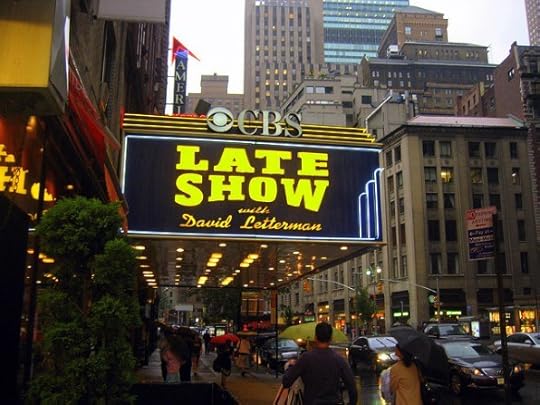
It was almost 4 p.m. when he walked across the corner of Broadway and 53rd Street in midtown Manhattan. The marquee of the Ed Sullivan Theatre was high and gleaming. Norman stopped beneath it and stared up like a member of some ancient cult worshipping a deity. He was ready, the time had come.
Unbelievably, the producers of the show had refused to have him as a guest – likewise Oprah, Leno and King – but they’d given him a free ticket for the Monday taping at 4:30pm. Not the outcome he had hoped for, not the outcome his discovery deserved, but after thinking about it – Norman gave a grim smile – maybe this way was best…
Ten minutes later he was sitting on a balcony overlooking the stage, in the front row, flicking through the show’s schedule. The right moment to strike was just after the interview with the Mayor, Rudolph Giuliani, who was winning his reputation leading the wounded city towards its salvation. Norman shook his head – ha! The irony of it. He was about to tell it like it was, right in Giuliani’s face.
As Giuliani waved to the live audience in the theatre, Norman felt a stabbing pain in the side. He was tense. Too tense.
The Mayor was leaving the stage and David Letterman was addressing the audience in his amiable way.
Norman got to his feet.
“Mr Letterman,” he shouted, “I’m a big fan of yours, and I have something extremely important to say to you and your audience about the terrible events of 9/11.”
Letterman looked at him, rolling his eyes.
“Oh, jeez fella, it’s already been a pretty rough week,” he protested, as the audience, still knocked sideways by events, chuckled uneasily.
“Please, David, let me go on, I only ask a few minutes, I’ve made a throughout investigation into it and I have very important findings to be shared with the public. You can always cut me later in the editing.”
Letterman shook his head, took the chair behind his desk and put it in the middle of the stage.
“All right, somebody bring our friend a microphone, please.”
A production assistant darted towards the front row of the balcony.
“Thank you so much, David, America will be grateful to you for this.”
“As long as they don’t sue me, I’m fine with that.”
More laughs, as nervous as before. An eerie sense of expectation spread over the theatre as Norman got hold of the microphone.
“So, as I said…“
“Your name, please, mister?”
“Yes, of course, I’m Norman Washington.”
“Thanks. Go ahead Norman, and don’t forget about my lawyer – he has a pretty high hourly rate.”
“Sure, sure.”
He held the microphone glued to his mouth, took a deep breath.
“Like any decent person in this country, I was shocked by the recent events of 9/11, and I wish the government had told us the whole truth about that terrible day. But they haven’t.”
“It’s getting worse by the minute” Letterman sighed, as people started booing.
“Norman, I’m sorry, but this is not the right place for this, there will be a 9/11 commission at some point. Thank you.”
“Please, David, just let me… .”
Before he could complete his sentence, the production assistant had whizzed past the balcony audience and snatched the microphone from his hand He found himself sitting back in his seat as Letterman went back to his desk to announce the next guest.
It was over. The system had hushed up the Truth.Again. But he wasn’t going to let them shut him up. He had another shot and was ready to play it all the way.
February 6, 2016
I know who did 9/11 – part three (Strange Stories collection)
Curled up in his basket, his muzzle resting on his paws, Oswald gazed at his master. Almost two days without any food, and God knows how many hours on end without being walked. What was he being punished for? He needed food. He needed water. He needed love. Norman was rummaging in every corner of the kitchen. The more he couldn’t find anything the more agitated he became. His heart was beating as if it had forgotten how to do it. The pills! Fucking hell! He hadn’t taken them. Nothing compared with his mission of unearthing the Pandora’s box of 9/11. Mitral insufficiency had been with him for most of his life but he had always managed to keep it under control with drugs. No big deal. He’ll get them soon. Tomorrow, possibly. Flinging open the last kitchen cabinet, his face contorted: two cans of Mexican beans and an ancient packet of crisps. That’s what you get when you fight for the Truth. Limp crisps and beans! He snatched the packet and tore it open, stuffing the stale, industrially fried slivers of potato into his face[run on], then stormed out of the kitchen and marched into the living-room.
When Oswald saw him waving that packet around his stomach rumbled with hope. That was for him – his master had finally remembered him. The dog gathered all his remaining strength and jumped out of the basket joyously.
Norman saw him coming at the very last moment, and taking that jump as an attempt to snatch his meagre food, shoved him away. Oswald smashed into the floor and urinated. Norman stepped over him, sat down at the table and started to frantically type on his keyboard.
Oswald lay frozen in an expanding puddle of pee, whimpering. He was staring at his master as if waiting for a sign. That it was just a new game. That he still loved him. That their world would go back to how it was before. But there was no sign from his master. Nothing he could pin his hopes on.
He picked himself up and dragged himself into the boxroom. His eyes panned the room from left to right, looking for the right place or the least worse to finish off the job. In a corner there was a big cardboard box. He lifted the lid up with his muzzle, then hopped in. When he had finished, the box was drenched. He couldn’t eat, but he could drink. His slender frame sneaked into the bathroom. He put his head into the toilet bowl and lapped up water until he felt full.
Back in his basket, the awful reality had dawned on him: he would have to survive by himself. So he whimpered and whimpered. And then he whimpered more. He’d have cried if dogs could cry. He’d have shouted his grief, if dogs could shout. His whimpering was low and monotonous, like a sad Mississippi slavery song, and like a slave song, no one heard.
Not Norman, who was switching from one conspiracy theory to the next: the one about the five Mossad agents; the one about the CIA being informed of the attack by Al-Qaeda; the one about the Pearl Harbour connection. When he raised his head from the screen of his laptop, it was 3 a.m.. He hadn’t eaten anything in six hours. A low, prolonged lament was floating around the room. He met the blank and lifeless eyes of Oswald, who was curled up in his basket as if trying to hug himself warm. Norman glanced at his dog as a child would do with a discarded teddy bear. He made himself a pot of coffee and took one of the cans of beans. “Quit whimpering!”, he yelled as he resumed his seat.
His spoon stabbed into the can, a mouthful of beans, and the hunt began again. “Here we go, fuckers!”, he yelled to the world, clicking on a link.
Six a.m. A dark room brightened only by the cold light of a laptop. Norman’s eyes like the surface of an alien planet streaked by blood-red rivers. Ten days into the Task, and he was nowhere. The sudden surge of disappointment quickly turned into a vicious mixture of fear and anger.
After the breakdown of his marriage with the only woman he had ever loved, after the bankruptcy of his company, another failure was looming. Was he bound to fail anytime and anyway? Was his life doomed? His arm smacked the laptop hard, and before he could catch it, it had fallen to the floor. The screen was cracked. ”Jesus!” The screech of the chair as he stood up. Ready to attack some invisible enemy. The system out there. The one that denied Americans and the rest of the world the Truth. The one that denied him the fame and happiness he deserved. That very same enemy was trying to annihilate him, to make him a loser again. Not any more. This time he would give the system out there the middle finger. This time he would.
Putting on a thick sweater and a blue bomber jacket, he left the house with a slam of the door. Oswald started. He barked loudly, angrily, with his last bit of strength, as if he too was confronting an enemy. It seemed that the house was now populated by enemies. But there was no one there to fight . The barking slowly weakened and turned into a howl of pain.
January 24, 2016
I know who did 9/11 – part two (Strange Stories collection)
He lost sense of time and space, and would find himself in the middle of the night still in front of the white light of his laptop. It was an orgy of scheming, plotting, conspiring – it was like plunging into the plots of dozens of thrillers, spy stories, mystery novels, with hints of science fiction. And all from the comfort of his house. Some nights he fell asleep on the desk with his head resting on the keyboard. It was only thanks to Oswald that he managed to get a few hours of decent sleep in his bed. Oswald gently tapped his thigh until he woke up. If that wasn’t enough, he climbed onto the chair, tucked his body in the gap between his master’s stomach and the desk, and squatted on his owner’s belly.
When the first cold winds of the season started sweeping New England, the land of the Founding Fathers, Norman took stock: after long nights, after gigabytes of information downloaded, he hadn’t come to any firm conclusion. He needed a plan, a method for sifting through the conspiracy theories and studying the most plausible. Yes, it was time to grow up, to move from the amateurism of most conspiracists to the professionalism of the few who would unearth the Truth.
Mulling over the way to proceed, he heard a screech. He span round and saw Oswald dragging his bowl over to the desk. Milk stains on the floor marked his path. Oswald crouched by Norman’s chair, his head resting by the bowl, as if showing his master that no matter the venture he embarked on, he would be there, beside him. He only needed a little food to get by. Norman smiled, and bent down to caress Oswald’s head. “You are right, Oswald… let me get you something,” he said. He was heading for the kitchen when he stopped and turned: “And, yes, I love you too, my friend.”
On Monday, after work, he turned on his laptop and dived back in. A couple of minutes of searches were enough to discover new versions of the 9/11 events. He resisted the temptation to follow his usual scattershot approach, and focused on one single conspiracy theory, the one which presented the most likely scenario: remote demolitions. Oswald began roaming around the living room making little jumps in the air to attract his attention. Once he realised his plan was nowhere near a success – his master didn’t as much as turn – the dog shuffled back to his basket.
It was blatantly evident, Norman considered, scanning the laptop screen: the rapid collapse and the short-lived fires pointed to controlled demolitions. The perpetrators implanted explosives over weeks, if not months, ready for the aircraft to detonate them! The footage of the towers collapsing showed as much. As did the reports of the sounds of explosions shortly before the collapse, and the violent ejections from windows many floors below the collapse. This is the one, he thought, striving to contain the excitement. Not too fancy or hi-tech, a traditional bombing attack with an artistic touch, if you like. He frantically copied, pasted, downloaded files after files, in a state of euphoria. Until he ran into something he didn’t like.
An inquiry by the National Institute of Standards and Technology argued a different mechanism. According to the study, the impact of the planes severed the support columns and dislodged the fire-proofing, spewing ten thousand gallons of jet fuel over several floors and starting fires that reached temperatures of up to 1,000C. It was these high temperatures that made the floors sag and the perimeter columns bend, causing the sounds of “explosions”. Norman grimaced. How convenient for the authorities – but what would you expect from a ‘National Institute’ of something or other? Yet as much as he wanted to dismiss the findings, once they penetrated his mind, they wouldn’t leave. His favoured conspiracy was debunked. He groaned, shut down his computer and stood up. Oswald dashed up to him whining. Norman nodded and took him out.
On the following day, he focused on the “Air Defence Stand-Down”. How could the defence system of the most sophisticated military in the world have failed in preventing the 9/11 attacks? Why didn’t the Pentagon scramble fighter jets to bring down the hijacked planes? Even if there was no way to prevent the first plane from hitting the South Tower, what about the North Tower? There was just one reasonable answer to that burning question. A stand-down order had been in place, given by someone at the top of the government. Hell, yes! Apparently, on the very morning of the attacks a military aviation exercise was being run, adding to the confusion. Go figure, thought Norman. And now they were churning out dozens of explanations, from failures in the chain of command to “lack of imagination” by the CIA. They should hire Hollywood scribblers!
He felt observed, and looked around. Lying on the floor, Oswald was staring at him with wide eyes. “Why?”, that pleading look asked? Why had he completely forgotten the companion of his life? Norman couldn’t bear to meet his gaze, so he grabbed one of his chocolate cookies, tossed it over and turned back to his laptop. Oswald watched the cookie arching over his head to fall on the floor and crumble into pieces, then turned back to look at his master. Who was already immersed in his new lead: the “Pentagon attack”. Flicking through the enormous amount of material on the topic, he was shocked by the unexplained facts, the peculiar lack of photographic material, the suspicious coincidences and unanswered questions. And the location, Oh my! The location, was just perfect! So intriguing, so full of inner meanings, so damn exciting! How could any independent thinker ignore the duty of scrutinising all sorts of hidden scenarios? Vicious agendas? You just couldn’t, and, above all, you mustn’t.
The first unanswered question was crucial to him. How could an amateur pilot fly a commercial Boeing 757 in such a complex manoeuvre and crash it into the headquarters of the most powerful military of the world? Especially when only one hour and 20 minutes before two planes had already been hijacked and everyone at the Pentagon should had been at DEFCON 1, ready to shoot down any goddamned bird happening to fly over their heads. Did a missile, not a plane, hit the Pentagon building? Or was it a drone packed with explosives? Both hypothesis were much more believable than a hijacked plane driven by an amateur pilot. Norman didn’t even consider it to be a conspiracy theory – it was just plain and simple common sense, the kind of good sense that the government wanted them to forget. With this in mind, he threw himself into the dark waters of the attack to the Pentagon.
The more pieces of information he was collecting, the more he was confident that he was entering a cave of lies and cover-ups – it gave him the shivers. At dinner time he didn’t make himself a meal. He had no time, the world was waiting for him to find out the Truth. A caffeine kick and some more chocolate cookies would have to do. That’s what he thought, heading for the kitchen, followed by the affectionate gaze of Oswald who started wondering if he had become an invisible dog. When he came back with a plate full of cookies, some chunks of dark chocolate and a big mug of coffee, Oswald lowered his head and rested it on his paws. Norman sipped at his coffee without raising his head from the screen. It was as though he was becoming part of it, his body cells blending with pixels and microchips in a new form of conspiracy-theory android.
The doorbell rang. Perceiving it as a sound of unknown origin which didn’t mean anything to him, he stood up and headed for the door as though following some kind of imprinted instinct. Oswald followed him, tongue dangling, hopeful for a walk or just a stroke of the head. A young man holding leaflets was on the doorstep, mouthing words. Who was this person? What did he have to do with the Task? “And so we’d like to engage as many people as possible in a project which aims to help the needy of our community”. Norman slammed the door – he was the one doing something for the community! On his way back to the desk he bumped into Oswald, who yelped piteously.
Back to work. Before being disturbed, he had come to the conclusion that the Pentagon building was hit by a missile. The lack of photos showing the moment of impact suggested it. In addition, right after the attack, the FBI confiscated all the available video recordings from nearby businesses. How about that? And you want us to believe this story? He snorted.
During another two hours of researches, however, he ran into reports of several witnesses who saw a plane, a commercial carrier, crashing into the west block of the Pentagon. They described it hitting the ground in front of the facade and being swallowed up into the building with a huge explosion. Of course, witnesses could have been suborned, but how many, and for how long? He rubbed at his face. The media would get hold of them sooner or later, and the whole lie would fall to pieces like a mummy doing bungee jumping. Not to mention that the remains of crew and passengers on the American Airlines Flight 77 were found and identified by DNA evidence. No, he was heading nowhere. As much as he thought it was absurd, it seemed it really had been a Boeing 757 playing kamikaze with the Pentagon.
Frustration and rage were growing inside him. He felt like smashing something. Hitting someone. They were screwing him. Once again.
END OF PART TWO
January 17, 2016
I know who did 9/11 – part one (Strange Stories collection)
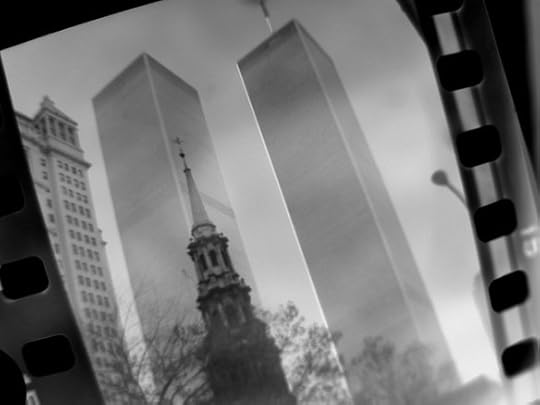
When the second plane hit the South Tower, Norman Washington had made up his mind: it was a cover-up.
A single man in his fifties with short greying hair and office-style glasses, he shared his terraced house in Dorchester, on the outskirts of Boston, with Oswald, a whisky-brown Labrador named after the shooter of JFK. They were just like any human couple but for the fact they weren’t sharing the same bed – except on stormy nights, when Oswald would crash on Norman’s bed and snuggle up next to him. There was room in his bed, after all. His only attempt to tie the knot had ended with his bride-to-be running away with an old friend of hers. “Stop worrying, we’re just good friends,” she used to reassure him.
On the afternoon of September 18, he got back home from work – almost twenty years as a debt collector, a job that had nourished his mistrust of other people – and took Oswald out in the backyard garden for a short walk. Then, he dropped a can of moist mince turkey & chicken into the dog’s bowl, made himself a pot of coffee and sat at his desk. When the browser page opened up, he typed in the words “9/11 attack”. Thank God for the web, he thought, scrolling down the Google page: it was already swarming with ideas about who had really done it. He took a sip of his coffee and set out to prove that 9/11 was the biggest conspiracy of all time, something that made the Kennedy assassination look like chickenfeed.
At 2 30 a.m. he was still stuck in front of his computer. Reluctantly he folded his laptop, vowing to himself that he would do whatever it took to accomplish ‘the Task’.
Since then, every day, right after work, Norman would feed his beloved Oswald, stroke him a bit, and then dedicate the evening and much of the night to the Task. As for the weekend, it was wholly consecrated to the cause. Feeding himself and Oswald were the only breaks he took. Oswald wasn’t complaining. When Norman tossed the dishes in the basin and went back to his computer, the dog looked at him with an expression which seemed to say “a man gotta do, what a man gotta do”. The whole family unit, of which Oswald was a pillar, was now dedicated to the Task.
Incredible feelings of excitement would strike him with every twist and turn of his investigations. Several key websites had become the wells where he would slake his thirst, the sources of his daily replenishment; he deemed them loyal allies in the battle for the big Truth, the one with the capital “T”.
Some days were more fruitful than others: eye-opening links, courageous confessions, enlightening articles, mesmerizing never-before-seen videos appearing from the hidden nooks of the web. Oswald recognised these moments by Norman stamping his feet rhythmically on the floor. That was the sign that his master was happy, and a good time to approach him. He jumped up with a human-like nod meant to say something like “I’m happy to be your dog, are you happy to be my master?” to which Norman responded with a few strokes and pats before going back to the Task.
There were moments when Norman felt overwhelmed by the avalanche of material available: controlled demolitions, CIA cover-ups, Flight 93 shot down by a missile, fake phone calls from victims, Air Defense Stand-Down orders, Federal Protection for 9/11 hijackers. Every link took him to a more gripping scenario, a more shocking revelation, a stream of controversial assertions. He felt as though the whole world was waiting for him to discover the Truth.
Oswald barked to bear witness to his own existence. Norman turned slightly and smiled, as if saying “Yes, I remember about you”. But did he? He was neglecting all his usual engagements. He didn’t play with his dog, had no social life – not that he had ever had a lot of it – didn’t watch TV, didn’t go to the cinema… His health was suffering – he’d forgotten to take the pills for his mitral insufficiency for three days, and missed a routine check. I’ll do it next time, he thought. Nonetheless, the Task was giving him all the vitality he needed. He certainly wouldn’t have said it in public, but 9/11 had changed his life for the better.
END OF PART ONE
9/11. The democratization of conspiracy theories
No other event has attracted conspiracy theories like 9/11. The only other example which comes to mind is the JFK assassination, but there was no internet at the time and this greatly reduced the reach of the conspiracy theories about it.
September 11, 2001 was the first tragedy where the web has been used as generator of endless conspiracy theories. We could say that 9/11 marked the beginning of an era when everyone with an internet connection has been able to contribute their own theory to the web.
The democratization of conspiracy theories, that is the possibility of finding or inventing new ones and sharing them with the world, has dramatically increased the number of people sincerely convinced of being in possession of a valid and more believable version of the official account of an event. With 9/11 the world of conspiracy theories has finally entered the mainstream. Not that the murder of JFK didn’t see films dedicated to a number of intricate and, somehow, enthralling plots – Oliver Stone’s JFK above all – but ordinary folks didn’t have a megaphone to spread their own self-made theories.
With this in mind, I decided to write I know who did 9/11, the story of Norman Washington, an ordinary man, who, when the white dust of the collapsed second tower was still floating in the air, resolved to give the government of the United States a week to disclose what really happened the day that changed history for ever. At the beginning of the 8th day, disappointed by the Congress’s actions and convinced that the government wasn’t going to unearth the truth, Norman Washington set out to discover himself the Truth – the one “with the capital T,” as he put it.
I know who did 9/11 is a journey throughout the mind of a man who, in good faith and with the best intentions, commits his life, and the life of his beloved dog, Oswald, to a superior goal he honestly believes he can achieve against all the odds.
This story is included in the first Strange Stories collection that will be out in February 2016, but you can read it in weekly installments on this blog starting from today, January the 17th, by clicking on this link: I know who did 9/11 part one
Strange Stories is a new mystery short story collection exploring human obsessions and how they can lead to unexplored territories where anything can happen. Because between reason and madness there is just a thin border we can happen to cross anytime.
January 3, 2016
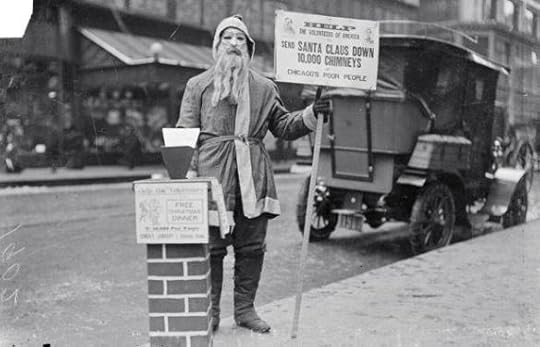
Santa Claus in Crisis – Alex R. Oriani
Dear All,
This is my Christmas Strange Story; it’s called “Santa Claus in Crisis”, and you can either read it online or download it here.
Happy 2016!
Alex
Dear Graeme Straub:
We interviewed a number of candidates for the position of “marketing manager”, and unfortunately on this occasion your application was not successful. Although the interview committee was impressed with your credentials and experience, it was deemed that you were overqualified for the position.
We wish you every personal and professional success with your job search and in the future.
Thank you for your interest in our company.
Regards,
Ebenezer Scrooge
HR Manager
Graeme sighed. Another polite, perfectly proper rejection email. They acknowledged his skills and experience, how kind of them. At the same time, though, they hinted that he was too old for the job.
The receding line of his greying hair reflected back at him from the computer screen. He was almost fifty and the job market was kindly reminding him of this fact as often as possible.
A festive banner appeared at the side of his mail provider page, advertising the Westfield Shopping Centre. It was as shiny and inviting as a Christmas ad is supposed to be, promising so many wonderful gifts all under one roof. If only he had the money, of course.
There was nothing he didn’t like about Christmas: the presents, once for him as a child, now for his six-year-old son; the tree, the decorations, the turkey, the cakes, the gleaming lights hanging above London streets. He had always been in love with Christmas. Always. Until now.
He deleted the email with an abrupt click on the mouse and got to his feet.
Crossing the living room, he walked into Zack’s bedroom, decorated with cartoon characters, and took a deep breath: how much he loved that air so devoid of any responsibility. His eyes wandered for the room and rested on a gleaming mini basketball hoop. He had given it to Zack for Christmas last year.
Picking up the small ball and taking aim, he shot it into the hoop with complacent skill. Since that day nine months ago when he had been made redundant, he’d had a lot of practice. This was his refuge from the world out there.
Still shooting hoops, he glanced at his watch – Zack would have been home soon: the love of his life, the only one thing he was really proud of.
He shot another hoop just as the doorbell rang.
“Hi,” he said as he opened the front door, beaming as though in a commercial for something wholesome and fun.
“Hi, Graeme. How are things?” His ex, Alianne, looking exactly like the dynamic, business woman she was, handed over Zack’s holdall.
“Great!” he nodded, squatting down to give Zack a hug.
“How was school, mate?”
“It was cool,” said Zack, a lively little boy with a mop of yellow hair.
“Really? Since when school is cool?” asked Graeme, smiling.
“Cos we did stuff about holidays and Christmas presents.”
He tried to keep smiling.
“Oh… I see. Yeah, that’s cool.”
“Turns out most his friends are getting a stonking great games console for Christmas. Who would have thought it?” Alianne chipped in with a knowing smile.
“Dad, are you sure Santa can bring the same present to so many kids? Isn’t he gonna run out of them?“
Graeme chuckled.
“Of course, he can. He’s Santa Claus! He can do anything.”
Zack ran into his room – “Bye mum!” – leaving Graeme and Alianne stood on the threshold of the house.
“Last thing, I got him a set of Star Wars action figures collection for Christmas. The brand new one, twelve dolls, he’s gonna love it.”
“Brilliant.”
“You bet.”
“Well, we’re all sorted, then.”
“Merry Christmas, Graeme.”
“Merry Christmas to you, Alianne.”
Waving her off and closing the door, he shivered. There was no money in the bank, he was living on benefits and his credit card had been frozen: there was no way he could buy his son the present he was expecting.
Zack was emptying his holdall out and brandishing a scraper as Graeme went into his room.
“What’s that for, Zack?”
“It’s for Santa,” he said, heading for the front door.
Graeme followed him outside.
The sun was trying, but there wasn’t much it could do. Snow and frost clung to the earth. Zack was scraping the frost from the steps.
“What’re you doing mate?”
“Santa is coming tonight,” Zack said, without stopping.
“Oh, right. We don’t want Santa to fall down our stairs and break a leg.”
“Exactly, and don’t forget that he’s VERY old.”
“Right, spot-on. I should have thought about that myself.”
“I know,” said Zack.
Graeme smiled as Zack moved on to another step, every scrape of the scraper echoing in Graeme’s mind as he was mulling over what to do.
“I’m sure that with your skills and experience,” his boss had told him back in March, “you won’t be out of a job long.” Yeah right, Graham thought, watching Zack move on to the last step.
“Great job, mate.”
“Thanks.”
“He won’t fall over now, that’s for sure. Let’s have a rest now. We can sit here and have a little chat. What do you think? Are you cold?”
“No.”
They sat on the last step of the stair.
“Listen, do you know that these are crisis times? Have you heard anything about the crisis?”
“Yes.”
“What have you heard?”
“That there’s a crisis.”
“Which is correct. Perfectly correct… the thing is, that when there’s a crisis people have less money to spend, so they buy less stuff…”
“Mum’s not in crisis, then, is she? She buys a lot of clothes.”
“Well, mum is fine, good for her. I was talking in general… our country is in crisis, the other countries in Europe are in crisis. Now, when there’s a crisis all governments run an economic policy called austerity.”
“What is authority, dad?”
“Austerity, well, it basically means that a lot of people lose their jobs.”
“Mum hasn’t lost her job.”
“No, she hasn’t. But, as I said, I was talking in general. So, the problem is that when people have less money, they spend less and buy less stuff, even Christmas presents, and so…
as a result –.”
“But Santa Claus brings Christmas presents, people don’t have to buy them!”
Graeme winced. He wanted to say he’d lost his job and couldn’t afford Christmas presents, not tell Zack that Santa Claus didn’t exist!
“See what I mean, dad? It’s Santa, everybody knows it.”
Graeme felt lost. Children believe in Santa Claus, who was he to take away their right to dream?
“Yes, of course, it’s Santa,” he answered at last.
“So, even with the crisis children still get their Christmas presents, don’t they?”
“Well, the point is that in crisis times many, many people lose their jobs, you know…”
“Okay.”
“It can literally happen to anyone, anyone in the world, you understand?”
“Yes, dad, anyone in the world.”
ANYONE in the world! Graeme paused, nodding.
“Exactly, really anyone. So, unfortunately, this Christmas a very, very famous person, a celebrity, so to speak, has lost his job.”
“Who is it, dad?”
“It’s Santa Clause, Zack…”
“Noo! Santa!? How is that possible?”
“It’s possible, Zack, anything can happen in such crisis times.”
“So no kid in the world will get any presents?”
“Well, not exactly. You see, since Santa Claus brings presents to all the children of every country in the world, he’s hired by the governments of each of this countries. As for us, the government has made cuts to its public spending, so Santa will only go to some areas of London.”
Zack turned the scraper over in his hands.
“And he’s not coming to our house?”
“Unfortunately, no. This area isn’t very wealthy – the Council decided to give Santa the sack.”
“No presents, then? Nothing?”
“I’m sorry, Zack, not this year. It’s the crisis.”
“I was so waiting for Christmas, dad.”
“I know. I’m sorry, Zack.”
He gave his son a hug and kissed him on his head.
****
The living room was as Christmassy as possible, in the circumstances: decorations were pinned from wall to wall; brightly coloured balloons hung in the corners and garlands of tinsel were wrapped around the furniture. Pride of place in the corner near the window was the large, lush green Christmas tree, covered with baubles and snowflake swirls.
Father and son had just finished their Christmas Eve dinner. Zack was collecting all the bread crumbs on the table and gathering them into a circle around his glass like a kind of pagan ritual. Graeme was looking at a photograph on his phone that Alianne had sent for Zack to see: a dozen guests laughing and smiling as they tucked into a feast. Graeme sighed. Once his life was like that.
“Hey Zack,” he tried. “Happy Christmas, son.”
Zack looked up from his pagan temple.
“Happy Christmas, dad.”
As they looked at each other in silence, there was a loud bang and the lights went out.
“Dad!”
The door of the house slammed. Graeme dashed over to Zack and hugged him.
“It’s all right, sweetie. It’s all right. I’m here.”
“What’s happened?” called out Zack, nearly crying.
“Don’t worry son – maybe a fuse blew?” said Graeme and caressed his hair.
“It’s so dark… can we turn on the light?”
“Yes, I’m going to check the meter… just a second.”
“Can I come with you, dad? I’m scared.”
“Of course. Give me your hand… let’s go.”
As soon as he took the child’s hand, a glistening light illuminated the room. The Christmas tree was flooded with thousands of small lights, each pine needle seemed to have become a source of light itself.
“Wow!”
As if drawn by an invisible force, father and son walked towards the tree. Graeme could feel his boy’s hand shaking in his. He held it tighter and walked on.
The intensity of the light was growing and lighting up the whole room. When they stopped before the tree the light was so strong they couldn’t look at it.
“It’s – it’s warm,” Graham whispered.
Zack put his hand to his eyes and looked down. There was something blinking at the base of the tree.
He crouched and saw a wrapped box. He gasped at the sight, and frantically unwrapped it.
“My games console!”
Graeme sank to his knees in wonder.
“Dad, they gave Santa the job again! Santa is back,” shouted Zack.
“Yes, apparently they did.”
“Look, papa! There’s another box,” called out Zack, pointing – a second blinking light had appeared under the tree. “I think this is for you, dad,” said the boy handing it to his father.
Graeme tore up the wrapping and opened the box. There was a mobile phone inside, of a model he had never seen before, red and gleaming. He took hold of it warily and observed it. It rang.
Graeme and Zack looked at each other.
“Answer, dad,” Zack urged
A big round button at the centre of the phone was blinking. Graeme touched it as softly as he could.
“Mr Graeme Scraub?”
“Yes…”
“I’m Mr.Fezziwig, HR Manager of Jeffreys Inc. I’m pleased to say that we have reconsidered your application and have decided to accept your candidature… Mr Scraub? Are you there?”
“Yes… does this mean that… I got the job?”
“Exactly, precisely, spot on, Mr Scraub. You got the job. You start next Monday, 9 pm, sharp.”
“Well, it’s great, thanks, but… it’s a bit strange, you know, it’s Christmas and…”
“Yes, it is, Mr Scraub. Happy Christmas.”
THE END