
Liz Barrett's Blog
December 22, 2015
The Pizza Insider is On Hiatus
The Pizza Insider is taking a break to focus on writing more feature-length stories for PMQ Pizza Magazine.
If you have a great story to tell, or are performing marketing miracles at your pizzeria, please don't hesitate to contact me at Liz@PMQ.com.
See you in the magazine!
Liz
Find me on Facebook
Follow me on Twitter
If you have a great story to tell, or are performing marketing miracles at your pizzeria, please don't hesitate to contact me at Liz@PMQ.com.
See you in the magazine!
Liz
Find me on Facebook
Follow me on Twitter


December 3, 2015
Behind the Pizza Peel: RC Gallegos
The goal of the Behind the Pizza Peel series is to reveal the warm--and sometimes wild--personalities that create America's favorite food on a daily basis.
Who are the people behind the pizzas, and what made them choose a pizza peel over a briefcase? What's their inspiration and what keeps them going? We find out in this ongoing series.
Installment #8…
Behind the Pizza Peel: RC Gallegos
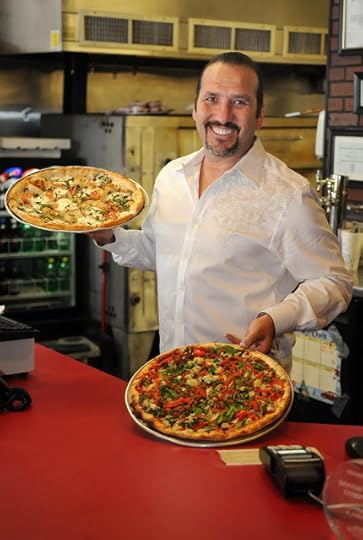 RC Gallegos
Pizzeria: RC's NYC Pizza & Pasta, Kingwood and The Woodlands, Texas Age: 46
Years in Pizza Biz: 12.5
Favorite Hobbyoutside of Pizza: family
The Pizza Insider: Why did you choose to go into the pizza business?
RC Gallegos: I always made pizzas growing up in Texas because you really couldn't find good pizza back in the day. So me and my friends would make pizzas at home. We didn't have all of the modern bells and whistles and training, but we were doing our own little thing with it. So I always had that passion of wanting a better pizza, but never thought I'd have a restaurant.
So when the opportunity presented itself and I was wanting to open a restaurant, being in Texas, I was thinking either pizza (because that's the only food I've ever cooked in a restaurant) or barbecue because barbecue is so popular in Texas (but I had never cooked barbecue before).
I chose pizza.
When I opened, I thought my pizza was good. One of my buddies from New Jersey came over to support me and try my pizza. He told me it was horrible. He said I'd be shut down in four months.
I thought he was joking, but he said, "No, I'm serious; go to New York and tell me if this is the best you think you can do." So I took his advice and that's where my story really begins.
The Pizza Insider: Looking back on your original goals, how do they match, or differ from, where you are today?
RC Gallegos: I was a bit delusional in the beginning. When we first opened, I thought that within five years we'd have three locations, selling franchises, etc. That was the goal for the company. We're a completely different place today. That's still our pipe dream, but reality sets in and there's numbers to account for and stumbling blocks that you run into. And now with social media, everything is completely different. Twelve and a half years later we still have direction, but our guests and their experiences and our employees are really the driving force of where we are today.
The Pizza Insider: Do you have a favorite memory associated with pizza?
RC Gallegos: Definitely those old high school memories of making pizza at home with my best friend. Just me and him on a Friday night making pizza and talking about whatever teenage kids talk about.
The Pizza Insider: When you eat at other pizzerias, what type of pizza do you order and why?
RC Gallegos: When I go to other pizzerias I look at everything from crumb, toppings, marketing, menu layout, etc. There's so much to learn from other pizzerias.
The Pizza Insider: Who are your role models or mentors?
RC Gallegos: Tony Gemignani. It's unbelievable what he can do with pizza and the vision he has. I started as a New York-style pizza shop, but now I've been able to expand and offer so much more with a thin and crispy, deep dish, Neapolitan, etc. You can get a larger foothold on your market by offering a little bit of variety. Of course, in Texas, the all-meat pizza is still the most popular by far.
The Pizza Insider: In your opinion, what separates a good pizza maker from a great pizza maker?
RC Gallegos: Passion. Even my kid who's 11 makes pizza at the restaurant. It's good, but he's not at the level of a great pizza maker yet. It's not that perfect balance--the evenness of the dough; the right amount of crust on the edge; the balance of the sauce to dough to cheese to toppings ratio. To me, that's what differentiates and defines a great pizzaiolo from a good pizzaiolo; they have that passion to pay attention to the minute details.
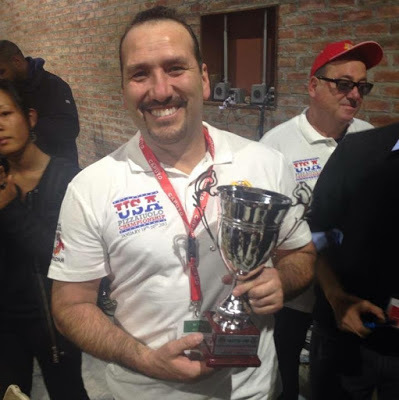 RC Gallegos
The Pizza Insider: What’s the best advice you ever received?
RC Gallegos: If you're going to do this, don't waver. Stick to your guns and don't keep changing your concept.
The Pizza Insider: Do you have any words of wisdom for new pizzeria operators?
RC Gallegos: Don't be afraid to ask for help and don't turn help away. It's a huge industry and we all have our own niche. So many people reached out to offer me help; they've all been where I've been. I've even helped a direct competitor around the corner from me. Don't be so egocentric to think that you're the best and could never need advice or help.
The Pizza Insider: If someone wrote a book about your life, what would it be called?
RC Gallegos: Against All Odds
Who are the people behind the pizzas, and what made them choose a pizza peel over a briefcase? What's their inspiration and what keeps them going? We find out in this ongoing series.
Installment #8…
Behind the Pizza Peel: RC Gallegos
 RC Gallegos
Pizzeria: RC's NYC Pizza & Pasta, Kingwood and The Woodlands, Texas Age: 46
Years in Pizza Biz: 12.5
Favorite Hobbyoutside of Pizza: family
The Pizza Insider: Why did you choose to go into the pizza business?
RC Gallegos: I always made pizzas growing up in Texas because you really couldn't find good pizza back in the day. So me and my friends would make pizzas at home. We didn't have all of the modern bells and whistles and training, but we were doing our own little thing with it. So I always had that passion of wanting a better pizza, but never thought I'd have a restaurant.
So when the opportunity presented itself and I was wanting to open a restaurant, being in Texas, I was thinking either pizza (because that's the only food I've ever cooked in a restaurant) or barbecue because barbecue is so popular in Texas (but I had never cooked barbecue before).
I chose pizza.
When I opened, I thought my pizza was good. One of my buddies from New Jersey came over to support me and try my pizza. He told me it was horrible. He said I'd be shut down in four months.
I thought he was joking, but he said, "No, I'm serious; go to New York and tell me if this is the best you think you can do." So I took his advice and that's where my story really begins.
The Pizza Insider: Looking back on your original goals, how do they match, or differ from, where you are today?
RC Gallegos: I was a bit delusional in the beginning. When we first opened, I thought that within five years we'd have three locations, selling franchises, etc. That was the goal for the company. We're a completely different place today. That's still our pipe dream, but reality sets in and there's numbers to account for and stumbling blocks that you run into. And now with social media, everything is completely different. Twelve and a half years later we still have direction, but our guests and their experiences and our employees are really the driving force of where we are today.
The Pizza Insider: Do you have a favorite memory associated with pizza?
RC Gallegos: Definitely those old high school memories of making pizza at home with my best friend. Just me and him on a Friday night making pizza and talking about whatever teenage kids talk about.
The Pizza Insider: When you eat at other pizzerias, what type of pizza do you order and why?
RC Gallegos: When I go to other pizzerias I look at everything from crumb, toppings, marketing, menu layout, etc. There's so much to learn from other pizzerias.
The Pizza Insider: Who are your role models or mentors?
RC Gallegos: Tony Gemignani. It's unbelievable what he can do with pizza and the vision he has. I started as a New York-style pizza shop, but now I've been able to expand and offer so much more with a thin and crispy, deep dish, Neapolitan, etc. You can get a larger foothold on your market by offering a little bit of variety. Of course, in Texas, the all-meat pizza is still the most popular by far.
The Pizza Insider: In your opinion, what separates a good pizza maker from a great pizza maker?
RC Gallegos: Passion. Even my kid who's 11 makes pizza at the restaurant. It's good, but he's not at the level of a great pizza maker yet. It's not that perfect balance--the evenness of the dough; the right amount of crust on the edge; the balance of the sauce to dough to cheese to toppings ratio. To me, that's what differentiates and defines a great pizzaiolo from a good pizzaiolo; they have that passion to pay attention to the minute details.
 RC Gallegos
The Pizza Insider: What’s the best advice you ever received?
RC Gallegos: If you're going to do this, don't waver. Stick to your guns and don't keep changing your concept.
The Pizza Insider: Do you have any words of wisdom for new pizzeria operators?
RC Gallegos: Don't be afraid to ask for help and don't turn help away. It's a huge industry and we all have our own niche. So many people reached out to offer me help; they've all been where I've been. I've even helped a direct competitor around the corner from me. Don't be so egocentric to think that you're the best and could never need advice or help.
The Pizza Insider: If someone wrote a book about your life, what would it be called?
RC Gallegos: Against All Odds
November 25, 2015
Behind the Pizza Peel: Dave Garcia
The goal of the Behind the Pizza Peel series is to reveal the warm--and sometimes wild--personalities that create America's favorite food on a daily basis.
Who are the people behind the pizzas, and what made them choose a pizza peel over a briefcase? What's their inspiration and what keeps them going? We find out in this ongoing series.
Installment #7…
Behind the Pizza Peel: Dave Garcia
 Dave Garcia
Pizzeria: Halftime Pizza, San Antonio, TX Age: 44
Years in Pizza Biz: 15
Favorite Hobbies outside of Pizza: Golf and home-brewing beer
The Pizza Insider: Why did you choose to go into the pizza business?
Dave Garcia: My first job at age 15 was at a Peter Piper Pizza. I lied about my age and said I was 16 so I could work there because I loved pizza so much.
My dad wanted me to go into the medical field and so I became a pre-med student and did a lot of studying and reading, but I wasn’t sure that’s what I wanted to do. I couldn’t separate humans from machines. Meanwhile, I kept thinking about pizza and how it’s surrounded by celebration. I ended up asking the advice of my dad’s doctor, Dr. Carl Dukes, who told me I should go after my passion, even if it wasn’t medicine. My dad didn’t take my decision to leave medicine for pizza lightly, but he’s seen how I’ve earned my way over the years, from being a co-owner at Alamo Pizza to starting my own place at Alamo City Pizza to eventually opening Halftime Pizza, where I've successfully filled the void in San Antonio for a family-friendly sports-related pizzeria.
The Pizza Insider: Do you have a favorite memory associated with pizza?
Dave Garcia: One time in my early 20s my dad and I were out running errands and went to a local pizzeria—just the two of us. It was the first time I paid for our lunch. We had a pepperoni pizza and two Peroni beers. It was one of the best lunches I’ve ever had. Now I always make sure to keep Peroni at the pizzeria.
The Pizza Insider: When you eat at other pizzerias, what type of pizza do you order and why?
Dave Garcia: I usually order cheese or Margherita. If you can put out a really good cheese or Margherita, that’s great. If it’s somewhere I go all the time, I order the specialty pizza. I’m usually looking to see if they’re using fresh mozzarella, a screen, type of oven, etc.
The Pizza Insider: Who are your role models or mentors?
Dave Garcia: I communicate with Tony Gemignani through Facebook; I met him at Pizza Expo and respect how hard he works. Also people like Franco Pepe and Chris Bianco who are so great at what they do.
The Pizza Insider: In your opinion, what separates a good pizza maker from a great pizza maker?
Dave Garcia: Someone who respects the industry and the history of how they were making everything by hand and taking it back to its roots. If you can master that, I have nothing but respect for you.
The Pizza Insider: What’s the best advice you ever received?
Dave Garcia: When Dr. Dukes told me to do what I’m passionate about. Also to do the right thing. If you can tell yourself that you’re doing the right thing before every decision, you’ll be alright.
The Pizza Insider: Do you have any words of wisdom for new pizzeria operators?
Dave Garcia: Remember why you got into it. If you’re truly passionate about pizza, it’s still stressful, but there’s an end to the stress. Weather the storm and keep your head up.
The Pizza Insider: Can you name one thing that you feel will have the biggest impact on the pizza industry in the next five years?
Dave Garcia: Because of the popularity of wood-burning ovens I think we’ll see people getting more creative with them, cooking more appetizers and desserts in them, not just pizza.
The Pizza Insider: If someone wrote a book about your life, what would it be called?
Dave Garcia: The Hardest Working Man I Know
November 19, 2015
Exploring a New Technology for Delivery Drivers
 I've never worked as a pizzeria delivery driver, but I imagine it can be pretty stressful trying to get all of your pizzas delivered on time without spending the night worrying about speeding tickets, nonexistent tips, or worst of all, a potential robbery.
 That's why it's exciting whenever something new is introduced that's designed specifically to help drivers out in the field.
Last week I was talking with a representative from Square when he told me about an update to a technology called Open Tickets that has recently been made available to pizza delivery drivers. He put me in touch with Chuck Myers, co-owner of Scooter's Cafe & Pizzeria in Saugatuck, Michigan, who's been using the technology for the last few months.
Chuck ran me through how it works and the benefits to Scooter's and its drivers.
The Pizza Insider: Is there a reason you chose Square for your credit card processing?
Chuck Myers: I've been using Square since I opened my restaurant four years ago because of its lower percentage rates and convenience. It also allowed me to process credit cards with my iPhone. So by going out into the field with my iPhone and swiping the card at the door, I could get a lower percentage rate.
The Pizza Insider: How does swiping a card at the door affect your percentage rate?
Chuck Myers: Most credit card processors will tell you about their fantastic rates, but those rates are only for swiped transactions. In a pizzeria, where you're doing delivery, most of your transactions are not going to be swiped transactions, they'll be transactions where you punch in the number over the phone, so you end up paying much higher rates.
By using Square, I could go out with my iPhone and the paper ticket we created in the store and then I'd punch the order in on Square in my car and then run the card at the door and it was a swiped transaction. So I paid the lower rate for the transaction. What I really wanted was to be able to create the ticket in store and have my delivery driver go out and open the ticket up on their phone, which is the Open Tickets improvement Square made this fall.
The Pizza Insider: How does Open Tickets work?
Chuck Myers: Open Tickets lets you avoid a paper copy to begin with. Instead of having to go out and generate a paper ticket, you can put the order into Square and then hold it and pay for it later. When Square initially created Open Tickets, you could only use it on the iPad within the restaurant, but they finally expanded it this fall to be used on the iOS and Android devices out in the field. So now my kids, when they answer the phone, can put the order in on the iPad, and then my delivery driver can pull the order up out in the field and cash it out. It's the best of both worlds and is a great security measure, since you capture the customer's signature on the ticket.
The Pizza Insider: Have driver's seen an increase in tips?
Chuck Myers: Open Tickets allows the customer to leave a tip at the door. Traditionally, a receipt is printed and a customer can decide if they want to add a tip to the credit card at the door and then it has to go back to the restaurant and at the end of the night a restaurant would need to go through and punch all of those tips back in and then balance and rerun all of the credits. Alternatively, with Square, you swipe the card and it immediately comes up with a screen that asks if you'd like to add a tip and there are preset buttons of percentages. The customer doesn't even have to think; they just press the button. The tip is immediately added to the charge, the customer immediately sees what the charge is, and I can immediately email or text a copy of the receipt to the customer with the tip added to it. The customers love it and I think the tips have gone up since we added it. I love it because I don't have to punch anything in at the end of the day!
Have you tried this technology or something similar? Let me know in the comments below!
November 12, 2015
Behind the Pizza Peel: Dennis Sheil
The goal of the Behind the Pizza Peel series is to reveal the warm--and sometimes wild--personalities that create America's favorite food on a daily basis.
Who are the people behind the pizzas, and what made them choose a pizza peel over a briefcase? What's their inspiration and what keeps them going? We find out in this ongoing series.
Installment #6…
Behind the Pizza Peel: Dennis Sheil
 Dennis Sheil
Pizzeria: Rio Vista Pizza Factory, Rio Vista, California
Age: 55
Years in Pizza Biz: 13
Favorite Hobbies outside of Pizza: Art--both painting and collecting, traveling, and spending time with family.
The Pizza Insider: Why did you choose to go into the pizza business?
Dennis Sheil: We went into the business on a whim! My parents owned a restaurant when I was a teenager and I always thought it was cool that they did. Later in life, they wanted to move from Iowa to California, so along with my wife, sister, and brother-in-law, we found them a house in a retirement community in the town of Rio Vista, about 30 minutes from where we live.
After we were committed to the house, we realized that my parents had been going out for pizza every Friday night for about 50 years, and we didn’t know if there was a pizza place in town.
As soon as we realized this fact, we headed to Rio Vista to see what they had to offer.
As it turned out, there was a local Pizza Factory restaurant, which had been there for almost 15 years. With our first bite of the pizza we fell in love with the food. We couldn’t wait to share this gem with our parents when they got moved out here. We ended up driving to Rio Vista for pizza with my parents every weekend, and eventually became friends with the restaurant owners. Of course we talked about my parents having a restaurant years earlier, and talked about the pizza business on many occasions.
One evening when we were there, the owners came out to our table, as they usually did, but said they had something they wanted to talk to us about. They said they always enjoyed talking with us about the restaurant business and they appreciated how interested we were in the pizza business. They then asked if we were interested in buying a pizza restaurant–specifically their pizza restaurant! They went on to explain that they were retiring, and thought we would be the perfect people to take over the business. Being the only pizza restaurant in town, and having 15 years of detailed financial records made it easy to perform our due diligence. After discussing it, my wife, sister, brother-in-law, and I decided to go for it.
The Pizza Insider: What do you enjoy most about the pizza business?
Dennis Sheil: As for what I enjoy most about it, hands down, it has to be the people. I love interacting with people, and they are especially friendly when enjoying a slice of pizza and a cold refreshing beverage.
The Pizza Insider: Looking back on your original pizza goals, how do they match, or differ from, where you are today?
Dennis Sheil: Overall my goals align fairly closely with where we are today. The restaurant is thriving, the employees are happy, customers love the food, and we live the lifestyle we want to live.
The Pizza Insider: In your opinion, what separates a good pizza maker from a great pizza maker?
Dennis Sheil: It’s always great to experiment, but consistency is the key. I also believe that part of being a great pizza maker is being a great business person. Customers expect a certain standard, and it takes a great pizza maker to ensure those standards. If your dough is dense one day and airy another, customers will notice. If your sauce is sweet one day but spicy the next, customers will notice. If you’re using high-quality toppings then switch to more “budget-friendly” toppings, customers will notice. Another aspect of being a great pizza maker is understanding the intricacies of your products. For example, if your dough is blowing up or not rising enough, you have to know how to make the proper adjustments.
The Pizza Insider: Do you have a favorite memory associated with pizza?
Dennis Sheil: Without a doubt it’s the wonderful memories I have of my young son enjoying Friday evening eating pizza with my parents who have now passed away.
The Pizza Insider: When you eat at other pizzerias, what type of pizza do you order and why?
Dennis Sheil: I always order a sausage, mushroom, and onion pizza when we try a new place. I order this same pizza everywhere so I can try the different sausage flavors at different places, and also so I’m always comparing “apples to apples” at each place.
The Pizza Insider: Who are your role models or mentors?
Dennis Sheil: I’ve always been a huge fan of Big Dave Ostrander and have turned to him for advice on more than one occasion. Recently I was introduced to an incredible gentleman named Tom Frank. Tom’s business card lists him as a “Cultural Engineer” and it does not take long around him to see that the term is appropriate. His insight is remarkable, and I love the philosophy that works on the premise that by getting employees to buy into your culture, they share your values, are much more self-sufficient, more proactive, and require fewer rules and regulations because of it.
The Pizza Insider: What’s the best advice you ever received?
Dennis Sheil: I have received more great advice over the years than imaginable. Unfortunately, often times you don’t know it was good advice until it’s too late. I’ll have to go with a quote from the late, great, Dr. Suess, "Be who you are and say what you mean. Because those who mind don't matter and those who matter don't mind!"
 Dennis with PMQ's seal of the Great Meal of the USA.The Pizza Insider: Do you have any words of wisdom for new pizzeria operators?
 Dennis Sheil: I have a couple words of advice for new operators…
Communicate! Most people are not mind readers, and they don’t know what we want unless we tell them. We get so caught up in our own world that we sometimes forget to share information with those around us, and often times they are the ones who need the information most.
Train, train, then cross-train. It goes without saying that having people really know their job makes it easier for everyone. What makes it even better is to have them know everyone’s job. After an employee is trained and very proficient at the position they were hired for, we start cross-training them in the other positions. This really helps when you get slammed and need someone to lend a hand or fill in somewhere other than their “normal” job.
Delegate. I know this is hard. Everyone wants to have full control of their business, but the fact is, you can’t be as effective or efficient when you try to do everything yourself. Start small with simple tasks, and gradually work up to the point where you can hand off larger tasks.
Make it fun. Make it fun for you, make it fun for your management, and make it fun for your employees. We encourage our employees to joke around, pull innocent pranks, and do the things that make them want to come to work. This is pretty easy once everyone understands “the rules,” and the rules are very simple; never say or do anything offensive to (or around) another employee or customer. Know where the line is between professionalism and being unprofessional, and never cross that line. Understand that you still have to get your work done properly and in a timely manner. Employees must self-police, not letting any other employee cross the line with anything they say or do.
Don’t underestimate the plethora of incredibly valuable information in the PMQ Think Tank. After all these years in business, we still turn to the PMQ Think Tank when something unusual pops up. Chances are, if you have a problem, someone else has had the same issue and has addressed it in the Think Tank.
The Pizza Insider: Can you name one thing that you feel will have the biggest impact on the pizza industry in the next five years?
Dennis Sheil: I believe fresh, local, sustainable ingredients are the way of the future. I think the generation coming up is more environmentally conscious than generations past, and I think their concerns for the planet will translate to the pizza industry in multiple ways.
The Pizza Insider: If someone wrote a book about your life, what would it be called?
Dennis Sheil: The Wild, Wonderful, Wacky World of Dennis Sheil
November 5, 2015
Top 5 Ways to Win Back Lost Customers
 Pizzerias lose customers all the time, for any number of reasons, but it doesn’t have to be this way. With the proper strategy in place, it’s possible to win back your most valuable customers.
The Pizza Insider went to Kane Russell, head of marketing at Thanx, a technology company based in San Francisco that helps make customer marketing effortless for multi-location businesses and their customers, and asked about the top 5 ways to win back lost customers. The tips below come directly from Russell.
5 Ways to Win Back Lost CustomersBy Kane Russell
 Kane Russell, Thanx
The pizza industry can be summed up in two words: lucrative and competitive. In the U.S. alone, 73 thousand unique stores compete for 40 billion in annual sales. As such, any opportunity to earn incremental sales has to be seized, whether football promotions, vehicle ads, or customer retention marketing.
Fortunately, one of the best ways to earn incremental sales still remains largely untapped: customer winback marketing. The concept is simple — target previously loyal customers who seem to have stopped visiting and give them an incentive to return. If they do return, have a terrific experience, and go back to their previous visit frequency, pizza restaurants immediately earn sales that they would have otherwise lost to a competitor.
As a strategy, winback works because it targets the right customers at the right time. Previously loyal customers are the most cost effective to acquire given their existing relationship with the brand, and a personalized message sent before they go elsewhere has the highest chance of conversion. Tactically, however, winback requires a few best practices to ensure it’s done right. In no particular order:
1) Align winback promotions with individual customer frequency, NOT overall frequency.
Many pizza brands make the mistake of sending out winback promotions on a set timeframe, e.g. every 30 days or 60 days. The problem is that some extremely loyal customers only come in every 30 days or 60 days; sending them a winback promotion unnecessarily gives away revenue.
Instead, target winback offers according to individual customers frequency. Use whatever data you have. Transaction information works best (which you can get from a loyalty program) to figure out exactly when customers deviate from their average frequency. If transaction data isn’t possible, use other metrics instead. Email opens, for example, can be a proxy — once a customer stops opening email in the way they have in the past, they’re definitely at risk of going somewhere else.
Without any data at all, send out winback promotions according to new developments at your restaurant. Announcing new menu items or events, for example, can be a good way to reach customers who are less engaged with your brand than they were.
2) Winback above all else is about relationships — include language about re-connecting with your brand.
Oftentimes, pizza restaurants send winback offers focusing on the incentive, e.g. “Get $10 off if you come in during the next 7 days.” The problem with this messaging is that winback marketing is down funnel, i.e. you’re building loyalty, not awareness. So, a focus on the incentive converts discounters, not loyalists.
Instead, the messaging in a winback offer needs to include language focused on relationships, e.g. “We’ve noticed you haven’t been back recently — here’s $10 off to try out our newest menu item,” or “We’d love to see you again — here’s a complimentary item just for you.” With a focus on relationships, winback promotions convert at much higher rates.
3) Align the offer value with the customer's overall value to the business.
Many brands make the mistake of offering a blanket winback promotion to all customers. Unfortunately, giving $10 off to a customer who has spent thousands over their lifetime doesn't make sense
Instead, make sure the winback offer is commensurate with the customer's value for the business. Again, transaction data works best here, as you can essentially calculate different levels of incentives depending on customer tiers: high, medium, and low value.
If no transaction data is available, again, use the information you have. For example, restaurants with no data can provide a few special winback rewards cards for their location managers to hand out to folks they know, but feel like they haven’t seen in a while.
4) Make redeeming the offer as easy as possible for the recipient.
If you send a millennial customer a winback offer that requires printing out a piece of paper, you not going to see that millennial back in your pizza restaurant. Likewise, if you ask a customer to fill out a lengthy form to redeem their winback offer, you’re also going to see low redemption.
Instead, use new delivery channels for winback offers, e.g. mobile-optimized email or in-app coupons. For winback — just like anything in marketing — there are two hurdles to overcome: first, incentives have to be sufficient, and second redemption has to require as little effort as possible.
5) Remember, customers have to come back at least twice to count as “won back.”
When you do see a customer come in with a winback offer, do everything you can to make sure that customer has the best experience possible. A lot of unsuccessful brands make the mistake of resting on their laurels just by getting an at-risk customer to come back once.
The successful brands are those that transform a winback promotion into a consistent visitor. Above all, make sure you tell employees about the winback promotions, and instruct them how to approach previously loyal customers who return. Service of course has to be impeccable, but more important is actively asking customers how their experience can be improved. By personally engaging winback customers in-restaurant, you’ll see a dramatic increase in sales in the form or return visits from an often-ignored customer cohort.
October 29, 2015
Behind the Pizza Peel: Al Santillo
Behind the Pizza Peel is a profile series I've been wanting to put together for years. Its goal is to reveal the warm--and sometimes wild--personalities that create America's favorite food on a daily basis.
Who are the people behind the pizzas, and what made them choose a pizza peel over a briefcase? What's their inspiration and what keeps them going? We find out in this ongoing series.
Behind the Pizza Peel: Al Santillo
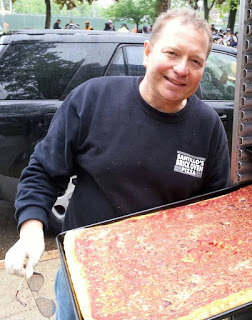 Al Santillo
Pizzeria: Santillo's Brick Oven Pizza, Elizabeth, NJAge: 58 Years in Pizza Biz: "Born in a flour bag"Favorite Hobbies Outside of Pizza: "I'm open seven days a week, so my customers are my entertainment."
The Pizza Insider: Why did you go into the pizza business?
Al Santillo: I was born in the pizzeria. My dad used to give the neighborhood kids rides on the dough mixer, which I still use today. I'm the third generation to own Santillo's. My father got sick in his late 50s; I was about 23. He asked me if I wanted the business; if not, he was going to close it down. I knew how good the pizza was and I didn't want it to go extinct. I like the feeling of carrying on the family business.
The Pizza Insider: What do you enjoy most about the pizza business?
Al Santillo: I like when I get visits from friendly people who have a good story or a joke for me, maybe even share a glass of wine with me. I like the extroverted types! I also like to see those who haven't been here in 40 or 50 years and they come back to visit. I even have a couple of customers who are over 100 years old and still come in for pizza!
The Pizza Insider: After a lifetime working in pizza, they can't all be good days.
Al Santillo: The bad days are when the help doesn't show up, the heat or the oven breaks, someone gets hurt, or anything else happens that forces us to have to shut down temporarily. It's sad that over the years I've had to watch so many people around me go out of business. Forty years ago I thought brick ovens would take over America, but little by little I became the only one in the area using one anymore. It's hard work and takes special skills to work, which can be hard to teach.
The Pizza Insider: Are you concerned about an aging customer base?
Al Santillo: When I took over the business from my father, I had WWII era customers, who are now getting older. I'm always looking for new customers to add to the existing ones. The Internet was my salvation when it came to spreading the word about the pizzeria. I use Facebook a lot to post pizza photos and I'm working with the local tourism board in Elizabeth. I'm doing great with out of towners.
The Pizza Insider: Do you have any words of wisdom for new pizzeria operators?
Al Santillo: It's true what they say about location. I got about the worst location you could have--no parking, no sit-down service, and I don't serve liquor. But I'm happy with the way things are; I'm having fun. My whole life is pizza.
The Pizza Insider: Is there someone ready to take over the oven if you ever decide to retire?
Al Santillo: Not yet.
Who are the people behind the pizzas, and what made them choose a pizza peel over a briefcase? What's their inspiration and what keeps them going? We find out in this ongoing series.
Behind the Pizza Peel: Al Santillo
 Al Santillo
Pizzeria: Santillo's Brick Oven Pizza, Elizabeth, NJAge: 58 Years in Pizza Biz: "Born in a flour bag"Favorite Hobbies Outside of Pizza: "I'm open seven days a week, so my customers are my entertainment."
The Pizza Insider: Why did you go into the pizza business?
Al Santillo: I was born in the pizzeria. My dad used to give the neighborhood kids rides on the dough mixer, which I still use today. I'm the third generation to own Santillo's. My father got sick in his late 50s; I was about 23. He asked me if I wanted the business; if not, he was going to close it down. I knew how good the pizza was and I didn't want it to go extinct. I like the feeling of carrying on the family business.
The Pizza Insider: What do you enjoy most about the pizza business?
Al Santillo: I like when I get visits from friendly people who have a good story or a joke for me, maybe even share a glass of wine with me. I like the extroverted types! I also like to see those who haven't been here in 40 or 50 years and they come back to visit. I even have a couple of customers who are over 100 years old and still come in for pizza!
The Pizza Insider: After a lifetime working in pizza, they can't all be good days.
Al Santillo: The bad days are when the help doesn't show up, the heat or the oven breaks, someone gets hurt, or anything else happens that forces us to have to shut down temporarily. It's sad that over the years I've had to watch so many people around me go out of business. Forty years ago I thought brick ovens would take over America, but little by little I became the only one in the area using one anymore. It's hard work and takes special skills to work, which can be hard to teach.

The Pizza Insider: Are you concerned about an aging customer base?
Al Santillo: When I took over the business from my father, I had WWII era customers, who are now getting older. I'm always looking for new customers to add to the existing ones. The Internet was my salvation when it came to spreading the word about the pizzeria. I use Facebook a lot to post pizza photos and I'm working with the local tourism board in Elizabeth. I'm doing great with out of towners.
The Pizza Insider: Do you have any words of wisdom for new pizzeria operators?
Al Santillo: It's true what they say about location. I got about the worst location you could have--no parking, no sit-down service, and I don't serve liquor. But I'm happy with the way things are; I'm having fun. My whole life is pizza.
The Pizza Insider: Is there someone ready to take over the oven if you ever decide to retire?
Al Santillo: Not yet.
October 22, 2015
Behind the Pizza Peel: Roberto Caporuscio
Behind the Pizza Peel is a profile series I've been wanting to put together for years. Its goal is to reveal the warm--and sometimes wild--personalities that create America's favorite food on a daily basis.
Who are the people behind the pizzas, and what made them choose a pizza peel over a briefcase? What's their inspiration and what keeps them going? We find out in this ongoing series.
Behind the Pizza Peel: Roberto Caporuscio
 Roberto Caporuscio, credit: Keste Pizza & Vino
Pizzerias:Kesté Pizza & Vino, New York, NY Don Antonio by Starita, New York, NY
Age: 55
Years in Pizza Biz: 18
Favorite Hobbies outside of Pizza: Travel & Photography
The Pizza Insider: Why did you choose to go into the pizza business and what do you enjoy most about it?
Roberto Caporuscio: Pizza is one of my favorite foods and I love interacting with customers. We follow the traditions and methods of the 300-year-old art of Neapolitan pizza making. When I serve a pizza, I'm bringing a piece history to the table. That makes me very proud.
The Pizza Insider: Looking back on your original pizza goals, how do they match, or differ from, where you are today?
Roberto Caporuscio: I've far exceeded my expectations. When I think back to when I started, I never imagined owning two pizzerias in New York City, the greatest city in the world. And to partner with my great friend and mentor, Antonio Starita, at Don Antonio by Starita, it's a dream come true. Through my consulting and pizza making school The Pizza Insider: In your opinion, what separates a good pizza maker from a great pizza maker?
Roberto Caporuscio: An open mind and adaptation. The dough is alive and always changing. Pizza making takes place in different environments with different ovens, temperature, etc. You need to adapt to varying circumstances and situations and still create an exceptional product.
The Pizza Insider: Do you have a favorite memory associated with pizza?
Roberto Caporuscio: I have so many favorite memories, but if I have to narrow it down to one I'd have to say when I decided to go to school to study Neapolitan pizza making with my mentor Antonio Starita, and make a career out of it. It was the point that I decided to dedicate my life's mission to pizza. It was life changing.
The Pizza Insider: What has it been like to share your pizza passion with your daughter working alongside you?
Roberto Caporuscio: It's been incredible having my daughter work alongside me. Not all parents and children share the same interests, especially when it comes to careers. I've been fortunate to have a daughter who shares my passion for pizza. We get to work alongside each other at my restaurants and travel together for events and consulting. I'm a lucky man.
The Pizza Insider: When you eat at other pizzerias, what type of pizza do you order and why?
Roberto Caporuscio: Hands down, a Margherita pizza. It's the standard and therefore easiest to compare taste and quality.
The Pizza Insider: Who is your role model or mentor?
Roberto Caporuscio: Antonio Starita
The Pizza Insider: What’s the best advice you ever received?
Roberto Caporuscio: Focus on what I'm doing at my restaurants, don't worry about other restaurants and always try to be the best for my customers. If you concern yourself with everyone else, you lose focus on being the best you can be.
The Pizza Insider: Do you have any words of wisdom for new pizzeria operators?
Roberto Caporuscio: Try to maintain the best quality in everything you do from ingredients to tools, and always try to improve for your customers.
The Pizza Insider: Can you name one thing that you feel will have the biggest impact on the pizza industry in the next five years, and why?
Roberto Caporuscio: The continual explosion of the Neapolitan pizza industry in America. The trend has been on a continual uprise for several years with no sign of slowing down. Neapolitan pizzerias are opening in rural areas and more and more people are exposed to the taste of Neapolitan pizza.
The Pizza Insider: If someone wrote a book about your life, what would it be called?
Roberto Caporuscio: "Life of a Pizzaiolo"
October 15, 2015
Behind the Pizza Peel: Mathieu Palombino
Behind the Pizza Peel is a profile series I've been wanting to put together for years. Its goal is to reveal the warm--and sometimes wild--personalities that create America's favorite food on a daily basis.
Who are the people behind the pizzas, and what made them choose a pizza peel over a briefcase? What's their inspiration and what keeps them going? We find out in this ongoing series.
Behind the Pizza Peel: Mathieu Palombino
 Mathieu Palombino, courtesy: Motorino
Pizzeria: Motorino: NYC, Hong Kong, Manila, Singapore
Age: 38
Years in pizza biz:7
Favorite Hobbies Outside of Pizza: riding my motorcycle
The Pizza Insider: Why did you choose to go into the pizza business and what do you enjoy most about it?
Mathieu Palombino: I opened in 2008, which was a difficult time for restaurants. I had to do something that I loved, but would also have a chance to succeed. Pizza was the answer. A pizzeria has a purpose in its neighborhood.
The Pizza Insider: Looking back on your original pizza goals, how do they match, or differ from, where you are today?
Mathieu Palombino: When I opened the first Motorino in Williamsburg, I was just hoping it would become a popular neighborhood joint. I did not expect it would get the attention that it did. If you asked me seven years ago, I would never have thought that I would be opening new locations as far away as Hong Kong. Today, I hope to keep that momentum going and bring Motorino to new places.
The Pizza Insider: In your opinion, what separates a good pizza maker from a great pizza maker?
Mathieu Palombino: A good Pizzaiolo has a recipe on hand and experience managing a pizza station and working an oven. A truly great pizza maker has knowledge in baking and understands the science behind a great dough.
The Pizza Insider: When you eat at other pizzerias, what type of pizza do you order and why?
Mathieu Palombino: I’ll try anything that sounds interesting, but I stay away from pears, peppers, and onions. I like the pizzas light in toppings and with a good dash of Tabasco sauce.
The Pizza Insider: Who are your role models or mentors?
Mathieu Palombino: I don’t have a "pizza mentor," necessarily. However, I admire Anthony Mangieri’s style of pizza making, and I love the pizzas of Napoli: charred, soft, pliable—delicious.
The Pizza Insider: What’s the best advice you ever received?
Mathieu Palombino: Happy wife, happy life.
The Pizza Insider: Do you have any words of wisdom for new pizzeria operators?
Mathieu Palombino:Get organized with the FDA so you can import your own olive oil and tomatoes from Italy. You’ll save the commission and you’ll be giving your money directly to the grower. There is no mystery about where your product is from. Plus, you get to visit Campania once a year!
The Pizza Insider: If someone wrote a book about your life, what would it be called?
Mathieu Palombino:Living the Dream in America
October 8, 2015
Behind the Pizza Peel: Dan Blumenthal
Behind the Pizza Peel is a profile series I've been wanting to put together for years. Its goal is to reveal the warm--and sometimes wild--personalities that create America's favorite food on a daily basis.
Who are the people behind the pizzas, and what made them choose a pizza peel over a briefcase? What's their inspiration and what keeps them going? We find out in this ongoing series.
Behind the Pizza Peel: Daniel Jon Blumenthal
 Dan Blumenthal
 Pizzeria: Sal & Mookie’s New York Style Pizza and Ice Cream Joint, Jackson, MS
Age: 52
Years in Pizza Biz:26
Favorite Hobbies outside of Pizza:High Speed Automobile Driving Events and Deep Sea Fishing
The Pizza Insider: Why did you choose to go into the pizza business?
Dan Blumenthal: Initially, it sort of found me rather than me finding it. I was in San Francisco during the late 1980’s and Wolfgang Puck, Alice Waters and Jeremiah Tower were all experimenting with small, “gourmet, California” pizzas.
When I came out of culinary school in 1989, I went to work for Spectrum Foods, an upscale restaurant group in Northern and Southern California that had a dozen different concepts and was operated by Larry Mindel, who later opened Il Fornaio’s all over California. I worked at two of those concepts: Spuntino and Prego, both of which had wood-burning pizza ovens and offered Neapolitan-style pizzas. This is where I learned my pizza making, which I’ve incorporated into BRAVO!, Broad Street and Sal & Mookie's.
When we opened Sal & Mookie’s in 2007, my goal was to bring a high quality, “gourmet” pie in a large format (14” & 18”) to an area that was largely underserved by quality pizzerias.
The Pizza Insider: Looking back on your original pizza goals, how do they match, or differ from, where you are today?
Dan Blumenthal: Looking back, we have holistically achieved our goals and have deviated little from our original plan/vision for Sal & Mookie’s.
The Pizza Insider: In your opinion, what separates a good pizza maker from a great pizza maker?
Dan Blumenthal: His ability to work with and “feel” the dough.
The Pizza Insider: Do you have a favorite memory associated with pizza?
Dan Blumenthal: The early 1970’s when we lived in Pennsylvania and would go to visit my grandparents in Trenton, New Jersey, and go eat at DeAngelos’s Pizzeria, home of the “Trenton Original Upside Down Pizza Pie.”
The Pizza Insider: When you eat at other pizzerias, what type of pizza do you order and why?
Dan Blumenthal: I usually look for something with unusual ingredients that isn’t too complex (overloaded with ingredients).
The Pizza Insider: Who are your role models or mentors?
Dan Blumenthal: For pizza, it was Wolfgang Puck, Jeremiah Tower and Alice Waters.
The Pizza Insider: What’s the best advice you ever received?
Dan Blumenthal: Not to get into the restaurant business, but I went and did it anyway. I beat the odds in one of the toughest businesses to succeed in long term.
The Pizza Insider: Do you have any words of wisdom for new pizzeria operators?
Dan Blumenthal: Try to spend as little money as possible on the front end, because if you spend too much, it will just weigh you down like an anchor as you try to pay back that initial investment.
The Pizza Insider: Can you name one thing that you feel will have the biggest impact on the pizza industry in the next five years, and why?
Dan Blumenthal: I can’t say there is one silver bullet. The pizza business seems to be growing in several different directions. The “gourmet” end is returning to its Neapolitan roots, while the fast-food end is all about online ordering and faster cook times.
The Pizza Insider: If someone wrote a book about your life, what would it be called?
Dan Blumenthal: “Dr. Doom: He Did It His Way”


