Steve Gannon's Blog
February 23, 2019
Writing Mistakes
[image error]
Question: How do you feel when you skip your morning coffee? Answer: Depresso.
Okay—not much of joke, but I included it here to illustrate how writers can sometimes feel when finishing a project. I recently completed a final draft of my new novel, Kane: Blood Moon, and although I’m celebrating that milestone in what for me is a long process, I’m also feeling a little depresso as well—along with maybe a bit of apprehension about sending my newborn out into the cold, cruel world. But I suppose that’s part of the process.
The good/bad news is that there’s still plenty left to do before then. In today’s world of publishing, writing is just one part of the equation, and I decided to take a break from work to post an article on some of the pitfalls writers typically face on the way to publication.
Let’s imagine you just typed “The End” at the bottom of your brand-new manuscript. Now you want to get it out there as quickly as possible. Needless to say, you want to do it right.
So now what?
Formerly a traditional publisher did the heavy lifting required to get your book into the hands of readers—editing, copyedit, cover design, promotion, and printing. I’ve gone that route in the past, and I learned from my experience with Bantam Books that even with a trad publisher, you must get involved. And if you’re an indie author, it isn’t simply your involvement that’s required. Now it’s all up to you. You are responsible for everything previously done by a huge, professional publishing house, and you must do it well. A daunting task, but nobody ever said this writing thing was going to be easy.
There are five critical areas where things can go wrong. Although there are certainly others, in the following I’ll provide some suggestions that can help you avoid the five most common mistakes.
1. Over Editing [image error]
Solution: Cut Bait. The revision process can go on indefinitely, if you let it—literally taking on a life of its own. This is common in writing groups and with many insecure authors. At some point you simply have to “cut bait” and move on to the next step. Not to say that you don’t want your work to be the best it can be, but don’t get paralyzed by endless revision.
2. Technical Errors
Solution: “Vet” Your Manuscript. Carefully check all technical material in your work, and then have someone knowledgeable in the field vet your story—making certain you at least sound like you know what you’re talking about. For instance, cartridges or rounds (not bullets) are inserted into a rifle or a semi-automatic pistol via a magazine, not a clip—an error I made a few years back that garnered an avalanche of criticism from gun-enthusiasts, and rightly so. Consult with an expert and get your details straight.
3. Lack of Reader Input 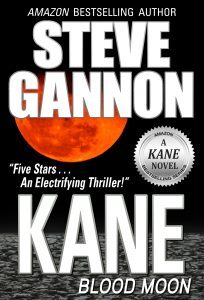
Solution: Test Market. You don’t write in a vacuum. Once you have your manuscript (mostly) revised, vetted, and ready to go, preview your work with friends and readers whose opinions you trust. If they find typos along the way, fine—but what you really want is their candid comments on your story. Listen to what they say. Did your story move them? Were there plot holes? Unclear motivations? Murky character development? This evaluation is traditionally performed by a publishing-house editor, but in my opinion a “groupthink” approach is equally effective, possibly even more so. Of course writing isn’t a democratic process and you want to preserve your original vision, but you will be surprised at how often you can improve your work by opening yourself to reader suggestions and criticism.
4. Sloppy Writing
Solution: Professional Copyedit. Most readers will not tolerate sloppy writing, typos, punctuation mistakes, and grammatical errors from anyone. You need a clean manuscript, and for that you will have to PAY someone. Having a friend who’s “good at editing” won’t cut it. Find a professional and use his or her services. Period. After that you can do one final revision, making certain you don’t introduce new errors along the way. And then publish!
5. Poor Marketing
[image error]
Solution: social media marketing and paid advertising. Now that your book is out there, who knows about it besides your mom? Unless your name is Stephen King, hardly anyone, that’s who. Yours is one of tens of thousands of new books published each year. To find an audience, you must market your work. If you sit around waiting for your book to be discovered, you’re going to be sitting a long time. Step one in marketing is to have a professionally designed book cover, for which you will probably need to PAY for the services of a graphic artist. Step two is having a well designed website hub, along with various social media sites—Twitter, Facebook, YouTube, etc.—feeding into it. There is far too much in the social-marketing category to cover here, but there are many online sources (Jonathan Gunson’s bestsellerlabs.com or Joanna Penn’s TheCreativePen.com) that can point you in the right direction. And last, PAID advertising on Amazon, Facebook, and other sites is necessary if you want to get noticed. Sad, but true.
To reiterate: Self-marketing is absolutely essential. Most successful writers, even traditionally published authors, devote around 70% of their average workday to writing and about 30% (or more) to marketing.
Oh, one last pitfall I forgot to mention: procrastination. Speaking of which, it’s time for me to grab some coffee, get over my final-draft depresso, and head back to work.
In your reading, have you encountered any sloppy writing lately? Does it irritate you? What are your pet peeves when reading? What are your main writing/publication problems? How do you get the word out about your work? Please leave a comment (click here) and join the conversation!


Common Writing Mistakes
[image error]
Question: How do you feel when you skip your morning coffee? Answer: Depresso.
Okay—not much of joke, but I included it here to illustrate how writers can sometimes feel when finishing a project. I recently completed a first draft of my new novel, L.A. Sniper, and although I’m celebrating that milestone in what for me is a yearlong process, I’m also feeling a little depresso as well—along with maybe a bit of apprehension about sending my newborn out into the cold, cruel world. But I suppose that’s just part of the process.
The good/bad news is that there’s still plenty left to do before then. In today’s world of publishing, writing is just one part of the equation, and I decided to take a break from work to post an article on some of the pitfalls authors typically face on the way to publication.
Let’s imagine you just typed “The End” at the bottom of your brand-new manuscript. Now you want to get it out there as quickly as possible. Needless to say, you want to do it right.
So now what?
Formerly a traditional publisher did the heavy lifting required to get your book into the hands of readers—editing, copyedit, cover design, promotion, and printing. I’ve gone that route in the past, and I learned from my experience with Bantam Books that even with a trad publisher, you must get involved. And if you’re an indie author, it isn’t simply your involvement that’s required. Now it’s all up to you. You are responsible for everything previously done by a huge, professional publishing house, and you must do it well. A daunting task, but nobody ever said this writing thing was going to be easy.
There are five critical areas where things can go wrong. Although there are certainly others, in the following I’ll provide some suggestions that can help you avoid the five most common mistakes.
1. Over-Editing [image error]
Solution: Cut Bait. The revision process can go on indefinitely, if you let it—literally taking on a life of its own. This is common in writing groups and with many insecure authors. At some point you simply have to “cut bait” and move on to the next step. Not to say that you don’t want your work to be the best it can be, but don’t get paralyzed by endless revision.
2. Technical Errors
Solution: “Vet” Your Manuscript. Carefully check all technical material in your work, and then have someone knowledgeable in the field vet your story—making certain you at least sound like you know what you’re talking about. For instance, cartridges or rounds (not bullets) are inserted into a rifle or a semi-automatic pistol via a magazine, not a clip—an error I made a few years back that garnered an avalanche of criticism from gun-enthusiasts, and rightly so. Consult with an expert and get your details straight.
3. Lack of Reader Input [image error]
Solution: Test Market. You don’t write in a vacuum. Once you have your manuscript (mostly) revised, vetted, and ready to go, preview your work with friends and readers whose opinions you trust. If they find typos along the way, fine—but what you really want is their candid comments on your story. Listen to what they say. Did your story move them? Were there plot holes? Unclear motivations? Murky character development? This evaluation is traditionally performed by a publishing-house editor, but in my opinion a “groupthink” approach is equally effective, possibly even more so. Of course writing isn’t a democratic process and you want to preserve your original vision, but you will be surprised at how often you can improve your work by opening yourself to reader suggestions and criticism.
4. Sloppy Writing
Solution: Professional Copyedit. Most readers will not tolerate sloppy writing, typos, punctuation mistakes, and grammatical errors from anyone. You need a clean manuscript, and for that you will have to PAY someone. Having a friend who’s “good at editing” won’t cut it. Find a professional and use his or her services. Period. After that you can do one final revision, making certain you don’t introduce new errors along the way. And then publish!
5. Poor Marketing[image error]Solution: Social Media Marketing. Now that your book is out there, who knows about it besides your mom? Unless your name is Stephen King, hardly anyone, that’s who. Yours is one of tens of thousands of new books published each year. To find an audience, you must market your work. If you sit around waiting for your book to be discovered, you’re going to be sitting a long time. Step one in marketing is to have a professionally designed book cover, for which you will probably need to PAY for the services of a graphic artist. Step two is having a well designed website hub, along with various social media sites—Twitter, Facebook, YouTube, etc.—feeding into it. There is far too much in the social-marketing category to cover here, but there are many online sources (Jonathan Gunson’s bestsellerlabs.com or Joanna Penn’s TheCreativePen.com) that can point you in the right direction. To reiterate: Self-marketing is absolutely essential. Note that most successful authors devote around 70% of their average workday to writing and about 30% to marketing.
Oh, one last pitfall I forgot to mention: procrastination. Speaking of which, it’s time for me to grab some coffee, get over my first-draft depresso, and head back to work.
In your reading, have you encountered any sloppy writing lately? Does it irritate you? What are your pet peeves when reading? What are your main writing/publication problems? How do you get the word out about your work? Please leave a comment (click here) and join the conversation!
The Future of Cinema?
[image error]
There is a revolution coming in the world of filmmaking, and the first shots have already been fired. This coming revolution will transform the way feature films are financed, produced, and especially distributed—exerting as profound an influence on Hollywood as eBook publication has had on the world of publishing.
I just watched an example of cinematic things to come—Joss Whedon’s sci-fi love story, In Your Eyes. And I viewed it on Vimeo-on-Demand for four bucks.
In Your Eyes is a sweet little romance wrapped in a paranormal dressing—acted by Zoe Kazan and Michael Stahl-David as telepathically-crossed lovers, and directed by Brin Hill. Check it out. It’s worth a watch.
Anyway, what’s more important is the way in which In Your Eyes was distributed. Online. Worldwide. And direct to the consumer. But you can already watch plenty of videos on YouTube and Vimeo, right? So what’s the big deal?
Just this: For those who don’t know, Joss Whedon is a heavyweight Hollywood screenwriter-producer-director best known for his 2012 film, The Avengers (third highest grossing movie of all time at $1.5 billion plus)—not to mention his numerous hit television productions including Buffy the Vampire Slayer, Firefly, Angel, Dollhouse, and more.
[image error]
Buffy: Serious Vampire Hazard
The point is, Joss is a multitalented Hollywood player. Following a debut of In Your Eyes at the Tribeca Film Festival, Joss elected to distribute his new film online—making it available directly to the public worldwide. His words at the time were, “This is exciting for us because it means we get to explore yet another new form of distribution.” Damn right, Joss. It also means sidestepping traditional distribution and its huge associated costs, so you (and other future artists) keep a much bigger piece of the pie. Which is a good thing for filmmakers. And maybe for viewers like you and me as well.
Think of major publishing houses and traditional bookstores before the advent of eBooks, publish-on-demand, and Amazon. My first novel, A Song for the Asking, was traditionally published by Bantam Books. It took almost a year to grind through the process, and although the book was a critical and commercial success, publishing and distribution expenses ate up much of the profit. Today, as an indie author, my works are available in all formats almost immediately upon completion, and eBook publishing costs are nil. It’s a seminal change that has resulted in writers retaining more money from their writing, as well as making the future of mainstream publishing questionable.
[image error]
Joss Whedon
Now think of Hollywood studios, independent production houses, and nationwide theater chains—presently the accepted outlet for quality, first-run feature films. Don’t get me wrong: Major studios, independent production houses, and theater chains will always exist. But with the opportunity to view quality, first-run feature films online, which Joss Whedon has now made a reality, movie distribution will be transformed forever.
And that will change everything.
Have you watched any movies online lately? What’s your favorite? Any streaming issues? Please leave a comment and join the conversation!
Dangers of Writing in Italy
[image error]
Euscorpius alpha Caporiacco in Attack Mode
Writing can be deadly. Especially in Italy . . .
At one time or another, many of us have probably dreamed of holing up in a cabin somewhere to finish a particularly troublesome project. For a writer like me, that would be the essay that’s taking forever, the manuscript that got sidetracked, or a novel that keeps getting postponed by life’s day-to-day interruptions.
Even better than a cabin in the woods, how about an isolated, 800-year-old casa in Italy? No distractions there, right?
That’s what I thought before I learned about the scorpions.
Something they don’t tell you in the travel brochures: There are LOTS of scorpions in Italy! Fortunately they aren’t the kind that kill you. Of the approximately 1400 species of scorpion worldwide, only twenty-five are deadly, and Euscorpius alpha Caporiacco – the black, nocturnal species prevalent in Italy and southern Switzerland – isn’t among them. The sting of the Italian version has been likened to that of a wasp, fatal only to someone who happens to be allergic.
Nevertheless, it can be more than a little unnerving to pick up a houseplant or look under a cabinet and find one of them staring back at you. They are definitely . . . creepy. The good news is that travelers visiting Italy can avoid being stung by simply hanging up clothes (don’t leave anything on the floor), shaking out shoes, and never walking barefoot at night.
[image error]
Pranzo on the Terrace
Unfortunately for me, scorpions aren’t the only distractions in bella Italia. For one, there is traffic noise at all hours, especially first thing in the morning. Nothing a chicken dinner wouldn’t fix, though.
Speaking of food, the produce here is great! Fresh vegetables, fruits, cheeses, pastas, pizzas, meats . . . did I mention chicken? I’ve been doing a lot of cooking over here. Hmmm. Maybe I can work something about that into my writing?
[image error]
Sardinia
And then there’s the coast. Tourist season is coming up soon, so my wife Susan and I decided it would be much smarter, not to mention cost effective, to travel to the beach now rather than later. Here’s a picture of us on the sand of Sardinia.
We also visited the island of Elba, where I did some firsthand research on Napoleon that might come in handy . . .
[image error]
Elba selfie
Anyway, am I getting any writing done here in Italy? You bet. In fact, I’m just about to get back to work on my L.A. Sniper manuscript – the fourth in my “Kane Novel” series—right after I swat a couple scorpions, BBQ some chicken, and kick back for a while on the terrace.
What’s your worst insect encounter? Do bugs creep you out? What distracts you from your work? Please leave a comment and join the conversation!
The Importance of Stories
A lot has been written on the topic of “Why We Need Stories,” but after reviewing a good chunk of the literature, I think I can add something on the subject. First, let’s back up a second and examine the question: Do we really “need” stories?
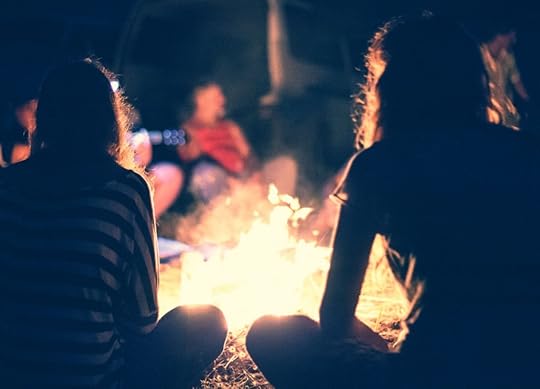
Sure, stories are fun, but is that all they are? Well, the nonscientific answer to that is that stories have been being told around campfires and passed down from generation to generation for as long as we’ve had language, suggesting that from the very beginning stories have played an important role in our social commerce. Clearly, at least in the past, stories fulfilled a definite “need,” passing on information, history, wisdom, and knowledge.
The scientific answer as to whether we “need” stories, an answer that has been proved exhaustively by experimentation time and again, is that our ability to understand and retain information is far better served by listening to stories than by studying bullet points, graphs, and textbooks. The Watson Selection Test, for example, an important logic puzzle used in the study of deductive reasoning, can be solved by fewer than 10% of people when tackled as a logic problem, but is easily solved by 70 – 90% of people when the test is presented as a story involving the detection of social-rule cheating. Stories engage our entire brains, not simply the cerebral centers that are involved in reasoning (Broca’s area and Wernicke’s area, for those who care). Stories just work better. It’s the way our brains are built.
There’s more, but to explore the scientific approach further would be boring (unlike listening to a story), so I’ll cut to the chase: The takeaway from all the scientific experimentation and whatnot is this: If you want to reach people⎯if you want to engage them, change them, move them⎯tell them a story.
In the past it was generally accepted that the use of language was our defining human attribute. Now that we are discovering other species on our planet with previously unsuspected communication skills, it is currently being proposed that the true and defining attribute of humans is our ability to tell stories, and through our stories to pass on the accumulated knowledge and wisdom of our species. Storytelling may turn out to be the most human art of all.
Do we still need stories? The answer, at least for most of our human existence, has been a resounding “Yes!” For one, in the past stories gave us an immeasurable evolutionary edge over the competition (Your great-great-grandfather ate some of those funny-looking mushrooms over there and got sick and died). For another, the power of our sacred stories to unite entire peoples (the Holy Bible, the Qur’an, the I Ching, the Book of Mormon, and The Bhagavad-Gita, to name a few) is undeniable.
At their best, stories have illuminated and entertained, wreaked havoc and righted wrongs, shown us the consequences of our actions, and carried messages across the centuries. Stories have been an instrument of change, transcending space and time, allowing us to walk in another’s shoes and experience emotions without paying the full price of those feelings. Stories tell us where we’ve been; stories tell us where we’re going; stories tell us who we are. Stories tell us how to be human.
Powerful stuff.
But times have changed. Does the power of stories still hold in our modern age? For most of our presence on Earth, storytelling has been an oral tradition. Since the advent of the printing press, film and TV, and the internet as “story delivery systems,” stories have morphed into countless new and exciting forms. People no longer have to be in the presence of a storyteller; that bond has been forever broken. You can now read a story in the privacy of your bedroom, you can sit in a darkened theater and watch a story played out on the screen, you can jam in your earbuds and listen to a story narration long after the storyteller is gone and forgotten.
No one knows what the future will bring for the art of storytelling, but one thing is certain. Stories and all the forms they now inhabit will continue to change. Nevertheless, despite present changes and those to come, I believe that at its heart, in its truest incarnation, the essence and power of storytelling will endure. So if you want to reach people⎯if you want to engage them, change them, move them⎯tell them a story.
What do you think about the power of stories? Have any stories you’ve read (or seen or heard) had an impact on the way you view the world? If you’re a writer, what are the goals of your own stories? Please leave a comment (click here) and join the conversation!
February 8, 2017
Scorpions: Hazards of Writing in Italy
[image error]
Euscorpius alpha Caporiacco in Attack Mode
At one time or another, most of us have probably dreamed of holing up in a cabin somewhere to finish a particularly troublesome project. For a writer like me, that would be the essay that’s taking forever, the manuscript that got sidetracked, the novel that keeps getting postponed by life’s day-to-day interruptions.
Even better than a cabin in the woods, how about an isolated, 800-year-old casa in Italy? No distractions there, right?
That’s what I thought before I learned about the scorpions.
Something they don’t tell you in the travel brochures: There are LOTS of scorpions in Italy! Fortunately they aren’t the kind that kill you. Of the approximately 1400 species of scorpion worldwide, only twenty-five are deadly, and Euscorpius alpha Caporiacco – the black, nocturnal species prevalent in Italy and southern Switzerland – isn’t among them. The sting of the Italian version has been likened to that of a wasp, fatal only to someone who happens to be allergic.
Nevertheless, it’s more than a little unnerving to pick up a houseplant or look under a cabinet and find one of them staring back at you. They are definitely . . . creepy. The good news is that travelers visiting Italy can avoid being stung by simply hanging up clothes (don’t leave anything on the floor), shaking out shoes, and never walking barefoot at night.
[image error]
Pranzo on the Terrace
Unfortunately for me, scorpions aren’t the only distractions in bella Italia. For one, there is traffic noise at all hours, especially first thing in the morning. Nothing a chicken dinner wouldn’t fix, though.
Speaking of food, the produce here is great! Fresh vegetables, fruits, cheeses, pastas, pizzas, meats . . . did I mention chicken? I’ve been doing a lot of cooking over here. Hmmm. Maybe I can work something about that into my writing?
[image error]
Sardinia
And then there’s the coast. Tourist season is coming up soon, so my wife Susan and I decided it would be much smarter, not to mention cost effective, to travel to the beach now rather than later. Here’s a picture of us on the sand of Sardinia.
We also visited the island of Elba, where I did some firsthand research on Napoleon that might come in handy . . .
[image error]
Elba selfie
Anyway, am I getting any writing done here in Italy? You bet. In fact, I’m just about to get back to work on my L.A. Sniper manuscript – the fourth in my “Kane Novel” series—right after I swat a couple scorpions, BBQ some chicken, and kick back for a while on the terrace.
What’s your worst insect encounter? Do bugs creep you out? What distracts you from your work? Please leave a comment and join the conversation!
[image error]Kenny GREENBAUM says
Good to hear you are “surviving” the scorpions and the fruit/cheese plates. We were in Stresa two weeks ago, anywhere near you?
Reply
[image error]Steve says
Hi, Kenny,
Yep, still surviving, and actually getting a little more work done than I suggested in my post. We’re near Perugia, which is halfway between Rome and Florence. LONG way from Stresa. Beautiful up there in the lake region near Switzerland! We plan to visit there sometime too — as soon as we take care of the chicken situation.
Reply
[image error]Suncoast says
Great legs (both of you) and great selfie. No wonder you are still working on the new book. Have you had any target practice at dawn when the chooks wake up first?
Down Under we are faced with a few nasties, including sea water crocs up North that make some wonderful beaches almost unusable. Generally it is spiders we fear when gardening, especially the Red Back (poisonous but not normally deadly) and Funnelwebs (sometimes fatal but there is now an antivenom) which are pretty common in parts of Sydney.
One of the most famous old Bush songs is “Redback on the Toilet Seat” because in the old days one of their preferred habitats was the outside Dunny (toilet).
http://youtu.be/TjDAiq2-xeU
Reply
[image error]Steve says
Hi, Suncoast,
Your insects (and crocs) in Australia make our problems pale by comparison! I remember a National Geographic (?) video on all the poisonous varieties of snakes and spiders Down Under. Scary! I guess I shouldn’t complain. Do you have any dangerous chickens?
Reply
[image error]Jim Crocker says
Mind if I join the party? I just hit the Slim Newton link and that’s just precious. I’ll be firing that one off around the web.
I talked to a woman in northern Florida with a huge rattlesnake problem. Her and her husband would go out after dark with big headlamps on there hats and a Mossberg shotguns and walk the property blasting away for hours.
Reply
[image error]Steve says
Hi, Jim,
Yeah, snakes . . . especially poisonous ones. I saw a lot of them when I lived in California. Swatting scorpions is definitely preferable.
Reply
[image error]Mimi says
Scorpions….Sardinia….Elba…..fowl traffic…..pranzo on the terrace….lovely legs on the beach…….meraviglioso!!!!!
Reply
[image error]Steve says
Hi, Mimi,
Yeah, life is sweet. And at least two of the legs on the beach are lovely.
Reply
[image error]Larry Levine says
I can’t stand snakes. They creep me out
Reply
[image error]Steve says
Hi, Larry,
Ditto. I used to like them as a kid. Later that changed — maybe because I ran into so many rattlers in California. Not crazy about big spiders, either, except possibly tarantulas and daddy longlegs.
Reply
[image error]Tony Stewart says
Steve,
I`m anticipating your new book but impatience is just one of my virtues.
You already know most of my vices.
I wish I could post a few images: one of a huge black scorpion from here in my home, & one of an even more terrifying big black hairy monster.
Both are real, but I`ll let readers imagine.
As you well know, most terrifying in man`s psyche is his imagination.
Reply
[image error]Steve says
Tony,
I promise to have “L.A. Sniper” completed before too long. It’s going well, better than I indicated in the post, and I’m too far along now not to finish. I’d love to share your monster images. You have a great eye and it shows in your photos. Let’s figure out how to do that . . . maybe a guest post?
Reply
[image error]Larry Gannon says
Any centipede in Italy? Those are the bad boys in Hawaii .
The beach looks fantastic
Best place for a pizza margarita?
Reply
[image error]Steve says
Hi, Larry,
Yep, we have centipedes here, but they are the little kind. Not dangerous, but they are irritating, as they seem to be able to get inside no matter what you do, and they will get on cloth (like the bed), which scorpions seem to avoid.
Great pizza, margarita and otherwise, is everywhere! Interesting, however, is that people don’t share pizza much over here. You will see a table of eight and everyone has their own. The pizzas aren’t huge, but they aren’t little, either.
Reply
[image error]Elaine Phillips says
Glad to see that you two are having a wonderful time – scorpions and all! The countryside is so beautiful – we have been to Italy three times and loved each visit. Things are nice and green here in Sun Valley – very pretty – wildflowers are magnificent. Glad to hear the book is coming along! Can’t wait to read it! Love to you and Susan from Mike and Elaine
Reply
[image error]Steve says
Hi, Elaine,
Look forward to seeing you and Mike soon! Beautiful here, but SV isn’t bad either!
Steve
Reply
[image error]jay allender says
Hi Steve. Glad to hear from you and about your current adventures. We have scorpion also but have seen very few since our arrival in Arizona (9 years already) Plenty of rattle snakes though and some close encounters. At present we are enjoying Sidney, B.C. for the month June. Great area. Anyway stay safe and away from the critters. J&S
Reply
[image error]Steve says
Thanks, jay and Sonja
Stay safe yourself. I think your scorpions are more dangerous than ours, and of course rattlesnakes . . .
Reply
[image error]Jim Crocker says
Very nice, Steve. I have fond memories of scorpions in southeast Asia and the giant centipede. Would not want to be locked in a box with any of those things. Other than one thing that quickly pops to mind, I wouldn’t want to be locked in a box with anything. The bug will do it every time, Steve. Ruin a night’s sleep. Ruin a vacation, even. And Italy at that, eh?
We don’t have any serious bug issues where I live in Montana. It’s our big secret. Not even snakes. There’re bears and mountain lions, but hey. Many people don’t even have screens. Motion detectors for nightly predators is something else again. I never leave the house at night. Sometimes you can actually hear ’em howling and growling out there. Yikes!
Reply
[image error]Steve says
Hi again, Jim,
I have been getting a lot of responses mentioning giant centipedes, especially in Hawaii. I’ve never seen one, and I hope I never do. I think I”d rather deal with a bear or mountain lion, which we do have in Idaho. Actually, I feel lucky if I get to see one of them. They are pretty shy in our area. Don’t think I’d like to run into a grizzly, however (see my post on Hollywood Killers).
Reply
[image error]Suncoast says
Steve,
I have just had the worst attack from the smallest bug, the midge. Last Saturday we were sitting on our patio when an almost microscopic midge flew past my face. On Sunday I had a couple of small bites on my right eyebrow and on Monday they scabbed up. On Tuesday the eyelid was swollen and I went to the Doctor and got antibiotics and antihistamine but by Wednesday my right eye was part closed and my vision was like a blind pulled down over my right eye and it was so swollen and painful. I went around telling my friends how my wife had socked me!!
Thursday morning it was still partly closed but by the end of the day (now) it is getting slowly better but the 2 bites are still inflamed and sore. Tomorrow, hopefully all will get back to normal.
So you don’t need a big bug to lay you low!!!
Reply
[image error]Steve says
Hi, Suncoast,
You’re making me feel grateful for only having to deal with scorpions! Damn bugs . . . Hope you feel better soon.
Reply
[image error]Suncoast says
It wasn’t bug, it was ophthalmic nerve SHINGLES! My GP spotted it and put me on antiviral pills a couple of days ago and it seems to be under control with only a couple of blisters near my right eye.
My best friends tell me that the perfect treatment is very cheap white wine – and my local bottle shop has a drinkable one at $3 per bottle. Maybe it would be easier and cheaper in Italy.
The eye seems to be fine – in the past before antiviral medication it could be dangerous. It’s times like this that you realise how vulnerable and valuable your eyes are.
Reply
[image error]Steve says
Damn, Suncoast,
I’m really sorry to hear that. I had a case on my chest and my back years ago, and I still suffer some aftereffects including occasional pain. I hope you recover quickly and completely.
BTW, there is a vaccine to prevent shingles, or Herpes Zoster, and I would recommend that anyone reading this who hasn’t already done so, GET IMMUNIZED. I did after the fact, as the disease can reoccur.
Reply
[image error]Debbie says
I was running on the trails in Whiting Ranch(Orange County) downhill, and literally ran into a bee. I was stung smack in the middle of my breast(the nipple to be exact). Feeling the pain, shock, and panic, I noticed a ranger jeep coming up the hill. Lucky for me it was a woman ranger with a great remedy for stings. She had a “bee”pack that was a 2×2 gauze pad with ointment on it. She told me to slip it into the jog bra and by the time I was back to my car, the stinger would be out and I would have no pain. Yea! It worked. I guess I was just too fast for my own britches.
Reply
[image error]Steve says
HI, Debbie,
Ouch! I’m going to need some time thinking about this one.
Author Errors: 5 Common Mistakes
[image error]Question: How do you feel when you skip your morning coffee? Answer: Depresso.
Okay—not much of joke, but I included it here to illustrate how writers can sometimes feel when finishing a project. I recently completed a first draft of my new novel, L.A. Sniper, and although I’m celebrating that milestone in what for me is a yearlong process, I’m also feeling a little depresso as well—along with maybe a bit of apprehension about sending my newborn out into the cold, cruel world. But I suppose that’s just part of the process.
The good/bad news is that there’s still plenty left to do before then. In today’s world of publishing, writing is just one part of the equation, and I decided to take a break from work to post an article on some of the pitfalls authors typically face on the way to publication.
Let’s imagine you just typed “The End” at the bottom of your brand-new manuscript. Now you want to get it out there as quickly as possible. Needless to say, you want to do it right.
So now what?
Formerly a traditional publisher did the heavy lifting required to get your book into the hands of readers—editing, copyedit, cover design, promotion, and printing. I’ve gone that route in the past, and I learned from my experience with Bantam Books that even with a trad publisher, you must get involved. And if you’re an indie author, it isn’t simply your involvement that’s required. Now it’s all up to you. You are responsible for everything previously done by a huge, professional publishing house, and you must do it well. A daunting task, but nobody ever said this writing thing was going to be easy.
There are five critical areas where things can go wrong. Although there are certainly others, in the following I’ll provide some suggestions that can help you avoid the five most common mistakes.
1. Over-Editing [image error]
Solution: Cut Bait. The revision process can go on indefinitely, if you let it—literally taking on a life of its own. This is common in writing groups and with many insecure authors. At some point you simply have to “cut bait” and move on to the next step. Not to say that you don’t want your work to be the best it can be, but don’t get paralyzed by endless revision.
2. Technical Errors
Solution: “Vet” Your Manuscript. Carefully check all technical material in your work, and then have someone knowledgeable in the field vet your story—making certain you at least sound like you know what you’re talking about. For instance, cartridges or rounds (not bullets) are inserted into a rifle or a semi-automatic pistol via a magazine, not a clip—an error I made a few years back that garnered an avalanche of criticism from gun-enthusiasts, and rightly so. Consult with an expert and get your details straight.
3. Lack of Reader Input [image error]
Solution: Test Market. You don’t write in a vacuum. Once you have your manuscript (mostly) revised, vetted, and ready to go, preview your work with friends and readers whose opinions you trust. If they find typos along the way, fine—but what you really want is their candid comments on your story. Listen to what they say. Did your story move them? Were there plot holes? Unclear motivations? Murky character development? This evaluation is traditionally performed by a publishing-house editor, but in my opinion a “groupthink” approach is equally effective, possibly even more so. Of course writing isn’t a democratic process and you want to preserve your original vision, but you will be surprised at how often you can improve your work by opening yourself to reader suggestions and criticism.
4. Sloppy Writing
Solution: Professional Copyedit. Most readers will not tolerate sloppy writing, typos, punctuation mistakes, and grammatical errors from anyone. You need a clean manuscript, and for that you will have to PAY someone. Having a friend who’s “good at editing” won’t cut it. Find a professional and use his or her services. Period. After that you can do one final revision, making certain you don’t introduce new errors along the way. And then publish!
5. Poor Marketing[image error]Solution: Social Media Marketing. Now that your book is out there, who knows about it besides your mom? Unless your name is Stephen King, hardly anyone, that’s who. Yours is one of tens of thousands of new books published each year. To find an audience, you must market your work. If you sit around waiting for your book to be discovered, you’re going to be sitting a long time. Step one in marketing is to have a professionally designed book cover, for which you will probably need to PAY for the services of a graphic artist. Step two is having a well designed website hub, along with various social media sites—Twitter, Facebook, YouTube, etc.—feeding into it. There is far too much in the social-marketing category to cover here, but there are many online sources (Jonathan Gunson’s bestsellerlabs.com or Joanna Penn’s TheCreativePen.com) that can point you in the right direction. To reiterate: Self-marketing is absolutely essential. Note that most successful authors devote around 70% of their average workday to writing and about 30% to marketing.
Oh, one last pitfall I forgot to mention: procrastination. Speaking of which, it’s time for me to grab some coffee, get over my first-draft depresso, and head back to work.
In your reading, have you encountered any sloppy writing lately? Does it irritate you? What are your pet peeves when reading? What are your main writing/publication problems? How do you get the word out about your work? Please leave a comment (click here) and join the conversation!
[image error]Martha Hollenhorst says
I think some of your ideas on writing apply to other arts, too. Something can be overcorrected and overworked until all the life in it is gone, whether it is writing, music or visual arts. The excitement/apprehension of presenting new work to the public, and the let-down of, “now what?”, are similar, too. It is a lot of work, but it keeps things interesting. Congratulations!
Reply
[image error]Steve says
Well said, Martha! Of course as a writer, I was selfishly only thinking of myself, but it’s good to know that other people have similar problems! The over-editing factor can definitely occur in all of the arts. It’s also hard for anyone, as you point out, to finish a big project and not have a followup activity in the crosshairs. Maybe working on multiple projects is the answer?
Reply
[image error]Bev Snazele says
This is a great blog! Keep this going. I will share this on Facebook!
Reply
[image error]Steve says
Thanks, Bev! And thanks for posting this on FB. I’m trying to get something new out on this site every month or so, but lately I’ve been making a big push to complete “L.A. Sniper,” the fourth in my “Kane Novel” series. I’m almost there on that, so look for more from me here in the future — at least until I start the next writing project.
Reply
[image error]Terry Tyler says
I’m going to be totally honest here as it’s eight on a Sunday morning and I haven’t had my first coffee yet (it’s still brewing!). I’ve started reading three indie books recently and abandoned them for the same reason – they read like first drafts. In two cases I think the authors didn’t spend enough time on revision and just shoved it out there, and in the other case, a debut novel, it was simply that she CAN’T WRITE. I find this with about thirty per cent of the indie novels I start. The writers have the desire to write but not the talent, so the novel just reads like a series of statements, wrapped up in a lovely professional cover with no proofreading errors and a promising blurb – they read all the stuff about presenting it properly, but forget that vital ingredient. This is one thing that people rarely mention but I sometimes dare to – make sure you can actually WRITE before you publish. Something your best friend (or writing group) won’t tell you….
Reply
[image error]Steve says
Hi, Terry,
Thanks for commenting! You make several good points, shedding light on the elephant(s) in the indie publishing room no one wants to talk about. Now that self-publishing has widened the portal for aspiring authors, it’s undeniable that there is a lot of work out there that doesn’t merit reading. To be fair, lately I’ve read a number of books published by major houses that don’t deserve reading, either. I suppose one can just hope that good writing coupled with a good story will rise to the top, whether it’s delivered by a major publishing house or via an indie publishing platform.
On the positive side, in today’s market it’s tough to get a publishing deal, so independent platforms offer a way for aspiring writers to get their writing into the hands of readers. As you point out, whether a new author can tell a gripping story complete with believable characters and possibly even some emotional impact is another question, but to have any chance at all, a new writer’s work should be well presented, as typo-free as possible, and grammatically correct. Or if breaking rules is on the table, a writer should at least know the conventions. Bottom line, the craft of writing is something that can and should be learned. Telling a great story also requires talent, but at least indie publishing offers new writers an opportunity to try.
The other point you mention is the difficulty of getting candid, trustworthy criticism, which as you say probably won’t be forthcoming from your mom, your best friend, or your writing group. (I trust my wife, who pulls no punches when critiquing my work.) Although hard to come by and often painful to hear, candid criticism – say from a professional editor – is invaluable.
A final point before I head down for my second cup. Amazon lets readers sample for free the first few chapters of an eBook before clicking the ‘buy’ button. At least this provides an initial opportunity to separate the wheat from the chaff, and who knows? Maybe the next indie author you try will turn into a new favorite.
Reply
[image error]Jim in Montana says
Because of the samples I can check out on my Kindle, I am looking at many more authors than in past years. As a budding author, I think this has helped me improve my writing. I have learned so much from reading the work of other authors.
I think it is great that so many people can take a shot at it, even if it is only one book. Experiencing the writing process is good for everybody, like vegetable soup. And of course this is hardly news, but it is darn hard to make a good job of it–that being a story that is an interesting experience for the reader.
At the other end of the spectrum, the writer puts in countless hours hunting down those pesky typos that seem to pop up like weeds. Whaddaya gonna do, eh?
Reply
[image error]Steve says
Hey, Jim,
I totally agree that Amazon’s making sample chapters available for free is a great way to check out other authors’ work, see whether you would like to read (the rest of) their book, and maybe find a new favorite storyteller in the process.
I also think it’s wonderful with indie publishing that people now have a greater chance to flex their writing muscles. As another commenter noted, this new publishing freedom makes separating the wheat from the chaff difficult for a reader, but you take the good with the bad.
Typos!! My eye goes right over them. I know what I meant to say, even if I leave out words and misspell the rest. That’s why I PAY someone to edit my work. (And even then a few slip through.) Arrgh.
Reply
[image error]Rozsa Gaston says
Steve – LOVE your blogs. Pithy, succinct, and packed with info. My Kindle Scout campaign ended two days ago and I am now officially brain dead while I wait to hear back and recover from 30 days of social media madness.
Do you have a copy editor you can recommend to me? Ready to PAY someone to get this manuscript as scrubbed as possible before submitting to KP OR self-pubbing.
Thank you, Steve. Keep the blogs coming, very entertaining.
Rozsa Gaston
SENSE OF TOUCH (a historical romance based on life of French queen Anne of Brittany)
Joss Whedon: The Future of Cinema?
[image error]There is a revolution coming in the world of filmmaking, and the first shots have already been fired. This coming revolution will transform the way feature films are financed, produced, and especially distributed—exerting as profound an influence on Hollywood as eBook publication has had on the world of publishing.
I just watched an example of cinematic things to come—Joss Whedon’s sci-fi love story, In Your Eyes. And I viewed it on Vimeo-on-Demand for five bucks.
In Your Eyes is a sweet romance wrapped in a paranormal dressing—delightfully acted by Zoe Kazan and Michael Stahl-David as telepathically-crossed lovers, and ably directed by Brin Hill. Check it out. It’s definitely worth a watch.
But what’s more important is the way in which In Your Eyes was distributed. Online. Worldwide. And direct to the consumer. But you can already watch plenty of videos on YouTube and Vimeo, right? So what’s the big deal?
Just this: For those who don’t know, Joss Whedon is a heavyweight Hollywood screenwriter-producer-director best known for his 2012 film, The Avengers (third highest grossing movie of all time at $1.5 billion plus)—not to mention his numerous hit television productions including Buffy the Vampire Slayer, Firefly, Angel, Dollhouse, and more.
[image error]
Buffy: Serious Vampire Hazard
The point is, Joss is a multitalented Hollywood player. Following a debut of In Your Eyes at the Tribeca Film Festival, Joss elected to distribute his new film online—making it available directly to the public worldwide. His words at the time were, “This is exciting for us because it means we get to explore yet another new form of distribution.” Damn right, Joss. It also means sidestepping traditional distribution and its huge associated costs, so you (and other future artists) keep a much bigger piece of the pie. Which is a good thing for filmmakers. And maybe for viewers like you and me as well.
Think of major publishing houses and traditional bookstores before the advent of eBooks, publish-on-demand, and Amazon. My first novel, A Song for the Asking, was traditionally published by Bantam Books. It took almost a year to grind through the process, and although the book was a critical and commercial success, publishing and distribution expenses ate up much of the profit. Today, as an indie author, my works are available in all formats almost immediately upon completion, and eBook publishing costs are nil. It’s a seminal change that has resulted in writers retaining more money from their writing, as well as making the future of mainstream publishing questionable.
[image error]
Joss Whedon
Now think of Hollywood studios, independent production houses, and nationwide theater chains—presently the accepted outlet for quality, first-run feature films. Don’t get me wrong: Major studios, independent production houses, and theater chains will always exist. But with the opportunity to view quality, first-run feature films online, which Joss Whedon has now made a reality, movie distribution will be transformed forever.
And that will change everything.
Have you watched any movies online lately? What’s your favorite? Any streaming issues? Please leave a comment and join the conversation!
[image error]Richard Frieder says
Great indie film to see is “Chef” with John Favreau. Really enjoyed it.
Reply
[image error]Steve says
I’ll check it out. With Robert Downey, Jr. and Scarlett Johansson, too! Can’t be all bad . . . Thanks for the recommendation!
Reply
[image error]Jim Crocker says
I hardly ever watch conventional TV anymore. I watch streaming videos from Netflix and have nearly exhausted that supply (considering that there are a lot of horrible flicks out there). If a video doesn’t cut it in the first ten minutes, I nip it and try something else. This is the way I sample eBooks, too. I check out the Kindle sample first and I put many books into my cue. Just as fast I label them “NOPERS” and file them in the Junk Log.
I would tend to watch an entire movie after paying eight or ten bucks at a theater. Of course I haven’t been in an actual movie theater since A Perfect Storm was released. Saw that in a wonderful theater in Newport Beach. But that’s the last time I walked down that sticky isle. Now I lay on a comfy couch in my cool, comfortable viewing room and watch stuff on my own big screen. There’s no talking allowed. No barking allowed. No annoying noises allowed. No stinky perfume allowed. I think you get the picture. Right?
And best of all, if the film sucks I can nip it. My computer remote should be in the shape of a gun.
Oh, and there’s no vampire flicks allowed, either. And Transformers are out as well. I’m old school in a new wrapper. I’ve watched The Godfather, Goodfellas and Donnie B a million times. Also did a binge viewing of The Sopranos.
Cheers!
Jim in MT (that’s Montana)
Reply
[image error]Steve says
Hi, Jim,
Pretty much the same here. Netflix is running out of good ones for me, too. Speaking of which, check out “Starbuck.” on Netflix. French w/ subtitles, but good. The original version of a current movie that didn’t retain the original charm. Sounds like you have your viewing room set up perfectly — why go to a theater?
Reply
Why Do We Need Stories?
A lot has been written on the topic of “Why We Need Stories,” but after reviewing a good chunk of the literature, I think I can add something on the subject. First, let’s back up a second and examine the question: Do we really “need” stories?
Sure, stories are fun, but is that all they are? Well, the nonscientific answer to that is that stories have been being told around campfires and passed down from generation to generation for as long as we’ve had language, suggesting that from the very beginning stories have played an important role in our social commerce. Clearly, at least in the past, stories fulfilled a definite “need,” passing on information, history, wisdom, and knowledge.
The scientific answer as to whether we “need” stories, an answer that has been proved exhaustively by experimentation time and again, is that our ability to understand and retain information is far better served by listening to stories than by studying bullet points, graphs, and textbooks. The Watson Selection Test, for example, an important logic puzzle used in the study of deductive reasoning, can be solved by fewer than 10% of people when tackled as a logic problem, but is easily solved by 70 – 90% of people when the test is presented as a story involving the detection of social-rule cheating. Stories engage our entire brains, not simply the cerebral centers that are involved in reasoning (Broca’s area and Wernicke’s area, for those who care). Stories just work better. It’s the way our brains are built.
There’s more, but to explore the scientific approach further would be boring (unlike listening to a story), so I’ll cut to the chase: The takeaway from all the scientific experimentation and whatnot is this: If you want to reach people⎯if you want to engage them, change them, move them⎯tell them a story.
In the past it was generally accepted that the use of language was our defining human attribute. Now that we are discovering other species on our planet with previously unsuspected communication skills, it is currently being proposed that the true and defining attribute of humans is ourability to tell stories, and through our stories to pass on the accumulated knowledge and wisdom of our species. Storytelling may turn out to be the most human art of all.
Do we still need stories? The answer, at least for most of our human existence, has been a resounding “Yes!” For one, in the past stories gave us an immeasurable evolutionary edge over the competition (Your great-great-grandfather ate some of those funny-looking mushrooms over there and got sick and died). For another, the power of our sacred stories to unite entire peoples (the Holy Bible, the Qur’an, the I Ching, the Book of Mormon, and The Bhagavad-Gita, to name a few) is undeniable.
At their best, stories have illuminated and entertained, wreaked havoc and righted wrongs, shown us the consequences of our actions, and carried messages across the centuries. Stories have been an instrument of change, transcending space and time, allowing us to walk in another’s shoes and experience emotions without paying the full price of those feelings. Stories tell us where we’ve been; stories tell us where we’re going; stories tell us who we are. Stories tell us how to be human.
Powerful stuff.
But times have changed. Does the power of stories still hold in our modern age? For most of our presence on Earth, storytelling has been an oral tradition. Since the advent of the printing press, film and TV, and the internet as “story delivery systems,” stories have morphed into countless new and exciting forms. People no longer have to be in the presence of a storyteller; that bond has been forever broken. You can now read a story in the privacy of your bedroom, you can sit in a darkened theater and watch a story played out on the screen, you can jam in your earbuds and listen to a story narration long after the storyteller is gone and forgotten.
No one knows what the future will bring for the art of storytelling, but one thing is certain. Stories and all the forms they now inhabit will continue to change. Nevertheless, despite present changes and those to come, I believe that at its heart, in its truest incarnation, the essence and power of storytelling will endure. So if you want to reach people⎯if you want to engage them, change them, move them⎯tell them a story.
What do you think about the power of stories? Have any stories you’ve read (or seen or heard) had an impact on the way you view the world? If you’re a writer, what are the goals of your own stories? Please leave a comment (click here) and join the conversation!
[image error]Maggie Toussaint says
Steve,
I wish organic chemistry and calculus were taught as stories! That would have been so much less stressful.
I’ve found I retain stories better than information. With just a little bit of storyline, a whole plot of a book, TV show, or movie will come back to me.
Great post!
Maggie Toussaint
Writing science fiction as Rigel Carson
Reply
[image error]Steve says
Hi, Maggie,
Thanks for commenting! Yep, chemistry and calculus don’t exactly lend themselves to the story approach. Too bad. Music lyrics, however, seem to get stuck in my head as well as stories. I can recite lyrics from waaay back with just a little of the music to get me started.
Reply
[image error]Eric Plume says
Steve,
First off, very well said. You put into words one of the primary reasons I became a writer of fiction in the first place; I felt I had something to say and stories are one of the best ways to reach people.
I especially liked the part about the oral tradition. While I’ve only recently become a writer, I’ve been a storyteller since I was about sixteen. I come into fiction from role-playing games, specifically the Live-Action variety…instead of sitting around a table, the players dress and act as their characters (within the limits of safety and propriety of course). I spent more time as a coordinator of the events than as a participant, because I discovered I enjoyed storytelling.
There is something almost mystical about spinning a good story in front of an audience; Stephen King described it as a form of telepathy and I’d say that’s pretty close. Being the Storyteller is heady stuff when you get it right.
Which brings me to why I feel authors need to be careful about what they say and how they say it. Stories mold opinions, ideals and beliefs…some beliefs are destructive and harmful to both society and the individual, and while I’m against censorship (for the simple reason that it is impossible to do right), we authors need to be cognizant of the power we wield in society.
It is the storyteller who is the arbiter of Right and Wrong, through our depictions of Good and Evil.
It is the storyteller who gives shape to vague dreams and shadowy nightmares, through our depictions of Hero and Villain.
It is the storyteller who defines courage and honor, through our depictions of the pain of struggle and the triumph over adversity.
Our words matter.
Example; I write crime fiction with a woman as the central protagonist, and I have what I call the “Niece Test”. With anything I have my protagonist do or say, I ask myself; would I be okay with my fifteen-year-old niece falling in love with this character and modeling her behavior off said character’s actions I present as “heroic” (as the young are wont to do with their favorite heroes)? If the answer is no, I re-write it.
There’s nothing wrong in my view with wanting to discuss bad things – people need to remember that evil exists. But we ought to be careful what we glorify and glamorize, else somebody come along and tell us we cannot discuss the matter at all. Nobody benefits from that.
Once again, great article. I’ll be following along to see what else you have to say.
Eric Plume, author of “The Eckart Mysteries”
Reply
[image error]Steve says
Eric,
Thanks for commenting, and well said yourself! In fact, I think you said it better than I did. Authors do wield subtle (and sometimes not so subtle) power with our words and stories, and we have to be cognizant of the effect our work might have.
Now I’m off to check out “The Eckart Mysteries.” If they are half as perceptive as your comments, I’m sure to enjoy.
Reply
[image error]Gael says
2 words – education and escapism – stories impart knowledge and history and stories provide an escape route from daily problems and dreary routine.
and when is your next book due out? I need entertainment and escape !
Reply
[image error]Steve says
Hi, Gael,
I’ve been indulging in some entertainment and escape myself, but I promise I’m also working on the next “Kane Novel,” too. Hope to have it out by year’s end or before.
Reply
[image error]Carly says
I can hardly wait for the next Kane novel. Glad to hear it is in the making. Love your books. Thanks.
Reply
[image error]Steve says
Hi, Carly,
I’m glad you’re enjoying the Kane stories! Okay, now back to work for me on the next one . . .
Reply
[image error]John Davidson says
Yes, Steve. Really enjoyed your piece on story telling.
As a singer/guitar playing troubadour/songwriter, I have found that story songs grab people more. Setting a scene is magical. Story songs seem to make the listener become involved more because, if they are affective, the listener has placed himself in your story as either the protagonist or the victim. Story songs demand more work on the part of the audience, and they seem to love doing the work!. More than just a lyric or melody, story songs can better inspire, motivate, teach, scare, shock, make you laugh or cry, etc. They force you to participate emotionally.
If a singer is wondering why he is not “getting ’em”, he should add a story song to his show!
Reply
[image error]Steve says
Hi, John,
Great to hear from you, and thanks for weighing in on the subject. You make an excellent point. In some ways a story song can be even more powerful, as the music engages yet another part of our consciousness, a part that often is a direct link to our emotions. Well said!
Reply
[image error]Suncoast says
Hi Steve,
I have been mulling on your blog on stories for too long!
As an addicted book reviewer stories are a major part of my life. I used to read a book and then forget it. Now I think about the story, the plot, the writing and the emotions it stirs while I am reading and for some time before I write a review. My latest stories become a part of my life and some stories I remember forever.
The authors of the latter are good storytellers. Some authors can write novels that you enjoy but they are not necessarily good storytellers. Some authors are great storytellers but they don’t necessarily write great books. Some of my favourite storytellers are James Lee Burke, Jeffrey Archer, Bernard Cornwell, Pat Conroy, Philip Kerr, R F Delderfield, Malcolm Macdonald and Herman Wouk (and many others).
I have just discovered a new world of stories via audiobooks. I am “reading” stories now during my morning walks and when I am driving alone. One thing I have discovered is that great narration, especially when the conversations are acted out in different accents and tones, gives me an enjoyment of the story that I wouldn’t find reading the book. I am deliberately reading and enjoying books outside my normal wheelhouse that I would probably put aside if I was reading the book.
I have just finished a couple of Jane Austen’s books that I would not normally read where the narrator led me into the world of regency romance. I also enjoyed a collection of short stories about Belfast Noir mainly because of the Irish accents of the narrators. My current audio enjoyment is set in the days of the US War of Independence with the narrator painting a vivid picture for me of the struggles, battles and life around Boston in 1776.
I could say more but I would become boring….
Hope the new Kane book is going well. You are on my list of good storytellers.
Reply
[image error]Steve says
Hi, John,
Great to hear from you, and thanks for you for commenting. Interesting that you are exploring some audio books; I just spent a very intensive month working with narrator/producer George Kuch creating an ACX Audible version of “Kane.” I’d love to get your opinion on it, whenever you think you might want to revisit that novel. It should be out in a few weeks, and I’ll email you the teaser chapter to see whether it’s something you might like to (re)check out.
“L.A. Sniper is doing well, with an occasional push from Amazon, and that has raised sales of the other books in the series as well, so all is going as planned. And I’m so pleased that you included me on your list of favorite storytellers. Feels good coming from you. Thanks!
Reply
[image error]Suncoast says
Steve,
I would love to get a teaser chapter of the Kane narration. I read Kane just over 3 years ago so it would be interesting to revisit it again.
You may recall this from A Song for the Asking – “”When you read, there are no limits; with a book you can bring vistas and textures and emotions to life that have a meaning to you and you alone” – I wonder if the narration would change my reactions.
Glad that LA Sniper is on target…
JohnD
Reply
[image error]Steve says
Great, John,
I’ll email the Prologue to you.
Reply
[image error]Mary says
Yes, books had great influence on me, especially when I was young. Angela’s Ashes had a deep impact on me. I have just published a book, “Politically Homeless – a Five-year Odyssey . . .”, hoping to lead by example that when one has a dream, it is possible to realize it as improbable as it may seem at first. Some paths are hard to cross, but they are the ones that teach you the most.
Reply
[image error]Steve says
Mary, Thanks for joining in, and I absolutely agree. Wishing you the best of luck on your publication of “Politically Homeless – a Five-Year Odyssey . . .”
Reply
May 25, 2015
Why Do We Need Stories?
A lot has been written on the topic of “Why We Need Stories,” and after reviewing a goodly chunk of the literature out there, I think I can add something new on the subject. First, let’s back up a second and examine the question: Do we really “need” stories?
Sure, stories are fun, but is that all they are? Well, the nonscientific answer to that is that stories have been getting told around campfires and passed down from generation to generation for as long as we’ve had language⎯suggesting that from the very beginning stories have played a vital role in our social commerce. Clearly in the past, stories fulfilled a definite “need”⎯the oral transmission of information, history, wisdom, and knowledge.
The scientific answer as to whether we “need” stories⎯an answer that has been proved exhaustively by experimentation time and again⎯is that our human ability to grasp and retain information is far better facilitated by listening to stories than by studying bullet points, graphs, and textbooks. For example, The Watson Selection Test⎯an important logic puzzle used in the study of deductive reasoning⎯can be solved by fewer than 10% of people when tackled as a logic problem, but by 70 – 90% of people when presented as a story involving the detection of social-rule cheating. Stories engage our entire brains, not simply the cerebral centers (Broca’s area and Wernicke’s area, for those who care) that are involved in reasoning. Stories just work better. It’s the way our brains are built.
There’s more, but to explore the scientific approach further would be boring (unlike listening to a story), so I’ll cut to the chase: The takeaway from all the scientific experimentation and whatnot is this: If you want to reach people⎯if you want to engage them, educate them, move them⎯tell them a story.
In the past it was generally accepted that our use of language was our defining human attribute. Now that we are discovering other species on our planet with previously unsuspected communication skills, it is currently being proposed that the true and defining attribute of humans is our ability to tell stories, and through our stories to pass on the accumulated knowledge and wisdom of our species. Storytelling may turn out to be the most human art of all.
So do we still need stories? The answer, at least for most of our human existence, has been a resounding “Yes!” For one, in the past stories gave us an immeasurable evolutionary edge over the competition (Your great-great-grandfather ate some of those funny-looking mushrooms over there and got sick and died). For another, the power of our sacred stories to unite and galvanize entire peoples (the Holy Bible, the Qur’an, the I Ching, the Book of Mormon, and The Bhagavad-Gita, to name a few) is undeniable. Stories have illuminated and entertained, wreaked havoc and righted wrongs, shown us the consequences of our actions, and carried messages across the centuries. Stories have been an instrument of change, transcending space and time, allowing us to walk in another’s shoes and experience emotions without paying the full price of those feelings. Stories tell us where we’ve been; stories tell us where we’re going; stories tell us who we are. Stories tell us how to be human.
Powerful stuff.
But things have changed. Does the power of stories still hold in our modern age? For most of our time on Earth, storytelling has been an oral tradition. Since the advent of the printing press, film and TV, and the internet as “story delivery systems,” stories have morphed into countless new and exciting forms. People no longer need to be in the presence of a storyteller; that bond has been forever broken. You can now read a story in the solitude of your bedroom, you can sit in a darkened theater and watch a story played out onscreen, you can jam in your earbuds and listen to a story narration long after the storyteller is just a distant memory.
No one knows what the future will bring for the art of storytelling, but one thing is certain. Stories and all the forms they now take will continue to change. Nevertheless, despite present changes and those to come, I believe that at its heart, in its truest incarnation, the essence and power of storytelling will endure. So if you want to reach people⎯if you want to engage them, educate them, move them⎯tell them a story.
What do you think about the power of stories? Have any stories you’ve read (or seen or heard) had an impact on the way you view the world? If you’r a writer, what are the goals of your work? Please leave a comment (click here) and join the conversation!