John Watson's Blog
February 28, 2015
How to be Effective on LinkedIn
Here is a list of tips that will turn you into a pro at using LinkedIn:
1. Free unlimited, messaging in Groups
While you need to pay for a premium account to access the LinkedIn In-Mail feature that lets you message people that are not your first connections, there is a way to reach out to people and message them for free. Use ‗Send Message‘ to send a message to any LinkedIn Group member. Just search for their name in a group and click ―message‖. Use this functionality sparingly and always make your messages relevant, engaging to your message recipients. Do not send promotional material. Rather you should focus on demonstrating thought leadership and adding value to Group members. Your objective is to expand your network not try to win a new client with a single message.
2. Use Groups to expand your network of 1st connections
In Groups you can strategically follow second and third degree connections. This LinkedIn functionality is powerful when you‘re looking to start conversations with prospects. You can Like, Share and Comment on their updates and interact in ways that will generate new connections. You can invite fellow Group members to become first degree connections of yours. If a pop-up box appears asking how you know the person that you are sending a connection invitation to, you can simply select the Group that you both belong to and your request to send an invitation will be automatically approved.
3. Make your content interactive
Communicate interactively by uploading video and presentations to your profile. Include call to action buttons so that other members can contact you directly for your services or products. Remember to focus on adding value not uploading promotional content.
4. Source leads direct from your LinkedIn profile
Add a white paper or eBook to your profile page and build a free web form with Google Drive. Place the links to the form as content on your Profile Summary and share the links as updates once a day every day.
5. Share engaging, relevant breaking news
Many online news sites have Social Media (often including LinkedIn) sharing buttons built into their websites. Frequently, I find these sharing icons at the top or bottom of the news articles.
If you find an article that you would like to share and there is no LinkedIn icon on the page, then you can simply copy the article using your smartphone, tablet, PC etc. and then open your LinkedIn home page or a Group home page and then paste the article. Always add your own headline when you paste because often LinkedIn truncates the headline or sometimes instead of the headline only a date appears, which is not an effective attention grabber. Also don‘t just hit the share button.
6. Target your sharing
By selecting a sub-set of your connections that will be interested in your share you can personalize your content. LinkedIn gives you the option to select which of your connections toy want to receive your share and you can elect to hide the list of names that you are sharing with from other connections. This individualized sharing capability enables you to personalize your content sharing by including personalized messages with your content.
7. Pay for a premium account
If you are establishing or operating a consulting business, particularly in the B2B space then it is worth it to upgrade to a premium account. In most cases you will find that the Basic account is all that you need as it has a powerful Advanced Search function that is a fantastic way of identifying prospects.
8. Profile targeting
While LinkedIn was originally perceived as a career site where you could post your resume for recruiters to see it times have moved on. If you are in business as a consultant the primary aim of your LinkedIn profile should be to establish credibility with prospective clients. Since your LinkedIn profile is often the first place prospects go to find out more about you and your firm it needs to be a credible, professional, interactive marketing tool that establishes you as an industry expert. Clearly to be a positioned as an expert you need to be creating your own. Your content becomes a permanent pathway for prospective clients to find you. Think of publishing on LinkedIn as free prospecting. Remember you don‘t have to publish until you get your content exactly how you want it including adding images sourced from professional online image galleries that optimize your content for posting online. One such image gallery that I use is www.canva.com and SlideShare enables you to share PowerPoint presentations for the more visual content. Get help with your content editing from colleagues and peers or content editors.
Aim to be recognized as a go to publishing expert in your field.
9. Make LinkedIn Your Professional Website
Really work at getting your Profile to an All Star professional standard. Increasingly, your LinkedIn profile is the first and often only place that prospective buyers of your services and/or products, partners and future employers are going to go to find you and judge you online. Make your Profile your competitive advantage and have maximum impact.
You will know that you are a making effective use of LinkedIn when you begin to receive emails from LinkedIn like this one that I received after publishing several articles: “Thanks for sharing your perspective in 2014.
Cheers to you for being one of the first members to publish on LinkedIn!”
Add value to your network; give and never remember, receive and never forget.
To read more entrepreneurial success strategies please visit:
http://www.amazon.com/Ultimate-Guide-...
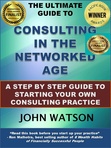
The Ultimate Guide to Consulting in the Networked Age by John Watson - A step by step guide to starting your own consulting practice with proven strategies to build a consulting practice with global reach by capitalizing on technological innovation including the latest in social media marketing trends.
"Many people have the operational skills to strike out on their own as a consultant either in the B2B or B2C space, yet hesitate to take the leap into establishing their own consulting practice. This step-by-step guide will assist prospective entrepreneurs turn their dreams of establishing successful consulting practices into reality.” - John Watson

1. Free unlimited, messaging in Groups
While you need to pay for a premium account to access the LinkedIn In-Mail feature that lets you message people that are not your first connections, there is a way to reach out to people and message them for free. Use ‗Send Message‘ to send a message to any LinkedIn Group member. Just search for their name in a group and click ―message‖. Use this functionality sparingly and always make your messages relevant, engaging to your message recipients. Do not send promotional material. Rather you should focus on demonstrating thought leadership and adding value to Group members. Your objective is to expand your network not try to win a new client with a single message.
2. Use Groups to expand your network of 1st connections
In Groups you can strategically follow second and third degree connections. This LinkedIn functionality is powerful when you‘re looking to start conversations with prospects. You can Like, Share and Comment on their updates and interact in ways that will generate new connections. You can invite fellow Group members to become first degree connections of yours. If a pop-up box appears asking how you know the person that you are sending a connection invitation to, you can simply select the Group that you both belong to and your request to send an invitation will be automatically approved.
3. Make your content interactive
Communicate interactively by uploading video and presentations to your profile. Include call to action buttons so that other members can contact you directly for your services or products. Remember to focus on adding value not uploading promotional content.
4. Source leads direct from your LinkedIn profile
Add a white paper or eBook to your profile page and build a free web form with Google Drive. Place the links to the form as content on your Profile Summary and share the links as updates once a day every day.
5. Share engaging, relevant breaking news
Many online news sites have Social Media (often including LinkedIn) sharing buttons built into their websites. Frequently, I find these sharing icons at the top or bottom of the news articles.
If you find an article that you would like to share and there is no LinkedIn icon on the page, then you can simply copy the article using your smartphone, tablet, PC etc. and then open your LinkedIn home page or a Group home page and then paste the article. Always add your own headline when you paste because often LinkedIn truncates the headline or sometimes instead of the headline only a date appears, which is not an effective attention grabber. Also don‘t just hit the share button.
6. Target your sharing
By selecting a sub-set of your connections that will be interested in your share you can personalize your content. LinkedIn gives you the option to select which of your connections toy want to receive your share and you can elect to hide the list of names that you are sharing with from other connections. This individualized sharing capability enables you to personalize your content sharing by including personalized messages with your content.
7. Pay for a premium account
If you are establishing or operating a consulting business, particularly in the B2B space then it is worth it to upgrade to a premium account. In most cases you will find that the Basic account is all that you need as it has a powerful Advanced Search function that is a fantastic way of identifying prospects.
8. Profile targeting
While LinkedIn was originally perceived as a career site where you could post your resume for recruiters to see it times have moved on. If you are in business as a consultant the primary aim of your LinkedIn profile should be to establish credibility with prospective clients. Since your LinkedIn profile is often the first place prospects go to find out more about you and your firm it needs to be a credible, professional, interactive marketing tool that establishes you as an industry expert. Clearly to be a positioned as an expert you need to be creating your own. Your content becomes a permanent pathway for prospective clients to find you. Think of publishing on LinkedIn as free prospecting. Remember you don‘t have to publish until you get your content exactly how you want it including adding images sourced from professional online image galleries that optimize your content for posting online. One such image gallery that I use is www.canva.com and SlideShare enables you to share PowerPoint presentations for the more visual content. Get help with your content editing from colleagues and peers or content editors.
Aim to be recognized as a go to publishing expert in your field.
9. Make LinkedIn Your Professional Website
Really work at getting your Profile to an All Star professional standard. Increasingly, your LinkedIn profile is the first and often only place that prospective buyers of your services and/or products, partners and future employers are going to go to find you and judge you online. Make your Profile your competitive advantage and have maximum impact.
You will know that you are a making effective use of LinkedIn when you begin to receive emails from LinkedIn like this one that I received after publishing several articles: “Thanks for sharing your perspective in 2014.
Cheers to you for being one of the first members to publish on LinkedIn!”
Add value to your network; give and never remember, receive and never forget.
To read more entrepreneurial success strategies please visit:
http://www.amazon.com/Ultimate-Guide-...
The Ultimate Guide to Consulting in the Networked Age by John Watson - A step by step guide to starting your own consulting practice with proven strategies to build a consulting practice with global reach by capitalizing on technological innovation including the latest in social media marketing trends.
"Many people have the operational skills to strike out on their own as a consultant either in the B2B or B2C space, yet hesitate to take the leap into establishing their own consulting practice. This step-by-step guide will assist prospective entrepreneurs turn their dreams of establishing successful consulting practices into reality.” - John Watson


How to Differentiate Decisevely
How to Differentiate Decisively with Your Marketing Mix
Excerpt from the highly-rated new book "The Ultimate Guide to Consulting in the Networked Age' by John Watson
When I first studied consumer behavior and marketing in the 80's, differentiating your business from the competition all come down to choosing which of the 5 Ps of the marketing mix you were going to build your reputation on – Price, Product, Place, Promotion and People. Sometimes other terms such as service and experience are substituted for the people category. In the pre-internet day most service levels and customer experiences were via personal interactions with a salesperson or a consultant. Whereas today clients have many experiences with our virtual stores, websites, blogs, social media pages and form opinions based on the service level of automated accommodation and travel booking sites and the like.
In almost all cases small and medium enterprises find that it is impractical to successfully implement a marketing strategy that seeks to build a reputation in more than one category of the marketing mix. Invariably trade-offs are needed.
So when it comes to your marketing strategy it is best to select one category that you will build your reputation on and this becomes your point of differentiation. You want to become the go to firm in your location and field.
Logically you should select a category that you have control over, offers a value proposition for your clients, and that you are confident that you can deliver.
If you are a financial advisor, then it would be impractical to try to compete on product as the performance and design features of investment products are not things that you can control. If, as an investment advisor you seek to build your reputation on product performance, you will quickly lose credibility as clients compare their fund performances over-time with the performances of products that friends of theirs have invested in, or simply read the published investment performance league tables.
Customer experience, or service (that in the old days, was the people category of the marketing mix) and quality control within professional practice consulting firms are viable marketing strategies.
Place can also be a viable strategy, think for example of the mobile mortgage broker that happily meets you at your office or home.
Price leadership can also be a successful strategy, particularly if you are a low cost provider working out of your home office competing with professional practices with expensive CBD office rentals to pay.
So you need to decide where in the product mix you can best build your reputation on a point of differentiation. Once you have decided, go and differentiate decisively and relentlessly!
http://www.amazon.com/Ultimate-Guide-...
Connect with me on Twitter - @johnpwatson5
Excerpt from the highly-rated new book "The Ultimate Guide to Consulting in the Networked Age' by John Watson
When I first studied consumer behavior and marketing in the 80's, differentiating your business from the competition all come down to choosing which of the 5 Ps of the marketing mix you were going to build your reputation on – Price, Product, Place, Promotion and People. Sometimes other terms such as service and experience are substituted for the people category. In the pre-internet day most service levels and customer experiences were via personal interactions with a salesperson or a consultant. Whereas today clients have many experiences with our virtual stores, websites, blogs, social media pages and form opinions based on the service level of automated accommodation and travel booking sites and the like.
In almost all cases small and medium enterprises find that it is impractical to successfully implement a marketing strategy that seeks to build a reputation in more than one category of the marketing mix. Invariably trade-offs are needed.
So when it comes to your marketing strategy it is best to select one category that you will build your reputation on and this becomes your point of differentiation. You want to become the go to firm in your location and field.
Logically you should select a category that you have control over, offers a value proposition for your clients, and that you are confident that you can deliver.
If you are a financial advisor, then it would be impractical to try to compete on product as the performance and design features of investment products are not things that you can control. If, as an investment advisor you seek to build your reputation on product performance, you will quickly lose credibility as clients compare their fund performances over-time with the performances of products that friends of theirs have invested in, or simply read the published investment performance league tables.
Customer experience, or service (that in the old days, was the people category of the marketing mix) and quality control within professional practice consulting firms are viable marketing strategies.
Place can also be a viable strategy, think for example of the mobile mortgage broker that happily meets you at your office or home.
Price leadership can also be a successful strategy, particularly if you are a low cost provider working out of your home office competing with professional practices with expensive CBD office rentals to pay.
So you need to decide where in the product mix you can best build your reputation on a point of differentiation. Once you have decided, go and differentiate decisively and relentlessly!
http://www.amazon.com/Ultimate-Guide-...
Connect with me on Twitter - @johnpwatson5
Engaging with webinar audiences
Engaging With Presentation and Webinar Audiences -
Excerpt from the highly acclaimed new business start-up book "The Ultimate Guide to Consulting in the Networked Age" described by Amazon Hall of Fame Top Book Reviewer as "A REAL GEM"
"In giving presentations, use the 10/20/30 rule - use only 10 slides, take 20 minutes maximum, and use at least 30-point fonts." Guy Kawasaki
What is your presentation style? Do you even like presenting?
Be aware that when you are presenting you typically have less than 1 minute to establish your credibility and gain your audience‘s attention and respect. Therefore; how you start your presentation is paramount.
Here are 5 presentation starters that I personally have had success with over the years:
1. Stories: everyone relates to stories and this technique enables you to build an emotional connection with your audience from the outset. Just ensure that your story is relevant and points to a key theme of your presentation.
2. Data: use a surprising statistic to arouse interest. For example, ―did you know that there are 183Billion emails sent every day? How will you make your email campaign stand out in the inbox and avoid the delete button?
3. Questions: if you want audience participation and engagement what could be better than asking a question? This can be as simple as ―how is everyone this evening? You might ask your audience to visualize a scenario or the outcomes that they want as a result of attending your presentation.
4. Quotes: gain credibility and pique interest with a famous quote or try two contrasting quotes and throw in a question like: "Which of the following quotes or statements apply to your work-site: a) ―That‘s not my job b) ―Marketing is everyone‘s job?
5. Humor or jokes: if you have a flare for humor this can be an effective attention-grabber technique. When speaking to audiences of retirees at investment seminars, I would sometimes tell a humorous story that goes something like this:
"A tip for concentrating was given to me by an air force pilot who said that his powers of concentration on bombing missions improved when he closed his eyes, leaned forward in the cockpit and opened his mouth. In this position he said that he could tell with pin point precision from which direction enemy anti-aircraft fire was coming from."
I then go on to say to my presentation audience;
"So, if I see anyone leaning forward in their seat, eyes closed and mouth open, I will know that you are listening and concentrating intently on my message."
To make your presentations more engaging and interactive there are a few strategies that you can use.
Firstly, prepare your audience, whether online or physically present, to participate. Ask questions of your audience and ask for a show of hands response – this is a simple, yet highly effective technique for getting your audience involved in your presentation. Also ask your audience to visualize a scenario or circumstance rather than just describing a situation to the audience. Again you will find that your audience is more engaged than if they were passively listening to you. A common teaching technique that I use in business classes that also translates well into presentations is the think, pair, share activities. Ask your audience to spend a couple of minutes thinking of their own answer to a question that you pose, and then ask the members of the audience to spend a couple of minutes sharing their response with someone sitting beside them and then ask for a few pairs to share their outcomes or comments with the entire audience via a microphone. Try using these audience connecting techniques throughout presentations so that your audience becomes more engaged and comes to see themselves working as partners with you. As you become more adept at eliciting audience participation your role transforms from presenter to facilitator.
As a facilitator you can organize audience brainstorming and Q&A sessions. Experienced presenters often prefer to take questions throughout their presentations rather than taking them at the end. Taking questions on the fly is a habit that you should try to develop, so act as if this is a natural part of your seminar or webinar format. When answering questions, paraphrase the questions asked to confirm that you have correctly understood the question. Paraphrasing also validates and rewards the asker and encourages more participation. Just don‘t respond with I am glad you asked that question to every query. When answering questions give practical examples and focus on client benefits and outcomes.
Do you have a favourite attention-grabber? If so please share by leaving a comment and if you liked this excerpt please share with your network and check-out the book available at:
http://www.amazon.com/Ultimate-Guide-...
Connect on Twitter at johnpwatson5
Excerpt from the highly acclaimed new business start-up book "The Ultimate Guide to Consulting in the Networked Age" described by Amazon Hall of Fame Top Book Reviewer as "A REAL GEM"
"In giving presentations, use the 10/20/30 rule - use only 10 slides, take 20 minutes maximum, and use at least 30-point fonts." Guy Kawasaki
What is your presentation style? Do you even like presenting?
Be aware that when you are presenting you typically have less than 1 minute to establish your credibility and gain your audience‘s attention and respect. Therefore; how you start your presentation is paramount.
Here are 5 presentation starters that I personally have had success with over the years:
1. Stories: everyone relates to stories and this technique enables you to build an emotional connection with your audience from the outset. Just ensure that your story is relevant and points to a key theme of your presentation.
2. Data: use a surprising statistic to arouse interest. For example, ―did you know that there are 183Billion emails sent every day? How will you make your email campaign stand out in the inbox and avoid the delete button?
3. Questions: if you want audience participation and engagement what could be better than asking a question? This can be as simple as ―how is everyone this evening? You might ask your audience to visualize a scenario or the outcomes that they want as a result of attending your presentation.
4. Quotes: gain credibility and pique interest with a famous quote or try two contrasting quotes and throw in a question like: "Which of the following quotes or statements apply to your work-site: a) ―That‘s not my job b) ―Marketing is everyone‘s job?
5. Humor or jokes: if you have a flare for humor this can be an effective attention-grabber technique. When speaking to audiences of retirees at investment seminars, I would sometimes tell a humorous story that goes something like this:
"A tip for concentrating was given to me by an air force pilot who said that his powers of concentration on bombing missions improved when he closed his eyes, leaned forward in the cockpit and opened his mouth. In this position he said that he could tell with pin point precision from which direction enemy anti-aircraft fire was coming from."
I then go on to say to my presentation audience;
"So, if I see anyone leaning forward in their seat, eyes closed and mouth open, I will know that you are listening and concentrating intently on my message."
To make your presentations more engaging and interactive there are a few strategies that you can use.
Firstly, prepare your audience, whether online or physically present, to participate. Ask questions of your audience and ask for a show of hands response – this is a simple, yet highly effective technique for getting your audience involved in your presentation. Also ask your audience to visualize a scenario or circumstance rather than just describing a situation to the audience. Again you will find that your audience is more engaged than if they were passively listening to you. A common teaching technique that I use in business classes that also translates well into presentations is the think, pair, share activities. Ask your audience to spend a couple of minutes thinking of their own answer to a question that you pose, and then ask the members of the audience to spend a couple of minutes sharing their response with someone sitting beside them and then ask for a few pairs to share their outcomes or comments with the entire audience via a microphone. Try using these audience connecting techniques throughout presentations so that your audience becomes more engaged and comes to see themselves working as partners with you. As you become more adept at eliciting audience participation your role transforms from presenter to facilitator.
As a facilitator you can organize audience brainstorming and Q&A sessions. Experienced presenters often prefer to take questions throughout their presentations rather than taking them at the end. Taking questions on the fly is a habit that you should try to develop, so act as if this is a natural part of your seminar or webinar format. When answering questions, paraphrase the questions asked to confirm that you have correctly understood the question. Paraphrasing also validates and rewards the asker and encourages more participation. Just don‘t respond with I am glad you asked that question to every query. When answering questions give practical examples and focus on client benefits and outcomes.
Do you have a favourite attention-grabber? If so please share by leaving a comment and if you liked this excerpt please share with your network and check-out the book available at:
http://www.amazon.com/Ultimate-Guide-...
Connect on Twitter at johnpwatson5
20 Sales Boosting Ideas
John Watson
♦www.consultinginthenetworkedage.com ♦prospect attraction strategist ♦top 25 Amazon author
Twenty Sales Boosting Ideas
Excerpt from the highly acclaimed new business start-up book "The Ultimate Guide to Consulting in the Networked Age" described by Amazon Hall of Fame Top Book Reviewer as "A REAL GEM"
"When the student is ready the teacher will appear" www.consultinginthenetworkedage.com
Inevitably you will strike those sales slumps when your pipeline of business dries up.
It is always wise to plan in advance for the bad times by brainstorming and making a sales boosting list of ideas and strategies. Here are some ideas to get you started.
1.Schedule time to read sales books and sales postings in LinkedIn and review the resource listings in the appendices at the end of this book. Don‘t just read randomly, be targeted in your readings and focus on a specific strategy that you need to improve on and actively search for postings on that topic e.g. how to negotiate on fees, or how to make emotional connections with website visitors who refuse to complete online forms.
2.Enroll in a presentations skills or sales training course, and don‘t forget to build connections with other course
3.Actively participate in online sales forums, groups, webinars, attend relevant sales
4.Read a time management skills book like Stephen Covey‘s 7 Habits of Highly Effective
5.Try role playing sales activities and ask for feedback on body language, voice control mannerisms, listening skills.
6.Film your sales role plays and self-critique your performance.
7.Become self-aware of your personality traits and habits and work on developing more productive, positive habits.
8.Schedule calendar time for network nurturing, testimonial requests, referral follow
9.Become aware of any internal negative dialogue that is inhibiting your performance and work on deleting
10.Learn and practice daily visualization
11.Become a mentor.
12.Do something for someone else as it will make you feel great.
13.Aim high by sending personalized emails including testimonials to chief executive officers of your target prospect companies and stop underselling yourself.
14.Stop offering discounts unnecessarily or too quickly. You want to present as confident in the value of your offer and not desperate to win a client.
15.Provide referrals to others.
16.Start conversations with three strangers per day.
17.Practice using storytelling to build emotional connections.
18.Research your prospects companies and connections to better understand their pain points.
19.Focus on including calls to actions in your prospecting emails .i.e. limited time, limited quantity offer.
20.Post thought leadership demonstrating educational content on LinkedIn.
BUY NOW to take advantage of the Limited time offer - buy the complete business success guide today at a drastically reduced price by visiting:
http://www.amazon.com/Ultimate-Guide-...
Connect with me on Twitter - @johnpwatson5
Please share this post with your connections and add your favourite sales boosting techniques in the comments below. Thank-you!
♦www.consultinginthenetworkedage.com ♦prospect attraction strategist ♦top 25 Amazon author
Twenty Sales Boosting Ideas
Excerpt from the highly acclaimed new business start-up book "The Ultimate Guide to Consulting in the Networked Age" described by Amazon Hall of Fame Top Book Reviewer as "A REAL GEM"
"When the student is ready the teacher will appear" www.consultinginthenetworkedage.com
Inevitably you will strike those sales slumps when your pipeline of business dries up.
It is always wise to plan in advance for the bad times by brainstorming and making a sales boosting list of ideas and strategies. Here are some ideas to get you started.
1.Schedule time to read sales books and sales postings in LinkedIn and review the resource listings in the appendices at the end of this book. Don‘t just read randomly, be targeted in your readings and focus on a specific strategy that you need to improve on and actively search for postings on that topic e.g. how to negotiate on fees, or how to make emotional connections with website visitors who refuse to complete online forms.
2.Enroll in a presentations skills or sales training course, and don‘t forget to build connections with other course
3.Actively participate in online sales forums, groups, webinars, attend relevant sales
4.Read a time management skills book like Stephen Covey‘s 7 Habits of Highly Effective
5.Try role playing sales activities and ask for feedback on body language, voice control mannerisms, listening skills.
6.Film your sales role plays and self-critique your performance.
7.Become self-aware of your personality traits and habits and work on developing more productive, positive habits.
8.Schedule calendar time for network nurturing, testimonial requests, referral follow
9.Become aware of any internal negative dialogue that is inhibiting your performance and work on deleting
10.Learn and practice daily visualization
11.Become a mentor.
12.Do something for someone else as it will make you feel great.
13.Aim high by sending personalized emails including testimonials to chief executive officers of your target prospect companies and stop underselling yourself.
14.Stop offering discounts unnecessarily or too quickly. You want to present as confident in the value of your offer and not desperate to win a client.
15.Provide referrals to others.
16.Start conversations with three strangers per day.
17.Practice using storytelling to build emotional connections.
18.Research your prospects companies and connections to better understand their pain points.
19.Focus on including calls to actions in your prospecting emails .i.e. limited time, limited quantity offer.
20.Post thought leadership demonstrating educational content on LinkedIn.
BUY NOW to take advantage of the Limited time offer - buy the complete business success guide today at a drastically reduced price by visiting:
http://www.amazon.com/Ultimate-Guide-...
Connect with me on Twitter - @johnpwatson5
Please share this post with your connections and add your favourite sales boosting techniques in the comments below. Thank-you!