P.J. Colando's Blog
September 22, 2026
Et Cetera
If you are someone who likes to gloss over details sometimes, English gives you a wealth of ways to imply that there’s more to say: we have yadda yadda yadda, so on and so forth, and, for those who prefer to end their sentences with a little more gravitas and dignity, etcetera. Adopted into English straight from Latin, etcetera (also written as etc.) means “a number of unspecified additional persons or things”; it’s often used at the end of lists to imply there are more entries than those explicitly enumerated.
This useful word started out as two distinct words in Latin: et(meaning “and”) and cetera (meaning “the other”). The abbreviation of etc. is so common today that someone is likely to understand its usage even without knowing the full phrase, but there is an earlier abbreviation that has fallen out of use. Going back to the 15th century, there are writings that use the abbreviation &c. (The first symbol is the ampersand, which means “and.”) This particular usage was extended to formal letter writing, as it was common to use )&c.later in the letter to replace the title of the person to whom the letter was addressed. Though far less common today, there’s evidence of people writing &c. throughout the 20th century.
You may also come across the Latin abbreviation et al.), which is short for either et alii (masculine), et aliae (feminine), or et alia (neuter), but this isn’t a substitution for etcetera, even though this Latin phrase translates to “and others.” Despite similarities to etcetera, et al. is mainly used as a substitute for multiple names written in a bibliographical context. You’re likely to see et al. in written works with many citations.
The famous phrase “et cetera, et cetera, et cetera” is used by King Mongkut in the musical The King and I. The King uses this signature catchphrase as a running gag throughout the show when he wants to cut short a long explanation or dismiss details. Watch this clip to see the famous phrase performed: https://www.youtube.com/watch?v=Sn-TdC5gctk&t=41s


September 15, 2026
Innie or Outie Conversational Style
Are you an innie or an outie, that is, an introvert or an extrovert? Does conversing with people come easily, naturally to you – or do you, like many, require alcohol to ease your way into conversation with others, either strangers or friends?
Even better as a social lubricant than beer, we’ve discovered that dog ownership is the ultimate conversation starter. With Spark as wingman, my husband, Larry, chats his way around our neighborhood during their evening walks. He has another circle of friendly folks among the others who walk their dog. He’s become an avid community gossip collector (though never a spreader), a boon for connection in our small neighborhood where people cling to their privacy like their houses cling to the hill. Aloofness has been a hallmark, similar to other neighborhoods’ guarded gates, because there are no front porches and we all live behind closed garage doors.
There’s incontrovertible evidence that all three members of our household have an ‘outie’ conversational style, including our goldendoodle, who is irrepressible.
Irresistible, even, for people want to pet him everywhere we go. “What a beautiful dog,” they say.
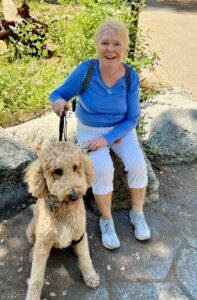
He’d be the ultimate chick magnet if my husband were single. He’s a friendly bridge with children and shy adults. It helps that our golden doodle is also an outie, an extrovert eager to meet people, paw them, seek treats, and/or lick their face.
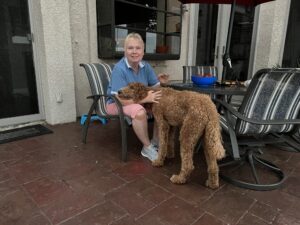
He wasn’t that way when we rescued him from an awkward, sad living situation. He was a neglected, scared, and bewildered 8-month-old pup. Perhaps, with the love, training, and encouragement in the 3 1/2 years since we’ve owned him, he’s become more like us. In this early photo, snapped on our patio, I had to wrestle his head in place literally; skittish and camera-shy was he.
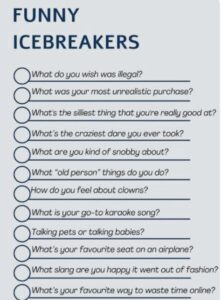
P.S. Stymied for conversation starters? Unwilling to acquire a pet? Here’s an eclectic and interesting list of conversation starters:
September 8, 2026
Anachronistic: a New Label for Me?
I’ve long resisted labels – for me and others. One reason is that judgment is required, and artificial divisions between people – rather than coming together – develop and then persist. Besides, who needs to – or wants to – be defined by others, placed in a category to which they may/may not belong?
I fervently recall the era of blonde jokes, when I learned them in self-defense, sometimes leading with one in a conversation to head the other off. It was a better way of handling the teasing that had occurred in my childhood, when my hair was red. No doubt my face colored to match the hair on my head, giving away my reaction with no subterfuge. Two things occurred between the teasing phases of my childhood years and those as an adult:
my hair became blonder through cycles of red to strawberry blonde to blondeI could better manage my feelings and reactions to the words and deeds of others as I matured.My desire to skirt labels for people, places, and things stems from a belief in equality, as embedded in our system of government and my religious belief that God created all people, places, and things on Earth, endowing each with His love and respect. How could I override God’s perception of each item’s worth?
However, I recently discovered a word that may be the label for me. I was trained, in part to live within my parents’ means, to be a ‘buy and hold’ person, to not give in to fads and extremes in fashion, furniture, and the like. Thus, my possessions may be anachronistic. Further, I was encouraged to be pals with everyone, friends to many, inclusive, and kind – and to not join a clique.
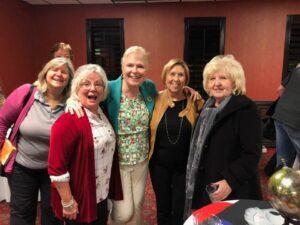
Here’s the word, its meaning, and usage: Anachronistic, an adjective
Belonging to a period other than the one portrayed.Outdated or out of place.Examples of anachronistic in a sentence:
The technology felt anachronistic.His views seemed anachronistic in a modern setting.September 2, 2026
Character
September 2 question – Do you have a favorite character archetype you tend to gravitate toward in your writing?
Character archetypes matter because they resonate with readers; they are recognisable and intrinsically understood. Using them to our advantage can elevate our stories by drawing the reader more fully into our character’s world. The archetypes can give us a blueprint to ensure our reader sees a truth in our character’s actions because they fit a known psychological profile. Pardon me while I list them, for my own edification
Jung noted 12 character archetypes, each with its own set of values, traits, and motivations. They are broadly grouped into three categories:
The ego archetypes: the Innocent, the Everyman, the Hero, and the CaregiverThe soul archetypes: the Explorer, the Rebel, the Lover, and the Creator/ArtistThe self archetypes: the Jester, the Sage, the Magician/Wizard, and the RulerJackie, the spunky, yet traditional Midwestern farm wife, was my main character throughout my Faith, Family, Frenzy! series, which totaled four books. I suppose she’s an innocent along with being a caregiver. In other parlance, she’s a church lady as well as a lunch lady, which everybody recalls from their school days. She wore an apron rather than a Superwoman cape as her uniform, her cover in daily life.
She was a character.
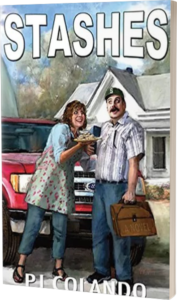
I’ve long desired to add a cozy mystery about Jackie and her circle of small-town friends and family whose lives are prone to frenzy, but my efforts have lapsed due to health issues in the last couple of years. I’ve just renewed my commitment to completing this book by renewing my ProWritingAid subscription.
Don’t judge me. I liken use of the AI tool to having a writers’ group for instant critique, correction, and feedback at my fingertips. This has become increasingly important when writing a weekly blog post despite having little public interface, especially when unable to drive in the early weeks of knee replacement…
P.S. in the forever-forthcoming cozy, Jackie is neither the victim nor the villain… she’s innocent. (wink-wink)
August 25, 2026
Gin & Tonic Summer
This summer was something last year – and every adult year of my life – was not.
It was not a gin & tonic summer.

It was also not a dip in our pool summer, despite the string of unseasonably hot & humid days we weathered. It was not our usual adventure-filled summer. We didn’t dine out and visit with friends as is our highly social pattern. We weren’t able to pack snacks and folding chairs into our wagon and, dog in tow, attend the free outdoor concerts that various public parks provide. While we have an extraordinary collection of CDs, Sirius, and local radio stations to help us fulfill our musical needs, we didn’t get to feel festive in a throng, an experience that amplifies the pleasure.
We didn’t attend movies – not even the blockbuster ‘Odyssey’ – though, in truth, we don’t often do this. We, too, have joined the slew of peeps who stream movies at home and/or read a good book on our back patio.
It’s late August, so we southern Californians are fortunate that our summer won’t be over in a few weeks.Still, it’s been tedious, monotonous, and sometimes glum. Post-knee replacement surgery is rigorous, demanding, and detailed. No step may be skipped or side-stepped, and the limitations are real. When one is on Oxy or other narcotic painkillers (the average time period is seventeen days, I learned. I gutted the pain out in less than half that time – with no gin & tonic refresher in sight!
In truth, I’m glad that medical products and procedures have been developed for the replacement parts needed as we aged, less gracefully than intended. I guess my biggest gripe is that I don’t get to be the joyous me I wanna be – or used to be – and it’s not my choice. I have real physical limitations that circumscribe my life.
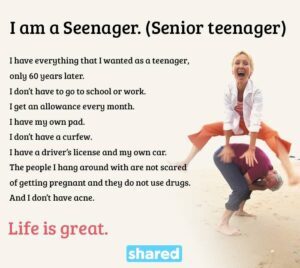
I want to be a feckless and unfettered Seenager, the person I foresaw myself to be when I blogged about the topic in 2017…
August 18, 2026
Vinolent – a word absent from my life
As you may/may not recall, I had my second total knee replacement surgery six weeks ago. As is typical, the main pain avoidance med, Oxy, was prescribed… for a week. I’ve recently learned that the nationwide average of this post-knee replacement surgery prescription is 17 days. Am I tougher, tougher, and/or more insane than most? Should I have asked for more?
Nope – I’m not into dope (wink-wink)Thank goodness I’m not the addictive type, and, additionally, I apparently didn’t inherit my father’s low pain threshold. Actually, I was glad to be off the medication; it addled my brain. Brain fog became a term with which I was familiar for the first time, and I didn’t like it.
As I mentioned, I’m now six weeks post, and I’m starting to see progress worthy of the pain that evolves from rigorous rehab. A series of other meds marched me forward, none of them narcotic and none of them wine.
I’ve learned a new word, vinolent, more prevalent in my youth and when we first moved to California… supporting the economy, you know.PRONUNCIATION:(VAI-nuh-luhnt) MEANING:adjective: Drunken with wine; given to drinking wine to excess.ETYMOLOGY:From Latin vinolentus (full of or drunk with wine), from vinum (wine) + -ulent (full of). Earliest documented use: 1384.NOTES:If a temulent person is prone to staggering, a vinolent person is prone to whining. It is the perfect adjective to describe someone who has made a few pour decisions. Further, wine over-imbibing masks psychological pain, which I’m elated to say don’t encumber my mind, body, or soul.USAGE:“By half-past nine a kinder vinolent atmosphere had put to sleep the hatreds and suspicions of before dinner.”
Aldous Huxley; The Tillotson Banquet; The Century Magazine; Jan 1921.Actually, for better or worse, wine is less prevalent in my life. It doesn’t mix well with my older age nor with the meds increasingly required to keep my body parts working, replaced knee not included… Here’s a photo of my current edible passion – Yasso bars, lower in calories, somewhat healthful, tasty… I highly recommend.[image error]
August 11, 2026
A Good Person
“You’re a good person,” my pastor said, ” and good people get hurt.”
“Further, good people are rare.”That counseling conversation occurred long ago, but it’s seared into my soul because of life experiences that caused me great harm and hurt, thankfully not everlasting.
Good people are spontaneously kind people, people with values and core beliefs that guide their behavior without thought. Good people value others’ needs, wants, and desires. Though they need not subordinate their own needs, wants, and desires to be considered good, they do stuff without accolade or reward.
My husband is a good person. Look at that smile in the photo taken during our 50th wedding anniversary celebration! Indeed, he is rare.
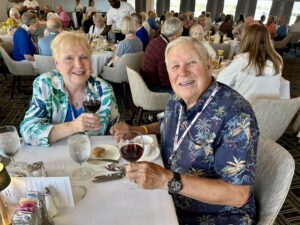
As a caregiver during the first month after knee replacement surgery, he has excelled. He’s seldom flagged, balked, or flaked out on my myriad requests, some of which I’ve been reticent to make. Often, I didn’t even ask; he just stepped up to the plate. As an example, 24/7 elevation and ice are strongly advised for the surgical leg, to reduce the swelling that inevitably occurs when one’s skin and soft tissues have been cut, mangled, and manipulated to insert a new knee. My husband set his alarm to awaken at 2:00 a.m. to change the ice (frozen in water bottles) when we determined that a four hour interval was all that the contents of the ice machine would chill the healing, yet swollen limb sufficiently.
Yes, I, the good scout, slept like that every night for a month. It’s not so hard to do when you know that it’s mandatory. It’s not so hard to do when you have the support of a good person.
My husband is a good person – the best kindred spirit I could ask for.Our promise, our bond, is that I will do the same necessary chores when his health needs warrant them. I am a good person, too.
August 5, 2026
I Thrive in a Tribe
Everybody wants to be part of a great cause, a tribe, a fellowship, a sisterhood — everybody except Henry Thoreau, the great American killjoy who chose solitude. While he’s an acclaimed wordsmith – with deep wisdom that can be mined from his writings – I’ve never understood America’s reverence for him. His aversion to living in a wider world, as an introvert, is not my style.
I am an extrovert, not one who relishes time alone, even when I’m writing. That’s what a good writers’ group is for, as well as the necessary suggestions for edits that fold into the re-writing one’s work needs. An extraordinary writers’ group helps one to boldly go forward. With buddies, people who understand the drill, the drudge, the dread of writer’s block.
A tribe.
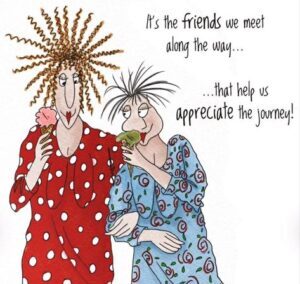
For me, reading is a solitary occupation, a hobby that’s engaged me from an early age. The squabbling, the competing commentaries, augmented by copious consumption of wine, is not my style. I don’t need others’ opinions to validate or collide with mine. I’ve also found that the chosen book might not be one I’d choose. But, most of all, I decry gossip, the activity that women’s book clubs often devolve into.
I’m a longtime member of the Insecure Writer’s Support Group, though I no longer feel insecure about my skills. I used to feel cowed when among MFAs, but no longer. Writing, my elegant hobby, evolved into writing a series of award-winning books. I’ve grown with the applause, the critique, and the camaraderie. Like Thoreau (though I called him a killjoy, I admire his love of nature and for chronicling the lives of the freed-slaves who inhabited Walden Pond’s surrounds before him), I’ve strengthened and broadened myself as I’ve worked hard to hone the craft. I’ve worked and worked – with the affinity and encouragement within writers’ groups.
Now I proudly, firmly state, “I’m a writer.”What about you?
P.S. Tribe members and friends. I had my post-op surgery appointment yesterday and received the doc’s applause because I’ve been a highly compliant PT patient, and I’m on trend to walk down the aisle at my daughter’s October wedding. Whooppee!
July 28, 2026
Born to Roam
A curious nature, coupled with a personal need for novelty and adventure, which may/may not be undiagnosed ADD, has ingrained wanderlust in my soul. Thus, I’m well-aligned with the American ideal of freedom to roam. After all, what kind of person would board a tiny wooden ship to cross a largely uncharted ocean? Further, what kind of person would leave every known aspect of their daily life, stuffing a few belongings into a Conestoga wagon, to homestead across a poorly mapped continent? What kind of person would sign up for a one-way ticket to Mars?
You lost me on that last one, but I’d try the other new frontier-seeking. I was born to roam.A mere two months ago, I learned more about the Lewis & Clark expedition commission by President Jefferson. ‘Uncommon Courage’ is an apt name for one of the most famous books about their perilous adventures. Here’s a photo of the tiny fort they built to winter (in what is now Washington state) and replenish their food supplies for their 5000-mile return trip to report to the President. That it rained nearly daily, added to their misery… like the Mayflower and Conestoga wagons, I would have been intolerably grumpy, never mind all the hardships that preceded the expedition’s western terminus on the continent.

Since the early days of our fledgling experiment, a country born of war and discontent over taxes, travel has reflected the national character: restless, ambitious, and relentlessly determined to move forward, optimistic to the core. Maybe entitled to roam and explore, too. There’s always more to be and see.
The opening stanzas of Tom Petty’s, “American Girl” reflect my travel aspirations:“Well, she was an American girlRaised on promises
She couldn′t help thinking that there
Was a little more to life somewhere else”
I’m actively engaged in the early stages of knee replacement rehab, bearing the pain of PT and following through religiously with the prescribed home exercises. My motivation is propelled by my need to resume our adventures – and to get out of this house!
I’m an American Girl: born to roam.And, sooner-than-soon, I’ll be able to resume my roam… because my total knee replacement recovery is going well.
July 21, 2026
Gaining a dog made our lives 3D
June 16 coincided with Father’s Day in 2022, an auspicious omen of how our lives would expand because we were a childless couple. My husband would finally have his boy, an eternal companion that, although he didn’t always obey, wouldn’t talk back.
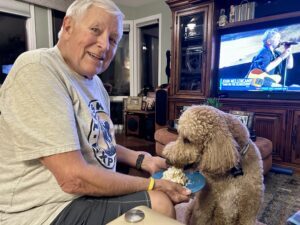 The photo above shows my guys with a celebratory ‘pup’ cake last year – everyone enjoying the moment, including the camera person (me).
My husband and I just celebrated 50 years of wedded bliss, bringing each other adventure, comfort, and ease almost daily. We live agreeably on most issues, ideas, scenarios, and friends. We share the same background, values, and mores. We respect each other’s point of view, intelligence… and sense of humor. We each center our lives, hopes, and dreams around each other.
But we agree that we lived 2D lives until Spark arrived on the scene.A dog experiences life differently due to hypersensitive hearing and sense of smell. He’s indifferent to feuds and human nonsense and the daily bad news shown on TV. He doesn’t even require a stable of new toys, as some dogs apparently do. Give him his long-favored, soiled, and dragged-about squeaky toys, and he’s enthralled, sometimes gnawing off parts to show his devotion (?).
Spark lives a simple, but 3D life – and, thus, so do we. We focus on the senses of scenes now more than ever.
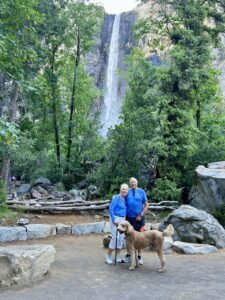
The photo above shows our trio at Bridal Veil Falls, Yosemite, where we celebrated three years of his entry into our lives. While we’ve always prized adventures in our lives as a duo, each adventure is enhanced by Spark’s addition. He’s prompted me to focus on the smells in the environment, something that my allergies used to prevent.
Acquiring a dog transformed our lives into a 3D adventure. Whoopee!Enjoy this blast from the past – https://www.pjcolando.com/sparky-is-a-spark/