Discover new books on Goodreads
See if your friends have read any of C.S. Burrough's books
C.S.’s 2025 Year in Books
Take a look at C.S.’s Year in Books, including some fun facts about their reading.
C.S. Burrough’s Followers (141)


More friends…
C.S. Burrough
Goodreads Author
Born
The United Kingdom
Website
Genre
Influences
Member Since
March 2014
URL
https://www.goodreads.com/csburrough
Sydneysider C.S. Burrough began life in the UK. After studying Performing Arts full-time he worked on West End theatre productions and toured shows internationally for nearly two decades, settling in Australia in the early 1980s. He has written and published since 1989 in anthologies and newspapers, producing full-length works, novellas and short stories and is a prolific book reviewer. Several of his works are held and catalogued in the National Library of Australia, and most are listed at AustLit: The Australian Literature Resource. His historical saga Or Forever Be Damned (2014) was published by Silky Oak Press. He is a Featured Contributor in the Soul Vomit: Domestic Violence Aftermath (2014) anthology, by Broken Publications. He is a c Sydneysider C.S. Burrough began life in the UK. After studying Performing Arts full-time he worked on West End theatre productions and toured shows internationally for nearly two decades, settling in Australia in the early 1980s. He has written and published since 1989 in anthologies and newspapers, producing full-length works, novellas and short stories and is a prolific book reviewer. Several of his works are held and catalogued in the National Library of Australia, and most are listed at AustLit: The Australian Literature Resource. His historical saga Or Forever Be Damned (2014) was published by Silky Oak Press. He is a Featured Contributor in the Soul Vomit: Domestic Violence Aftermath (2014) anthology, by Broken Publications. He is a contributing author to the Showcase: Spark (2024) anthology by Tale Publishing.
For previous work see AustLit: https://tinyurl.com/vvn87rf
Other links:
C S Burrough book review blog:
https://csburrough.blogspot.com/
Amazon.com Author page: https://www.amazon.com/author/csburrough
...more
To ask
C.S. Burrough
questions,
please sign up.
Popular Answered Questions
C.S. Burrough
By talking to other writer friends - who always have an opinion which, right or wrong, seems to shake my block and drive me back to the screen.
|
Or Forever Be Damned
3.33 avg rating — 30 ratings
—
published
2014
—
2 editions
|
Error rating book. Refresh and try again.
Rate this book
Clear rating
|
|
Soul Vomit: Domestic Violence Aftermath
by
4.67 avg rating — 3 ratings
—
published
2014
—
3 editions
|
Error rating book. Refresh and try again.
Rate this book
Clear rating
|
|
Showcase: Spark
by
C.S. Burrough (Goodreads Author),
it was amazing 5.00 avg rating — 2 ratings
|
Error rating book. Refresh and try again.
Rate this book
Clear rating
|
* Note: these are all the books on Goodreads for this author. To add more, click here.
My review of The House of Mitford, by Jonathan Guinness with Catherine Guinness
The House of Mitfordby Jonathan Guinness with Catherine GuinnessMy rating: 5 out of 5 stars
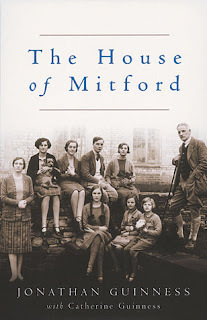
After this sitting considerably far down my Mitford history reading list, I was taken by its erudition. My expectations were cynical, knowing it was penned by family insiders: author Jonathon Guinness, 3rd Baron Moyne, is the eldest son of Diana Mosley (née Mitford) by her first husband Bryan Guinness; his c
Read more of this blog post »
Published on November 13, 2025 19:36
C.S.’s Recent Updates
|
C.S. Burrough
rated a book it was amazing
|
Error rating book. Refresh and try again.
Rate this book
Clear rating
|
|
Long ago in Far North Queensland, a tiny exotic girl named Dolores twirled between tamarind trees and on tabletops. She sang as she skipped and whirled in the tropical sunshine, a vocal gift inherited from her opera mother Kay Zammit, a celebrated ra
Long ago in Far North Queensland, a tiny exotic girl named Dolores twirled between tamarind trees and on tabletops. She sang as she skipped and whirled in the tropical sunshine, a vocal gift inherited from her opera mother Kay Zammit, a celebrated radio and Tivoli Circuit soprano. Kay was the eldest of ten offspring of Maltese 'Sugar King' Paul Zammit and his wife Pauline, who had landed on these sunburnt shores with zilch and pioneered a cane sugar industry. Their family had grown such that, for some of their scions' households, cash got tight. But they scraped by without much need of pounds, shillings and pence in this mid-century lucky country. They were tough but rosy times. Cairns, now a major travel destination, was a sleepy hollow without so much as a tourist bureau. Mum Kay had married war veteran Bill Ernst, father of the author Dolores Ernst, eldest of five, who grew up seeking not fame nor fortune and without delusion of grandeur. Just that yearning to stand on a stage and feel the joy of applause. She loved climbing trees, picking avocados, romping in sand with cousins, searching for pearl shells, fishing, catching mud crabs in mangroves and listening to the Bakelite radio. But her passion from the get-go was ballet, from age four. Any Australian showbusiness insider worth their salt knows of this stalwart. Her motto 'happy to be here, easy to work with' has ushered in countless foot lit journeys. At an astonishing 'eighty years young', Dolores Dunbar invokes the might to proffer this charming tome. Penned without literary trickery, her candour and humility strike at the heart. Her anecdotal tenderness cloaks a theatrical behemoth. We embrace her trusty voice with its sprinkle of wry musings. Dolores. Here is her tale: After a strict yet blissful Catholic girlhood, her grownup action kicks off at the dawn of '60s. Word is out that country music legend Slim Dusty needs a girl to sing and dance in his roadshow, doubling as a magician's 'boom ching girl' alongside a rope-spinning cowgirl and bikini-clad juggler. Teenage Dolores is up for this, anything for a foot in the door to her dream. And bravo, she gets the gig. Hence the title '18 Months of One Night Stands'. So ensues a muddy 18-month convoy. Through outback bush tracks, backwoods and boondocks beyond the proverbial black stump. Townships with no building in sight. Their loyal audiences comprise cattlemen, miners, barefoot desert folk squatting on floors with suckling babies and nary a word of English. Parched of entertainment in dusty one-horse-towns without so much as a communal TV, mobs hear via bush telegraph and show up in droves, waving 20-pound notes at the window when booked out. Some even muck in. Galvanised iron venues with bare earth floors. Stages strung from painter's planks across 44-gallon drums. 100-watt bulbs as overheads. Old halls. Amp leads crossing streets from ramshackle pubs. Torch-shining crowds. Spot the loo if you can. Showbiz apprenticeship in all its stark glory. We feel their enterprise, sweat and camaraderie. The remoteness of a wide brown land at the end of the earth, before mass global travel or imponderables like internet or smartphones. This isolation simmers in Dunbar's subtext, aglow with nostalgia and no hint of grievance. Post-tour and braving the city smoke, she does 'those' humdrum jobs in this quest for the footlights. 'Paying one's dues', biding her time, eyeing what chances arise. In a doctor's office. The handkerchief section at McWhirters store in Brisbane. Sportswear at Bolands in Cairns. Does shows with Cairns Choral Society. Tries varying posts, feeling misplaced here and there. But tenacity is paramount. It's the end goal that counts. Ambitious if homesick, she settles on a commission desk placement in the hairdressing salon of Sydney's Farmers department store. A kindly supervisor's social connections lead to formal singing lessons from famed contralto Evelyn Hall de Izal, which in turn lands an audition for fabled producers J.C. Williamson's, known as The Firm or J.C.W. Her first musical is in the ensemble of Funny Girl at Sydney's ornate old Theatre Royal. She discovers the not so ornate cold, grubby dressing rooms and bathrooms of the era. Dolores cuts her teeth and earns her stripes the way it was done then. Show boys drill her on greasepaint, eyelash glue and where to pin hairpieces. The hoofer sisterhood helps too. Funny Girl runs forever, moving to Melbourne, Adelaide, Brisbane and Perth. At Her Majesty's Melbourne, as their companies co-dine between shows, she meets fellow Queenslander Rod Dunbar from Oliver! across the road at the Comedy Theatre. All of pop and TV know this handsome ex rock singer, a onetime regular on Channel Seven’s Sing Sing Sing. Expanding into musical theatre, Rod is already in principal roles. They marry and stay together for life, until Rod dies aged 77, meanwhile welcoming a beautiful son into the world. Both manage solo careers some of the time. Dolores appears sans hubby in My Fair Lady, Applause, The Best Little Whorehouse in Texas and Les Miserables. In her widowed 70s, she joins a luminary line-up in musical comedy Half Time at Sydney's Hayes Theatre, alongside the venue's eponymous star Nancye Hayes herself. She portrays everything from a Ziegfield Bride to a mouse. Crones, whores, Disney creatures, Litle Miss Sunshine, Wonder Woman, a Fairy Godmother. She choreographs shows and events, takes on Company Management posts, the lot. But the duo also becomes known as a team early on, appearing in shows together. Even before marrying, they are in Fiddler on the Roof, Dolores as daughter Tzeitel and Rod as The Fiddler. They reunite in Godspell, with Rod as Jesus. In Chicago Rod is MC, Dolores merry murderess Mona (Lipshitz). They become Johnny O'Keefe's parents in a tour of Shout. In Bye Bye Birdie they team up as Mayor and Mayor's Wife. This tradition helps them through a life few theatrical marriages survive. But true love is their bond. And just when you think this old hand may retire, she embarks on a quarter-century encore career teaching Dance and Musical Theatre at the McDonald College of Performing Arts, directing extravaganzas like Copacabana, Grease and Fame. In this 'giving back' incarnation, her passion and energy drive future talents. She takes student groups to the USA to perform, join classes and see hit shows of Broadway, LA and Vegas – even to China! And not just once or twice. She pioneers this McDonald custom that lives on in her wake. Then she gets to work on this book. She outlines highpoints, hallowed theatres and sellouts. Marvels at the stars, directors, designers and choreographers she's known. And drolly dismisses the less-than-kind ones. The torrent of names along this Australian journey is eye-popping. Greats like Jill Perryman, Gloria Dawn, Bobby Limb and Dawn Lake, Betty Pounder, Toni Lamond, Bruce Barry, June Bronhill, Hayes Gordon, even Hollywood favourite Eve Arden. Others are Lorraine Bayly, Normie Rowe, Jeanne Little, Richard Wherrett, Judi Connelli, Roger Kirk, Colette Mann, John Waters, Donna Lee, Ross Coleman . . . Well sure, headliners may put bums on seats, but there would be no show without the all-dependable, ever-reliable trouper. Keeping things real, the author peeps into those lesser ventures vital to most thespians: cruise ships, cabaret hecklers, bawdy theatre restaurants. Wherever there's a buck to keep the wolves from the door. Graft that the theatregoing hoi polloi seldom hear of, and the soulless sniff at from their 9-5 abyss. The madness, slog, frantic tours, fluffed lines, dodgy scenery, missed cues, last minute stand-ins, stages the size of stamps. Theatre digs, from the dubious to the idyllic. Career hiccups, injuries, bomb scares, fires and flops. Some catastrophic, others plain farcical. All part of the merry-go-round. Guessing what zenith waits round the next corner. History is marked by where she performs on events like the John F. Kennedy assassination, the Six-Day-War and Australia's Whitlam Dismissal. This astonishing soul then shares secrets and tips to aspirants and aficionados, those who crave the Razzle Dazzle, those seeking inspiration whatever their dream, and we who just love an enchanting memoir. Here's the crucial yarn of one who never sought acclaim but was just there. A formidable legacy. Look at that cover, check the blazing smile. Showbiz personified. A raconteuse extraordinaire. If only there were more Dolores Dunbars. 100% must read for all humans. ...more |
|
|
|
|
|
C.S. Burrough
rated a book really liked it
|
Error rating book. Refresh and try again.
Rate this book
Clear rating
|
|
Orry-Kelly was synonymous, in old Hollywood, with Oscar winning costumes and career-long close working affiliations with icons like Bette Davis, Katharine Hepburn, Olivia de Havilland, Barbara Stanwyck, Ava Gardner, Kay Francis, Dolores del Río, Ann
Orry-Kelly was synonymous, in old Hollywood, with Oscar winning costumes and career-long close working affiliations with icons like Bette Davis, Katharine Hepburn, Olivia de Havilland, Barbara Stanwyck, Ava Gardner, Kay Francis, Dolores del Río, Ann Sheridan and Merle Oberon. A plucky gay kid from the New South Wales township of Kiama, he was born in 1897 and sent to Sydney at seventeen to study banking. Defying his parents' plan for a respectable career, he instead became a small time stage actor. Using the great city Down Under as a springboard to the wider world, he landed in New York earning a crust however he could: painting scenery, wheeling and dealing, blocking handmade ties, getting nowhere on stage but sharing crumby rooms and friendships with other struggling performers, some to become legends, others fading into obscurity. Here he established friendships with upcoming or newly established Broadway headliners like Fanny Brice, George Burns and Mae West. He also took under his wing the nay too talented but fast-learning young Englishman Archie Leach, later carved into legend as heart throb Cary Grant. Having almost inadvertently landed on his feet as a costumier, with zero training or qualifications, he grabbed an offer in Hollywood in 1932 and stayed, we assume abandoning his own ambition of performing, knowing a good thing when he was onto it. He was Warner Bros' chief costume designer until 1944, later designing for Universal, RKO, 20th Century Fox, and MGM. He also spent a stint in the US Army Air Corps in WWII before being discharged with alcohol issues. Kelly's stylistic instinct defied the lure of glitter and sequins we associate with Hollywood's golden age, instead going firmly with understated elegance, gaining him the unswerving loyalty of great leading ladies who knew a good thing when they wore it on screen. With "networking" a phrase long yet to be coined, Kelly's "who-you-know" personal survival technique resulted in close lifelong bonds with the likes of Ethel Barrymore and their ilk. We sense him sniffing out the influential and using a blend of sycophancy and crafty haggling to forge vital allegiances. His movies included classics like 42nd Street, The Maltese Falcon, Casablanca, Arsenic and Old Lace, Harvey, Oklahoma!, Auntie Mame, and Some Like It Hot. By the late 1950s and early 1960s, with several hundred movies under his belt, power dynamics had reversed and he became an authority to be reckoned with, famously dressing down Marilyn Monroe after one of her on-set flare ups. A chronic alcoholic, he died of liver cancer in 1964, aged 65, and was interred in the Hollywood Hills. His pallbearers included Cary Grant, Tony Curtis, Billy Wilder and George Cukor and his eulogy was read by Jack L. Warner His unpublished memoir was found by a relative, in a pillowslip, where it had stayed until half a century after his death, when Gillian Armstrong's TV documentary on him, Women He's Undressed, triggered its erstwhile unlikely unveiling. Some argue the piece had never been published because of his open sexuality being too taboo at the time of its penning, with others insisting his priceless anecdotes would have insulted too many esteemed Hollywood insiders. I sense that a more accurate explanation is its unfinished condition. Yes, he had reached the end of his tale in this raw draught he left us, but the work is far from crafted to the finished state such a perfectionist would have required. He indeed opens with a thinly veiled disclaimer along the lines of 'people say I talk in circles', admitting, towards the end, of also having hired a ghost writer to rework it, but having thrown away that product, which he believed entirely erased his personality. Whatever the reason, I find it inconceivable he would have wanted this to be the draft we all read, hence it being hidden away for so long. A character as determined as he would have seen it published in his lifetime had he thought it ready for print. Whilst his flighty personality remains indelibly intact here, this glowing authenticity is the price of his narrative being, for the most part, an impenetrable and irritating rant, skipping back and forth like the proverbial twittering budgerigar. This tipsy dinner-party type rambling, with its apparent petty score-settling, I despaired of. Though it took every ounce of patience not to throw the hefty item across the room, I persevered, purely to devour each last golden anecdote. For although an award-winning designer does not a great writer make, here is a fidgety but irresistible raconteur whose priceless content far outweighs his tacky, exasperating style. The superb photographic content is sadly misplaced, inset among a brash and flippant page design I despised, with its nauseatingly coloured chapter graphics quite at odds with the understated style of Kelly's famous costumes (though perfectly as one with his brassy, undisciplined dialogue). The cumbersome dimensions of the 432 page, 7.7 x 1.7 x 9.4 inch hardback is like trying to hold up an oversized stone house brick to the bedside lamp. I recommend the Kindle or audio editions for all but professional weightlifters. Not a person I could bear to sit long with, Kelly's stories nevertheless deserve such preservation, despite their raffish form. I only wish more editing had been utilised for such an important book, to neaten things up and inject readability; but then considering it was published in 2015, so many decades after the narrator's demise, one must appreciate the impossibility of consultation with him over such matters. For Australians interested in their national history there are fascinating and extensive passages on early twentieth century Sydney, including the brothels and backstreets of Darlinghurst. Imperative reading for those drawn to behind-the-scenes Hollywood, here is a time capsule of inestimable value for any showbiz historian. Just conjure up every last ounce of patience for the precariously skittish and roundabout manner of storytelling. Highly recommended if you live well with the longwinded chaos of the otherwise supremely talented. ...more |
|
|
|
|
|
C.S. Burrough
rated a book it was amazing
|
Error rating book. Refresh and try again.
Rate this book
Clear rating
|
|
First published in 1908, this is considered one of Bennett's finest works. His breathtaking detail and description is something to behold. The story begins around 1840 in the Staffordshire pottery town of Burslem, where young sisters Constance and Sop First published in 1908, this is considered one of Bennett's finest works. His breathtaking detail and description is something to behold. The story begins around 1840 in the Staffordshire pottery town of Burslem, where young sisters Constance and Sophia Baines work in their parents' draper's shop. They are initially close but contrastingly different girls, Sophie the younger considered incorrigible by the more proper Constance. As they grow up, the sisters drift, mentally and geographically, apart. Later also set partly in Paris, the tale tracks each sister, separately, into the full bloom of adulthood, the prime of maturity and the frailty of their dotage. It concludes in 1905. The book divides into four parts. The first, 'Mrs Baines', introduces the two sisters and those around them, in their bedridden father's combined shop-cum-house overlooking the town square. With their father ill, the sisters' primary parent is their mother. By the end of this section, rebellious Sophia has eloped with a travelling salesman, while obedient Constance has married her parent's shop employee, Mr Povey. The second part, 'Constance', follows sensible Constance through to her grey-haired retirement, when she reunites with her long-lost runaway sister. Her unremarkable life is defined not by adventure or outstanding accomplishments, but by deeply personal events, such as her husband's death, her growing worries over her son's life decisions and social behaviour. The third part, 'Sophia', follows passionate young Sophia after her elopement. Deserted in Paris by her husband, she survives the odds, becoming a successful pensione proprietor. The fourth part, 'What Life Is', sees the two sisters reunite. Worldly old Sophia finally returns to her Burslem childhood home, which plain old Constance has never left. It's mindboggling that one man could have created so much intricate detail in these wonderful Victorian characters. How on earth did he achieve this? In his initial published introduction, Bennett mentioned his debt to Guy de Maupassant's Une Vie (that same introduction originally included a nod to W. K. [Lucy] Clifford's Aunt Anne, but her mention is intermittently omitted from various subsequent editions and is permanently absent by the 1983 edition). Bennett's inspiration for the actual story was triggered by a chance encounter in a Paris restaurant, as he recounts: ...an old woman came into the restaurant to Perfect in every way, I have never read anything in this category that surpasses this in literary quality or storytelling. Why this is not more famously celebrated I can't imagine. No major updated screen adaption has eventuated since the 1921 film The Old Wives' Tale starring Fay Compton, Florence Turner and Henry Victor, other than the 1988 BBC TV series Sophia and Constance starring Alfred Burke, Lynsey Beauchamp and Katy Behean. I adore this oft overlooked great classic. Everyone should read it at least once in their life. ...more |
|
|
|
|
|
C.S. Burrough
rated a book it was amazing
|
Error rating book. Refresh and try again.
Rate this book
Clear rating
|
|
This historical family saga is one of my favourite literary works, which surprises me as it was written not in antiquity with my other all-time favourites, but in 2001. My introduction was director Joe Wright's 2007 BAFTA and Academy Award nominated
This historical family saga is one of my favourite literary works, which surprises me as it was written not in antiquity with my other all-time favourites, but in 2001. My introduction was director Joe Wright's 2007 BAFTA and Academy Award nominated movie, starring James McAvoy and Keira Knightley. Then when I read the book, Ian McEwan's pros had me glued. The stylistic element is the strongest hook. Had it been told less masterfully, this tale may have had little more going for it than its sweeping timespan and those popular mid twentieth century historical landmarks that just tickle the outermost reaches of living memory. The beautifully structured story divides cleanly into three parts: 1935 England; World War II England and France; then modern-day England. It begins on a sweltering summer day in 1935, when thirteen-year-old aspiring writer Briony Tallis, at her wealthy family's grand country estate, makes a clumsy and naïve error of judgement which will ruin lives: Having received her maternal cousins, twins Jackson and Pierrot and their older sister Lola, as summer houseguests, Briony writes a play for the four youngsters to perform at a family gathering. But her three cousins have come from an unsettled home, with their parents expected to separate. In the oppressive heat, Briony becomes exasperated motivating her disorientated cousins into order for the play. Unable to push them to her standards, Briony seeks solace in an upstairs bedroom, from where she witnesses through a window what looks like an altercation, down below at the front garden fountain. Her older sister Cecilia, home from Cambridge University, is involved in a flirtatious tiff with childhood friend Robbie Turner. Son of the Tallis family housekeeper and nowadays Cecilia's fellow Cambridge student, Robbie is also home on leave. Briony misconstrues the scene, concluding that Robbie is being aggressive to Cecilia. Back at his home Robbie writes several drafts of a love letter to Cecilia, handing a copy to little Briony, outdoors, to deliver. As Briony skips away with it, Robbie realises he has accidentally given her the wrong draft, one he had meant to discard, containing obscenities. En route home with Cecilia's letter, Briony opens and reads it, becoming shocked and perplexed as to Robbie's intentions. Later at home, Briony walks in on Robbie and Cecilia making love in a quiet corner of the family library. Having come to think Robbie a 'maniac', Briony misinterprets their lovemaking as rape and feels protective towards Cecilia, who is saying nothing. A dinner party is held to welcome home Briony and Cecilia's older brother Leon, who brings along his wealthy friend Paul Marshall. During this, young twins Jackson and Pierrot are discovered to have run away, possibly in fear of being forced to appear in Briony's play, possibly in distress over their own uncertain domestic situation. The party forms a posse, searching the darkened grounds for the boys. Briony happens upon her older cousin, Lola, apparently being raped by a man whose identity is veiled in shadow. Back at the house everyone fusses over a shocked and bedraggled Lola, who seems unable or reluctant to identify her assailant. The twins are still missing. Briony takes it on herself to speak out, accusing Robbie Turner of the awful deed. Robbie is still outdoors, possibly afraid to return and hand himself in, maybe awaiting his next victim. The police are called and Briony identifies Robbie to them as the rapist. She claims to have recognised his face in the dark. Having eventually found the missing twins himself, Robbie then arrives back at the house as day breaks. He is arrested, charged and jailed for Lola's rape, with only Cecilia and Robbie's mother believing his protestations of innocence. The story jumps to World War II, after Robbie has served some years in jail. He is released for army enlistment, to fight in the war. Cecilia has left home and trained as a nurse, severing contact with her family for allowing Robbie to go to jail. Robbie and Cecilia have only maintained contact by mail, since she was earlier forbidden from visiting him in jail. But before Robbie is sent to France, the couple meet once briefly during Cecilia's lunch break, sharing a kiss before separating. In France, the army retreats to Dunkirk. Badly injured, Robbie seeks out shelter. There he thinks about Cecilia and reflects on past events, still puzzling over possible reasons for Briony accusing him. The memory of his brief final meeting with Cecilia is all that keeps him going, his only aim being to see her again. He falls asleep in Dunkirk, the day before evacuation. Back in England, remorseful eighteen-year-old Briony has refused her place at Cambridge, instead training for nursing in London, as if undertaking some self-imposed duty of penance. With the benefit of hindsight and maturity, she has realised the gravity of her terrible mistake five years ago. She now suspects it was Leon's friend, Paul Marshall, who she saw raping Lola. This suspicion is strengthened when Briony attends Lola's London wedding to Paul Marshall. After watching these twisted nuptials, Briony journeys to face Cecilia at her sparse rented flat near Balham, to make long overdue amends. Robbie is there, home on leave. As the couple refuse Briony their forgiveness, she insists on trying to make amends by initiating legal proceedings to exonerate Robbie. Briony offers to change her original statement (even though Paul Marshall will never be held responsible for his crime because of his marriage to Lola, the victim). However, the couple point out that Briony would be seen as an unreliable witness, if suddenly admitting her own lies. In London 1999, we read seventy-seven-year-old Briony Tallis, a successful novelist with terminal dementia, tell us her dying truths. She has penned an acclaimed novel (the book-within-a-book we've read in parts one and two of this novel) in which Cecilia and Robbie are reunited after Dunkirk. In reality, however, they never met again, as Briony here humbly acknowledges. Old Briony concedes that Robbie most likely died at Dunkirk, from septicaemia caused by his injuries. Cecilia was probably killed by a bomb that destroyed gas and water mains above Balham tube station. Whilst Briony's plotline of Lola's wedding to Paul Marshall was true, Briony had not, in reality, visited Cecilia at her rented flat near Balham to make amends. Such is often an author's purpose in fiction - to imaginarily undo wrongdoings. To atone themselves of something they otherwise cannot. Briony justifies her rewriting of history in reuniting Cecilia and Robbie, claiming she saw no point offering her readers a pitiless ending. No sense or satisfaction, she rationalises, could be drawn from that. She also wanted to give Robbie and Cecilia their due happiness by bringing them together. Since they could not reunite in life, Briony permitted them this in her fiction. By tracking older Briony's life journey, the reader has examined the human need for personal atonement. This had the makings of an instant classic, with all the qualities of so many great epics yet the intimacy of those deeply personal works we curl up with on cold winter nights. It is no wonder it sold so well, was shortlisted for the 2001 Booker Prize for fiction and listed in 2010 by TIME magazine as of the 100 greatest English-language novels since 1923. Impossible to predict where the story is taking you, yet utterly compelling, this is a haunting mystery but so much more. One of those rare, special novels that will likely never date, which everyone should read at least once. ...more |
|
|
|
|
|
C.S. Burrough
rated a book it was amazing
|
Error rating book. Refresh and try again.
Rate this book
Clear rating
|
|
After this sitting considerably far down my Mitford history reading list, I was taken by its erudition. My expectations were cynical, knowing it was penned by family insiders: author Jonathon Guinness, 3rd Baron Moyne, is the eldest son of Diana Mitf
After this sitting considerably far down my Mitford history reading list, I was taken by its erudition. My expectations were cynical, knowing it was penned by family insiders: author Jonathon Guinness, 3rd Baron Moyne, is the eldest son of Diana Mitford Mosley by her first husband Bryan Guinness; his co-author is his daughter the Hon. Catherine Guinness. My tainted expectations could not have been wider off the mark. Not only is there a marked absence of family bias, but the wordsmithing outshines every Mitford biography I have read. He does his forebears proud, his craftsmanship a testament to this clever bloodline. His being schooled at Eton and Oxford, one might expect this standard, but others with similar academic foundations have produced less impressive works. I did not find, as certain readers have implied, any pro-Conservative slant to the narrative (the author was a Conservative Party Parliamentary Candidate). Wary of rightwing undertones, I here found objectivity from start to finish. Graced with impartiality, the content may stop short of censuring history's political right, which is not tantamount to partisanship. I did sense, in certain of Jonathon Guinness's references to his novelist aunt Nancy Mitford, subtle retributory tones on behalf of his mother Diana who spent most of WWII in prison partly thanks to Nancy. That history, well documented by all Mitford biographers, goes like this: After leaving her first husband for British Union of Fascists leader Sir Oswald Mosley, Diana spent time in Germany with Hitler and his inner-circle in the prelude to WWII, aiming for a Nazi-approved radio station for the BUF which never eventuated. When Mosely was imprisoned early in the war under 18B as a potentially dangerous person, Diana was initially left to do much of his bidding on the outside. Nancy was summoned by MI5 to comment on how 'dangerous' she thought her younger sister. Putting patriotic duty before blood, Nancy said she thought Diana 'highly dangerous', swaying the government's decision to lock up Diana too. Separated from her babies, Diana was accordingly detained without charge or trial for years, subject to the horrors of Holloway Jail. Diana never learned of this sisterly betrayal until late in life and Mosley never learned of it. So, one could understand any tinge of injustice felt on his mother's behalf by this author, who as a youngster witnessed her long imprisonment. Yet this is barely evident, if only hinted at (how much of the text his co-author daughter Catherine contributed is unclear). The telling of Mosley's career itself is presented minus the fascist-bashing righteousness of many, from a rational 'setting-the-record-straight' standpoint. That seems fair considering the author is Mosley's stepson. It carries no hint of the fascist apologist we might anticipate. (Prior to this book, after Mosley's death his birth son from his first marriage to Lady Cynthia Mosley, Nicholas Mosley, had written harsh volumes against his fascist father, for which Mosley's widow Diana never forgave her stepson.) I confess to being least taken by the convoluted earlier histories and lineages of the Mitford sisters' two grandfathers, Algernon Freeman-Mitford ('Barty') and Thomas Gibson-Bowles. Even so these are more impeccably detailed than any other Mitford historian's efforts I've encountered. To call this author's archival prowess masterly is a gross understatement. This book, Mitford descendants can keep in stately libraries and others can consult through the mists of time. I wish I had read this particular Mitford history sooner as it surpasses all others. With Jonathon Guinness in his mid-nineties as I write this review of a book published forty years ago, there still feels to be some carryover from these remarkable sisters, all now long dead. A self-proclaimed Mitford aficionado, I now see this as the definitive biography of this canon. ...more |
|
|
|
|
|
C.S. Burrough
rated a book it was amazing
|
Error rating book. Refresh and try again.
Rate this book
Clear rating
|
|
A must for all Jean Rhys aficionados. This was her first ever published writing, which came about by chance and desperation. Those who read her posthumously published unfinished autobiography Smile Please will know that the story behind these Left Ba
A must for all Jean Rhys aficionados. This was her first ever published writing, which came about by chance and desperation. Those who read her posthumously published unfinished autobiography Smile Please will know that the story behind these Left Bank stories is a great one: In 1924 Ella Lenglet nee Williams (later Jean Rhys) was alone, destitute and starving in a run down Paris hotel room. Her husband of five years, French-Dutch journalist and songwriter (and spy) Jean Lenglet, was in a French jail for what she described as 'currency irregularities'. After visiting him one day, she took articles he had written to a newspaper contact to try and sell, so she could eat. The newspaper contact sent her on to someone else who asked her to go away and translate them, which, being multilingual, she successfully did. That contact finally declined her husband's translated articles but liked her translation style and so, as a final thought, asked her whether she, Ella, had ever penned anything herself. Perplexed but desperate, she showed the person some samples of her diary, which included a few rough sketches of life in the Paris she inhabited. So impressive were these that the rapidly thinning Ella was sent on to another contact, eventually coming face to face with English writer and publisher Ford Maddox Ford. He was instantly impressed and took her under his wing, mentoring her and inviting her to move in with him and his common-law wife, Australian artist Stella Bowen. Under Ford's tutelage her stories were developed into The Left Bank, and Other Stories and published in his Transatlantic Review. It was with this release of her first published fiction that Ford persuaded her to use nom de plume Jean Rhys. Ford published a generous introductory foreword, praising her 'singular instinct for form,' for which she became so loved by her readers many decades on. 'Coming from the West Indies,' Ford explained here, 'with a terrifying insight and ... passion for stating the case of the underdog, she has let her pen loose on the Left Banks of the Old World.' Such was the advent of Jean Rhys' unlikely writing career. It was also during this period, while living with Ford & Stella, that Jean's turbulent affair with Ford took place under Stella's nose, resulting the break up of Jean's marriage to her jailed husband - all to be later fictionalised into what would become the first Jean Rhys novel, Quartet (1928). But that cathartic act of vengeance is another story. So, these Stories From The Left Bank have quite a tale of their own. These preliminary short stories that made young Ella Williams history and launched newly invented Jean Rhys are filled with her personal hallmarks: her vivid characterisations, her evocative, filmic scenes, her succinct, incisive take on life through the eyes of the downtrodden, of the outsider looking in. Breathtaking. Not to be passed over by any of her readers. (NB A selection of these are also included in Jean's Tigers Are Better Looking anthology). ...more |
|
|
|
|
|
C.S. Burrough
rated a book really liked it
Blood Sisters: The Women Behind The Wars Of The Roses
by Sarah Gristwood (Goodreads Author)
recommended for:
History readers
|
Error rating book. Refresh and try again.
Rate this book
Clear rating
|
|
Framing this period as a female saga has become a popular theme. This example, conceptually sharp and intriguing, stands higher than some of recent years. My usual history reading centres on the pre- and post- Tudor periods, which offers context for t Framing this period as a female saga has become a popular theme. This example, conceptually sharp and intriguing, stands higher than some of recent years. My usual history reading centres on the pre- and post- Tudor periods, which offers context for the popular, multidimensional Tudor period itself. My usual history reading also often centres on the female players, invariably more humanly depicted than the stick-like male players and so more accessible. Women in non-fiction and fiction alike make for better drama (e.g. who is the more fascinating, Henry VIII or his six wives?). We hear not of 'drama kings' only drama queens. They make for more fascinating studies than their men. Their social positioning at that time necessitated limitations both subtle and severe in formal power structures, creating complex tensions. This typically narrowed the women's options: to politically scheming, under the guise of marital and maternal dutifulness. With notable exceptions, this usually required more silent anguish, patience, sagacity and prolonged focus, with little or no outside counsel, than most men could muster. (We thankfully also encounter the token termagants here and there, to fire things up). Survival often required them to become devious, thick-skinned creatures. Sarah Gristwood's take on these murky politics, times and events is presented in a more studious, less 'popular' style than others it sits amongst. (I relish both styles, having fun and frivolity with the latter.) Gristwood prioritises erudition over sensation, without becoming overtly dry. Though I have read both more entertaining and more impenetrable versions of these events, this one strikes an attractive chord of balance. The Cousins' War, or Wars of the Roses, is a tangled web that has left many put off by its hefty timeframe and complexity. Many a lay historian has skimmed over it, drawn to the more popular Tudors, only to end up devoid of vital context. Such works as this help address that issue. Here we enjoy candid close ups of, for example, the proud and tempestuous Cecily Neville, wife of Richard 3rd Duke of York, who narrowly lost her grand opportunity of becoming queen when her husband died at the Battle of Wakefield. Cecily's illustrious Plantagenet brood included not only King Edward IV, but usurping Shakespearian villain Richard III whose fall at the Battle of Bosworth Field made way for the Tudors. Cecily's ill-fated third son was the Duke of Clarence, whose 'private execution' was long rumoured to have involved drowning in a butt of Malmsey wine. Juxtaposed against hard bitten Yorkist matriarch Cecily is her notably less aristocratic new daughter-in-law, the legendary beauty and romantic figurehead Elizabeth Woodville. Already widowed with children, Elizabeth married Cecily's eldest son Edward IV in secret, becoming his queen consort to Cecily's chagrin and widespread courtly disapproval. Accused by her adversaries of bewitching Edward into marriage, it was from this great-grandmother that Queen Elizabeth I got her name and her fiery red hair. Then there's the pious, erudite and parentally ambitious Lady Margaret Beaufort, of impeccable ancient stock and mother of Henry Tudor (Henry VII). Her web of machinations probably included wooing her husband Lord Stanley, previously a Yorkist player, to side ultimately with the Lancastrians, ensuring Henry VII's victory. With her son's rise to monarchy Lady Margaret became England's first lady, outranking even her daughter-in-law queen consort Elizabeth of York, daughter of Edward IV and Elizabeth Woodville. Shadowed, as always, by her fellow central female characters is Cecily Neville's grandniece Anne Neville, daughter of Warwick 'the Kingmaker', tossed from suitor to suitor, from the Lancastrian to the Yorkist sides, then dead at twenty-eight. As wife of the deposed King Henry VI's Lancastrian heir, Edward of Westminster, Anne became Princess of Wales and daughter-in-law to the fierce Margaret of Anjou. Widowed young when Prince Edward died at the Battle of Tewkesbury, Anne later became the Yorkist Duchess of Gloucester and then Queen of England as the wife of King Richard III who, it was rumoured, poisoned Anne in preparation to marry his niece Elizabeth of York - a marriage which never eventuated due to Richard's fall in battle to Henry Tudor, who would marry Elizabeth himself, ending the thirty year conflict between his house of Lancaster and hers of York. Traditionally downplayed by historians due to a lack of material, Anne is sadly once more presented in a ghostly light, though Gristwood no doubt suffered the same drawbacks as others, faced with the dearth of personal detail about Anne to draw from. After the immense popularity of the dramatised White Queen TV series, based on Philippa Gregory's series of novels about this same circle of women, any keen reader of this period would be seriously missing out by excluding 'Blood Sisters' from their non-fiction. Highly recommend this important book, especially to those seeking to distinguish the hard facts from the syrupy folklore of this complex episode of English history without becoming numbed by the convoluted series of dates and battles that fill so many non-fictional accounts. ...more |
|
|
|
|
|
C.S. Burrough
rated a book really liked it
|
Error rating book. Refresh and try again.
Rate this book
Clear rating
|
|
My first reading of this was under force, at school. I loathed it. When I more recently came across it and, for some reason, reread it, I loved it in its entirety. We come to appreciate things, as adults, that we despised as kids. Adaptations have fou My first reading of this was under force, at school. I loathed it. When I more recently came across it and, for some reason, reread it, I loved it in its entirety. We come to appreciate things, as adults, that we despised as kids. Adaptations have found their way into four films (the most memorable being director William Wyler's Academy Award winning 1939 version starring Laurence Olivier and Merle Oberon), countless radio incarnations, three TV series, a ballet, three operas and a musical show. This, Emily Bronte's first and only novel, appeared in 1847 under the nom de plume Ellis Bell, a year before she died aged 30. Her sister Charlotte then edited Wuthering Heights and arranged its posthumous second edition publication in 1850. Its depiction of human cruelty was contentious, challenging Victorian morality ideals, examining religious hypocrisy, social class and gender roles. Central themes are passion, jealousy and vengefulness. Smouldering, swarthy Heathcliff and his great love Catherine and many adversaries are described impeccably by earthy housekeeper Nelly Dean, who I'd so like to have a pot of tea and a natter with. Set on the North Yorkshire Moors between roughly 1771 and 1803, mostly in flashback form, Wuthering Heights is the story's farmhouse setting. Arriving in 1801 to rent nearby Thrushcross Grange, wealthy southern gentleman Mr. Lockwood seeks peace and recuperation. He visits his landlord, Mr. Heathcliff, at his remote neighbouring moorland farmhouse, Wuthering Heights. Heathcliff is coarsely mannered, his teenaged mistress of the house reserved and their young male servant seemingly some family member. During his visit, Lockwood becomes snowed in at Wuthering Heights. He is reluctantly escorted to a bedchamber, where he finds books and graffiti of one-time inhabitant Catherine. He has a nightmare in which ghostly Catherine attempts entry at the window. Lockwood's cries rouse Heathcliff who arrives at the room. Believing Lockwood, Heathcliff opens the window to let in Catherine's ghost, but nothing happens. Transferring Lockwood to his own bedroom, Heathcliff returns to watch the window. Next morning, after Heathcliff escorts Lockwood back to Thrushcross Grange, housekeeper Nelly Dean recounts to the guest the story of Wuthering Heights' family: Flashback to thirty years before. Then householder Mr. Earnshaw, on a trip to Liverpool, adopts a homeless gypsy boy, brings him home to Wuthering Heights and renames him Heathcliff. Earnshaw's son, Hindley, feels replaced in his father's affections by Heathcliff, turning bitterly jealous. Hindley's sister Catherine befriends Heathcliff, spending hours playing daily with him, out on the moors. Hindley is then packed off to boarding college. Three years on, when Earnshaw dies, Hindley returns as master of Wuthering Heights with his new wife, Frances. He allows Heathcliff to stay but relegates him to servant status. After ambling one day to Thrushcross Grange, spying on the Lintons for fun, Heathcliff and Catherine are caught trespassing. Heathcliff is sent home while Catherine, injured by the Lintons' dog, is taken in to recuperate. Remaining with the Lintons some time, Catherine is affected by their gentility. She returns to Wuthering Heights more refined and scorns Heathcliff's roughness. When the Lintons visit, Heathcliff dresses up to impress Catherine and starts an argument with Edgar Linton. Hindley locks Heathcliff in the attic. Catherine tries comforting Heathcliff, who vows revenge on Hindley. The following year, after having a son, Hareton, Frances dies. The widowed Hindley turns to drink, then moves away for a while. Two years on, when Catherine and Edgar Linton become closer friends and then lovers, she distances herself from Heathcliff. Catherine confides in Nelly that Edgar has proposed and she has accepted, although she loves him less than Heathcliff, whom she can't marry due to his low rank and poor education. She instead hopes to use her position as Edgar's wife to elevate Heathcliff. Eavesdropping into this conversation between Catherine and Nelly, Heathcliff hears Catherine reason that it would 'degrade' her to marry him, though he misses her admission to Nelly her love for him over Edgar. Heathcliff runs away, disappearing without a trace. Distraught, Catherine makes herself ill out of spite. Nursing her to health, Nelly and Edgar soon pander to her every whim to prevent relapse. Three years on, Edgar and Catherine have married and live together at Thrushcross Grange. Heathcliff returns, a wealthy gentleman, to Catherine's delight and Edgar's chagrin. Edgar's sister, Isabella, falls for Heathcliff, who encourages her infatuation as a means of revenge. Catherine locks herself in her room, making herself ill again through spite and jealousy. Heathcliff assumes residence at Wuthering Heights, habitually gambling with Hindley and teaching Hareton bad habits. Hindley has to mortgage Heathcliff the farmhouse to pay his gambling dues and debt. When Hindley dies, six months after Catherine, Heathcliff becomes master of Wuthering Heights. He elopes with Isabella Linton. When they return some months later, Heathcliff hears of Catherine's illness. With Nelly's aid, he visits her secretly. Catherine's condition turns out to be pregnancy. After giving birth to a daughter, Cathy, Catherine dies. Isabella, pregnant herself, deserts the brutal Heathcliff and flees south, where she gives birth to a son, Linton, before falling ill. She dies and Edgar travels south to retrieve his nephew, Linton, to adopt and educate him. Young Cathy, meanwhile, has become a beautiful, spirited girl. Though usually seldom leaving Thrushcross Grange, she ventures farther afield in her father Edgar's absences. Riding across the moors to Wuthering Heights, she discovers her cousin, Hareton. When her father returns with her other cousin, the weak and sickly Linton, the boy's father Heathcliff prohibits Edgar custody, insisting that Linton live instead at Wuthering Heights. Three years later, on the moors, Nelly and Cathy run into Heathcliff, who takes them to Wuthering Heights to see Linton and Hareton. Heathcliff hopes Linton and Cathy will marry, making Linton heir to Thrushcross Grange. Linton and Cathy begin a secret liaison, echoing that of their respective parents, Heathcliff and Catherine, as youngsters. The following year, after falling ill, Edgar's condition worsens while Nelly and Cathy are out on the moors, where Heathcliff and Linton trick them into entering Wuthering Heights. Heathcliff holds them captive, enforcing Cathy's marriage to Linton. With Linton's help, Cathy then escapes, returning to the Grange where her father dies. As master of Wuthering Heights and now Thrushcross Grange, and as Cathy's father-in-law, Heathcliff insists she leave the Grange and move to Wuthering Heights. Soon after she arrives, Linton dies. Though her young cousin Hareton shows her kindness, Cathy becomes entirely withdrawn. Here, Nelly's long flashback catches up to the present. Lockwood soon tires of the moors, announcing to Heathcliff his departure. Returning to the area by chance, eight months later, with his tenancy at Thrushcross Grange still valid, he lodges there again. Finding Nelly living at Wuthering Heights, he enquires what has happened since he left. She explains that she moved to Wuthering Heights to replace departing housekeeper Zillah. Hareton, after an accident, became confined to the farmhouse. During his convalescence, he and Cathy became close and got engaged. Heathcliff, after seeing visions of Catherine, stopped eating for four days and was found dead in Catherine's old bedchamber. He was buried next to Catherine. Readying to leave, Lockwood passes the graves of Catherine, Edgar and Heathcliff. He pauses to contemplate the stillness of the moors. This is Victorian gothic at its finest. Chilly, ghostly, disturbing and ravishingly beautiful literature that will never be successfully emulated - thank goodness. ...more |
|
|
|
|
|
C.S. Burrough
rated a book it was amazing
|
Error rating book. Refresh and try again.
Rate this book
Clear rating
|
|
'I also think a volume of letters will have to wait until everyone's dead, don't you, because of hurt feelings?' Diana to Deborah, 17 August 1980. Such was this potential 834 page can of worms, comprising just an estimated five per cent of the sisters 'I also think a volume of letters will have to wait until everyone's dead, don't you, because of hurt feelings?' Diana to Deborah, 17 August 1980. Such was this potential 834 page can of worms, comprising just an estimated five per cent of the sisters' letters, yet effectively telling six interrelated life stories: the daughters of David Freeman-Mitford, 2nd Baron Redesdale and his wife Sydney Bowles (Sydney's father founded English Vanity Fair and The Lady magazines, employing son-in-law David to manage The Lady). The Mitford saga lends credence to the adage 'truth is stranger than fiction'. You couldn't invent such tales. Hardly a week went by in the 1930s without one of this sextet making headlines. The opening letters, from 24 July 1925, show the interwar halcyon years, the English country lives of the Mitford girls. Mainly home-educated by governesses, most are well read thanks to their grandfather Algernon Freeman-Mitford's legacy which included a stately family library. Debutante of 1922 and Bright Young Thing Nancy is 20, flitting to and from her London and Oxford social scenes. Pamela is 17, Diana 15, Unity 10 and Jessica 7. Little Deborah is just 2, her first letters not appearing here until she approaches her tenth birthday in 1930. To subsidise her father's tight allowance, Nancy starts writing, encouraged by literary amigo Evelyn Waugh. Initially uncredited in society gossip columns, she then sells signed articles, until in 1930 The Lady gives her a regular column (presumably helped by family connections). She soon attempts novels, basing characters on relatives, friends and acquaintances. If Nancy's literary enterprise is a gamble, her love life is a fiasco. She is soon ditched after a futile lengthy engagement to effeminate gay aesthete Hamish St Clair Erskine, four years her junior, second son of the 5th Earl of Rosslyn and ex-lover of her brother Tom. On the rebound, she is engaged to erratic Peter Rodd, second son of Sir Rennell Rodd the soon-to-be ennobled Baron Rennell. The marriage will become largely a sham. But Nancy's exploits are eclipsed by the younger Diana, who in 1929 wins over her naysaying parents and marries brewing heir Bryan Guinness who will inherit the barony of Moyne. Such a great society beauty is she that family friend James Lees-Milne calls her 'the nearest thing to Botticelli's Venus that I have ever seen'. Evelyn Waugh dedicates his novel Vile Bodies, a satire of the Roaring Twenties, to Diana and Bryan. Her portrait gets painted by Augustus John, Pavel Tchelitchew and Henry Lamb. Diana triggers scandal in 1932 by leaving her husband for British Union of Fascists (BUF) head Sir Oswald Mosley. As Mosley does not intend leaving his wife 'Cimmie' (Lady Cynthia Curzon, daughter of Lord Curzon, former Viceroy of India) Diana lives in a flat as his mistress, until in 1933 Cimmie dies of peritonitis. With Unity along for the ride, Diana then ingratiates herself with Adolph Hitler's circle on Mosley's covert bidding for a commercial radio station on German soil to fund Mosley's BUF. In 1936 Diana and Mosley secretly marry in Joseph Goebbels' Berlin house, with Hitler a guest. Unity is meanwhile swept away, a Hitler devotee and Third Reich fanatic, basing herself in Germany much of the time. In 1937 teenage Jessica, the 'red sheep' of the family, having long saved to run away, elopes to Spain with second cousin Esmond Romilly, Communist nephew of Winston S Churchill. Romilly finds work reporting for the News Chronicle and, after legal obstacles caused by their parents' opposition, they marry and move to London, in the poor industrial East End. On 20 December 1937 Jessica has a baby, Julia, who dies the following May in a measles epidemic. In 1939 Jessica and Esmond emigrate to the USA. When WWII starts Esmond enlists in the Royal Canadian Air Force, leaving Jessica in Washington D.C. carrying another daughter, Constancia. After a bombing raid over Germany, Esmond goes missing in action on 30 November 1941. Nancy meanwhile discovers in the summer of 1938 she is pregnant but miscarries. In early 1939 she joins her husband Peter Rodd in the South of France as a relief worker, assisting Spanish refugees fleeing Franco's armies in the civil war. Soon afterwards Rodd, commissioned into the Welsh Guards, departs overseas and Nancy, back in London, has her second miscarriage. The early war years are gruelling for all, except maybe Pamela who always took life in her stride. She has married the brilliant 'rampantly bisexual' scientist and heir to the News of the World Derek Jackson (becoming the second of Jackson's six wives). From around now too, relations between Jessica and Diana permanently freeze, their political rift so deep it becomes personal. On 29 June 1940 Diana, prised from eleven week old Max Mosley, is interned without charge in Holloway Prison under Defence Regulation 18b, a dangerous person to the state, tagged 'England's most hated woman'. With Mosley already interned separately in Brixton Prison, Diana pines for her husband and four sons (two from each marriage). The couple reunite in Holloway in December 1941, lodged in a flat on prison grounds, thanks to Mitford cousin-in-law Prime Minister Winston S Churchill. Both are released in November 1943, on grounds of Mosley's ill health, and placed under house arrest until war's end at Mosley's Crux Easton property in Berkshire. Nancy's first four published novels, satirical farces, have seen no great acclaim. Her husband fights overseas. She does war work in London's blitz, first as an Air Raid Precautions (ARP) driver. Then at a Paddington casualty depot, writing with indelible pencil on the foreheads of the dead and dying. Then in a canteen for French soldiers evacuated from Dunkirk. Also helping refugees billeted at her parents' London house in Rutland Gate, requisitioned to accommodate Polish Jews evacuated from Whitechapel. An affair with Free French officer André Roy results in a third pregnancy. Nancy again miscarries, with complications leading to a hysterectomy in November 1941. Convalescing, at a loose end she works as an assistant at Heywood Hill's Mayfair bookshop and literati hangout, becoming the shop's social nucleus. Unable to reconcile with war, Unity publicly shoots herself in the head at Munich's Englischer Garten. She survives with bullet lodged in brain. Hospitalised unconscious in Munich for weeks with Hitler suppressing news coverage, she is 'missing' to her family in England. After two months her parents Lord and Lady Redesdale hear from a clinic in neutral Switzerland, where Hitler has had her sent. Transporting Unity home by ambulance, Lady Redesdale becomes her carer. Permanently impaired with a mental age of twelve, Unity is volatile and incontinent. This compounds the stress on the Redesdales' marriage, caused by political differences. They permanently separate. Deborah at first helps with Unity, then after marrying in 1941 roams England following in-training Cold Stream Guards husband Andrew Cavendish, second son of the 10th Duke of Devonshire. By war's end she has lost two babies, her only brother Tom, four best friends and two brothers-in-law. Her husband has unexpectedly become heir to his father's dukedom. The post war years I found the most gripping. Unity dies aged 33 from her lingering gunshot wound. Nancy enjoys a literary breakthrough with The Pursuit of Love, gives up on her unhappy marriage and moves to Paris to be near new love of her life, Charles de Gaulle's right hand man Gaston Palewski. Bedecking herself in haute couture she becomes an ardent Francophile, nicknamed by her sisters the 'French Lady Writer'. Diana and Mosley, social pariahs through their politics, move to France near to Nancy, becoming friends and neighbours of fellow pariahs the Duke and Duchess of Windsor (the abdicated King Edward VIII and twice divorced Wallis Simpson, whom he has married). The 1950s are for me the centrepiece of this epic, with the sisters at their peaks. Nancy's writing career soars while her adoration of Palewski is never fully reciprocated, their coupling never formalised. His diplomatic career and other romances leave Nancy in the shadows, over years their relationship trickling to naught. Nancy's acerbic wit, irresistibly funny, shields a tortured woman. Unrequited love, loneliness and sisterly jealousy are thought her underlying issues. She also reveals having felt unloved by her mother (a complaint shared by none of her sisters). Deborah has become Duchess of Devonshire, soon-to-be hostess of royalty and world leaders (she is also related to the Kennedys by marriage). She administers historic Chatsworth House, her husband's 35,000-acre family seat which was institutionalised for WWII. Planning to move in, she oversees its colossal restoration. She is also Châtelaine of Bolton Abbey estate in Yorkshire and the Lismore Castle estate in Ireland. She involves herself in local charities and functions, supervises staff, shares her husband's interest in thoroughbred racehorses and breeds Shetland ponies. Jessica, war-widowed and remarried, could not be more different. Renouncing her gentrified roots, she is a naturalised American and Communist Party USA member, living in Oakland, California. In her 10 November 1951 letter to Deborah, who contemplates visiting, Jessica writes: 'We lead an extremely non-duchessy life here. For instance, if you want to stay with us you would have to sleep on a couch in the dining room, we don't have a spare room here ...' Jessica becomes an American civil rights figure and bestselling author as celebrated as Nancy. The older of her two little boys, Nicholas, is killed in 1955 when hit by a bus. She never speaks of it. Mellowing, she resigns from the Communist Party in 1958. Pamela, teased fondly by her sisters who nickname her 'Woman', shuns world affairs and keeps to country life. This is reflected in Poet Laureate John Betjeman's unpublished poem The Mitford Girls, ending with a line about his favourite: 'Miss Pamela, most rural of them all'. Living variously in England, Ireland and Switzerland, she is the least active correspondent (perhaps mildly dyslexic, notes the editor), yet deliciously dotty. Divorced with huge settlement, she sets up home with an Italian horsewoman, her life companion. Never remarrying, she is thought to have become 'a you-know-what-bian' as Jessica writes to her husband in 1955 when first visiting Europe with her American family. The sisters' frail old father Lord Redesdale dies in 1958. His estranged wife, their mother, soon follows. As the seasons turn we witness the inevitable peaks and troughs, stumbling across some heartrending tragedy, fabulous triumph or side-splitting gem. Take for instance Nancy's shriek-worthy nickname 'Pygmy-Peep-a-toes' for five-foot two-inch Princess Margaret, who is constantly in the headlines over her affair with Group Captain Peter Townsend and whose open-toed shoes Nancy thinks vulgar. Or Deborah's nickname 'Cake' for the Queen Mother, given after a wedding where, on hearing the bride and groom are about to cut the cake, QM exclaims 'Oh, the cake!' as if having never seen it happen before. Their drollery and regal 'Mitfordese' drawl recurs throughout ('Do admit!' 'Do tell!' 'Please picture!') As the 1960s and '70s unfold we see the sisters age and face social revolution, while old grievances to one another fester. These include: whether Jessica's memoir Hons and Rebels invents episodes of their growing up years to match Nancy's fictionalised versions in The Pursuit of Love; whether their brother Tom, killed in WWII, was a Communist supporter, Nazi sympathiser or neither; and Nancy's spitefulness. Diana, Deborah and Jessica become grandmother's (one of Jessica's two African American grandsons will later become legal scholar and Professor of Law at Yale James Forman Jr.). In 1972 Nancy, in poor health, is made a Chevalier of the Légion d'Honneur, and a Commander of the Order of the British Empire (CBE). She is soon diagnosed with Hodgkin's lymphoma, dying on 30 June 1973 at home in France and cremated, her ashes buried in England alongside sister Unity. We now witness the remaining sisters forwarding each other's letters when ganging up against each other beneath the smiling repartee. Later ones, after Nancy's agonising death, betray simmering resentments towards her and Jessica, the two who forged independent careers rather than leaning on marriage for wealth. This backstabbing of the self-made two is by the most privileged two, Diana and Deborah, though Deborah is more Diana's sounding board for the most part. As the only sister to remain consistently on speaking terms with all the others, Deborah is the natural mediator, though this becomes harder as her husband battles alcoholism. As they further mature, we see their growth, especially of Diana (once 'England's most hated woman'), essentially so kind yet understandably tortured in rare moments. In exile with Mosley, she has time to ponder, more so after his 1980 death. She suffers from deafness. She writes prolifically, memoirs, biographies, book reviews, translations and commentaries on her heyday, ever remorseless of her pre-war connexions. In A Life of Contrasts: An Autobiography she reiterates, 'I didn't love Hitler any more than I did Winston [Churchill]. I can't regret it, it was so interesting.' Only years after Nancy's death will Diana learn from released classified files of Nancy's treacherous role in her wartime internment. Nancy had 'informed' British Intelligence agency MI5 that Diana was 'a ruthless and shrewd egotist, a devoted fascist and admirer of Hitler [who] sincerely desires the downfall of England and democracy in general.' She had later made official behind-scenes noises to prevent Diana's release. Though Jessica had also (from America) lobbied against Diana and Mosley's release, she had not later feigned amity, unlike neighbourly Nancy whom Diana had devotedly supported through her protracted terminal illness. Towards the close of the 20th century two more sisters leave us. Pamela, hospitalised after a fall, dies in London on 12 April 1994. Jessica dies in the USA of lung cancer, aged 78, on 22 July 1996, her ashes scattered at sea. She is survived by her widower and two of her four children. Her deep rift with Diana is never healed, their only brief contact having been while politely visiting the dying Nancy. The voices taper down to Diana and Deborah, the only two left in the new millennium. The last published letter, from Deborah to Diana, is dated 5 January 2002. When Diana dies in Paris in 2003, leaving no sisters for Deborah to exchange letters with, there's a poignancy finishing this enormous book. Diana was described in a Daily Telegraph (16 August 2003) editorial, after her death, as an 'unrepentant Nazi and effortlessly charming.' According to her Daily Telegraph obituary, a diamond swastika was among her jewels. She was survived by four sons: author Desmond Guinness; Jonathan Guinness, 3rd Baron Moyne; Alexander and Max Mosley. Her stepson, novelist Nicholas Mosley, wrote a critical memoir of his father for which Diana never forgave him. Two of Diana's grandchildren, Daphne and Tom Guinness, and her great-granddaughter Jasmine Guinness, became models. Deborah lived eleven more years, producing published works from memoir to gardening to cookbooks, a whole series on Chatsworth House. Made a Dame Commander of the Royal Victorian Order (DCVO) for her service to the Royal Collection Trust, she died widowed on 24 September 2014, aged 94. Her funeral was attended by family and friends, six hundred staff, the Prince of Wales and the Duchess of Cornwall. She is survived by three of seven children, eight grandchildren (including model Stella Tennant) and eighteen great-grandchildren. We cannot pity this youngest, longest living and most advantaged sister, who had such a good innings, yet she comes off as the stalwart figure of the piece and enormously likeable. Charlotte Mosley's masterful editing and footnoting is a work of art, her generous chapter introductions setting the scene for each period. There's an indispensable index of nicknames, of which the Mitfords had so many, plus a helpful family tree and scholarly rear index. One must concur with J.K. Rowling's comment on the front cover: 'The story of the Mitford sisters has never been told as well as they tell it themselves.' This is the ultimate Mitford fan ride. ...more |
|
|
|
|
Topics Mentioning This Author
| topics | posts | views | last activity | |
|---|---|---|---|---|
Aussie Readers:
*
List of Aussie Authors who are members of Goodreads
|
5 | 145 | Aug 27, 2019 10:09PM | |
| Aussie Readers: Free/low priced Kindle, ebooks & audio | 4261 | 1484 | Nov 02, 2025 06:14PM | |
| Goodreads Authors...: * Author List | 7770 | 21214 | Jan 08, 2026 05:58AM |
“I must write. If I stop writing my life will have been an abject failure. It is that already to other people. But it could be an abject failure to myself. I will not have earned death.”
― Jean Rhys
― Jean Rhys
tags:
jean-rhys-write
“A room is, after all, a place where you hide from the wolves. That's all any room is.”
― Jean Rhys, Good Morning, Midnight
“My life, which seems so simple and monotonous, is really a complicated affair of cafés where they like me and cafés where they don't, streets that are friendly, streets that aren't, rooms where I might be happy, rooms where I shall never be, looking-glasses I look nice in, looking-glasses I don't, dresses that will be lucky, dresses that won't, and so on.”
― Jean Rhys, Good Morning, Midnight
“A room? A nice room? A beautiful room? A beautiful room with bath? Swing high, swing low, swing to and fro...This happened and that happened...
And then the days came and I was alone.”
― Jean Rhys, Good Morning, Midnight
And then the days came and I was alone.”
― Jean Rhys, Good Morning, Midnight
Goodreads Librarians Group
— 307255 members
— last activity 1 minute ago
Goodreads Librarians are volunteers who help ensure the accuracy of information about books and authors in the Goodreads' catalog. The Goodreads Libra Goodreads Librarians are volunteers who help ensure the accuracy of information about books and authors in the Goodreads' catalog. The Goodreads Librarians Group is the official group for requesting additions or updates to the catalog, including: * Adding new books or editions * Editing book information (including covers) * Combining and merging book editions * Edits to page counts, quotes or awards * Correcting author profiles for authors not in the Goodreads Author Program If you're a Goodreads member with a new request, click Join Group. Once you're added to the group, you can post your question following this link. Simple requests (e.g. page count updates) typically take around 48 hours depending on the volume of requests, while more complex requests could take up to a couple of weeks (e.g. adding a new book). Authors, if you are a member of the Goodreads Author Program, you can edit information about your own books. Find out how in this guide. Keep in mind that Librarians don't: * Grant or give insights into Librarian applications / Librarian status * Move ISBNs or ASINs between editions * Help with non-catalog Support questions (e.g. How do I reset my password?) For help with these queries or to submit general questions, comments or feature requests, try Goodreads Help or use the Contact Us form. If you're a Librarian and want to process requests, please refer to our Librarian Manual to ensure edits are performed in line with Goodreads policies. ...more
Comments (showing 1-1)
post a comment »
date
newest »
newest »