
C.S. Burrough's Blog
April 25, 2026
My review of Cher: The Memoir, Part 1, by Cher
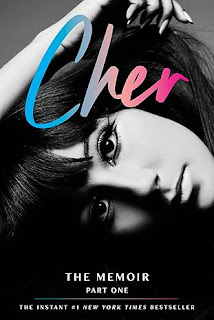
Cher's much anticipated 432-page memoir has been analysed,criticised and praised by commentators quite at odds with one another, sinceits 2024 release. Diehard fans want one thing, bookworm historians wantanother, while detractors will always be just that, whatever she says or does.
Despite the famously dyslexic Cher reportedly hiring three ghostwritersto assist her over seven years of rewrites, some legacy media critics have pooh-poohedit, with The Independent's Adam White calling the end result 'flat' while assertingthat it does not 'sound like her' and asking 'where's the sass?'
His take sounds to me to be less general than from a fan orcultist adherent's perspective. I see how her more hardcore 'in crowd' may havepreferred more of their own lingo and niche wit. Yet one cannot expect the bookto be so blinkered in its delivery – this had to speak to a far widerreadership, on many of whom certain banter would have been lost.
Cher-isms are by no means absent, they just not as bountifulas certain of her devotees might have preferred. There is certainly no shortageof jovial expletives which, to me, did indeed sound very Cher, herself-deprecating humour out on full display, her earthy candour in full force.
The audiobook is mostly read by actor Stephanie J. Block, whohas played Cher on Broadway – a choice perhaps necessitous because of Cher'sdyslexia.
Lay reader reviews are mixed, with a common complaint of overcoverage of her ancestry, childhood, parentage, passion for fashion and namedroppingbeing collectively drawn out to the point of tedium.
I see their points, yet remained glued regardless. The flipside is that this sure gives bang for buck and never shies away from eyepoppinganecdotes, so maybe it depends how much reading time one is willing to committo this fascinating star.
One consideration with any memoir is that the exercise isnecessarily a self-absorbing business, and often the author becomes so caughtup in the cathartic task of fine detail recall that segments of the finished workare of more interest to themselves than their readers. In Cher's case herdyslexia may, to some extent, have ruled out this common autobiographical syndrome,leaving us to conclude that the multi-handed ghost-writing and final editing isresponsible here.
The Memoir Part 1 covers her (admittedlyprotracted) journey through a bizarrely rocky childhood echoed in her 1971 hitsingle 'Gypsys, Tramps & Thieves', even at one point being held in anorphanage in Scranton, Pennsylvania, run by nuns who didn't want to release herback to her mother.
She states: 'Often when I think of my family historyit sounds like the opening of a Dickens novel,' but notes that 'resilienceis in my DNA.'
Her mother Georgia Holt married and divorced seven times,twice to Cher's father, Johnnie Sarkisian who would become a heroin addict witha 'penchant for larceny and a shaky relationship to employment'.
Cher tells us:'The women in my family rarely chose their men well.' Georgia even leaves one ofher husbands for his brother. Exclaims the author: 'I mean, jeez. My family.You couldn't make it up.'
Hauled around the country by the peripatetic but hardworkingand beautiful Georgia, Cher changes school every five minutes, in shoesheld together with elastic bands.
There are ups between the growing up downs. When Georgia isbased around Hollywood doing movie extra work, Cher lives around movie starsand plays in their front gardens with neighbourhood kids including Liza Minnelli,getting a peep through the front door at Judy Garland stood on the stairs holdinga glass of something.
When she is 15, 25-year-old Warren Beatty almost collideswith her borrowed car and, unaware of her age, takes her home and entertainsher to make good for his reckless driving, leading to her getting home late andreceiving a verbal dressing down by her mother. When he later calls her athome, asking her out on dates, her mother, as besotted with Beatty as were mostwomen, nearly faints hearing his voice, her tone switching from castigation toapproval.
Living in LA with family, 16-year-old Cher takes actingclasses. In a crowded coffee shop break, she randomly meets fledgling27-year-old songwriter and junior record producer Sonny Bono, with whom shelater moves in with when out of housing options herself. Their relationship is initiallyplatonic, with Cher acting as his cook and housekeeper. She writes that Bono thoughtshe was 18, and that they remained just roommates until she was legal.
Sonny urges her to quit acting class and pursue full-timemusic.
The memoir moves into the '60s and '70s spotlight, throughher unsteady six-year first marriage to Sonny, with whom she has baby Chastity(later to become Chaz), over whom Cher wins a contentious public custodybattle. Then on to her four-year marriage to second husband Gregg Allman, withwhom she has son Elijah Sky Blue Allman, and ends on a cliffhanger as she approachesthe movie stardom status no one could have anticipated her could achieving.
Early pre-fame teen tales include a gay party with hercloseted best buddy Steve, which is raided by cops (this ispre-decriminalisation). The two escape through a bathroom window, pursued by saidlaw enforcement. Back at home, Cher's grandmother grounds her. This is thefirst we read of this future gay icon being surrounded by her tribe, althoughshe has already noted being around them through childhood, her mother being inmovies and therefore friends with many in the industry.
After living with Bono for some time, he arrives home oneday, overhears her singing to the radio, and is surprised she can belt out anyold tune. She soon hangs out with Sonny at Phil Spector's recording sessions inHollywood's Gold Star Studios, initially as a sidekick and observer, then as anunpaid last minute backup vocalist when a regular doesn't show. 'I was utterlyclueless,' she writes.
Encouraged by Sonny, she perseveres and records backing trackswith The Ronettes ('Be My Baby') and The Righteous Brothers (her backgroundtones immortalised on 'You've Lost That Loving Feeling', officially deemed themost-played song on American radio and television in the 20th century) until ultimatelyforming her breakthrough Sonny & Cher duo with Bono.
'I Got you Babe' is a smash 1965 hit, but the scope ofopportunity for furtherance seems limited. Advised by industry peers to try the London scene, thepair becomes globally famous via headlines upon being refused accommodation atthe Hilton Hotel, due to their hippie-chic clothing. This gave them the ultimateglobal publicity that no hired PR manager could ever have pulled off.
Sonny writes Cher's 1967 solo hit 'Bang Bang (My Baby ShotMe Down)' as she slowly starts to achieve solo vocal recognition, with herdistinctive androgynous contralto voice and exotic semi-Armenian visage (inheritedfrom her biological father), though the pair remain united onstage and off forthe time being.
A string of the duo's hits followed, peaking with 1967's 'TheBeat Goes On', then tapering off in sales as the pair strove to reinventthemselves in this rapidly changing countercultural era, of which they wouldbecome historically emblematic.
Low dive cabaret gigs would at time keep the wolves from thedoor, while the pair moved toward their more glamourised '70s TV varietyshow phase with The Sonny & Cher Comedy Hour – their touring clubact had, by chance and from practical necessity, morphed from pure songrendition to inserting whacky spousal sparring jibes in an attempt to get just anyreaction from inimical regional club audiences, some comprising less than ahandful, some so untrendy they had never heard of them, and others who saw themas yesterday's news.
Ditching their old hippie rags for Bob Mackie's glitziercreations (Cher's at first less revealing at Bono's husbandly insistence), theirTV show would evolve, post-divorce, into Cher's own show, Cher (in whichshe and Mackie were able to use far sexier designs, sans Bono) before the friendlydivorcees reunited onscreen for later '70s The Sonny & Cher Show.
But this all unfolds later in the memoir, so reader patienceis required.
Meanwhile, Cher's Swinging Sixties anecdotes, when she firsttastes fame, are delicious. There's the two-page much touted one about Cher andSonny attending Salvadore Dali's NYC art studio, with Sonny's bestie FrancisFord Coppola. Dali is cleaning up after an orgy and Cher picks up a mechanicallymoving painted rubber fish she finds wedged behind her seat cushion. Thinkingit a child's toy, she comments on its beauty, only for Dali to explain it is a vibrator.
Dali's assistant, Franco-American artist Ultra Violet, sitsalongside Cher. 'She [Ultra Violet] was wearing a man's shirt and tie with avelvet skirt. She sat next to me and, saying nothing, repeatedly tapped my legwith her cane. If she does that again, I thought, I'm going to smack her.'
As would be expected, there is much priceless namedroppingof idols of the era, e.g. 'Jimi Hendrix's name was added to a long roll callof talented musicians, singers, and industry experts who had died so-calledrock-and-roll deaths in the late Sixties. Among them were the angelic BrianJones, Janis Joplin, and Brian Epstein.'
She recalls meeting up-and-coming musicians like Mick Jaggerand Dolly Parton, and drolly sets records straight on her disputedrelationships. For example, the tabloids 'claimed I was dating Elvis and RobertRedford. Two men I'd never even met, although they'd have made great bookends(insert tongue in cheek).'
As industry associates and audiences began noticing Cher tobe more the standout talent than Sonny, the once adoring husband becomesincreasingly more unfaithful and controlling. In a moment of anger, Sonny spinsher around and pushes her against their wall. 'I'd been beaten as a kid,' shewrites, 'and I wasn't going to be beaten as an adult. Staring into his eyes, Isaid, "Let me tell you something. If you ever touch me like this again, Iwill leave your ass and it'll be the last time you ever see me."'
Years later, Cher asks marital advice of Lucille ball, whohad ditched ex-husband Desi Arnaz: 'I told her, "Lucy, I want to leaveSonny and you're the only one I know that's ever been in this same situation.What should I do?"
'She told me, "fuck him, you're the one with thetalent."'
Still more years later Tina Turner, a guest with notoriouslyabusive husband Ike on Cher's TV show, quietly asks her in a dressing room: 'Howdid you leave him?'
'I just walked out and kept going,' replies Cher.
Meanwhile, amid divorce proceedings, Cher learns how Sonny hadmade her legally an employee of a company 95% owned by Sonny and 5% by hislawyer, and that she was contracted to work exclusively for that company. Recordexecutive David Geffen, with whom Cher had begun a relationship, helpedher escape Sonny's underhand contractual ties. She divulges to the reader:
'There was something inside him that I could neverunderstand, something that took him from being this fabulous, funny guy tobeing someone who would take everything from me.'
But as we all know, Cher is a cool and forgiving soul, and noone spoke more fondly of Sonny Bono than she did after his sudden 1998 death.
Whatever the mixed reactions to The Memoir Part 1, andwhatever your take on her musical evolution, it's impossible to not like thissuperstar's frank and courageous dialogue, even if numerous ghostwriters and aneditor have transcribed and repeatedly reworded it – Cher herself, hasobviously listened to the audiobook and given it her final approval, so itcan't be that far removed from her original 'voice' as some have asserted.
The Memoir Part 2 may be the great decider, coveringmore recent pop history, which more readers will have lived through, whilemoving into Cher's Broadway acting and Oscar-winning movie career.
History tells us she will move to New York to study actingwith Lee Strasberg at the Actors Studio, but skip enrolmentafter auditioning for and being cast in Robert Altman's Broadway play ComeBack to the 5 & Dime, Jimmy Dean, Jimmy Dean. She will win an AcademyAward, a Grammy Award, a Primetime Emmy Award, three Golden Globe Awards, get astar on the Hollywood Walk of Fame, be presented with Kennedy CentreHonour, be inducted to the Rock and Roll Hall of Fame, and earn aseemingly endless list of honorary accolades.
However, as the Goddess of Pop is known for not overly blowingher own horn ('There are a million people more talented than me who struggle to make it and will never be famous,' she writes, 'I’ve always thought that whether you get a break or not is purely down to luck'), there is rumoured to be some behind-scenes-trepidation of hersecond instalment ending up in a similar vein to her first – involving more personaltrivia than career sensation – for which she has been critiqued.
And so, for this next instalment, the most devoutCherists await with bated breath. Meanwhile I, for one, loved this greattelling of an exemplary human being and supreme entertainer. Cher is a livinginspiration.


March 25, 2026
My review of Kids, Wait Till You Hear This, by Liza Minnelli
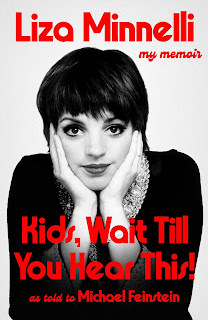
Liza Minnelliis a name synonymous with such a range of topics:
From theold Hollywood she was born into as the sole child of director Vincent Minnelliand silver screen star Judy Garland. To being among the entertainment industry'srare EGOT (Emmy, Grammy, Oscar, Tony) winners.
Heroutstanding showmanship that stood tall alongside rat pack giants like Sinatraand Sammy Davis Jnr, Chita Rivera and Charles Aznavour.
Her globallyacclaimed performances from Carnegie Hall, Las Vegas and Broadway. Her fiercelyloyal LGBTQI+ following, once fondly nicknamed 'friends of Dorothy', who know heras the 'daughter of Dorothy'.
Her stringof celebrity marriages.
And, ofcourse, her very public struggles with substance use disorder (SUD).
Long ago,she strove to step out from the shadow of her legendary mother, Judy Garland. Butthose days are far behind her as she reaches her eighth decade of life – doublewhat Judy survived before her accidental overdose death in her forties, whichis widely believed to have been the final trigger of the 1969 Stonewall riotsthat gave birth to modern gay rights movement.
Thick skinnedyet sensitive Minnelli has stared down ridicule and contempt for most of herworking life, including a string of unkind impersonators, while soaking upadoration as a role model for more positive drag queens.
Her closestfriends and mentors include lionised musical duo Kander and Ebb, fashion designerHalston and Cabaret movie co-stars Joel Gray and Marisa Berenson.
It seems almostinevitable that some will forever knock her down (as is the way of tall poppy syndrome)while she stands right up and dusts herself down each time. Humiliation is partof her persona. And while most of the media legacy's reviews of thislong-awaited memoir are largely kind, there are those few who cannot helpthemselves from having a stab.
Yes, this bookis a collaboration between an entourage including her lifelong best friend MichaelFeintstein (musical archivist and interpreter the Great AmericanSongbook) in conversation with whom she spent twelve years recording thismemoir via taped conversations.
Assisting is bestselling author Josh Getlin and Pulitzer Prizewinner Heid Evans. Minnelli's end acknowledgements cover five printed pages, stipulating in no uncertain terms that this book could never have happened without allthese people.
So why, oh why, must her diehard critics harp on about everylittle thing they can drum up, from everyday Amazon reader stabs like 'what adowner' to The New York Times critic Alexandra Jacobs calling it, toparaphrase:
'… more compact and circumspect than Barbra Streisand's MyName Is Barbra and Cher's Cher: The Memoir havingbeen plucked, buffed and powder-puffed within an inch of its long life byFeinstein during the 12-year writing process …'
???
(NB This reviewer had read both of the above memoirs andbeen too underwhelmed to review either.)
Where is the root of this vigilant hatred, we must ask, on readingLiza's book for ourselves? The only possible answers I could think up were:'its personal', 'it's fashionable' or ''haters gotta hate'. Like, where do thesenaysayers get their kicks?
My own reading of it was done in just over a week of verylate nights. Admittedly, I'm a lifelong admirer of her talent and personalresilience.
I found parallels between this and Lillian Roth's devastating1954 autobiography I'll Cry Tomorrow which was at the time described as a 'brutally frank' depiction of Roth's alcoholismand which, having broken barriers about celebrity addiction, sold over 7million copies in 20 languages before being adapted into a film starring SusanHayward.
Roth was, at the time, condemned by the newly formed 12-steprecovery system for 'breaking her anonymity', i.e. attracting attention to aname who may well 'bust' and so draw disrepute to the 'program'. She did! Andso lived to regret it.
Liza's frankness about her recovery journey is clearly aimedat those still suffering from substance abuse disorder (SUD) in the vein of 12-stepprogramers' well known 'love of one alcoholic for another'. In other words, sheaims to use her suffering to help others rise above theirs. What could be kinder,humbler or more well-meant?
She crosses privacy boundaries she had never before crossed,while retaining an admirable level of dignity – there are lines she will not crosswhen it comes to the privacy of others.
For this she has been criticised by wordslike 'circumspect' again by bitchy upstart Alexandra Jacobs of The New York Times,who sarcastically calls Liza 'America’s sequined sweetheart' – I mean, doesthis greenhorn 'critic' know very much at all about her subject, whose success wasestablished decades before this shallow commentary? I very much doubt it. Orwas the pay that great? Probably, IMHO.
Liza Minnelli's brick-thick tome is a compelling, revealing,brutally honest self-study. No rational reader could possibly pass this off as somevanity project.
This is the intentional legacy of a great, great star, herselfthe end line of great, great stars. If only there were more Liza Minnellis, theworld would be a happier place (I'd like to add God love her, but that would bejust plain patronising, she doesn’t need this)
I loved it more than I have many others in its genre inrecent years.
Her descriptions of a life we can only guess at are one-on-onevivid. Her honesty is that of one who may not live much longer. Her integrity is100% aglow - there is no BS here.
This was never intended to be some literary achievement, andaccordingly it is not. This is the intimate telling of a life the world haswondered about for more than a half-century.
Just enjoy and appreciate it. I did! We love you, Liza!!!
March 7, 2026
My review of Wide Sargasso Sea, by Jean Rhys
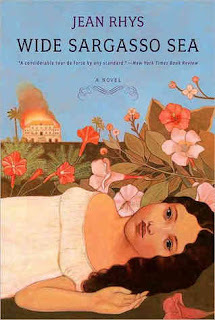
Let me first say that this literary masterpiece deserved every last ounce of global acclaim that it won - so special that no film adaptation has come anywhere near to the book. This is the perfect novel, in form, in cadence, in concept. Pure magic.
That said, this glittering tome is my least favourite, plot-wise, of Jean's novels. Maybe because it is a standalone, with little in common with any of her other, less appraised works.
She herself saw the irony that this atypical epic, published in her dotage, from handwritten scrawl, was what it took to deem her a literary luminary. Of all the plaudits and her prestigious literary award, she said only, in pure Jean Rhys form: 'It came too late.' Only her old cult following could appreciate this understatement. For too many long decades she had been unfairly underestimated and shunned by highbrow critics and readership masses alike.
Rhys had lived in obscurity for decades after her previous work, Good Morning, Midnight, was published in 1939, with publishers presuming her dead. Wide Sargasso Sea, her astonishing and unanticipated comeback, became her most successful novel, winning her the 1967 WH Smith Literary Award, and seeing her later appointed a Commander of the Order of the British Empire (CBE).
A prequel to Charlotte Brontë's Jane Eyre, this is the backstory of Antoinette Cosway, a white Creole heiress, from the time of her Caribbean youth to her unhappy marriage to an unnamed English gentleman (implied as Jane Eyre's 'Mr. Rochester'). The story elaborates on how her captor-husband came to move Antoinette to England, rename her Bertha, falsely declare her insane and lock her away in his attic, where she then actually descends into madness.
Rhys uses multiple narrative voices (Antoinette's, Rochester's, and Grace Poole's), masterfully merging this plot with that of Jane Eyre. For the most part, however, protagonist Antoinette relates her life story from colonial childhood, to arranged marriage, to her attic room confines under servant Grace Poole's watch in [Rochester mansion] Thornfield Hall.
The novel begins circa 1834 after the Abolition Act ended slavery in the British Empire. Part One, set in Jamaica's Coulibri, is narrated by Antoinette who reflects, fragmentally, on her childhood, her mother's mental instability and her mentally impaired brother's tragic death.
Part Two alternates between perspectives of Antoinette and her unnamed English husband during their honeymoon in Dominica's Granbois. Antoinette's childhood nurse, Christophine, travels with the newlyweds as servant. We witness the advent of Antoinette's mental downfall after her husband receives a malicious blackmailing letter from one Daniel, an acquisitive native, demanding hush money and claiming to be Antoinette's distant illegitimate brother. For good measure, Daniel also alleges Antoinette carries a hereditary half-madness.
Loyal Christophine, resenting the groom's semi-belief in Daniel's crazed claims, aggravates matters with her open hostility. Perplexed and frustrated, Antoinette's new husband, feeling alienated in this foreign land, eventually lashes out, becoming openly unfaithful to his bride. Our heroine's swelling paranoia and despair at her failing marriage unbalance her already frail emotional state.
Part Three, the novel's shortest section, is from the perspective of Antoinette, now renamed Bertha. She is confined in the attic of Thornfield Hall which she calls the 'Great House'. We follow her relationship with servant-guard Grace Poole, as Antoinette's captor-husband hides her from the world. Promising to see her more, he pursues relationships with other women (eventually with his new young governess, Jane Eyre). In a final act of despair, Antoinette/Bertha decides to take her own life.
Her magnum opus, this is not your typical Jean Rhys, not that younger, wilder Jean her select following knew and loved, but it has nevertheless been justifiably hailed as one of the most important works of English literature ever penned.
Anyone who reads would be a fool to pass on this one.
My review of Letters 1931-1966, by Jean Rhys, Francis Wyndham (Editor), Diana Melly (Editor)
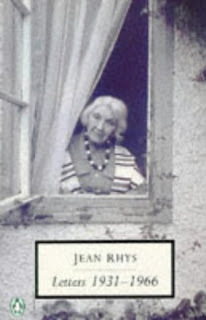
I was bought this as a birthday gift by someone who knew my fanaticism for Jean Rhys. This intimate glimpse into the personal comments of my all-time favourite writer had me mesmerised from start to finish.
The letters include those from 1931, when she was recently estranged from her first husband French-Dutch journalist-songwriter (and spy) Jean Lenglet. Jean was still enjoying the acclaim of her first three books, The Left Bank and Other Stories (1927) Postures/Quartet (1929) and After Leaving Mr. Mackenzie (1931).
Like a fly on Jean's various walls, we watch her bumpy life unravel until the 1966 death of her of her third and final husband, solicitor Max Hamer, who had spent much of their marriage jailed for fraud. Jean was now a frail old woman reduced to a life of obscurity, alone in her ramshackle West Country home. Publicly long forgotten and presumed dead, her books were mostly out of print.
She was, however, on the brink of major rediscovery with the publication of Wide Sargasso Sea, which she had spent years drafting and perfecting. Unlike any of her earlier works, this final tome was a fictional perspective of the 'madwoman in the attic' from Charlotte Bronte's Jane Eyre. It would win Jean the prestigious 1967 WH Smith Literary Award, of which she famously said: 'It has come too late'.
Like all Jean's penned words published or not, this is like sitting all alone with her, listening to a voice that speaks only the pure, haunting truth.
A remarkable, intimate journey through her life that validates and authenticates the integrity of everything she had published and explains so much more about her than we, as diehard fans, could have known.
The most beautiful birthday gift I was ever given. Truly. It will never be allowed out of my house.
As an afterthought, it's interesting that those reviewers who don't "get" the Jean Rhys letters tend to be American, whereas those who do appear to be British.
My review of Ungrateful Daughters: The Stuart Princesses Who Stole Their Father's Crown, by Maureen Waller
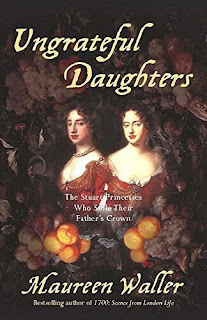
Interesting account of the end of the Stuarts in England. Until the last century there remained vehement opponents of the switch to Hanoverian rule.
James II's daughters, Mary and Anne, were Anne Hyde's daughters. They resented their stepmother, Mary of Modena, and were so bitter at her baby son's arrival (cue pushing towards their throne) that a family row ensued, escalating into a coup against their father aided by public fears and anti-Catholic prejudices.
James II, as Charles II's younger brother, had not always been expected to rule. The latter, however, left no legitimate heirs. Only when James came under greater scrutiny as king did his Catholicism come into much question publicly, the matter having been kept discrete like many sensitive royal details.
Malicious rumours erupted concerning the baby prince's legitimacy, the harshest being that he was an imposter smuggled into the palace in a bed-warming pan after Mary's real baby died. The likelihood, or not, of this is examined, as is the issue of post-reformation England's then governmental power mongers (and proletariat) dreading any return to a Catholic monarchy. The last had been Bloody Mary Tudor, under whose watch 283 Protestants had been executed for heresy, most by burning.
James II's baby heir, James Francis Edward Stuart, later to become nicknamed the Old Pretender, was taken to France by his mother who feared for his life, and kept by his cousin Louis XIV of France.
James II then fled England for his safety when it became apparent that his Protestant son-in-law, William of Orange would invade at the request of James' detractors. James' baby son was railroaded from the succession by Mary and William. That couple ruled jointly until William died, leaving just Queen Mary II. With no offspring, Mary's demise left Queen Anne to wind up the Stuart rule. Her disastrous run of 17 pregnancies left no living offspring either. So came their Hanoverian cousins, descended from the same Stuart grandparents via the maternal line.
These two 'Ungrateful Daughters' of James II, as the title suggests, are not portrayed sympathetically. This may not be author bias, but more likely the way many have remembered them. Neither went down in history as hugely popular monarchs, although Anne's reign saw nationalistic development, notably the 1707 Acts of Union whereby her realms of England and Scotland became united as Great Britain, creating Europe's largest free trade area.
Ungrateful Daughters is an insightful account of the 1688 Glorious Revolution and two rather troubled and troublesome sisters, neither of which became greatly revered. Anne became more iconic than Mary but without attaining much personal popularity with all those around her. Political and diplomatic achievements of Anne's governments, and the absence of constitutional conflict between herself and parliament, indicate that she chose ministers and exercised her prerogatives wisely. Her reign marked an increase in the influence of ministers and a decrease in the influence of the Crown
The Stuarts have been tagged a jinxed dynasty, with Mary of Scots and her grandson Charles I's executions, the latter's triggering England's republic. Then, after the long awaited and greatly hailed Restoration, Charles II's morally lax court attracted fresh disrepute; his many controversial bastards but no legitimate heirs signalled the beginning of the end for these Stuarts. Two unsuccessful invasions and coups by leftover Stuarts were plotted after the Hanoverian branch was called in: the 1708 Jacobite Rising, led by the Old Pretender, and the 1745 Jacobite Uprising led by his son, the Young Pretender (Bonnie Prince Charlie).
An important era to study in piecing together how the UK got today's royals, whose convoluted lineage runs from William the Conqueror ... via the tragic forbear of these very Stuarts: Mary Queen of Scots (and her Hanoverian descendants). Maureen Waller makes the characters and their motives accessible, coherent and dramatic without switching from meticulous documentation to melodrama.
Well-crafted high calibre biography.
My review of Queen Anne: The Politics of Passion by Anne Somerset
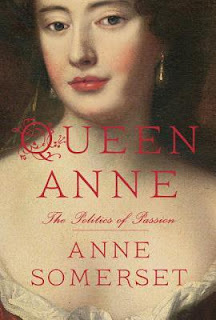 An excellent biography of a monarch often written off as 'too dull' by fans of the more popular icons, such as Tudors, etc.
In fact, as we see in this well documented account, Queen Anne had her idiosyncrasies, increasingly apparent throughout her life. Anne Somerset painstakingly draws out for us a studied portrait of a woman of distinct character.
Stolid, at times timid and withdrawn, at others formidably strident, Anne had a good heart and a wise head on her shoulders. Usually kept well cordoned off from her succinct 'constitutional' instinct, she had a closely guarded impetuosity, particularly around close relationships with female favourites. (Crass sensationalism has even seen her tagged a closet case. Whether or not she was, this biography transcends such silliness.)
Important diplomatic and nationalistic milestones were laid under Anne's watch. She left more than her predecessors to her government, adopting the tendency to 'sign off' more than dictate. This was the hallmark of constitutional monarchy, notably reviewed under Anne's Restoration uncle Charles II's succession, after the decade long Interregnum that followed Charles I's execution for being too high and mighty.
Anne's gender eased along this sensitive process, the woman often leaving big business to the men who did her bidding. Even so, she had her limits, would not always be pushed around and inconsistently put her foot down when her convictions demanded.
Her personal spending choices on select favourites drew harsh criticism from jealous insiders and other agenda driven detractors. She nevertheless usually stuck to her guns, displaying a strong personal loyalty which some dismissed as a weakness. This view of her as weak was compounded by her ever-ailing health.
Her less dictatorial, more constitutional ruling style, merged with these other features, sometimes left her seeming indecisive. This was a falsehood: had she been of intrinsically indecisive character she would never have so virulently fuelled the flames of the Glorious Revolution that saw her father removed from the throne.
Rather than being weak and indecisive, Anne was shrewd, wise and cautious, having seen what could happen to high-handed monarchs whose undoing was their rash and outlandish mistakes. In this feature, along with her stubborn side, she perhaps resembled Elizabeth I, but Anne had no such heart of fire, retreating into the shadows of her solitude more than the great Gloriana ever would have. Anne was immeasurably more contained, more modest, as dictated by these times where royalty itself walked a tightrope and republicanism still loomed large.
Stone statues and such iconography of her adorn great British heritage sites, confirming her importance in the long royal line linking today's royals to William the Conqueror. Though not every monarch has enjoyed Anne's acclamation, many were more greatly revered.
Anne Somerset breaths air into this frail and obese woman's lungs, bringing to us live and in person this great-great-granddaughter of romantic tragedienne Mary, Queen of Scots.
Enjoyed this biography very much, about the last ruler of what was not my favourite dynasty to read on.
My review of Mary Queen of Scots and the Murder of Lord Darnley, by Alison Weir
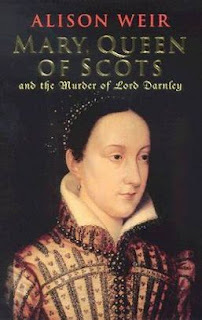
Alison Weir surpassed herself penning this tome, the first in my opinion to rival Antonia Fraser's 1969 Mary Queen of Scots. Via Mary Stuart runs the continuous line of succession, from Plantagenets & Tudors, down to England's current royals.
Mary has always polarised debate, first when alive and then, through the centuries, from the grave. Regardless which account we accept, she cannot be seen as entirely blameless for her unfortunate life. It's also beyond question that too much blinkered blame has gone her way, backwards in time.
Her murdered second husband Henry, Lord Darnley, was a hideous character who arguably deserved his comeuppance. If Mary was privy to his murder plot, we can hardly blame her. It's an equally short-sighted assumption that anyone put in Mary's position would not have conspired towards her liberty when so unjustly imprisoned for so long by Queen Elizabeth I. She was viciously provoked, set up and entrapped into her 'treason' against Elizabeth.
Mary Stuart, great-niece of England's King Henry VIII, was 6 days old when her father, King James V of Scotland, died and she acceded to his throne. Uniting France and Scotland against conflict with Henry VIII's England, France's King Henry II negotiated little Mary's marriage to his three-year-old son, the Dauphin Francis. Five-year-old Mary was shipped to France and spent thirteen years at the French royal court.
Despite that regal upbringing largely moulding her character, Mary's detractors criticise her limited grasp of her native Scottish subjects who were then, largely, backwater bog and highland dwellers. Yet this eventually anointed queen of France had not seen Scotland since being spirited away as an infant.
Widowed at eighteen, Mary was no longer wanted in the French court by her mother-in-law, France's new regent, Catherine de Medici. Though she could have retired there in splendour, remarrying any prince in Christendom, Mary instead returned to her homeland to start anew.
In vain she reached out to her surly Scottish subjects who, after ceremonial formalities, snubbed her as a high-flying foreigner. They eyed her with suspicion from the minute she disembarked in her mourning garb, a grown woman and stranger. They considered this newly arrived Catholic head of state, in their Protestant land, anomalous. This sentiment was fuelled by Protestant reformist preacher John Knox, who vehemently campaigned against Mary.
Worse still, she was female.
Across the border, her less beautiful but wilier cousin, Elizabeth, remained contentiously unwed. Resentful of Mary's youth and fecundity, the childless Elizabeth also felt threatened by Mary's strong claim to England's shaky throne.
After two more short and unpopular marriages, Mary was overthrown and imprisoned in Scotland. Eventually escaping, she shaved her head for disguise, donned peasant's clothing and fled, by fishing boat, to England. Hoping for Elizabeth's support, Mary was instead imprisoned and held captive for eighteen-and-a-half years.
After despairingly plotting towards her liberty (making herself complicit in linked plots for Elizabeth's assassination), Mary was entrapped and executed. This unprecedented regicide officially triggered the Spanish Armada. Catholic Philip of Spain had been waiting for an excuse to take England and curb the spread of Protestantism in Europe. As was her final wish, Mary became a Catholic martyr.
Mary's apologists argue she was a kind, intelligent woman, a romantic icon of her day. She was indeed the subject of sonnet and pros, by Ronsard no less. Her beauty and personal charm are legendary.
Neither her cruellest detractors nor most ardent apologists are fully right or wrong. The truth, as always, lies somewhere in the middle. This is where Alison Weir's insightful, brilliantly researched and presented account places it.
The reader is left with a balanced understanding of events while empathising with, and recognising the obvious mistakes of, a desperate woman. I loved this book and reread it to reabsorb the literary quality and exquisite detail.
My review of Nicholas and Alexandra: The Classic Account of the Fall of the Romanov Dynasty, by Robert K. Massie
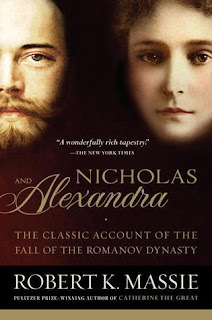
More than five decades after its publication, this book still glows of those hallmarks that would later earn American author and historian Robert K. Massie a Pulitzer Prize. His interest in this last handful of ruling Romanovs was triggered by his son having haemophilia, as had Tsar Nicholas II's son, Tsarevich Alexei. The author's love of his subject sparkles from start to finish.
Massie's immaculate detail and empathic biographical style is on a par with that of the great Lady Antonia Fraser, who not until two years later penned her definitive Mary, Queen of Scots (1969). This extraordinary craftsmanship alone is worth the five stars I rated it with.
With access now to material still classified in 1967, today's reader might be forgiven for dismissing parts of this work as outdated and incomplete propaganda, notably penned by an American during his country's Cold War with Russia. And yet, penned by a man who would devote most of his life to studying Russia's Imperial family, we sense this book's accuracy and personal impartiality. The nowadays obvious information gaps made no difference to me, as a novice reader of this time and place. I learnt from what was there, remaining captivated and enthralled throughout.
Its lack of political bias is admirable. Sure, Massie paints vividly the ugliness of rabid Bolshevist extremism over the towering bloodline autocracy it usurped, but his compassionate treatment of that toppled autocracy is generous for a writer from the democratic thinking U S of A.
The international lead up to World War I is insightful and informative. There would surely be no neutral way of depicting Germany's almost deranged Kaiser Wilhelm II in the context of this history, but thankfully he is no central player in this biography.
I came to like and understand the human side of these misunderstood historical figures, the Romanovs, otherwise passed down to us under bitter revolutionary prejudice as personifications of an icily detached, staunchly autocratic elite. Their abominable treatment at the hands of Russia's revolutionaries is truly heart wrenching.
Tsar Nicholas we see as a mild-mannered man, perhaps weak in certain areas of rulership, but a good, kind, decent husband, father and son. It has been all too easy for anti-imperialism to downplay the sheer enormity of his empire and the lifelong commitment he inherited then handed over when facing defeat. He believed he was doing what was right for Russia. For all his Imperial droopiness, sincerity, integrity and likeability are his redeeming qualities. This cousin of King George V of the United Kingdom, to whom he bore such a striking physical resemblance, was a gentle, pious man who lived for his family and country.
I felt deeply for Nicholas's wife, the unpopular and ostracised (German born) Alexandra Feodorovna (Alix of Hesse), another cousin of King George V of the United Kingdom and granddaughter of Queen Victoria. Their children are beautifully, poignantly drawn, especially their only son, Alexei, without whose tragic hereditary illness (probably passed down from Queen Victoria) there would have been no Rasputin in this picture and perhaps therefore no violent rulership overthrow, so possibly no Bolshevist state.
The 'holy' yet sinister Rasputin is an enigmatic character shrouded in mystique and debauchery, but not without usefulness or heart. He will always intrigue readers, as will poor Alexandra's desperate support for him, the only person seemingly able to keep her tiny boy from death by bleeding. That contentious relationship between the Tsarina and the hard living peasant priest was callously used an excuse to trigger the almost inevitable revolution.
This book was the basis of a 1971 Academy Award-winning film of the same title, starring Michael Jayston and Janet Suzman in the title roles, with greats like Michael Redgrave, Laurence Olivier, Timothy West and Roy Dotrice, featuring the wondrous Irene Worth as the Dowager Empress Maria and Fiona Fullerton as Anastasia. Whilst the film has become stylistically dated, Massie's book remains untainted by the passage of over half a century.
I intend to read it again someday, which is the highest compliment I can give any book. Before I do that, I feel compelled to read Massie's 1995 update and elaboration of this work, The Romanovs: The Final Chapter, written when the Soviet Union fell, and records of the Romanovs were released. I somehow doubt, however, that for all its newer material, that follow up work could have come even close to his original, in sheer quality and readability.
As an ardent devotee of the historical biography genre, I cannot recommend this special treat highly enough to my reading peers.
February 18, 2026
My review of The Left Bank, and Other Stories by Jean Rhys

A must for all Jean Rhys aficionados. This was her first ever published writing, which came about by chance and desperation. Those who read her posthumously published unfinished autobiography Smile Please will know that the story behind these Left Bank stories is a great one:
In 1924 Ella Lenglet nee Williams (later Jean Rhys) was alone, destitute and starving in a rundown Paris hotel room. Her husband of five years, French-Dutch journalist and songwriter (and spy) Jean Lenglet, was in a French jail for what she described as 'currency irregularities'.
After visiting him one day, she took articles he had written to a newspaper contact to try and sell, so she could eat. The newspaper contact sent her on to someone else who asked her to go away and translate them, which, being multilingual, she successfully did. That contact finally declined her husband's translated articles but liked her translation style and so, as a final thought, asked her whether she, Ella, had ever penned anything herself.
Perplexed but desperate, she showed the person some samples of her diary, which included a few rough sketches of life in the Paris she inhabited.
So impressive were these that the rapidly thinning Ella was sent on to another contact, eventually coming face to face with English writer and publisher Ford Maddox Ford.
He was instantly impressed and took her under his wing, mentoring her and inviting her to move in with him and his common-law wife, Australian artist Stella Bowen. Under Ford's tutelage her stories were developed into The Left Bank, and Other Stories and published in his Transatlantic Review.
It was with this release of her first published fiction that Ford persuaded her to use nom de plume Jean Rhys.
Ford published a generous introductory foreword, praising her 'singular instinct for form', for which she became so loved by her readers many decades on. 'Coming from the West Indies,' Ford explained here, 'with a terrifying insight and ... passion for stating the case of the underdog, she has let her pen loose on the Left Banks of the Old World.'
Such was the advent of Jean Rhys' unlikely writing career.
It was also during this period, while living with Ford & Stella, that Jean's turbulent affair with Ford took place under Stella's nose, resulting in the breakup of Jean's marriage to her jailed husband - all to be later fictionalised into what would become the first Jean Rhys novel, Quartet (1928). But that cathartic act of vengeance is another story.
So, these Left Bank and Other Stories have quite a tale of their own.
These preliminary short stories that made young Ella Williams history and launched newly invented Jean Rhys are filled with her personal hallmarks: her vivid characterisations, her evocative, filmic scenes, her succinct, incisive take on life through the eyes of the downtrodden, of the outsider looking in.
Breathtaking. Not to be passed over by any of her readers.
(NB A selection of these are also included in Jean's Tigers Are Better Looking anthology).
My review of Arbella, England's Lost Queen, by Sarah Gristwood
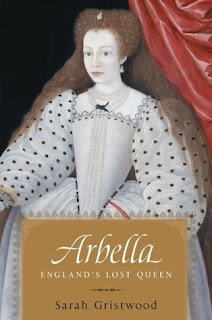
Arbella is an excellent reading adjunct to mainstream Tudor-Stuart characters, especially after exhausting other material and craving more of the genre.
For anyone fascinated by such royal genealogies, Arbella's lineage is a feast to behold: great-great granddaughter of Henry VII and first cousin of James VI & I, she was descended from both of Henry VIII's sisters, Margaret and Mary. Her claim to the throne was therefore doubly, triply threatening to the Virgin Queen, Elizabeth I, her first cousin twice removed.
Her formidable maternal grandmother, Bess of Hardwick, another of my favourites, became Arbella's ward when she was orphaned at 7. Arbella spent her childhood cloistered away in Bess's various gilded cages, receiving private tuition considered fit for her rank (archived dispatch documents have triggered speculation that poet Christopher Marlowe was one tutor).
Bess, a well practised keeper for years entrusted with jailing Mary of Scots, now had Arbella's safeguard in mind. Tight house security to prevent kidnappings, agenda-driven friendships and romances left the girl isolated, lonesome but deeply conscious of her royal lineage. Periodically invited to Elizabeth's court for royal scrutiny, she proved not so socially adept, a tad precious and disinclined to kowtow, so was not embraced by the vain queen.
Repeatedly sent away again, she always resumed her stately seclusion, the powers that be wanting her watched in this age of plots to dethrone and assassinate Elizabeth. Continuing home education into her twenties, Arbella acquired several languages and mastered the lute, viol and virginals. She was a restless soul, suspected by some of carrying her great grandmother Margaret Tudor's porphyria, famously passed down to cause the madness of King George III.
Her ambitious marriage suitors included the Pope's brother, the Duke of Parma's son and ... William Seymour Lord Beauchamp and later 2nd Duke of Somerset (whose grandfather Edward 1st Earl of Hertford had incurred Elizabeth's wrath for secretly marrying Lady Catherine Grey, sister of 'nine days queen' Jane, without royal permission). Later ones included Ludovic Stuart, 2nd Duke of Lennox, then even the King of Poland! With Arbella's marriage requiring royal approval, none of these suspicious sounding matches materialised - such men were believed acquisitive of her claim to the throne.
Weary and frustrated, Arbella eventually settled on William Seymour who, as grandson of Lady Catherine Grey, was sixth-in-line to the throne himself, intensifying Arabella's threat to the crown. With history appearing to repeat itself and royal permission denied they married secretly in 1610. The result was their separate house arrests under King James, in various stately homes.
After feigned illness and transfers, Arbella escaped dressed as a man (Shakespeare's cross-dressed heroine of Cymbeline has been read as a reference to Arbella) to meet her husband and flee to France. With her husband not making it to port on time she sailed alone, only to be captured at sea by King James' men, and henceforth imprisoned in the Tower of London. She never again saw her husband who, after arriving at port late and missing her, reached safety abroad at Ostend.
Arbella was made the focus of the 1603 Spanish Government funded 'Main Plot', involving Sir Walter Raleigh, to oust King James, replacing him with Arbella. However, seeing parallels between this and the Lady Jane Grey plot that saw her ancestor beheaded, cautious Arbella, already up to her neck in strife, immediately reported the plot when asked to agree in writing to Philip of Spain. This, however, only saved her neck from the block.
Arbella remained in the Tower until her death in 1615, which she helped along by starving herself.
Another tragic Tudor-Stuart descendent well worth the drama. Sarah Gristwood's fine craftsmanship equals that of her contemporaries.


