Stephen W. Hiemstra's Blog
December 1, 2025
Paul: Monday Monologues (podcast), December 1, 2025

By Stephen W. Hiemstra
This morning I will share a prayer and reflect on the Pauline Letters. After listening, please click here to take a brief listener survey (10 questions).
To listen, click on this link.
Hear the words; Walk the steps; Experience the joy!
Paul: Monday Monologues (podcast), January 1, 2024
Also see:
The Face of God in the Parables
The Who Question
Preface to a Life in Tension
Other ways to engage online:
Author site: http://www.StephenWHiemstra.net
Publisher site: http://www.T2Pneuma.com
Newsletter at: https://bit.ly/prep_25, Signup
The post Paul: Monday Monologues (podcast), December 1, 2025 appeared first on T2Pneuma.net.


November 30, 2025
Prayer to be like Paul
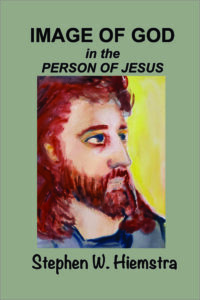
By Stephen W. Hiemstra
Almighty Father,
All praise and honor, power and dominion, truth and justice are yours because you meet us in our daily lives and encourage us to look beyond the mundane to the transcendent.
Forgive us for our limited vision, our unwillingness to stretch ourselves, and become the persons that you would have us be. For your will for us many times is to make better decisions, not to wait for comfortable, risk-free answers.
Thank you for the example of the Apostle Paul who, though a persecutor of the church, was willing to listen for the voice of God and to learn from his mistakes.
In the power of your Holy Spirit, be ever with us. Calm our nerves. Grant us wisdom beyond our years. May we ever look to you in our distress.
In the precious name of Jesus, Amen.
Prayer to be like Paul
Also see:
The Face of God in the Parables
The Who Question
Preface to a Life in Tension
Other ways to engage online:
Author site: http://www.StephenWHiemstra.net
Publisher site: http://www.T2Pneuma.com
Newsletter at: https://bit.ly/prep_25, Signup
The post Prayer to be like Paul appeared first on T2Pneuma.net.
Oración para el Apóstol Pablo
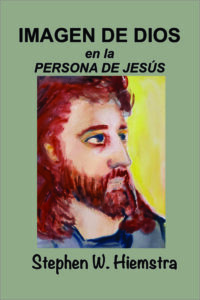
Por Stephen W. Hiemstra
Padre Todopoderoso,
Toda la alabanza y el honor, el poder y el dominio, la verdad y la justicia son tuyos porque te encuentras con nosotros en nuestra vida diaria y nos animas a mirar más allá de lo mundano hacia lo trascendente.
Perdónanos por nuestra visión limitada, nuestra falta de voluntad para esforzarnos y convertirnos en las personas que tú quieres que seamos. Porque tu voluntad para nosotros muchas veces es tomar mejores decisiones, no esperar respuestas cómodas y sin riesgos.
Gracias por el ejemplo del apóstol Pablo, quien, aunque perseguidor de la iglesia, estuvo dispuesto a escuchar la voz de Dios y a aprender de sus errores.
En le poder de tu Espíritu Santo, sea siempre con nosotros. Calma nuestros nervios. Concédenos una sabiduría que vaya más allá de nuestros años. Que siempre podamos recurrir a ti en nuestra angustia.
En el precioso nombre de Jesús, Amén.
Oración para el Apóstol Pablo
Vea También:
Imagen del Espíritu Santo y la Iglesia
El Rostro de Dios en las Parábolas
Una Guía Cristiana a la Espiritualidad
Vida en Tensión
Otras Formas de Interactuar en Línea:
Sitio Web del Autor: http://www.StephenWHiemstra.net
Sitio Web del Editor: http://www.T2Pneuma.com
Boletín Informativo en: https://bit.ly/prep_25, Signup
The post Oración para el Apóstol Pablo appeared first on T2Pneuma.net.
November 28, 2025
The Pauline Letters
Go, for he is a chosen instrument of mine
to carry my name before the Gentiles and kings and the children of Israel.
For I will show him how much he must suffer for the sake of my name.”
(Acts 9:15-16)
By Stephen W. Hiemstra
The Apostle Paul wrote first about Jesus, yet himself only knew the risen Christ. He grew up in Tarsus in Asia Minor, not in Jerusalem or Galilee like Jesus’ other disciples, and he was an early persecutor of the church. Yet, he became the template for Christian converts and his conversion story appears three times in the Book of Acts (Acts 9:1-20, 22:4-21, 26:9-23). Because he was a highly educated Jew, he knew the Old Testament perhaps better than any of the apostles and wrote more than half of the New Testament. Without Paul, Christianity may have remained merely a sect in the Jewish faith. Without Paul, the divinity of Christ may not have been clearly articulated.
Paul’s Conversion
Before his conversion, Paul was known by his Jewish name, Saul of Tarsus. He was a student of Gamaliel, who was a member of the Council of the Pharisees (Acts 5:34; 22:3), which would make Paul one of the best-educated and best-connected men in Israel at the time. Paul would have fit the profile of the rich young ruler (e.g. Luke 18:18-23). His hometown of Tarsus in Asia Minor in modern-day Turkey is important because Paul was familiar with the region and local customs where he traveled on his first missionary trip.
The first mention of Saul in the Book of Acts is during the stoning of Stephen: “Then they cast him out of the city and stoned him. And the witnesses laid down their garments at the feet of a young man named Saul.”(Acts 7:58) Saul not only approved of Stephen’s stoning, he went on to lead the subsequent persecution of the church: “But Saul was ravaging the church, and entering house after house, he dragged off men and women and committed them to prison.” (Acts 8:2-3) Note the word ravage—Saul was enthusiastic in his persecution.
A key verse in understanding the church’s development is:
“But you will receive power when the Holy Spirit has come upon you, and you will be my witnesses in Jerusalem and in all Judea and Samaria, and to the end of the earth.” (Acts 1:8)
Even in his persecution of the church, Saul could not help but advance the Gospel: ”Now those who were scattered went about preaching the word.” (Acts 8:4) When Jesus appeared to Saul on the road to Damascus, the Gospel had already been preached in Judea and Samaria. After his encounter with the Risen Christ, only days later it was Saul preaching the Gospel in the Synagogue in Damascus and the Jews were plotting to kill him (Acts 9:20, 24).
Paul as Apostle
The dramatic nature of Paul’s conversion begs the question—How did it happen? The only people to evangelize Paul were those he arrested and threw in prison, except for Stephen. Paul must have heard Stephen’s testimony before the Sanhedrin (Acts 7). The key verses were:
“‘Heaven is my throne, and the earth is my footstool. What kind of house will you build for me, says the Lord, or what is the place of my rest? Did not my hand make all these things?’ You stiff-necked people, uncircumcised in heart and ears, you always resist the Holy Spirit. As your fathers did, so do you. Which of the prophets did your fathers not persecute? And they killed those who announced beforehand the coming of the Righteous One, whom you have now betrayed and murdered.” (Acts 7:49-52)
The kicker for the Sanhedrin was the charge: “What kind of house will you build for me?” Things made by the hand of men is code language for idolatry. Restricting worship to the temple is analogous to charging a fee for admission to a petting zoo, but it was the source of income for the priests and high priests that populated the Sanhedrin.
The words of Christ on the Road to Damascus echo Stephen’s charge of persecuting the prophets:
“Now as he went on his way, he approached Damascus, and suddenly a light from heaven shone around him. And falling to the ground, he heard a voice saying to him, Saul, Saul, why are you persecuting me? And he said, Who are you, Lord? And he said, I am Jesus, whom you are persecuting.” (Acts 9:3-5)
Paul’s experience echoes the call of the Prophet Ezekiel (Eze 1:27-28). Significantly, Paul’s commission to evangelize the Gentiles appears in all three accounts of his conversion.
Paul’s Example
Paul’s sensitivity to the Holy Spirit and vast knowledge of scripture have blessed the church with a much deeper understanding of Jesus’ humanity and his divinity. Head and heart go hand-in-hand in Paul’s writing.
Immanence and Divinity
Paul serves as a template for the modern Christian. Paul is the only first-century disciple who claims apostleship based solely on a vision of the Risen Christ. Luke records that in replacing Judas Iscariot, the disciples considered selected two men, Barsabbas called Justus and Matthias (Acts 1:23), as suitable to replace him as an apostle because they had both been with Jesus and had witnessed the resurrection (Acts 1:21-22). Because Paul was the first to write about Jesus in the New Testament and wrote primarily about his divinity, which must have prodded other writers who knew Jesus in life to record revelations of their own.
Paul did not meet Luke’s criteria for an apostle, but neither do we. Our only first-hand experience of Jesus is to meet the Risen Christ.
The Pauline Letters
Also see:
The Face of God in the Parables
The Who Question
Preface to a Life in Tension
Other ways to engage online:
Author site: http://www.StephenWHiemstra.net
Publisher site: http://www.T2Pneuma.com
Newsletter at: https://bit.ly/prep_25, Signup
The post The Pauline Letters appeared first on T2Pneuma.net.
El Apóstol Pablo
Pero el Señor le dijo: Ve, porque él es mi instrumento escogido,
para llevar mi nombre en presencia
de los Gentiles, de los reyes y de los Israelitas;
porque yo le mostraré cuánto debe padecer por mi nombre.
Acts 9:15–16)
Por Stephen W. Hiemstra
El apóstol Pablo escribió primero sobre Jesús, pero sólo conocía al Cristo Levantado. Creció en Tarso, en Asia Menor, no en Jerusalén o Galilea como los otros discípulos de Jesús, y fue uno de los primeros perseguidores de la iglesia. Sin embargo, se convirtió en un modelo para los cristianos conversos, y su historia de conversión aparece tres veces en el Libro de los Hechos (Hechos 9:1–20, 22:4–21, 26:9–23). Como era un judío muy instruido, conocía el Antiguo Testamento mejor que cualquiera de los apóstoles y escribió más de la mitad del Nuevo Testamento. Sin Pablo, la divinidad de Cristo no habría sido claramente articulada y el cristianismo habría seguido siendo meramente una secta dentro de la fe judía.
La Conversación de Pablo
Antes de su conversión, Pablo era conocido por su nombre judío, Saulo de Tarso. Fue alumno de Gamaliel, quien era miembro del Consejo de los Fariseos (Hechos 5:34; 22:3), lo que haría de Pablo uno de los hombres mejor educados y mejor conectados de Israel en ese momento. Pablo habría encajado en el perfil del joven rico (por ejemplo, Lucas 18:18–23). Su ciudad natal, Tarso, en Asia Menor (la actual Turquía), es importante porque Pablo estaba familiarizado con la región y las costumbres locales cuando viajó allí en su primer viaje misionero.
La primera mención de Saulo en el Libro de Hechos es durante la pedacion de Stephen: ¨Echándolo fuera de la ciudad, comenzaron a apedrearlo; y los testigos pusieron sus mantos a los pies de un joven llamado Saulo¨ (Pablo). (Hechos 7:58) Saulo no sólo aprobó la lapidación de Stephen, sino que también lideró la posterior persecución de la iglesia: ¨Pero Saulo hacía estragos en la iglesia entrando de casa en casa, y arrastrando a hombres y mujeres, los echaba en la cárcel.¨ (Hechos 8:3) Tenga en cuenta la palabra estragos: Saúl estaba entusiasmado en su persecución.
Un versículo clave para entender el desarrollo de la iglesia es:
¨Pero recibirán poder cuando el Espíritu Santo venga sobre ustedes; y serán Mis testigos en Jerusalén, en toda Judea y Samaria, y hasta los confines de la tierra.¨ (Hechos 1:8)
Incluso en su persecución de la iglesia, Saulo no pudo evitar promover el Evangelio: ¨Así que los que habían sido esparcidos iban predicando (anunciando las buenas nuevas de) la palabra.¨ (Hechos 8:4) Cuando Jesús se apareció a Saulo en el camino de Damasco, el Evangelio ya había sido predicado en Judea y Samaria. Después de su encuentro con Cristo Levante, sólo días después Saulo predicó el evangelio en la sinagoga de Damasco, y los judíos conspiraron para matarlo. (Hechos 9:20, 24)
Pablo como Apóstol
La naturaleza dramática de la conversión de Pablo plantea la pregunta de cómo sucedió. Las únicas personas que evangelizaron a Pablo fueron aquellas que él arrestó y arrojó a la cárcel, a excepción de Stephen. Pablo debe haber escuchado el testimonio de Stephen ante el Sanedrín (Hechos 7). Los versículos claves en el testimonio de Stephen fueron:
“El cielo es mi trono, y la tierra es estrado de mis pies; ¿Que casa me el edificaran? Dice el Señor: ¿O cual es el lugar de mis reposo? ¿No fue mi mano la que hizo todas estas cosas? Ustedes, que son tercos e incircuncisos de corazón y de oídos, resisten siempre al Espíritu Santo; como hicieron sus padres, así hacen también ustedes. ¿A cuál de los profetas no persiguieron sus padres? Ellos mataron a los que antes habían anunciado la venida del Justo, del cual ahora ustedes se hicieron traidores y asesinos.”
(Hechos 7:49–52)
El detonante para el Sanedrín fue la acusación: “¿Que casa me el edificaran?” Las cosas hechas por manos de hombres son un lenguaje codificado para la idolatría. Restringir el culto al templo era la fuente de ingresos para los sacerdotes y sumos sacerdotes que poblaban el Sanedrín. Esto implica que la crítica de Esteban era más que un punto de debate teológico: amenazaba su sustento.
Las palabras de Cristo en el camino a Damasco se hacen eco de la acusación de Esteban de perseguir a los profetas:
¨Y mientras viajaba, al acercarse a Damasco, de repente resplandeció a su alrededor una luz del cielo. Al caer a tierra, oyó una voz que le decía: Saulo, Saulo, ¿por qué Me persigues? ¿Quién eres, Señor? preguntó Saulo. El Señor respondió: Yo soy Jesús a quien tú persigues;” (Hechos 9:3–5)
La experiencia de Pablo se hace eco del llamado del profeta Ezequiel (Eze 1:27–28). Es significativo que la comisión de Pablo de evangelizar a los gentiles aparezca en los tres relatos de su conversión.
El Ejemplo de Pablo
La sensibilidad de Pablo al Espíritu Santo y su vasto conocimiento de las Escrituras han bendecido a la iglesia con una comprensión mucho más profunda de la humanidad de Jesús y su divinidad. La cabeza y el corazón van de la mano en los escritos de Pablo.
Inmanencia y Transcendencia
Pablo sirve como modelo para el cristiano moderno. Pablo es el único discípulo del primer siglo que afirma su apostolado basándose únicamente en una visión de Cristo Levante. Lucas registra que al reemplazar a Judas Iscariote, los discípulos consideraron a dos hombres, Barsabás llamado Justo y Matías (Hechos 1:23), como idóneos para reemplazarlo como apóstol porque ambos habían estado con Jesús y habían presenciado la resurrección (Hechos 1:21–22). Debido a que Pablo fue el primero en escribir acerca de Jesús en el Nuevo Testamento, debe haber influenciado a otros discípulos para que registraran sus experiencias.
Pablo no cumplía los criterios de Lucas para ser apóstol, pero nosotros tampoco. Nuestra única experiencia de primera mano de Jesús es con el Cristo Levante.
El Apóstol Pablo
Vea También:
Imagen del Espíritu Santo y la Iglesia
El Rostro de Dios en las Parábolas
Una Guía Cristiana a la Espiritualidad
Vida en Tensión
Otras Formas de Interactuar en Línea:
Sitio Web del Autor: http://www.StephenWHiemstra.net
Sitio Web del Editor: http://www.T2Pneuma.com
Boletín Informativo en: https://bit.ly/prep_25, Signup
The post El Apóstol Pablo appeared first on T2Pneuma.net.
November 27, 2025
Thanksgiving Praise from Psalm 103, New Living Translation
 Let all that I am praise the LORD; with my whole heart, I will praise his holy name. Let all that I am praise the LORD; may I never forget the good things he does for me. He forgives all my sins and heals all my diseases. He redeems me from death and crowns me with love and tender mercies. He fills my life with good things. My youth is renewed like the eagle’s!
The LORD gives righteousness and justice to all who are treated unfairly. He revealed his character to Moses and his deeds to the people of Israel. The LORD is compassionate and merciful, slow to get angry and filled with unfailing love. He will not constantly accuse us, nor remain angry forever. He does not punish us for all our sins; he does not deal harshly with us, as we deserve. For his unfailing love toward those who fear him is as great as the height of the heavens above the earth. He has removed our sins as far from us as the east is from the west.
The LORD is like a father to his children, tender and compassionate to those who fear him. For he knows how weak we are; he remembers we are only dust. Our days on earth are like grass; like wildflowers, we bloom and die. The wind blows, and we are gone– as though we had never been here. But the love of the LORD remains forever with those who fear him. His salvation extends to the children’s children of those who are faithful to his covenant, of those who obey his commandments!
The LORD has made the heavens his throne; from there he rules over everything. Praise the LORD, you angels, you mighty ones who carry out his plans, listening for each of his commands. Yes, praise the LORD, you armies of angels who serve him and do his will! Praise the LORD, everything he has created, everything in all his kingdom.
Let all that I am praise the LORD.
Thanksgiving Praise from Psalm 103, New Living Translation
Also see:
The Face of God in the Parables
The Who Question
Preface to a Life in Tension
Other ways to engage online:
Author site: http://www.StephenWHiemstra.net
Publisher site: http://www.T2Pneuma.com
Newsletter at: https://bit.ly/prep_25, Signup
The post Thanksgiving Praise from Psalm 103, New Living Translation appeared first on T2Pneuma.net.
November 25, 2025
Haidt Triggers Thought about Morality
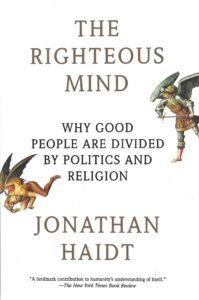
Jonathan Haidt. 2012. The Righteous Mind: Why Good People are Divided by Politics and Religion. New York: Random House.
Review by Stephen W. Hiemstra
The idea that truth is anchored in the transcendence of God has fallen on hard times in a world where it’s your truth and my truth. Relativistic ethics, which used to be a way-out-there idea, has gone mainstream, leaving people confused and confrontational. What’s really going on?
IntroductionIn his book, The Righteous Mind: Why Good People are Divided by Politics and Religion, Jonathan Haidt writes: “This book is about why it’s so hard for us to get along.” (xviii) He goes on to explain: “I’ll show that religion is (probably) an evolutionary adaptation for binding groups together and helping them to create communities with a share morality.” (xxii) The word religion suggests that his focus is on human institutions, not on theology, which focuses on God.
Haidt organizes his argument and his book around three principles:
Intuitions come first, strategic reasoning second. (xx)There’s more to morality than harm and fairness. (xxi)Human beings are ninety percent chimp and ten percent bee. (xxii)Haidt employs an analogy of an elephant (intuitions) and rider (strategic reasoning) that primarily serves the elephant. He likens the righteous mind to a tongue with six taste receptors. The chimp is selfish while the bee is groupish. Haidt builds his arguments around these core principles/metaphors and his writing focuses on empirical studies that support these concepts.
Background and OrganizationJonathan Haidt received his bachelor’s degree from Yale University. His master’s and doctoral work are from the University of Pennsylvania. He did postdoctoral work in cultural psychology at the University of Chicago. He has written a number of books. He is currently on the faculty at New York University in the Stern School of Business. I previously reviewed his book, Anxious Generation.
Haidt writes in twelve chapters, preceded by an introduction and followed by a conclusion, references, notes, and an index. He writes:
PART I: Intuitions come first, strategic reasoning second
Where does morality come from?The intuitive dog and its rational tailElephant’s ruleVote for me (Here’s why)PART II: There’s more to morality than harm and fairness
Beyond WEIRD moralityTaste buds of the righteous mindThe moral foundations of politicsThe conservative advantagePART III: Morality binds and blinds
Why are we so groupish?The hive switchReligion is a team sportCan’t we all disagree more constructively? (ix)Haidt’s writing standards out because he pays close attention to empirical studies that support his arguments. A major contribution of this work is that he organizes recent thinking on moral psychology into a coherent narrative.
Elephant and RiderHaidt summaries the relationship between the passions (elephant) and reason (rider) as follows:
“I have argued that the Humean model (reason is a servant) fits the facts better than the Platonic model (reason could and should rule) or the Jeffersonian model (head and heart are co-emperors).” (79)
He goes on to elaborate saying: “The rider evolved to serve the elephant, but it’s a dignified partnership, more like a lawyer serving a client than a slave serving a master.” (79)
It seems odd that Haidt ignores the more ancient distinction between Greek anthropology (head and heart are independent) and Hebrew anthropology (head and heart are interdependent). If one adds the doctrine of original sin, then Haidt’s analogy of elephant and rider is anticipated by about two thousand years. It is only through the intervention of the Holy Spirit that reason prevails over emotion where Haidt’s rider gets the upper hand.
Consider the Apostle Paul’s statement:
“For I know that nothing good dwells in me, that is, in my flesh. For I have the desire to do what is right, but not the ability to carry it out. For I do not do the good I want, but the evil I do not want is what I keep on doing.” (Rom 7:18-19 ESV)
If you equate the flesh with passion and the law with reason, the argument is the same. The elephant prevails over the rider in the absence of divine intervention.
Taste Buds with Six ReceptorsHaidt’s caution about morality being more than harm and fairness leads him to talk about six taste receptors. In other words, the passion for fairness is a simplification of traditional morality. Here we find another theological parallel in a postmodern heresy to limit the image of God to the single dimension of love.
Haidt, as a cultural Jew, is no doubt familiar with God’s self-revelation to Moses after the second giving of the law:
“The LORD passed before him and proclaimed, The LORD, the LORD, a God merciful and gracious, slow to anger, and abounding in steadfast love and faithfulness.” (Exod 34:6 ESV)
If love is but one attribute of God, then limiting our discussion of God to that one attribute necessarily leads to a partial revelation and, by analogy, to a moral compass that is seriously out of adjustment.
The fall of communism provides a political analogy. Marx defined value as limited to the contribution of labor—he defined capital as simply dead labor. The economic weakness of communism therefore arose as communist countries underinvested in capital, dissipating saving through provision of additional benefits to labor. With the passage of time, this underinvestment led to the stagnation of labor productivity and the ossification of industry. The Iron Curtain eventually fell because the economy could not support the vast military needed to support communist rule. Defining value as only one attribute—the contribution of labor—eventually led to an inability to compete with the multiple dimensions of value (labor, management, and capital) working in capitalism.
Chimps and BeesFollowing Darwin’s hypothesis of natural selection, Haidt writes: “When groups compete, the cohesive, cooperative group usually wins.” (224) He posits that the key adaptation that gave homo sapiens an advantage over other humanoids was shared intentionality, which led to the development of language (237-240). Haidt writes:
“While foraging, one person pulls down a branch while the other plucks the fruit, and they both share the meal. Chimps never do this…When early humans began to share intentions, their ability to hunt, gather, raise children, and raid their neighbors increased exponentially.” (238-239)
Haidt describes humans as ninety percent chimp (selfish) and ten percent bee (groupish). “Bees construct hives out of wax and wood fibers, which they then fight, kill, and die to defend.” (240) Haidt goes on to discuss at great length the events that the hiving behavior, things like group singing, dancing, and marching.
AssessmentJonathan Haidt’s The Righteous Mind: Why Good People are Divided by Politics and Religion is an amazing book that will force you to think, even if you draw different conclusions from the empirical observations presented. Pastors and others interested in apologetics will want to be aware of his arguments.
Footnoteshttps://en.wikipedia.org/wiki/Jonatha....
Haidt Triggers Thought about MoralityAlso see:Haidt Analyzes Pervasive Mental IllnessGoleman: Emotional Intelligence Brings LightBooks, Films, and MinistryOther ways to engage online:Author site: http://www.StephenWHiemstra.net Publisher site: http://www.T2Pneuma.com Newsletter at: https://bit.ly/prep_25, Signup
The post Haidt Triggers Thought about Morality appeared first on T2Pneuma.net.
November 24, 2025
OT: Monday Monologues (podcast), November 24, 2025
By Stephen W. Hiemstra
This morning I will share a prayer and reflect on Old Testament. After listening, please click here to take a brief listener survey (10 questions).
To listen, click on this link.
Hear the words; Walk the steps; Experience the joy!
OT: Monday Monologues (podcast), November 24, 2025
Also see:
The Face of God in the Parables
The Who Question
Preface to a Life in Tension
Other ways to engage online:
Author site: http://www.StephenWHiemstra.net
Publisher site: http://www.T2Pneuma.com
Newsletter at: https://bit.ly/prep_25, Signup
The post OT: Monday Monologues (podcast), November 24, 2025 appeared first on T2Pneuma.net.
November 23, 2025
Old Testament Prayer
By Stephen W. Hiemstra
Almighty and Loving Father,
All praise and honor, power and dominion, truth and justice are yours because you drew yourself to us in your creation and introduced us to your character in your scripture that we might see you face to face in the person of Jesus.
Forgive our unwillingness to listen, read, and study your word or emulate your example in Jesus of Nazareth.
Thank you for your mercy, grace, patience, loving kindness, and faithfulness (Exod 34:6).
In the power of your Holy Spirit, remove the scales from our eyes and the wax in our ears that we might learn to love good things and follow the example of your son, our Lord, Jesus Christ.
In Jesus’ precious name, Amen.
Old Testament Prayer
Also see:
The Face of God in the Parables
The Who Question
Preface to a Life in Tension
Other ways to engage online:
Author site: http://www.StephenWHiemstra.net
Publisher site: http://www.T2Pneuma.com
Newsletter at: https://bit.ly/prep_25, Signup
The post Old Testament Prayer appeared first on T2Pneuma.net.
Oración del Antiguo Testamento
Por Stephen W. Hiemstra
Padre Todopoderoso y Amoroso,
Toda la alabanza y el honor, el poder y el dominio, la verdad y la justicia son tuyos porque te acercaste a nosotros en tu creación y nos presentaste tu carácter en tus Escrituras para que pudiéramos verte cara a cara en la persona de Jesús.
Perdona nuestra falta de voluntad para escuchar, leer y estudiar tu palabra o emular tu ejemplo en Jesús de Nazaret.
Gracias por tu misericordia, gracia, paciencia, bondad amorosa y fidelidad (Éxodo 34:6).
Con el poder de tu Espíritu Santo, quita las escamas de nuestros ojos y la cera de nuestros oídos para que aprendamos a amar las cosas buenas y a seguir el ejemplo de tu hijo, nuestro Señor Jesucristo.
En el precioso nombre de Jesús, Amén.
Oración del Antiguo Testamento
Vea También:
Imagen del Espíritu Santo y la Iglesia
El Rostro de Dios en las Parábolas
Una Guía Cristiana a la Espiritualidad
Vida en Tensión
Otras Formas de Interactuar en Línea:
Sitio Web del Autor: http://www.StephenWHiemstra.net
Sitio Web del Editor: http://www.T2Pneuma.com
Boletín Informativo en: https://bit.ly/prep_25, Signup
The post Oración del Antiguo Testamento appeared first on T2Pneuma.net.