
James W. Loewen's Blog
January 17, 2021
Project Censored At Home And Abroad
Recently I received an email from Peter Phillips, the president of the Media Freedom Foundation, also known as Project Censored. With Mickey Huff, Director of Project Censored, he co-edited Censored 2012, their annual account of news stories that received little or no coverage in the previous year. Phillips titled his email "Cuba Sets a Global Example for the Achievements of Socialism." His article with the same title is the current lead item at the Project Censored website.
It's a curious antique, redolent of leftist writing in the U.S. 40 years ago, and is perhaps instructive as well. The title is a fine example of that style of "news" writing found even further back in Pravda and Izvestia, known as "socialist realism."
My first reaction was: "a global example of socialism?" Isn't that a euphemism? Isn't Cuba an example of Marx's dictatorship of the proletariat, a one-party state, a.k.a. communism? Certainly it's not an example of democratic socialism like, say, Sweden. Indeed, isn't Cuba just about the only remaining example of Marxist socialism, other than perhaps North Korea?
Reading further, it became clear that the story was actually an effusive account of a nine-hour conference held in Havana on February 10, 2012, titled "Intellectual Encounters for Peace and the Preservation of the Environment." Attending were "some 120 authors, professors, and journalists," reported Phillips, rather breathlessly, "from dozens of Caribbean, American and African countries." According to Phillips, Fidel Castro, "(age 85)," addressed the group on a number of topics, ranging from the need to have gold or other assets backing up paper money to the threat to the environment posed by "neo-liberal capitalism." In Phillips's words, "Castro's main message was clear. Cuban socialism is an international example of a humanitarian economy in the world."
Not a single word of criticism of Castro marred the entire essay, which totaled nearly 1,000 words. On the contrary, Phillips's tone was fawning. Note this sentence, for example:
Fidel Castro, reverently referred to as "Commandante" by many of those present, was flanked by the Cuban Minister of Culture, Abel Prieto, and the president of the Cuban Book Institute, Zuleika Romay.
Let us pause to imagine what Phillips and Project Censored would say if, during the last administration—or for that matter, our current administration—professors and journalists referred to George W. Bush—or Barack Obama—as "Commandante." Unless the reference were satirical, appearing in The Onion, say, or on The Daily Show, Project Censored would surely be outraged.
About Castro, he is merely obsequious, sycophantic, "honored to participate in the discussions held with the 'Commandante.'" Indeed, Phillips finds only marvelous things to say about Castro:
His energy is inspiring and his command of history and contemporary issues is phenomenal. Castro had serious health issues a few years back, but remains mentally alert. He walked with assistance from his bodyguards, but remained fully participatory in the nine-hour session.
One is reminded of the story put out by propagandists of the Chinese Communist regime in 1966 claiming that Chairman Mao in his seventies had swum nearly ten miles down the Yangtze River in just over an hour. This verges on the much lamented "cult of personality," a characteristic of Marxist socialist societies most recently on exhibit in the funeral of Kim Jong-il in Pyongyang, capital of the "Democratic People's Republic of Korea."
Just as he cannot find anything wrong with Castro, Phillips cannot find a thing wrong in Cuba. He quotes Fidel: "We have over 80,000 doctors." Now, Cuban medical care is indeed a wonder, as is its medical education. What about its journalism, its media? Surely that topic would interest an organization that calls itself "Media Democracy in Action." But no, the article says nothing about censorship in Cuba. Apparently Project Censored is only interested in censorship when it takes place in the U.S. and other capitalist nations.
So was the conference. In Phillips's words:
The lies and propaganda of the corporate/capitalist media were important themes for the day. One participant remarked how the global corporate media seeks to create a monoculture of the mind inside the capitalist countries.
Now, let us not lampoon Project Censored or the other leftists who attended this conference. Rather, I wish to make several more general points.
First, Project Censored, located at Sonoma State University in California, does excellent work critiquing the United States. It is incapable of critiquing "socialist" societies. So were many leftists during the 1960s and '70s. I remember a friend in Mississippi, an innovative worker against its system of racial segregation. He also developed important critiques of various policies of the federal government. But when we discussed East Germany, for example, he defended even its policy of shooting citizens if they tried to flee their "socialist paradise." Phillips verges on this position, noting without criticism that only in the 1990s, "Cuba opened it doors to those who wanted to leave."
Phillips goes on to minimize the exodus from Cuba: "Some 30,000 people choose [sic] to move to the United States. Yet, ten million people choose to stay and build the independent socialist country that Cuba is today." Actually, the Pew Trust notes that more than 250,000 people who left Cuba after 1990 live in Florida alone. Across the U.S., about 1 million people claim to have been born in Cuba. I have no idea where Phillips got his number, but the actual outflow was at least thirty times larger. So Phillips engages in censorship or distortion of bad news about a "socialist" country.
Second, Project Censored and other writers of the same political persuasion seem oblivious to what their fate would be, were they Cuban. Not for a moment would Castro's "socialist" government permit anything like Project Censored. Phillips would last about a week in Cuba, once he started to point out its unreported or underreported stories. Like Lenin and Stalin before him, Castro has openly stated that Cuban education, media, and cultural activities sought to create a new socialist man, "a monoculture of the mind." To his credit, Phillips would not fit in.
Third, it is surprising that a project that focuses on censorship and the First Amendment in the U.S. does not even notice the complete absence of First Amendment rights in another country. Indeed, it's so surprising that it calls into question the objectivity of the project's work in this country. Commentators of various political persuasions have already questioned that objectivity. Phillips is aware of the controversy. Interviewed by KC Active late in 2009, he responded to "long-time critics who claim that Project Censored is a left-leaning organization. Nothing could be further from the truth." Then he shoots himself in the foot with his own email from Havana.
About Cuba: its government is indeed a dictatorship of the proletariat. It is a dictatorship, and it is of the proletariat. It has the health care, educational system, and some other benefits that go with the latter, and it is repressive like the former. To recognize the one without the other is bad scholarship, plain and simple, “BS” for short. Of course, "Cuba Sets a Global Example for the Achievements of Socialism" is not really scholarship at all, or even reportage. It's advocacy, plain and simple. It does not try to be accurate.
Even the notion that setting up a country so the same person can remain in charge for 49 years—and then be succeeded by his younger brother—might be problematic never occurred to Phillips. One wonders what Phillips thinks of Robert Mugabe, who passed his 88th birthday a few days ago and is in even better shape than Castro. Mugabe's Zimbabwe also claims a Maoist heritage and, like Cuba, initially emphasized health and education. Probably, like many leftists, he would say that Mugabe strayed from true socialist principles. Surely Mugabe did. The point, however, is that when the leader of a Marxist socialist state strays, its people have little recourse. That's the key problem with these states, and it is structural, sociological, not psychological. That problem is the most important single fact about Cuba. Peter Phillips is a professor of sociology at Sonoma State, but he missed it.
________________
Copyright James Loewen


We Have Had a Gay President, Just Not Nixon
In his recent article in the Washington Post "Was Nixon Gay?" journalism professor Mark Feldstein puts down the claim recently made by Don Fulsom in his book Nixon's Darkest Secrets. Almost no evidence supports it, he (rightly) points out. He calls the book a "pathography," using a term invented by Joyce Carol Oates for biographies that emphasize the pathological.
But then he goes on to decry similar claims about Abraham Lincoln, James Buchanan, and J. Edgar Hoover as similarly baseless.
Just as we should not rush to believe all the rumors about the sexual orientations of important past Americans, neither should we rush to deny them. Feldstein implies that history on this issue is just about impossible: "[T]here is almost no way to prove—or disprove—alleged intimacies from so long ago." But there is. It is called evidence.
Consider the case of President Buchanan. For many years in Washington, he lived with William Rufus King, Senator from Alabama. The two men were inseparable; wags referred to them as "the Siamese twins." Andrew Jackson dubbed King "Miss Nancy"; Aaron Brown, a prominent Democrat, writing to Mrs. James K. Polk, referred to him as Buchanan's "better half," "his wife," and "Aunt Fancy." When in 1844 King was appointed minister to France, he wrote Buchanan, "I am selfish enough to hope you will not be able to procure an associate who will cause you to feel no regret at our separation." After King's departure, Buchanan wrote to a Mrs. Roosevelt about his social life:
I am now "solitary and alone," having no companion in the house with me. I have gone a wooing to several gentlemen, but have not succeeded with any one of them.
King and Buchanan's relationship, though interrupted from time to time by their foreign service, ended only with King's death in 1853.
I find the evidence for Buchanan's homosexuality, summarized above and presented in greater detail with footnotes in Lies Across America, persuasive beyond a reasonable doubt. That is the standard for a criminal conviction. Homosexuality is no longer a crime, however, at least in most of the country, and should never have been in the first place, so the criminal standard should not apply anyway. Surely these facts surpass the "preponderance of the evidence" standard required in civil trials—and for good history.
Does it make any difference? In Buchanan's case, almost surely it does. He became a stalwart of the radically pro-slavery wing of the Democratic Party. He supported U.S. expansion into Cuba because he worried that Spain might abolish slavery, leading to another black-run nation like Haiti. He appointed Howell Cobb Secretary of the Treasury; Cobb later became the first president of the Confederacy, before Jefferson Davis. He let his Secretary of War, John B. Floyd, soon to become a Confederate general, ship nearly 200,000 rifles to Southern arsenals. In 1860, Buchanan vetoed a homestead bill providing making Western land available cheaply from the government. He did so because planters opposed it: homesteading would have drawn free men, probably free-soil men, to the West. It had to wait until halfway through Lincoln's administration.
Buchanan's faction's newspaper, the Washington Union, even pushed for the United States Supreme Court to take the Dred Scott decision one step further. Dred Scott required the United States to guarantee slavery in every territory, regardless of the wishes of its residents. Buchanan's paper argued that the United States should guarantee its citizens the right to carry their property—all kinds of property—in any state as well. It flatly came out against the very existence of free states: "The emancipation of the slaves of the northern States was then, as previously stated, a gross outrage on the rights of property, inasmuch as it was not a voluntary relinquishment on the part of the owners." [their italics]
Yet Buchanan hailed from Lancaster, Pennsylvania, surrounded by Mennonites and Quakers, the most anti-slavery white neighbors one could imagine. His own church, the Presbyterian, refused him membership for years because of his pro-slavery views. Coming from such a background, why would Buchanan endorse such a position? Surely his pro-slavery politics stemmed, at least in part, from his 23-year connection with King. Certainly Buchanan thought highly of King: "He is among the best, purest, and most consistent public men I have ever known, and is also a sound judging and discreet fellow."
Buchanan's sexual orientation matters in another way, too. It's important for all Americans to realize that gays (and now lesbians) can be president, indeed, can play all sorts of important roles in American society. The best way for us to realize that is by understanding the roles that gays and lesbians have played. Our greatest poet, Walt Whitman, was gay (and as with Buchanan, it influenced his work). Gays have been major composers—Aaron Copland comes to mind first, and although I cannot hear how his homosexuality affected "Appalachian Spring" or "Symphony #3," again, it's important to know it. Otherwise, we may conclude that gays and lesbians have made little impact in our past, so they hardly matter.
Late in his article, Feldstein also denounces conspiracy theories, including those that have sprung up around the assassination of John F. Kennedy. He implies that they are equally baseless. He needs to visit the Museum of the Sixth Floor in Dallas, which does a model job of presenting the various major theories of who shot Kennedy. The museum does not suggest that all conspiracies are equally likely. But neither does it say that Lee Harvey Oswald, acting alone, killed Kennedy, and then Jack Ruby, acting alone, killed Oswald. It presents the evidence.
Feldstein complains that revisionism can be "oblivious to facts." So can put-downs of revisionism, as Feldstein lamentably demonstrates. Throwing up our hands with the excuse that "there's no way to know" simply won't do.
________________
Copyright James Loewen
Meaning in 'Pure' Music: Shostakovich's Fifth Symphony
Factory workers in 1937 vote in favor of the arrest of alleged Trotskyite spies during the Great Terror.
Within sociology is an exciting field, the "sociology of knowledge." Its name is unfortunate, because it not only studies knowledge, but also error, as well as things like law, religion, and art that cannot easily be categorized "true" or "false." The sociology of knowledge, especially the subfield the “sociology of sociology,” is somewhat similar to historiography in history and epistemology in philosophy. In the words of Karl Mannheim, a pioneer, "The principle thesis of the sociology of knowledge is that there are modes of thought that cannot be adequately understood as long as their social origins are obscured." Historians might say, we must locate a speaker within his/her own time and situation to understand him or her fully. This notion can provide useful insights to students of law, science, religion, art, and other areas of human thinking.
The sociology of music has not been the most vibrant sector within the sociology of knowledge. Of course, sociologists, like historians, can study Bob Dylan and his times and come up with useful insights into his lyrics, even his musical influences and styles. When it comes to classical music, however, especially instrumental music with no libretto, no "program," what can we say? What insights might we provide about a symphony, for example?
This little essay cannot answer that big question. It does, however, offer some insight into the meaning of the most popular symphony since Mahler's: Dmitri Shostakovich's Symphony #5.
"Red Cavalry" by Kazimir Malevich, 1930-1931
Shostakovich composed it during the Great Purge, surely the lowest point of Joseph's Stalin's despicable regime. In that period—often listed as 1936-38, but actually longer—Stalin purged the Communist Party itself of anyone whose loyalty to him he mistrusted. In the West the longer era is often known as “the Great Terror,” the title of a famous book about it by the British historian Robert Conquest.
"Red Cavalry" by Kazimir Malevich, 1930-1931During and after the Russian Civil War (c. 1918-21), the newly dominant Communist Party declared that the new Soviet state demanded a new Soviet citizen, to be created by a new Soviet culture. In the first rush of idealism, artists hastened to invent this culture. From the canvases of Kasimir Malevich to the films of Sergei Eisenstein, the new Soviet culture astonished the world. Artists had considerable freedom in the first decade of the Soviet era. Shostakovich came to the fore internationally in 1927, when Bruno Walter conducted his Symphony #1 in Berlin.
"Stalin" by Isaak Brodsky, ~1939
By the 1930s, however, the increasingly authoritarian Soviet regime felt increasingly threatened by its artists. Or maybe Stalin, et al., simply felt that they should determine what was done in the arts as in the economy as in the political life of the country. In any event, by the 1930s, painting had pretty much been reduced to Socialist Realism. Abstraction was forbidden. Stalin kept his eye—all right, his ear—on music, too. Even though a symphony might seem by definition apolitical, neither Stalin nor the Soviet of Composers thought so.
The Terror was a deliberate attempt to smash conventional social relations, again to foster the new obedient Soviet Man. In the Soviet Union of the '30s, children informed on their parents, workers on their co-workers, and lovers on each other. Meanwhile, like slaves in the Old South, everyone had to wear a grin. "It was essential to smile," recalled Nadezhda Mandelstam. "If you didn't, it meant you were afraid or discontented." The U.S.S.R. became a nation of masks.
In 1936, Shostakovich became "the first musician to take a blow," in the words of Russian soprano Galina Vishnevskaya, also the wife of cellist and conductor Mstislav Rostropovich. His opera Lady MacBeth of Mtsensk premiered to great popular acclaim at the Bolshoi. A month later, Pravda, the official Communist newspaper, published a vicious attack on it titled "A Mess Instead of Music." "The music quacks, moans, pants, and chokes," said Pravda. Demanded was "Socialist Realism" in music, as in sculpture and the other arts. Stalin, who had attended and not liked the opera two days earlier, probably instigated the article. Certainly everyone thought he did.
Shostakovich in 1942
In this atmosphere of terror, Shostakovich realized that not only his career but even his life were at stake. He responded eventually with his Fifth Symphony. Before its premiere, he called it "a Soviet artist's practical creative response to just criticism," or at least signed a statement containing those words. He also gave a private premiere to Party officials at which he told them it ended "on a joyous, optimistic plane." They bought it. Party-line critics in the U.S.S.R. developed a Hamlet-like interpretation, in which the symphony celebrates the transformation of the hero, perhaps Shostakovich himself, from alienated individuality into a triumphant identification with the State.
Many Western commentators bought this interpretation as well. The phrase, "a Soviet artist's response to just criticism," became something of a subtitle, and a millstone in the West. Taking that at face value, Western commentators for years were not sure whether it was a good thing that Western audiences liked the work so much. They called the symphony a concession to political pressure and an example of Socialist Realism.
The audience at the world premiere of Symphony #5 in Leningrad heard the work very differently. The first two movements are full of unpleasant repeated notes, sarcasm, and what Ian MacDonald calls a "Stalin motif." Then comes the largo, the heart of the symphony, its lyrical grieving slow movement. "Its intensity of feeling is more nakedly direct than anything the composer had written before," according to MacDonald. It comes across like a requiem, and it was during this movement that the audience began to weep. The final movement sounds triumphant, but only on its surface. As Vishnevskaya put it in her autobiography, "beneath the triumphant blare of the trumpets, beneath the endlessly repeated A in the violins, like nails being pounded into one's brain—we hear a desecrated Russia..." She goes on to describe what happened next, at the premiere:
Each member of the audience realized that it had been written for him and about him. And the people reacted. They jumped from their seats shouting and applauding, and continued for half an hour, expressing their support for the composer....
A more complex view of Shostakovich surfaced after his death in 1975, particularly with the release of Solomon Volkov's book Testimony in 1979. Volkov claimed Shostakovich dictated or at least read every page. In his 1990 book The New Shostakovich, Ian McDonald summarizes the controversy about that claim. He concludes that Volkov got Shostakovich right overall, even if Testimony is not by the composer.
I have long been interested in whether and how instrumental music, that most abstract art form, can convey ideas. Shostakovich's Fifth seemed to invite a test of some sort. Accordingly, some years ago I played it to a class of advanced undergraduates at the University of Vermont—not music majors but students in sociology and education.
I set it up as a lab experiment. One third of the students read program notes that described the symphony as Socialist Realism—the triumph of the New Man. Another third read notes based on from Vishnevskaya's memoir, describing the work as "a huge complex of human passions and sufferings." The final third received a neutral description, noting its four movements and telling about its instrumentation.
The entire "laboratory" was new to most of my students, who had never listened to a full symphony before. It's astounding to realize how insulated most young adults are today from classical music. At the time (1994), the University of Vermont was the most expensive state school in the United States and drew a student body from the top end of the national income structure. They came largely from the suburbs of Boston, New York, Philadelphia, and Washington, D.C. Even from these elite families in metropolitan locations, many had never attended an orchestral concert. Not one in a hundred knew that Beethoven wrote an "Emperor Concerto." Nobody knew anything about Shostakovich.
But they listened. Indeed, they listened well. When that final thundering tympani blast had faded to a distant echo, I asked them all to write down their impression of what the music was about. The third group, with neutral program notes, spoke first. To my surprise, they told of the anguish of the music, of passion and suffering, agreeing with the Vishnevskaya notes they had not seen. Indeed, even students who had received notes describing the symphony as a Socialist Realist triumph were converted by what they heard into a more tragic interpretation.
You can perform this experiment at home. Find someone you love—yourself, if you don't already know this symphony—and give them a CD of it—perhaps conducted by Rostropovich, a close friend of the composer. In the name of novelty or appreciation of another culture or Christmas, encourage them to listen to it, all the way through, doing nothing else, volume up high. Then ask them what it was about.
Modern Russian stamp commemorating Shostakovich
My hope is that they'll know, too, and that having heard it once, they'll want to hear it again. Why? Because it happens in life that we all have terrible times—maybe not so bad as the Stalinist Terror, but tragic enough to us, all the same. Music that speaks honestly to us at such times is worth a great deal. Shostakovich obviously thought so—enough that he risked his life to give it to us.
________________
Copyright James Loewen
Can American Trains Achieve Steam Speeds in the Modern Era?
I began writing this piece aboard Amtrak's Acela, the fastest train in North America. It travels from Washington to Boston in 6 hours and 32 minutes. Eventually, we read, despite Republicans, we may have truly high-speed rail, linking those cities and also perhaps speeding through corridors in California, Florida, and the Midwest.
Pardon me, but haven't we been around this track before?
I remember reading the same story back in 1965. Then they called it the Metroliner. It would speed between Boston and Washington at an amazing 115 mph. I remember that story because I remember where I was when I read it. I was on a train. Indeed, I was riding the famous City of New Orleans between Jackson, Mississippi, and Mattoon, Illinois. I got to the Metroliner article as we were passing through the flat corn fields of central Illinois.
The City of New Orleans was then the second fastest train in America, after the Santa Fe Super Chief. It streaked along the Illinois prairie at 81 mpg, including stops. Owing to holiday traffic, we were running late, so between Carbondale and Mattoon the train made up fifteen minutes. A little long division revealed that this accomplishment required that we be traveling at about 115 mph between stops.
So already in 1965 I had a feeling of deja vu, reading about the marvelous new Metroliner. The Metroliner went into service in 1969, the last accomplishment of private passenger rail service in the United States before Amtrak took over in 1971. Owing to design problems with the self-propelled cars, the Metroliner never ventured north of New York City and rarely exceeded 90 mph. It averaged just 75 mph.
Amtrak Metroliner train, 1974
In 2000, Amtrak put its Acela in service between Boston and Washington. The new train was supposed to travel at speeds up to 150 mph and does reach that speed for two short distances. Despite those bursts, on its journey from Boston to D.C.—456 miles—it averages just under 70 mph (78 mph for the old Metroliner part of the run, from New York City to D.C.). If Acela merely went as fast as the Illinois Central's City of New Orleans did in Illinois half a century ago—81 mph with stops — it would reach Washington 5 hours and 40 minutes after leaving Boston, shaving almost an hour off its current schedule. If it went as fast as the City of New Orleans did when I took it, making up time, it would arrive in Washington in just 5 hours.
Nevertheless, Acela is an accomplishment of sorts, because it is so much faster than today's regular passenger service. Amtrak schedules its City of New Orleans at just 64 mph between Carbondale and Mattoon owing to freight traffic and track deterioration on the Illinois Central. From New Orleans to Chicago the fabled train averages less than 48 mph. It went faster in the age of steam, even though it had to stop about every 50 miles for water. The successor to the Super Chief now takes 41.25 hours to trundle from Chicago to Los Angeles, averaging 54 mph. In 1956 it required just 37.5 hours, about 60 mph.
Other trains are even worse. The Vermonter averages just 44 mph and actually runs backward from Palmer, Massachusetts, to its terminus in St. Albans, Vermont, to avoid a bad patch of track. The famed Lake Shore Limited—successor to Cary Grant and Eva Saint Marie’s favorite train, the 20th Century Limited—is limited, all right: Passengers now climb aboard in New York City at 3:45 pm instead of 5:00 pm, and reach Chicago at 9:45 the next morning instead of 7:45. To a business traveler, those differences are huge.
The Lake Shore Limited entering Croton-on-Hudson, NY, 2008
The first point of this commentary, then, is not to argue for high-speed rail (that would be a different article), but simply for a return to the speeds that America's regular passenger railroads achieved at the close of the age of steam. Then we might strive further to ramp up to the speeds of the diesel heyday. I remain suspicious that high speed rail—trains capable of traveling at, say, 200 mph in Japan—would somehow wind up averaging maybe 80 in the U.S. ... just like the City of New Orleans in 1965.
My second (and final) point is not to kvetch, but to coax my readers to try a train. Last week, for example, I spoke at Notre Dame. I took the Capitol Limited, leaving D.C. Union Station at 4:05 pm. After passing the familiar Maryland suburbs from an unusual vantage-point, the train runs along the Potomac River, with the ruins of the Chesapeake and Ohio Canal in between. I went to the Sightseer Lounge to catch the best view of rapids that I had canoed years ago, the Shenandoah joining the Potomac at Harpers Ferry, and the Armory, also known as John Brown's Fort. The town of Harpers Ferry looked like a fairyland as dusk came down, and I toasted it with a Sierra Pale Ale. Later I enjoyed a steak, cooked rare, with Amtrak's new horseradish butter sauce, baked potato, salad, and cheesecake. The dining cars on the overnight trains bear no resemblance to the sad "AmCafes" on day-time trains such as the Northeast Regional service between Boston and Washington. After dinner, I retired to my little compartment, did some work, read a book, then asked the porter to make up my bed for the night. The next morning I took a shower, had cheese blintzes for breakfast, and stepped off the train in South Bend at 7:56 AM, five minutes late.
Amtrak dining car, 2009
To accomplish such an arrival by plane, I would have had to have left earlier in the afternoon and arrived at the South Bend airport around 11:00 pm after a change of flights at O'Hare. Then I would have had to get to Notre Dame and rent a room at their inn.
Returning made even more sense: my train left South Bend at 8:34 pm, perfectly timed for the end of my 6:30 pm, talk. It arrived in D.C. at 1:00 pm the next day, twenty minutes late. Flying, assuming I had awakened at 7:00 am after another hotel night in South Bend, 1:00 pm is about when I might have arrived in D.C. by air. But the train was much more fun. Always, I wind up in interesting conversations about sundown towns, chain saw sculpture ("It's not just bears anymore."), and other important historical topics. Except during the summer, trains are also cheaper, even with a sleeper, because tickets include meals and overnight accommodations.
No one I met at Notre Dame had ever taken Amtrak to or from South Bend. When the NCSS, OAH, or AHA meet in DC, I rarely meet anyone from Chicago or Indiana who has come by train. The same holds for Atlanta, South Carolina, Savannah, and northern Florida, all within convenient distance of D.C. by overnight train. Other Amtrak overnight routes that have met my business and speaking needs include Kansas City to southern Colorado, Montana to Portland and Seattle, and central Illinois to Memphis.
Try one! You're helping maintain an important resource. You're saving energy, compared to other forms of travel. You're participating in history—often at speeds so slow they come from the 1930s, not the 1950s. Best of all, you're having a blast.
________________
Copyright James Loewen
Penn State and Violence Against Men
The Penn State scandal brought forth a thoughtful commentary by Daniel Mendelsohn, Charles Ranlett Flint Professor of Humanities at Bard College. Mendelsohn begins his recent New York Times op-ed, “What if it had been a 10-year-old girl in the Penn State locker room that Friday night in 2002?”
He concludes that then Mike McQueary, the graduate assistant to the football team, would surely have intervened or at least called the police. "But the victim in this case was a boy," Mendelsohn notes. He goes on to speculate that the university, too, would have taken the crime more seriously, had the victim been female.
Even though we cannot know for sure without at least interviewing McQueary and Joe Paterno, Graham Spanier, and other Penn State officials, surely Mendelsohn is right. As he puts it,
Does anyone believe that if a burly graduate student had walked in on a 58-year-old man raping a naked little girl in the shower, he would have left without calling the police and without trying to rescue the girl?
However, Mendelsohn mistakes the source of this inequity. He locates it in the shame associated with homosexuality. Since the rape was male on male, he opines, the victims were “somehow untouchable, so fully tainted they couldn't, or shouldn't, be rescued.” He notes that athletics is “the last redoubt of unapologetic anti-gay sentiment.” Of course, he has overlooked many other redoubts, such as religious organizations from Muslims and Orthodox Jews through Mormons and Southern Baptists. But this is a quibble: male athletics is an anti-gay redoubt, if hardly the last one. Mendelsohn goes on to speculate that somehow this anti-gay sentiment prompted denial, converting anal penetration into mere "horsing around," in the now-notorious words of Penn State's athletic director. Such reasoning falls short. Of course, loyalty to a coach, to a friend, can prompt police avoidance, regardless of the sex of the victim. However, to claim that prejudice against homosexuality promotes winking at homosexual behavior is not logical.
Besides, there's a simpler explanation. Our society does not take violence against males as seriously as violence against females.
Look at what happens in domestic abuse cases. Research shows that, although women are more likely to be killed, men are the victims of domestic violence about half the time. (See, inter alia, Straus and Gelles, The National Family Violence Survey, Philip W. Cook's Abused Men, and copious studies by David Finklehor.) Yet most cities provide many shelters for abused women and none for abused men. The federal government passed a “Violence Against Women Act” but no “Violence Against Men Act.” Imagine a federal law designed to protect white victims of criminal acts while ignoring black victims!
Outside the family, the pattern continues: in the workplace, men are more than a dozen times more likely than women to be killed. To be sure, men also commit more than their share of workplace murders, but 90 percent of deaths on the job are accidental, not purposeful, and women's jobs are statistically much safer than men's. Even God seems to have it in for men: lightning strikes males seven times as often as females.
Lightning, of course, is random, but men are much more likely to be working outside in inclement weather. They are “supposed to”—terms like “telephone lineman” convey this expectation. Men are also more likely to be playing outside in bad weather. It's “not manly” to give up football or even golf just ‘cause of a little thunderstorm. It’s also not manly to seek shelter from domestic violence.
For that matter, it's not manly to see a doctor for “just a little ache or pain.” So it happens that women make 70 percent of all visits to doctors while men die five years earlier than women. This difference is slightly greater than the difference race makes. Like the racial difference, the male/female difference in lifespan largely derives from our culture, not our genes. It has changed over time; a century ago, men lived longer than women. Yet the discipline of sociology, which has taught us that most gender differences stem more from social causes than biological, has mainly ignored perhaps the most basic gender difference of all: in length of life itself.
Mendelsohn's piece about Penn State, reinterpreted, prompts us to notice what we otherwise take for granted: folkways and mores embedded in our culture that make it all right in many families to hit boys, but not girls. All right to require young men to register for military service, but not young women. All right to execute male murderers while female murderers get prison terms. If the Penn State scandal helps us take violence against males more seriously than before, perhaps that is the one good thing that can come of it.
________________
Copyright James Loewen
Victimized by Folklore
Claiming the status of victim has become an effective way to solicit attention on behalf of justice and social change in the United States. Women claim to be victimized by male violence. African Americans claim to be victimized by racism. Gays play the Matthew Shepard card to gain sympathy and a hearing. On October 13, 2011, residents of Martinsville, Indiana, put a new twist on the victim role, claiming to have been "Victimized by Folklore."
The occasion was the 2011 Annual Meeting of the American Folklore Society, hosted by Indiana University in Bloomington. Joanne Stuttgen, long-time resident and president of the local historic preservation society, moderated a session with the above title. Other Martinsville residents spoke as well. Their point was: Martinsville has not been a racist community; that charge amounts to nothing but folklore, by which they meant falsehood.
Martinsville lies twenty miles north of Bloomington, about halfway to Indianapolis. It used to straddle the four-lane highway that connects the university to the largest single source of its students. It is a city of 12,000. In 1890 the town had 53 African Americans; by 1930 it had four. In the fall of 1943, apple farmers in the county faced a dilemma: hire migrant workers or lose their crops. When a few apple pickers from Jamaica arrived in Martinsville, "local citizens gathered in the town square to protest, only to be dispersed by the news that the state police were on the way," according to anthropologist Kellie Hogue. By 1970 the black population was down to just one. The 1990 census showed none, but in fact one African American woman did live in Martinsville. According to Stephen Stuebner at the Southern Poverty Law Center, "She was so terrified of harm from racists who might try to track her down that she marked 'other.'" The 2010 census lists 24 African Americans but does not yet tell how many live in households.
In becoming all-white during the nadir of race relations—that terrible period between 1890 and 1940 when the U.S. went more racist in its ideology than at any other point in our past—Martinsville did nothing unusual. In Sundown Towns, I show that about 70 percent of all towns in neighboring Illinois went sundown by 1940, including the Martinsville in neighboring Illinois. A similar ratio probably obtained in Indiana. By the 1950s, the state had so many sundown towns that folklore in the black community held that whites had developed a secret code: any town or county with a color in its name kept out African Americans. The notion of a code was nonsense, of course, but the evidence seemed to point that way: all these "color-coded" communities in Indiana probably kept out African Americans:
Auburn Brown County Brownsburg Brownstown Greendale Greene CountyGreenfield Greensburg Greentown Greenwood Lake County Silver LakeVermillion County White County Whiteland Whitestown Whiting
However, so did at least 250 other counties and towns in Indiana. Sundown towns were simply so common that all towns with color in their names happened to be all-white on purpose. Martinsville was a Ku Klux Klan hotbed in the 1920s, but again, so was most of Indiana.
In the late 1950s, Martinsville High School played basketball against Crispus Attucks, Indianapolis's de jure segregated black high school, without incident. By 1967, however, when Martinsville played Rushville in football and Rushville's star running back was African American Larry Davis, Martinsville fans were yelling "Get that nigger!" Then, on September 16, 1968, something happened in Martinsville to separate it from the hundreds of other sundown towns in Indiana. On a late summer evening, Carol Jenkins, a 21-year-old African American from Rushville, walked along Morgan Street. She was selling encyclopedias door to door. Unfortunately, the sun was going down. A white supremacist chose to enforce Martinsville's sundown rule by stabbing her to death with a screwdriver. It was her first evening in the city, so she knew no one; thus no one had any conceivable personal motive for killing her. At about 7:30 pm, she had gone to a house briefly, seeking refuge from a car with two white men in it who had been shouting racial slurs at her. So most people (correctly) assumed the motive to be rage at Jenkins as a black person for being in the city after dark, according to reporter Mark Singer.
In the aftermath of the murder, NAACP leaders and reporters from outside the town levied criticism at the city's police department, alleging lack of interest in solving the crime. Martinsville residents responded by defining the situation as "us" against "them," them being outsiders and nonwhites. The community seemed to close ranks behind the murderer and refused to turn him in, whoever he was. "The town became a clam," said an Indianapolis newspaper reporter interviewed by Singer. Cognitive dissonance set in: the acts—murder plus apparent cover-up—could not be changed. But attitudes could adjust, to justify those acts. If someone from Martinsville did it and police now seemed to be covering it up, then the whole town seemed involved. Now Martinsville came to see itself not just as a sundown town—it already defined itself as that—but as a community that had united in silence to protect the murderer of a black woman who had innocently violated its sundown taboo. To justify this behavior required still more extreme racism, which in turn prompted additional racist behaviors and thus festered on itself.
Ironically, it turned out that no one from Martinsville murdered Carol Jenkins. On May 8, 2002, police arrested Kenneth Richmond, a 70-year-old who lived nearby but not in Martinsville. His daughter, who had sat in his car and watched while he did it when she was seven, now came forward to give an eyewitness account. Although many people inside as well as outside Martinsville assumed its residents had been sheltering the murderer these 34 years, in fact no one in the town had known who did it. No matter: cognitive dissonance kicked in anyway. This is the notion that most people alter their opinions to match their actions. In Martinsville, because everyone thought the community had closed ranks in defense of the murderer, some residents justified such acts by concluding that keeping out African Americans was right. Additional acts of racism in the aftermath seemed appropriate.
During the years after Jenkins's murder, gas stations in Martinsville repeatedly refused to sell gasoline to African American customers, at least as late as 1986. As racist as Mississippi was during the civil rights struggle, I lived there then for eight years and never heard of a town or even an individual station that would not sell gasoline to African Americans. To refuse to sell fuel to a person whom you want out of town seems particularly irrational, when fuel is precisely what they need to get out of town. Of course, most motorists do have enough gas to make it to the next town, and they will carry with them the message: avoid Martinsville at all costs.
In the 1990s, fans and students in Martinsville intensified their harassment of visiting athletic teams that had black players. In 1998, that tradition won Martinsville an article, "Martinsville's Sad Season," in Sports Illustrated: "On January 23, as Bloomington High North's racially mixed team got off the bus upon arriving for a game at Martinsville, about a dozen Martinsville students greeted the visitors with a barrage of racial epithets." Students shouted things like "Here come the darkies." The Sports Illustrated account continues:
During the junior varsity game several Bloomington players were bitten by Martinsville players. During the varsity game a member of Martinsville's all-white team elbowed a black North player in the stomach so fiercely that the player began vomiting. As he was doubled over on the sidelines, a fan yelled, "That nigger's spitting on the floor! Get his ass off the floor." According to a report that Bloomington North filed with the Indiana High School Athletics Association, epithets like "baboon" and threats such as "You're not safe in this town" continued after the game, which Martinsville won 69-66. "It wasn't just nasty," says one Bloomington North fan, an adult who was in attendance, "it was downright scary."
As a result, Martinsville was told it could not host a conference game in any sport for a year. "This wasn't the first time that charges of racist behavior were leveled against one of Martinsville's teams," the story made clear. "In the last year at least two high schools in central Indiana have dropped the Artesians from their schedules after games were marred by brawls and racial slurs. School administrators in Martinsville ... were unwilling to discuss the incident or its aftermath." After the attacks of 9/11/2001, the town's assistant police chief spoke out against gays, Hindus, and Buddhists. Instead of a reprimand, he won a standing ovation at the next city council meeting.
Real estate agents played a major role. Not only did they keep out blacks, they also screened out the "wrong kind" of whites. In about 1995, an agent was showing a white couple homes in Martinsville. In the words of the wife:
We spent an evening driving around the village, which seemed very nice, and found a beautiful house that we decided to call on. I made arrangements with the real-estate lady to view the house... The house seemed nice, as was the agent... When the tour was complete, she told me I was more than welcome to call her with any questions or concerns and gave me her business card. When I took out my wallet to put away her card, my picture fold fell out onto the bar and opened up to a portrait of some very good friends—good friends who happen to be engaged and Japanese and African American. She looked at the photo, put her finger on the very corner of the picture and turned it slowly toward her, like it could jump up and bite her if she made any sudden movements! She said to me: "Oh, you associate with those kind of people?"
All these actions gave Martinsville a particularly scary reputation among African Americans. According to Professor Alan Boehm in 2002, who had attended Indiana University in the 1970s, Indianapolis's large black middle class got the state to build a by-pass around Martinsville, "because they did not want their children put in harm's way when they drove between home and the university."
Not everyone in Martinsville was or is racist, of course. John Wooden grew up in the city and went on to coach a host of black players at UCLA, including Kareem Abdul-Jabbar. From all reports he got along well with everyone; certainly he won more NCAA games than anyone else in the history of men's basketball. Some Martinsville churches have developed relationships with black congregations in Indianapolis. In 2007, I met with members of Martinsville PRIDE, which formed after the Sports Illustrated story, including some of the people who spoke at the folklore session. They came from two different positions. Some of them did not want Martinsville to be a sundown town and looked for ways to bring that about.
More than half, however, did not want Martinsville to be known as a sundown town. The difference is important. Moderator Joanne Stuttgen claimed that folklore victimized her and her fellow panel members "on a daily basis." This notion is in accord with the wish not to be known as a sundown town. As a result of this mindset, in 2007, I could not arouse much enthusiasm for the idea that Martinsville might take the three steps necessary to stop being a sundown town. These steps would also of course cause it to stop being known as a sundown town. They are:
1. Admit it. "We did this." 2. Apologize. "We did this, and it was wrong, and we're sorry." 3. And state, "and we don't do it any more." [And that last step requires teeth: We now have a Racial Ombudsperson, or a Civil Rights Council, and we are hiring teachers and maintenance workers affirmatively, and housing them in Martinsville, and ....]
In 2007, Martinsville PRIDE members did not think they could get the city leadership even to consider step #1!
In 2011, their presentation at the American Folklore Society shows that this viewpoint still prevails. Residents voiced their anger that Martinsville is the subject of “widespread folklore” that labels the community “racist” and “the headquarters of the Ku Klux Klan." Of course, to be upset by that reputation is understandable. The reputation not only causes African Americans to avoid Martinsville, it prompts the Klan to continue recruiting there. It also causes economic stagnation. Earl Woodard, executive director of the Chamber of Commerce, complained in 1989 that owing to "its bad image," Martinsville "hasn't nabbed a single one" of the industrial facilities that "rained down on central Indiana" in the 1980s.
At the Folklore session, Stuttgen claimed that outsiders have been "fooled by folklore" and that Martinsville never had a sundown sign or exclusionary policies. But to claim that their reputation is all "folklore," by which Martinsville residents meant "untrue," is itself untrue. Indeed, Martinsville PRIDE knows better: some of its members have been ostracized simply for their membership in PRIDE. Bloomington journalist Jeff Harlig, who has closely followed Martinsville for years, points out that even white people not born in the town "are never fully accepted as citizens of Martinsville, no matter how long they live there." Nonwhites by definition were not born in the town, so they bear a double stigma. A resident of a nearby town told me in 2007,
When our middle child (who is African American) was a baby, I was invited to a party there. My husband was out of town and the hosts (who grew up in Martinsville) suggested that I may not want to come down without him.
Thus Martinsville residents know that their town can still be uncomfortable, even unsafe, for minorities. It's not just "folklore." Facing its past honestly would require residents to admit that even though Carol Jenkins's killer did not live in Martinsville, the town's sundown policy legitimized his act in his own eyes, thus empowering his hatred. Instead, Martinsville consigns the sundown policy to folklore, which they misdefine. The American Folklore Society lists at least ten different useful definitions of "folklore" at its website. None is "untrue." It is unfortunate that the Hoosier Folklore Society sponsored this session, thus legitimizing the panel's misuse of an important term.
People at the session came up with various steps that Martinsville might take to counter its reputation. One person suggested putting up billboards showing people of different races saying "Martinsville Welcomes Everyone." Another audience member suggested that Martinsville open an Indiana Civil Rights Museum, since Indiana seems not to have one. She saw it as a way to use Martinsville's negative history in a positive way; it might also draw visitors and business to Martinsville. Another mentioned that Martinsville might officially declare itself a "refugee city," which might draw a new and diverse population quickly. Somehow, the Martinsville residents found reasons to reject every idea offered by the non-Martinsville attendees, according to my source who sat in on the session. Ironically, one concern was that airing race relations issues in public in Martinsville might lead to flaming discussions on the web. Then use of racial slurs and other abusive comments by discussants would only cause Martinsville again to look racist in the eyes of the world. The panel seemed oblivious to the obvious: their worry about the likelihood of such comments was itself evidence that Martinsville had not wholly outgrown its sundown past.
"Folklore" does not mean "falsehood." Nor has folklore victimized Martinsville. History—solidly researched, based on good interviews with a variety of important actors and on documents where available—shows that Martinsville earned its notoriety in so-called "Hoosier folklore." Residents of Martinsville do have one point: it is true that hundreds of other communities in Indiana have been equally unwelcoming to African Americans while keeping their racism under the radar of journalists and historians. Indeed, a resident of another Indiana sundown town once denounced Martinsville’s racism to me until I asked if she had done anything to end the purposeful all-white nature of her own community. Nevertheless, Martinsville’s notoriety does not mean that journalists and historians have been unfair to the town. Rather, they have not yet done a competent job uncovering many other towns with similar practices.
Some of these communities in Indiana are moving on. For example, the mayor of Bluffton, formerly a sundown town, enrolled his town in the “Inclusive Communities" program of the National League of Cities. Elwood boasted sundown signs at its corporate limits in the 1930s, took them down when Republicans symbolically nominated native son Wendell Wilkie for president there in 1940, and then put them right back up. Elwood is also moving on. Several years ago, its mayor proclaimed Martin Luther King Day and led a commemorative parade. Knowing his town's history (not folklore), he posted SWAT teams on rooftops, but there was no problem; the observance has become annual. Martinsville might usefully take either of those steps, in addition to the three-step program. That would be more promising than residents’ presentation to the American Folklore Society.
When historians confirm a sundown town, they encourage it at least to take the first step toward getting past their racism: admission. Blaming "folklore" for "victimizing" a community takes a step in precisely the opposite direction.
Encyclopedias were large books filled with articles claiming to cover all human knowledge. In those days, parents trying to do their best for their children bought them, especially multi-volume sets called The World Book Encyclopedia.
Singer's January 7, 2002, New Yorker article, "Who Killed Carol Jenkins?" set a high standard of reporting.
"Martinsville's Sad Season," Sports Illustrated, 2/23/1998, 24.
Earl Woodard as paraphrased by Jeff Swiatek, "Martinsville tired of living with image of racism, bigotry," Indianapolis Star, 6/25/1989.
________________
Copyright James Loewen
Going Postal History
Just now, your local post office—easier to find than it will be next year, when the Postal Service plans to close as many as 3,600—features a stamp of Owney, a dog. He appeared in the Albany, NY, post office in 1888, where "clerks took a liking to him," according to the history that the USPS supplies on the back of each sheet of Owney stamps.
Owney followed mailbags onto trains, where Railway Mail Service employees considered him their good-luck charm. As Owney traveled the country, clerks affixed medals and tags to his collar to document his travels.
The Postal Service goes on to tell how the Postmaster General John Wanamaker gave Owney "a special dog-sized jacket to help him display them all." He wound up with between 400 and 1,000 tags, far more than could fit on the jacket. Later, Owney "toured the world by steamer and became an icon of American postal lore." The account on the stamps ends with this happy conclusion: "Today he enjoys a place of honor at the Smithsonian Institution's National Postal Museum in Washington, D.C."
Such a cheerful story. In those years (and for decades thereafter), clerks rode the rails, sorting the mail in special cars while the train was moving. Trains picked up more mail without even stopping from trackside poles. The system was very efficient. And the story gets even happier: in an era when train wrecks were all too common, no train Owney rode was ever in a wreck. Postal workers came to see him as a good luck charm. During his tour around the world in 1895, he met the emperor of Japan among other notables. Briefly, he was the most famous dog in the world and lent his charisma to dog shows by making guest appearances.
But that's not the full story.
In April 1897, the Superintendent of the Chicago mail district forbade Owney from riding the rails any more. His edict was unkind:
If the dog were in any wise remarkable for his intelligence, there might be some reason for paying attention to him. He is only a mongrel cur, which has been petted until the thing has become disgusting. His riding around on the postal cars distracts the attention of the clerks, takes up the time of employees at stations in showing him around, and it is about time he is kicked out.
Nevertheless, Owney took one final ride. On June 11, 1897, now perhaps seveenteen years old, Owney took the rails to Toledo. While he was there, a postal clerk tried to chain him for a photo opportunity, and Owney bit him. The postmaster had a local gendarme shoot him, still chained.
The postal service knows the full story, of course. So does the Smithsonian, which now displays Owney at its Postal Museum. But apparently the stamp-buying public does not need to know. Neither does the museum-going public. The museum displays Owney in a prime location, near the entrance, where no visitor can easily miss him. It used a $10,300 grant and additional donations to pay for his makeover, just in time for the new stamp. He got a new hand-sculpted snout, new eyes and claws, and pieces of coyote pelt to patch up some bald spots. He gets a case all his own, next to a railway mail car, and a total of three different labels—but none tell anything bad. Nor does "Owney the Railway Mail Service Mascot"—Owney's main page at the Postal Museum website — say a thing about his unfortunate demise (http://postalmuseum.si.edu/owney/index.html). In an obscure corner of its website (http://postalmuseum.si.edu/owney/Postmasters_Advocate_Owney_article-2011-04.pdf, 9/2011), Nancy A. Pope, Postal Museum historian, tells all, although her account of Owney's demise differs from mine in a few details. But there is no way to get from Owney’s page to Pope's article.
"Relax, Loewen," some folks may say. "You’re going postal. It's just a dog, for heaven’s sake!" Indeed, Owney was "just a dog"—and now just a stuffed dog. But where do we draw the line? Do we tell the unpleasant truths about, say, Woodrow Wilson? He's long been a favorite of historians: when Arthur M. Schlesinger asked 75 leading historians to rank the presidents in 1962, they listed Wilson fourth, ahead of Jefferson. So let's write postal history about Wilson. And so it is that only two of eighteen textbooks that I surveyed for Lies My Teacher Told Me even mention that Wilson authorized a naval blockade of the Soviet Union and sent troops to Archangel, Murmansk, and Vladivostok to help overthrow the Russian Revolution, in concert with Japan, Great Britain, and France. Admitting this misadventure might cast a complexifying cloud on the sunny statement that the U.S.S.R. started the Cold War in 1946.
The unnamed and unknown minions who really write our K-12 U.S. history textbooks write postal history about almost everything. When discussing the Vietnam War, for instance, most never mention the My Lai massacre; only one of eighteen treats it as an example of a class of events. My Lai was no more sunny than Owney's bullet. Can textbooks be right to leave out the cloudy parts of the Vietnam War? Can students understand the anti-war movement in such a vacuum? In their important book on historiography After the Fact, James West Davidson and Mark H. Lytle agree that My Lai exemplified a larger phenomenon. Lytle told me, “The American strategy had atrocity built into it.” They also argue that My Lai “became a defining moment in the public’s perception of the war.” But their textbook for high school students never mentions My Lai.
George W. Bush likewise supplied postal history analysis. Nine days after the 9/11/2001 attacks, he gave Congress his answer to the important question, why did terrorists strike the Pentagon and the World Trade Center:
Americans are asking, why do they hate us? They hate what we see right here in this chamber—a democratically elected government. Their leaders are self-appointed. They hate our freedoms—our freedom of religion, our freedom of speech, our freedom to vote and assemble and disagree with each other.
What a sunny thought: they hate us because we are good!
Research by journalist James Fallows pushed him to critique this line of rhetoric: "The soldiers, spies, academics, and diplomats I have interviewed are unanimous in saying that 'They hate us for who we are' is dangerous claptrap." Fallows called this ideology "lazily self-justifying and self-deluding." Later, the Pentagon itself pointed out, "Muslims do not 'hate our freedom,' but rather they hate our policies."
Some history museums—especially small ones, like historic houses—supply postal history too. When I toured Wheatfield, James Buchanan's mansion in Lancaster, Pennsylvania, staff members specifically denied both Buchanan's homosexuality and his pro-slavery stance. Yet both are not only fact but also related. So tourists who visited Wheatland left stupider about Buchanan than when they had arrived. Today the Wheatland website and the National Park Service site about Wheatland merely omit these crucial facts. Recently, two major museums in San Francisco—the Museum of Modern Art and the Contemporary Jewish Museum—both mounted important exhibits about Gertrude Stein. Neither found it necessary to state clearly that Stein was a Nazi sympathizer, according to Mark Karlin of Truthout. "Among the many fascinating aspects of the Stein story,” the art museum explained, “the museum hasn't seen this particular topic as especially germane to our project.” The Jewish museum, too, hid behind the claim that her Nazi sympathies weren’t relevant to the art or other objects they displayed. Unfortunately, the curators of the Stein exhibit at the Jewish museum also never made her Nazi leanings clear in their hour-long opening lecture. It’s hard to give adequate attention to such unfortunate matters—like Owney’s death—while valorizing Stein (and her lover, Alice B. Toklas)—or Owney.
Deliberate omission is a slippery slope. We need to include Owney's bullet—and the bad behavior that led to his getting it—if we teach about Owney at all. There is no safe resting point, no bright line that tells us which truths we can tell, which we must cover up. Americans need to know about our war on the U.S.S.R. We need to face what we did in Vietnam—all of it. We need to understand that Buchanan's position in the pro-slavery wing of the Democratic Party derived in part from his relationship with William Rufus King, slaveowner and senator from Alabama. We need to realize that people can be Jewish (and homosexual) and still be pro-Hitler.
Postal history won’t do. Indeed, because it causes us to be ignorant when we think we know, postal history is worse than no history at all.
________________
Copyright James Loewen
Rick Perry's "Niggerhead" Camp Is Only Part of the Problem
On Sunday, October 2, a front page story in the told of Gov. Rick Perry's hunting camp, a place known as "Niggerhead." For many years a large flat rock stood upright at its gates, announcing the name in painted letters. That rock is still at the entrance, now lying on its back, parts of the name still visible, painted over ineffectually.
The camp has been important to Perry's political career. Perry often hosted friends and supporters and fellow legislators there for turkey shoots and other outings. Now Perry implies that he first saw the rock with its offensive name only in 1983 and immediately got his parents to paint over the letters. As Post reporter Stephanie McCrummen delicately phrases it, Perry's version
differs in many respects from the recollections of seven people ... who spoke in detail of ... seeing the rock with the name at various points during the years that Perry was associated with the property.
The seven saw the sign in place and unpainted much later, even as late as 2008.
The name predates the Perrys' ownership. Apparently it refers to the larger pasture area. The sign at his hunting camp isn't the only racist sign in Throckmorton County, where the camp is located, however. Throckmorton, the county seat, reportedly posted a sign at least as late as the 1950s that said, "Nigger, don't let the sun set on you in this town," according to a person who went to high school in Throckmorton at that time. In 2006, another Throckmorton native emailed me, "It was common knowledge throughout that part of Texas that African Americans were not welcome in Throckmorton County." In 1953, a nearby white high school football team played Throckmorton High School, but because it employed a black trainer, the team and its trainer had to have a police escort to and from the stadium. The county did not have a single black household in it from 1930 into the new millennium.
In short, Throckmorton County was a "sundown county." The term is common in Texas and the Midwest and some other parts of the country. Except in Texas, the Ozarks, Appalachia, and along the "outside" of Florida, sundown towns are rare in the South. Sundown towns and counties are much more common in the Midwest, Oregon, and other parts of the North. In some parts of the country, such as Oregon and Pennsylvania, towns that were all-white on purpose were many but the term "sundown town" was not used.
The key questions to put to Governor Rick Perry are two: When did you learn that your camp was in a sundown county? What did you do about it?
Every sundown town or county needs to take a three-step program to get over it:
— Admit it. We did this. We kept out African Americans (and/or Jews, Chinese Americans, Native Americans, etc.).
— Apologize. We did it, and it was wrong, and we're sorry.
— And state: "but we don't do it any more." That last step needs to have teeth: We now have a racial ombudsperson, or a civil rights commission. We are hiring affirmatively for our K-12 teaching staff, our police force, our trash collectors.
Absent these steps, African Americans have no reason to believe they can prudently move to Throckmorton County. In the distant past, perhaps in the late 1920s, whites are said to have lynched an African American who had allegedly killed a white person and were never brought to justice. As recently as 1995, several African Americans came to a funeral, causing a stir among the "keepers of the flame," as a Throckmorton native termed them — without even staying the night. The 2010 census shows eleven African Americans, so the county may have "broken," but household data do not seem readily available yet. Absent the three steps, the small thug minority that exists almost every place in the world can think it their business to make life unpleasant for the few African Americans who may have ventured in.
Did Rick Perry, before or after becoming governor, try to get Throckmorton County to take any of the three steps? As governor, he oversees the distribution of state funds and programs to Throckmorton County. Tax dollars from African Americans as well as non blacks make these programs possible — yet they go to locales that have had a policy of forbidding African Americans from living in them. What does Governor Perry think of this? Is it like using federal monies to fund abortions, even though some of the people paying taxes oppose abortion? Or is it okay?
________________
Copyright James Loewen
"New Beginnings" at the AASLH
The AASLH (American Association for State and Local History) just concluded its annual meeting, held in Richmond, VA. Signs of "new beginnings" in local history—a phrase used in the conference title, abounded, both at AASLH and in Richmond. Just in time, too!
My book Lies Across America: What Our Historic Sites Get Wrong has at least one entry for every state. Virginia received eight, more than any other state, and Richmond supplied four of those. I visited the city several times in the late 1990s and found it overrun by a neo-Confederate interpretation of its past. Since then, new voices have been raised that famously contest Richmond's past. Arthur Ashe got added to Monument Row. A good historical marker went up, telling the story of Elizabeth Van Lew, spy for the Union. An amazing monument telling about Virginia's massive resistance to school desegregation and the courage of black students in bringing the case now stands on the Capitol grounds. A statue of Lincoln and his son Tad, commemorating their bold walk through Richmond shortly after its surrender, drew protests from the Sons of Confederate Veterans but remains on the landscape at Tredegar Ironworks. Tredegar also boasts a new Civil War museum, telling the story from three viewpoints: Confederate, Union, and African American.
AASLH is also changing. I was the AASLH banquet speaker last year in Oklahoma City and found that almost 80 percent of that national audience believed the Southern states had seceded "for states' rights." That kind of traditional thinking seemed missing in Richmond.
AASLH built Richmond's sites into its program. For example, on the first day of the conference, Richmond natives Sylvester Turner and Cricket White led a tour titled "Walking Through History, Honoring Sacred Stories." We began at a landing point on the James River where ships disembarked enslaved Africans. Turner minced no words, reminding us of the literally putrid condition we would have been in as we made our way to the shore. Then we walked perhaps half a mile holding hands, simulating a coffle, stepping slowly to accommodate our slowest member, likely a child. Mosquitoes attacked us, requiring us to cooperate to brush them off or to drop character and hands and swat them; either response helped us feel the discomfort members of the coffle would have experienced.
Hope in the Cities organizes these walking tours at least twice a month, usually for school groups, but also for as many as 150 adults. Individuals can also walk the trail, however, owing to about sixteen historical markers with extensive text and illustrations. Again, these are hard-hitting; one heading, for example, was "Despair." Cricket White's husband Ralph White, who runs the James River Park System, wrote a booklet, "Seeing the Scars of Slavery in the Natural Environment: An Interpretive Guide to the Manchester Slave Trail Along the James River in Richmond," that the Park System put out in 2002.
At a turn-around point, Turner noted that coffles sometimes had to walk from Richmond all the way to Natchez, MS. Our destination, which we reached by bus, was Robert Lumpkin's slave yard and jail near Richmond's Main St. railroad station. Lies Across America told the story of Lumpkin, one of the biggest slave dealers in the U.S., and lamented that nothing on the Richmond landscape memorialized any form of the slave trade. In 2008, Richmond hired archaeologists to explore Lumpkin's property, called by African Americans in 1850 the "Devil's Half Acre." They unearthed many objects, a beautifully paved yard, and foundations of the jail and other buildings. To preserve it, they covered it all back up, but three historical markers tell its story. Nearby is one of the few manifestations anywhere in the world of the triangular trade, from West Africa to the U.S. (and the Caribbean) and the United Kingdom. This is a sculpture, "Reconciliation," unveiled in 2007 before a crowd of 5,000 people. Also spearheaded by Hope in the Cities, similar monuments stand in Benin and Liverpool.
More traditional conference fare was a panel the next day, "Interpreting Divergent Voices and Challenging Narratives." Although traditional in form, it was innovative in content. One speaker told how an upper-class home in Richmond, complete with gold faucets and silk wallpaper, now narrates the story of "the help" — years before the recent bestselling novel. Another told of Colonial Williamsburg's tentative beginnings toward interpreting Native Americans, surely overdue, since Native tribes from as far away as present-day Pennsylvania and Ohio came to the town to treat with the English. The room was full. Other conference panels had titles like "Remembering Even When It Hurts" and "Programming Outside the Civil War Box." These sessions too drew large audiences.
Several sessions focused on the Civil War, an obvious choice, given the year and locale. I organized a session, "Secession and the Confederacy: Issues for Local History Sites," that was well-attended. I presented the discouraging results of my widespread polling about the cause(s) of secession. (See my Washington Post piece, reprinted at HNN.) Dwight Pitcaithley, former Chief Historian of the National Park Service, told that of the 65 constitutional amendments proposed in 1860-61 to defuse the crisis, 95 percent dealt with slavery, providing additional evidence that the maintenance and extension of slavery was indeed its leading cause. John Coski of the Museum of the Confederacy in Richmond explored some of the problems facing museums as they try to tell this story accurately. He also noted that as they moved beyond their K-12 schooling, some adults, including site managers, feel a need to move beyond "slavery" as "the cause" of secession, leading them astray.
There were three keynotes. Adam Goodheart, journalist and author of the new book 1861, suggested historic sites needed to "complexify" their narratives. Since he included few specifics, this advice could lead to mischief, as Coski pointed out. Dorothy Cotton, formerly education director for the SCLC, gave an autobiographical talk that shaded into a civil rights rally, to the delight of many members of the audience. Ed Ayers, historian and new president of the University of Richmond, spoke on the Civil War, emphasizing emancipation and pointing out that we must make even our newest immigrants think of it as "their" history, leading to rights and conflicts that still affect all of us. Applause interrupted him twice before he finished.
Local history is no longer the intellectual backwater that many academic historians formerly assumed. Many site managers pine to discuss historical issues, and academicians who pine for engaged readers need to consider composing exhibit narratives as well as pedagogical monographs. The twain can meet at places like AASLH.
Richmond, too, is no longer the intellectual backwater that it used to be. During my three days there, the only lack of candor I saw was near the beginning of the slave walk. It begins at the river, just below a sewage disposal plant. Richmond calls the plant its "Excess Nutrient Treatment Facility." Of course, like everywhere else, shit happens in Richmond. What we learned at the AASLH conference is that in the area of public history, Richmond is finding the courage to face its past honestly—all of it.
________________
Copyright James Loewen
Taking 9/11/2001 Seriously on 9/11/2011
Living in Washington, D.C., I attended three civic remembrances on September 11, 2011. The first was held at "Freedom Plaza," a triangular paved space on Pennsylvania Avenue midway between the Capitol and the White House. The premiere D.C. remembrance event, it featured the mayor, D.C.'s non-voting "congresswoman" Eleanor Holmes Norton, and other officials. The second took place in the Kogod Courtyard, the beautiful indoor/outdoor space that connects the National Portrait Gallery and National Museum of American Art. It featured a "Burden Boat," built by Kurt Steger. In the words of the museum's announcement,
The public is invited to place messages into the boat as part of the event. At 4pm the artist will pour water over the messages left in the boat so the burdens receive cleansing, healing and release.
Later that evening, the National Portrait Gallery presented the D.C. premiere of Rebirth, a feature-length documentary following five persons with close ties to the attacks.
Most notable was the lack of public participation. Although booths set up by community organizations hoping to recruit members rimmed Freedom Plaza, the crowd was so slim as not to constitute a crowd at all. Most onlookers were food vendors and people connected with the booths. At the museum, as Steger placed a printout of the names of the dead into the Burden Boat and then poured water on the paper, only forty people looked on, and most were idly curious passers-by. The movie audience filled perhaps a quarter of the theater.
Does this mean we're over it?
In a sense, yes. Lynn Steuerle Schofield, who lost her mother at the Pentagon, noted in the Washington Post this year, "Sometimes I feel I am asked to attend my mother's funeral again and again, year after year." The five people chronicled in Rebirth have similarly moved on, in a way. The beautiful young woman whose fiancée died has married, for example, given birth, and is now helping to raise their two children. Those of us who did not lose anyone we knew personally continue to feel for others' losses, but time, like physical distance, lessens this emotion. An old newspaper adage holds that one death in one's home town equals 100 in one's country and 1,000 on the other side of the world. The same is true about time. Death does lose its immediacy.
The problem is, our public history has not done justice to the event. Our public ceremonies emphasize only the persons killed. So does the new memorial at the site of the carnage in New York City, attractive as it may be. No one who goes to that site, or to the Pentagon, or the Pennsylvania crash scene, learns any real history beyond the basics of what happened. Who attacked us? (Not by name, of course, but nationality, background, occupation, ideology.) Why did they do it? How did the U.S. respond? Why? What resulted? These are among the important questions not asked and not answered, in stone or speech, ten years on.
The bipartisan and "safe" response to 9/11 was ascendant on its tenth anniversary. Speech after speech bemoaned the loss of life, especially of innocent life, that took place on that day. On the surface, nothing is wrong with that. Americans did lose family members, friends, loved ones. From my city, Washington, three award-winning middle-school children were passengers on the plane that took off from Dulles and wound up crashed into the Pentagon. Of course, they had done nothing whatsoever to merit their deaths.
This safe response is shallow, however. It is almost as shallow as President Bush's "explanation" for the attacks in his speech to Congress on September 20th:
Americans are asking, why do they hate us? They hate what we see right here in this chamber—a democratically elected government. Their leaders are self-appointed. They hate our freedoms—our freedom of religion, our freedom of speech, our freedom to vote and assemble and disagree with each other.
What a rosy analysis! They hate us because we are good!
Bush repeated variants on that paragraph throughout the next year. He knew better, of course. Michael Scheuer, first chief of the CIA's bin Laden unit, corrected him:
Bin Laden has been precise in telling America the reasons he is waging war on us. None of the reasons have anything to do with our freedom, liberty, and democracy, but have everything to do with U.S. policies and actions in the Muslim world.
Rather than ask Americans to pursue a vision of shared sacrifice to overcome an ideological, implacable, and stateless foe, Bush then implored us all to go shopping.
Of course, one of President Bush's responses to 9/11 was to wage war on a state—Iraq. His assertions, and those by Vice President Dick Cheney and others, convinced more than 40 percent of Americans that Saddam Hussein was "personally involved" in the September 11 killings, according to polls. A Zogby survey of GIs stationed in Iraq in 2006 found that 85 percent still believed that the U.S. war there was mainly "to retaliate for Saddam's role" in 9/11. Of course, Bush and his administration knew all along that Iraq had nothing to do with al Qaeda or the attacks on the World Trade Center and the Pentagon.
The attack on Iraq was also an unfortunate response in realpolitik terms. Hans Blix, the UN weapons inspector whom Bush ordered out of Iraq so he could bomb the country, wrote, "The invasion of Iraq in 2003 was a tragedy—for Iraq, for the U.S., for the U.N., for truth and human dignity." According to Chalmers Johnson, author of Blowback, "the United States has magnified many times over the initial damage caused by the terrorists." Johnson refers to the new terrorists bred by the endless U.S. occupation of Iraq and Afghanistan.
Historians (and other scholars) have done good work answering the "why" questions posed above. Simply by cuddling up in a good bookstore for a few afternoons, a person can become well-informed about the War in Iraq. Scholars show the role it played in boosting Republican fortunes in the 2004 elections, the astonishing error the U.S. made in not using Iraqi military and police forces to maintain order, and how our "shock and awe" tactics made orphans of one in every three Iraqi children. None of this work got any airing at last Sunday's public remembrances, and none is on the landscape. Similarly, most high school U.S. history textbooks never ask why the U.S. attacked Iraq, nor do they assess the results.
About the deaths in World War I, British poet Laurence Binyon wrote, "They shall grow not old, as we that are left grow old." Of course, the human tragedy of 9/11 is precisely that the fallen—the title of Binyon's poem—had no chance to grow old. "At the going down of the sun and in the morning We will remember them," concludes the stanza. But eventually, of course, "we that are left" shall die. Just now, the dead soldiers from World War I are passing from the sasha—the living-dead, whose time on earth overlapped with people still here and who still live in the memories of the living. They are becoming zamani—revered ancestors, to use Kiswahili terms. When that happens, no one will remember them—at least not personally.
When the dead of 9/11 pass from sasha to zamani, what will be the use of our public memorials then? Will they be as quaint a curiosity as the plaque not far from my house telling of "The Presidents Tree?" It stands on an ancient-looking wrought-iron fence that turns out to date to 1948, put up to protect an old beech tree. On it stood the names of every president from Washington to Andrew Johnson, carved "during the Civil War period" by a young farmer. The plaque went up in 1960; the tree fell down soon after.
Of course, monuments and historical markers often cannot portray history in any depth. Hopefully the "9/11 Memorial Museum," planned to open in Lower Manhattan on September 11, 2012, will do that. That hope looks dubious, however. As described at its website, the museum will feature a "Wall of Faces," showing each victim. Exhibits will "commemorate the lives of those who perished" and "provide visitors with the opportunity to learn about the men, women, and children who died."
Many members of the public seem ready to go beyond the rosy optimism and shallow focus of our public history. A Washington Post/ABC poll taken just before this year's remembrances showed that only 39% of Americans believed the nation was "better" as a result of 9/11; 42% believed "worse." A survey taken late in 2001 showed much more optimism: 63% "better" and just 25% "worse."
Where will we explore the tough questions? Where will we tell the history? Where on the landscape? Or are books enough?
Newsweek, 3/31/2008, 23.
Chalmers Johnson, "Intellectual Fallacies of the War on Terror," TomDispatch, at tomdispatch.com/post/174852/chalmers_... (10‑22‑07), reprinted at HNN.
________________
Copyright James Loewen
James W. Loewen's Blog
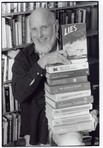
- James W. Loewen's profile
- 1157 followers

