Discover new books on Goodreads
See if your friends have read any of Carolyn Kost's books
more photos (1)
Carolyn’s 2025 Year in Books
Take a look at Carolyn’s Year in Books, including some fun facts about their reading.
Carolyn Kost’s Followers (143)


More friends…
Carolyn Kost
Goodreads Author
Member Since
August 2013
URL
https://www.goodreads.com/carolyn_kost
To ask
Carolyn Kost
questions,
please sign up.
|
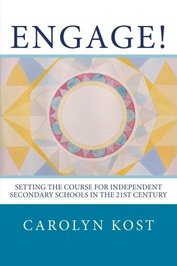
Engage!: Setting the Course for Independent Secondary Schools in the 21st Century
3.33 avg rating — 3 ratings
—
published
2015
—
2 editions
|
Error rating book. Refresh and try again.
Rate this book
Clear rating
|
|
On To College: What high school students and their families need to know about college selection, application, and admissions
by
Carolyn Kost (Goodreads Author)
0.00 avg rating — 0 ratings
—
published
2014
—
2 editions
|
Error rating book. Refresh and try again.
Rate this book
Clear rating
|
|
What Are You Waiting For?: A Workbook for Living Your Purpose, Path, and Passion
by
Carolyn Kost (Goodreads Author)
0.00 avg rating — 0 ratings
|
Error rating book. Refresh and try again.
Rate this book
Clear rating
|
* Note: these are all the books on Goodreads for this author. To add more, click here.
Carolyn’s Recent Updates
|
Carolyn Kost
rated a book really liked it
|
Error rating book. Refresh and try again.
Rate this book
Clear rating
|
|
One experience all humans have in common is death. Boas wrote brief essays after he was diagnosed with metastatic cancer, from which he died at age 46. He doesn’t claim any great insight, but he is a clear thinker and communicator about mortality, gr
One experience all humans have in common is death. Boas wrote brief essays after he was diagnosed with metastatic cancer, from which he died at age 46. He doesn’t claim any great insight, but he is a clear thinker and communicator about mortality, grief, perspective, memory, and how to live well while knowing death is inevitable. It’s also about the modern Western avoidance of death and a defense of clearer, saner, more humane ways of confronting it. He does not present himself as a guru, therapist, theologian, or sage. Instead, he calls himself a “reporter from the front line.” That framing is powerful because it rejects false authority while preserving hard-earned insight. He writes not as a theorist but as someone forced into direct contact with death. Proximity to death can clarify life. When death becomes real rather than abstract, trivial concerns lose their hold. Petty status anxiety, vanity, resentment, performative ambition, and social comparison begin to look absurd. What remains important are relationships, love, meaning, contribution, gratitude, and presence. This theme has deep philosophical roots, from Stoicism to Christianity to existentialism, but Boas expresses it in modern, accessible language. Boas makes a sharp critique of upward comparison. Many people instinctively compare themselves only to those who seem wealthier, more admired, more successful, or more glamorous. Social media intensifies this by displaying curated fragments of other people’s lives. Boas suggests a corrective: compare downward. Remember how many people live amid poverty, violence, illness, loneliness, displacement, or grief. Because he worked in humanitarian settings—Gaza, Nepal, parts of Africa, shelters, suicide helplines—he had firsthand knowledge of suffering. This made gratitude easier and complaint harder. Death that is hidden becomes abstract terror. In many places, death is ever-present, impossible to hide, and treated quite differently from the modern West. In Madagascar, corpses may be exhumed years later for communal remembrance rituals. In some families like mine, open-casket wakes remain common. My first encounter with death was my nine-year-old friend Chris in a baseball uniform in his coffin. I was a deep and reflective kid even before that event, but the message underscoring the brevity and lack of security in life was certainly received. As Queen Elizabeth II said after Prince Philip’s death, “Grief is the price we pay for love.” If we never grieved, it would mean we never loved deeply enough to be wounded by absence. Grief is evidence something precious existed. Boas’s metaphor of life as a book is particularly memorable. “Most of all, though, I think about how I hope people will remember me, which I’d like to be with a big smile on their face. The way I try to conceptualise it for others is by getting them to try to think of me as a book they are glad they’ve read. All our lives can be thought of as books: for some we are just a paragraph or a footnote, and for others we are a chapter or a volume. But we’re not someone’s whole book, even our spouse’s or our parents’ or our children’s. We are characters in their stories. And they will keep writing beautiful chapters in their own books after we have gone. Just because someone dies before you, it doesn’t change the joy (and pain and exasperation and everything else) that their segment of your book has brought you. Dwell on the quality, not the quantity, and don’t fixate for too long on the fact that it ended, just like you don’t dwell for too long on the fact you’ve finished reading or watching something you loved. Just be glad you had them, and that they will be with you forever as a part of your own story.” Many people facing terminal illness report frustration when others fail to acknowledge death, offer clichés, or insist on forced optimism. Boas apparently advises honesty over euphemism. nearing death often know exactly what is happening; what isolates them is not mortality itself but everyone else’s inability to face it. A bad death is one in which the person refuses to "go gentle into that good night" The practical guidance for supporting the dying is excellent and deserves wide circulation: • Do get in touch • Don’t appear unannounced • Don’t skirt around the issue • Do listen • Don’t minimize • Don’t burden them with reply expectations • Don’t offer unsolicited medical advice • Don’t impose religion or anti-religion • Do offer specific help This advice is valuable because it rejects the self-centered habits of the healthy. Too often visitors seek to relieve their own discomfort rather than serve the dying person’s needs. Strikingly, Boas tells us that “hope is antithetical to acceptance.” The endless hope for miracle cures, reversals, or denial can prevent emotional completion and peace, yet hope need not only mean cure. Hope can mean hope for a peaceful death, reconciliation, courage, gratitude, forgiveness, lucid final conversations, or freedom from fear. In that sense, hope and acceptance can coexist. But false hope and acceptance are indeed enemies. "Running away from death is not only a waste of energy; it sets life in opposition to it. Which it isn't. Death is a natural part of life, and the more we understand that, the more we can enjoy living." Boas’s reminder that the world continues after we die is another source of consolation. “It gives me a great sense of peace to think about how the world will continue after I'm gone. Children will want ice creams and people will fall head-over-heels in love and musicians will delight us and comedians will poke fun and people will tend their gardens and collect geeky things. If you can, ignore politics, consume much less news and try to stay away from social media. They all miss the big picture.....carpe that diem and keep it carped.” Far from being depressing, this can be liberating. The world’s continuity means beauty does not depend solely on us. Bertrand Russell’s river metaphor deepens this beautifully: "An individual human existence should be like a river – small at first, narrowly contained within its banks, and rushing passionately past boulders and over waterfalls. Gradually the river grows wider, the banks recede, the waters flow more quietly, and – in the end – without any visible break, they become merged in the sea, and painlessly lose their individual being. The man or woman who, in old age, can see his or her life in this way, will not suffer from the fear of death, since the things they care for will continue." This vision of death as dissolution into continuity is emotionally resonant even for those with or without religious belief. George Eliot’s Middlemarch adds perhaps the noblest ethical conclusion: much of the good in the world comes from hidden acts by ordinary people: “But the effect of her being on those around her was incalculably diffusive: for the growing good of the world is partly dependent on unhistoric acts; and that things are not so ill with you and me as they might have been, is half owing to the number who lived faithfully a hidden life, and rest in unvisited tombs.” A Beginner’s Guide to Dying is intellectually serious, humane, unsentimental, and genuinely useful. It urges us to recover perspective. Mortality strips illusion and reveals what mattered all along: love, hidden goodness, gratitude, courage, and presence. Boas helps us to consider how live before dying finds us. ...more |
|
|
Apr 27, 2026 08:03AM
· like
· see review ·
preview book
See a Problem?
We’d love your help.
Let us know what’s wrong with this preview of
A Beginner's Guide to Dying by Simon Boas.
Thanks for telling us about the problem.
Not the book you’re looking for?
Preview — A Beginner's Guide to Dying by Simon Boas |
|
|
Carolyn Kost
rated a book liked it
|
Error rating book. Refresh and try again.
Rate this book
Clear rating
|
|
This is a cute little book expanded from the author's blog about the lessons she learned from her time as an exchange student in France. She uses anecdotes from her experiences living with both a chic, patrician family and a bohemian one. The contras
This is a cute little book expanded from the author's blog about the lessons she learned from her time as an exchange student in France. She uses anecdotes from her experiences living with both a chic, patrician family and a bohemian one. The contrast allows her to avoid too broad a generality, but having lived abroad myself, I know the temptation to generalize. Main takeaways for me: Practice the art of living well every day. Diet and exercise: no snacking. Be intentional about food. Eat a bit, not the entire thing. SIT! Drink water. Fashion: capsule wardrobe. Wear only what works for your body. Decide how you want to present yourself. Check yourself from all angles before leaving home. Wear your best all the time. Buy the best you can afford. Makeup: au naturel, defined eye. Perfume. Good posture, good grooming, good manners, good vocabulary, good diction. Avoid clutter. Be careful about what you bring into the house. Become comfortable with silence. NEVER ask what someone does for a living. Don't overshare. Have few people with whom you share intimacies. Be confident. Appreciate culture. Attend museum exhibitions, theater productions, concerts, etc. Cultivate yourself. Be selective. Be of good humor. ...more |
|
|
Apr 20, 2026 06:02PM
· 2 likes · like
· see review ·
preview book
See a Problem?
We’d love your help.
Let us know what’s wrong with this preview of
Lessons from Madame Chic by Jennifer L. Scott.
Thanks for telling us about the problem.
Not the book you’re looking for?
Preview — Lessons from Madame Chic by Jennifer L. Scott |
|
|
"
Working for a Chinese company with Chinese students, I am constantly reminded of just how very different we are and how much I need to learn. Every bo
Working for a Chinese company with Chinese students, I am constantly reminded of just how very different we are and how much I need to learn. Every book I read about China provides a bit more insight.
My students' grandparents lived through the Cultural Revolution, when educated people were sent to the countryside, ate grass and bark or starved. Careers were destroyed overnight, families were torn apart by political forces no one could predict or control. In a society where connections, property, and even family loyalty have all proven unreliable at critical moments, and even the gaokao was abolished for a time, how do people acquire some sense of stability? The credential can be nullified, but education itself cannot be readily erased for one's consciousness. Maybe that provides some sense of stored value. Even the authors discuss a young relative who majored in social science in a prestigious Chinese university and remains unemployed. I work with students who have "climbed the Ivy," return to China, and are unemployed. Their parents are laid off. In 2026, at this writing, many restaurants and malls in Shanghai are empty. There is no way to prepare for unemployment, credential inflation, a saturated state sector, private enterprise under political pressure. The very qualities the system selected for, namely, compliance, hierarchy, positional thinking, are not the ones that best navigate a world where the credential cannot deliver the promised security. ...more " |
|
|
Carolyn Kost
rated a book really liked it
|
Error rating book. Refresh and try again.
Rate this book
Clear rating
|
|
China is a society in rapid, relentless transformation. The authors, political economists Hongbin Li and Ruixue Jia, argue that one of China's "foundational pillars" and enduring institutions, the gaokao, the national college entrance examination, be China is a society in rapid, relentless transformation. The authors, political economists Hongbin Li and Ruixue Jia, argue that one of China's "foundational pillars" and enduring institutions, the gaokao, the national college entrance examination, be maintained as the central mechanism through which the Chinese state recruits talent, manages social mobility, and maintains political control. Drawing on two decades of research, including data from the Tsinghua Data Center’s Chinese College Student Survey (2009–2016), the authors make a compelling, if occasionally repetitive, case that the gaokao is the keystone of Chinese civilization. A Tournament a Thousand Years in the Making The examination system traces its origins to the Sui dynasty around 600 CE, when China introduced a merit-based exam to select bureaucrats, requiring candidates to memorize ancient texts with only a 0.27 percent chance of passing. For over a millennium, this system created the perception of social mobility, a perception so powerful that many historians believe the abolition of the imperial exam contributed directly to the fall of the Qing dynasty. The People’s Republic revived the principle under Mao to identify promising talent for governance, though Mao himself later suspended it after elite intellectuals turned critical. Deng Xiaoping reinstated the gaokao, and today roughly ten million students sit for it annually, competing for the five percent of seats at elite institutions that offer significantly higher lifetime earnings. A college degree in China correlates with a 40 percent income premium, with elite colleges adding another 40 percent on top of that. A Cleverly Designed Political Architecture The book’s most persuasive contribution is its analysis of the gaokao as a political instrument. The central government controls both the number of available positions in the education system and the power assigned to those positions according to rank. University administrators hold CCP bureaucratic rankings equivalent to vice ministers or county mayors, and 64 percent of college graduates report that their top employment preference is a government job, with elite college attendance boosting the odds of state-sector employment by 33 percent. The system, the authors argue, excels at producing loyal, competent elites who owe their status to the ruler. The regional quota system further serves political ends: Fudan University admits 53% of its students from Shanghai, with less than 2 percent of China’s population. Provinces with large ethnic minority populations receive elevated quotas. Any proposed reform, even reallocating 6.5 percent of seats toward poorer provinces, triggers fierce protests, remarkable in a country that does not permit them. The exam survives, the authors conclude, because it provides just enough hope of social mobility to maintain stability, while keeping families too consumed with competition to pursue alternatives. Human Capital and the STEM Pivot Li and Jia are particularly strong on the relationship between education and economic power. China now produces roughly one in five of the world’s college graduates. The government has massively expanded STEM enrollment at elite universities in direct response to US-China technology competition, creating a university-to-industry pipeline that no market economy can replicate at such speed and scale. While the US STEM student pool roughly doubled between 2009 and 2021 — an increase of about 300,000 students — China’s grew by approximately 2.5 million. One-third of China’s extraordinary 10 percent annual GDP growth during the reform era is attributable to rising human capital; the other two-thirds came from policies that used that capital more efficiently. The authors are honest, however, about the limits of this model. Chinese students' skills stagnate and even decline in university. The highest-scoring graduates overwhelmingly prefer state-sector employment, potentially draining the private sector that is responsible for most genuine innovation. And “China’s Einsteins” (intellectually unconventional students) are systematically disadvantaged by a system that rewards rote performance over curiosity. Debunking the rise of Chinese universities The global higher education media is constantly extolling Chinese universities' rise in the rankings. I keep pointing out that the Chinese game the rankings through internal and self-citations, publication volume and PPP-adjusted spending, rather than global scientific impact or breakthrough innovation. It is an open secret that Chinese academics gamed these metrics by building large labs, hiring armies of Ph.D. students, and instructing them to publish quickly and cross-cite. As two leading scientists at Tsinghua and Peking University wrote in Science, in China “doing good research is not as important as schmoozing with powerful bureaucrats.” The system excels at producing measurable output — that is not the same as leading at the global innovation frontier, a distinction the authors could press harder. The Highest Exam is a genuinely illuminating work. The authors bring personal authority — both are products of the system, and one co-authored the gaokao reform proposal that was ultimately shelved for fear of destabilizing rural populations. The book is at its best when it reads as a mirror: the gaokao and the political tournament that governs officials’ promotion on a single GDP-growth metric are structurally identical. Both reward measurable performance, suppress heterodox thinking, and concentrate loyalty upward. China is simultaneously facing severe demographic decline, a debt and real estate crisis, capital flight, and stagnating productivity, structural constraints that no examination system, however cleverly designed, can test its way out of. For readers seeking to understand why China behaves as it does on the world stage, this book offers an unusually clear lens. Highly recommended, with patience for the repetition and errors in grammar and punctuation. ...more |
|
|
Apr 17, 2026 06:55PM
· 2 likes · like
· see review ·
preview book
See a Problem?
We’d love your help.
Let us know what’s wrong with this preview of
The Highest Exam by Ruixue Jia.
Thanks for telling us about the problem.
Not the book you’re looking for?
Preview — The Highest Exam by Ruixue Jia |
|
|
Carolyn Kost
rated a book really liked it
|
Error rating book. Refresh and try again.
Rate this book
Clear rating
|
|
In the current media cycle (March 2026), with headlines proliferating about revolutionary blood tests for cancer, The Age of Diagnosis arrives at exactly the right moment and asks exactly the questions few are willing to ask. Suzanne O'Sullivan, a neu In the current media cycle (March 2026), with headlines proliferating about revolutionary blood tests for cancer, The Age of Diagnosis arrives at exactly the right moment and asks exactly the questions few are willing to ask. Suzanne O'Sullivan, a neurologist of twenty-five years, argues that modern medicine is redrawing the boundary between sickness and health, not always to our benefit. She challenges a set of assumptions that many of us have absorbed without question: that any diagnosis is better than none; that tests are more accurate than doctors; that test results are objective, immutable truths; that early intervention is always best; that more knowledge is always beneficial. But what if these assumptions are wrong—or at least incomplete? The Illusion of Certainty One of the book’s most compelling contributions is its dismantling of the idea that medical testing is precise and objective. As O’Sullivan notes, test results are influenced by a wide range of variables: “ethnicity, diet, exercise, alcohol, hydration level, medications, and other diseases can all affect test results.” Even more strikingly, lab variation alone can produce different results for the same patient, and “normal ranges” encompass wide differences such that two people can receive very different readings and both be told they are healthy. We are far more comfortable with numbers than with uncertainty, but the numbers themselves are far less stable than we imagine. This becomes even more troubling in the realm of genetics. As O’Sullivan writes, “There is a much bigger gap between our ability to sequence the whole genome and our ability to interpret the results than people realize.” We are, in her words, like “kids in a candy store,” possessing extraordinary technological capability without the interpretive wisdom to match. Diagnosis Creep and the Expansion of Illness Perhaps the central argument of the book is that we are not necessarily becoming sicker—we are redefining more of life as sickness. “These [increased] statistics [about the incidence of disease] could indicate that ordinary life experiences, bodily imperfections, sadness and social anxiety are being subsumed into the category of medical disorder. In other words, we are not getting sicker—we are attributing more to sickness.” This is what O’Sullivan calls diagnosis creep, “the gradual expansion of diagnostic criteria…so that over time, people who would once have been considered healthy are drawn into the disease group.” The drivers are multiple: 1. More sensitive technologies detecting milder abnormalities 2. Shifting definitions of what counts as disease 3. A cultural and institutional bias toward intervention But as she cautions, “Diagnosis creep…has to stop somewhere.” When Distress Becomes Disease One of the most unsettling aspects of this expansion is the pathologizing of normal human experience. O’Sullivan describes “the pathologizing of distress” and the “sanitizing of the messy truth of life through biology.” Loneliness, grief, anxiety, distraction—these are increasingly treated not as part of the human condition, but as medical disorders requiring intervention. I was struck by how closely this aligns with what I see in everyday life. A widowed neighbor of mine, surrounded by family and in constant contact with them throughout the day, nevertheless feels acute loneliness at night and has begun to wonder whether she should seek medication for it. She is already on sleeping pills and cardiac drugs. The impulse is understandable. But suffering can prompt a lifestyle change or acceptance, rather than a demand for medicine to dull the sadness. The Seduction of Diagnosis O’Sullivan makes a subtle but powerful observation: people often want a diagnosis. In her interviews, she found that “the scores of people I interviewed…were delighted to have a diagnosis,” yet “almost all had left their job, dropped out of education and lost many old friends.” She describes “a worrying gap between the perceived benefit of being diagnosed and any actual improvements in quality of life.” Diagnosis offers validation. It offers explanation. Increasingly, it offers identity. I have seen this firsthand. A student I worked with suffered from trichotillomania, pulling out every hair on her body. Over time, she came to embrace the condition as central to who she was—and resisted treatment because recovery would mean becoming someone else, someone shaped by others’ expectations. When illness becomes identity, recovery can feel like loss. O'Sullivan presents copious evidence that online support groups can solidify a sick identity and impede a recovery identity. Autism, ADHD, and the Politics of Definition Nowhere is diagnosis creep more visible than in neurodevelopmental conditions such as autism and ADHD. O’Sullivan notes that in both cases, diagnostic thresholds have expanded to include increasingly subtle traits. At the same time, a cultural shift has reframed these diagnoses not as disorders to be treated, but as identities to be affirmed. In autism advocacy, she observes that those high functioning, often self-diagnosed people with autism reject distinctions such as “high” and “low” functioning, arguing that such labels are dismissive of their suffering. Others emphasize what makes autistic individuals “special,” even suggesting that “the concept of treatment is offensive.” But this raises a difficult question: what happens to those with profound impairment? In my own family, autism does not look like a TikTok identity. My nephew stopped speaking at age two and a half and cannot complete basic daily tasks. A cousin required physical restraints as a child and would punch through drywall in moments of distress. These realities are not represented in the cultural conversation—and risk being obscured by it. ADHD presents a similar pattern. O’Sullivan writes, “Forgetfulness, lack of motivation, noise intolerance, social anxiety, low mood, distractibility, and concentration difficulties are all part of the human experience.” Yet many of these traits are now medicalized, in part due to their inclusion in diagnostic manuals such as DSM. Even more concerning, she cites research suggesting that stimulant treatments are not as effective as widely assumed, while the framing of ADHD as a neurochemical disorder has been “an obvious boon for the pharmaceutical industry.” Genetics, Risk, and the Limits of Prediction The book also takes a hard look at the promises—and dangers—of genetic testing. There are rare cases, such as Huntington’s disease, where a gene variant virtually guarantees the development of illness. But these are the exception. In most cases, genetic findings indicate risk, not certainty, and are deeply entangled with environmental and lifestyle factors. O’Sullivan cites a professor of genomic medicine who remarked, “looking at people’s postcodes at birth is probably as good a predictor…as their genetic code.” Yet despite this uncertainty, patients and physicians alike often treat genetic information as definitive. In the United States, for example, over half of women with the BRCA1 gene opt for mastectomies, compared to only 5% in France and Poland. Without long-term comparative outcomes, we do not even know which approach is more appropriate. We are acting decisively on information we do not fully understand. The Cost of Knowing Perhaps the most sobering insight of The Age of Diagnosis is that more information is not always better. Genetic data, once collected, is not neutral. “The value of the data is not necessarily for the individual. It’s being sold to research institutions, universities, and bio-pharma companies…” At the same time, the use of screening as predictive testing—particularly in prenatal contexts—raises profound ethical questions. Women are advised to terminate pregnancies based on risks that never materialize. Babies with Down syndrome can be murdered up to the day of birth, which raised the question of “what is a life worth living and what counts as disease?” Even a short life can have an enormously positive impact. Some say that the cost of providing healthcare to such individuals places a burden on society, but “Obesity and smoking are a much greater burden to any healthcare system than Down syndrome.” A Personal Reckoning My own skepticism toward the medical establishment did not arise in a vacuum. At eighteen, I was told I would need to take two medications every day for the rest of my life. I stopped after a few months and never resumed them, with no ill effects many decades later. At twenty-one, I was diagnosed with another serious condition that was expected to shorten my life. I did nothing. A decade later, I decided to have it checked and found that it had disappeared. Experiences like these do not make one anti-medicine, but they do make one suspicious. Conclusion The Age of Diagnosis is not an argument against medicine. It is an argument for humility and for recognizing the limits of what we know, the complexity of the human body, and the danger of turning every aspect of life into a medical problem. At a moment when new technologies promise earlier detection, more data, and more intervention than ever before, O’Sullivan offers a necessary counterpoint: Not everything that can be diagnosed should be. Not everything that is measured is meaningful. And not everything that feels wrong is a disease. ...more |
|
|
Mar 22, 2026 02:07PM
· 1 like · like
· see review ·
preview book
See a Problem?
We’d love your help.
Let us know what’s wrong with this preview of
The Age of Diagnosis by Suzanne O'Sullivan.
Thanks for telling us about the problem.
Not the book you’re looking for?
Preview — The Age of Diagnosis by Suzanne O'Sullivan |
|
|
Carolyn Kost
rated a book really liked it
|
Error rating book. Refresh and try again.
Rate this book
Clear rating
|
|
China is a society in rapid, relentless transformation. The authors, political economists Hongbin Li and Ruixue Jia, argue that one of China's "foundational pillars" and enduring institutions, the gaokao, the national college entrance examination, be China is a society in rapid, relentless transformation. The authors, political economists Hongbin Li and Ruixue Jia, argue that one of China's "foundational pillars" and enduring institutions, the gaokao, the national college entrance examination, be maintained as the central mechanism through which the Chinese state recruits talent, manages social mobility, and maintains political control. Drawing on two decades of research, including data from the Tsinghua Data Center’s Chinese College Student Survey (2009–2016), the authors make a compelling, if occasionally repetitive, case that the gaokao is the keystone of Chinese civilization. A Tournament a Thousand Years in the Making The examination system traces its origins to the Sui dynasty around 600 CE, when China introduced a merit-based exam to select bureaucrats, requiring candidates to memorize ancient texts with only a 0.27 percent chance of passing. For over a millennium, this system created the perception of social mobility, a perception so powerful that many historians believe the abolition of the imperial exam contributed directly to the fall of the Qing dynasty. The People’s Republic revived the principle under Mao to identify promising talent for governance, though Mao himself later suspended it after elite intellectuals turned critical. Deng Xiaoping reinstated the gaokao, and today roughly ten million students sit for it annually, competing for the five percent of seats at elite institutions that offer significantly higher lifetime earnings. A college degree in China correlates with a 40 percent income premium, with elite colleges adding another 40 percent on top of that. A Cleverly Designed Political Architecture The book’s most persuasive contribution is its analysis of the gaokao as a political instrument. The central government controls both the number of available positions in the education system and the power assigned to those positions according to rank. University administrators hold CCP bureaucratic rankings equivalent to vice ministers or county mayors, and 64 percent of college graduates report that their top employment preference is a government job, with elite college attendance boosting the odds of state-sector employment by 33 percent. The system, the authors argue, excels at producing loyal, competent elites who owe their status to the ruler. The regional quota system further serves political ends: Fudan University admits 53% of its students from Shanghai, with less than 2 percent of China’s population. Provinces with large ethnic minority populations receive elevated quotas. Any proposed reform, even reallocating 6.5 percent of seats toward poorer provinces, triggers fierce protests, remarkable in a country that does not permit them. The exam survives, the authors conclude, because it provides just enough hope of social mobility to maintain stability, while keeping families too consumed with competition to pursue alternatives. Human Capital and the STEM Pivot Li and Jia are particularly strong on the relationship between education and economic power. China now produces roughly one in five of the world’s college graduates. The government has massively expanded STEM enrollment at elite universities in direct response to US-China technology competition, creating a university-to-industry pipeline that no market economy can replicate at such speed and scale. While the US STEM student pool roughly doubled between 2009 and 2021 — an increase of about 300,000 students — China’s grew by approximately 2.5 million. One-third of China’s extraordinary 10 percent annual GDP growth during the reform era is attributable to rising human capital; the other two-thirds came from policies that used that capital more efficiently. The authors are honest, however, about the limits of this model. Chinese students' skills stagnate and even decline in university. The highest-scoring graduates overwhelmingly prefer state-sector employment, potentially draining the private sector that is responsible for most genuine innovation. And “China’s Einsteins” (intellectually unconventional students) are systematically disadvantaged by a system that rewards rote performance over curiosity. Debunking the rise of Chinese universities The global higher education media is constantly extolling Chinese universities' rise in the rankings. I keep pointing out that the Chinese game the rankings through internal and self-citations, publication volume and PPP-adjusted spending, rather than global scientific impact or breakthrough innovation. It is an open secret that Chinese academics gamed these metrics by building large labs, hiring armies of Ph.D. students, and instructing them to publish quickly and cross-cite. As two leading scientists at Tsinghua and Peking University wrote in Science, in China “doing good research is not as important as schmoozing with powerful bureaucrats.” The system excels at producing measurable output — that is not the same as leading at the global innovation frontier, a distinction the authors could press harder. The Highest Exam is a genuinely illuminating work. The authors bring personal authority — both are products of the system, and one co-authored the gaokao reform proposal that was ultimately shelved for fear of destabilizing rural populations. The book is at its best when it reads as a mirror: the gaokao and the political tournament that governs officials’ promotion on a single GDP-growth metric are structurally identical. Both reward measurable performance, suppress heterodox thinking, and concentrate loyalty upward. China is simultaneously facing severe demographic decline, a debt and real estate crisis, capital flight, and stagnating productivity, structural constraints that no examination system, however cleverly designed, can test its way out of. For readers seeking to understand why China behaves as it does on the world stage, this book offers an unusually clear lens. Highly recommended, with patience for the repetition and errors in grammar and punctuation. ...more |
|
|
Mar 21, 2026 05:48PM
· 2 likes · like
· see review ·
preview book
See a Problem?
We’d love your help.
Let us know what’s wrong with this preview of
The Highest Exam by Ruixue Jia.
Thanks for telling us about the problem.
Not the book you’re looking for?
Preview — The Highest Exam by Ruixue Jia |
|
|
Carolyn Kost
rated a book really liked it
|
Error rating book. Refresh and try again.
Rate this book
Clear rating
|
|
In the current media cycle (March 2026), with headlines proliferating about revolutionary blood tests for cancer, The Age of Diagnosis arrives at exactly the right moment and asks exactly the questions few are willing to ask. Suzanne O'Sullivan, a neu In the current media cycle (March 2026), with headlines proliferating about revolutionary blood tests for cancer, The Age of Diagnosis arrives at exactly the right moment and asks exactly the questions few are willing to ask. Suzanne O'Sullivan, a neurologist of twenty-five years, argues that modern medicine is redrawing the boundary between sickness and health, not always to our benefit. She challenges a set of assumptions that many of us have absorbed without question: that any diagnosis is better than none; that tests are more accurate than doctors; that test results are objective, immutable truths; that early intervention is always best; that more knowledge is always beneficial. But what if these assumptions are wrong—or at least incomplete? The Illusion of Certainty One of the book’s most compelling contributions is its dismantling of the idea that medical testing is precise and objective. As O’Sullivan notes, test results are influenced by a wide range of variables: “ethnicity, diet, exercise, alcohol, hydration level, medications, and other diseases can all affect test results.” Even more strikingly, lab variation alone can produce different results for the same patient, and “normal ranges” encompass wide differences such that two people can receive very different readings and both be told they are healthy. We are far more comfortable with numbers than with uncertainty, but the numbers themselves are far less stable than we imagine. This becomes even more troubling in the realm of genetics. As O’Sullivan writes, “There is a much bigger gap between our ability to sequence the whole genome and our ability to interpret the results than people realize.” We are, in her words, like “kids in a candy store,” possessing extraordinary technological capability without the interpretive wisdom to match. Diagnosis Creep and the Expansion of Illness Perhaps the central argument of the book is that we are not necessarily becoming sicker—we are redefining more of life as sickness. “These [increased] statistics [about the incidence of disease] could indicate that ordinary life experiences, bodily imperfections, sadness and social anxiety are being subsumed into the category of medical disorder. In other words, we are not getting sicker—we are attributing more to sickness.” This is what O’Sullivan calls diagnosis creep, “the gradual expansion of diagnostic criteria…so that over time, people who would once have been considered healthy are drawn into the disease group.” The drivers are multiple: 1. More sensitive technologies detecting milder abnormalities 2. Shifting definitions of what counts as disease 3. A cultural and institutional bias toward intervention But as she cautions, “Diagnosis creep…has to stop somewhere.” When Distress Becomes Disease One of the most unsettling aspects of this expansion is the pathologizing of normal human experience. O’Sullivan describes “the pathologizing of distress” and the “sanitizing of the messy truth of life through biology.” Loneliness, grief, anxiety, distraction—these are increasingly treated not as part of the human condition, but as medical disorders requiring intervention. I was struck by how closely this aligns with what I see in everyday life. A widowed neighbor of mine, surrounded by family and in constant contact with them throughout the day, nevertheless feels acute loneliness at night and has begun to wonder whether she should seek medication for it. She is already on sleeping pills and cardiac drugs. The impulse is understandable. But suffering can prompt a lifestyle change or acceptance, rather than a demand for medicine to dull the sadness. The Seduction of Diagnosis O’Sullivan makes a subtle but powerful observation: people often want a diagnosis. In her interviews, she found that “the scores of people I interviewed…were delighted to have a diagnosis,” yet “almost all had left their job, dropped out of education and lost many old friends.” She describes “a worrying gap between the perceived benefit of being diagnosed and any actual improvements in quality of life.” Diagnosis offers validation. It offers explanation. Increasingly, it offers identity. I have seen this firsthand. A student I worked with suffered from trichotillomania, pulling out every hair on her body. Over time, she came to embrace the condition as central to who she was—and resisted treatment because recovery would mean becoming someone else, someone shaped by others’ expectations. When illness becomes identity, recovery can feel like loss. O'Sullivan presents copious evidence that online support groups can solidify a sick identity and impede a recovery identity. Autism, ADHD, and the Politics of Definition Nowhere is diagnosis creep more visible than in neurodevelopmental conditions such as autism and ADHD. O’Sullivan notes that in both cases, diagnostic thresholds have expanded to include increasingly subtle traits. At the same time, a cultural shift has reframed these diagnoses not as disorders to be treated, but as identities to be affirmed. In autism advocacy, she observes that those high functioning, often self-diagnosed people with autism reject distinctions such as “high” and “low” functioning, arguing that such labels are dismissive of their suffering. Others emphasize what makes autistic individuals “special,” even suggesting that “the concept of treatment is offensive.” But this raises a difficult question: what happens to those with profound impairment? In my own family, autism does not look like a TikTok identity. My nephew stopped speaking at age two and a half and cannot complete basic daily tasks. A cousin required physical restraints as a child and would punch through drywall in moments of distress. These realities are not represented in the cultural conversation—and risk being obscured by it. ADHD presents a similar pattern. O’Sullivan writes, “Forgetfulness, lack of motivation, noise intolerance, social anxiety, low mood, distractibility, and concentration difficulties are all part of the human experience.” Yet many of these traits are now medicalized, in part due to their inclusion in diagnostic manuals such as DSM. Even more concerning, she cites research suggesting that stimulant treatments are not as effective as widely assumed, while the framing of ADHD as a neurochemical disorder has been “an obvious boon for the pharmaceutical industry.” Genetics, Risk, and the Limits of Prediction The book also takes a hard look at the promises—and dangers—of genetic testing. There are rare cases, such as Huntington’s disease, where a gene variant virtually guarantees the development of illness. But these are the exception. In most cases, genetic findings indicate risk, not certainty, and are deeply entangled with environmental and lifestyle factors. O’Sullivan cites a professor of genomic medicine who remarked, “looking at people’s postcodes at birth is probably as good a predictor…as their genetic code.” Yet despite this uncertainty, patients and physicians alike often treat genetic information as definitive. In the United States, for example, over half of women with the BRCA1 gene opt for mastectomies, compared to only 5% in France and Poland. Without long-term comparative outcomes, we do not even know which approach is more appropriate. We are acting decisively on information we do not fully understand. The Cost of Knowing Perhaps the most sobering insight of The Age of Diagnosis is that more information is not always better. Genetic data, once collected, is not neutral. “The value of the data is not necessarily for the individual. It’s being sold to research institutions, universities, and bio-pharma companies…” At the same time, the use of screening as predictive testing—particularly in prenatal contexts—raises profound ethical questions. Women are advised to terminate pregnancies based on risks that never materialize. Babies with Down syndrome can be murdered up to the day of birth, which raised the question of “what is a life worth living and what counts as disease?” Even a short life can have an enormously positive impact. Some say that the cost of providing healthcare to such individuals places a burden on society, but “Obesity and smoking are a much greater burden to any healthcare system than Down syndrome.” A Personal Reckoning My own skepticism toward the medical establishment did not arise in a vacuum. At eighteen, I was told I would need to take two medications every day for the rest of my life. I stopped after a few months and never resumed them, with no ill effects many decades later. At twenty-one, I was diagnosed with another serious condition that was expected to shorten my life. I did nothing. A decade later, I decided to have it checked and found that it had disappeared. Experiences like these do not make one anti-medicine, but they do make one suspicious. Conclusion The Age of Diagnosis is not an argument against medicine. It is an argument for humility and for recognizing the limits of what we know, the complexity of the human body, and the danger of turning every aspect of life into a medical problem. At a moment when new technologies promise earlier detection, more data, and more intervention than ever before, O’Sullivan offers a necessary counterpoint: Not everything that can be diagnosed should be. Not everything that is measured is meaningful. And not everything that feels wrong is a disease. ...more |
|
|
Mar 21, 2026 10:42AM
· 1 like · like
· see review ·
preview book
See a Problem?
We’d love your help.
Let us know what’s wrong with this preview of
The Age of Diagnosis by Suzanne O'Sullivan.
Thanks for telling us about the problem.
Not the book you’re looking for?
Preview — The Age of Diagnosis by Suzanne O'Sullivan |
|
|
Carolyn Kost
rated a book really liked it
|
Error rating book. Refresh and try again.
Rate this book
Clear rating
|
|
As an avid awe experiencer and someone who has spent a lifetime working with young people, I picked up Deborah Farmer Kris’s Raising Awe Seekers expecting what I sometimes derisively call an “airplane read”: a short, light book with a few pleasant in
As an avid awe experiencer and someone who has spent a lifetime working with young people, I picked up Deborah Farmer Kris’s Raising Awe Seekers expecting what I sometimes derisively call an “airplane read”: a short, light book with a few pleasant insights but little depth. To be fair, books like this often get unfairly dismissed by academics as superficial or unscholarly. Yet they serve a different purpose. They articulate things we already sense to be true but have not taken the time to process, and they give us a framework to think about them more intentionally. Guy Kawasaki’s books, Cal Newport’s work, and Kris’s Raising Awe Seekers all fall into this category. Curiously, I often find myself returning to such books later. Kris styles herself a “child development expert,” which may be a bit generous; “parenting journalist” would be more accurate. But that does not diminish the usefulness of the book. In fact, the tone places it closer to Wendy Mogel’s splendid The Blessing of a Skinned Knee—a book every parent should read. The central premise is simple but powerful: awe cultivates curiosity, curiosity fuels learning, and learning strengthens memory. Kris urges parents and educators to notice who their children actually are—what motivates them, what captures their curiosity, and what sparks wonder. The practical advice is refreshingly simple: build rhythms of playtime, downtime, and family time, and—perhaps most importantly—“leave space for not knowing.” Children need time and room to live in the uncertainty of growing up, discovering their gifts, and figuring out who they want to become. Each chapter opens with delightful epigraphs and closes with suggested exercises and related readings, especially picture books that families can explore together. The book also includes a reading guide for discussion groups and a welcome index. Wonder of Nature Rachel Carson’s famous wish that every child receive “a sense of wonder so indestructible that it would last throughout life” captures the book’s spirit perfectly. Music appears as another gateway to awe; Mary J. Blige’s observation that a single song can lift someone from despair reminds us of music’s life-giving power. Art offers its own form of awe through imagination, expressed in Julie Mehretu’s reflection on “the space in between… the moment of imagining what’s possible and yet not knowing what that is.” Big questions. As Stephen Hawking once said, “I am just a child who has never grown up. I still keep asking ‘how’ and ‘why.’” Kris encourages adults to nurture this spirit not by drilling children with yes-no questions but by asking better questions. Instead of “What are the phases of the moon?” ask: “What have you noticed about the moon?” Instead of rushing toward certainty, linger in curiosity—“What might happen if…?” Belonging. Kurt Vonnegut once wrote that the most daring thing young people can do is create communities that cure the “terrible disease of loneliness.” Shared awe experiences—whether through nature, music, storytelling, or acts of kindness—help build that sense of belonging. Circle of Life"Life’s beauty is inseparable from its fragility” (Susan David). Death makes us appreciate life. Children can understand and honor the cycle of life and death, if we teach them. Human KindnessAs Maya Angelou wrote, “My wish for you is that you continue. Continue to be who and how you are, to astonish a mean world with your acts of kindness.” One particularly striking insight comes from research on awe itself. While people often assume that nature, symphonies, or spiritual practices are the main sources of awe, studies suggest the most common trigger worldwide is human moral beauty—witnessing courage, kindness, strength, and selfless action. More than 95 percent of these awe-inspiring moments involve people acting on behalf of others. Kris’s emphasis on shared awe experiences also echoes Émile Durkheim’s concept of collective effervescence, those emotionally charged moments when communities transmit meaning and moral orientation. Modern parenting literature often over-intellectualizes values. This book wisely reminds us that belonging, reverence, and moral formation are often felt before they are articulated. In the end, Raising Awe Seekers offers something like a quiet set of instructions for living: stay curious, notice beauty, ask better questions, make time for shared wonder, and cultivate kindness. It may look like a small book—but like many so-called “airplane reads,” it contains insights worth returning to. ...more |
|
|
Mar 12, 2026 10:06AM
· 1 like · like
· see review ·
preview book
See a Problem?
We’d love your help.
Let us know what’s wrong with this preview of
Raising Awe-Seekers by Deborah Farmer Kris.
Thanks for telling us about the problem.
Not the book you’re looking for?
Preview — Raising Awe-Seekers by Deborah Farmer Kris |
|
|
Carolyn Kost
finished reading
|
Error rating book. Refresh and try again.
Rate this book
Clear rating
|
|
Feb 03, 2026 04:05PM
· like
·
preview book
See a Problem?
We’d love your help.
Let us know what’s wrong with this preview of
Of Boys and Men by Richard V. Reeves.
Thanks for telling us about the problem.
Not the book you’re looking for?
Preview — Of Boys and Men by Richard V. Reeves |
|
|
Carolyn Kost
finished reading
|
Error rating book. Refresh and try again.
Rate this book
Clear rating
|
|
Feb 03, 2026 04:04PM
· like
·
preview book
See a Problem?
We’d love your help.
Let us know what’s wrong with this preview of
Feminism Against Progress by Mary Harrington.
Thanks for telling us about the problem.
Not the book you’re looking for?
Preview — Feminism Against Progress by Mary Harrington |
|
“I wish with all my heart that every child could be so imbued with a sense of the adventure of life that each change, each readjustment, each surprise--good or bad--that came along would be welcomed as part of the whole enthralling experience.”
― Eleanor Roosevelt, You Learn by Living: Eleven Keys for a More Fulfilling Life
“Real poverty is the belief that the purpose of life is acquiring wealth and owning things. Real wealth is not the possession of property but the recognition that our deepest need, as human beings, is to keep developing our natural and acquired powers to relate to other human beings.”
― Grace Lee Boggs, The Next American Revolution: Sustainable Activism for the Twenty-First Century
“Happiness is not in the mere possession of money; it lies in the joy of achievement, in the thrill of creative effort.”
― Franklin D. Roosevelt
“I want to stay as close to the edge as I can without going over. Out on the edge you see all kinds of things you can’t see from the center.”
― Kurt Vonnegut
― Kurt Vonnegut