
A.J. Grainger's Blog
July 10, 2017


May 10, 2017
What does a publisher do?
I’ve worked in publishing since graduating from university ten (something!) years ago, briefly in marketing and more extensively in editorial. I know from my authors that the process of producing a book can be a bit mystifying when you first start out. How does it all work? What does everyone do? How do I fit in? So I thought I’d write a brief overview of all the various departments, and take you through the average life of a book. I really hope it’s useful!
We have come a long way since 1450 and Johannes Gutenberg’s printing press. Today publishing is a massive industry. (In the UK each year we will publish the equivalent of 20 books an hour!) A vast number of people are involved, not only in editorial and design, but also in sales, marketing and publicity, production and finance. However, to those not contributing to the day-to-day processes, the whole thing can seem like a bit of a mystery, even if you are an author (or maybe especially if you are an author). So what does happen in the life of a book from the time it is acquired (bought by the publisher) to when it arrives on the bookshelves?
Editorial
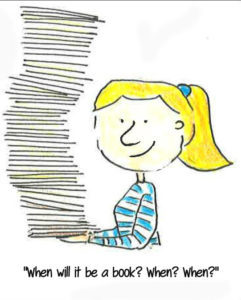
These days the vast majority of manuscripts (we call them submissions) come from agents rather than directly from authors. A commissioning editor’s reading pile is the source of excitement, and guilt. We can’t wait to dive in because we know that the next J. K. might be lurking in there, and yet with ten or more submissions coming in from agents every week, it can be hard to keep on top of it all.
Like every editor, I love finding something special that I can’t wait to share at a weekly editorial meeting. It’s here that we’ll first discuss an author and a book, including where both might fit on the list (the number of titles a publisher produces each year) to check that there is no overlap with existing publishing. Once we are all in agreement editorially, an editor will take the book to the acquisitions meeting.
Acquisitions meeting
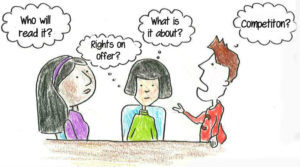
As publishing is very much a collective endeavour these days, a representative from all the various departments (sales, marketing, publicity, business affairs, finance, editorial, design, production, foreign rights, export) will be present at the acqs meeting. Discussions can get quite lively as we talk about the book and the author, while also trying to put both into the context of the wider market.
Sadly, we won’t make an offer on every book discussed at acquisitions. Decision are based on a combination of heart (taste, gut instinct, level of excitement) and head (sales, and profit-and-loss predictions).
As an editor, it can be heartbreaking to not get the script you love through the meeting. (We all have stories of the “one that got away”.) However, with such a large volume of submissions and only a finite amount of space on a list, we have to be very sure of everything we take on.
Making an offer
Once we are agreed on an acquisition, the commissioning editor will take an offer to the agent. After a bit of toing and froing over terms, we come to my favourite part, which is when the agent rings up and says we have a deal. Further negotiations will continue between the business affairs department and the agent until the contract is signed with the author.
After a book has been contracted, an advanced information sheet (AI) is created. As well as a blurb for the book, this document lists its bibliographic info (ISBN, price, format, and publication date) and an author biography. The AI is used internally at first but will eventually feed out to booksellers’ websites and therefore consumers. As such it needs to be accurate, relevant and engaging. It can take a long time (and lots of cups of tea) to get an AI just right.
Editing
It can be disconcerting as an author to receive the first editorial notes because they are often much longer than expected. Up until now the editor probably hasn’t mentioned that the book could be so much better if chapter four became chapter one and you got rid of chapter eight altogether. Oh, and have you considered adding a gnome (named Bob) to chapter six? Even as you are panicking about all the work you have to do, keep the faith and remember that an editor wants the same thing as you – the best book possible.
There are three main editorial stages:
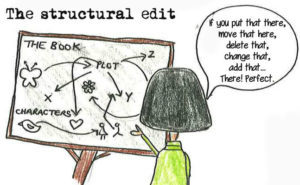
Structural: This looks at the book as a whole – pace, characters, situations, structure.
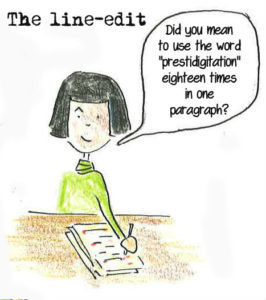
Line edit: This should pick up on any inconsistencies, stylistic tics (like word repetition), awkward sentences or just hangovers from previous drafts.
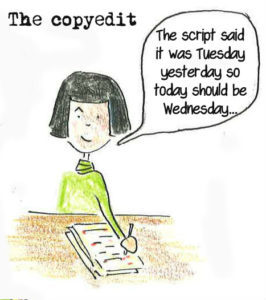
Copyedit: An edit for punctuation, spelling, grammatical errors, styling as well as more general queries about conflicting statements, timeline and fact-checking. This is often done out-of-house by a freelancer.
Once the text is final, it will be typeset. This just means setting out the words in a design programme like In Design so that it conforms to a printer’s requirements in terms of format and resolution. The book will then be proofread.
Design
 After chatting to the author, an editor will draw up a design brief for the designer. Covers are discussed at weekly meetings. We normally work up a near-to final cover for the author. Hopefully he or she will love it, but if not, we spend time addressing their concerns. There is often some compromise involved but we do usually get to a place where everyone is happy.
Production
An author may never know the name of their production controller, but he or she is essential in liaising with printers over price and spec (short for specifications of a book, i.e. page extent, cover effects, paper quality, binding).
In larger publishing houses, there will also be a digital production controller, who will oversee the conversion of final files into an eBook and ePDF.
Sales and marketing
The quickest way to describe the difference between marketing and publicity is to say that the latter deals with “free” marketing (interviews, reviews, blog tours, events, awards). The former produces sales materials (catalogues, order forms, book proofs) as well as adverts and other items for in-store promotions.
The marketing and PR teams work closely with each other and with sales.
The sales department is made up of key account managers, who sell to the chain bookstores, other large retailers, library suppliers, internet stores and supermarkets, and reps (sales representatives), who will visit local shops. It is not unusual to start talking about a book to customers over a year before publication.
There will also be an export team to sell English language books into other countries and a foreign rights department to sell translation rights, if they have been acquired.
Royalties and business affairs team
 Last but by no means least is the royalties team, which ensures that an author gets paid. Advances are normally split into three (with one-third paid on signature of contract, a third on delivery and acceptance of manuscript and the last third on publication). This department also compiles and sends out author royalty statements every six months, although an author won’t receive royalties until an advance has earned out.
And that’s it: all the various people mentioned and accounted for! This whole process obviously takes time, careful planning and lots of thought. Ultimately, though, we all want the same thing: to produce a wonderful book for as many people as possible to read and enjoy.
What does a publisher do? was originally published on A. J. Grainger
March 8, 2017
Top 5 women writers
To celebrate International Women’s Day, a list of my top 5 female writers. This list could definitely have been twice as long!
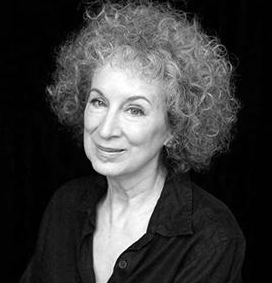 Margaret Atwood
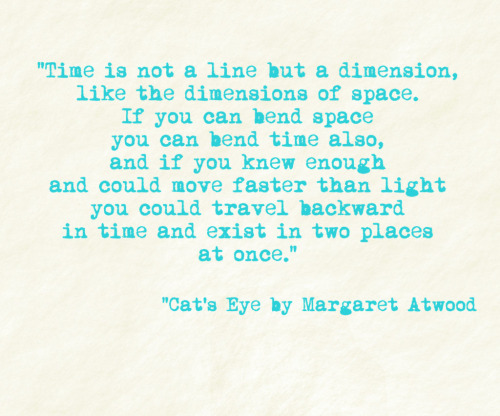
I first came across Margaret Atwood’s books when I was doing my A-levels and we studied Cat’s Eye. I was immediately caught by her writing style and also by the subject matter. Here, Atwood expertly depicts the power play between young girls. It remains one of my all-time favourite novels. I have fond memories of sitting in the sunshine on campus at uni devouring more of Atwood’s novels. My other top faves are The Handmaid’s Tale, The Blind Assassin and The Robber Bride.
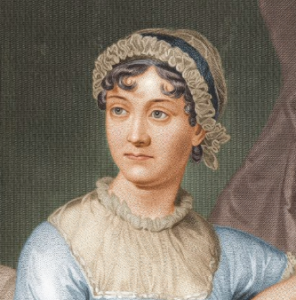 Jane Austen
Persuasion is my favourite Austen novel. (A controversial choice for some, I realise.) Pride and Prejudice is pretty high up on the list too, closely followed by Sense and Sensibility. I am definitely more of a Elinor than a Marianne, though, although I did want to be Kate Winslet in the movie adaptation. Her curls! Austen’s books are such smart social commentaries, and full of wit.
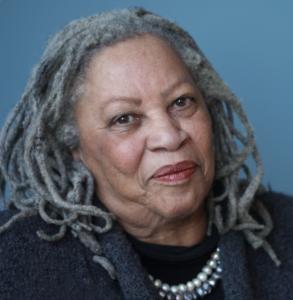 Toni Morrison
Beloved is my favourite of Morrison’s books. It’s a tough read, often very gruesome, but also heart-breaking and beautiful. I think Morrison is also so inspiring of new writers. “If there is a book that you want to read, but it hasn’t been written yet, you must be the one to write it.”
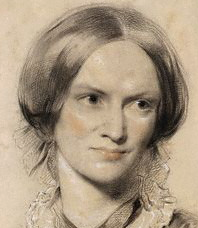 Charlotte Brontë
I read Jane Eyre for the first time at my grandparents’ house and immediately fell for its stubborn, brave, loyal and intelligent lead. I have since read it many times and love the fact that each time I do, I found something different to admire. It truly feels like one of the first YA novels.
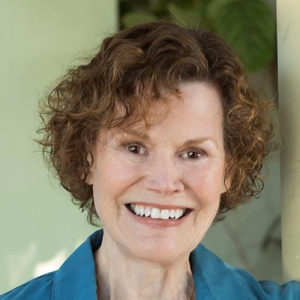 Judy Blume
Are You There, God? It’s Me, Margaret and Forever defined a generation. Blume was way ahead of her time. I was lucky enough to see her at an event at YALC a couple of years ago, and she came across as so wise, smart and kind. An inspiring writer.
Top 5 women writers was originally published on A. J. Grainger
February 26, 2017

February 1, 2017
Writing a Book: Research
We’re up to the part five of the Writing a Book series. And this month’s post is on … research.
I love doing research. It’s an excuse to buy multicoloured highlighters, nice Post-it notes, a sweet notebook and visit the library, or else grab a cup of tea and disappear down the rabbit warren of Google. The danger is that I will get lost in the research and never actually write the book. I realised halfway through writing my first novel that I was using “research” as an excuse to procrastinate.
Close that door!
Stephen King says in his book On Writing: ‘Write with the door closed, rewrite with the door open.’ This is how I now approach research in my novels. I write a complete first draft before going off to research anything in detail. My first drafts tend to be rough, full of notes and half-finished scenes (and sometimes sentences!). However, it’s only once I have this sprawling mess that I can begin to look for key themes and areas that I want to understand better and so learn more about the book I’m writing. I’m definitely someone who doesn’t know what I want to write until I’ve written it down. This can be time-consuming, but I’ve learned that it’s just the way I work and not to get (too!) frustrated by it.
I had to do a lot of research for both my novels. My first book, Captive, is a political thriller for teens about the kidnap of the prime minister’s daughter. That meant I had to get to grips with so much: what is day-to-day life like at Downing Street? What would the PM’s private apartment look like? What would it be like to live there? How much security would the PM’s family have? How much freedom would the PM’s daughter have? etc. etc. At the same time as this, I was also investigating kidnapping protocol. The aim was to make the setting and details of the book as authentic as possible. I did sometimes worry about my Google searches as I looked up ‘interior of Downing Street’ and ‘level of security around the PM’ at the same time!
I read a lot of articles and books, including parliamentary memoirs, to better understand this world. I also endlessly quizzed friends in the army and the police force.
Going with the flow
With my second book, In Your Light, I had a very different experience. This time the research ended up really directing the novel in a way I hadn’t expected. This book is dual narrative, one part follows the story of Seven and her life in a closed community, or cult. The second section is about Lil, a girl whose sister ran away from home eight months earlier.
However, when I started looking into the subject of missing teenagers, Lil’s story just took over in a way I hadn’t anticipated. I realised that I wanted to focus more on her desperate and painful search for her sister. As such, it felt important to better understand the complex issues surrounding teenage runaways.
The charity Missing People was kind enough to answer my questions. This amazing organisation specialises in reuniting missing children and adults with their families. It does this by working with the police to run publicity campaigns on social media, in the press, on digital boards and through its links with hostels and homeless shelters up and down the country. It also runs a free and confidential 24-hour helpline for families and missing people. The support the charity offers is unique and invaluable, and I was inspired by them. So much so that I ended up doing some volunteering for them.
Everyone’s experience of a loved one going missing is unique. However, I hope my book goes some small way to shining a spotlight on this important and incredibly emotive issue. If you want to read more this topic, or if you are thinking of running away, or know someone who has, you’ll find excellent help and support at www.missingpeople.org.uk.
Five tips for researching a book
Write a complete draft first – This can be very rough, but it’s advisable to have the basics of the story and characters so that your research has some focus, even if, like me, you end up rewriting the whole thing because of what you learned
Be organised – File, date, record everything properly, so you can find it again easily. I wish I had been better at doing this for Captive! Pulling everything together for the final draft was a bit of a nightmare. Having learned from that experience, I now keep much more organised records in Evernote.
Find somebody who knows more than you and ask them loads of questions – I am naturally reserved and always worry about imposing myself on others, so this was initially quite hard for me. However, I’ve found that when I do pluck up the courage to ask, people are incredibly happy to answer my questions. On the whole, people love sharing their knowledge and interests with you.
Don’t get too bogged down in research – You’re writing fiction not a history book. You don’t want your research to show. It should drape over the story, making the world and the characters feel more realistic.
Be open to the research – You may find that your book takes a completely different direction.
(This piece originally appeared on the fab My Book Corner last October.)
Writing a Book: Research was originally published on A. J. Grainger
January 29, 2017
Ten things I've learned since being a published writer
It’s two years since my first book, Captive, published. My second book, In Your Light, is due out in summer this year. As such, it feels like a good time for a bit of reflection (with some help from Disney). So here are 10 things I’ve learned since being a published writer. I hope they’re useful to you. Maybe some of you writers out there will identify with them!
10. The YA and children’s book world is lovely and welcoming.
9. Editors and agents are invaluable, as are copyeditors. Say thank you as often as you can!
8. Reviews are not meant for me. I am very grateful every time someone reviews my book, but I don’t read them any more. It didn’t matter how many stars or how many positive things they contain, my brain seeks out the one vaguely negative thing and sticks to it like glue. Reviews are for readers.
7. I will always be insecure about my writing. I will always wish my book was better. That’s a good thing. It means I keep trying harder!
6. Writing a book can be a challenge. There will always be a moment when I will think, despairingly, that this book will never (ever) be finished. This does not make that true. In the words of Dory, ‘Just keep swimming’.
5. Seeing your cover for the first time doesn’t get any less exciting.
4. I write slowly. No, that’s not true. I write fast. I rewrite slowly. And that’s OK.
3. Other authors, even the ones who are really successful, find this stuff hard too.
2. Getting a letter from someone telling you they loved your book means everything.
Seeing my book on a shelf in a bookshop is as thrilling as ever. I feel very lucky!
Captive is out now. Read a sample chapter here. Or check it out at your local library, or buy it from your local bookshop or online:
Goodreads | Amazon UK | Amazon US | Waterstones | The Book Depository | Barnes and Noble
In Your Light is out in the UK in summer 2017. You can check it out on Goodreads or pre-order it online now.
Ten things I’ve learned since being a published writer was originally published on A. J. Grainger
January 18, 2017
Five tips for creating character
Spend time with your character – think about them in circumstances other than the scenes in your novel. How do they eat breakfast? How do they take their coffee? What do they do when they are stressed / happy / angry?
Fill in a questionnaire for your character – you can download some great ones from the Internet or else create your own. It should include details about physical appearance but also and perhaps more importantly about them as a person: things like their favourite memory, their greatest fear, their biggest secret, their typical day etc.
Don’t panic if the character doesn’t arrive fully formed. As with all other parts of writing, it’s about layering. Each draft you write should hone not only your plot but also your character as you get to know them better.
Have fun! You’re making a person! Enjoy it. Make your characters vivid and real.
Five tips for creating character was originally published on A. J. Grainger


