Tyler Cook's Blog
July 24, 2026
Hey, Shelby Rae! Coloring Page
 Recommended products
 Hey, Shelby Rae! (Hardback) $14.99 Pre Order Now! View cart
Hey, Shelby Rae! (Paperback) $9.99 Pre Order Now! View cart
Hey, Shelby Rae! (Hardback) $14.99 Pre Order Now! View cart
Hey, Shelby Rae! (Paperback) $9.99 Pre Order Now! View cart


June 4, 2026
Cook Presents New Book At Book Signing
FOR IMMEDIATE RELEASE
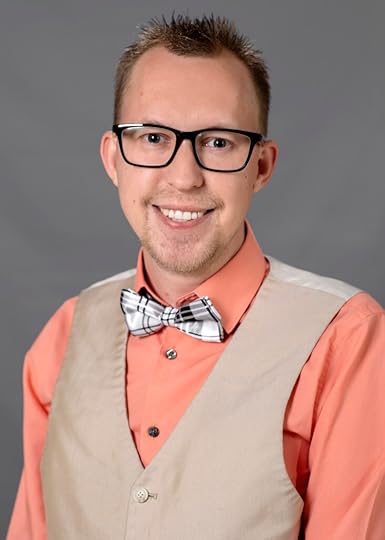
Franklin, NC—Tyler Cook, Franklin native and author, will release his sixth book, ‘Remnant’, at a book signing on June 13 at 10 a.m. at the Macon County Public Library.
“Remnant is the latest installment in The Aluria Adventures series and has been in the works for many years.” said Cook. “It’s time for the readers to get to enjoy it.”
A new, dark presence hovers over the city of Canton. After avoiding a nuclear holocaust, its citizens have enjoyed peace and order. Or so they thought. Now, they must brace the revenge of Aluria’s most powerful enemy and new protégé, Remnant. As dark magic collides with divine force, Jason must face a haunting new enemy who’s mastered death itself. This time, losing won’t just cost him his life. It could doom the world.
‘Aluria’, the first book in the series, was released in 2016, followed by ‘Vigilante’ in 2017 and ‘Disciple’ in 2018. They have been named the #1 bestselling superhero novel on Amazon.com multiple times, as well as reaching their overall bestseller list.
In 2014, Cook released ‘A Guide to Historic Dillsboro’, now an award-winning book that celebrates the historic town of Dillsboro, North Carolina, as well as raising money for the Appalachian Women’s Museum. Later that year, he wrote ‘The One’ which was released in early 2015.

The Macon County Public Library is located at 149 Siler Farm Rd in Franklin, North Carolina. For more information, contact Tyler Cook at tyler@tylermcook.com or visit www.tylercookbooks.com.
CLICK HERE TO ORDER REMNANTMay 28, 2026
Cook Presents Fourth Book in Series at Pre-Release Party
FOR IMMEDIATE RELEASE

Asheville, NC—Tyler Cook, Asheville resident and author, will release his sixth book, ‘Remnant’, at a special release party on June 6 at 10 a.m. at the Avery’s Creek Community Center.
“Remnant is the latest installment in The Aluria Adventures series and has been in the works for many years.” said Cook. “It’s time for the readers to get to enjoy it.”
A new, dark presence hovers over the city of Canton. After avoiding a nuclear holocaust, its citizens have enjoyed peace and order. Or so they thought. Now, they must brace the revenge of Aluria’s most powerful enemy and new protégé, Remnant. As dark magic collides with divine force, Jason must face a haunting new enemy who’s mastered death itself. This time, losing won’t just cost him his life. It could doom the world.
‘Aluria’, the first book in the series, was released in 2016, followed by ‘Vigilante’ in 2017 and ‘Disciple’ in 2018. They have been named the #1 bestselling superhero novel on Amazon.com multiple times, as well as reaching their overall bestseller list.
In 2014, Cook released ‘A Guide to Historic Dillsboro’, now an award-winning book that celebrates the historic town of Dillsboro, North Carolina, as well as raising money for the Appalachian Women’s Museum. Later that year, he wrote ‘The One’ which was released in early 2015.
The Avery’s Creek Community Center is located at 899 Glenn Bridge Rd. SE in Arden, North Carolina. For more information, contact Tyler Cook at tyler@tylermcook.com or visit www.tylercookbooks.com.
CLICK HERE TO RSVPCLICK HERE TO PRE-ORDER REMNANTMarch 1, 2026
Remnant to be Released June 9

The Adventure Continues…on June 9, 2026! It is an honor to present the next book in the Aluria Adventures series, Remnant. It has been a pleasure to write and I hope you enjoy it when it comes out.
“A new, dark presence hovers over the city of Canton. After avoiding a nuclear holocaust, its citizens have enjoyed peace and order. Or so they thought. Now, they must brace the revenge of Aluria’s most powerful enemy and new protégé, Remnant.
Jason Conner has no time for another war. His plans to wed Princess Tessa Warren are spiraling into chaos, his company’s facing a takeover, and he risks losing the only family he has ever know. But when Remnant seeks to steal four mythical stones and open the Gate of Cessation, Jason has no choice but to unleash Aluria—the last of the Valdorte and the ancient power that lives within him.
As dark magic collides with divine force, Jason must face a haunting new enemy who’s mastered death itself. This time, losing won’t just cost him his life. It could doom the world.”
Stay tuned, as more exciting information will be forthcoming, including videos, information on the upcoming Remnant Book Tour and more!
For more information, visit https://www.tylermcook.com/remnant
April 19, 2023
Interoffice Relations in Higher Education
The following is an essay written for my comprehensive exam to graduate from the Education Specialist (EdS) program at Appalachian State University.
Abstract
For a student to successfully enroll and graduate from a higher education institution, they have to interact with a number of faculty and staff to set them up for optimal success in their program of study. Whether it is financial aid, advising or the bookstore, these offices need to perform with efficiency and accuracy, both within their own department and with others, to help get the student from one point in their experience to another. But what if that doesn’t happen and an office or individual cannot or will not work with their stakeholders because of personal or professional reasons, or simply because they are incompetent? This review will look at common reasons why interoffice relationships may or tend to fall apart, what prevents this from happening and what can bring a broken system back to a well-oiled machine. Specifically, we’ll look at the individuals that assist students on the front lines, the different types of cultures that can exist within higher education, the internal and external communications that come from an office, the leaders who help shape the environment employees work in, the negative effects on work relationships as a result of COVID-19 and how workplace spirituality can help balance out the negative experiences individuals may frequently face.
Keywords: Employees, Leadership, COVID-19, Remote Work, Interoffice, Higher Education, Commitment Communication
The Higher Education Employee
Once considered to be a low-stress sector to be employed, employees of higher education are now carrying a heavier burden because of increased competition, changing cultures and changing leadership, according to Katherine Hyatt (2022). While Hyatt’s literature review looks at faculty members specifically, she mimics M.K. Johnson’s (2021) description of higher education staff, stating that longer hours, productivity demands and eroding working environments contribute to an increase in stress for employees (Hyatt, 2022). All of this can contribute to little or no work satisfaction, which according to Ngobeni et. al (2011), promotes an employee’s intent to leave the organization.
Because so much time is spent in the workplace, and because of proximity to each other, it is inevitable that informal relationships can develop among employees, whether that is a good or bad thing, according to Amjad et. al (2015). A friendship at work is a deliberate, but voluntary, relationship that exists for pleasure and gratification where mutual trust exists and interests and values are shared between the two. While friendships can encourage the culture fostered by the institution, it could also lead some employees down a path of inefficiency and inconvenience. One benefit to having casual relationships within an institution is it can enrich the work environment and enhance sociability among workers. It can also reduce work stress, improve individual attitudes, promote critical and creative thinking and increase the commitment to the organization. Some may even develop the initiative to help their friends with guidance, support, advice, feedback and suggestions on certain projects or ventures. Overall, the study by Amjad et. al showed that employee job satisfaction, and overall performance is greatly influenced by workplace friendships.
Unfortunately, Amjad et. al (2015) also reveals how these same relationships can hinder progress and productivity. Instances such as developing a romantic relationship with a colleague, having favoritism towards someone, or having a conflict of interest, can cause someone a loss of focus and performance in their work. If a negative tone were to develop between two workplace friends, that could reduce the level of commitment to the college for one or both parties involved. With that, Amjad et. al recommends that organizations take a very close look at their policies, mission, and vision to keep their employees deeply engaged, as well creating a friendly environment among employees and introducing benefits, rewards and opportunities to learn as an incentive for their continued commitment and quality performance.
To prevent losing qualified employees, and limit the stressors just mentioned, there are some things that institutions can do to engage their interest and produce maximum effort, says Ngobeni et. al (2011). Things such as flexible work schedules, autonomy, career mobility, and challenging assignments are a couple of things recommended to keep employees engaged. Managers can try to attempt to motivate their employees, giving them more to work for than just money, such as giving them different goals or talking to them about promotion opportunities they could one day be eligible for. They can also keep employees engaged by giving them challenging work assignments and opportunities to participate in professional development. They can also be a mentor and coach their employees and keep them focused on their professional goals and provide feedback as they meet certain milestones.
Institutional Commitment
Institutions can focus on raising the level of commitment by its employees in many different ways that benefits their students as well. For some workers, their positions are just a job that meets a means to an end. Administrators may be limited to poor applicants in an employment search pool because of low wages, no professional development benefits, like tuition reimbursement, and limited resources to employees, such as additional staff members, software, etc. (Bray et. al, 2017). Regardless of how the institution can retain an employee, their level of commitment must be high enough for them to engage within their position, be more productive and be more efficient.
According to Bray et. al (2017), “An employee who is not committed to an institution will harm the institution” (Bray et. al, 2017, p. 490). In their study, they found employees who reached the level of affective commitment, the emotional connection they have with the college that they work for. Even employees who have been employed less than more seasoned professionals can attain this commitment. From there, it can be expected that their commitment to the institution would involve engagement with their fellow stakeholders, therefore making the institution as a whole more equipped to help students be successful in their college career.
Communication
Communication within an institution with many educated individuals leading in the day-to-day duties can be a critical component to directly or indirectly affect the success of a student, as well as retaining quality employees who show commitment to their employer. Bray et. al (2017) says that communication within an institution is a key component in promoting employee engagement and organizational commitment. According to Samir Ljajic et. al (2021), communication such as newsletters, staff briefings and internal reporting goes a long way in providing transparency and engagement within the college’s workforce. Internal, informal friendships could also help with effective communication, says Amjad et. al (2015).
There are two different types of communication within higher education: internal and external communication (Barreto, 2020). According to Ananias Barreto (2020), internal communication within higher education is “an important way to make decisions and correct work procedures” (Barreto, 2020, p. 135). Barreto states that in order for internal communication to work effectively within a school, the workers who communicate amongst each other have to have a common frame of reference and to share a set of values. To ensure there is not too much unnecessary communication going to unrelated stakeholders, workers need to follow the correct communication channels within the institution. Not only is communication within higher education institutions important because it allows the employees to perform their duties better, but it also allows them to get to know the institution they work for better.
There is a striking difference between what an employee wants to get out of internal communication and what they actually get (Bray et. al, 2017). The more they get out of communication from colleagues, the more informed they are and the more investment they make in the college’s mission and vision. This is especially true with communication that comes from employees that have more authority; employee communication satisfaction rises in this instance. Bray et. al found that there is an “explicit positive” relationship between communication satisfaction and the employee’s commitment to the organization (Bray et. al, 2017).
The performance of an employee directly affects how that employee will communicate and by improving their performance helps increase the chances that their communication with stakeholders will also improve, according to Emanuela Maria (2015). A lot of this can be contingent on the relationship between the employee and their respective manager and how accessible the latter is to their subordinates. Further, Maria says that internal communications are a multidimensional construction, including “complex rules, values, the internal climate and objectives”, requiring employees to have good communication skills and a sense of empathy to be able to effectively relay information to a stakeholder (Maria, 2015, p. 274).
There are some high rewards if good communication is reached and maintained on a campus, says Barreto (2020), such as team participation, interest in the present and future of the organization, employees being prideful in playing a part of the school, which can result in them developing a spirit of loyalty. All of this contributes to the same goal that all employees in higher education should have, productivity in their jobs and obtaining student success. This is very important as changes are constant and services must also adapt to best serve the changing student population. All of this can be achieved if communication is “strategically elaborated and well controlled” (Barreto, 2020, p. 137).
Institutional Culture
Culture in higher education varies from school to school, but every school understands that the culture they foster will determine how students succeed and the level of commitment by their employees who make that happen. According to Peter Felten and Leo Lambert (2020), there are instances, though, where culture can divide the school and leave gaps between important stakeholders to effectively do their jobs. They also argue that key individuals within the respective institution are key to how an environment of relationship building is made and maintained, like a director, department chair or vice president These leaders instill the institutional values, customs and traditions, as well as enforce the institution policies and practices to shape the culture among the faculty and staff.
Through one of their case studies, Felten and Lambert (2020), learned that one thing about establishing a healthy institutional culture is to keep the interactions from feeling “transactional” and being intentional in growing relationships among stakeholders (Felten et. al, 2020, p. 60). They believe that this starts at the beginning of an employee’s journey with the college – the hiring process. They should express their intention and commitment to growing and maintaining relationships with their colleagues and it is the school’s responsibility to hire, retain, and promote these kinds of employees. They say, “if an institution is to be intentional about creating a culture that values mentoring and helping students form important connections, it must cultivate a workforce that views one of its principal responsibilities as constructing and maintaining a relationship-rich environment” (Felten et al, 2020, p. 61).
Because of the type of work higher education employees do, they must also foster an environment that values caring, inclusion and relationships, not just those in important positions (Felten et. al, 2020). Their interaction with fellow staff members may not only affect the mission and values of the institution, but stakeholders outside of the institution as well, such as prospective students or employers wanting to partner with an educational program (Bray et. al, 2017). The following sections will explore several cultural environments that exist within higher education and see how they succeed or fail.
Corporate Culture in Higher Education
There are many types of cultures that higher education institutions adopt in order to keep their processes going with as little deterrents as possible. One approach used is incorporating a corporate culture. According to Jamie Hennigan (2005), there are those in the field who believe that a corporate culture in higher education is something that cannot be done, nor should it, however, it is becoming the dominant model. Rather than focusing on just the academics within the institution, many employees with more prestigious titles, like a dean, are given additional duties such as faculty and staff recruitment, the recruitment of students, fundraising and receiving grants.
One risk, says Hennigan (2005), is the college coming off as a business, rather than a college. Key components of an institution, such as those who work there, student life, the curriculum and marketing could be significantly different from competing schools. There could be a shift from a focus on students and their success to concentrating on endowments and increasing the image of the institution. The school could also increase enrollment to the point where it could become too much for the faculty and staff to handle, unless more employees are hired to help balance things out.
In a case study done by Hennigan (2005), a school has done well by implementing a corporate model into an academic setting. Student enrollment grew by 40 percent, extensive campus improvements were made, a fundraising campaign brought in $75 million, both within four years under one leader. The student population became more diversified with the increase in enrollment. But for some members of the college, things were made harder with a more corporate approach. For example, one teacher said, “I have had to adjust my teaching and evaluation based on additional numbers in my classes. You can’t be expected to focus as much individual attention when you have more than 25 in the classroom. The way we educate students has changed and not for the better. I’m surprised we haven’t started losing students” (Hennigan, 2005, p. 107).
The Power of Trust
Trust among the employees at a higher education institution can be a powerful tool in building or rebuilding relationships in different offices. According to Jameson et. al (2020), a trusting organizational culture encourages “reciprocal, harmonious, working relationships among staff” (Jameson et. al, 2020, p. 2). Trust among staff members in higher education has been diminished because of things such as low voluntary commitment to the institution and more employees working remotely. Trust between staff members, according to Jameson et. al, is increased when they have more interaction with each other (2020). This could be harder to obtain and maintain if one or both parties are working remotely, which will be explored later.
Another important aspect of trust is that it can open the doors to employees sharing knowledge with each other (Jameson et. al, 2020). This could be critical when one of the parties has an expansive knowledge about the college, as well as trends and the student population they serve. This is important whether a stakeholder is trying to gain knowledge or give it out because of a colleague’s necessity within their job (Jameson et. al, 2020). It can be assumed that people who hoard knowledge, regardless of their amount of experience, can negatively affect other positions and ultimately the students.
There are certainly consequences if a trusting culture does not exist at a campus or campuses. A lack of trust could be because an employee gets promoted into a higher position (Jameson et. al, 2020). Unfortunately, there could be instances where an employee is bullied by other stakeholders. Or maybe the staff disagrees with how the administration responds to internal or external challenges the college faces.
Trust can also be built among employees if the supervisors who lead them furnishes a working environment that is functional (Jameson et. al, 2020). One of the biggest ways leaders can support this is by being accessible to their employees, communicating well and demonstrating why they are in that leading role. Another way employees know they can trust their supervisors is if they are reliable and consistent in their own work and are transparent in the decisions they make. And finally, those in charge could earn trust by trusting those who work underneath them, such as allowing autonomy and engaging in collegiate governance.
According to Lizier et. al (2022), trust in higher education has been identified as one of the key concepts for leaders to allow those who work underneath them to take on responsibilities and problem solve any challenges without much oversight on the supervisor’s part. The hope is that if employees feel trusted with certain areas of the organization that they’ll in turn trust the leaders in making decisions for the school as a whole. If trust is not obtained for either party, employee and supervisor, then there will always be questions about how a department is run and information may not always be communicated.
Cultural Change and the Staff Who Initiate Them
The staff in higher education are a major contributing factor in the culture at their respective institution. However, according to Briody et. al (2021), the staff is usually “invisible” when it comes to recognizing key stakeholders (Briody et al, 2021, p. 320). This has resulted in staff wanting to be more involved in the decision-making process, the communication with internal and external stakeholders, as well as being able to respectfully disagree with their colleagues, whether they are other staff members, supervisors or faculty. In the study conducted by Briody et. al, they looked at different institutional interactions and saw the results of change agents.
Collaboration was listed as one of the most important things among the members of the Flex Co-Op team, which consists of “sharing openly”, “cross-communication”, “engagement”, “trust and respect”, “non judgemental listening”, and “willingness to open up” (Briody et. al, 2021, p. 304). It helped with members who were resistant to doing a flexible co-op program, easing the tension that usually occurs in these situations where there is dissent to a proposal of change.
Remote Employees
Remote work is nothing new to some in higher education, but essential staff was drastically and quickly changed to this online modality during the start of the COVID pandemic. Everything from how an employee performed their duties, to how information was shared, to the culture the institution adopted, was drastically changed. For some, according to Jay Grosflam (2022), working from home can cause social isolation and loneliness, which then affects self-efficacy. Throughout the pandemic, performing daily activities became more psychologically demanding and their ability to work efficiently was diminished. For a high-paced field, like higher education, with students reaching out frequently with a multitude of questions, professionals have to be at the top of their game to provide quick and accurate results.
Some of the stressors of higher education employees working from home was because they had to learn new skills, resulting in a decrease in competence (Rietveld et. al, 2021). Because so many were not equipped or familiar with working remotely, some were unmotivated to do their jobs, causing a slowdown in productivity. Many were uncomfortable with the pressure to participate virtually, feeling like they had to respond to inquiries quickly or be judged for not appearing to be easily accessible. As a result, employees became less motivated and less productive because a key component of their jobs was interacting with students and colleagues.
According to Tapani et. al (2022), a lack of social resources is one of the key challenges in relation to remote work. Fifty-two percent of employees who worked remotely during the peak of COVID expressed feeling “less connected to their coworkers” and 24% felt “lonely while working remotely” (Tapani et. al, 2022, p. 2). Further, they found that working remotely was a risk factor for feeling burnout from a lack of social support, weakening the relationship with the employer, or in this case, the school, and it affected the individual employee’s well-being, leaving them stressed and exhausted.
In the study conducted by Tapani et. al (2022), they received several direct quotes from employees on how working from home as a result of COVID-19 affected them, whether good or bad. One said, “It is possible for me to focus on my work much better than if there were some other people working in the same space” (Tapani et. al, 2022, p. 5). Some even went as far to say that they prefer to now work remotely than to be in person, stating, “Social interaction that I missed feels very stressful now. I feel more tired after working face-to-face than after working remote” and “Remote meetings have made my work more effective because I do not need to spend time traveling” (Tapani et. al, 2022, p. 5). But not everyone agreed; one employee argued that “Demands for continuing interaction and meetings create a burden on already stressed employees” (Tapani et. al, 2022, p. 5). Another one said, “Remote work is much more intensive and burdensome because there are no breaks and no stimulating interaction with colleagues” (Tapani et. al, 2022, p. 5).
For one reason or another, many employees did not have positive opinions about their leadership in regards to the move to remote work and maintaining the quality of service (Tapani et. al, 2022). They believed that they had lost the sense of community while working remotely, feeling like the school overall did not care about them, that the supervisors did not show interest in the work they would complete remotely and that nothing was done to promote engagement to keep workers from feeling “isolated” while they worked from home (Tapani et. al, 2022, p. 8).
Workplace Spirituality and Stress
Something that may easily be taken for granted and can help strengthen an individual’s commitment and passion for the institution they work at is the concept of workplace spirituality. Melinda Johnson (2017) defines spirituality in the workplace as a “framework of organizational values evidenced in the culture that promotes employees’ experience of transcendence through the work process, facilitating their sense of being connected to others in a way that provides feelings of completeness and joy” (Johnson, 2017, p. 2). Not only can this concept apply to individuals but the organization as a whole, nurtured by a sense of community.
To meet all the needs of the student population, higher education professionals have to work long hours, which develops into stress, which then leads an individual, in some instances, to not be able to cope with that weight they have burdened themselves with (Johnson, 2017). In a study looking at work stress and university employees, 32% associated themselves with clinical anxiety, 8% with clinical depression and 40% with stress-related illnesses. In the research by Johnson, employees were interviewed to give their common stressors in their daily tasks. One said she stressed over the balance of getting things done quickly and also being available to their students. Another said that their institution is understaffed and under-resourced, making things harder to get accomplished for those who are there and committed. Constant interruptions were also mentioned as stressful experiences. Unsurprisingly, dealing with political moves and maneuvering around people with personalities different than someone else can also be a source of stress.
Fostering a workplace spiritual environment may not necessarily reduce stress levels for employees, but it does provide them a tool to cope with the load they carry, says Johnson (2017). If employees believe that if their work is meaningful, finding a spiritual benefit to the job, their stress levels will go down, regardless of how challenging the task may be. There are several things that higher education institutions have implemented to facilitate workplace spirituality and moments where employees can cope with their stress while on the job, including the creation of meditation and yoga groups. And finally, if employees are able to find coworkers who also share a spiritual connection to the institution, they may be able to rely on them as a source of support when stressors do come up.
Organizational Leaders
To understand an institution and why an employee or group of employees either excel in their jobs or is part of a larger problem, the leaders of higher education also have to be examined. According to Delati et. al (2017), concepts such as sustainability, trust in their organization and job satisfaction among the employees are key characteristics associated with the figureheads all internal stakeholders ultimately report to. There are many responsibilities that administrators have to tend to within their positions to guarantee a smooth-running school, such as corporate responsibility, ethics, stakeholder value and socialization.
Higher education is no exception to holding on to traditional methods of leadership, which is no longer an effective approach to working with employees (McDougle, 2009). In fact, McDougle says “Production in higher education, then, is not the transformation of resources into tangible products; rather, it is the transformation of resources into desired intangible qualities of human beings” (McDougle 2009, p. 5). Traditional leaders in higher education come off as isolated, in an “ivory tower” and unaware of what is going on in their own institution (McDougle, 2009, p. 5).
The roles of college leaders have constantly changed over the decades because the colleges they serve have also changed over time (McDougle, 2009). The type of leadership administrators follow can depend on the individuals at the helm and the situations they face at a particular time, which could also push leaders to change the type of leadership they invoke upon their institution. There are several types of leadership that pertain to higher education; situational leadership, transactional leadership, transformational leadership, servant leadership and many more (2009). A couple of styles will be examined for the purpose of understanding interoffice relations better.
Distributed Leadership
The distributed type of leadership is one that dominates the higher education sector, (Lizier et. al, 2022). Terms such as “shared”, “collective”, “emergent” and “democratic” are best associated with this form of leadership (Lizier et. al, 2022, p. 2). The advantages of having an administrator that emulates this kind of leadership are that boundaries of power are clearly and intentionally put up, as well as encouraging the institutional sharing of expertise so all stakeholders are better equipped. Leading in this way can help manage tensions within the work environment, creating a balance between the academic and the managerial responsibilities.
While this form of leadership is effective within higher education, Lizier et. al (2022) states it is mainly criticized because it is vague in how power is addressed. Some argue that it does not consider the power dynamics within the college, as well as the influence this power wields, saying “there is often an underlying assumption that distributing leadership means that ‘everyone is a leader’, occasionally suggesting that all staff members are included in leadership equally” (Lizier et. al, 2022, p. 3). In response to that argument, there are those who say that this concept should be used rhetorically, rather than a structure that is strictly followed. It can also be mistaken as just delegating tasks.
One benefit, specifically to interoffice relations, that comes from utilizing the distributed leadership approach is that it can help balance interactions among colleagues (Lizier et. al, 2022). It can also relieve the tensions between an individual’s responsibilities as both an academic and administrator, something that can be frequently at odds with each other. It also means that there has to be more trust among employees, “to ‘get on with things’ and work things out for themselves with minimal oversight” (Lizier et. al, 2022, p. 6).
Servant Leadership
With servant leadership, everyone has a voice in the environment that exists on campus and everyone has a set of values that they share (McDougle, 2009). By inviting shared leadership into the college, issues can get addressed quicker, rather than waiting on the few top administrators to become aware, such as “access to college, changing demographics, lack of science and technology graduates and global concerns” (McDougle, 2009, p. 6). There are several characteristics associated with the servant leadership style that administrators implement. For the sake of space, only the ones that directly affect the workers of their institution are mentioned. Servant leaders have foresight, which according to McDougle (2009) is the ability to learn from the past and use those lessons to create a path for the future. They are also skilled at conceptualization, where they can identify values for the institution and communicate those values to stakeholders. Leaders need to be able to listen and learn the needs of the respective stakeholder and reflect on what is said. They have acceptance and empathy, where they treat those associated with the college with dignity and respect and are able to acknowledge the special gifts that an individual possesses. Administrators are gifted with the ability to nurture an environment that encourages cooperation and teamwork among the faculty and staff. And finally, they have the power of healing and can see the emotional needs of the stakeholder, which can help with institutional commitment and job satisfaction.
In Table 2 of McDougle’s (2009) research, there are a number of attributes that make a leader a user of servant leadership. For example, they value people and serve other’s needs first and are receptive, being a non-judgmental listener. They help develop people, like providing professional development for employees to learn and grow more. They help build communities within the organization, building “strong personal relationships, working collaboratively with others and valuing the differences of others” (McDougle, 2009, p. 44). And finally, they share leadership by hosting a vision for the college, they share power with their colleagues and they release control to those they trust, and they promote others who also share the same attributes.
Conclusion
There is not one thing regarding interoffice relations within higher education that can be clearly identified as the thing that either makes or breaks the relationships among workers. It can be as simple as one employee who either is spiritually committed to the college or is isolated to the point where they cannot effectively perform their job. One thing is clear, that communication is a critical component to the dissemination of information and can help educate employees about the institution and get them closer to a solid connection for the mission and values. Being friends with some colleagues may help keep them retained, increase productivity and raise job satisfaction overall. Leaders are also accountable for how good the relationships are between employees and how they can change the environment to best point them in a direction that pushes them forward, not backward. If all of these components are present and are healthy, the respective college is best equipped to provide the highest quality of service to their students and make them as successful as possible.
Resources
Amjad, Zahra; Sabri, Pirzada Sami Ullah; Ilyas, Muhammad; Hameed, Afshaan (2015) : Informal relationships at workplace and employee performance: A study of employees private higher education sector, Pakistan Journal of Commerce and Social Sciences (PJCSS), ISSN 2309-8619, Johar Education Society, Pakistan (JESPK), Lahore, Vol. 9, Iss. 1, pp. 303-321
Barreto, A. (2020). THE IMPORTANCE OF INTERNAL COMMUNICATION AND TEAMWORK IN HIGHER EDUCATION INSTITUTION. International Journal of Research and Analytical Reviews, 7(2), 134–145.
Bray, N. J., & Williams, L. (2017). A quantitative study on organisational commitment and communication satisfaction of professional staff at a master’s institution in the United States. Journal of Higher Education Policy & Management, 39(5), 487–502. https://doi.org/10.1080/1360080X.2017.1354757
Briody, E. K., Rodríguez-Mejía, F. R., & Berger, E. J. (2021). Professional Staff Making a Difference: Cultural Change in Higher Education. Innovative Higher Education, 1–29. https://doi-org.proxy006.nclive.org/10.1007/s10755-021-09577-3
DALATI, S., RAUDELIŪNIENĖ, J., & DAVIDAVIČIENĖ, V. (2017). Sustainable Leadership, Organizational Trust on Job Satisfaction: Empirical Evidence from Higher Education Institutions in Syria. Business, Management & Education / Verslas, Vadyba Ir Studijos, 15(1), 14–27. https://doi-org.proxy006.nclive.org/10.3846/bme.2017.360
Emanuela Maria AVRAM. (2015). Internal and External Communication in Higher Education Institutions. SEA: Practical Application of Science, III(8 (2/2015)), 273–282.
Grosflam, J. M. (2022). Higher Education Staff Experiences: Awareness of Challenges during COVID-19 in the California State University System (Order No. 29319643). Available from ProQuest Central. (2721269523). https://login.proxy006.nclive.org/login?url=https://www.proquest.com/dissertations-theses/higher-education-staff-experiences-awareness/docview/2721269523/se-2
Hennigan, J. P. (2005, December 1). Corporate culture in an institution of Higher Education. Handle Proxy. Retrieved February 16, 2023, from http://hdl.handle.net/2346/1199
Hyatt, K. (2022). Stressors in Higher Education That Lead to Burnout and Solutions to Avoid It. Journal of Business & Educational Leadership, 12(1), 110–125.
Jameson, J., Barnard, J., Rumyantseva, N., Essex, R., & Gkinopoulos, T. (2022). A systematic scoping review and textual narrative synthesis of trust amongst staff in higher education settings. STUDIES IN HIGHER EDUCATION. https://doi-org.proxy006.nclive.org/10.1080/03075079.2022.2145278
Johnson, M. K. (2021). The influence of workplace spirituality on work stress in higher education employees. https://doi-org.proxy006.nclive.org/10.17918/etd-7232
Lizier, A., Brooks, F., & Bizo, L. (2022). Importance of clarity, hierarchy, and trust in implementing distributed leadership in higher education. EDUCATIONAL MANAGEMENT ADMINISTRATION & LEADERSHIP. https://doi-org.proxy006.nclive.org/10.1177/17411432221105154
McDougle, L. R. (2009). Servant leadership in higher education: An analysis of the perceptions of higher education employees regarding servant leadership practices at varying types of institutions (Order No. 3387783). Available from Publicly Available Content Database. (305158123). Retrieved from https://www.proquest.com/dissertations-theses/servant-leadership-higher-education-analysis/docview/305158123/se-2
Ngobeni, E. K., & Bezuidenhout, A. (2011). Engaging employees for improved retention at a higher education institution in South Africa. African Journal of Business Management, 5(23), 9961.
Peter Felten, & Leo M. Lambert. (2020). Relationship-Rich Education : How Human Connections Drive Success in College. Johns Hopkins University Press.
Rietveld, J. R., Hiemstra, D., Brouwer, A. E., & Waalkens, J. (2021). Motivation and productivity of employees in higher education during the first lockdown. Administrative Sciences, 12(1), 1. https://doi.org/10.3390/admsci12010001
Samir Ljajić, Danica Pirsl, The Role of Internal Communication and Workplace Language in Positioning of Organizations, DHS 1 (14) (2021), 441-452.
Tapani, A., Sinkkonen, M., Sjöblom, K., Vangrieken, K., & Mäkikangas, A. (2022). Experiences of Relatedness during Enforced Remote Work among Employees in Higher Education. Challenges (20781547), 13(2), 55. https://doi-org.proxy006.nclive.org/10.3390/challe13020055
June 27, 2022
An Evening with Delta
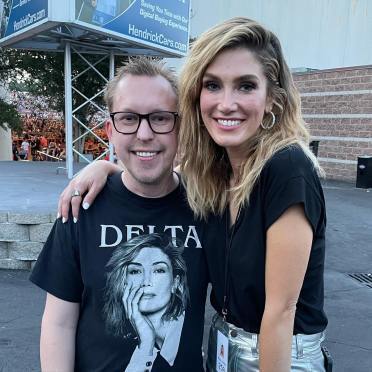 Me and Delta Goodrem, 2022
In early January of 2008, I was going through a YouTube rabbit hole, late one night, when I stumbled upon a video that changed my life forever. It was a Law and Order: Criminal Intent tribute video and the song playing in the background was “Innocent Eyes” by Australian musician, Delta Goodrem. There are many reasons why the video stuck out to me, but the main reason was the song itself. It had such a haunting vibe to it and instantly mesmerized me. I went to bed with that sound playing in my head over and over all night.
The very next day, I downloaded every song by Delta I could (back then, you downloaded songs illegally via Limewire [I’ve since made up for it in patronage]). The rest is history. Every song or album she has released has been met with stunning reviews by yours truly. Her most recent album, “Bridge Over Troubled Dreams”, is a masterpiece and I highly recommend it.
With all that said, I was stunned when the Backstreet Boys announced that she would be their opening act during the American leg of their DNA World Tour. Over the past month, she has been touring the United States, performing her top hits and collecting a few new fans along the way. This is something I have been hoping for her for years and I’m so glad that people are now being introduced to her for the first time (Delta’s self-titled album was released in July of 2008 and reached #116 on the US Billboard charts; the album sold at least 21,000 copies).
The closest venue for me in this tour was Charlotte, North Carolina. I swore that I would attend, but when I found out that tickets were going for as high as $800 a ticket, I sadly put that dream of mine away. Between the distance, heat and money, I couldn’t justify going by myself, let alone having someone go with me. This was despite my mother’s pleas to go, saying “You have waited so long to see her perform. You’ll regret if you don’t go.”
On Monday, June 20, Delta posted an Instagram Reel, showing video clips of her visiting with all the fans, both new and old. It renewed my hope to personally meeting her and going to Charlotte was my best bet. I went online to see if there was any cheaper options available to me that allowed me to sit under the pavilion cover and not roasting like a rotisserie chicken. I found two tickets at $120 each. I immediately called my boyfriend, Chris.
“How much do you love me?” I asked.
Chris gave me a skeptical look. “That’s a very loaded question,” he responded.
That’s when I gave him my pitch and pleaded with him to go with me. He, like me, didn’t think it was a good idea for the reasons I’ve already mentioned. But he also agreed that this may be my only chance to see her perform and agreed to go with me. I was beyond thrilled.
Friday was so surreal for me. We got to Charlotte in the late afternoon and we realized that no matter what time of night it was, it was going to be hot. We arrived at the venue at 7 and patiently waited for Delta to start at 7:30. I knew that I would have between 8 and 8:45 to potentially see her in person before the Backstreet Boys started.
Delta did not disappoint. I’ve seen many recordings of her performing live, but this was an entirely different experience. I was the only one in the crowd (the venue was sold out with 17,000 people, but maybe 3,000-4,000 actually sat through Delta’s performance) standing up, clapping, dancing and singing. I spotted one other fan down in the pit, singing to the music as well. For thirty minutes, she same some of her top songs, including “The Power”, “Lost Without You”, “In This Life”, “Solid Gold”, “Billionaire” and “Dear Life”. Everything was magical.
Towards the end of the last song, I heard her say, “I’ll be outside for a bit if you want to come hang out with me”. I pushed Chris out of our spot and told him we had to go find her. We searched all over for a good thirty minutes, taking advice from some other USA fans who managed to see her at their respective venues. Nothing. It then dawned on me that she may not actually come out to meet anyone. It was hot as a mother and I wouldn’t blame her for needing to cool off after such a rousing performance. I noticed my hands shaking, sad that my chance to meet her in person did not come to fruition.
Chris, sad for me, tried to move us along to get to our seats before the main show started. We were both hot and exhausted and the show was due to start at any minute. I sat in my chair, sulking. Would I ever get a chance that I missed again?
The whole time, I was tweeting my experience, trying to get any lead as to where she was in the venue, if she was still meeting someone. Then I got a tweet from a fellow fan, saying “I think she is near a bud light area.” I turned to Chris and said that I had to try one more time. I got up and started booking it. I would do one more sweep before giving up and sitting down. I hoped that the show would hold off for a few more minutes.
Just when I had given up, I saw her boyfriend, Matthew Copley. Oh my gosh, she has to be nearby! Sure enough, a few feet away I saw her, her shiny, silver pants unmistakable. I did something between a lunge and a tip-toe, careful not to share them away like a deer in the woods. This was my moment! At the same time, I wish that Chris was with me, unaware of my discovery.
I stood behind the woman talking to Delta and caught Matt’s eye contact as I waited.
“Hey, cool shirt,” he said, pointing at my black DELTA shirt, which I had worn specifically to get the attention of Delta, or someone close to her. It worked.
“Thanks,” I chuckled. “I thought you would like it.”
“Where did you get it?” He asked. He was quick to tell that the shirt was not from the tour’s merchandise. I had to be big enough of a fan to get it prior to the show.
“I got it on her website,” I responded. I smiled real big and said, “I’m one of those people.”
By that time, the woman in front of me had walked away, leaving my path to Delta cleared. I rushed up to her, freaking out in what I did not realize was a recorded moment. You can view the video below:
Unfortunately, my time with her began to quickly end. A person had come up behind me and Matt was slowly ushering her to Delta. I quickly told her that I loved her and wished her the best. She thanked me as I walked away. What a wonderful woman. By that time, the lights had dimmed and the Backstreet Boys were making their way to the stage. The crowd was going wild. What perfect timing on my part. The closer I got to my seat, I began to develop a smug look on my face. I pulled my new, treasured photo up on my phone, handed it to Chris and said, “There you go.” It took him a brief moment to realize what I had shown him and we both broke out in jubilation. I think he was just as happy for me as I was for myself.
I’ve been on cloud nine ever since. I quickly got copies of my photo developed and put in frames. They’re now all over the place. I have also received hundreds of “LIKES” and comments on social media, fans, friends and family alike congratulating me on my experience. Delta herself has also commented on my Instagram story, stating she loved our photo together (I’ve screenshotted that as well to forever treasure). I am so fortunate for my encounter with her and will remember it forever and ever.
 Delta’s Instagram Story
 Forever a memory on my wall
 Click Here to Listen to Delta’s Entire Music Catalog
Click Here to listen to Delta’s Tour Playlist
May 26, 2022
Podcast Interview: LGBT+ Students in Higher Education
At the conclusion of my Diversity and Equity course for the EdS program at Appalachian State University, we were tasked with each creating a project, in the form of our choosing, to show what we learned and retained during the semester. The entire time, I thought a podcast recording would be best for me, as I thought it would help me show my creative side, without having to write pages and pages of content that nobody would read. The question was what I would write about.
Earlier on in the semester, for our Current Topic Presentation, I presented on the article, “Gay men earn degrees at highest rate in the U.S.” from Inside HigherEd. The topic was so interesting to me and I wondered it I could build on that article and ask the broader question, “What is the overall experience for LGBT+ students in Higher Education?”
With the help of some very well-written, peer reviewed articles and three very intelligent panelists, I was able to produce something that exceeded even my expectations. I hope you all will listen to both the introductory video and the entire podcast and comment on whether you think LGBT+ students are successful in higher education.
Introduction VideoMusic by SilverManSound: https://www.silvermansound.com/free-music/the-right-direction
References:
Bailey, L. E., & Strunk, K. K. (2018). “A Question Everybody Danced Around”: Gay Men Making Sense of Their Identities in Christian Colleges. Educational Studies, 54(5), 483–504.
Carrasco, M. (2021, November 30). Gay men earn degrees at highest rate in the U.S. Retrieved February 19, 2022, from https://www.insidehighered.com/news/2021/11/30/gay-men-earn-degrees-highest-rate-us
Pierre, D. E., Beatty, C., & Duran, A. (2021). No Place Like Home: The Coming Out Experiences of Gay Men in Student Affairs and Higher Education Preparation Programs. Georgia Journal of College Student Affairs, 37(2). https://digitalcommons.georgiasouthern.edu/cgi/viewcontent.cgi?article=1062&context=gcpa
May 28, 2021
Bud, Not Buddy
This is the hardest chapter for me to write. Even now, I question whether I should include it in my first memoir. Maybe it should be included down the road when I could look at it all in hindsight. There are multiple struggles that I detail throughout this book, but this one is by far the hardest one to endure.
If you know me on a deep, personal level, you know that I don’t drink. There have been times when I have consumed small amounts socially, but there are a couple of reasons why I have never drunk alcohol more than that. For one, I don’t enjoy it. I have never found a beverage where I said, “I have to have that on a regular basis.” I don’t enjoy the taste of any kind of alcohol; give me a Coke or a Sprite and I’ll be happy. Second, I choose not to drink because I don’t want to be another statistic, especially when it comes to my family.
Alcoholism rages in all sides of my family. Over the years, I have learned of terrible stories, stories of members long gone who took their last breath in a flea-bag motel, with no one by their side. What were very hard working people later became a mere shell of themselves as they became consumed by the disease. For years, I thanked God for sparing my immediate family of this destructive poison.
But that is no longer the case. I’ll just go ahead and say it: My father is an alcoholic. It pains me to say it, but it also gives me a great relief to say it out loud. I spend many years trying to hide it from family and friends, to the point where I became mentally exhausted from the effort. The same goes for my mother and my sisters. If you catch my father on a sober day, even he will admit the truth and tell you that he has a problem. Knowing that other people know my “darkest secret” still makes me uncomefortable, but at least I can now sleep at night without dreaming of trying to keep it unknown to those I care about.
As I write this, my father and I are estranged. Forthe first time in my life, in 2021, I have felt it necessary to break off all communication from him. I have blocked him so I don’t potentially receive any text messages or phone calls. We’re no longer “friends” on Facebook, as I wondered if he would try to reach out that way. I had to do it for my own peace of mind. If a mechanical feature keeps me from being able to reach out to him, maybe I won’t get triggered by the things he does.
It didn’t always be like that. Before my teens, I believe he and I had a good relationship. Even to this day, he is the hardst-working person I know, with a heart that would make him give you the shirt off of his back. He, along with my mother, made sure I had ever opportunity available to me. He also pushed me to shoot for the stars, encouraging and supporting me about my writing.
With what I knew about my family at an early age, I prayed that my father wouldn’t succumb to alcoholic gene that appeared to touch so many people I knew. He was my hero, a man who could overcome anything. I believed that he was too strong to give into something so easily.
I was eight years old when I learned differently. I noted every time he would secretively go off and us children could not follow, as well the times we wanted to take a sip from his cup and he refused, no matter or pleas. It amazes me how a child can pick up on things like that.
Even though I suspected, I never saw it with my own eyes. I wanted to think differently. But one day my curiosity got the best of me and I snuck off to where he would hide, without anyone looking. There, my fears were confirmed: beer cans everywhere. I began to worry that his fate was sealed, that there was nothing I could do. A part of me wanted to just ignore whe I had learned and pretend that the truth didn’t exist. But a part of me wanted him to know that I knew. Maybe if I showed him how much I didn’t want him to drink, he would stop. I rushed off to my where, where my writing supplies were already scattered about.
I returned to the scene of the crime moments later and deposited a brief note that he would have to stumble upon. I don’t remember what all I wrote or what happened once he read it, but I remember the first two sentences I wrote as clearly now as the day I wrote them:
“Daddy, I know your secret. You are drinking beer.”
My eight-year-old self only had so much control and when really finally hit me, I became hysterical. Nothing could comfort me. Unless I was asleep, I was crying. I feared that everything was bound to fall apart, now that I knew the truth.
I remember my mom coming to my room the day after my discovery. I could tell that my emotional distress wore on her heart. Even though her words didn’t help me at the time, she gave me a valuable lesson. She said that my father enjoyed drinking beer the way that I enjoyed drinking soda. Not eveeryone who drinks alcohol becomes an alcoholic.
She was right, not everybody who drinks are alcoholics. And that’s why I beleive my conversation with her that day is so important to me, because I could have gone on with life believing otherwise. She saved me from myself and I will always be grateful for that.
Years passed and I don’t recall a period in that time where his drinking was an issue. My father continued to hide his hobby and it was just an open secret that nobody talked about. I guess, in the back of my mind, I held on to the one hope that my mother gave me as a child, that his drinking could possibly never be a problem.
All of that changed when I was a graduating freshman, on the heels of being fifteen. By then, my parents had started their own company, a profitable one but not without it’s stressful moments and hard work. It was a Friday evening in the early Spring and the plan was to travel up to Highlands to enjoy a lavish meal at resturant owned by a clent of my parents. My dad arrived from work and it was clear that he had had a rough day. As soon as he arrived, he visited his homemade “cantina” and tied one on. By the time we were ready to leave, my dad had drunk to much for my mother to feel comfortable with him driving. She got in the driver’s seat, my oldest sister in the passenger side with me and my father in the back.
We had only travelled a couple of miles before he pulled out an unopened can of beer out of his pant pocket. I’m sure I brought it to everyone else’s attention and the three of us asked him to not open it in the car, that surely he had had enough at home to tie him over until we returned from our trip. That didn’t stop him, though. He chugged away. We all really had a problem when a second can appeared. The majority of us agreed that going out to eat was not a good idea and we needed to return home.
My father, one of the most mature people I know, began acting much younger than I was at the time, whining because we couldn’t handle him having a cool refreshment after having a long day at work. We all began arguing with each other, disagreeing what an acceptable amount of alcohol consumption was appropriate before arriving at an elegant resturant, which was owned by one of their clients.
The conversation abruptly ended when my father had had enough and chucked the full can towards the front of the compact BMW convertible, hitting my mother in the back of the head and spewing alcohol all over the car. I was speechless. I couldn’t react to what had just happened, frozen in my seat. My father had degraded my mother in a way that I can only describe as sick, hurting her and soaking her body and clothes in alcohol, just because she had asked him not to drink in the car, with her children watching. I didn’t think her request was unreasonable.
At that moment, I believed that their marriage was effectively over. I couldn’t fathom how a relationship could overcome what had just transpired. My parents had always taught me to respect and treat others the way I wanted to be treated, especially females. If my father couldn’t follow this simple, yet important rule, what else was there to save in a marriage?
Once we made it home and we all go out of the drenched car, my father did what he had been unable to do within the confines of the car. He threw beer cans, both empy and full, all over the driveway. He cursed at my mother. He acted in ways that not only made me fearful of him but embarrased for him. I knew that my grandparents had taught him better than that. How could someone act like that in front of their children and towards their mother?
The evening concluded with my father crying in the back seat of the BMW and us children falling asleep next to our mother in our parent’s bedroom. I prayed that what we had experienced that night was all a dream, actually a nightmare that I would soon wake up from. I didn’t want my family to crumble around me, but I also didn’t what had happened to happen again.
I don’t remember how, but we were all able to move past that night without any real solution to the problem. I refer to that weekend as the start to our family’s long-term rollercoaster. My dad would have a knockdown, drag-out episode (the rollercoaster’s intense drop) and then we would move on with a piece of ourselves lost in the process (the rollercoaster’s incline, with another inevitble, future drop). We could expect this cycle to complete itself every sixty to ninety days.
When I turned fifteen, something happened to make my dad decide to get sober. What it was, I can’t remember. It was probably another episode of his and my mother threatened divorce. He said he was getting sober for his family, which experts say is not the right way to go about it. You have to want to get sober for yourself and the rest falls into place. We didn’t take what he said as a warning sign; we were just happy that he was trying to stop drinking. But because of his self-imposed obligation to his family, he resented us every day. We still couldn’t be around him because his attitude, his comments towards and about us were unbearable. We would all automatically go to what we referred to as “our corners”. My mom and I would hold ourselves up in our respective rooms, Miranda would stay in the secondary living room to watch TV and Mekenzie was so young, she mingled amongst us all. As for my dad, he would camp out in the center of the house (the primary living room), the TV up so loud that it agrivated the whole household and we would take turns chewing him out for keeping us up into the wee hours of the morning.
During those two years he proclaimed to be sober (I now have my doubts that it was actually two years), he would attend the local Alcoholics Anonymous meetings. it was actually a family affair. My dad would go to his meeting and across the hall, my mom, Miranda and I would attend the Al-Anon meeting. Sometimes, we would sit in the AA meetings with my dad.
A lot of the people in those meetings envied my dad. They had no one in their life, let alone someone willing to go to an AA meeting with them. We were there during every milestone my father made (thirty-day chip, six-months, one year and two years). Some of us also sat in with him during their special speaker meetings. I would listen to these tragic stories and would look to my dad, hoping that the words we heard would keep him on a more permanent path to sobriety.
As for the Al-Anon meetings my mother, sister and I would sit through, there were times where I came out feeling very hopeful and uplifted by what someone may have said and then there were times where I thought I was wasting my time. Don’t get me wrong, Al-Anon is a wonderful program and I hope to one day go back to our local meetings. But there would be times I would go in there, after my dad had said something hurtful towards me or my mother, something to the effect that he wished he was drinking again, if it wasn’t for his family telling him not to, and I just wanted to scream and throw things around. My father was the alcoholic, not me. Why did I feel compelled to sit there and try to find ways to help myself heal? Why did we continue to allow ourselves to endure this emotional distress? I wanted someone to tell me how to either cure him, help make me numb to it all or give my mother the courage to walk away.
All that said, the people I sat with in those meetings were wonderful. I remember most of them and catch up with them when we run into each other. Despite the feelings I just mentioned, at least I could look at them and still do so and know that I’m not along in this. Other people have been hurt and if we can’t rely on the abuser, we can rely on each other.
We all thought that things were going to change in these two years. Yes, we were all still miserable, but we also knew that God didn’t create paradise in a day. It would take time and at the end of the day, we believed we were on the road to happier days.
Disappointment truly makes the knife cut deeper. The night before Thanksgiving, 2008, I was the last one up in the house, pacing the floors. It was late in the evening and my father had not returned home. I don’t know where he had gone or what he was doing, but he wouldn’t answer my calls and after so much time had gone by, I started to get worried.
He finally pulled it in and a relief swept over me. He’d be in at any second and I could finally retire for the night. I waited and waited and waited some more. He never came into the house. What was he doing out there? Was he alright? Was it really him that entered the driveway? I went outside to get some answers.
It was cold outside. I walked to what was indeed my father’s truck. There was music playing very loudly. What in the world was he doing in that truck? I opened the door, ready to overload him with questions.
I didn’t have to ask anything. He sat there, drunk as a skunk, beer cans littered all around him. My suspicions were finally confirmed. In my heart, I believed that he had broken his sobriety weeks before, but had no proof. Whether that night was the first night in two years he had consumed a drink, I still don’t know. But it didn’t help my reality from crashing down.
If we got into it out in the driveway, we did a really good job of not waking anyone up because no one came out to see what in the world was going on. All I could think about was how disappointed and sad my mother would be when the truth came out. When I told him that she needed to know, he threw curse words at me, which I responed in kind. Before walking away, I told him either he told my mother the truth before we got ready for our Thanksgiving activities or I would.
My dad decided to fess up to his mistake. I’m glad he did, but it didn’t make the truth any easier for the rest of us. As expected, my mother was distroyed and all of our Thanksgiving plans occurred with bad tastes in all of our mouths.
The cycle has continued ever since. Every time, the rollercoaster goes a little bit higher and comes down a little bit further. All five of us give up a part of ourselves with each ride. My mother, God bless her, has to endure hurtful, untrue statements about her every time he falls off the wagon. And with the strength she believes she doesn’t have, stays with him, hopeful that things will return to the “normal” we are accustomed to at that time. I tell her over and over that God has a golden thrown waiting for her in Heaven, for being the saint that she is.
It wasn’t until I was twenty-nine, in 2020, that I decided to leave my family home. It was a rash decision, fuled by emotions and whatever alcohol that was in my dad’s system at the time. I talk about that episode more in depth in a later chapter. I could have left a lot sooner. I had the financial stability to go out on my own, but I didn’t. Why? I guess because I needed to be the man of the house that my father hadn’t been in years. Someone had to be the parent and it wasn’t going to be him. My sisters, my mother and I bicker at each other all the time, but it only through the relationship we have with each other that has kept this family together. I stayed because of them.
Sometimes I wonder how low a person can go with this disease. And yes, it is a disease. I don’t blame him for this sickness that he has, I blame him for what he decides to do about it. Every time he has an episode, I fell like he has finally reached rock bottom. But then the next episode happens and I think that one is it.
My father has had some close calls up to this point. By the grace of God, he hasn’t killed anyone with his drunk driving (we have been told that the police are aware of this, saving us the difficult decision of reporting him). Because he didn’t have a record and because my mother solicited letters of recommendation from members of the community, a judge dropped drunken disorderly charges filed against him when he went on a bender, spent a couple of days in Myrtle Beach, South Carolina and was arrested in Spartanburg on his way back. He hasn’t had any accidents while working drunk on the job site and the business has managed to stay afloat, despite the times he has had to stay at home because he had drunk himself to sleep the night before. How much more does a person have to endure to realize what they’re doing to themselves?
Once again, the family and I believed that the most recent attempt to get sober was the one that would stick. In the Spring of 2021, he told me he needed to do more to get sober. His health has been steadily declining, his fellow AA members would try to set him straight when he would show up to meetings drunk and he would continue to (luckily) avoid killing himself or others via his drunk driving. He told me that he was going to go to more AA meetings and would make an appointment to see a therapist.
After twenty years of this, I am now sceptical of anything he says, does or promises. I agreed with him that he did not look well, but didn’t know if this was enough to really show him that what he was doing was slowly killing him. I couldn’t help but feel sorry for him with his concerning words.
“I need help. I’m not well. I need to do more to get better.”
For the first time in a long time, he told me he loved me that day. And for the first time in a long time, I told him I loved him, too. What he said gave me hope because I had always told him that talking to someone about this, someone who is not family and not in daily involvement in his life, could help open his eyes in ways that none of us ever could. “Get to the root of the problem and the rest will fall into place.”
To my surprise, he followed through with what he promised to do. He went to his meetings at least once a day, sometimes twice, if his schedule allowed it. Then he signed up for therapy. I couldn’t help but smile when my dad said the therapist was firm with him, saying if he didn’t plan on giving it his one hundred percent to walk away before they started, because she didn’t have time to deal with quitters. Unless he couldn’t avoid it, he was at every session.
It hurts my heart when I say that everything fell apart once again when he stopped going to his meetings, stopped attending his therapy. It didn’t take long for things to fall apart after that. He drunkily drove to New York State to purchase a car he can’t remotely afford. Upon his return to North Carolina, he saught refuge with his brother and sister-in-law, religious fanatics who waste no time in turning him against his wife and children when the opportunity presents itself. By the time he had returned to Franklin, he was accusing my mother of chronic mental abuse and accusing us both of manipulating him until it drove him to drink.
When he is sober, his family is his everything. He is head over heels for my mother and loves spending time with his family. But when he is not, we are the furthest thing from his mind. False resentments push him to drink harder and faster, which causes the accusations to be more crazy and hurtful.
What gets us all is the accusation that my mother has brainwashed us kids into believing that he is an alcoholic. Remember, it was my mother who tried to normalize his drinking. To accuse her of that is to say that his children are not capable of forming conclusions on their own. We are educators, medical professionals, writers and artists with high, indisputable marks on our skills and intelligence. We have eyes in our heads. We don’t need our mother to tell us when is going on. We see it for ourselves. He and he only has drug himself into the ground and only he is the one who continues to make our relationship with him more fragile.
When my father stated his intentions to leave my mother, it gave me no pleasure in voluntering to help move his things out of the home they had worked so hard to build and pay off together. But at the sime time, it gave me a relief that I had never felt before. It was time. We all had endured to much. And if he made the first move to sever our family, we needed to let him. It would hurt, but we all deserved to live a happier life, even if he chose not to be.
Moving my father out of my family home went just like I thought it would. My mother wound up hiding in her closet, fearful of what he would say or do. He made loud, hurtful comments towards me and her. And we would have my uncle on speakerphone, denying the same allegations that he put in my father’s head to begin with. He would lash out at everybody, confused and inconsistent. Anger was his only motivation.
As terrible as that day was, the hurt that my father had once again brought into our lives, I truly believe that God was working on all of us that day. Without any provocation, my mother’s closest friend arrived at the house, just as things was getting more intense and heated. Had she not arrived, I fear it would have gotten physical on my father’s end. Her being there, and him knowing that one more person knew the truth, putting him even more in the minority, he left. As he pulled out ofthe driveway, he looked at me in a way he had never done before, and we had had many altercations over the years.
“The truth will come to light,” he said, speeding off to what I would later find out to be the haven of my uncle’s home.
“I’m sure it will,” I responded.
What he said was another false dig towards my mother. But the statement, in a different context, is actually spot on. To those who don’t know, they’ll one day learn the truth of my father’s illness. It may come from this writing, or it may come from Mobile Patrol, but the truth will come out. I can only hope that he won’t be too far gone to make amends once that happens.
That was the last time I have spoken to my father. If he has reached out to me, I wouldn’t know because me blocking him every way I know possible. I didn’t come to that conclusion lightly. If there was a sliver of a chance that I could help him right now or maintain a relationship with him, I wouldn’t have done it. But he pushed me to his point. Nobody else can be blamed for the strain that has forever altered our bond.
As I say how much I have endured over the past couple of decades, I must disclose that I’m not an innocent party here. In the heat of certain episodes, I have said things to and about my father that I didn’t mean and regret saying to this day. When he gave up his sobriety in November of 2008, I told him that as long as he was drinking, he was dead to me. In June of 2021, I called him a drunken piece of trash. Those words haunt me as I write this, and I pray to God that I am forgiven for what I have said about a parent.
Whenever I discuss my life with my father, I try my best to pair a negative fact or comment with a positive one. I started this chapter off by saying how good of a person my father is and I would like to stress it more now. When my father is sober, he is the nicest, kindest, hardest working person I can imagine. And in the years that I have been alive, he has tried to impress his good qualities on me. I’d like to say that he has done a good job in that department. And some days, when I look at myself in the mirror, I can catch myself looking more and more like him. That’s not a bad thing, either. I want to carry out his good qualities in a person, becaue they’re so hard to come by in this world right now.
I love my father with all my heart, but right now, I can’t be around him. I pray every day that he sees the light and returns to his family, even if those relationships are carried out in new, different ways. I’ve only wanted him to be happy and I hope that when his time comes, he he can proudly tell his maker that I was the best son I could be for him. “God, grant me the serenity, to accept the things I cannot change, the courage to change the things I can and the wisdom to know the difference.”
This chapter is copyrighted by Tyler Cook (2021) and will be published in a future project.
August 27, 2020
Bridge Over Troubled Dreams
When Australian sensation, Delta Goodrem, returns to the spotlight to release her new era of music, she doesn’t hold back. This new era started in the midst of an unforgettable time in history: COVID-19. Like many other musicians, Delta began a weekly “Bunkerdown Session”, performing all of her past songs and favorite requests. Several weeks later, she announced the journey to her new album’s release by putting out her first single, Keep Climbing. This song blew me away, as I think it is one of her most honest and powerful songs to date. As deep as its lyrics are, it is also an inspirational ballad to not give up.
[image error]
Then, before the new single was able to sink in, Delta release another single, Paralyzed. This song, with a 60’s and 70’s vibe, quickly became a favorite of mine. At first, I thought the lyrics went back in time to discuss her battle with cancer…but it turned out to be about a recent health scare that Delta endured in private.
In 2018, following the surgical removal of a salivary gland, Delta discovered that her tongue was paralyzed, resulting in her loss of speech. She entered speech rehabilitation for a year to regain use of her tongue and sound. This prevented her from releasing any new music after the release of her 5th studio album, Wings of the Wild, a compilation album, I Honestly Love You, as well as singles such as Think About You.
“As a songwriter, I write songs from my own experiences. I tell stories about the path I have been on, wondering if anyone else has been on a similar journey. The first step in writing this new record was a personal transformation that I didn’t know I needed in my life! Even though, as I am sharing today, it was a challenging one – I learned so much and I’m so grateful to be here healthy, happy and singing away 
August 12, 2020
Full Circle
When I started my graduate program at Appalachian State University, I told myself, “You’re never going to finish this thing…two years is gonna take forever.” Depending on the day you asked me, I may have confirmed this was the case. But in the end, two years have come and gone in a heartbeat. Last week, I officially earned my graduate degree, a Master’s in Higher Education: Community College and University Leadership. My excitement about this is inexpressible.
The past two years has been incredible. I have met some wonderful classmates and instructors, I have learned important lessons about education in the college setting, and I have developed an even stronger work ethic than I could have even imagined. The things I have learned through this program will carry me on to new and exciting adventures.
That said, I spent a lot of the past two years yearning for the writing and publishing experience. I swore that I would not entertain any projects during that time of my life, and for the most part, I kept true to my promise. During the COVID-19 pandemic, however, and being in isolation for weeks at a time, I gained a new surge of creativity and passion for my art. While still trying to restrain myself, I managed to produce multiple story outlines that I will be able to work on for the foreseeable future. I am so excited about the direction I’m heading in, and I can’t wait to start on these stories that have spoken so profoundly to me.
As many of you know, I don’t do things easy. I would even go as far as to say that I don’t take a breather. This was definitely true at the conclusion of my graduate program. On August 3, I turned in my final project, and then August 4, I started on my first publishing project. You would have thought that I wanted to spend a little bit of time savoring the accomplishment I had made and not feeling obligated to work on anything. But that’s on me. After the passing of my great-aunt, Eva McCall, I promised myself and her memory, that I would return to my roots and publish the incomplete manuscript, Homebred, a southern mystery/romance. So, the first chance I could, I picked it up and started going through it, taking the first steps into making her vision a physical reality. What a perfect return to the publishing/writing world; I’ve come full circle.
While this new journey may be my most challenging yet; finishing a story that someone else started and ensuring that it fits with what the author originally intended for their characters will be no easy job. But just like I did eight years ago, taking on the daunting task of publishing my first book with Eva, Murder on Haint Branch, I’m ready to take on the task and bring one of her final works into the hands of her beloved readers.
On top of completing Eva’s legacy, I have many ideas that I am so excited to start working on. These stories, if they come to fruition, will hopefully extend my writing skills and creativity to new horizons. No idea is alike, and I believe will appeal to readers of all groups. All I need now is the time to sit down and put together the new pieces of my own legacy.
Thanks for reading this post. Writing it gets me excited for the things that are to come, and I can’t wait to share what comes out of it.