Michael H.H. Warren's Blog
December 1, 2018
Man of the House
The butcher waited until the shop was empty before serving me that day. He looked over my head as I approached the counter, greeting the person behind me, pretending like I wasn’t there. The other customers carried on as usual, saying nothing about the injustice and happily went along with the act, cutting in front of me. I felt like I was ready to run out the door and cry — but I was fourteen, and men were meant to be men. No one would have sympathy for me and when word got back to mother about the incident, she would have scolded me once for being so weak, and twice for not bringing home the offering. I could have left and gone to the butcher in Nikitina, but that would mean arriving back home long after nightfall, and mother insisted that we have the offering prepared before sunset.
Perhaps the butcher was waiting until we were alone, so that he could finally ask the question. I had seen it pirouetting around in his eyes for the past month, ever since I first approached the counter and requested my unusual order. On my weekly visits since then, the look had shifted from a graceful waltz of curiosity fluttering across his eyelids to a violent war dance of disgust that clenched his teeth and thinned his eyes. Still, when he asked, I was not ready with an answer.
“It is for great-grandfather,” I told him, not knowing what else to say, unable to lie. I could only hope no more questions would follow. He knew my mother — everyone in the village did. She had arrived in Pokrovskoye when she was just a child and had come to be known as the orphan girl just a few years later. Her past was shrouded in mystery, as well as her bloodline. Mentioning my great-grandfather must have seemed like a childish lie from a misbehaving teenager. I could see the rage flicker across the butcher’s face before he turned away and disappeared into the back room. I stood alone in the shop with only hanging pig carcasses to keep me company, silent and confused, not sure whether to opt for the lesser of the two evils and leave for Nikitina immediately so that I arrived before the butcher there closed for the evening.
But eventually, he returned, carrying a scowl on his face and a blue plastic bag in his clenched fist. He stuck out his hand to take my money. Once he had inspected it, he dropped the bag on the counter and turned his back to me once more. “This is the last time,” he spoke before disappearing into the back room, “Take your business somewhere else.”
I walked home with the plastic bag slapping against my leg, my head sunk down to face the gravel road, my stomach tort and nauseous. It was not the first time I had been made to feel like an outsider as a result of fulfilling my mother’s wishes, and it would not be the last. This was my life in Pokrovskoye; I was the urod — the freak.
The sun was close to setting when I approached the street where I lived, about the time when teenagers gathered to squat on street corners, drink vodka, cause mischief and get into fights. I had arrived at the butcher early to avoid them, but having to wait for the shop to empty before being served had put me directly in their path. They were like dogs that could smell when one of the pack was weak or sickly. They could not bear the existence of such things. A man must be a man, they would say, as though the way I breathed or walked was an affront to the idea. It was only Aleski and Grigory out so early in the evening when I passed by the corner, though even a pack so small could easily sniff me out. “What you got there, urod?” Grigory called from the other side of the road whilst Aleski slammed down a shot of vodka.
I kept my head down and quickened my pace, “I must get home, Grigory. My mother is waiting.”
Aleski leaped to his feet and ran across the street to block my way, “Grigory asked you a question, urod. What are you carrying down our street?”
“It’s nothing. Please, Aleski, I must get home before sunset,” I begged of him without looking him in the eye. I had learnt that eye contact meant you were ready to fight, and fight I could not.
“Give that here,” Grigory snarled, snatching the blue plastic bag from my hand, “Bringing dinner home for mama?” But his confidence was quick to turn to terror as he held the bag open to look inside. “Chto za fignya!” he cried as he dropped the bag on the floor.
“What is it?” Aleski asked, leaning over it.
I felt my breaths become short. I couldn’t let them take another look. Aleski practiced a little more caution with the bag, peering over it like a hyena sniffing out a rotting carcass, curious but not wanting to touch whatever was inside — giving me my chance. I snatched it off the floor and ran down the street at full speed. I didn’t bother to look back to see if they were chasing me, but they had no need to. They knew where I lived and it wouldn’t take long for the story of the urod carrying around such horrifying things to spread across the village — another bullet for them to shoot me with. They would find me alone soon enough and teach me a lesson.
“You’re late!” my mother berated me as I ran inside and shut the door behind me, the plastic bag slapping against the door frame with a splosh. She had been waiting in the cramped main room of the log cabin that served as the kitchen, living room and my sleeping quarters. She sat on a tattered and sun-bleached mustard yellow recliner that had been in the cabin longer than we had. She had positioned it so that she could watch the front door with one eye and the clock mounted on the wall above the wooden shelving with the other. She was still young — young enough for the neighborhood boys to bother me with stupid questions of who kept her company. She wore a green headscarf tied up like an Alice band to keep her thick brown hair back. The skin on her forehead had only just started to wrinkle, though crows feet sunk into black bags around her eyes, making her seem a few years older than she was, but she was beautiful all the same.
“I’m sorry,” I replied, still catching my breath, “The butcher — ”
“No time for excuses! The sun is setting!” she snapped, rising from her seat, hurrying over to the makeshift kitchen in the corner of the cabin and opening a cabinet to retrieve a shining gold plate from within.
I gingerly placed the plastic bag on the floor in the center of the room and walked over to the end table shoved into the corner beside my mattress, wanting to explain what had happened at the butcher to my mother, but wary not to show disrespect toward the ritual. Carefully, I picked up the teapot, cups and saucers from the end table and found room for them on the wooden shelves that lined the cabin, trying not to upset the books, ceramic ornaments, dusty glassware and crockery that filled them. Once the table was cleared, I picked it up and placed it in the center of the room beside the plastic bag where my mother waited like a server with the gold plate laid across her open hands. I gave her a pensive look before I ran over to the windows and drew the curtains closed, letting only a dim light diffuse through them. Squinting in the darkness, I fetched a thick white candle off the shelf along with a box of matches. I placed it on the table and set fire to the wick whilst my mother watched on impatiently. She lay the plate down beside the candle before lifting the blue plastic bag off the floor with one hand and reaching inside it with the other, her eyes wide, her lips apart as she breathed heavy breathes.
“Grandfather, Rasputin,” she began ceremoniously, “We bring you this offering to show that you are always welcome in our home.”
I felt a shiver run down my spine. I hated the ritual. I knew that what we were doing was wrong in some way, though I couldn’t have said exactly why. Thinking back, I wish I had had the bravery to speak up and stop the madness right then and there. Who knows where I’d be now. Not here. Anywhere but here — doing this. But I said nothing. Instead, I tried to look away as she reached into the bag and held up the first wet and stinking offering.
“Tongue,” she spoke reverently as the orange candlelight shimmered against the plasma dripping off the beef tongue, trailing along her fingers and down her arm, “So that you may speak to us.”
I swallowed hard as she raised the slippery slab of meat above her before placing it onto the gold plate. With the windows closed, the acrid scent of iron quickly crept up to my nostrils.
“The eyes,” she whispered into the air, holding up a jelly covered pig’s eye in each hand so that they could soullessly gaze up at the ceiling, “So that you may watch over us.”
They rolled in my direction as she laid them down in the gold plate. I can still feel those dilated black pupils staring into my soul — I felt their judgment fall upon me. It made my blood run cold and I found myself staring down at the wooden floor to escape their empty glare.
“And the heart!” she announced triumphantly, an unfamiliar darkness in her tone, squeezing the massive cow’s heart in her hands so that it pulsed artificially before laying it on the plate, “So that you may live again …”
By now her hands and arms were covered in blood and plasma, so she held them over the plate whilst the excess dripped off; silent, savoring the depravity of her deed.
“The butcher won’t serve me anymore,” I blurted out, desperate for my mother to return to me from her terrifying trance.
Her gaze ran from the bloody offering, down along the floorboards and up along my body until her eyes locked with mine, “Why?”
The hairs on my arms stood on end as the candlelight glittered in her eyes, “He asked me what I wanted the meat and organs for.”
Her brow tightened her glare into a squint, “And what did you say?”
I didn’t want to say the words, but I was a terrible liar back then, the very thought of speaking an untruth made my stomach churn, and so, I confessed, “I told him it was for great-grandfather.”
She was across the room in the blink of an eye, swinging her arm back midstep and slapping me through the face with her wet, red hand, in one swift motion. She locked eyes with me with her arm still in the air, taking in the red hand mark on my face with disgust. I was stunned into silence as the cool blood sizzled against my hot cheek and tears welled up in my eyes. Her lips curled inwards as she deciphered just how much she had hurt me. The slap had stung, but I had taken worse from the neighborhood boys without crying. It was the betrayal that truly hurt. She was all I had. I did everything I could for her, regardless of the consequences. I emasculated myself hanging up her laundry in the yard in front of the boys playing football and drinking vodka. I had been caught with a headscarf on, sweeping dust out the front door and had been beaten mercilessly for acting like a woman. I had completely alienated myself from everyone around me in order to be a good son and all I wanted in exchange was her love.
Although she was always sparing with it, always sure never to give me enough to make me feel truly loved, she had never gone so far as to raise her hand to me, let alone a hand covered in swine and bovine blood. I could see the regret in her eyes, though she would never admit it. I brought my fingers up to my bloodstained cheek and inspected the crimson on their tips, “I am sorry, Mama.”
“Go wash up. I will make dinner tonight,” she ordered, but then allowed her face to soften, “And tomorrow morning, we will go and speak to the butcher together. No one upsets my son.”
It wasn’t long before we were lapping up bowls of schi — a traditional cabbage soup, with a side of stale bread, whilst the evening news flickered through the static on the rear projection television. The smell of meat and blood off the offering plate was becoming unbearable, tarnishing the meal, but mother insisted that filling the house with the scent was essential to the ritual.
After dinner, I observed my mother from my mattress as she watched a black and white drama, and wondered where her clandestine knowledge of summoning the dead had come from. Before great-grandfather’s first visit to the log cabin, she had been mildly superstitious at best, yet somehow, after that incident, she had awoken an untapped affinity for necromancy, creating rituals that were ever more complex and ever more despicable.
After that night, she had shifted from the awkward and introverted woman that the village knew her as, to a secretive and judgmental person. She had been chosen by great-grandfather Rasputin, and for the first time, she wasn’t the rejected orphan girl that needed sympathy and charity to get by — she was special, gifted, superior.
I suppose I can see now that she had always felt that way, but the circumstances of her life had proven otherwise. She had been waiting for something since the day she arrived in Pokrovskoye, some piece of evidence to prove that she deserved more than the existence of a simple village maid; that she was better than the simpletons around her — and now she waited for a twisted miracle.
“Do you think he will come tonight?” I had asked, trying to sound optimistic but in truth hoping that such a thing would never happen again.
She turned to me with the white light of the television illuminating half her face, “I am certain.”
Hoping to find a way to prove her wrong, I questioned further, “But I read that great-grandfather was a vegetarian, why do we offer him meat?”
“Were you not listening? The meat is symbolic,” she snapped, “Besides, he didn’t react when we left the fruit out. You know that.”
“Then how do we know it’s great-grandfather?” I asked, finding the break in logic quite obvious. She stared at me silently as the light from the television distorted the shadows across her face, her gaze as dead and empty as the pig eyes’ cockeyed glare from the gold plate between us.
“My mother, your grandmother, prepared me for Rasputin’s resurrection,” she spoke with the authority of a story that had been passed on through the ages, “That is why she brought me here, to his hometown … just before she died. It is no coincidence that we have been gifted with his presence. This was always the plan. We are chosen.”
I fell asleep before her, my face pressed into my pillow to block out the stench of raw, slowly rotting meat and the rowdiness of late night game shows, though I would not rest long that night. In fact, it hadn’t felt like I had slept at all. It seemed as though I had merely rolled over to my side and back around again to find the television off, my mother gone, and an immense, sinister presence sharing the room with me. It was great-grandfather, I knew it for certain. A month before, the same presence had visited us, woken both my mother and I from our sleep, swept our skin with it’s frozen touch, and made it near impossible to move as it’s intensity held our throats.
But this time, it was so much more. I shivered as it’s icy embrace smashed into me. It felt so much bigger than the tiny log cabin. It pressed me down into my mattress as it tried to squeeze itself into the room, as though most of it were still outside and it’s limbs were sticking out the doors and windows. It filled every nook and cranny of the open room, so much so that I was expecting to hear the crockery, cutlery and ornaments on the wooden shelves around me cracking and smashing up against the walls as the pressure became too much for them to bare.
I can remember trying to call out, ‘he’s here!’ but my lungs refused to inflate, making it difficult to breath, let alone talk. I tried to raise my head, to move my arms, anything, but the presence had filled the space between my limbs and neck as though the air had frozen into one massive glacier, pressurized in the log cabin’s four walls. All I could do was smack my tongue against my lips, the taste of blood and raw stinking meat so overwhelming that I shut my eyes in a futile attempt to escape it. It was then that I realized that I was bleeding profusely from my mouth. Where the wound was I could not tell, but my chin and cheeks were soaked and the taste of iron coated my tongue. Knowing that I was injured, panic set in.
With a sudden burst of adrenaline, I launched myself from the mattress, desperate to get to my mother, but powerless to call out to her. Finding my footing, it was as though the earth’s gravity had increased tenfold, weighing down on my thighs, back and neck — and it was so bitterly cold. I fought to raise my left leg, but it merely shuddered and dropped back down to the ground. I felt a sudden urge to look up, to look back at this thing that was filling the space around me. I could feel it’s gaze upon me, could feel a deep throaty laugh vibrating through my bones as it reveled in my torment. I peered up to the gold plate, expecting to see those horrifying jelly covered pig’s eyes staring me down, embodying the heinous presence — but to my surprise, the plate was empty.
Suddenly, it was all too real. Whatever the entity in the room was, I knew now that it was no mere presence. It was physical, something with a mouth and teeth and a taste for raw meat. That was when the weight became too much for me to bare. I succumbed to it’s immensity and the terror it brought. My soul was weak, and so, I crashed to the ground, shaking, sure that this was my final night on earth. My eyelids sealed shut between a stream of tears.
When I opened them again, the sun was screaming the new day through the slit in the curtains. My mother was standing in the middle of the room, leaning over the gold plate still resting on the end table. “Did you do this?” she asked me.
But my mind was still reeling from the insane slideshow of horrors I had just experienced. I wasn’t sure whether I was even awake, or if this was just the next scene in the pounding onslaught of madness. With my frayed senses still clutching at reality, I was unable to formulate a response to her, setting off her temper.
“What have you done?” she growled.
I tried to lift myself, felt my joints ache from sleeping on the stiff floor all night, “It was him, Mama. He was here.”
“Do not lie to me,” she hissed, “What did you do to the offering?”
“It was him!” I pleaded, my emotions now ready to unravel “It was great-grandfather Rasputin! He came last night! He cut my mou — ” I remember reaching up to my face to feel the blood that had been there what felt like just moments before, only to discover that my smooth, hairless chin was completely clean. I put my finger on my tongue, expecting to see a sanguine blot on it’s tips, but found my saliva clear. Dazed and confused, I pushed past my mother, ran to the bathroom and looked in the mirror. I inspected my mouth for the gash I had been sure was there, but no wound could be seen.
My mother stood in the bathroom doorway, eyeing me curiously with arms folded, “What happened? Tell me everything you remember.”
And so I did. To me, it felt like the entity had been with me just moments before and the terror of the memory had embedded itself deep in my mind. By the time my account was told, her face had melted from a furious scowl into a beaming smile of delight.
“Get dressed right away!” she ordered of me, “We’ll catch the butcher as he’s opening the shop and get tonight’s offering at once! And this time, we’ll stay awake and wait for Rasputin together!”
My body shuddered with fear. Things had gone too far now. Things were becoming too real. “No, Mama! Please!” I cried, “Please! Never again! He’ll kill me! I know he will!”
I thought for sure she would scold me for my outburst, but instead, she placed a gentle hand on my shoulder and spoke softly to me, “Solnyshko, my little sun, trust me when I tell you that your great-grandfather was an incredible man who did amazing things in his time. He was born a simple peasant like you and I, but by calling on the spirits, he was able to lift himself out of this bottomless pit of a village. He became one of the most powerful men in all of Russia. Consult to the king and queen, healer of the sick, a genius in all arts and sciences. In order to gain that power, he wandered the wilderness for months on end, degenerating himself until his body was frail and his soul was open to all that surrounded him. Do you think he was fearless when the spirits taunted him? Surely not. Surely, there were times that he was fearful. Sometimes, fear is the right feeling to have. It is what you do in the face of that fear that decides your fate. Now, it is our turn to decide what we do in the face of our fear. Will we rot away in this village forever? Or will we ascend to greatness, like your great-grandfather did?”
I shut my eyes, trying to purge the conclave of emotions within me, trying to keep them from her, trying not to disappoint her. If she had been there, if she had felt how foul an essence had filled that cabin, there is no way she would have continued her pursuit. But there was also no way I could boil down the experience into the words to convince her — there was no chance she would listen. And so I nodded, like the foolish child I was. The nod that damned my soul forever.
The streets were mostly empty when we hurriedly paced our way to the butcher that morning, save a few shopkeepers preparing for their days work. My heart was still racing, but now the thought of facing the butcher again after his cruel reception spilled further anxiety into me. The events of the night before seemed more like a dream now — unfathomable, impossible. This was real. Fear consumed me as I imagined the butcher telling the whole village of the womanly urod who needed his mother to fight his battles for him, how he would spit in our faces when we arrived and condemn us for our strange practices. I had so much more than that to fear.
The butcher shop was off the main street, just out of view from early risers walking to work. The shop had been converted from an old cabin, so you had to walk down a short path to get to the partly concealed entrance, and so, we were the first to lay witness to the horrors that waited there. Both mother and I stopped in our tracks as we turned down the path and saw the carcass nailed to the front door. At first glance, I could convince myself that it belonged to an animal, that perhaps some meat had been delivered early and left to rest against the door frame. But as we edged closer, the truth became impossible to deny. It was the butcher, crucified on his own shop door. I wanted to look away, but something inside of me urged me to look on, to admire the atrocity. There was little flesh peering out from the generous gallons of blood caked all over his clothes and body. It spilled in streaking lines from his eyes, from his mouth, down his chin and along his neck until it soaked into this night gown. The blue gown dyed crimson was torn in the middle, revealing a gaping hole in his chest where his ribs poked out like spined teeth after being torn open, the empty chasm within revealing blue deflated lungs.
For some reason, I didn’t feel the urge to scream. There was a strange beauty in the way his power had been robbed from him, poetic justice to see him hung up like piece of meat in his own shop. He was far more horrifying alive — in this state, he couldn’t hurt me. My trance broke as my mother stepped forward, skewing her eyes as she leaned down to peek into the butcher’s hanging mouth.
“What happened, Mama?” I asked, trying to make sense of it all.
“See,” she pointed, “His tongue has been cut out.”
I stepped forward to stand beside her and found her words to be true — but worse yet, that is when I noticed that the butcher’s eyes had been plucked from his skull as well.
The eyes. The tongue. The heart.
She grabbed my hand and began pulling me back up the path, “We must leave.”
“Are we going to call the police?” I asked.
“No, someone else will come soon. Let them do it. It is better if no one knows we were here,” she replied insistently.
The question was burning on the tip of my tongue, though I knew the answer already, “You don’t think it was great-grandfather, do you?”
“Silence!” she snapped back at me, “Never speak of him to anyone but me ever again.” Though once we were a little further down the road, she spoke again, “It was him. He knew that swine of a butcher disrespected our family and so he wrought his vengeance upon him. It is the first step in raising us from the filth around us. Soon, his spirit will speak to me and his genius will be my gift.”
I swallowed hard as she tugged my wrist down the street, her eyes darting from shop window to shop window, checking to see if anyone noticed us leaving the butcher. “Where are we going?” I asked as she pulled me along.
“To Nikitina,” she replied, “We need to find another butcher. Rasputin will expect an offering tonight.”
We walked to the butcher in Nikitina and back in silence. My mother’s mind was a thousand miles away, her facial expression shifting from a furrowed brow of concern to a sudden bursting smile of delight, as though she were calculating every step of our future, imagining the pitfalls, reveling in the rewards.
All the while, I was ready to vomit. Just the day before this had all been a strange game she was playing. Now, there were spirits tormenting me in the night, devouring raw stinking flesh, and a dead man who’s twisted corpse pointed it’s finger at me. I so badly wanted to talk openly with my mother, to hold her and cry and explain how terrified I was that great-grandfather would come for me next, but as I looked up at her shifting expressions, I knew the women before me wasn’t my mother anymore.
That’s when my thoughts began to change. Maybe there was never an entity — maybe my mother had gone mad. In some fevered dream, she had left the cabin last night, gone to the butcher’s house and performed the heinous deed. Perhaps it was her that had thrown out the offering; after all, I hadn’t seen anything. The cut in my mouth and blood on my face had mysteriously vanished as though the entire incident with the entity was a dream. The more I thought about it, the more it became the only thing that made sense — her lust for power had finally driven her over the edge.
We returned home with the offering in hand only to find a police van outside our house. Aleski and Gregori leaned against it, their faces all twisted up with disgust as they spoke with an officer.
“Hide it,” my mother instructed me as soon as she noticed the van. Hoping they had yet to notice us coming down the street, I dashed to some bushes outside a neighbor’s house and stashed the bag of tongue, heart and eyes. When I returned, Mother was addressing the officer, feigning shock to hear the news about the butcher’s gruesome demise.
“That’s him!” Gregori cried as I appeared beside her, “That’s the urod that had the butcher’s eyes with him yesterday!”
I quivered with fear, but my mother spoke before I could, strength and authority booming from her voice, “Officer, please don’t waste your time with these children. They want nothing more than to bother my poor boy.”
The officer raised his lip as he stared my mother up and down, a perverted smile peeking out of the corner of his mouth. Then he turned to me. “Did you kill Vsevolod the butcher, boy?” he asked me with a hint of disgust trailing on his voice, leaning down to get his face right up to mine. I shook my head profusely, hoping that he couldn’t see my legs shaking.
“You look guilty. You’ve got the face of a killer, and you stink of shame,” he growled. I turned to my mother, hoping she would come to my rescue, but even she was shocked into silence by the allegation. He squinted at me as he brought his face ever closer to mine before suddenly grabbing one of my arms, “Look how strong he is! He could have easily have taken down Vsevolod! This boy is a killer!”
At that, Gregori, Aleski and the officer began laughing hysterically. The officer turned back to others, “How could you think such a little girly boy could have killed a grown man?”
Aleski and Gregori shrugged with stupid smiles on their faces. “Maybe he got him in his sleep,” Aleski figured, “He is a cowardly urod after all.”
“No, no,” the officer shook his head, “Whoever killed Vsevolod was well practiced in killing. The mutilation was performed with an expert hand and there wasn’t a trace of evidence at his home or at the shop. Vsevolod’s wife doesn’t even remember her husband getting out of bed last night. We need to keep an eye out for someone new in town, someone highly intelligent. A genius, if you will.”
“Then surely we were mistaken!” Gregori laughed, triggering chuckles from both Aleski and the officer.
“Are you three done wasting our time then?” my mother snapped.
The officer gave her one last filthy smile before turning back to Aleski and Gregori, “Leave the urod alone, and don’t let me catch you making trouble around here. I’m sure you two boys have more interesting ways to spend your Saturday.”
Aleski and Gregori threw their hands in the air and shrugged before slinking away down the street. The officer didn’t bother to say farewell to us and soon, it was only mother and I standing outside our house. “Fetch it,” my mother commanded without addressing the terror we were both suppressing, trying to act natural in case the neighbors were watching, “I will wait for you inside.”
Without a word, I ran back to the bushes to fetch the offering, but found instead a growling mongrel head deep in the plastic bag. “Get! Get!” I yelled at it, causing the dog to turn to me with blood covered chops and snarling teeth. My mind flashed with the image of the butcher crucified on the shop door, how the blood had caked into a crimson river down his face. I imagined my mother cutting off his tongue, holding it above her head and offering it to Rasputin. I stepped back as the mongrel began yapping at me, shuddering. It stared at me with rabid eyes, stepping forward to defend its find. I knew then that it was time to confront the beast.
“It’s gone,” I told my mother as I walked in through the front door.
“What do you mean, it’s gone? What’s gone?” my mother asked impatiently.
I stood in the doorway, my pulse beating in my ears, trying to prepare myself for what was about to happen, “A stray found the offering. It’s gone.”
I had expected her to run across the room and slap me as she had the night before, but nothing could have prepared me for what happened next — my mother’s legs turned to gelatine beneath her and she collapsed into a pile of limbs on the floor. I had never seen her cry before, she had always been so strong, the pillar of strength in our miniature family. Was this it? Was she finally reflecting on what she had done? Was she looking down the path she had ensued and realized that she had strolled into the wild and thick forest of madness?
It was I who ended up running across the log cabin, overcome by guilt, taking her in my arms and holding her tightly, wishing I’d done more to save the offering, “Do not worry, Mama, I will go back to Nikitina myself to get another offering. Please, do not weep.”
She replied with a terrible confession, but not the one I had expected. “There’s no more money for another offering,” she whispered through her tears, “I spent it all. We’ll have nothing until month’s end.”
I immediately let go of her and got to me feet, “Mama, no, it can’t be true! You wouldn’t leave us to starve!”
She looked up at me with swollen, tearful red eyes, “I … I thought Rasputin would provide. I thought he would save us … but without an offering, he will abandon us for sure. I’ve damned us, Solnyshko, my little sun.”
I felt my heart sink into my stomach. A deep sense of loneliness overcame me. It had always been my mother and I against the world, but now her descent into madness was clear and she could no longer be trusted. At only fourteen, I had to ask myself how I would keep the family afloat, how we would survive another day. I grabbed my mother’s arm and hoisted it over my shoulder, pushing up with my scrawny legs to get her off the ground. She wept softly as I carried her to her room, her head sunk, a stranger in my arms. After I lay her down, I closed her bedroom door and took a seat in the mustard recliner — something I wouldn’t have dreamed of doing before that day.
“Maybe, this is good,” I whispered to myself aloud as I watched the ticking clock, “Now Mama will let me handle things. I can stop all this madness. No more rituals. No more Rasputin. We need to take care of ourselves.” I began pacing around the room, rambling to myself, “We’ll have to sell the television,” I looked up at the ornaments on the shelves that lined the cabin, “And maybe some of this garbage Mama has been hoarding. Things will be tight, but we should make it through the month.” With a sudden sense of confidence and duty, I began picking anything of value off the shelves and placing them on top of the television. After a few minutes, I took stock of what I had found and figured we could last at least a week if we sold it all — not quite enough. Then it struck me, the gold plate! That would be worth something. I fetched it from the cabinet and placed it next to the ornaments. Things began to look promising.
“Perhaps there’s still some food in the icebox,” I pondered aloud. Even a cabbage would help, the odd piece of meat that had been forgotten. I smiled for the first time in months as I calculated my rescue plan. “Mama will be so proud of me,” I said to myself as I walked over to the icebox and opened it. I let out a high pitched scream, a child’s scream, a girl’s scream. I couldn’t stop. The moment I ran out of breath, I inhaled quickly and screamed again. They were staring at me, from the icebox, I couldn’t look away, I just kept screaming and screaming. It was enough to get my mother’s attention. Suddenly, she had me by the shoulders, trying to shake me out of my fit. Even then I couldn’t stop. Eventually, she looked past me to see what had sent me into hysterics.
Silently, she reached into the icebox. I was still screaming. She turned to me, her face full of wonder and awe, two blood soaked eyeballs in her hands, wet, red tendrils dangling from their ends. “Rasputin … he has provided!” she announced with amazement.
I stepped back, unable to look away from the shimmering orbs in her hands. “I know those eyes! I KNOW THOSE EYES!” I cried at the top of my voice, clambering to get away from her. I knew them too well, hazel and green, dancing with questions, raging with disgust — the eyes of Vsevolod the butcher.
But my mother did not share my horror. Instead, a sickly smile crawled across her mouth. She reached out a crimson finger and placed it over my lips. I shook with disgust, though it was enough to silence me. With my hysterics under control, she quickly turned and reached back into the icebox, returning with her hands overflowing with meat and organs — the eyes, too green to be a pig’s, the tongue, too small to be a cow’s and a heart, yellow and fatty. The heart of a man. “Get the plate!” she instructed me, her voice not her own, her eyes manic and wild.
“No, Mama! Please! We must call the police!” I begged.
She acted as though I hadn’t said anything and continued, “Go! Get it!”
By now, I feared for my own life. Her mind was too far gone to be trusted. I had no choice but to do as I was told and wait for my chance to escape. I would not be a part of this — I would not assist my mad mother in her depraved deeds — I would not be an accomplice to murder.
She prepared the ritual at once. It was still early, hours until sunset, but mother was leaving nothing to chance. She told me to sit at the end of my mattress as she did everything herself, perhaps even to save me from the insanity. Was my mother still in there somewhere? I think so. In some strange way, in her mind, she was doing what was needed to be done to provide for us. In some way to her, the horrors she indulged in was the selfless heroism of a mother.
It wasn’t long before the curtains were closed and the candle lit. In the shaking orange light, she offered up Vsevolod’s eyes, tongue and heart to Rasputin with an unholy passion in her voice. Then, she placed a blood drenched finger over her own mouth and whispered, “Shhh …” whilst she sat back down on the mustard recliner.
All day we sat there, silent. Every time I tried to get up, tried to say anything, adjusted myself to stop my behind from going numb, she would frantically wave her arms for me to stop it. Hours passed. I was bursting for the toilet, but I feared that getting up would somehow send her into a murderous frenzy.
Even now, after all these years, after everything I’ve seen and done, I can still say that it was the strangest day of my life. It seemed eternal and instant all at once, a foggy dream of an endless hell that filled no time at all — the open room of the log cabin, my mother with a line of blood across her lips, me with my unblinking eyes and short panicked breaths, and the pieces of Vsevolod the butcher, wet and stinking.
I eventually settled into my panic as the concept of normality slipped away. The stress gradually faded, leaving a mind so worn and fragile that only the escape of sleep could save it. I had been trying to keep myself awake partly so that I could find my chance to run as fast as I could to a neighbor to confess my mother’s crime, and partly because I feared I would wet myself if I stopped holding my bladder. But my eyes were too heavy, the toll on my mind too great, the need to escape from this twisted reality too desperate. I fell asleep, and for the last time in my life, I knew peace.
I can’t say how long I had been asleep when I suddenly woke to the sound of my mother, choking, gasping for air. My eyes shot open and gleaned over the gold plate, over the red, meaty offering, to see her struggling to rise out of the recliner, lurching forward, only to be thrown back again. She was terrified, trying with all her strength to scream, but only able to cough and spit. I instinctively tried to leap to my feet but felt the same immense weight that I had felt the night before, holding me down. I’ll never forget the bizarre and incomprehensible sensation of my skin being icy cold, but my innards burning, as though they had transformed into sizzling coals. Although my chest felt as though a demon sat upon me, my lungs inhaled and exhaled in strong steady breaths. My limbs felt as though they were made of lead, but my body rose from the mattress and stood up straight with a commanding posture that was not my own. Like a puppet being pulled across a stage, I strutted over to the end table in the middle of the room, watching my mother’s desperate gaze as she struggled and writhed in her seat. I felt my arm rise into the air, though I had not willed it to do so. I looked down at my own fingers and stretched them, like I was controlling them for the first time. I watched myself reach towards the gold plate to grab Vsevolod’s dripping heart.
My mother let out a blood-curdling screech as I took a vicious bite from the cold wet heart, and another, and another, like a mongrel wolfing down it’s first meal in days. Tears rolled from her eyes as I took the tongue and slurped it down like a noodle in a cold soup, and then each eye, biting through them with my molars and bursting the jelly within so that it splattered across my mouth. My mother wept and pleaded wordlessly, locked down in the mustard recliner, fighting to stop me all the time I feasted on the unholy offering. Though I knew the act I performed was an abomination of nature, it felt so … satisfying! The cold, raw, sinuous heart, the soft, slippery tongue, the oozing gooey eyeballs, they soothed the fire cooking me from the inside, warmed my icy flesh.
All the while, my mind flashed with images, memories, forgotten dreams brought to life. This was not the first time I had been controlled this way. I could now remember waking in the night, walking to Vsevolod’s house, luring him out into the street and cutting out his heart. It was me who had crucified him on his own shop door, had torn the eyes from his skull and the tongue from his mouth. The force that drove me covered every track, cleaned up every loose end, left no way to connect it’s host back to the murder — I was the genius the officer had been looking for.
Once the deed was done, I watched myself walk over to my mother, lean over her and wipe a blood-soaked thumb across her forehead. The act seemed to break her from the spell, allowing her to take a deep breath, relax her body, and stare up at me with wonder and fear. “Solnyshko?” she uttered, her body trembling.
“Rasputin,” I felt the words escape my mouth, but the voice was not mine, “And Caligula, and Vladimir the Impaler, and Ivan the terrible, and many more. I am the aid to those who seek power at any expense. I am Baphomet, the demon genius, and you have proven your loyalty to me.”
“My … my son … what have I done?” she whispered, realizing the price she had paid.
“Your son is in good hands. I will be his caretaker, his tutor. I will whisper in his ear, be the genius on his shoulder, guide him to greatness,” I watched myself reply to her.
Tears poured from her eyes as she looked up at me, understanding the contract she had entered into, “In exchange for what?”
“In exchange,” I felt my mouth curl into a smile, “For offerings.”
I was the man of the house from that day on. Although Baphomet only takes full control of my body when it is time to do his bidding, my mother, may her soul rest in peace, never questioned a word that came out my mouth again. I was terrified at first, as you could imagine, but the benefits of his presence soon became apparent.
When Aleski and Gregori vanished, everyone in the village suspected my involvement, but they could prove nothing — after all, I was just a womanly urod, how could I have possibly overpowered two boys double my size? Still, they were sure to never cross me again.
My grades in school became flawless and I was praised for my genius. It was not long before I was given a scholarship to a private school in Moscow and, with my advice, my mother secured a good job not far away. I can’t say the village was sad to see us go, but I visit every now and then, under the cloak of darkness, and remind them that a demon walks their streets.
After all was said and done, my mother had fulfilled her promise to raise us out of Pokrovskoye, at the meager price of my immortal soul and my sanity. In fact, other than having to watch myself commit the most sickening acts imaginable, my life has been without a hitch until this very point. I see now why Rasputin became a vegetarian — I can’t bare the taste of meat anymore either.
So that’s it. That’s what led me here. That’s how you caught me. Baphomet brought me here so that he could rip out your heart and feast on your flesh, and somehow, you outsmarted him. I must say, I am impressed. Or maybe he has tired of me and has left me to die so that he may move to another host. I’m damned either way, I might as well start my eternity of suffering now. But no, that isn’t the case, is it? I can see it in your eyes, nothing you’ve heard has surprised you. In fact, you seem strangely reassured. He’s brought me here for a reason. You’re the next step in the journey … you’re just like me, aren’t you?
The post Man of the House appeared first on Michael HH Warren.


Man of the House [Extract from Herbie Hunter and the Djinnius Executioner]
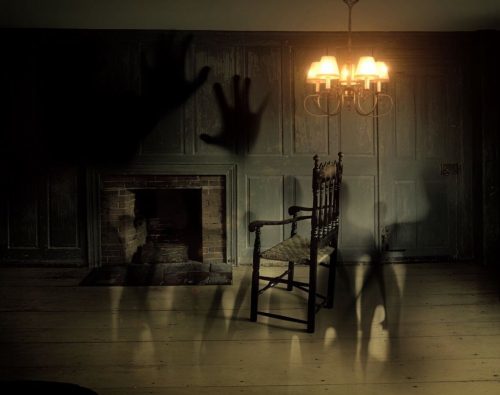
The butcher waited until the shop was empty before serving me that day. He looked over my head as I approached the counter, greeting the person behind me, pretending like I wasn’t there. The other customers carried on as usual, saying nothing about the injustice and happily went along with the act, cutting in front of me.
I felt like I was ready to run out the door and cry—but I was fourteen, and men were meant to be men. No one would have sympathy for me and when word got back to mother about the incident, she would have scolded me once for being so weak, and twice for not bringing home the offering.
I could have left and gone to the butcher in Nikitina, but that would mean arriving back home long after nightfall, and mother insisted that we have the offering prepared before sunset.
Perhaps the butcher was waiting until we were alone, so that he could finally ask the question. I had seen it pirouetting around in his eyes for the past month, ever since I first approached the counter and requested my unusual order. On my weekly visits since then, the look had shifted from a graceful waltz of curiosity fluttering across his eyelids to a violent war dance of disgust that clenched his teeth and thinned his eyes. Still, when he asked, I was not ready with an answer.
“It is for great-grandfather,” I told him, not knowing what else to say, unable to lie. I could only hope no more questions would follow.
He knew my mother—everyone in the village did. She had arrived in Pokrovskoye when she was just a child and had come to be known as the orphan girl just a few years later. Her past was shrouded in mystery, as well as her bloodline. Mentioning my great-grandfather must have seemed like a childish lie from a misbehaving teenager.
I could see the rage flicker across the butcher’s face before he turned away and disappeared into the back room. I stood alone in the shop with only hanging pig carcasses to keep me company, silent and confused, not sure whether to opt for the lesser of the two evils and leave for Nikitina immediately so that I arrived before the butcher there closed for the evening.
But eventually, he returned, carrying a scowl on his face and blue plastic bag in his clenched fist. He stuck out his hand to take my money. Once he had inspected it, he dropped the bag on the counter and turned his back to me once more.
“This is the last time,” he spoke before disappearing into the back room, “Take your business somewhere else.”
I walked home with the plastic bag slapping against my leg, my head sunk down to face the gravel road, my stomach tort and nauseous. It was not the first time I had been made to feel like an outsider as a result of fulfilling my mother’s wishes, and it would not be the last. This was my life in Pokrovskoye; I was the urod—the freak.
The sun was close to setting when I approached the street where I lived, about the time when teenagers gathered to squat on street corners, drink vodka, cause mischief and get into fights. I had arrived at the butcher early to avoid them, but having to wait for the shop to empty before being served had put me directly in their path.
They were like dogs that could smell when one of the pack was weak or sickly. They could not bear the existence of such things. A man must be a man, they would say, as though the way I breathed or walked was an affront to the idea.
It was only Aleski and Grigory out so early in the evening when I passed by the corner, though even a pack so small could easily sniff me out.
“What you got there, urod?” Grigory called from the other side of the road whilst Aleski slammed down a shot of vodka.
I kept my head down and quickened my pace, “I must get home, Grigory. My mother is waiting.”
Aleski leaped to his feet and ran across the street to block my way, “Grigory asked you a question, urod. What are you carrying down our street?”
“It’s nothing. Please, Aleski, I must get home before sunset,” I begged of him without looking him in the eye. I had learnt that eye contact meant you were ready to fight, and fight I could not.
“Give that here,” Grigory snarled, snatching the blue plastic bag from my hand, “Bringing dinner home for mama?”
But his confidence was quick to turn to terror as he held the bag open to look inside.
“Chto za fignya!” he cried as he dropped the bag on the floor.
“What is it?” Aleski asked, leaning over it.
I felt my breaths become short. I couldn’t let them take another look. Aleski practiced a little more caution with the bag, peering over it like a hyena sniffing out a rotting carcass, curious but not wanting to touch whatever was inside—giving me my chance.
I snatched it off the floor and ran down the street at full speed. I didn’t bother to look back to see if they were chasing me, but they had no need to. They knew where I lived and it wouldn’t take long for the story of the urod carrying around such horrifying things to spread across the village—another bullet for them to shoot me with. They would find me alone soon enough and teach me a lesson.
“You’re late!” my mother berated me as I ran inside and shut the door behind me, the plastic bag slapping against the doorframe with a splosh.
She had been waiting in the cramped main room of the log cabin that served as the kitchen, living room and my sleeping quarters. She sat on a tattered and sun-bleached mustard yellow recliner that had been in the cabin longer than we had. She had positioned it so that she could watch the front door with one eye and the clock mounted on the wall above the wooden shelving with the other.
She was still young—young enough for the neighborhood boys to bother me with stupid questions of who kept her company. She wore a green headscarf tied up like an Alice band to keep her thick brown hair back. The skin on her forehead had only just started to wrinkle, though crows feet sunk into black bags around her eyes, making her seem a few years older than she was, but she was beautiful all the same.
“I’m sorry,” I replied, still catching my breath, “The butcher—”
“No time for excuses! The sun is setting!” she snapped, rising from her seat, hurrying over to the makeshift kitchen in the corner of the cabin and opening a cabinet to retrieve a shining gold plate from within.
I gingerly placed the plastic bag on the floor in the center of the room and walked over to the end table shoved into the corner beside my mattress, wanting to explain what had happened at the butcher to my mother, but wary not to show disrespect toward the ritual.
Carefully, I picked up the teapot, cups and saucers from the end table and found room for them on the wooden shelves that lined the cabin, trying not to upset the books, ceramic ornaments, dusty glassware and crockery that filled them.
Once the table was cleared, I picked it up and placed it in the center of the room beside the plastic bag where my mother waited like a server with the gold plate laid across her open hands. I gave her a pensive look before I ran over to the windows and drew the curtains closed, letting only a dim light diffuse through them.
Squinting in the darkness, I fetched a thick white candle off the shelf along with a box of matches. I placed it on the table and set fire to the wick whilst my mother watched on impatiently.
She lay the plate down beside the candle before lifting the blue plastic bag off the floor with one hand and reaching inside it with the other, her eyes wide, her lips apart as she breathed heavy breathes.
“Grandfather, Rasputin,” she began ceremoniously, “We bring you this offering to show that you are always welcome in our home.”
I felt a shiver run down my spine. I hated the ritual. I knew that what we were doing was wrong in some way, though I couldn’t have said exactly why. Thinking back, I wish I had had the bravery to speak up and stop the madness right then and there. Who knows where I’d be now. Not here. Anywhere but here—doing this.
But I said nothing. Instead, I tried to look away as she reached into the bag and held up the first wet and stinking offering.
“Tongue,” she spoke reverently as the orange candlelight shimmered against the plasma dripping off the beef tongue, trailing along her fingers and down her arm, “So that you may speak to us.”
I swallowed hard as she raised the slippery slab of meat above her before placing it onto the gold plate. With the windows closed, the acrid scent of iron quickly crept up to my nostrils.
“The eyes,” she whispered into the air, holding up a jelly covered pig’s eye in each hand so that they could soullessly gaze up at the ceiling, “So that you may watch over us.”
They rolled in my direction as she laid them down in the gold plate. I can still feel those dilated black pupils staring into my soul—I felt their judgment fall upon me. It made my blood run cold and I found myself staring down at the wooden floor to escape their empty glare.
“And the heart!” she announced triumphantly, an unfamiliar darkness in her tone, squeezing the massive cow’s heart in her hands so that it pulsed artificially before laying it on the plate, “So that you may live again …”
By now her hands and arms were covered in blood and plasma, so she held them over the plate whilst the excess dripped off; silent, savoring the depravity of her deed.
“The butcher won’t serve me anymore,” I blurted out, desperate for my mother to return to me from her terrifying trance.
Her gaze ran from the bloody offering, down along the floorboards and up along my body until her eyes locked with mine, “Why?”
The hairs on my arms stood on end as the candlelight glittered in her eyes, “He asked me what I wanted the meat and organs for.”
Her brow tightened her glare into a squint, “And what did you say?”
I didn’t want to say the words, but I was a terrible liar back then, the very thought of speaking an untruth made my stomach churn, and so, I confessed, “I told him it was for great-grandfather.”
She was across the room in the blink of an eye, swinging her arm back midstep and slapping me through the face with her wet, red hand, in one swift motion. She locked eyes with me with her arm still in the air, taking in the red hand mark on my face with disgust. I was stunned into silence as the cool blood sizzled against my hot cheek and tears welled up in my eyes.
Her lips curled inwards as she deciphered just how much she had hurt me. The slap had stung, but I had taken worse from the neighborhood boys without crying.
It was the betrayal that truly hurt. She was all I had. I did everything I could for her, regardless of the consequences. I emasculated myself hanging up her laundry in the yard in front of the boys playing football and drinking vodka. I had been caught with a headscarf on sweeping dust out the front door and had been beaten mercilessly for acting like a woman. I had completely alienated myself from everyone around me in order to be a good son and all I wanted in exchange was her love.
Although she was always sparing with it, always sure never to give me enough to make me feel truly loved, she had never gone so far as to raise her hand to me, let alone a hand covered in swine and bovine blood. I could see the regret in her eyes, though she would never admit it.
I brought my fingers up to my bloodstained cheek and inspected the crimson on their tips, “I am sorry, Mama.”
“Go wash up. I will make dinner tonight,” she ordered, but then allowed her face soften, “And tomorrow morning, we will go speak to the butcher together. No one upsets my son.”
It wasn’t long before we were lapping up bowls of schi—a traditional cabbage soup, with a side of stale bread, whilst the evening news flickered through the static on the rear projection television. The smell of meat and blood off the offering plate was becoming unbearable, tarnishing the meal, but mother insisted that filling the house with the scent was essential to the ritual.
After dinner, I had observed my mother from my mattress as she watched a black and white drama, and wondered where her clandestine knowledge of summoning the dead had come from.
Before great-grandfather’s first visit to the log cabin, she had been mildly superstitious at best, yet somehow, after that incident, she had awoken an untapped affinity for necromancy, creating rituals that were ever more complex and ever more despicable.
After that night, she had shifted from the awkward and introverted woman that the village knew her as, to a secretive and judgemental person. She had been chosen by great-grandfather Rasputin, and for the first time, she wasn’t the rejected orphan girl that needed sympathy and charity to get by—she was special, gifted, superior.
I suppose I can see now that she had always felt that way, but the circumstances of her life had proven otherwise. She had been waiting for something since the day she arrived in Pokrovskoye, some piece of evidence to prove that she deserved more than existence of a simple village maid; that she was better than the simpletons around her—and now she waited for a twisted miracle.
“Do you think he will come tonight?” I had asked, trying to sound optimistic but in truth hoping that such a thing would never happen again.
She turned to me with the white light of the television illuminating half her face, “I am certain.”
Hoping to find a way to prove her wrong, I questioned further, “But I read that great-grandfather was a vegetarian, why do we offer him meat?”
“Were you not listening? The meat is symbolic,” she snapped, “Besides, he didn’t react when we left the fruit out. You know that.”
“Then how do we know it’s great-grandfather?” I asked, finding the break in logic quite obvious.
She stared at me silently as the light from the television distorted the shadows across her face, her gaze as dead and empty as the pig eyes’ cockeyed glare from the gold plate between us.
“My mother, your grandmother, prepared me for Rasputin’s resurrection,” she spoke with the authority of a story that had been passed on through the ages, “That is why she brought me here, to his hometown … just before she died. It is no coincidence that we have been gifted with his presence. This was always the plan. We are chosen.”
I had fallen asleep before her, my face pressed into my pillow to block out the stench of raw, slowly rotting meat and the rowdiness of late night game shows, though I would not rest long that night. In fact, it hadn’t felt like I had slept at all. It had seemed as though I had merely rolled over to my side and back around again to find the television off, my mother gone, and an immense, sinister presence sharing the room with me.
It was great-grandfather, I knew it for certain. A month before, the same presence had visited us, woken both my mother and I from our sleep, had swept our skin with it’s frozen touch, had made it near impossible to move as it’s intensity held our throats.
But this time, it was so much more. I shivered as it’s icy embrace smashed into me. It felt so much bigger than the tiny log cabin. It pressed me down into my mattress as it tried to squeeze itself into the room, as though most of it were still outside and it’s limbs were sticking out the doors and windows. It filled every nook and cranny of the open room, so much so that I was expecting to hear the crockery, cutlery and ornaments on the wooden shelves around me cracking and smashing up against the walls as the pressure became too much for them to bare.
I can remember trying to call out, ‘he’s here!’ but my lungs refused to inflate, making it difficult to breath, let alone talk. I tried to raise my head, to move my arms, anything, but the presence had filled the space between my limbs and neck as though the air had frozen into one massive glacier, pressurized in the log cabin’s four walls. All I could do was smack my tongue against my lips, the taste of blood and raw stinking meat so overwhelming that I shut my eyes in a futile attempt to escape it.
It was then that I realized that I was bleeding profusely from my mouth. Where the wound was I could not tell, but my chin and cheeks were soaked and the taste of iron coated my tongue. Knowing that I was injured, panic set in.
With a sudden burst of adrenaline, I launched myself from the mattress, desperate to get to my mother, but powerless to call out to her. Finding my footing, it was as though the earth’s gravity had increased tenfold, weighing down on my thighs, back and neck—and it was so bitterly cold.
I fought to raise my left leg but it merely shuddered and dropped back down to the ground. I felt a sudden urge to look up, to look back at this thing that was filling the space around me. I could feel it’s gaze upon me, could feel a deep throaty laugh vibrating through my bones as it revelled in my torment.
I peered up to the gold plate, expecting to see those horrifying jelly covered pig’s eyes staring me down, embodying the heinous presence—but to my surprise, the plate was empty.
Suddenly, it was all too real. Whatever the entity in room was, I knew now that it was no mere presence. It was physical, something with a mouth and teeth and a taste for raw meat.
That was when the weight became too much for me to bare. I succumbed to it’s immensity and the terror it brought. My soul was weak, and so, I crashed to the ground, shaking, sure that this was my final night on earth. My eyelids sealed shut between a stream of tears.
When I opened them again, the sun was screaming the new day through the slit in the curtains. My mother was standing in the middle of the room, leaning over the gold plate still resting on the end table.
“Did you do this?” she asked me.
But my mind was still reeling from the insane slideshow of horrors I had just experienced. I wasn’t sure whether I was even awake, or if this was just the next scene in the pounding onslaught of madness.
With my frayed senses still clutching at reality, I was unable to formulate a response to her, setting off her temper.
“What have you done?” she growled.
I tried to lift myself, felt my joints ache from sleeping on the stiff floor all night, “It was him, Mama. He was here.”
“Do not lie to me,” she hissed, “What did you do to the offering?”
“It was him!” I pleaded, my emotions now ready to unravel “It was great-grandfather Rasputin! He came last night! He cut my mou—”
I remember reaching up to my face to feel the blood that had been there what felt like just moments before, only to discover that my smooth, hairless chin was completely clean. I put my finger on my tongue, expecting to see a sanguine blot on it’s tips, but found my saliva clear. Dazed and confused, I pushed past my mother, ran to the bathroom and looked in the mirror. I inspected my mouth for the gash I had been sure was there, but no wound could be seen.
My mother stood in the bathroom doorway, eyeing me curiously with arms folded, “What happened? Tell me everything you remember.”
And so I did. To me, it felt like the entity had been with me just moments before and the terror of the memory had embedded itself deep in my mind. By the time my account was told, her face had melted from a furious scowl into a beaming smile of delight.
“Get dressed right away!” she ordered of me, “We’ll catch the butcher as he’s opening the shop and get tonight’s offering at once! And this time, we’ll stay awake and wait for Rasputin together!”
My body shuddered with fear. Things had gone too far now. Things were becoming too real.
“No, Mama! Please!” I cried, “Please! Never again! He’ll kill me! I know he will!”
I thought for sure she would scold me for my outburst, but instead, she placed a gentle hand on my shoulder and spoke softly to me, “Solnyshko, my little sun, trust me when I tell you that your great-grandfather was an incredible man who did amazing things in his time. He was born a simple peasant like you and I, but by calling on the spirits, he was able to lift himself out of this bottomless pit of a village. He became one of the most powerful men in all of Russia. Consult to the king and queen, healer of the sick, a genius in all arts and sciences. In order to gain that power, he wandered the wilderness for months on end, degenerating himself until his body was frail and his soul was open to all that surrounded him. Do you think he was fearless when the spirits taunted him? Surely not. Surely, there were times that he was fearful. Sometimes, fear is the right feeling to have. It is what you do in the face of that fear that decides your fate. Now, it is our turn to decide what we do in the face of our fear. Will we rot away in this village forever? Or will we ascend to greatness, like your great-grandfather did?”
I shut my eyes, trying to purge the conclave of emotions within me, trying to keep them from her, trying not to disappoint her. If she had been there, if she had felt how foul an essence had filled that cabin, there is no way she would have continued her pursuit. But there was also no way I could boil down the experience into the words to convince her—there was no chance she would listen.
And so I nodded, like the foolish child I was. The nod that damned my soul forever.
The streets were mostly empty when we hurriedly paced our way to the butcher that morning, save a few shopkeepers preparing for their days work. My heart was still racing, but now the thought of facing the butcher again after his cruel reception spilled further anxiety into me. The events of the night before seemed more like a dream now—unfathomable, impossible.
This was real. Fear consumed me as I imagined the butcher telling the whole village of the womanly urod who needed his mother to fight his battles for him, how he would spit in our faces when we arrived and condemn us for our strange practices.
I had so much more than that to fear.
The butcher shop was off the main street, just out of view from early risers walking to work. The shop had been converted from an old cabin, so you had to walk down a short path to get to the partly concealed entrance, and so, we were the first to lay witness to the horrors that waited there.
Both mother and I stopped in our tracks as we turned down the path and saw the carcass nailed to the front door. At first glance, I could convince myself that it belonged to an animal, that perhaps some meat had been delivered early and left to rest against the door frame.
But as we edged closer, the truth became impossible to deny. It was the butcher, crucified on his own shop door. I wanted to look away but something inside of me urged me to look on, to admire the atrocity.
There was little flesh peering out from the generous gallons of blood caked all over his clothes and body. It spilled in streaking lines from his eyes, from his mouth, down his chin and along his neck until it soaked into this night gown. The blue gown dyed crimson was torn in the middle, revealing a gaping hole in his chest where his ribs poked out like spined teeth after being torn open, the empty chasm within revealing blue deflated lungs.
For some reason, I didn’t feel the urge to scream. There was a strange beauty in the way his power had been robbed from him, poetic justice to see him hung up like piece of meat in his own shop. He was far more horrifying alive—in this state, he couldn’t hurt me.
My trance broke as my mother stepped forward, skewing her eyes as she leaned down to peek into the butcher’s hanging mouth.
“What happened, Mama?” I asked, trying to make sense of it all.
“See,” she pointed, “His tongue has been cut out.”
I stepped forward to stand beside her and found her words to be true—but worse yet, that is when I noticed that the butcher’s eyes had been plucked from his skull as well.
The eyes. The tongue. The heart.
She grabbed my hand and began pulling me back up the path, “We must leave.”
“Are we going to call the police?” I asked.
“No, someone else will come soon. Let them do it. It is better if no one knew we were here,” she replied insistently.
The question was burning on the tip of my tongue, though I knew the answer already, “You don’t think it was great-grandfather, do you?”
“Silence!” she snapped back at me, “Never speak of him to anyone but me ever again.”
Though once we were a little further down the road, she spoke again, “ It was him. He knew that swine of a butcher disrespected our family and so he wrought his vengeance upon him. It is the first step in raising us from the filth around us. Soon, his spirit will speak to me and his genius will be my gift.”
I swallowed hard as she tugged my wrist down the street, her eyes darting from shop window to shop window, checking to see if anyone noticed us leaving the butcher.
“Where are we going?” I asked as she pulled me along.
“To Nikitina,” she replied, “We need to find another butcher. Rasputin will expect an offering tonight.”
We walked to the butcher in Nikitina and back in silence. My mother’s mind was a thousand miles away, her facial expression shifting from a furrowed brow of concern to a sudden bursting smile of delight, as though she were calculating every step of our future, imagining the pitfalls, revelling in the rewards.
All the while, I was ready to vomit. Just the day before this had all been a strange game she was playing. Now, there were spirits tormenting me in the night, devouring raw stinking flesh, and a dead man who’s twisted corpse pointed it’s finger at me.
I so badly wanted to talk openly with my mother, to hold her and cry and explain how terrified I was that great-grandfather would come for me next, but as I looked up at her shifting expressions, I knew the women before me wasn’t my mother anymore.
That’s when my thoughts began to change. Maybe there was never was an entity—maybe my mother had gone mad. In some fevered dream, she had left the cabin last night, gone to the butcher’s house and performed the heinous deed. Perhaps it was her that had thrown out the offering; after all, I hadn’t seen anything. The cut in my mouth and blood on my face had mysteriously vanished as though the entire incident with the entity was a dream. The more I thought about it, the more it became the only thing that made sense—her lust for power had finally driven her over the edge.
We returned home with the offering in hand only to find a police van outside our house. Aleski and Gregori leaned against it, their faces all twisted up with disgust as they spoke with an officer.
“Hide it,” my mother instructed me as soon as she noticed the van.
Hoping they had yet to notice us coming down the street, I dashed to some bushes outside a neighbor’s house and stashed the bag of tongue, heart and eyes. When I returned, Mother was addressing the officer, feigning shock to hear the news about the butcher’s gruesome demise.
“That’s him!” Gregori cried as I appeared beside her, “That’s the urod that had the butcher’s eyes with him yesterday!”
I quivered with fear, but my mother spoke before I could, strength and authority booming from her voice, “Officer, please don’t waste your time with these children. They want nothing more than to bother my poor boy.”
The officer raised his lip as he stared my mother up and down, a perverted smile peeking out of the corner of his mouth. Then he turned to me.
“Did you kill Vsevolod the butcher, boy?” he asked me with a hint of disgust trailing on his voice, leaning down to get his face right up to mine.
I shook my head profusely, hoping that he couldn’t see my legs shaking.
“You look guilty. You’ve got the face of a killer, and you stink of shame,” he growled.
I turned to my mother, hoping she would come to my rescue, but even she was shocked into silence by the allegation.
He squinted at me as he brought his face ever closer to mine before suddenly grabbing one of my arms, “Look how strong he is! He could have easily have taken down Vsevolod! This boy is a killer!”
At that, Gregori, Aleski and the officer began laughing hysterically.
The officer turned back to others, “How could you think such a little girly boy could have killed a grown man?”
Aleski and Gregori shrugged with stupid smiles on their faces.
“Maybe he got him in his sleep,” Aleski figured, “He is a cowardly urod after all.”
“No, no,” the officer shook his head, “Whoever killed Vsevolod was well practiced in killing. The mutilation was performed with an expert hand and there wasn’t a trace of evidence at his home or at the shop. Vsevolod’s wife doesn’t even remember her husband getting out of bed last night. We need to keep an eye out for someone new in town, someone highly intelligent. A genius, if you will.”
“Then surely we were mistaken!” Gregori laughed, triggering chuckles from both Aleski and the officer.
“Are you three done wasting our time then?” my mother snapped.
The officer gave her one last filthy smile before turning turning back to Aleski and Gregori, “Leave the urod alone, and don’t let me catch you making trouble around here. I’m sure you two boys have more interesting ways to spend your Saturday.”
Aleski and Gregori threw their hands in the air and shrugged before slinking away down the street. The officer didn’t bother to say farewell to us and soon, it was only mother and I standing outside our house.
“Fetch it,” my mother commanded without addressing the terror we were both suppressing, trying to act natural in case the neighbors were watching, “I will wait for you inside.”
Without a word, I ran back to the bushes to fetch the offering, but found instead a growling mongrel head deep in the plastic bag.
“Get! Get!” I yelled at it, causing the dog to turn to me with blood covered chops and snarling teeth.
My mind flashed with the image of the butcher crucified on the shop door, how the blood had caked into a crimson river down his face. I imagined my mother cutting off his tongue, holding it above her head and offering it to Rasputin.
I stepped back as the mongrel began yapping at me, shuddering. It stared at me with rabid eyes, stepping forward to defend its find. I knew then that it was time to confront the beast.
“It’s gone,” I told my mother as I walked in through the front door.
“What do you mean, it’s gone? What’s gone?” my mother asked impatiently.
I stood in the doorway, my pulse beating in my ears, trying to prepare myself for what was about to happen, “A stray found the offering. It’s gone.”
I had expected her to run across the room and slap as she had the night before, but nothing could have prepared for what happened next—my mother’s legs turned to gelatine beneath her and she collapsed into a pile of limbs on the floor.
I had never seen my her cry before, she had always been so strong, the pillar of strength in our miniature family. Was this it? Was she finally reflecting on what she had done? Was she looking down the path she had ensued and realized that she had strolled into the wild and thick forest of madness?
It was I who ended up running across the log cabin, overcome by guilt, taking her in my arms and holding her tightly, wishing I’d done more to save the offering, “Do not worry, Mama, I will go back to Nikitina myself to get another offering. Please, do not weep.”
She replied with a terrible confession, but not the one I had expected.
“There’s no more money for another offering,” she whispered through her tears “I spent it all. We’ll have nothing until month’s end.”
I immediately let go of her and got to me feet,“Mama, no, it can’t be true! You wouldn’t leave us to starve!”
She looked up at me with swollen, tearful red eyes, “I … I thought Rasputin would provide. I thought he would save us … but without an offering, he will abandon us for sure. I’ve damned us, Solnyshko, my little sun.”
I felt my heart sink into my stomach. A deep sense of loneliness overcame me. It had always been my mother and I against the world, but now her descent into madness was clear and she could no longer be trusted. At only fourteen, I had to ask myself how I would keep the family afloat, how we would survive another day.
I grabbed my mother’s arm and hoisted it over my shoulder, pushing up with my scrawny legs to get her off the ground. She wept softly as I carried her to her room, her head sunk, a stranger in my arms.
After I lay her down, I closed her bedroom door and took a seat in the mustard recliner—something I wouldn’t have dreamed of doing before that day.
“Maybe, this is good,” I whispered to myself aloud as I watched the ticking clock, “Now Mama will let me handle things. I can stop all this madness. No more rituals. No more Rasputin. We need to take care of ourselves.”
I began pacing around the room, rambling to myself, “We’ll have to sell the television,” I looked up at the ornaments on the shelves that lined the cabin, “And maybe some of this garbage Mama has been hoarding. Things will be tight, but we should make it through the month.”
With a sudden sense of confidence and duty, I began picking anything of value off the shelves and placing them on top of the television. After a few minutes, I took stock of what I had found and figured we could last at least a week if we sold it all—not quite enough.
Then it struck me, the gold plate! That would be worth something. I fetched it from the cabinet and placed it next to the ornaments. Things began to look promising.
“Perhaps there’s still some food in the icebox,” I pondered aloud.
Even a cabbage would help, the odd piece of meat that had been forgotten. I smiled for the first time in months as I calculated my rescue plan.
“Mama will be so proud of me,” I said to myself as I walked over to the icebox and opened it.
I let out a high pitched scream, a child’s scream, a girl’s scream. I couldn’t stop. The moment I ran out of breath, I inhaled quickly and screamed again. They were staring at me, from the icebox, I couldn’t look away, I just kept screaming and screaming.
It was enough to get my mother’s attention. Suddenly, she had me by the shoulders, trying to shake me out of my fit. Even then I couldn’t stop. Eventually, she looked past me to see what had sent me into hysterics.
Silently, she reached into the icebox. I was still screaming. She turned to me, her face full of wonder and awe, two blood soaked eyeballs in her hands, wet, red tendrils dangling from their ends.
“Rasputin … he has provided!” she announced with amazement.
I stepped back, unable to look away from the shimmering orbs in her hands.
“I know those eyes! I KNOW THOSE EYES!” I cried at the top of my voice, clambering to get away from her.
I knew them too well, hazel and green, dancing with questions, raging with disgust—the eyes of Vsevolod the butcher.
But my mother did not share my horror. Instead, a sickly smile crawled across her mouth. She reached out a crimson finger and placed it over my lips. I shook with disgust, though it was enough to silence me.
With my hysterics under control, she quickly turned and reached back into the icebox, returning with her hands overflowing with meat and organs—the eyes, too green to be a pig’s, the tongue, too small to be a cow’s and a heart, yellow and fatty. The heart of a man.
“Get the plate!” she instructed me, her voice not her own, her eyes manic and wild.
“No, Mama! Please! We must call the police!” I begged.
She acted as though I hadn’t said anything and continued, “Go! Get it!”
By now I feared for my own life. Her mind was too far gone to be trusted. I had no choice but to do as I was told and wait for my chance to escape. I would not be a part of this—I would not assist my mad mother in her depraved deeds—I would not be an accomplice to murder.
She prepared the ritual at once. It was still early, hours until sunset, but mother was leaving nothing to chance. She told me to sit at the end of my mattress as she did everything herself, perhaps even to save me from the insanity. Was my mother still in there somewhere? I think so. In some strange way, in her mind, she was doing what was needed to be done to provide for us. In some way to her, the horrors she indulged in was the selfless heroism of a mother.
It wasn’t long before the curtains were closed and the candle lit. In the shaking orange light, she offered up Vsevolod’s eyes, tongue and heart to Rasputin with an unholy passion in her voice. Then, she placed a blood drenched finger over her own mouth and whispered, “Shhh …” whilst she sat back down on the mustard recliner.
All day we sat there, silent. Every time I tried to get up, tried to say anything, adjusted myself to stop my behind from going numb, she would frantically wave her arms for me to stop it. Hours passed. I was bursting for the toilet but I feared that getting up would somehow send her into a murderous frenzy.
Even now, after all these years, after everything I’ve seen and done, I can still say that it was the strangest day of my life. It seemed eternal and instant all at once, a foggy dream of an endless hell that filled no time at all—the open room of the log cabin, my mother with a line of blood across her lips, me with my unblinking eyes and short panicked breaths, and the pieces of Vsevolod the butcher, wet and stinking.
I had eventually settled into my panic as the concept of normality slipped away. The stress gradually faded, leaving a mind so worn and fragile that only the escape of sleep could save it. I had been trying to keep myself awake partly so that I could find my chance to run as fast as I could to a neighbor to confess my mother’s crime, and partly because I feared I would wet myself if I stopped holding my bladder.
But my eyes were too heavy, the toll on my mind too great, the need to escape from this twisted reality too desperate. I fell asleep, and for the last time in my life, I knew peace.
I can’t say how long I had been asleep when I suddenly woke to the sound of my mother, choking, gasping for air. My eyes shot open and gleaned over the gold plate, over the red, meaty offering, to see her struggling to rise out of the recliner, lurching forward, only to be thrown back again. She was terrified, trying with all her strength to scream, but only able to cough and spit. I instinctively tried to leap to my feet but felt the same immense weight that I had felt the night before, holding me down.
I’ll never forget the bizarre and incomprehensible sensation of my skin being icy cold, but my innards burning, as though they had transformed into sizzling coals. Although my chest felt as though a demon sat upon me, my lungs inhaled and exhaled in strong steady breaths. My limbs felt as though they were made of lead, but my body rose from the mattress and stood up straight with a commanding posture that was not my own.
Like a puppet being pulled across a stage, I strutted over to the end table in the middle of the room, watching my mother’s desperate gaze as she struggled and writhed in her seat. I felt my arm rise into the air, though I had not willed it to do so. I looked down at my own fingers and stretched them, like I was controlling them for the first time. I watched myself reach towards the gold plate to grab Vsevolod’s dripping heart.
My mother let out a blood-curdling screech as I took a vicious bite from the cold wet heart, and another, and another, like a mongrel wolfing down it’s first meal in days. Tears rolled from eyes as I took the tongue and slurped it down like a noodle in a cold soup, and then each eye, biting through them with my molars and bursting the jelly within so that it splattered across my mouth.
My mother wept and pleaded wordlessly, locked down in the mustard recliner, fighting to stop me all the time I feasted on the unholy offering. Though I knew the act I performed was an abomination of nature, it felt so … satisfying! The cold, raw, sinuous heart, the soft, slippery tongue, the oozing gooey eyeballs, they soothed the fire cooking me from the inside, warmed my icy flesh.
All the while, my mind flashed with images, memories, forgotten dreams brought to life. This was not the first time I had been controlled this way. I could now remember waking in the night, walking to Vsevolod’s house, luring him out into the street and cutting out his heart. It was me who had crucified him on his own shop door, had torn the eyes from his skull and the tongue from his mouth. The force that drove me covered every track, cleaned up every loose end, left no way to connect it’s host back to the murder—I was the genius the officer had been looking for.
Once the deed was done, I watched myself walk over to my mother, lean over her and wipe a blood-soaked thumb across her forehead. The act seemed to break her from the spell, allowing her to take a deep breath, relax her body, stare up at me with wonder and fear.
“Solnyshko?” she uttered, her body trembling.
“Rasputin,” I felt the words escape my mouth, but the voice was not mine, “And Caligula, and Vladimir the Impaler, and Ivan the terrible, and many more. I am the aid to those who seek power at any expense. I am Baphomet, the demon genius, and you have proven your loyalty to me.”
“My … my son … what have I done?” she whispered, realizing the price she had paid.
“Your son is in good hands. I will be his caretaker, his tutor. I will whisper in his ear, be the genius on his shoulder, guide him to greatness,” I watched myself reply to her.
Tears poured from her eyes as she looked up at me, understanding the contract she had entered into, “In exchange for what?”
“In exchange,” I felt my mouth curl into a smile, “For offerings.”
I was the man of the house from that day on. Although Baphomet only takes full control of my body when it was time to do his bidding, my mother, may her soul rest in peace, never questioned a word that came out my mouth. I was terrified at first, as you could imagine, but the benefits of his presence soon became apparent.
When Aleski and Gregori vanished, everyone in the village suspected my involvement, but they could prove nothing—after all, I was just a womanly urod, how could I have possibly overpowered two boys double my size? Still, they were sure to never cross me again.
My grades in school became flawless and I was praised for my genius. It was not long before I was given a scholarship to a private school in Moscow and, with my advice, my mother secured a good job not far away. I can’t say the village was sad to see us go, but I visit every now and then, under the cloak of darkness, and remind them that a demon walks their streets.
After all was said and done, my mother had fulfilled her promise to raise us out of Pokrovskoye, at the meager price of my immortal soul and my sanity. In fact, other than having to watch myself commit the most sickening acts imaginable, my life has been without a hitch until this very point. I see now why Rasputin became a vegetarian—I can’t bare the taste of meat anymore either.
So that’s it. That’s what led me here. That’s how you caught me. Baphomet brought me here so that he could rip out your heart and feast on your flesh, and somehow, you outsmarted him. I must say, I am impressed.
Or maybe he has tired of me and has left me to die so that he may move to another host. I’m damned either way, I might as well start my eternity of suffering now.
But no, that isn’t the case, is it? I can see it in your eyes, nothing you’ve heard has surprised you. In fact, you seem strangely reassured. He’s brought me here for a reason. You’re the next step in the journey … you’re just like me, aren’t you?
The post Man of the House [Extract from Herbie Hunter and the Djinnius Executioner] appeared first on Michael HH Warren.
October 28, 2018
Last Generation Book 2
Last Generation is a series of YA magical realism action and adventure novels for teens that tells a story of the battle between good and evil that has been waging since the dawn of time. In the first book in the series, Herbie Hunter’s life was turned upside down after his father died and he and his mother had no choice but to go and live with Herbie’s grandmother in Paradise Rift. But Herbie quickly learned that Paradise Rift was no normal town—a UFO worshipping cult known as the Light Seekers had made it their headquarters, and strange happenings had plagued the town since their arrival. With the help of his new friends, family and a secret order of occult scholars, Herbie must reveal the truth despite the odds being stacked against him. You can download a free sample of Book 1 here.
In Herbie Hunter and the Fathomless Legion (Last Generation Book 2), we rejoin our hero, Herbie Hunter, as the mystery only becomes more tangled as it unravels, and the true face of evil begins to rear its ugly head. Herbie battles to find justice for his losses in a turbulent climate and has to draw his own line between fantasy and reality, but more importantly, a line between justice and vengeance. Now that he has committed himself as a warrior for the forces of good, he will have to ensure that he does not unwillingly fan the flames of evil by blindly following a misunderstood sense of duty in pursuit of justice. Only when he risks losing everyone he loves can he start to value them over his quest for vengeance for those he has lost.
Herbie Hunter and the Fathomless Legion, the second book in the Last Generation book series is NOW AVAILABLE ON AMAZON!
The post Last Generation Book 2 appeared first on Michael HH Warren.
April 30, 2018
Last Generation Book Series
Last Generation is a series of YA magical realism action and adventure novels that tells a story of the battle between good and evil that has been waging since the dawn of time. The first book in the series, Herbie Hunter and the Twisted Furies is now available on Amazon.
Herbie Hunter and the Twisted Furies is a futuristic novel set in 2026 that explores how the challenges that we must face in life ultimately guide us to our True purpose, and how easily we can stray from our paths when we refuse to face these trials head-on. While technology offers human civilization the opportunity to progress in great strides, it also serves as a distraction from one’s higher calling and their relationship with a Divine Entity.
The book dares the reader to break away from their screen, to open their eyes to the wonders around them, where the Truth lays waiting. Although life’s meaning can seem so intangible and abstract at times, in reality, it stares you in the face, waiting for you to manifest it. The story follows our unlikely hero on an even unlikelier journey, where he faces not only every day social upheavals, but a spiritual battle against the forces of evil. Whilst discovering his own identity as a freshman in a new school, he must also learn to identify the good in others and the darkness that lurks behind those that seem the kindest. Only by realizing his place in the grand scheme of things can he understand his role amongst his peers, and ultimately whether he will slip between the cracks or be a leader to a new generation that has become lost in a world of endless distraction.
Herbie Hunter and the Twisted Furies, the first book in the Last Generation book series is NOW AVAILABLE ON AMAZON!
The post Last Generation Book Series appeared first on Michael HH Warren.
January 18, 2018
Generation Z – Our Tweens, Teens & Young Adults
Who are Generation Z and why are they important? There’s some debate on the exact dates, but Generation Z members are those born after the Millennials – roughly between the mid-1990s to 2010 – which makes them our current tweens, teens and young adults. This generation has grown up in an internet-connected world their entire lives and cannot remember a time before smartphones. They are permanently switched on, multi-tasking on multi-screens. They are technologically savy and possess great digital know-how. Because of their exposure to a worldwide web of information, they are skilled at accessing anything they need and getting quick results. While highly beneficial, there may be some downsides to this. GenZers are said to possess an eight-second attention span and as many as 11 percent have been diagnosed with ADHD. Another issue is that being constantly faced with seeing what others are doing online can create unrealistic ideals and cause self-esteem issues. One of the most important things that our teens need support with is their self-worth.
On the other hand, their heavy exposure to information at their fingertips has also made them socially and technologically empowered. It has shaped their outlook and perspective to one of tolerance, acceptance and self-expression. This needs to be encouraged. Generation Z thrive on entrepreneurship and creativity. They’re entrepreneurial to the core, conscientious, problem-solving and hardworking. A 2014 study, Generation Z Goes to College, reports that Generation Z students identify as being loyal, compassionate, thoughtful, open-minded, responsible and determined. They like to work independently, prefer hands-on learning and, interestingly, want person-to-person contact despite their comfort with technology. They demand transparency and originality.
Generation Z are our future. The important thing in dealing with Gen Z teens is to understand what motivates them, to give them opportunities to share their perspectives and concerns, to encourage them to grow in their self-worth and to provide them with loving support. I believe that they have the potential to change the world for the better — to steer us toward a more purposeful, sustainable future. Let’s help them get there.
The post Generation Z – Our Tweens, Teens & Young Adults appeared first on Michael HH Warren.
August 29, 2017
Conversations with Generation Z
The world is changing and Generation Z holds the key to a future that understands modern technology, entrepreneurship and diversity better than anyone.
While young people today might be less politically engaged than expected, they are environmentally and socially conscious, less materialistic, more community-minded and less cynical compared to previous generations. Generation Z wants to change the world; fame and fortune isn’t top-most on their agenda but having a positive impact on the world is.
As spiritualism and mysticism weave their spells, most teens and young adults today have an absorbing interest in the unknown, the unseen and the future. Yet, for many their hopes, ambitions, and plans are permeated with the subconscious fear that perhaps there will be no future at all for mankind. The reasons for their psychosis are fascinating and extremely relevant to this hour of history in which we live. The world is in a mess―pollution, congestion, urban sprawl, widespread famine, increased illiteracy, civil unrest and unemployment threaten the foundations of public order. These are only some of the concerns. Those on the outside proclaim loudly the responsibility they face, asking “Where are we going? How can we protect ourselves? How can we help others?”
Because life affords us with choices, we can either steer our boat into calm waters, paralyzed by fear and complacency, or we can purposely make waves, by taking risks, daring to be different, challenging convention, so that we may raise the sails and soar in the breeze!
My book, Go Ahead, Rock the Boat: Conversations with Generation Z, tells of five teenage friends find themselves at odds with their families, culture and social standing. They find solace within their group. Their choices are shaped by changes within the global economy and exposure to cultural diversity, rapid technological development, and the difficulty of cultivating dependable relationships. The friends nurture the hopes, ideals, and positive qualities in each other, ideals that grow in response to the state of the world economy, the spread of technologies, and generally the turbulent times in which we live. Together they travel to Israel to embark on a one-month working holiday at a Kibbutz. Here they find a meaningful and consistent home with socially and environmentally responsible values. They yearn for work that allows the worker to feel like they are contributing to something bigger than themselves.
The group tests their friendship and evolved sentiments relevant to global social ills affecting mankind and their generation through conversations, by exploring diverse viewpoints. Their search is for new ways to learn from today to better prepare for the future, to increase tolerance and decrease materialism, parallel to evoking justifiable critical thinking about authority and government. But there is much more at play here than just creating boundaries between old and new philosophies: in deciphering the enmeshed friendship bond within the troupe, the intention is to engender a metamorphic and ground-breaking leap of mindsets.
The biggest lesson in life remains―if you fail, get up, dust yourself off and try again. Generation Z is our future and will be taking this world into unknown and uncharted territories―be prepared!
Read Go Ahead Rock the Boat: Conversations with Generation Z on Amazon.
The post Conversations with Generation Z appeared first on Michael HH Warren.
June 29, 2017
Conversations with Generation Z
The world is changing and Generation Z holds the key to a future that understands modern technology, entrepreneurship and diversity better than anyone.
While young people today might be less politically engaged than expected, they are environmentally and socially conscious, less materialistic, more community-minded and less cynical compared to previous generations. Generation Z wants to change the world; fame and fortune isn’t top-most on their agenda but having a positive impact on the world is.
As spiritualism and mysticism weave their spells, most teens and young adults today have an absorbing interest in the unknown, the unseen and the future. Yet, for many their hopes, ambitions, and plans are permeated with the subconscious fear that perhaps there will be no future at all for mankind. The reasons for their psychosis are fascinating and extremely relevant to this hour of history in which we live. The world is in a mess―pollution, congestion, urban sprawl, widespread famine, increased illiteracy, civil unrest and unemployment threaten the foundations of public order. These are only some of the concerns. Those on the outside proclaim loudly the responsibility they face, asking “Where are we going? How can we protect ourselves? How can we help others?”
Because life affords us with choices, we can either steer our boat into calm waters, paralyzed by fear and complacency, or we can purposely make waves, by taking risks, daring to be different, challenging convention, so that we may raise the sails and soar in the breeze!
My book, Go Ahead, Rock the Boat: Conversations with Generation Z, tells of five teenage friends find themselves at odds with their families, culture and social standing. They find solace within their group. Their choices are shaped by changes within the global economy and exposure to cultural diversity, rapid technological development, and the difficulty of cultivating dependable relationships. The friends nurture the hopes, ideals, and positive qualities in each other, ideals that grow in response to the state of the world economy, the spread of technologies, and generally the turbulent times in which we live. Together they travel to Israel to embark on a one-month working holiday at a Kibbutz. Here they find a meaningful and consistent home with socially and environmentally responsible values. They yearn for work that allows the worker to feel like they are contributing to something bigger than themselves.
The group tests their friendship and evolved sentiments relevant to global social ills affecting mankind and their generation through conversations, by exploring diverse viewpoints. Their search is for new ways to learn from today to better prepare for the future, to increase tolerance and decrease materialism, parallel to evoking justifiable critical thinking about authority and government. But there is much more at play here than just creating boundaries between old and new philosophies: in deciphering the enmeshed friendship bond within the troupe, the intention is to engender a metamorphic and ground-breaking leap of mindsets.
The biggest lesson in life remains―if you fail, get up, dust yourself off and try again. Generation Z is our future and will be taking this world into unknown and uncharted territories―be prepared!
Find out more about Go Ahead Rock the Boat: Conversations with Generation Z
The post Conversations with Generation Z appeared first on Michael HH Warren.
April 18, 2017
Generation Z – Our Tweens, Teens & Young Adults
Who is Generation Z and why are they important? There’s some debate on the exact dates, but Generation Z members are those born after Generation Y – roughly between the mid 90s to 2010 – which makes them our current tweens, teens and young adults. This generation has grown up in an internet-connected world their entire lives and cannot remember a time before smartphones. They are permanently switched on, multi-tasking on multi-screens. They are technologically savy and possess great digital know-how. Because of their exposure to a worldwide web of information, they are skilled at accessing anything they need and getting quick results. While highly beneficial, there may be some downsides to this. GenZers are said to possess an eight-second attention span and as many as 11 percent have been diagnosed with ADHD. Another issue is that being constantly faced with seeing what others are doing online can create unrealistic ideals and cause self-esteem issues. One of the most important things that our teens need support with is their self-worth.
On the other hand, their heavy exposure to information at their fingertips has also made them socially and technologically empowered. It has shaped their outlook and perspective to one of tolerance, acceptance and self-expression. This needs to be encouraged. Generation Z thrive on entrepreneurship and creativity. They’re entrepreneurial to the core, conscientious, problem-solving and hardworking. A 2014 study, Generation Z Goes to College, reports that Generation Z students identify as being loyal, compassionate, thoughtful, open-minded, responsible and determined. They like to work independently, prefer hands-on learning and, interestingly, want person-to-person contact despite their comfort with technology. They demand transparency and originality.
Generation Z are our future. The important thing in dealing with Gen Z teens is to understand what motivates them, to give them opportunities to share their perspectives and concerns, to encourage them to grow in their self-worth and to provide them with loving support. I believe that they have the potential to change the world for the better — to steer us toward a more purposeful, sustainable future. Let’s help them get there.
The post Generation Z – Our Tweens, Teens & Young Adults appeared first on Michael HH Warren.
January 24, 2017
What is Generation Z?
Generation Z members are those born roughly between the mid-1990s to 2010. Gen Z represents approximately 25% of the U.S. population. This is a generation that is regarded as the most entrepreneurial, conservative, diverse and educated generation to date. They love technology, comfort, and strong family values. And Generation Z have the potential to change the world for the better — to steer us toward a more purposeful, sustainable future.
Generation Z people thrive on entrepreneurship and creativity, failing to understand their parents’ beliefs of holding on to one job from after schooling until pension. They’re entrepreneurial to the core, succeeding at doing their own thing. Their heads buzz with ideas, as modern technology enables them to create business opportunities like the generations of family members before them never could. They look to invest their time, money and resources in business plans, modules, programs and initiatives that their parents will never understand. Their aim is to invest in programs that make a difference. It is this foresight and seed planting that create the platform for a future generation. In years to come, the children and grandchildren born of Generation Z parents will, like their forefathers, take this world to another new dimension.
I write books aimed at teens/young adults who represent Generation Z (GenZ), as they wrestle and attempt to come to terms with an often hostile and unforgiving world. These books offer them hope and guidance.
The post What is Generation Z? appeared first on Michael HH Warren.
What is Generation Z
Generation Z members are those born roughly between 1994 and 2010. Gen Z currently represents 25% of the U.S. population. This is a generation that is regarded as the most entrepreneurial, conservative, diverse and educated generation to date. They love technology, comfort, and strong family values. And Generation Z have the potential to change the world for the better — to steer us toward a more purposeful, sustainable future.
Generation Z people thrive on entrepreneurship and creativity, failing to understand their parents’ beliefs of holding on to one job from after schooling until pension. They’re entrepreneurial to the core, succeeding at doing their own thing. Their heads buzz with ideas, as modern technology enables them to create business opportunities like the generations of family members before them never could. They look to invest their time, money and resources in business plans, modules, programs and initiatives that their parents will never understand. Their aim is to invest in programs that make a difference. It is this foresight and seed planting that create the platform for a future generation. In years to come, the children and grandchildren born of Generation Z parents will, like their forefathers, take this world to another new dimension.
My books are aimed at teens/young adults who represent Generation Z (GenZ), as they wrestle and attempt to come to terms with an often hostile and unforgiving world. These books offer them hope and guidance.
The post What is Generation Z appeared first on Michael HH Warren.