Ronda Parsons's Blog
July 8, 2016
Caring for the Caregiver – Part 1

When you are the caregiver of a dementia patient, no matter where you go or what you do, their situation is there with you, the proverbial elephant in the room. whether you are involved in another activity or trying to accomplish a nonrelated task, it is always there, niggling at you, distracting you from what you are trying to accomplish. The patient’s needs are never far from your mind.
But I am asking you to make a small shift in you thinking, for at least part of the time. But I must warn you that this step cannot be taken without feeling guilty. I think that every caregiver tries to live by the traditional caregiving job description: When not spending every waking moment focusing on the immediate needs of their loved one, the caregiver will feel ashamed and guilt ridden. See, there it is in writing, a rule stating that once you become a caregiver you must forfeit any desire for personal happiness.
Well, I say that it is time that you and I rewrite this rule. I say that you should stop being so hard on yourself and think of it this way: How can you create joy and happiness in the life of another individual when you are emotionally depleted and not nurturing your own zest for life?
As I have said before, caregiving is a tough business. You have to be on your toes, ready to hit the next curve ball out of the park. You need to be up to the challenge. I don’t care if you have to schedule time off and hire an aide while you relax, you absolutely must find a way to attend to your personal needs.
Take care of yourself physically. Schedule regular doctor’s visits and annual screening examinations. It is incredibly easy to overlook your own needs when you are coping with the demands of caregiving. Time can pass very quickly when you are embroiled in the physical and mental needs of another person. Schedule your doctor and dentist appointments in advance, mark them in your calendar, and don’t let anything or anyone cause you to cancel them.
Schedule time away from the patient. Give yourself permission to take regular breaks by building time off into your caregiving schedule. Ask family members to help out one day a week. Go to lunch with a friend. Take a class. Participate in an activity that brings you pleasure. Plan a yearly vacation to a relaxing destination. A change of scenery will help keep your responsibilities in perspective. And most importantly, keep reminding yourself that there is a big, wide, wonderful world outside the parameters of caregiving.
Accept help when it is offered. Let others show their love for you by allowing them to spend time with your loved one. This was particularly difficult for me. I saw Nan as my responsibility and didn’t want to pass my burden onto anyone else. I felt that I had to be in control of everything that happened to her. It took me quite some time to realize that my friends were sincere. they genuinely wanted to help. Once I agreed to let them sit with Nan on occasion, it was beneficial to both Nan and me. I got a short reprieve while Nan was able to meet and enjoy new people.
Part 2 will be published tomorrow. Stay tuned.



August 14, 2015
Book Signing – Saturday, August 15th
Hello Everyone.
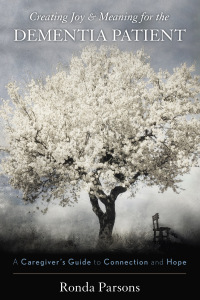
I will be signing copies of my book Creating Joy & Meaning for the Dementia Patient tomorrow, Saturday, August 15th in Virginia Beach, VA. I will be at the Barnes & Noble near the Pembroke Mall between 3 – 5pm. I will also be discussing how to remain connected and bring joy into the life of a loved one suffering from dementia. I hope to see you there!


August 13, 2015
Accepting a Diagnosis of Dementia
My mother-in-law’s diagnosis of dementia forever changed the lives of everyone in our family. I remember sitting with my husband in a row of metal chairs along the hallway in the medical facility while she was being examined by a geriatric neurologist. It seemed to take an eternity. Finally the doctor emerged from the scan room and told my husband and me, “She has significant brain shrinkage indicating dementia or Alzheimer’s disease. There is not much we can do at this point. There are medications, but their effectiveness is questionable. Her situation is progressive and will probably worsen over time.”
Neither one of us was surprised. Our concerns had finally been verified. Then two questions immediately came to mind. First, how were we going to provide her with the care she was going to need in the future? And secondly, how were we going to help Nan understand the reality of her diagnosis? It was in these mind-numbing moments that I began my journey into the complicated world of dementia care. Its complexities were unimaginable and I knew its future was unpredictable. And I was afraid; afraid for Nan and afraid for us. The only thing I knew for certain was that Nan’s cognitive skills were diminishing at an alarming rate and she needed help now.
Watching Nan slip down through the stages of dementia has been like witnessing two deaths simultaneously. I know this may sound emotional counterintuitive. Either someone is here or they are not. But this is not the case when someone suffers from dementia. A schism occurs between the mind and the body.
I don’t know when Nan began to separate from the world. I cant put my finger on the time when her disease finally overtook her mind, and I don’t know if it even matters. But I do know that it seems to have happened in the blink of an eye, sometime when I wasn’t looking. Dementia will trick you like that. It distracts you with its initial symptoms that send you scurrying about on endless missions to solve daily problems and search for cures. It sneaks up behind its victims and snatches them while you are busy making sure that they are taking their medicine correctly and eating a balanced diet.
I wish I had a way to spare you the highs and lows of the acceptance process. I wish that I could catapult you past the pain and make you see the happiness that is possible even in the light of all that you are facing. But I know that is impossible. So instead, through this blog I will give to the gift of the lessons that I have learned and hopefully, in the end, they will make all the difference.


July 24, 2015
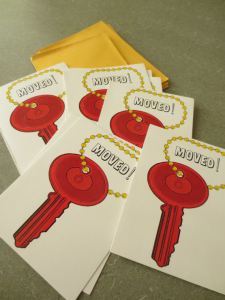
I’ve Moved
Hello everyone,
I have a new and better blog. I hope that you will come and visit me and let me know what you think!
My new address: http://www.TheDementiaConnection.wordpress.com.
Hope to see you there!


June 16, 2015
When it is Time for Mom & Dad to Leave Home
Recently I set up a Google-alert so that I would be informed each time that an article about dementia or Alzheimer’s disease was circulated on the internet. Yes, I’ve seen articles on breakthrough drugs focusing on the hope that soon this dreadful disease will be eradicated, and others touting the importance of diet and exercise. But I have also seen countless essays encouraging you to keep your loved one at home long after they have been diagnosed with dementia. My fear is that they are gaining popularity at the expense of well-being.
Granted, in a perfect world this is exactly what we would wish for ourselves and our loved one, but I think that it sends the wrong message to insist that it is possible at all stages of this disease. As you know I was the primary care coordinator for my mother-in-law for 10 years, so I know a bit about how this disease works. In my opinion many of these articles leave out a critical component – an honest assessment regarding the cognitive deterioration of your loved one.
In the early stages it is possible to hire a ‘helper’ from an outside company who will come to the patients home, do light chores, keep them company, and basically look after their daily needs. However, it is important to note that most companies will not allow their employees to administer medications, which I found was a primary area of confusion for my mother-in-law, even in the early stages of the disease. The fear that Nan was not taking her medication properly was probably the greatest source of concern for her entire family. Although a hired aide is able to monitor a patient’s physical safety, the consequences of un-monitored drug administration can be incredibly perilous.
I suggest that instead of dreading the day when our parents need the care of an assisted living or nursing facility, we choose to make wise and informed choices regarding their need for additional care. This is no time to be overly emotional. In order to protect the overall safety of your parents, you have to put your feelings of sadness aside and if necessary, place them in a safe environment.
And here is another important consideration – the socialization factor. Studies have shown that patients who are engaged in multiple social activities tend to remain engaged and connected longer. Memory facilities offer interactions that are difficult to create in a home environment where many caregivers plop their loved one in front of the television set.
I know that these words are hard to read and even harder to implement. But I am challenging you to stand back, put your emotions on the shelf, and truly consider what is in the best interest of your loved one.


June 15, 2015
Book Signing
I’d love to meet you this Saturday, June 20th at the Barnes & Noble in Williamsburg, VA – New Town Shops. I’ll be meeting the public and signing books from 1 – 3pm. I hope you’ll stop by.


June 14, 2015


‘Creating Joy & Meaning for the Dementia Patient’ – MIDWEST BOOK REVIEW
MIDWEST BOOK REVIEW
Creating Joy & Meaning for the Dementia Patient
Ronda Parsons
Creating Joy & Meaning for the Dementia Patient offers a positive new approach to handling dementia patients and stems from the author’s ten years of experience. It’s designed to help fellow caregivers understand the stages of dementia and how to create connections and positive experiences through them all.
This guide is highly recommended for caregivers and professionals who deal with dementia and Alzheimer’s patients on a daily basis. Where other guides may talk about communication and management, this book reaches beyond these subjects and addresses the fundamentals of life – joy and meaning – and emphasizes patient individuality; not a ‘one size fits all’ program.
Chapters empower caregivers by exploring their key roles in defining and imparting this sense of meaning and joy in everyday interactions, and they outline the types of experiences that lend to not just better understanding, but alternative ways of interaction that achieve better, more positive results for everyone.
In many ways Creating Joy & Meaning for the Dementia Patient fills in the gaps created by similar-sounding books by discussing the complications of memory changes and the psychological reactions of patients and caregivers during the process. Each chapter concludes with tangible insights, communication tips that emphasize flexibility and understanding, and approaches that lend dignity and joy into every encounter.
Compelling and satisfyingly specific, Creating Joy & Meaning for the Dementia Patient offers what few others have achieved: a sense of renewed purpose and concrete approaches that go beyond ‘handling’ and move into areas of positive experiences for all involved.
*D. Donovan, Senior Reviewer, Midwest Book Review


June 5, 2015
2015 New York Book Festival Honorable Mention
It is with great joy that I announce that my book,
Creating Joy & Meaning for the Dementia Patient,
has received an Honorable Mention at the 2015 New York Book Festival!


June 2, 2015
Thoughts Before a Book Signing – Saturday, June 6th – Fairfax, VA
As I prepare for my first book signing this Sat, my thoughts immediately turn to the reason that I wrote my book in the first place. My goal was to help other caregivers keep their hearts and souls above water, and realize that the wild gambit of emotions that they feel each day is entirely normal. When I first began my caregiving experience there was very little data available on the intangible side of dementia care. Oh, there was information on the signs and symptoms of this heartbreaking disease. Experts chose to outline in great detail the bleak forecast for the days ahead. The focus was on all that the patient was going to lose, which offered very little hope to the loved one who had to figure out how to maneuver through dementia’s daily mine-field. But I learned through experience that even amidst all this sadness, there remains much to be celebrated. Over the course of 10 years it became necessary to approach my caregiving experience from a vantage point of retention and not loss. And so my ideas evolved into what eventually became this book, a book that is very dear to my heart.
I hope that on Saturday I will be able to look into the kind eyes of fellow caregivers and remind them that they are not alone. I’ll be at the Barnes & Noble on Fair Lakes Promenade Dr., in Fairfax, VA from 1 – 3pm. I’d love to meet you, so please stop in and say, “Hello.”