
Shelley Munro's Blog
July 6, 2025
The Last Wild Cattle of England: A Living Medieval Legacy
Hidden away in the rolling hills of Northumberland, a remarkable herd of white cattle roams freely across ancient parkland, carrying in their genes a story that stretches back over 700 years. These are the Chillingham wild cattle—perhaps the most extraordinary livestock you’ve never heard of, and certainly the wildest cattle left in Britain.

A Herd Frozen in Time
Picture this: it’s 1220, and King Henry III’s courtiers are establishing a hunting park around Chillingham Castle. A herd of wild white cattle becomes enclosed within the stone walls, and from that moment forward, something remarkable happens—or rather, doesn’t happen. These cattle remain completely untouched by human hands, having never been domesticated, bred selectively, or treated by veterinarians.
Fast forward 800 years, and their descendants still thunder across the same Northumberland grasslands, living exactly as their medieval ancestors did. No farmer has ever milked them, no vet has ever treated them, and no human has ever decided which bull should mate with which cow. They are, literally, a living piece of the Middle Ages.
Nature’s Own Experiment
What makes the Chillingham herd scientifically fascinating isn’t just their age—it’s what centuries of isolation have done to their genetics. DNA analysis reveals something almost impossible in the modern world: virtually zero genetic diversity. In any other context, this would spell disaster for a population, yet these cattle have thrived for centuries.
How? Natural selection has been brutal but effective. Only the strongest, most disease-resistant animals survive the harsh Northumbrian winters. Those that can’t adapt to parasites, poor weather, or competition for resources simply don’t pass on their genes. The result is a herd so perfectly adapted to their specific environment that they’ve become living proof of evolution in action.
The bulls can weigh up to 1,400 pounds and are famously aggressive, establishing dominance through fierce battles that would make any medieval knight proud. The cows are smaller but equally hardy, raising their calves with no human intervention whatsoever.
An Accidental Nature Reserve
The cattle’s wild lifestyle has created something unexpected: one of Britain’s most important biodiversity hotspots. Because no fertilizers, pesticides, or modern farming methods have ever been used on their grazing land, Chillingham Park has become a refuge for countless species that have vanished from the British countryside.
Insects that disappeared from intensively farmed areas generations ago still buzz through the park’s ancient grasslands. The cattle’s natural grazing patterns have maintained a mosaic of habitats that supports everything from rare wildflowers to specialized beetles. It’s essentially a functioning medieval ecosystem, preserved by accident and maintained by bovine determination.
Living on the Edge
But this remarkable story comes with constant anxiety for the herd’s guardians. Every foot and mouth disease outbreak in Britain raises the terrifying specter of losing 700 years of genetic heritage in a matter of days. During the devastating 2001 epidemic, strict biosecurity measures were the only thing standing between the herd and potential extinction.
The Chillingham Wild Cattle Association has taken an insurance policy that purists might find controversial: a small backup herd was established at a secret location in the 1970s. While this compromises the “never touched by humans” principle, it provides crucial protection against the catastrophic loss of this irreplaceable genetic lineage.
What They Teach Us
The Chillingham cattle offer profound lessons about resilience, adaptation, and the value of leaving nature alone. In an age of genetic modification and intensive agriculture, they demonstrate what happens when animals evolve naturally in response to their environment.
They also remind us what we’ve lost. The insects thriving in their parkland, the natural social structures they maintain, and their ability to survive with no human intervention showcase the richness of ecosystems that once covered Britain.
Guardians of the Past
Today, the herd typically numbers between 40 and 90 animals, watched over by wardens who observe but never interfere. Visitors can glimpse these living relics from designated viewing areas, though the cattle remain genuinely wild and potentially dangerous.
Every birth, every death, every struggle for dominance in the herd continues a story that began when medieval England was young. These cattle have survived the Black Death, the Industrial Revolution, two World Wars, and the transformation of Britain from an agricultural to a post-industrial society.
They are survivors—wild, ancient, and irreplaceable. In our modern world of rapid change and technological advancement, the Chillingham cattle stand as a reminder that some things are worth preserving exactly as they are, untouched and unchanging, carrying the past into an uncertain future.
The next time you see a field of placid dairy cows, remember their wild cousins in Northumberland, living free as their ancestors did when castles were new and Britain was a very different place. They are living history, and every day they survive is another day that history remains alive.


Sources:
Primary Sources:
Chillingham Wild Cattle Association Official Website (chillinghamwildcattle.com)
Wikipedia: Chillingham cattle
Rare Breeds Survival Trust (rbst.org.uk)
The post The Last Wild Cattle of England: A Living Medieval Legacy first appeared on Shelley Munro.

June 23, 2025
Storm in a Teacup: Emily’s Cheese Scones
The scent of warm cheese and freshly baked scones drifted down the main street of Middlemarch, sneaking through open windows, and luring locals toward the heart of town—Emily Mitchell’s café, Storm in a Teacup.
Inside, the counter gleamed, the old timber floor creaked comfortingly, and sunlight slanted through sheer curtains. Locals packed the tables, sipping tea and coffee, chatting, and—without exception—devouring cheese scones.
Emily wiped her hands on her apron and surveyed her kingdom. She’d baked three trays that morning. They were already gone.
“I need to make more,” she muttered, heading for the kitchen.
From the back of the café came the deep, amused voice of her husband, Saber Mitchell. “You made more than usual.”
“Still not enough,” she said, brushing a strand of hair behind her ear as she passed him. “They’re snapping them up fast.”
Saber leaned against the doorframe, arms crossed, green eyes glinting. “Funny you should say that.”
Emily paused mid-step, giving him a look. “You didn’t tell them to come in droves again, did you?”
Saber grinned, unapologetic. “I might’ve mentioned that today’s batch had extra vintage cheddar.”
“Saber.”
“I didn’t tell them to overwhelm you. I merely hinted.”
Emily shook her head, lips twitching. “They’re worse than teenagers with bottomless pits for stomachs.”
“Shifters burn more calories,” he said with a shrug. “Fast metabolisms. High energy.”
“And an obsession with my baking.”
“With you, kitten,” he said, eyes warm.
She blushed and pushed into the kitchen, already reaching for flour. “Flattery won’t get you more scones.”
But it might, she admitted silently, because she loved how he always looked at her like she was the most beautiful woman in the room.
She measured ingredients, added butter, cheese and milk, mixing her dough by instinct. Emily had once dreamed of owning a café, but she’d never imagined it would become the unofficial meeting place of Middlemarch’s shifter community—especially not after falling for a man who could transform into a sleek black leopard.
She didn’t mind. Mostly.
Though sometimes the sneaky feline visits left scratch marks on her floors. And once, someone had tried to bring a live rabbit as a hint for rabbit pie. That had not gone over well.
The bell over the door chimed again. Emily stuck her head out to check the crowd.
A new face stood by the counter—young, female, wide-eyed. She wore city clothes and uncertainty, especially since a group of single men were studying her closely. Her fingers curled around a camera strap slung across her chest.
“Can I help you?” Emily asked.
The girl glanced at the chalkboard menu, then back at Emily. “Are you the one who makes the cheese scones?”
“I am.”
“They’re famous online. Someone posted a review on a food blog. I had to see for myself.”
Emily blinked. “Well, welcome to Middlemarch.”
The girl smiled shyly. “I’ll have one to eat here. Please.”
Emily sighed. “You’ll have to wait a bit. They’re all gone—but I’ve got another batch in the works.”
Behind her, Saber appeared, leaning lazily against the wall like he had all the time in the world. The girl glanced at him, blinked, then quickly looked away.
Emily handed her a mug of tea while she waited. “What’s your name?”
“Zara. I’m a food photographer. Sort of freelance. And… I heard rumors.”
Emily tilted her head. “About the scones?”
Zara hesitated. “Not just that. About the town.”
Saber tensed, but Emily simply smiled. “We’re a small place. People love a bit of mystery.”
Zara lowered her voice. “Someone said the people here aren’t all…normal. I thought it was just a local legend. But then I saw a man leap straight over a six-foot fence.”
“Strong legs,” Emily said cheerfully. “Must be all the dairy.”
Zara laughed, uncertain. “Right.”
The kitchen timer buzzed, and Emily vanished into the back. When she returned, she carried a tray that smelled like heaven—all that cheesy goodness.
She placed one scone and a butter pat on a plate and delivered it to Zara’s table.
Zara sliced the scone in two and added butter. She lifted one half and took a bite.
Her eyes widened.
“Oh my God. That’s not just cheese.”
“No,” Emily said, smiling. “It’s love.”
“And paprika,” Saber added dryly.
Zara scarfed down the rest, blissed out. “That’s the best thing I’ve eaten in my life.”
A low purring sound rolled through the café.
Emily didn’t react. She was used to it now—the rumble of contentment from Saber when he was especially pleased. Most people didn’t notice. Zara did.
She frowned slightly, glancing around.
“I…heard something.”
Saber coughed.
“Must be the heater,” Emily said.
Zara finished her tea and rose, brushing crumbs from her lap. “I’ll definitely write about this place. Is it okay if I take a photo of you with the scones?”
Emily posed, holding a tray fresh from the oven. Saber stayed at the edge of the frame, his watchful gaze never quite leaving the visitor.
Zara snapped the shot. “Thank you again.”
As she turned to go, Saber followed her to the door. Quiet. Unobtrusive. Leopard-silent.
When she was gone, Emily leaned on the counter. “She knows something.”
“She suspects,” he said. “But she doesn’t know.”
“You’ll warn everyone?”
Saber nodded. “Already done.”
Emily looked at the empty tray and smiled.
Let them come.
Let them wonder.
Let the world whisper about mysterious Middlemarch and its irresistible cheese scones.
She knew the real secret wasn’t the paprika or the vintage cheddar—or even the fresh country air of Middlemarch.
It was the way this place, this life, this love—made her feel.
Whole.
The post Storm in a Teacup: Emily’s Cheese Scones first appeared on Shelley Munro.The Humble Scone: A Journey Through Time and Taste
Meet Emily Mitchell, the proud owner of Storm in a Teacup café in Middlemarch. While her menu features a wide range of delightful treats, it’s her legendary cheese scones that have locals lining up each morning. By 10 AM, they’re almost always sold out – a testament to both Emily’s skill and the enduring appeal of this savory Scottish tradition. But how did the humble scone capture hearts across centuries? Let’s explore the fascinating journey of this beloved baked good.

From Griddle to Glory: The Scottish Origins
The story of the scone begins in the mists of 16th-century Scotland, where resourceful bakers created what would become one of Britain’s most iconic treats. The first written mention of scones dates back to 1513, when a Scottish poet immortalized them in verse. These early scones bore little resemblance to the fluffy, buttery delights we know today – they were hearty, oat-based flatbreads cooked on griddles over open fires and cut into triangular wedges called “farls.”
Picture the scene: a Scottish kitchen filled with the aroma of oats and barley, with large, pancake-like rounds sizzling on hot stones. These proto-scones were practical food for farmers and travelers, offering sustenance and portability in an era when convenience foods meant something you could easily carry to the fields.
The Great Transformation
The scone’s journey from rustic sustenance to teatime luxury began in the 19th century with two revolutionary developments. First, the widespread availability of baking powder around 1846 transformed the dense, flat griddle cakes into the light, risen treats we recognize today. Second, the rise of afternoon tea culture, popularized by Anna, the Duchess of Bedford around 1840, elevated the humble scone to aristocratic status.
The Duchess, feeling peckish in the long gap between lunch and dinner, began requesting “light refreshments” with her afternoon tea. Scones, with their perfect balance of substance and delicacy, proved ideal companions to fine china and clotted cream. What started as one woman’s snack became a national institution.
The Savory Revolution: A Theory on Cheese Scones
While sweet scones claimed the spotlight in fashionable drawing rooms, something equally delicious was happening in Scottish and Northern English kitchens. The addition of cheese to scones likely emerged organically from Scotland’s rich traditions of both cheese-making and savory baking.
Consider the timeline: scones were established by the early 1500s, and Scotland’s cheese-making traditions stretch back even further. It’s entirely plausible that by the 17th or 18th centuries, innovative bakers – perhaps ancestors of today’s Emily Mitchells – were experimenting with grated cheese in their scone dough. The natural affinity between Scotland’s sharp cheddars and the scone’s crumbly texture would have made this a logical and delicious evolution.
The fact that cheese scones are so deeply embedded in British culinary culture suggests they’re no modern innovation. They represent a parallel tradition to sweet scones – one born of practicality and regional ingredients rather than aristocratic tea parties. While the Duchess sipped tea with jam-topped scones in her parlor, Scottish cooks were creating equally delicious savory versions that provided more substantial nourishment for working folk.
The Etymology Enigma
The word “scone” itself remains delightfully mysterious. Linguists debate whether it derives from the Dutch “schoonbrot” (fine white bread), the Gaelic “sgonn” (a shapeless mass), or even the Stone of Scone where Scottish kings were crowned. This uncertainty adds to the scone’s charm – like the best comfort foods, its origins are wrapped in folklore and kitchen wisdom passed down through generations.
Global Adventures
As the British Empire expanded, so did the scone’s reach. Each new territory adapted the basic recipe to local tastes and available ingredients. Australia developed pumpkin scones, New Zealand perfected the cheese variety (where they’re served with butter), and even Zimbabwe embraced scones as a breakfast staple, served with English tea and jam.
In America, scones evolved into larger, sweeter confections more akin to coffee shop pastries, while Canadian “tea biscuits” maintained closer ties to their British cousins. Each variation tells a story of cultural adaptation and local innovation.
The Eternal Debate
No discussion of scones would be complete without addressing the great pronunciation divide. Do you say “scone” to rhyme with “gone” or “tone”? The map of Britain reveals fascinating regional preferences: Northern England and Scotland generally favor “scone” (to rhyme with gone), while the Midlands and Ireland lean toward “scone” (to rhyme with tone). This linguistic split mirrors the scone’s dual nature – both humble and refined, traditional yet adaptable.
A Timeless Appeal
What makes the scone so enduringly popular? Perhaps it’s their remarkable versatility – equally at home with jam and cream at an elegant afternoon tea or packed with cheese for a hearty breakfast. Maybe it’s their accessibility – simple ingredients transformed through technique into something greater than the sum of their parts.
Or perhaps, like Emily Mitchell’s customers queuing each morning at Storm in a Teacup, we’re drawn to the scone’s ability to connect us with centuries of tradition while still feeling perfectly modern. In an age of complex flavors and exotic ingredients, there’s something deeply satisfying about the honest simplicity of flour, butter, and just enough magic to make them rise.
The next time you bite into a perfect scone – whether sweet or savory, traditional or innovative – remember that you’re partaking in a tradition that spans five centuries. From Scottish griddles to modern cafés, from afternoon tea to morning coffee, the humble scone continues to prove that sometimes the simplest pleasures are the most enduring.
Sources
1. Wikipedia. “Scone.” Wikipedia, The Free Encyclopedia. https://en.wikipedia.org/wiki/Scone
2. British Food: A History. “Scones: A Brief History.” June 6, 2025. https://britishfoodhistory.com/2025/0...
3. Freshways. “A Brief History of the Scone.” August 10, 2021. https://www.freshways.co.uk/a-brief-h...
4. Ackroyd’s Scottish Bakery. “A Short History of Scones.” July 5, 2023. https://ackroydsbakery.com/blogs/auth...
5. A Day In Candiland. “The Origin of Scones: the Sweet History & Evolution.” April 2, 2024. https://adayincandiland.com/origin-of...
The post The Humble Scone: A Journey Through Time and Taste first appeared on Shelley Munro.September 7, 2024
Te Anau: The Gorgeous NZ Setting for Hunted Pack
Te Anau is a small New Zealand town known as the gateway to Milford Sound and Fiordland National Park. It’s a picturesque place with a beautiful alpine lake and snow-capped mountains. Mr. Munro and I visited and walked parted of the nearby Kepler Track.
I fell in love with the town and the scenery, and when thinking about the setting for Hunted Pack, Te Anau came to mind. I figured dragons would love the remoteness of the area. It was easy to imagine a thunder of dragons soaring over the lake!
For those interested in visiting the area, Te Anau, here are some things you could do:
❤️ Visit Milford Sound
❤️ Walk the Kepler Track
❤️ Visit Fiordland National Park
❤️ Visit Te Anau Glowworm Caves
❤️ Trout fishing
❤️ Go on a boat trip on the historic Faith
Fergus, the hero of Hunted Pack, is a small-town cop, while Claire, the heroine, runs a pub. I’ve sprinkled in details of what my husband and I did during our visit. Honestly, it’s a beautiful place with a small-town feel and lots of friendly locals.
Here’s the blurb for Hunted Pack:
Small-town secrets often wriggle free…
Her New Year fling vanished without saying goodbye.
Learning that he’s the new town cop shocks Claire, and unfortunately, tender feelings have blossomed. Crushing them is almost impossible, and strong, sexy Fergus wants nothing more than a casual friendship.
Shifter Fergus Murray hides his dragon status and upholds the human law in small-town Te Anau. A woman shattered his heart, and now he fiercely protects the remnants. Friends, he can do, but nothing more. Until Claire…
A werewolf’s murder brings danger to town, and that’s the start of the mysterious crimes and his humongous problems, especially when Claire gets dragged into the middle of the trouble.
Hunted Pack features a shapeshifter cop hunting for a murderer, a town full of secrets and gossip, and a human woman with an attraction she can’t deny for a paranormal man. She wants more than one night and is willing to give him a second chance to readjust his mindset. Friends to lovers is the ultimate destination.
NOTE: Also available in Kobo Plus.

View walking through Beech forest, Kepler Track, Te Anau


The historic ship, Faith does trips on Lake Te Anau

The view of Lake Te Anau from a helicopter.

Kepler Track

Some of the mountain alpine plants on the Kepler Track


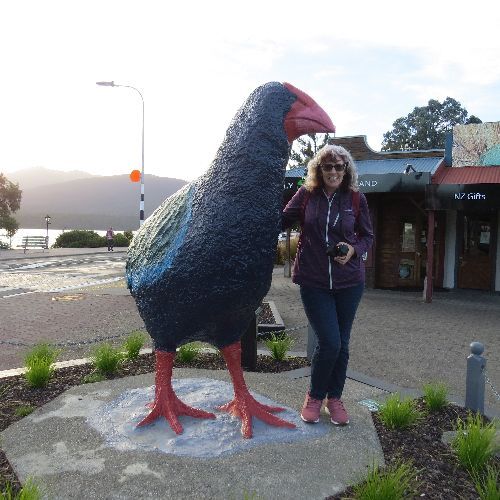
Takahe Statue in Te Anau. The takahe was presumed extinct until discovered in the Murchison mountains near Te Anau.
March 17, 2024
Celebrating St Patrick’s Day

Most people know about St. Patrick’s Day. We might’ve attended a parade or lifted an Irish bevy in salute, but here’s some background and a few fun facts.
1. St Patrick’s Day, originally a day to honor St Patrick and the arrival of Christianity in Ireland, has evolved. Today, it’s a celebration of all things Irish—its rich culture and heritage, making it a day of national pride.
2. We celebrate on the 17th of March, which is said to be St Patrick’s day of death.
3. The shamrock is a symbol of Ireland that has become entwined with St Patrick’s Day. Shamrock is a type of clover, and the three leaves stand for hope, faith, and love.
4. St Patrick’s Day is not just an Irish affair. It’s a global celebration embraced by Irish descendants worldwide. For instance, Chicagoans have been turning the river green every year since 1962. Similarly, other places host parades and Irish-themed parties, showcasing the festive day’s universal appeal.
5. Green is commonly associated with Ireland and St Patrick’s Day, and Ireland is also called the Emerald Isle. However, the connection with green didn’t come about until the 18th century. Before this, blue was the chosen color.
6. The largest St. Patrick’s Day parade occurs in New York.
7. Drinking Irish beers and whiskey is a big thing worldwide–a way to celebrate the day. Also, Irish coffee!
8. Lastly, traditional foods you might eat on St Patrick’s Day include shepherd’s pie, corned beef, soda bread, colcannon (mashed potato with additions), and cabbage. People might also start their day with a full Irish breakfast.
This year, our village is having an afternoon picnic in praise of all things Irish and our Irish heritage.
How do you celebrate the day?
The post Celebrating St Patrick’s Day first appeared on Shelley Munro.March 16, 2024
Irish Blessings
Blessings are a part of Irish culture and express sentiments such as goodwill, joy, and hope. Some also contain sly humor that brings a grin to the face. Blessings are usually short and often in poem form, but there are some longer ones, too.
They are a perfect addition for speeches and all occasions, from weddings to housewarming parties and reunions.
Here’s a traditional one:
May your home be filled with laughter, may your pockets be filled with gold, and may you have all the happiness your Irish heart can hold.
☘️
May the road rise up to meet you. May the wind be always at your back. May the sun shine warm upon your face, the rains fall soft upon your fields, and, until we meet again, may God hold you in the palm of his hand.
☘️
May those who love us, love us
And those who don’t love us,
May God turn their hearts
And if he can’t turn their hearts,
May he turn their ankles
So we will know them by their limping!
☘️
Bless your little Irish heart and every other Irish part.
☘️
May the lilt of Irish laughter
Lighten every load
May the mist of Irish magic
Shorten every road.
And may all your friends remember
All the favors you are owed.
While researching Irish Blessings, I came across this website page on Traditional Irish Blessings. Some of the examples are longer, and they’ll give you a great start if you’d like to incorporate an Irish blessing into your speech or occasion.
The post Irish Blessings first appeared on Shelley Munro.March 10, 2024
In Praise of Packing Cubes
For years, I’ve been hearing about the marvelous creation called packing cubes. Packing has never been a problem for me. I’m an experienced traveler and, therefore, have a lot of experience packing suitcases. Who needs packing cubes, I thought.
Oh, how wrong I was.
Last year, on a whim, I purchased a set of packing cubes.

Woman packing clothes before journey at home
I decided on a set of four cubes plus a shoe bag and used them during a trip in December 2023. As soon as I’d zipped up my suitcase, I informed my husband packing cubes were the way to go.
Resistance on my part had been pure stupidity.
With cubes, I packed in a shorter time and in a more organized way. During our one night in a hotel, I was able to find what I wanted easily without messing up my entire suitcase.
Unpacking was a breeze, too.
I admit it. I am a convert. And not only me but my husband as well.
This week, I purchased him a set of packing cubes just in time for our next trip.
Do you use packing cubes? If not, why not?
The post In Praise of Packing Cubes first appeared on Shelley Munro.March 5, 2024
A Magical Visit to Hobbiton
We recently spent four days touring Matamata, the National Park, Taupo, and Rotorua before returning to Auckland and jumping on a cruise ship to Sydney, Melbourne, Hobart, Milford Sound, Dunedin, Wellington, and Tauranga. Excellent weather, splendid company, and many adventures—what more can one ask for?

Our first stop was Hobbiton, which we booked months ago. My husband went under protest. He’s not a Lord of the Rings fan, but he capitulated since our friends wanted to visit Hobbiton. I’ve visited before and loved the experience, so I was happy to return.
We arrived about fifteen minutes before our tour and checked out the gift shop while waiting for our bus. One Lord of the Rings T-shirt—check!
Tours are well-organized, and the buses leave for the shire right on time. They play a short introduction movie on the brief journey and give a little site history.
The Alexander family owns the 1250-acre sheep farm where the actual site is located. The crew built a shell village for the Lord of the Rings movies and dismantled it after filming. When rebuilding the set for the Hobbit Trilogy, the builders used permanent materials, and it took them two years to complete the reconstruction.
Fans showed interest in touring the Shire, so the Anderson family and Peter Jackson started guided tours. The rest is history.
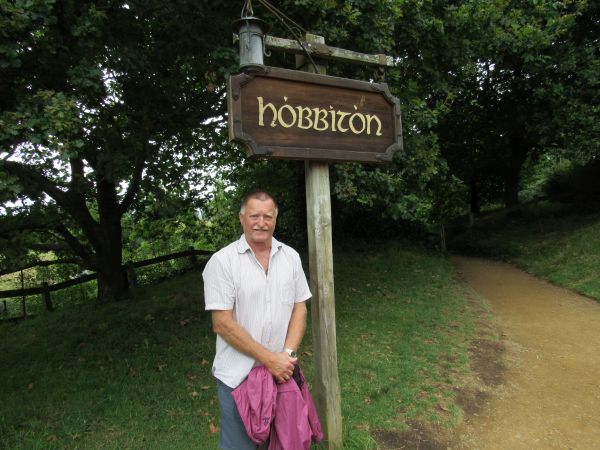
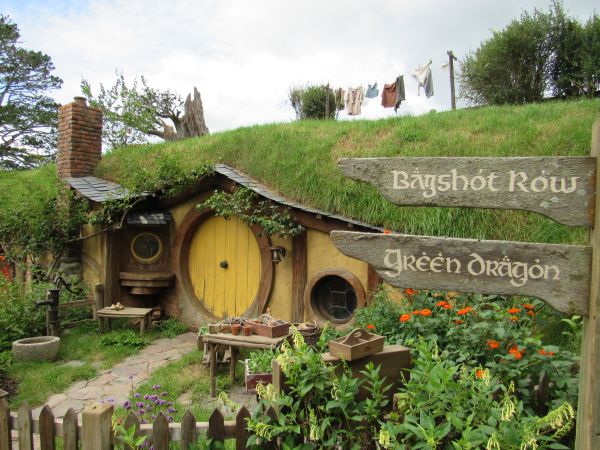
Hobbiton is a magical place. As soon as you enter the gates, the magic takes hold. The gardens, the themed hobbit holes, the smoking chimneys, and the picket fences combine to create a fantasy world. It’s the meticulous attention to detail that sets the village apart. Washing hangs on the lines. Many of the hobbit holes have a theme, giving clues to who lives at that address. There’s the cheesemonger with wheels of cheese, a beekeeper with pots of honey and honeycomb, a fisherman, a baker, and others. Fruit trees and vegetable plots are everywhere.
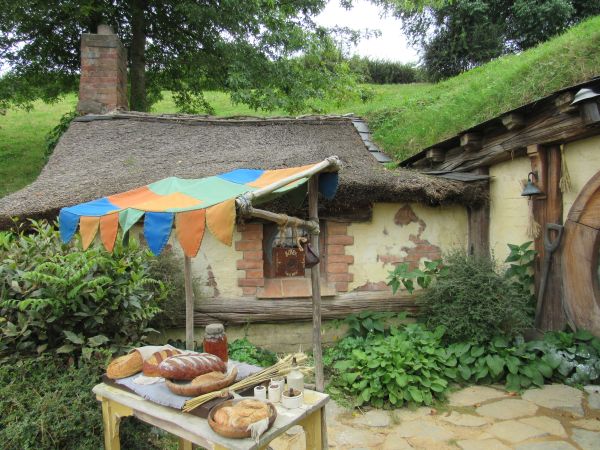
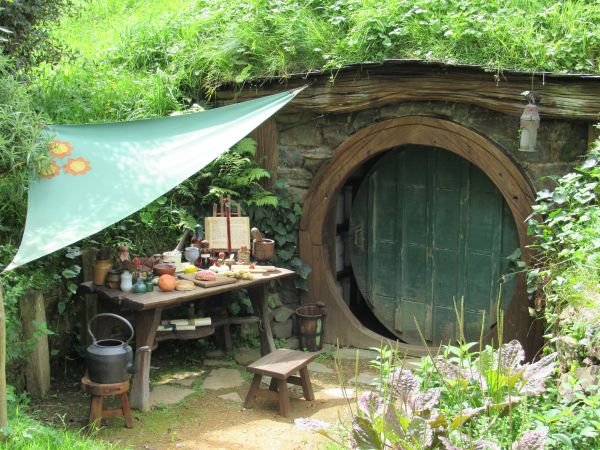
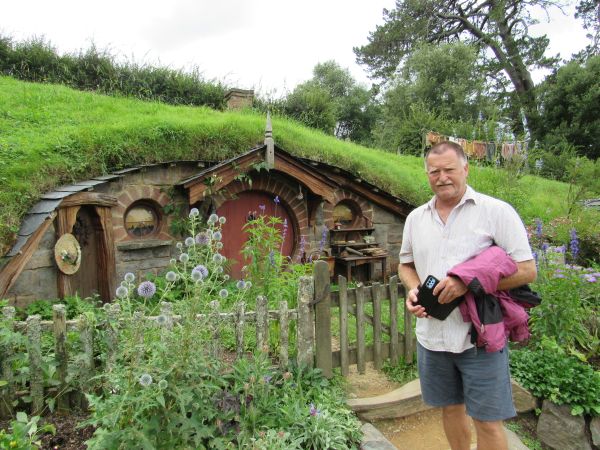
The guide ensured the tour didn’t feel rushed and answered questions while imparting stories about the movies, the actors, and the filming process. There was plenty of time to take photos, take in sweeping country views, and soak in all the minor details.
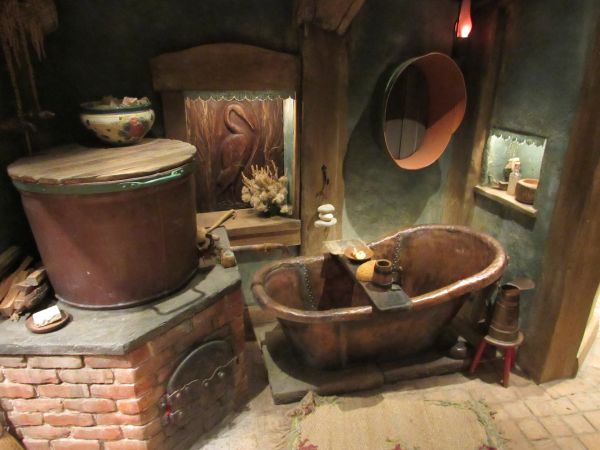
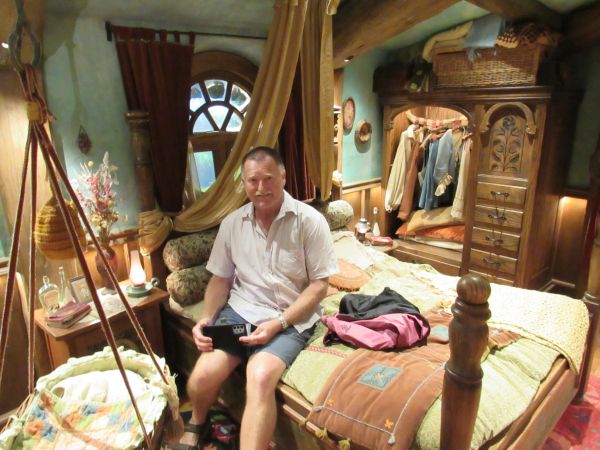
The Hobbit Hole interiors are another part of the attraction, and they opened in December 2023. They’ve furnished two hobbit holes on Bagshaw Row. The guide splits the group into two, each going through one residence.
The interiors are amazing, and once again, the attention to detail is exceptional. There were bedrooms, kitchens, larders, dining rooms, bathrooms, and toilets. Even better, we could touch items, although they frown upon pilfering or souvenir taking. I believe they glue items into place to prevent this. We could sit on beds, take a seat in front of a fire, or at a dining table. You could even take a seat on the toilet. There was so much to look at—the interiors were more extensive than I imagined, and I could’ve explored for much longer.
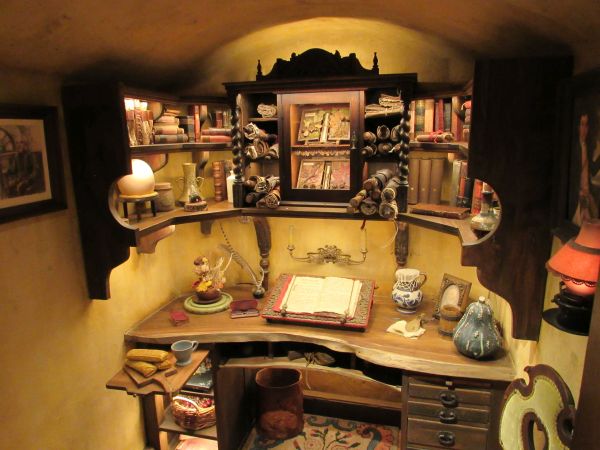
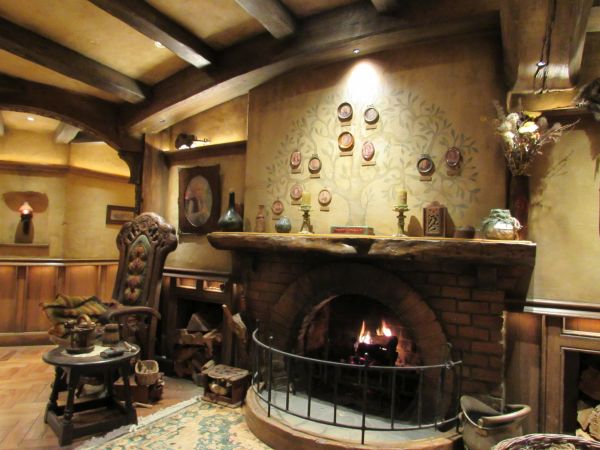
Our last stop was at the Green Dragon Inn, where we could have a beer, a cider, or a ginger beer. You can also grab a snack here, but that’s an extra cost.
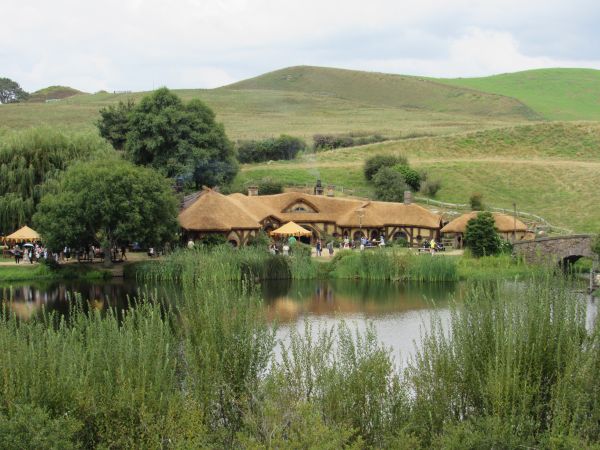
The entire tour is two and a half hours long. There is a decent amount of walking (around 2 km), although it’s mostly flat and at a slow pace. There are also bench seats around the site for a brief rest if required. I believe there are golf carts for those with mobility issues, but they must be pre-booked and possibly shared with other patrons. Check the website for further details.
I can’t recommend this tour highly enough, especially the recent addition to Bagshot Row. My skeptical husband enjoyed his visit very much, and I heard him recommending others to go, given the opportunity. I call that a win!
Notes:
1. Book ahead of time on the website. Don’t leave it to the last minute. We met a tourist from overseas who wanted to visit but couldn’t. Hobbiton had no availability for the following two weeks.
2. The tours go ahead, rain or shine. We were lucky with the weather, but I imagine a rainy day might be muddy underfoot.
3. You don’t need to watch the movies to enjoy your visit, but it will add to your enjoyment. Hubby is a case in point. He watched the first movie years ago, and that was all.
February 25, 2024
Tips for Aspiring Writers: Finding Time to Write
When I started writing books, I used to get home from work, change out of my uniform, grab a coffee, and start work. I’d write for around two hours before powering down the computer and preparing dinner. I did this every weekday, and by the end of the month, I had a completed first draft.
These days, I usually write in the morning after my walk and breakfast. I try to write at least 2000 words—more if I’m having a good day. I don’t want to write some days, but I keep going until I hit my 2000-word target. It might take me all day sometimes, but I get there.
Are you a morning person, or do you do your best thinking in the middle of the night?
When you write, it will depend very much on if you’re a morning lark or a night owl. Experiment.
Yes, I know. I’ve said it before, but there is no right or wrong way to approach writing. Work around your commitments and just do it. Write!
But what if this isn’t working for you? What if you find you work better with other people around?
Try a writing sprint with other writer friends. In a writing sprint, you write for a set time—anything from five minutes up to an hour. The idea is to write without trying to edit or stop.
Once the time is up, report to your writing buddies. Chat, take a five- or ten-minute break, and do another sprint. Writing sprints can be in person or online.
A version of this is the Pomodoro technique, in which you write for twenty-five minutes, take a five-minute break, and repeat until you reach your writing target.
I’ve found doing sprints has got me past procrastination and upped my word count.
Another way—my favored method—is to use a game-type concept called 4 the Words. This is a paid option, but it isn’t expensive at around $4 a month. (Use this code PKCQA42934, and not only will I receive free crystals, but you will, too). They also offer a free 15-day trial.
I write my first draft in 4 The Words and love the “game” aspect. I choose which monsters I want to battle each day and what quests I’m taking. Some days, I’ll fight small monsters of around 500 words; other days, I’ll take on monsters of 2000 words. There is also a community here, and you can sign up for team challenges. The people there are supportive and friendly.
So, no matter which time of day you choose to write or how you get those words down, experiment a little to find the best way for you.
The post Tips for Aspiring Writers: Finding Time to Write first appeared on Shelley Munro.February 16, 2024
To Plot or Not to Plot
By the time I decided I wanted to write, I’d read romances for years and had unconsciously absorbed a lot about story structure and characterization.
It never occurred to me to plot. I knew what I wanted to write and sat down and pounded out that sucker. After a month, I had my first draft, which I promptly sent to a publisher and received a rejection, but that is another story.
I learned more about writing and craft after writing my first story and about plotting. Huh, I thought. Maybe I should try plotting?
So I did.
And you know what?
I hated plotting.
One of two things usually happened: I’d get to the end of my plotting process and become bored with the story, or I’d start writing and let old habits creep back. Suddenly, the story I was writing was very different from what I’d plotted, which equaled wasted time.
It took me a long time to understand that there is no one way to write a book. Just because all my friends and acquaintances plotted their books, it didn’t mean that I needed to do the same.
Part of the charm of writing for me is only having a vague idea of the path to the end of the story. I love learning what happens along with my characters. If I plan too much, I tend to get bored with the story.
That said, my writing methods have changed slightly over the years. These days, I like to have a better grasp of my characters—their goals, motivations, and conflicts, both internal and external. I percolate the plot in my head for a while before I start writing while in the past, I’d start writing a lot sooner.
So my advice to aspiring authors is to go with what feels natural to you. Try plotting and try flying into the mist like I do. It might be that neither method works, and you gravitate to a method halfway between the two.
At the start of your writing career is the time to try everything and experiment with different ways of doing things. Keep experimenting until you find the perfect fit!


