Eric Olsen's Blog
February 10, 2020
We Wanted to be Writers: Life, Love, and Literature at the Iowa Writers’ Workshop
In the intercepts that comprise We Wanted to be Writers, Glenn Schaeffer and I and our fellow Iowa workshoppers discuss what we learned in the Workshop back in the mid-‘70s — and what we didn’t learn, but wish they had — and what we learned in the decades after about life, art, the creative process, teaching, the lit biz, and much more. Our goal is to provide advice and counsel and analysis, maybe some inspiration, and a cautionary tale or two. Along the way, we also hope to entertain with some good yarns and a little gossip….
The book is a compendium of reflections we all wish that they’d had before they’d arrived naked in Iowa City, then ventured a couple years later into the cold, cruel world to try to keep writing while we tried to make the rent — a book in which practitioners call themselves straight up. As unique as writers may be, or as unique we all like to think of ourselves, nonetheless patterns of similarity emerge, especially when it comes to the creative process itself. Part of what the contributors to this book learned at Iowa and the years after was how to accommodate and trust that process, and this is a major part of the discussion.
If there’s a prevailing theme in We Wanted to be Writers, it’s one of hope. Writers face doubt on a daily basis. Doubt is what makes modernists of us all. And it’s a writer’s persistence spurred by hope — however absurd or misguided — that routes the writer forward to creative product, beset by the usual miseries, until those lean, if intoxicating, aha! moments decide to reveal themselves. Sentences find their shape. Characters command the page. Which is the reason writers undertake their journey at all, because the distant destination is their summa, with discovery wrought by self-candor, guided by their internal diagrams or maps, cribbed in invisible ink.
Glenn and I started We Wanted to be Writers by calling up a few of our old gang in Iowa City with whom we’d kept in touch over the years. Among these were John Irving and Marvin Bell, two of our teachers at Iowa, and classmates including Sandra Cisneros, Jane Smiley, T.C. Boyle, Joy Harjo, Allan Gurganus, Don Wallace, Michele Huneven, Jayne Anne Phillips, Robin Green, and Joe Haldeman. They all agreed to humor us. And they knew others to include — say, you remember so-and-so? Remember that time…. And so-and-so would connect us to someone else to be interviewed. Over time, we ended up doing extensive interviews with nearly 30 classmates and faculty.
We’ve been rather flexible in how we’ve defined our Iowa class, including in it classmates and teachers with whom we overlapped in Iowa City roughly from the autumn semester in 1974 to the spring semester in 1978.
In these intercepts, as we navigate discussions of the creative process, we also try questions as to whether or not imaginative composition can be taught or learned, and if so, whether the “workshop model” — to the degree there is one — is the efficient approach. Some of what we came up with in the interviews defies the conventional critique about workshops, and Iowa in particular: that MFA programs impose an institutionalized voice on impressionable writers that is altogether flat in its affect. The Iowa model, by testimony of accomplished pros, holds up well in their lifelong practice. Writers, to be complete, must grow beyond their early successes and create in their own mood and voice, in generative fashion, harvest upon harvest. One-acts at Iowa or anywhere else don’t make the grade affixed by time and world. Imaginative enterprise is nothing less than contact sport, with a thousand responses and tactics up its sleeve. Better writing can be learned in an experiential and participatory setting, but its pedagogy is not traditionally academic; it’s found, not sent, like the proverbial note in a bottle.
Contrary to the Workshop’s reputation as a haven for cutthroat opportunists and bloated egos, the students and teachers featured in this book, no matter which side or sides of the geo/politico/aesthetic debates they might be on, enjoyed a remarkable collegiality and generosity of spirit at the Workshop. Indeed, it turns out that many of them, looking back at their time in the Workshop, share the impression that the real work of the Workshop was done outside the classrooms, as they shared their work with one another over beers at The Mill or George’s Buffet, or joints in a cabin on the shore of Lake McBride. At the end of the day, they all found themselves rooting for one another, because they were all in the same boat, up against the same horror: the blank page. And they’re still rooting for one another. Because even after all these years, the blank page is just as daunting and just as frightening as ever.


September 2, 2016
Review of Re-told Stories Collection

by Heather Forest (August House 2016)
Reviewed by Geri Lipschultz
Geri Lipschultz has published in the New York Times, College English, Black Warrior Review, and such anthologies as Pearson’s college literature anthology and Spuyten Duyvil’s The Wreckage of Reason II. She received a CAPS grant and a fiction award from So to Speak. Her one-woman show was produced in NYC by Woodie King, Jr. She is a regular contributor to this blog.
Marketed for children, this beautiful assemblage will delight adult readers as well. Here is a sampling of the story world’s most important and best tales. Here is a book for the desert island—a collection of world tales that are delicately spiced with wisdom that is universal, wisdom that reflects the cultures of the ancient civilized world, that can yet be applied to contemporary matters. Here we have tests of the lovers, such as those of the Norse legends, who are embroiled in the curse of a dragon’s ring; faring a little better in a similar test—with jealousy the catalyst, rather than a curse—is Isis also, the North African/ Egyptian story of Isis and Osiris, where the tenacious and extraordinarily courageous goddess goes to all ends of the earth and even the underworld to restore her beloved.
Some of these stories examine the journey of a hero, and the reader is left pondering the demands, the insights, the defining attributes of a hero. There are tests of honor, including the story of Gawain and the Green Knight. There is the example of hubris—even among those who are noble, like the aging Beowulf, as well as those who are not, like a foolish bullfrog. We could call it narcissism, or just ignorance.
There are stories that display a practice of critical thinking in the case of a few jugs.
Here is a sprinkling of selections from gilded tomes that date back thousands of years before the Common (or Current) Era, along with stories from the Iliad and the Odyssey, and an appendix at the end of Forest’s book offers an historical context, along with other interesting and noteworthy tidbits.
What these stories seem to offer for the reader, Heather Forest suggests, are the consequences of choices. Humans make decisions and must live with their repercussions—and we learn from making mistakes; and sometimes mistakes are irreparable, and sometimes the consequence of one’s mistakes (if one presumes oneself to be a god, for example) are visited upon someone else, and that someone else might turn into a tree—which, as it turns out, might not be such a bad thing—might be better than—well, turning into a swan! The carelessness, or shall we say the rape culture of the gods, might allow some contemporaries to see themselves in Apollo or Zeus.
The reader is compelled to consider the inspiration for the choices, along with the propriety of the consequences, and will judge whether one should be guided by morality, greed, virtuosity, love—or otherwise.
Greeting us first are the eyes of a large buck with his widespread antlers, the book’s cover illustration by Susan Gaber. Behind the animal are an eclipsed moon and stars; the animal looks directly upon the reader, and the landscape reflects that magical moment—an invitation to enter the ancient world.
This is a book with many tales of lovers—from the aged to the young. Likewise these are tales to enchant us all, whether we are reading to ourselves or enjoying them by proxy, as we pour the old/new wine in the chalices of our children. Very beautifully and laconically told by a master, Heather Forest, who is getting ready to return them to the medium where many of them were first told—namely, the oral tradition, as she is anticipating telling them, in her own inimical minstrel style.
<<>>
August 19, 2016
Books by CD Albin’s Bed
 D. Albin’s debut story collection Hard Toward Home is published by Press 53 (2016). His stories and poems have appeared in a number of journals, including Arkansas Review, Big Muddy, Cape Rock, Cave Region Review, Natural Bridge, Red Rock Review, and Roanoke Review. He teaches at Missouri State University – West Plains, where he edits Elder Mountain: A Journal of Ozarks Studies.
I pile books on flat surfaces, chiefly the desk in my study but also the small table I keep by my reading chair. If the books are collections of poetry or short fiction, I dip into them according to mood, but when a writer really catches my attention I turn the pages until the end. Here are books that have caught my attention in that way or that show the likely signs:
Ron Rash, Nothing Gold Can Stay (Ecco). Rash is a master of short fiction and I’ve read several of these stories multiple times. His prose is spare but flecked with poetry, a style well-matched to the stark lives of his Appalachian characters. His people endure recognizable heartache and struggle, but generally move through life with a dignity durable enough to make them admirable, especially when they carry their own weight of trouble yet show themselves capable—at least fleetingly—of recognizing someone else’s burden. I’m thinking of the unnamed narrator of “Twenty-Six Days,” a college maintenance man whose daughter Kerry has twenty-six days left on her tour of Afghanistan. The narrator’s nerve-endings are never really free of the fear that she’ll be blown up by an IED, but at story’s end he can still notice lights on late at the student center and be glad someone will work the suicide hotline over the holidays, providing balm for the lonely students who won’t be going home during the break.
Jeffrey Condran, Prague Summer (Counterpoint). This is a fine first novel about a youngish American rare book dealer who has set up shop in Prague, a city he loves, and where he loves living with his wife. Choices matter though, and impulsive choices can sometimes put at risk those things we value the most. Condran is a gifted writer who tells taut, psychologically weighted tales, and I nearly read this one in a single sitting.
Jane Hoogestraat, Border States (Bk Mk Press). This poetry collection won the John Ciardi Prize shortly before Hoogestraat’s death in 2015. I’m dipping into the poems two or three at a time, savoring the work of a fine poet and good woman gone too soon. Here is the final stanza of “Gifts that Strangers Bring”: “The black candlesticks she handed me that revealed / red translucent and blue shadows in the room / when I lit the first white candle of the season. / Every face and name that light recalled.”
Steve Yates, Sandy and Wayne (Dock Street Press). I like reading literary fiction set in my native region, the Ozarks, and in this novella set in northwest Arkansas, Yates tells a rough-edged love story for readers who appreciate a romance between two people with sturdy yet wounded hearts. The main characters are building a road through an Ozark mountain, and I think of their efforts as a metaphor suggesting how difficult it can sometimes be to blast through emotional barriers.
Wesley McNair, The Lost Child: Ozark Poems (David R. Godine). These linked poems seem to be the tale of people more than place, and this is appropriate since McNair’s feel for the Ozarks comes to him generationally, through his mother who was born in the region. So far I’ve dipped into the book randomly, but can’t help sharing lines from the memorable “Dancing in Tennessee”: “. . . she was a creature / whose body had failed, and he had no way / to reach except through her favorite song / he sang as a boy to lift the grief from her face, / and began to sing now, ‘The Tennessee Waltz’ / understanding at last that its tale of love stolen / and denied was the pure inescapable / story of her life . . .”.
<<>>
August 17, 2016
Excerpt from CD Albin’s Debut Story Collection
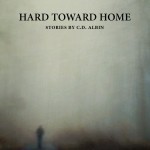 CD Albin’s debut story collection Hard Toward Home is published by Press 53 (2016). His stories and poems have appeared in a number of journals, including Arkansas Review, Big Muddy, Cape Rock, Cave Region Review, Natural Bridge, Red Rock Review, and Roanoke Review. He teaches at Missouri State University – West Plains, where he edits Elder Mountain: A Journal of Ozarks Studies.
Hard Toward Home
Press 53
© CD Albin 2016
Excerpted from “The Price of Land”
Glen Green pressed his shoulders flat against the chair as April’s father glared at him from the head of the table. Glen hated the way the older man could make him feel as light and rootless as straw. If it weren’t for April he would have walked out ten minutes ago, but she’d found his hand beneath the table, and he could feel the tiny stone of her engagement ring grazing his knuckle. He squeezed her fingers, then looked straight at her father and held the man’s stare. “That place,” Glen said. “It’s what I’ve got left.”
John Lowe let out a long breath. His dessert plate was heaped with apple pie, but he pushed it away. “I named you a fair price.”
“I never asked for one.”
“Then what’ll you do for money?”
“I got a job. Forty hours a week.”
Lowe gripped the edge of the table as if he meant to overturn it. “You’ve got forty shares of nothing. Come December, you won’t make the taxes.”
Glen glanced at Mrs. Lowe, who had sealed her lips in a crease. Behind her the wind moved in the side yard, drifting dry leaves across the lawn. He released April’s hand. “It ain’t your worry,” he said.
Lowe struck the table so hard coffee leapt from his cup. “Somebody better worry. There’s a baby inside her.”
“I said I’d support her. The baby too.”
“Tell me how? You’re nineteen. You don’t even have a diploma.”
Glen felt April’s hand on his shoulder. He brushed it away and shoved himself from the table. When he turned back, her face was flushing. “Can’t you say anything?” he shouted. “What happens to you inside this house?”
She shrank away as if he’d struck her, then her eyes widened and he knew before he turned that John Lowe was rising. He tried to hold the man off, stiff-arming him in the chest, but Lowe was too strong. He hooked Glen around the neck and dragged him backward down the hall, through the front door and onto the porch. Glen struggled to brace himself before his head cracked against a porch column and Lowe’s forearm rammed beneath his chin, cutting off his air. “My house, you little tomcat,” Lowe shouted. “She lives in my house. Don’t you raise your voice to her.”
Glen tried to knee Lowe in the groin, but Lowe caught his leg and tumbled him over the railing into the flowerbed below. He landed badly and fire seized his spine like a jolt from a cattle prod. For several moments he lay still, staring at a blank strip of sky between the porch roof and the maple tree. Faint voices seemed to hover there, until one swooped down and burst inside his ear. “Let me go,” he heard April scream. “You hurt him. Let me go.”
The back of Glen’s neck had tightened like a vise, but he got to his feet and found the porch steps. Above him, April was straining to break her father’s grip while her mother stamped one foot and shouted, “April. April, listen to me.”
Glen started to charge the steps, but as he grabbed the railing he thought of the child April carried—the close quarters on the porch and the long drop to the ground. Lowe’s broad face was still fierce, the neck tendons taut, bulging. “Wait now,” Glen said. “Just let me talk to her.”
“I already heard how you talk to her.”
Glen took a deep breath, then straightened his shoulders and nodded. “Back there, that came out wrong.”
“You said what you meant.”
“No. I didn’t mean to yell. But April and me, we’ve got to talk.”
Glen held April’s gaze for a moment, then watched her twist in her father’s grasp and jerk one arm free, holding it in the air as if she might strike.
“You’re not leaving with him,” Lowe said to her.
“I’m not leaving with anybody. We’ll just walk to the end of the drive.” When Lowe hesitated, she stamped her foot like her mother. “His truck’s right here. We can’t run off.”
Lowe’s face darkened, but he gave in. “Twenty minutes,” he said to Glen. “You have her back.”
Glen nodded as April hurried down the steps to him. She slid her arm around his waist as if he needed support, and they walked a quarter of a mile without speaking, the only sound the crush of pea gravel beneath their feet. After they rounded the first long bend in the drive, April led him to a wrought-iron settee and made him sit so that she could rub his neck and shoulders. “You make him so angry,” she said.
“I told you. I’m not selling him my land.”
“You could listen at least. He wouldn’t get so mad if he thought you were listening.”
“Then why don’t he listen to me? Rachel got the house. The land’s the only thing in my name.”
“But he can do something with it, Glen.”
“You don’t think I can?”
She didn’t answer. Her hands left his shoulders and she slumped beside him, pouting the way she did when she wanted to be someplace else. He reached down and pried a half-buried walnut from the ground. The hard shell felt good on his fingertips as he rolled it back and forth. “If my sister won’t sell the house, I’ll get us a trailer,” he said. “We can set it out there by the creek.”
She stayed silent. The wind lifted, sending leaves streaming from the trees. “Out there under that big sycamore,” he said. “You remember?”
“I’ve not said I’ll do that.”
Glen stood, walked away from the bench. A lone dogwood fronted the rest of the woods. He fired the walnut into a clump of ocher leaves. “You too good for a trailer?”
“We can do better than that.”
“If I sell, you mean.”
She slapped both knees hard. “We can get a house in town, Glen. Or out in Lake Haven. It’s pretty there.”
He retraced his steps until he could see around the bend. Her father’s house loomed on the hilltop, white columns lined like sentries before a brick façade. “You’re spending money I ain’t got.”
“You can get it. Most of it. Daddy’ll help with the rest.”
He shook his head. “We can’t afford anything in Lake Haven. And we’re sure not taking money from him.”
The wind gusted again. She held her hair back from her face. “You better think about your baby.”
“That’s exactly who I’m thinking about.”
“I wonder.”
Glen jammed both hands into his pockets and made a fist around his keys. “I wonder what you meant when you said yes to me.”
* * *
He was surprised to see his sister’s beat-up Cavalier parked near the porch when he arrived home. He stared at the plates for a moment, trying to guess why she hadn’t moved farther away than Texas. When their mother left, she caught a bus in Jonesboro and rode all the way to California.
The light was on in the kitchen, where he found Rachel at the table with a cup of coffee. She wore a tight Hard Rock T-shirt and faded jeans. “Didn’t know you were coming,” he said.
“You never turn on the machine.”
She reached out to hug him. He leaned down and let her squeeze him, briefly resting his chin on her shoulder. In the refrigerator, he found she’d stocked new lunch meat, soda, a six-pack of Lone Star beer. Popping one of the cans, he downed half before shutting the refrigerator and looking at her. “Your tires are worn,” he said. “You need to rotate them.”
“You sound like Daddy.”
He studied her face, which was fuller now that she was in her twenties. Her hair was fuller too, dyed a harsh shade of gold that reminded him of Dallas, where she now lived. In May he’d spent a week at her apartment and never made peace with the bright, foreign glare of the Texas sun or the shining glass buildings he’d seen when he first arrived. He’d searched all week for a view that would rest his eyes, and when he drove out of the city, he wondered how she could stay there and not miss the close, wooded hills of the Ozarks. “How come you’re back?” he asked.
She went to the sink and poured out her coffee. A tattoo of intertwining roses climbed one wrist. “I got a call,” she said. “John Lowe.”
Glen tensed. “The land’s mine. I can do what I want.”
His sister gave him a look of disbelief. “That’s your biggest worry? That’s the first thing you think about?”
“Sell me this house,” he said, the words coming far sooner than he intended.
“What are you talking about?”
“Sell it to me. I’ll borrow against the land.”
Rachel laced both hands on top of her head. “God, how far along is she?”
He shook his head. “Four months. I figured he told you.”
For a moment she studied him, then dropped her hands and turned to the window. Her face sagged, and Glen caught a vision of her profile at forty. Suddenly the room seemed too small. He slung open the screen door and went to the end of the porch. The sun was sinking, the sky above the barn going red and gold. In a few hours he’d be stuck at ArkMo, stamping bottle caps all night.
The door springs creaked and Rachel stepped out, letting the door clap against the casing. She lit a cigarette and rubbed her forehead with the heel of her hand.
“I can get a loan,” Glen said.
“I don’t think that’ll work.”
“There’s eighty acres in my name. They’ll lend me money.”
With a fierce flick she sent the cigarette over the porch rail. “I’ve already got a buyer. He’ll pay me twice, three times what you can borrow.”
Glen felt his blood rush. He clamped her by the arm, shaking her. “What are you trying to do to me?”
Rachel stepped back and jarred him as she brought a hand across the bridge of his nose. “You prick. Daddy left this to me.”
Glen blinked back the moisture that came with the pain. “Not if he’d known, he wouldn’t have.”
“I never said to hide it. Anyway, I’m quitting.”
His mind flashed on her tiny apartment in Dallas, the strung-out strippers who swung by at any hour. From what he’d seen, they had been her only friends. “Who you promising?” he said.
She scowled at him. “Me, maybe. Surely not you.”
“Surely.”
She started back in, but stopped. “Why do you want this place, anyway? It’s about to fall down.”
“What do you care?”
“Just tell me.”
He could feel the porch railing against his hips, reminding him of the fall at Lowe’s. “She don’t want a trailer,” he said. “I need something more.”
“And you think she’ll stay here? For a week, maybe.”
“She’ll stay with me.”
“God, Glen. Wake up.”
He felt his face flush, a warm tingling that spread from his ears to the back of his neck. “What do you know about staying? How many of those cowboys stuck with you?”
She came close and poked a stiff finger in his chest. “I know this. You can ruin yourself before you get started. I’ve seen that plenty.”
“I bet you have.”
She nodded to him. “You’d win that one.”
He waited until she left the porch and shut herself in her room before he went back in and made himself a sandwich. He barely finished half, then threw it away and stretched on the couch, where he tossed fitfully till time came to start for ArkMo.
* * *
At eight o’clock the next morning, Glen left the plant with the rest of the third shift and squinted against the sunlight, brooding that Lowe had offered Rachel so much money for the house. He drove straight to the Super 8 Motel and parked on the west side of the lot, where he watched a backhoe bite into a ridge on the far side of the bypass. The machine shaved off the crown and a clump of volunteer saplings, while at the base of the ridge two dump trucks hauled crushed limestone from John Lowe’s new gravel pit. The land joined Glen’s at the south end, and he imagined a layer of dust settling like soot all over his property.
On the way home he rubbed his emotions raw by telling himself Rachel had betrayed him, but when he pulled into the drive her Cavalier was gone. Instead of going in, he followed the unpaved farm road through two empty, weed-choked pastures and finally stopped beside the creek. Even his eyeballs felt tired, so he hung his legs out the door and tried to sleep in the cab, but the sun was too bright. Annoyed, he propped his weight on one elbow and stared over the dash. The sycamore loomed in front of him, ashy-white and nearly bare of leaves. He ran his eyes up to the strange vee where a twister had torn the top out years ago. A new lead branch had formed, but the sycamore would never be a pretty tree.
Staring into the broken canopy, Glen wondered why he had urged this place on April. The ground was flat enough for a trailer, and when the tree was in leaf there would be good shade, but for most of the year the creek was nothing but a long spill of gravel that snaked across the farm. Back in high school he’d trained for cross country by chasing the dry bed, but he hadn’t run in over a year. He’d quit the day the principal and a highway patrolman called him out of class and told him his father had been crushed by a semi. That same morning Glen had braked at the end of the drive and glanced toward the barn, catching a glimpse of his father as he passed in profile, a feed sack hunched over his near shoulder. The Cardinals cap had been visible, but not his face as he disappeared into the barn. For nights after, Glen lay awake and thought of the lank body stepping through, the red cap never quite swallowed in darkness.
Now he eyed the misshapen sycamore and wished the twister had taken it whole. He knew Lowe would cut that tree, raze the house and barn, anything that said a Green once held title to the place. Eighty acres was too much land for a mall, but Lowe owned quarries and gravel pits all over north Arkansas. If he ever got hold of the farm, it wouldn’t be worth seeing again.
<<>>
June 21, 2016
Excerpt from Cindy Brown’s New Novel
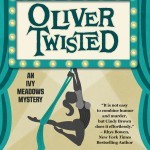 Cindy Brown is a theater geek, mystery lover, and professional writer who recently combined her passions to produce madcap mysteries set in the off, off, off Broadway world of theater, published by the award-winning Henery Press. Macdeath (nominated for an Agatha for best debut novel!) The Sound of Murder, and Oliver Twisted all star Ivy Meadows, actress and part-time PI, who’s “sort of a Nancy Drew Barrymore” (Broadway.com).
Cindy and her husband live in Portland, Oregon, though she made her home in Phoenix, Arizona, for more than 25 years and knows all the good places to hide dead bodies in both cities. She’d love to connect with readers at cindybrownwriter.com (where they can sign up for her Slightly Silly Newsletter) or on Facebook or Twitter.
Oliver Twisted
Henery Press
© Cindy Brown 2015
Excerpt from Chapter 11
When Ivy Meadows lands a gig with the book-themed cruise line Get Lit!, she thinks she’s died and gone to Broadway. Not only has she snagged a starring role in a musical production of Oliver Twist, she’s making bank helping her P.I. uncle investigate a string of onboard thefts, all while sailing to Hawaii on the S.S. David Copperfield.
But Ivy is cruising for disaster. Her acting contract somehow skipped the part about aerial dancing forty feet above the stage, her uncle Bob is seriously sidetracked by a suspicious blonde, and–oh yeah, there’s a corpse in her closet.
Forget catching crooks. Ivy’s going to have a Dickens of a time just surviving.
<<>>
I had a couple hours before afternoon rehearsal for Oliver! At Sea!, so I finished the last few chapters of Oliver Twist, did my regular routine of core exercises on my bunk, and grabbed a late lunch at one of the buffets.
The line at Food, Glorious Food was too long, so I scurried to The Best of Days, Wurst of Days sausage bar and ate a big portion of Toad in the Hole, which was actually very tasty, sausages in some sort of batter. Then I headed to rehearsal. I wanted to be there early.
Jonas was there too, sitting in the front row of the theater. “Hey,” I said.
“Hey.” Jonas turned to greet me with a smile, which dimmed immediately. “I thought Martin was going to fix your hair.”
“He did. He fixed it nice and short and gave me this wig.”
Jonas gave me a dubious onceover.
“Nancy is supposed be a mess,” I said.
“Not that much of a mess.”
“Don’t worry, honey.” Timothy had come up behind me. “Wig styling is one of my many talents, along with—”
“Good,” Jonas cut him off just in time. Timothy had a famously dirty mind. Then Jonas said something else that was drowned out by a tsunami of noise as a pack of boys raced into the theater.
“Ready for rehearsal, Master Bates,” said the tow-headed leader of the group.
“Master Bates! Master Bates!” cried his followers.
“Oliver, I asked you not to call me that,” said Jonas Bates.
“But it’s your name, and besides, the Dick-Meister said it.” Oliver looked to be about eleven, with blonde curls and a snub nose.
“Dickens also killed off little children with impunity.”
“But only the nice ones,” replied Oliver. “I’m safe.”
“He did hang the criminals.” Jonas said to Oliver. “Onstage, everyone.” The boys leapt onstage.
“The new sea urchins,” Timothy said, sinking down into a theater seat. He patted the one next to him. “You can relax. This usually takes a while.”
While Jonas tried to herd the boys onstage, Timothy explained the set-up. As I knew, in Oliver Twist, the innocent orphaned Oliver ran away from a cruel master. Upon making his way to London, he was befriended by a street boy named the Artful Dodger, who took him to the home of Fagin, a villainous but friendly-seeming fellow who headed up a gang of juvenile criminals, all orphans too. The difficulty with mounting any production of Oliver Twist was the large percentage of children needed to play Fagin’s boys.
“So Get Lit! has this genius idea,” said Timothy. “They cast professionals for the roles of Oliver and the Dodger—David over there plays the Dodger.” He waved to a silent black-haired kid with a battered top hat who stood at the side of the stage, watching the action. “And to families with boys between the ages of nine and fourteen, they offer a deal: The kids get to cruise free if they agree to be in the show. It’s brilliant. Get Lit! gets a cast for almost nothing, families with boys compete for the few slots available, and their friends and extended families sign up for a paid cruise in order to see their darlings onstage. There’s just one problem.”
“Boys!” yelled Jonas. “You exit stage left. Stage LEFT.”
“They don’t have to have any acting experience?” I said as boys ran every which way.
“However did you guess?” said Timothy.
Jonas ran his hand through his hair. “God bless us…Everyone! Let’s run it again.”
After about an hour, Jonas had worked a small miracle. The boys had made it through their introductory scene and their first musical number, where Fagin taught Oliver how to steal from passersby. “You’ve got to lift a locket, or two, boy,” sang Timothy. “You’ve got to lift a locket or two.”
While waiting, I kept an eye out for suspects in Harley’s death, but didn’t come up with anything viable. Murder by a pack of marauding orphans seemed unlikely.
Finally I made my way backstage to get ready for my entrance. My first scene consisted of a song and a few lines to establish my character. Nancy was the original prostitute with a heart of gold, who belonged to Fagin’s stable and to her brooding criminal boyfriend, Bill Sikes. She was also Oliver’s protector, which got her killed in the end. She helped keep Oliver away from Fagin so the boy could have the chance to live a regular, non-criminal life. But her interference infuriated the old villain, who wreaked his revenge by telling Sikes that Nancy had turned informant. Outraged, Sikes beat her to death. Offstage, of course.
In the blackout (quick lights out) before my first scene, Jonas said, “Alright, Nancy. We’ve changed the blocking from what’s in the script. You and Fagin enter from slightly upstage, like you’ve come in from a different room. Hu’s on first.”
“Who?
“Yes.”
“Who’s on first?”
“Yes.”
“Which actor?”
“Hu.”
“The guy playing…”
The kid playing the Dodger tapped me on the shoulder. “I’m Hu.”
And I was really confused. “Okay,” I said anyway. The lights came up and the Dodger swaggered onstage followed by a wide-eyed Oliver. Timothy and I moved a few feet upstage in the wings to wait for our entrance.
“Welcome to our ’umble abode,” said Hu, doffing his hat to Oliver. “The ’spectable old genlem as lives ’ere will give you lodgings for nothing, as long as I interduces you.”
“He must be very kind,” said Oliver.
“Enter now, Fagin and Nancy,” Jonas shouted over the intro music.
We did, arm in arm and laughing as if we’d just enjoyed a great joke.
“Ah,” Fagin said as he spotted Oliver. “And who have we ’ere?”
“A new pal. Oliver Twist,” replied the Dodger. Recorded music began to play.
“We are very glad to see you, Oliver, very,” said Fagin. “Aren’t we, Nance?”
“We are indeed,” I said, trying to sound like a Cockney putting on a posh accent.
“Indeed,” said the Dodger, whose accent was much more believable than mine. He started off the song. “Consider yourself…onboard.” He sang it to the tune of, yep, “Consider Yourself” from Oliver! “Consider yourself…one of the barnacles.” A smooth-cheeked Asian boy, he had a strong tenor voice and a pitch-perfect Cockney accent.
“You don’t have to stow…away,” I sang. “It’s true, you…have landed a place to stay.”
Fagin put his arm around Oliver and sang, “Consider yourself…shipshape. Consider yourself… one of our happy gang.”
The blonde boy looked up at Fagin with doe eyes and sang, “It’s true that I’m in…your debt.”
“Not yet, but, whatever you take, we get,” sang Fagin.
I knew this number was about Oliver’s introduction to Fagin’s stable of young criminals, but still, I wasn’t sure it was the smartest choice for a theft-plagued cruise line. We finished the song and Jonas said, “Hold it. Nice job, Ivy. Let’s take five. When we come back, we’ll put the rest of the orphans into the scene.”
“Don’t worry, the boys just stand there during our song,” said the Dodger as we exited stage left. “By the way,” he stuck out a hand, “I’m David Hu.”
“Oh…”
He grinned.
“Jonas and David like that Hu joke. I don’t get it,” said the blonde boy. “I’m Oliver. It’s my character name and my real name. What’s yours?”
“Ivy Meadows.”
“Right.” The kid laughed.
Jonas joined our group. “Ivy,” he said. “I wanted to apologize about yesterday. I wouldn’t have pushed you so hard if I’d known about Harley.”
“Did you know her well?” I asked.
“I didn’t, but…” He glanced at David, who pulled in his bottom lip.
“She was nice,” David said.
“What’s wrong with Madame De-fart?” Oliver asked.
“She’s dead,” said Timothy.
“Dead?” said Oliver. “She’s dead as a doornail!” he shouted to the orphan actors. Then to me, “It’s Dickens.”
“It’s also Shakespeare,” I said. “And not a very nice thing to say when someone’s really dead.”
“No wonder you were distracted,” Jonas said to me. “It had to be horrible, finding her.”
“Is she in the morgue now?” asked Oliver. “Hey boys, want to see a dead body?” Before us adults could say anything, he added, “Kids saw dead people in Dickens all the time.”
I ignored Oliver. “It was horrible,” I said to Jonas, “especially not knowing if her killer was still close by.”
“Her killer?” said, oh, the entire cast. “She was murdered?”
Oops.
June 3, 2016
Books by Robert Hill’s Bed
Robert Hill is a New Englander by birth, a west coaster by choice, and an Oregonian by osmosis. As a writer, he has worked in advertising, entertainment, educational software and not-for-profit fundraising. He is a recipient of an Oregon Literary Arts Walt Morey Fellowship and a Bread Loaf Writers’ Conference Fellowship. His debut novel When All Is Said and Done (Graywolf, 2006), was shortlisted for the Oregon Book Awards’ Ken Kesey Award for Fiction. His second novel, The Remnants, was released earlier this year by Forest Avenue Press.
I am a very schizophrenic reader. Much as I like discovering new voices, or new works by favorite contemporary voices, more often than not international voices, give me a classic, preferably an American classic (not for nationalistic reasons, but because I love America’s self-delusion as a subject) and I’m totally Yankee Doodled. You would not know this about me by the books stacked on my nightstand, however, because when I come upon such an American novel (of which there are fewer and fewer left for me to read) I kick every other novel ahead of it out of line and read it right away. (And how much more American can you be than to be a book thug?)
Hanya Yanagihara’s A Little Life has been taking up a lot of precious nightstand space for about a month now. Sometimes, it rises to the top of the pile like a rock unearthed by low tide, but the anguished face on the cover gives me just enough of the creeps that I have to lower its place in line and cover it with another book in the pile. There are two reasons I will read this book, neither of them because of its international best-seller pedigree. The first reason is because my book group is reading it. My book group, peopled with some very, very smart and funny and extremely well read folks, has been meeting once a month for over fifteen years, and just about every one of the 180+ books we’ve read has been worthy of lively discussion, with a few books even leading to fights, resignations and one nearly Lord of the Flies-ish expulsion from the group. We don’t kid around. The second reason I’m going to read A Little Life is because my friend John, who recommended the book for book group, told me that while reading it, he could not put it down. That’s 813 pages he couldn’t put down! John is a man of exquisite taste: in art, architecture and literature. If something fails to speak to him with truth, it’s Fredo to Michael Corleone – dead to him. But if a book appeals to his senses in a way that sneaks up on him and slaps him bug-eyed, makes him feel alive, damaged, challenged, changed from who he was before he read it to who he is after he’s finished, then I’m going to take his recommendation like a Moses moment, drop everything, and read every word.
I know this isn’t kosher to say, but I don’t really feel sorry for Germany, WW II Germany, that is. Too many people of that generation looked the other way while too many people disappeared and died, and that says something to me about a peoples’ collective national character or lack thereof, so the fact that her cathedrals got bombed and her palaces blitzed and her apartment houses reduced to rubble leaves me with a big ole mouthful of gehen Fick dich! However, I am willing to consider softening my views, at least from an architectural standpoint, by reading W. G. Sebald’s On the Natural History of Destruction, as he explores Germany’s blind failure to come to terms with her sins, as manifested through her 131 smithereened cities and 600,000 dead civilians (not to mention those other seven million), and what that blindness to history means for her future. Because Sebald’s Austerlitz was so hauntingly beautiful and his writing style so at-once mesmerizing and heartbreaking, and because anything written about the holocaust, no matter how devastating, is still a million times more interesting to me than any “fictionalized” memoir about unhappy suburban childhoods, I’m looking forward to having my sympathies expanded, if not softened.
When I was a senior in college, I read Christopher Isherwood’s movie-biz satire, Prater Violet. Callow as I was at the time, I knew of Isherwood only as the guy whose stories were turned into a play by John Van Druten, then into a stage musical by Kander and Ebb, and subsequently into a movie by Bob Fosse called Cabaret, which gave the world Liza Minnelli and then forgot to tell her it was a wrap. In Prater Violet, the screenwriter catalogues his past lovers, to whom he refers by initials only, and though referred to by initials only, are clearly men. For a closeted college student like me at the time, it was like reading gay braille. Homosexuals as letters! A scarlet moment in my literary education! Many years later, I read A Single Man I think only because I knew there was a movie being made from it. The prose in it is as fresh and crisp and smart and subversive as anything written right this moment, and his matter-of-factness about being a gay man in the world so astounding, that I was smitten with Isherwood as I hadn’t been with Prater Violet, probably because I got hung up on all those scarlet letters during my nascent coming out-ness and couldn’t see the story for the subtleties. I told you: I was callow. Years later, when I worked in the movie industry, I realized that Isherwood’s Prater Violet was a documentary. Jump ahead. On my nightstand for the longest time has been Isherwood’s The Berlin Stories, upon which much of the Van Druten play and the Kander and Ebb musical were based. Because of my reverence for Isherwood and his writing style, one of these days when I’m in a self-confident place where I won’t want to open a vein in envy, I will read The Berlin Stories and love them, no doubt, but until such time as my confidence and veins are strong enough, it will remain in the pile. Isherwood has that effect on me.
When Paul Harding won the Pulitzer Prize for Tinkers, I like many thousands of others said, “Paul who? Tink-what?” That slender novel, with its countdown to death, was so beautifully felt and written that I both hated Harding (from envy) and wanted to be his best friend (so I could poison him… from envy). His next book, Enon, has been sitting on my nightstand for over a year. I want to read it, I do. But as with so many magnificent first novels by writers out of nowhere, the second one out of the gate carries an unfair weight of expectation, both for the novelist as well as the reader. I did not and will not read the exhumed Harper Lee Mockingbird follow-up because I don’t want to taint a beautiful relationship. Similarly, I am not of the school that thinks Ralph Ellison ought to have published another book after Invisible Man, because, let’s face it, once you’ve written Invisible Man, what the hell else is there to say? (I admit I bought Juneteenth, another exhumation, but never read it.) I’m not saying the Paul Harding is in the same category with those two other lions, but Tinkers was such a lovely novel that I am reluctant to risk spoiling my opinion of the writer lest his second effort not touch me as deeply as his debut.
Upon the publication of my new novel, The Remnants, friends gave me a copy of Mark Crick’s The Household Tips of the Great Writers, a compendium of recipes, gardening tips and do-it-yourself household repairs by many surprising literary gods, gems drawn from their actual works. Think of it as a Tome Depot. For instance: Tiling a bathroom? Look to Fyodor Dostoevsky. Need a recipe for boned stuffed Poussins? Forget Julia Child, it’s the Marquis de Sade’s recipe you want. Need advice about planting a cheery garden? Who could give cheerier advice than Sylvia Plath? (What a thrill – my thumb instead of an onion…!) Whenever I am at a crossroads with whatever, I read a new entry from this book.
With all that said, the next book I read will probably be one I do not own, and is not in the pile, and was not on my radar at the time of this writing. That’s the way it is with readers and books: there’s always another you want to get to. It’s just so damn hard to decide which one first.
<<>>
May 27, 2016
Books by Jodi Paloni’s Bed
Jodi Paloni grew up in rural Pennsylvania, lived in Vermont for 25 years, and recently settled on the coast of Maine. She is the debut author of They Could Live With Themselves, a collection of linked stories set in the fictional town of Stark Run, a runner up in the 2015 Press 53 Award for Short Fiction, and recently published by Press 53 (read an excerpt here). She won the Short Story America Award and was a finalist in the Raymond Carver Short Story Contest. Learn more on her website.
Stacks of books and bookshelves are the prominent feature of our home décor, but I do try to keep the pile on my nightstand short and varied. I’m not sure what I’ll be up for when I climb into bed or when I wake up in the middle of the night––a quick story, an essay, a poem, research material (rarely), immersion into a thick juicy novel (often). What mood will I be in? What balm is required? I have a habit of straightening the pile in the morning. Here’s my current hoard, organized from top to bottom by size as they appear on my stand at the time of this writing.
Island by the late Alistair MacLeod (Vintage, 2000): Sixteen atmospheric stories set against the remote landscape of Cape Breton Island span decades and interpret place and community as one and the same. I read and re-read. How does MacLeod’s straightforward telling (beautiful prose) of the everyday transcend ordinary life? Cape Breton is on my travel list. Island keeps the dream alive.
Department of Speculation by Jenny Offill (Vintage, 2014): Last summer, while floating in the harbor on our little sailboat, I started reading this novel told in fragments, the retracing of a marriage, a look at how-did-we-get-to-be-where-we-are-now. Then I lost track of the book. I recently pulled it out of the sandy summer bag I found smashed under a bag of hats and scarves in the hall closet. Offill employ’s language that is unique––lyrical, while concise, with the feel of stream of consciousness, though biting and honest. I can’t wait to start over and keep going this time.
Art Objects: Essays on Ecstasy and Effrontery, Jeanette Winterson (Vintage, 1995): The title attracted me to this book. Read: art objects (noun) and art objects (verb). Notice the alliteration essays, ecstasy, effrontery. I love to think about words and meaning, art and the self, the physicality of and the political manifestations inherent in expression. Winterston’s Lighthousekeeping is one of my all-time favorite novels. But it’s her authority on passion, the boldness that exudes from her fleet of books that astonishes me more than any one body of work. Some nights I require a challenge. On those nights, I pick up Art Objects.
Marrow Island by Alexis M. Smith (Houghton Mifflin Harcourt, June 7, 2016): I’m honored to have been gifted an ARC of Marrow Island by the author. Her previous work, Glaciers (Tin House, 2012) swept me off my feet back then and I’ve been waiting for Alexis’s second novel ever since. After reading the first 40 pages, I’m all in. More island reading here! I confess to choosing books about the places I love, which involve rich green and rocky landscapes, briny air, and frigid seas.
As well, I keep Runaway by Alice Munro (Knopf 2004) and a copy of Olive Kitteridge by Elizabeth Strout (Random House, 2008) close by. I write short fiction. The works of these two women writers teach me. When I read well-loved shorts, they give me an experience of having entered another time and place while grounding me in my own understanding of them. I relax and empty. Similarly to a child requesting Good Night Moon, night after night, afterwards, I can sleep.
Finally, while I no longer subscribe to literary journals (there are just too many I want to read and support), I keep my eye out and do buy single issues from among my favorites when something in particular stands out. Currently, I’m taken with the topic of faith, all configurations, as set forth in Tin House 67––Joy Williams’ fiction, Anne Carson’s poetry, essays by Mira Ptacin, Aimee Bender, and Marilynne Robinson, and more. I pick this one up when I want to fill rather than empty.
<<>>
May 19, 2016
Excerpt from Jodi Paloni’s New Story Collection
 Jodi Paloni grew up in rural Pennsylvania, lived in Vermont for 25 years, and recently settled on the coast of Maine. She is the debut author of They Could Live With Themselves, a collection of linked stories set in the fictional town of Stark Run, a runner up in the 2015 Press 53 Award for Short Fiction, and recently published by Press 53. She won the Short Story America Award and was a finalist in the Raymond Carver Short Story Contest. Learn more on her website.
They Could Live with Themselves
Press 53
©Jodi Paloni 2016
From “Bench Girls”
The three teenage girls perched on top of the park bench shouldn’t have been there, their stinking cigarettes, their foul-faced glances. What about school? This was Jack’s special time, his after play-school fresh-air time with his granddaughter.
“Higher, Pop-Pop,” Mandy May cried from her swing.
“You got it,” Jack said, though his heart wasn’t in it.
He had seen these girls before, taking up most of the sidewalk in front of the hardware store. They shoved each other into boys who mooned around them, boys who slouched, standing as if height had invaded their unsuspecting bodies and they didn’t feel right in their clothes, their laughter high-strung and unnatural. Jack had been a boy like that. He remembered how the girls he could push down in a game of tag transformed into something altogether terrifying. It happened overnight. You went to bed a lord and woke up a servant. And here they were, a version of those girls from his younger days, only these three with their piercings, dark eyeliner, and scruffy get-ups looked as though they’d been put through the wringer.
One option was to take Mandy May to play up at the farm. He’d grown up there without a fancy playground, but Mandy May loved the swings down here. His wife would say the girls were harmless. They were just making a statement; all kids do it. Molly knew what was what in the world. She knew how to remain calm, tolerate others, but now she was gone. For three months! An internship at a yoga center! He’d quit the hardware store to spend more time with her and she left. She was as gone as a person can get outside of death as far as he was concerned, at least for a little while. Then she’d come home. If she were here now, she would tell him to relax.
He loosened his jaw, making circles with his chin—three times clockwise, three times counterclockwise, the way Molly had taught him, followed by deep breaths. They’re just girls. They’ll leave. He ground his right foot forward in the gravel, leaned, and pushed Mandy May higher.
“Good one, Pop-Pop!”
“Just showing you my best stuff, little missy.”
Molly’s philosophy was to focus on the positive, look around for beauty, trust the natural order of things. There’d been cold rain and winds for most of September. The last Sunday in September brought a hard frost on the farm, late for Vermont. But now an Indian summer sun streamed mid-day heat through half-naked branches. It was a gift. It made everyone a little giddy. The park smelled of leaf rot, the scent of changing seasons, Jack’s favorite. The light, the leaves gold and burnt orange on the trees, even the tidy buildings lined up on the street repeating themselves seemed gorgeous. But the girls were like pigeons sitting there, an imported species. They ruined the splendor. Jack scowled and pushed Mandy May higher.
“Wheee,” she cried.
From the bench a laugh came from the girl on the left, the one with the honey-colored hair. He watched the girl lean forward, hovering over the other two. They were hunched over a cell phone. Except for the combat boots with the pink shorts and a few chains dangling from her hip, she looked the most normal of the three.
Her hair swept like sunlight across bare shoulders. Bangs framed her face. The look of her and the smell of cigarettes reminded Jack of Molly at that age, the alto he’d fallen for during a choir weekend in the mountains, senior year in high school, about a thousand years ago; she was new in town. He’d first seen her with a group of girls smoking behind the shower house and was knocked flat by her beauty, but more, he could tell by the way the other girls looked at her that she held the power. Her laugh was rich, while the other girls seem to cackle. She was the real deal.
He couldn’t remember exactly what Molly looked like back then, her features, the details, he meant, up close. Could he remember what she looked like now? She’d only been gone a couple of weeks. A slight panic consumed him. He tried to picture Molly in yoga pants in a pose like the gray-haired ladies in the catalog she had left on the end table by her comfy chair. He admitted the women at the yoga center did look healthy for their age, their bodies fit, and their skin taut and glowing. He searched his mind to find Molly’s face on a yoga body. There it was; he found it, and felt relieved.
Mandy May whomp-wobbled the swing from left to right. “Where’s your head, Jack?” Mandy May asked, something Molly would ask and not necessarily expect an answer. Heat rose up his neck to his face. He felt they had all been reading his mind, Mandy May and those girls, which was ridiculous, of course, but there was never any doubt when old Jack felt embarrassed, all rashy-pink, right there for the world to see it. Then he remembered that he was the grown-up here. He stood taller and rolled his shoulders back.
“Never you mind what’s in my head. The important thing is what’s in yours,” he said. Focus, Jack, he told himself. She was a character, that Mandy May, pretending to be Molly, a little monkey-see, monkey-do. “Just pump your legs like I showed you.”
“Dah, dah, dah,” she sang and pumped.
“That’s it. Now you’re doing it.”
He glanced back at the girls on the bench chattering like three sets of those trick teeth they sold at the hardware store at Halloween. The girl in the middle was the ringleader. Clearly. Her hair stuck out from beneath a ratty baseball cap in thatches, chopped-up lengths, orange, green, and bleached-out white. Her over-sized pants and shirt looked as if she had rummaged a brother’s dirty laundry basket. Molly would say she was the kind of girl who took care to look as though she could care less and that this was what gave her power. The girl passed a brown cigarette that smelled like cloves. Mandy May should not have to see people polluting their lungs like that; she was five for Christ sake. The girl looked at Jack, arching one eyebrow, daring him to look away.
“Come on, Pop-Pop, higher.”
“Hold on tight,” he said, an excuse to break eye contact. After one last ride, they would leave and head up the hill to the farm where Mandy May would be safe. “We’re going to let it fly this time.”
Mandy May squealed. He glanced back at the girls. The teenager in the middle took twice as many drags as she passed the cigarette back and forth to the other two. Yep. The ringleader. Molly would be right, as usual.
All of his life Jack had come across bad-mannered women among the good, and still did. Earlier that week, the receptionist at the dentist office barely looked up from her computer when he stepped into the waiting room, even though the placard had spelled it out: Announce Your Arrival. The cashier at the grocery store tossed a can of beans on top of his bananas. The redheaded librarian who smelled like garlic and coffee snapped her fingers in the direction where he might look for a book instead of getting off her butt to help him. He could find his own book, but still, what happened to basic manners? The girls on that bench at the park were bound to become like those women if they weren’t careful. Women like that made people feel invisible, like thin air.
Molly had way more substance than that. She treated him like a king, which made her a queen. If he had appreciated her more, perhaps he would not be spending the cool autumn nights alone while she slept in a dorm. But Molly had said that her journey had nothing to do with him, which was supposed to make him feel better. It made him feel worse. When did she start saying things like her journey? And how could her journey have nothing to do with him? They were in this life together.
She’d been gone three weeks, seven more weeks to go. Every day, he felt more restless. That day, the bench girls distracted him from that lonely feeling, if only for a little while. He wondered if he would see them next time at the park. He hoped he would, and then as soon as he thought that, he felt ashamed. He couldn’t figure out why he would want to expose Mandy May to their behavior, or why he would want to submit himself to the discomfort he felt around them, yet he found himself thinking about them too much. He wondered what they were like in class and at home. Did they have boyfriends? When he thought about their bodies, particularly the honey-blond in tight clothes, he scolded himself. What kind of pervert was he? It was insane the way thoughts about those girls filled the emptiness he felt with Molly gone.
He needed a project, but the garden was nearly put to rest and the barn was tidy. He could drive up to see his fishing buddy in the Northeast Kingdom, but now he watched Mandy May two days a week, so there was that. He’d just have to think of ways to make his time with Mandy May fill him up. Maybe he could watch her a third day. Maybe he should go back to the hardware store, but part-time. He laughed. Last fall, he couldn’t wait to retire, go hiking with Molly, and watch her bake at the kitchen counter while he listened to talk radio. They were going to work on their sex life. Now he was thinking about getting a job, all because Molly had left him here alone, all because of those girls.
Get a grip, Jack, he told himself. Get a goddamn fucking grip. With no chores or appointments and no Mandy May today, the afternoon stretched before him, long and hollow. He had a new book from the library. He had a bruised banana. He took both out to the yard and stretched on the cedar chaise lounge that their youngest had built in woodworking class his senior year. Crazy Sky, who lived a few miles away from home, couch surfing at a friend’s house, just to get away from his old man. Everybody seemed to be looking for some space away from Jack. He missed his kids. He missed Molly. Now he felt too tired to read. He fell asleep.
<<>>
April 22, 2016
Books by Kathryn Leigh Scott’s Bed
Author/Actress Kathryn Leigh Scott has written several books of fiction and nonfiction. Her latest work is Last Dance at The Savoy: Life, Love and Caring for Someone with Supranuclear Palsy, a memoir chronicling her and her husband’s journey with this little-known neurological disease for which there is no known cure or treatment. A portion of sales benefit CurePSP, for which Scott is a volunteer spokesperson. She starred in the cult favorite “Dark Shadows” and has recently appeared in a recurring role on “The Goldbergs.” She grew up on a farm in Robbinsdale, Minnesota and currently resides in New York City and Los Angeles. Read more about Kathryn at her website and on her Facebook page.
Since I’m an actress-turned-writer, I’m choosing to single out the signed books on my bedside table written by good friends, who also moonlight as writers while being far better known for their day jobs.
The first of these is my dear friend, Sir Thomas Allen, the renowned Welsh baritone, who wrote Foreign Parts: A Singer’s Journal in 1993. I treasure my signed copy of this slim volume in which the fine singer, actor and artist offers insights into his roles in various opera productions and does so in beautifully written prose.
I’ve known Julian Fellowes (now Lord Fellowes, the renowned creator of “Downton Abbey”) since we met some forty years ago working as actors in West End London theatres. I adore Julian and love his writing, including Snobs, his first novel—a signed copy of which I would not loan out to even my closest friend! Needless to say, I can’t wait to read his new novel, Belgravia.
I acted with Dirk Bogarde in Providence, directed by Alain Resnais in 1975 and simply fell in love with this darling man over dinner á deux in a romantic Parisian restaurant. I always looked forward to seeing Dirk over the years and relished each new book he wrote. Two memoirs, A Postillion Struck by Lightning and A Short Walk from Harrods, are among my favorite books written by this brilliant actor and very fine writer.
Brian Kellow, an editor at Opera News (where my piece on Birgit Nilsson, The Star and the Stalker, was published), is one of my closest friends and a magnificent biographer. My favorites among his many best-selling biographies: The Bennetts: An Acting Family; Can I Go Now?: The Life of Sue Mengers; and Pauline Kael: A Life in the Dark.
Jonathan Kirsch is not only my attorney (yes, I keep a copy of his Kirsch’s Handbook of Publishing Law handy!), but also a superb writer who has authored a shelf-full of books primarily on religion and the Bible. Two of his most provocatively titled books are in the stack by my bed: The Harlot by the Side of the Road: Forbidden tales of the Bible and The Woman Who Laughed at God: The Untold History of the Jewish People. I once watched Jonathan debate the late Christopher Hitchens (author of God Is Not Great) and, for my money, he trounced him!
Artie Shaw, the legendary clarinetist, was a wonderful friend and irascible, erudite man who devoted years of his life to writing. My favorite: I Love You, I Hate You, Drop Dead!
Which leads me, finally, to Tom Nolan’s Three Chords for Beauty’s Sake, a fantastic biography of Artie Shaw. I read this book to my husband, Geoff Miller, during the last months of his life. Geoff, the founding editor of Los Angeles magazine, was a great friend of Artie’s and counted Tom Nolan as one of the best writers he ever hired. What, you didn’t know that Tom had also been a child actor? Indeed!
Tom’s book meant a lot to us and, if anything, inspired me to turn my journal of caregiving for my husband into a memoir: Last Dance at the Savoy: Life, Love and Caring for Someone with Supranuclear Palsy.
<<>>
April 19, 2016
Excerpt from Kathryn Leigh Scott’s Memoir
 Author/Actress Kathryn Leigh Scott has written several books of fiction and nonfiction. She starred in the TV cult favorite “Dark Shadows” and has recently appeared in a recurring role on “The Goldbergs.” She grew up on a farm in Robbinsdale, Minnesota and currently resides in New York City and Los Angeles. Learn more on her website.
Last Dance at the Savoy: Life, Love and Caring for Someone with Progressive Supranuclear Palsy
Cumberland Press, an imprint of Pomegranate Press, Ltd.
©Kathryn Leigh Scott 2016
From “Indian Summer”
We had spent such a lot of time apart during my mother’s illness that once Geoff and I were together again in Los Angeles, I was able to see him with fresh eyes—and I was concerned. Gestures that had once seemed idiosyncratic—such as the way he fumblingly adjusted his eyeglasses or scratched his head or tapped surfaces with his fingertips before setting something down—now struck me as odd behavior. Sitting with him at dinner, I found myself pressing my thumb on the base of a stemmed glass so that when he reached for it he couldn’t tip it over.
I’d hoped the time apart would ease the tension that had been building up between us. It wasn’t so much that we were bickering, but more that we were trying so hard not to do anything that would lead to an argument or hurt feelings. I made a point of not commenting in any way if Geoff tripped, stumbled or tipped something over. He hated being seen as clumsy or awkward, and avoided any situation that required dexterity.
Yet, he would somehow manage to hurt himself doing the most ordinary task. He favored one hand and would therefore drop dishes, newspapers, cartons of milk, or injure himself just lifting the lid on a rubbish bin. He was simply not capable of holding the lid up with one hand and using the other to toss in a sack of garbage. If he broke something, he became sullen. He didn’t apologize. He didn’t offer to clean up.
When Geoff retired from Los Angeles magazine, we joked that I would have to take over as “staff.” In fact, “staff” became his funny nickname for me. Adding paper to the copy machine or wrapping a package were tasks he simply could not handle because of his growing difficulty coordinating two hands. He’d try to fill ice cube trays in the old refrigerator in the garage where we kept beer, wine, bottled water and juices. Hours later I would find pools of water on the garage floor and the ice cube trays in the freezer compartment were barely filled.
When we gave dinner parties, it was Geoff’s job to “set the scene.” While I worked in the kitchen, he lit candles, chose music, filled the wine bucket with ice and set glasses on the bar. But on a couple of occasions I found him struggling to open bottles of white wine hours before dinner. Once I stopped him from opening a bottle of champagne more than an hour before guests were to arrive.
“Stop! Why are you doing that?”
“I don’t want to be stuck opening bottles when everyone’s watching me.”
“But it’s too early.”
“Then do it yourself.”
So I did—and also took on the job of lighting the gas logs in the fireplace when it became dangerously apparent that Geoff could no longer do it. One evening I smelled gas and found Geoff sitting on the living room couch trying to reach the gas peg while struggling to click the fire starter.
“You could have blown us up!”
“I’ve been doing this for forty years,” he shouted. “If you don’t like the way I do it—.“
“Use two hands! You can’t do this without getting on your knees and turning the gas on with one hand and lighting the logs with the other.”
“So you do it!”
Doing everything came at a price. The more I took on, the less confident Geoff became. If he was slow to do something, I stepped in and then bore the brunt of his frustration. “You just have to show me up, don’t you?”
Geoff, who had always been a warm, gracious host, deft with conversation and full of good stories, had begun to fall silent once the meal was served. He’d prop his elbow on the table, lean awkwardly over his plate and use only one hand to eat. He handled a soupspoon like a shovel and couldn’t manage to hold a fork to eat salad.
I’d continually remind Geoff not to clutch his wine glass, but set it on the table; to use both his fork and knife; take smaller bites so he wouldn’t choke and to please, please cover his mouth when he coughed. I sounded like the dreaded hall monitor, or the nanny from hell. Geoff was sick of hearing “a laundry list of complaints.” Sometimes we argued, often we rode home from an evening out in silence. I could not understand how he could have become so oblivious and ill mannered, and he wondered why I’d stopped loving him.
“You never used to complain,” he’d say.
True. No matter how hard I tried not to, I’d begun to complain a lot. So I saved my complaints for important things, such as, “Please shower and get dressed so we can leave on time!” Then, as we were walking out the door, I’d notice he wasn’t wearing socks, or had forgotten his belt. My husband, who had always cared about his appearance, was no longer willing to wear certain shoes, pants or shirts. We struggled and argued over the most mundane things.
It wasn’t until one evening late that summer, when we were getting dressed for a black tie event that I realized how difficult it was for him to get dressed. I ended up helping him with everything, including his socks and shoes. I teased him about needing a butler and gave him a kiss, hoping our evening wouldn’t be spoiled.
Life was becoming a lot less fun. Too often I’d offer help when he didn’t want it, which annoyed him. Worse, I failed to notice when he did need help. Frustrated, he’d give up and we’d suffer the consequences.
“Why didn’t you just ask me to put your belt through the loops?”
“I didn’t want to bother you.”
At the least sign of exasperation from either of us, tempers flared and we ended up saying hurtful things neither of us meant.
“Leave me alone! You don’t love me anymore. Divorce me!”
“I don’t want a divorce. I just want you to put on a clean shirt.”
We loved each other and our marriage would not come to an end over table manners and wardrobe issues. But anger, frustration, resentment and hurtful words were taking a terrible toll. I made every sort of adjustment and concession to avoid trouble, which meant we no longer talked about or did some of the things we’d once enjoyed together.
The problems we were dealing with escalated so quickly that by the late summer of 2007 I was convinced that some medical condition was causing these changes. I didn’t think it was an onset of Alzheimer’s because he wasn’t particularly forgetful. He followed the stock market as avidly as ever, and handled our finances well. He loved language and was skillful with words, although his handwriting was no longer as legible. Letters and numbers were ill formed and cramped. Occasionally there was a bit of inappropriate behavior, but it seemed to have more to do with a physical struggle than a mental disconnect. I traced the difficulties back to the head injury in Italy, but Geoff insisted the wound had healed and refused to see a doctor.
One afternoon I glanced out the window, horrified to see Geoff on the street in bare feet, half-dressed, trying to open our mailbox. He was tugging at the key with one hand and almost fell backward into the street when the latch suddenly opened. Then he reached into the box and grabbed the mail with one hand, dropping half of it on the pavement.
I flew down the stairs and raced outside, furious with him. I picked up the mail, grabbed the key, slammed the box closed and herded Geoff back inside. He couldn’t understand why I was so upset that he’d walked out of the house and onto a public street wearing nothing more than Fruit-of-the-Looms and a skimpy robe flapping open. But then it occurred to me that he’d become so frustrated trying to get dressed that he’d just given up. All he wanted to do was get the mail, another routine task that had become difficult for him. He had to keep his balance while working the key in the lock, opening the latch and juggling an armload of mail, all using one hand. From then on it was my job to get the mail in the afternoon and fetch the newspapers in the morning.
Geoff and I belonged to a health club that we regularly attended together. While I worked out, Geoff would occupy a treadmill at “stroll” speed and watch reruns of “The Rockford Files.” One evening, he came out of the men’s changing room half-dressed because he couldn’t get his pants buttoned and zipped. He stood leaning against the wall in the reception area, his pants hanging on his hips, waiting for me to come out of the women’s locker room to help him. I was appalled that he was so oblivious of the people around him. I hustled him into a nearby exercise room and helped him get dressed.
“You have to remember who you are, and where you are . . . you have to be more aware, Geoff.”
He started laughing, “Are you aware you have your hands on my crotch?”
I looked around the mirrored room and realized everyone passing by could see me on my knees struggling with his zipper. I laughed along with him.
More worrying were the mobility and balance problems that were causing frequent falls and injuries. One night, after a dinner party in the upper garden, Geoff fell while trying to put the cover back on the grill. I was in the kitchen washing up and assumed Geoff was clearing the bar area and listening to a jazz CD. It had long been our custom, once guests left and the cleaning up done, to sit at the candlelit table having a last glass of wine and listening to music.
When I finished washing up, I went to the upper garden carrying two glasses of wine. But as I made my way up the steps, I saw trails of blood and bloody footprints. I looked around, calling his name, then raced across the little bridge connecting the garden to our bedroom. There were splotches of blood everywhere on the carpet and doorway.
Geoff was in the bathroom running water in the sink. As soon as he saw me, he said, “I’m sorry I made a mess. I was hoping to clean it up.” His cheek, knees, hands and arms were bloody from cuts and scrapes.
“But you should have called me!”
“I don’t need you to get mad at me.”
“I’m not mad. You’re hurt. I could have helped you.”
“I didn’t want to bother you.”
He’d lost a lot of blood and I was afraid he might go into shock. I told him I was going to call the paramedics. He wouldn’t allow it. I asked if he’d bumped his head. He said he hadn’t. I helped him into a chair so I could check his injuries and clean him up.
“What happened? Do you remember how you fell?”
“I tripped . . . had trouble getting up.”
I remembered seeing an overturned patio chair and realized he must have used it while struggling to get back on his feet. Every conceivable scenario flashed before my eyes—he could have blacked out, fallen in the pool, slipped on the stone steps and broken bones. He was trembling and I was certain the “what ifs” were on his mind, too.
After cleaning him up, I determined that the cuts and scrapes were superficial but I was still concerned he might have other injuries I wasn’t aware of. I suggested we sit on the couch for a while and calm ourselves. He still seemed shaky and I wanted to make sure he wasn’t feeling dizzy or ill before I helped him to bed. We held hands and talked, neither of us mentioning any worries about Geoff’s mobility problems and frequent falls.
Oddly enough, we started talking about traveling again, perhaps out of an unconscious desire to distance ourselves from more immediate concerns. In any case, a frivolous, late-night chat led to plans for a visit to the Greek Isles.
<<>>