Ron Collins's Blog
November 24, 2025
Inverting the Inversion
(or, choosing the path less followed)
Maybe this will resonate with you, even if you’re not a writer.
It’s about rest. Kind of. And enthusiasm. It’s about focusing on what you can handle, which I think is the key to dealing with a lot of things. But let me start this way: this week, for the first time since I started this Patreon community (really, about March), I’ve been spending my mornings making fiction rather than using those hours to push my more businesslike pursuits along. It felt weird, to be honest. Good, but out of kilter.
As I’ve made painfully obvious through many of these posts, I’ve spent much of this year getting my efforts aligned due to being derailed by my need and decision to focus on other life things. When the clouds cleared, I thought I would just hop on the horse and get to riding again. Alas, I guess, a horse is not like a bicycle. At least mine was not. Mine was all horse, no setting (to make a weird inside joke that either you’ll get because you were there, or that you’ll just have to forgive if you were not). It took me a couple months of pounding my head against the rocks before I realized my body/mind needed to get my business running again before it was going to let me create a bunch more stuff.
So I inverted my priorities.
For about six months now, I’ve given the best of my days (the morning hours) to getting my business ducks in a row—writing in little bits and drabs, but giving my brain full authority to answer Scott Carter’s standard WIBBOW question (would I be better off writing) with a resounding “No.” Hence, the late winter beginning of this page, and a minor web update in April. Hence, the completion of three Kickstarters and the launch of my store on SkyfoxPublishing.com.
Now, however, I’m ready.
Monday, for the first time in what feels like forever, I inverted the inversion and gave my morning hours to creating words.
And it was glorious.
I’ll be honest. I intended to do this last week.My planning mind assumed that finishing the Holiday Hope Kickstarter on Thursday would mean that by Friday or Saturday I’d be ready to go.
That was woefully wrong, but in a good way.
Turns out I had another opportunity arise, which took some time.
Beyond that, I think the emotional part of my brain needed a better waypoint for the inversion. It just felt better to point to Monday. Probably because my work mind is forever warped by thirty years of being steeped in the professional workplace, to see Mondays as fresh starts. Also, I think my brain wanted a little vacation. A few days to celebrate the path into this transition, which is really a big deal.
If you’re a creative person living the solo life of making stuff up for whatever your living might be, you probably get it.
If not, maybe it’s just me.
Maybe I’m the crazy one.
Regardless, in the vein of “everything about being successful in doing this creative thing for the long term is about keeping my emotional balance in the right place to do the work,” I think it was fair for my brain to ask for the time. And, given that I’m lucky enough to have had the space to give it, I’m glad I did. Ultimately, moving my inversion or priorities back a week is a little microcosm of this entire journey, except that the first part was inverting work priorities, and this last was about reducing stress by focusing on rest.
Yay me.
With four clear hours to focus this Monday, I actually finished a short story I’ve been piddling with for over a month. Tuesday (today as I type this), in those same four hours, I dropped about 2,600 words down on what will be the first book of the “second season” of my Cruise Brothers collaboration with Jeff, my brother. It was fun.
Of interest also is that I’m writing this book differently than I’ve written others.Since Jeff and I already have a weird little flowchart of an idea on the storylines, I’m not writing into the dark (which is an interesting topic of its own, but one I’m leaving set aside for now). I’m also reluctant to say I’m outlining. What I’m doing is something more akin to the old Snowflake model I read about some time ago, but again, it’s not quite that, either. Instead, I’m basically writing the entire story at the 5,000-foot level, using some narrative, some dialogue, and leaving some ideas along the way. I’m trying to focus on characters and emotions. Trying them all on for size as I go.
This is supposed to be a fast-paced, wacky story of hijinks and humor, but the characters need to ring true or else it’ll come off wrong.
This method is letting me play-act the story.
In addition, since the flowchart Jeff and I created is a bit notational in places and has some holes in it, the method is giving me leeway to leave breadcrumbs that I’ll come back to as I loop through the whole thing again, and presumably again. This means that I’ll be doing a few full drafts of the piece rather than the cycling that is more standard for my version of writing into the dark.
Right now I’m liking it quite a bit.
But then, I’m two days into this inversion. All four of my brains are in the right places (yes, I am weird. I have four brains; if I’m guessing right, you do, too). My creative brain is having a good time playing, and my critical brain is serving an active role, too, so it’s enjoying being along for the ride. My asshole brain has been properly banished, and when you add it all together, my babysitting brain seems to finally be able to sit down and sip a glass of wine or whatever.
I wanted to write this piece now because…Well, because as important as I think it is that we give ourselves grace to deal with ourselves at times, it is even more important to realize when the value of taking that act has paid off, because, let’s face it, giving ourselves grace generally feels pretty shitty in the moment. Every ounce of our body and our culture is pushing at us to just power through whatever it is that is holding us down.
Be strong, right?
Make things happen.
To be fair, there are times when you have no choice but to power through something. When food really does need to be put on the table, the cost of allowing yourself to take some rest or otherwise adjust your gears in the moment can be too high. But, really, when it comes down to it, in a lot of our lives, the pressures we’re feeling are often just as much internal—or if they are coming from outside, they are often so arbitrary as to be artificial. For example, having worked in the professional world, I’m well aware that a big deadline at the day job is often no more real than the deadlines we give ourselves for our personal goals. You can tell because if they slip a little, nothing bad happens. But still, we give them such amazing power over our behavior.
The problem there, however, is that grace rarely comes in that world.
And that’s a shame.
Because, for the moment I’m talking about here, the need for giving myself the grace to focus on my business rather than my writing was a need for giving myself the ability to do my best work.
How so, you might ask?
Well, follow me here.
Follow the chain:
In order to do great work, my brain has to be engaged.For my brain to be engaged, I have to feel energized.To feel energized, I need to feel hope that the work I do is going to be useful.To feel that my work is going to be useful, I have to see that it can accomplish something I care about.In the corporate world, being tired—often from overwork—means you lose the capacity to care about the work you’re doing. This is partially because, at the root of all things corporate, we know deep in our bones that the corporation doesn’t care about us. A majority of people in a company are there because they need to make the money their salary brings them. It helps if we enjoy doing the work, though. And we like doing the work if we can see that our effort helps our teammates and results in a product that we think is beneficial to someone, but when we’re drained and the company won’t give us the grace to recover well, they run the risk of exposing the churning blades of the meatgrinder that is the fundamental business engine of all corporations.
The same dynamic exists for small businesses, though.
And being a long-term writer—especially in the independent sphere, but really no matter how—is also being a business. Hopefully, though, a kinder/gentler business, though. One that has a boss who will not actually force you to push through when you’re not able to push through—or, better put, one with a boss that will allow you to work on the things that will help you accomplish the things you care about.
Make Cool Stuff, Show Cool StuffI’m talking about being a writer, though, and specifically about being a solo business as a writer.
There’s only me in here.
How does that apply?
Looking back, I see that I needed to invert my priorities because I wanted to be able to, as my daughter has said, “show my cool stuff to other people who would think that stuff is cool.” But my business’s delivery pipeline was clogged up. I already had too many things in the flow. As the famous scene with Lucy and the candy belt shows, it’s not helpful to make things faster than you can package them.
The beginning of 2025 found me stuck in the “Make Cool Stuff” part of my production flow.
That sucked.
And every part of me said I should fall back into the creative process of being a writer. Writers write, after all. That’s what every writer hears coming up the road. It’s a mantra as old as writing itself, I suppose. Write every day. Keep the creative process going.
But that’s not what I needed to do.
I can see that now.
This decision was about creating enthusiasm. It was about building back the world around me, such that my creative brain could breathe more happily, understanding that, yes, when we make something cool, other people are actually going to get to see it.
That’s great motivation.
Even better, when I realized that focusing on these businessy bits from the right perspective made them at least a bit creative, too…well…I was off to the races.
As hard as it was at the time, when I came to that fork in the road earlier this year, I chose the one less traveled.
And as I sit here today, I’m happy to report that it has made all the difference.
Perhaps it will for you, too.
Whether you’re a writer or not.

I am a human. Not an AI. You can tell because keep a Patreon page where I talk about writing and being a writer (among other things). In other words, I post a lot of things there before I post them here. This post, for example, was there first. I also share occasional work in progress for Patrons only, and give special discounts and sometimes even free books to Patrons at various levels. If you’d like to support me–or just this blog–you can do so by clicking here:


November 14, 2025
Kickstarters: Success, Failure, and Return on Effort
(Or, The Joy of Independence)
I’m in a mood this morning.
I really should be making some words, meaning writing fiction rather than writing this piece, but I’m not. Which is probably not a surprise given I’ve been focused on hitting the Go-Live button and then supporting my latest Kickstarter. It’s all good. I planned to write this piece later in the day, but a person is often best served to go where their brain goes, and apparently, my brain has decided the schedule will flip.
Alas.
So instead of fiction, I’m thinking about Kickstarter.
Not just mine, but the whole ecosystem of the platform and how its profile seems to have grown. I’m also thinking about other writers and how they use Kickstarter. This is something I do a lot of. How are people presenting things? What’s interesting? Are new trends moving the landscape one way or another?
You might find that kind of research mind-numbing, but these are the kinds of things I like to do. It’s fun, mostly. Call it my ideation and analytical sides mashing together.
And it might surprise you just how much diversity there is in projects.
Regardless, it seems to me that a lot of new writers are flocking to Kickstarter, which makes me ponder how long it will remain a viable launch platform, but that’s another conversation altogether. I’ve been using it for some time and finding what for others might be small potatoes, but which I consider to be success. I’m getting what I want out of it, anyway, which is to move a few books and enjoy the emotional tie and personal flavor that comes with direct sales.
Don’t get me wrong.
Wide sales are great. I love you all. But something special this way comes from delivering your work to a real person with a real name and real address, and who sends me the occasional attaboy, or pat on the back when I mess something up and then make it right.
Anyway, as noted, my latest project—and last one for a little while—is now up.
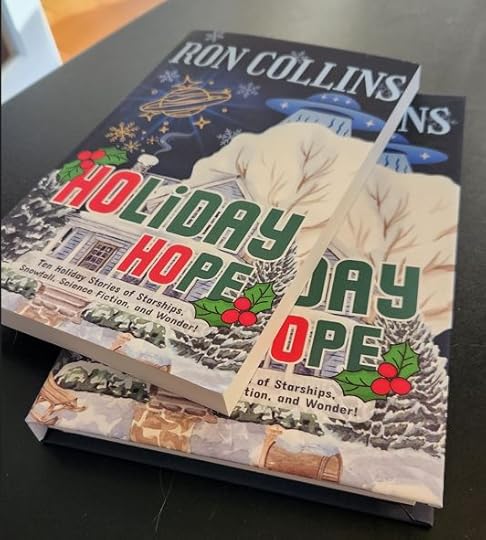
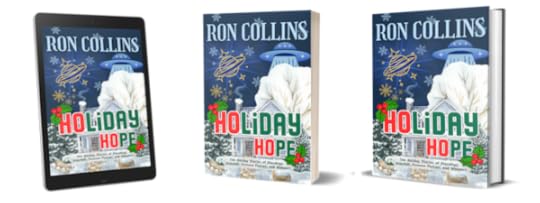
Holiday Hope is a genre-spanning collection of short stories that each touch on the hope inherent in the winter holiday season. I’m quite happy to have it out. I hope it does well.


Recently, though, I’ve spent a bit of time scanning other people’s projects, and—really for the first time—I’m seeing a larger number that appear to be failing.
I put it that way—appear to be failing—because I’m not in those writers’ offices, right? I have no idea what they are doing or not doing, and I’m looking at their projects in snapshots of time. Perhaps they eventually succeed?
But looking at them from the outside, I’d say they seem to be failing.Unfortunately, sometimes just scanning the project’s presentation makes it obvious why that failure is occurring, but oftentimes that package seems fine, but the numbers are still not numbering. That’s a real problem. It’s possible those “failures” are about audience size—that the author simply overestimated the pull of their audience, or maybe better put, didn’t know how to design their campaign properly for that audience size. Kickstarter can and will do only so much, so we need to bring readers on our own just to get things going.
I, for example, do a lot of smaller projects on Kickstarter. Holiday Hope is one of those.
I know they are small. I do my math first, and I don’t set them up for failure by assuming I’ll wind up with a couple hundred backers.
A creator’s base skills are also in question, I suppose. A fair eye for graphics and a mind keyed at least somewhat toward marketing are valuable in creating your presentation, so the ability to create graphics (in particular), or get someone else to do them, is a true value when it comes to making a nice presentation. Some of that can be learned, but a lot of it is feel and vision. In other words, building a good Kickstarter pitch is equal parts art and science.
Personally, I feel comfortable with some of those things, but I spend a lot of time listening to feedback on others.
At the end of the day, though, a lot of the element of presentation is a matter of taste and design. A beautiful Kickstarter is in the eye of the beholder, and we all get to be our own beholders.
Finally, though, there’s the question of effort.I’m focused on that now because when I see a nice-looking presentation that still fails to get energy, I ponder if the author’s real issue is a lack of basic support. Because, for me, anyway, the act of running a Kickstarter takes energy.
Every day.
I ponder if some of the newer writers on the site simply aren’t putting in the work it takes to manage a project well. I suppose that sounds judgy. I don’t mean it to, but I can see how some will take it as such. Perhaps the way I look at things causes me to put in too much effort? I don’t think that’s the case, but I’ve been wrong before.
These things are in my thoughts today, though, because—at least for me—running a Kickstarter release takes a serious amount of work (both before and after launch), and the return is always an interesting mix.
Let’s talk a moment about what a project’s return is, as in, let’s talk about how much one of my projects makes as a matter of the effort that I put into it. (Your mileage may be different, but this is me talking, so I’ll focus on me!)
If you look at a live project on Kickstarter, it’s easy to see a project’s earning numbers and backers and make assessments. Bigger numbers are more better, right?
But when you’re scanning those pledged numbers, you’re missing a LOT.
My friends, Dean Wesley Smith, Kristine Kathryn Rusch, often suggest they can tell what a project makes or doesn’t make to a pretty close margin, and they often point to projects that they say are funding, but actually losing money. I think they tend to overstate that message, but they are 100% right that it’s possible to do all the work to run and fulfill a Kickstarter project that successfully funds, then actually lose money—even at the higher levels of funding.
This piece is turning out to be focused on work and effort, though.
Work and effort, and return on sweat equity.
So…here we go.
Let’s talk about return on Kickstarter investment.For an example of what I’m talking about, let’s pretend we run a small project that funds at $1,500 (which is a little high for most of mine, but I like round numbers).
When we see that $1,500 at the top level, we should immediately start asking questions.
First, we should probably drop that number by $50-$100 simply because some backers will cancel out when Kickstarter charges their credit cards. Let’s say $50 goes away. So that $1,500 is really $1,450.
Then Kickstarter and Stripe (their payment service) will combine to take something under 10%.
For simple math, we’ll say Kickstarter and Stripe fees are $150. That’s a little high, but not so high that it changes the point of this conversation.
That means our new total is $1,300
If the project sells all digital books, then we’ll have no printing and shipping costs, so that $1,300 stands, and we’re all good.
But a vast majority of Kickstarters sell print. Specifically, paperbacks, hardcovers, and those ubiquitous Special Editions that are so amazing (and that I made the cornerstone of my Saga of the God-Touched Mage re-release). If these are included, estimating your final profit gets more complicated because now we need to understand how printing and shipping impact the bottom line. These are variable, but you can figure them out. For small projects like I run, special editions really bump the income reported at the top of the page, but also serve to drop overall margins considerably. Hardcover and paperbacks, the same. The level those margins fall to depends completely on how I choose to price the books and how many of each I sell.
More hardcover pledges mean smaller margins.
Let’s say that I price my books “properly,” though (whatever that is—something else we need to think through in advance to keep the project from losing money), and that my small project is a no-bling effort (meaning just books, and no snazzy special editions). For these releases, I personally attempt to design the projects to yield a margin of about 70%, which, again, depending on the relative volume of print to digital orders, works out to between 65%-75%. Usually.
So, if we say 30% for printing and shipping, it will cost me about $450 of my $1,300 to fulfill that example project (the 30% applies to the full $1,500).
My net is now down to $850.
I am also a businessperson who assigns the cost of development (acquiring cover art, printing proofs, or any of the other things that can cost a chunk of change). Other people do not attribute these costs to their Kickstarter project, but since I view Kickstarter as an initial publication of an entire project, I do.
If I’m on a total DIY thing, and since I live with a world-class copy editor, these costs are pretty low: Stock art for covers, hopefully a limited number of physical proofs. Maybe a few odds and ends. Since, as I noted, my sweetie does my last-pass copyediting, that saves me a large sum. Since I’m into round numbers, let’s pretend I spent only $50 on this small production.
Now, all total, that $1,500 Kickstarter is now down to $800 of profit.
Sounds … well … that’s good, right!
Yes. It is good. $800 for a small, no-bling effort is okay.
If you look at $1,500 of revenue as the project’s baseline, or $1,300 (after drops and fees), the profit margin here is between 53% and 60%. Less than my design of 70%, but still a nice enough number.
At least all by itself.
But, Let’s Go One More Step.Because, as I started with, I’m thinking a source of failure may well be a lack of effort—or, maybe not so much a lack of effort as a failure to understand the amount of work it can take to succeed, and therefore a failure to do that work.
Call it being oblivious—something I often am.
It’s no sin to mess something up if I didn’t know how to do the thing, right? That is literally the root of how I learn best. Screw up, then do better next time. It’s a rugged life in ways. Emotionally straining at times. But that kind of dogged persistence, together with a lot of luck and general fortune of life circumstance, is what has gotten me to where I am.
Anyway, just how hard is it to run a Kickstarter?
Since I am the one writing this, I’ll use myself as my example—specifically, my recent projects.
Holiday Hope is my fourth launch this year—after The Cruise Brothers in January, The 10th Anniversary Edition of Saga of the God-Touched Mage in the summer, and 1101 Digital Stories in an Analog World that ran just before Holiday Hope.
I track my time, of course, because of course I would track my time.
After Hope finishes, I project I will have spent roughly 300 hours (combined) working on the Kickstarter efforts of these four projects. Not writing. Not releasing wide. Not putting any books in my new store. Just designing, creating, and testing the base structure of the project, calculating shipping, revising it all over and over again, then communicating with backers (and prospective backers!) while the project is running, and fulfilling the project (delivering the books!).
By my math, that’s roughly 75 hours per Kickstarter, or nearly two full work weeks each.
Those hours get spread over more than two calendar weeks, of course, but adding them up comes to two full work weeks.
(And my projects tend to be on the small side!)
After the dust settles, my back-of-the-napkin mathing says that, averaging everything out, I’ll clear maybe $10 an hour for that work.
And that’s assuming Hope succeeds well enough to fund.
Fingers crossed!
This number makes sense in the context of the sample project I just laid out.
Divide that $800 by 75 hours and you get $10.67 an hour. That’s above minimum wage (by a little), but it’s still not a lot of return on sweat equity.
Running Kickstarters, it seems to me, is not a simple little process.
Maybe it’s just me.Dunno. I could be working harder than anyone else.
Overworking, you know? Putting effort in where effort is not needed to be put.
But, to my view, there is a LOT that goes on behind the scenes when it comes to Kickstarter. Just like there’s a lot that goes on behind the scenes for pretty much every aspect of running your own Independent publishing business.
This is not for the faint of heart.
It’s hard work for limited and variable compensation.
At the end of the day, as I scan failing (?) projects I see on the platform, I’ve come to this maybe weird conclusion that I do Kickstarters because I know how to do them and because I love what they mean for being independent in today’s world. I like connecting directly to readers that way. But I’m a grizzled veteran, right? I’ve got my mind set in a certain way, and I’m inclined to power forward as long as I see the way forward.
And here’s something I couldn’t stop thinking about: how many of these writers are on Kickstarter because it’s all the rage? How many are here because they’ve heard this is an easy way to make some money? If it’s a lot of them, what do they feel like now? Are these failures a learning moment (which is great!), or are they going off to lick their wounds, never to return?
Did the failure set them back?
A lot of these unfunded projects seem to be new writers. If so, how dogged will they be?
Who knows, right?
Ultimately, I’m just whistling into the wind on this one.I’m ruminating on something I have no idea about.
Maybe I’m dwelling on it because I’m getting to the end of this long run of inverting my plans to have me focus on getting “business operations” cleared out so they aren’t clogging my pipeline anymore. Maybe it’s just the normal anxiety that comes with another launch. Or maybe it’s the general, big-picture relief I’m feeling after being successful in getting these projects closer to the end zone so I can move on to new ideas.
I’m very much in reassessment mode right now—which is normal.
Maybe you are, too. I think that’s natural as we head toward the end of the year.
My last Kickstarter of the year is titled Holiday Hope.
And the holiday season is here.
We’ve just passed Halloween, which, for reasons, is always a big deal for us in the Collins household. Then will come Thanksgiving, and Hanukkah, and Solstice, and Christmas, and the lead-up to the New Year.
It’s a good time to be assessing things, you know. A good time to count blessings and pay attention to the good things in life.
$10/hour or not, being an Indie makes me happy,
I am a human. Not an AI. You can tell because keep a Patreon page where I talk about writing and being a writer (among other things). In other words, I post a lot of things there before I post them here. This post, for example, was there first. I also share occasional work in progress for Patrons only, and give special discounts and sometimes even free books to Patrons at various levels. If you’d like to support me–or just this blog–you can do so by clicking here:
November 10, 2025
Find Your Favorite Line … or Whatever.
(Or take a moment, won’t you?)
Aside: I made this (Patreon) post “free to everyone” for, well, for reasons. It’s short, too, which helps. In the end, maybe it will help a few folks see things in … well … different ways.
Have a good one….

I’m in one of those hectic moments of life when three projects are coming together at the same time.
Exciting, meet angsty, right?
I’m running my newly launched Holiday Hope Kickstarter, while putting the closing touches on the delivery and accounting for this summer’s Saga of the God-Touched Mage and this fall’s 1101 Digital Stories in an Analog World.
Lots of small but critical tasks have been circling.
Details matter. Focus is helpful.
In other words, it’s been a scattered week of shifting gears and keeping multiple plates spinning, tasks not aided by a combination of weirdness at printers, my own silliness, and the fact that there really is only one me in here.
In the midst of this, though, came the act of signing a set of the Special Editions for a backer of the Saga. Earlier, I had asked her how she would like her books personalized. Her response was interesting. Just pick your favorite line out of the books, she said. Which I thought was kind of cool and interesting at the time. It turned out to be even more than cool and interesting, though. Instead, the act of making a good faith effort at fulfilling that request—which I undertook over several days of lunchtime perusing and re-reading—made me so happy.
Think about it.
In fact, do it today.
Find some time, and take the biggest, most important, or just most favoritest book you’ve written, and ask yourself what your favorite line is. If you’re not a writer, think about your kids, or your significant other(s), or your best friend, and ask yourself what the best quip, joke, or other comment they’ve ever made is. It’s that same thing, really. Akin to asking who a teacher’s favorite student might be. Focus, you know?
Really think about it.
Going into the exercise, I already knew I wouldn’t be able to choose just one, but once I was into the process, I began to see the books in much deeper ways. For me, fulfilling this request, especially coming as it did at the end of the entire endeavor, felt amazing. I started to see myself in them. Started to see things I knew were there, but hadn’t appreciated.
It gave me a sense of gratitude toward the books, and a sense of something I’ll call closure, but is not closure.
Don’t hold me to it, but I think it was Ursula Leguin who said that writers are people who use words to describe things that words can’t describe.
So, yeah.
I loved, loved, loved writing these lines.
And looking back at them with such a quizzical eye made me love, love, love the fact that I had done so, which is a different thing, too.
All together, taking this exercise to its fullest made me happy in that deep-down way that life can give you at times.
That’s all I have to say right now, except for this.
Take me up on that challenge.
If you’re a writer, grab your latest book (or any book you might have sitting in a dusty corner of your past and ask yourself what your favorite line is. If you’re not a writer, find a similar item. Something you worked on. Or, again, a friend. Whatever it is, really focus on it. Let the process take as long as it needs to take.
Let yourself enjoy it.
Let it tell you what it means to you.
Then go out and have a great day.
I am a human. Not an AI. You can tell because keep a Patreon page where I talk about writing and being a writer (among other things). In other words, I post a lot of things there before I post them here. I also share occasional work in progress for Patrons only, and give special discounts and sometimes even free books to Patrons at various levels. If you’d like to support me–or just this blog–you can do so by clicking here:
November 5, 2025
Hitting The CTRL-R Key
(Or, how being overwhelmed can really suck)
Aside: I’m a couple days behind on this one, mostly because it kind of got away from me. Who knew I had so much to say about digging out of the Sea of Overwhelm?
Unless you’re new to the circle of folks who hang around with me, you know the past few months have seen me digging myself out of a pit of sorts.
Life rolled on me, and my brain got caught up in other places—as it should have—and earlier this year, I found the writing part of my life had gotten all gagged up. Turns out that being a writer doesn’t mean I’m absolved of the need to deal with the not inconsiderable ups and downs that we all work through. Being a writer, however, does have its unique quirks when it comes to dealing with stress, burnout, and that feeling we can get that comes with being overwhelmed.
Particularly, being an indie writer.
Now that things are moving along, I want to touch on a few points.
Maybe this will help you deal with these things, even if you’re not a writer.
Let’s start here.At one time, I did a lot of sim racing. Today, the biggest purveyor of that sport is iRacing, but back then my choice was Grand Prix Legends, or GPL. It was a beautiful game. The first to have graphics that matched the romance of racing, and focused on the most beautiful of all environments, the grand prix racers and tracks of the late 1960s. Lotus. Ferrari. The sluggish BRM and Honda. The Cooper. Brabham. Dan Gurney’s American Eagle.
There’s never been a more beautiful or deadly time in racing.
The cars were fast, and the tracks were dangerous.
I cannot begin to estimate the hours I spent behind the wheel of those virtual cars.
It was fun.
More important for this conversation, it was one of those hobbies that required so much attention to the moment that it served as a defense mechanism against the pressures of real life. I could not go fast if I didn’t give 100% of my brain to the car, and as most psychologists will probably confirm, if you give 100% of your brain to something for long periods of time, it allows certain problems of the day to slide away.
Consider sim racing to be meditation, at speed.
I was so into this sport that Lisa, my sweetie, offered to send me to one of those fantasy programs and drive a real race car. While I love her even more for suggesting it, I immediately blanched.
“No way,” I said.
Surprised, Lisa asked why.
My answer?
“Because real life doesn’t have a reset button.”
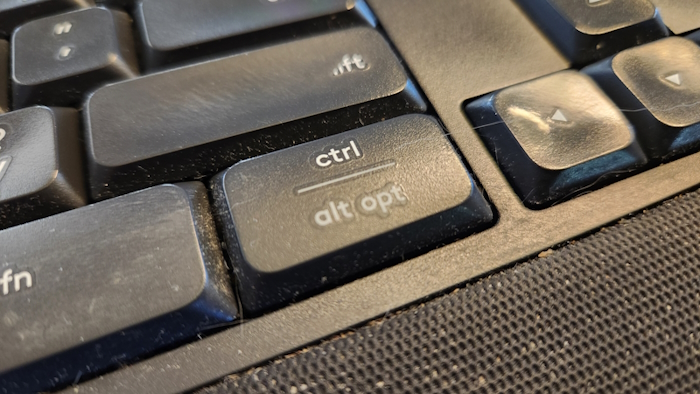
You see, in GPL, when I went too fast and missed the brake point or apex of a turn, or if I made a bonehead move and bumped another car, or for whatever reason went caroming into a tree, all I needed to do was to hit the CTRL-R key, and I was back in the pits with a fresh car, engine rumbling and ready to run. No crunched legs. No medics. No fire. No crutches or painful PT in recovery. CTRL-R solved all problems.
But when events of real life crash into me, real life makes me find my own way out, thank you very much. Or, if real life does give me some clues about things I might be able to do to toggle my CTRL-R keys, those clues are nowhere near as obvious or easy as that CTRL-R on my keyboard.
Real life’s reset button is often visible only in retrospect—if then.
Oh, sure, friends and family can point me to things that might be helpful, but, as the saying goes, you can lead me to answers that work for you, but you can’t make those answers work for me unless I decide they do. Or something like that.
Real life makes us all figure out our own CTRL-R reset buttons.
Which is what I want to talk about.
Because This Is Critical.As I’m going to say a few more times in this piece, the main thing a writer needs if they are going to make this into a long-term career (meaning simply that they continue to work as a professional, no matter their income), is to find ways to keep their emotional balance stable enough that they can continue to do their best work.
If you agree, you understand why being able to find that hidden CTRL-R key is so valuable.
Sometimes when I’m feeling a bit stressed, taking a quick break is enough to toggle my reset. Just a quick walk around the block, maybe. Or an hour off at lunch. Sometimes it’s a well-timed conversation with an expert, or a sudden fresh perspective that gets me going again. This is probably why I’m usually in full experience mode for a bit of every day, watching documentaries or listening to podcasts, or whatever. Input toggles my mind to think in different ways, and those new ideas often serve as something akin to min-CTRL-R keys for me.
Other times I need something bigger.
A full-blown mental health day (even if I don’t call it that). A completely fresh perspective. A big step away from something for sanity’s sake. A vacation at the right place can recharge my battery.
Or, perhaps counterintuitively, sometimes applying the mental whip to myself to press through and just get things done can do the trick. This last is why a life roll at the absolute wrong time can cause a multiplication of problems. I am an achievement-minded person. Sometimes simply getting a task done can help me get into a place where I can handle the world around me better.
Given that, let me think about the life of a “normal” person who works a day job.
They most likely have a team of other workers. Which means they can (at least sometimes) put in half-effort in the workplace, and things can still work out. You know what I mean. Heck, half the time even a top performer can do that and no one will even notice they’re working at half-throttle.
This is because when you’re in a team, there’s usually someone there to pick you up, which means that when you need a break to get your feet back under you (which all humans need), you can take it. The output of the team still moves forward. Even in most small businesses, which often comprise a few people, you can rely on someone to help. My grandfather, for example, operated a service station with his brother. When one of them got sick, they did not close the shop. People still bought gasoline and got their wipers checked and tires rotated, or whatever.
This is something I often found beautiful about working for a corporation—being part of a team that’s there to accomplish something bigger than myself. I come from big engineering and Corporate America, you know? It was fun to achieve things in groups that I could never achieve on my own. In sports talk, consider the difference between a writer and a company worker to be the difference between a golfer and a quarterback. It’s fun to play on a team, and sometimes a running back or receiver can save a quarterback when that quarterback screws up. A golfer, though, is on their own.
For this conversation, working in a team makes it easier to hit CTRL-R and ride out the low ends that we all have. Not easy, of course. But easier. In fact, it can even work out that simply the team’s success can help me get out of that funk that comes with being stressed. The team succeeded, after all. And I can see that I had a part in that success, which means I have value, and that maybe I can actually deal with the things that had me feeling punky.
Winning solves a lot of problems, and in a team environment, no contribution is too small. We win and lose together.
But A Solo Creator Is Different.Your creativity, after all, is yours.
No one else can set your vision. No one else can write your book. No one else can decide what parts of the business process you can embrace and which you cannot.
Your creativity is yours, and you are your creativity.
I was recently talking with Lisa Silverthorne about the travails of being a writer (meaning we were having a gool ol’ bitch session). Lisa is a very good friend and a powerful artist in both the written and visual fields. She, too, comes from a background that includes team environments, in her case, IT support of academia in a large university. She understands what it’s like to need to recover emotional balance while working in teams versus working within your own creativity.
That conversation forced me to think about exactly what it means to keep my emotional balance while maintaining this indie publishing life. How, for example, some days, when I’m doing work that’s so mechanical it borders on mindless chaff: say, updating an ISBN list, or pushing new prices through platform interfaces, or any of a hundred tasks that are more administrative than creative, the work can serve as a mini-reset in itself.
Yes, the tasks are mind-numbing. They can be accomplished almost on autopilot.
But, at the right ratio, these tasks can be helpful in the same way that GPL could be helpful. Mindless or not, they are achievements, and, being mechanical, they serve to give my brain useful respite from the rigors of the need to create all the time. I know from my experience that if I can arrange my time such that I’m doing these tasks in between bursts of creativity, these chores are little CTRL-R keys.
Thinking of them that way makes me happy.
It makes these tasks that are mostly drudgery feel valuable. So suddenly, I can while away 30 minutes or an hour doing them, and count it as a win. It’s like I pushed the rock up the hill, and suddenly got to watch it tumble down the other side.
That’s a CTRL-R win, right there.
If I structure my days right, I can use these tasks as tools to help me keep my emotional balance in check.
Let me come back to that in a moment, though.Because in a lot of the cases I’ve just listed, I’m talking about being stressed, rather than overwhelmed. And this piece is about how it feels to be overwhelmed—not stressed. The 800-pound gorilla in the room is this: while there can certainly be a relationship between stress and being overwhelmed, the difference between the two is both real and massive—especially, I’m arguing here, for an independent writer.
Obviously, a little stress is a good thing.
Everyone knows this.
The stress created by a deadline, for example, is the case usually brought up, but for a writer, that positive stress can come in several ways. A writer’s creativity often rises to a challenge, for example. Writers of anthology stories can use particularly challenging sets of guidelines to get themselves out of their comfort zones, and then do miraculous work. In that light, Mike Resnick, who edited a bunch of anthologies, often told me that the thing he found fun about doing them was to make tight guidelines and then watch good writers work out how to be fresh and original while still staying at least technically inside the lines.
The right amount of stress is what makes success so glorious. Or, as my daughter said about writing, “it’s the hard that makes it fun.”
This is because “hard” comes with (a positive) stress.
Writing can be a puzzle, can’t it? Can I solve that puzzle? I don’t know. Let me try this and see.
So. Much. Fun.
We never want to CTRL-R that kind of stress.
But overwhelm is a different beast. Overwhelm comes from bigger places than momentary stress. And to make everything worse, we are often too close to the source of the thing that’s making us feel overwhelmed that we confuse it with, or combine it with, other feelings in ways that make the true situation even harder to see.
If you can’t see a problem properly, you can’t solve it.
I think writers and creative people are particularly prone to falling prey to this.
We are the golfer, not the quarterback.
Our creativity is ours, after all.
At the end of the day, it’s all we have.
So, it’s not surprising that, once our connection to that creativity had been shattered, we might panic just a bit.
In my most recent case, having now lost both my parents in a moderately short span, my sense of being overwhelmed was kicked off by a fresh set of tasks laid in front of me, compounded intensely by a sense of grief. When the combination of these things crashed into my flagging time (hence my flagging productivity), it did a number on my flagging creativity, which eventually twisted itself into the idea that maybe my days of making things up were over. Maybe I just wasn’t any good at this creative thing anymore.
Scientifically, I suppose a psychologist or neurologist would say this is when my brain’s amygdala manifested my general malaise and my difficulty focusing on things that were not related to writing or my writing business (important later) into fear about my skills and competency. As a result, I suddenly found myself on the borderline of being frozen.
I did trickle writing into what little space I had, but legal stuff, financial stuff, houses to process, and a billion other things to do that took over … and every day that I didn’t get much writing (or writing business!) done, the project manager portion of my brain tapped its foot harder and pointed even more pointedly at its watch. The work piled up, and, as the work piled up, I began to feel a Sisyphus syndrome growing.
Push the rock, Ron. No matter that it rolls back, push the rock.
And, oh, by the way, here’s another rock. Due tomorrow. Please add it to the wall of rocks you’ve been leaving unpushed.
Somewhere along the way came the idea that, not only was I not getting anything accomplished, but I would never, ever, be able to catch up. I had lost control. The world was passing me by. My skills, whatever they might once have been, were corroded into dust.
My “career,” whatever it had been, was done so I might as well chuck it.
This is what feeling overwhelmed is.
Yes, External Problems Can Be Real.Let me be clear here. My grief was real. My requirement to process the paperwork that came with dealing with an estate was real. Other times I’ve felt that sense of being overwhelmed have also come with external pressures that were very real, too. I’ve had difficulty keeping a writing schedule when my job got intense. I’ve set writing aside for other life issues. My emotional balance has gotten out of whack because of a lack of sales, or a propensity to compare myself to other writers who I keep thinking are “better” than me.
I can go on.
The feelings associated with those things are also real, but mostly those have been small things. Unlike the feeling of being truly overwhelmed, I’ve been able to combat those things with other truths that can keep me writing.
But the sensation of being overwhelmed is a real problem because the forces causing it are most definitely real.
The Secret to Finding the CTRL-R Button.Time moves forward, which means problems can be solved. The challenge is to find whatever grace I can give myself that will work at the moment, and let it have its time.
I doubt I am much different from anyone when I say that I want to be in control of myself. No. Really. I need to be in control of myself. When I can control the decisions that define where my days are spent, I become happy. When I am happy, I bring my best self to my work.
But it starts with control, and control starts with making decisions.
When the water is flowing into the boat, it doesn’t feel like I have time to stop bailing, but sometimes it’s best to take a moment to look for a lifeboat.
This is true for you, and it’s true for me.
The biggest part of hitting my CTRL-R button is to see things to the extent that this is true. Because even when I cannot control all my decisions, I can control some of them, and finding those bits and then getting them under control is, for me, the secret to finding my CTRL button.
Again, I suspect that this is also true for you.
The challenge for me is first to realize that I need to take a step back, settle down, and then, once I’m able to think things through, to do the hard work of assessing my life as it is alonside with my vision of how I want it to be, and at the same time come to grips with the fact that, despite my sensation of being overwhelmed in the moment, that making the two align is both possible, and up to me.
What parts of my world can I control today?
What do I need to do today to increase my control tomorrow?
Next week? Next year?
How do I need to prioritize my day so that I can say I’ve moved closer to what I want to be? What can I be successful with now? When I look at that massive wall of things I’d like to have be finished, which do I dread the most, and which can I give energy to? What parts of my goals can I break down into something I can work on with my life as it is now? Are there things on the list that are literally impossible to achieve until I have other things in place?
If I order my work, what path can I take that will eventually get me to the place I want to be?
If I can answer these questions honestly—seeing both the problems and the opportunities as the real things they are, then I can focus on those things I can handle now.
So I did that. One project into the chute at a time. Let me do that one thing. Then move to the next.
It often looks so simple staring at it on the page, right?
I’m very good at making plans, after all. I can load up my calendar with to-do lists with the best of them.
The key to the reset button is, of course, to be pragmatic.
Stop.
Breathe.
Reassess.
In my case, maybe last March or April, after being clogged up and feeling like I was never going to get going again, I finally took time to feel the source of my sense of being overwhelmed.
My original thinking was this: (1) a writer writes, so (2) the best way to feel good about myself was to write. (3) The business of publishing could wait.
It sounded good in a conference room, anyway.
It fits the common wisdom.
But when I stopped digging long enough to listen to my brain, the anxiety I felt was coming from that wall of publishing rocks that I’d left to pile up at the bottom of the hill. Even as I felt that, though, my brain rebelled. You’re a writer, it kept saying. You write! The clues were all there, though. My plans were laid out before me. All my “dreams,” as they were, came in the form of putting business bits into place.
So I inverted my thinking.
I hit the CTRL-R key that set me back in my writer’s pit stall, and put myself on a track that focused first on getting my business running again. I did this by breaking my goals into things I could achieve in small chunks. This Patreon page was one of them, for example. Once it was up and running, and once I took a month or so to confirm that I had something to say and the energy to keep saying it, I moved on. Kickstarters fell next. Then, the latest move came when I launched the initial instance of skyfoxpublishing.com.
There will be more to come.
In retrospect, it’s not a surprise that as soon as I inverted my list to focus on getting the business blocks in place, I suddenly got busy. And as soon as I got busy, the naysayer brain went away, and I remembered this weird little fact about life—that literally everything we do can be done with an element of creativity and play. Put another way: while running an independent writer’s business can be considered drudgery, when I bring a sense of myself to it, and when I look at the business aspect of things as something that also requires my creativity…well.
To paraphrase T. Thorn Coyle’s thoughts in The Midlist Indie Author Mindset, one of the best ways to get “good at business” is to find a way to make it fun.
So That Is How I Hit the Reset Button – This Time, and Every Time.I suggest you do the same.
To be honest, I think I’m writing this piece now so that the next time it happens, I have only to look at it to create my new blueprint. The steps are:
Feel my pain. But pay real attention to it. Question it?Locate where that pain is really coming from (realizing that it’s probably not exactly where I think it is).Prioritize my goals that are not getting attention. This doesn’t mean I should shrink them, but that I want to put them into an order such that I can make them happen over time, and realize that pushing a goal out is not saying it won’t happen. Just that it’s just going to happen later.Focus on the first thing first, and let the final path work out as it will.Take your win when the first thing finishes, and use that energy to focus on the next.So, that’s it.
How I hit CTRL-R.
In reality, though I like to think of every situation as its own thing, and though the tasks I’ve taken as priorities when I’ve felt overwhelmed before have always been different, I’m realizing that this is the structure that I’ve used to hit the reset key every time I’ve had to hit it.
For me to hit the CTRL-R button requires taking a moment to get serious. To see things for what they really are—not how I think they are. To accept that fact for whatever it means, and then determine if I still want to pursue these things or not. If the answer is yes, then I have to get serious about finding those small wins that help me move on. And that requires deliberate focus on the smaller pieces I can accomplish so that I can establish the practice of achieving things I care about.
When that happens, I feel better.
And when I feel better, I achieve better.
Suddenly, I find a little extra time here or there. Not much, but a little. And I make a good decision. Then another. And the work is fun again, because I feel things getting done.
And then, somewhere along the line, something toggles my internal settings, and, soon enough, I find myself back on the track with fresh tires and a full fuel tank, engine rumbling and ready to go.

A New Project – HOLIDAY HOPE!
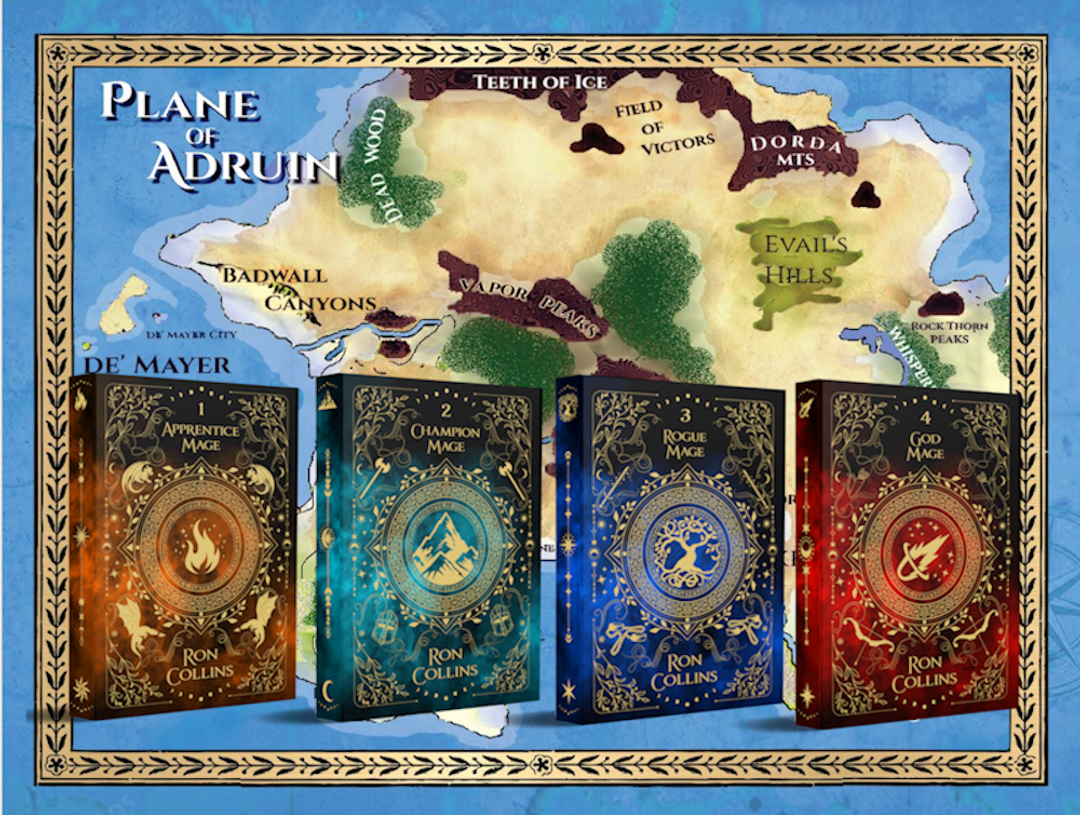
While I have your eyes, let me introduce what will probably be my last project for a bit. Holiday Hope is a fun, multi-genre collection (leaning toward SF) of short stories with themes that touch on winter holidays from Halloween through Hannukkah, the Solstice, Christmas, and even New Year’s Eve!
I’m scheduling it as a quick one to make sure I can get it shipped in time for Christmas.
As such, it will go live next week. If you’re interested and maybe want to get some Christmas shopping done early, click here to get notified of the project’s launch!
I am a human. Not an AI. You can tell because keep a Patreon page where I talk about writing and being a writer (among other things). In other words, I post a lot of things there before I post them here. I also share occasional work in progress for Patrons only, and give special discounts and sometimes even free books to Patrons at various levels. If you’d like to support me–or just this blog–you can do so by clicking here:
October 24, 2025
AI, Fan Art, and My Prediction of the Future
(or, geez, here we go again)
I debated not writing this one at all. It’s about AI again. I promise I’ll find other topics as I go forward. Though technically, I can plead that this one is only AI-adjacent.
It’s really about copyright.
If you are like me, while you’ve enjoyed a lot of the thought process of contemplating what the use of AI means to art, you find the topic is draining these days—not so much because of the angst AI can still rouse between the two camps as the fact that the process for deciding the legal situation is becoming more clear, but at the same time is not yet done. I’m reminded of that time back in the Stone Ages when I’d be waiting at a computer screen for what seemed to be decades, waiting for a pixilated JPG to finish downloading. You could see the colors and shapes, but the details weren’t clear at all.
The AI thing is a problem the world is going to eventually solve, but I wish it would get on with things a bit quicker and let us move forward with full JPG clarity.
Alas, that is not where we are.
Except…
Last week, a member of one of the writing communities I frequent dropped a note about a really cool video he’d come across that had been created by AI. It took me a while, but I eventually watched it, and, yes, from the perspective of technology, it was actually quite cool—though it went on too long for my taste. It was in the form of a music video, and to be honest, as a music video, it was boring simply because the person who made it didn’t include any real narrative that I could grab onto. Maybe it was just me. Dunno. It looked cool, but it made my overall point about AI and art pretty clear. Simply putting AI together for the sake of putting AI together is, at best, a sugar high, and in the end, kind of boring.
Anyway, for reasons that might become obvious, I’m not going to post a link here.
The problem I want to focus on is not the tool the creator used. The problem I want to focus on is that the person who posted it—who is a writer and (to be blunt) really should know better—noted that, while it had some obvious likeness issues and whatnot…wasn’t it so cool!
And, again, yes, it was quite cool–but those “likeness issues” he mentioned stemmed from the fact that the creator used hyper-realistic characters from Star Trek—about which the community member appended the comment that he guessed it was Fan Art, so (I guess), what the hell?
Grrr.
As you might tell from my other conversations on the subject, I’m in what appears to be a small pocket of creators who have no real emotional response to the idea behind the use of AI in creative pursuits. Really, I’m fine with it. To state again, I have not used it in anything beyond play-around mode (because I’m curious, and because I want to actually know what I’m talking about). But if another writer decides to use it and can come up with something that is still in their voice and vision and that their readers actually like (because readers are the final arbitrators), good on them. The business aspects of AI and copyright are another issue, but right now, the courts seem fine with that usage, and the business losses that might (or might not) come from the decision are yours to make.
Who am I to tell someone else how to make their art?
I could go further, but this piece is not meant to be a deep dive into the ins and outs of that philosophy.
The problem here is that this video was not just “Fan Art.”
Like all fan art, this video is a derivative work—which means that, yes, it is a violation of copyright. The video also came from a site that has a lot of that kind of thing on it, and many—if not most—videos on that site had 100K or more views. It’s a monetized site, which means the creator is turning these copyrighted characters into what is almost certainly a pretty good flow of currency.
The whole Fan Fiction thing is an interesting discussion, of course, but the core of the matter with Fan Fiction is that they are all derivative works. Assuming the rights holder learns of the infringement, that puts the response completely in the rights holder’s control. Sometimes the creator is cool with it (it’s still infringing, but the rights holder decides not to pursue damages), and sometimes they are not. If they are not, the rights holder will take legal action (and they will win).
For example, in the days before this post, I saw another person post a silly meme that obviously had been created with AI (which doesn’t really matter), but included an image of Bugs Bunny (which does matter). The person who created this Bugs Bunny meme has broken copyright law, and if it can be tracked, which I assume it can be, is now vulnerable to Warner Brothers’ whims as to whether they will have to pay the statutory charge of at least $150K.
Warner Brothers owns the copyright (likeness) to Bugs Bunny.
In this case, most likely, Warner Brothers will not pursue that meme maker. I assume there’s no revenue stream coming from it, so it would be a PR thing only (note that, unlike trademark issues, copyright infringements do not need to be pursued to have the owner retain copyright, so Warner Brothers loses nothing by leaving that form of theft lie). I doubt they will pay their lawyers to find a meme maker, though they certainly could, and if they decided to that meme maker is in for a world of hurting.
But Paramount finds itself in a different situation.
Here’s a site that’s clearly using material they own, and is clearly making some not insignificant money.
What will happen to this site?
I don’t know.
Unless you work the legal desk at Paramount (the owner of Star Trek copyright), neither do you.
But assuming Paramount finds it (and given the viewership of the place, I assume they will), I expect the answer is not “nothing.” If nothing else, I’d guess the operators of the site will receive a very formal-looking take-down notice. If the money is big enough, though, I’d expect that notice to come along with additional stuff.
But who am I?
Just an outsider looking in.
And to be honest, I’m really more interested in the question of…
What will this bring in the future?
It strikes me that the use of copyrighted visual material through AI may well wind up being handled similarly to how YouTube is handling the cases of independent recording artists making their own cover versions of bigger artists’ songs.
Mary Spender, an indie musician, made a very informative video on this practice a while back. If you’re interested in such mechanics, it’s a fun watch.
The whole process is a touch complicated, but in a nutshell, if you or I were to make our own versions of one of our favorite songs, YouTube would scan it upon upload, then—assuming it finds copyrighted material—rather than just shutting it down, they would forward the video to the rights holder (who has registered with them). Then the rights holder has the ability to allow the use (or not), and if our channels are monetized, can tell YouTube how much of the revenue stream they will take for the usage.
If the rights owner approves, YouTube leaves the version up and splits the revenue per the rights holder’s request. Otherwise, we’re out of luck.
Assuming the right holder approves the use, you or I can decide to leave it up, or—if we feel the rights holder is asking too much—take it down.
A quick check says that YouTube manages in the range of six figures of song uploads per day. Given the ubiquitous nature of AI generation, I can see those numbers exceeded. But I assume the system, which seems to be quite elegant, should scale just fine.
So I’m guessing that something like this will be created to parse AI-generated material that violates copyright—though it’s going to take the world a little time to get up to speed (and until then, the environment will have a bit of a Wild West overtone).
Am I right?
Maybe. Maybe not. Maybe something else will come up to solve the problem better.
That’s how things go with progress, right?
But I think there will be something.
Until then, we are all living in a world where we’re all watching the downloading JPG, waiting for it to snap into focus.
In the meantime, though, it would be great if we could see these things for what they are.
Barring a successful appeal, the use of AI to make your own art (whatever that means) is legally acceptable. But using AI to make something that infringes on copyright, however, like all Fan Art, is not cool (unless the artist/rights holder agrees it’s cool), will not ever be cool (unless…), and also exposes the creator to legal problems.
We should be able to tell those cases apart.
And we should choose wisely.
I am a human. Not an AI. You can tell because keep a Patreon page where I talk about writing and being a writer (among other things). In other words, I post a lot of things there before I post them here. I also share occasional work in progress for Patrons only, and give special discounts and sometimes even free books to Patrons at various levels. If you’d like to support me–or just this blog–you can do so by clicking here:
October 17, 2025
Your Business is You
I’m tired now.
It’s been a busy few weeks, filled with writing and with the effort it’s taken to support my very fun Kickstarter for “1101 Digital Stories in an Analog World” (taking late orders for a few more days), and then even more mental effort spent learning about and setting up my direct store at skyfoxpublishing.com (which is now live!). Doing that kind of detailed work is particularly taxing for me. I’m generally good at it, but it takes all my focus, and since I am not sure what I’m doing much of the time it also comes with a side dish of that anxiety that gets tangled up with that weird sense of uncertainty that tells me I’m out on a tightrope without a net (even when it’s clear the world will not end if anything goes wrong).
When I’m in that kind of period—learning about and setting up business infrastructure and whatnot—the flowstate I achieve is different from the flowstate I can get into when I’m writing. A great session spent writing will often leave me invigorated, whereas a session spent in deep focus around a tool is always taxing.
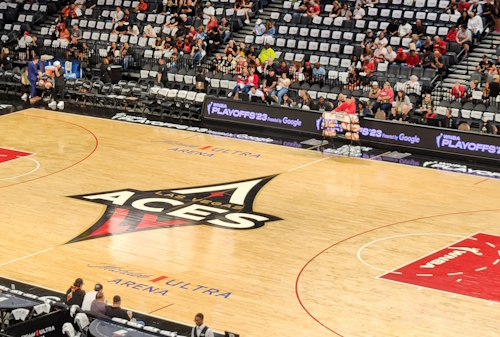
On top of this work, I’ve attended a series of Las Vegas Aces basketball games (Go Aces!) that have left me more drained than I’d anticipated. Playoff basketball is insanely intense, and after each game comes a period of decompression.
So, yeah, I’m tired.
I say this now because, like many other roles in life, I can report fully that the daily grind of being an independently published writer is one of energy management.
I am my business, after all, and my business is me.
Same for you, of course, assuming you are a small business, anyway.
If I’m not “working,” then no one is.
Of course, the idea of how I see my business might be different than the way you see it. This is a subject I’ve been thinking about since Brigid (my daughter, collaborator, and really fine writer on her own) and I discussed the topic a few weeks back.
Exactly what is a writer’s business?How do we build it?
Why do we build it?
If we’re doing it right, anyway?
Not every small business is the same, and even within each category there can be wild differences. Writers are no different. In fact, given the Million Ways to Succeed that I’ve talked about, it’s not hard to argue that there are no two writers’ businesses that are exactly the same. The ins and outs of my business are different from Brigid’s, for example. And we’re both different from my friend Lisa Silverthorne’s.
Deconstructing this is an interesting thought experiment, though.
Why is it that way?
As an aside, I’ve come to realize that I am a slow thinker.
This doesn’t mean I don’t have quick reactions to things or hot takes on whatever the latest controversy of the day might be. It just means that I don’t put much stock in those hot takes—even my own—until I have time to let the boiling-hot ideas inherent in those takes settle to a simmer. This is probably why I’m not a huge fan of conversations on social media. I tried to hang with the crowd back in the day, but I find hot takes and quick thinking are generally flawed and are mostly distorted by people’s individual needs to feel whatever they want to feel at the time. That’s all fine, I suppose, but that kind of thing makes me mostly unhappy, and then just wears me out.
It’s also why I’m not a big fan of today’s discourse around AI in the arts.
Enough on that one for now, though.
When it comes to my writing business, this slow thinking manifests itself this way.
A week or two back, Brigid told me she thought the entire idea of a writer developing their business meant simply that the generic you, as the writer, decide what tools you are going to use to show people the cool stuff that you have made. This fits her simplified concept that the job of a creative is simply to make cool stuff, and then show that cool stuff to other people who think it’s cool, too.
I continue to like that.
Simplifications FTW.
After thinking about it for a while, it makes even more sense. Beyond that, I find the concept to be extremely useful in the process of making decisions about my own business.
I am not you. You are not me.
There are, after all, ten thousand tools either one of us might use, and even just the fact that we get only 24 hours a day means that neither one of us can use them all. So, what criteria should I use to decide which one(s) to pursue, and what priority order to pursue them in? And why would I pick something different from you? We’re both writers, after all. If something “works,” for me, why wouldn’t it work for you? Even more complicated, if something “works” for me, why might I still not do it?
For some—for most, even—the business answer to prioritization is most obviously focused on whatever is most lucrative. That idea makes a lot of sense on first blush. The idea of being a businessperson is steeped in the idea of cash, right? More cash, better business. So it’s a good place to start.
But I find that, in the end, that mindset doesn’t resonate with me. I can spin myself up around the idea of making money, but the energy I get from it doesn’t last long. I get tired faster when I’m doing something mostly for the idea of money.
In the old days, I didn’t understand why that was, but now I do.
It turns out that I don’t write for fortune (*). Really I don’t.
Not that there’s anything wrong with that.
It’s just not me.
(*) In the three-tiered stool of why we write, the choices are Fortune, Fame, and Freedom. Of course, the three have a relationship. Gaining enough Fame can create Fortune, or creating enough Fame or Fortune can also result in more Freedom. But I find it valuable to keep the one that’s important to me at the forefront simply because my personality makes me unhappy if I get these things out of whack. I’m fine with some degree of attention (Fame). I also like to eat well and do the fun things it takes money to accomplish (Fortune). But neither of those is my true wheelhouse.
I write for Freedom.Or at least I prefer a career that allows me the Freedom of writing whatever I want to write over the concepts of Fame and Fortune. This is probably why I like being independently published so much.
It’s also why I like the idea of using “your business is that collection of things you use to present your readers with cool stuff” as the basis to answer the question of what business practices I should develop (and when). If I phrase the question around the concept of how I can best present my cool stuff to the readers I want to present it to, things get clearer to me.
If I do that, I can look at any idea and ask questions that make me happy.
Questions like:
Is this going to help the people I want to reach find my work?Is the work it will take creative enough to make me happy doing it for a long time (can I get excited enough about the effort to sustain it)?Can I afford it right now?Is this the best thing to work on today?You get the idea.
Thinking about those questions lets me see immediately why my business might look different from yours. I am a different person from you. You are different from me. Our readers are probably different, so the steps to find our markets might be different. You might love tinkering with ad spends and back-end dashboards. I do not. I might enjoy book design in Word, while you might find that process makes you want to gouge your eyeballs out. Our financial situations might be different, as well as our tolerances for risk. And, finally (or since the list of differences can be infinite, maybe not so finally), our businesses might be in completely different states of maturity. Successful or not, I may just not be ready to undertake the effort you undertook.
Looking back at decisions I’ve made over the years, I have almost always (eventually) undertaken a basic approach that says that whatever I decide to do will always make me excited by the idea of how it touches readers. I like Kickstarter, for example, because it’s a great tool to get directly tied to and communicate with backers. It’s also something completely under my control. I find it fun. I like creating Kickstarter “marketing.” Same for Patreon. I’ve also always liked the idea of a direct store for the same reasons.
All three of these tools (like a reader’s newsletter) are much more intimate than a book sold on one of the wide channels (Amazon, Apple, Kobo, or Barnes and Noble, for example).
Don’t get me wrong—selling wide is the bomb, and I could take some time and expand my thoughts about this into the route I took to pursue the use of Amazon ads at one point, but that conversation waters down the point of the moment, which is that my personal tastes when it comes to showing my cool stuff to people who are also likely to think it’s cool run toward the ideas around these more intimate tools.
And, yet…
Why has it taken me so long to get to the point I’m at?While I started pursuing Kickstarters several years ago, for example, I waited until very early this year to crack open the Patreon shell. And I’m only now kicking the tires on my own direct store.
Again, why so long?
I think the answer lies partially in that aspect of me that makes me say I’m a long thinker, and another part of it is because I haven’t had this guidepost about what a writer’s business is to focus my thoughts against.
People who know me would say that I’m analytical, and that’s not wrong except in that it’s not complete. I am analytical, but as my Clifton Strengths says, I’m not so much analytical as I am interested in ideas. I like dissecting systems, and I’m generally pretty good at it. But I think that’s because, as I’m analyzing things, I’m looking for new ideas inside the data. I like the idea of seeing truths that aren’t so obvious. Analysis, you see, is just a tool. An end to a means. It’s these ideas that get me excited.
As I look back on things, I think my path to these business structures is more proof that I’m writing for Freedom. It explains why this whole “make your cool stuff, then show people your cool stuff” concept fits my view of living a creative life quite well, even though I wouldn’t have put it that way myself. The idea that a writer’s business is fundamentally a delivery platform the writer creates to show people their cool stuff makes total sense. Looking at it that way makes the design and creation of these platforms forms of creativity all by themselves.
Because that’s what they are.
The point here is to look at every option through your own lens.
If you’re a writer focused on recognition (Fame), you’re probably not going to be interested in building your own store unless you can find ways to use it to increase your profile. If you can’t, then building a store will draw resentment. But once you can see how a store helps you raise that profile, then you’re suddenly all in. Same for finance. If you’re in the game for Fortune, building a store will need to have a chance to pay off quickly, or else its mere existence could put you deep into the blues.
For me, who is interested MOSTLY in control and creative freedom, the key point that changed the work of creating it from a chore to one of more joy was realizing that (again for me), I wasn’t doing it to make a big profit. Once I looked at the idea as a way to control my own destiny, the work to design the store became fun (and even creative within the bounds of the tools I used).
Of course, a direct store is a financial instrument, but looking at it the right way turned it into a creative thing all by itself.
A store’s interface has a vibe, after all.
And my business is me. Since I’m the one designing (or at least decorating) that interface, that vibe says something about me.
Now that I’m at least partially in tune with how to use this tool (the word partially is doing a lot of work in that sentence), and now that I’m fully in the mindset that I’m designing something for other people who think my work is cool, I’m finding the creative aspect of it to be something that scratches that itch I have to be me.
If it’s cool to me, it will be cool to people who like what I do.
If someone doesn’t like what I do, well, then they won’t show up!
Which is kind of nice.
I could make the same kind of analysis of my foray here into Patreon. Or Special Edition hard covers. Or…
Because I’ve been fiddling with all of those ideas for some time. Years, really.
So, yeah, why did it take so long to do those things?
It’s this: two and three years ago, I viewed things incorrectly for my own values. Despite myself, I was viewing Patreon pages and Stores as ways to sell things rather than as ways to do cool things for people who like the things I do. And for a person who writes for Freedom, that’s no fun. Until I changed my perspective of the tools, just the idea of using them made my bones ache. Sure, all the cool kids were doing them, but I didn’t want to.
Over time, though, I’ve changed my (very) slow thinking.
When Brigid put things in her viewpoint, and said that a writer’s business boils down to the things they decide to use to show their cool stuff to cool people, things really clicked.
The reason I’ve done these things as I’ve done them is that my body rejected them until my (again very slow) thinking came around to the mindset it needed.
My business is me, after all.
Your business is you.
I don’t know if this will help you or not, but I think it should.To boil it down, I like this idea of a writer’s business (or anyone’s, for that matter) being the tools and structures that that writer is comfortable using to highlight their cool stuff, mostly because it changes the focus from one with the goal of “selling” to one with a goal of “providing.” Even if your goal is Fortune, the task of achieving that goal is going to revolve around finding the people who want what you’re selling. (Yes, this is parsing things a bit)
I also like realizing that the tools that resonate with me do so because they are the ones most closely related to the way I view my Freedom as a writer, and that the tools that resonate with you might be different for all the reasons I’ve already put forward.
Newsletters, Patreon pages, Kickstarters, and my direct store are all things that (source platform aside) I can, to a greater degree, control. They give me Freedom. If you’re interested in Fame or Fortune, you may need to approach them with a different mindset than I do, or you may need to simply use a different set of tools.
Don’t get me wrong.
I’m not stupid.
I like selling books. And more sales is more better, of course (I come out of corporate America, right?), but the fact of the matter is that my personality says that if I’m not making things I think are cool, then I’m not going to make them for very long before burning out.
So think about it for yourself. Stew on it over lunch tomorrow.
Whatever business you are in, whatever work you do, why are you there?
Freedom, Fame, or Fortune?
If you’re willing to sit on that idea a bit longer, then ask yourself if the things you are doing today are hitting those needs the right way. If not, is the problem your own mindset, or is it actually the tool or project itself that is the problem?
I’m guessing that the answer might help you find it less stressful to make decisions about which of those Million Ways to Succeed you can ignore (for now, anyway), and which to focus on (for now).
I am a human. Not an AI. You can tell because keep a Patreon page where I talk about writing and being a writer (among other things). In other words, I post a lot of things there before I post them here. I also share occasional work in progress for Patrons only, and give special discounts and sometimes even free books to Patrons at various levels. If you’d like to support me–or just this blog–you can do so by clicking here:
October 10, 2025
Quality Matters
(or, You’re Good Enough Just as You Are, Assuming…)
Although I’m going to start with Sue Bird’s most excellent podcast Bird’s Eye View, I promise this will have something to do with writing (and arguably all public creativity). To set the scene, though, the week I’m writing this Bird interviews Veronica Burton. Burton is the starting point guard for the Golden State Valkyries, the WNBA expansion team that made an unlikely run to the playoffs this year. She averaged almost 12 points and more than 6 assists while playing every game for Golden State. For her effort, she was named the league’s Most Improved Player.
On the surface, this makes sense.
Burton was drafted three years ago by Dallas. Her time there resulted in limited playing time, 2.5 points a game, and 2 assists, after which she was summarily cut. The Connecticut franchise signed her for a partial contract last year, and she responded with 3 points and 2 assists a game in, again, limited time. At this point, she was left unprotected for the expansion draft. In other words, no one really wanted her.
Then came Golden State, and the explosion that happened.
In the podcast, Bird asked Burton how that happened — as in, what did she do differently to see such a jump in performance?
Burton gave an okay answer, but one that said basically that she didn’t know. She just worked hard, improved as she could, and stayed in shape. In other words, she didn’t do anything differently. She stuck to her basic process.
The answer to Bird’s question is fairly obvious, though.
Given Veronica Burton’s work ethic, I’m certain she has actively become a better player year-over-year. That’s how skill development works, right? For athletes, peak is often in the mid-late 20s. But let’s face it, the main difference for Veronica Burton at Golden State was opportunity. The Valkyries chose to play her full-time. She got comfortable, and her skills became exposed. In other words, a coach saw something in her and gave her a real try.
So I ask, did the quality of her play really take that huge step up, or was she always pretty good at basketball?I’m sure the real answer lies in the middle, but I’d guess it’s a 70/30 sway toward the latter.
Turns out Veronica Burton is a pretty good basketball player, and probably always has been.
So I hear you.
What does Veronica Burton becoming the Most Improved Player in the WNBA have to do with writing?
It’s this: over the past week, I’ve had two fairly robust conversations with other writers that focused on that ephemeral thing I’ll call “quality” of art (in our cases, the quality of our stories). This is, of course, an idea dangerous for creative people. What is quality, after all? Awards? Income? Great reader reviews? Peer adulation? Or is it something else? Something deeper and more personal? The sense of joy at completion? The knowledge that we’ve said just what we wanted to say? The feeling of satisfaction as a perfect sentence rolls off our brain?
The truth is all over the place, of course, and we all get to have our own answers—which is the point of living now, isn’t it?
But whatever your answer (unless you are creating art 100% solely for yourself, which is just fine, naturally), the fact is, no matter how “good” your art is, there exists a level wherein you’re likely to think it isn’t going to matter if no one really looks at it.
Some months back, I wrote a thing about backlist and discoverability. It was titled “Why 20 Books?” To me, while not a perfect match, Veronica Burton’s situation resonated with this concept. Cutting to the chase, I liken the work Burton put into her game even while people weren’t watching to the work we do as writers to create that backlist, even if it isn’t selling. Burton had to keep working through “failure” — including being cut and then left unprotected (call it rejected and resigned to Amazon ranks in the millions)— before the quality of her play was seen and then exposed for long enough to prove itself.
Through hard effort and diligent study, writers get better over time, too, of course. So the mere act of practicing for the years it takes to make a backlist is useful. But for us, the act of building a backlist while toiling in some element of anonymity is akin to Burton’s three years of bouncing around the league — barely hanging on — until something good happens.
One can only control what one can control, after all.
In the interview, Bird often gets Burton to talk about her sports background, her work ethic, and her goals over time. A theme comes up in which it’s hard to miss that Veronica Burton held herself accountable to do the work. This was her life, really. She came from an athletic family. Sports is what she knew, meaning she understood what she was capable of, and she understood that it was on her to work and to use what she did best. It was on her to bring herself into her game and to excel, and she knew when she was doing that—and, in juxtaposition, when she wasn’t.
I think that’s another lesson here for us. Accountability.
Accountability to put in the work, yes, but also accountability to find that thing that means “art” to you, and hold yourself accountable to hitting it.
Quality matters—however you define it.
Because, for us, that ephemeral thing we call quality is what keeps a reader coming back. And it’s that—the idea that readers will come back to get more of what they like—that is an important difference between a one-time shooting star and a writer with something I’ll call a “career.”
The advantage sportspeople get is that their results wind up speaking for themselves. Veronica Burton took her chance and made numbers that showed her true worth. Now, everyone who is paying attention knows what she’s capable of.
As a writer, however, things are not quite so clear.
Going back to those writerly metrics I listed before, what if you have a few fantastic reviews, but no real sales, no awards, and no profile with your peers?
Is your quality good? Maybe it is, right?
Maybe it isn’t.
Who is to say?
My answer here is that while the reader gets the final say when it comes to all the public trappings of quality, the writer gets the first. At least here in the Independent publishing world.
You get to define what quality means because it’s your art.
Once you’re ready to publish, the game changes to the publishing aspect of trying to put that amazing work you’ve done in front of the group of people who will agree that it is, indeed, amazing. Or, in Veronica Burton’s case, if you find the coach (reader) who believes in you, your numbers can soar.
As an aside for explanatory purposes, I often say that I am not sure if I think something I’ve gone is any good, but I always know if I’m proud of my work. I admit that’s a hard idea to parse out, simply because if I’m proud of it, I obviously think it’s good. When I say that I don’t know if that work is “good,” what I really mean is that I’m acknowledging that I don’t know if you will think it’s good, but that, if you are like me, I’m pretty sure you will.
Not all writers think like me, but I believe writers have something to say, and I believe they say it through their stories. Whether plotted or pantsed, it’s a writer’s job to make their work as good as they can, and that means we have to leave something of ourselves in the work. That’s part of “practice,” too. We have to learn how to be what I’ll call vulnerable. But in the end, I think it’s mostly about gaining confidence. Veronica Burton knows what a good workout is. She knows how to make cuts and make reads. When she screws up, she can figure out why, and take action to fix it.
It’s to a writer’s benefit to gain that sense of confidence, because for a writer, that confidence is part of what makes for quality (whatever that means).
You cannot write a Ron Collins story. I cannot write one of yours. Or (I suppose), if I can write a story of yours, then you haven’t yet found the muscle that allows you to put yourself on the page.
It’s this sense of confidence, I think, that sportspeople like Veronica Burton are building with that work they put in while no one is watching, and it’s that “back list” that time on the court creates, combined with opportunistic moments that can come without warning, that might eventually get a coach’s (or reader’s) eye.
Because while I say quality matters, Burton’s case shows it is also true, to a weird extent, that quality does NOT matter. Or at least that quality alone assures nothing.
Take, for example, that alternate universe where Dallas does not cut Burton, and she spends another two seasons getting six minutes a game behind Paige Bueckers. Let’s say in that world, she never plays full-time, never wins an award, and never finds her way onto Bird’s Eye View to get interviewed. Is she any less talented? No. Probably not. But no one would see her. Until maybe 2026, when she might be given an opportunity only because of the roster jumble that is likely to occur after the league’s collective bargaining agreement gets renegotiated (it’s up this off-season), or get selected in a different expansion draft (as the WNBA adds Portland and Toronto).
As with Veronica Burton, the quality of your work (whatever that is for us) is vitally important, but alone is not enough.
As an artist, the goal is to get noticed often, by the readers who matter (meaning those who like your things). When a writer finds that set of readers, the quality already in the work kicks in.
This is a hard thing to deal with when those readers have not yet come in, but the dynamic remains true. Add to that the idea that, when it comes to readers, there is no single “market,” and you’ve got a double damned situation where writers can get googly-eyed trying to read the tea leaves and figure out which way the wind blows.
This is made worse by the additional burden that, when it comes to trying to learn from peers, none of them is you. This means that the collective is always wrong. The ambiguous “they” will say you “have” to do five things, and (unless you decide they do) not a one may be right for you. It is a fact that, beyond a very few simple basics, this world of independent publishing has resulted in a world where there are no practices any one writer must, with 100% certainty, do. Except, that is, to write and to publish, or, as my daughter says: “Make cool things, then show cool things to other people.”
This means it is up to the writer to decide who they are.
Up to the writer to set their standards.
Up to the writer to decide what business they need to create to support their idea of their art.
Like Veronica Burton, a writer has to work (write) to get better, and like Veronica Burton, in the act of getting better, it is best to have the self-awareness to know that they have, indeed, gotten better. In fact, I think that may be the root of learning. I’ve had many conversations with other writers about what it takes to learn the craft, and I think developing this self-awareness, this inner confidence, is a major part of it.
The words matter, but they don’t, right?
We all want to use the language well, but the goal is to tell stories people want to read.
And here’s the kicker: By that, I mean that you are already good enough just as you are.
We all grow up telling stories. We understand story. As long as you are telling actual stories and as long as those stories are yours, even if you are not selling a lot of books, you are already “good enough.” So the key is to keep going. Keep practicing. Tell stories. Publish stories. Keep finding ways to put your stories in front of the right people.
Wide? KU? Advertising? Promotion?
Sure, I guess. If those are you, you be you.
Local markets? Book signings? Book fairs? Newsletters?
Again, all the better. Keep moving.
Digital? Print? Audio? Special Editions? Yep, yep, yep.
Video? Movies? Web shows?
AI? No AI?
The fact is that you are you, and you get to decide who you are.
And that’s a big deal because, as frustrating as that reader dynamic is, it has always been a good thing. The goal, fortunately or not, is to work hard and keep trying to find those people who like what you do (and ignore the rest).
That’s a big part of Veronica Burton’s lesson, I think. Work hard (or play hard, if you want to define it that way). If success as you define it doesn’t come, keep working (or playing). As worried as she might have been about whether she would stick in the league, I’m guessing that somewhere inside Burton, she already knew she was good enough. If that’s true, the hard part—that amazing part—is that she was able to keep plunging forward through the downswings so that she was ready when the door opened.
Which is cool.
And here’s something else, too. Something great that we creatives have over athletes.
Our clock runs forever.
While athletes age out. We do not. Except for death, we creatives have no time limit. And to get a shade maudlin, as some artists give testament to, even dying doesn’t mean somebody won’t find your work and make it iconic.
So, yes.
You’re in charge of your own work.
Assuming you know how to put stories onto the page, you’re already good enough just as you are.
Quality matters, but it’s not enough.
So move forward. Try things. Listen to everyone, but do only what you think is right for you.
If you do that work, and you build that sense of purpose and confidence in your art, perhaps in the end you will still never be considered the world’s Most Improved Writer, but perhaps you will. Either way, under it all, I’m guessing you’ll know that you’re still just the same person, putting your stories down in the ways only you can.
I am a human. Not an AI. You can tell because keep a Patreon page where I talk about writing and being a writer (among other things). In other words, I post a lot of things there before I post them here. I also share occasional work in progress for Patrons only, and give special discounts and sometimes even free books to Patrons at various levels. If you’d like to support me–or just this blog–you can do so by clicking here:
October 3, 2025
A Million Ways to Succeed
(Or, Decision Paralysis is Real)
A few days back, I did an open blog post about how Kickstarters fit into my overall view of how I want to be releasing books. I’m working toward that goal, and hope to be there “soon,” whatever “soon” means. In that blog post, I noted an interesting project that was highlighting a novella (rather than a novel)—which I noted as another twist or advantage on the idea of publishing in the modern era. Our ability to publish novellas well is a very cool thing, and not something that was available to us in the olden days.
In the process of writing that, I also ran into RS Kellogg’s business process, which is similar but different.
I know Rebecca. She’s a fine writer. Given genres and tastes, I’ll always recommend picking up her work. But today I want to focus on her overall approach to building her audience. Specifically in this case, she’s working on a series of small Kickstarter projects. Short story collections and other pieces. She recently ran a project, Rapunzel Reborn, that was filled with (naturally) stories focused on Rapunzel. Now she has another collection going (Favored by the Goddess), focused on 16 stories inspired by goddesses and other such creatures. As I noted, I have met Rebecca, and through various interactions, I am at least loosely aware of her business plan, which is to do a series of Kickstarters, similar to what Kris Rusch and Dean Smith are doing, but at a much smaller scale. I think she expects to do two more over the next few months, and has as many as eight more projects planned out.
I’ve been fascinated watching her progress, though, not because of the schedule—which is cool in itself—but because I can see her using each project to try new things and expand into new skills.
To see what I mean, take a look at Favored by the Goddess, and see her physical book, which is quite pretty.
A lot of what she’s done here was new to her. Just as things she did with her Rapunzel project were new to her then. That’s a thing to note, here. Being an independent publisher (or anyone else in any other business, I suppose) can be overwhelming.
It seems like a million things need your attention, and decision paralysis is a real thing. It’s easy to feel like you need to be an expert at thousands of skills before you can move out and take charge, and then once you’ve actually created something I’ll call mastery of a thing, the world changes and that thing is no longer important—or at least is no longer as important as it was.
Thinking about it that way can be overwhelming.
As a very small business, there is, after all, only you in there (he says, pulling the name of his little-used podcast out of almost thin air). Yes, I really do want to do some more of that, too…sigh.
Rebecca’s approach to this is fantastic, though—and is another thing that’s new about the world around us as independent publishers. Instead of waiting, she’s using each step of the way as an opportunity to do just that—take one step forward, explore new ideas, learn new things, and then carry them onto the next step.
And along the way, she’s bringing new readers to her work.
If you are a reader and enjoy fantasy work that borders on fairy tales and mythology, you should probably follow her for the work itself, of course. But if you’re a writer, you should follow her to see how she’s progressing. Either way, if you click on her Kickstarter profile link, you can sign up to get notified about all those currently planned releases.
It’s a great world out here, you know?
When you are your own publisher, there are a million ways to succeed.
The challenge, though, is to focus on what you are going to do now. I mean, really focus on it. Have fun. Make the art that makes you happy, get that done to the best of your ability, then move on to the next thing.
Learning along the way.
That’s what I’m thinking as I scan Rebecca’s projects today.
Do good work. Move forward. Have fun, whatever that is in the moment.
Then do more good work.
Aside – I’ve launched my own new project on Kickstarter! You can find “1101 Digital Stories in an Analog World” right here!
September 27, 2025
AI, Anthropic, Writers, & $1.5B
 (or, maybe we should all just go back to pencils)
I’m settling back into things after my epic cross-country journey with my brother, and that means trying to catch up on all the news. Just before I left Las Vegas, word of the Anthropic settlement over their acquisition of pirated books dropped, a deal that was subsequently reported as $3K per book, or an estimated total of $1.5B that Anthropic would pay to authors. The judge later put that settlement on hold, so things are still in limbo. That doesn’t keep me from thinking that, if this goes through, it is a pretty big win for Anthropic.
Sure, $1.5B isn’t fun to lose, but for a company with a valuation of roughly $190B, and aspirations in the trillions, it’s more of an annoyance than a roadblock. A year or two back, OpenAI’s Sam Altman went on record with a quote that said it didn’t matter how much money the development of AI cost, it would be worth it. “Whether we burn $500 million a year or $5 billion—or $50 billion a year—I don’t care, I genuinely don’t”. Against this, lay the fact that a podcast I listened to this morning noted that Anthropic’s monthly spend right now is $5B.
In other words, if this settlement lands as reported, it costs Anthropic a little less than two weeks of capital expense.
More important to me as a writer (or maybe even all of us as readers?) is that we need to remind ourselves that this settlement is not about Anthropic using books to train their LLMs. Until appeals are processed, that practice has already been ruled as fair use. This settlement is simply about the fact that Anthropic (and other AI modelers) grabbed books from pirated sites. If that ruling for fair use stands, AI companies are completely within their rights to buy a book, then scan it—hence paying the authors whatever their cut of the book is. Say $2-$4. That’s a lot less than $3K. They are also able to acquire (buy, borrow, check out, or whatever) a paperback or DRM-free ebook, and scan that. Or scrape the web for free books that are out there—or free stories we’ve posted on our sites, or perhaps even those “look ahead” features that Amazon and other retailers use.
I got to thinking about this again last night because I read Kris Rusch’s latest Patreon post, which was about how different Big, Big Business is from us tiny tadpoles running our own little businesses, but how we can still learn a lot from watching them operate. (Aside, if you’re interested in the publishing business from the perspective of someone who moved through traditional, dependent publishing and into independent publishing, and you don’t follow Kris, you probably should.)
If, upon hearing of the $1.5B settlement, your first thought was to cheer because the writers really Stuck It To the Man, you should probably recalibrate yourself. Yes, that number sounds good if you think of it from a single business deal. I mean, if someone wants to pay me $3K (and royalties) to reprint Starflight, assuming all the other rights are properly delineated in the contract, I expect I’d make that deal. But this is not what’s happening. This is not a licensing case. This is a copyright infringement case. Which means that $3K is a small portion of the penalty that a person or company would be subjected to paying if the case ran through the end, and statutory damages were applied. Those numbers could have been in the multi-trillions, which I think we can safely assume would have bankrupted Anthropic.
So, yes, assuming the settlement agreement stands, this is a big win for Anthropic simply because for a relatively small chunk of their company, they get to stay in business and make even more cash going forward. One assumes this was on the strategy board as an eventuality in the days when the company’s leadership decided to grab pirated work in the first place.
As Kris notes, Big, Big Business is just different, and Anthropic is Very, Very, Big, Big Business.
Anyway…Here We Are
I’ve said it before, and I’ll say it again: I wish we were not in a world where AI was infringing on our space. Things were simpler before it arrived. I liked it. Alas, I do not get to pick the world I live in. Artificial Intelligence (or, as I’m beginning to think of it: Augmented Intelligence) is here, and only the staunchest of traditionalists can still pretend it’s not going to change what it means to be creative.
So, what should we tadpoles in independent publishing do?
Or the tadpoles in dependent publishing, for that matter.
Should we just give up? Bow to the AI overlords of the novelistic production line, and go eat bonbons all day while bitching about the audacity of the Techbros?
No. I think not.
While I expect a market for true, fully AI-created work will exist, I think that will be small. I say that because I think a large majority of readers want to read authors, not computers. When we find an author we like, we read a bunch of their work, right? Maybe I’ll be wrong, but I can’t see that changing. So, whatever tools a writer uses to put themselves on the page, I think it’s going to be imperative that we remain human storytellers. Important that we have a vision of our story, and that we keep to that vision. The story is the thing. Really, it is. The story (and our voice and vision) is all we have. The story—our story—is what our readers want.
That is good news. To me, anyway.
Human readers want stories that are about human vision.
This means I believe that spammers who simply push a button and try to sell whatever comes out will eventually fail miserably in the marketplace.
Writers who put themselves into the work will succeed. By that, though, I can include people who use AI in their process. Because, to be clear, there already exist markets of readers who will accept a human using AI as long as that use results in a work that hits that writer’s vision (and, stealing my own thunder a bit, if those writers are transparent about their use). But I think there will never be a day when books without a human in the loop will be viable on a mass scale.
Readers buy authors, remember? Mostly, anyway.
This means authors succeed by attracting readers. Marketing and packaging aside, I think the most attractive authors are those who tell the most compelling, most human stories. If an AI can help an author hit their vision, I suppose that’s good on them. There are still copyright and licensing issues to deal with, but that’s a business thing…and, pulling oneself completely out of the artsy world of creatives, there can be perfectly fine business decisions to use AI.
The key there is that authors really do need to be aware of the pratfalls they are exposing themselves to and make their decisions appropriately. Copyright in a generative AI world is going to get even more complicated than it already is.
In that light, however, I think it’s important that we keep showing our readers we are human, and I think it’s important that our stories retain the vision that only we can bring to them. Our books comprise our brand. And since, as writers, we are our brand—and our brand is us, it’s important to keep ourselves in the story.
Given this, the thing that is going to be required—at least for a time period as the world continues to transition into AI augmentation—is that the author (or musician, or graphic artist, or…) be transparent. As I noted earlier, I am aware of several writers today who are actively using AI, and who have readers happily reading their work. Joanna Penn (J. F. Penn) is probably the most obvious example. These authors are open about what they are doing, so there is no reasonable case where their readers should ever be caught off guard by any “revelation” that what they had read includes elements of AI assistance.
This makes sense to me, of course, because as I’ve noted before, I am of the mind that the reader is the final arbitrator.
As they always have been.
Restating my usage…
After all this, let me state for the record: I do not use AI in making my fiction, though two years back I did make “Five Seven Five,” which used my own SF haiku as prompts for one of the early AI art generators, which was a fascinating exercise. You can find it here if you are curious enough.
I like writing my work all by myself, thank you very much.
If, for whatever reason, I do ever decide to use AI, I promise I will disclose it up front.
No tomfoolery.
Or, um, no Ronfoolery? Whatever comes with the use of this technology in creative pursuits, I think transparency is the key to the future. If you are one of my readers, I shall not mess with you.

Next week marks the launch of my new collection: 1101 Digital Stories in an Analog World! It goes live for pledges on Tuesday, 9/23. This is the second—and for now, final—gathering of my stories from Analog Science Fiction and Science Fact, pairing with its sibling 1100 Digital Stories in an Analog World to complete the set. That’s pretty cool if you ask me. If you’d like to follow the project (and get notified when it launches), you can check it out here! (*)
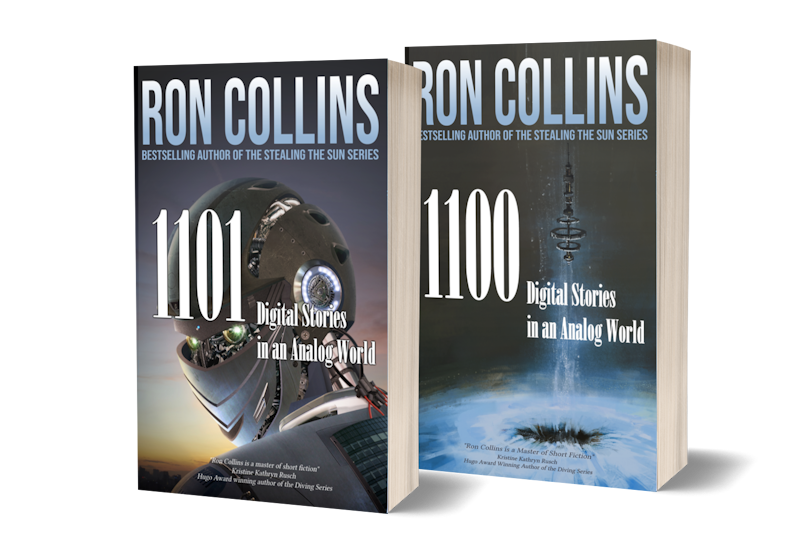
(*) For irony’s sake, and to show you what I mean, I put my initial little blurb for this Kickstarter into ChatGPT and asked it to make it more concise. What I got back was pretty okay, but not quite what I wanted, so I took half its suggestions and then mushed it again myself to make it say what I wanted it to say. It was fine. I’m not sure this is any better or worse than what I had to begin with, and it probably took me longer than doing it myself. Whatever, I suppose. Maybe I should add in: “I’m Ron Collins, and I approve this message?”
Regardless, I can promise that nothing in these books has been touched by AI, including the artwork or layout. Or the Kickstarter stuff…or…well, anything else!
September 20, 2025
I’m Back!
Thoughts about travel, writing, and finding your purpose.
As my last post promised, the past two weeks have been quite an adventure. My brother and collaborator, Jeff, and I embarked on a two-week tour of the country that included stops at something close to a million different places where our parents made their lives. Both of our parents are now passed, and they each donated their bodies to scientific research. What remained was cremated, so we targeted certain stops to scatter some of their ashes.
The jaunt started with a flight to Virginia, where Jeff was born, and passed through Fostoria, Ohio, on the way to Leesburg, Indiana—both places our grandparents lived. After touring and fishing occurred, we made it to South Bend, Indiana (where Mom and Dad met, and where we all lived for a bit) and then to Chicago (where Mom and Dad honeymooned). Jeff and I did our magic for the Cubs, watching them lose a game with a friend, then headed through Casey, Illinois (Big Things, Small Town), which is the birthplace of our paternal grandfather and his brother (the namesakes of our Cruise Brothers protagonists!). Then came a couple of days in Louisville, Kentucky, where my dad was a longtime professor and where Jeff and I went through most of our school days.
A flight later, we were in Tucson, Arizona, where Mom and Dad spent their last years, and then Phoenix, where I was born.
The whole thing took twelve days.
So, yeah, I’m tired, but as I’ve said elsewhere, it’s a good tired.
In a way, this trip felt a lot like writing a novel. We plotted the whole thing out, of course, roughly anyway. We had a decent idea of what we were doing, and the first couple of days were bright and exciting as we forged our way ahead. Of course, things don’t go exactly according to plan. There are the swimsuits that got left behind, anyway.
Hehe…if you know us, you know it happens.
Like writing a book, though, the sheer size of the thing means everything eventually stabilizes. The middle comes along, where you’re still happy to be doing everything, and where surprises come and make you happy, but where it also begins to feel like you’re on a bit of a treadmill. Time to make the words, right? Finish chapter six, and it’s time to write chapter seven. By the midpoint, everything feels kind of uncertain. Or if not uncertain, it’s more like the machine has to run, you know? We’ve got to move. Places to be. Miles to drive. We need our 2,500 words a day, right? Keep going and you’ll get to the end.
Not that it was work.
We found a few spots we weren’t certain we’d be able to find, and that was cool. And every step was most definitely fun in the process—or, if not fun, certainly fulfilling—just like writing a book. Because writing a novel, even in those weird moments when you’re not sure what you’re doing, isn’t really “work” so much as it is a test in perseverance. It’s going to end. And you’re going to love it. But you need to do the things. And, really, the journey is the beauty of it all…and in the case of this trip, that was so true. Two weeks with Jeff was a great experience. Extracting ourselves from the demands of everyday life. Finding our way. Seeing places we grew up. It’s the first time we’ve spent that kind of time together since we were kids, and that was a blast. Seeing a bunch of friends again, and meeting the people who now live in the houses we used to live in, was really, really fun and also surprising in the way that writing a chapter can be fun as you run into things you hadn’t expected.
That doesn’t even count the fishing trip and the splash in the Atlantic Ocean—which I’ll equate to those times when you get to a scene you’ve been anticipating, and you find that the writing is even better than you thought it was going to be.
The end of the trip was like finishing a novel, too.
Technically, the story was over when we finished in Phoenix. We had finished the quest. Dropped the ring into Mt. Doom. But there was still a validation to achieve, which is where the drive back to Vegas sat. It was a quiet drive. About five hours. As miles passed, we shared thoughts about each of the stops. A few words here. A few there. These thoughts cemented the truth of the trip (for me, anyway). Thinking about them brought out their meanings. Life is a weird thing, I think. It’s a beautiful thing. We are all here for only a relatively short time.
What we think of that time is mostly up to us, I suppose. And our situations.
During a session with a group of friends, the idea of having a purpose in life came up several times, which I now think was totally appropriate. We are all getting older. It’s natural that we start asking ourselves about what it means to have a purpose in life. I suppose it would have been great if we had come up with a nice set of pat answers to those questions, but alas, life doesn’t work that way. We don’t get to know those kinds of things.
All we get to do is to live the life we live, and let the dice fall where they may.
The trip home was a good coda, though. A validation of our jaunt in the same way that the whole jaunt itself was a validation of the story of two lives lived in such a way that we could take this trip to begin with. The trip, and the final leg of the trip, was steeped in both the past and the present. Which, again, I think is appropriate.
Just as in a novel, an ending is not really the end.
Despite the pages being closed, the main characters will move on into tomorrow. At least some of them, anyway.
The future is uncertain, though.
It’s only the past that can be understood—and probably more important, it’s only the present that can be used to make those understandings and then to make the changes you want to make.
Maybe that’s the key to finding a purpose?
I don’t know. I might figure one way, and you might figure the other.
That’s the thing about writing a book, too, isn’t it? You write and you write and you write again, trying to make your work everything you want it to be. And in the end, after the book is finished and it wings its way through the whole of space and time, it’s everyone else who gets to decide what it means.
# # #
Whew…that got a little heavier than I expected.
Given the basic topic, that’s not too surprising. But I was—admittedly—still surprised. Another thing about writing into the dark, right?
It really was a great trip.
But I’m glad I’m back. Mentally refreshed, though still in physical recovery after spending twelve days in planes and car seats. It’s good to be here, and good to be ready to make words again. Good to have Things To Do, Milestones To Achieve. Books to Publish.
# # #
Sounds a lot like the beginning of a long trip, doesn’t it?
Grin.

I am a human. Not an AI. You can tell because keep a Patreon page where I talk about writing and being a writer (among other things). In other words, I post a lot of things there before I post them here. I also share occasional work in progress for Patrons only, and give special discounts and sometimes even free books to Patrons at various levels. If you’d like to support me–or just this blog–you can do so by clicking here: