A.D. Davies's Blog
February 14, 2015
Find Your Voice: the most annoying advice ever
I listen to a lot of podcasts. Mainly writing ones. In addition to the novel-writing ones, I also love Scriptnotes, featuring John August and Craig Mazin, a podcast about screenwriting and things that are interesting to screenwriters. But mainly, I look to those concerning books.
First up is the Self-Publishing Podcast, in which Sean, Johnny and Dave shoot the shit for thirty minutes about what they’ve been up to, then get into the meat of that week’s theme. The first part used to annoy me, but once I got used to it, I now need that fix each week. I’m sick, I know. However, the second half has always been valuable. Great advice, with occasional guests.
The Creative Penn, a series of interviews hosted by fellow Brit, Joanna Penn. Always punctuated with her endearing giggle and packed with excellent advice, focusing largely on the business side, but also the craft. This was the first place I heard the phrase ‘authorpreneur’, and the rest of the site is also packed with great resources for indie authors.
The Sell More Books Show is hosted by Jim Kukral and Brian Cohen, engaging chaps with a lot of knowledge who round up the week’s publishing news and go a little deeper into a specific theme or guest.
Rocking Self-Publishing, hosted by another Brit, Simon Whistler. Sage advice and cracking interviews. In 2015 he pledges to ensure his interviews are more focused on a specific topic than they have been to date. And, to date, they’ve been pretty good, so I’m looking forward to 2015.
Finally, Writing Excuses, hosted by Brandon Sanderson, Mary Robinnette Kowal, Howard Tayler, and Dan Wells, it’s fifteen minutes per episode, because you’re in a hurry and they’re not that smart. While the others are a mix of craft and business, often weighted heavily toward practicalities for independent authors, Writing Excuses is more craft-based, and when they do mention the business it’s usually from a traditional-publishing perspective. Also, they’re mainly fantasy, horror and sci-fi authors, but they know their stuff and it is usually transferable to other genres.
What almost all advice shows have in common, though, from screenwriting through the indie-publishing world and into the realms of six-figure advances, is at some point they will have a guest on, or a host, who espouses the piece of advice that most infuriates aspiring writers:
Find your voice!
It’s so annoying because it’s almost impossible to teach. It takes TIME. No shortcuts. You have to write a LOT. You won’t succeed with your first attempt. You might think you have but you probably haven’t. And even if you get a semblance of success, it will still evolve over time. I know if I wrote His First His Second now, it would have a slightly different voice to the one you see in the current novel. It was almost there, but I’ve tweaked my style because, well, that’s what it has evolved into.
Sometimes you can identify a common theme in a writer’s style, whether it’s word choice, paragraph structure, the said-bookisms, whatever, you can spot them if you look. Readers, though, don’t look. They know they love a particular writer but don’t always know why. You hear, “I love the way she writes,” or, “His prose is incredible”, but when you start analysing why it’s sort of like deconstructing a joke, ruining it for all time.
Find your voice?
So what the HELL does that mean?
It’s really hard to say, actually.
I like to think I’ve found mine. I now know how I handle dialogue-heavy scenes, and it isn’t the same way as Michael Connolly or Dennis Lehane or Hugh Howey. I know how I write action, and it doesn’t sound like Andy McNab or Lee Child or J.K. Penn. I can tell you now, in all honesty, if you placed my car chase next to one written by James Patterson or Dan Brown or A.G. Riddle, mine would be as different from them as they are from each other.
So you’ll see I prefer “John said” to “said John”, and I’ll put that at the beginning of a line of dialogue more often that at the end or broken up in the middle. Why? Well, I think it attributes the dialogue more readily than putting it later, and—technically—it’s more like the way we talk to each other, so for me it flows better. Of course, that’s not a rule; it’s just my preference. Thousands of authors prefer to open with the dialogue itself and attribute it later. If I need to break up a line with a beat, I’m not averse to placing “John said” later in the sentence.
But that’s such a small, basic, scratching-the-surface example I’m tempted to edit it and give a better one. Like how to break up that dialogue-heavy scene.
Find your voice…
In the end, it’s just one of those things a writer has to figure out alone. By writing. By writing a lot. Lots of words, lots of short stories, maybe an essay or a blog or two. Certainly, you won’t find it by sitting down and banging out 80,000 words straight out of the gate.
Sorry, but no short cuts for this. Be patient, put in the time and effort, and you’ll find it.
The post Find Your Voice: the most annoying advice ever appeared first on .


February 11, 2015
How Chuck Palahniuk made me a Better Writer with One Essay
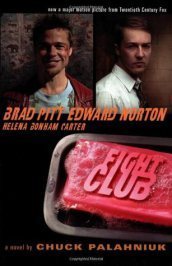
I originally planned to release Three Years Dead at the end of January. Why delay it? Well, the simple answer is Chuck Palahniuk. And, to the author of Fight Club, Rant, and Choke, I’m grateful.
 Palahniuk wrote an essay called Nuts and Bolts: “Thought” Verbs that went wide around January, urging writers to swear off those ‘thought verbs’ of the title. That is when in narrative the author writes something like, “She remembered the time…” or, “He knew how his mother felt about…”
Palahniuk asserts the verb is almost always unnecessary. He asserts that removing those verbs makes the writing stronger, that by removing the instructive element and replacing it with a natural flow of events, the reader is blessed with a richer reading experience.
For example, if my first draft was:
“Lawrence sat down beside Susan. He remembered the day she introduced him to Donna, and felt gratitude rising in him, whilst simultaneously dreading informing her of his wife’s death.”
I don’t know why I would write that—it’s not an excerpt, just something off the top of my head—but if I did, using Palahniuk’s advice I would alter it to:
“Lawrence sat down beside Susan, the woman who introduced him to his wife, who was maid of honour at their wedding, who had helped them through the tensions rife in any marriage. Now Susan’s best friend was dead.”
It’s longer, yes, possibly too baggy now, but richer than it was before, I think.
It doesn’t always need to be longer, of course. Just restructuring or simply cutting out words like “remembered” or “thought” or “knew”.
“Phil hid behind the car. He knew trucks were streaming by, full of enemy soldiers, who would shoot him on sight. And he had already learned he needed to reach the Shahid family before the police traced their phone signal.”
Okay, it’s a hammy scene. But just dropping those “he knew” lines makes it instantly stronger.
“Phil hid behind the car. Trucks streamed by, full of enemy soldiers who would shoot him on sight, but he had to reach the Shahid family before the police traced their phone signal.”
Editing that further, I could replace “hid” with a stronger verb, find a better phrase for “full of enemy soldiers” (probably don’t need “enemy” for starters) and “he had to” annoys me every time I see that I’ve written it. So it’s a crappy sentence, but far better than the one with “he knew”.
“Phil ducked behind the car. Trucks streamed by, packed with soldiers, all familiar with his image, each one under orders to shoot him on sight. The Shahid family lived three blocks from here, and the police had a ten minute head start.”
So it gets a little better with those tweaks. But those tweaks all stem from that first edit: cut out the thought verbs.
Sometimes, yes, when you cut them out completely it becomes too obvious that the author is dancing around the easy option, making it an awkward read. When that happens, sure, throw one back in there. Sometimes you just need it.
Three Years Dead is a thriller about a detective sergeant in the city of Leeds. After an attempt on his life, he wakes up with no memory of the past three years, and learns he became a corrupt scumbag of a copper over that time. No one really cares who tried to kill him, so it’s up to him to do so, while seeking redemption by tracking down a missing youth.
So, he has a lot to figure out. A lot of introspection. But the first draft of this was packed with thought verbs. “He remembered”, “he figured”, “he calculated”, “he THOUGHT”. The synonym function was working its little socks off. I dredged the whole manuscript, cutting 50% of them without altering another word, and culling around 40% by tweaking the sentence entirely. That’s 90% of my thought verbs gone.
And I think it was worth the effort.
Thank you, Chuck Palahniuk. Hopefully, my readers will thank you too.
The post How Chuck Palahniuk made me a Better Writer with One Essay appeared first on .
January 22, 2015
When the Creative and the Commercial Come Together
 It’s sweet, isn’t it? You have a sudden epiphany that something you’re doing in your current novel might have a negative commercial impact on a different novel. It can make a reader uncomfortable when a writer starts out glorifying a violent vigilante in one story, then switching to a pacifist one who hates hoo-rah gung-ho bullshit in the next. It shouldn’t matter—an author should be able to write whatever story inspires them—but it kind of does.
I had such an epiphany recently.
A problem that could mean my second novel—the standalone Three Years Dead—might have a negative impact on my third, Reflected Innocence, which I hope to launch into a parallel series alongside the Alicia Friend/Donald Muphy world from His First His Second.
So should I sacrifice my creative vision for my commercial one?
Well, in experimenting, I discovered something quite wonderful. In worrying about my commercial future (in other words, my future sales and therefore my income) I wrote something that actually made the story stronger.
The problem, in a nutshell, was that I was writing Three Years Dead in the first person. Why was that a problem? Well, because Reflected Innocence is also first person.
Still, why is that a problem?
Okay, because the protagonists are both males and both are white-British. However, while they’re very different in character, in terms of the basic list of characteristics, they’re going to clash a bit.
In Three Years Dead, Martin Money is a police officer with no memory of the past three years, trying to unravel a) his own assault that resulted in the memory loss, and b) the disappearance of a young male prostitute; he’s in his forties, with a great deal of experience and technical know-how, and spends a lot of time confused
In Reflected Innocence, Adam Park is a private investigator, university-educated, and widely-travelled, so his prose is more succinct and analytical. In fact, they’re so different that I don’t believe it would be much of a problem if I released them two years apart.
I can write in different voices after all.
But one is set to be launched soon after the other, with little in the way of a gap between them, so I was concerned that someone who read Three Years Dead might pick up Reflected Innocence , and believe it—at first—to be a sequel, then be disappointed no matter how good it actually is.
So I tried switching the point of view. I changed Three Years Dead to a third-person narrative. Rather than jumping from head to head as I did in His First His Second, we follow only Martin Money, but we don’t exist exclusively inside him, looking out through his eyes. It has the effect of being a very visual novel, often building on the mystery, but more importantly it allows the reader some distance.
Even whilst writing it, even knowing where the story was going, I found it an uncomfortable experience. There are some pretty sordid things going on, and the character himself discovers some very sleazy secrets about the period of his life that he’s forgotten. Drugs, implied violence, police corruption, and some sexual imagery that, while explicit on the page, is anything but erotic. In investigating Si Larson’s disappearance, Martin explores the awful lives of drug addicts and prostitutes, and positions himself as both a perpetrator and saviour. Spending so much time inside his head, looking out with such candour and intimacy, I think it would have left many readers feeling like they need a bath.
In opening myself up to corrupting my creative vision, and experimenting with a writing style to facilitate my commercial ambitions, I made my novel stronger.
Creatively.
It sounds odd, I know, but moving away from Martin Money’s first-person narrative to make way for Adam Park’s, it gives readers a better experience, and although I still hope a few will feel the need to bathe or shower after reading (it’s that sort of book), it will be in a ‘phew’ way instead of an uneasy one.
The post When the Creative and the Commercial Come Together appeared first on A.D. Davies.
December 27, 2014
Post Christmas Special Offers
It’s all over. The wrapping paper and boxes are ready for a trip to the trip, the wife is gourging on the vile delicacy of turkey dripping on toast, and the kids are detoxing from the amount of sugar and e-numbers they have consumed.
Now the sales start.
And to remain up there, I have to participate, even though it’s my birthday (it really is – 27th Dec).
Thanks to sites like Free Kindle Books and Tip and Digital Book Spot I can hopefully push my novel up the charts before it resumes its full price.
Sites like these are the lifeblood of independent authors, and signing up to their services is a big help to readers looking for bargains. Obviously Bookbub is the one everyone knows about, do give FKBT and DBS a go – they always provide an excellent service.
In the meantime, you can check out the current offers (valid until 28th Dec 2014) at the following retailers:






“Set in and around the Yorkshire city of Leeds, the book is an intriguing mix of police procedural and serial killer thriller, that will tease, involve and unnerve you. An entertaining and intriguing debut” – CrimeFictionLover.com
Meet Detective Sergeant Alicia Friend. She’s nice.

Perhaps too nice to be a police officer, if she’s honest.
She is also one of the most respected criminal analysts in the country, and finds herself in a cold northern town assigned to Donald Murphy’s team, investigating the kidnap-murders of two young women—both strikingly similar in appearance. Now a third has been taken, and they have less than a week to chip away the secrets of a high-society family, and uncover the killer’s objective.
But Richard—the father of the latest victim—believes the police are not moving quickly enough, so launches a parallel investigation, utilising skills honed in a dark past that is about to catch up with him.
As Richard’s secret actions hinder the police, Alicia remains in contact with him, and even starts to fall for his charms, forcing her into choices that will impact the rest of her life.
His First His Second is a violent story of interweaving plots that will keep the reader hooked until the final page.
“Ooh what a wonderful twisted mind this author has” – Warrior Woman Winmill
“Holy crap! You want a book that will keep you on edge? A book that will keep you guessing? A book with some twist and turns? This is the one. It’s well written and extremely good. It will not disappoint!” – Undercover Book Reviews
The post Post Christmas Special Offers appeared first on A.D. Davies.
December 19, 2014
Review of the Burning Room
 The Burning Room by Michael Connelly
My rating: 5 of 5 stars
As efficient and well-written as usual. Plot twists that make perfect sense but are rarely predictable (except one, which is more down to me guessing through my genre-literacy than the writing). I am admittedly a Harry Bosch junkie, but this one also gives us a partner who is as dedicated as Harry, petty but realistic internal politics and more glimpses into Harry's daughter who -- if my fiction-sense is tingling correctly -- will soon have her own novels, once her dad retires. Whether this will be YA as per the Mickey Bolitar spin off from Harlan Coben Myron Bolitar series, or if Connelly will wait until she's gone through the academy and - maybe - Harry conducts a few private investigations or goes to work for his half brother... sorry, I'm speculating on the future. This novel was as solid and entertaining as any in the series, without blowing my pants off. Five stars doesn't mean perfect in my mind; it just means better than a 4.
View all my reviews
November 23, 2014
Early Reviews – His First His Second
So, I told myself I’m not going to be one of those writers who constantly crows about his great reviews and quotes them every few days.
However, it’s still early in the life of His First His Second, so I guess I have to whore myself around a bit and push my early reviews towards the audience.
For now, here are the links that have come in so far. Suffice it to say I’m pretty happy with them.
Undercover Book Reviews – 5 stars
Both have been kind enough to post their reviews on Goodreads and Amazon. I’ll update this list as and when people review it.
The post Early Reviews – His First His Second appeared first on A.D. Davies.
November 20, 2014
American-ese vs Britishisms
This week there was a fairly interesting discussion over at KindleBoards regarding why some Americans cannot stand to read British English in novels. Some readers, apparently, go so far as to dish out a one-star review for bad grammar and terrible spelling errors, and the authors took a while to realise they meant the dialect.
I found it rather odd, as most American novels that arrive in the UK are written in American-ese and I have never known anyone complain.
I once wrote a novel, not currently in circulation I hasten to add, but it was written as a NaNoWriMo one year. It featured an American detective with an all American cast, and I wrote that in American-ese. I went so far as to hire an American proof-reader to banish any Britishisms. It just made sense to me.
Equally, it makes sense for me to keep His First His Second and Three Years Dead in British-ese because they are British detectives solving British crime, in Britain. Even if I was pushing it in America in a big way, wouldn’t it jar somewhat to alter the whole novel?
I know some books like Harry Potter have American editions, which I think is probably essential since it’s mainly a children’s book, and if every kid whose parents aren’t worried about witchcraft is reading it, translating it to American-ese is a no-brainer.
As are other British authors working in the American environment, such as Lee Child, and Irish people like John Connolly. Their books arrive in the UK with the colors and aluminum intact. People even transport their dead bodies in the trunk instead of the boot.
I don’t know if popular British crime authors whose novels are set in Britain, like Val McDermid and Ian Rankin, have American editions of their books. I’ll have to find out.
I just wonder if I am about to learn a valuable lesson in becoming an author – that if I want to crack America, I have to be fluent in American-ese.
The post American-ese vs Britishisms appeared first on A.D. Davies.
Begging and Thanks
It’s an odd situation to be in. As I write this, my novel His First His Second has been available for sale on pretty much every e-book medium going, including places I’d never heard of until I signed up to Draft2Digital. So in addition to the essential Kindle, I’m on Kobo, Nook, iBooks, Scribd, and Page Foundry.
Which means I can’t just link to the Amazon page each time I want to beg people to buy my book. And I hate begging.
More to the point, I hate seeing people beg. Especially indie authors I happen to be following on Twitter.
Buy my book… please?
Buy my book!
Buy my BOOK! NOW!
I hate that. And I don’t buy their books.
Nor does anyone else, I feel. Or maybe they do, otherwise they wouldn’t do it. But I have never heard anyone issue the advice to an indie author to saturate Twitter with outright demands to purchase.
So I don’t beg. I might mention occasionally when I am accessible on a new format, or deliver some snippet of news. But other than that one time I did a charity drive on my profits for a day, constantly banging on about buying the book is just such a turn-off for genuine readers.
Thanks very much, by the way, to all those who pre-ordered. All profits from the 14th and 15th go to the BBC Children in Need Appeal.
Oh, and that brings me to another point – thanking.
I cannot tell you how happy it makes me when a stranger buys my book. Especially one who simply saw something I was talking about, clicked on my Facebook or website link, and took that chance. I’m a new writer, so I know it’s a big deal. It’s unusual for me to do it, so I have to ask – why would anyone else?
Hopefully because I’ve done things correctly: from feedback on forums etc, I think I’ve got myself a decent cover; from beta readers, I think I’ve got a plot that holds together; from readers again, I think my prose is up to a professional level.
The only thing I don’t have is exposure. Which makes it doubly gratifying that anyone has seen my novel and thought “I’ll give that a go”.
However – I’m British. So I don’t know when to stop thanking people.
When I was about 22 I got into some hot water with money. Nothing big, just mishandling my personal finances, living beyond my means. In many ways, I’m still paying for my youthful ignorance and immaturity, but I’m certainly in control now. One day, though, way back when, I was called into a manager’s office and introduced to a bailiff who presented me with a county-court judgement. He wasn’t intimidating but he was firm and needed a signature, and at least he was subtle (only my immediate boss knew about this). As the bailiff left the office, he said goodbye, and I said…
Thank you.
Yep. I said thank you.
That’s how bad I am with thanks. And that’s brings me to my dilemma: when do I stop it? When does thanking people become annoying?
I mean, if you bought His First His Second on the 14th November, diverting my lovely profits to needy British kids, you might still ‘like’ my FB page and get a little sick of me gushing over each dozen sales.
So I am writing this as one big thank you, and to say I really am grateful to those out there taking a chance and buying this novel either before release or in the first week, with no reviews and no recommendations other than me saying, “Please buy my book.”
In the future, if sales climb, yes, I am bound to gush a couple of times. But I will keep it to a minimum, and hopefully you’ll come back for more. I see someone has already pre-ordered my next novel Three Years Dead (not due out until the end of Feb 2015), also on 14th November, and I say to that person a BIG thank you.
So, I’ll leave you with this:
(If it’s not too much trouble… thanks.)
The post Begging and Thanks appeared first on A.D. Davies.
November 19, 2014
His First His Second Author Q&A
Having been quizzed by friends and family on my debut novel His First His Second, I put together a quick Q&A
Q: Alicia Friend is kind of an oddball, isn’t she?
A: I’d say she’s unique. She knows who she wants to be and she doesn’t compromise. Most police officers she meets are dour and grumpy, and she sees how that impacts their personal lives. She doesn’t want to be like that so radiates the sort of perkiness that sometimes grates on her fellow officers. But it’s who she is.
Q: Unlike the detective she has to advise during the investigation. Isn’t he more of a stereotypical hard-bitten type of investigator?
A: I think of him more as an archetype than a stereotype. The committed detective whose personal life went to pieces because of the job. I needed him to be this way as a contrast to Alicia. We meet Alicia through his eyes. He doesn’t like her at first but he warms to her and slowly becomes less of a grump.
Q: And the novel goes to some dark places.
A: Yes. I found that at one point I was trying to include ALL my research, and I’m really aiming for a thrill ride as much a straight police procedural. I’m trying to emulate the likes of John Connolly and PJ Tracy. I originally included the sort of forensic details you get with Patricia Cornwell or Kathy Reichs, but it wasn’t right for this book. I keep it as accurate as possible, but it’s about the characters and how they uncover secrets, both externally and within the police.
Q: The title is a bit odd. Can you explain it?
A: Not without spoilers. Although, if the reader figures it out early on, it won’t ruin the experience. It’s a small part of the story, but fits the mood. It relates to something the killer tells his victims. I used to simply call the novel “First & Second” but this felt a bit vanilla.
Q: The cover mentions that one victim’s father, a widower, has a dark past. What is that?
A: It is covered early in the novel, but I’d rather not spell it out here. It enables Richard to run a parallel investigation, though, one that hinders Alicia and Murphy. While he really begins to like Alicia, he senses she likes him back, so it’s also a way of staying inside the case, of pushing on to find his daughter. The real question, as the novel progresses, is how damaging this will be for Alicia.
Q: What’s the tale of the novel itself then?
A: I wrote the original in 2004, then rewrote it in 2007, and now it’s had another polish via myself and a professional editor. It was actually the sub-plot (or side-plot) that came first, the idea of Richard tracking his daughter and circumventing the police. But, as I made him more devious and conniving, I realised I needed a different angle. So I came up with Alicia.
Q: And how, exactly, do you come up with a character like that?
A: She is based on a real person. But very loosely. The essence is there, although I had to invent certain aspects for dramatic effect. The parts from real life are: a ditzy, perky outer shell, yet possesses a fierce intelligence, true dedication, and being brilliant at her job.
Q: So the real Alicia Friend isn’t a serving police officer?
A: No, she isn’t. And if she was, I certainly wouldn’t say so here.
Buy now or download samples from the following retailers:
The post His First His Second Author Q&A appeared first on A.D. Davies.
His First His Second – International Paperback Giveaway
Yes, I’ve opened up my His First His Second giveaway to the international audience. Just go here to enter:
Goodreads Book Giveaway
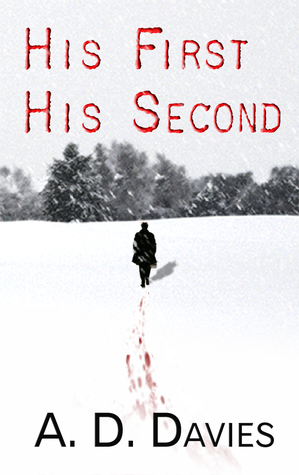
His First His Second
by A.D. Davies
Giveaway ends November 27, 2014.
See the giveaway details
at Goodreads.
The post His First His Second – International Paperback Giveaway appeared first on A.D. Davies.