
Judi Hendricks's Blog
December 12, 2021
Once upon a time


December 17, 2020
Happy Birthday, Margie
October 30, 2020
Ghost Story
July 2, 2020
The Write Stuff
September 1, 2016
Home Is the Sailor…
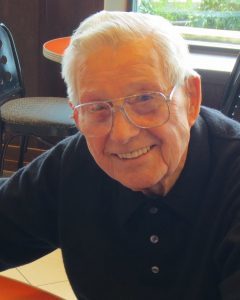
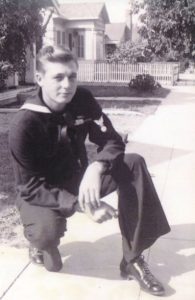 Jerald Douglas “Doug” Huggins November 18, 1922–August 21, 2016
When I was in the fourth grade the teacher asked us to write a theme about the person that we most admired. Other kids wrote about the President or a sports hero or a movie star or some other public figure. I wrote about my father.
In deciding what to say about him today, I tried to recall the big events of my childhood that made him a hero to me, but the more I thought about it, the more I realized that there really were no big events. Just lots of small ones, which, when taken all together added up to one very special big event—growing up with Doug Huggins as my dad.
My dad was a practical man. Not the kind who built things or enjoyed tinkering with engines, but he could fix a bicycle wheel, fly a kite, make paper airplanes, skip stones, re-attach a doll’s head to her body, and re-animate just about anything that ran on electricity. He never coached my softball team, but he threw countless pitches for me to swing at. He never pulled me from a burning building, but he was excellent at bandaging skinned knees. He thought nothing of coming home on Friday night after a long week on the road, only to change clothes and get back in the car to accompany me to some father/daughter event at school.
He took me fishing. He taught me to read maps. He took off the training wheels when he thought I was ready. He taught me that whatever I did, I had to give it my best shot. And he taught me the importance of truth. He was very big on honesty. Nothing my brother or I could ever do would get us in as much trouble as lying about it. And, as he always said, “If you tell the truth, you don’t have to remember what you said.”
He had his whimsical side as well. I can’t recall what age I was when he wrote “Ode to a Princess,” which began “Once upon a time, many years ago, in a far out land called Burbank, a fair princess was born to King Jerald and Queen Ruth…” Every year for the last fifty years my phone would ring at 7 AM on my birthday and he would recite to me the story of Princess-Judi-with-an-i…climaxed by a spirited rendition of Happy Birthday by him and my mom.
My dad loved German cars and Mexican food. He loved reading books and playing golf and road trips. He loved his family and his friends and his country and the Navy. He loved pleated pants and he wore them whether they were in or out of style at any given time. He disdained pinky rings and flowered shirts. He liked his steak well done. “If it’s smokin’ it’s cookin’, if it’s burned it’s done” was his motto. He showed me what a delicacy leftover cornbread can be when crumbled into a glass of cold milk, about 11 pm. His baby back ribs were unprecedented. He hated vegetables cooked al dente…actually anything cooked al dente. He liked his coffee boiling hot, his tea sweet, and his martinis dry.
I loved him and so did everyone else who knew him.
Perhaps the most telling testimonial to the kind of man he was, is that some 20 years after my first husband and I divorced, he wrote my father a letter telling him how much he appreciated him and missed him and what a great father-in-law he’d been. In that same spirit, I’d like to say this about my father…it’s a Hebrew proverb:
Do not say in grief: “He is no more,” but live in thankfulness that he was.
December 4, 2015
A Meditation on Soup
 If you love to cook, you undoubtedly have a few favorite cookbooks. You know…the ones with the cracked binding and the grease spotted cover and the dog-eared pages. The ones with ingredients highlighted and comments scribbled in the margins.
Yesterday I pulled out one of my old favorites, Classic Italian Cooking, by the late Marcella Hazan. This book is dear to me not only for the wonderful  recipes and Ms. Hazan’s entertaining and opinionated asides about Italy and its culture (“A vegetable soup will tell you where you are in Italy almost as precisely as a map…”) but also because I’ve owned it for as long as Geoff and I have been married. In fact, it was a wedding present from my ex-husband Jerry and his wife Karol, who over the years have become part of our extended family.
The recipe I wanted yesterday was Minestrone di Romagna, and I’ve made it so many times that I really don’t need to follow the book. Besides, I always think that making soup is like a good road trip…you don’t know exactly where you’re going till you get there.
The recipe below is the original, but I always make a few turns that aren’t on the map. Like throwing a few cloves of garlic in with the onions. You’re cooking over such a low heat that there’s no danger of burning it. Also I never measure soup ingredients in cups. For this recipe I used one medium onion, three slender carrots, three stalks of celery, two medium Yukon Gold potatoes and two medium zucchini. The fresh green beans at the store looked limp and sad, so I bought a package of frozen organic ones and used a couple of handfuls. Since they’ve already been blanched I added them with the cannellini beans. For the tomatoes, I used the whole can. Why leave half a can in the fridge to get moldy and then thrown away? And I can’t abide mushy zucchini, so I always add it about fifteen minutes before I turn off the heat. I know that’s not traditional, but I’m not a traditional kind of girl.
In her directions, Ms. Hazan admonishes us, “It is not necessary to prepare all the vegetables ahead of time although you may do so if it suits you. The vegetables don’t go into pot all at once, but in the sequence indicated, and while one vegetable is cooking you can peel and cut another. I find this method more efficient and less tedious…and somehow it produces a better soup.”
As a baker, I’m a firm believer in the mise en place…that is, having everything measured out and ready to use before you start. So the first few times I made this soup I did it my way. Then, one time for whatever reason, I tried doing it Marcella’s way, and I found it compelling…if you can use that term about chopping vegetables.
There’s something totally involving about the scent of the onions (and garlic) sizzling slowly and quietly in fragrant olive oil while you’re methodically chopping the carrots into small cubes. Then you add the carrots to the pot and move on to the celery, then the potatoes…and so on. It’s like a dance between cutting board and stove. The timing seems to work out perfectly, and your brain drops back into neutral and…it’s very much like meditating.
Marcella Hazan’s Minestrone di Romagna
½ cup extra virgin olive oil
3 tablespoons butter
1 cup thinly slice yellow onion
1 cup diced carrots
1 cup diced celery
2 cups peeled, diced potatoes
¼ pound fresh green beans
2 cups diced zucchini
3 cups shredded Savoy cabbage or regular cabbage
1 ½ cups canned cannellini beans, drained, or ¾ cup dried white beans, soaked and cooked
6 cups Basic Homemade Meat Broth
Optional (but recommended): the crust from a piece of parmigiano-reggiano cheese
2/3 cup canned imported Italian plum tomatoes, with their juice
Salt
1/3 cup freshly grated parmigiano-reggiano cheese
Choose a stockpot that can comfortably accommodate all the ingredients. Put in the oil, butter, and sliced onion and turn on the heat to medium low. Cook over low heat until the onion wilts and becomes a pale gold, but don’t let it brown.
Add the diced carrots and cook for 2 to 3 minutes, stirring once or twice. Then add the celery, and cook, stirring occasionally, for 2 or 3 minute. Add the potatoes, repeating the same procedure.
While the carrots, celery, and potatoes are cooking, soak the green beans in cold water, rinse, snap off both ends, and dice them.
Add the diced green beans to the pot, and when they have cooked for 2 or 3 minutes, add the zucchini. Continue to give all the ingredients an occasional stir and, after another few minutes, add the shredded cabbage. Continue cooking for another 5 to 6 minutes.
Add the broth, the optional cheese crust, the tomatoes with their juice, and a sprinkling of salt. If using canned broth, salt lightly at this stage, and taste and correct for salt later on. Give the contents of the pot a thorough stirring. Cover the pot, and lower the heat, adjusting it so that the soup bubbles slowly, cooking at a steady but gentle simmer.
When the soup has cooked for 2 ½ hours, add the drained, cooked cannellini beans, stir well, and cook for at least another 30 minutes. If necessary, you can turn off the heat at any time and resume the cooking later. Cook until the consistency is fairly dense. Minestrone ought never to be thin and watery. If you should find that the soup is becoming too thick before it has finished cooking, you can dilute it with a bit of broth.
When the soup is done, just before you turn off the heat, remove the cheese crust, swirl in the grated cheese, then taste and correct for salt. Serve in heated bowls with a sprinkling of parmigiano, a quick grind of black pepper, and a drizzle of good olive oil. And of course, don’t forget some good, crusty bread.
Like most soups, this one only gets better the second and third days, but it was delicious last night as an accompaniment to my Christmas cookie list making.

The post A Meditation on Soup appeared first on Judi Hendricks – Author of The Laws of Harmony.
November 8, 2015
Oma’s Dinner Rolls
 “I love Thanksgiving. It’s the only American holiday dedicated solely to the preparation and consumption of food.
When I was a kid we always went to my oma’s townhouse in San Francisco, along with the few old aunts who were still creaking around, a distant cousin or two, and Mr. Lewis, the crotchety bachelor who used to work with my opa. Dinner was very formal…starched white linens and crystal goblets and all kinds of silverware that I never knew what to do with, and salt cellars and finger bowls and six courses.
The weather was unfailingly wet and cold, so it wasn’t like you could go out and play, and I loved spending all day Wednesday and Thursday with my mother and my oma in the big, warm kitchen. Ironing and folding the napkins was my first chore, then setting the table with the gold-rimmed plates. I loved the juggling of things from oven to stove to oven to refrigerator, the stirring and the tasting, listening to the family gossip.
The meal was always the same, starting with butternut squash bisque and the obligatory relish tray of olives, radishes, carrots, celery and green onions. Then the huge, burnished turkey, carved at the table by my father; stuffing with water chestnuts and mushrooms; mashed potatoes, golden with butter; my oma’s rich giblet gravy, cranberry sauce, green beans with toasted almonds, three kinds of pie—pumpkin, apple and lemon meringue, not traditional, but my father’s favorite. Then—as if we needed it—a small dish of candied nuts and mints.
It was all quite wonderful, but for me it was all about the bread. Not brown-and-serve rolls from the grocery store—my oma would have sooner served packaged turkey—not even good bakery buns or sourdough bread from Boudin. She always insisted on making her own yeasted buttermilk dinner rolls.
Pick up one of these still-hot rolls, break it apart, and you nearly swoon from the aroma of the rising steam. This is my oma’s recipe, and my first bite of sweet, buttery tenderness embodies for me all the pleasures of holiday meals. She would time it so these came from the oven just before we were to sit down. Since I was usually in the kitchen, I always managed to score at least one before they made it to the table.”
–from The Baker’s Apprentice
Oma’s Buttermilk Dinner Rolls

(adapted from Lee Bailey)
Makes 32 rolls
2 C buttermilk
3 Tbsp unsalted butter
6 Tbsp salted butter
2 Tbsp sugar
2 tsp salt
¼ C lukewarm water
Scant Tbsp active dry yeast (1 packet)
5 ½ -7 C all purpose flour (you can substitute white wheat flour for up to 2 C if you like rolls with a bit more attitude.)
½ tsp baking soda
In a small saucepan over low heat (or in the microwave) combine buttermilk, unsalted butter, 1 Tbsp sugar and salt. Stir several times until butter has melted, then set aside to cool slightly.
In a small bowl combine water with remaining Tbsp sugar and sprinkle yeast on top. Set aside till foamy. Meanwhile in the bowl of a standing mixer combine about 5 ½ C flour and baking soda and blend at low speed for a few seconds.
When the buttermilk mixture is warm, but no longer hot (it will kill the yeast) whisk the yeast mixture into it and pour over the flour. Mix with paddle attachment just until a shaggy dough forms, then switch to dough hook and knead for about 6 minutes or until dough is smooth and slightly sticky. Add more flour only if necessary…this dough should be pretty moist. Here in Santa Fe I didn’t need any more than 5 ½ C. (You can mix the dough with a wooden spoon and knead it by hand for about 10 minutes if you really want to.)
Cover the bowl with plastic wrap or a damp towel while you prepare the pans. You’ll need two 8” square metal pans. Melt the remaining 6 Tbsp salted butter and divide it equally between the two. If it starts to harden while you are forming the rolls, stick the pans in a low oven to keep the butter melted.
Turn dough out of the bowl onto a lightly floured surface and divide it in half. A kitchen scale is the best tool for this. Put one half back in the bowl and cover while you divide the other half into 16 pieces (you can pretty much eyeball it) with a large, sharp knife. If it gets too sticky, run the knife under warm water periodically. If, like me, you live in a dry climate, you’ll need to be fairly quick about this part so the dough doesn’t dry out. Form each piece into a ball by rolling loosely with the heel of your hand. They don’t have to be perfect.
When you have 16 small round rolls, dump them into one of the pans and roll them around so they’re completely coated with melted butter, then arrange in four rows of four and cover with plastic wrap while you repeat the process with the other half of the dough.
Preheat the oven to 375°F. Set both pans in a warm, draft free spot and cover with plastic wrap and/or a damp dishtowel for about an hour. They won’t get very tall, but they should be nice and cozy, pressed against each other.
Bake for 25-30 minutes until golden brown, turning pans 180° and switching from side to side about halfway through.
Serve warm with plenty of butter.
There aren’t many occasions that require 32 dinner rolls (except holidays or parties) so fortunately these freeze nicely. Reheat in a warm oven after thawing at room temperature.

The post Oma’s Dinner Rolls appeared first on Judi Hendricks – Author of The Laws of Harmony.
October 12, 2015
What’s for Breakfast?
 As several readers have pointed out, there are no recipes in Baker’s Blues. There are reasons for this, which I won’t go into here, but I want to assure those who are interested that most of the food described in the book is very real, and I fully intend to share the recipes. Eventually.
So in response to the many requests—well, both of them—I’m posting the recipe for the scones mentioned on page 362 of the paperback, the same ones Geoff and I had for our breakfast at Aspen Vista last Sunday—a perfect Autumn morning in New Mexico…

The Bread Maven’s FESTIVAL SCONES
The name of these scones derives from the fact that there’s so much color and crunch going on here that they’re pretty celebratory.
Ingredients
4 C unbleached all purpose flour (or 3 C all purpose and 1 C white wheat flour)
½ C packed light brown sugar
1 TBSP baking powder
1 tsp baking soda
½ tsp salt
12 TBSP cold, unsalted butter (1 ½ sticks) cut into small cubes
2 large eggs
1 C cold buttermilk
1 tsp vanilla
1 C pecans, toasted and coarsely chopped
1/2 C shredded unsweetened coconut
1 C dried fruit (any combination of raisins, cranberries, cherries, apricots, currants) coarsely chopped
⅓ to ½ C chopped candied lemon peel or citron
Directions
Position a rack in the center of the oven and preheat to 400° Line a large baking sheet with parchment paper.
Dump the dry ingredients into the bowl of a food processor fitted with the steel blade and pulse to mix.
Add the butter all at once and run for 15 seconds, then switch to pulse until mixture becomes moist crumbs. (Be careful not to overwork. You don’t want a big ball of dough.) Remove the blade from the processor and dump mixture into a large mixing bowl. Add the chopped nuts, fruits and lemon peel and toss to combine.
In a separate bowl whisk the eggs, buttermilk and vanilla together.
Pour the wet ingredients over the dry ingredients and mix with a wooden spoon just until there is no flour visible. To ensure a tender scone, don’t stir a second longer than necessary.
Use a half cup measure or an ice cream scoop to portion out the dough onto the prepared baking sheet, leaving about 2 inches between. With wet fingers, smooth a little place on top of each scone and sprinkle with raw sugar.
Place baking sheet in the oven and bake for about 20-25 minutes or until the tops are golden brown and a toothpick inserted into the center of one comes out clean. Let cool for five minutes on a wire rack, then remove scones with a metal spatula and transfer to a wire rack.
Serve hot, warm or room temperature.
Festival Scones can also be frozen unbaked and baked without thawing. Just add an extra 5-10 minutes of baking time. And be sure to use double acting baking powder like Red Star or Bob’s Red Mill to ensure the scones rise well after freezing.

The post What’s for Breakfast? appeared first on Judi Hendricks – Author of The Laws of Harmony.
September 24, 2015
‘Tis the Season
 No, not that season. The piñon season. Here in New Mexico the harvest period runs September through November every year, but only once every seven years do the trees produce a bumper crop like we’ve got now.
This is both good news and bad news. Some of my friends who have yards full of piñon pines have been invaded by swarms of poachers who not only strip the trees of the nut bearing cones, but also leave behind their trash. Not nice.
Fortunately for me, I have not got a single piñon tree in my yard, but since it’s a big yield year, I can buy the wonderful New Mexico piñon nuts in stores, parking lots and from vendors on the Plaza and the highways. Of course, they’re not cheap, and if you’ve ever tried to shell piñon nuts, it immediately becomes obvious why. So once every seven years I’m happy to pay for someone else’s labor to get these wonderful nuts (which are technically seeds.)
Reading some funny stories about piñon harvesting on the web reminded me of all the research I did when writing this scene in Isabel’s Daughter where Avery is allowed to skip school to go harvesting with Cassie and Amalia.
Amalia Sanchez drove the hulking brown pickup truck like she was born in the driver’s seat. One hand on the steering wheel, elbow resting on the open window. The other hand draped over the black shift knob. She and Cassie shoehorned themselves into the cab, chattering in Spanglish. Their laughter pealed out across the desert. I rode in back with the gear, periodically slammed against the rear window of the cab, choking in the clouds of dust that the truck kicked up.
At the Florales River, we veered northwest off the highway onto a narrow, unmarked strip of pavement that burrowed into the foothills of the San Juans. I leaned against the bedrolls, letting the sun warm my face and watching the landscape of greasewood bush and chamiso give way to dark clumps of piñon and juniper nestled in the folds of the hills. Higher up the flanks of the mountains, splashes of yellow and orange signaled stands of aspen. There were other pickups on the road, heading in the same general direction, back ends sagging from the weight of dogs, children, tools, camping gear.
After a while, we turned due west on an unpaved road, leaving the other vehicles behind. When the truck’s bald tires finally slid to a stop at the edge of a small canyon, I was thirsty, covered with dust, and bruised from the bouncing around. All business now, the two women jumped down, moving quickly to unload the gear and set up a campsite.Cassie handed me a pair of old canvas gloves.
“We’ll need a good pile of firewood. Why don’t you stack it by them rocks.” As I wandered off into the trees, she called, “Mind where you put your hands and feet.”
All day long we gathered the small piñon cones, stopping only briefly for apples and water. Some cones were on the ground, some still clung to the branches. Amalia knocked the tiny brown nuts out, her hands greased to avoid the sticky pitch. The cones that hadn’t yet opened we put into sacks to take home and lay out in the warm autumn sun. She showed me how to find and loot the ratoneras, the leaf-and-stick-covered caches of industrious little mice who stockpiled the nuts for the winter.
Cassie disapproved of this practice. “Mice worked for their piñones,” she said. They argued stubbornly for a few minutes, then compromised by taking only half the nuts. From the relaxed sound of their bickering, I gathered that they had this same discussion every year.”
*
 There are lots of tasty things you can do with piñon nuts…toss them in salads or make a Southwestern version of succotash. There’s pesto sauce for pasta, of course, and baking—cakes, tarts, cookies, candy. Here’s one of my favorite (and simplest) desserts:
Ice cream with caramelized pine nuts and strawberries
The beauty of this recipe is that macerating the berries in balsamic vinegar and sugar brings a lively jolt of flavor to even the most boring, end-of-season strawberries. (also great with blackberries!)
In a mixing bowl toss 1 pint strawberries, hulled and halved, with 2 Tbsp balsamic vinegar and 2 Tbsp sugar and set aside. Combine 3 Tbsp sugar and ¼ cup piñon nuts in a small skillet and stir over medium low heat until sugar is completely melted and nuts are golden and coated with sugar. Dump out on a piece of buttered foil and spread while still hot and malleable.
When you’re ready for dessert, scoop some really good vanilla ice cream into four dishes, top with strawberries, break up the piñon brittle and divide between the servings. Then eat. Happily.
The post ‘Tis the Season appeared first on Judi Hendricks – Author of The Laws of Harmony.
August 30, 2015
My Friend
 Jo-Ann Mapson hates the word “mentor.” Why, I’m not sure. It’s an honorable calling. But for now, I’ll just call her my dear friend, although I’m convinced that without her guidance and support, my first book would never have seen the light of day.
I met Jo-Ann in early 2000. I’d accumulated a pile of letter and postcard responses from literary agents all saying, in essence, thanks for sending this, now please go away. After countless workshops, classes, and four years of writing and re-writing the manuscript that would become Bread Alone, I’d thought it was ready for prime time, but apparently not. Perhaps one more workshop…
At an open house for a new CE writing program at Cal State Fullerton I heard Jo-Ann speak about her class on novel writing for writers with a complete manuscript. I don’t actually remember what she said that night, but it inspired me to check out her books afterwards at the authors’ table. I picked up a copy of Blue Rodeo and it fell open to page 143, Chapter 9 which begins,
“Red chile ristras hung in drooping, snow-dusted arcs from the eaves of the café where Owen suggested they have breakfast.”
I read the page, and the thought bloomed in my mind…this is how I want to write.
The class was a revelation to me, mostly because, instead of telling everyone what was wrong with their story and how to fix it, Jo-Ann guided us to analyze and critique each other’s novels. As the weeks went by I discovered that you learn more by analyzing other writers’ work than you do by hearing your own work analyzed.
Towards the end of the course, she asked me if my manuscript was finished. She said, “I’m moving to Alaska as soon as this course is over, but if you can finish and get it to me by the last class meeting, I’ll read it and give you my thoughts.”
So I did. Even though my husband and I were leaving for a ski week in Big Sky, Montana. While he and our friends were hitting the slopes every day, I sat in the hotel room, slaving over a hot laptop. I finished my revisions two days after we got home, which was the day before our last class. I literally spent the day of the class printing it out and handed it to her that night—the Thursday before Easter. On April 23rd, Easter Sunday morning, I went into my office and found a fax from Jo-Ann that said, “It rocks. Call me.”
Over the next few days, she helped me smooth out the rough edges and then she sent it to her agent in New York, Deborah Schneider. Several weeks—perhaps the longest in my life—passed. I knew it would take time, but the wait was excruciating. Finally Jo-Ann called Deborah’s assistant Cathy and asked her to find my manuscript in the slush pile and put it on top. Deborah called on May 22 and asked if she could represent me. On June 8 I heard from Claire Wachtel at William Morrow. She was buying Bread Alone.
Over the years, my life has become entwined with Jo-Ann’s as we transitioned from teacher/student to mentor/mentee (sorry, girlfriend) to fast friends. We read each other’s works in progress, talk endlessly about writing, argue about books. We cook together, shop together, drink coffee together, talk silly to each other’s dogs. Her husband Stewart designed my beautiful book cover and formatted the first edition of Baker’s Blues. Of course, we have our differences. And I know I drive her nuts sometimes when I ask for her advice and then totally disregard it.
But the point of all this is…I am not the only one. Jo-Ann is a successful novelist, and she doesn’t have to be a booster for aspiring writers. She does it because she genuinely loves to help other writers find their own success.
This morning I was reading the sports section of the paper—a story about Serena Williams being poised to achieve a Grand Slam at the US Open, something no woman has done since Steffi Graf in 1988. When Serena won Wimbledon in July, Graf posted her congratulations and encouragement on Facebook. In response, Serena said,
“I really love that, when someone is trying to do the best that they can, that someone as great as Steffi is there to be supportive and be happy for the next person…”
Writers can be neurotic, envious and competitive, but there are also those who are generous, welcoming and encouraging. Fortunately for me and the many other writers she’s befriended, Jo-Ann Mapson is one of the latter.
The post My Friend appeared first on Judi Hendricks – Author of The Laws of Harmony.


