T.J. English's Blog
November 14, 2015
THE IRISH MOB TRILOGY
The Westies, Paddy Whacked and Where the Bodies Were Buried comprise the Irish Mob Trilogy, three non-fiction crime books by T.J. ENGLISH that, collectively, stand as the most complete exploration of this history ever presented by an author, historian or storyteller. From the era of the Irish Potato Famine in the late 19th Century, through the Prohibition years, right up to and including the trial of James "Whitey" Bulger in Boston, the Irish Mob held sway. These three books lay bare this epic saga and present a staggering cast of strivers, hoodlums and crime fighters.


April 29, 2013
WHITEY'S PAYBACK: And Other True Stories of Gangsterism, Murder, Corruption, and Revenge
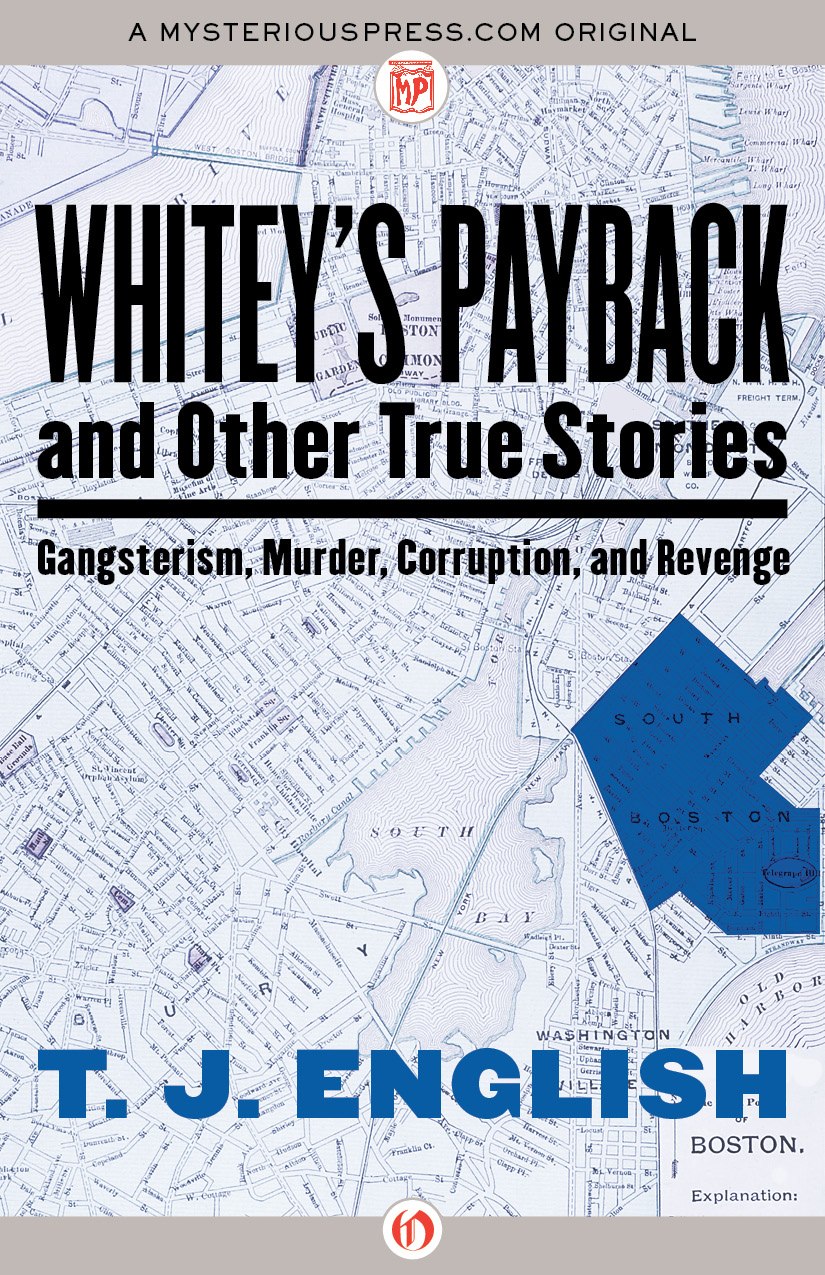 <!-- /* Font Definitions */ @font-face {font-family:"Times New Roman"; panose-1:0 2 2 6 3 5 4 5 2 3; mso-font-charset:0; mso-generic-font-family:auto; mso-font-pitch:variable; mso-font-signature:50331648 0 0 0 1 0;} /* Style Definitions */ p.MsoNormal, li.MsoNormal, div.MsoNormal {mso-style-parent:""; margin:0in; margin-bottom:.0001pt; mso-pagination:widow-orphan; font-size:12.0pt; font-family:"Times New Roman";} table.MsoNormalTable {mso-style-parent:""; font-size:10.0pt; font-family:"Times New Roman";} @page Section1 {size:8.5in 11.0in; margin:1.0in 1.25in 1.0in 1.25in; mso-header-margin:.5in; mso-footer-margin:.5in; mso-paper-source:0;} div.Section1 {page:Section1</style><b>Every World is a Corner, and Every Corner is a World…</b></div><div class="MsoNormal"><br /></div><div class="MsoNormal">The sixteen pieces collected in WHITEY’S PAYBACK represent my interest in crime as a vast ecosystem, a parallel universe to the social and economic system we observe in the upperworld on a daily basis. </div><div class="MsoNormal"><span style="mso-spacerun: yes;"> </span></div><div class="MsoNormal">In America, business, politics and crime are frequently intertwined; one can scarcely exist without the other. What is happening below the surface shapes the world as we know it. What is presented to the public is occasionally wrapped in bullshit and lies.</div><div class="MsoNormal"><span style="mso-spacerun: yes;"> </span></div><div class="MsoNormal">The pieces in this anthology are all basically about one thing: the pursuit of the American Dream. To the reader, the question is posed: How far would you go to achieve power and prosperity for you and your own? Some people, out of free will, dire circumstances, or temporary insanity make choices that take them to the wrong side of the law. Chronicling the path of misguided souls and devious minds has become a big part of my calling as a writer.</div><div class="MsoNormal"><br /></div><div class="MsoNormal">WHITEY’S PAYBACK is likely as close as I will ever come to writing a memoir. The subtitle could have been: What I Have Done With the Last 22 Years of My Life. The book is a statement, or manifesto, about doing this kind of work – crime reporting – using the articles as a means to illustrate the central thesis.</div><div class="MsoNormal"><br /></div><div class="MsoNormal">Gangsters of many ethnicities, professional con artists, porn kings, and corrupt lawmen populate this gallery of the damned. The American underworld is constantly transforming itself, and the pieces in this collection attempt to bring focus and clarity to a world that is rarely examined in this way.</div><div class="MsoNormal"><span style="mso-spacerun: yes;"> </span></div><div class="MsoNormal">Throughout twenty-two years of crime reporting, one thing remains unchanged: the narrative is open-ended. Being a crime journalist is the gift that keeps on giving. As long as people continue to use the pursuit of the American Dream as a license to commit crimes, I will cover this beat. </div><div class="MsoNormal"><br /></div><div class="MsoNormal">Meanwhile, check out WHITEY’S PAYBACK. It will take you places you never even knew existed…</div><div class="MsoNormal"><br /></div><div class="MsoNormal"><span style="mso-spacerun: yes;"> </span>-- T.J. English</div><div class="MsoNormal"><span style="mso-spacerun: yes;"> </span>New York City</div><div class="MsoNormal"><br /></div>
October 25, 2012
October 18, 2012
In Memory of George Whitmore Jr.
 Whitmore requested that he be cremated; his remains are in the urn on the table.Today, George Whitmore was laid to rest. He was an important figure in the race history of New York City and the United States. And he was a good man.
I wrote about Whitmore's horrible ordeal at the hands of a racist criminal justice system, and the effect that had on his life, in an Op-ed article in the NY Times (link: http://www.nytimes.com/2012/10/13/opinion/who-will-mourn-george-whitmore.html?hpw).
At a funeral parlor in Cape May Courthouse, NJ, I joined Whitmore's daughter, Regina, and his extended family of children and grandchildren. They asked me to speak, and I talked about how George's strength during his ordeal back in the 1960s and early 1970s helped shine a light on an UNJUST justice system. Whitmore paid a heavy price for what he was put through, but he died without bitterness or rancor.
If you don't know the story of George Whitmore, please read the NY Times article and also a recent obituary about Whitmore in the Times (http://www.nytimes.com/2012/10/16/nyregion/george-whitmore-jr-68-dies-falsely-confessed-to-3-murders-in-1964.html?pagewanted=all) Please spread the word, teach your children, friends and loved ones about this important episode in our shared civil rights history.
August 26, 2012
R.I.P. Teresa Stanley
 I was saddened to hear of the death of TERESA STANLEY (71), long-time companion of James "Whitey" Bulger who passed away last August 16 of lung cancer.
I interviewed Teresa on two separate occasions late last year before she knew anything about the cancer. I found her to be haunted by the legacy of personal deception and violent crime left by her ex-common law husband, Whitey Bulger. Teresa was a 26-year old divorcee with four kids when she first met Bulger in 1966. He was not the legendary crime figure he would later become. By her own account, she became comfortable in her life with Bulger, who she knew was in "the illegal gambling business" and possibly a lonshark. She says she did not know of Bulger's many murders.
I first met and interviewed Teresa at Marisola's restaurant in South Boston, a neighborhood bistro well known to the locals. I was introduced to Teresa by Pat Nee, a friend and former criminal rival of Bulger's who, among other things, once did eight years in prison for smuggling guns to the Irish Republican Army back in the 1980s. Teresa used to chuckle whenever I mentioned Pat's name, because she knew Pat didn't care for Bulger, and, in fact, tried to kill him once or twice before they finally formed an uneasy partnership. Teresa later conceded that Nee was probably right in his negative assessment of Whitey.
The second time I interviewed Teresa was over breakfast at the Seaport Hotel on the harbor in Boston. Both interview sessions were lengthy -- two hours or more. And Teresa was very forthcoming and frank about her feelings and emotions. I liked her instantly. My feeling was that she was a good person, very sensitive and sweet, who had made a horrible choice in her life by settling down with a master deceiver like Bulger. She would later pay a heavy price for her associations with Bulger, as she became the subject of FBI and other investigations, was called to testify numerous times at hearings and trials, and was ultimately painted with a "scarlet letter" for having been Bulger's paramour for thirty years.
I spoke with Teresa one last time, earlier this year, when I called her on behalf of Newsweek magazine, who was looking to take her photo to accompany my article. Though she had told no one outside her closest family members of her cancer, she told me. I was shocked. Not only had she just learned of her condition, she was told that the cancer was far advanced. I told her I was sorry and that she deserved better; she was a good person.
There are those who vilify Teresa and hold her partly responsible for Bulger's crimes. I do not. She made a bad choice in love, was perhaps naive, maybe even chose to stick her head in the sand during Whitey's reign of power. When it came out that her lover was alleged to have killed so many people, including young women, she was stunned. When I met her, she still seemed to be partly in a state of shock about the whole thing.
Teresa has now arrived at her place of peace. Let the haters spew their venom. They never had to walk in her shoes.
To read the article that was based, in part, on my interviews with Teresa Stanley, go to following link: http://www.thedailybeast.com/articles/2012/06/11/whitey-bulger-s-women-inside-the-terror-and-glamor-of-his-ex-girlfriends.html
August 15, 2012
Review: MULTIVERSE by The Bobby Sanabria Big Band
 Bobby Sanabria is a New York City treasure. As a musician, bandleader and educator, his pedigree is impeccable. A master jazz drummer, he was weaned at the knee of Mongo Santamaria, Tito Puente, Dizzy Gillespie, and other jazz legends. Through his own orchestra and smaller groups, and as a music teacher at the New School for Jazz and Contemporary Music, he has nurtured, educated and inspired many of the city’s most promising young musicians, just as he was inspired by direct contact with his jazz elders.
On top of all that, Sanabria is from the South Bronx. Even before he became a professional musician, the rhythms and syncopation of the streets where Latin music first took root in NYC became embedded in his DNA. He is the product of an authentic cultural experience based on geography, ethnicity, and musical history. And as a drummer and bandleader, he is among the best in the country, if not the world.
If all that sounds like hyperbole, it’s not. Sanabria’s role in the universe of contemporary Latin jazz really is all that.
Case in point: Sanabria’s new CD entitled MULTIVERSE, which is perhaps the hottest and most ambitious Latin jazz big band record you will have heard in the last decade. I have been listening to Sanabria’s work for a long time, have heard all his CDs, but nothing prepared me for the scope and sheer force of MULTIVERSE. It is a powerful statement of everything this artist has learned up to this point in his career and will no doubt have you on board in anticipation of everything he does in the future.
The opening cut – the theme from the movie “The French Connection” – will cause you to drop whatever you are doing and listen with full attention. The arrangement is complex, with an incredible driving force that has the impact of a NYC traffic jam having been corralled and turned into music. It is a stunning opening salvo to a CD that ebbs and flows in terms of tempo and musical styles but never loses that same high level of integrity.
Within the realm of Afro Cuban, Puerto Rican and American jazz styles, Sanabria’s influences are vast – a multiverse, as folklorist Elena Martínez points out in the CD’s liner notes – and nearly all of those influences can be heard on this new CD. The song “Cachito” opens as an Afro Cuban rumba before transitioning into something more robust and muscular. “Over the Rainbow” is a Latin jazz tribute to the beautiful and familiar ballad, sung by Charaneé Wade, that segues into a melodic cha cha cha. “Wordsworth Ho!” an arrangement by band member Chris Washburn, is another barnburner, with the dissonance of Mingus, driven by Sanabria’s own drumming and a brass section that distinguishes this band as among the elite playing today.
There are ten cuts on MULTIVERSE, every one of them the kind of music you will find yourself absorbing with your heart, hips, feet, culo and intellect. My favorite is, and always will be, the “Afro Cuban Jazz Suite for Ellington,” which is the hottest and most exciting Latin jazz tribute to the Duke that you will ever hear. At fourteen minutes in length, ranging over a number of familiar Ellington compositions, you will wish it went on for at least another hour or two.
Another contribution on the CD worth noting is that of Caridad De la Luz, also known as “La Bruja,” who, like Sanabria, is from the South Bronx. La Bruja is a local legend in the spoken word scene in NYC, a sassy Nuyorican with prodigious poetic gifts and charisma to burn. She adds rap and background vocals to a number of cuts, most notably a swinging tribute to Mario Bauza, narrated in rhyme and verse by La Bruja in her inimitable street style.
As with most bands led by a drummer -- from Buddy Rich to Max Roach to Ray Barretto and beyond – Sanabria’s ensemble is hard-driving and percussive. There is physical power in this music, but also a harmonic precision that turns on a dime. A big band with anywhere between ten to twenty members on different cuts that plays with the dexterity of a small quintet is something that requires a high level of sweat and concentration. In this regard, the Bobby Sanabria Big Band sounds like the musical equivalent of a team of Olympic gold medal winners who have been in training for nearly a lifetime.
This is not pop music, with soothing, saccharine melodies to be played in the background while you are doing domestic chores. MULTIVERSE brings history, inventiveness and the highest levels of musicianship to bear on an essential musical tradition. Sanabria throws down the gauntlet by posing the question: do you have the chops to hear, feel and comprehend all that this music has to offer? If so, bend your ears, hold on to your hats and pay attention, because the Bobby Sanabria Big Band will dazzle your senses, and then some.
To learn more about MULTIVERSE, listen to selected arrangements and/or purchase the CD or download, go to the following link: www.jazzheads.com
July 25, 2012
COMING SOON TO A THEATER NEAR YOU
 Americans love their guns. Whenever there's a mass slaughter, they run out and buy more guns. Guns make insecure people feel secure, powerful, in charge, and Americans, by this standard, are among the most insecure people on the planet. They love to go to movies where people get slaughtered with guns, preferably in slow motion, 10, 20, 30 people slaughtered. This is our gift to world culture. We have a collective orgasm when people get slaughtered with guns on screen...
 So, a guy in Colorado goes into a movie theater, a fantasy movie, comic book movie, and attempts to slaughter everybody. One of the survivors said he couldn't tell if the sound of gunshots was coming from the movie or the killer's gun. Perfect. Our fantasy world and our reality world are now one. Is anyone surprised? Ho hum. It will happen again. Maybe next time at a theater near you, on some national holiday, when you and the kids are nestling in to enjoy the latest fantasy slaughter fest...
-- T.J. English
7/24/12
June 18, 2012
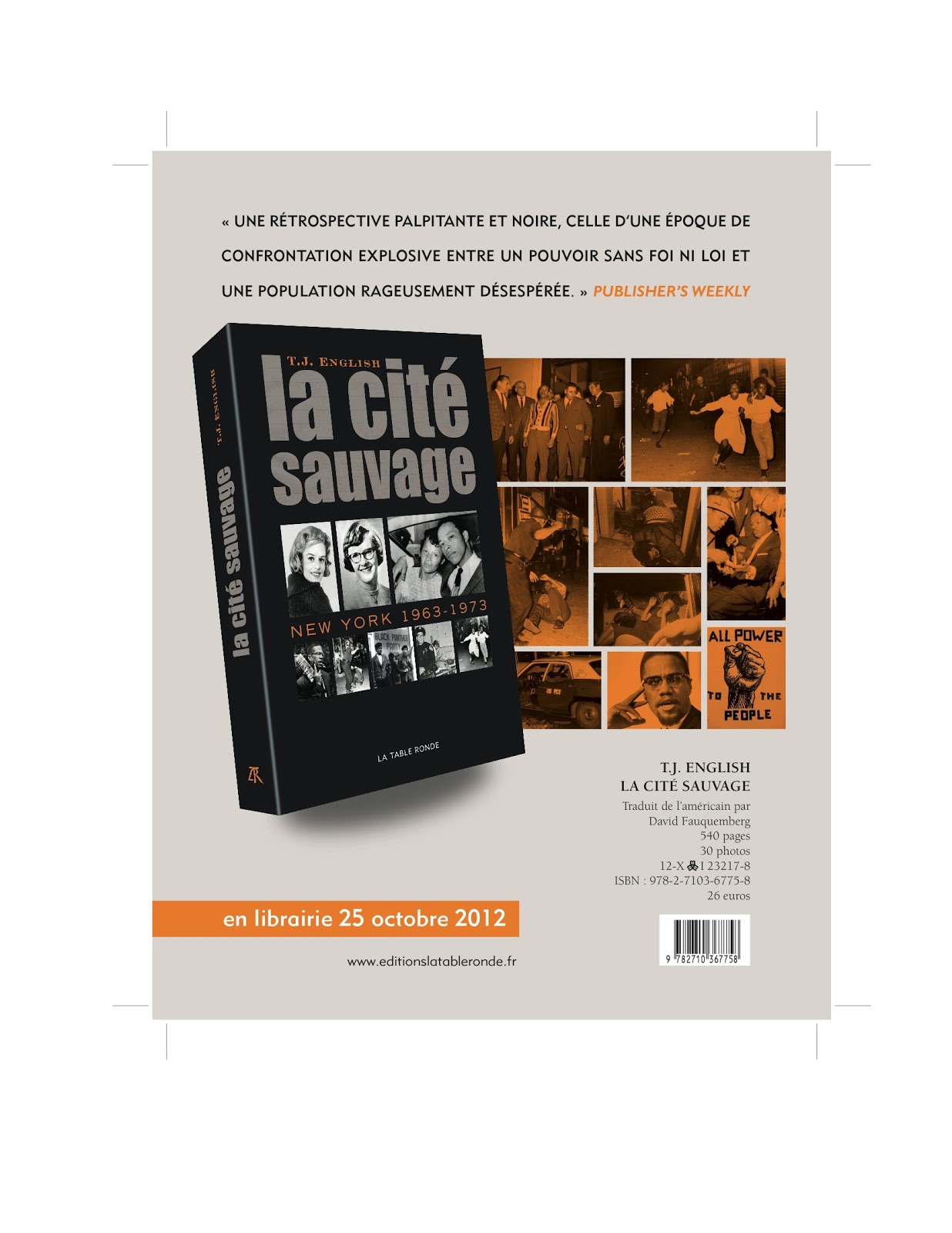
THE BULGER CHRONICLES #6: The Friends of Whitey Bulger
 You often hear it said that James “Whitey” Bulger corrupted the criminal justice system in Boston.
I say that the criminal justice system in Boston was already corrupt. Bulger plugged into this corrupt system and played it for all it was worth.
Bulger’s career as a gangster was as violent and reprehensible as we are likely to ever see. But he didn’t do it alone. And I’m not referring only to his underworld associates. I’m referring to his enablers. And when I say enablers, I don’t just mean a few agents in the FBI’s Boston office.
There is much about the Whitey Bulger story that the U.S. Justice Dept. would rather you didn’t focus on and don’t know. I have tried to unearth some of it in the latest installment of THE BULGER CHRONICLES, a series of articles I am doing for Newsweek/Daily Beast. This latest article is about the world that created Bulger, those who sustained his career and gave him his power.
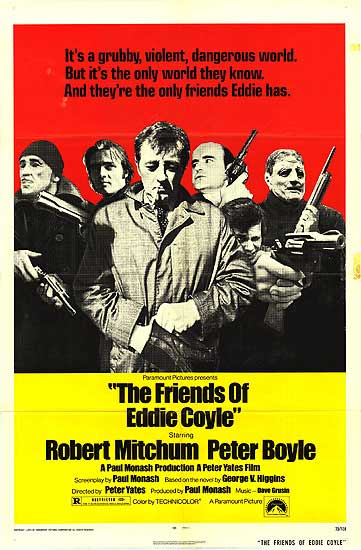 You may remember the great crime novel by George V. Higgins called The Friends of Eddie Coyle, also made into an excellent movie with Robert Mitchum and Peter Boyle. The book and movie details a criminal underworld in which everyone is in on it, the criminals, the cops, the feds. In an effort to manipulate a particular criminal situation to their advantage, all of these players nearly take down each other – and inadvertently take themselves down.
This is not likely to happen with the Bulger fiasco. Oh yes, Bulger will be made to pay. No matter what happens at his trial (if there is a trial), he is likely to die in jail. But other than former FBI agent John Connolly (quoted exclusively in the Newsweek article), no one within the system has been held accountable.
Should you care?
Please click on the link below, read the article, and decide for yourself…. -- T.J. English
http://www.thedailybeast.com/newsweek/2012/06/17/whitey-bulger-s-trial-conspiracy-john-connolly-speaks.html
June 14, 2012
In Praise of Pete Hamill
 Recently, as president of Irish American Writers & Artists, Inc., a non-profit group, I was given the opportunity to say a few words about the great New York City journalist and author, Pete Hamill. I was also asked to read something from his work, anything I preferred. The occasion was a conference held by the Irish Echo newspaper to draw attention to connections between New York City and Belfast. Both of Hamill’s parents were born in Belfast and came to New York as immigrants.
It was a tremendous honor for me to be part of this tribute to Pete Hamill. Here is a transcript of the speech I gave that night:
Am I the only one who finds it strange that Pete Hamill is sitting right here in the room with us tonight and we’re having some other guy read his work?
Ah well… if you check the listings of writers doing readings around town on a regular basis, appearing on panels and talk shows and whatnot, you know Pete is one of the hardest working men in show business. So, we’re giving you the night off, Pete.
I’m going to read a short passage from A Drinking Life, my favorite book of Pete’s, but first I want to say a few words about Pete’s significance, and reputation, with other writers in New York.
I wasn’t born here in the city. But, like anybody who’s lived in NY a long time – 32 years in my case -- I sometimes imagine and feel like I was born here. When people ask me where I was born and raised, I tell them, ‘The West Side.’ And when they ask where on the West Side, I say, ‘Tacoma, Washington’ … That’s a geography joke. You don’t hear many of those.
When coming to this city with a hungry desire to become a New Yorker, as I did, I’d say there are a number of requirements. One of them should be that you have to drive a taxi in New York for a few years, which I have done. Another is to struggle financially, have your rent jacked up illegally by a landlord, get robbed, or mugged on the street, which has happened to many of us who have been here since the 70s, or 80s or early 90s. This, by the way, is why longtime New Yorkers don’t really consider today’s younger New Yorkers to be New Yorkers at all. As a veteran cabbie once told me, as I was heading out on my first night on the job and I asked him, “Any advice?” He said, ‘Yeah. Remember this. In New York, nobody really loves you until you’ve been mugged.’
The third requirement for becoming a New Yorker is to familiarize yourself, as quickly as possible, with the writing, and persona, of Pete Hamill.
I know that for Brooklynites, especially anybody who grew up in Pete’s generation or the generations immediately following, Pete Hamill’s work holds a special significance. And that’s understandable. Of all Pete’s many subjects as a writer – and he is a beautifully diverse writer, with a healthy and magnanimous curiosity; he writes with grace and erudition about so many things – but of all his subjects, I think you’d have to say that Brooklyn, in many ways, is the central nugget of his identity as a person and a writer.
But here’s the thing: you don’t have to be a Brooklynite to appreciate that. Because when you read Pete’s work, you become a Brooklynite, you become a New Yorker. That is part of the generosity and expansive nature of his writing style, and that is one of the great pleasures of getting to know his work.
Over the years, I’ve probably had hundreds of conversations with other writers about Pete’s work. For anyone who is lucky enough to know Pete, the work is informed by your knowledge of him as a person – his basic humanism, the fact that he’s wonderfully learned and well read, a kind of working class bon vivant, a sentimentalist, at times, but one who is always tough minded. And fair. Always fair. Rigorously fair.
But you don’t have to know Pete personally to have been touched by or influenced by his work. It’s the openness and generosity of Pete’s writing style that has inspired so many of us. Pete showed that you could come from the working class, that you didn’t have to have graduated from some fancy journalism program, or be a product of wealth or a conventional education, to have a point-of-view that was valid and important. All that is required is that you apply to yourself the highest standards as a person and a writer, that you write beautifully, with great attention to craftsmanship, that you challenge yourself intellectually, that you go out into the world as an angel of mercy, that you judge no person harshly because he or she is a drunk, or poor, or an the wrong side of the law, or a Bishop. OK, maybe you can be hard on the bishops, but that’s because they represent power and authority and piety. And they should know better.
I never had the good fortune to work alongside Pete, or under him during his various short-lived stints as editor of the News, the Post, or that newspaper in Mexico City – I would have loved to work with Pete there. But I know I speak for a lot of New York writers when I say, I owe a great debt to Pete Hamill. And I feel lucky, and honored, to be the guy who gets to stand here right now and tell him how much his work has meant to me.
And so, with apologies to the Manhattanites, and people from the Bronx, Queens, Staten Island, and Belfast, let’s gather together as Brooklynites and listen to a passage from Pete’s classic memoir, A Drinking Life… -- T.J. English
June 11, 2012
The Bulger Chronicles: Whitey's Women
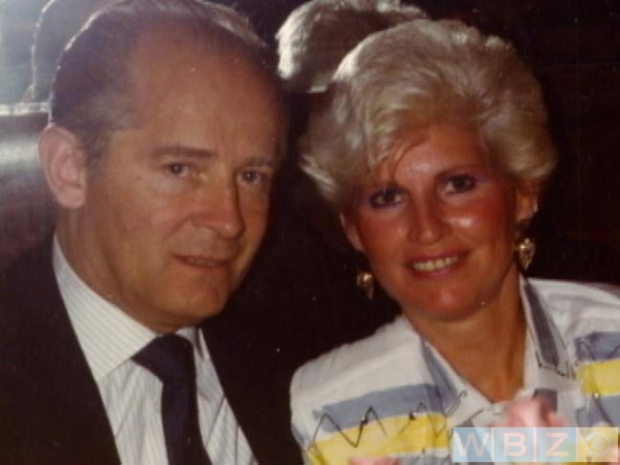 Whitey Bulger and Teresa Stanley, in better times.Posted today on the Daily Beast website is my fifth installment of The Bulger Chronicles, a series of articles I'm writing on the upcoming trial of Boston gangster James "Whitey" Bulger for Newsweek/Daily Beast. So far I've written articles about Bulger's apprehension from the point of view of former criminal associates and rivals ("Whitey's Payback"); a review of a book by the lone FBI agent who tried to shut Bulger down as a confidential informant for the Feds ("The Man Who Saw Through Whitey"); a report on Catherine Greig, Whitey's girlfriend and companion on the lam for 16 years, as she pleaded guilty in court; and now "Whitey's Women," the accounts of two women who were deeply involved in the lives of Bulger and his crime partner, Steve Flemmi, at the height of their years as gangster.
The article was based on extensive interviews with both women. Especially fascinating was the time I spent with TERESA STANLEY, who was Bulger's common-law wife for 30 years. It was Stanley who, in 1995, was originally going to go on the run with Whitey but decided she could not do it. Whitey exchanged Stanley for his other longtime girlfriend, Catherine Greig, and they disappeared together for the next 16 years, until they were captured in Santa Monica, CA in June 2011.
 A recent photo of Teresa Stanley, who is now 70 years old. I had two lengthy interviews with Teresa, one at Marisola's restaurant in Southie, and another at the Seaport Hotel at Boston harbor. I found her to be a sensitive and intelligent woman, still in a state of shock from all that has been revealed about the man she shared her life with for so many years. There are the murders (Bulger is charged with 19 counts of murder) and criminal pathology, but also Stanley is still shocked that "Jimmy," the man who served as a surrogate father to her four children, had, when they were together, an entirely separate and secret life with his "other woman."
Also interviewed for the article is MARILYN DI SILVA, a woman who in the late 70s was the girlfriend of Steve Flemmi.
I hope to write a few more articles on the Bulger saga leading up to his trial, which is currently scheduled for Nov. 5, 2012.
The article "Whitey's Women" can be accessed at http://www.thedailybeast.com/articles/2012/06/11/whitey-bulger-s-women-inside-the-terror-and-glamor-of-his-ex-girlfriends.html.
-- T.J. English