
Andy Lipman's Blog
December 2, 2024
My Life with Cystic Fibrosis
Here is a little about what my life entails because of cystic fibrosis (CF).
First off, cystic fibrosis is a genetic disease that affects the lungs, sinuses, digestive system, kidneys, liver, reproductive system, bone density and many other organs and bodily functions. Cystic fibrosis is the most common fatal genetic disease in the United States and has been since I was born.
My parents are both carriers of the CF gene, meaning there was a one-in-four chance I would have the disease. My older sister Wendy faced the same odds. Both of us had the disease and sadly Wendy lost her life after only 16 days. She and I never met. The Wish for Wendy Foundation was started in her memory.
I was diagnosed at birth because my sister had the disease three years earlier and I had a common CF symptom known as meconium ileus or a blockage in my intestines.
I do an hour of treatments between three different nebulizers in the morning along with my physiotherapy vest. I do this for both my lungs and my sinuses. I also do a sinus spray twice a day, an inhaler twice a day, and do my physiotherapy vest twice a day along with another nebulizer in the evening. I have been doing physiotherapy since I was a baby to clear the mucus from my lungs. The vest wasn’t invented until I was in high school. Before that, my parents used a technique called postural drainage where I laid in different positions and my parents would hit my sides, front and back to help me cough out the phlegm in my chest.
I take between 40 and 50 pills each day. Most of those are enzymes so that I don’t have gastrointestinal issues. Since I was a baby, I have had to take enzymes so that I could digest and absorb fatty foods. My mom’s first attempt to get me to take enzymes was putting them in applesauce.
I currently take a laxative called MiraLax twice a week to keep my digestive system working properly.
I go to quarterly doctor’s appointments and have so for most of my life. As a high school and college student, I traveled for my CF appointments, at first going to the University of North Carolina and then followed my physician to the University of Cincinnati. The most important activity at those appointments is the pulmonary function test or PFT which determines if my lung function is declining and whether I need to be a) put on oral antibiotics, b) put on IV antibiotics or hospitalized or both or c) put on the list for a lung transplant. As of today, I have not had a lung transplant.
If this all sounds scary to you, let me say that I have been blessed as my health could be much worse. I have had several friends with this disease who have lost their lives and several of my friends today are fighting for their lives.
As a little boy, my biggest fear was seeing fundraising done by the CF Foundation. As an adult I participate and greatly appreciate it but back then, I had to see pictures and videos of the sicker patients. I had to read the extremely limited life expectancies. I had to think about my mortality and as an 8-, 9- and 10-year-old, that kind of thinking was traumatic.
I am an advocate for mental health especially in the CF community. I go to a psychologist, a psychiatrist and I take anti-anxiety meds. I deal with both anxiety and depression. I believe therapy is a must for those of us in the cystic fibrosis community or really any chronic illness community who have dealt with so many life-altering situations.
When I was growing up, the life expectancy for CF patients was in the teens. Today, it’s in the sixties. Why the change? Breakthrough drugs have played a huge role. The opening of adult CF clinics have too. When I was growing up, there were no adult clinics because CF patients weren’t living to adulthood.
Today, there are more adults with CF than children.
I am taking deep breaths for the first time in my life because of a CFTR modulator called Trikafta. It was the fourth modulator that became available and the first one that fit my genotype. Ten percent of the CF population still does not have a CFTR modulator while others may not be able to take Trikafta because they had physical or mental problems because of the side effects, don’t have the right genotype, live in a country where there is no access to the drug or due to transplant status of the patient.
Don’t be confused. CFTR modulators are not a cure but a way to improve our symptoms. There is still not a cure for cystic fibrosis, a disease that was first diagnosed in 1938 by Dr. Dorothy Andersen.
As a male with cystic fibrosis, I am infertile. 97 to 98% of us face those same challenges because we are born without a vas deferens which aids in the fertility process. My wife was tested to make sure that she did not have the CF gene since I am also a carrier. She did not so we were able to have our children through IVF. Neither of our children has cystic fibrosis. Women also can be infertile with the disease but at far lower percentage (20%).
Feel free to ask me any questions about my condition. I’m here to help.
Live your dreams and love your life,
Andy
The post My Life with Cystic Fibrosis appeared first on CF Warrior Project.


November 8, 2024
Are Those of Us with Health Risks at More Risk?
With the change in the White House, I thought this would be a good time to explain the concerns that those of us with pre-existing conditions have over the next four years.
The intent of this blog is not to create banter between the two parties, but rather explain the concerns that those of us with pre-existing conditions have with the potential dismantling of the Affordable Care Act.
I have a pre-existing condition which is defined as a health condition that cannot be controlled and is already known before the start of a new health insurance plan.
My condition, cystic fibrosis, is a genetic lung disease that also affects the digestive system, reproductive system, sinuses and several other organs and/or bodily functions.
According to the Department of Health and Human Services, 50 to 129 million (19 to 50 percent of) non-elderly Americans have some type of pre-existing health condition.
The ACA or Affordable Care Act or Obamacare as it was known because it took flight during President Barack Obama’s presidency in 2014, helped many of us with preexisting conditions. It prohibited private health insurers from discriminating against people with preexisting conditions. Insurance companies were forced to offer the same benefits, at the same rates, with no waiting periods or denials.
This took a lot of concern away from families like mine with pre-existing conditions. Instead of worrying how we would get insured, we could focus our concerns on fighting our diseases.
In the past, we were consumed with the notion that we could be dropped, something that actually happened to me during this time. If you’re wondering how expensive having cystic fibrosis is, the CFTR modulator that I take called Trikafta costs over $300,000 per year.
This is not a typo. This drug has changed my life. My lung function is up 15%, I am taking deep breaths for the first time and my exhausting coughing jags have nearly disappeared. Trikafta is just one prescribed medication. I take many others and they are not cheap either.
Prior to 2014, it was not uncommon for patients with pre-existing conditions to get dropped by insurance companies because of how expensive their medications and procedures were.
Back then, Insurance companies in most states could lower their cost through pre-existing condition exclusions which means someone like me would be left in the dark. Per the Century Foundation, a nonpartisan organization in New York City and Washington, D.C., prior to the ACA, “Thirty-five states ran high-risk pools for individuals affected by these practices. Virtually all of these high-risk pools had strict eligibility limits, high premiums, and limits on coverage. An estimated 226,615 people were covered in them.”
Vice President-Elect J.D. Vance stated on “Meet the Press” back in October that the best method to cover people is to “not have a one-size-fits-all approach that puts a lot of people into the same insurance pools, into the same risk pools.” Vance also stated, “You want to make sure that people have access to the doctors that they need, and you also want to implement some deregulatory agenda so that people can choose a health care plan that fits them.” In other words, a young, “healthy” person would have access to cheaper insurance while someone like me who is high risk would be stuck paying higher premiums with insurance companies due to the exorbitant cost of our meds. Most everyone with a chronic disease cannot afford to be in that predicament. If this approach seems familiar, it was the formula used prior to the ACA going into law in 2014.
My cystic fibrosis/chronic disease friends and their families deserve the same coverage at the same prices as everyone else. We didn’t purposely get the diseases that we have. Hopefully, President-Elect Trump and Vice President-Elect Vance will see this and continue with the ACA the way it is or make moderate changes that do not affect those with pre-existing conditions. Otherwise, a lot of people are going to get sicker, and they will have difficulty affording the care that they need and deserve.
It is critical to our safety that we do not have to waste our energy on trying to secure a company that is willing to insure us at an affordable rate and save that energy instead to focus on fighting our pre-existing conditions.
Best Wishes,
Andy Lipman
#cfwarriorproject
#AffordableCareAct
#preexistingconditions
The post Are Those of Us with Health Risks at More Risk? appeared first on CF Warrior Project.
November 1, 2024
Growing up with a Disease That Wasn’t Supposed to Let Me Grow Up
There is not a cure for cystic fibrosis (CF), an unfortunate fact I’ve been aware of since I was a little boy attending a multitude of clinic appointments at a high-level trauma center in my hometown of Atlanta.
When I was a little boy, I was all but sure I was going to die from this disease. CF, after all, was the most common genetic killer in the United States, affecting the lungs, digestive system, sinuses, reproductive system and so many other organs and bodily functions.
This was a children’s disease. Adult centers did not even exist because CF patients rarely lived to adulthood. So, if I wanted any chance at living beyond my teens, I was going to have to focus on taking care of myself and that meant committing to a combination of activities: (1) having my parents administer a chest physiotherapy technique called postural drainage each day in which they would try to loosen the mucus from my lungs by cupping their hands while hitting my sides, front and back while I alternated positions, (2) taking multiple pancreatic enzymes with each meal to break down fats, proteins and carbohydrates so my body could absorb the nutrients, and (3) exercising consistently even though I was considerably weaker than most athletes my age.
During my youth, I read articles in reference books, saw Made-for-TV movies and viewed several commercials featuring family members whose desperate fundraising pleas included the mentioning of our vastly limited life expectancies. When you’re trying to eradicate a disease that prevents children from reaching adulthood, sob stories are an absolute must. Few realize though how these stories traumatize the patients.
As a teenager, I became keenly aware how different my physique looked compared to my “healthy” peers. I was skinny, weak and looked unwell. And then there was that cough. More like a terrible jag. Not only was it painful but it introduced itself at the worst possible times – in a packed movie theater, in the middle of a quiet library and in the midst of a laugh in a crowded room which often provided awkward stares in my direction.
I also remember the questions from classmates:
“Are you contagious?”
“Why are you so skinny?”
And the worst one, “Are you going to die?”.
For those of us now in our 50s, 60s and even 70s with this disease, we are considered unexplained phenomena. We miraculously outlived pay phones, record players and even Y2K.
Whenever I’m introduced to a medical professional these days and that person finds out I have cystic fibrosis, I witness the infamous double take. I understand how someone could feel perplexed at my presence. It’s not every day that you encounter a person with a chronic lung disease who has lived long enough to qualify to receive AARP benefits. At 51 years of age, I am considered “elderly” in the cystic fibrosis community.
To address the elephant in the room, I have no clue why I’m still here. Yes, I’ve worked hard to adhere to a rigorous exercise routine, to consistently administer my physiotherapy treatments each day which I now do while wearing a vibrating vest, and to take an abundance of medications to prevent my symptoms from worsening. Yes, I’ve been able to take breakthrough meds that others before me or even with me were not able to take including a CFTR modulator called Trikafta which has allowed me to take deep breaths for the first time in my life. Yes, I’ve been very lucky as many people I’ve known and many I didn’t know including my older sister Wendy have lost their lives to cystic fibrosis.
Today, things are remarkably different. Gone for the most part are the sob stories, the stereotypical cystic fibrosis body features and the low life expectancies as there are now a plethora of adult CF centers as more adults are living with the disease than children.
Just like when I was growing up in the 1970s, cystic fibrosis is still the most common genetic killer in the United States but now there seems to be hope that this fact will someday turn to fiction.
We have seen so many transformations in cystic fibrosis care including scientific advances leading to more cystic fibrosis patients being able to get pregnant, less patients needing lung transplants and patients as a whole living longer and stronger lives.
I feel blessed every morning that I have joints that ache from overuse, hair that is filled with clumps of gray strands, and wrinkles around my eyes due to living to an age that decades ago was considered impossible.
Despite these positive changes, there is still one thing that remains the same. We still need a cure for this disease. We not only owe it to future generations of cystic fibrosis patients and their families. We owe it to those CF warriors whose journeys ended prematurely because of this disease.
Our work is not done until stories like mine are considered commonplace instead of miraculous.
Our work is not done until CF stands for Cure Found.
Always fight the good fight,
Andy Lipman… 51 years old cystic fibrosis survivor, advocate and warrior
The post Growing up with a Disease That Wasn’t Supposed to Let Me Grow Up appeared first on CF Warrior Project.
May 24, 2024
The Medication Dilemma of a CF Patient
One of the most difficult things about having cystic fibrosis is the number of medications that we take daily. I take between 40 to 50 pills, do 4 nebulized aerosol treatments and administer 2 vest physiotherapies each day. For each patient, these numbers vary.
I’ve been carrying a pill bottle with me since I was a little boy. My mom often carried them in her purse when we went anywhere, but eventually, I had to take responsibility for them. It’s certainly not an easy subject to discuss when you’re a little kid if someone asked you why you took pills. Pills were for old people. Pills were for sick people. Pills were for “unusual” people. I never wanted to be any of those.
I’ve been asked what would happen if I didn’t take my pills. One time during the summer of my senior year of college, I didn’t take nearly enough pills at a cookout and developed distal intestinal obstruction syndrome or DIOS and was sick for days, missed a lot of school and had to go to the hospital to have them loosen my bowels. When I started the CFTR modulator Trikafta 5 years ago, I thought my digestion would improve greatly. I took less pills and all of a sudden developed issues with my stomach. After I went back to the old amount of pills, it finally improved after several months.
Cystic fibrosis is considered an invisible disease because it’s not obvious that we have any sort of disease when you look at us but carrying around a pill bottle and having someone see it for the very first time; that invisibility cloak is gone forever. It’s something many of us don’t want to reveal as a first, second or third impression of us.
If someone has come out to you about having a chronic disease, consider it an honor because it means they are comfortable with you, they trust you and they consider your friendship valuable to them. They also believe that you feel the same way about them.
Thanks for taking the time to read this and I hope this helps those of you who have friends and/or family members with chronic diseases.
Live your dreams and love your life.
Andy Lipman
#cfwarriorproject
#CFAwarenessMonth
The post The Medication Dilemma of a CF Patient appeared first on CF Warrior Project.
May 17, 2024
What It’s Like Living With A Chronic Disease
No one prepares you for living with a chronic disease. Cystic fibrosis was a disease that was supposed to prevent me from growing up and for a majority of my life I knew it.
When everybody else was talking about what they wanted to do when they grew up, I was certain I wouldn’t grow up. I was going to miss out on so many things and that certainly affected my mental health.
Then there’s the daily cystic fibrosis routine. Two hours of my day every day is spent wearing a vibrating vest while inhaling nebulized aerosols. That’s 730 hours a year. Taking 40 pills a day. That’s 14,600 meds a year. I’ve been going to doctor’s appointments every three months for decades. That’s approximately 200 doctor’s appointments in my lifetime. 
This post is not to seek pity, but rather to give you the perspective of what it’s like living with a chronic disease my entire life.
Having to wake up every morning seven days a week since before I could remember, knowing that I have to start my treatments before I can start my day and making sure I do my final treatment before I can fall asleep for the evening.
Going to quarterly doctor’s appointments knowing that the results could vary from “you’re doing good for now” to “your lung function is plummeting and we need to get you on IV antibiotics ASAP!”
Yes, people like me with a chronic disease appreciate being alive. But it’s not as simple as just being grateful. It’s the fine line between giving ourselves grace when we are so exhausted that some days we can’t keep up with everyone else and not using cystic fibrosis as an excuse when we are faced with difficult challenges.
We are CF warriors and I’m damn proud of everyone who shares not only the title but who also shares the strength.
Live your dreams and love your life.
Best Wishes,
Andy
The post What It’s Like Living With A Chronic Disease appeared first on CF Warrior Project.
May 5, 2024
10 Unusual Facts About Cystic Fibrosis
May is Cystic Fibrosis Awareness Month. I thought instead of telling you my personal story again that I’d give you 10 unusual facts about cystic fibrosis:
10) Saltwater is a natural treatment for cystic fibrosis because it thins the sticky mucus. Doctors in Australia noticed surfers with cystic fibrosis were doing much better and eventually a drug called hypertonic saline was invented.
9) People with cystic fibrosis often have salty skin because we have faulty chloride channels. In the early days, moms and dads kissed their children and realized they tasted like salt which caused them to get medical attention. A child was then diagnosed by using a sweat test which measures the amount of salt in your sweat.
8) Cystic fibrosis was discovered by Dr. Dorothy Andersen. Originally, people thought young children who were dying from cystic fibrosis actually had celiac disease but she discovered an unusual scarring of the pancreas so Andersen originally called the disease “cystic fibrosis of the pancreas” which later was shortened to cystic fibrosis.
7) Lung transplants are not a cure for cystic fibrosis. While it does get rid of the cystic fibrosis in the lungs, the rest of a person’s body still has the disease. Once a person receives a lung transplant, that person is also at risk for rejection.
6) Cystic fibrosis is not just a lung disease. It affects the reproductive system, the digestive system, the sinuses, the liver, the kidneys and several other parts of the body. Those of us with CF are also at risk for certain bowel and duct cancers.
5) Cystic fibrosis is not contagious. It is a genetic disease and therefore you are born with it. Some people are diagnosed later but it’s important to get treated as soon as possible. This is why it is so important to provide newborn screening in all states. To get cystic fibrosis, each parent must possess the CF gene and then there is a one in four chance the child will have the disease.
4) 97% of males like me with cystic fibrosis are infertile because they lack the vas deferens which is the bridge that transports sperm to the urethra during sexual intercourse. Women are also affected thanks to having thicker cervical mucus but a majority are still fertile.
3) CFTR modulators are available for 90% of the cystic fibrosis population. Unfortunately, that leaves 10% of the population without one either because of genotype, the country they reside, transplant status, age and how their body tolerates the drug. CF modulators are not a cure but are a way to improve symptoms. The median life expectancy for those with cystic fibrosis is the United States is currently 57 years which is four times greater than when I was born in the early 1970’s.
2) My favorite story is the Sixty-Five Roses story. A little boy with cystic fibrosis (who had two brothers with cystic fibrosis) told his mom that he knew what she was fighting for. His mom Mary Weiss was a major fundraiser and advocate for CF. He said you’re fighting for Sixty-Five Roses because he could not pronounce cystic fibrosis. The story is part of CF lore and how millions of dollars have been raised since.
1) People with cystic fibrosis are advised not to be within six feet of anyone who is sick and also anyone with the same condition due to the risk of bacterial cross contamination with the fear that certain bacteria that can be contracted by CF patients can slowly destroy the lungs. The six-foot-rule came about because germs from coughing and sneezing can be contracted from one person to another person of up to six feet apart.
I hope that this was valuable information.
Live your dreams and love your life.
Andy Lipman… CF warrior for 50 years and counting…
#cysticfibrosis #chronicdisease #cf #sixtyfiveroses
The post 10 Unusual Facts About Cystic Fibrosis appeared first on CF Warrior Project.
July 18, 2023
Mental Health Awareness: The First Step To Conquering Cystic Fibrosis
When I was a young, naïve boy, I thought having cystic fibrosis was normal.
As I coughed more than my friends, read dubious articles about CF and administered treatment routines that none of my friends had to do, I realized the disease was much more severe and a lifetime of depression and anxiety soon ensued.
Those of us with cystic fibrosis should not have to spend our lives worrying about the disease; however, it’s hard not to be reminded of its ramifications when we do daily treatments, see doctors more often than most and watch those who share the same condition lose their lives at a very young age.
It’s very rare if ever that you see someone with cystic fibrosis die from natural causes. In just the last month, I’ve lost three friends to the disease – two of which were in their late twenties and one in her early fifties. The disease has taken so many people in my life including my sister after only 16 days, people I’ve interviewed and written about, and people I have befriended over social media.
The sad reality is that up till now when those of us with cystic fibrosis die, it’s almost always from the same disease we’ve battled our entire lives. We don’t just die “with” cystic fibrosis; we also die “from” it. That fact alone has triggered my anxiety over the years.
Still, my advice is not to let cystic fibrosis destroy your life. The biggest roadblock to getting there at least for me is dealing with mental health issues specifically anxiety and depression. I’ve spent hours, days, weeks, months and years fighting my demons. I’ve struggled with suicidal thoughts, been admitted to an outpatient mental health facility and joined various support groups and worked with multiple psychologists and a psychiatrist.
Here are five methods I’ve found that have helped with my depression and anxiety:
Talk to someone. Whether it’s a loved one, a friend or a professional therapist, talking aloud about your problems can be therapeutic. Important note: Not everyone will be able to empathize with your concerns/needs. Seeking help with your mental health does not reflect weakness. On the contrary, it demonstrates enormous strength.Journal about your life – both the good and the bad. Sometimes writing your concerns down can lead to solutions.Find things that keep your mind off CF and on things that make you happy. For me, spending time with my family, exercising and writing have been positive distractions when my anxiety is triggered.See each day as an opportunity to find something that inspires you. Maybe that’s doing something charitable to help others. Maybe that’s setting goals and trying to achieve them. Maybe it’s traveling to places you’ve never been.Be lenient on yourself. Mistakes happen. A bad day today does not guarantee a bad day tomorrow. Experience sadness or anger but don’t let it linger beyond a day or two.Cystic fibrosis is a difficult disease to manage but learning how to cope with your mental health is the first step to doing so.
Live your dreams and love your life.
Best Wishes,
Andy
The post Mental Health Awareness: The First Step To Conquering Cystic Fibrosis appeared first on CF Warrior Project.
July 6, 2023
The Skinny Fourth Grader and Coach Bobby
Physical Education (PE) class in grammar school was often the scene for a great deal of my anxiety and the reality of how different cystic fibrosis made me feel growing up. I was skinny, had a terrible cough and was lapped by many of my peers when we had to run laps.
Those memories don’t haunt me today solely because of one person.
My Uncle Bobby Davis who ran the Peachtree Road Race for nearly four full decades, was asked by my parents and my Aunt Susie to coach me. This wasn’t a stretch for my uncle who coached football and had that coach’s mentality that “limitations” were not reasons to quit but rather incentive to find a way to cross the proverbial finish line.
My uncle saw me less as the skinny kid with a deep, wet cough that could silence a room instantaneously and more as someone whose greatest disability was not understanding the power of motivation.
Bobby and I ran nearly every day sometimes as far as 5 miles. Weeks earlier, I couldn’t even run 5 laps around a small grammar school gym. He taught me the skills I needed so that I was no longer being lapped by my peers at PE. Now I was lapping many of them which would eventually earn me Most Improved Athlete at an awards ceremony at the end of my fourth grade year.
Bobby not only taught me how to run; he taught me so much more. He showed me that no hill is too high, no distance is too long and that no matter how tired I am or how much I want to use my disease as a crutch, crossing the “finish line” is a sure fire remedy to feeling better.
My uncle has continued that stubborn mentality he taught me as he fights his own battle today with Parkinson’s disease.
My 27th Peachtree Road Race was dedicated to him.
Uncle Bobby, we lapped a lot of people today.
Love,
The Skinny Fourth Grader
Andy Lipman
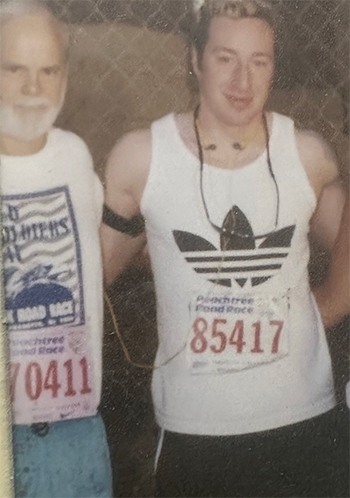
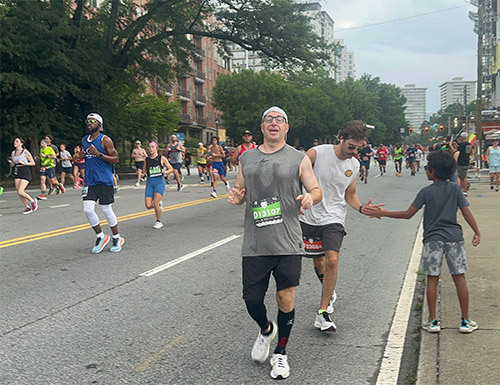
#cfwarriorproject
#cysticfibrosis
#ajcprr
#peachtreeroadrace
#running4mylife
#running
#motivation
#inspiration
The post The Skinny Fourth Grader and Coach Bobby appeared first on CF Warrior Project.
May 12, 2023
How My Story Changed Someone Else’s Story
May is Cystic Fibrosis (CF) Awareness Month and a wonderful time to share your CF story to help someone else who may be hesitant to share theirs. So to get the celebration started, I wanted to share a story that convinced me that my journey, while boring to me, can make a difference for someone else.
The year was 1984 and I was eleven years old. I remember going through a long clinic appointment at Grady Memorial Hospital, one of the busiest trauma centers nationwide located near downtown Atlanta. That morning, my doctor’s words and my mom’s expressions hinted to me that my health was not where they hoped it would be. Mom tried to console me but no luck. CF is a very draining disease – both physically and mentally – and at that point in my life, I couldn’t tell you which part was more difficult to handle.
It was frustrating that I had to do physiotherapy and take medications; things my peers never had to do. I had learned years earlier that my life expectancy was limited to 25 years. I wanted a mentor with this same disease to tell me that everything was going to be okay. That person did not seem to exist though. I knew it and my mom knew it. Even worse, I didn’t know anyone else older than me with CF. It was downright frightening for both of us.
At that same clinic appointment, I saw a poster on the wall of a bodybuilder who was endorsing a weight-gain drink. Like most people with cystic fibrosis back then, I was skinny and malnourished and needed drinks like these to put on weight. My mom knew nothing about the man on the poster but she knew me and she knew I needed encouragement so in that moment the words just spilled from her mouth like a pitcher of water, “He has cystic fibrosis, too,” she said. “You can look just like him.” I looked at my skinny frame and wondered how this could be true. The man did not have cystic fibrosis and my mom knew it but I didn’t. My mom lied but only because she knew that I needed something that doctors and textbooks back then never seemed to give me – that something was hope.
My life was full of ups and downs. I did not know anyone older than me with cystic fibrosis who could tell me that I was going to be okay, but I managed to use that poster and my mom’s words to encourage me and help me overcome so many of the difficult emotional obstacles in my life. I lost my mom in 2020 to cancer but the impact that her encouragement has had on my life remains immeasurable.
Three decades after my clinic appointment, in 2014, a young 12-year-old boy by the name of Joshua Garberg was also dealing with a long clinic appointment. Joshua, who was diagnosed with CF at five years old in Placentia, California, was experiencing the same thoughts I had those days. “I had trouble realizing that people didn’t have to wake up an hour early for a breathing treatment,” says Joshua, “or had to take enzymes each time they ate.”
Cystic fibrosis can be a very lonely disease. There are only 30,000 to 40,000 of us in the US and we are not recommended to get within six feet of each other due to the risk of bacterial cross-contamination.
While Joshua didn’t have a poster to encourage him, Joshua was able to find hope in the form of a book – a book I had written called The Drive at 35: The Long Road To Beating Cystic Fibrosis about finding hope in the midst of fighting the disease he and I shared.
The book was handed to him by his CF pediatric physician who had received the book during a speech I had given in Anaheim, California. “We wanted to give you this book so you could see that you’re capable of living a long, happy life,” said Joshua’s doctor, “Andy Lipman has cystic fibrosis like you.”
Shortly after Joshua received the book, he found my e-mail address and sent me a note to tell me how much the book helped him.
“I still do struggle with the feeling of wanting to be like my peers,” Joshua admitted to me, “but I do think your book helped me embrace that feeling of being different.”
Reading Joshua’s words reiterated to me that my story can help others battling the same disease and also confirmed to me why my mom’s fib so many years ago still plays such a positive role in my life.
Today, Joshua is a 21-year-old, fourth-year student at the University of Southern California (USC). He again reached out to me and asked if we could talk on a Zoom as he wanted to write a profile on me for his ENGL 300 – Advanced Expository Writing class. I was so touched that our exchange and my book meant so much to him.
“[You] motivated me to prevent CF from being an overpowering imprint on my life,” Joshua told me.
No longer do young people like Joshua need a fraudulent poster to tell them that they can live with this disease. They now can witness people older than themselves who are indeed living their lives with cystic fibrosis – something I’m certain benefits both them and their parents. Something I know my mom and I would have benefited from nearly four decades ago.
If anything, I hope this blog incentivizes those who were once hesitant to tell their stories to openly share their tales. While you may not see your journey as anything special, it may just help someone to navigate their own journey.
Live your dreams and love your life,
Andy
#cfwarriorproject #cfwarrior #cysticfibrosis #cfawarenessmonth #shareyourstory
The post How My Story Changed Someone Else’s Story appeared first on CF Warrior Project.
March 21, 2023
The Inspiration Behind The CF Warrior Project, Volume 2
My vision of the term “CF warrior” when I wrote the first volume of The CF Warrior Project was simply a person who has cystic fibrosis.
If you’ve begun reading the inspirational stories in The CF Warrior Project, Volume 2: Celebrating Our Cystic Fibrosis Community, perhaps you’ve noticed that I not only feature those with the disease but also those who fight for those with the disease. It is now my opinion that the term “CF warrior” should extend to more than just those who test positive for the disease.
Why the change of heart?
The simple answer is my mom, Eva Goldberg Lipman.
My mom ranks amongst the greatest cystic fibrosis advocates I have ever known. Her CF story reminds me of the likes of Margarete Cassalina, Beth Vanstone, Melissa Yeager, Jaime Parsons, Travis Suit and Diane Shader Smith – moms and dads who were featured in volume two – moms and dads who never gave up when it came to their children and their children’s legacies. There are thousands of these courageous people throughout the world. They are all CF warriors.
Mom’s story began in the mid-1940’s as she was born to two Holocaust survivors in a displaced persons’ camp in Germany. Three years later, they were sponsored by the Hebrew Immigration Society and moved to the United States. After becoming the first member of her family to graduate from a four-year university (the University of Florida), moving to Atlanta and meeting and marrying my father Charles, she would have her first child, a daughter they named Wendy, in December 1970. Wendy only lived 16 days due to cystic fibrosis.
My parents did not know that they were CF carriers and suddenly realized that there was a one-in-four chance that any attempt to have children would result in the child having CF. My parents would try again three years later but the result was unfortunately the same. I was born with cystic fibrosis.
Mom did not have the typical job after I was born – she was a CF mom, which some would argue is as grueling a job as one can have.
Her duties included chauffeur as she escorted me to most of my doctor’s appointments at Grady Memorial Hospital (which was primarily an emergency hospital so not exactly a place you want to take your child four or five times a year) while often having to hear that my cough would continue to be persistent, my bowels would continue to be greasy and that my health would continue to be concerning.
Mom also played the role of respiratory therapist as she placed a nebulizer mask over my nose and mouth every morning so that I could breathe in the aerosol meds which would be followed by my *postural drainage therapy often exhausting her hands and arms from administering the procedure.
She was also my caddy as she carried my pill bottle everywhere we went to ensure that I would not forget my enzymes which I had to take before each meal so I could digest fats.
Mom played psychologist, too. She listened to my greatest fears as I would explain how classmates would ask me if I was going to die, if I was contagious and why I was so skinny. I asked her many times why I had to take medication and do my physiotherapy while none of my friends did. She was an expert in talking me off the ledge.
Mom also played the role of eternal optimist. If she needed to tell a white lie for me to gain confidence, she would do so. If she needed to hide videos or flyers that declared the life expectancy of someone with the disease, she most certainly did. She and my father orchestrated the biggest secret of all from me – the cause of my sister’s death. All I knew was that I had a sister who died before me. It wasn’t until I was 25 that I was able to get Mom to tell me that Wendy lost her life to cystic fibrosis.
Mom was the one who called me downstairs to tell me that the cystic fibrosis gene was discovered in the fall of 1989 and 30 years later would call me to tell me that Trikafta, the first CFTR modulator I could take, had been FDA approved. “You are going to live a long life,” she would always tell me despite textbooks and medical professionals often disagreeing. Nearly five decades later, it appears that Mom and I had the last laugh.
We lost Mom suddenly at age 74 to lymphoma on November 18, 2020. The woman who was born in a displaced persons’ camp, lost a child two weeks after birth, had to deal with another child with a chronic illness and had to fight for her life during the midst of the pandemic rarely complained about her circumstances.
In the forty-seven years I spent with my mom, I learned how important it was to have someone in your corner when dealing with a chronic disease and that the term “CF Warrior” is not just about having CF in your DNA.
Mom advocated for me when life-changing drugs were at a minimum. She performed my postural drainage when her hands were bitterly sore. She fought insurance companies to make sure I had the proper medications. I could argue that not only was my mom a CF warrior but that she taught me how to be the CF warrior that I am today. That is why I have changed my stance on the definition of a CF warrior and that is why this book is dedicated to my mom.
Please order your copy of The CF Warrior Project, Volume 2 today and read about all these inspiring people including my mom who deservedly share the title “CF warrior.”
I’m so proud of you, Mom.
Live your dreams and love your life.
Best Wishes,
Andy
*Postural drainage therapy – my mom (and dad) would hit my sides, back and front for 30 minutes a day to loosen the mucus in my lungs so I could cough it out.
The post The Inspiration Behind The CF Warrior Project, Volume 2 appeared first on CF Warrior Project.
Andy Lipman's Blog

- Andy Lipman's profile
- 1 follower

