Sarah Griffith Lund's Blog
February 1, 2025
Blessed Minds: Neurodiversity
I’m overjoyed to share with you my new book, Blessed Minds: Breaking the Silence About Neurodiversity. This book is a joyful exploration and celebration of the diversity of the human mind. Made in God’s image, people with brain differences are blessed.
Filled with stories of hope, I pray this book will be a blessing. Today is my birthday and I would love for you to pre-order a copy of Blessed Minds as a way to celebrate with me!
On this day of my birth, I give thanks for the gift of neurodiversity! Our world is a better place because of the beautiful ways we are different from one another. Diversity is a gift from God!
Thank you for supporting my writing and encouraging me to keep exploring how God’s love shows up in the ways we understand ourselves. It’s delightful to keep growing and learning and to share all of this with you all in my new book, Blessed Minds. I can’t wait for you to read it and let me know what you think.
Here’s the link to per-order:
Blessed Minds: Breaking the Silence about Neurodiversity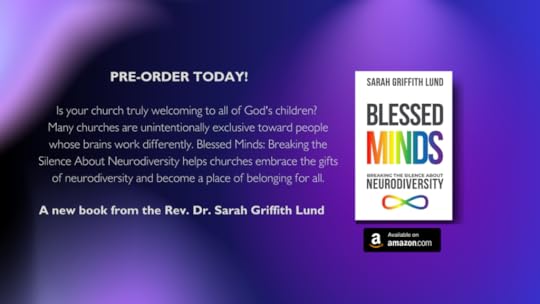


December 22, 2023
Love is Born Again
The red, green, and white holiday stocking hanging by the Christmas tree has two more days left: the twenty-third and the twenty-fourth. Each morning (when I remember) I place a star in a little pocket behind each number, starting at one and going all the way to twenty-four. Today is day twenty-two.
This simple ritual of counting the days to Christmas this year has felt different than in the past. Each new day feels more like a lovely gift to unwrap. Not all of these past twenty-two days have been good days, but good enough to say to God, “thank you.”
One day I wanted to, as the Bible says, “curse God and die.” At my lowest moment, my sorrow overwhelmed my ability to desire anything anymore. I am not what anyone would call “a crier.” I’m defiantly not a “cry baby,” (a sensitive topic for those of us who are, in fact, the baby of the family). I don’t remember the last time I had a “good cry.” Until now.
A sob erupted from deep within my body and something broke through. As I sobbed, healing came like a physical current of energy in my body, similar to the feeling I had of labor pains in childbirth.
I rode the current of sorrow and it was good. I trusted my body’s need to deeply feel the anguish of what it means to be part of a world in need of saving. Tears exhausted me. Did you know that crying is a form of exercise? It was a very good cry.
When my tears dried up, I decided to cheer myself up from too much sadness. From my cocoon of sadness, I sent a text to my son, “do you want to watch a Christmas movie with me?”
He texted back, “I would love to watch one with you.”
We labor for new life. What we also labor for is our own lives, every day. The thing is, most days we are too busy working and distracted to notice. Until one day when the labor to stay alive is extra hard. Hard enough to get our attention.
Together on the sixteenth day we watched a Christmas movie. By the end of the movie, I noticed it was easier for me to breathe. The tears dried on my face, but the spiritual stretch marks are still there on my soul.
There are spaces in my soul where I had to push hard to birth new life. I can feel the new edges created by the currents in my spiritbody. The shape of my soul has changed, expanded.
There are stretch marks on my soul that only God and I can see. I don’t want to forget their birth story. Nor do I want to forget the solace of human love.
My soul magnifies Divine love pushing through us like labor pains and insists on not giving up hope.
Our labor is not in vain. Love comes. Love is born again. Love is here to stay.
November 20, 2023
Rosalynn’s Power
Her power was not only her southern charm and beauty.
Her power was not only her faithful honoring of marriage vows and devoted life as a wife.
Her power was not only her nurturing mothering and generous love of family.
Her power was not only her compassionate heart and keen listening skills.
Her power was not only her political savvy and diplomatic gifts.
Let us remember her power to break the silence about mental illness.
Let us remember her power to boldly imagine ending the stigma of mental illness in her lifetime and to use her power to make it so.
Let us remember her power to strategically advocate for accessible and affordable quality mental healthcare.
Let us remember her power to organize national and global work to train and educate others about mental health.
Let us remember her final act of power: to break the silence about her own brain illness by sharing her dementia diagnosis.
Power is many things.
Her power created a global movement for mental health justice.
May she be remembered for her power to make the world a better place.
She was more than a famous man’s wife.
She was a powerful woman of God.
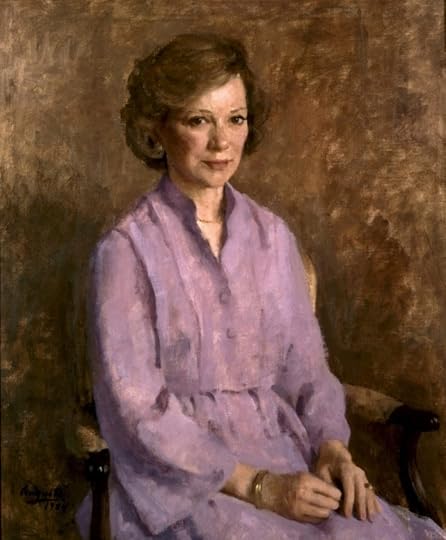 Artist: George Augusta
 Former first lady Rosalynn Carter died at age 96 on Sunday, November 19, 2023.
November 12, 2023
Pray, Play, Pause
We don’t talk enough in the church about this, but the most important charge I can give is for you as a pastor is to put your own spiritual life first: Make tending to your spirit your highest priority in ministry.
As strange as it may sound, for pastors to make time to tend our souls is not popular.
We live in what Nap Bishop Tricia Hersey calls a “grind culture.” In our society we prioritize work, making money, being perfect, and being busy. All of this is driven by capitalism and white supremacy culture that sees humans as machines.
The church can get stuck in the same grind culture, making ourselves busy “doing” ministry instead of “being” ministry. For church there is a danger in getting caught up in the systems of oppression that overwork, overextend, and burnout staff and volunteers.
Church, we know this is not of God.
The love of Jesus Christ is not tied to how hard we work.
The love of Jesus is shared by honoring our divine humanity as human beings, not human doings.
In the church we tend to believe that the pastor’s highest priority is to tend to their flock. But that is a sure path to burnout.
For pastors to flourish, according the findings of years of research out of the Duke Divinity clergy health initiative, is for pastors to invest in being good stewards of their own wellbeing.
What does spiritual health require? Prayer, play, and pausing to rest.
Pastor, my charge to you is this: let other people be in charge of what is not yours to control. It will all be ok.
What you are in charge of and what you can control is yourself: your resources, your time, your gifts, your mind, your body, your spirit.
Be in charge of being a good steward of your own well-being.
Pastor, show the church what it looks like to flourish.
Show us what a spiritually alive person looks like in this war-weary world.
Show us how beautiful it is to pray, to play and to rest in God’s love.
Be in charge of being a good steward of your spiritual roots.
Make time for prayer, play, and pausing to rest.
Recently during my day of prayer, over a bowl of warm butternut squash curry soup, I gazed outside the window.
The trees waved their branches as golden leaves let go and swirled around in the blue sky. Dancing through the trees, two squirrels twirled around, leaping from tree to tree.
The trees rooted into the earth provided the perfect dance floor of the branches for the joyful squirrels.
In God’s good Creation we see examples like this of how we can co-exist peacefully.
What if our spiritual lives could be so deeply rooted that our day-to-day life focused on creating space for God’s playful spirit, prayerful presence, and pauses to rest?
What if we could be like the trees?
Spirit moving through us.
Branches reaching to the heavens in prayer.
Limbs to create space for nesting and resting.
Do the right thing to nurture your own spiritual life. As a pastor, you are a spiritual leader who leads by example.
Make time in your busy life to pray.
Take a day of prayer once a month. Or twice a month.
Make time in your busy life to play.
Take a day or two off every week to play with your friends and your family.
Make time in your busy life to press the pause button and to rest.
Take your sabbath day each week. Jesus says, “Come to me all who are carrying heavy burdens and I will give you rest.”
I am sorry to say, but since Sunday is now a work-day for you, you’ll need to find another day of each week for your sabbath. What day will it be?
This will be a new rhythm for the church and your family and for you to adjust to and to honor: pray, play, and press pause to rest.
I charge you to prioritize being in charge of your own spiritual well-being.
For the pastor to tend to her own soul is behind the scenes work.
It is under the earth, roots work.
It is holy work that is unseen.
And it matters more than anything else.
As a wise preacher once said, “Our lives tell a story, that story becomes a powerful witness when we embody our belief and our actions match our words.”
May you truly flourish.
Let us pray: God of Creation, thank you for the beauty of the earth. Thank you for signs and wonders showing us your divine love for all the earth. May your divine power guide the pastor’s life and ministry, blessing her family, and granting her strength, courage, and wisdom to be a good steward of her own wellbeing for the sake of the gospel of Jesus Christ. Amen.
(The Charge to the Pastor, Installation of Rev. Karen Herbst-Kim, Northminster Presbyterian Church, Indianapolis, IN, November 12, 2023)
October 22, 2023
Sabbatical Joy Part II: Rhythms of Joy
In the first part of this series of reflections about our congregation’s sabbatical theme “Joy to the World,” we reflected on “heaven and nature sing.” Joy is an original gift from our Creator. If the sound of wind dancing through the branches of the palm trees is a sound of joy, what, then, is the physical feeling of joy? In other words, what does spiritual joy feel like in the body? Answering these questions became the focus of the middle section my sabbatical quest: the search for embodied spiritual joy.
Our physical bodies are an original gift from our Creator. Historically, the church has successfully created shame and taboo about our bodies, especially the female body, disabled body, LGBTQ body, black, brown, non-white bodies, old bodies, and fat bodies.
All bodies are sacred.
All bodies are created in the image of God.
All bodies are created to experience spiritual joy.
As a survivor of trauma, I know from experience that sometimes the only way we know how to continue living is to live outside of our bodies. Disassociating is a way to float above physical realities so that we are numb to emotions and feelings in the body. Yet, separating the self into compartments is the opposite of wholeness.
I longed to know what it would feel like to experience embodied spiritual joy. One technique that helps me return to my body is yoga, this truth I discovered over twenty years ago while a student at Princeton Theological Seminary.
A classmate invited me to go with her to the local YMCA and try this thing called yoga. So off and on since then, I have experienced yoga as an invitation to show up inside my body and feel what it’s like to have a body and be aware of how I feel in it.
The word “yoga” comes from the Sanskrit and means “yoke.” Although some argue that yoga predates “religion,” the earliest written references to yoga are found in Hindu texts. The Upaniṣads (c. 800–400 BCE ) and Bhagavad Gītā (c. 200 BC–200 CE) describe yoga as meditative practices for yoking the self with the divine. For thousands of years, yoga has used breath and physical movements to connect us to what Christians call God.
From a Christian perspective, the practice of yoga is a way to pray. My yoga mat has become one of my well worn altars, a place where I go on my hands and knees to meet God.
Christian Theological Seminary is training pastors and therapists to use the principles of yoga to help students integrate systems of ethical, physical, and spiritual paths toward health, wholeness, and enlightenment. Since its introduction to the western world over a century ago, yoga has been largely misunderstood in Christian circles.
In its most basic form yoga is not a religion, but a philosophy based on Patanjali’s Yoga Sutras, a work compiled into 4 sections or “books” around 200 C.E. The practice of yoga can be part of the Christian faith because it is all about stilling the mind, quieting our thoughts, feelings, and egos, in order to become one with God.
In addition to physical and spiritual applications, yoga has therapeutic value for mental health, emotional and psychological healing. For me personally, when I practice yoga, I experience a releasing of emotional and physical pain, including past trauma that I have held in my body.
For the middle part of my sabbatical, I explored through the practice of yoga how body prayer creates a rhythm of joy. Repeat the sounding joy for me was all about the rhythms of embodied spiritual joy. Was it possible, I wondered, for spiritual joy to be integrated into the physical self?
During this time, I spoke with another UCC minister who once led a church retreat on the theme of joy. And she gifted me with the treasure of her discovery of the biblical definition of joy: the awareness of the presence of God’s grace.
What would it be like to be aware of the presence of God’s grace in our bodies?
For each day during this time, my one goal was to practice body prayer in the form of yoga or Pilates. I focused on being inside my body and what it felt like to move my body in rhythms of prayer.
One Sunday morning I lifted my eyes to the blue sky in Holliday Park along with thirty other people as we stretched our bodies for yoga in the park.
Another Sunday morning I sat inside a downtown studio and after rigorous physical movement, sang a prayer song about the sun shining down upon those we love and filling them with peace.
One Saturday night I found myself in that same studio but this time it was packed with people. We came to experience a “sound bath.”
One whole wall of the room was filled with percussion instruments. The musician walked back and forth across the wall of sound and played the bells, gongs, drums, chimes, while listeners received the vibrations into their bodies.
At first I tried lying down like the people around me. We all had yoga mats and blankets and pillows. A few people began to snore.
I found myself overstimulated by the sound bath, with a heightened awareness of the vibrations. I was fascinated by the musician himself and how we seemed to float from one instrument to the next, guided by some invisible muse.
I sat straight up at full attention, my legs folded underneath me. That’s when it happened: the sound of the drums entered into my ears and began to fill my mind. I felt the rhythm of the drums began to beat in my own body, beating in unison with my own heartbeat.
For a moment my heart and the sound of the drumbeat were exactly the same. The barrier between myself and the world around vanished. I was one with the sound. I was one with the universe. I was one with God.
I realized in that moment that my spiritual quest led me here to this moment: embodied spiritual joy makes the sound of my heart beating. The rhythm of joy is the beating heart.
As long as my heartbeats, there is joy because my heart beats with the love of God.
Spiritual joy is not something I can buy on Amazon or chase after or travel to an exotic island to find.
It’s right here, right inside me. And as long as I am alive, as long as my heart beats, as long as I am still breathing, joy is here. I became awareness of the presence of God’s grace in my body.
And a deep peace washed over me. My shoulders relaxed. A white light filled me with a sense of well-being.
The musician ended the sound bath with these words: if anything came to you that you wish to release and let go of, then set it free. If anything came to you as a gift to guide you, then receive that gift and let it bless you.
That was it. I had received a gift. Repeat the sounding joy. It’s something we all have, already within us. No matter what else is happening in the world or in our own world, spiritual joy is also there.
Too often joy lost and forgotten, overshadowed by tragedies, big and small. What if, all this time, joy has always been inside of me? Inside of you, all this time?
Like the presence of God’s grace, when we become aware of it, we realize the good news of God’s love. In the beginning, God created us, in God’s image, God made us good.
In Jesus we are given another example of embodied spiritual joy. How Jesus’ heart must have beat with joy when he saw the children coming to him.
How Jesus’ heart must have beat with joy when the hungry were fed, the thirsty given something to drink, and the dead rise again.
And how Jesus’ heart must have beat with joy when he saw Mary Magdalene in the garden waiting for him outside the tomb.
This is why Jesus’ message to the disciples was about their hearts. Jesus wishes for them joy in their hearts, he wishes for the disciples to know that his love would always be with them.
Jesus, in the Gospel of John 14:25-27, says, “This much have I said to you while still with you; but the Paraclete, the Holy Spirit whom Abba God will send in my name, will instruct you in everything and she will remind you of all that I told you. Peace I leave with you; my peace I give to you; but the kind of peace I give you is not like the world’s peace. Don’t let your hearts be distressed; don’t be fearful.”
Jesus knew there were plenty of reasons to be fearful. What he hoped the disciples would never forget was that God’s love was within them, the very rhythm of joy within their hearts.
Perhaps the true power of the resurrection of Jesus is that it brought his beating heart back to life. The resurrection is the return of joy. The promise that nothing can separate us from the love of God in Christ Jesus, neither death nor life. Nothing can separate us from embodied spiritual joy, the awareness of the presence of God’s grace.
At the end of this middle section focused on the rhythms of joy, I went on a yoga retreat on a lake in north Michigan. Each day began and ended with yoga, with hiking and picnics in-between.
On the third day, I became seriously ill with a fever and knew that finally, after three plus years, my body had contracted COVID-19. I drove myself the five hours home, took a covid test that showed positive results, called the doctor, and then put myself into quarantine for the next five days.
I isolated in my home office at night and in the backyard during the day. It was very quiet and peaceful in my backyard on a lounge chair staring up at the trees.
Even though I was sick, I felt blessed. My heart kept beating and I knew a strange kind of joy.
I was still alive and so many people were not. I was one of the lucky ones. I had been vaccinated. I had accesses to good medical care. I would recover and be ok.
I was on sabbatical. It was my job to rest and like Mary, the mother of Jesus, ponder these things in my heart.
This I know to be true about embodied spiritual joy: God comes to us in human form as a reminder that our hearts beat together as one.
Joy to the world: repeat the sounding joy. May it be so. Thanks be to God. Amen.
(A sermon preached at First Congregational United Church of Christ of Indianapolis on October 22, 2023)
October 15, 2023
Sabbatical Joy Part I: Heaven and Nature Sing
Yesterday my husband Jonathan and I celebrated our seventeenth wedding anniversary. We are grateful to still be together. Ever since we met one of the things we most enjoy is going on adventures.
We met 20 years ago in Minneapolis and in our first two years together we explored Lake Superior, made a road trip to the Oregon coast, camped at national parks, and hiked rim to rim of the Grand Canyon. We quickly discovered our shared love for adventure. We discovered joy in being surrounded by the beauty of the world.
When we first began dating I made a scrapbook of all of our adventures and showed the scrapbook to my oldest brother. The scrapbook was halfway filled with printed out photos and my own quirky travel commentary.
My brother laughed and said, “you really think you’re going to stay together long enough to fill the rest of that book?”
Twenty years later, we began dreaming about the opportunity to go on Sabbatical. I asked my husband, “if you could go anywhere in the world, where would you like to go?”
He thought about it and then said, “How about Hawaii?”
We began dreaming about Hawaii. For us, part of the joy of travel is the time ahead of the trip planning, pouring over the endless possibilities. Will we cave dive or sky dive? Will we stay near the mountains or near the beach?
What we didn’t know last year is that in the time leading up to the sabbatical, we both would have very serious medical conditions requiring significant surgeries and recovery.
What an unexpected joy it was to have the dream of Hawaii there alongside the waiting for a diagnosis, waiting for the surgery, waiting for the healing.
“Joy to the world” became the theme for my sabbatical because too often joy is overshadowed by all the things that are scary, hard, sad, painful, tragic, and unknown.
The scriptures in the New Testament letter to the Philippians encourages us to “rejoice!” Rejoice in the Lord always. And in the Old Testament the prophet Isaiah says that God will “destroy death and wipe away every tear from our eyes.”
In my life I’ve become curious about this spiritual joy the Bible talks about and realized that I didn’t quite know what it was talking about. I wasn’t sure how often in my life I had allowed myself to fully experience true joy.
After all we have all been through individually and collectively as a community, plus all the world is going through now…joy can seem like something of a bygone era, a time of innocence long gone, a Garden of Eden joy forever lost.
As a WISE (Welcoming, Inclusive, Supportive, and Engaged) church for mental health, I became quite curious about how we access joy in the face of chronic illness and mental health challenges such as anxiety and depression.
The phrase “Joy to the world” kept coming back to me, calling my name. Thankfully the church’s sabbatical planning team went with the idea and off we went together dreaming and exploring this theme of joy.
I have to admit, I wasn’t quite sure what would happen with the sabbatical and I was a little afraid my attempts at joy might fail. I was afraid of disappointing my family and the church. Spiritual joy cannot be fabricated or happen by sheer willpower. So on faith, I dared to dream of a season of joy for myself, my family, and for the church. Both of us a bit skeptical of how much joy would actually happen. But I am so glad we took the risk to dream big together.
The news last year that First Congregational was awarded the sabbatical clergy renewal grant really kicked started our season of joy. But it also meant that now we really had to do it.
I’d like to share a few brief stories of the first theme “heaven and nature sing.” The sabbatical began with three weeks on the Garden Island of Kaua’i known for its natural beauty of lush green mountains, waterfalls, beaches, and rainbows. This time together included extended family members and friends. Most of all it was an adventure into joy.
Everyday in Hawaii was a day of rejoicing. It was healing to be surrounded by the sounds of bird song, ocean waves lapping the shore, and the laughter of children.
On my morning walks with God on the beach, God wiped away my tears, healing tears, as I opened my heart to the depths of spiritual joy available to me. The good news about spiritual joy is that it is always around us in the heavens and in nature. I realized I had forgotten this and that is why the Hawaii Islands called me.
While in Hawaii, in my quiet time with God, I spontaneously began writing haikus. Here is one called Sabbatical Joy:
Sunrise beach prayer walk
Walking home in the sunlight
Rainbows light my path
One of the highlights from Hawaii was meeting with a spiritual director for an afternoon retreat. I have to thank my therapist for planting the seed for this idea. When I told her about my sabbatical plans she said, “You’re taking all of these people with you to Hawaii. What are you going to do for yourself?”
On the spiritual retreat we visited ancient historical sacred sites around the island where for generations Hawaiians experienced heightened levels of spiritual energy. During this retreat I prayed for healing from all that kept me from experiencing spiritual joy.
We visited the ruins of an ancient healing temple. Here I was led to pray for healing of intergenerational trauma. Praying for the pain and suffering of past, present, and future generations to be healed. Specifically, thinking of my mother, myself, and my child.
After praying in silence, tears fell down my cheeks. I felt a deep sense of peace wash over me. A sense of balance. A lightness. A shift.
I realized that pain does not need to be carried. Pain can be released. We don’t have to keep passing it on.
Sabbatical created the uninterrupted time, expansive space and gracious freedom to reflect, pray, laugh, cry, and be with God, bringing me great spiritual joy. Rejoicing came naturally, bubbling up from inside. This joy cleansed me, baptized me. God showed me how to smile in my heart.
Throughout the Bible God is worshipped because of the glory of God’s Creation, the handiwork of God’s hands. Yes there is pain. Yes there is war. Yes children die.
And.
And.
And.
The vibrations of majestic green mountains…
The flight of the iridescent hummingbird…
The sound of the sea rushing through the volcanic rock blow hole echoing whale songs…
After visiting the south shore blowhole called Spouting Horn, the next day while sitting in the garden drinking our morning coffee, together my husband and I wrote this haiku:
Waves crashing on rocks
Bellowing whale’s gentle call
Spouting Horn blows free
There is healing that comes from rejoicing in the beauty of Christ in Creation. In these encounters of spiritual joy, God wipes away our tears.
The Bible doesn’t promise us a life without suffering. In Revelations 21:4, “And God shall wipe away all tears from their eyes; and there shall be no more death, neither sorrow, nor crying, neither shall there be any more pain: for the former things are passed away.”
But the Bible does promise that as long as we live, God will be there when we do cry to wipe away our tears.
And now I know that joy will always be there, too, along with the tears, because I am part of heaven and nature’s singing. Each one of us is part of God’s good creation, the song that heaven and nature sings.
One more haiku:
Let the heart listen
Land, sea, sky join the chorus
Vibrations of joy
(A sermon preached at First Congregational United Church of Christ of Indianapolis, October 15, 2023)
May 23, 2023
Sick Pastors
Calling in sick on a Sunday morning isn’t for the faint of heart, especially when the sickness is mental. It takes courage for preachers to admit to themselves and to others that they are not up to the task of sharing the good news. It takes grace for a church to accept that their pastor has a mental illness and needs support to get better.
As the national mental health crisis continues, it’s taking a toll on clergy mental health. Pastors and chaplains are being impacted by the mental health crisis in ways not yet fully understood. The church is not prepared.
Here are five things churches can do to support their sick pastor when the sickness is related to mental health:
1) In addition to providing sick leave, include additional time off for mental health days, including at least one Sunday. It’s got to be ok for pastors to not be ok.
2) Honor the privacy of the pastor and allow them to determine how, when, and if to disclose about their mental health challenge.
3) If they choose to disclose their mental health challenge, remember that the diagnosis does not define them. They are more than their illness.
4) Volunteer to help lighten the work load and brainstorm ways to delegate ministry tasks to help decrease stress.
5) Ask the pastor what would be most supportive to them. Do they want meals delivered? Do they want prayer? Do they need financial assistance to access mental health resources? Do they want to take a medical leave?
When the pastor gets sick, whether it is a mental sickness or other sickness, like cancer or diabetes or heart disease, it is an opportunity for the church to share the love of God with the pastor and their loved ones. Churches can be better prepared to support their pastors through times of mental illness by accepting the fact that pastors are fully human. Pastors get depression. Pastors get eating disorders. Pastors get addictions. Pastors go to psych wards as patients.
Loving God does not protect pastors from getting mental illness. Mental illness and mental health challenges can tear down a pastor’s sense of purpose and calling. Pastors are fearful of being judged by God’s people.
There is a real need for the church to hold the mental well-being of pastors in prayer. The ministry of pastors, preachers, chaplains, and spiritual leaders can be sources of hope for society. But what happens when the hope-bearers are themselves barren?
Who will preach the good news then?
Sick pastors are a sign. The system is broken. For the love of God, what will we do?
December 15, 2022
Blessed is the Church
One aspect about myself as a pastor that I cannot change is being human. Though I think about God and share teachings about God, I am not a god. In my two decades as a professional clergy person, I’ve observed that we clergy don’t give ourselves enough grace when it comes to being human, the messy, unpredictable, and needy parts of mortality.
I began serving as senior pastor of my church in the spring of 2018. We’ve be been through the pandemic together, marriages, births, baptisms, and deaths. They’ve heard my testimonies about how God shows up in our stories about mental illness and they’ve supported me in my ministries to the wider church.
As soon as I knew that I was going to have a hysterectomy, be out for a medical leave, and possibly face additional treatments for cancer, I knew I needed to tell my church. And even though none of us knew what would happen, we knew that we would love one another through it. And if that’s not grace, I don’t know what is.
What a blessing to be a clergy person who does not have to play the role of savior. What a blessing to be a pastor who is fully human. What a blessing to have a church that gets that life for pastors, like everyone else, is messy, unpredictable, and hard.
I am deeply thankful that in my time of need, my church blessed me. Together in a short amount of time we created a medical leave plan, people stepped up to provide pastoral care, to preach, to lead, and to keep the ministry going so that I could rest and recover without any worry about the church.
In preparation and throughout the medical leave, my church staff were incredible. The congregation responded with understanding, compassion, and care. They sent me get well cards and provided my family with meals three nights a week for the first three weeks of the medical leave.
On my last Sunday before the surgery, the church presented me a handmade knitted rainbow prayer shawl at the end of the worship service. Placing the shawl around my shoulders, they prayed over me, members of the congregation reaching their hands forward in a prayer of blessing, care, and healing love.
I felt their prayers fill me with God’s power and love. I felt grounded and held by a source greater that all of us in that moment. I felt at peace.
That rainbow knitted prayer shawl covered my body in the post surgery recovery room. I insisted that I take it with me to the hospital. I kept it with me every day as I recovered. The prayer shawl was a tangible reminder that I was held in the loving prayers of God’s people.
Now as I write this several months later all is well and all manner of things shall be well. The church blessed me because it included me as part of the body of Christ in need of loving care. I don’t think I would have been open to this kind of support and love from a congregation 20 years ago as a newly ordained young pastor. Time has humbled me and opened my heart to the people of God, revealing my own desire for their prayers for healing. It’s taken me some time to be vulnerable enough and strong enough in my own pastoral identity to love them and to be loved by them.
Blessed is the church who loves their pastor, especially when she faces the trials and tribulations of being embodied in the human flesh. Blessed is the church who honors the sacred time and space for deep healing to happen for their clergy.
Blessed is the church that prays for their pastor. Blessed is the church that creates space for their clergy to be fully human and fully loved.
Blessed Yes
Joy is seeing your good friend say “yes” to the dress and know how much hope echoes in each of the of yeses that led to the dress. Wedding dress shopping is an American rite of passage for many women and inspired a hit television reality show, “Say Yes to the Dress.”
Another common rite of passage for many American women is the hysterectomy, one out of three, yet I’m not aware of any reality shows dedicated to narrating and documenting this life changing experience. “Say Yes to the Hysterectomy” just doesn’t have the same charm.
In August I said “yes” to the hysterectomy because my oncology gynecologist said it was the best option to make sure there was no cancer. She said they would remove the uterus, cervix, fallopian tubes, and ovaries. All of it would go. Later, in a panic, I would ask my primary care physician if this was really necessary and she agreed that it was best. There was just too much going on to risk cancer and cancer spreading. The more I discovered about the surgery, I would argue this could be a popular reality show because now these surgeries are done with robots.
I said yes to a robotic hysterectomy. It felt like a big decision and one that deserved applause, a bell ringing, and making a wish. Even a very expensive and pretty dress. But alas, just me in a pair of old jeans and a t-shirt. If you are really curious about how robots do surgeries, you can look for a YouTube video, which digging for awhile, I found. There are five small incisions made across the midsection and that’s where the robot fingers go.
My doctor said they would do a biopsy during the procedure to test for cancer and then if necessary perform staging. Now, this not a dance number with lights and action. But a further testing for cancer of nearby organs. After explaining all of this she said, “You probably want this as soon as possible?” I said “yes!”
All of this unfolded for me in early August, and as I write this now, all is well and all manner of things shall be well. Yet, there’s so much that happened in that period of time, I’m still wrapping my head and heart around them.
When I said “yes” to the hysterectomy, there was no celebratory bell and there were no friends with me to take group selfies. I didn’t feel pretty or in love. I was alone in a depressing medical exam room. Trying to think about what in God’s good name I just said yes to.
Yes to health. Yes to life. Yes to a different kind of love, a deeper love for myself. A yes I didn’t really understand, but trusted was the next right thing. A blessed yes that left me pondering all of these things in my heart.
December 14, 2022
Blessed are the Chaplains
You know the saying that cracks are places where the light comes in? But what happens when we are in the crack of pain, fear, and confusion and there’s no light shining in? This past August, as I sat with the news about a possible ovarian cancer diagnosis, I was lost for a moment in that crack of “now what?”
Chaplains are people who are not afraid of other people who are stuck in the cracks of life. Chaplains, whether in medical, military, academic, or other settings, are fearless light bearers of hope. People who are called and trained in chaplaincy know how to go right up to the edge of the crack and not fall in.
One morning as I stood outside in my backyard, feeling lost in the crack of a scary new health condition, my cell phone rang. It was a hospital chaplain who also is a good friend. Just a few minutes earlier I had texted her an update about my upcoming appointment with the gynecological oncologist.
Right after I said hello she said, “So, how are you feeling? It’s ok to be scared.” And I lost it. I lost myself even more in the crack of fear.
And it was good. She gave me permission to feel these really big feelings and with her right there on the phone with me, I knew that there was a bottom to the crack. Her care and compassion created a soft place to land.
So I began to cry. Her grace, her presence, her witnessing of my pain was the light. And after our brief phone call, I felt lighter. I was still in the crack, but I was no longer lost and alone. As I write this now, several months later, I am well and all manner of things shall be well.
Blessed are the chaplains, as they accompany the wounded and broken hearted, for theirs is the realm of God.