Diana R. Chambers's Blog
April 12, 2019
China: In Search of the Past: Part 7: Shanghai, More of the Four Olds and the Very Very New + South Korea: Poetry in the Rain
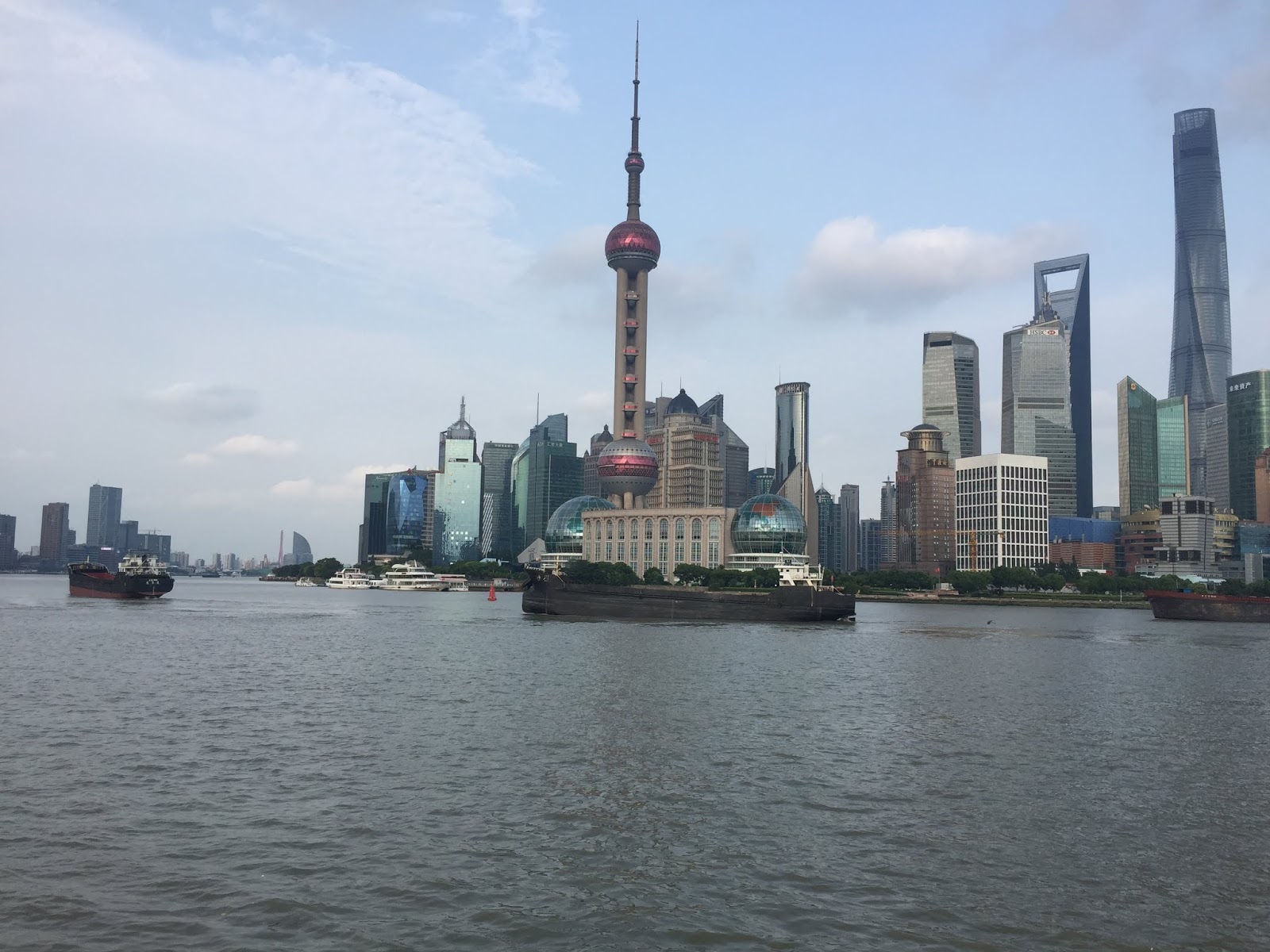
The Bund is Shanghai's famed waterfront, once part of the city's International Settlement--territory the Western powers took from China after the mid-19C Opium Wars, waged by Britain in the name of free trade. In its heyday, the city was known as the Paris of the East, and, especially after the Russian Revolution, it was a refuge for many. Shanghai remains a shipping port and vibrant, sometimes jarring mix of worlds.
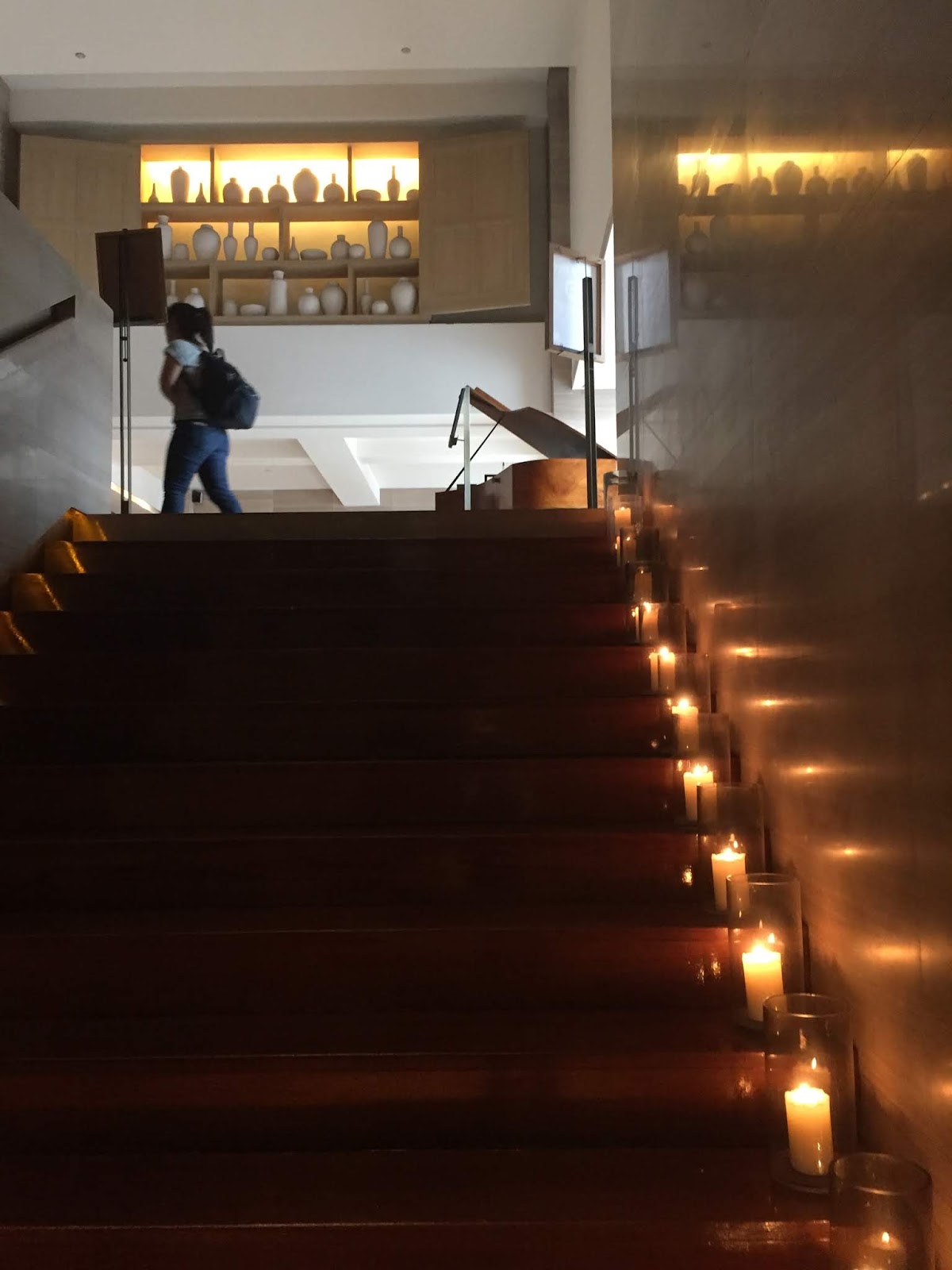
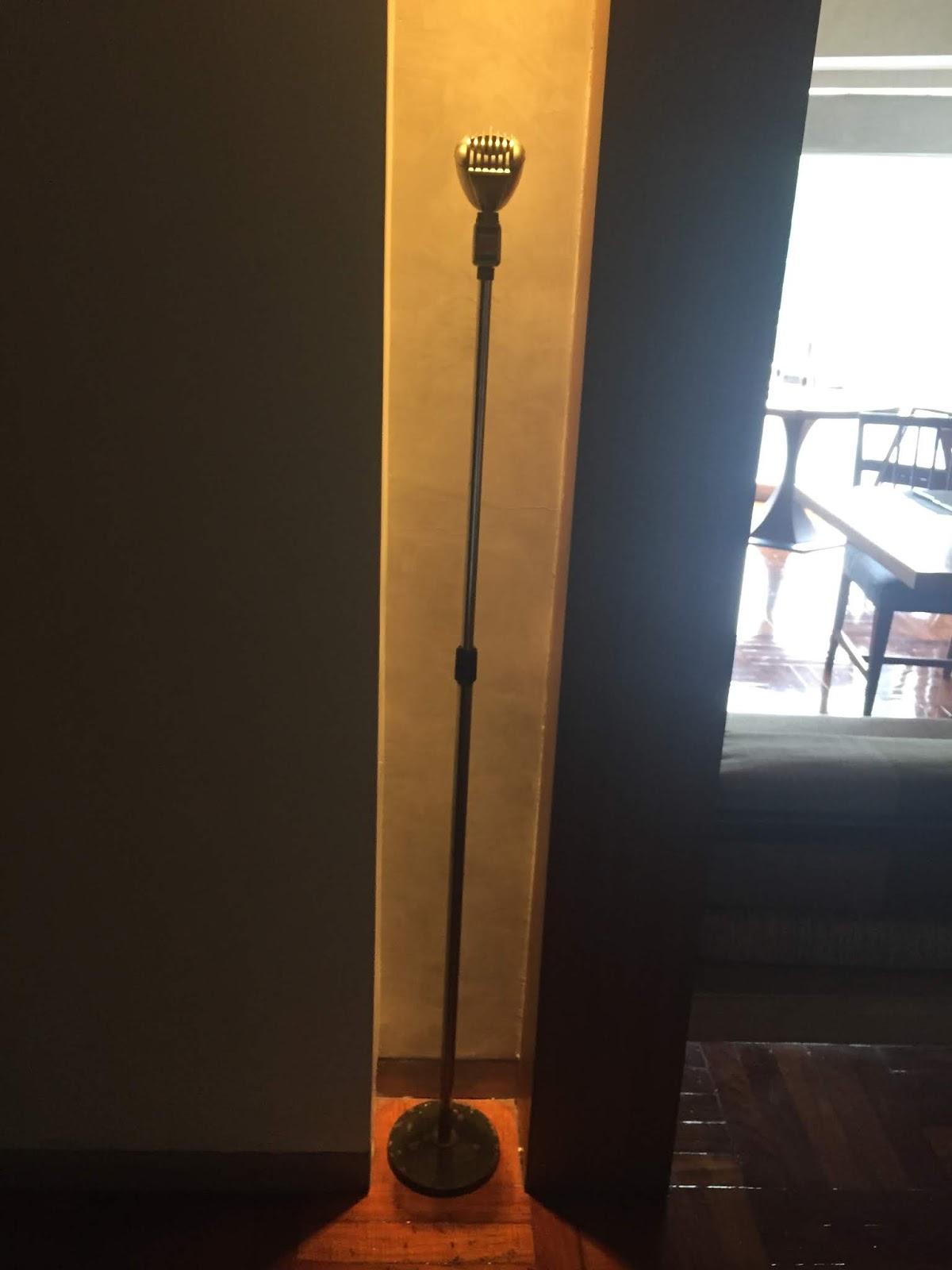
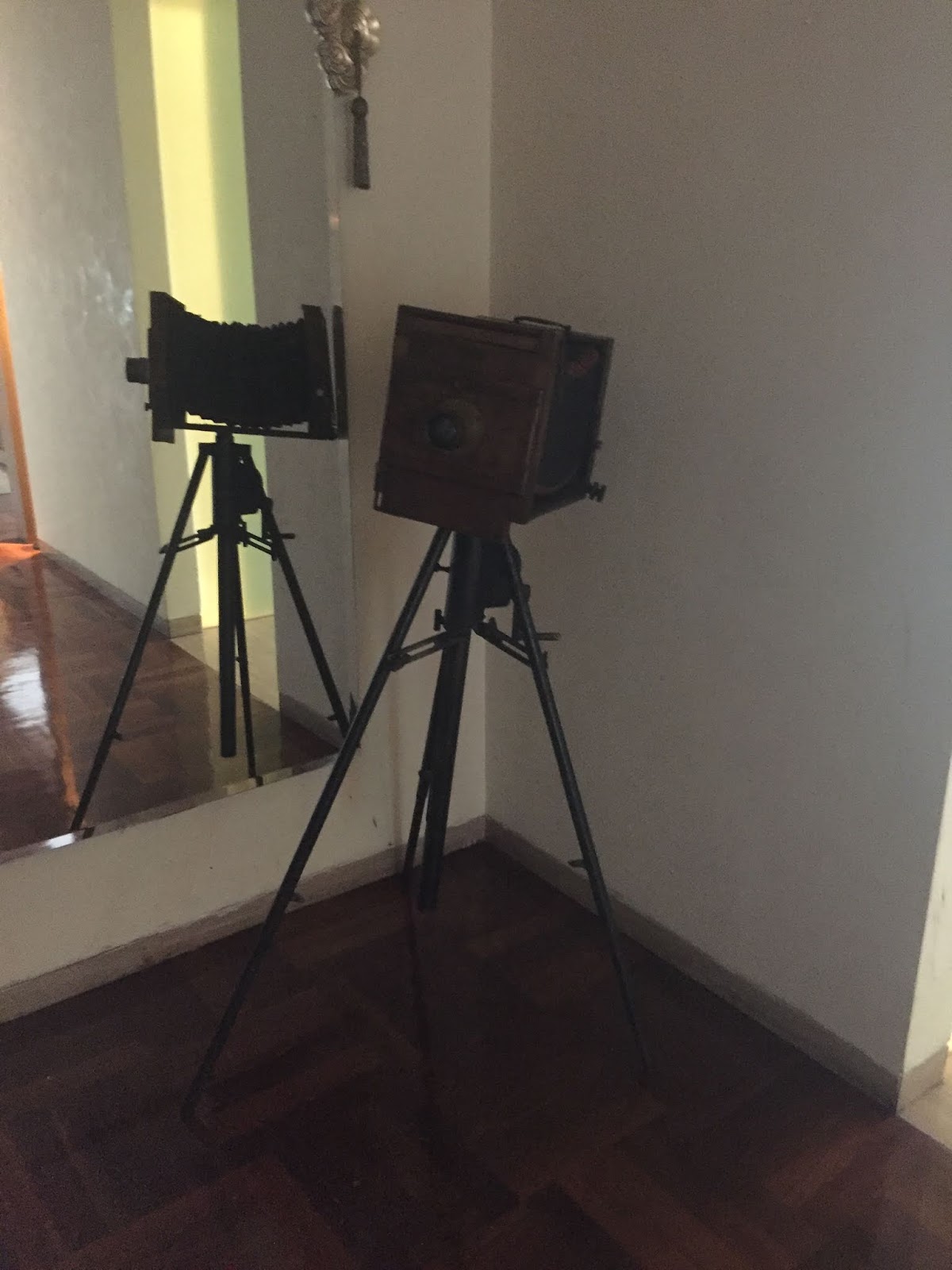
Across the Huangpu, rising from the mudflats, is Pudong, a high-rise, high-tech vision of the future. For this view, we're staying on the old side of the river in one of the Bund's historic buildings. Emblematic of Shanghai itself, Les Suites Orient is a blend of sleek modern and vintage.
The next morning, we visit the sleek, glass Yuzu Museum in the West Bund. We're eager to see the "Rain Room," an exhibit that has toured the world. Entering a dark space, you walk slowly amid a gentle drizzle that surrounds but does not touch you. It is poetic and magical.

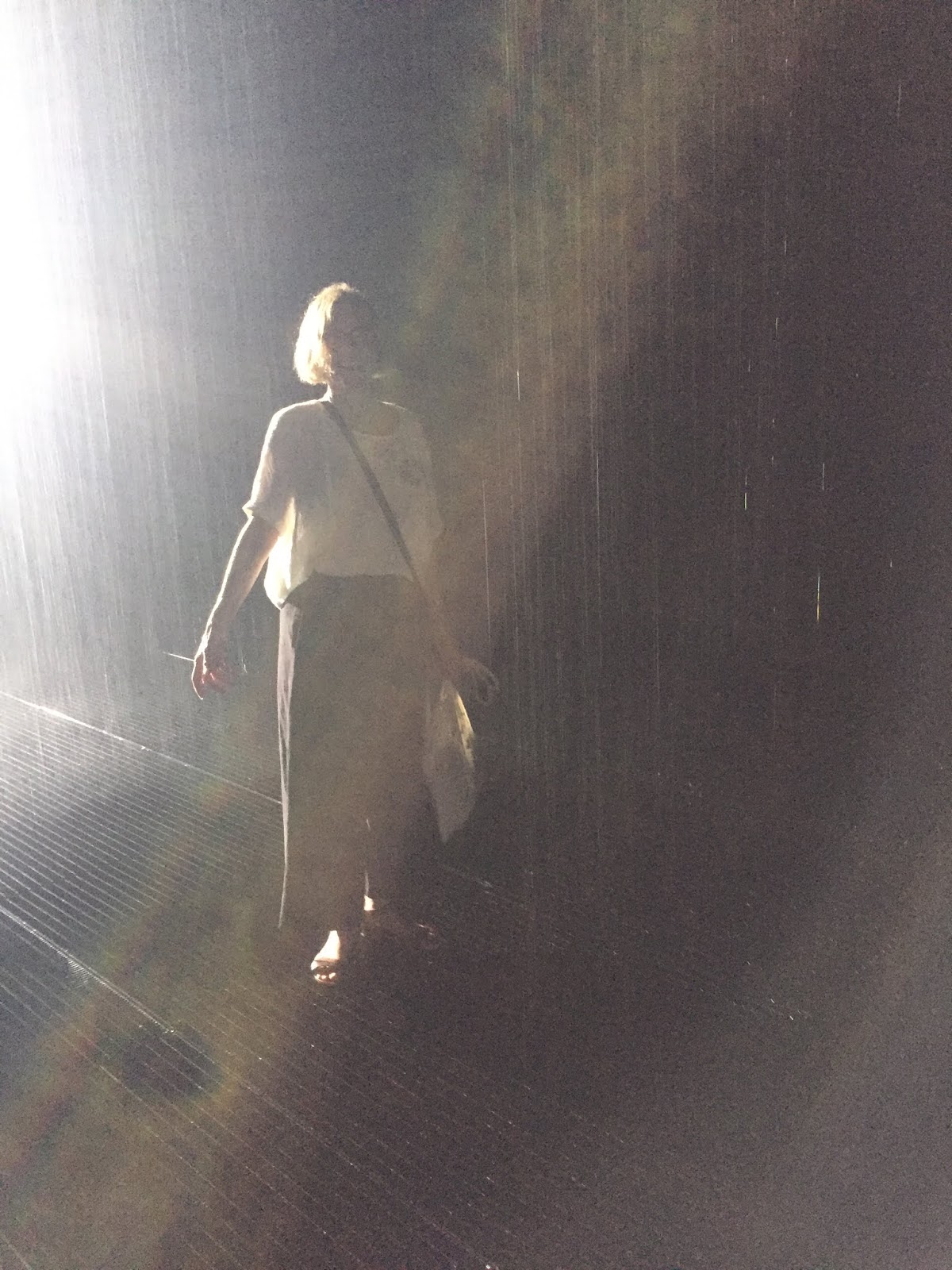
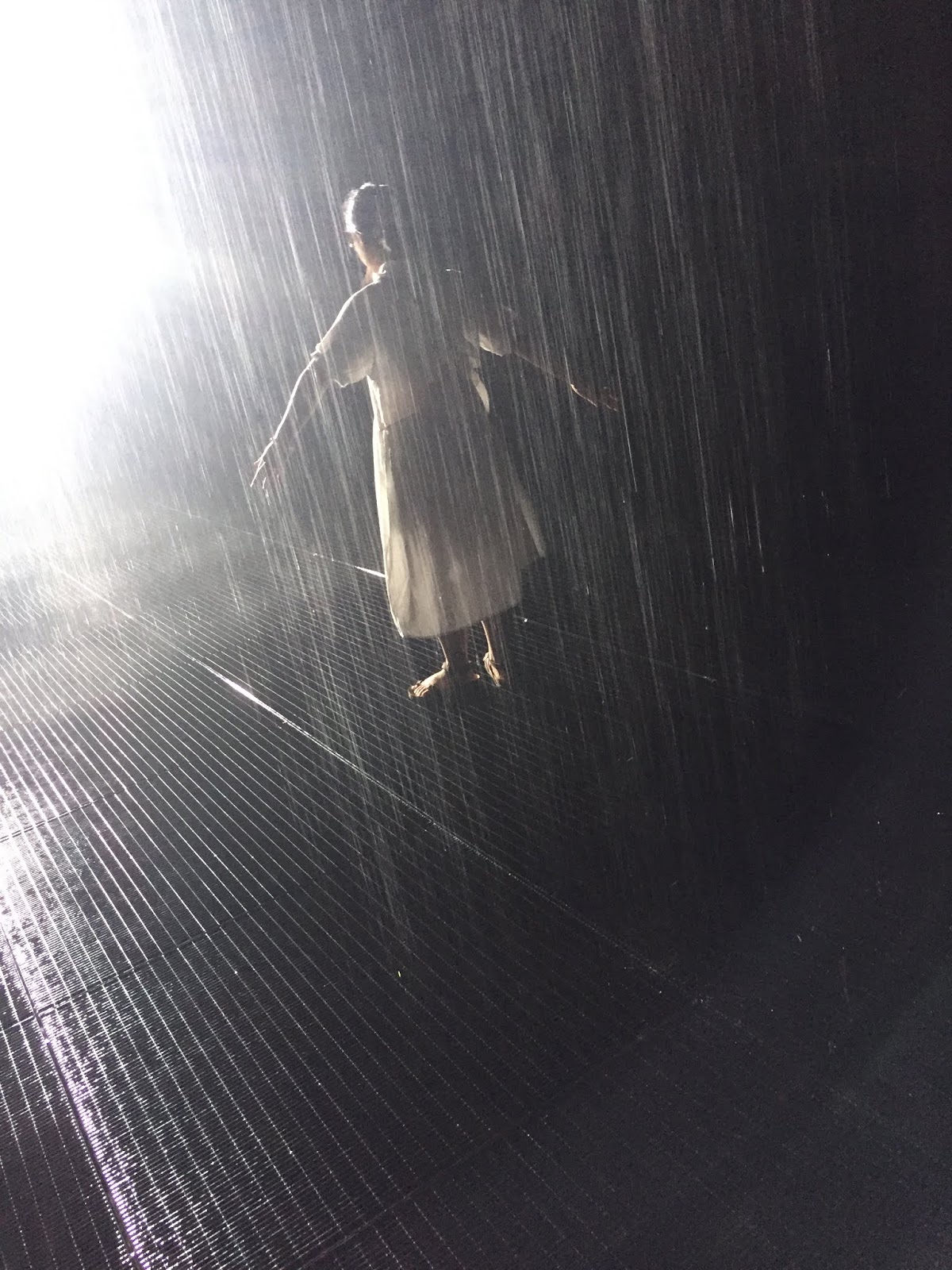
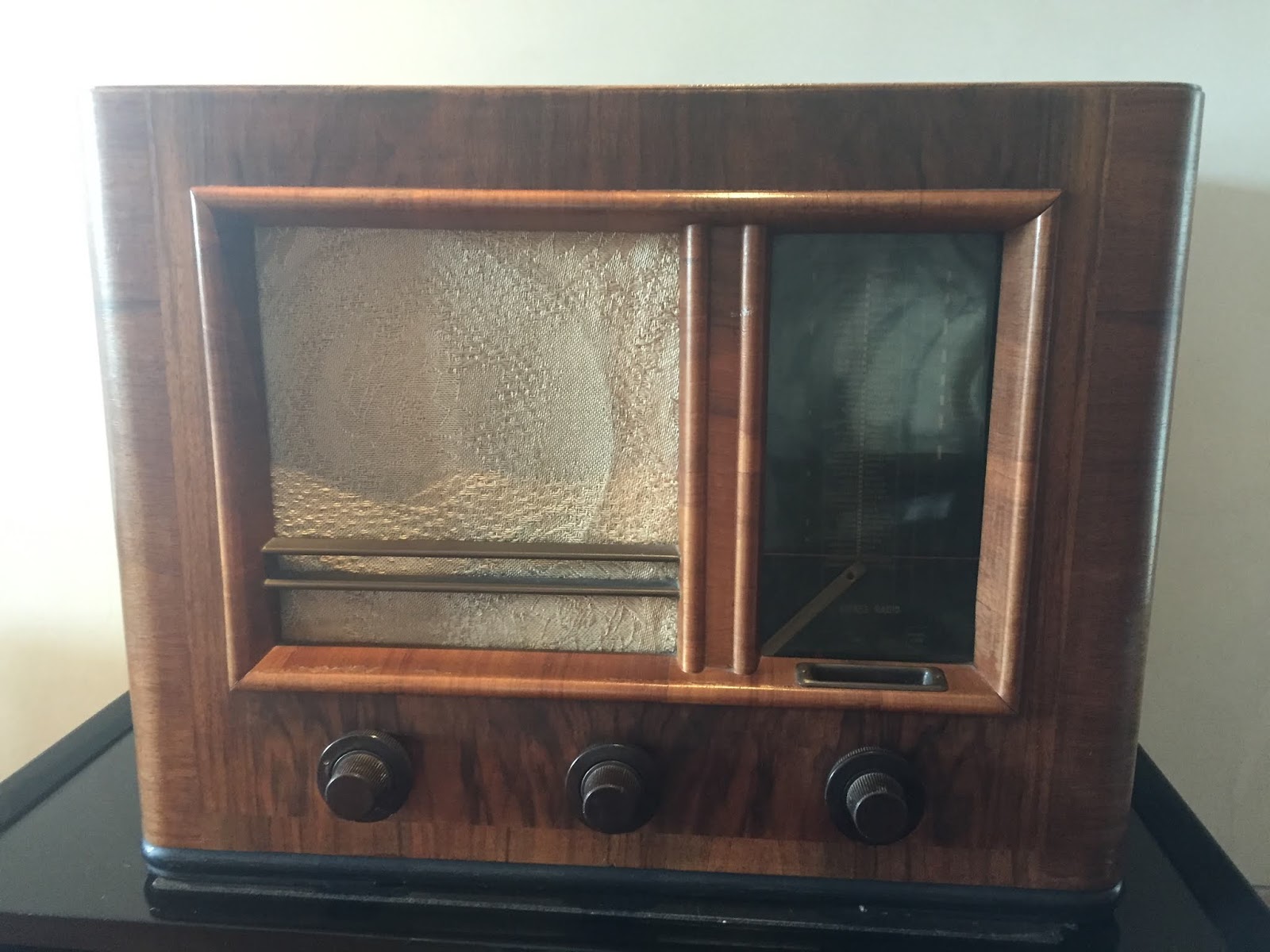
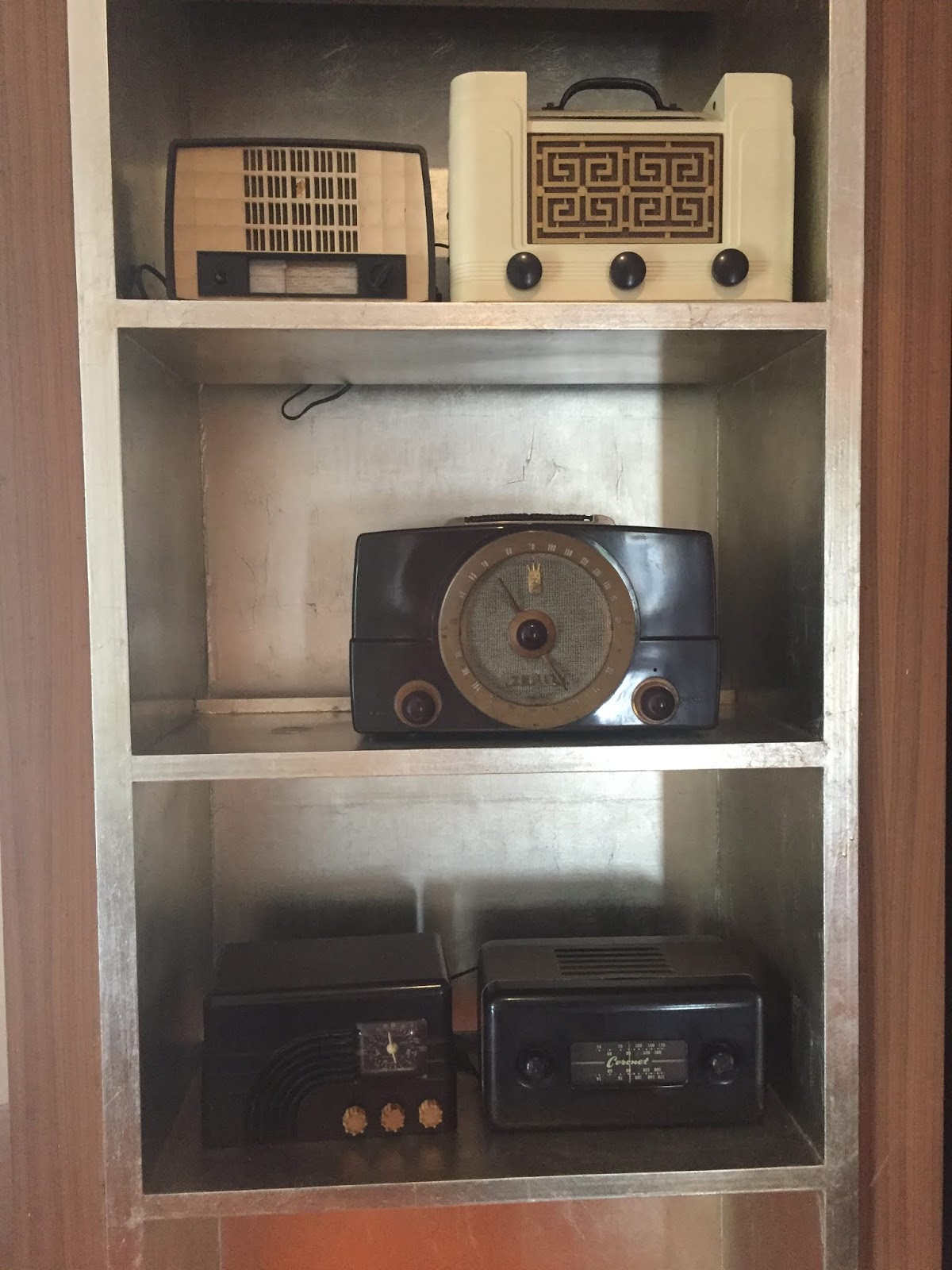
Searching for the historic French quarter, we stumble into Xintiandi, a sanitized version of old Shanghai, transformed into an upscale pedestrian mall--the new-old style I've seen all over China. We eat dinner outside just before the (real) rain. Then back at our hotel, more of the "Olds."
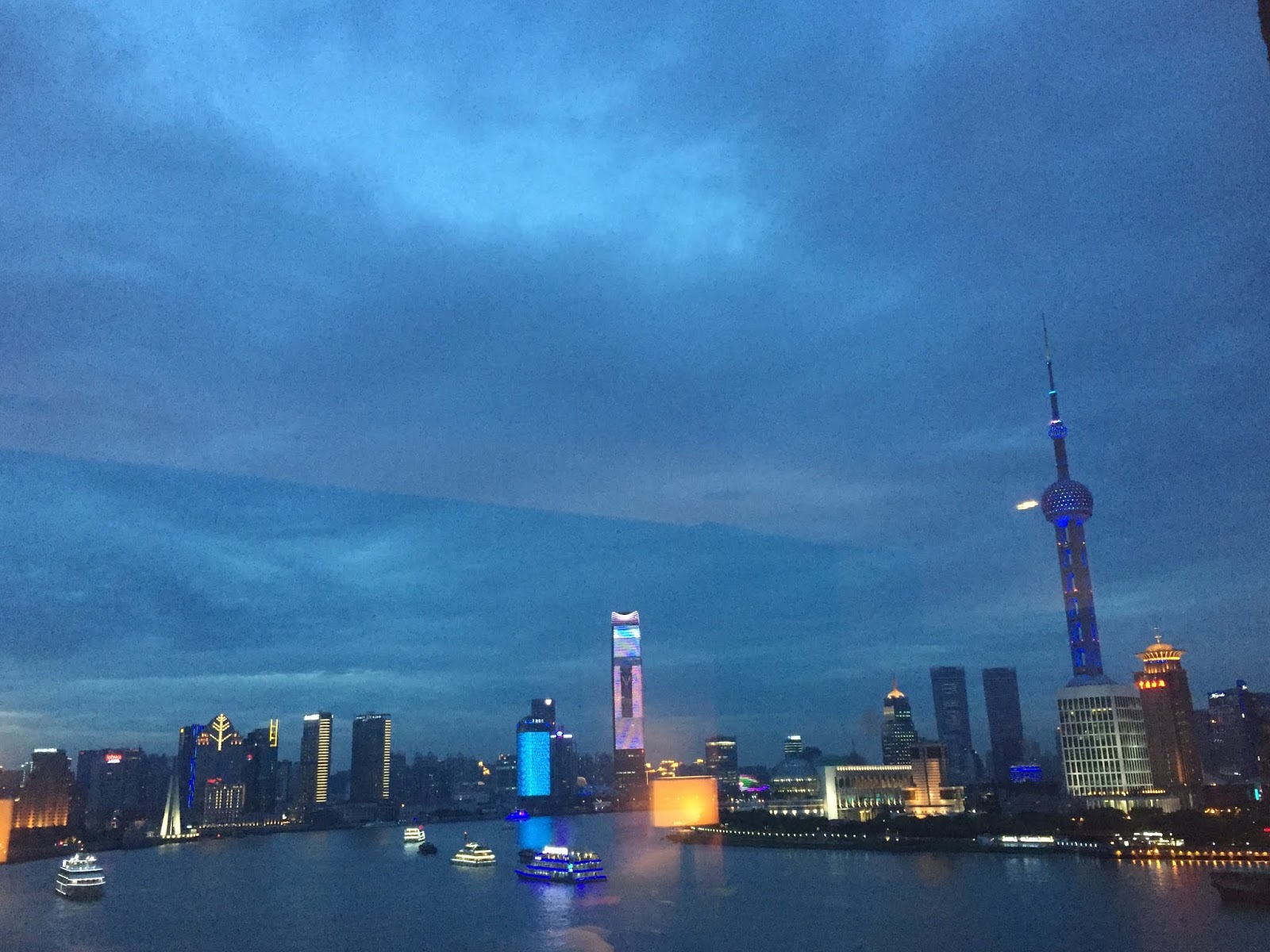
Later we enjoy our magical view across the Huangpu--the glittering and very new Pudong.
It's a short hop to another old-new city, Seoul, South Korea. Having "lightened the load," I'm left with only sandals for two solid days of rain.
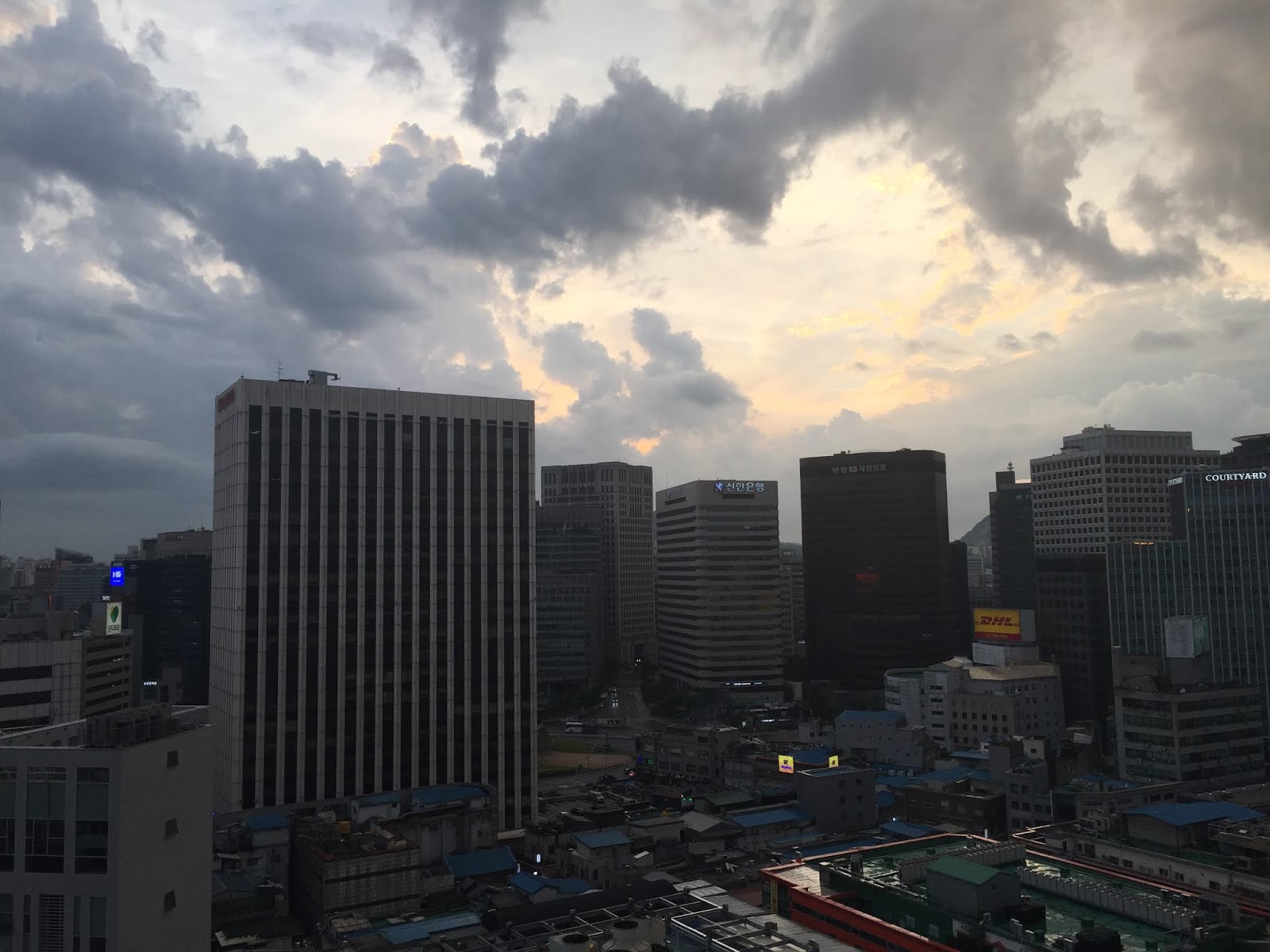
We ride the cable car up Namsan mountain to Seoul Tower for a misty city view.

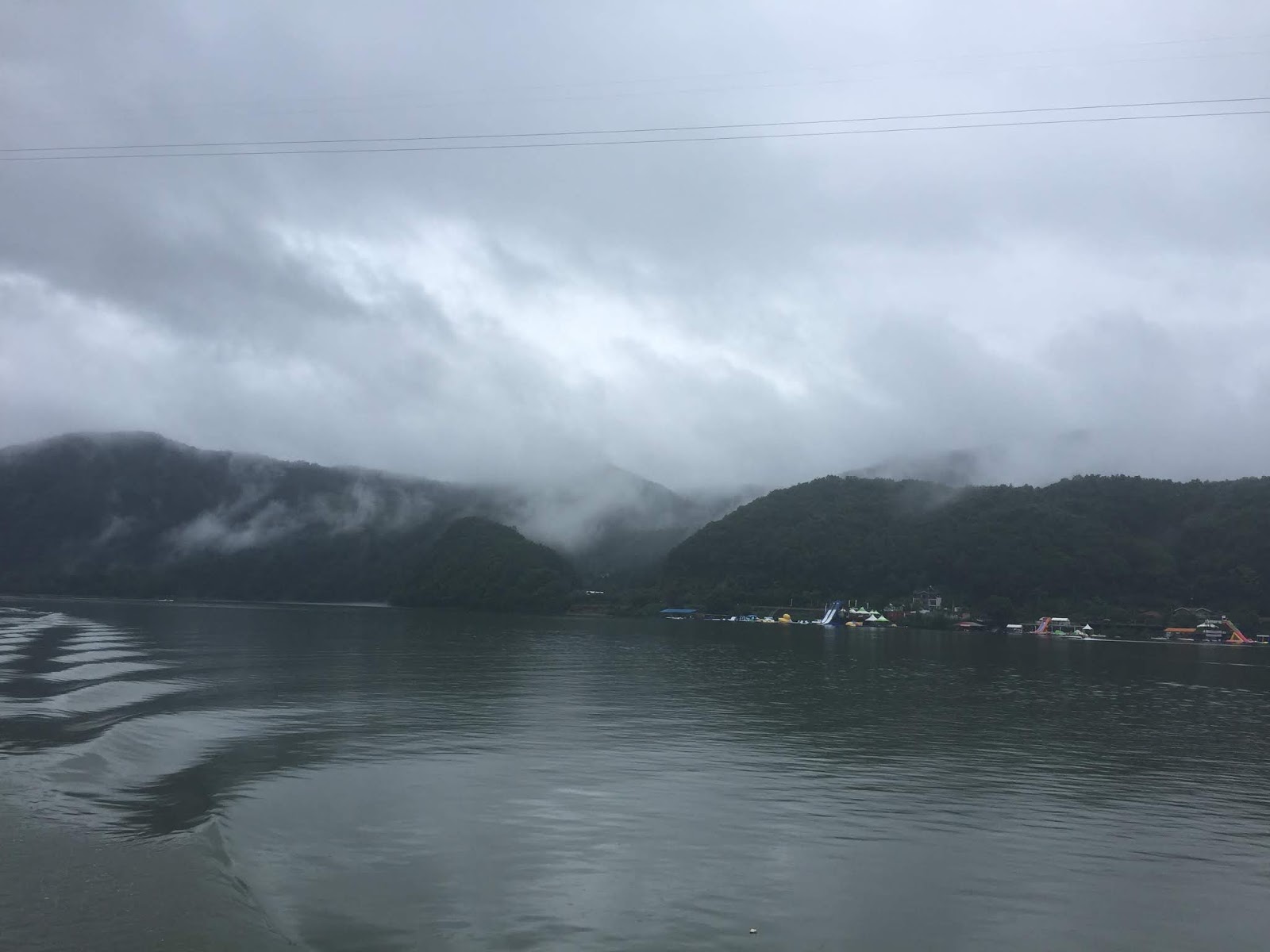
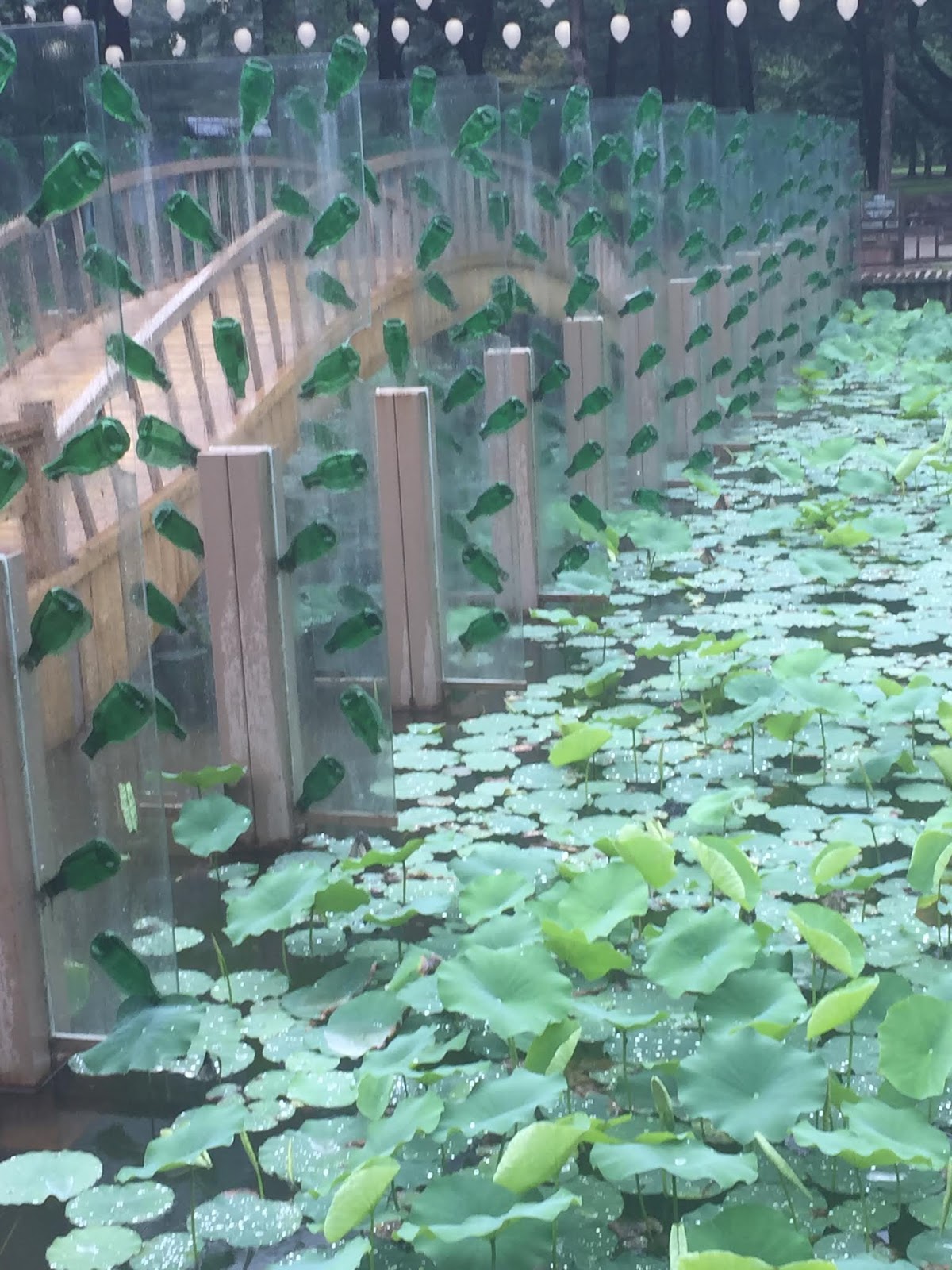
Then we take a bus and ferry to Nami Island, an ethereal getaway that celebrates nature, gentleness, and peace.
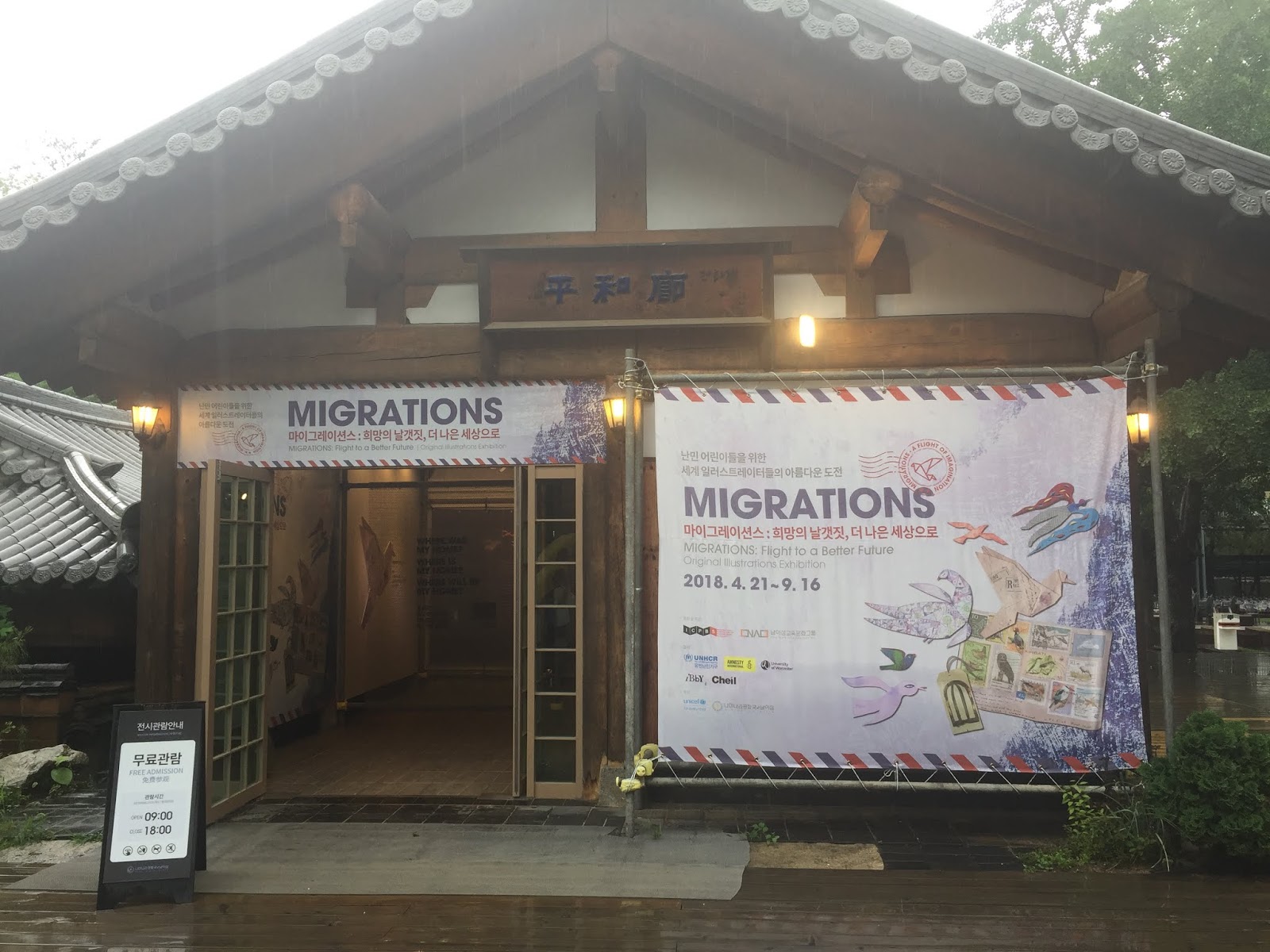
We continue on to a quirky, French-style village dedicated to Le Petit Prince.

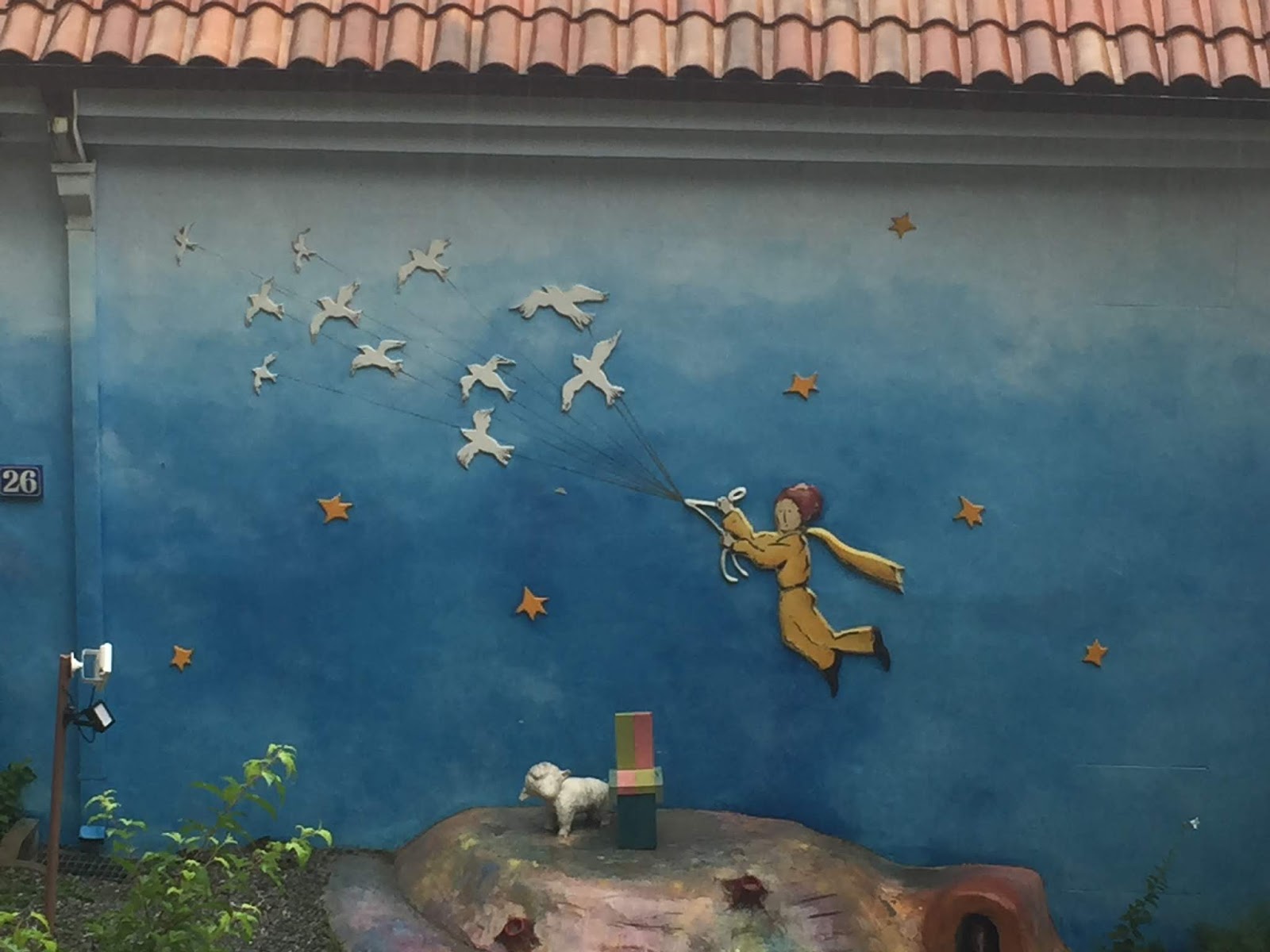
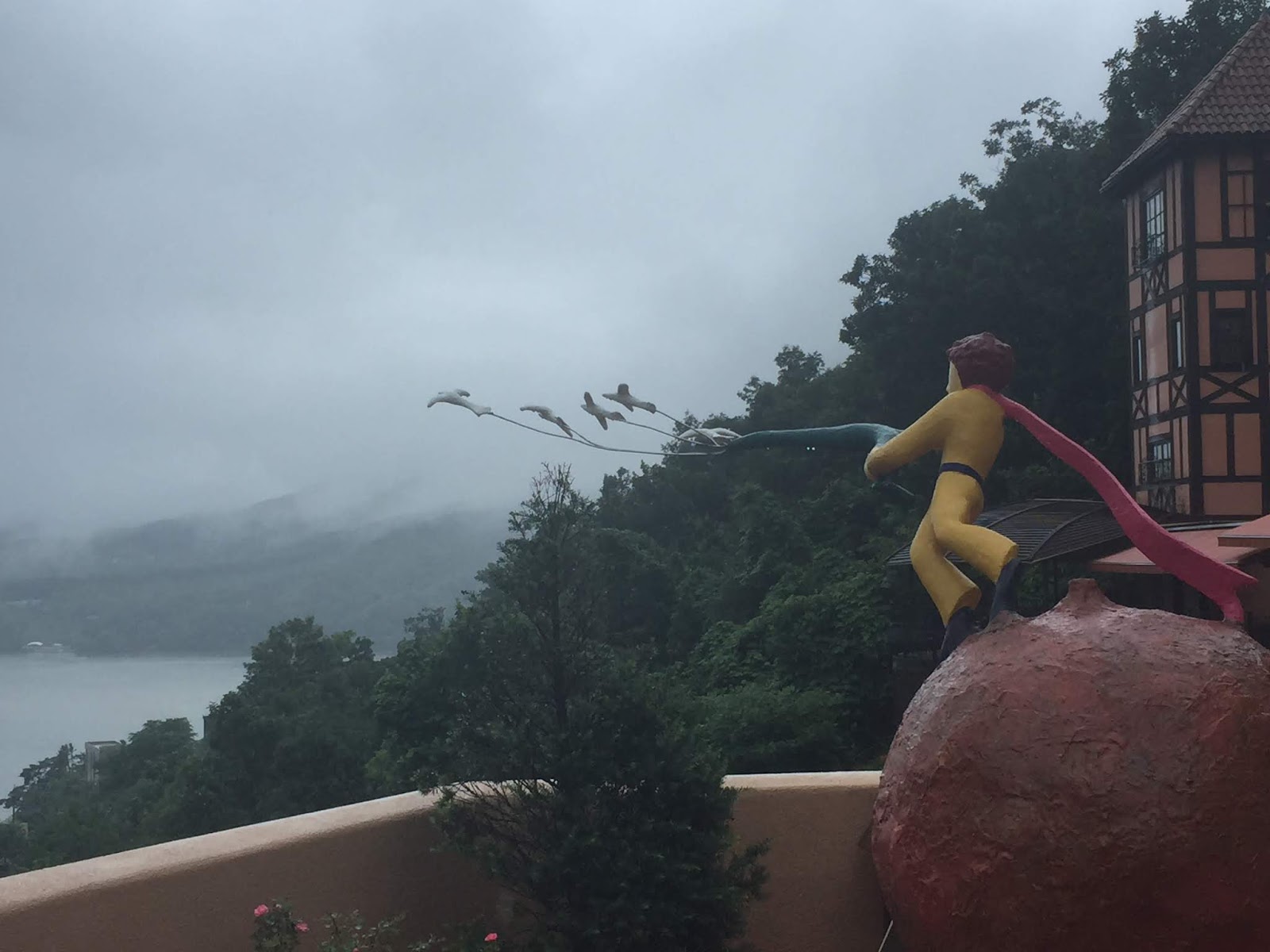

We have traveled well and long. So...
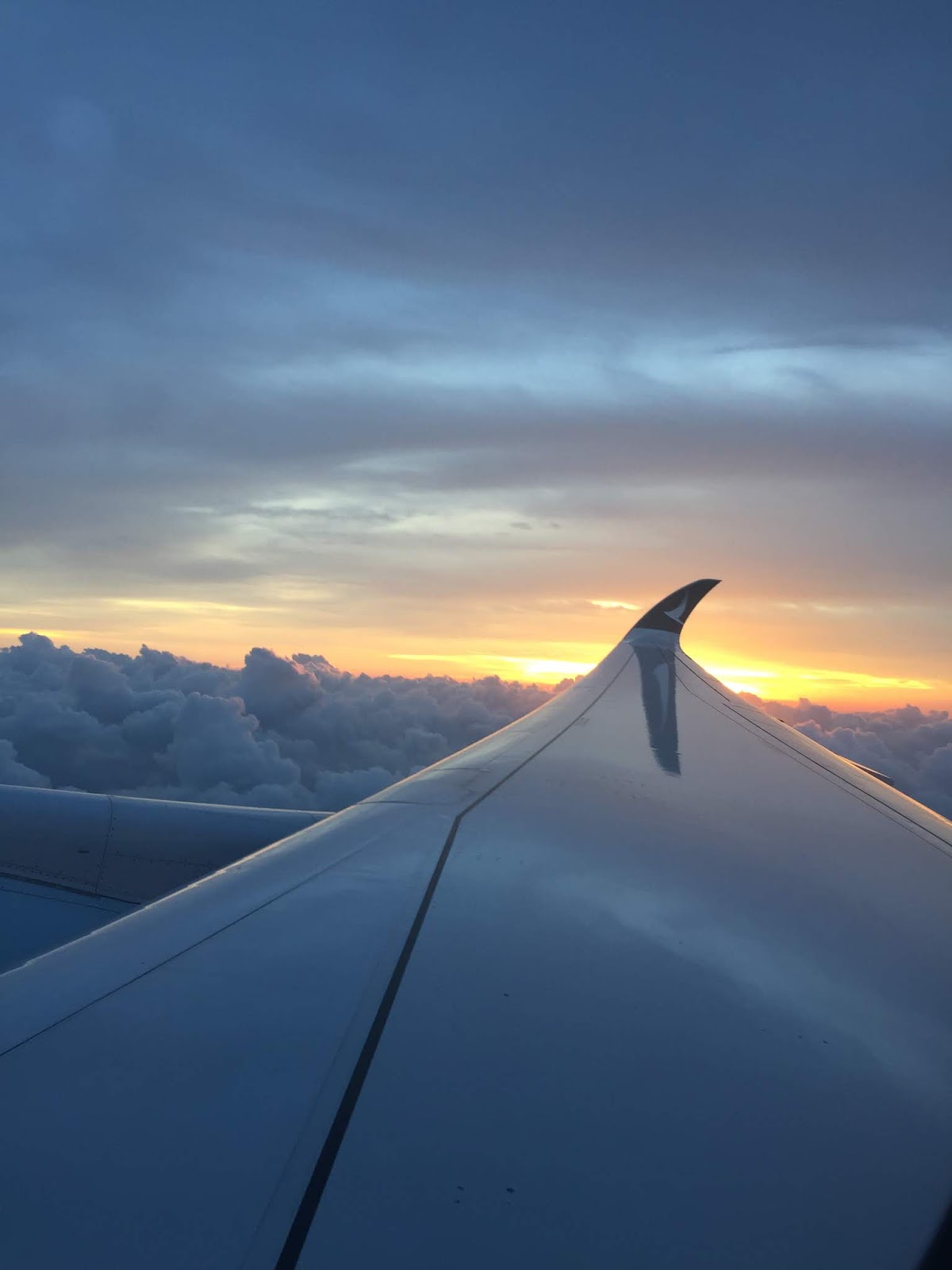
Next stop: Home


China: In Search of the Past: Part 7: Shanghai, More of the Four Olds and the Very Very New
The Bund is Shanghai's famed waterfront, once part of the city's International Settlement--territory the Western powers took from China after the mid-19C Opium Wars, waged by Britain in the name of free trade. In its heyday, the city was known as the Paris of the East, and, especially after the Russian Revolution, it was a refuge for many. Shanghai remains a shipping port and vibrant, sometimes jarring mix of worlds.
Across the Huangpu, rising from the mudflats, is Pudong, a high-rise, high-tech vision of the future. For this view, we're staying on the old side of the river in one of the Bund's historic buildings. Emblematic of Shanghai itself, Les Suites Orient is a blend of sleek modern and vintage.
The next morning, we visit the sleek, glass Yuzu Museum in the West Bund. We're eager to see the "Rain Room," an exhibit that has toured the world. Entering a dark space, you walk slowly amid a gentle drizzle that surrounds but does not touch you. It is poetic and magical.
Searching for the historic French quarter, we stumble into Xintiandi, a sanitized version of old Shanghai, transformed into an upscale pedestrian mall--the new-old style I've seen all over China. We eat dinner outside just before the (real) rain. Then back at our hotel, more of the "Olds."
Later we enjoy our magical view across the Huangpu--the glittering and very new Pudong.
It's a short hop to another old-new city, Seoul, South Korea. Having "lightened the load," I'm left with only sandals for two solid days of rain.
We ride the cable car up Namsan mountain to Seoul Tower for a misty city view.
Then we take a bus and ferry to Nami Island, an ethereal getaway that celebrates nature, gentleness, and peace.
We continue on to a quirky, French-style village dedicated to Le Petit Prince.
We have traveled well and long. So...
Next stop: Home
March 3, 2019
China: In Search of the Past: Part 6: Chongqing: From WW2 to Today
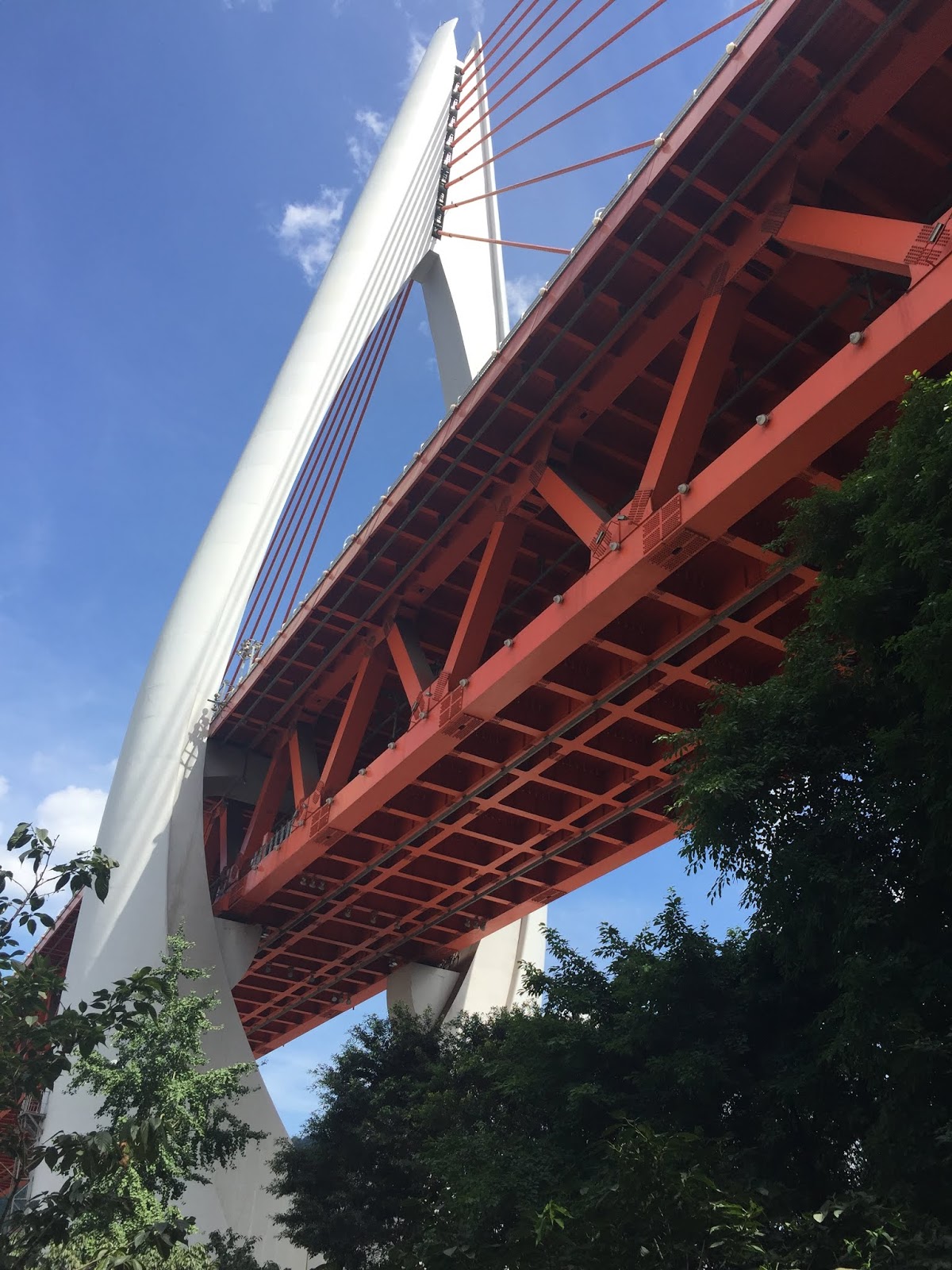
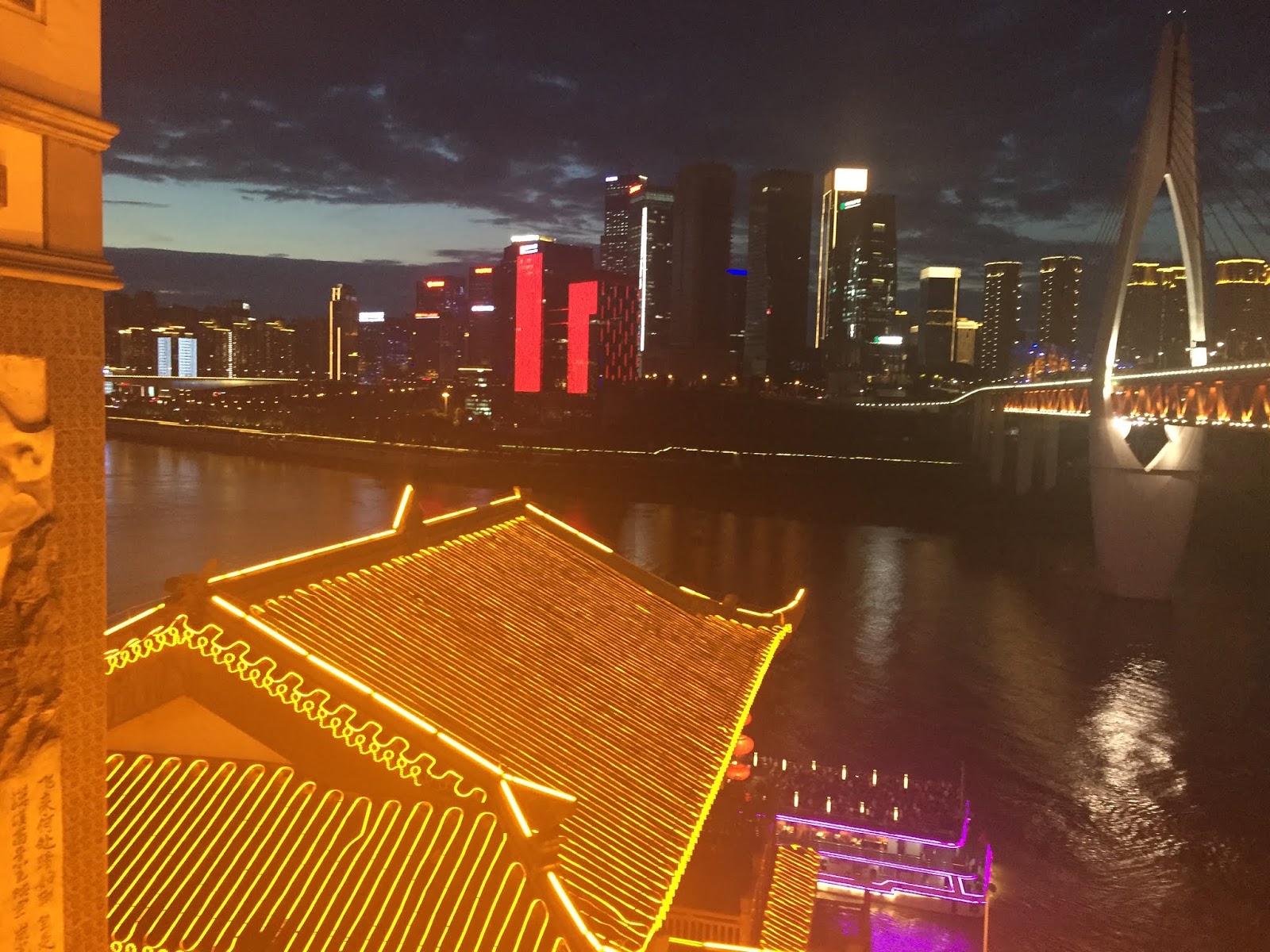 Qianximen Bridge, ChongqingResearch for my book has led me deep into Chinese and WW2 history During that period, Japan occupied the prosperous coastal ports, so the Nationalist government moved inland to Chungking, now known as Chongqing.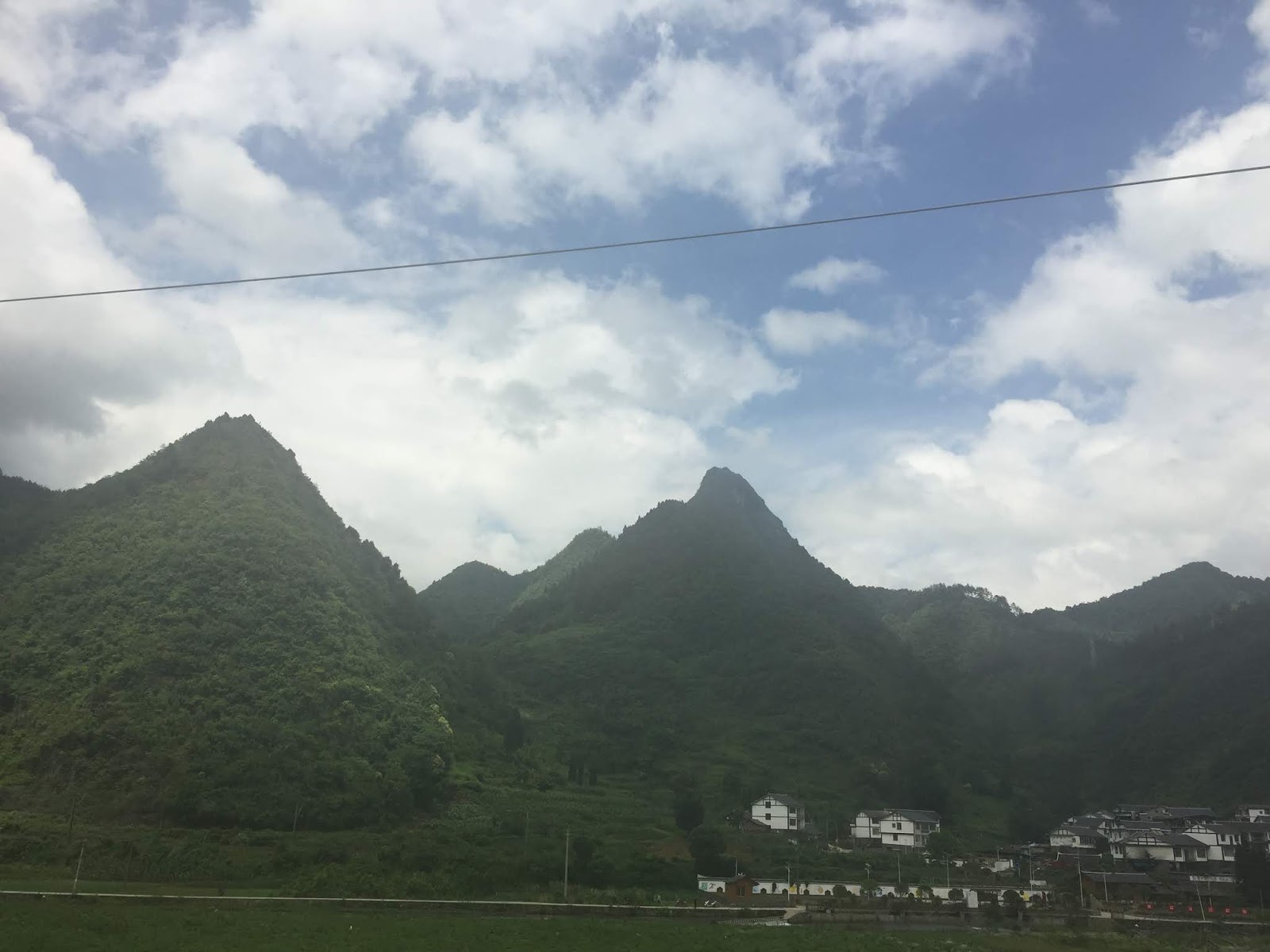
Critical American supplies—including dollars and gold—were flown into Kunming from India. The mountainous road between the two cities was called the 24-Zig Road, for the 24 hairpin curves—traversed daily by more than 2000 fully loaded US military vehicles.
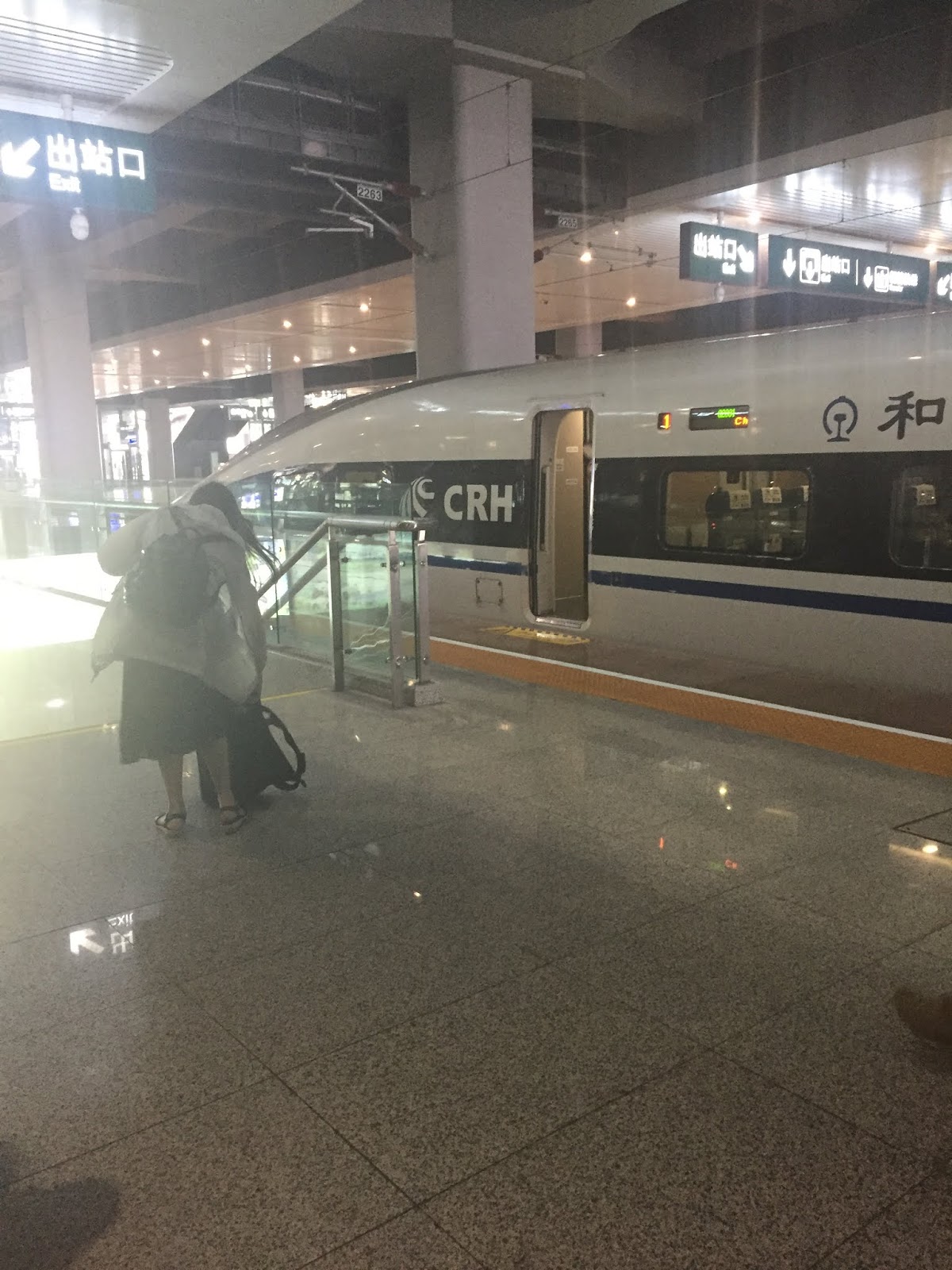
Thanks to China's formidable railway system, our journey takes about five comfortable hours. The mountainous scenery through Guizhou Province is spectacular, much still undeveloped.
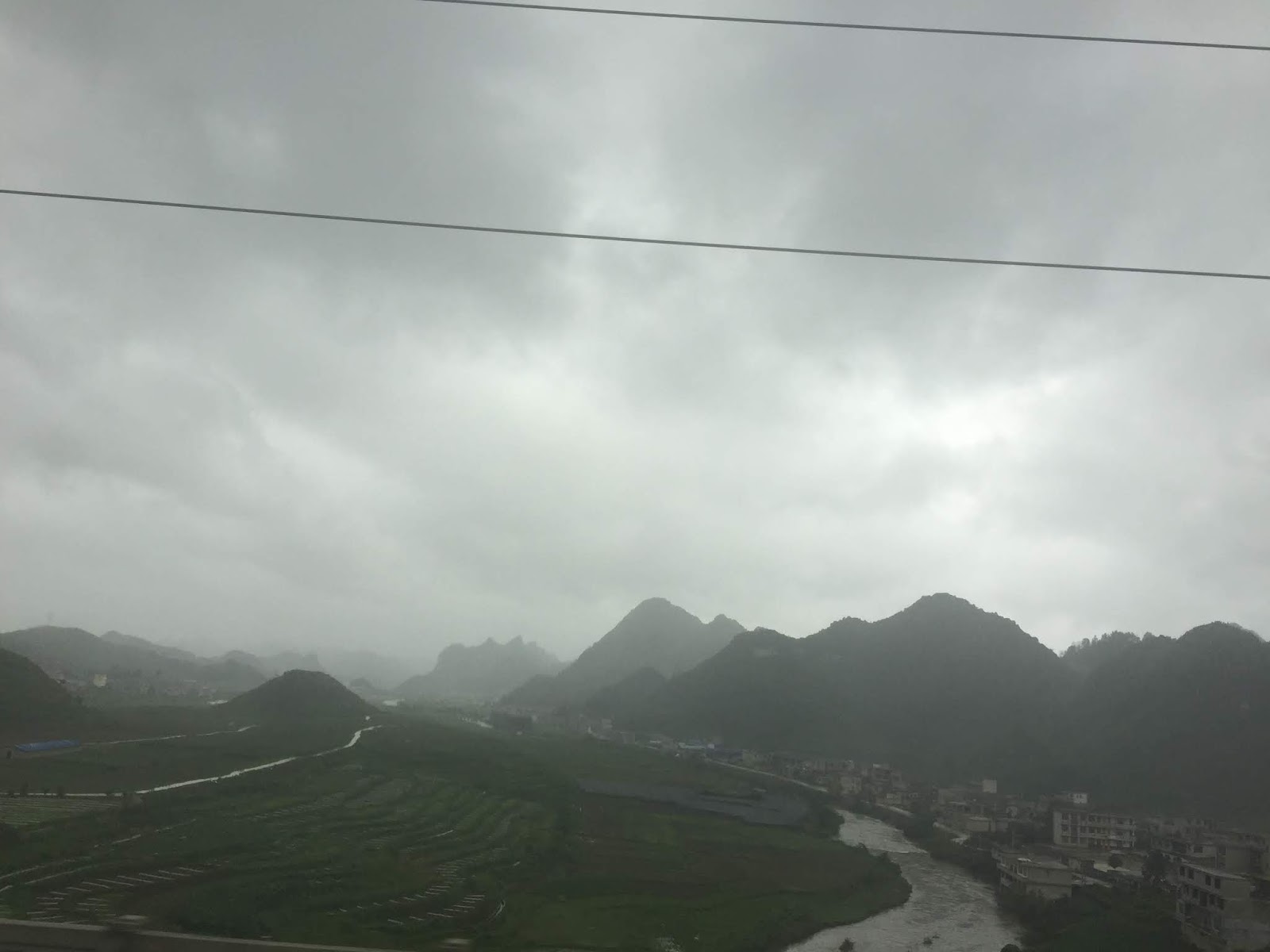
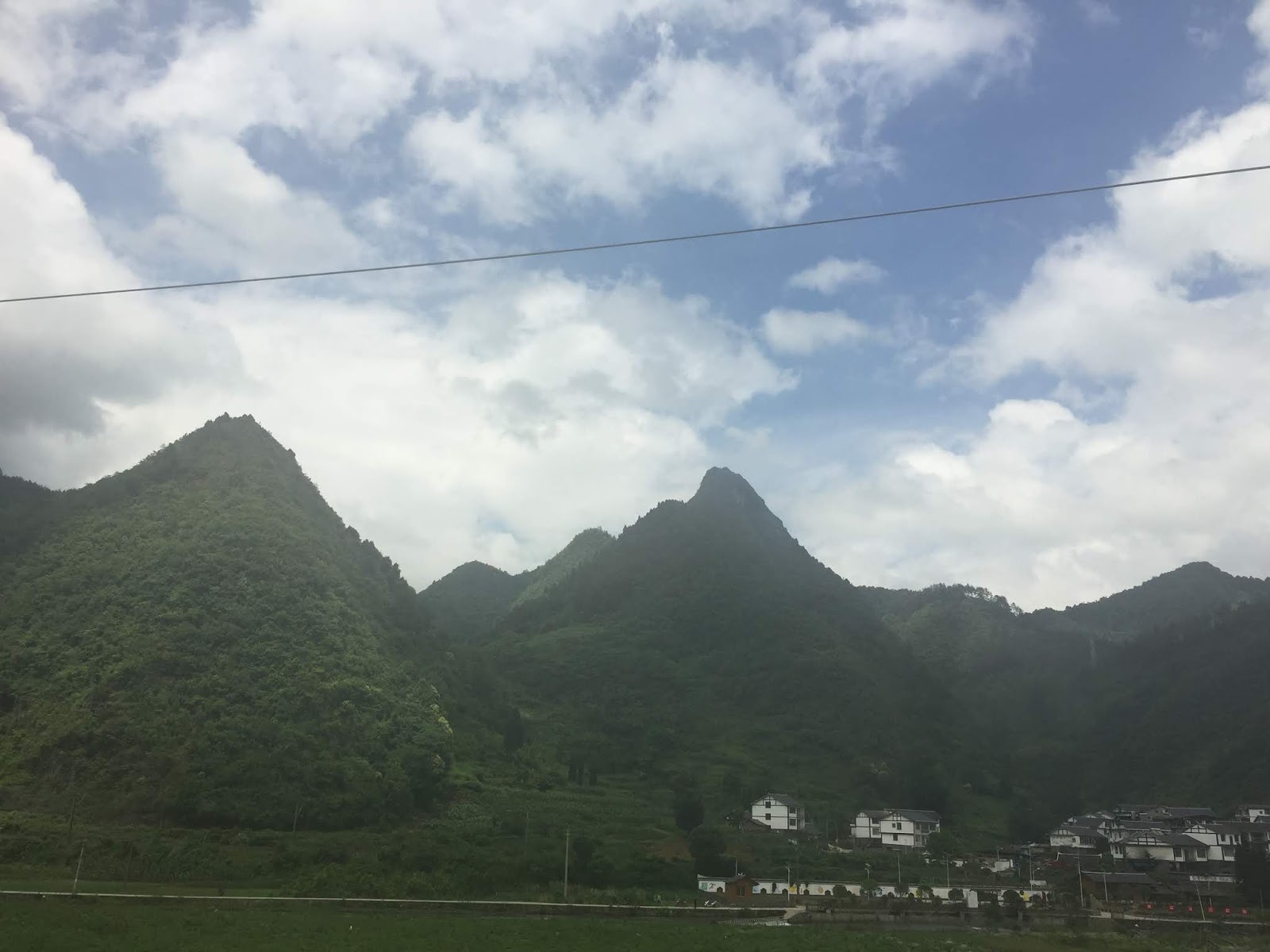
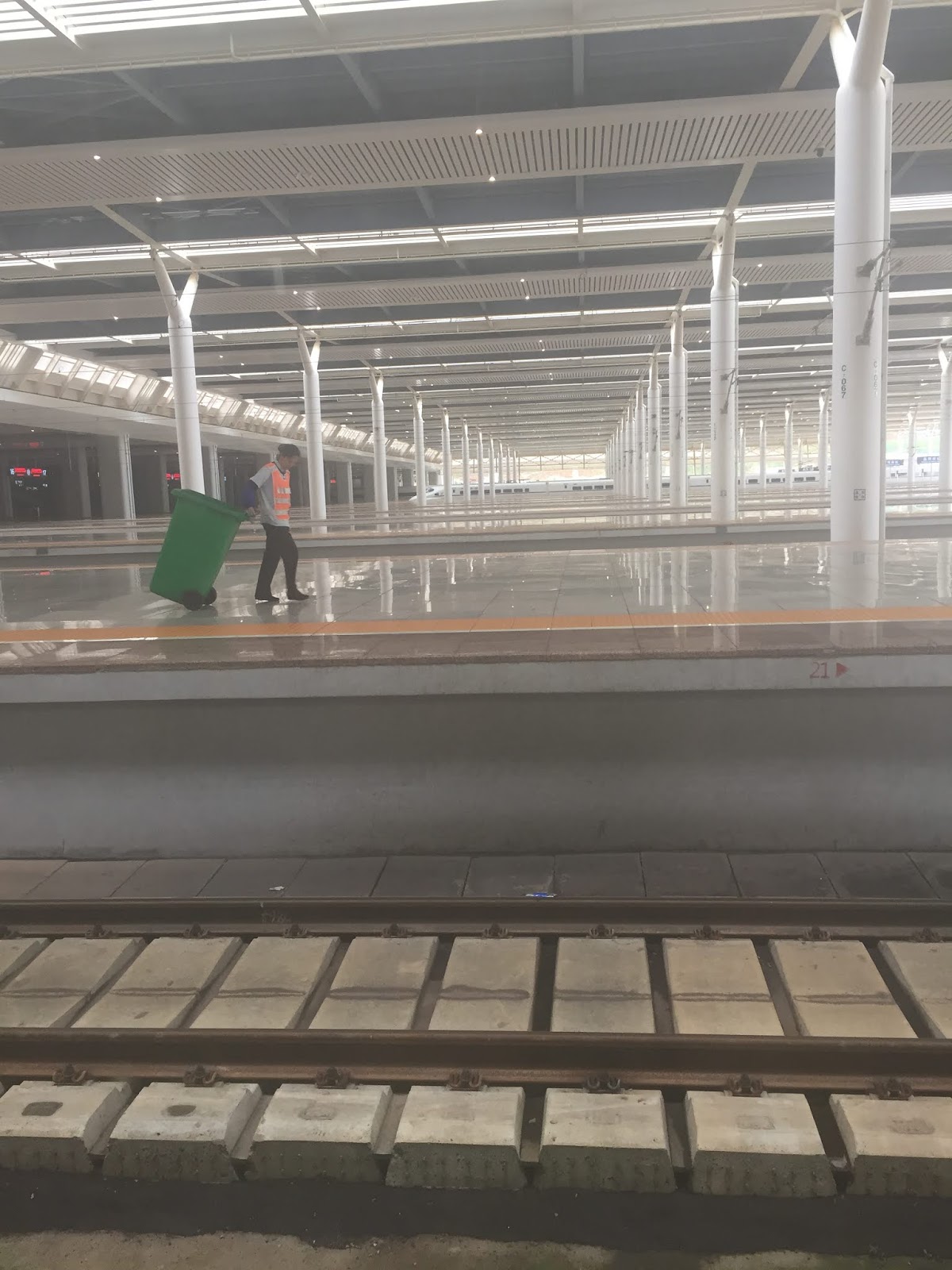
You could eat off the floor of the stations.
Known as the Furnace City, Chongqing is a huge metropolis rising over the juncture of the Yangtze and Jialing Rivers.
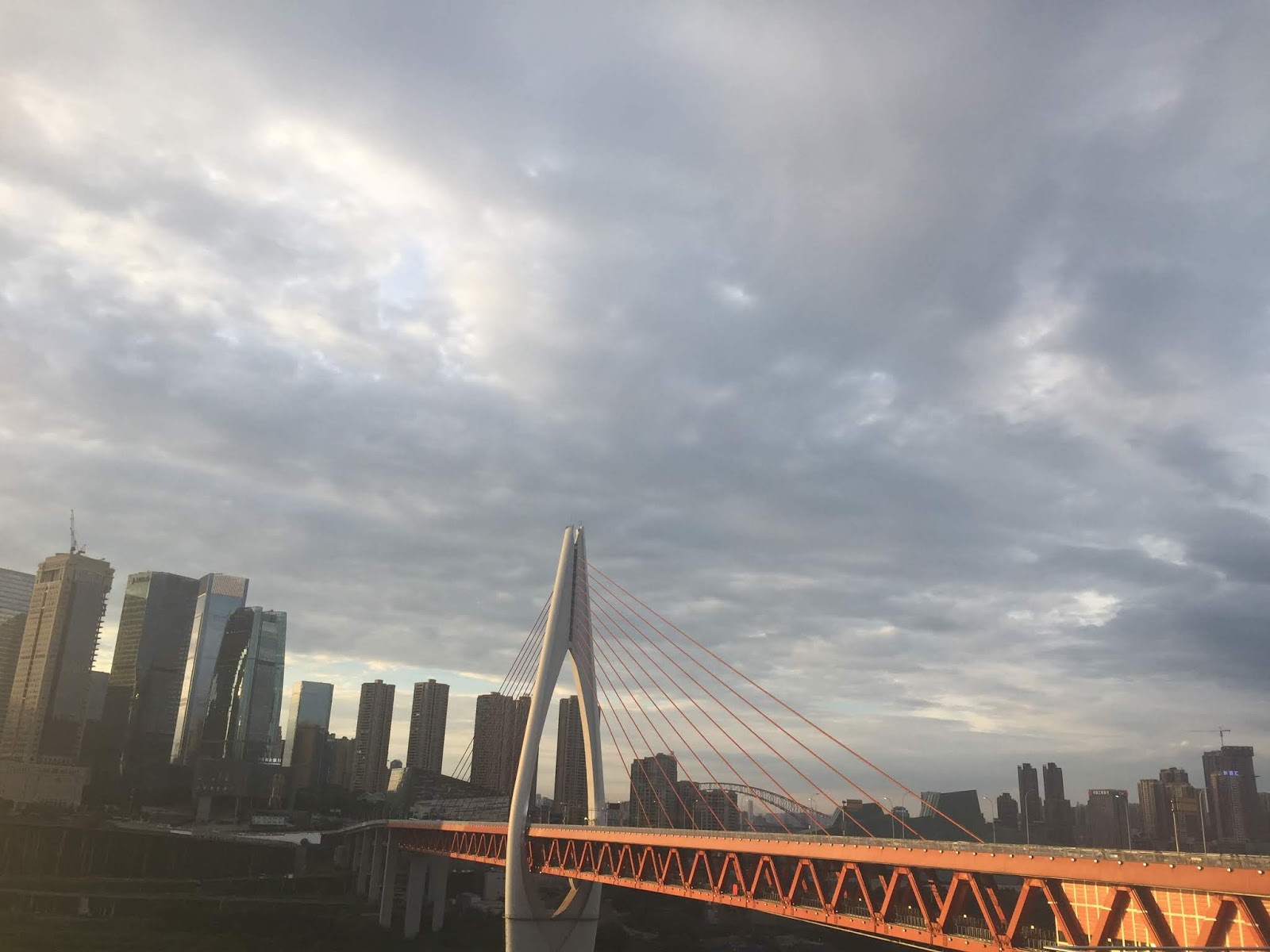 Soon after checking into our hotel, we walk, dripping, to the Jialing riverfront and the Qianximen Bridge, a popular evening hangout.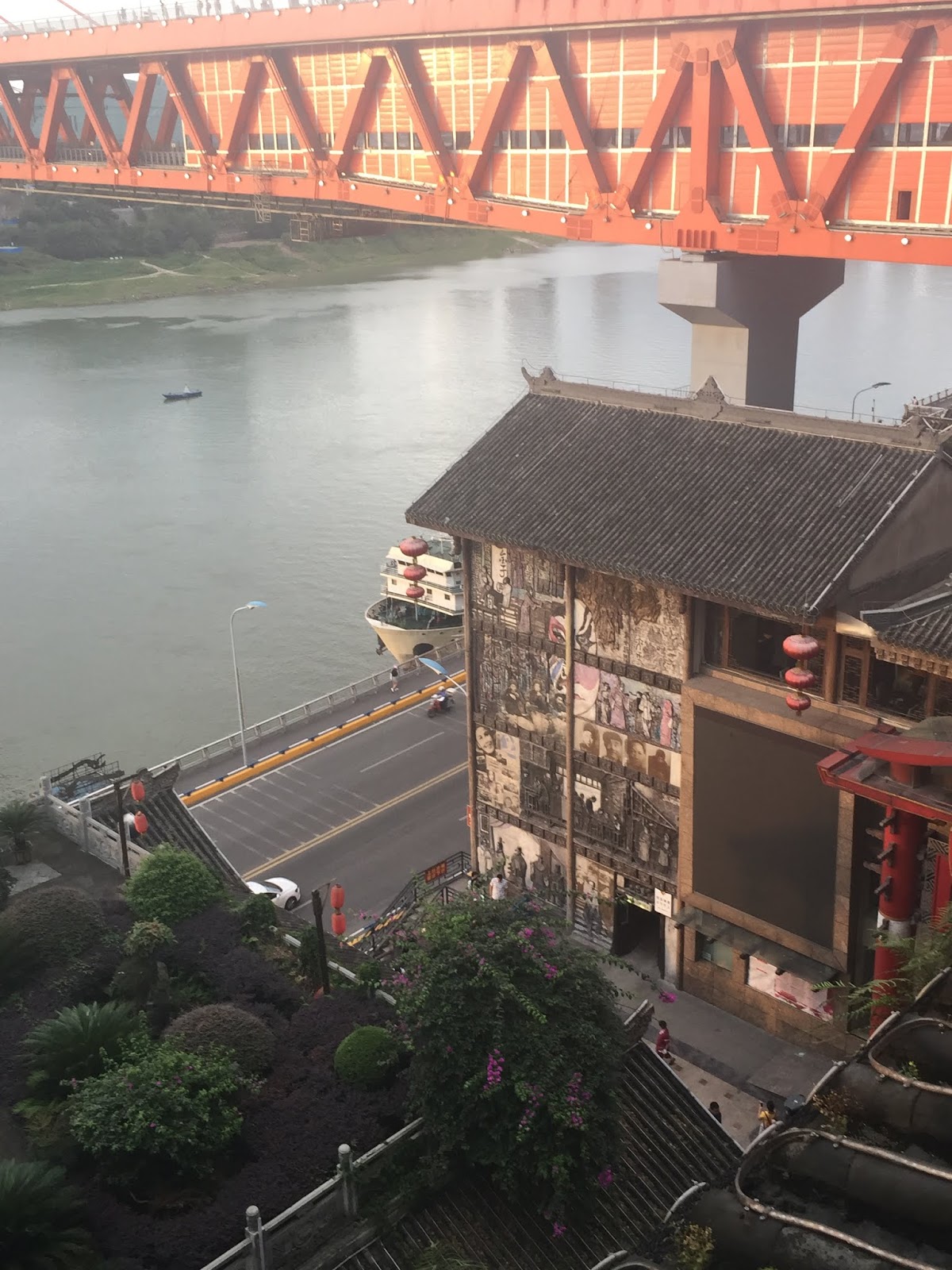
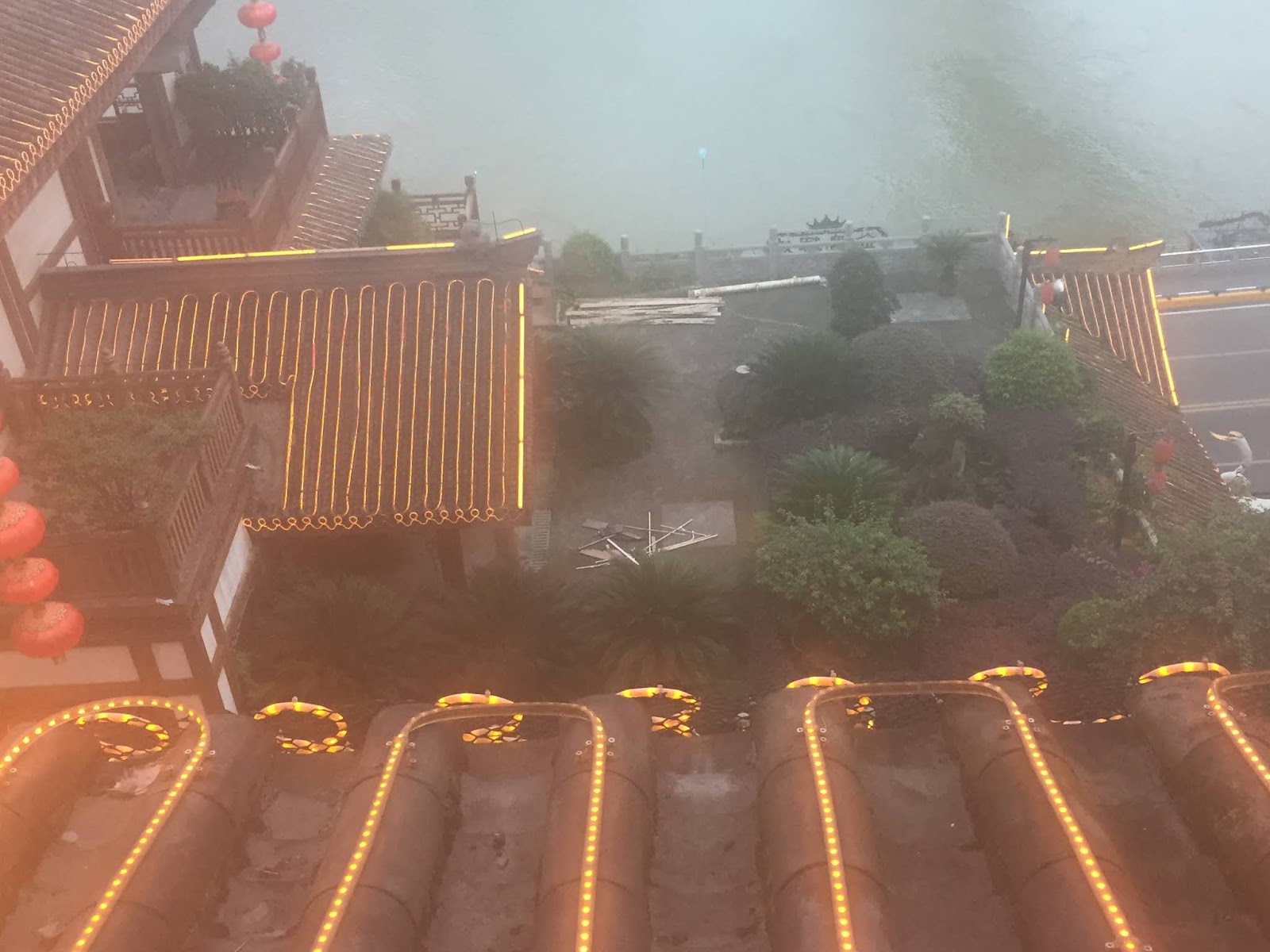
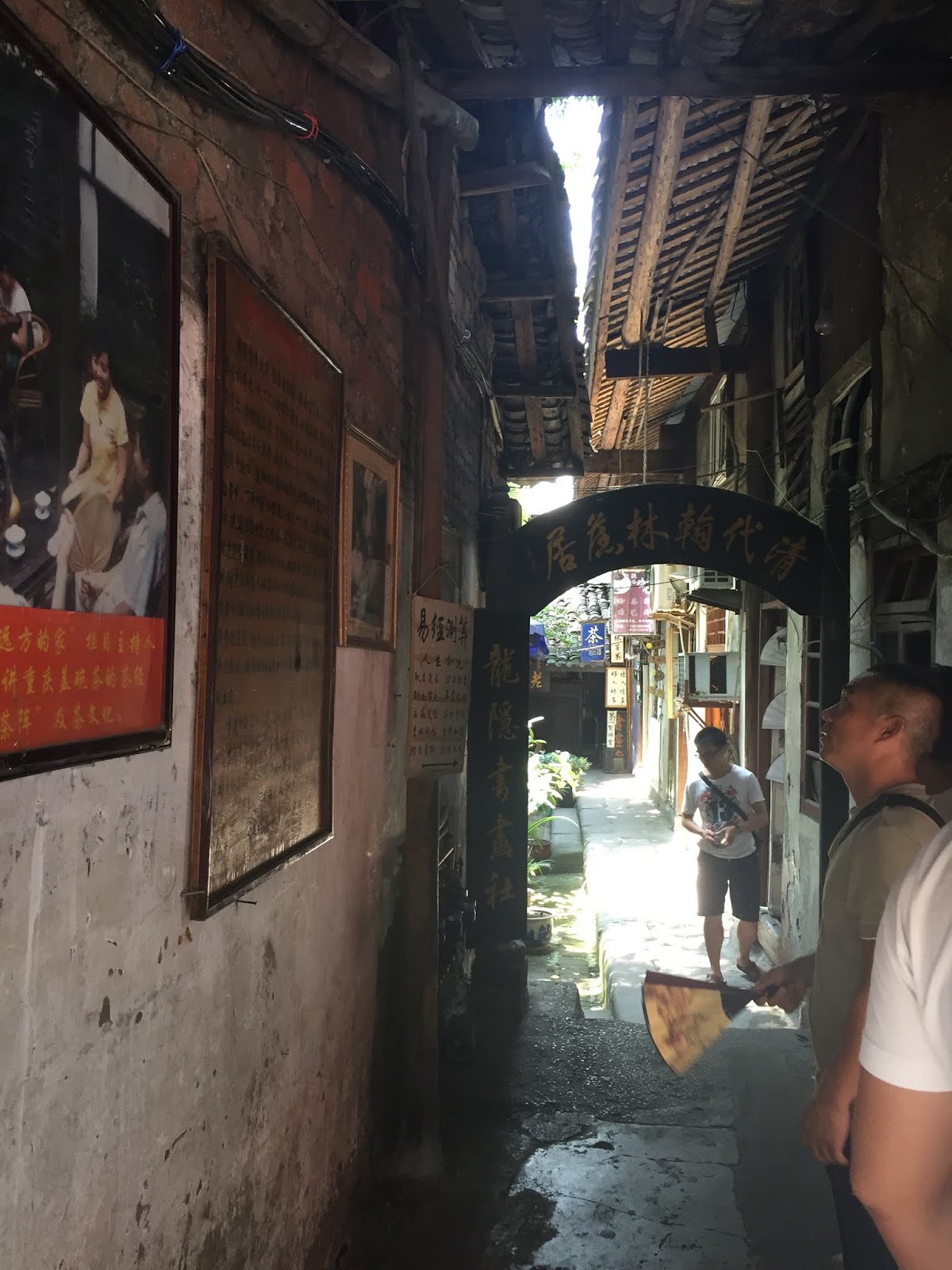
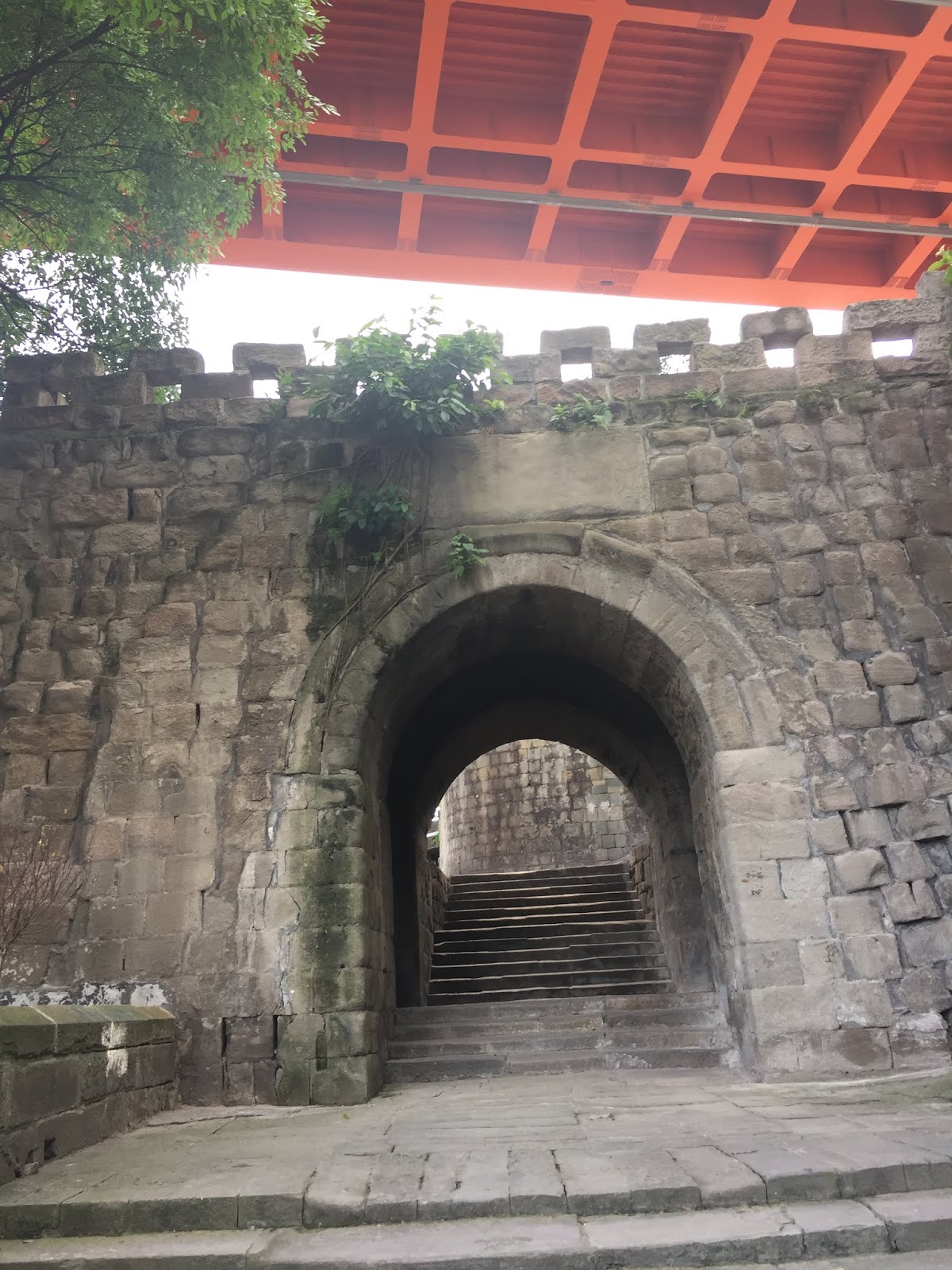
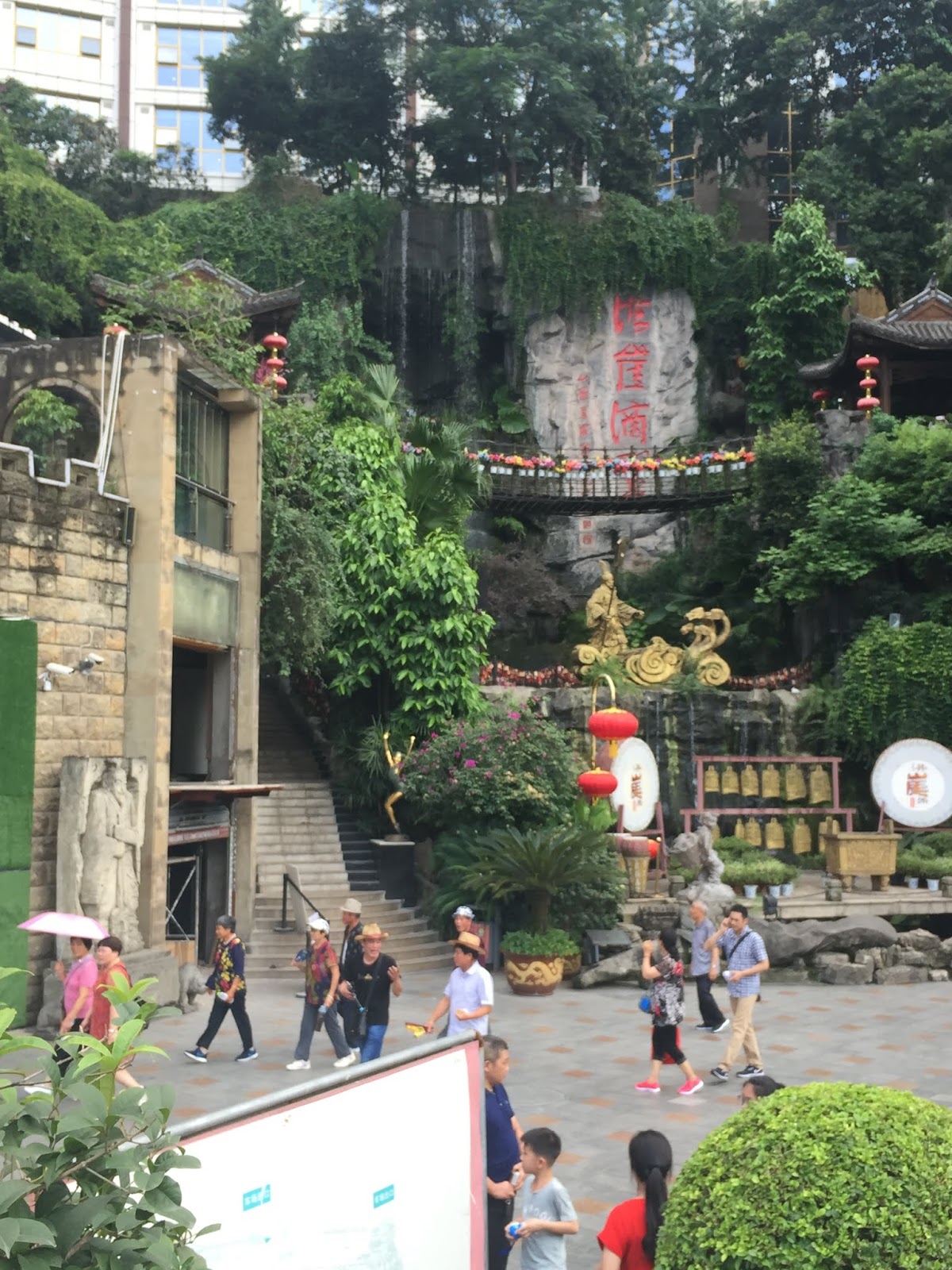
The next morning I visit the new "Old Town," a carefully crafted period recreation of the past. It's jammed as people connect with their history, and I am the only Caucasian there. I like this back alley as a setting for my book.
An old loom.

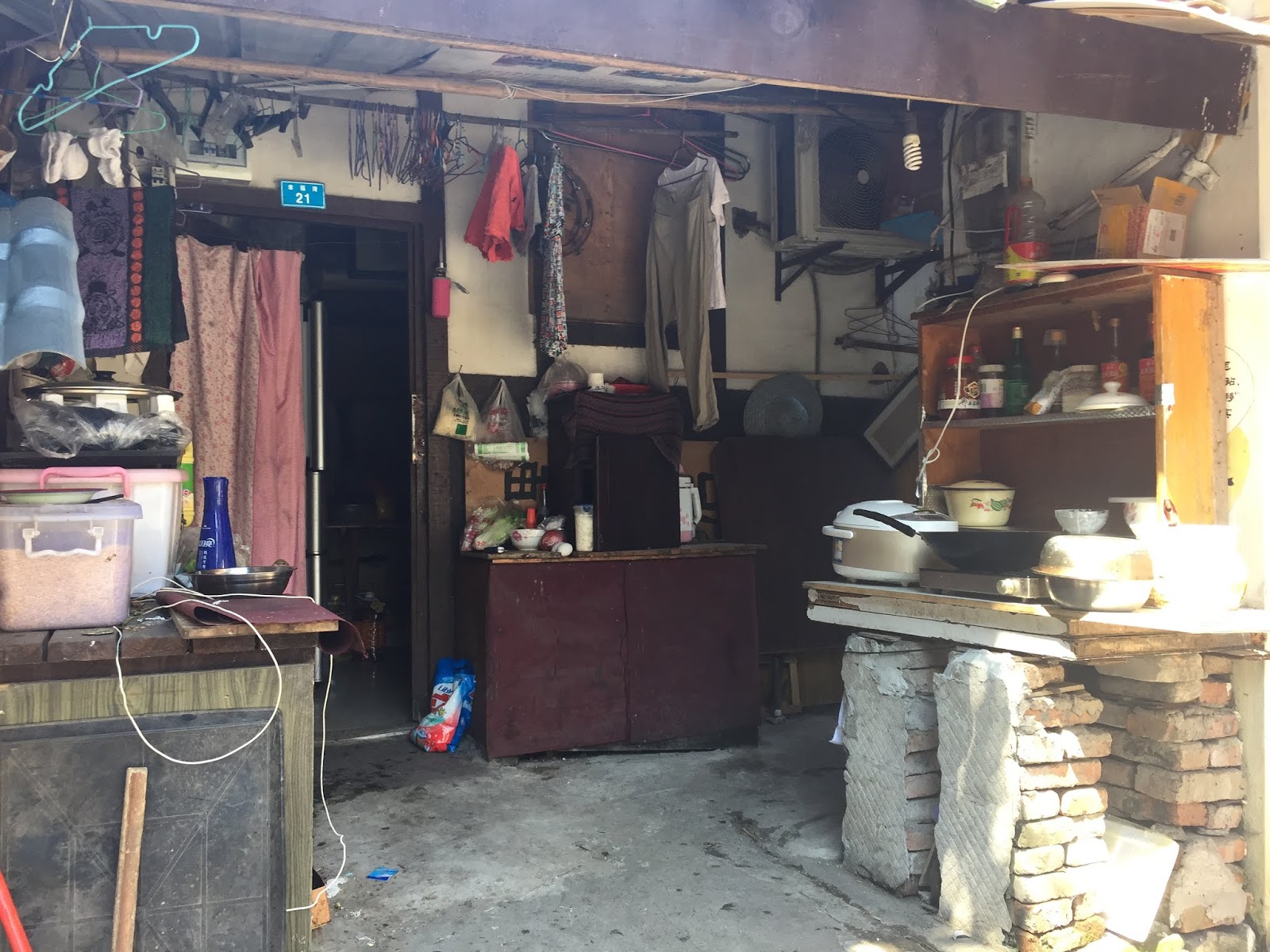
Two lifestyles: a one-room home...
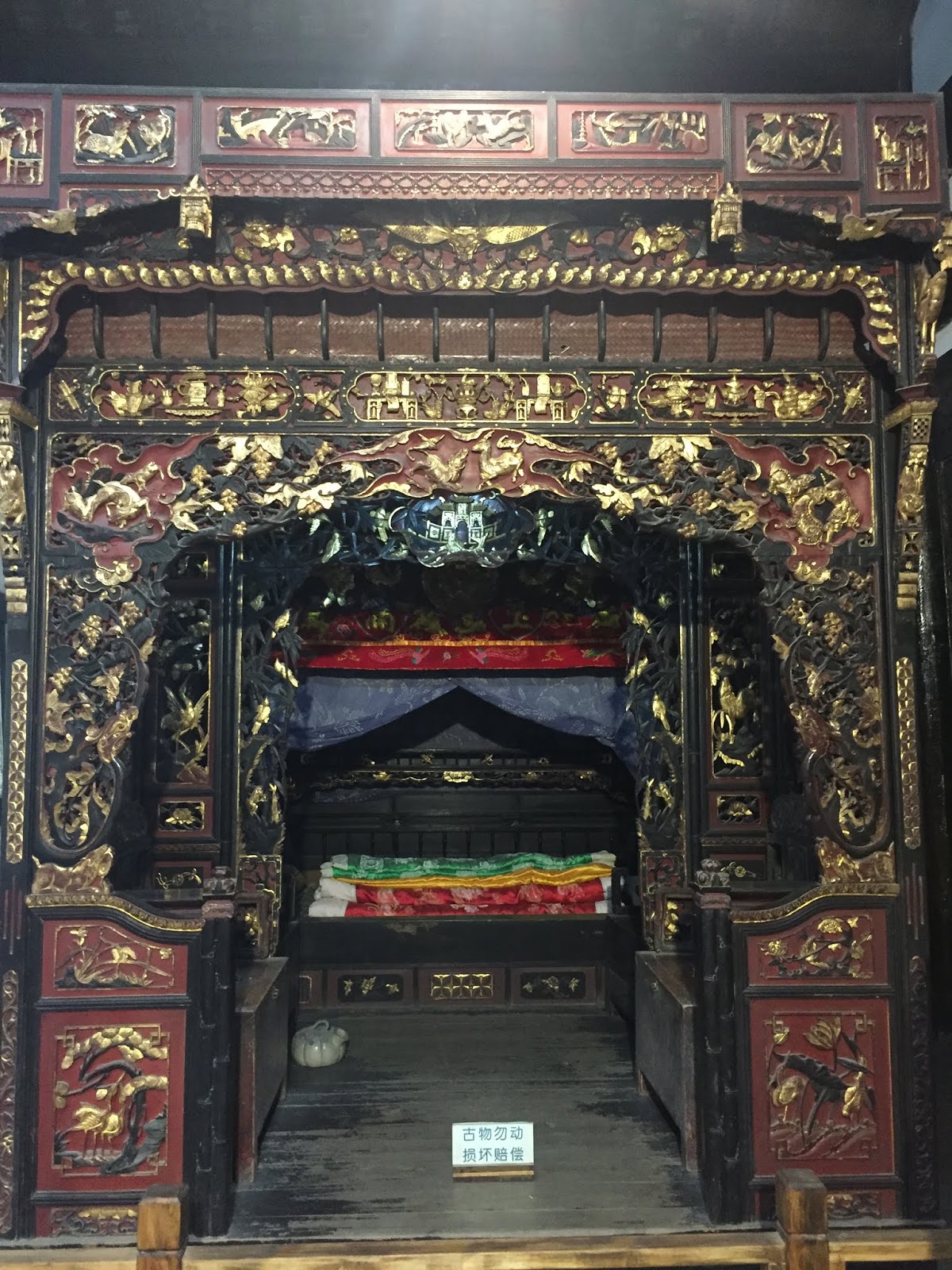
And an ornate 19C bed.
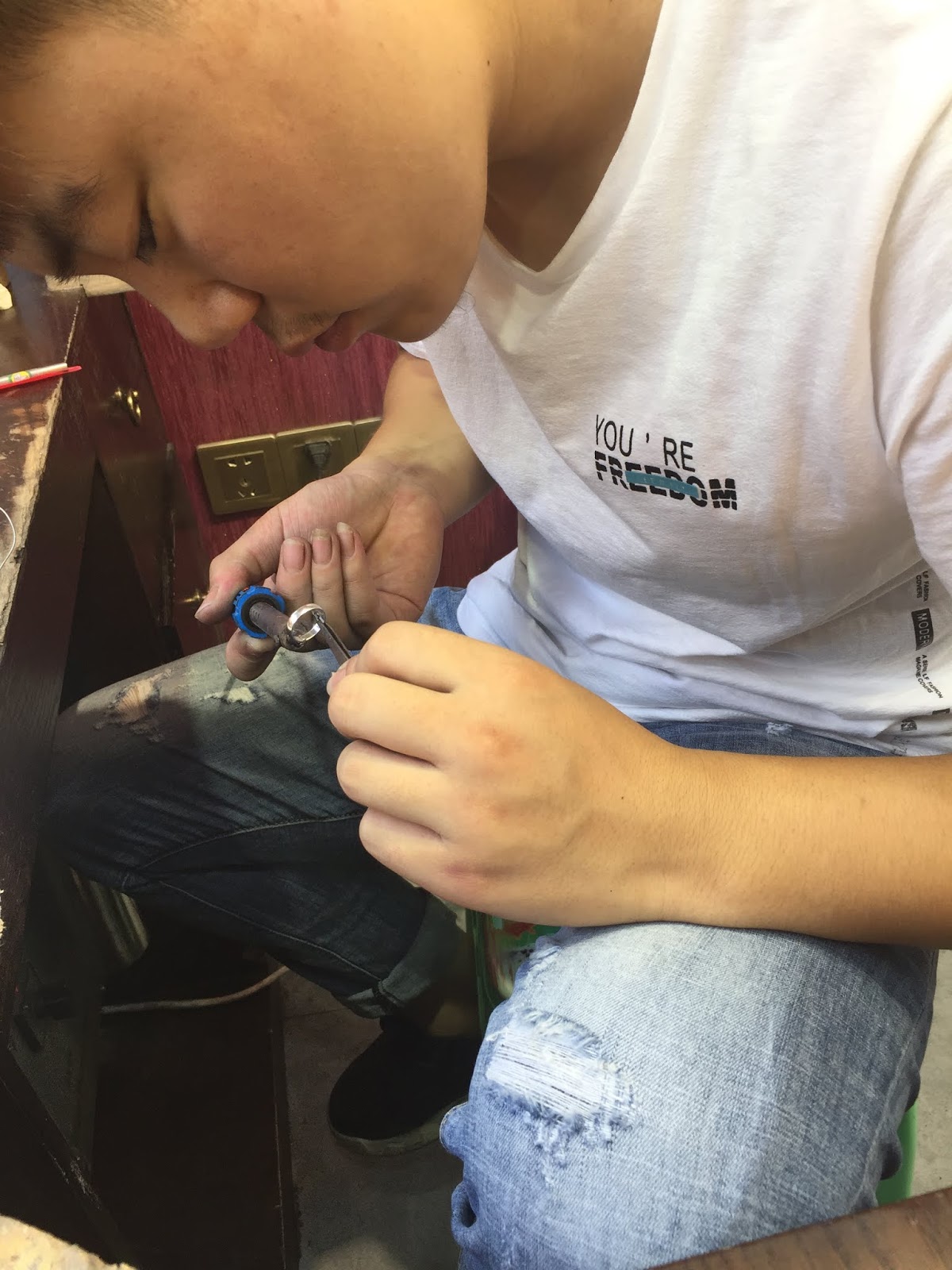
This young man in the Freedom t-shirt resizes my Kunming toe ring for free.
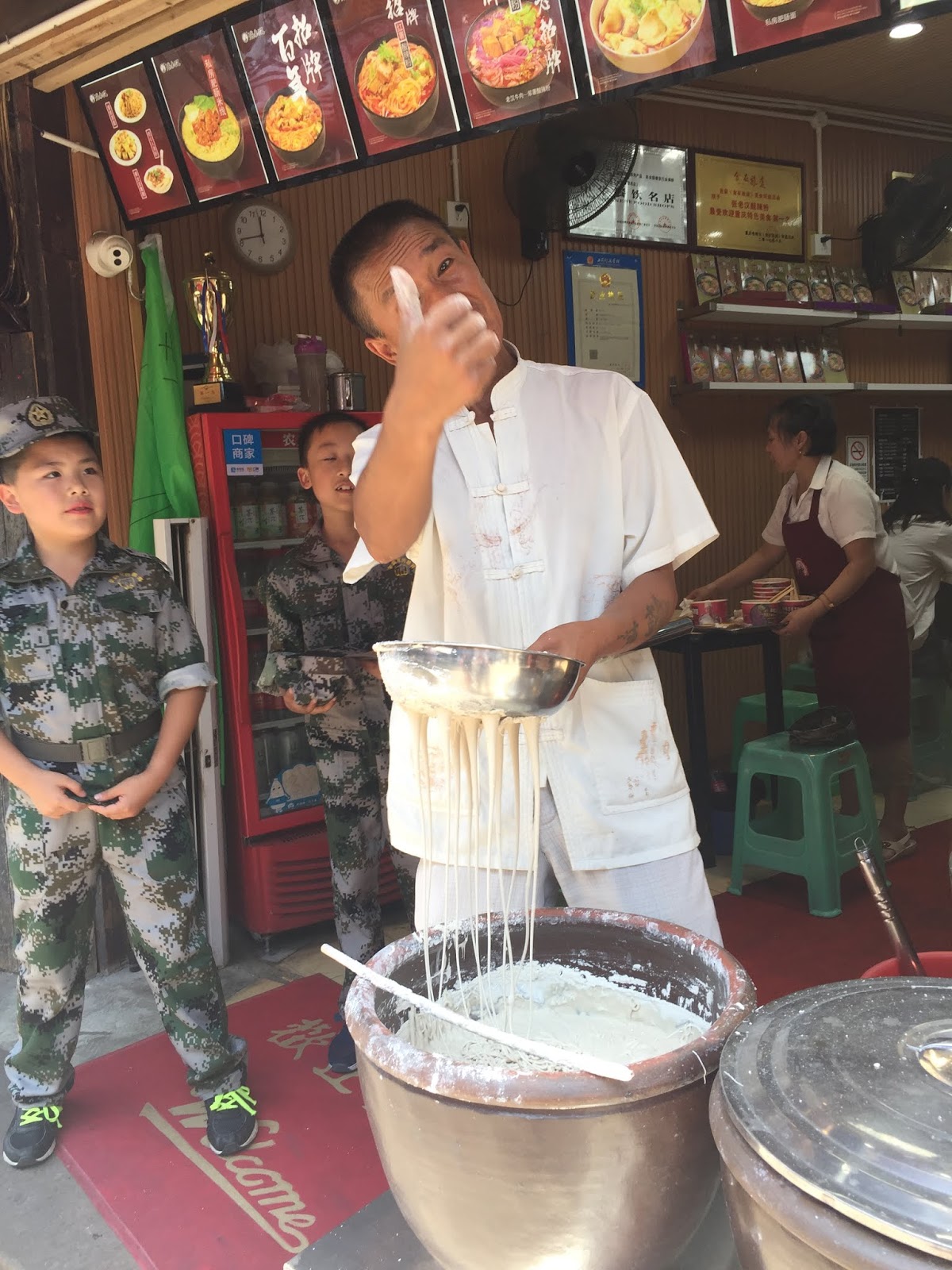
Making noodles under the gaze of a junior soldier?
Around midday I set off to visit the hilly base of Dai Li, the controversial Nationalist security chief who worked with US intelligence, including my OSS characters. Following the brutal, post-WW2 civil war between the Communists and Nationalists, the US was long viewed as the enemy. In recent years, China has come to acknowledge America's enormous support in the war against the invaders. In some museums and historic sites there's been an about-face, with vastly different signage and displays.
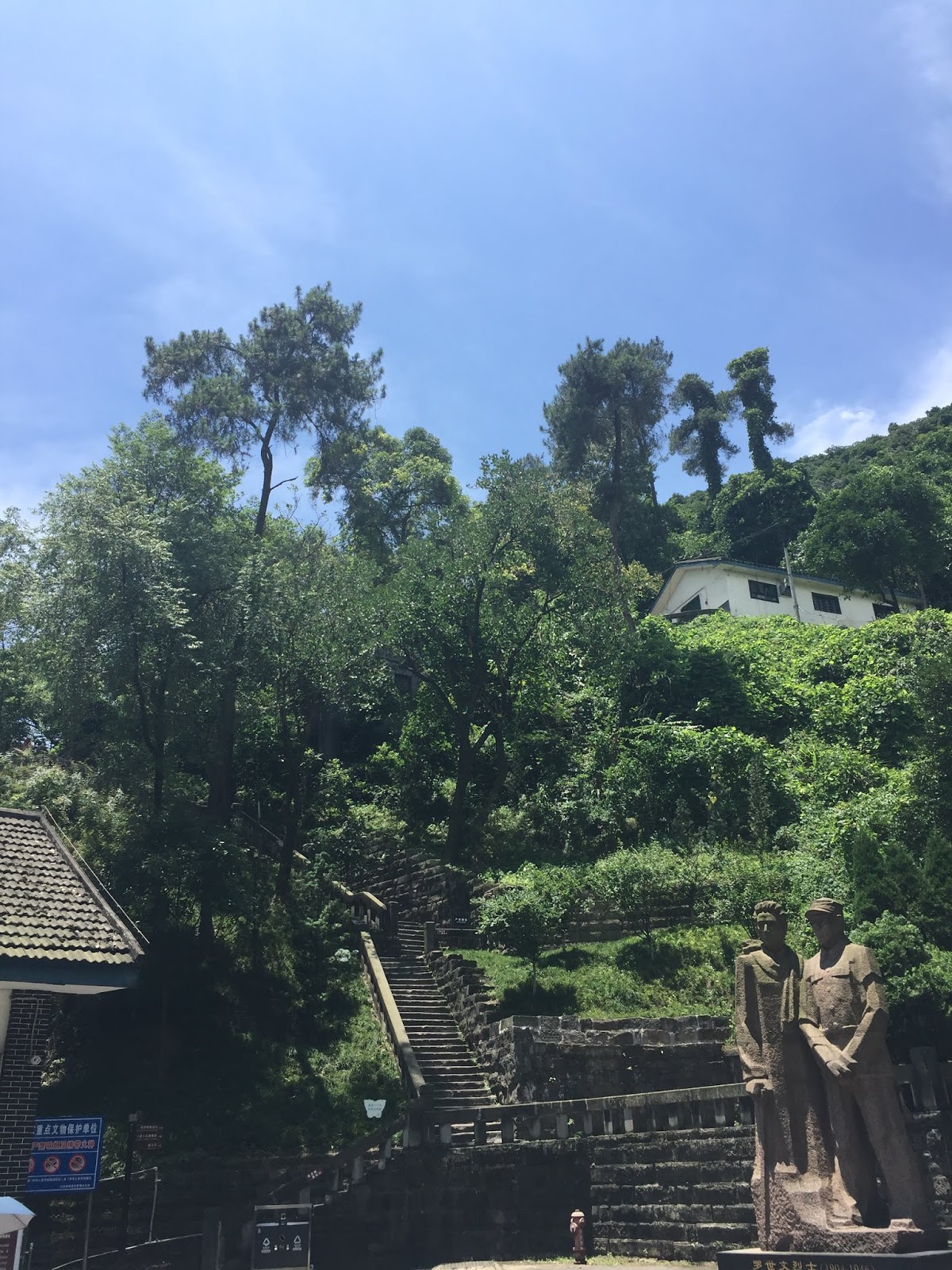 Dai Li's home
General Joseph Stilwell is admired for his salty personality, affection for the Chinese people, and clashes with Generalissimo Chiang Kai-shek. His Jialing riverside home is a museum.
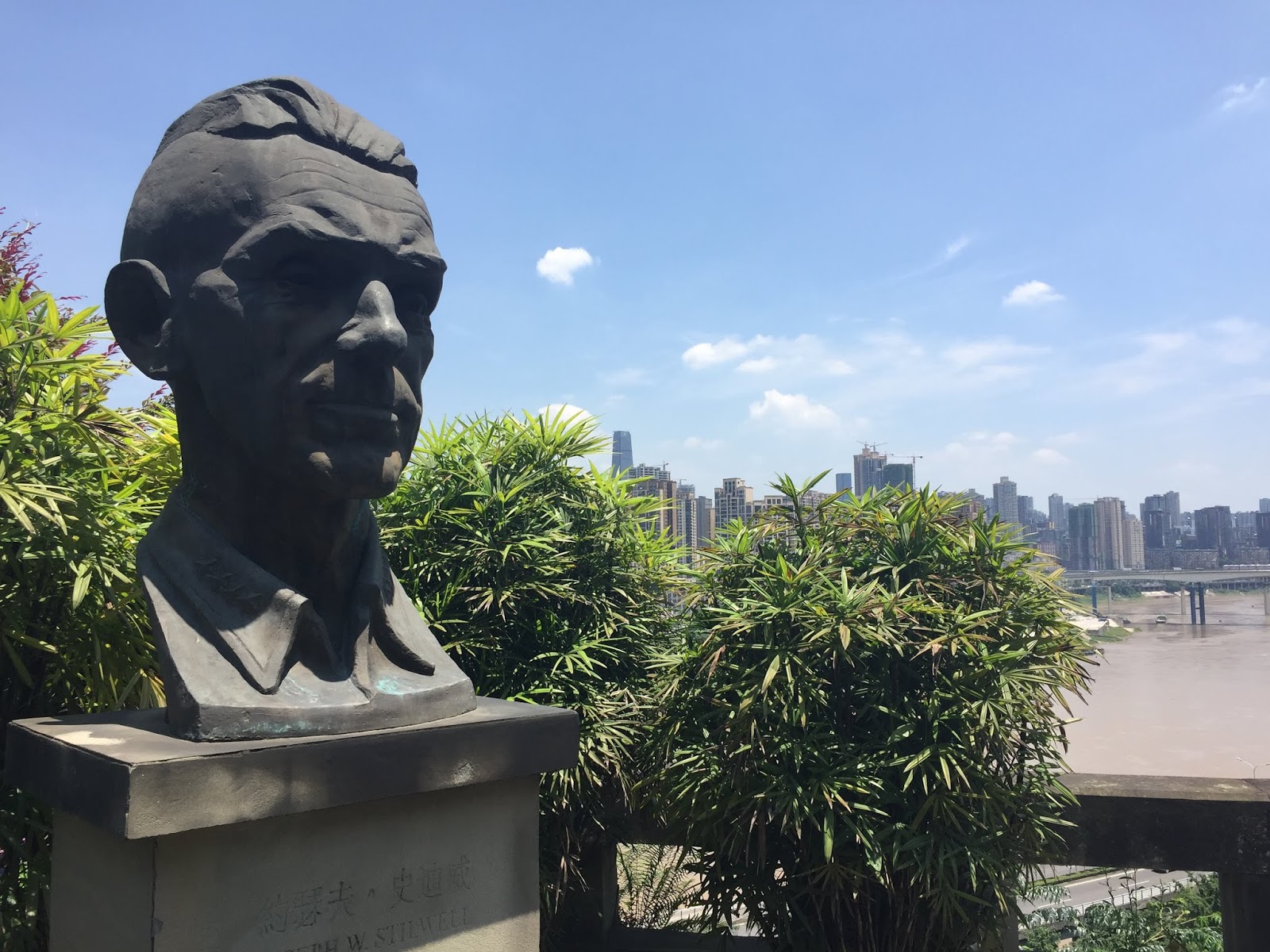 General Joseph Stillwell
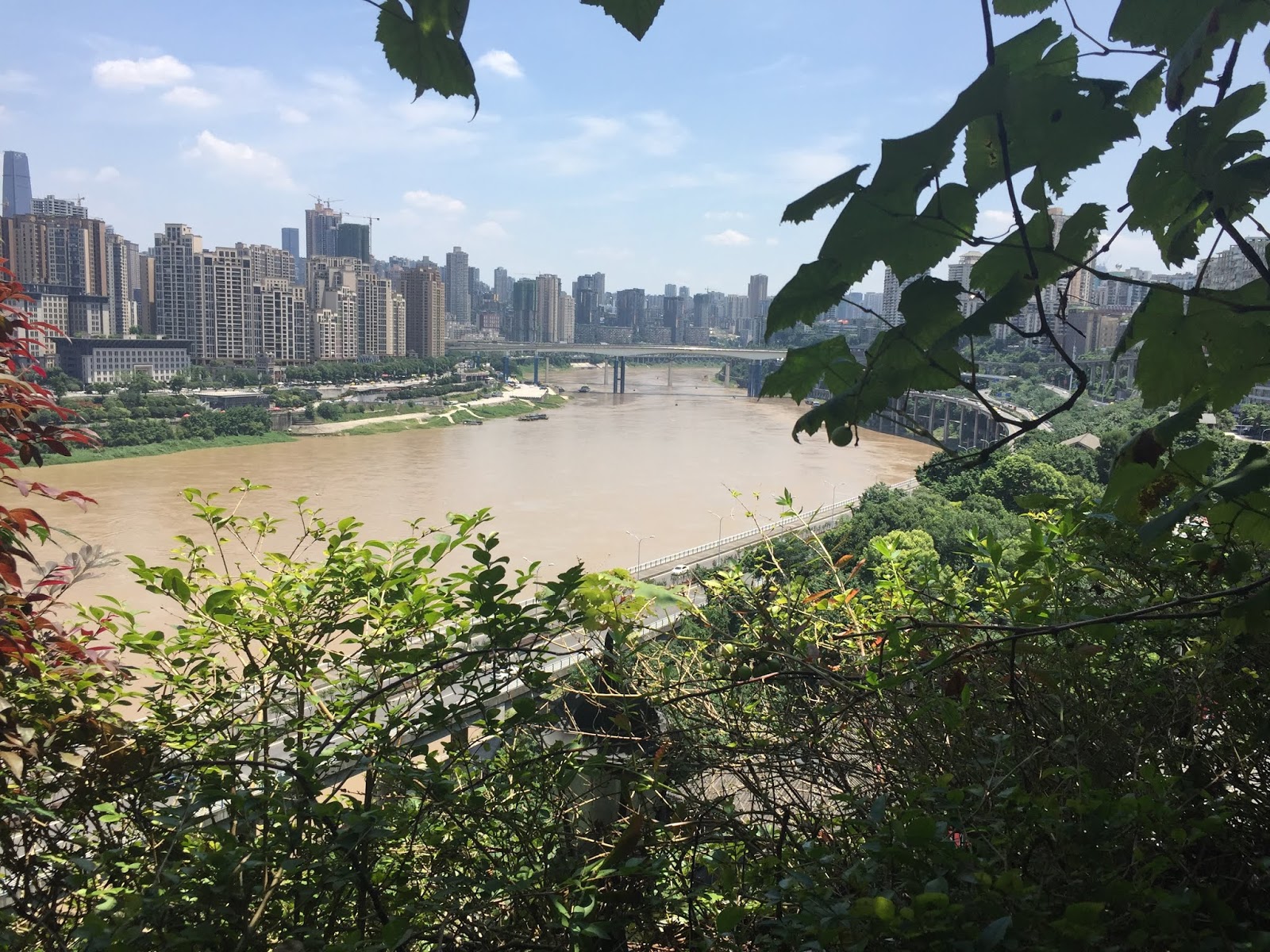
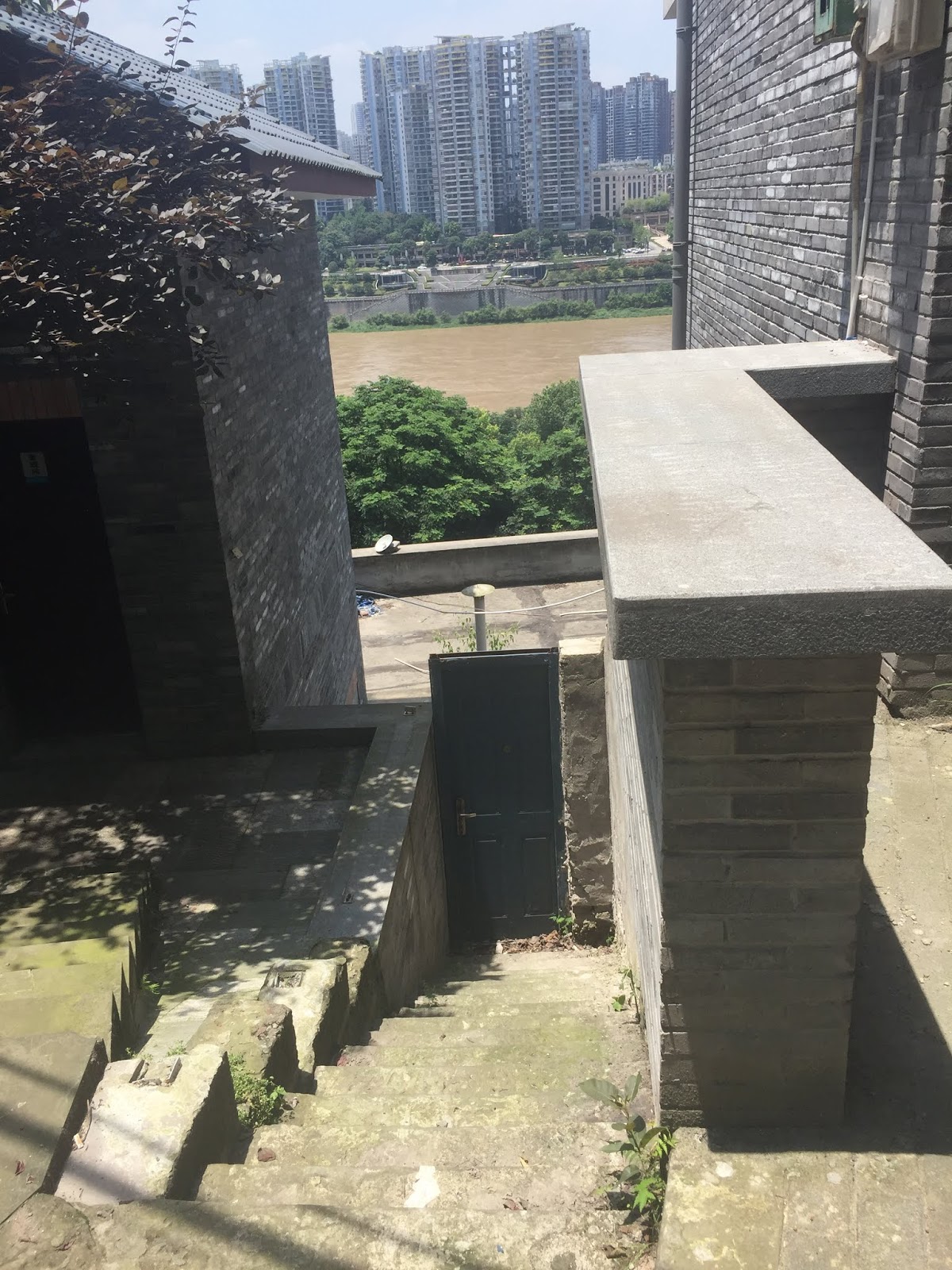
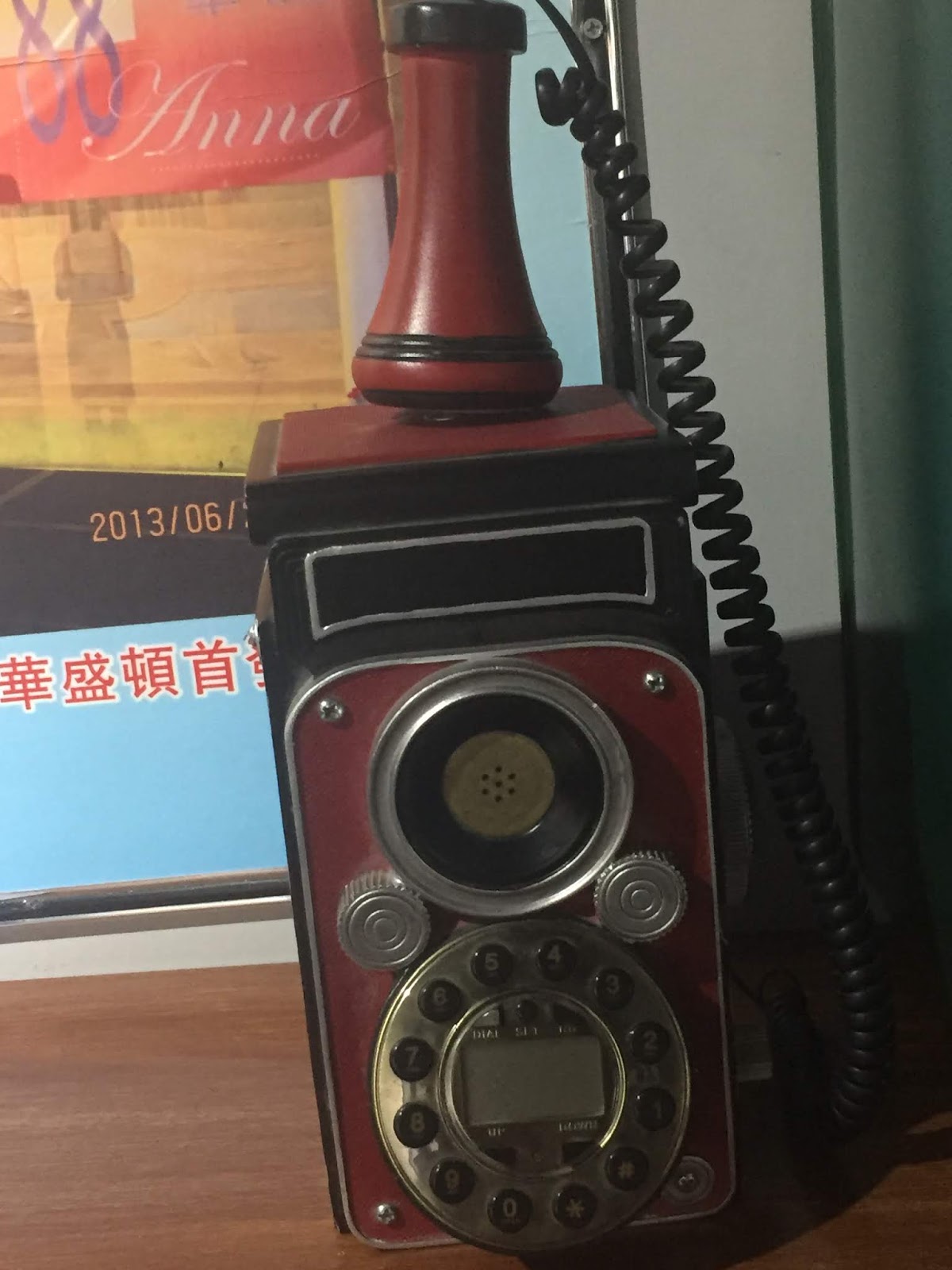
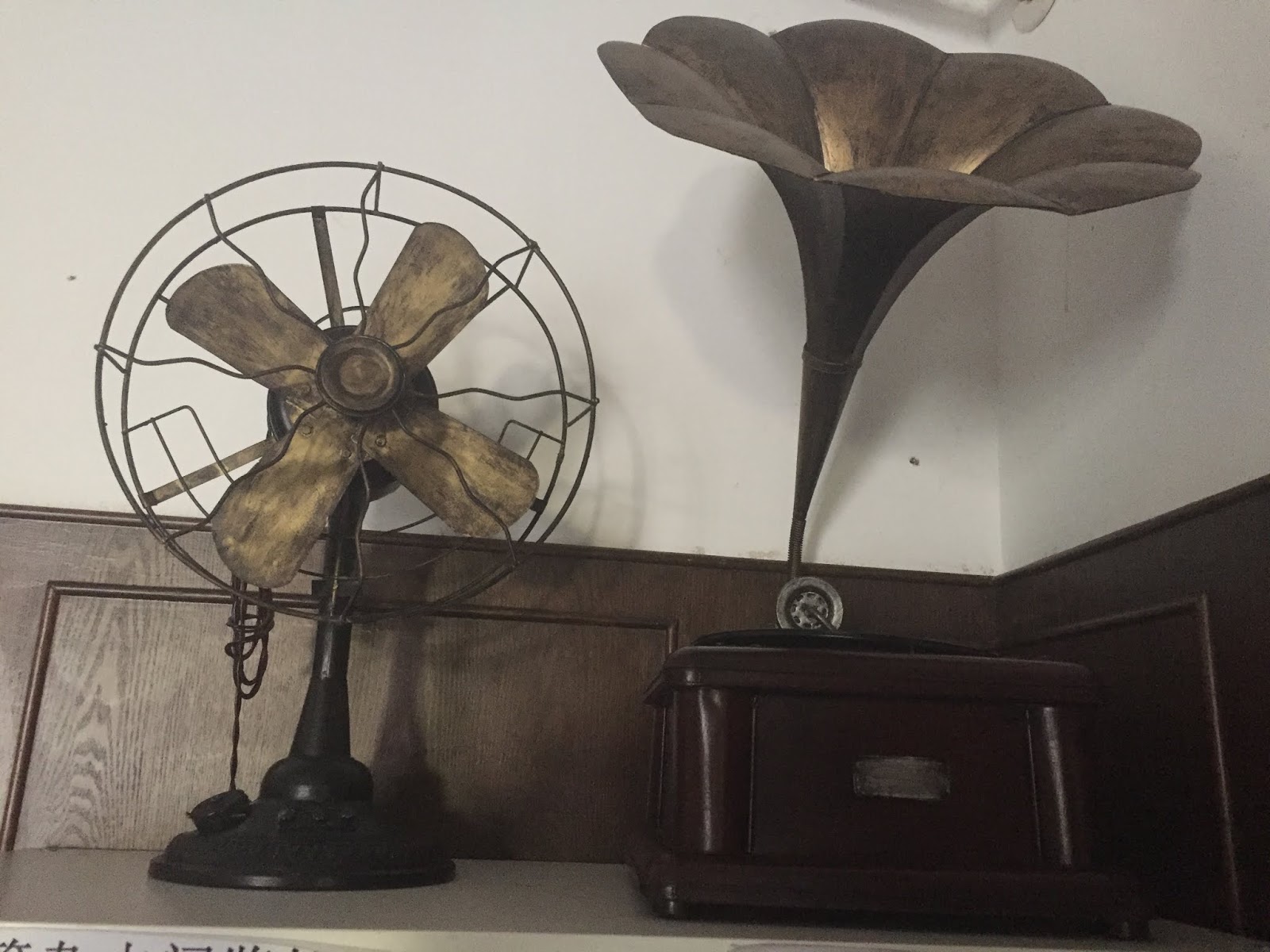
More vintage artifacts at the Flying Tiger museum across the street.
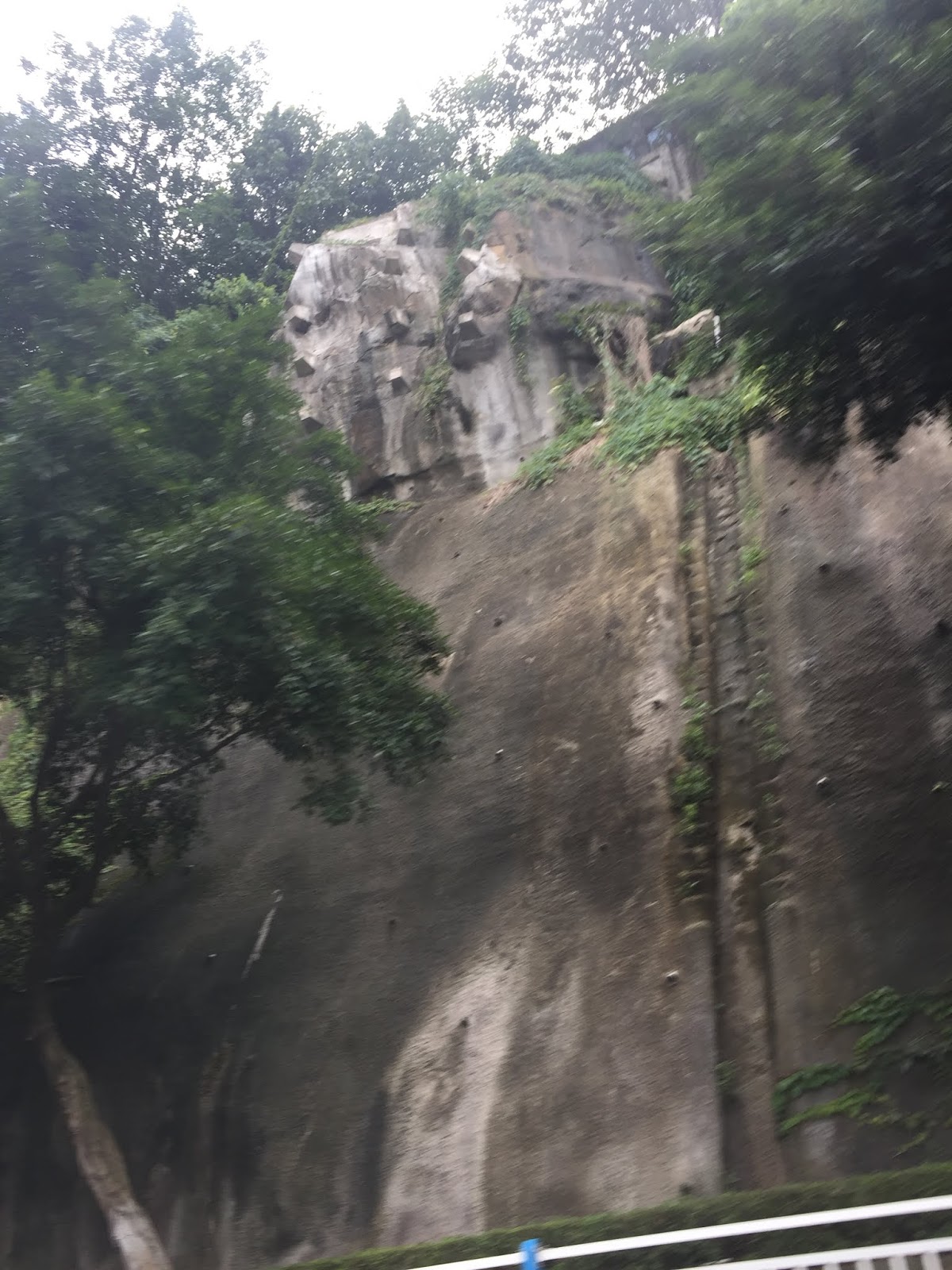
Everywhere in these granite cliffs, I see rock caves where people took shelter during the Japanese bombardment.
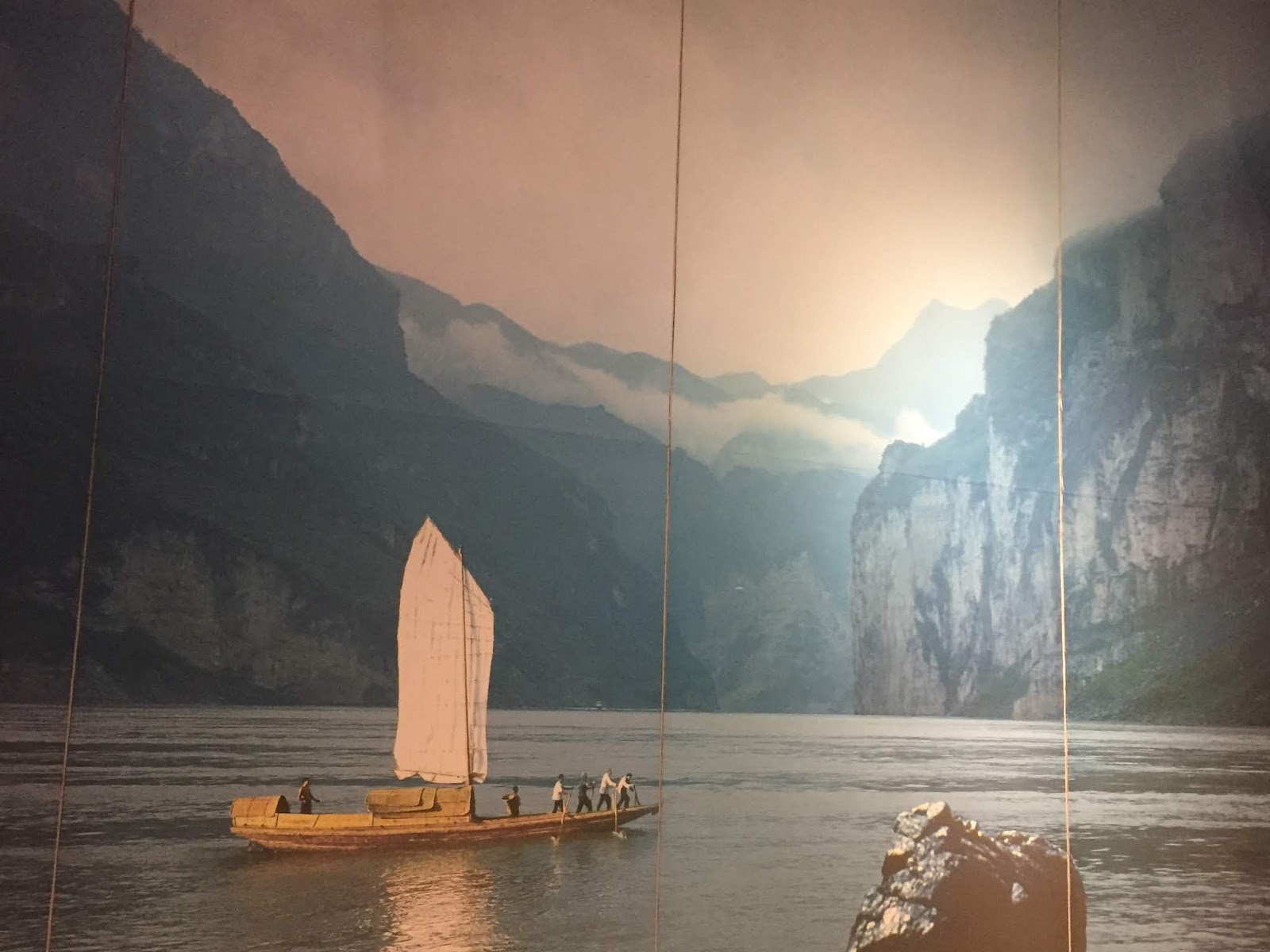
Ignoring the debilitating heat, I continue to the Three Gorges museum, documenting the Yangtze River history up to the Three Gorges Dam. Over twenty years ago, my husband and I cruised the Yangtze, right before the area was flooded for the dam. A display showing the grandeur we experienced.
Finally, I ferret out the intimate home-museum of Soong Ching-Ling, widow of the revered early 20C leader Sun Yat-sen.
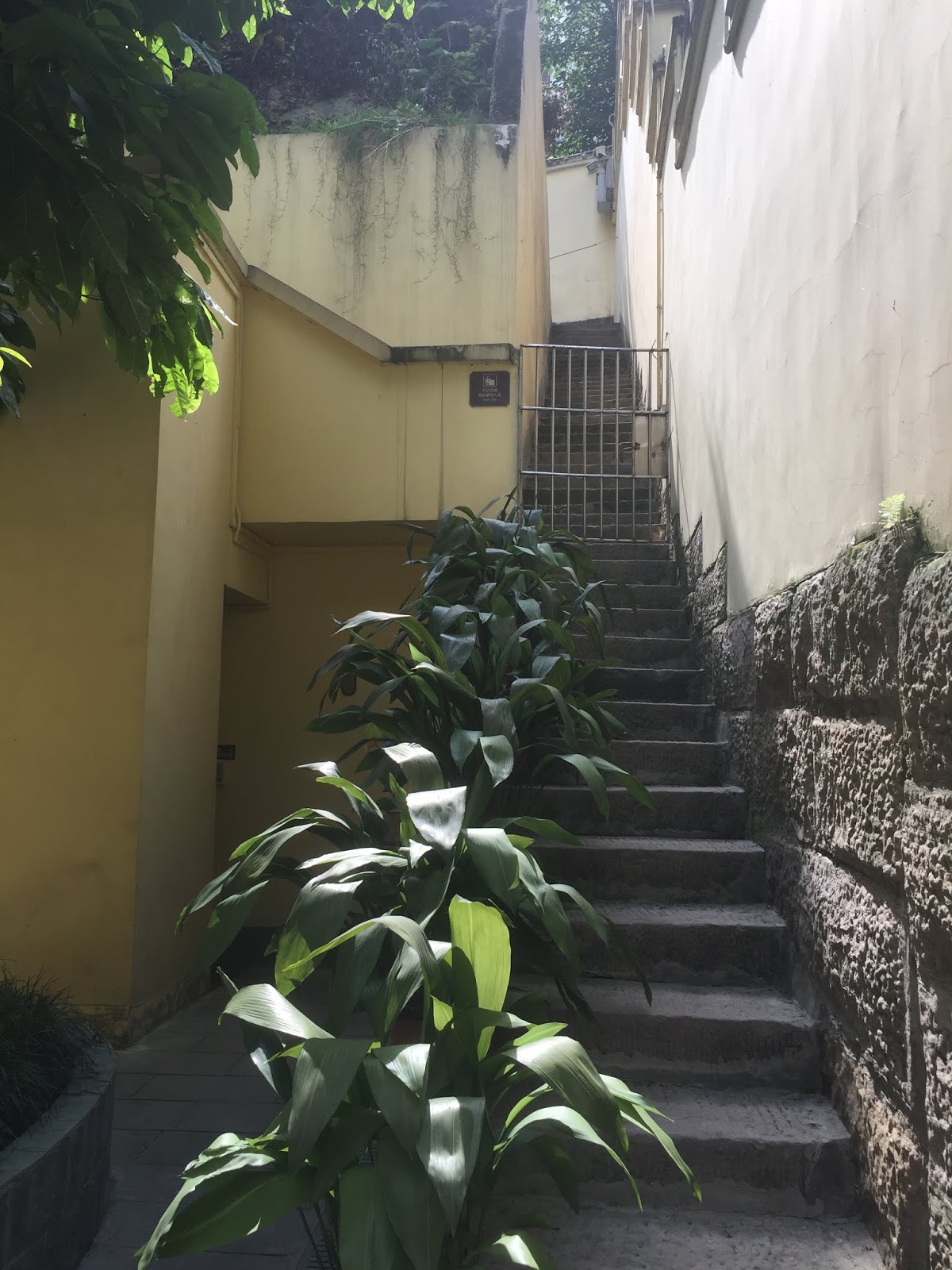
Although Chiang Kai-shek's sister-in-law, she lived a humble life and is a national icon. Behind the gate is the entrance to an underground bomb shelter, claustrophobic and sobering to visit.
The next day, we try to visit the pier where our Yangtze Paradise ship docked but redevelopment has hit the area.

We walk back past a view of past and present.
Next: Shanghai, China and Seoul, South Korea
January 18, 2019
China: In Search of the Past: Part 5: Kunming, World War 2
After flying cross-country to Dali, we're eager for our "slow" train through Yunnan's scenic mountains down to Kunming. But soon after arriving at the station, we are ordered to evacuate, due to "equipment problems." Everyone, even support personnel, is driven out while police and security officers pour in. With no further explanation, we all stand around, trading rumors—many translated to me by a young Chinese woman. She doesn't believe the official reason. As this is a restive border region, I think maybe separatists or escaped prisoners? The burning question: Will we be able to continue our travels? Will this be a short delay or should we try to catch a long-distance bus? By now we're joined by three European grad students. With the woman (in a hurry to reach Kunming for the World Cup broadcast), we decide on the sure bet and traipse several blocks to the bus terminal... Along with many others, desperate to get on the road. Seats are difficult to obtain, but the woman makes sure we are all taken care of before moving on. Throughout China, I find people eager to help—often going out of their way to do so.
We're lucky to get the very last seats on a crowded bus. Still, I'm sorry to miss our train ride through the countryside as it descends to a broad highland plateau. We reach the outskirts of Kunming at dusk.

Now a major city, Kunming was a small railway stop until World War 2 shook things up. Drawn here for book research, I come in search of that wartime past when China was struggling to hold off Japan. American support became critical, and the famed Flying Tigers established a base on this remote plateau. Later, so did the US intelligence agency, OSS, the Office of Strategic Services. Late in the war, my characters were posted here, undertook secret missions, and fell in love.
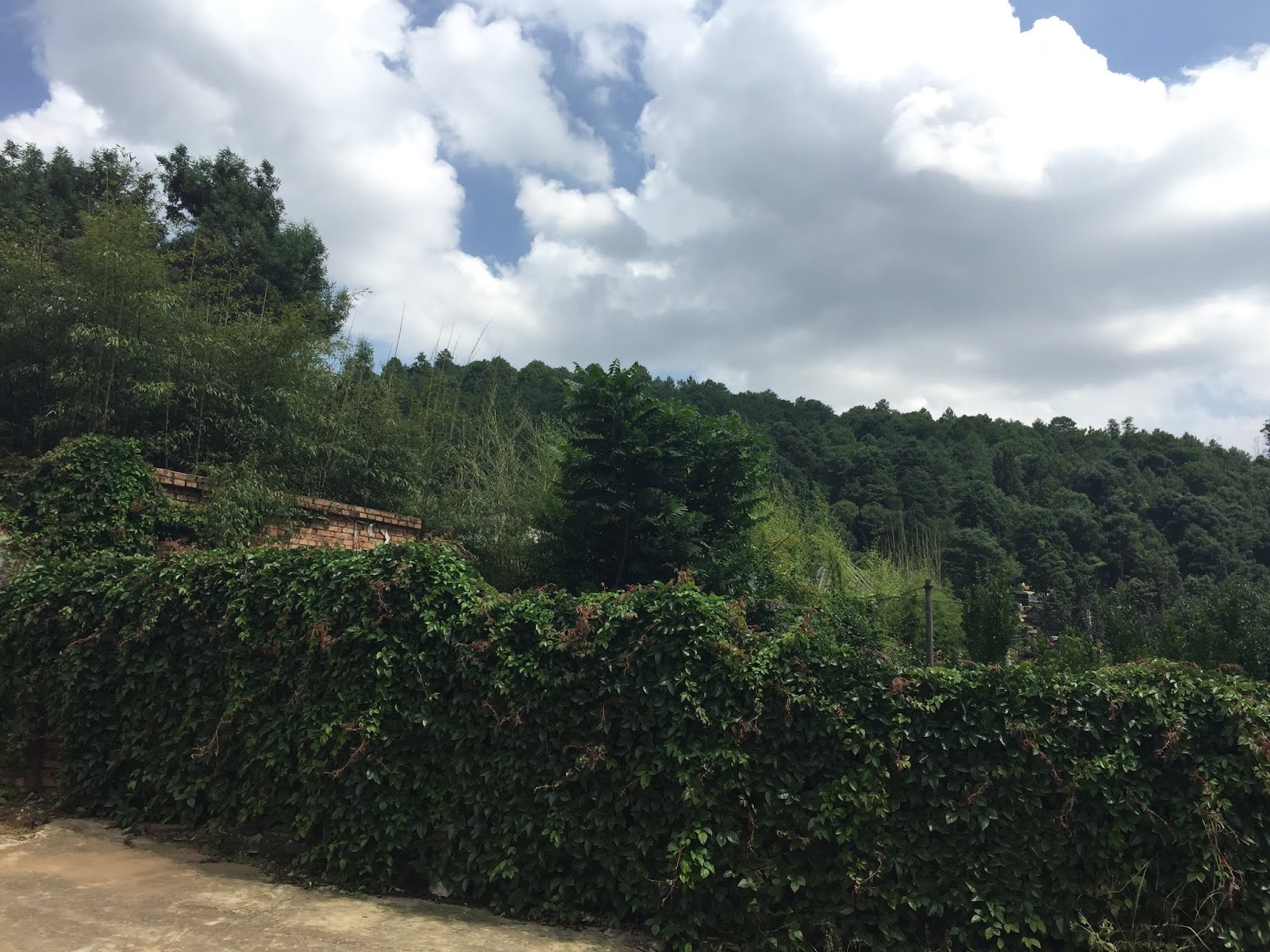
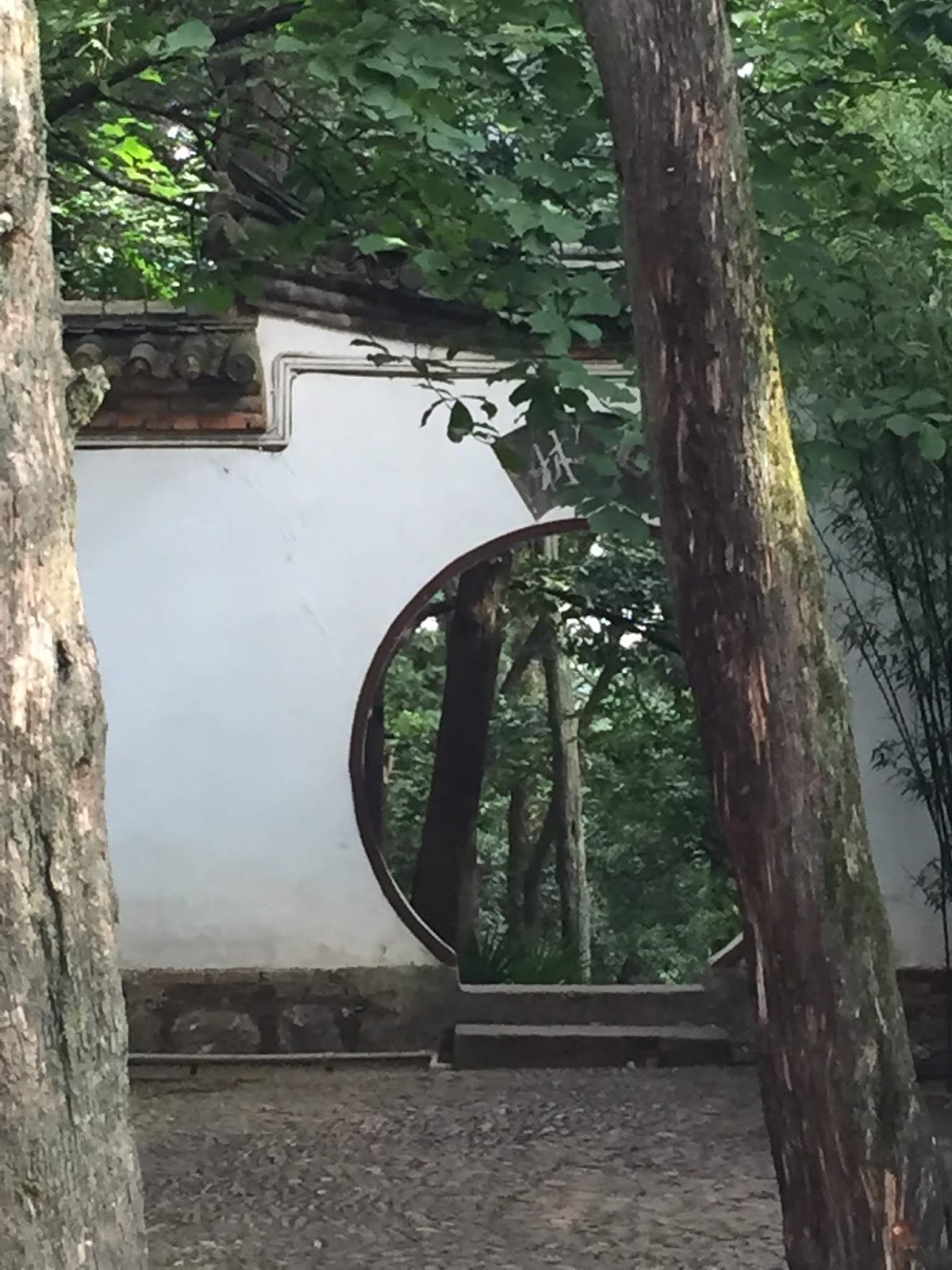
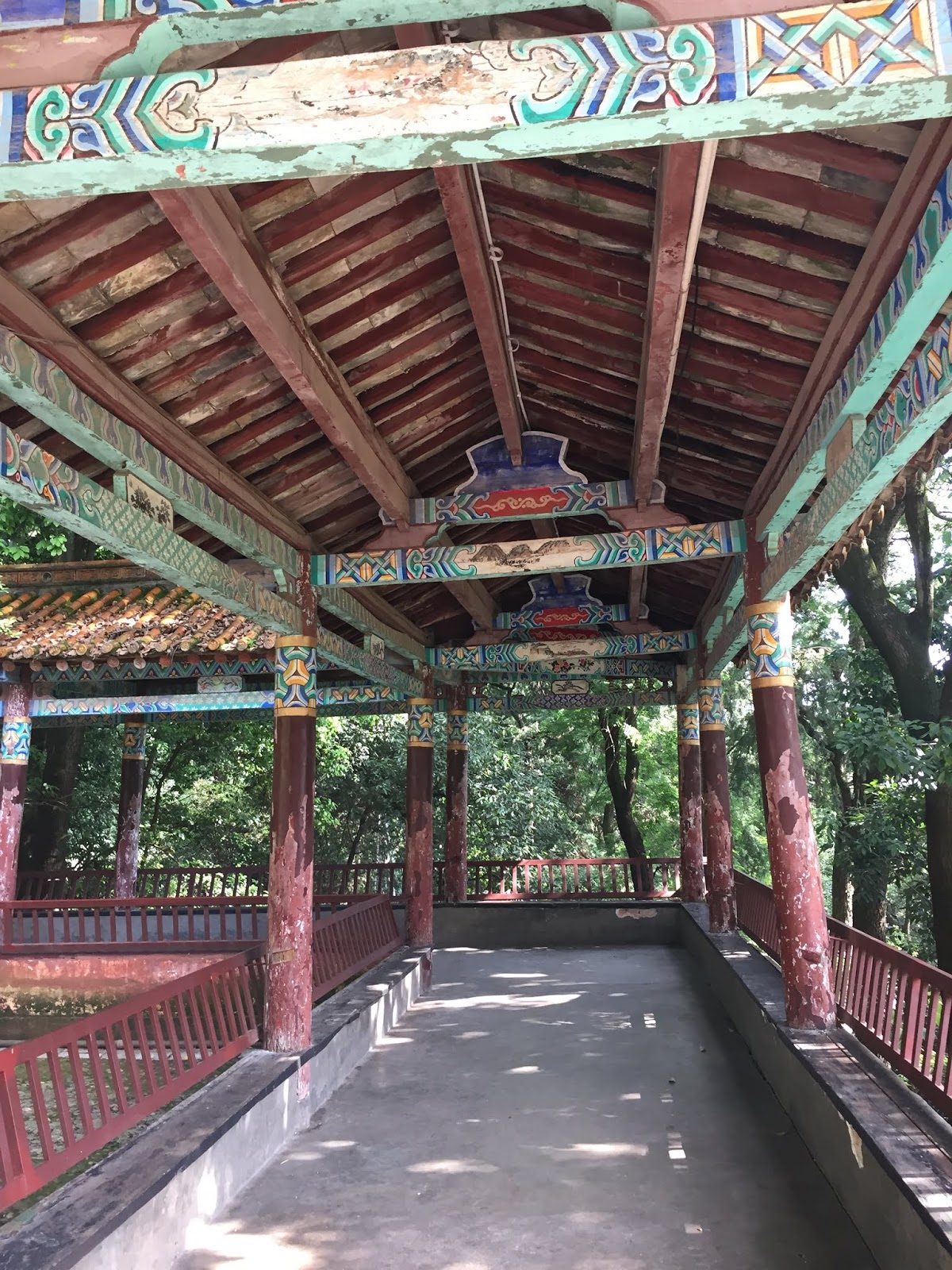
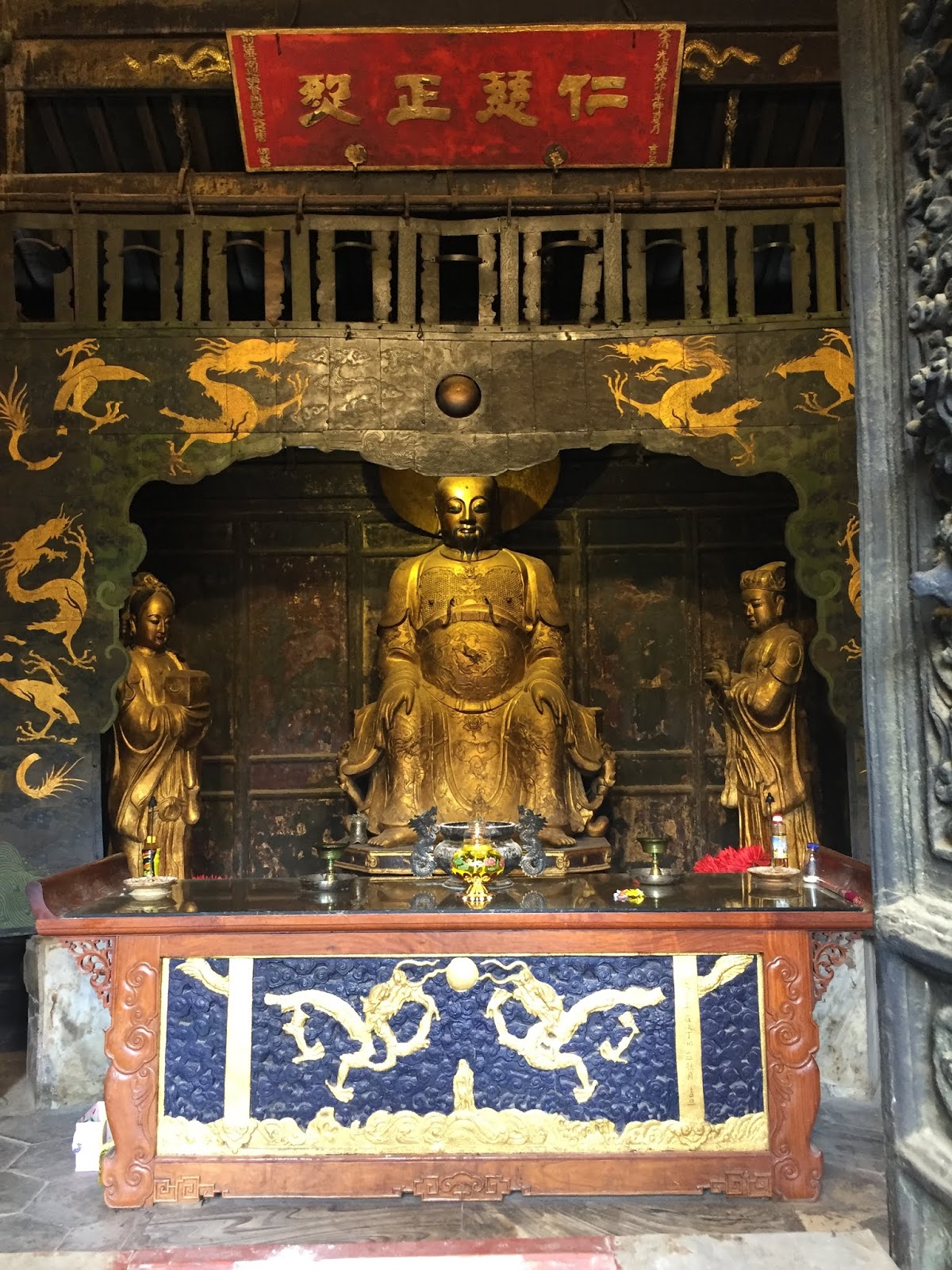
By amazing coincidence, our landscape designer friend has worked in Kunming for almost twenty years. We are lucky to have him as our guide, as I attempt to conjure what it was like, back in the day. I'm especially eager to see sites that have remained untouched by modern development. We begin with an old temple in the northern hillsides.

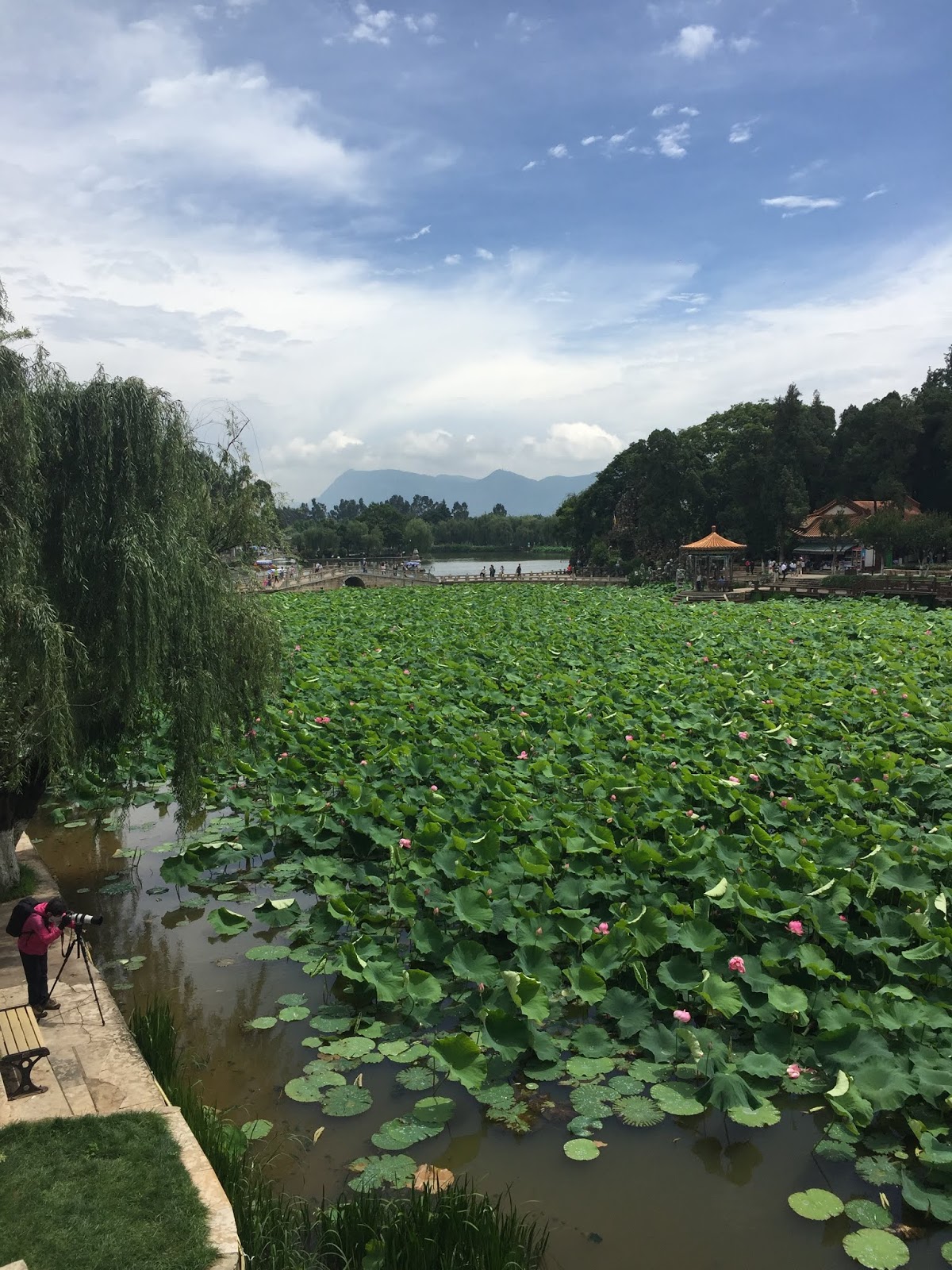
The next day we visit Dianchi Lake south of town, also known as "Sparkling Pearl Embedded in a Highland." Spreading before us is a sea of lotus blossoms and water lilies.
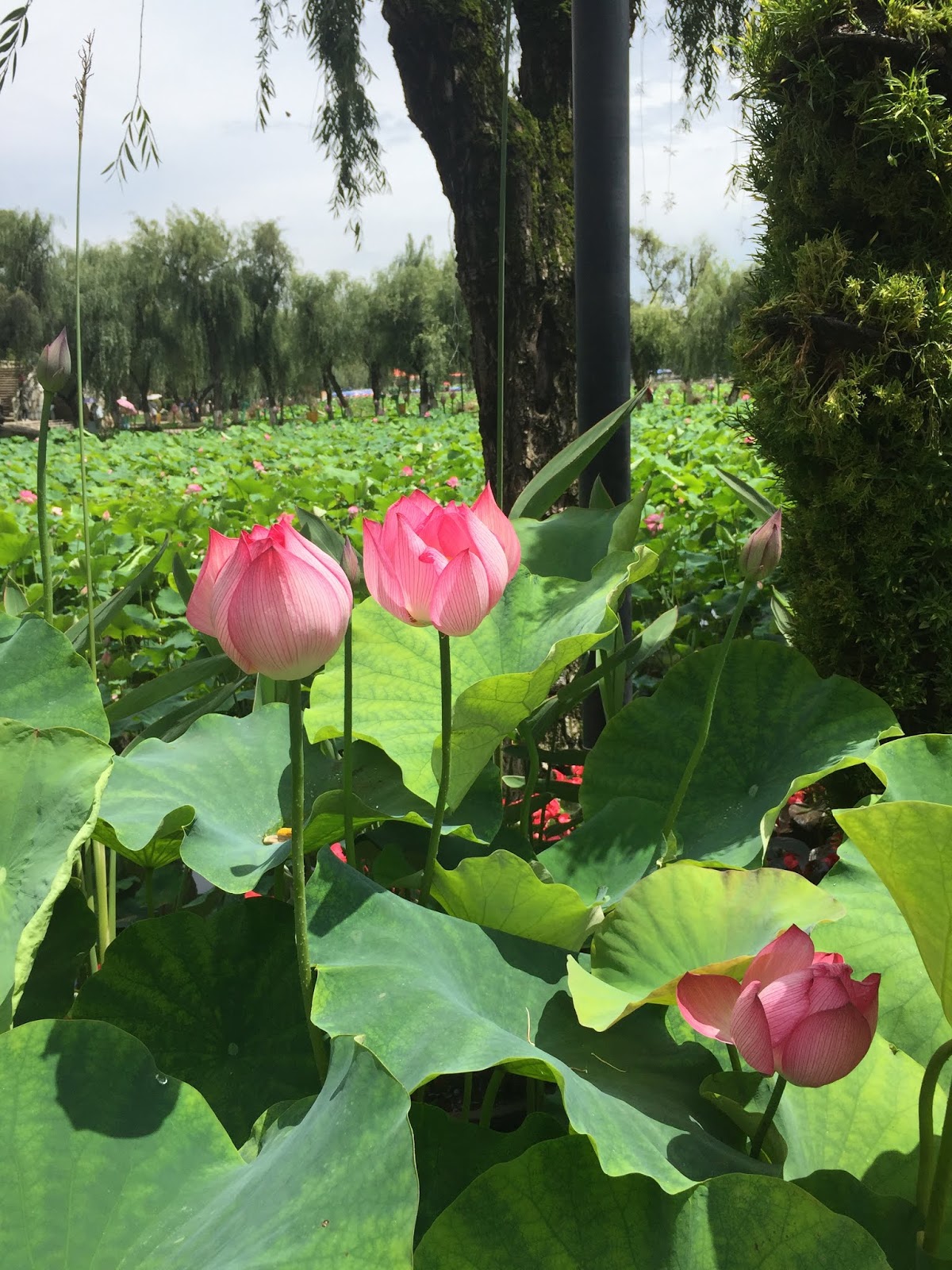 Lotus blooms
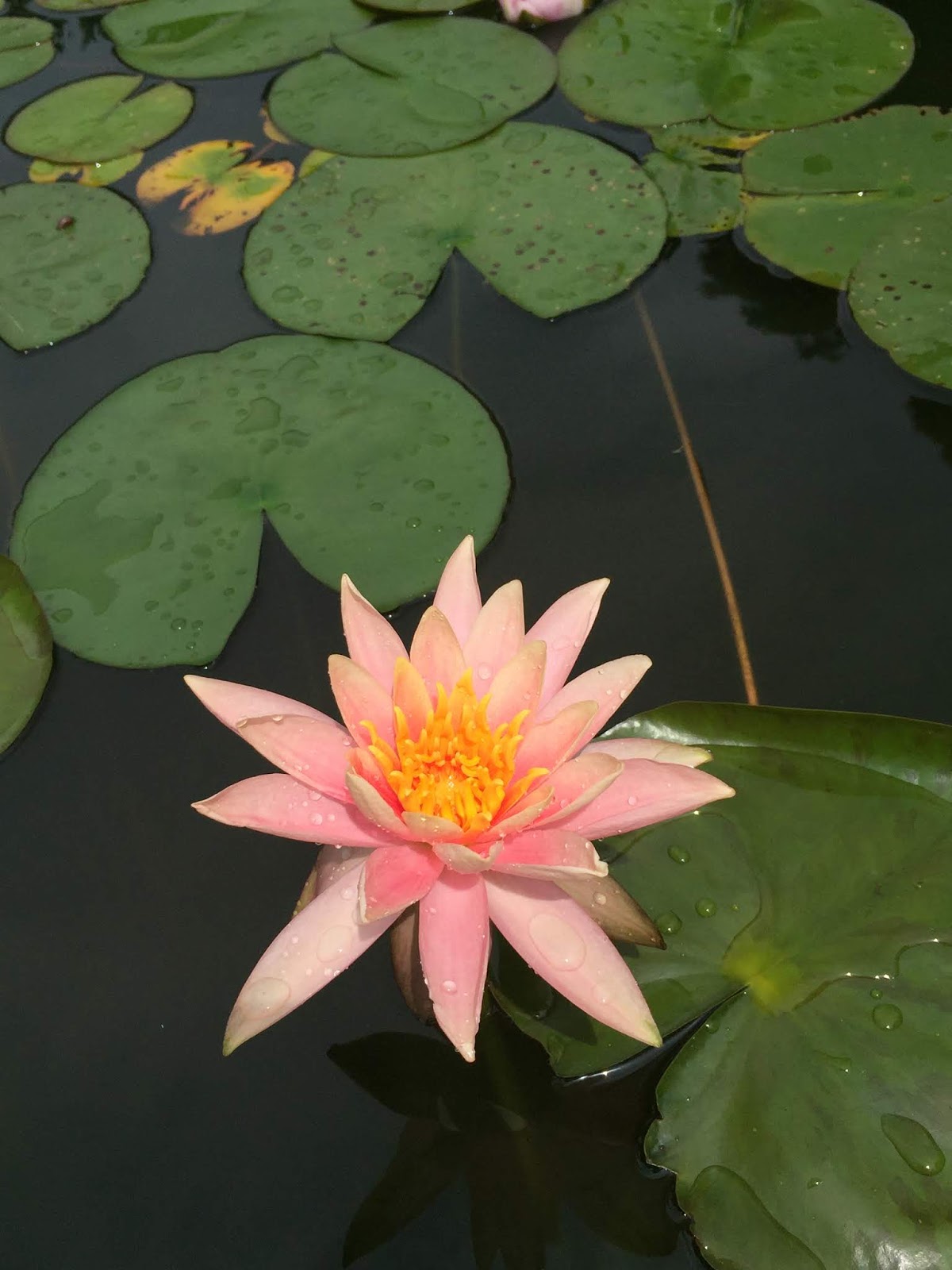 Water lilyThe crowds are out with their cameras to enjoy a perfect Sunday.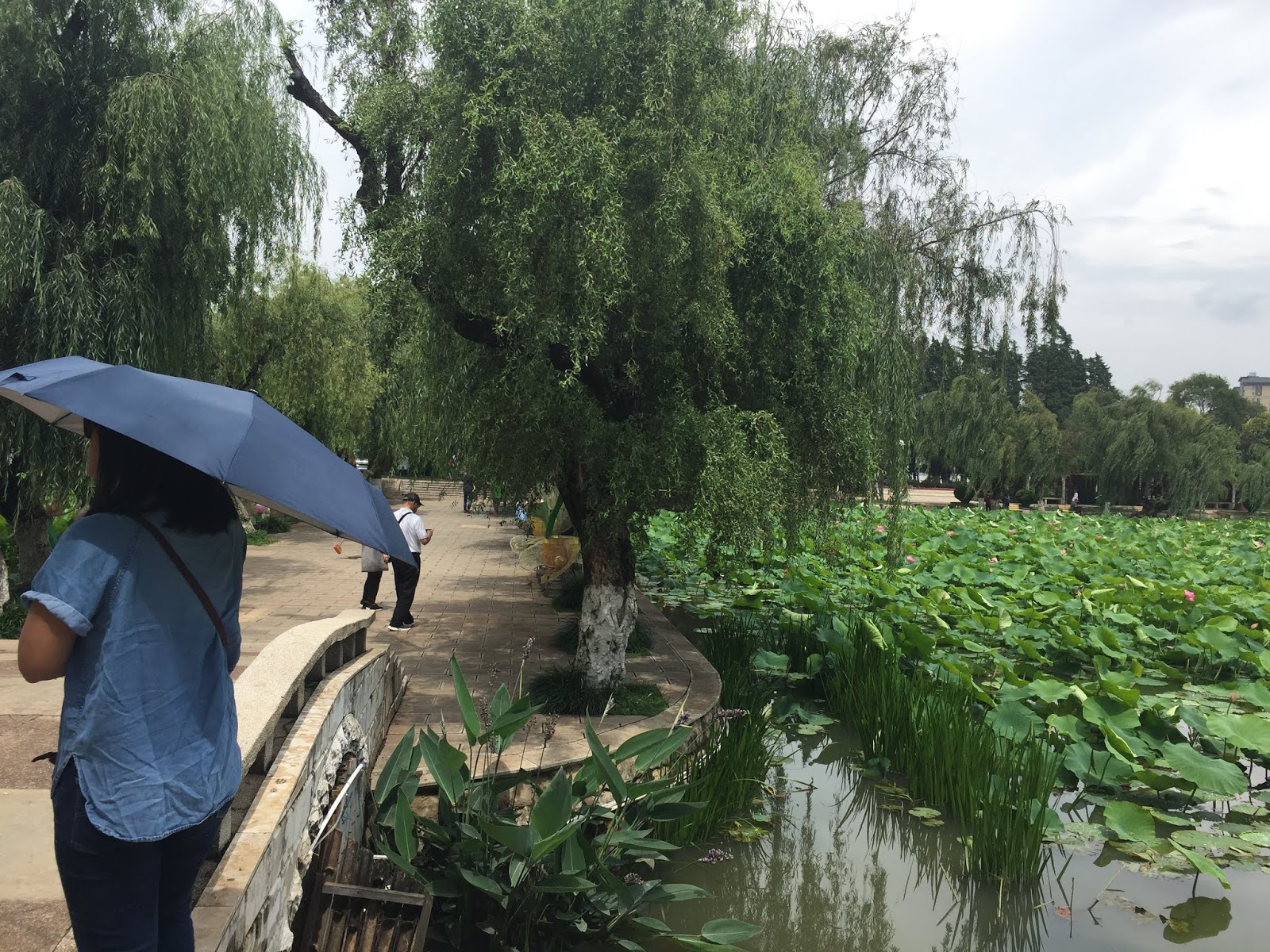
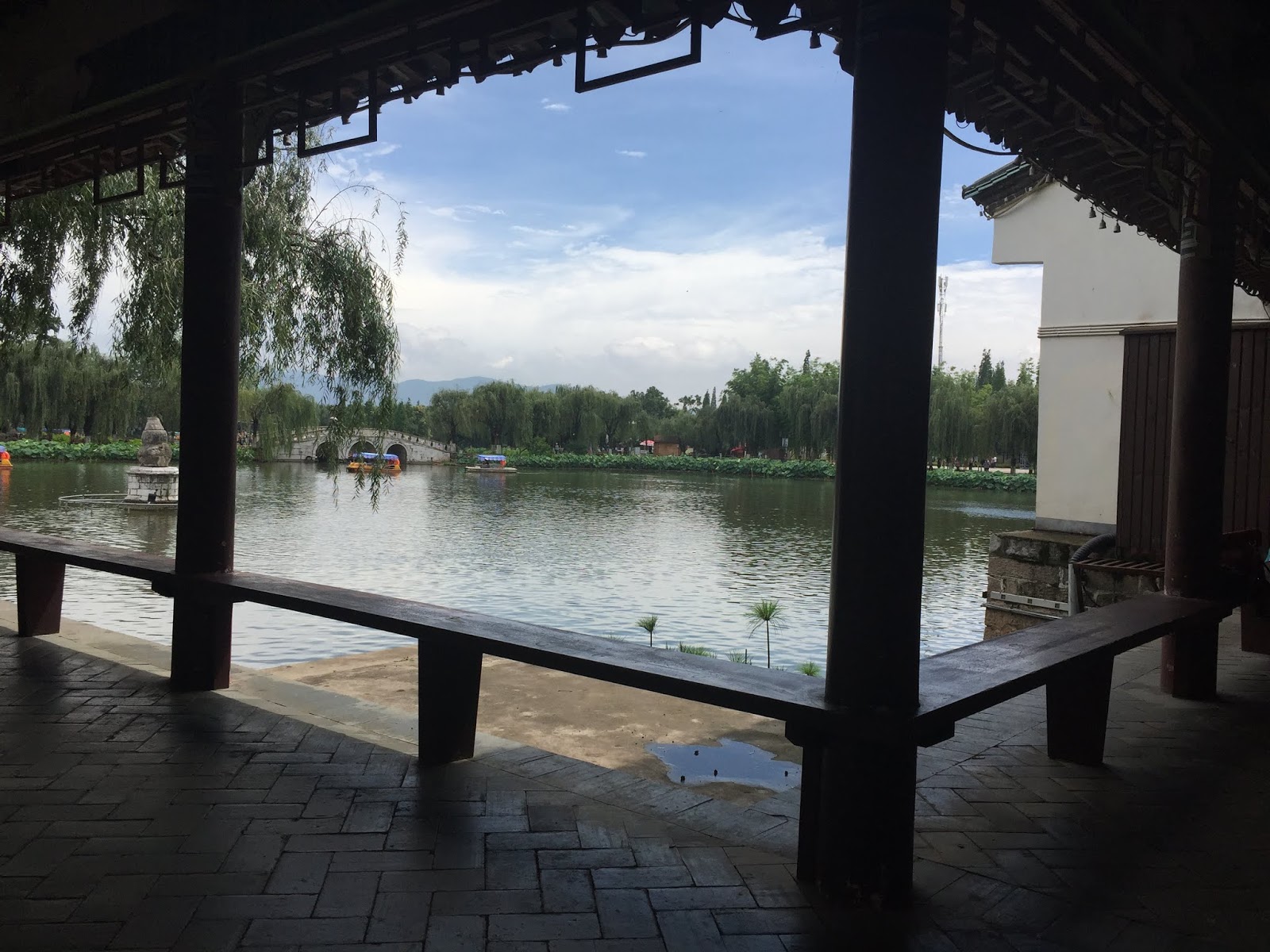
I see proud families posing in front of this hammer and sickle.
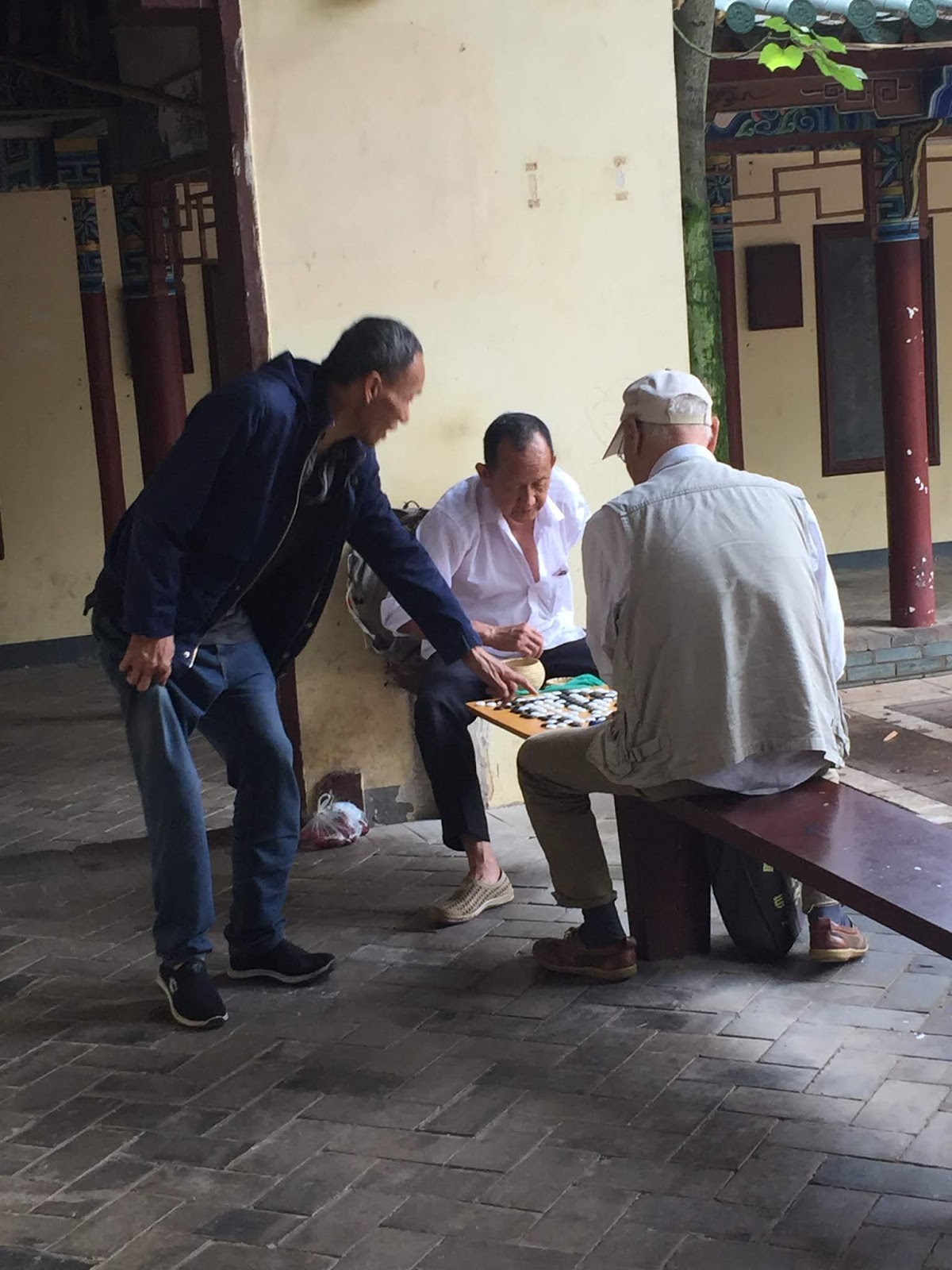
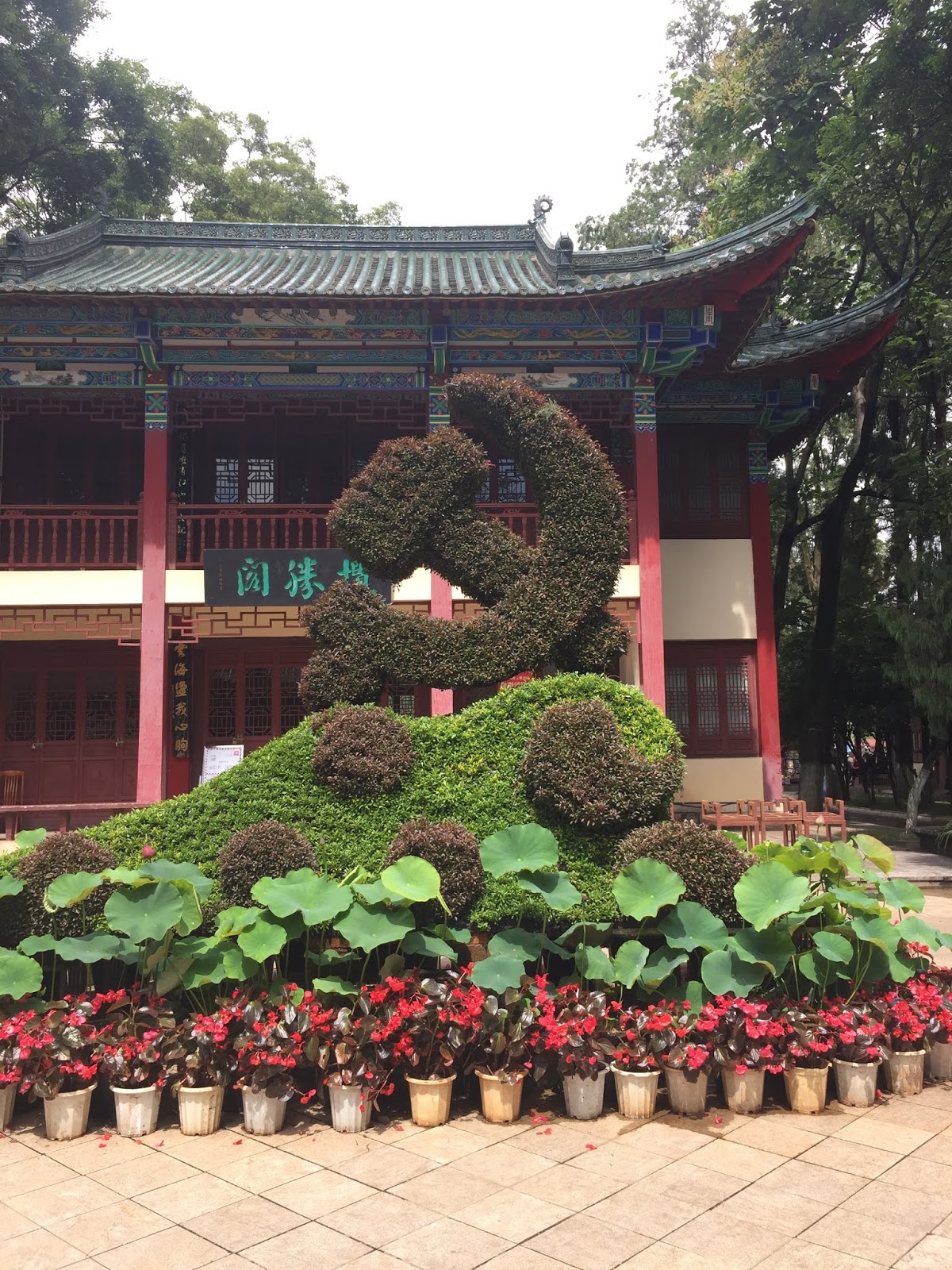 Topiary hammer and sickleOur Green Lake Hotel is worth a trip just for the sumptuous breakfast buffet, which we've fantasized about since our last trip five years ago. We're in the old University and French district, across the street from Kunming's central park, now a precious oasis in the big city. Here, too, the lake is smothered in blossoms. It's a lively spot where lovers meet, as well as old people doing traditional songs and folk dances. Even singing pro-Mao songs.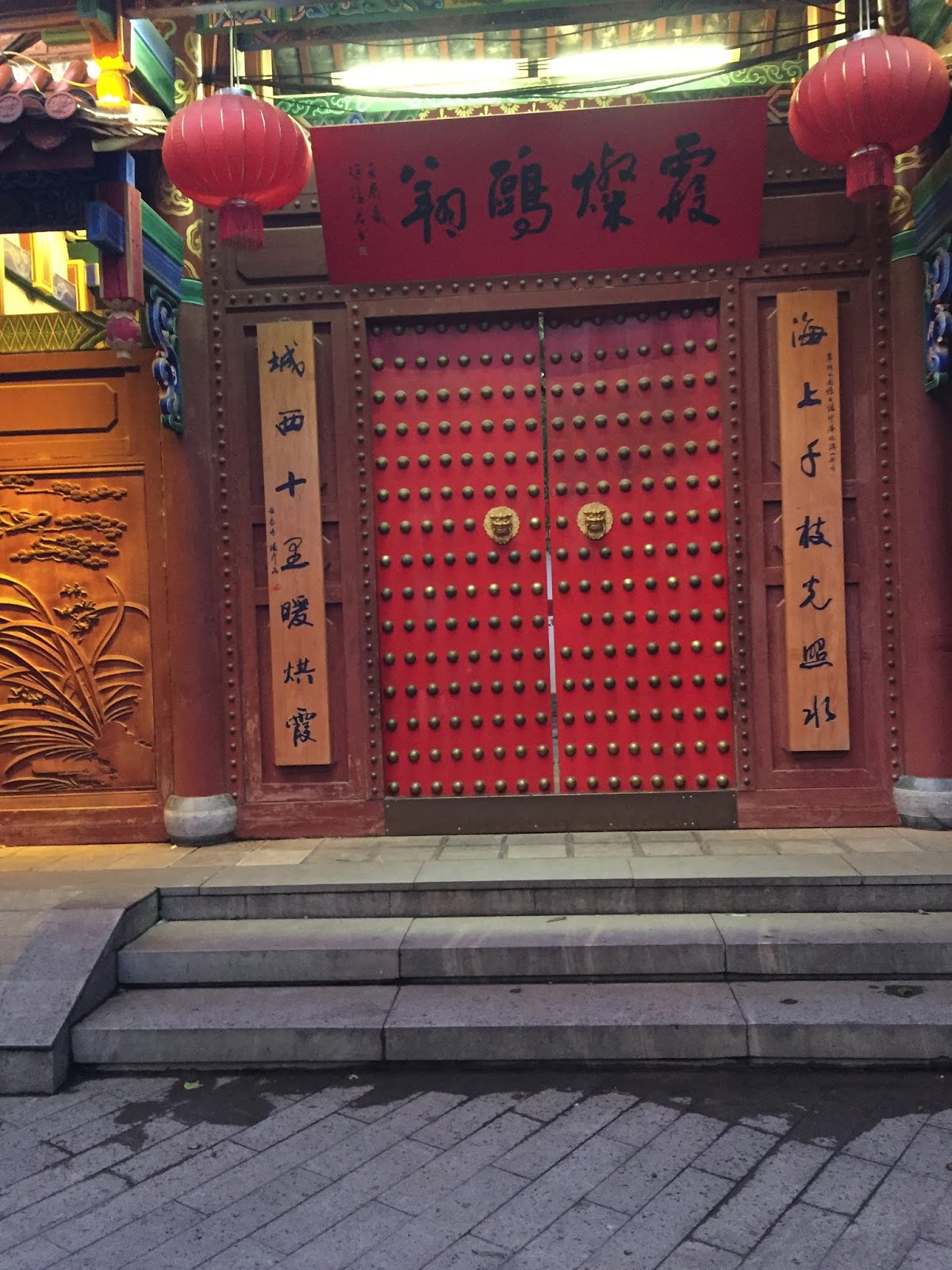
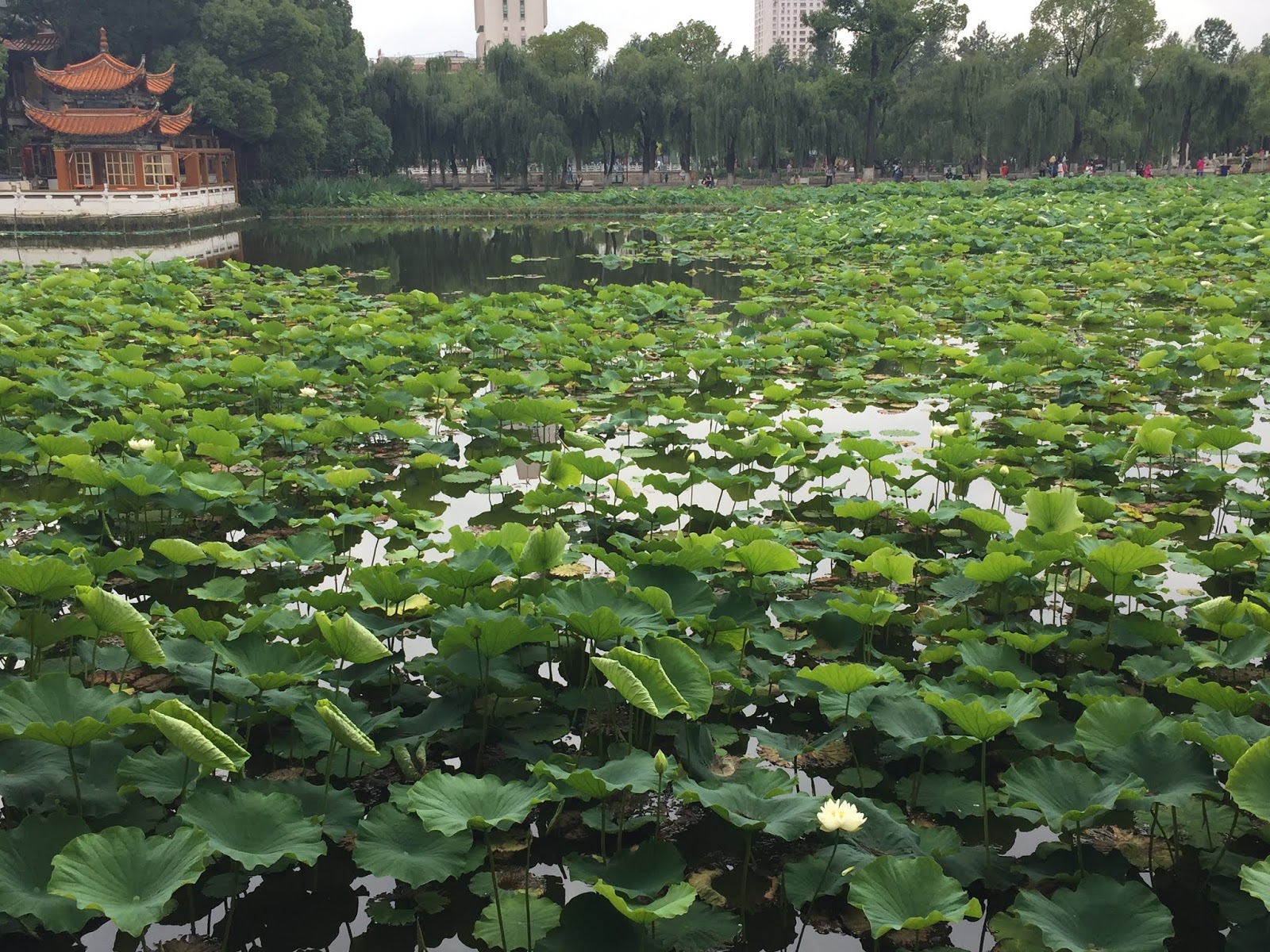

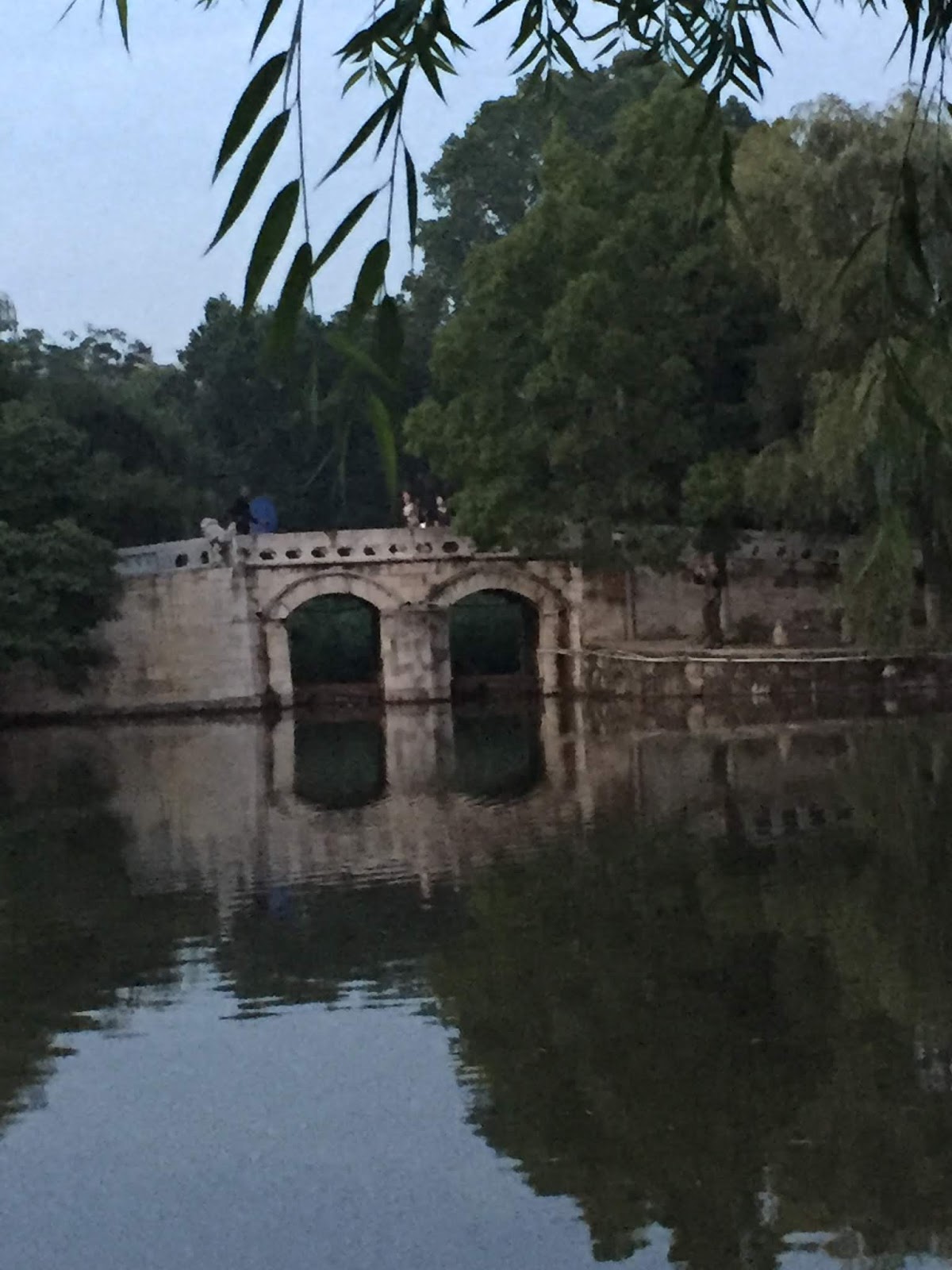
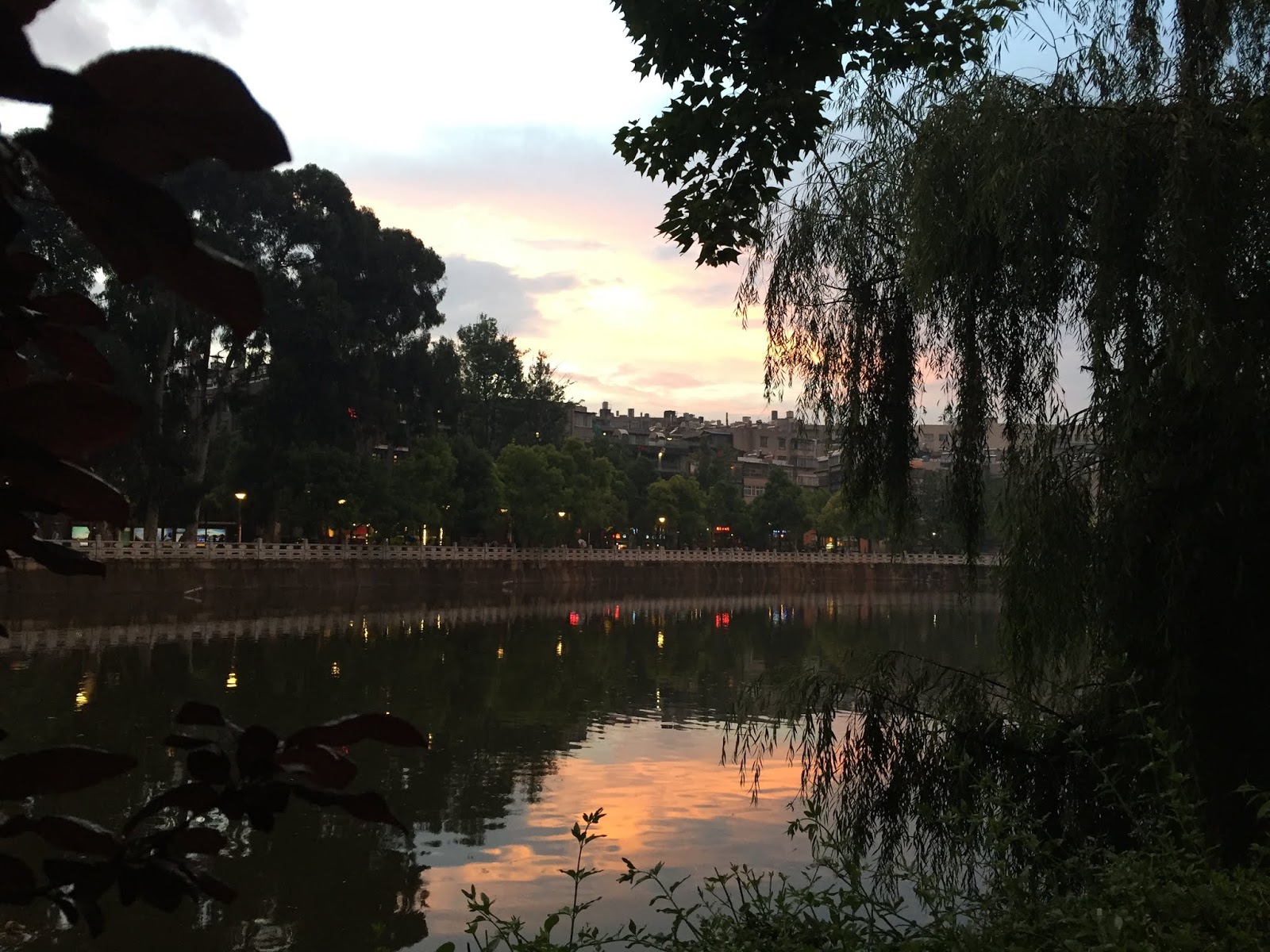
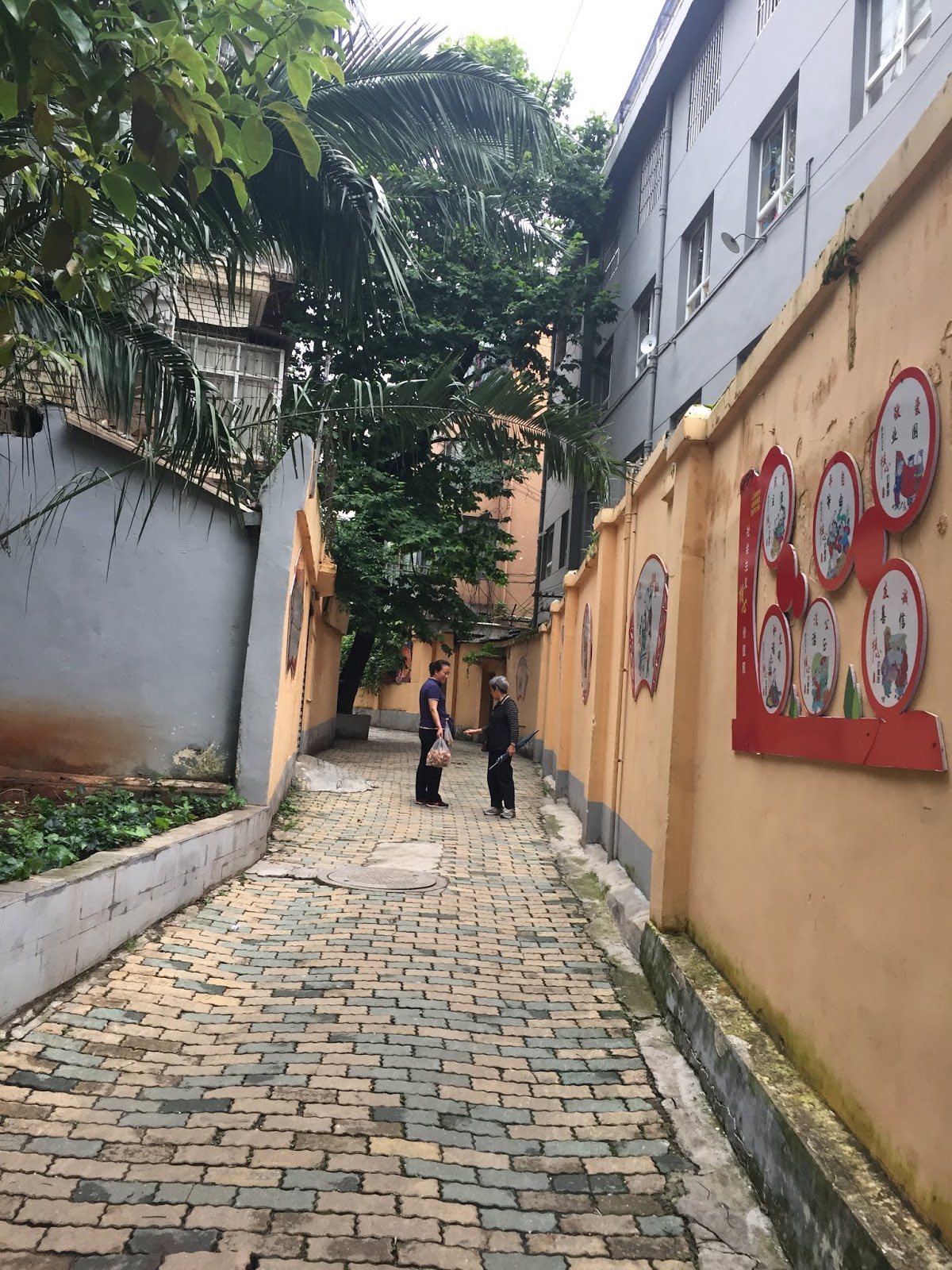
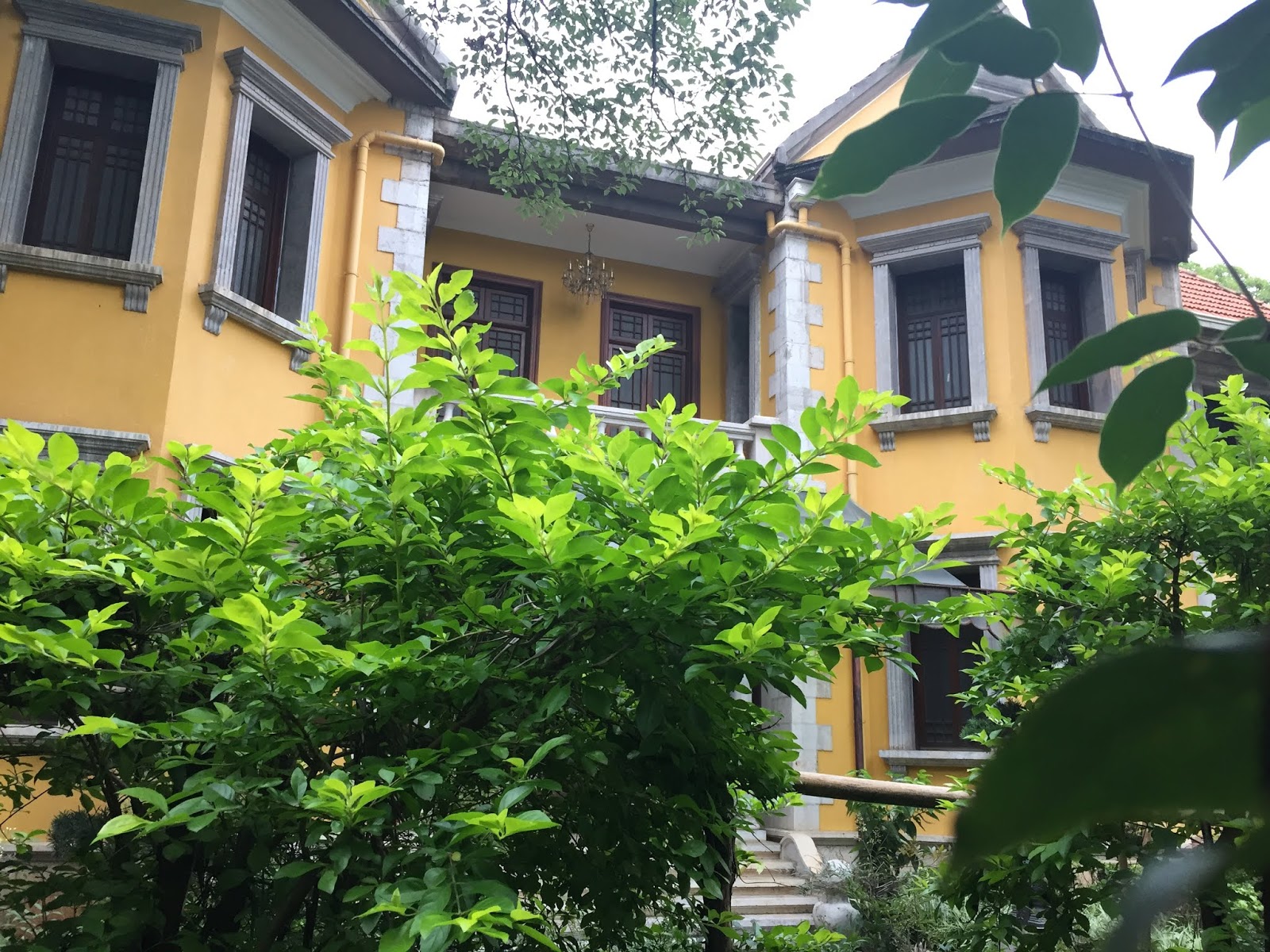
I scout-out more potential settings for my book. French colonial buildings, cobbled streets and lanes.
In what used to be the Kafka Cafe, I find another prized vintage piece.
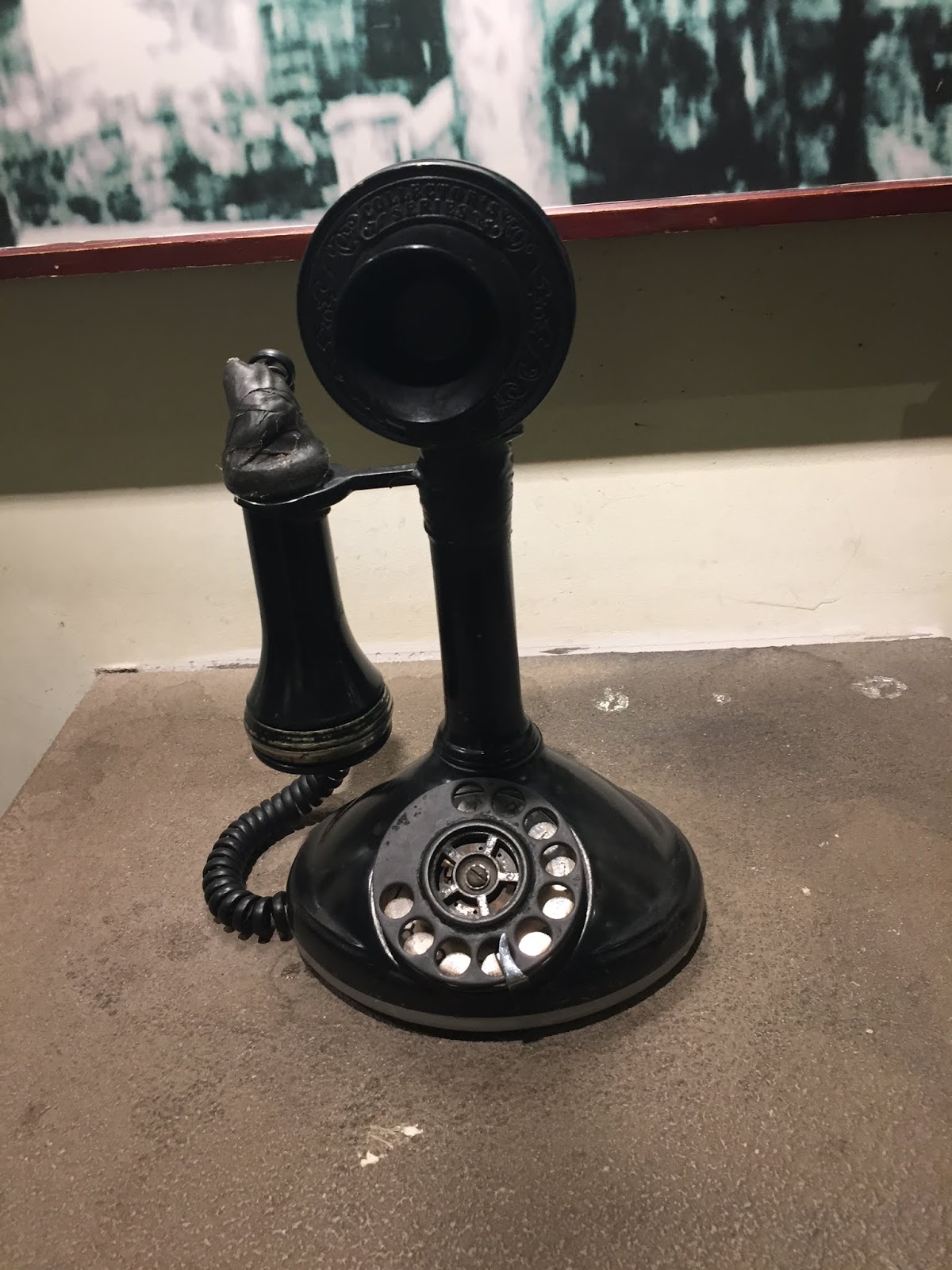
Like all of China, development and overdevelopment has paved over the past, but bits and pieces remain for her citizens to cherish. Soon we're off to Chongqing, the wartime capital of Nationalist China. This was the second main base of American operations.
Next stop: Chongqing (old Chungking)
December 16, 2018
China: In Search of the Past: Part 4: The Four Olds, From Coastal Hunan to Mountainous Yunnan
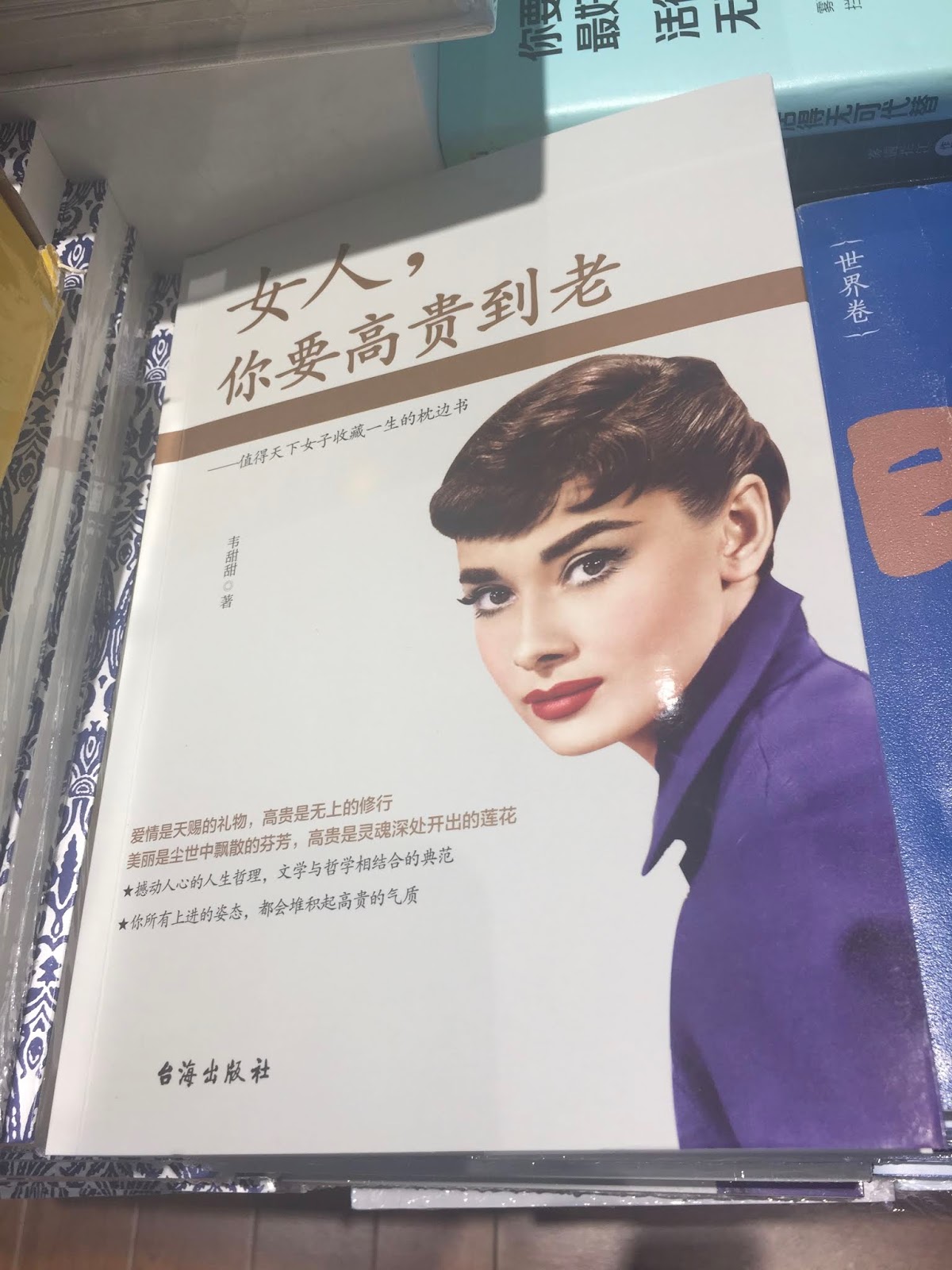 Eternal Audrey at Changsha Airport newsstandAfter many detours, it's back to China. We've been heading north from the Vietnam border of Guangxi Province to Hunan Province—still in the south yet far from the rural, traditional countryside we've been traversing. It's a shock arriving at the huge, humming railway station of capital Changsha. Hunan is the birthplace of Mao Zedong, who has been resurrected as a figure of reverence by the current leadership. His home village is a place of pilgrimage. We did not visit.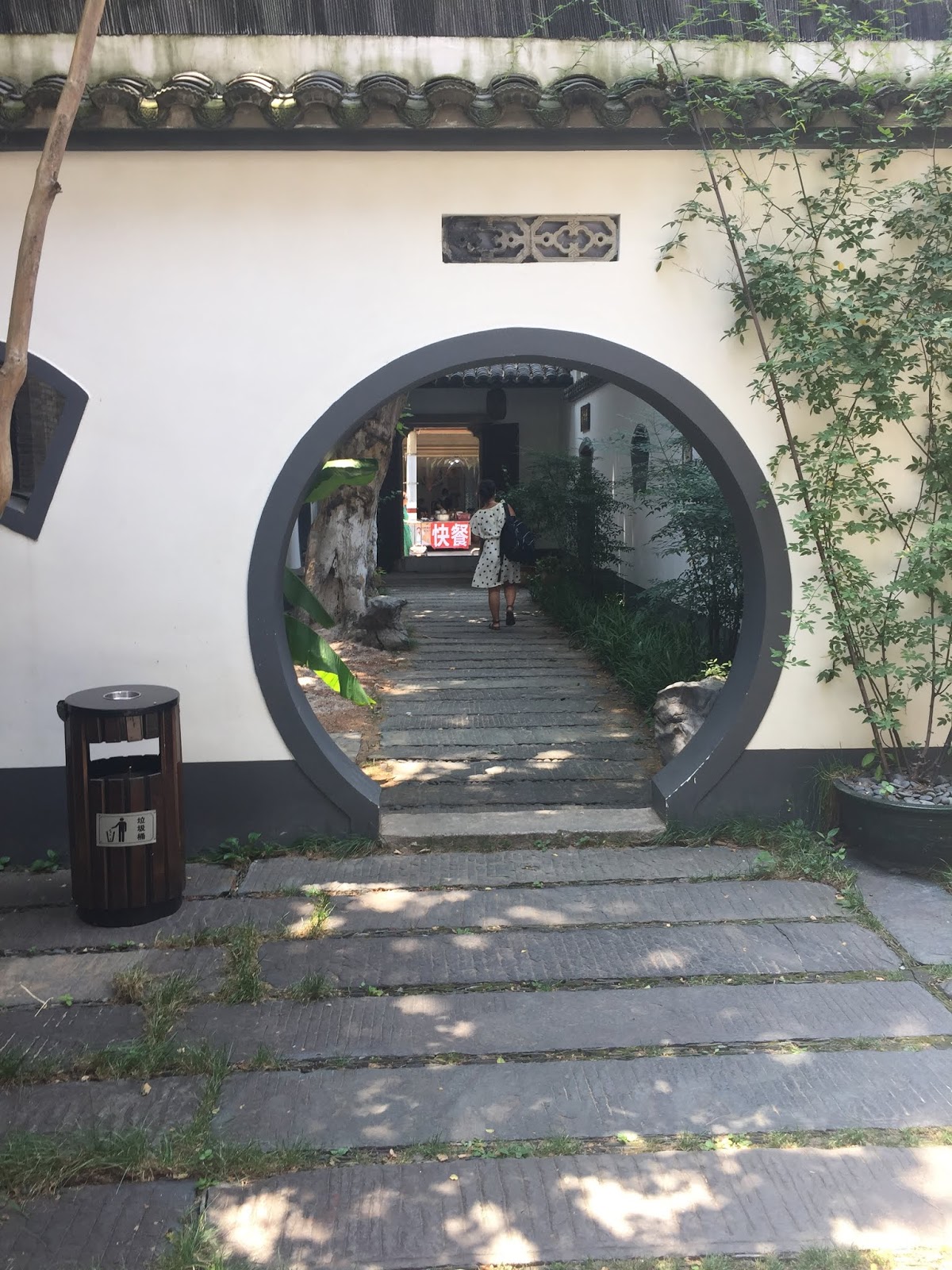
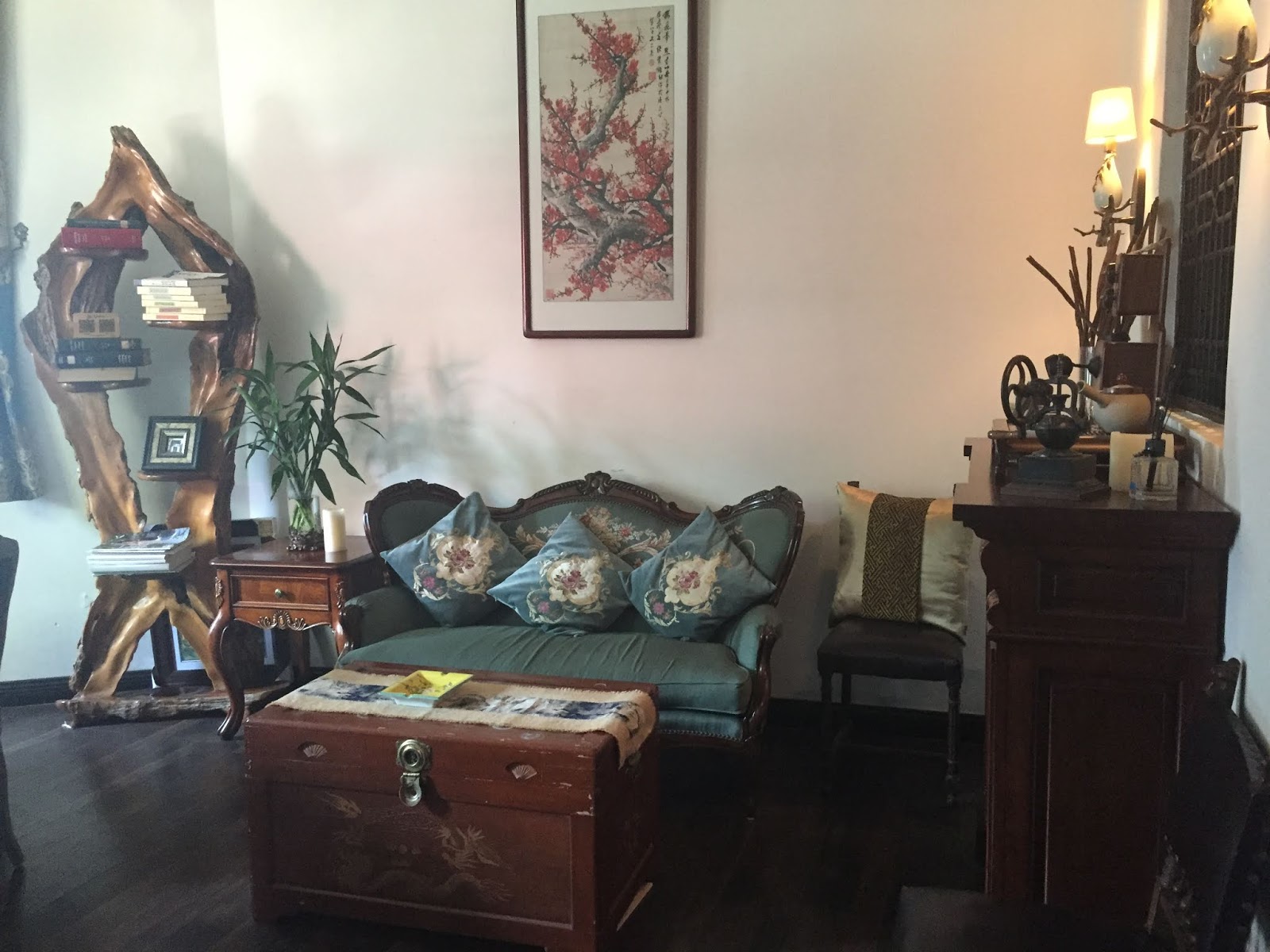
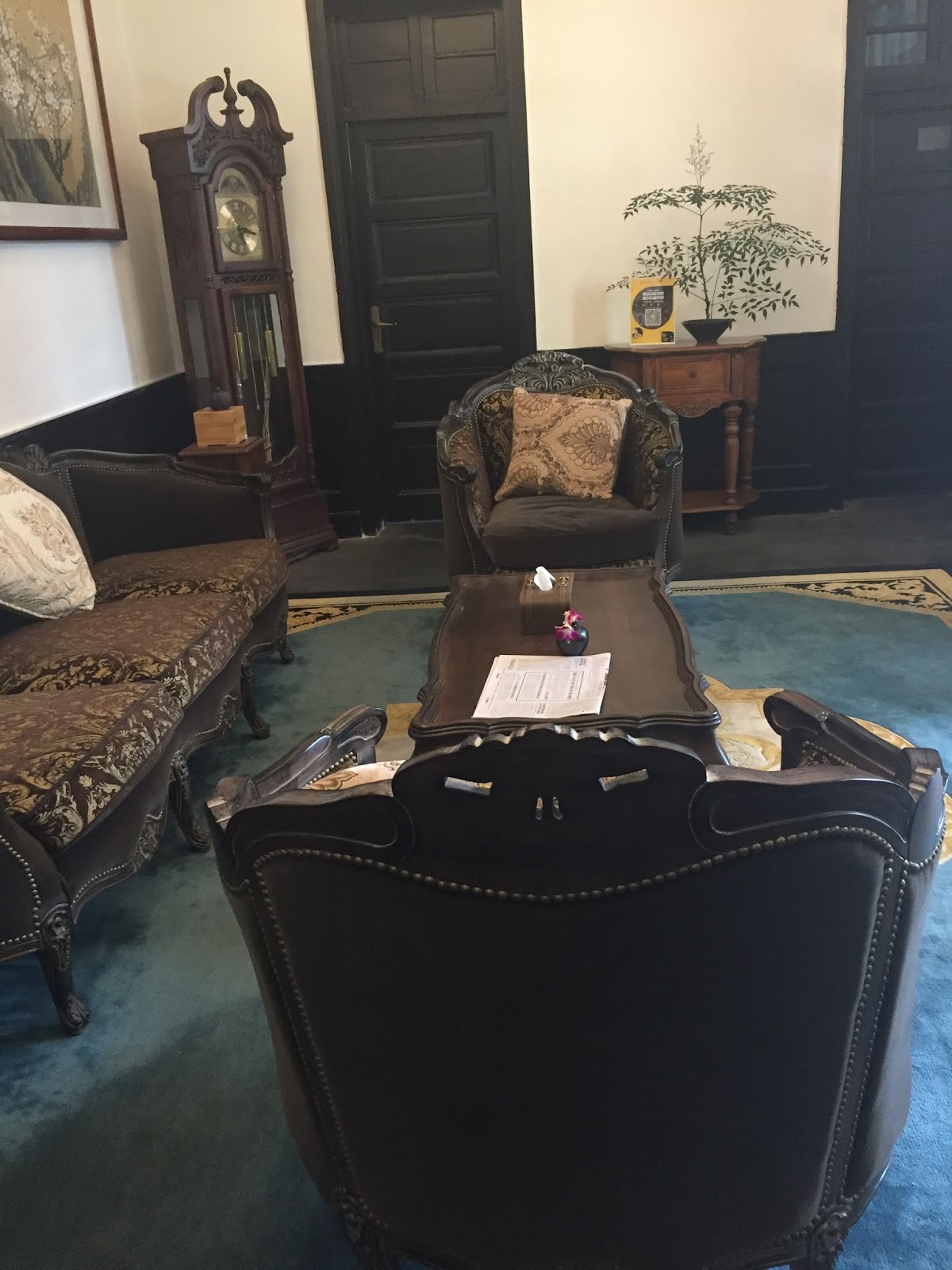
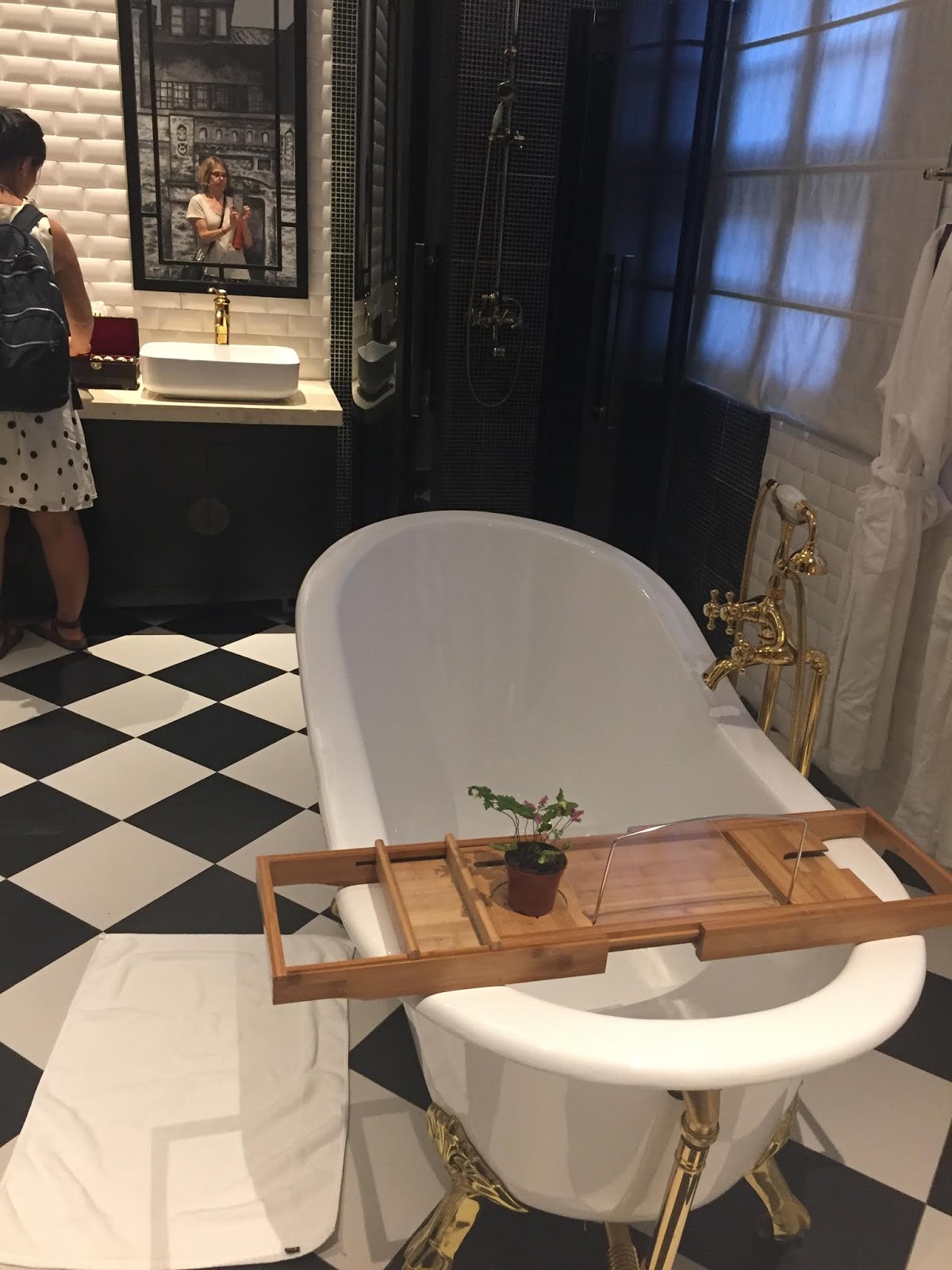
At Changsha's Mayishun 89 hotel, a beautifully restored mansion, I get my first glimpse of how precious are pieces of the past in a land where 20C history was erased. For the rest of our travels, I'll see the value placed on period structures and objects, mostly destroyed during Mao's Cultural Revolution against the Four Olds—Old Customs, Old Culture, Old Habits, and Old Ideas. This loss is till felt today.

As my book is set in 1940s China, I'm "scouting" settings and decor. Perhaps this will be the secret police chief's sitting room. And bath.
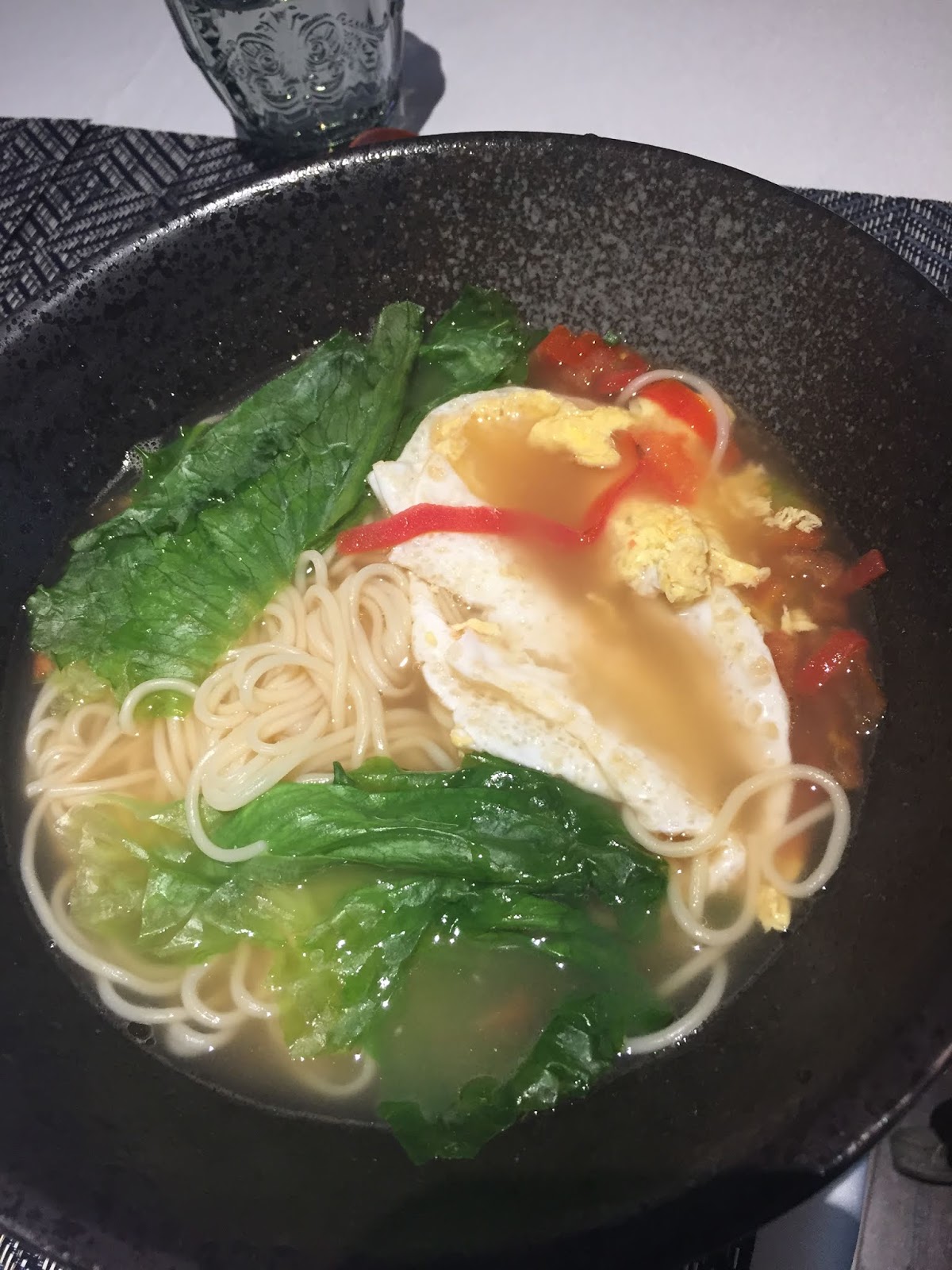
My daughter calls breakfast a social construct. Why not greet the day with spicy noodle soup with eggs—and a side of watermelon?
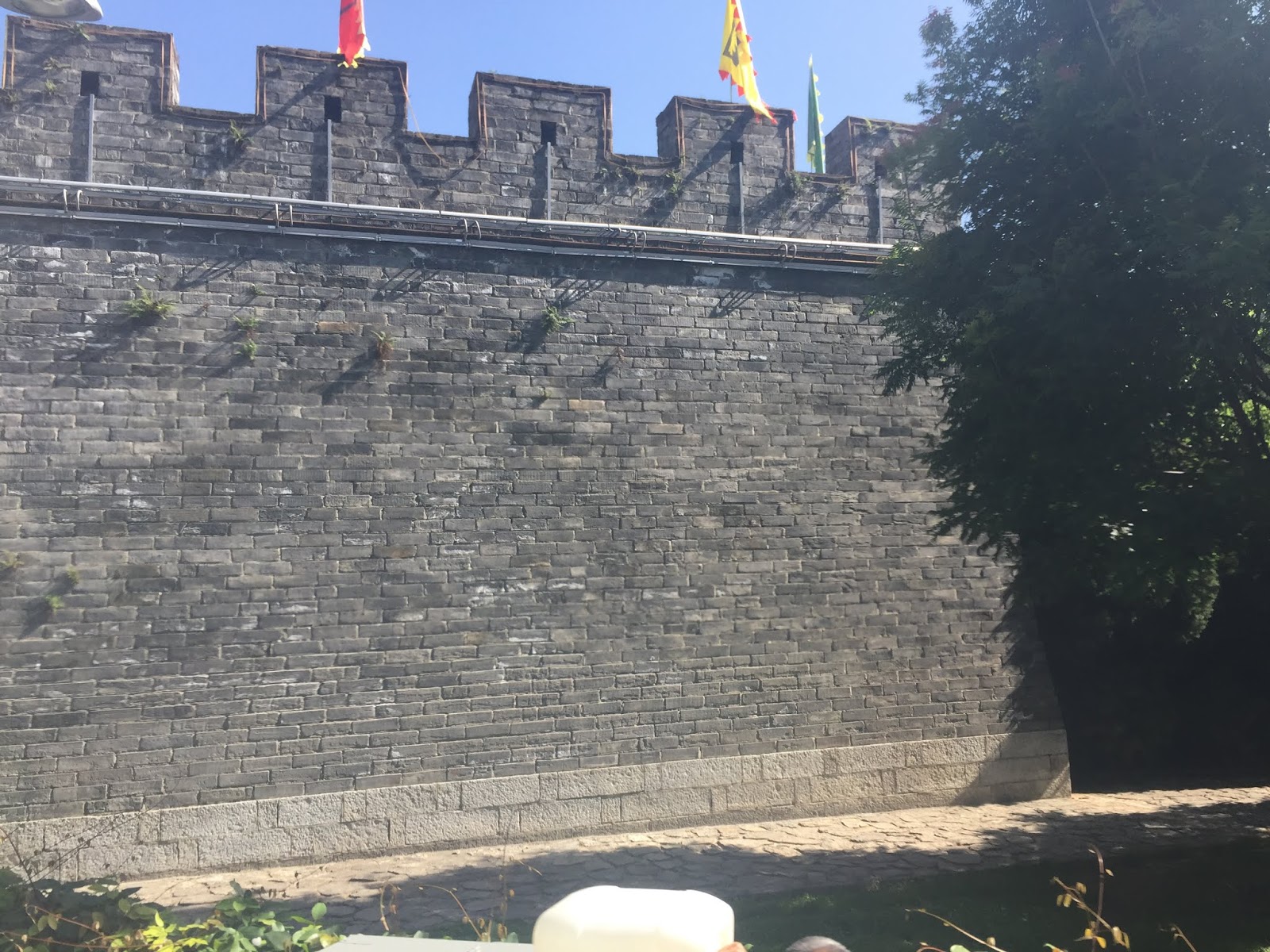
Outside the courtyard gate, Changsha's summer humidity makes it difficult to move. We're not sorry to board our cross-country flight to the mountains of fabled Dali, Yunnan Province. This southwest region borders Thailand, Laos, and Burma, creating a mix of bloodlines with several indigenous peoples. From the days of warlords and warring kingdoms, here are Dali's old city walls.
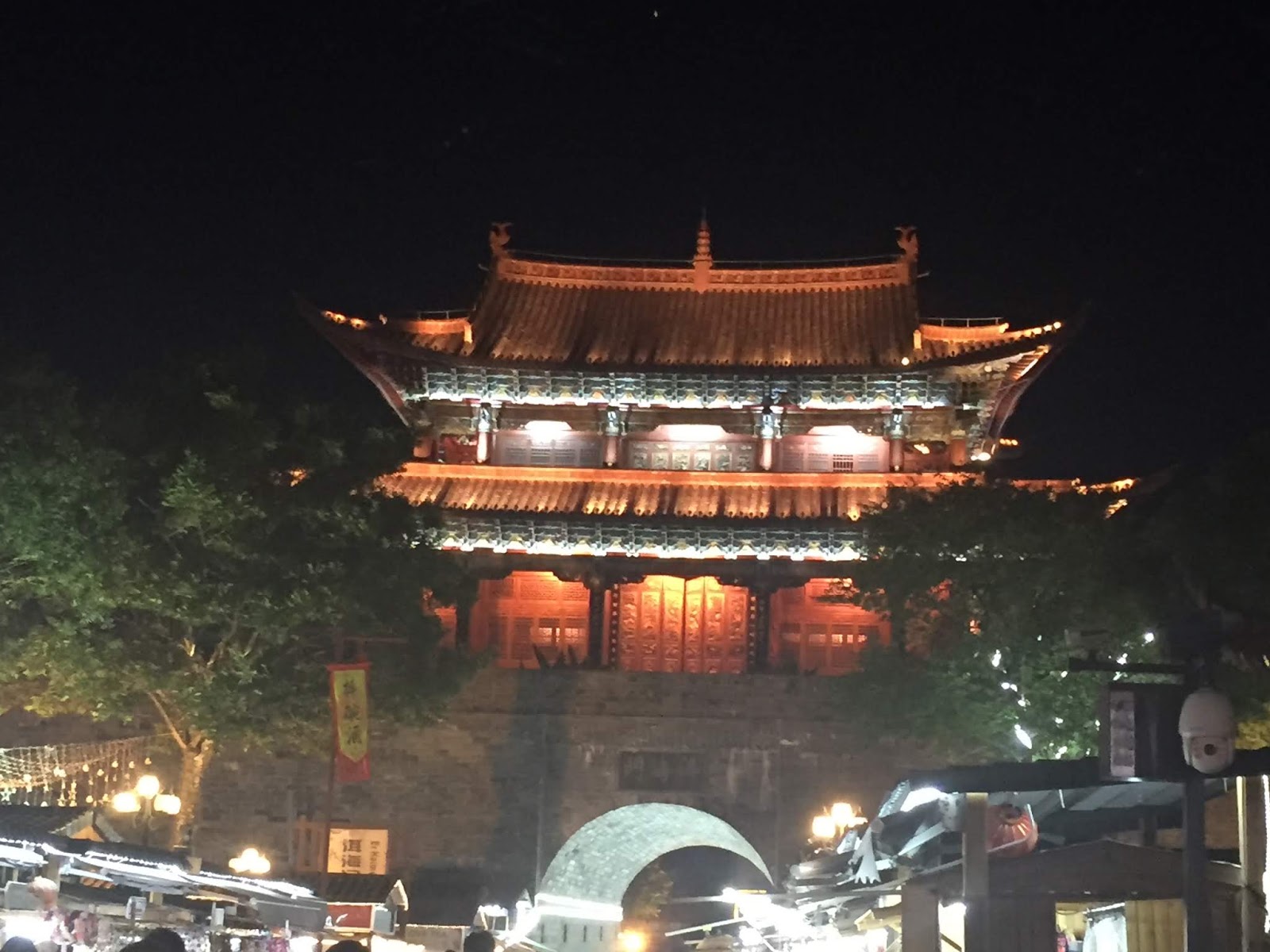
The Old Town walls and temple at night.
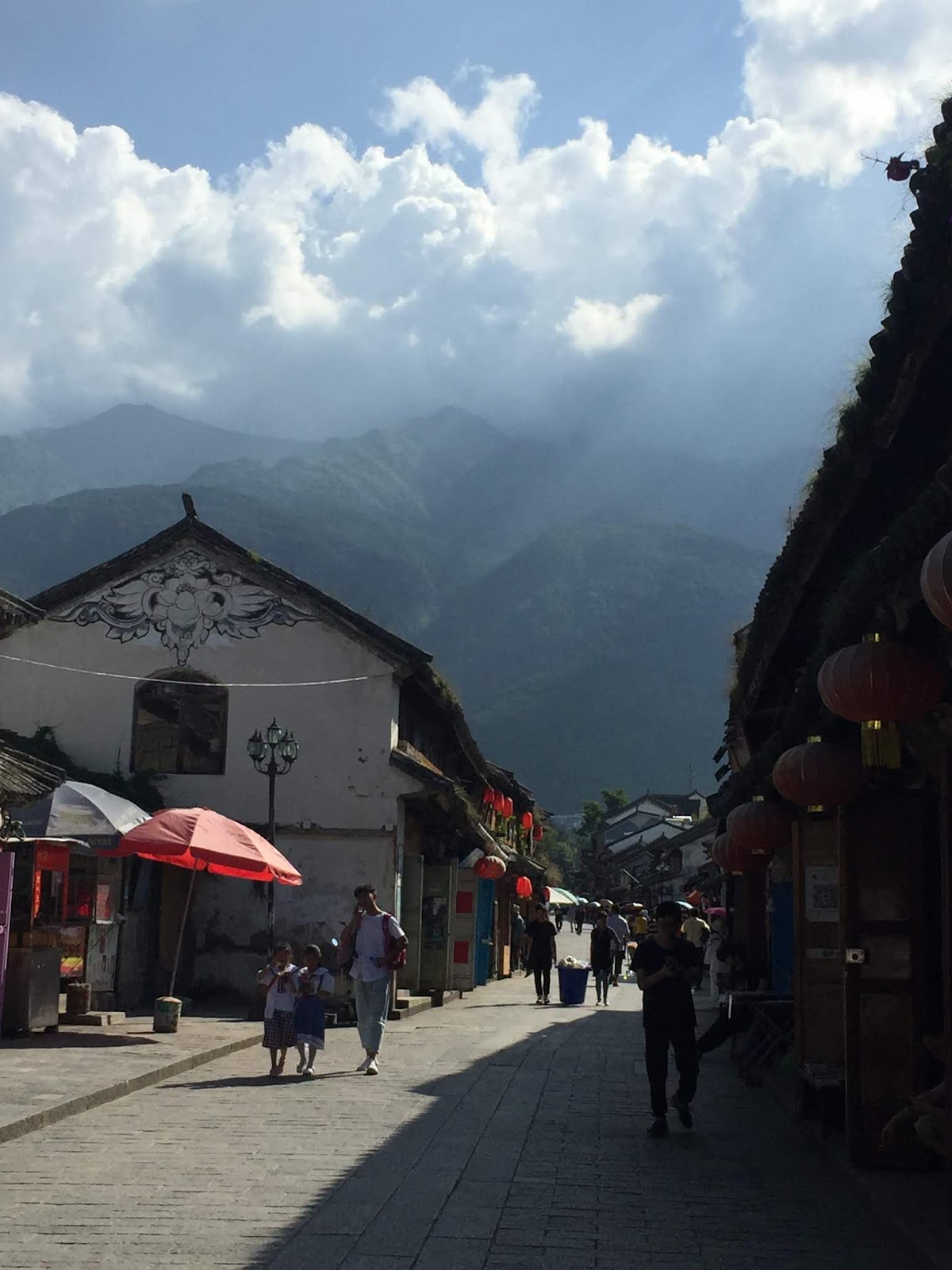
Avoiding China's pervasive over-development, Dali has followed a wiser path. As a result the natural beauty and traditional culture are a big tourist draw. Especially for the majority Han Chinese, who are drawn to its village-like charm, clean air—and again, sense of a lost past. Everyone hits Old Town's rousing night market.

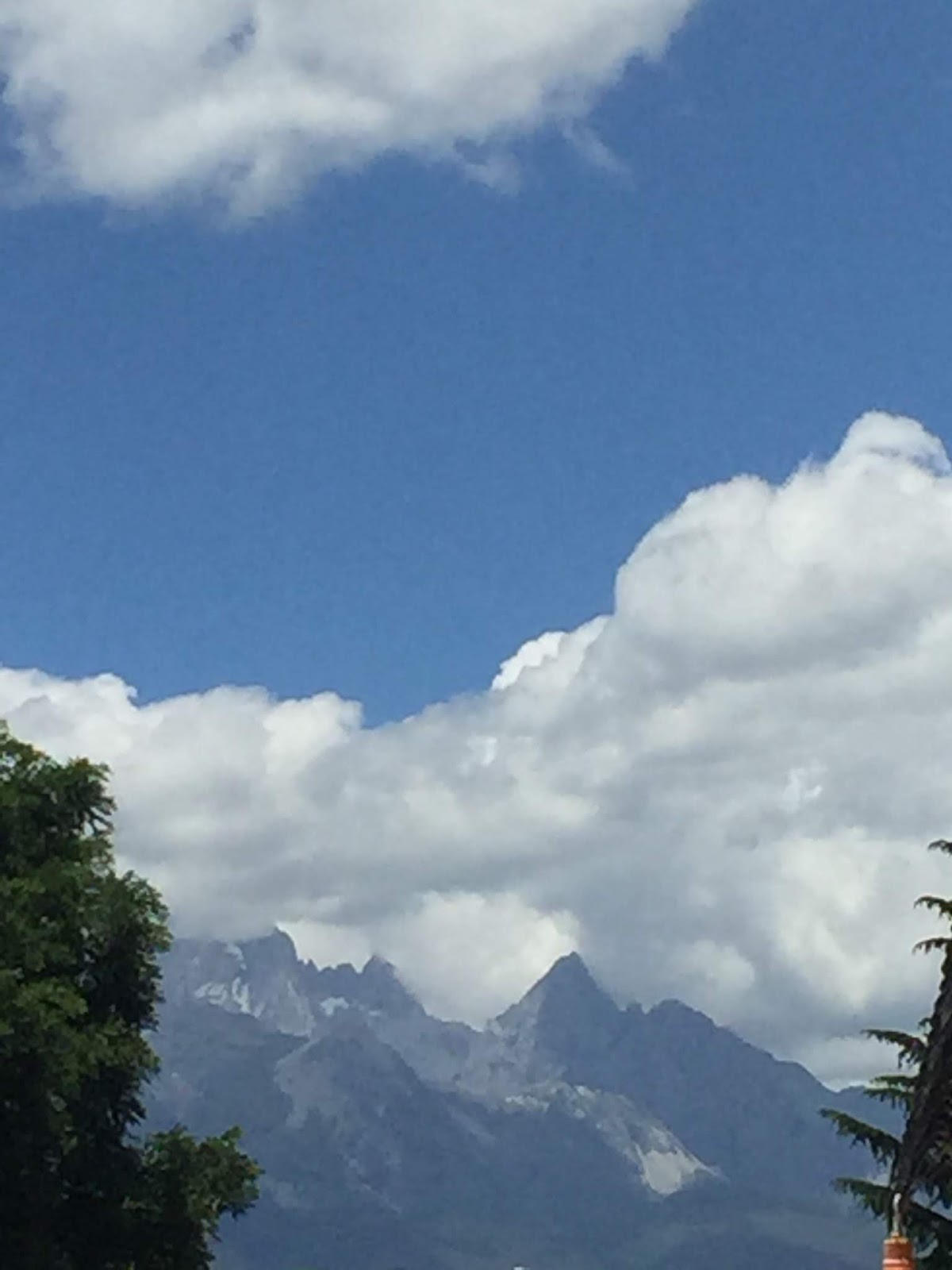
The Cangshan mountains provide a stunning backdrop for the old market street.
Dali's traditional style is reflected in these views from our homey yet refined Old Town guesthouse, Yunxi Boutique Inn. It's a fine place to chill after our busy travel—especially its peaceful terrace.
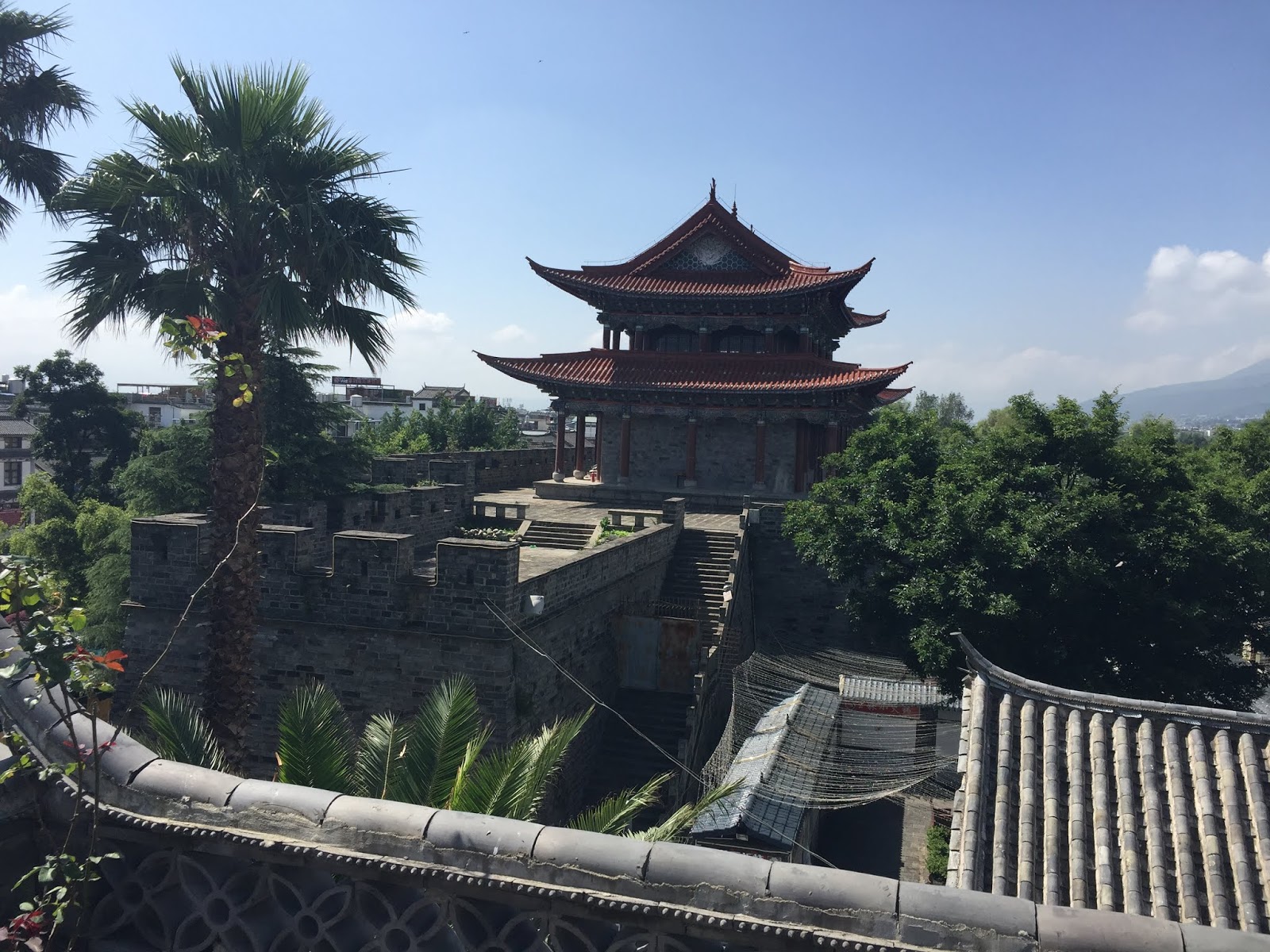

 Yun Xi Boutique InnThe next day, taking a bus up the mountain to Lijiang, we have another view of the old city walls.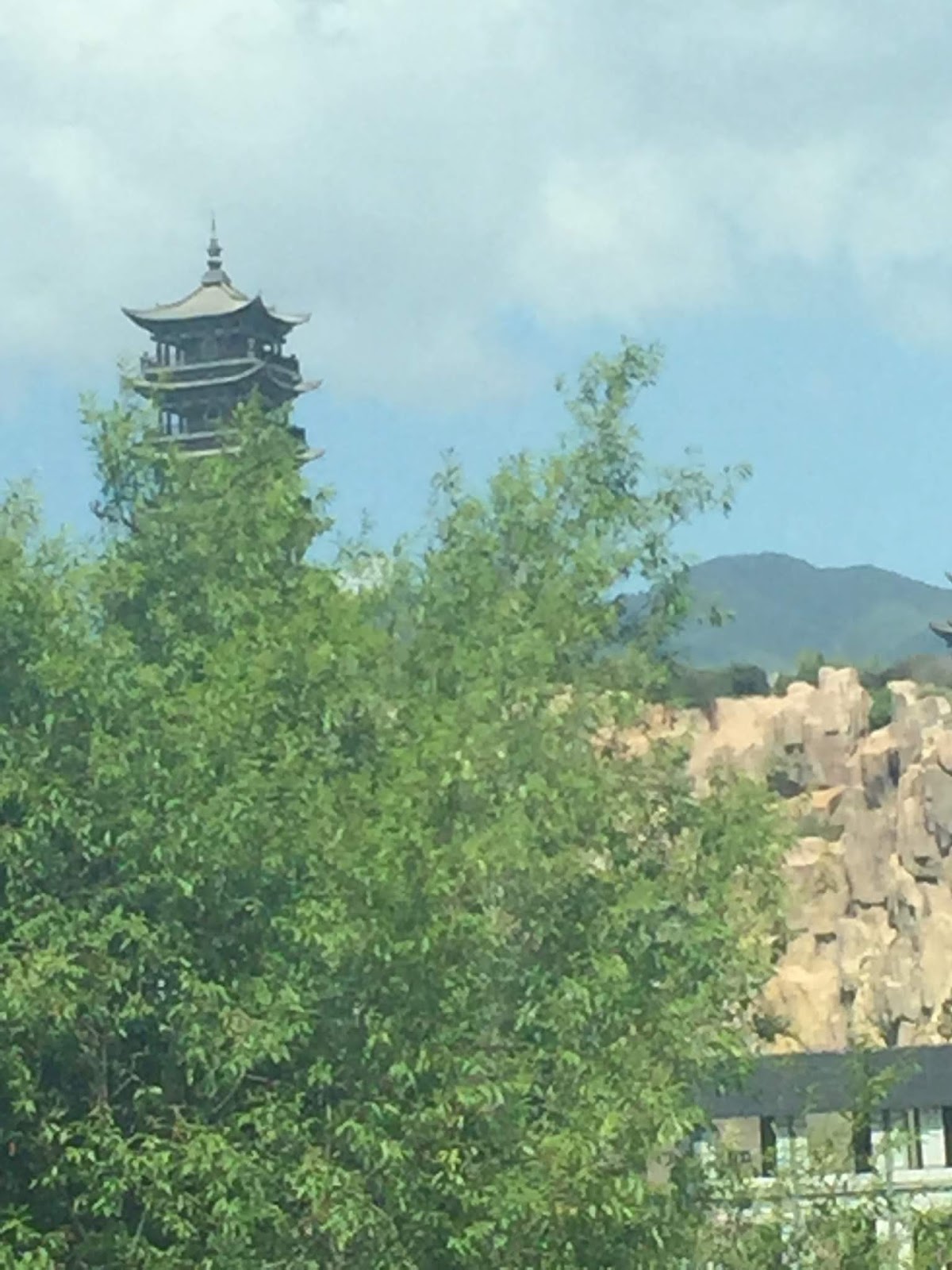
Reaching Lijiang two hours later, I'm seething at the tragedy of tourism run amok. Even so, this old tribal village is insanely lovely.
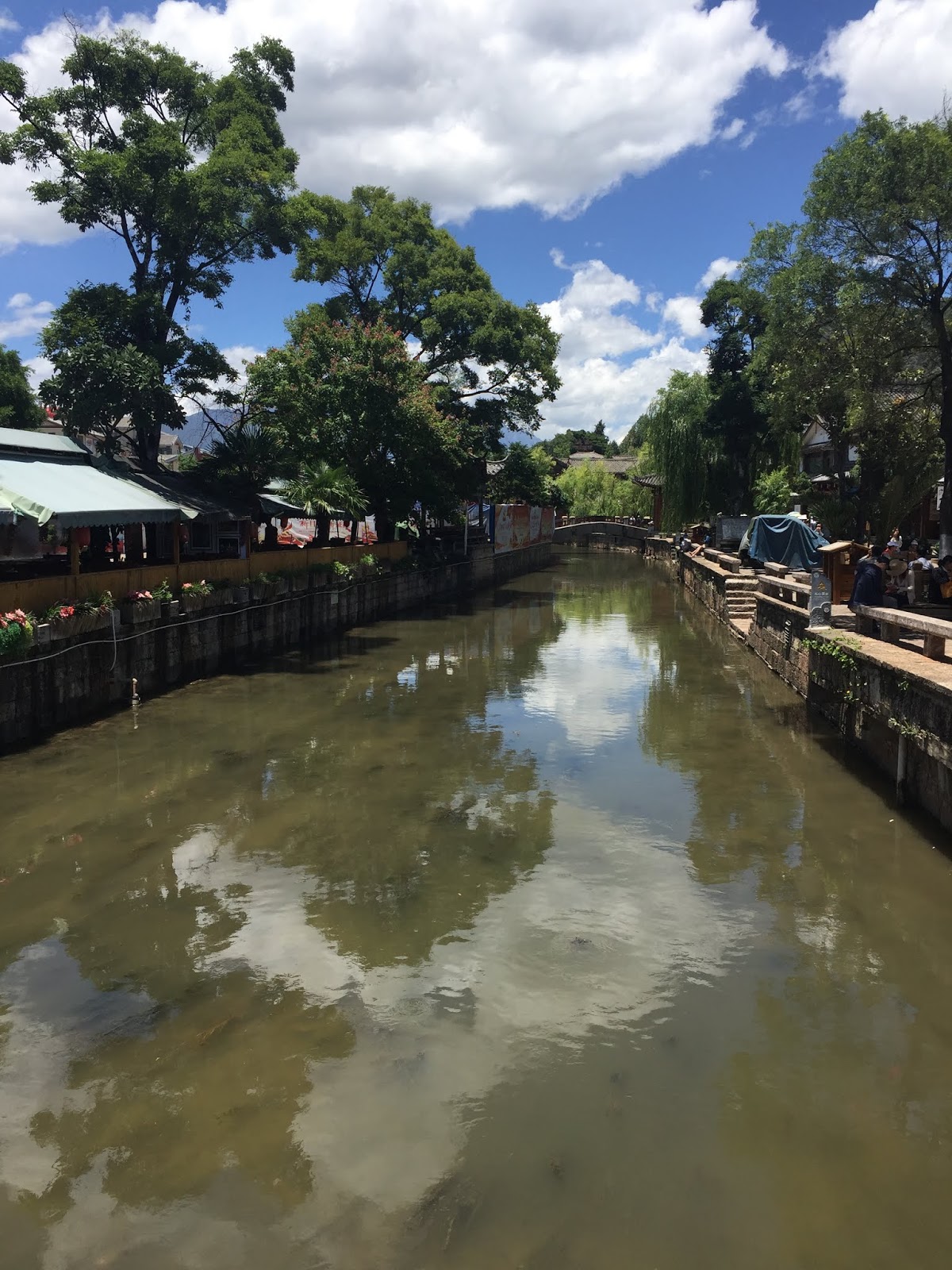
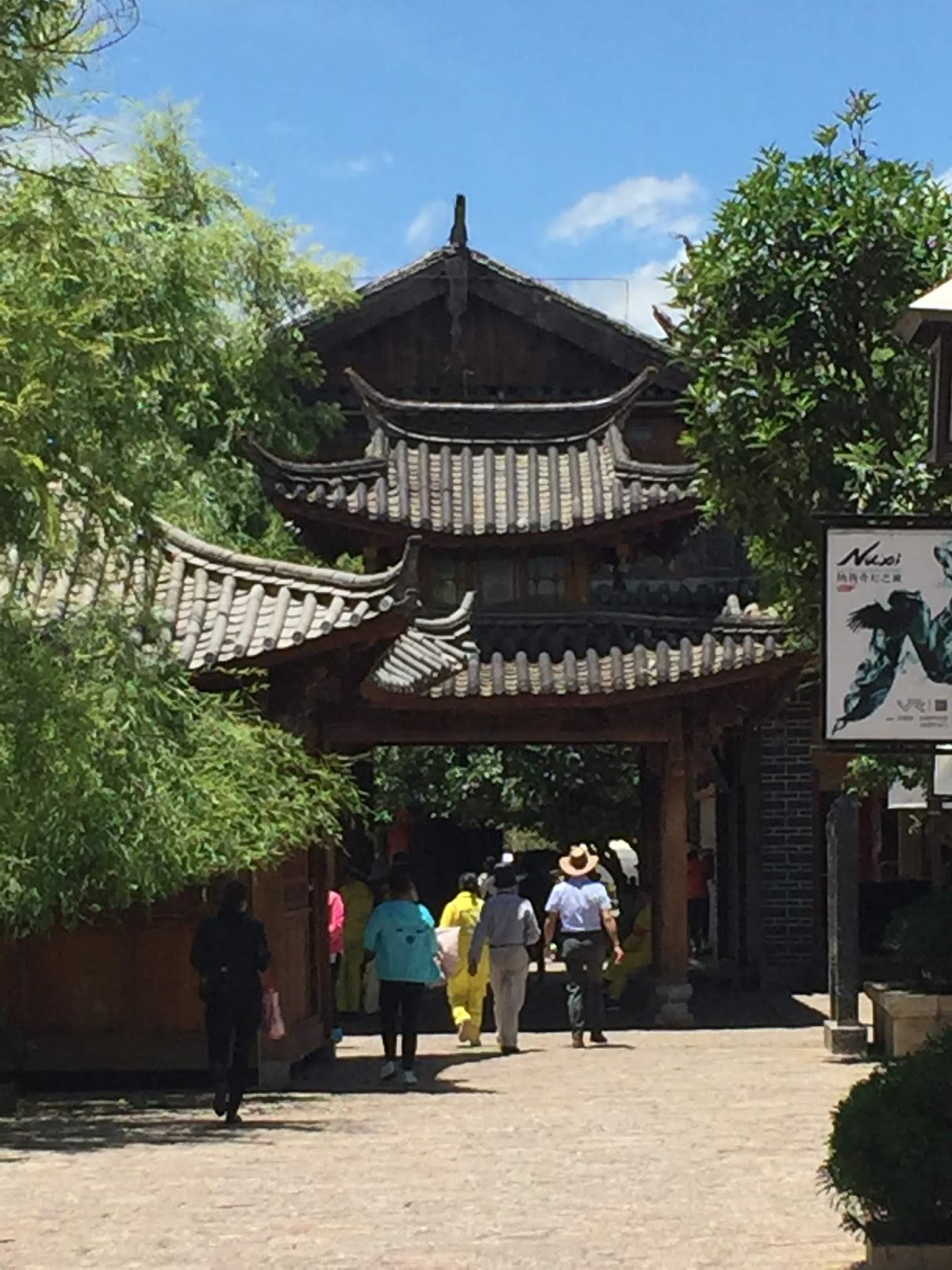
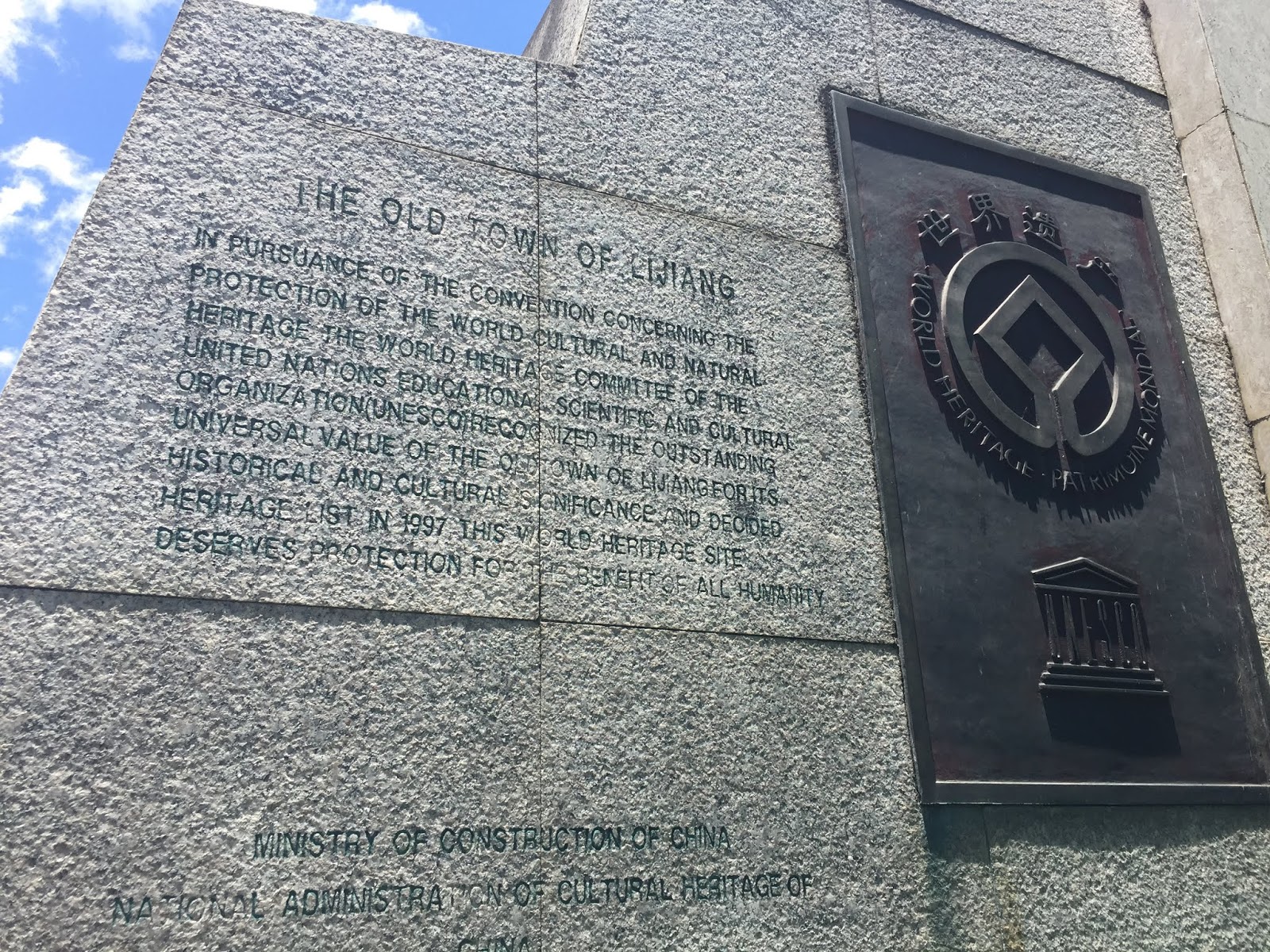
Lijiang is a World Heritage site, which "deserves protection for the benefit of all humanity." Seeing this tourist Disneyland, I doubt the cynical development is what UNESCO envisioned.
Yet Lijiang's natural charm can not be denied, every angle massively photogenic.
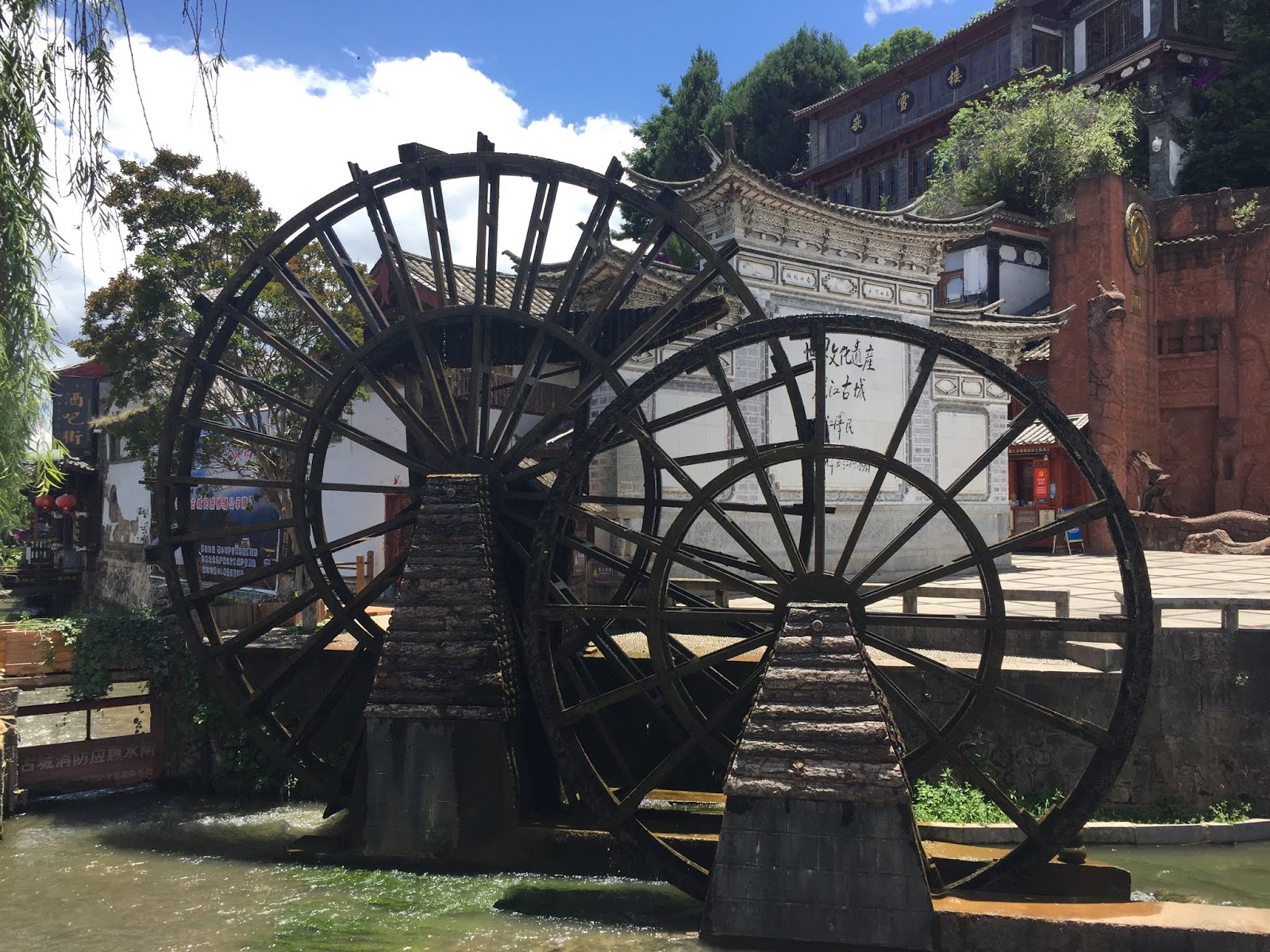
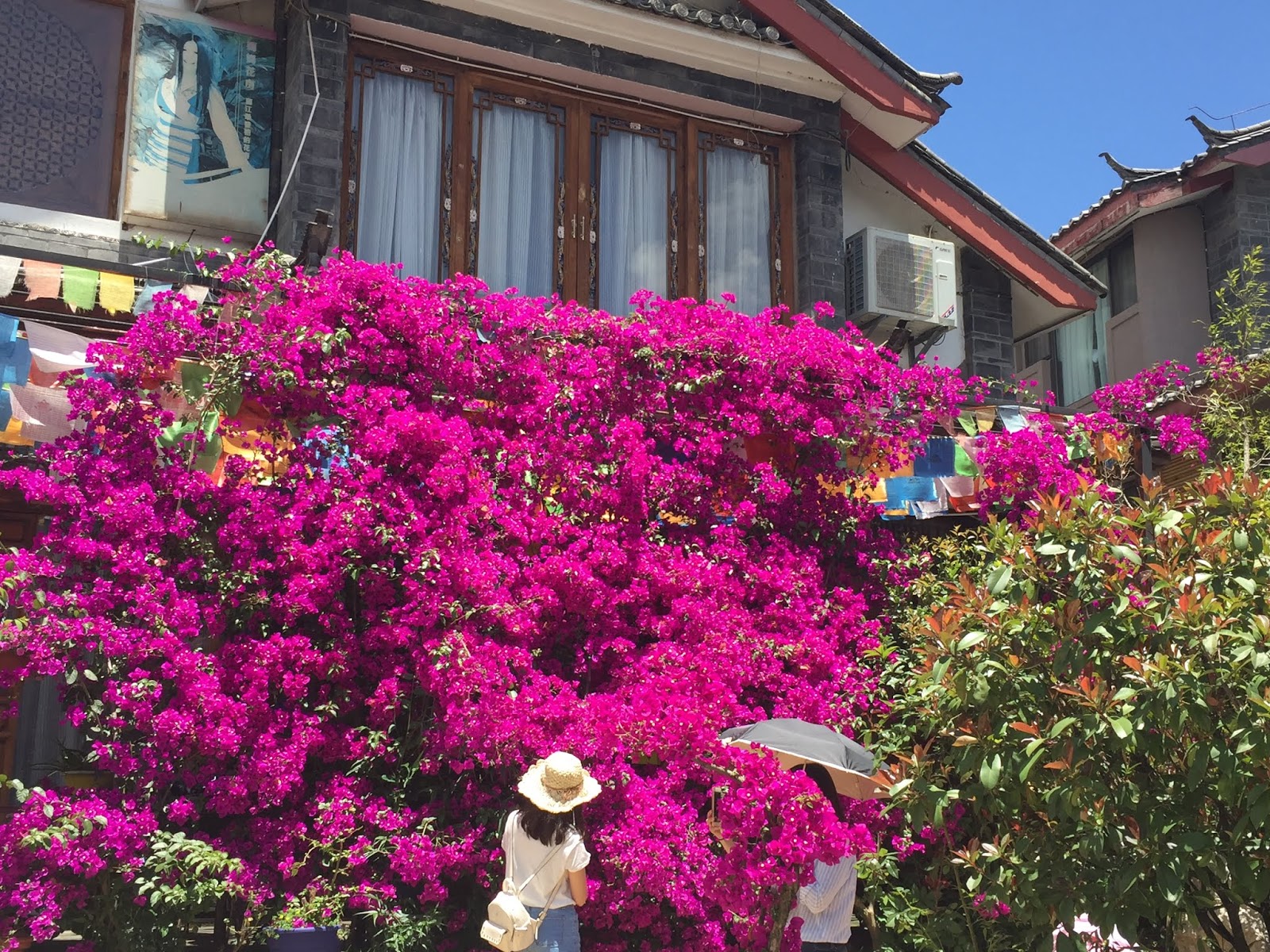
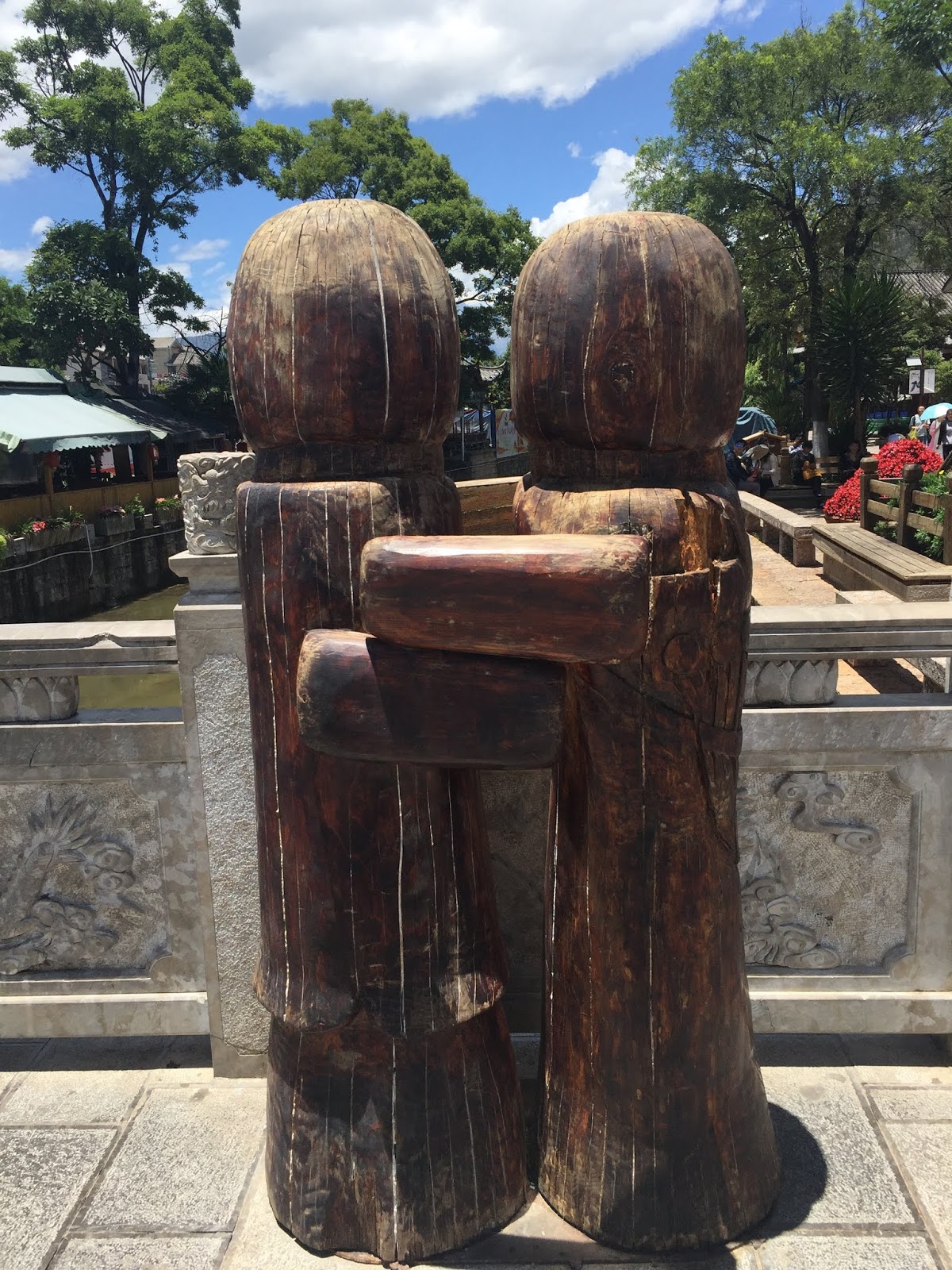
Conflicted by the pull of past and present, we take the bus back to Dali for more Night Market fun.
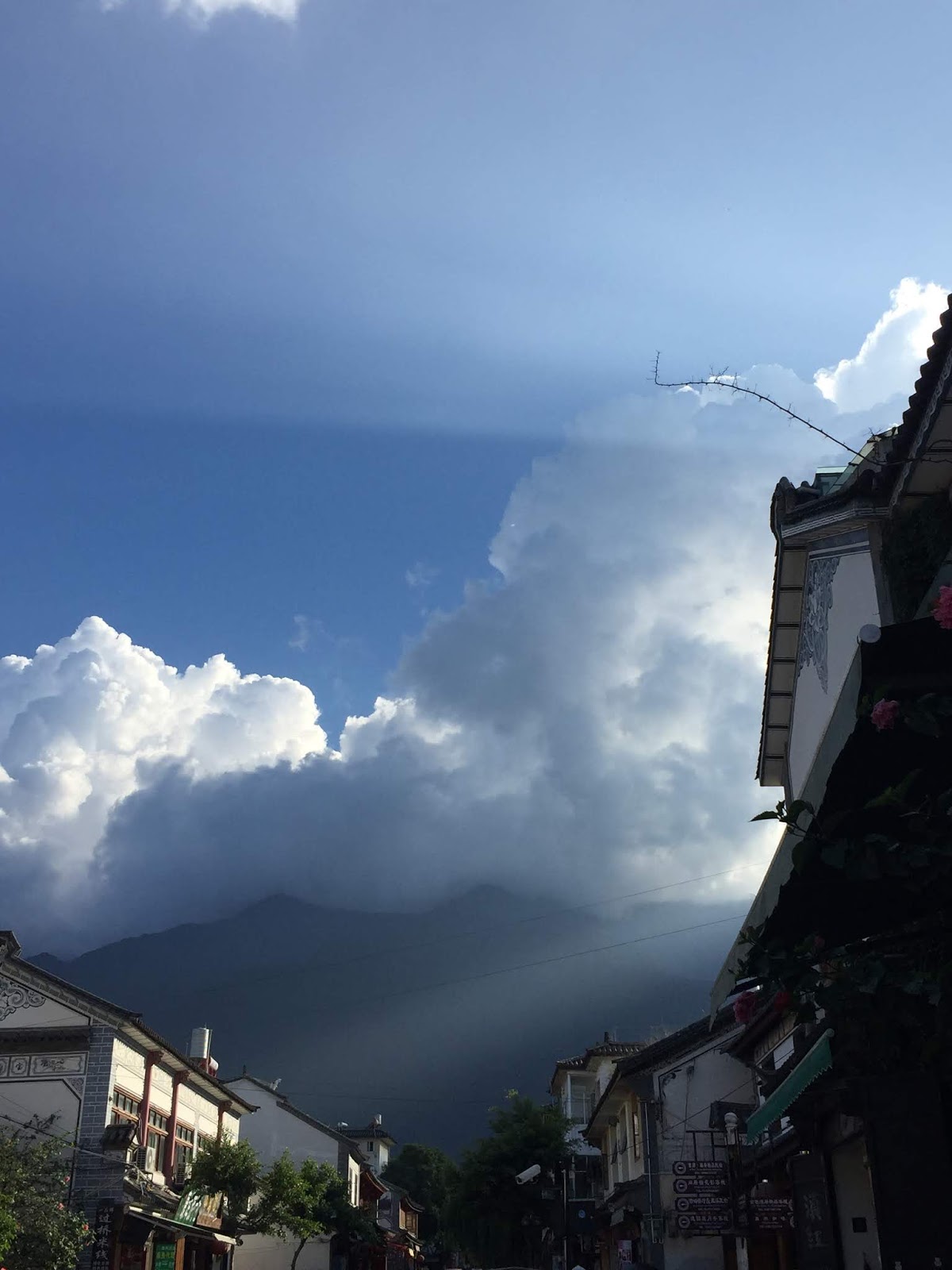
Next stop: Kunming, Yunnan
October 30, 2018
China: In Search of the Past: Part 3: Guilin/Yangzhou
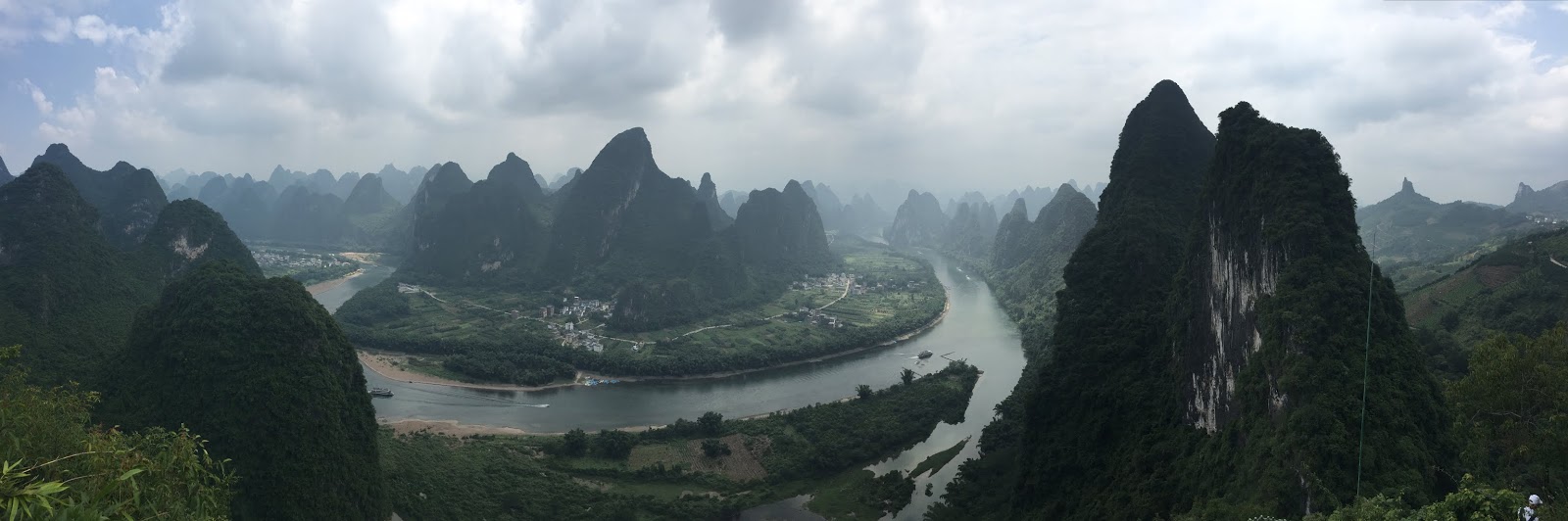
We leave Nanning's pristine train station and after a spectacular two hours of Guangxi Province scenery reach Guilin. Guilin is revered in China for its winding Li River and sculptural limestone mountains—an eternally popular subject for Chinese poets.
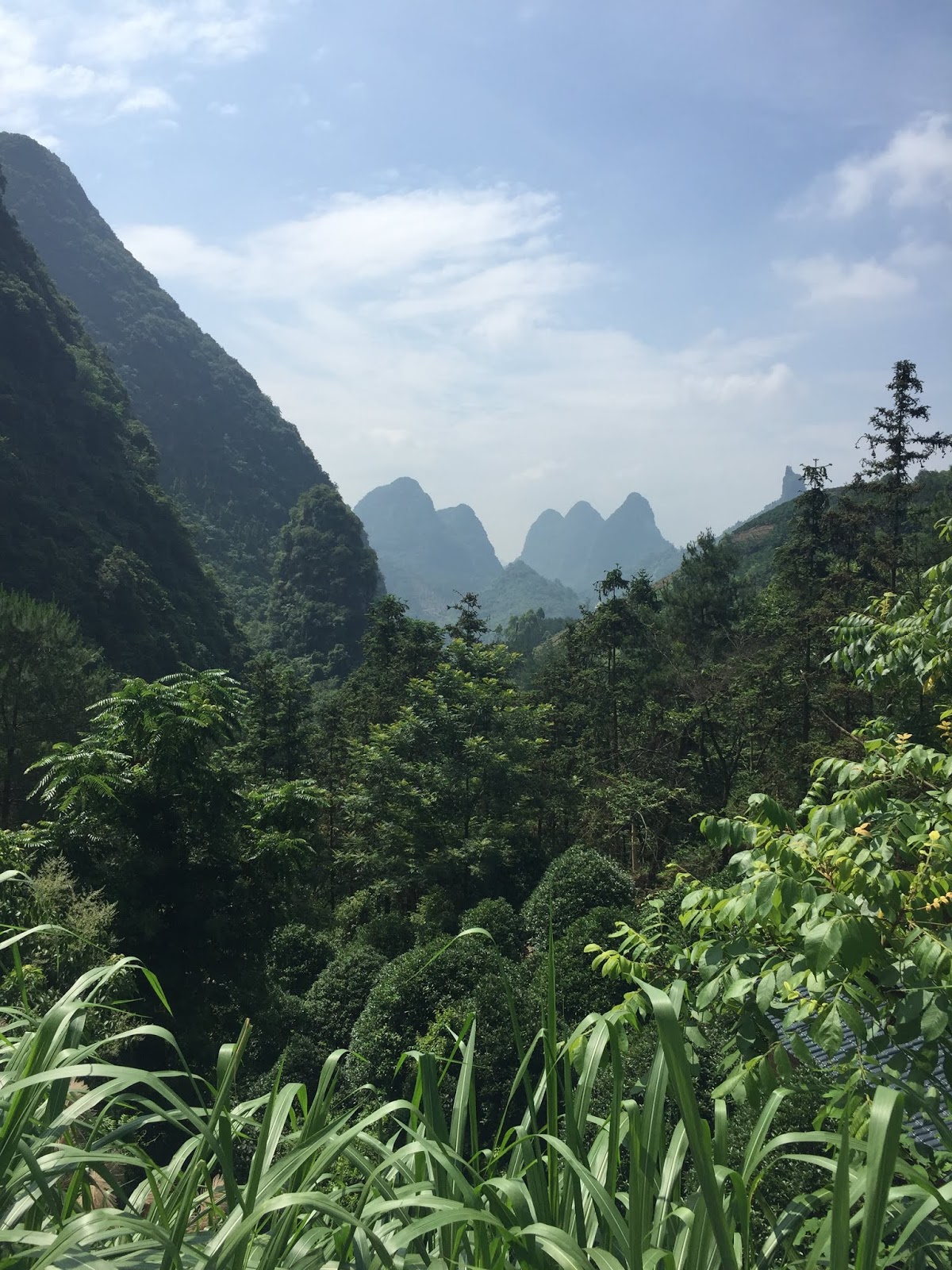
However, coming from Guangxi's deep-deep south, I know these staggeringly beautiful mountains exist throughout the region and down to Vietnam. As far as branding, though, Guilin got here first.
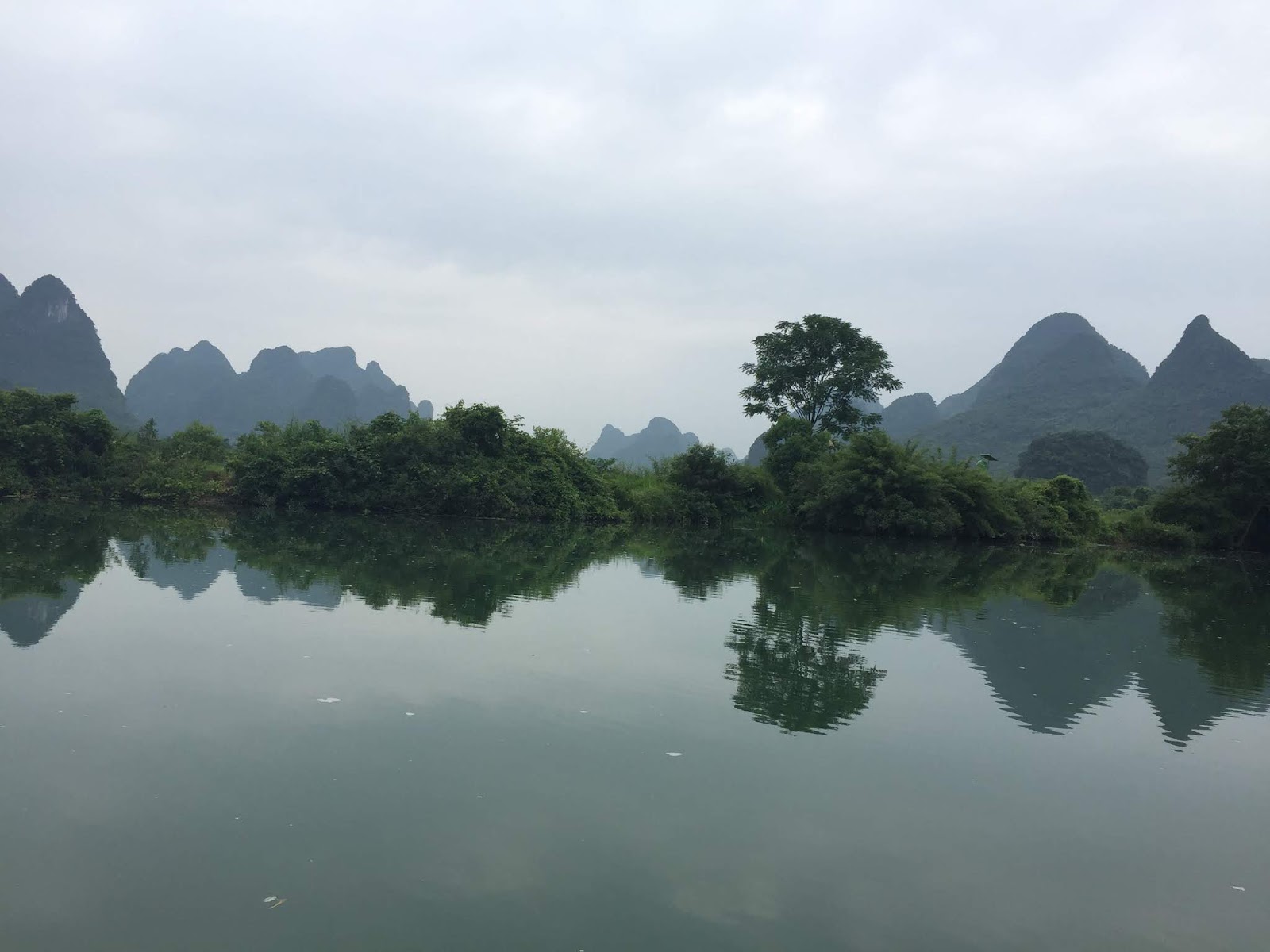
Whereas we stayed at a slick new resort in Nanning, here we have chosen the elegant yet homey Zen Tea House along the river.
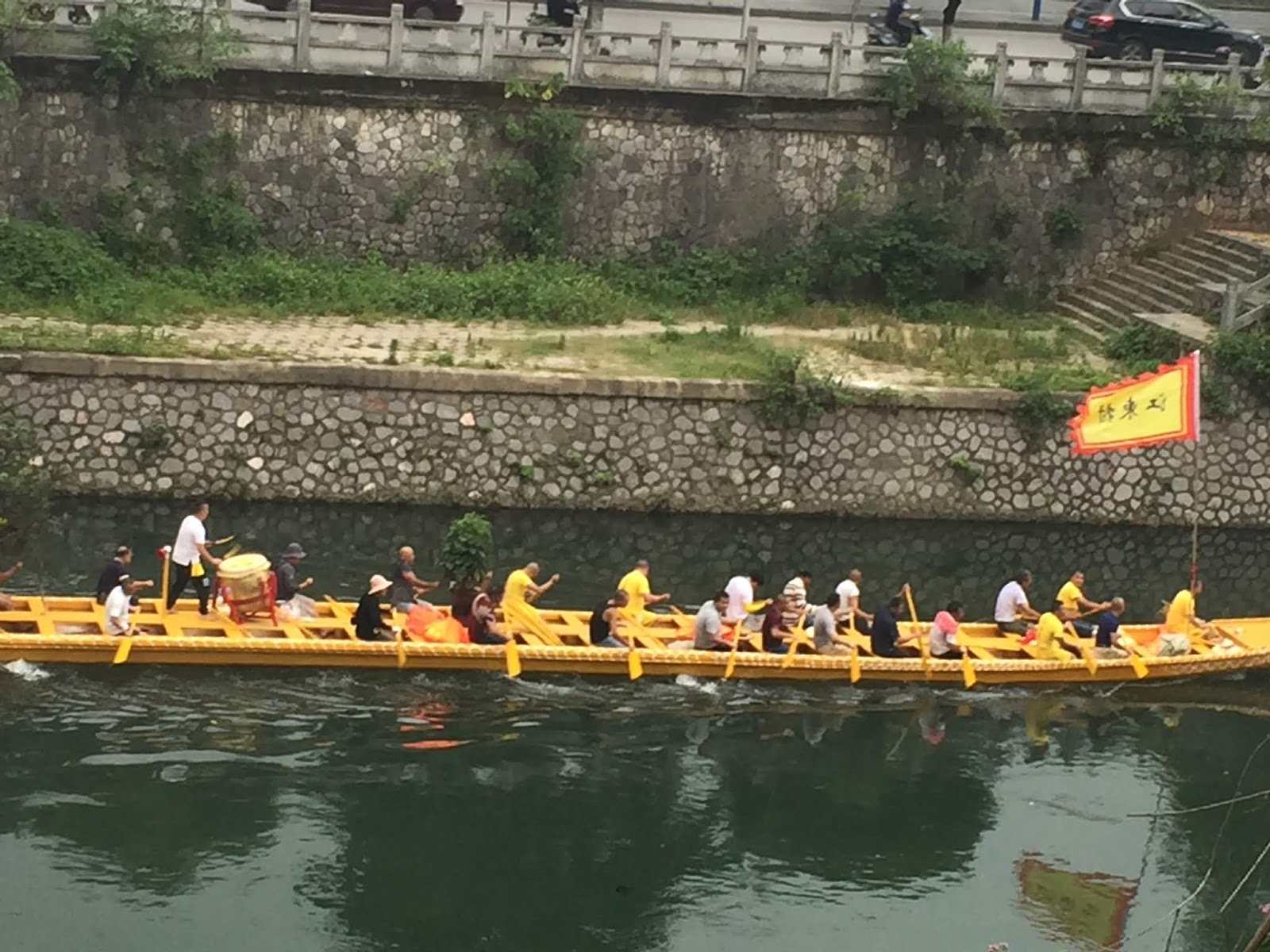
Just in time we arrive to see boaters practicing for the Dragon Boat Festival, a major Chinese holiday.

A lovely hotel guide, Alice, takes us on a walking tour of the city, including its traditional covered market and trendy exterior mall. There are parks and universities, and the quality of life is one of the best in China. Many people are leaving the big, congested cities and choosing more tranquil yet cosmopolitan towns like Guilin.
The next morning we leave with hotel guide Jackie for a day in the country. He is eager for us to experience the real China. We begin with "Husband Hill," which bridal couples climb before their wedding for photos, hugely important here. It's a very steep "hill" and I imagine hiking it in an elaborate gown or tuxedo.
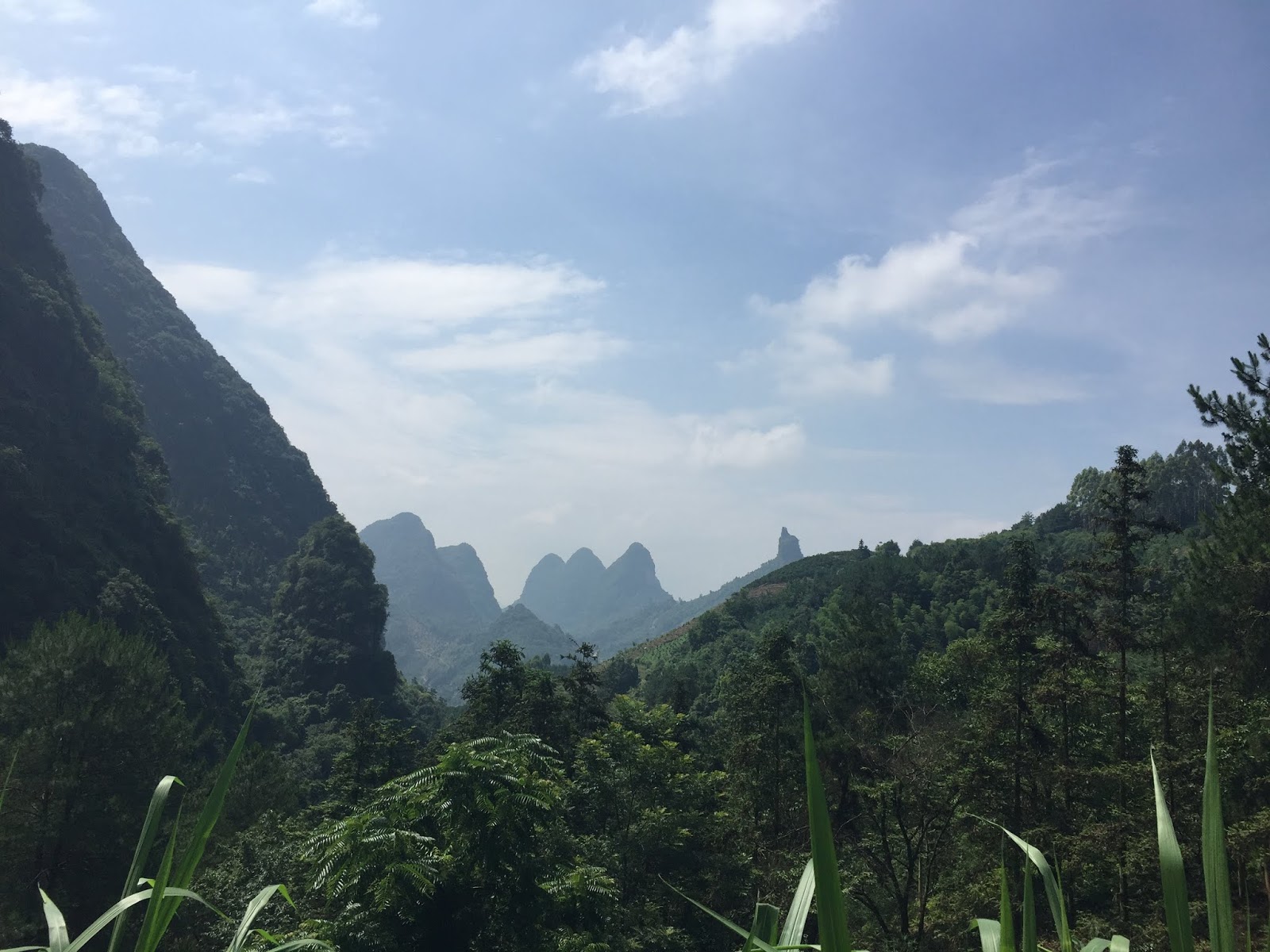
But such a backdrop for the memory book!
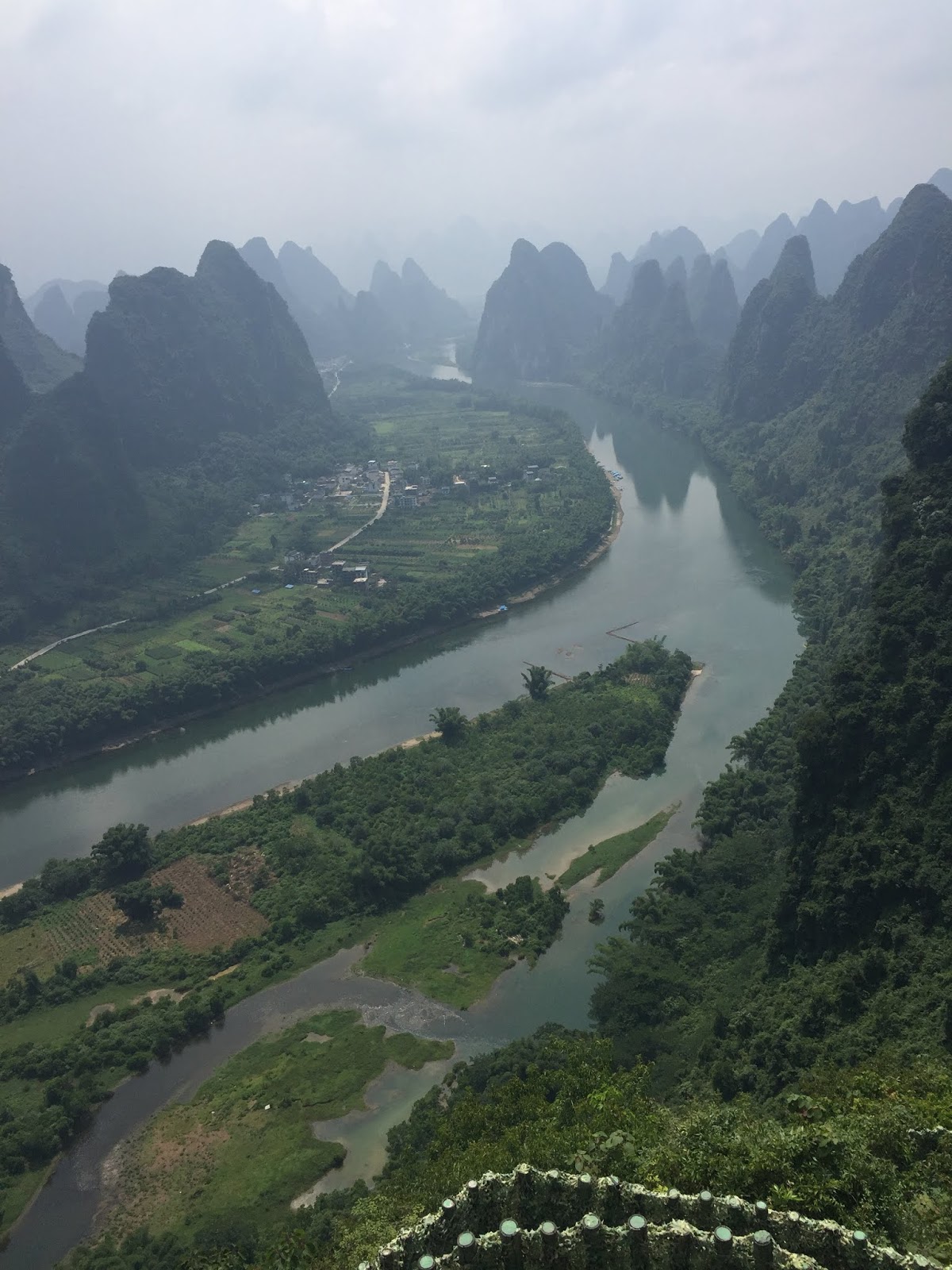
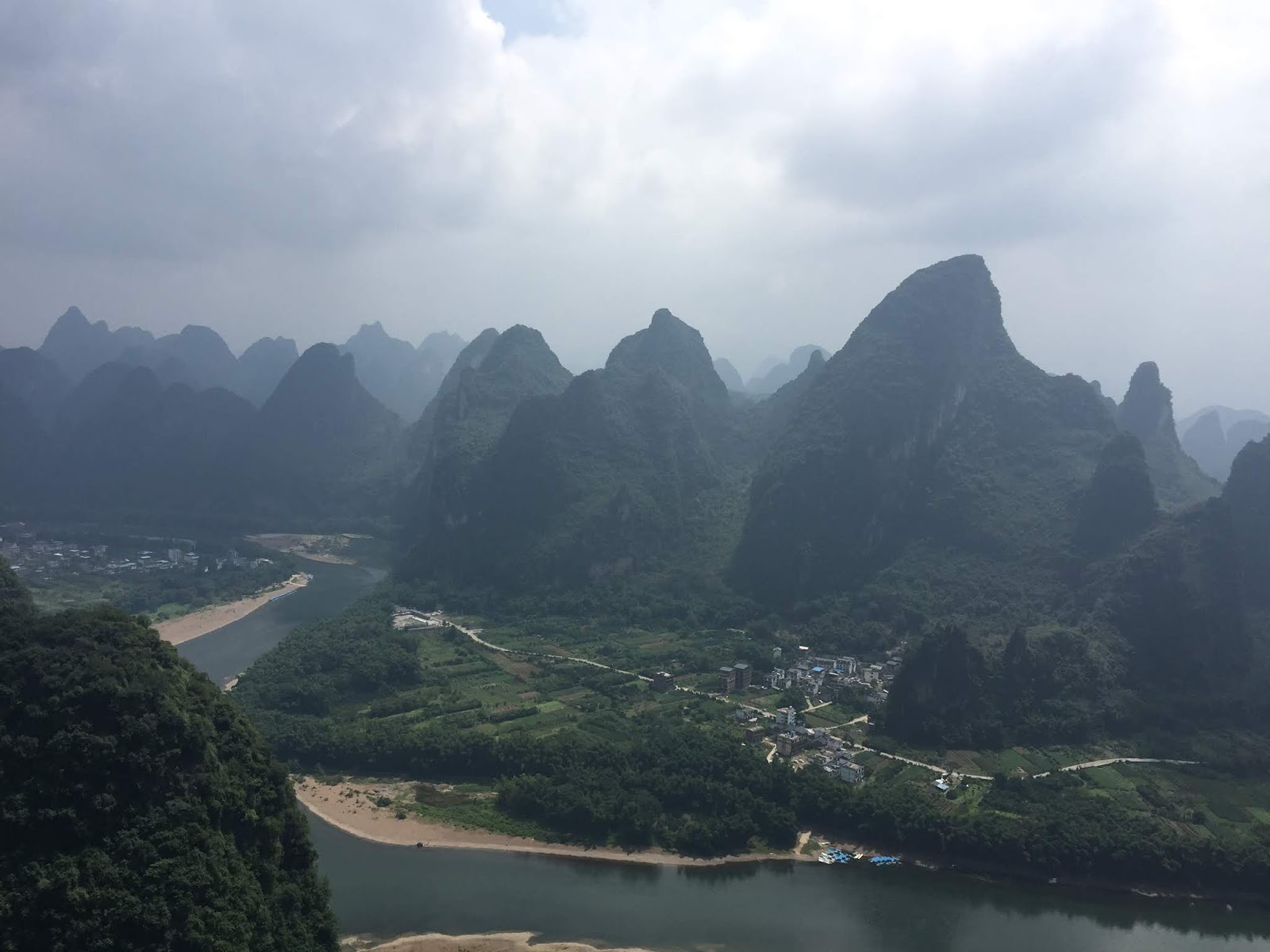
At the top, thoughtful Jackie prepares a traditional tea service.
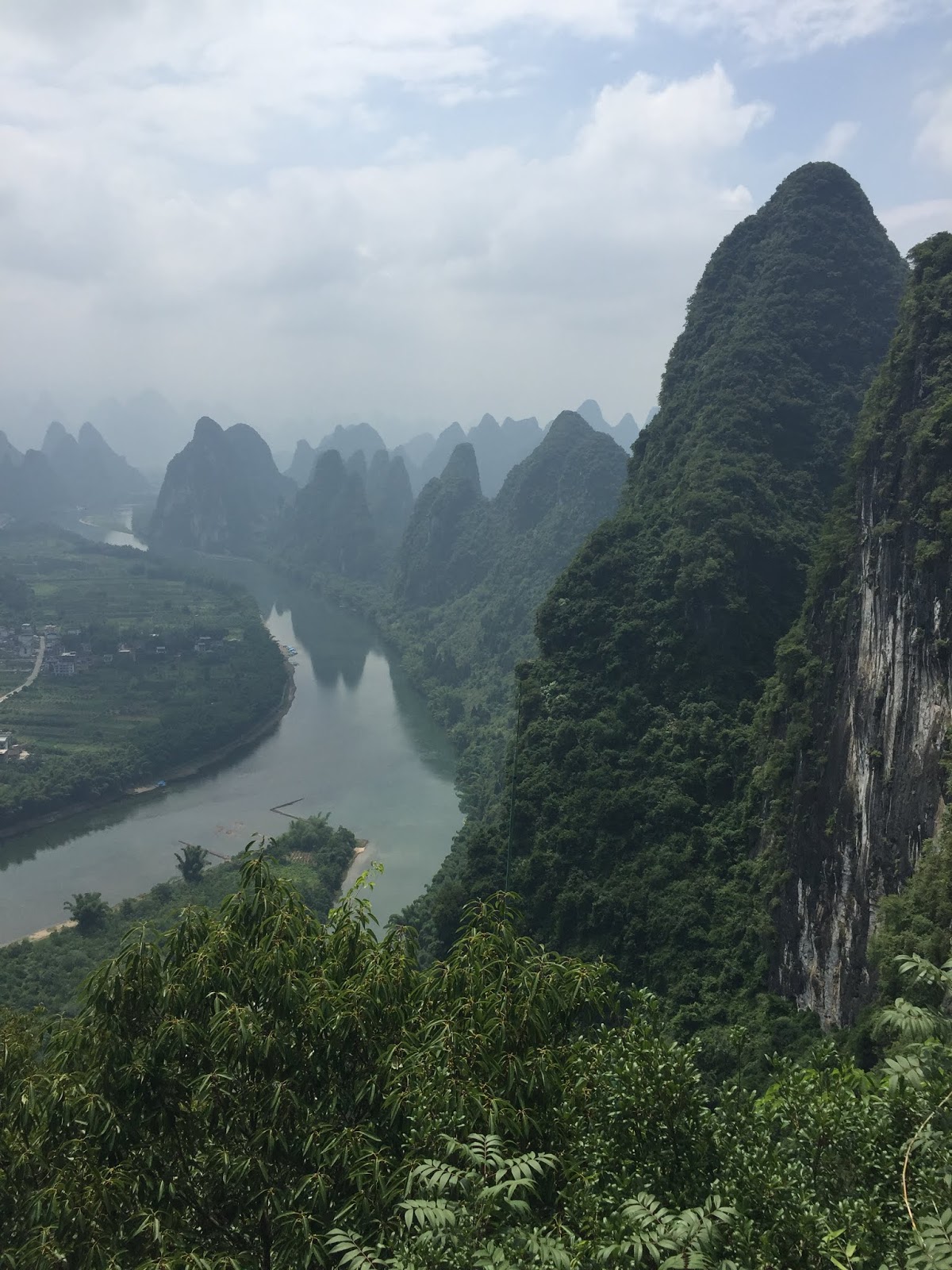
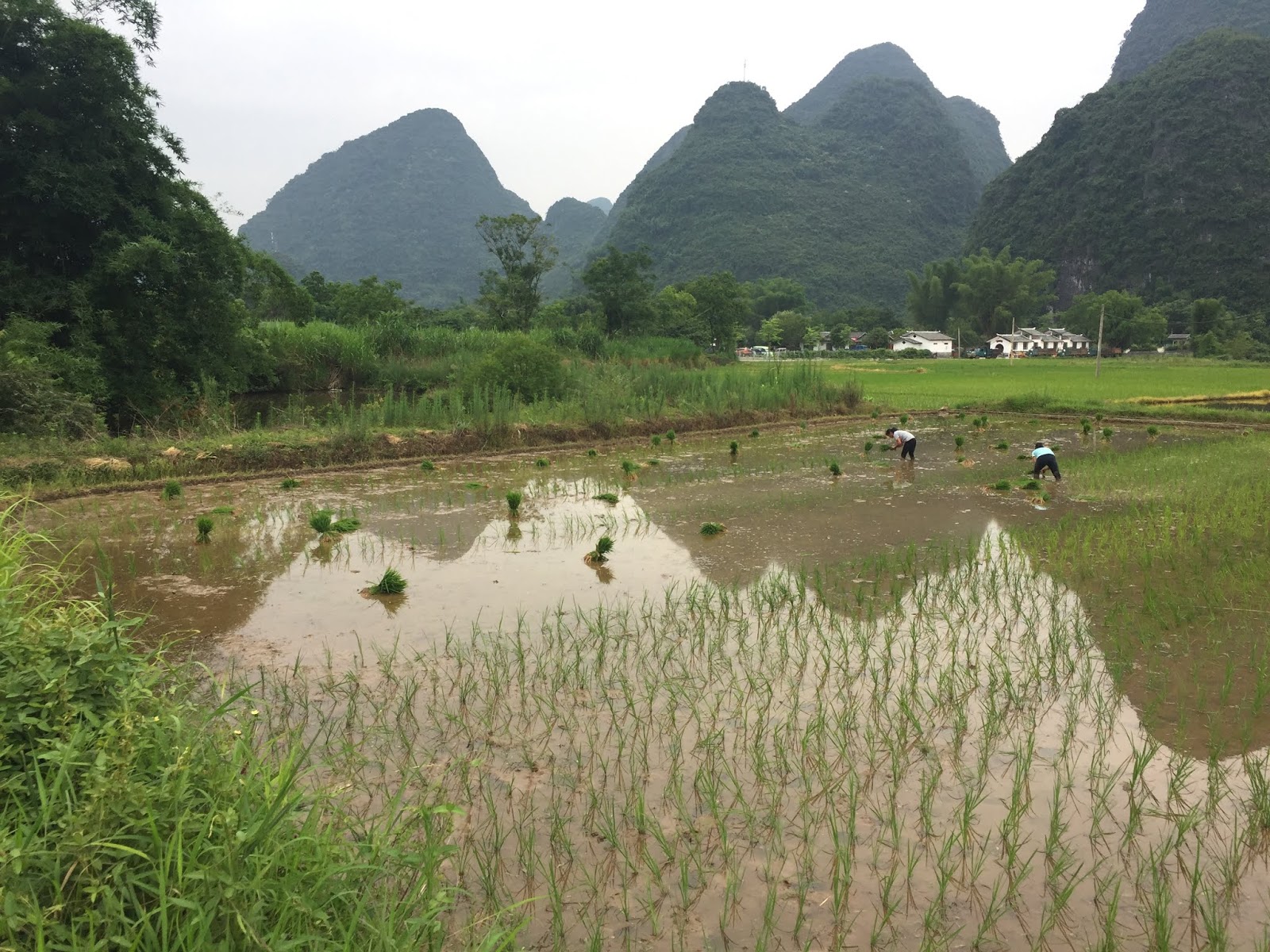
By noon we're glad we going down, rather than up in the heat of the day. We drive further in the countryside to Yangshuo, a serene farming area with smartly managed tourism. We rent bikes and ride through rice paddies—it's early July, planting season. Magical!
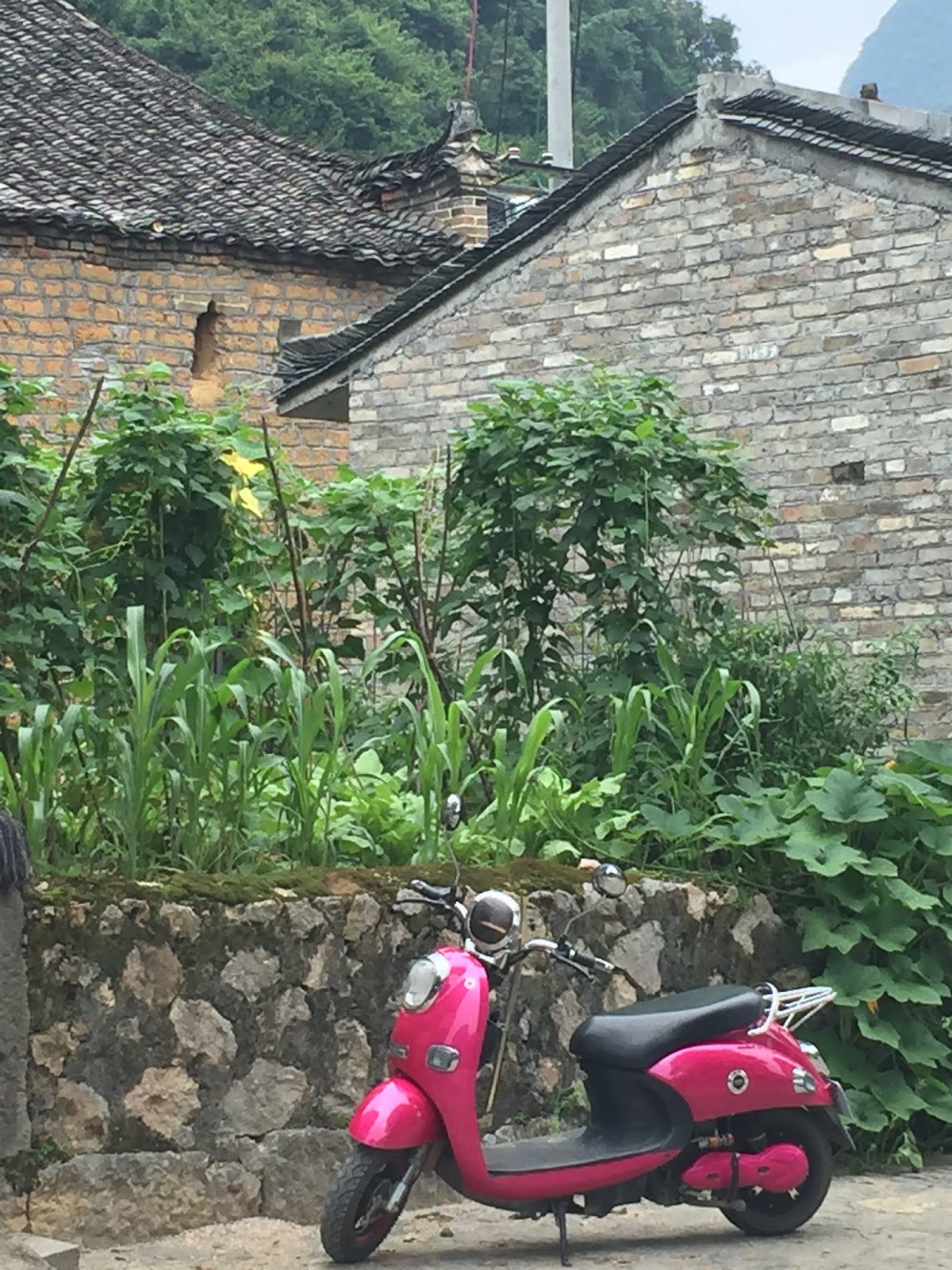
Lunch is in an old brick village at the edge of some fields. Across the lane is the restaurant kitchen and home, a mix of worlds.
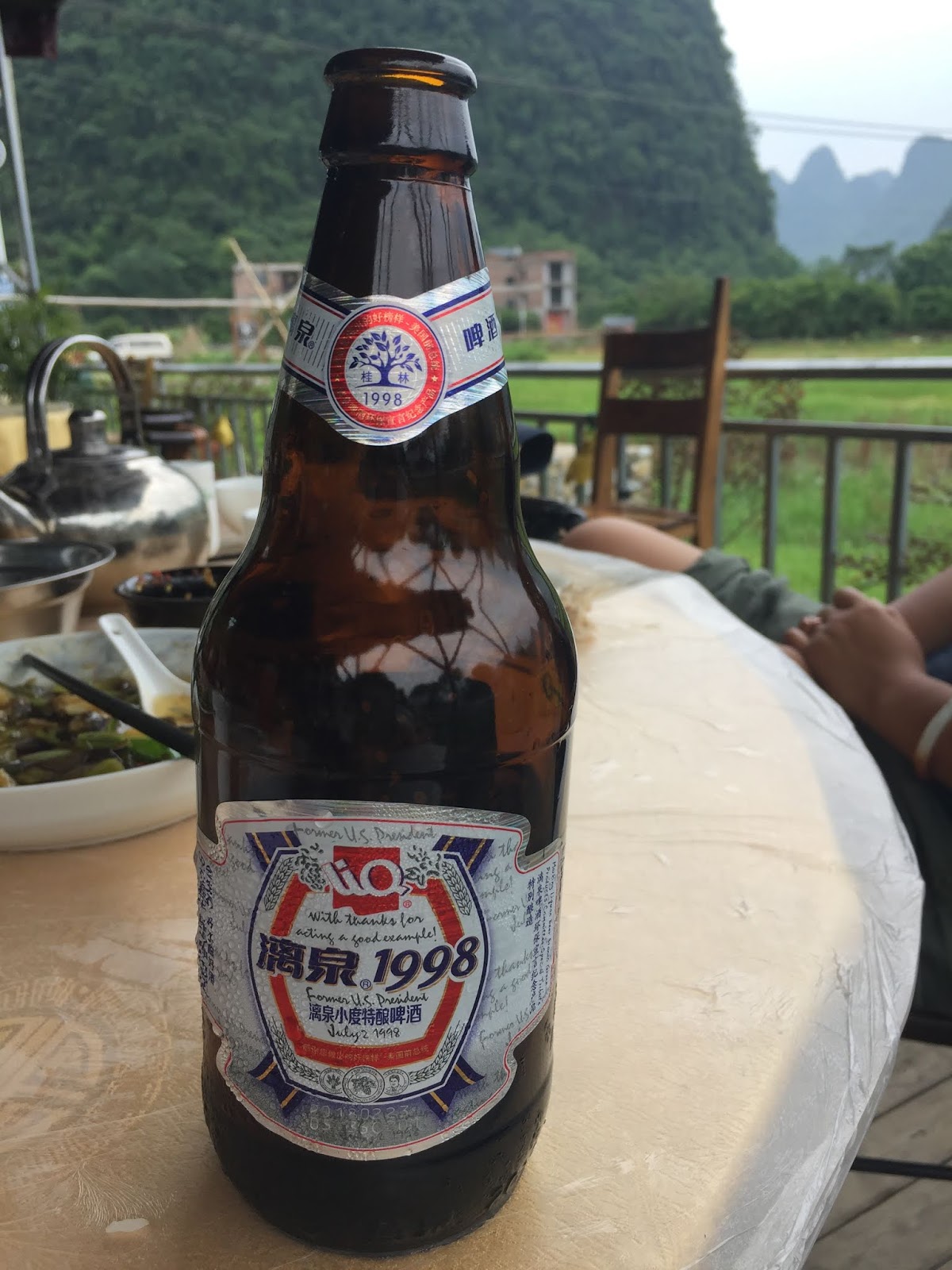
The beer was named for Bill Clinton, when he visited the area.
Now we're off on a bamboo boat ride down the Yulong River.
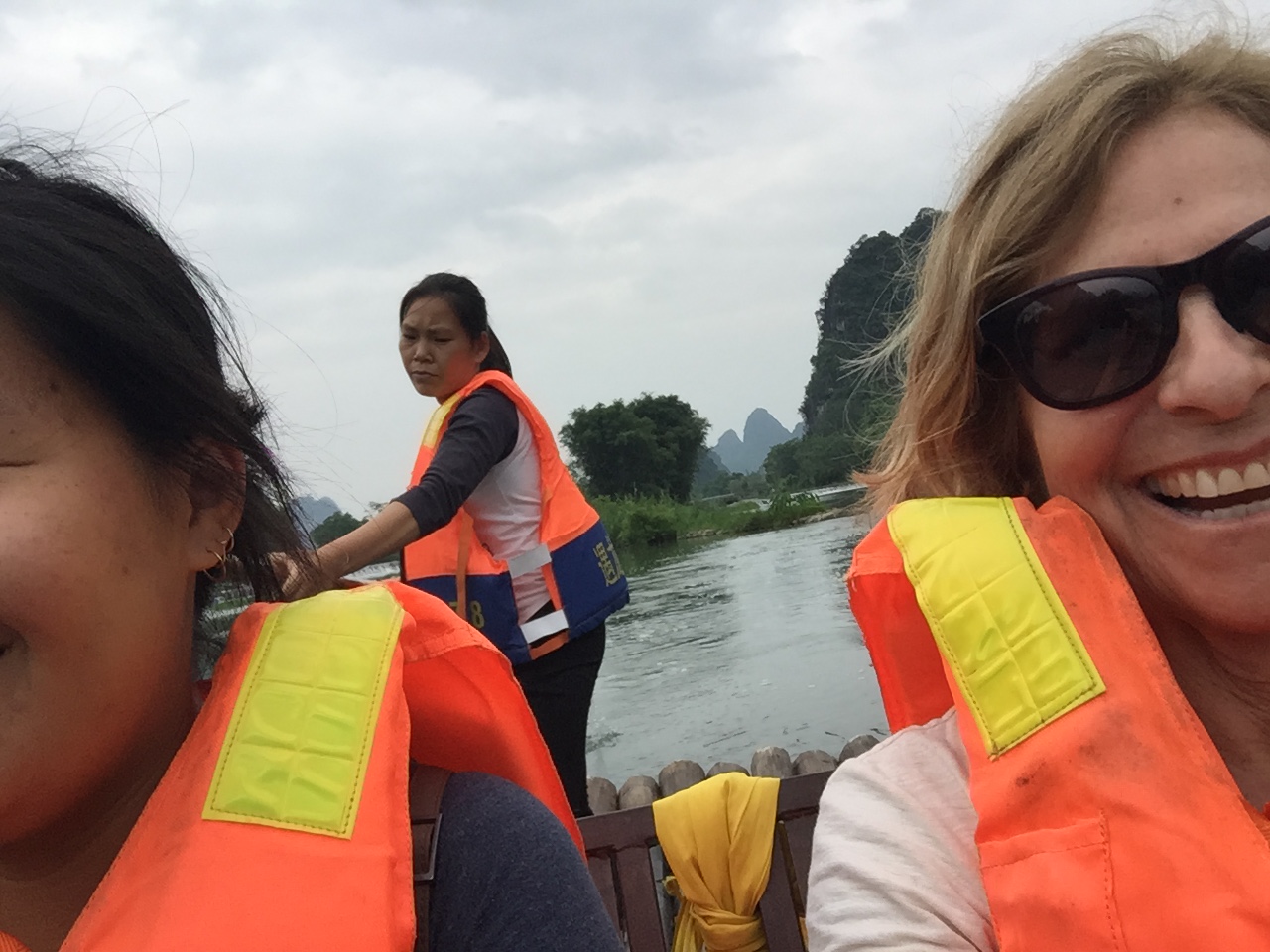
The waters are placid and gentle as we push off.
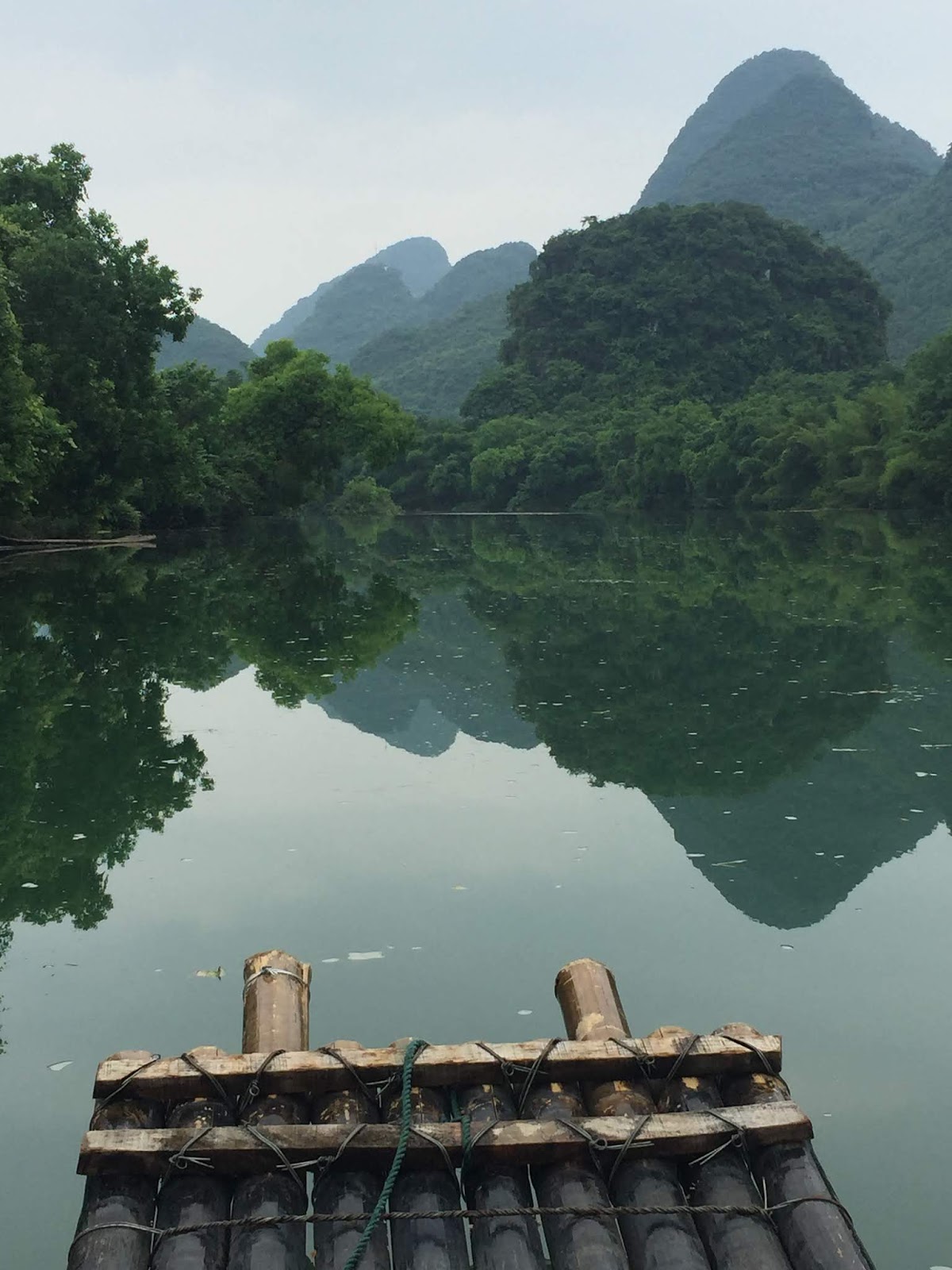
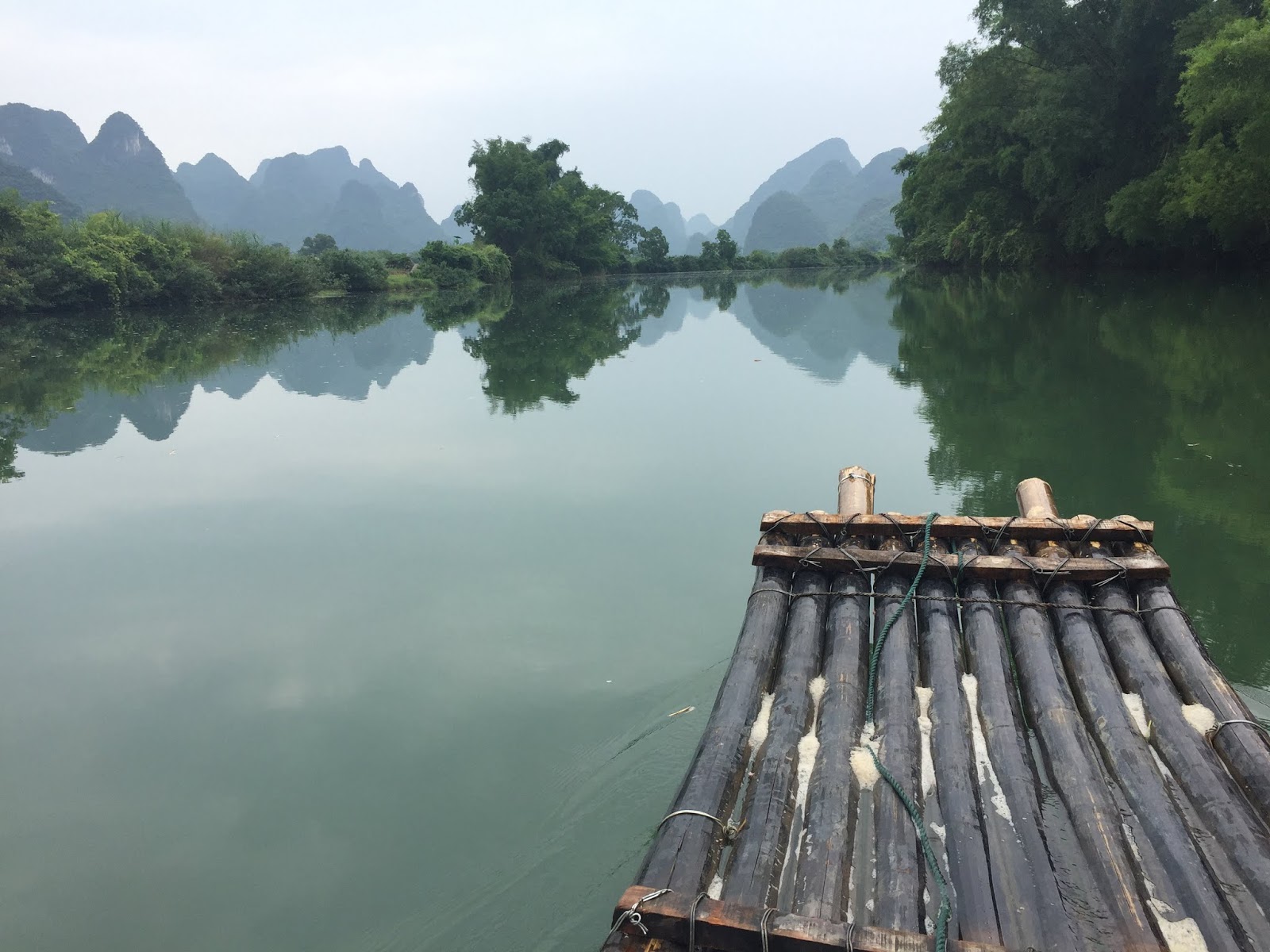
But things soon turn choppy as we rush down the rapids.
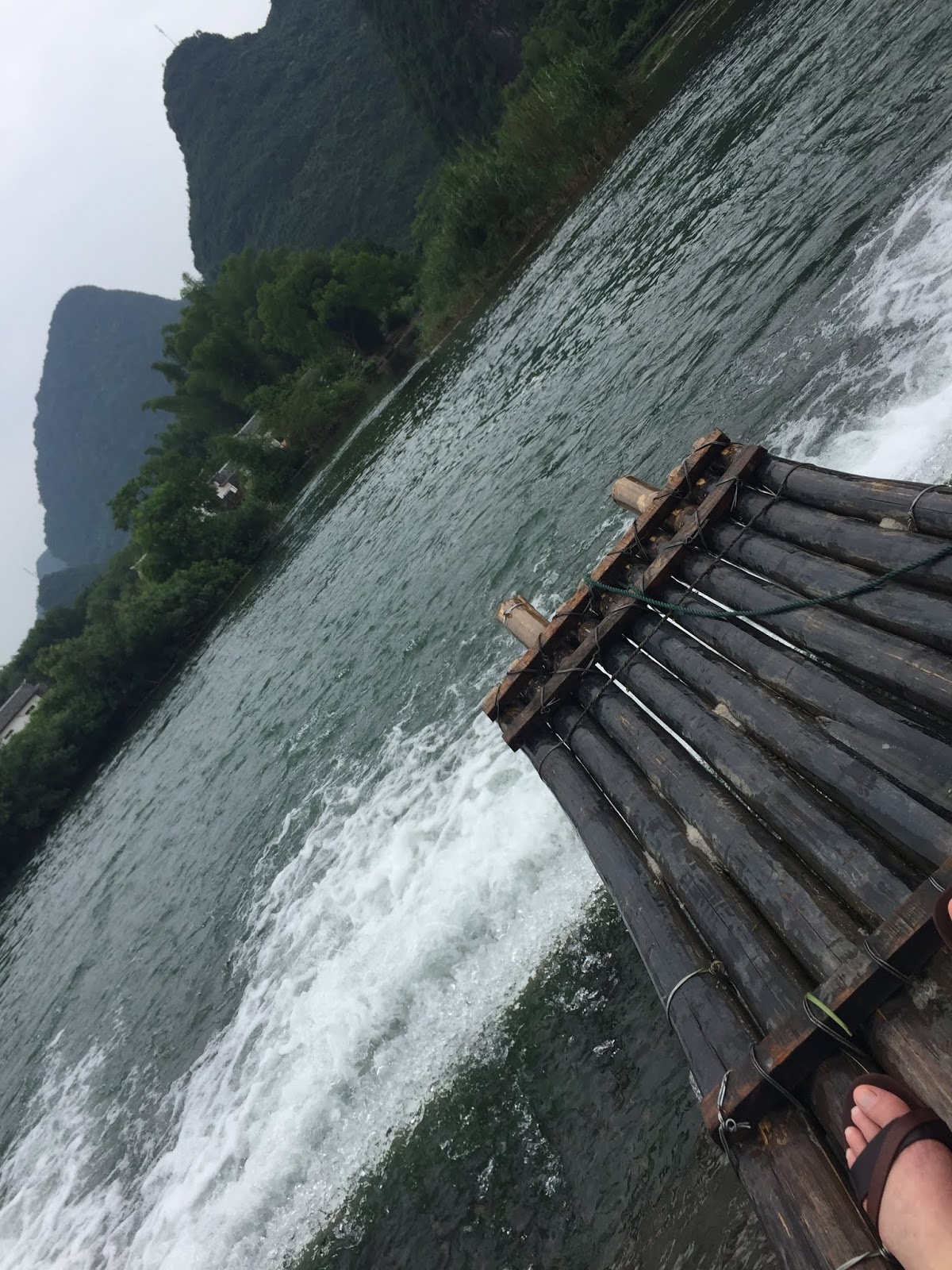

Before long, the river quiets, returning us to a state of timeless peace.
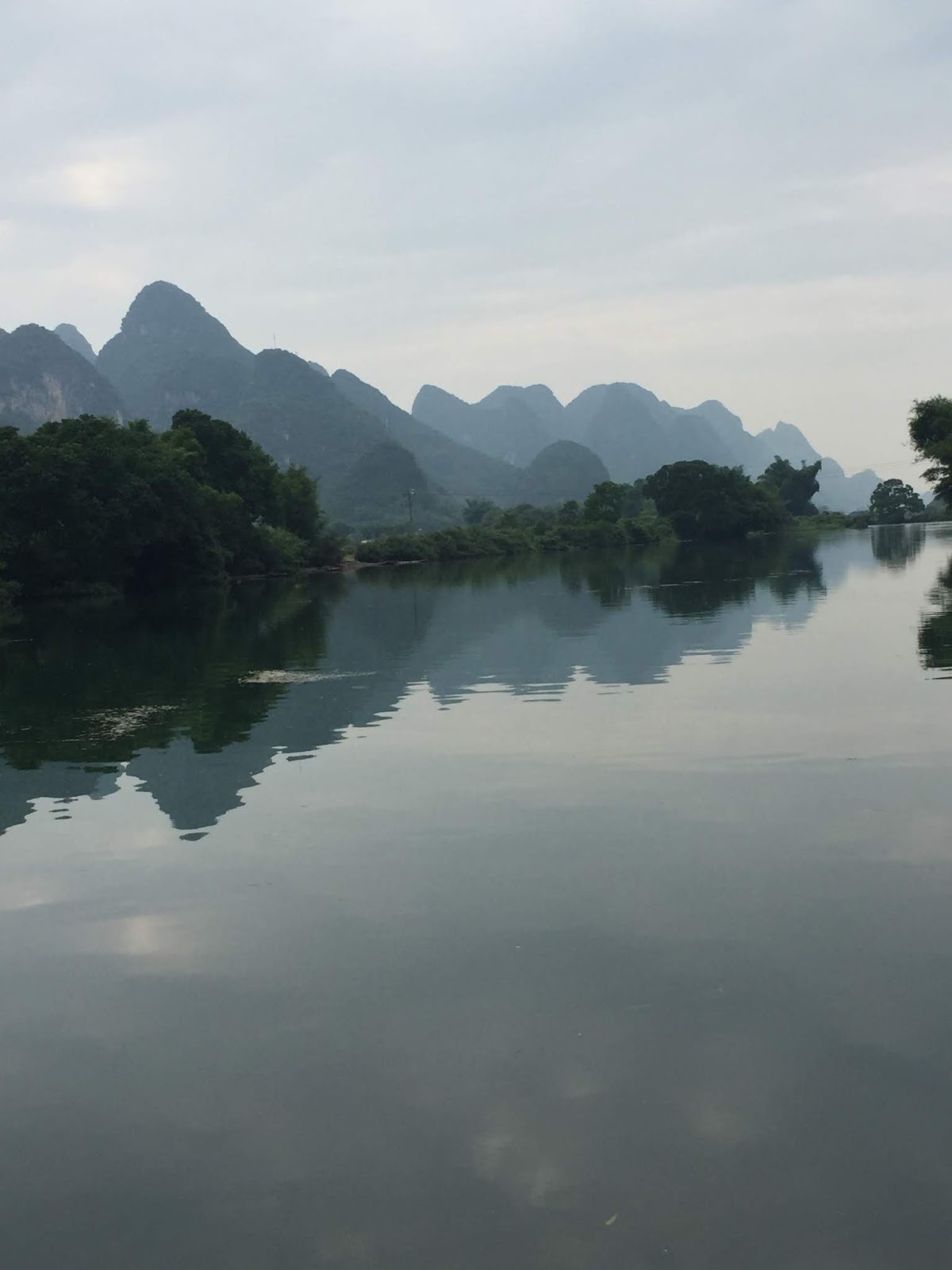
Too soon we reach shore, but a lovely shore it is.
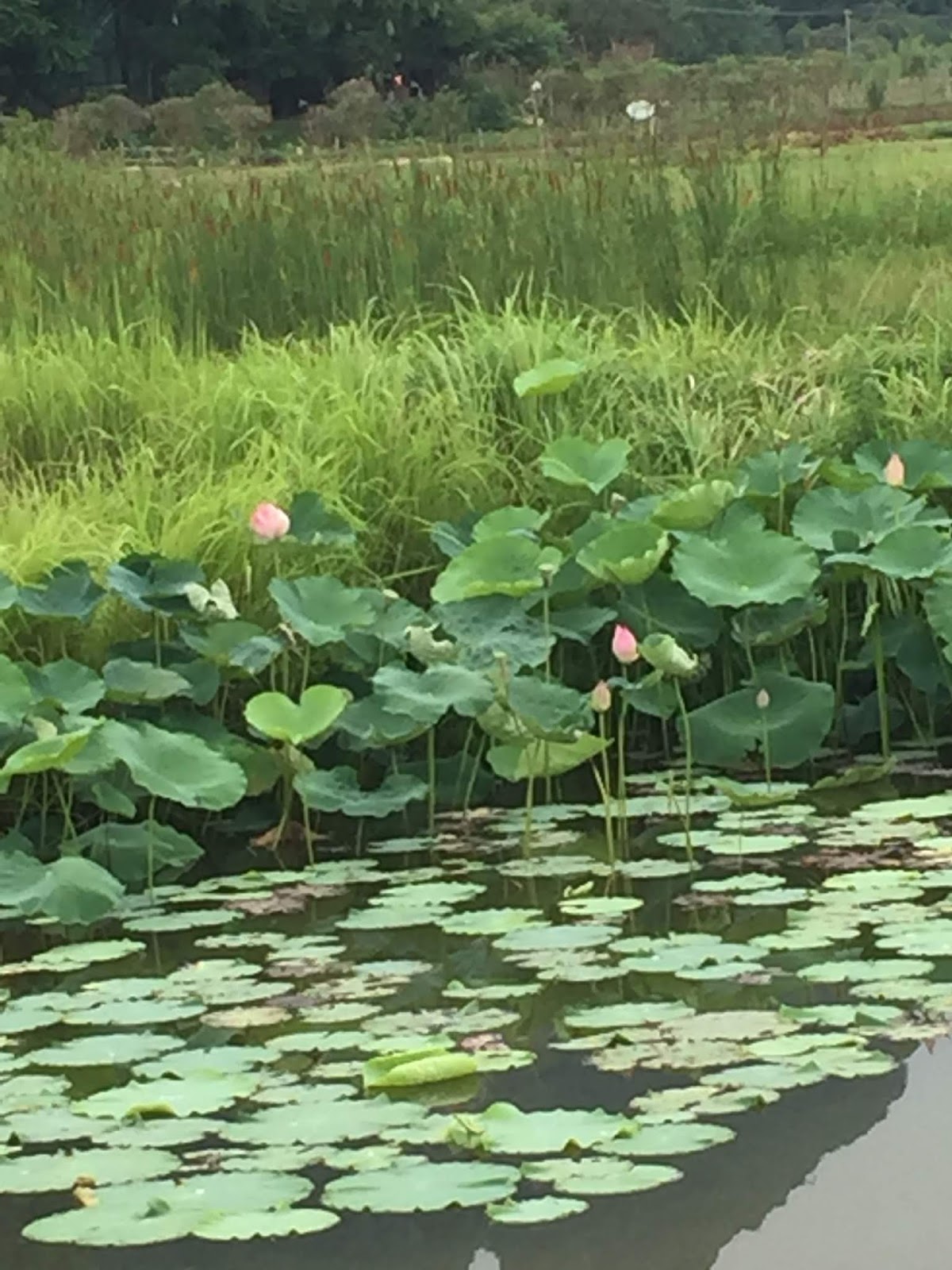
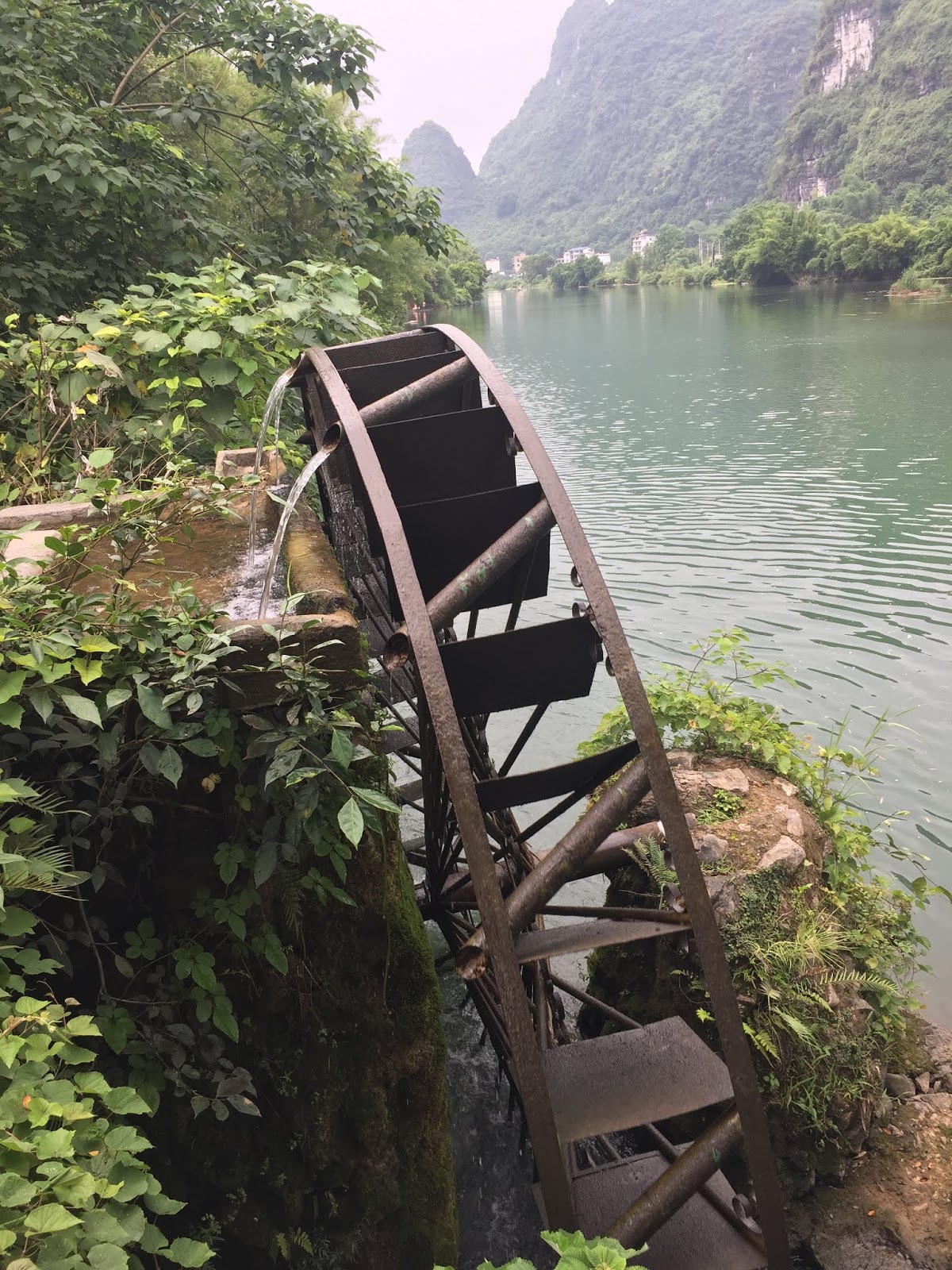
With a traditional water wheel.
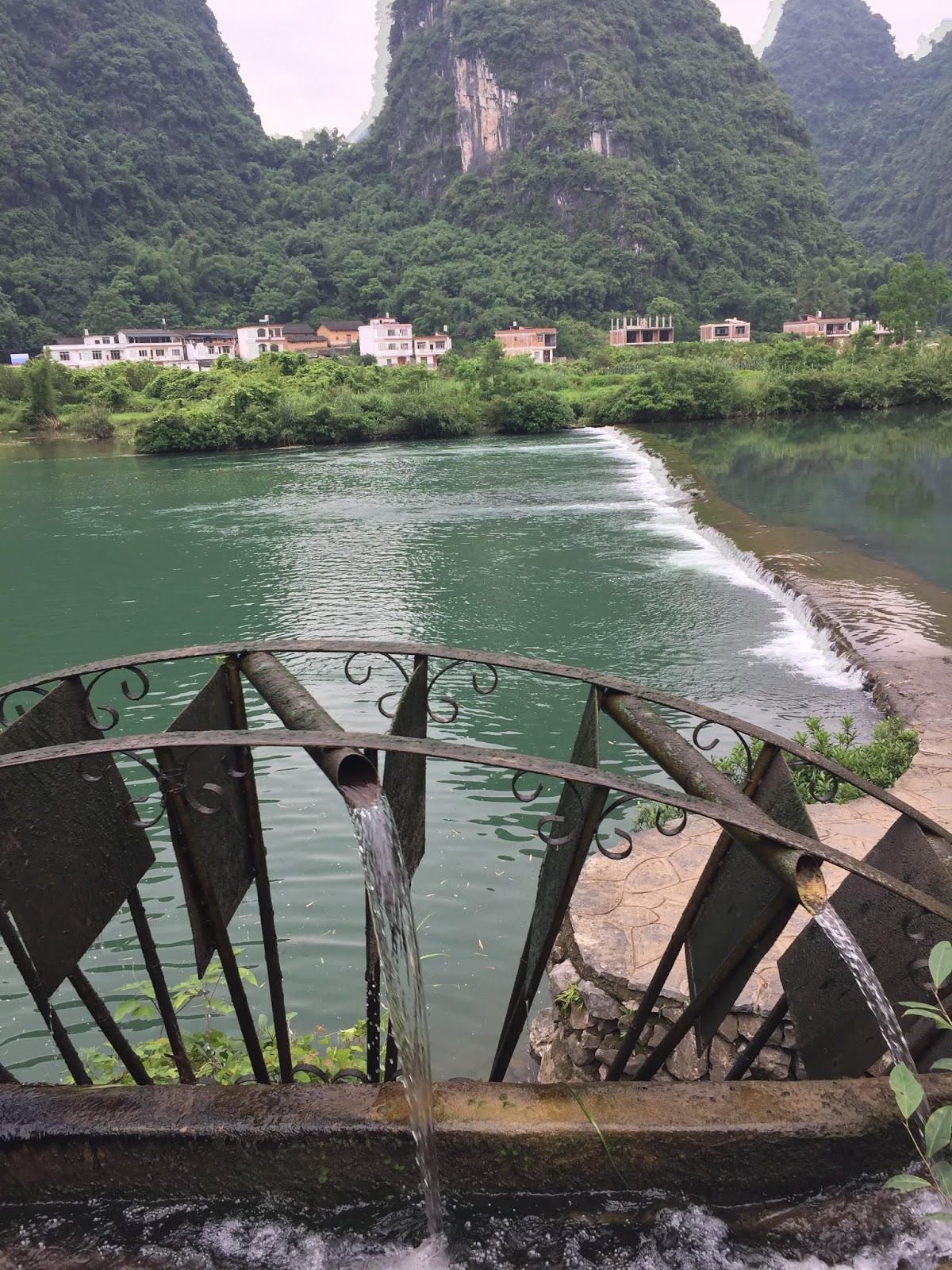
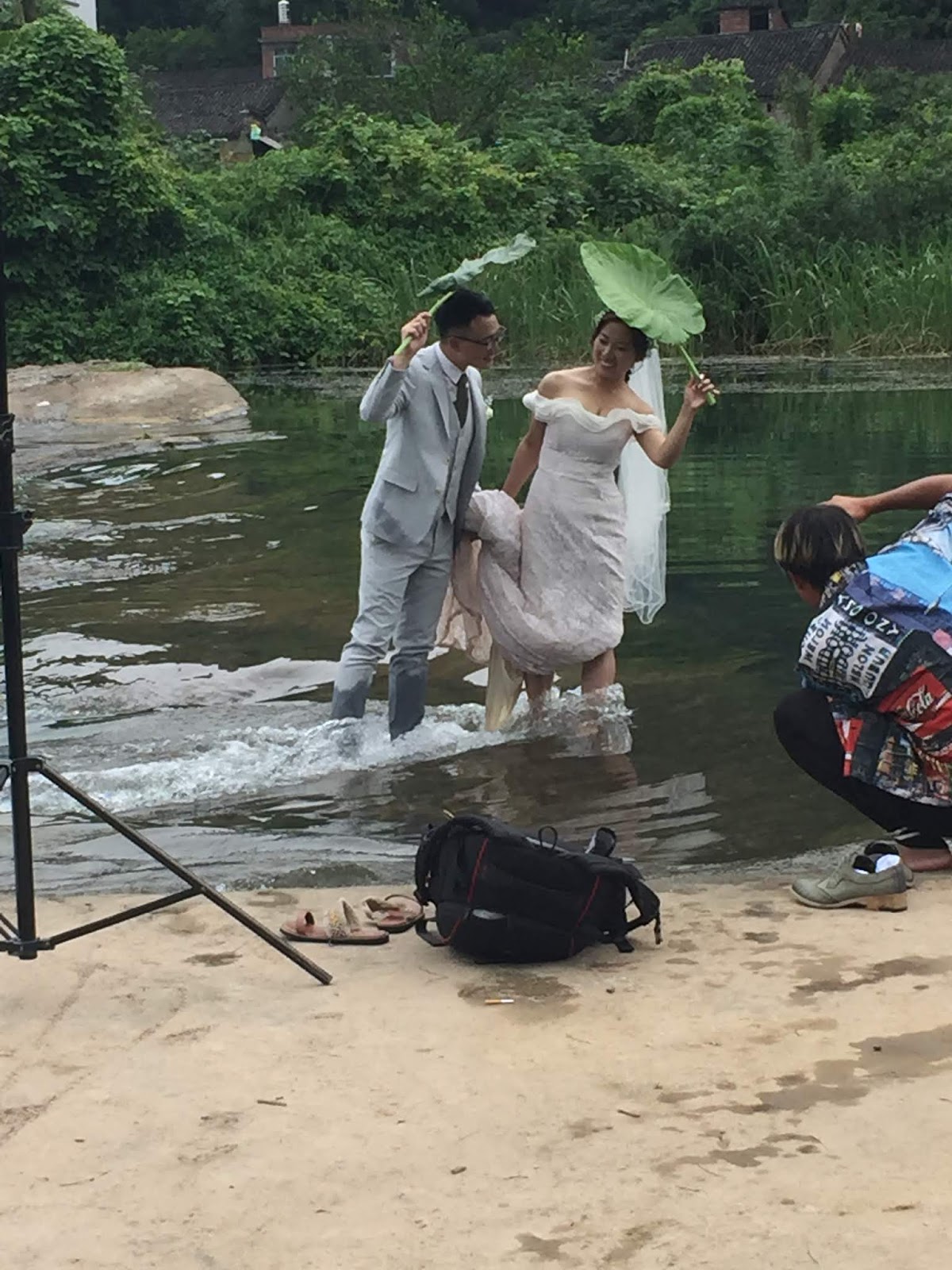
The perfect site for more wedding photos.
Next stop: Dali
August 26, 2018
China: In Search of the Past: Part 2: Nanning and Vietnam border
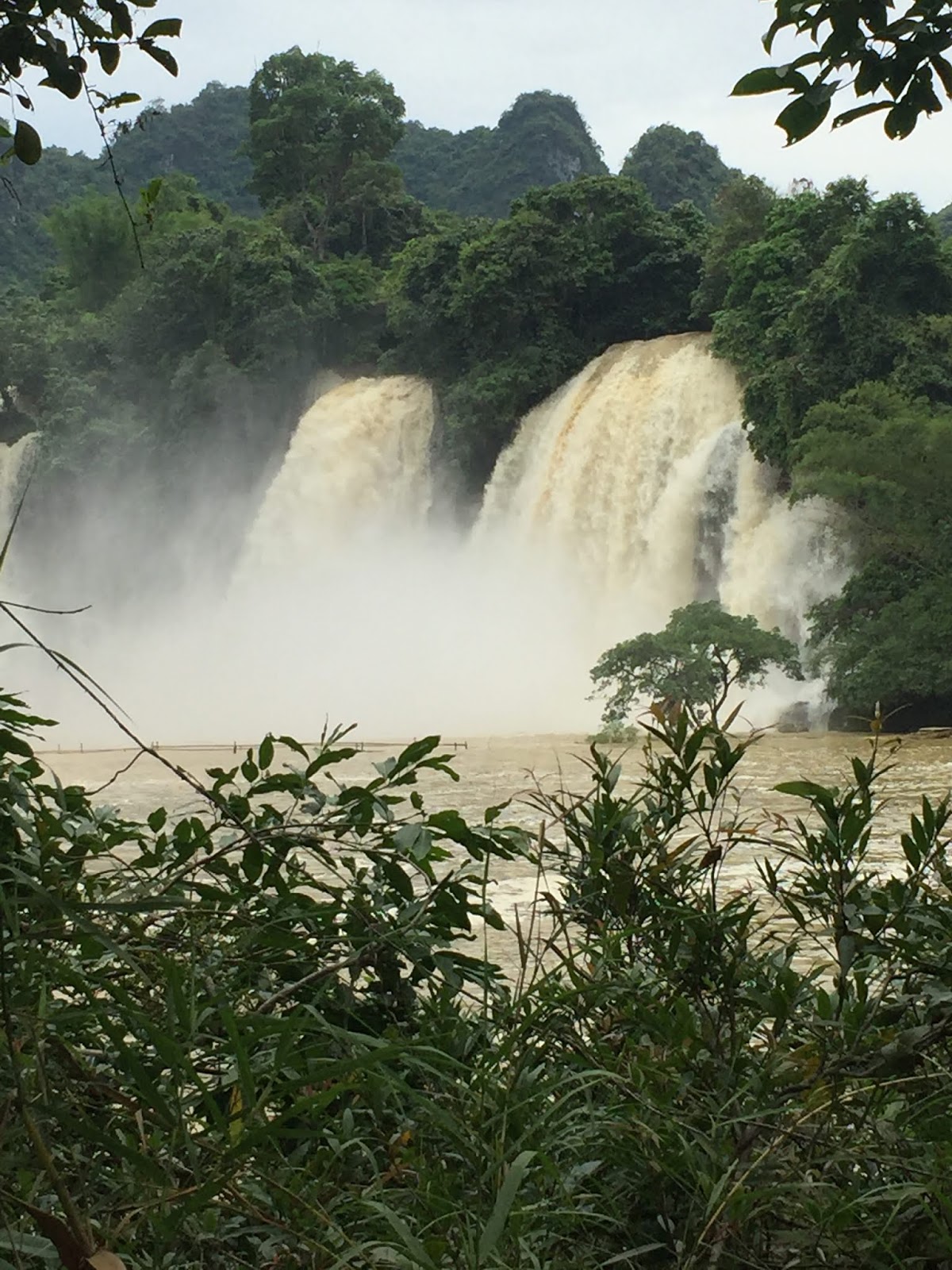 Detian WaterfallsFrom Hong Kong, it's a short flight to Nanning, capital of Guangxi Province. During the French rule of Indochina, the railway connected Vietnam with south China, specifically Nanning and Kunming, which we'll visit later. Wishing to see some old colonial buildings, I get only a blank look from the hotel clerk—she seems to have no idea what I'm talking about. This is my first indication, but by no means the last, of how much of the Chinese past has been erased.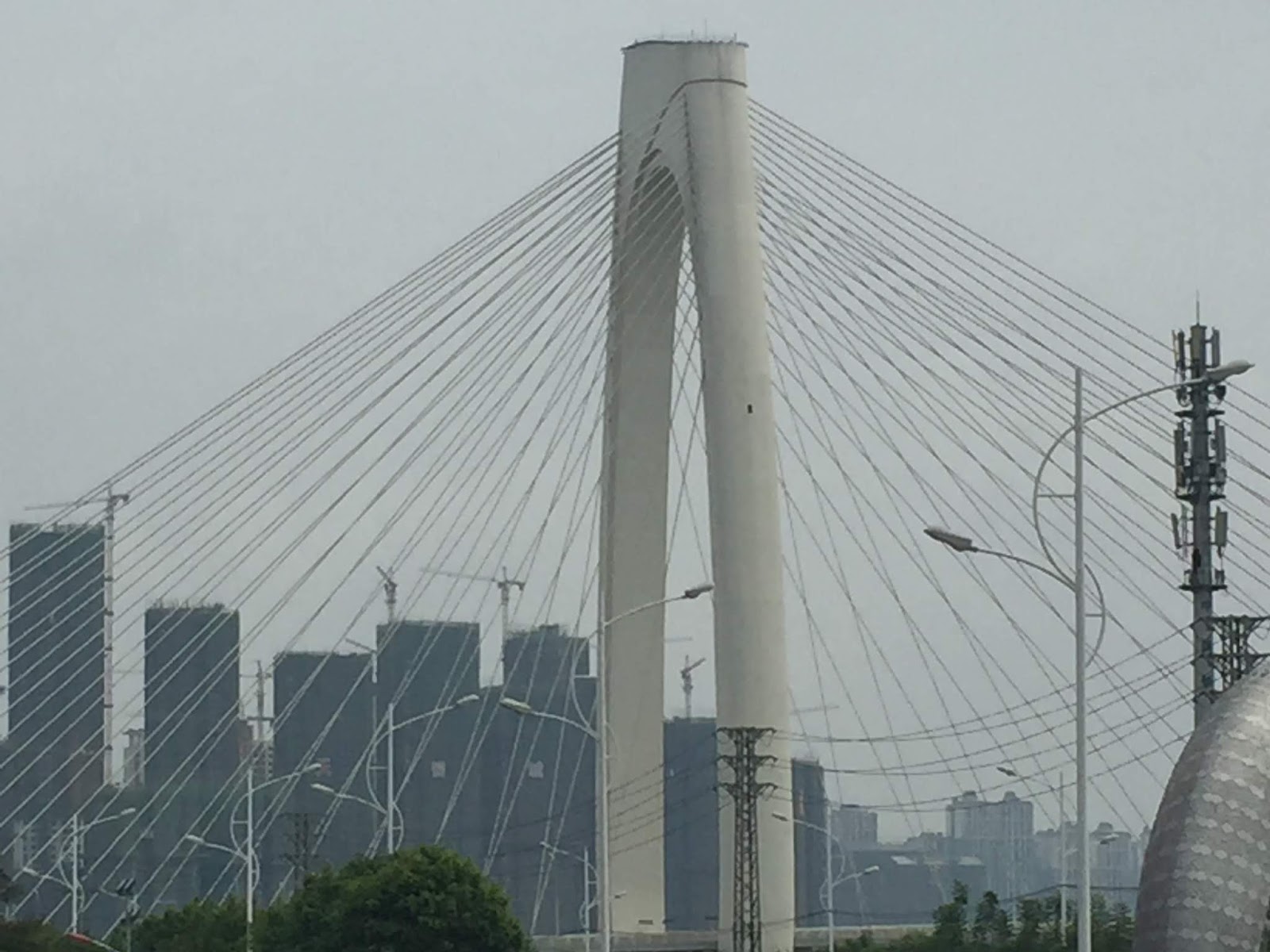
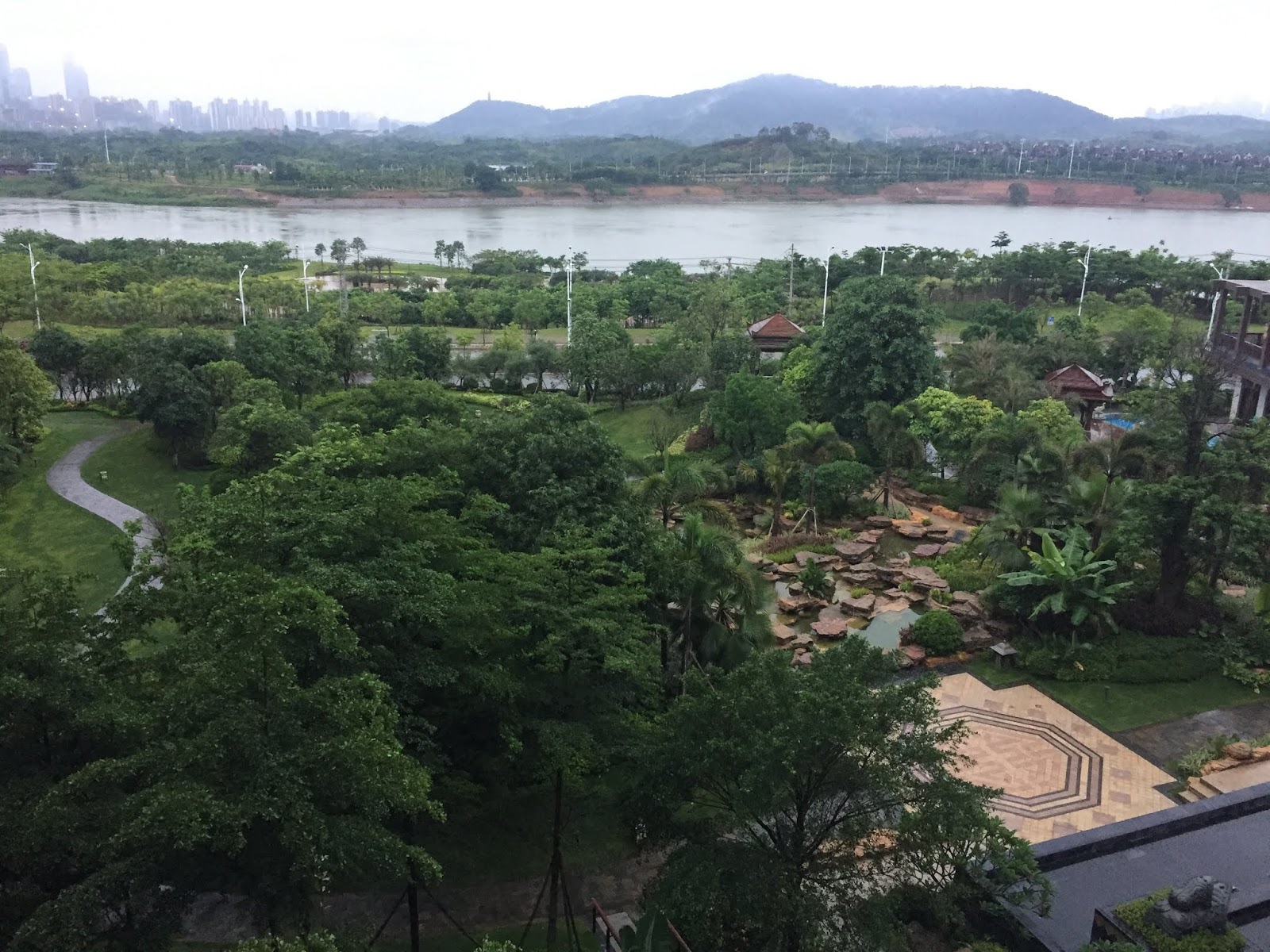
Modern Nanning is a vast construction site of towers, bamboo scaffolding, cranes—and empty towers. From our brand-new Wanda Resort Hotel we have a glimpse of more high-rises across the river.
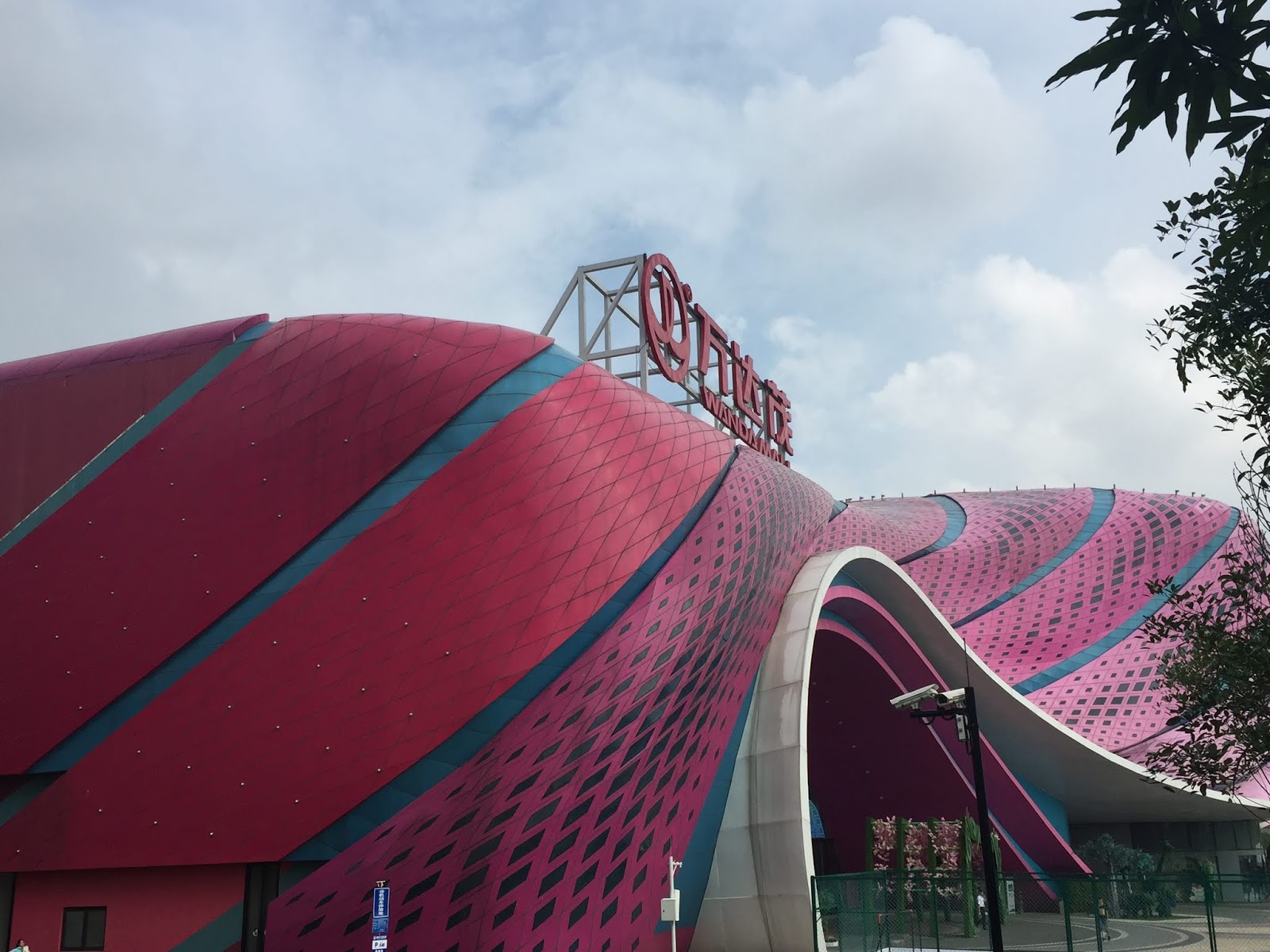
Behind us are streets of upscale facades—also developed by the Wanda Corporation—completely empty. All this might be a sign of great optimism, or of severely over-extended banks. The boom has enriched many—apartment flipping is common—and provided many jobs. It has also destroyed much of China's heritage and gutted the environment. However, the general prosperity is breathtaking. Here is the Wanda Mall:
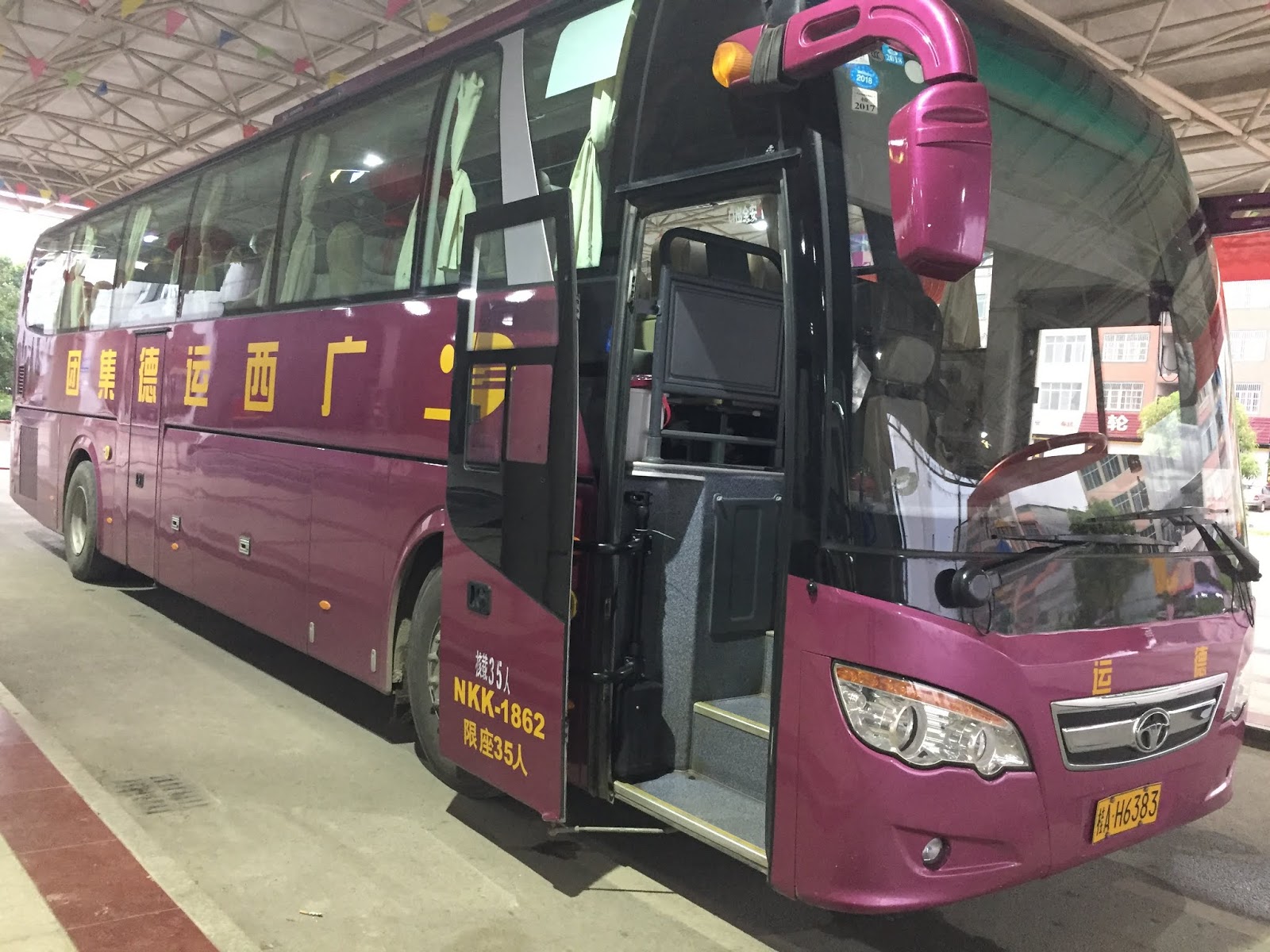
June-July is the rainy season in southern China. If it's not raining, it's humid and cloudy. Under turbulent skies, we board the bus early the next morning for Detian Waterfalls, known in Vietnam as Ban Gioc, located on the border between the two nations. Our journey will take at least six hours. Each way.
Shortly after we leave Nanning, the gasps begin... the Guangxi Province landscape is like no other. I am jet-lagged and dazed, which makes for an even more dream-like experience.
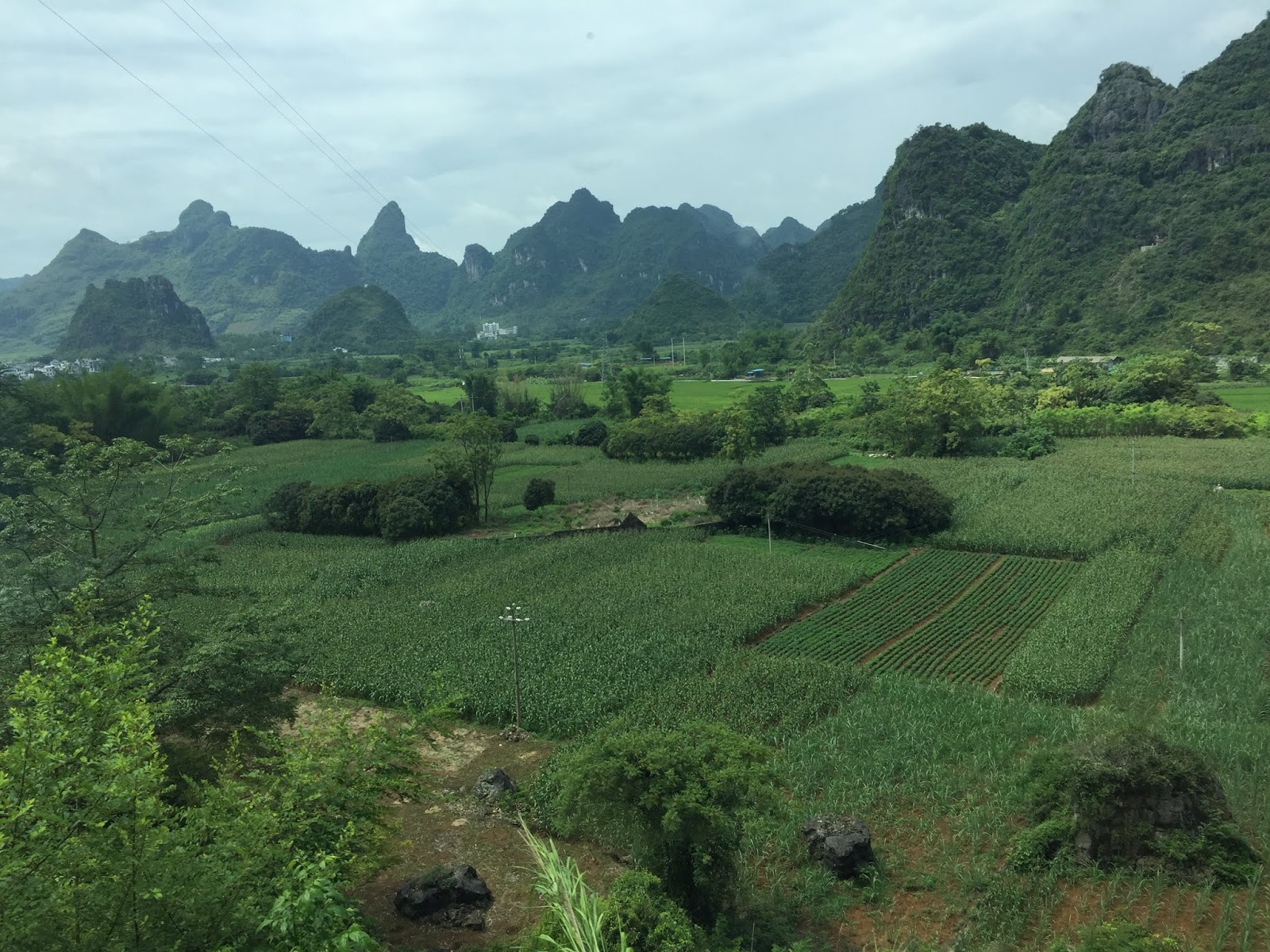
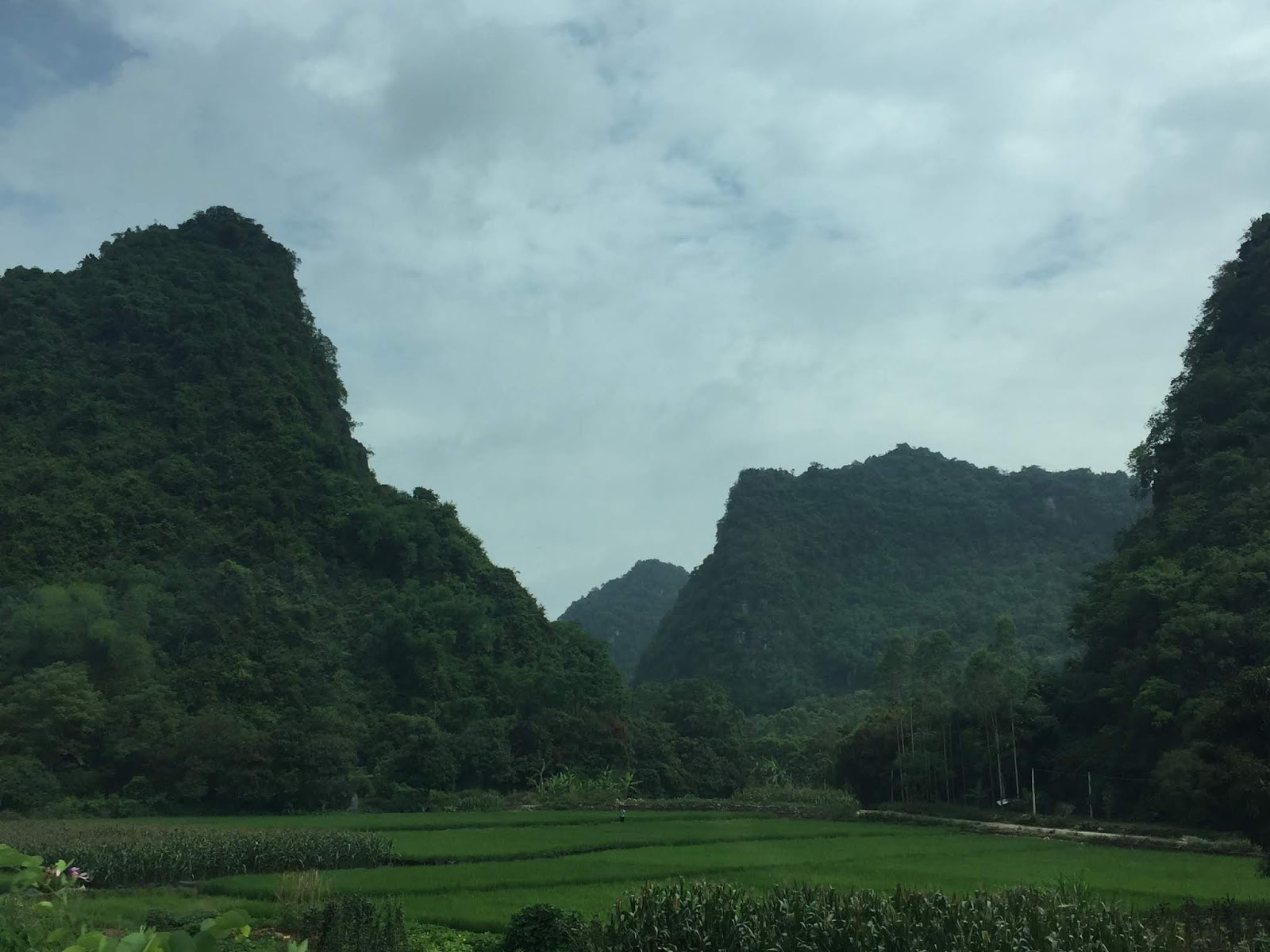
To call it lush is an understatement. Every bit of land carpeted with dense fields. Sudden upthrusts of jagged velvet-green stone rising into lowering clouds, heavy with moisture.
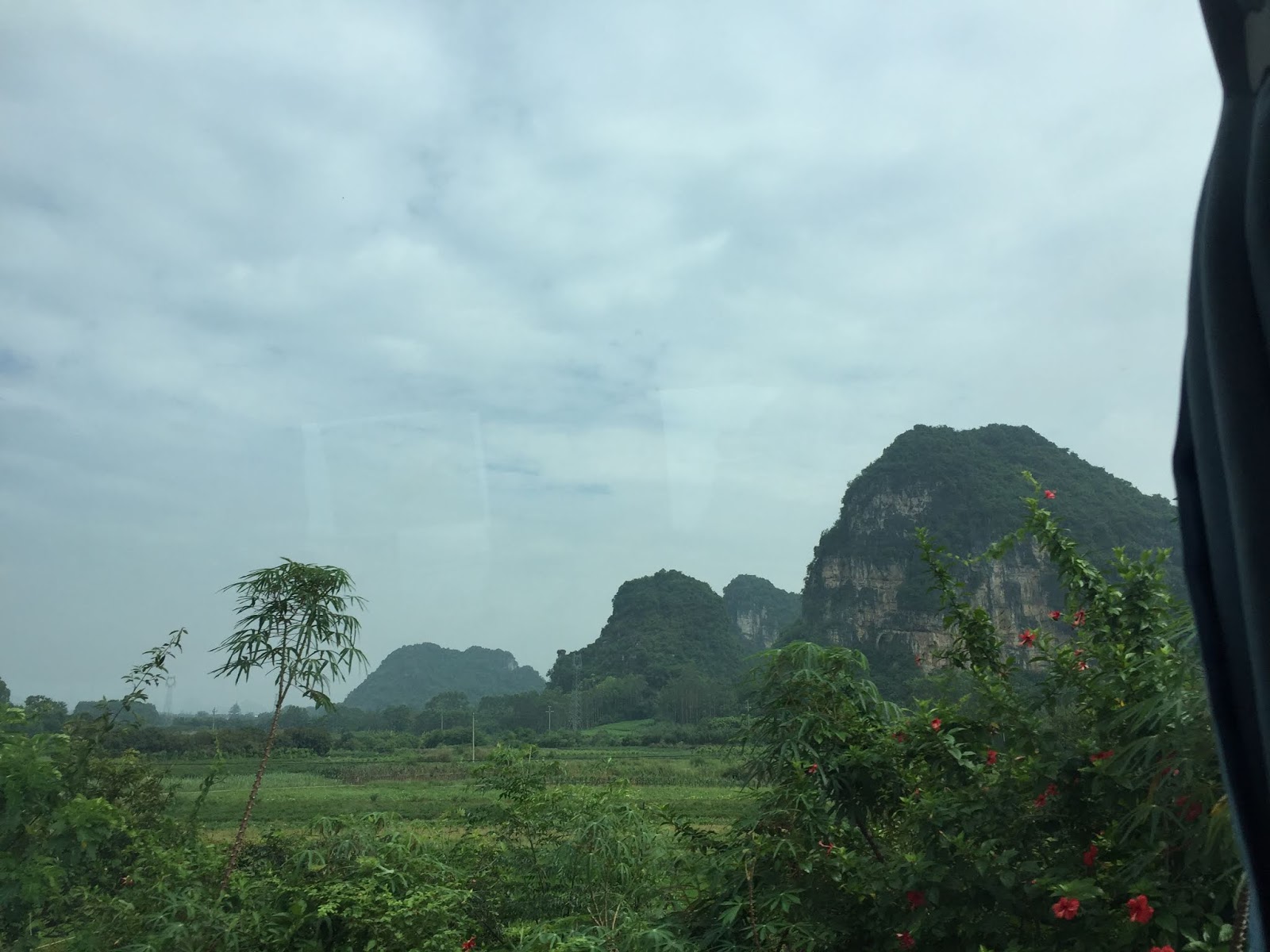
Soon the road begins rising into these mountains.

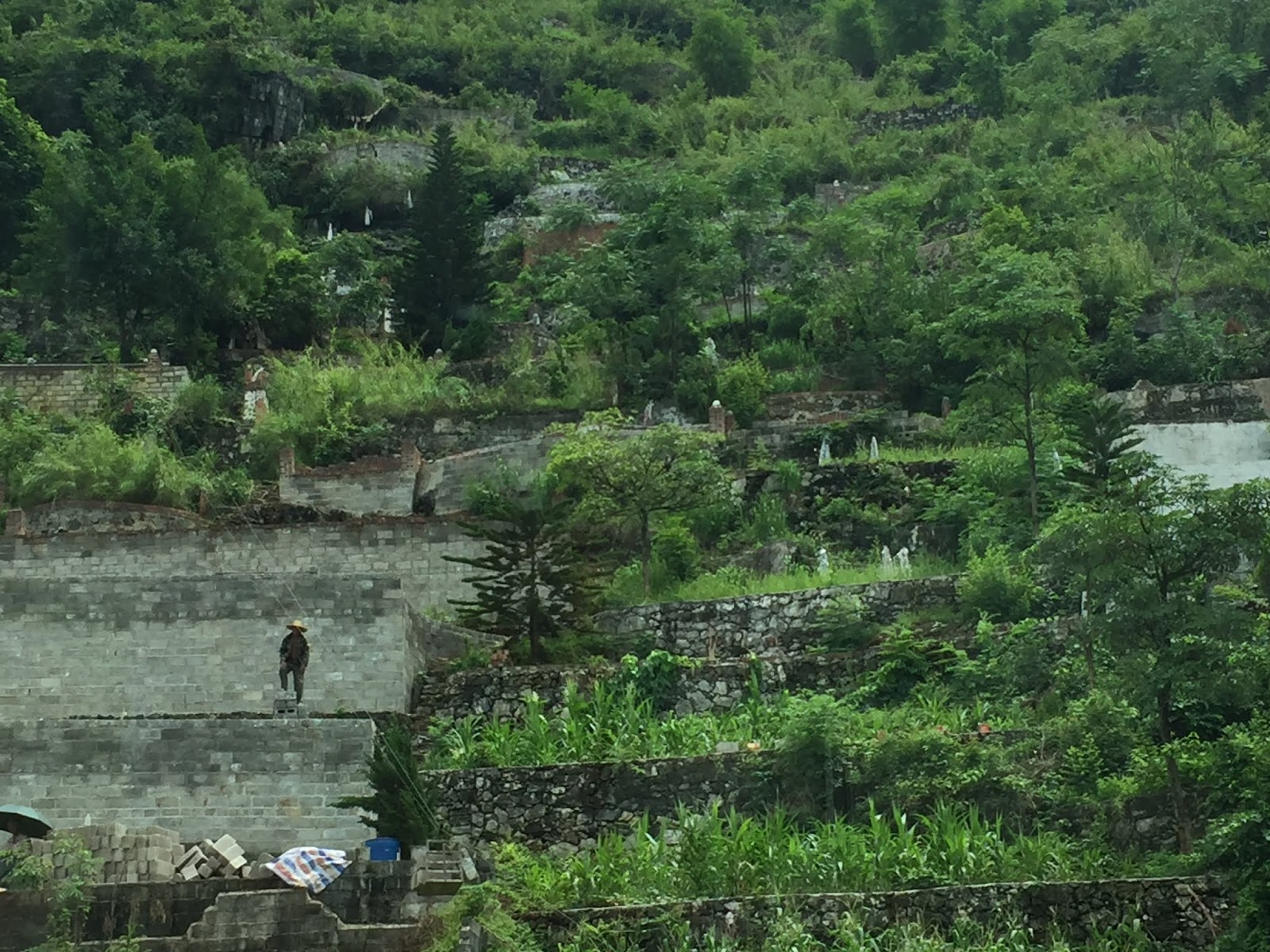
The scenes are timeless, terraced hills dotted with white stone tombstones. All I can think of is generations stretching to antiquity.
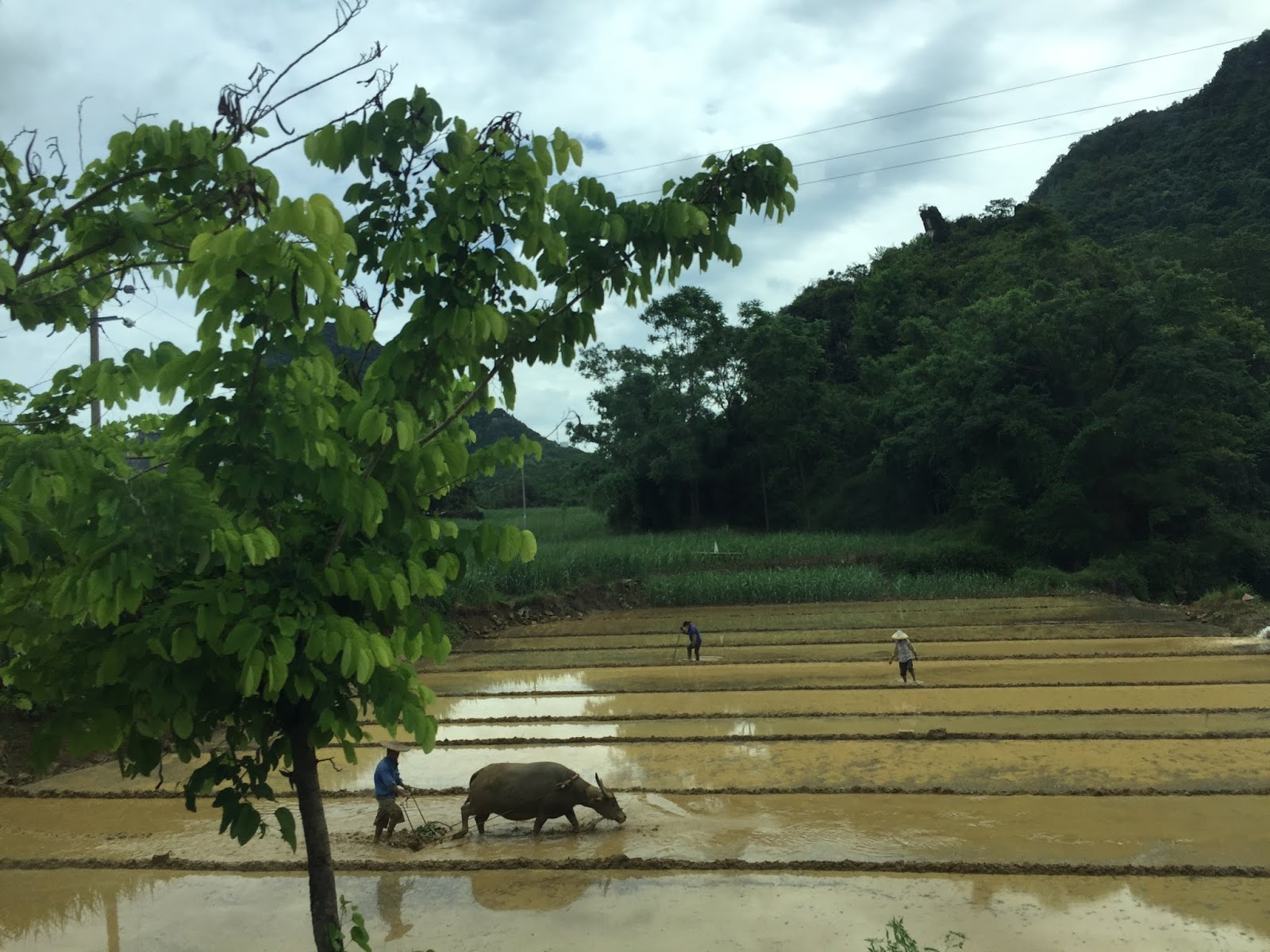
After a time, a muddy river appears, and I have the sense of wildness. How easy would it be for jungle to overtake these fields. How hard these people must work to master nature.
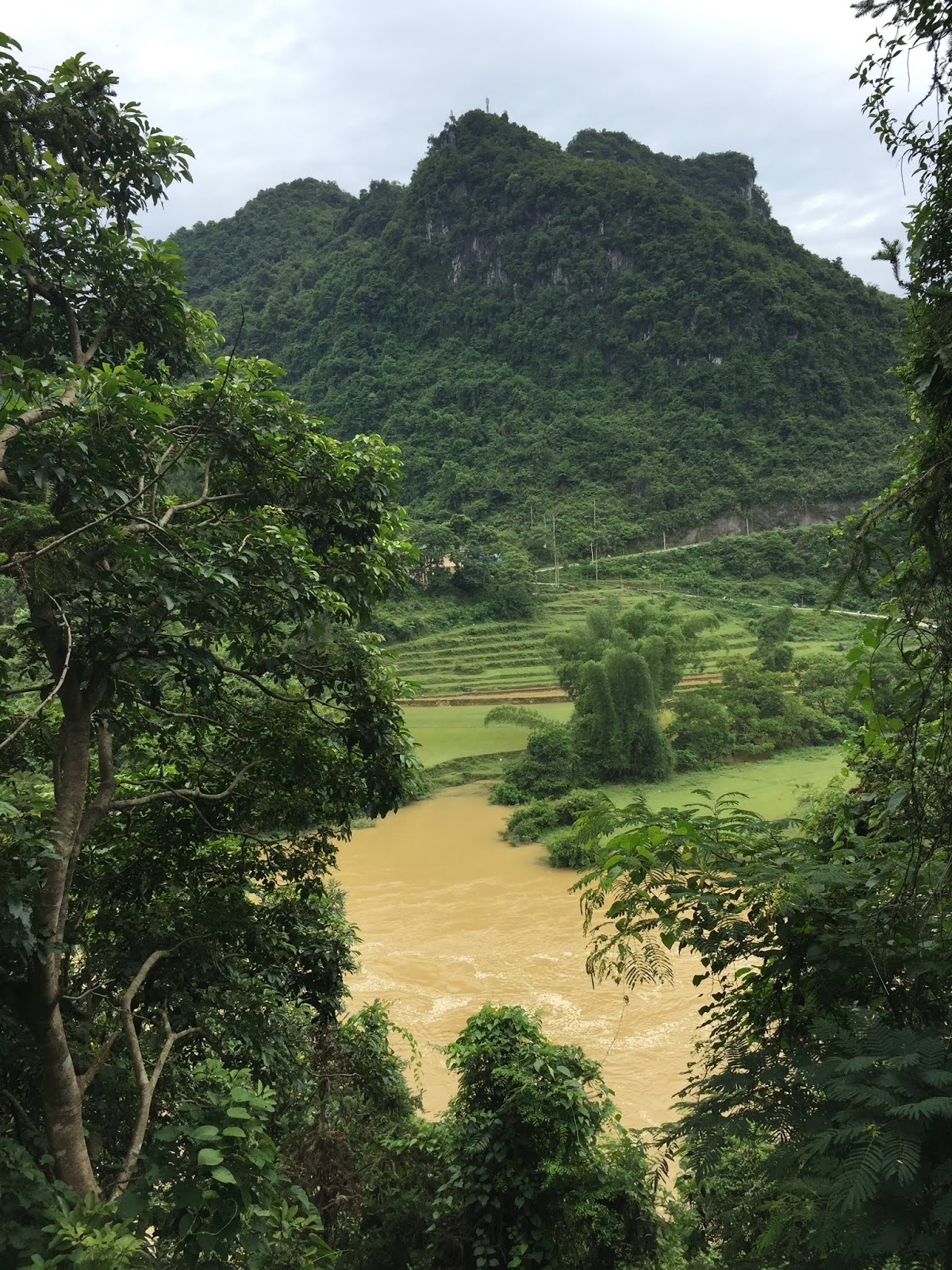
Five hours into our journey, we approach a prosperous regional capital. Streets filled with shops and shiny foreign cars.
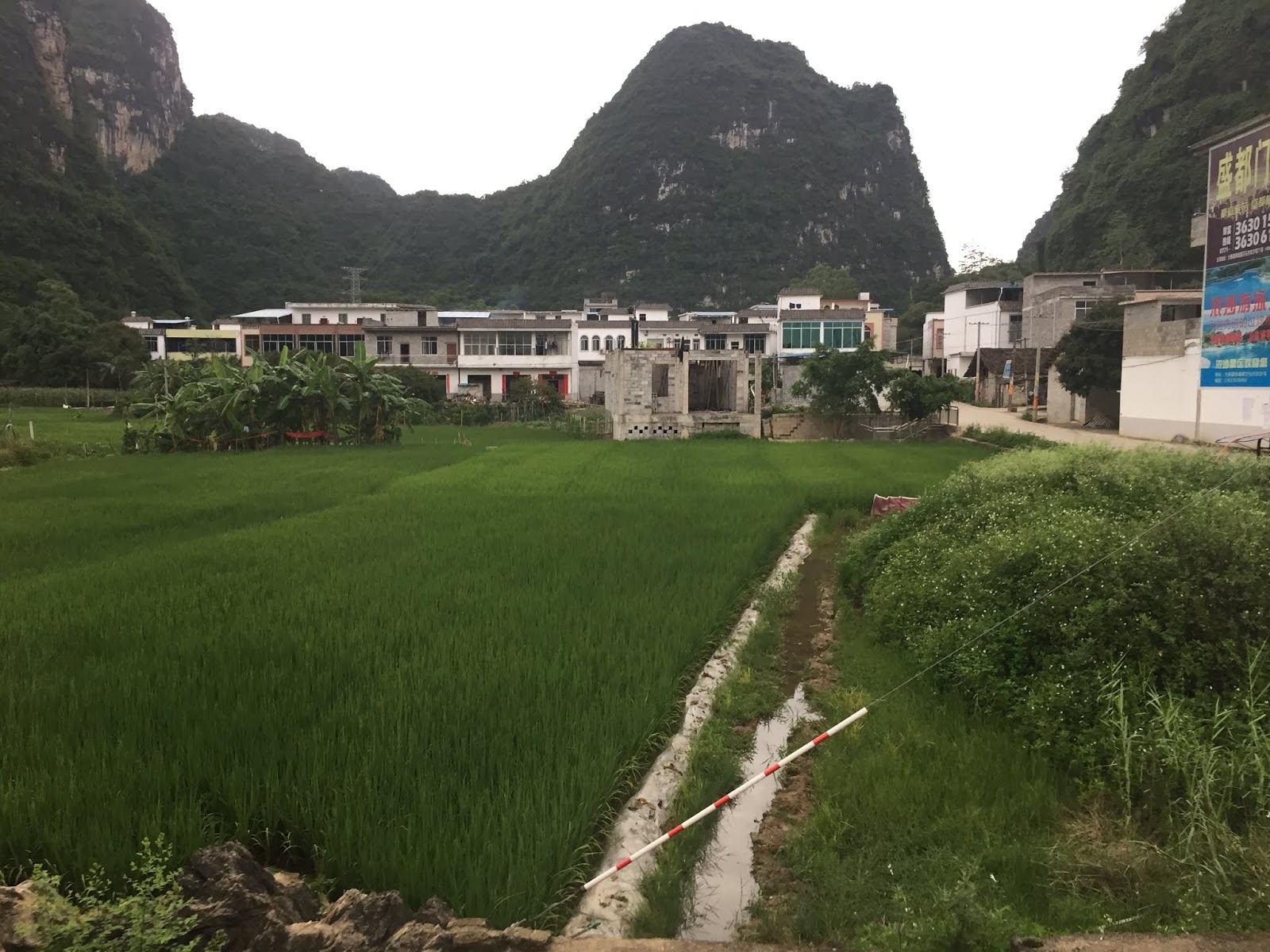
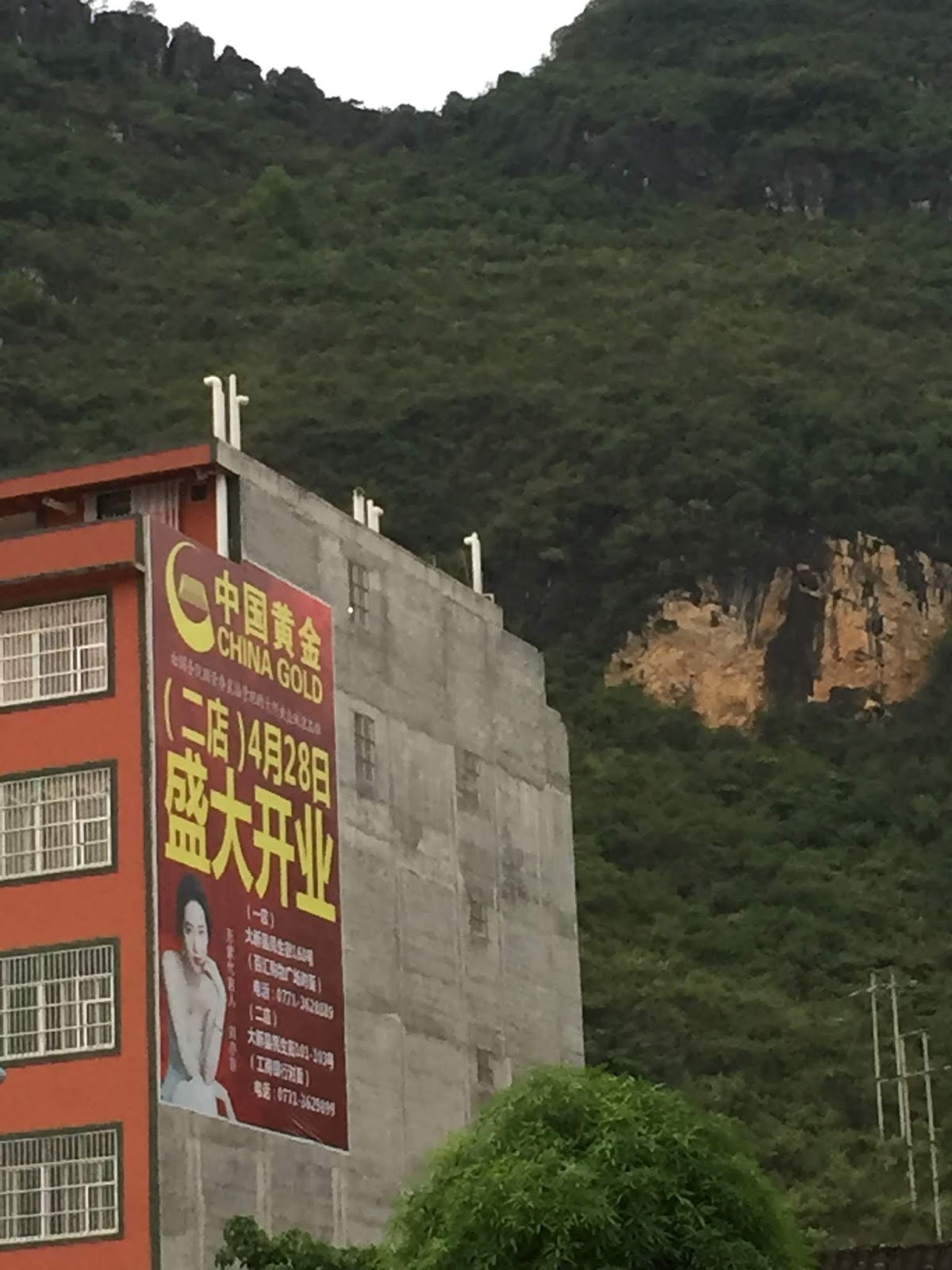
In the Daxin County bus terminal at the end of town, a passenger who lives here tells us we must change vehicles. He waves us off. "Hope you enjoy China!"
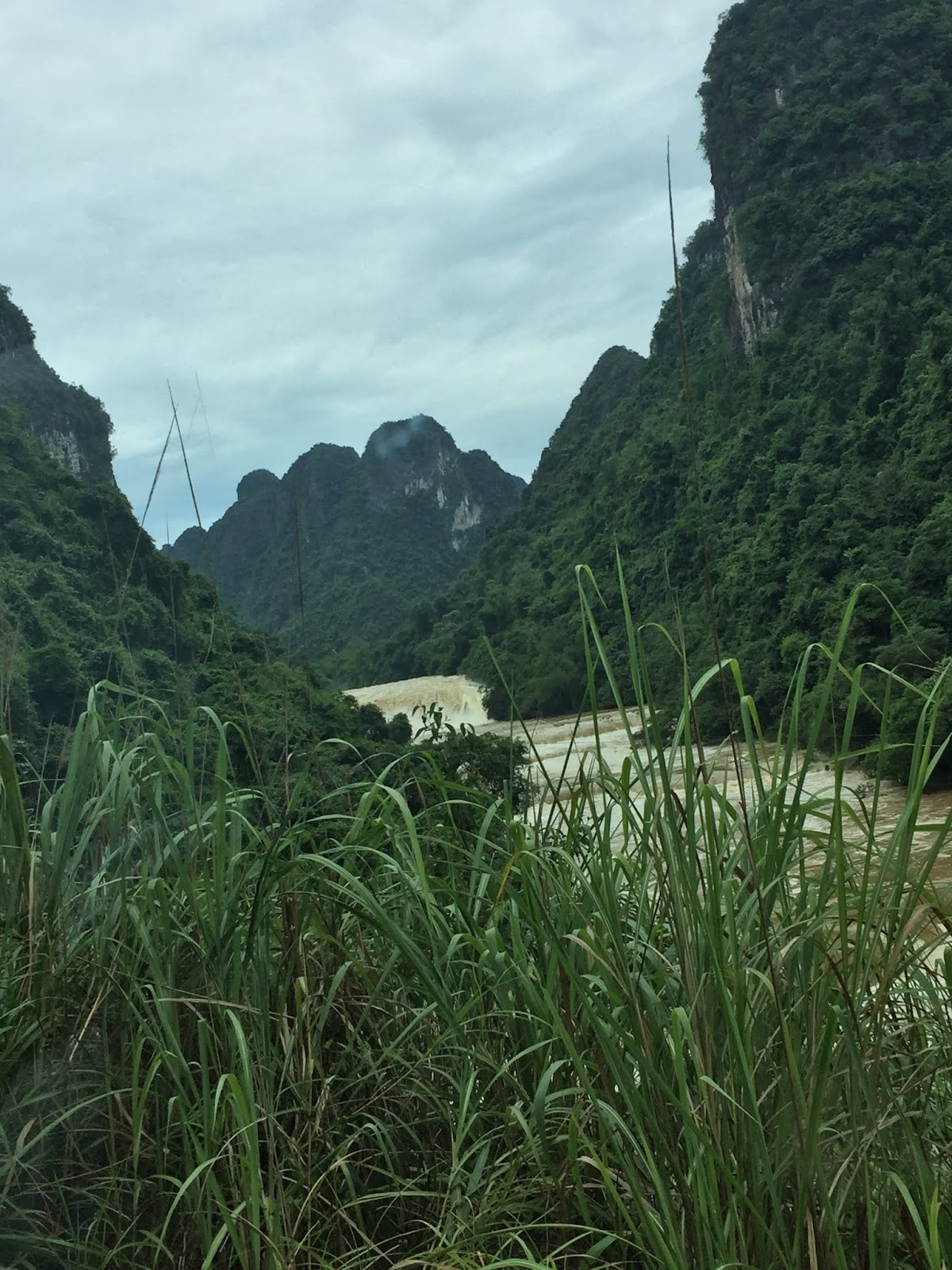
In the smaller bus, we wind our way uphill through wilder, more rugged terrain, the Guichun River gathering force.
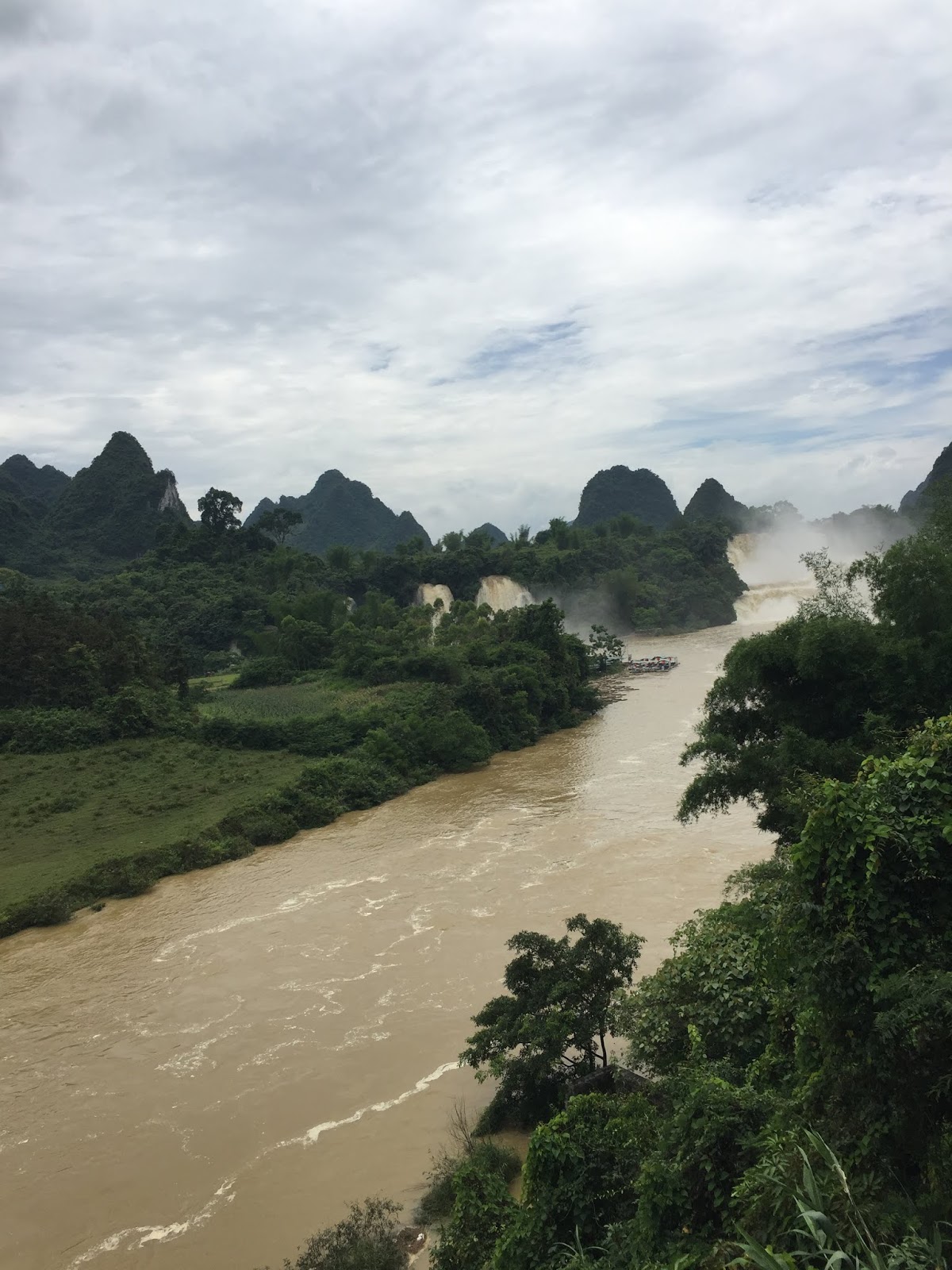
And now we arrive. A short muddy path takes us to our first sight of the thundering cascade—the world's fourth largest transnational waterfall.
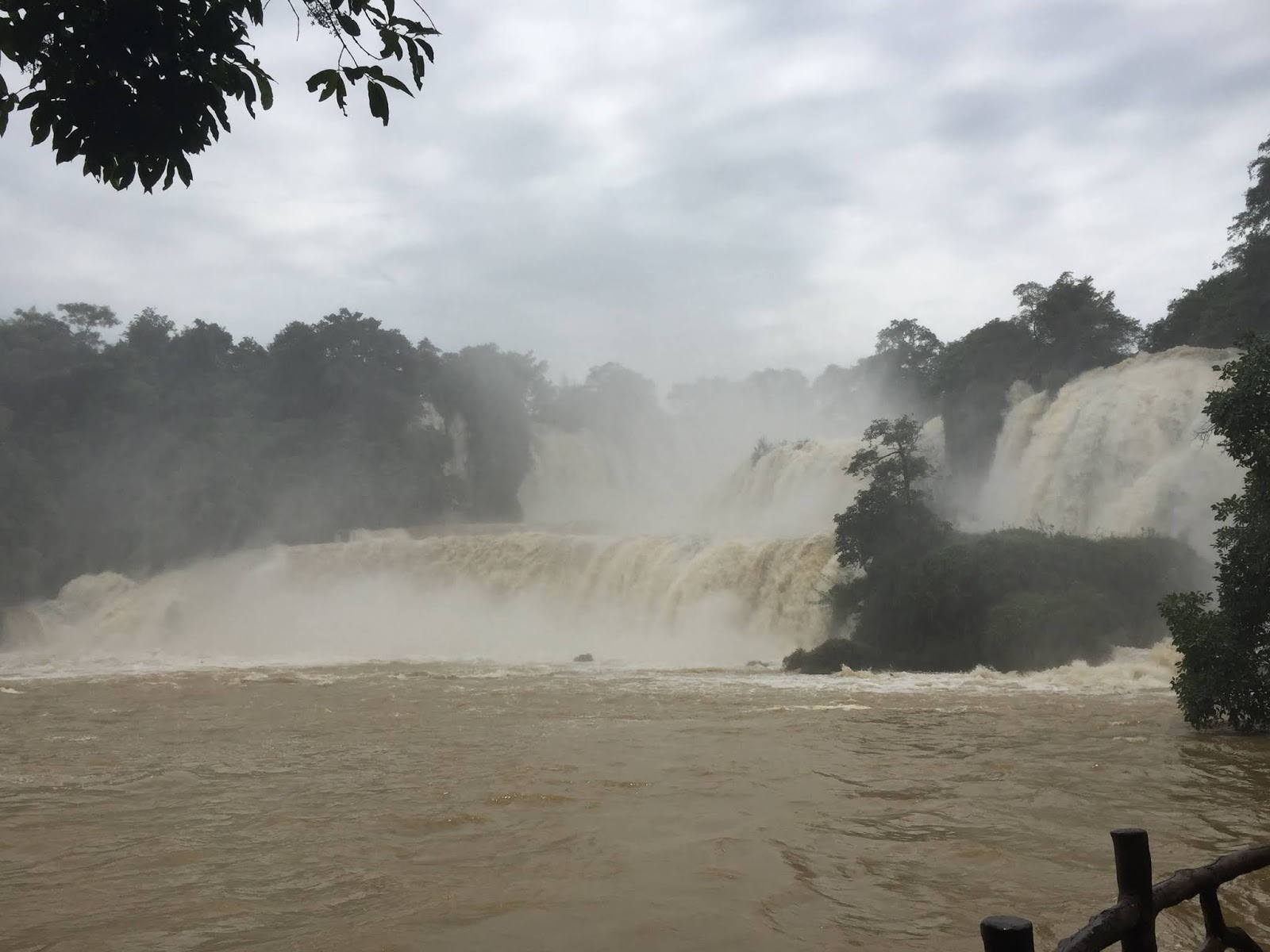
Amid 100% humidity, rain, and river spray, heads spinning with jet-lag, we drag ourselves onward.
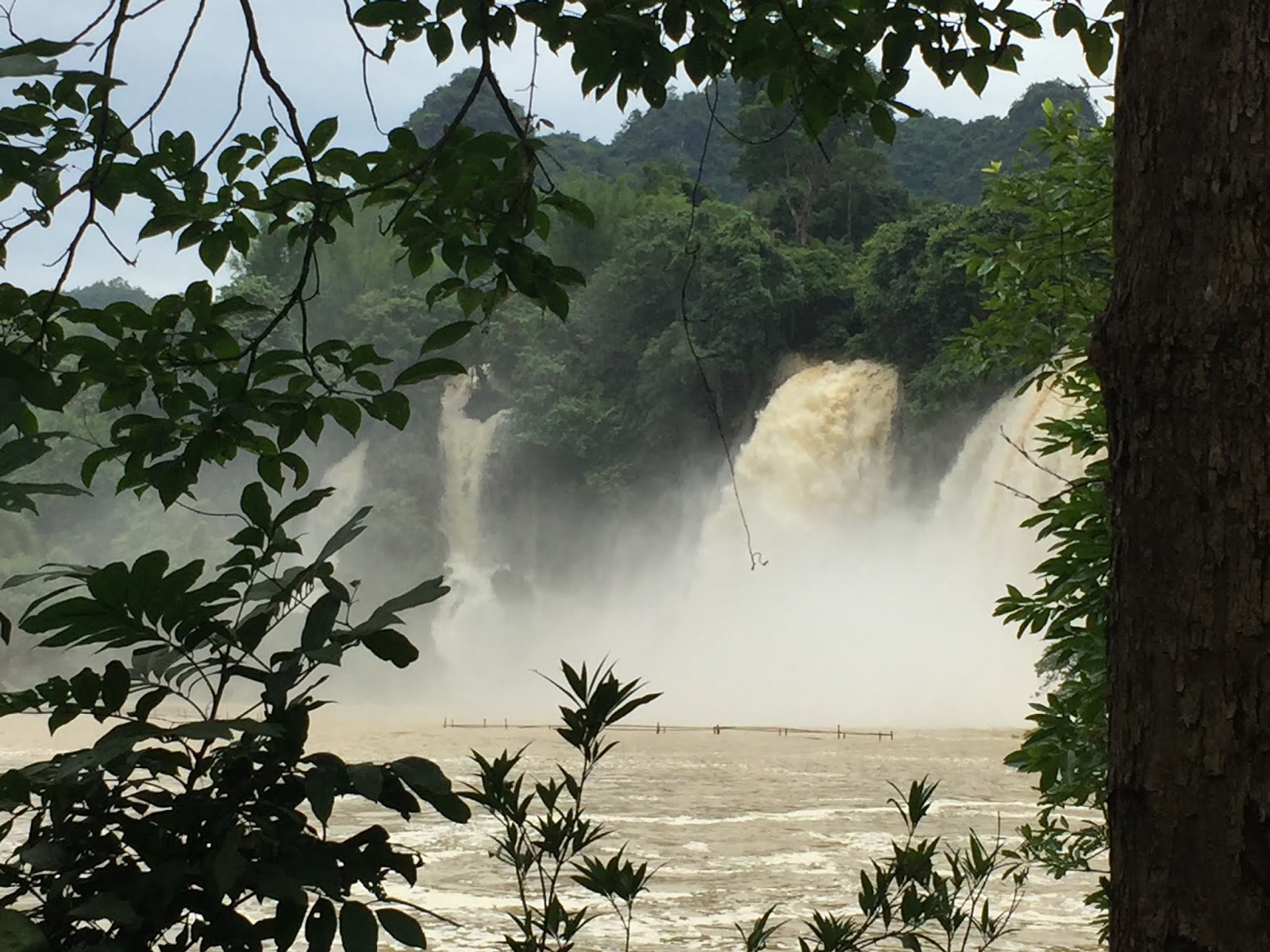
It has been a rainy season, the river expanding over its banks.
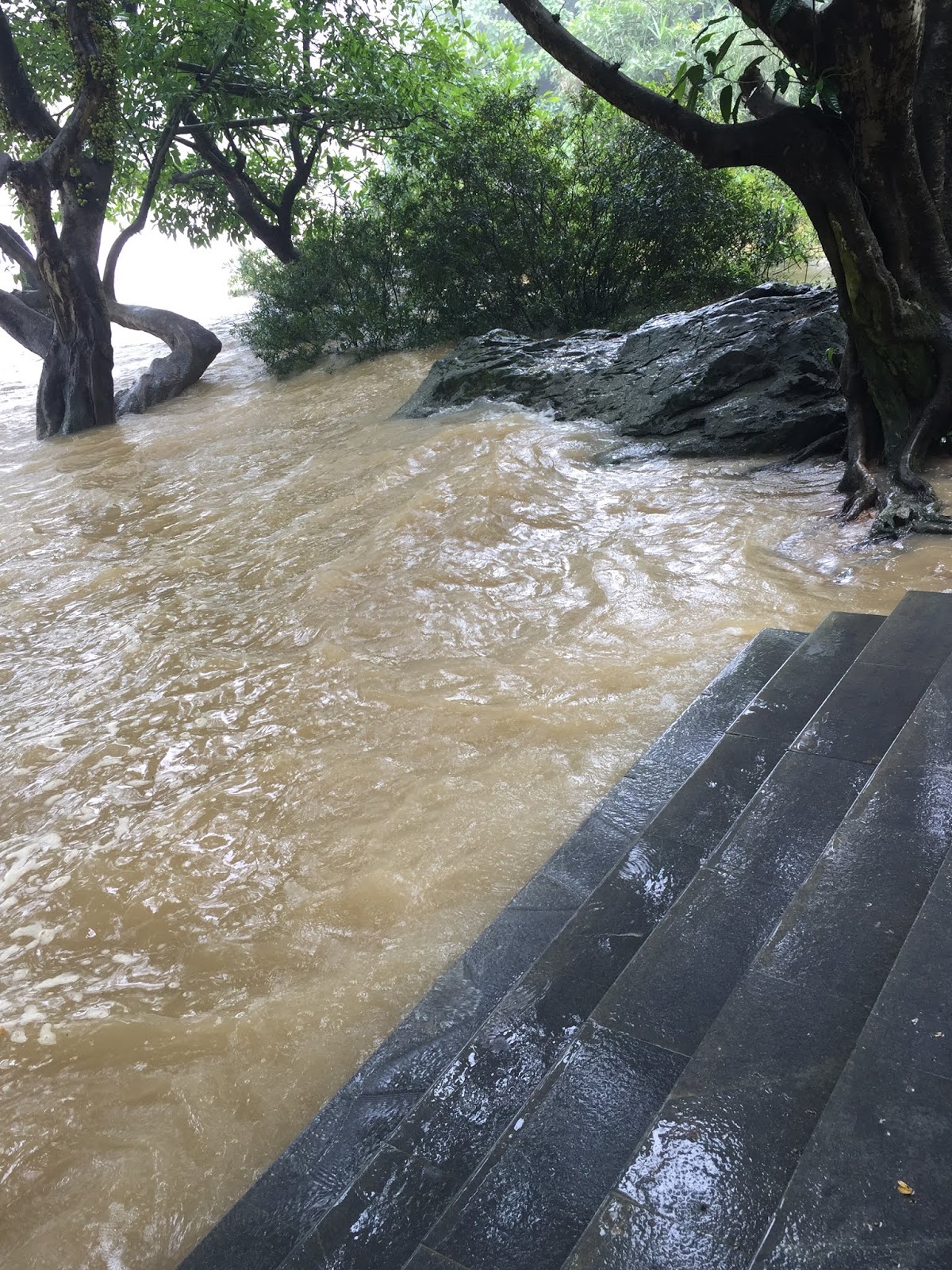
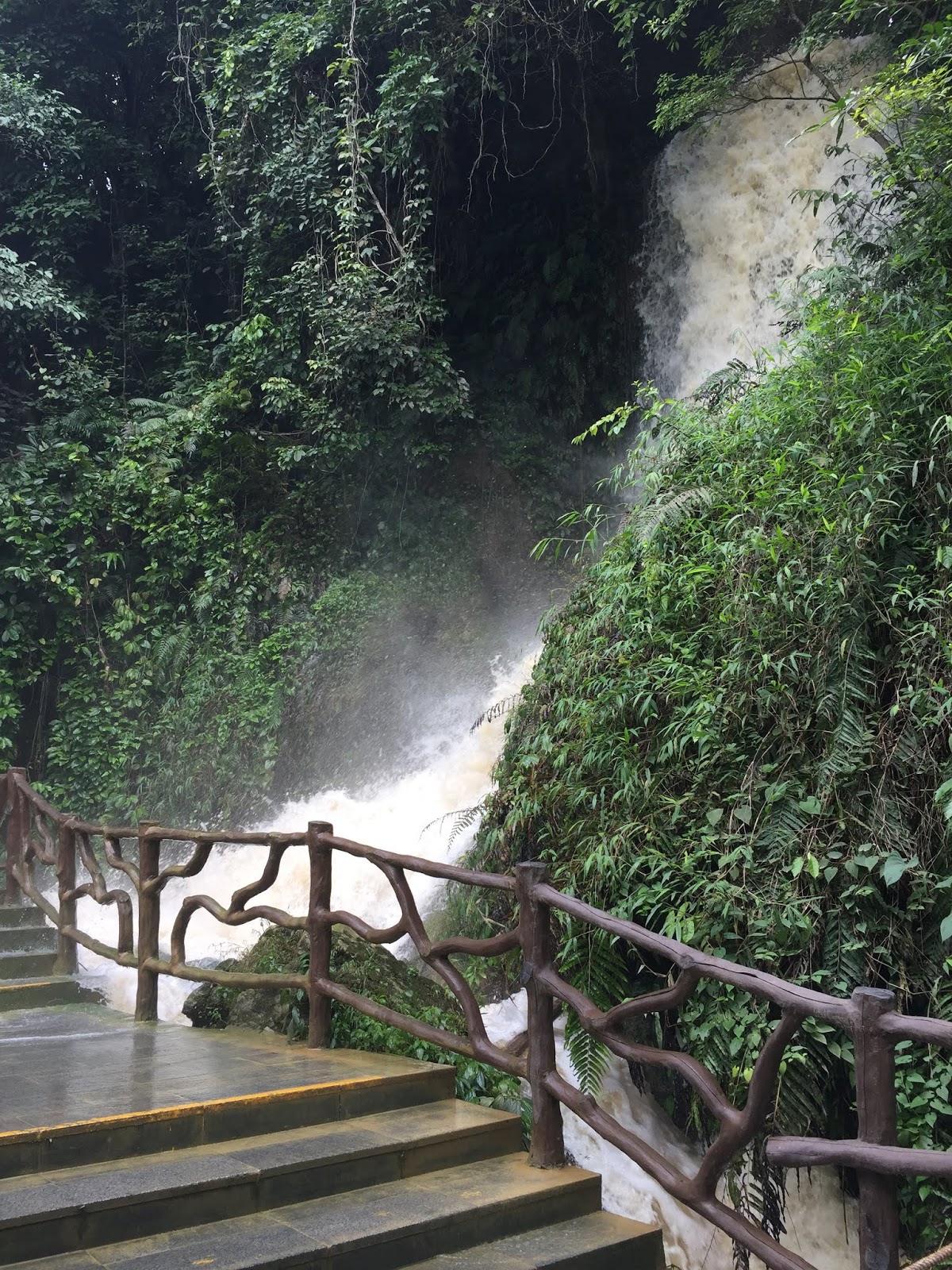
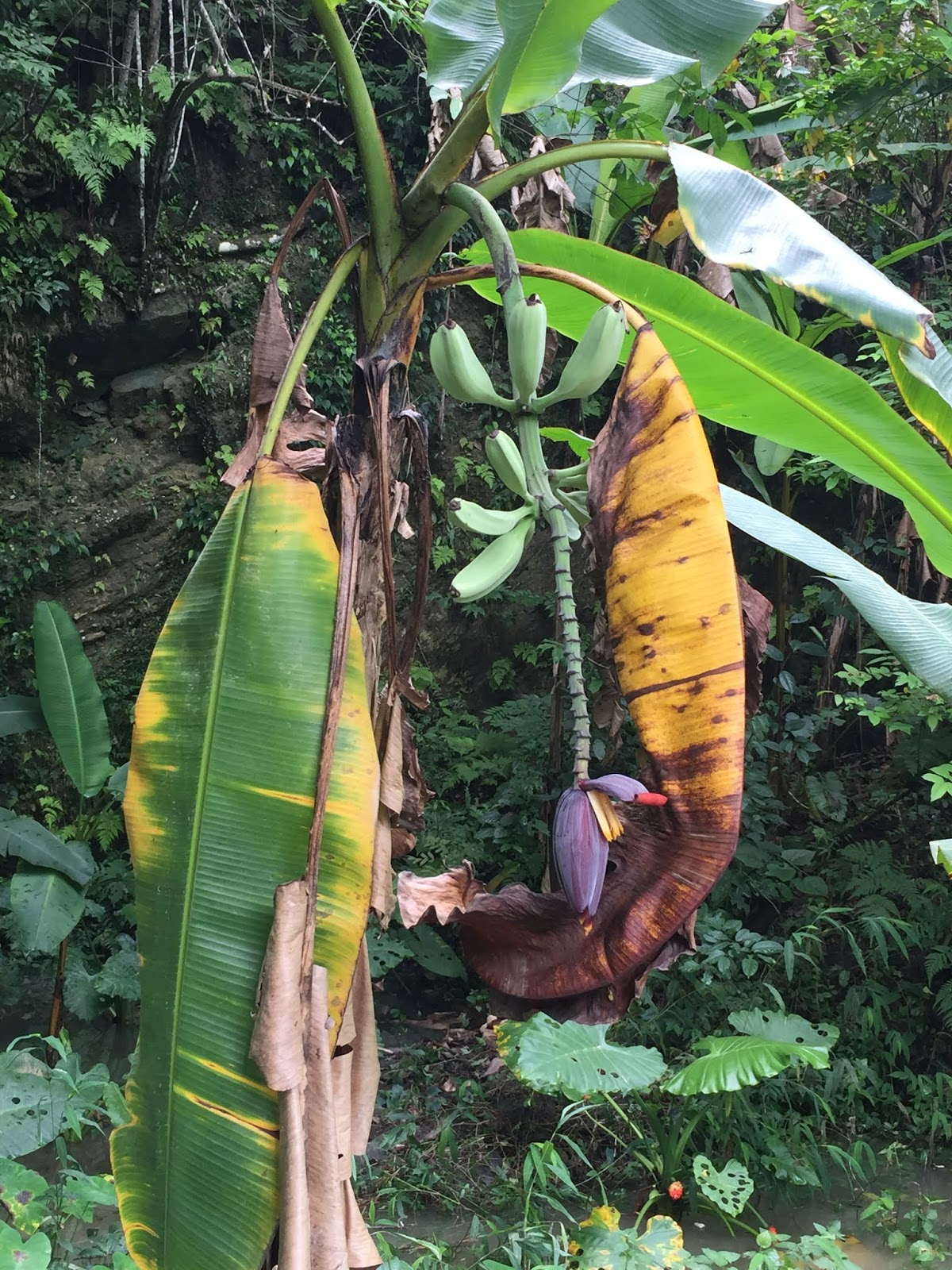
Moving through pure jungle, soaked...
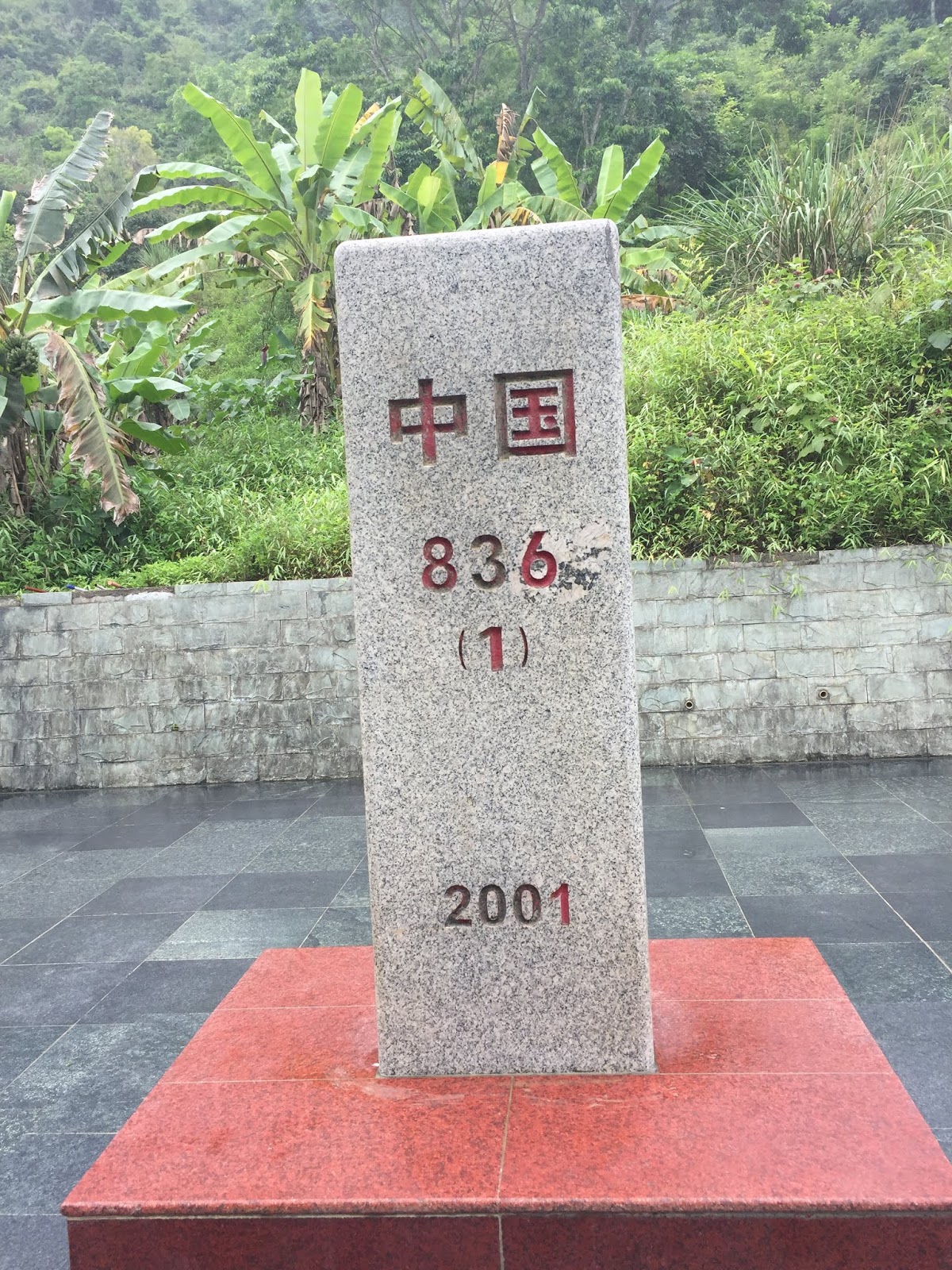
We reach the boundary marker between China and Vietnam.
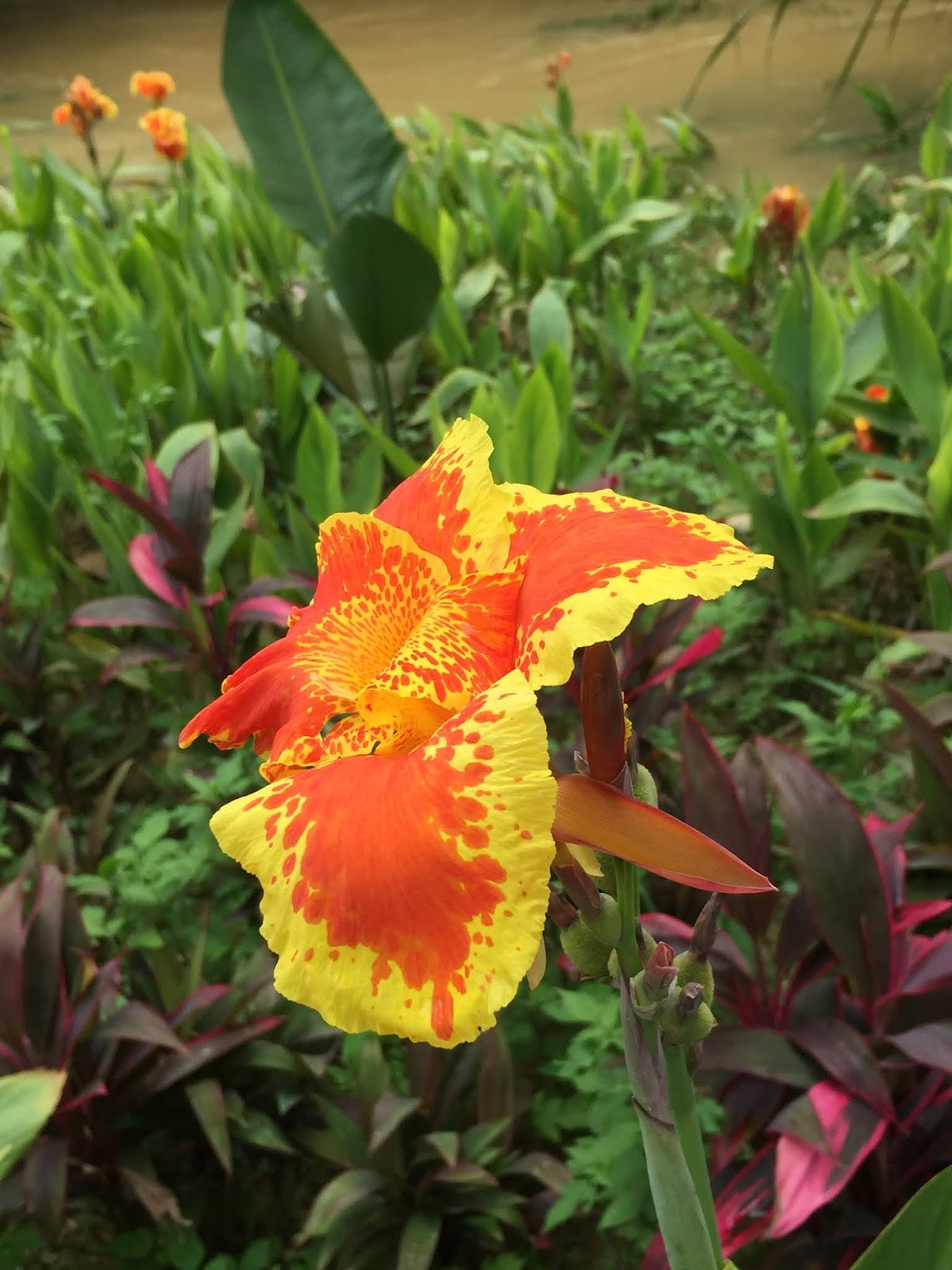
Heading back, I turn time and again to regard nature's magnificence and power.
I imagine the French colonial official who once lived here in splendid isolation.
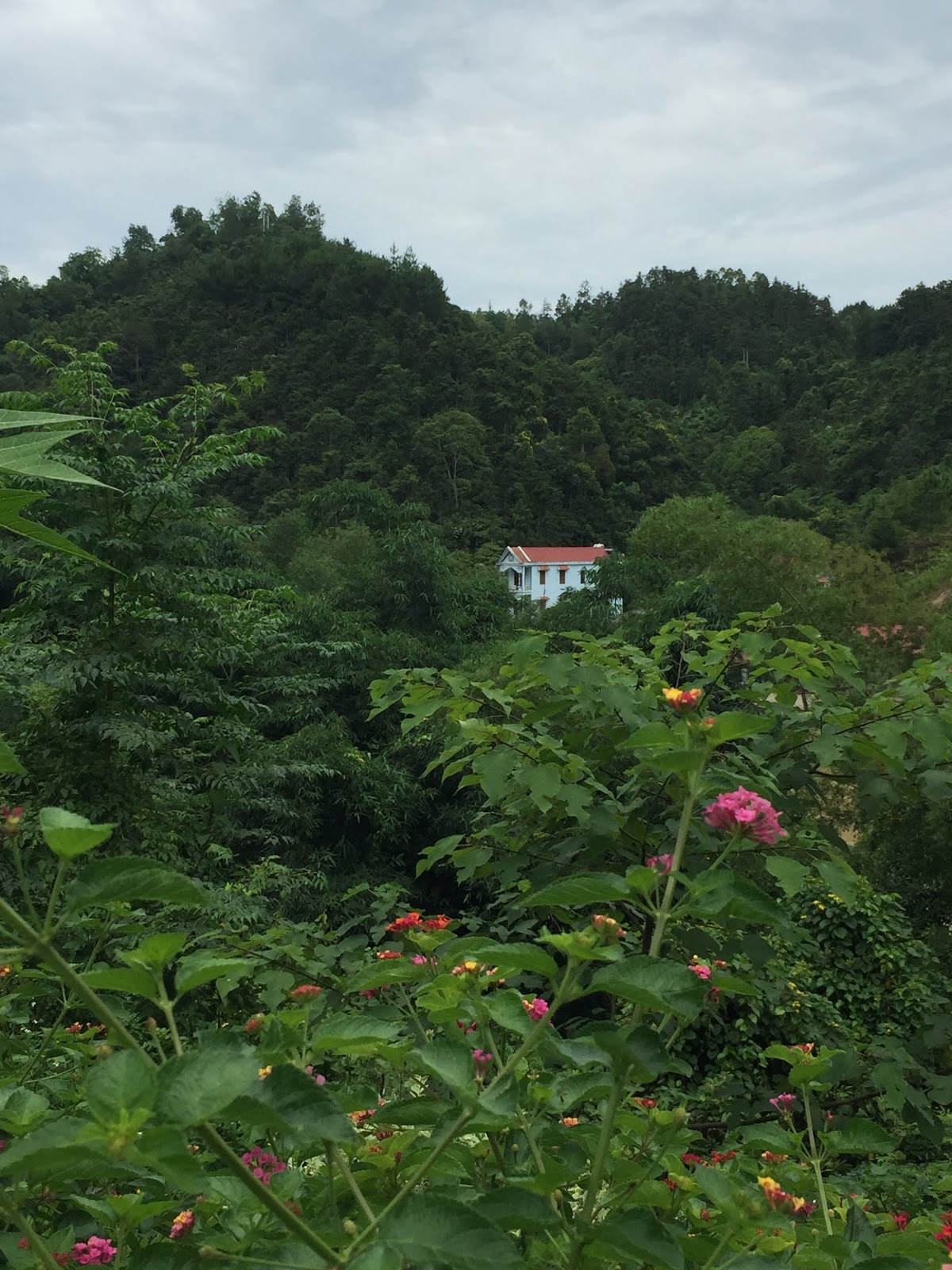
Drained, we board our small bus to the large bus terminal at the end of town, setting off in late afternoon.
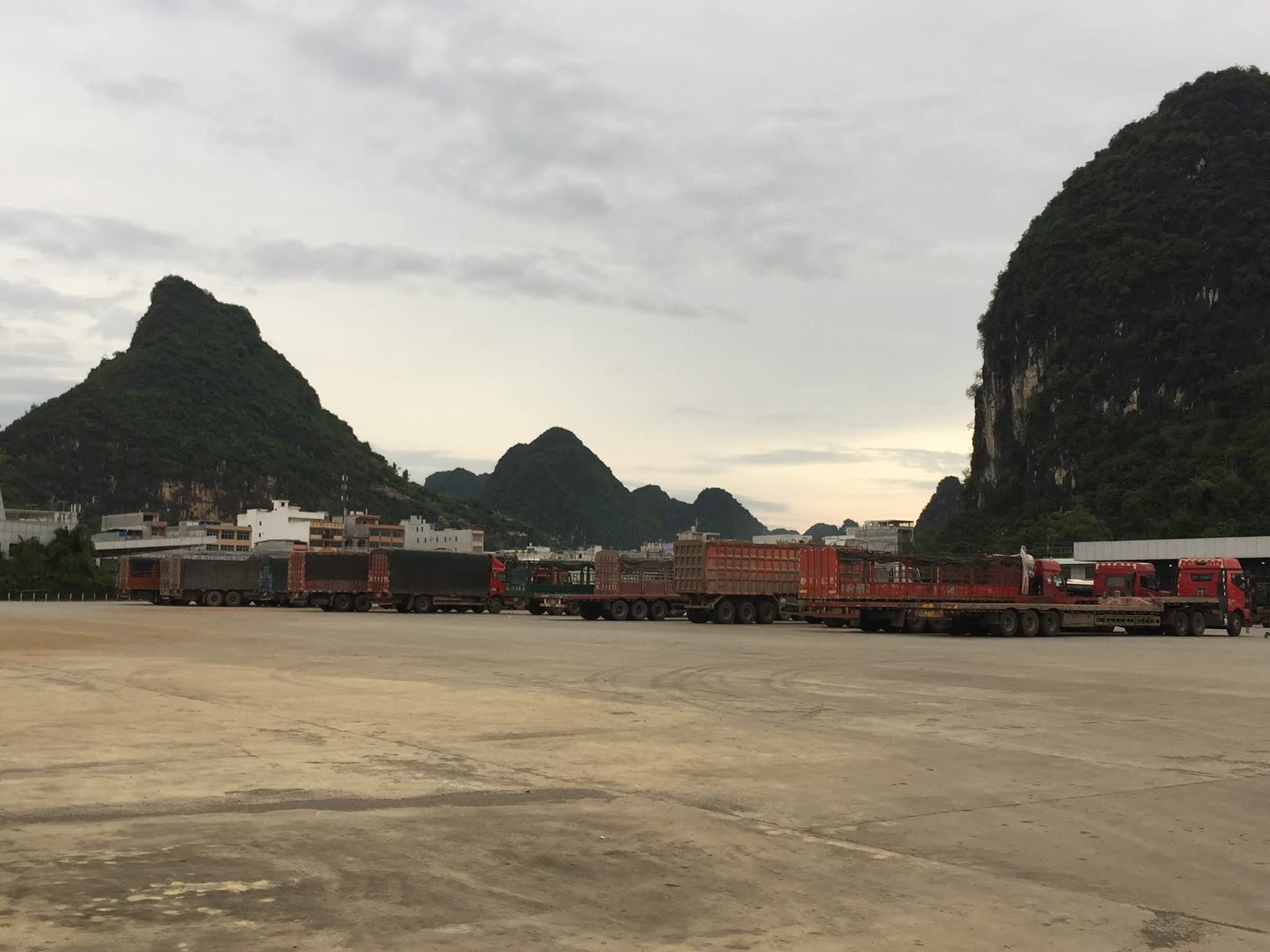
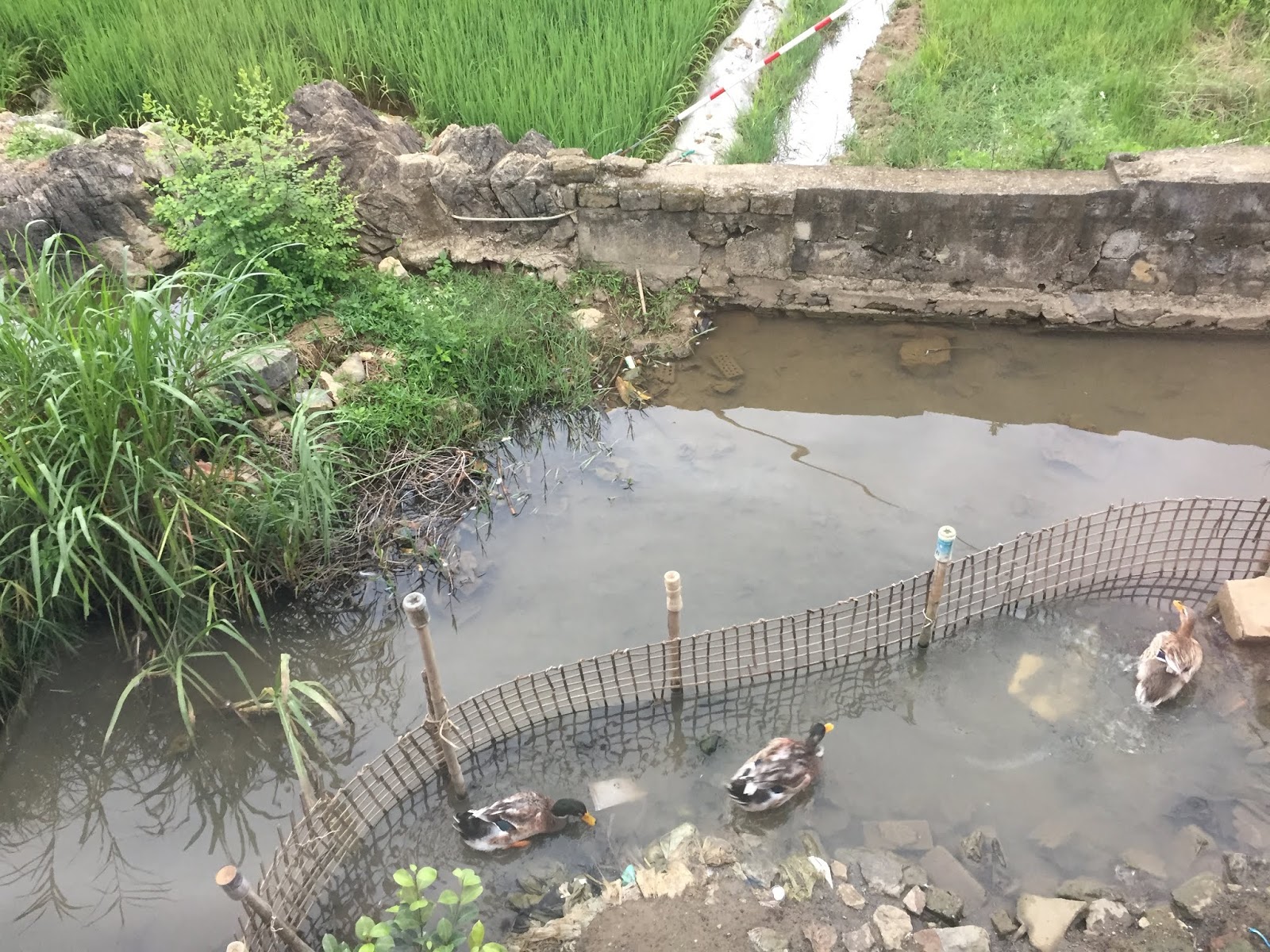
Now, I see new sights, smaller moments.
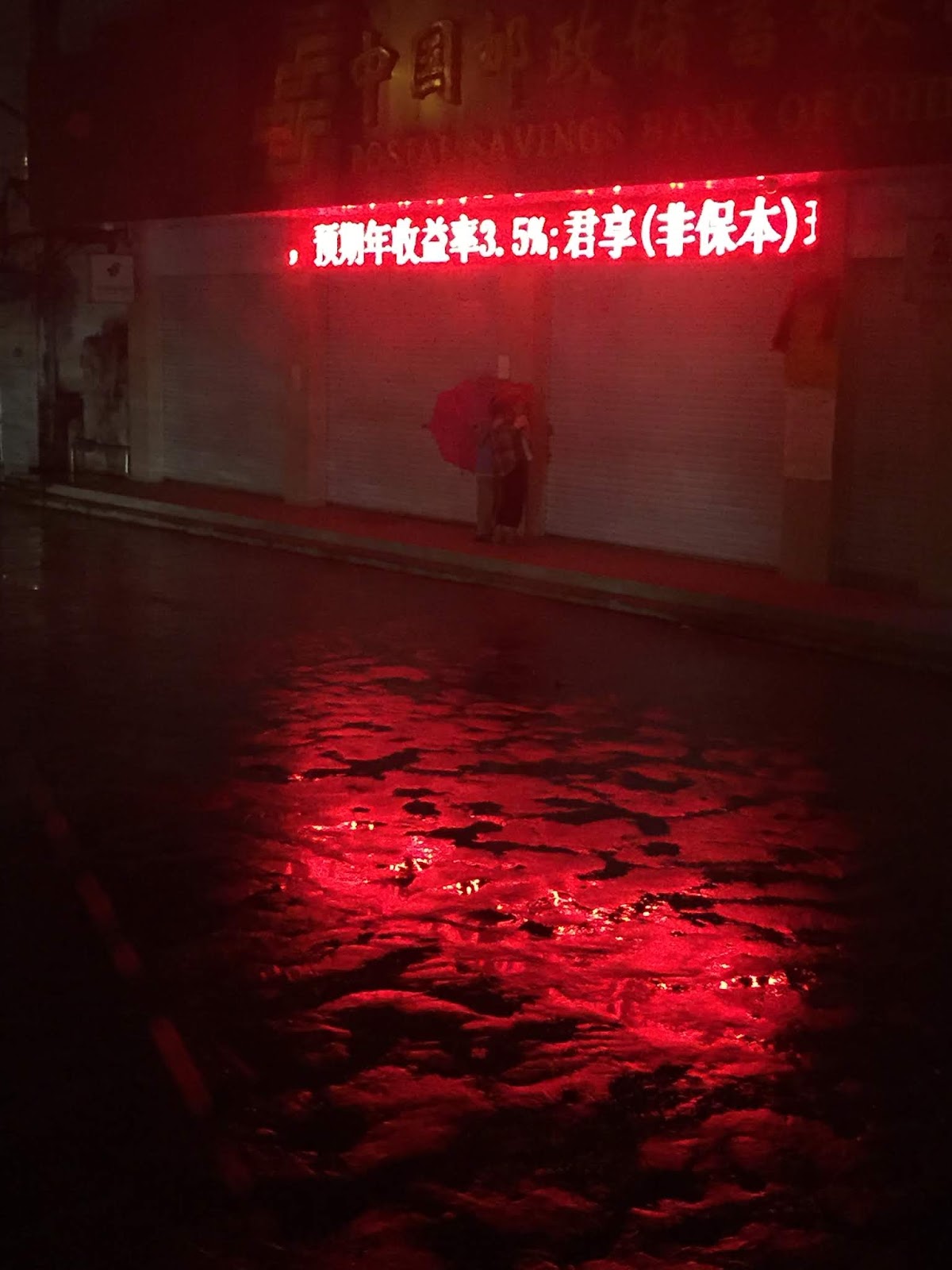
After dark, a heavy rain begins to fall. During a fuel stop, I glimpse the village night life.
Across the road, a woman cleaning her restaurant.
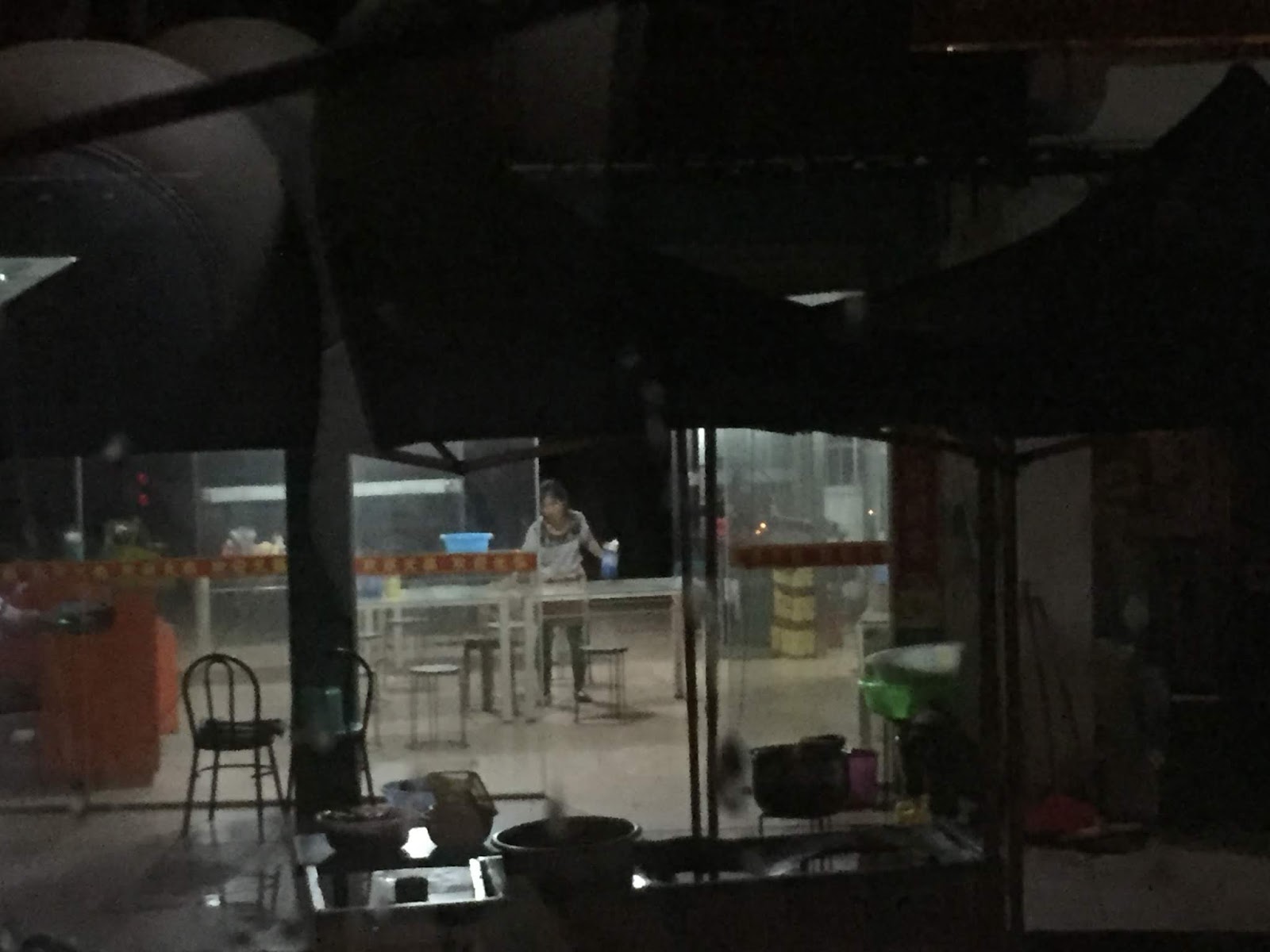
Two doors down, the action continues.

And inside the bus, a raucous video draws laughter and keeps the driver awake. Fourteen hours after leaving Nanning, we return to our hotel—and our welcome beds. Tomorrow we must rise early to catch the train.
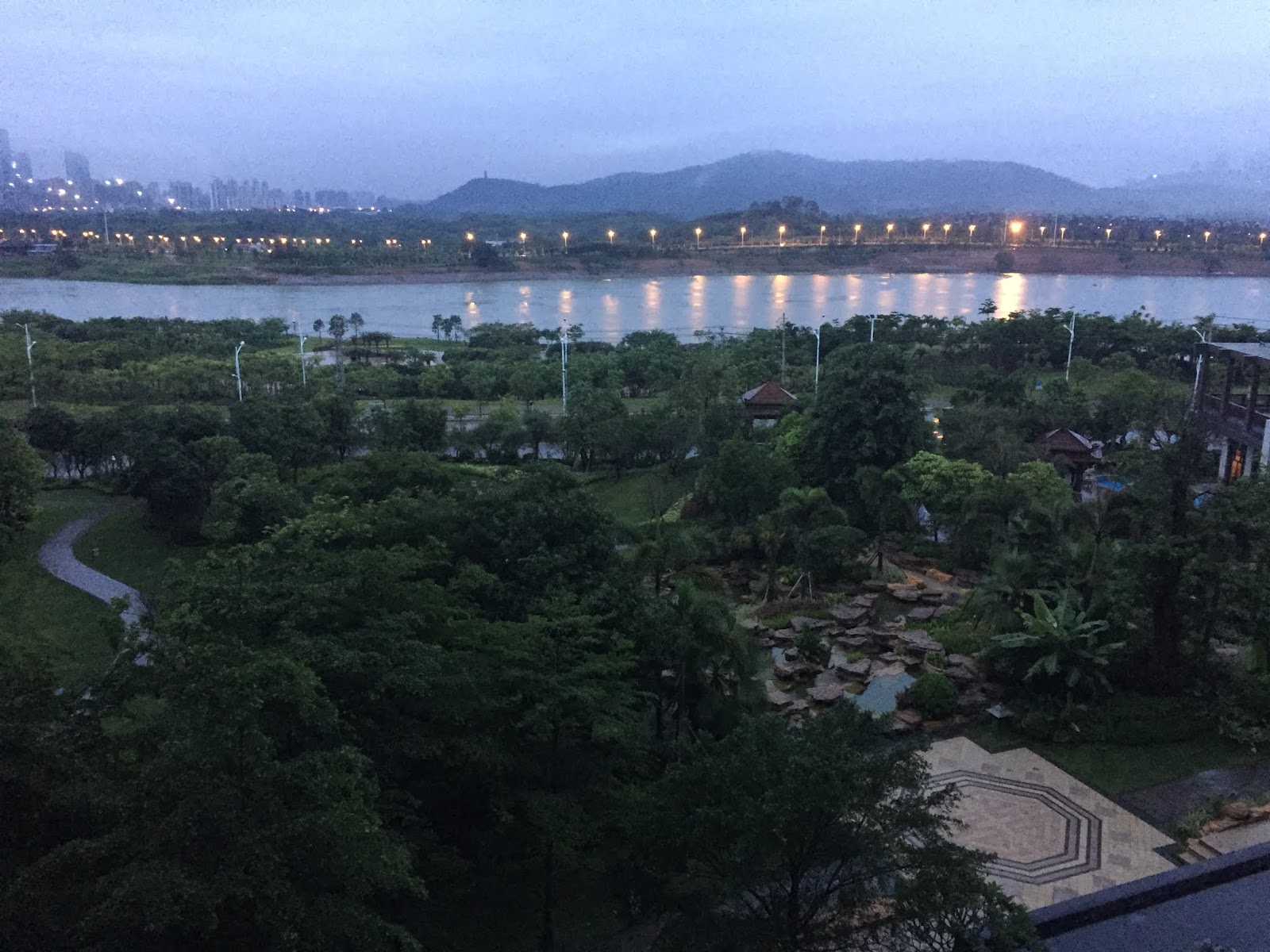
Next stop: Guilin
July 15, 2018
China: In Search of the Past: Part 1: Hong Kong
I avoid red-eyes like the plague, but there we were, off for Hong Kong, only hours after my 23-year-old daughter and her second-graders finished the countdown to summer break! Eighteen months ago, we'd traveled to India and Sri Lanka for my WW2 research. Now to continue in China.

Around dawn Sunday, approaching the glamorous "new" Lantau Island airport, I recall my many hair-raising descents past packed tenements into funky old Kai Tek, on the Kowloon (mainland) side. This vital metropolis still mesmerizes me.
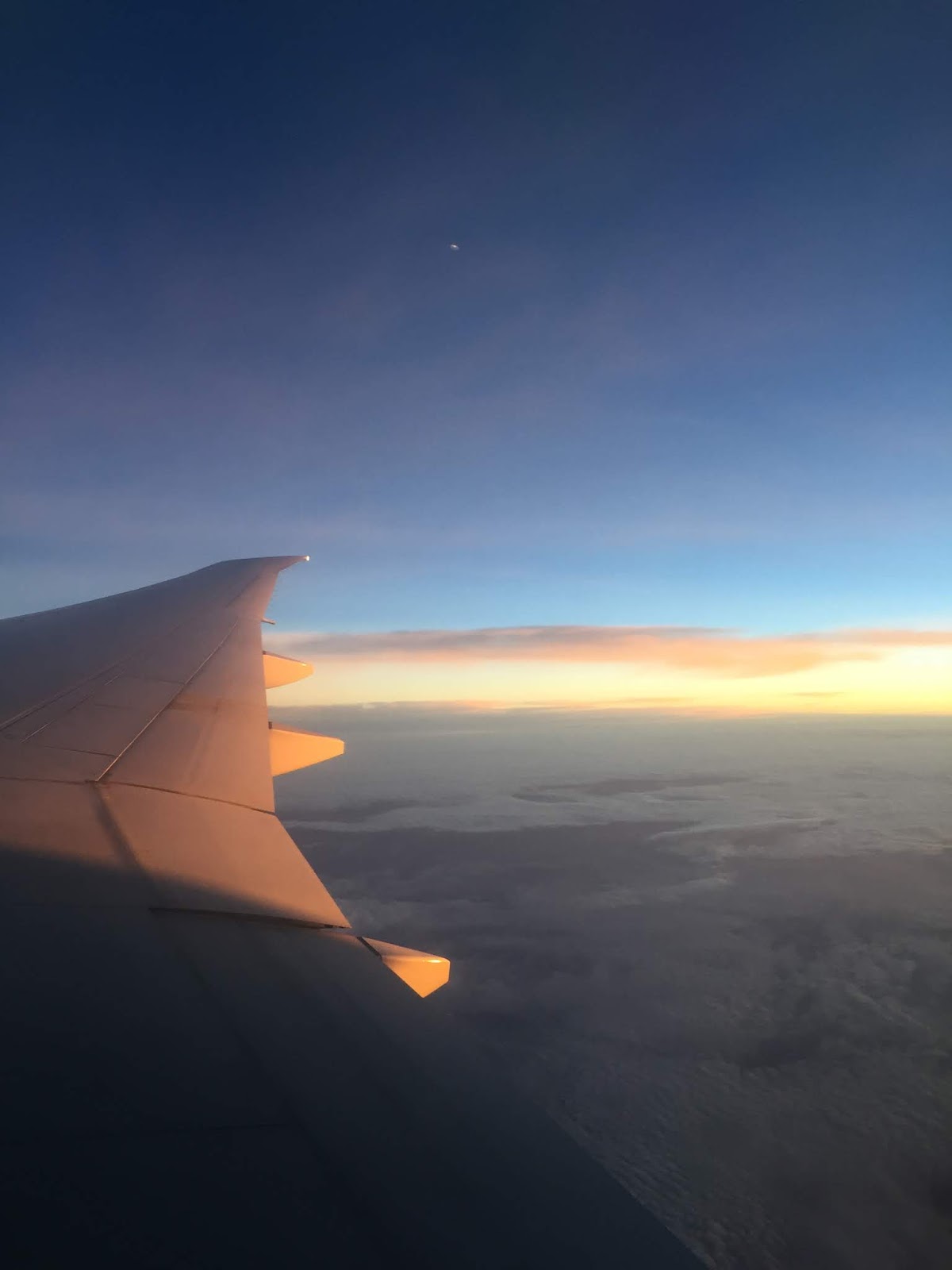
Hong Kong is one of several islands dotting these beautiful coastal waterways--a new area to explore. So, with tomorrow's early flight, we'll stay on Lantau in a seaside hotel not far from the former shipyard that is now Disneyland.

A high point of Asian travel is the breakfast buffets. We feast on luscious fruit, omelettes, parathas, spicy noodle soup. After my fifth cappuccino, I'm ready to enter the local time zone. We plan to "cruise" through it by ferry. Easy. We think.

Given the humidity, most people are happy for the air-conditioned "fast" ship, but the close air makes us drowsy. I am revived as we move into the waters of my beloved Victoria Harbour.
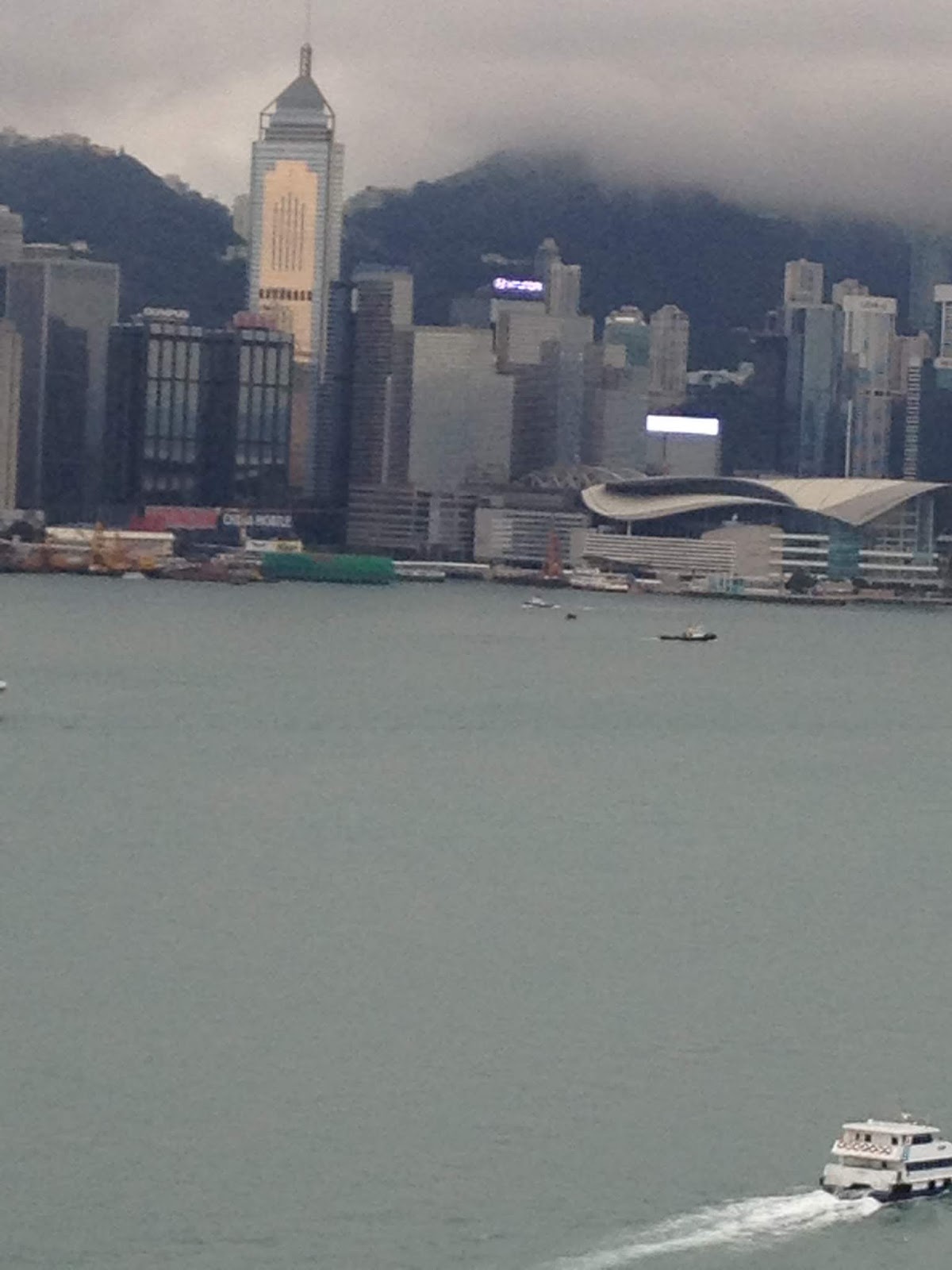
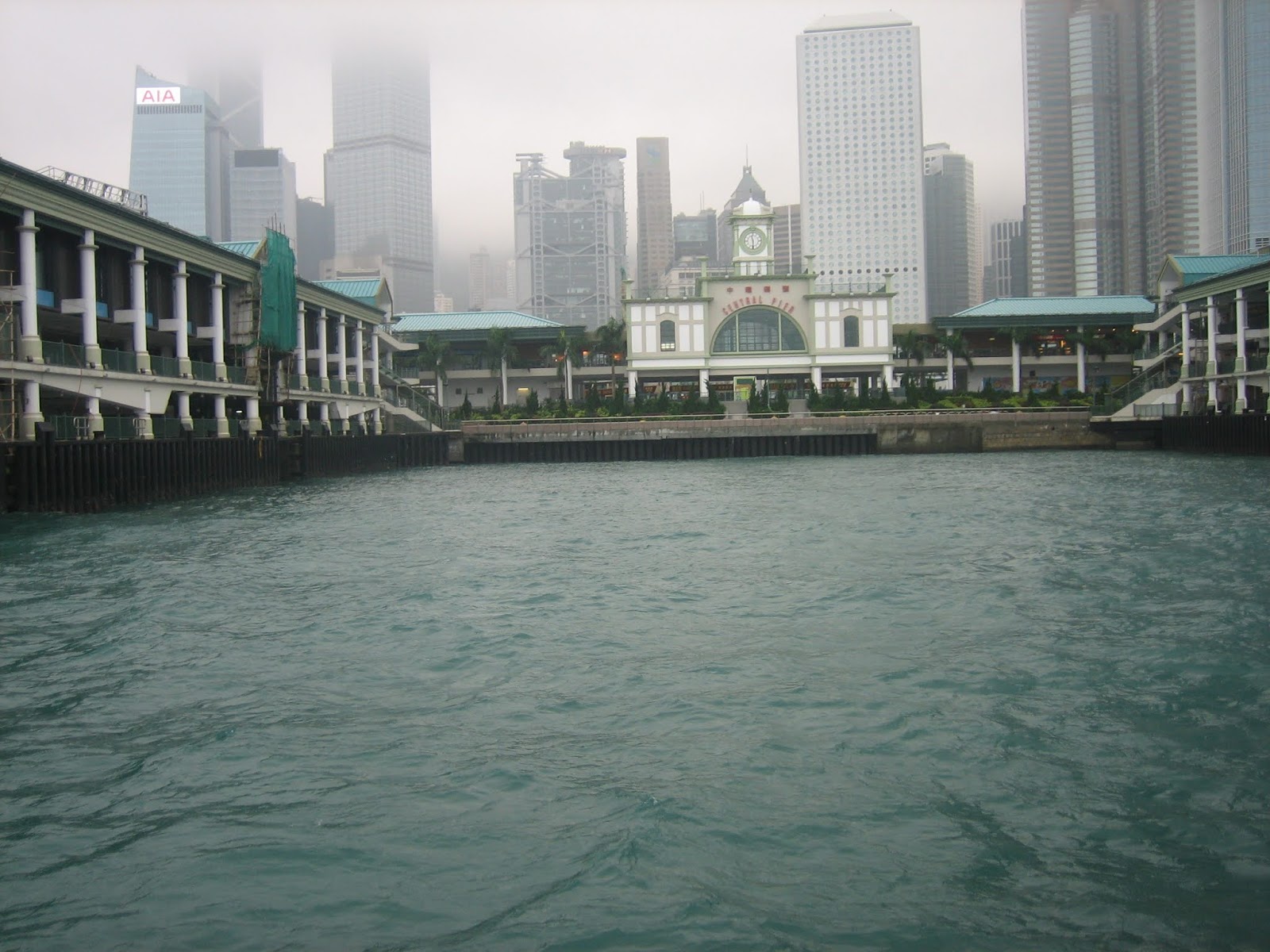
At Hong Kong Central, we board another closed ferry to Cheung Chau, a pedestrian-only island where I passed significant time many moons ago.
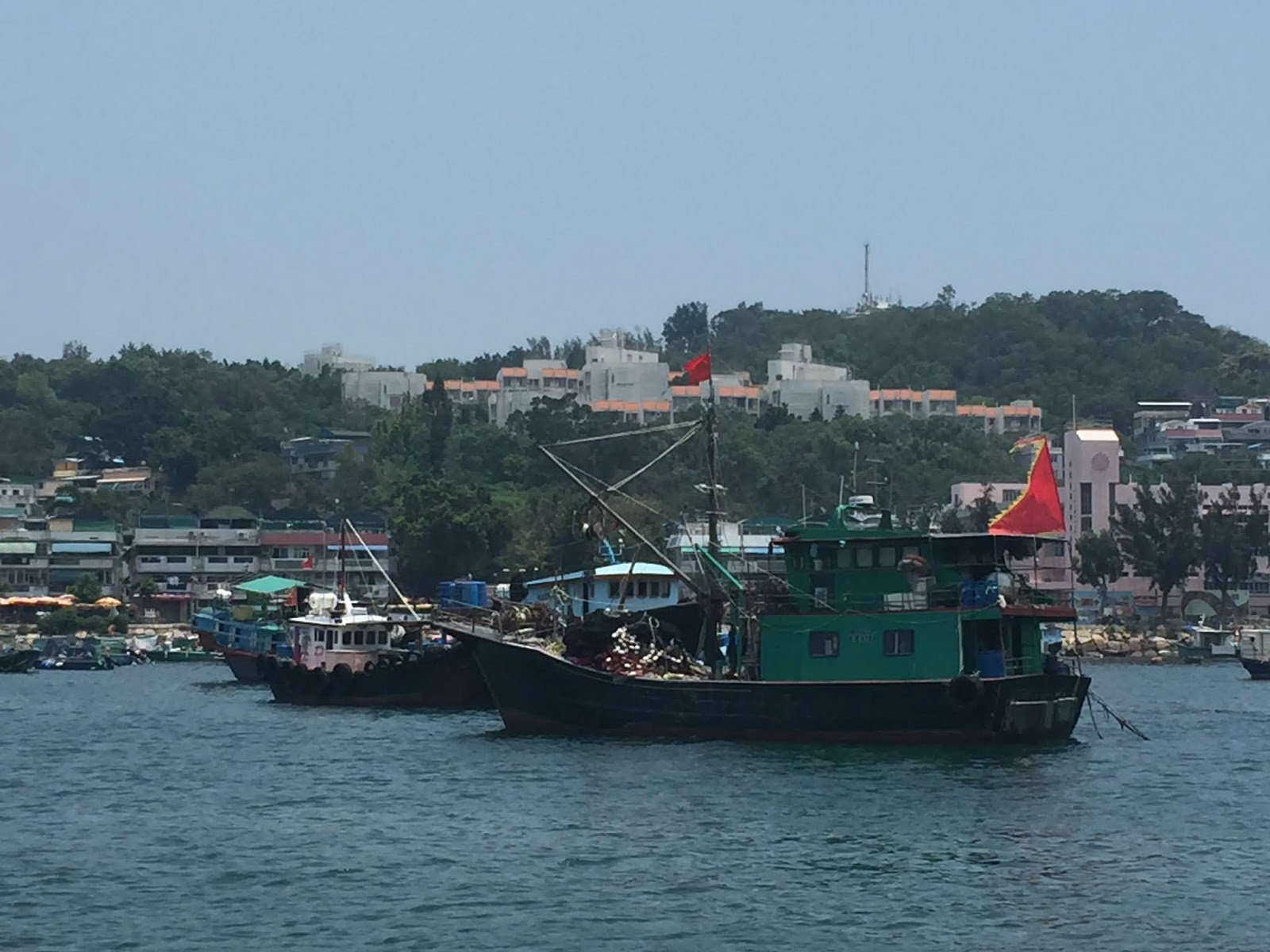
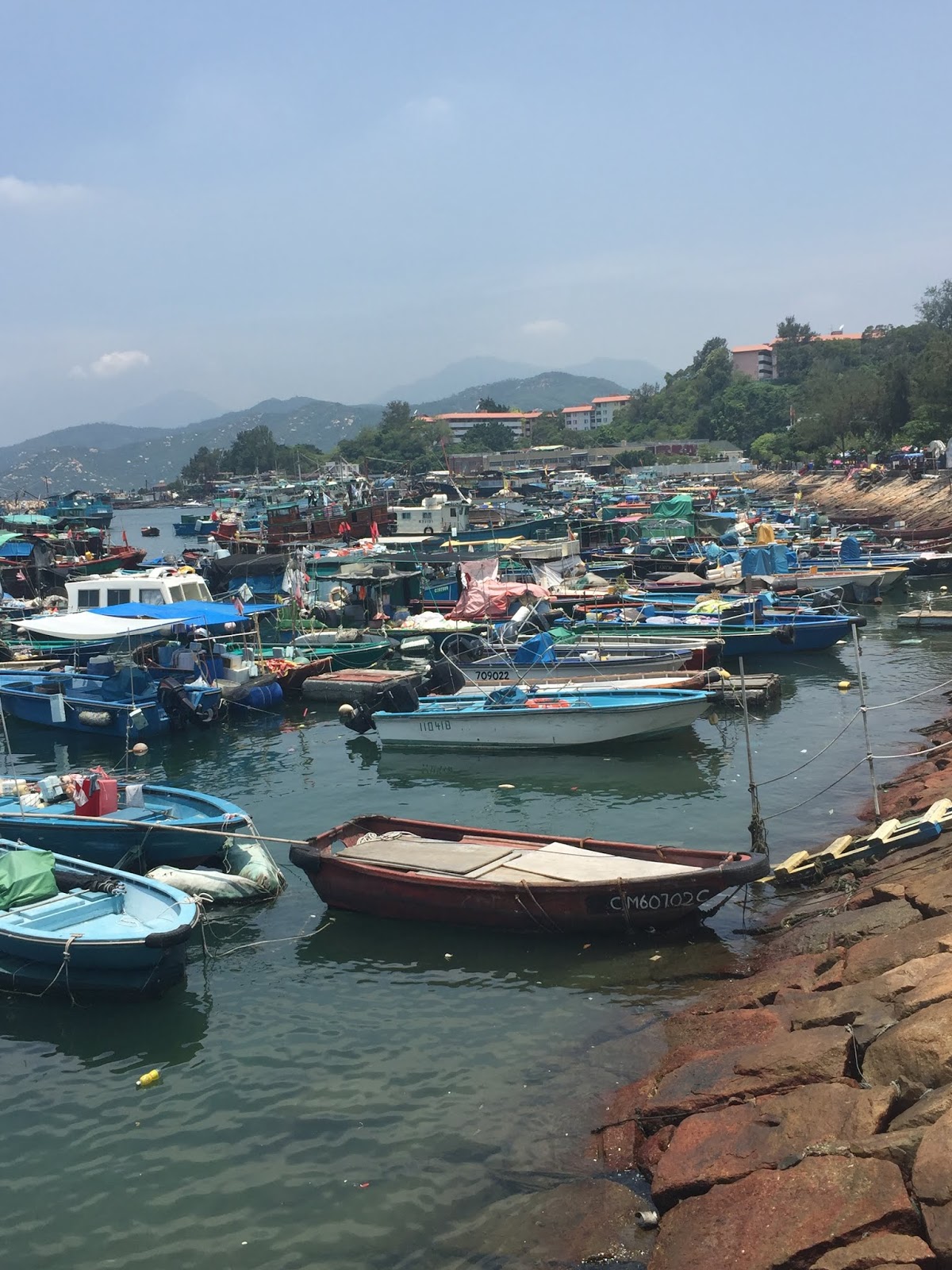
Along the busy waterfront, we join the Sunday crowds, many with hand fans or little battery-operated ones. But, although bludgeoned by the heat, we are here, and I hope to catch a memory or two.

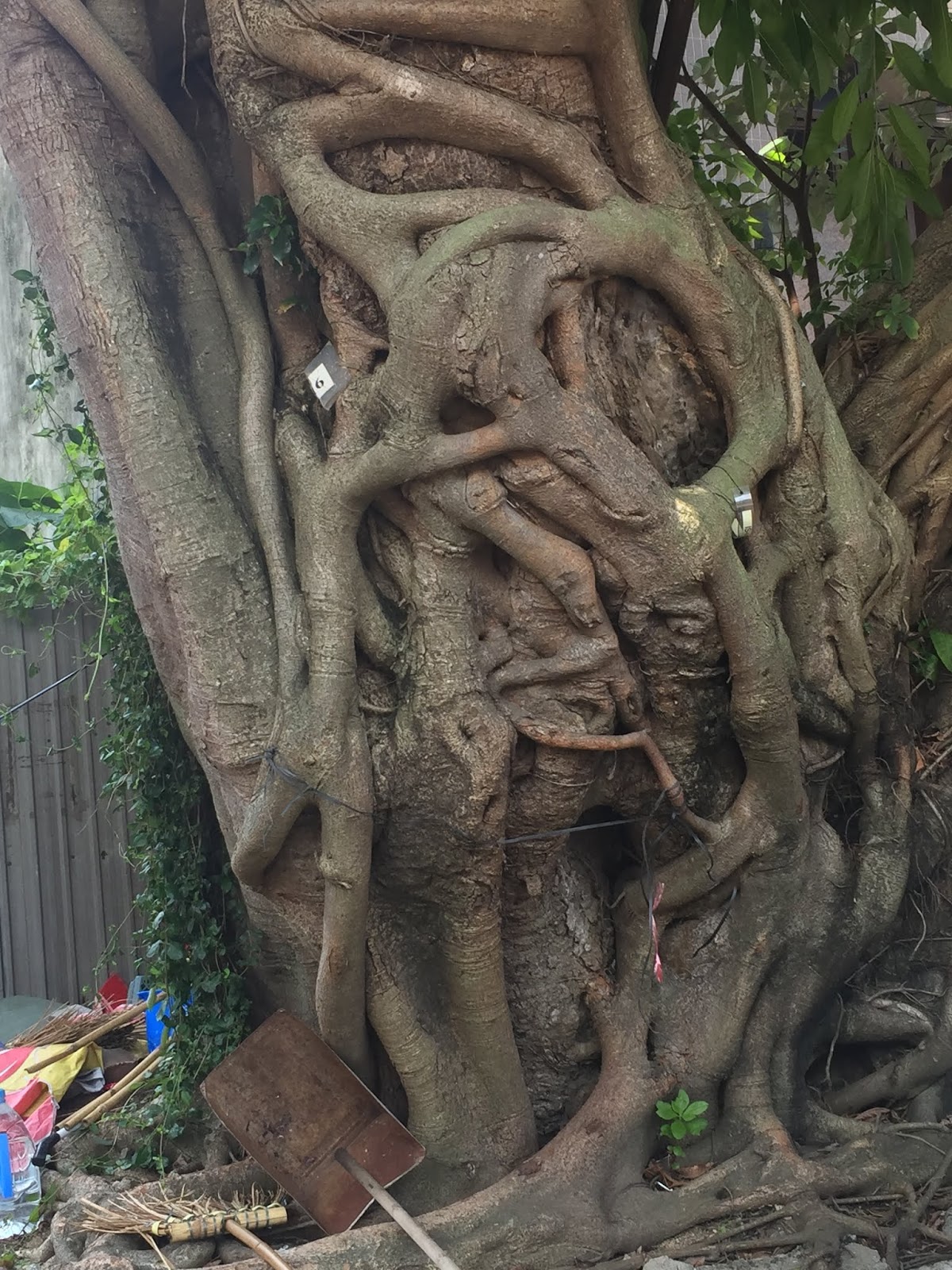
One block inland, we find brief shelter under a grand old banyan.
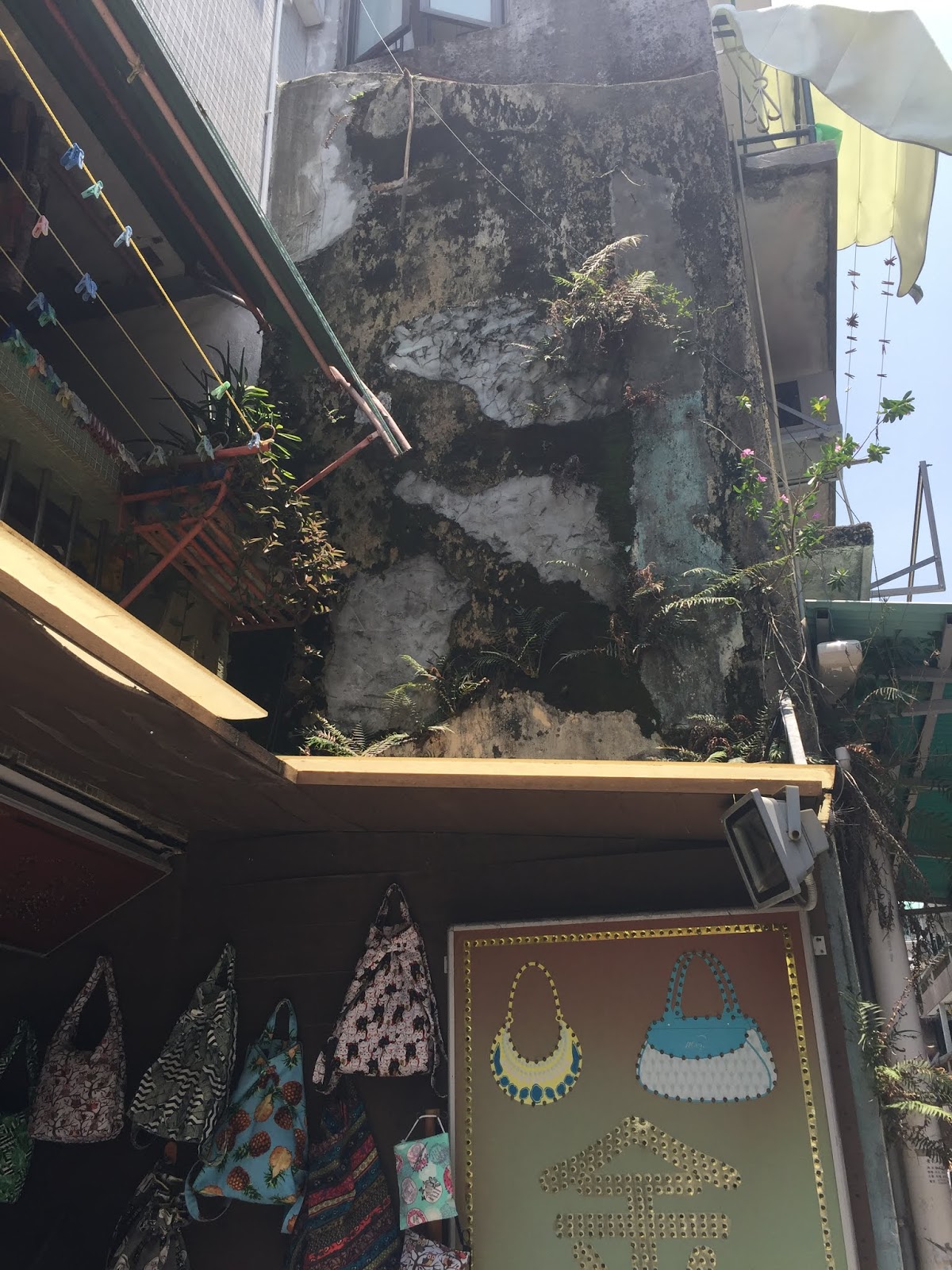
It's even hotter in the narrow, shop-lined back alleys. I look around... from which of these lanes did Shirley Lamb recognize my laugh, in which basement restaurant? (But that's another story.)
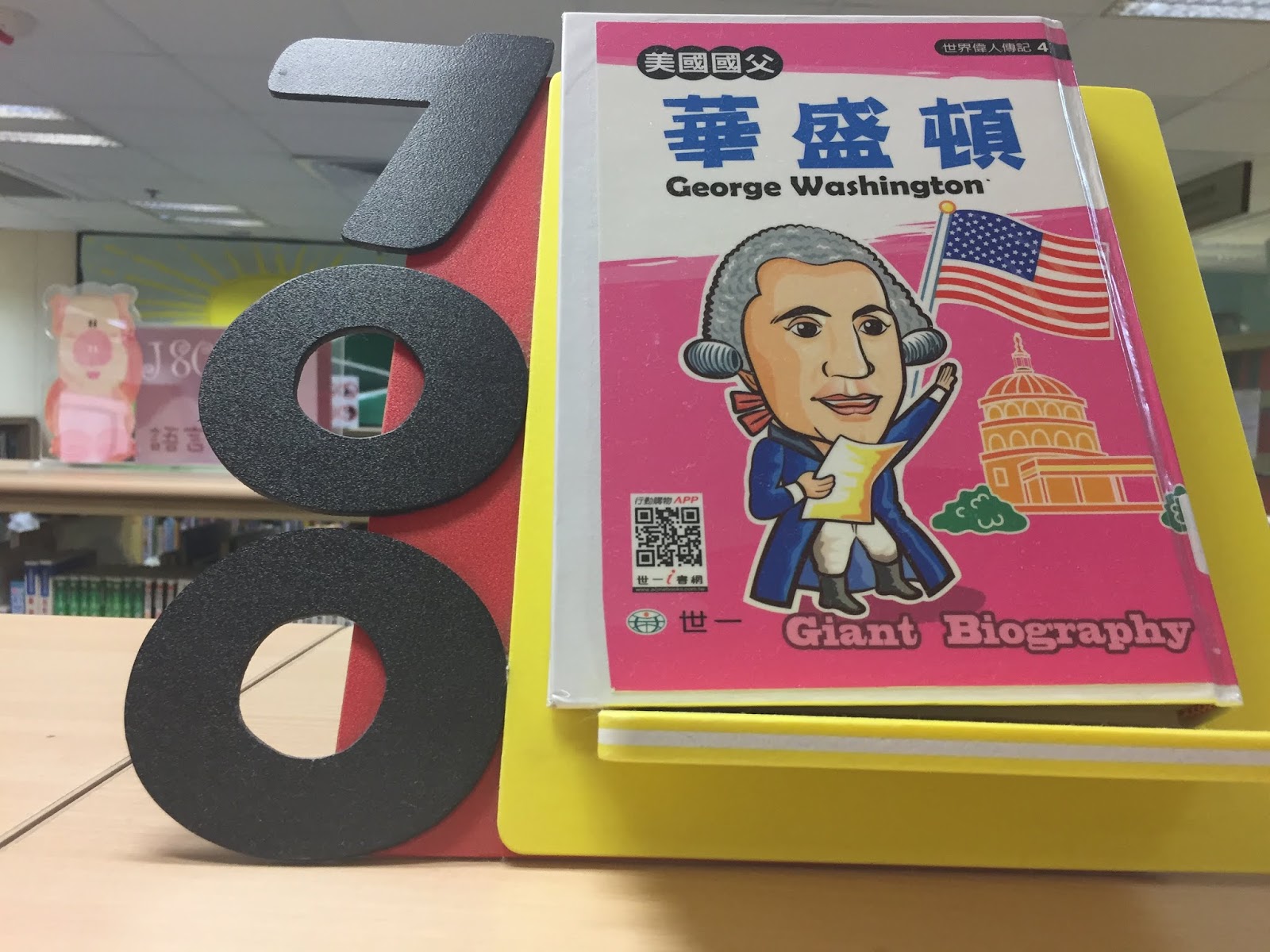
Later, I discover the library and, in the children's section, a "Giant Biography" of George Washington. Now a Chinese territory, Hong Kong maintains her outward-turning spirit.
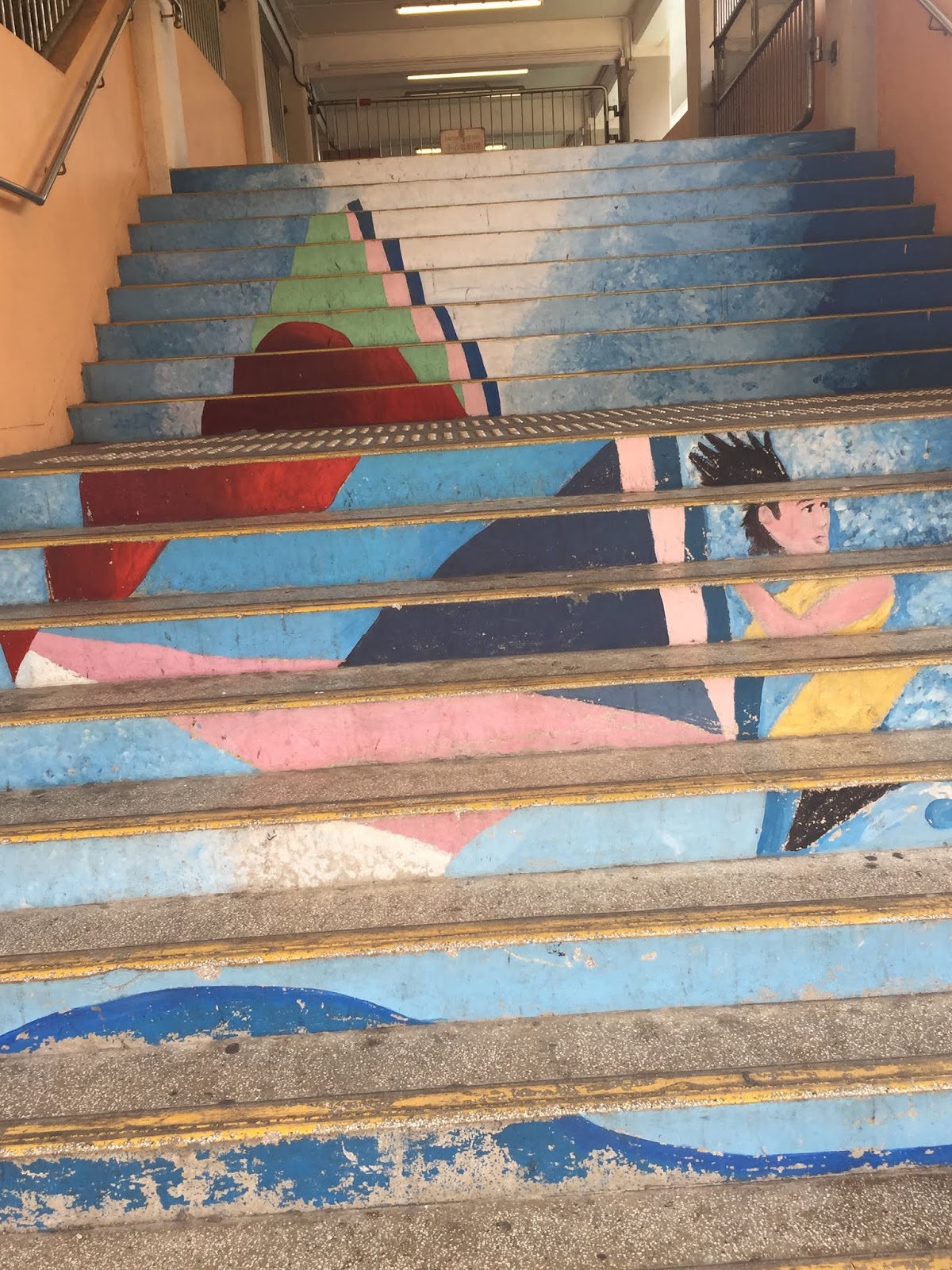
Wilting, we return down the waterfront, admiring this cool windsurfer.
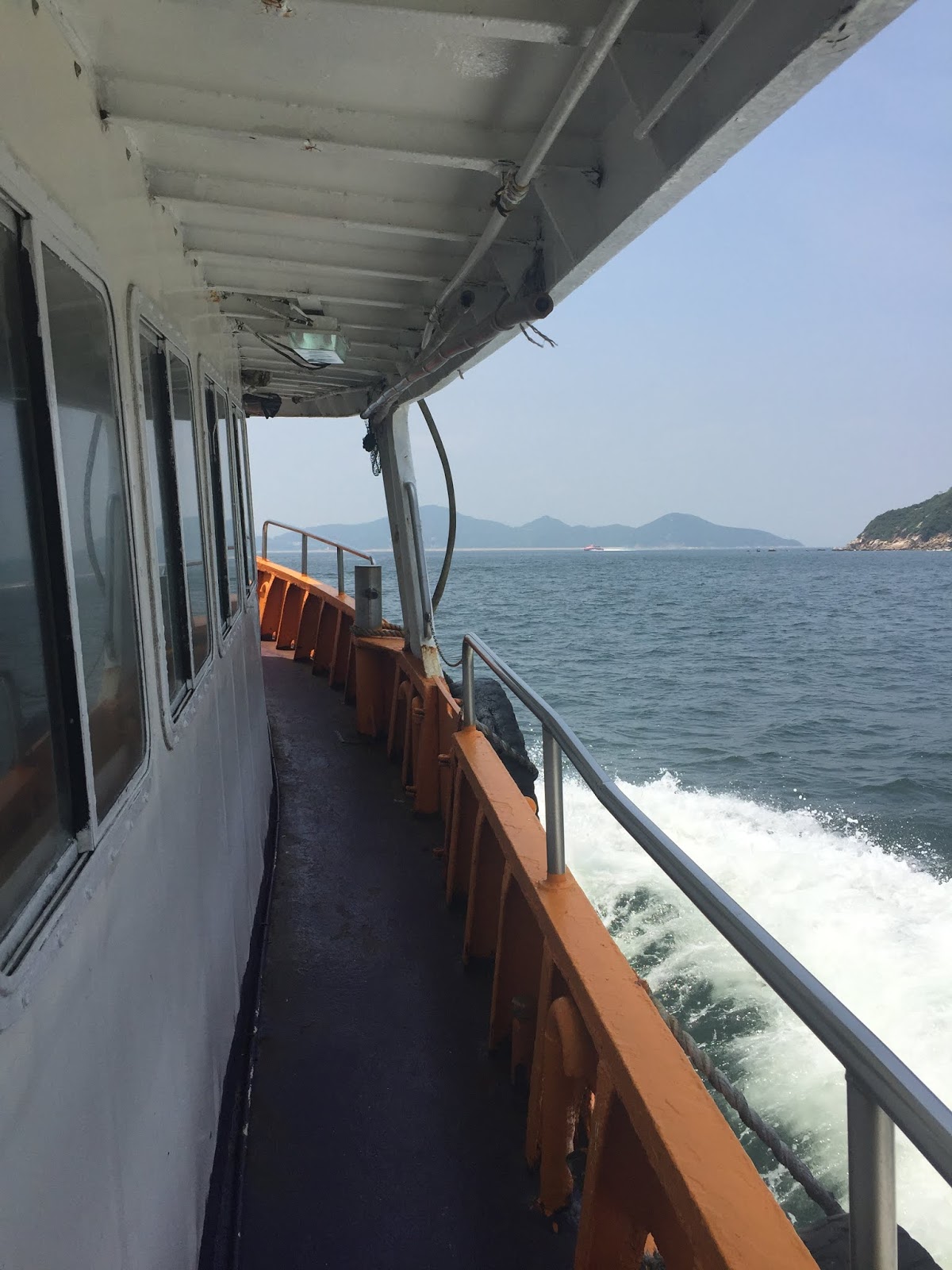
Heading back to Lantau, we find cheap passage on the open-air "slow boat." It's a great pleasure to sit and feel the salt breeze.
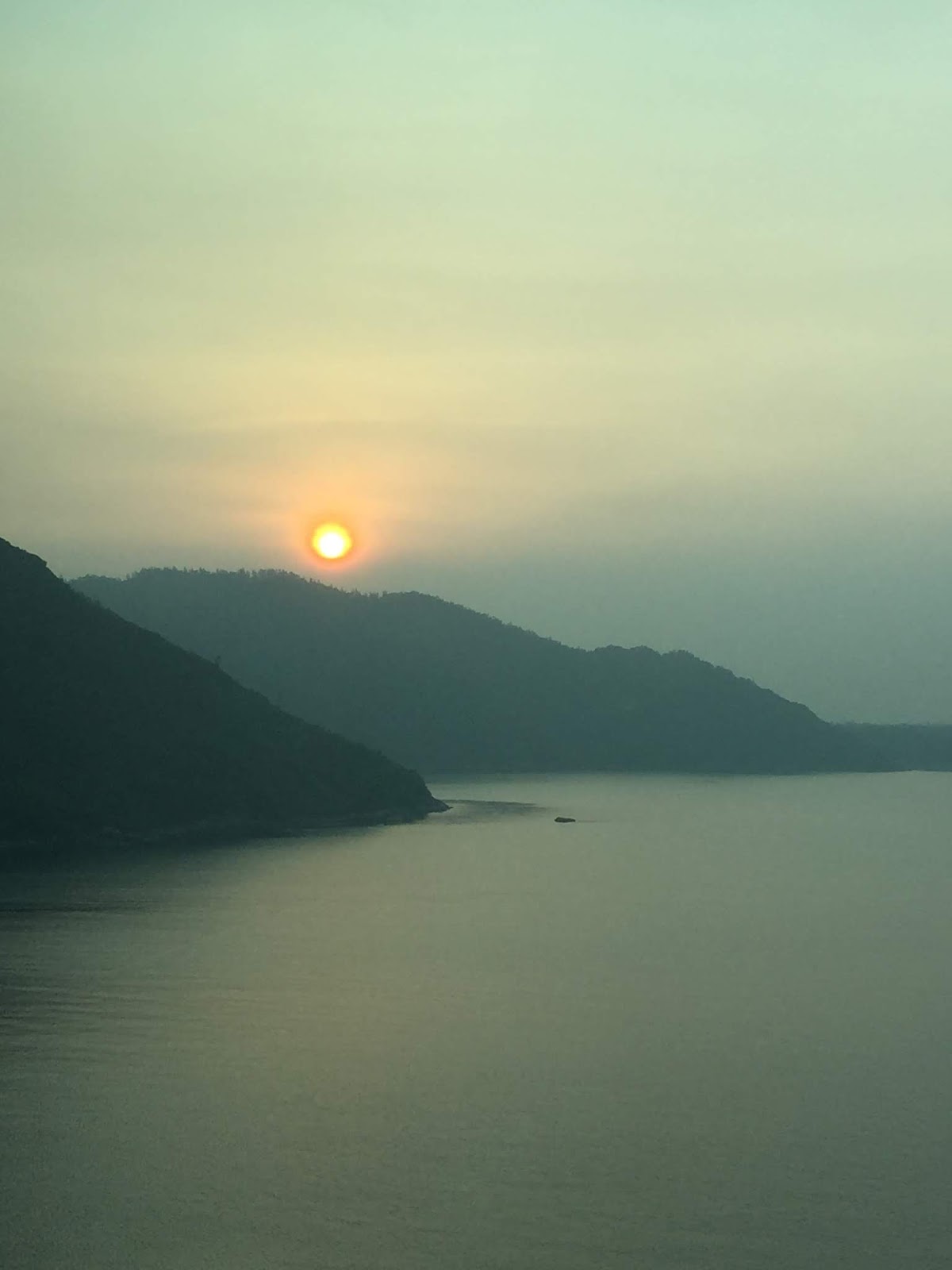
Ready to put our heads down, we're even more grateful to return to our hotel in time for a glorious sunset over the South China Sea.
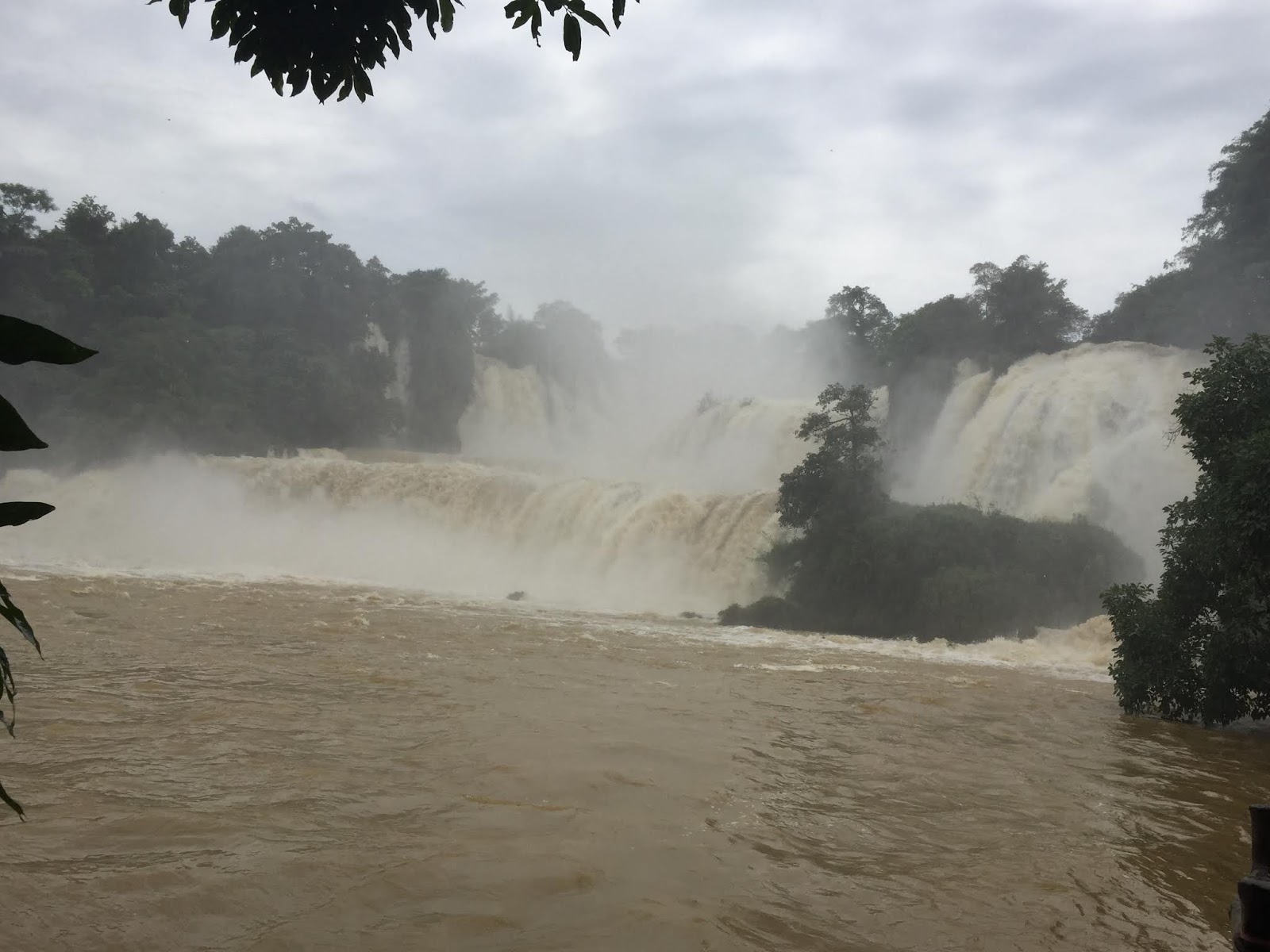
Early tomorrow we're off to southern China--and the magnificent Detian Transnational Waterfalls on the border with Vietnam.
Next Stop: Nanning, China
China: Past, Present, and Future: Part 1: Hong Kong
I always swore I'd never take a red-eye unless my life depended on it. However, eager to continue my WW2 book research, we set off for China only hours after my 23-year-old daughter and her second-graders counted down the minutes to summer break! Losing a day, we land at Hong Kong's Lantau Island airport around dawn Sunday. With an early Monday connection to the Mainland, I've booked a nearby seaside hotel, not far from Hong Kong Disneyland.
Too early to check-in, we immediately hit the breakfast buffet, a high point of Asian travel. We feast on luscious fruit, omelettes, spicy noodle soup--and for me, about five cappuccinos. I fervently believe a traveler must not nap, but enter right into the local time zone. With an easy first day, if possible. We plan to cruise through it by ferry. Easy. We think.
Given the humidity, most people are happy for the air-conditioned ship, but the close air makes us drowsy. At Hong Kong Central, we board another closed ship to Cheung Chau, a pedestrian-only island where I passed significant time many moons ago.
We climb up the busy waterfront, thronged by sweaty Sunday crowds. Everyone with hand fans or little battery-operated fans. Although bludgeoned by the heat, we are here, and I hope to catch a memory or two.
One block inland, I'm struck by this grand old banyan tree.
Already dripping, we wander the narrow back alleys, lined with shop stalls. I look around, from which of these lanes did Shirley Lamb recognize my laugh, in which basement restaurant? (But that's another story.)
Later, I discover the library and, in the children's section, a "Giant Biography" of George Washington. Now a Chinese territory, Hong Kong hews strongly to Western values of free inquiry, and holds a special place in my heart.
Wilting, we return down the waterfront, pausing before this homage to local windsurfers.
Heading back to Lantau, we find cheap seats on the open-air "slow boat." It's a great pleasure to simply sit and feel the cooling breeze.
Awake for at least 48-hours, we are grateful to return to our hotel in time for a glorious sunset over the South China Sea.
Tomorrow we leave early for the southern China Mainland--and the magnificent Detian Transnational Waterfalls on the border with Vietnam.
Next Stop: Nanning, China
May 27, 2018
In Search of the Past: Part 13: Mysore: Princely Palaces and the End of the Road
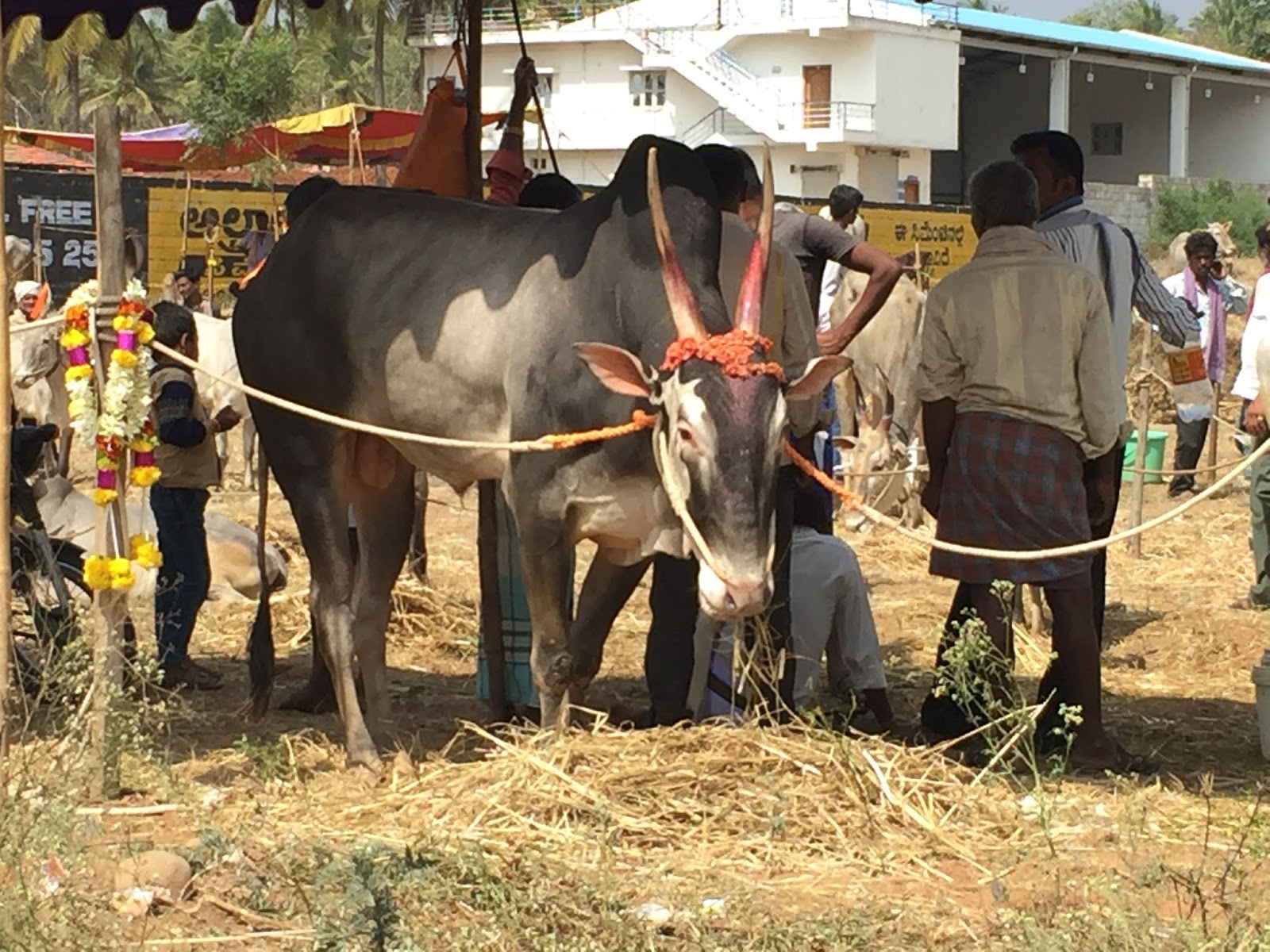
Still thrilled about the tiger we sighted in the Mudumalai Reserve, we leave for the former princely state of Mysore. En route, we see prize buffaloes being bathed in milk for Pongol, South India's "Thanksgiving" celebration.

Our first stop is the 18C summer palace of the "Tiger of Mysore"—Tipu Sultan, who ruled much of South India during a long struggle with the British East India Company.
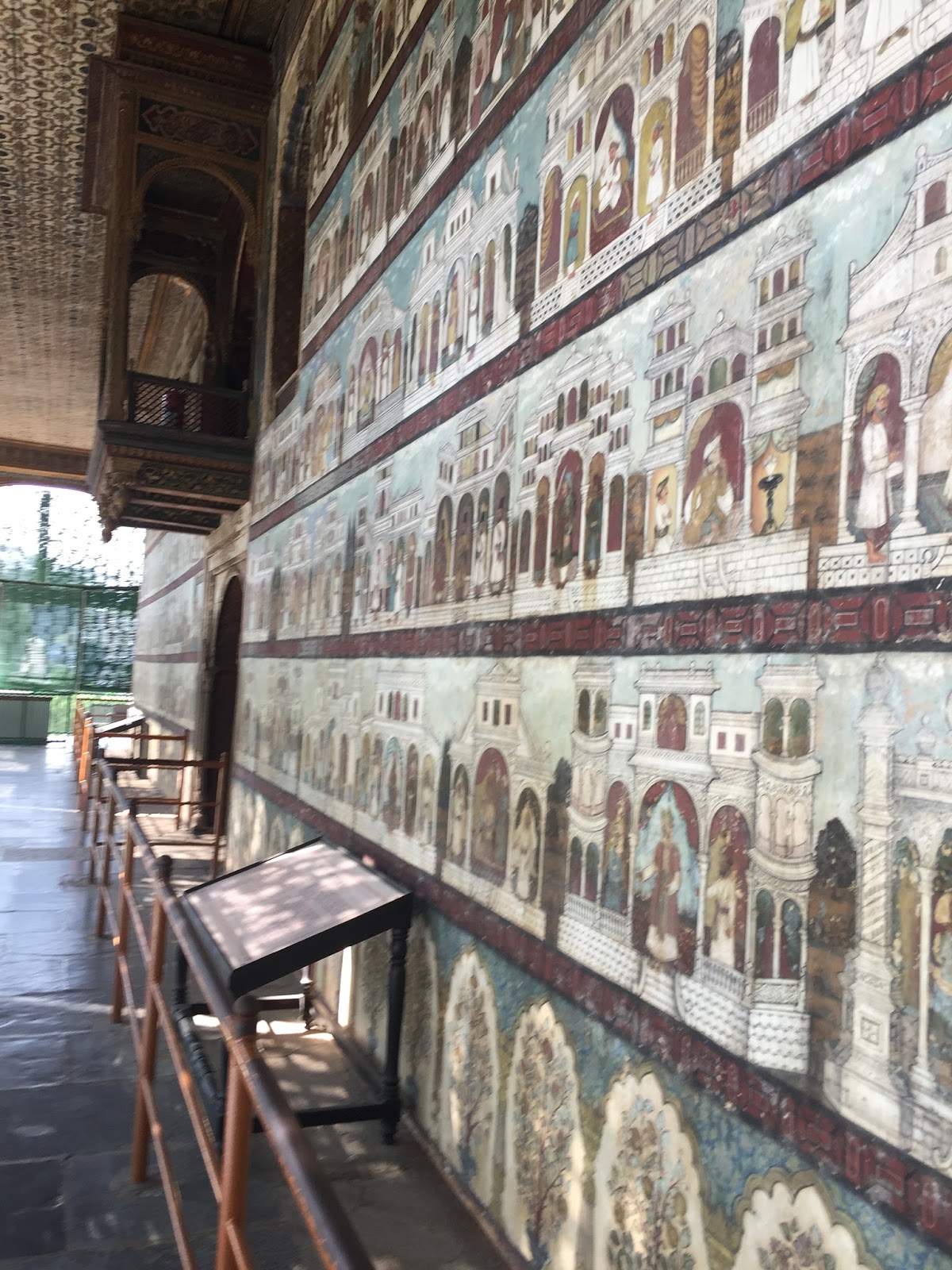
Inside, wall paintings depict great battle scenes between the "Red Coats" and the ruler's troops, including those of his French allies, on war elephants, camels, and horses.
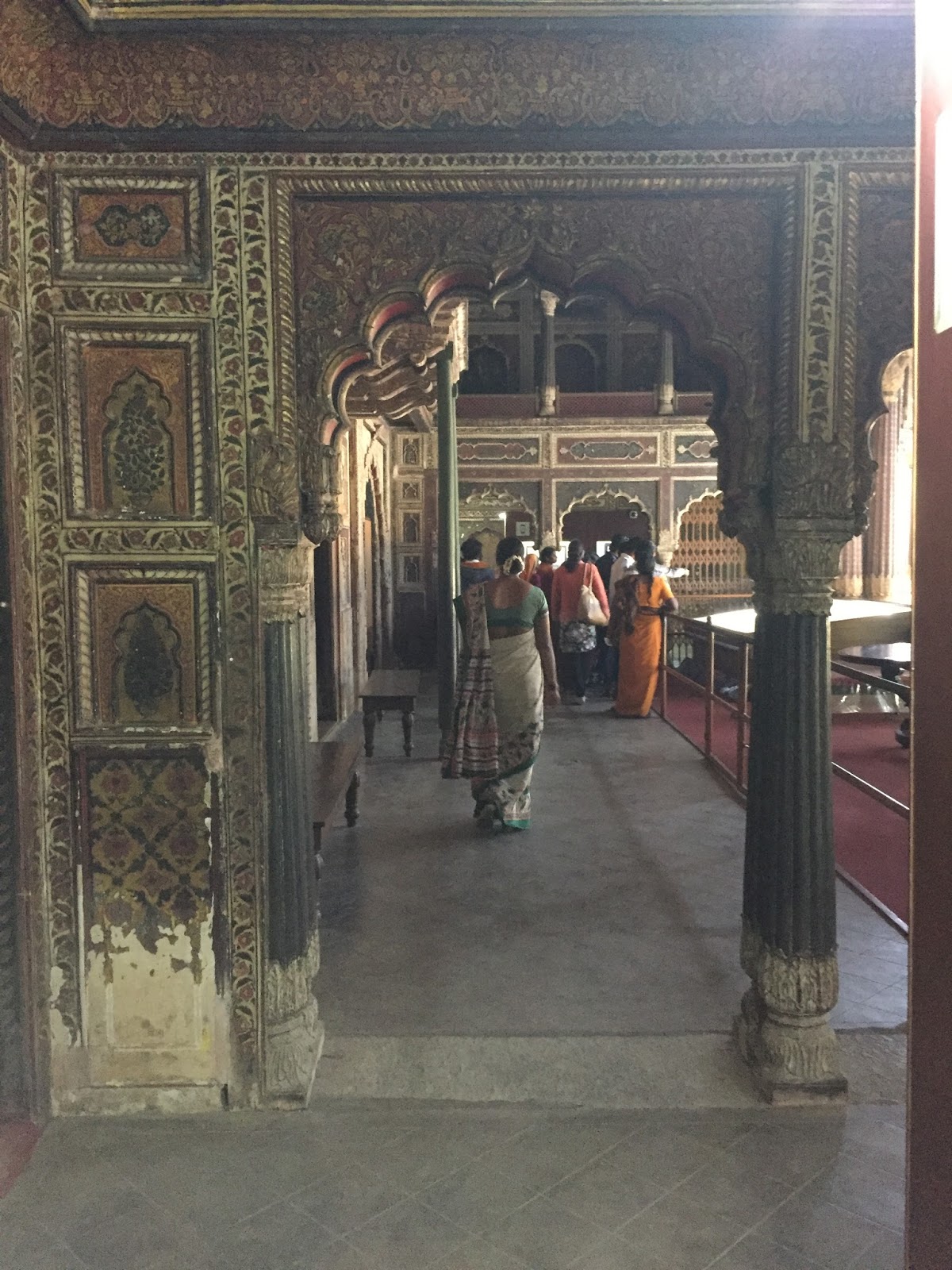
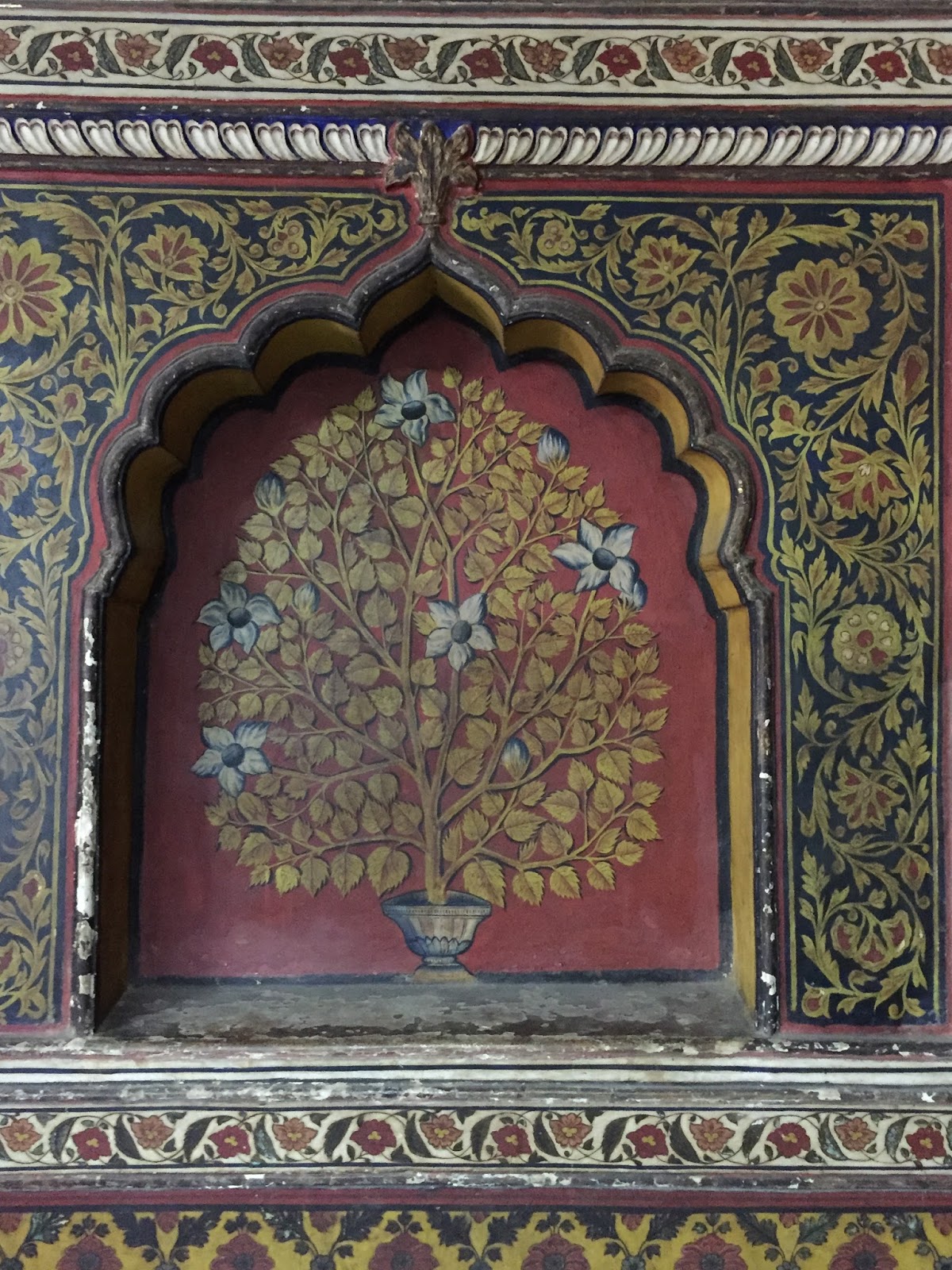
Surrounded by fine gardens and a deep veranda, the teakwood palace is a small jewel, faceted with intricate carvings, moldings, and archways. We are enveloped by rich colors, floral motifs, and detailed frescoes.
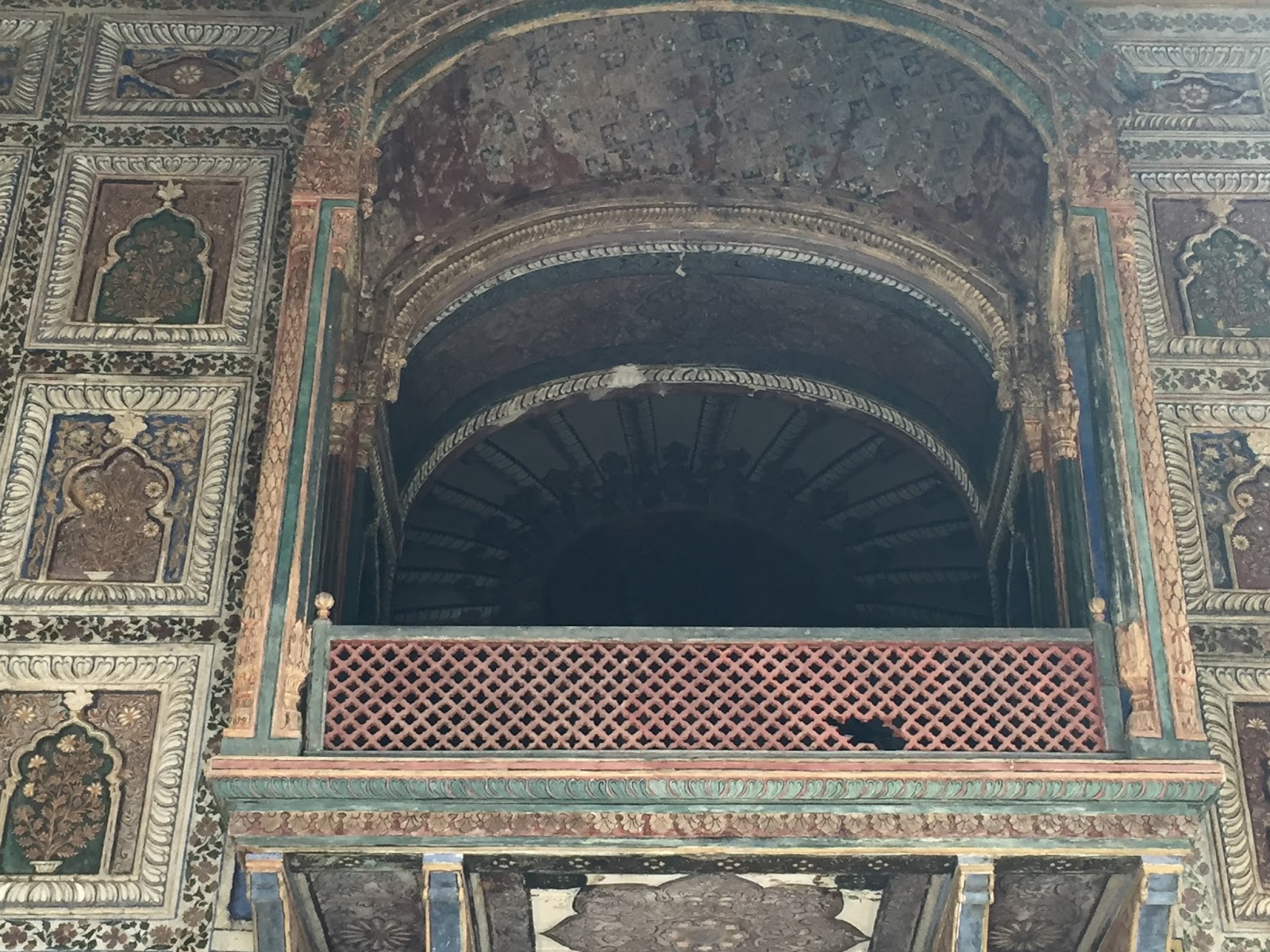
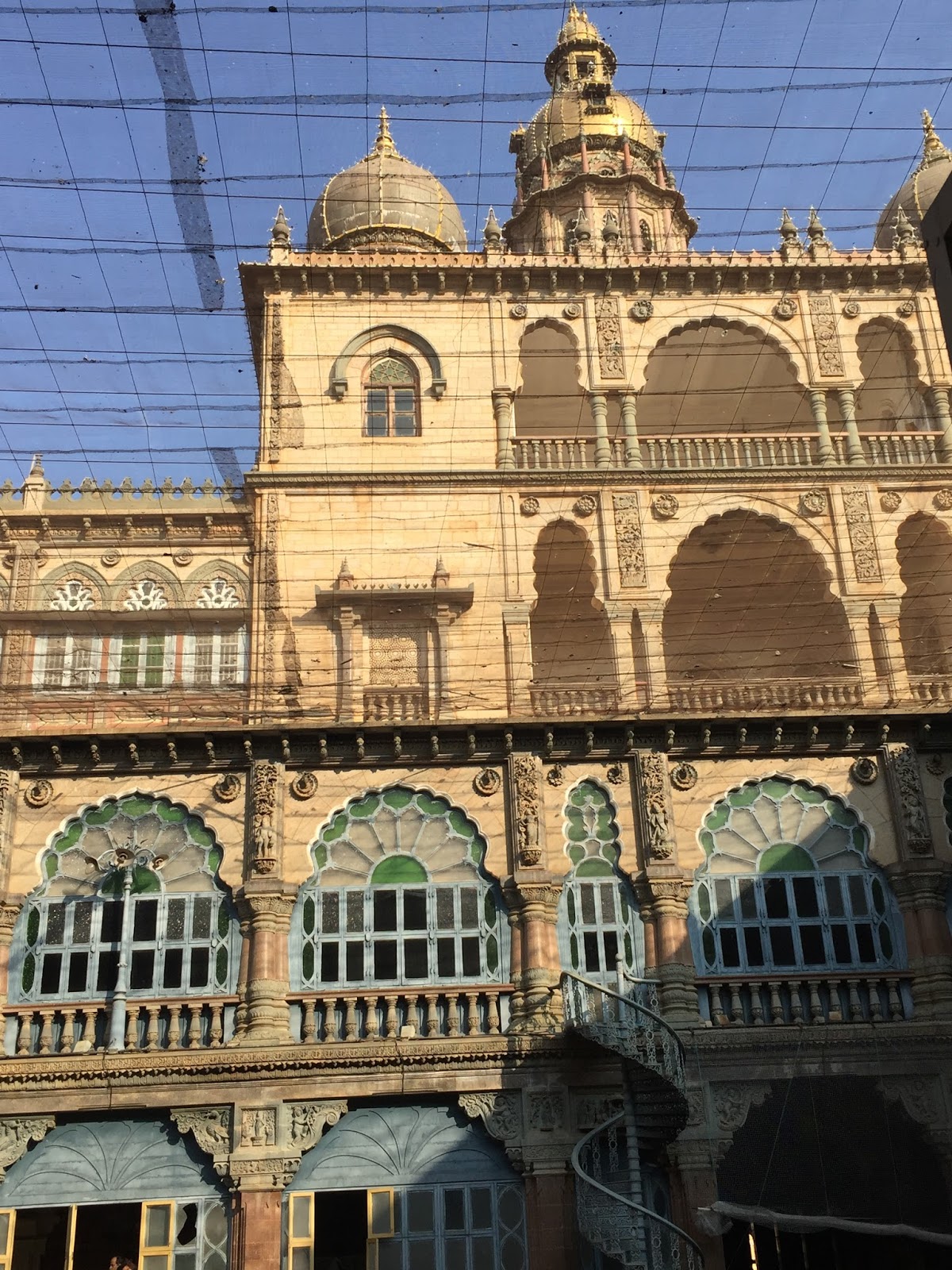
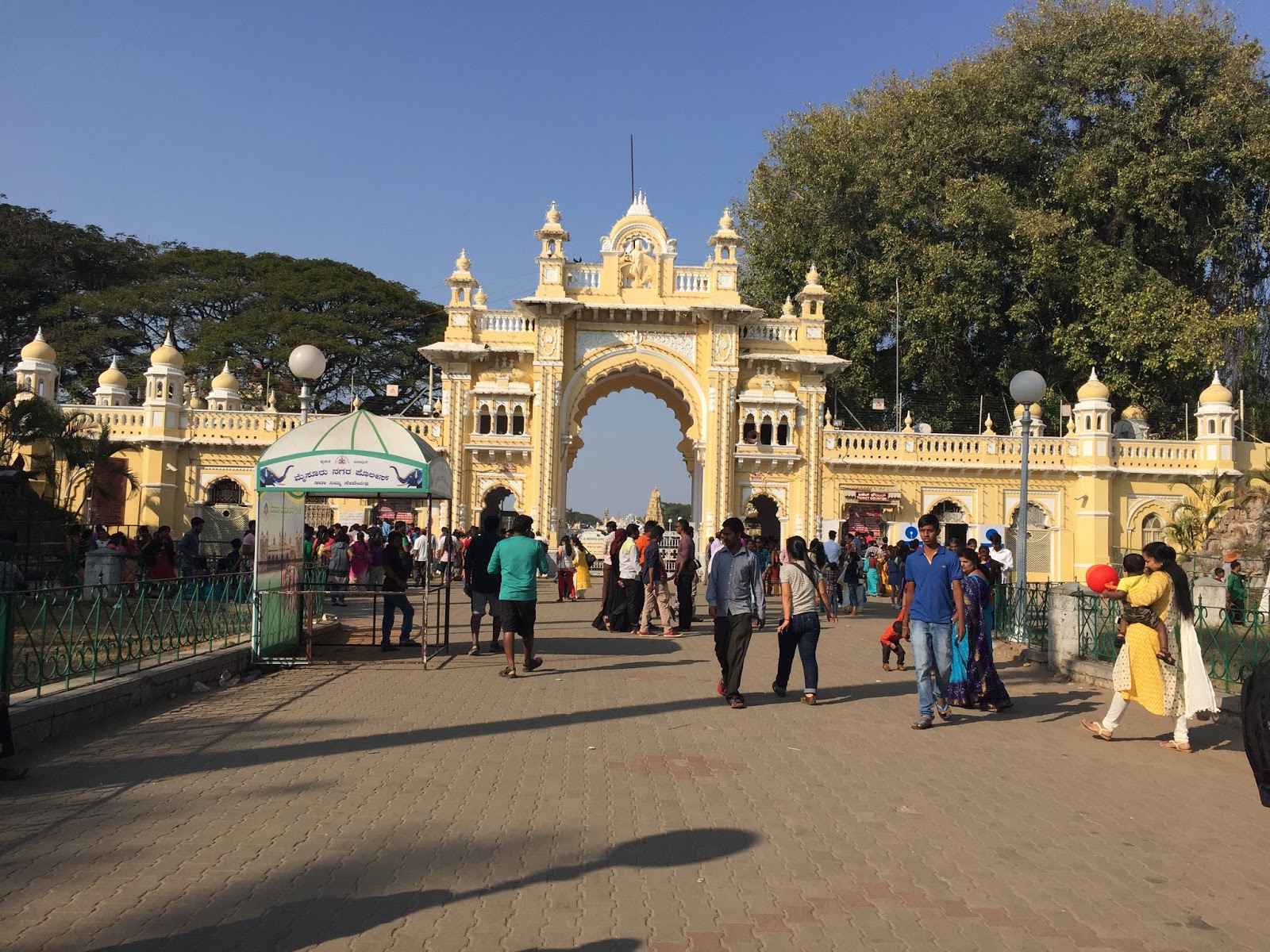
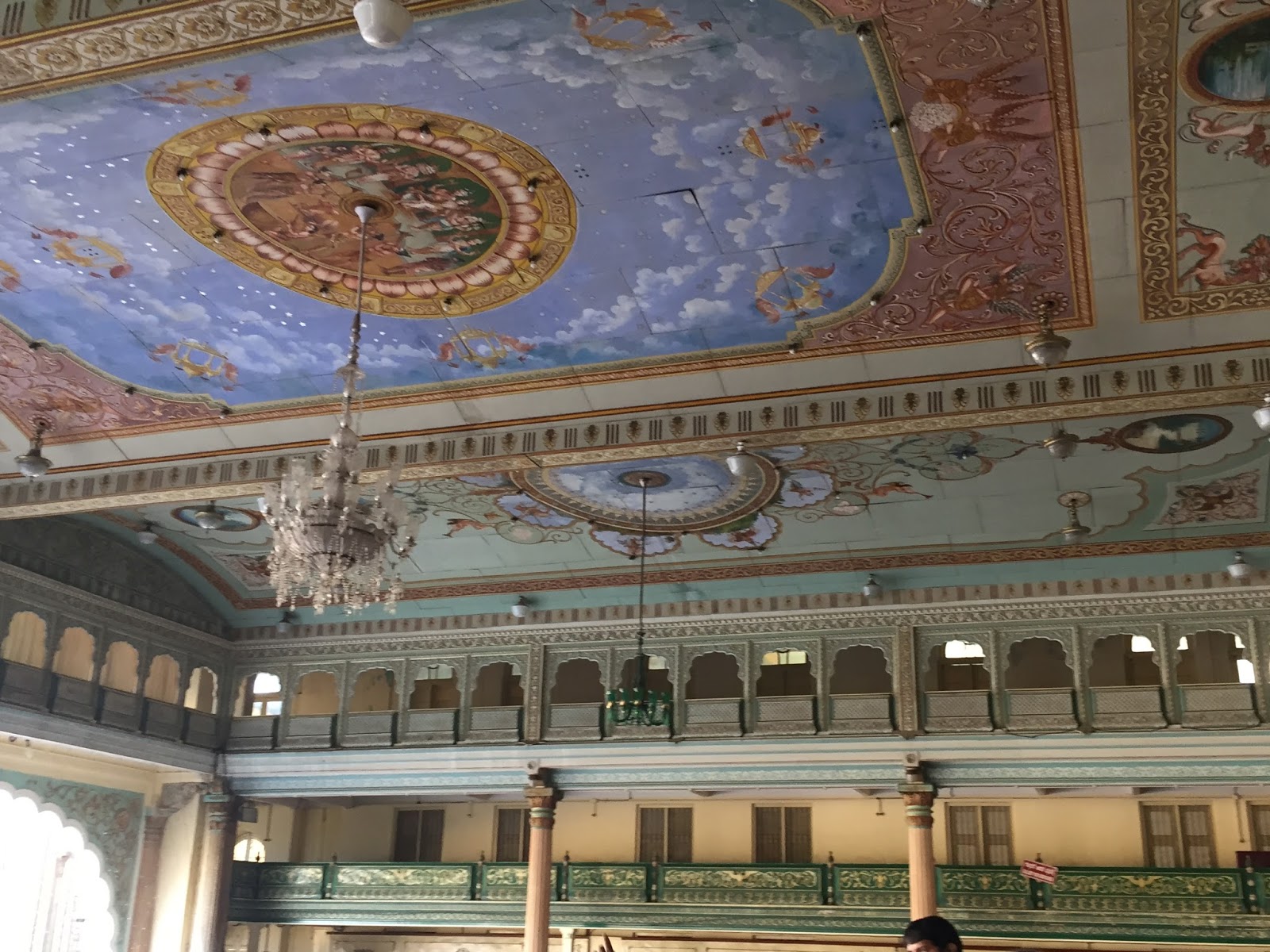
While the Summer Palace is refined and gemlike, the Mysore City Palace overpowers with grandeur. Beyond the gates, we tour the former royal abode, a world of staggering wealth and opulence.

 In the garden with some new friends.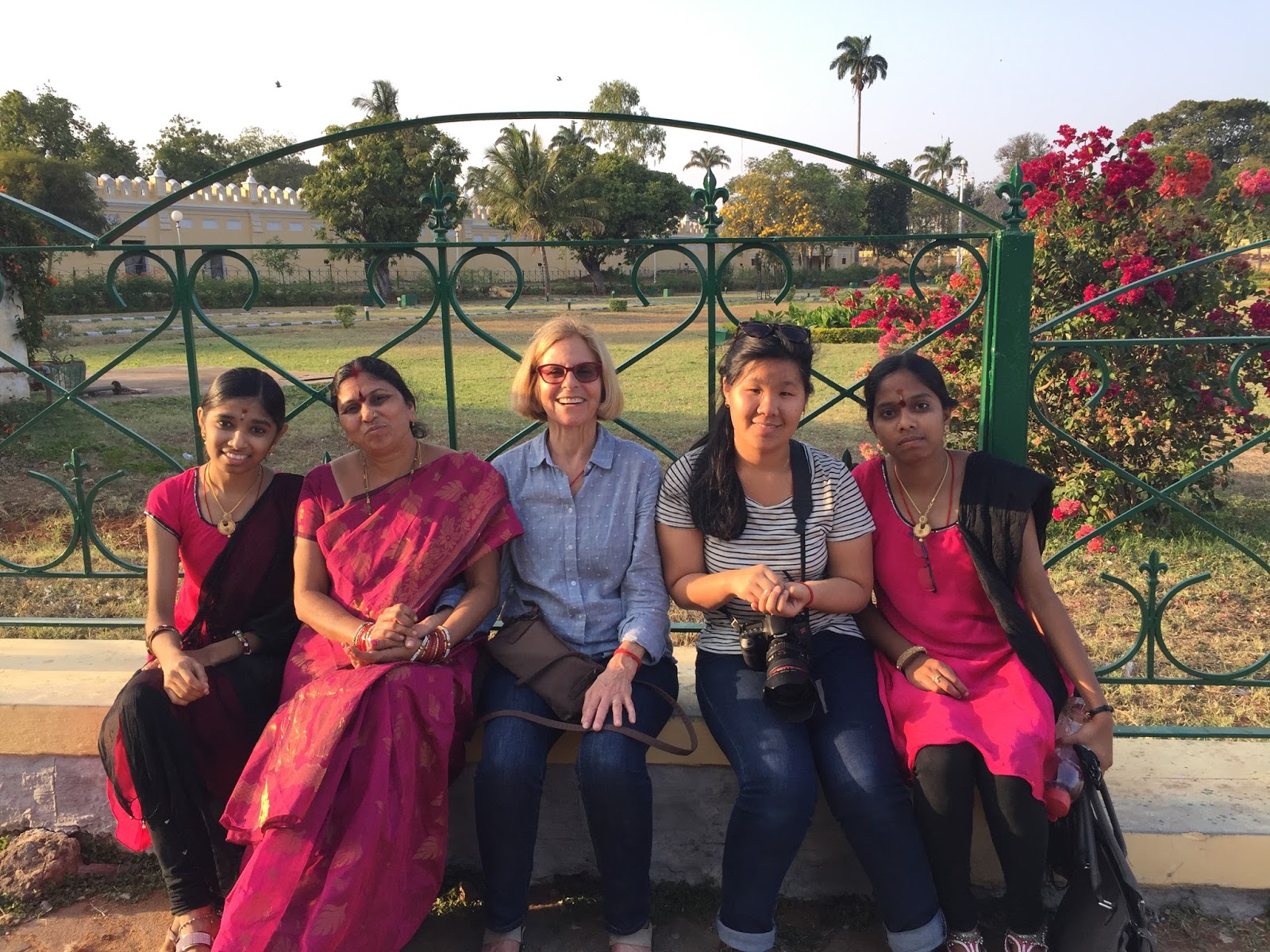
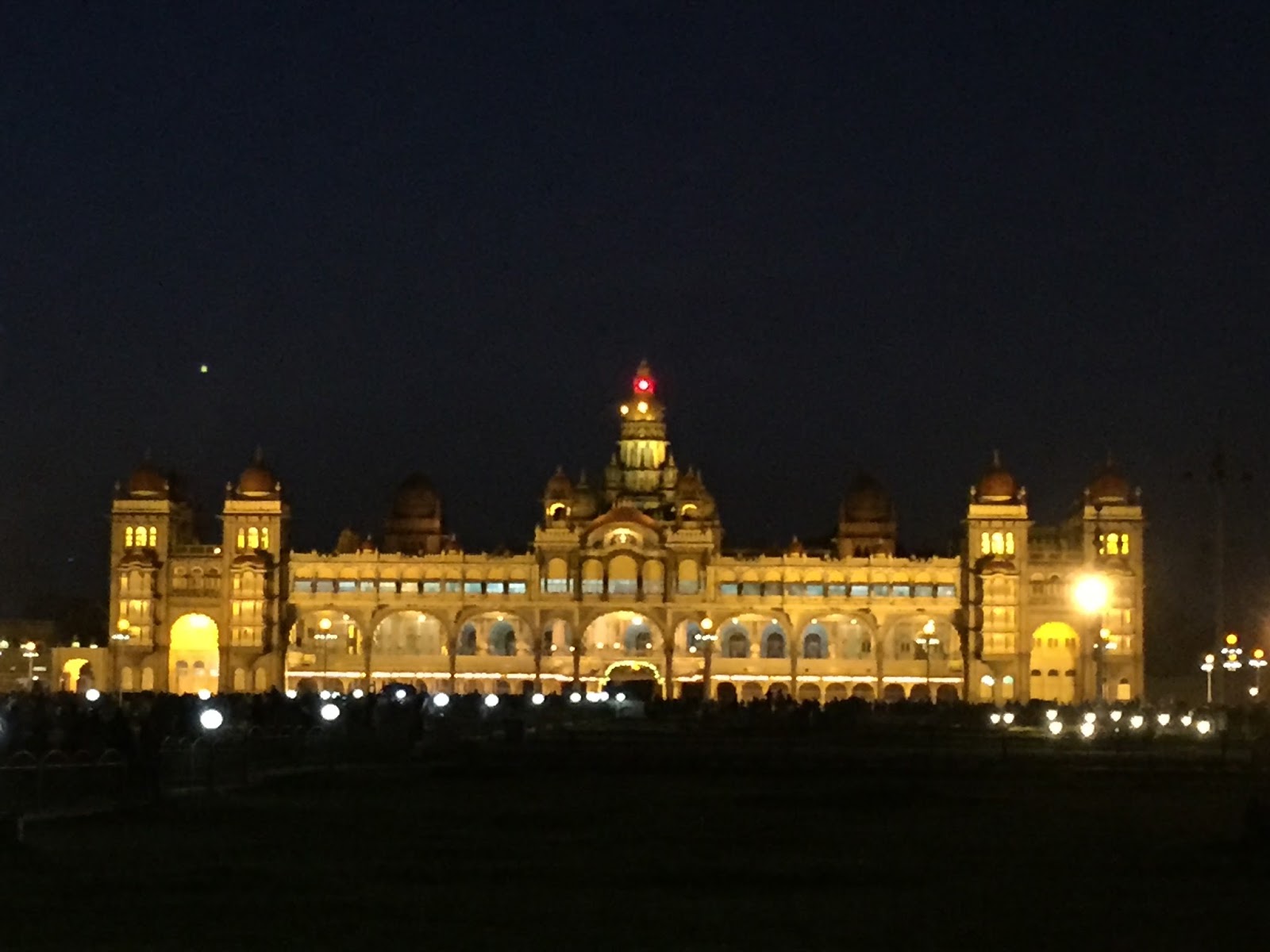
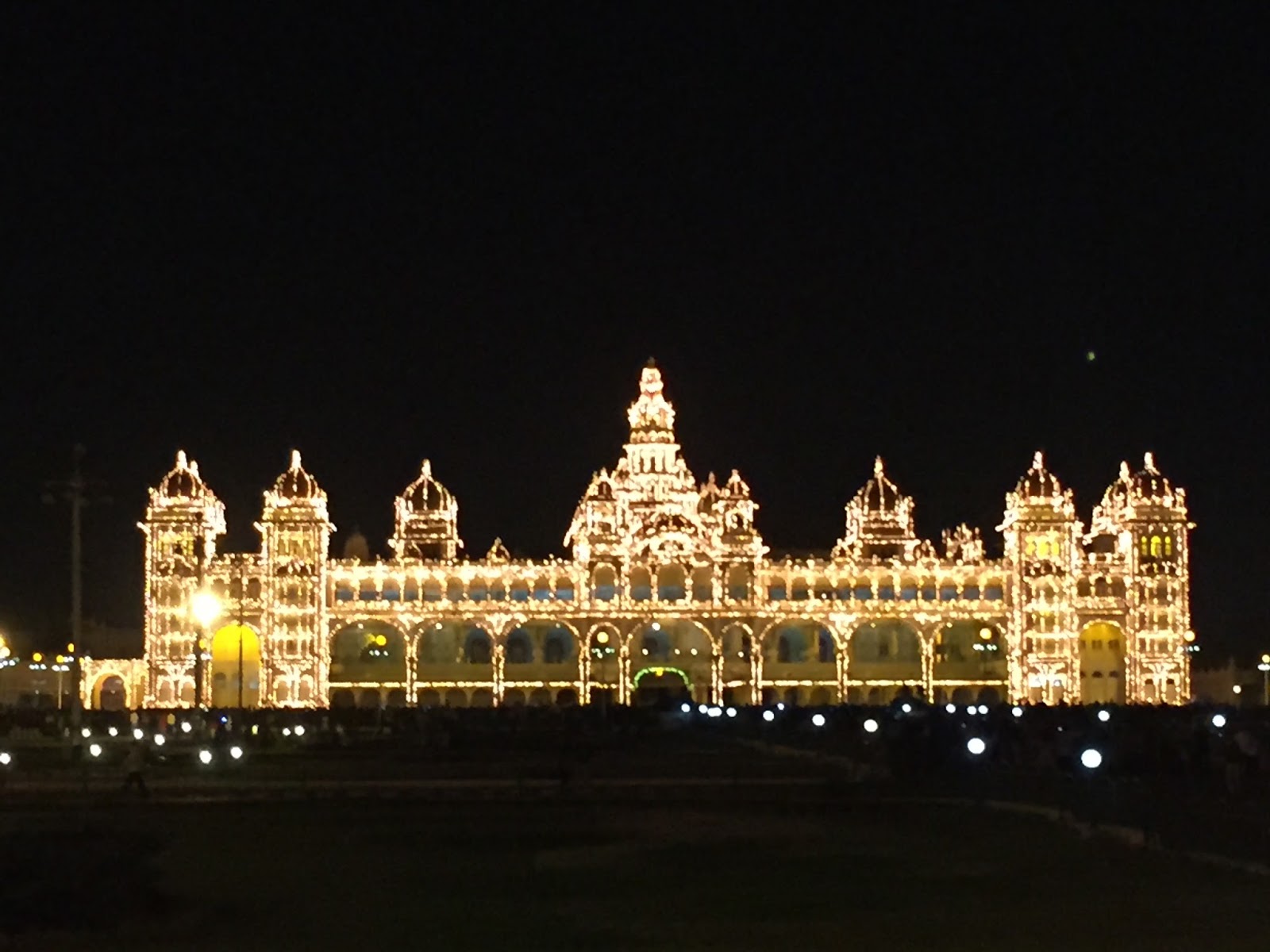
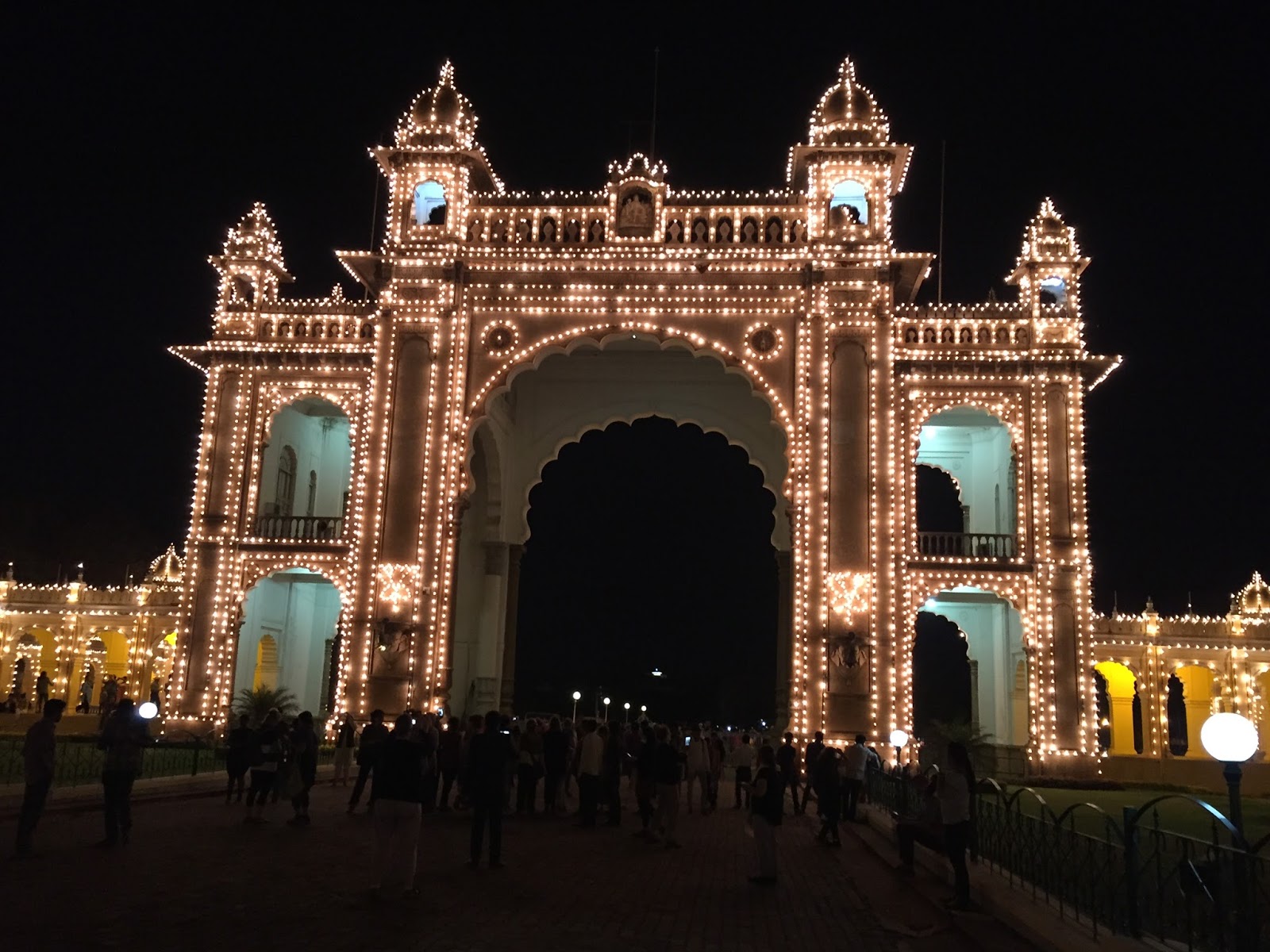
Every Sunday, Mysore Palace dazzles with a world-famous light show. We circle around for another gate with the perfect view, then wait for dusk.
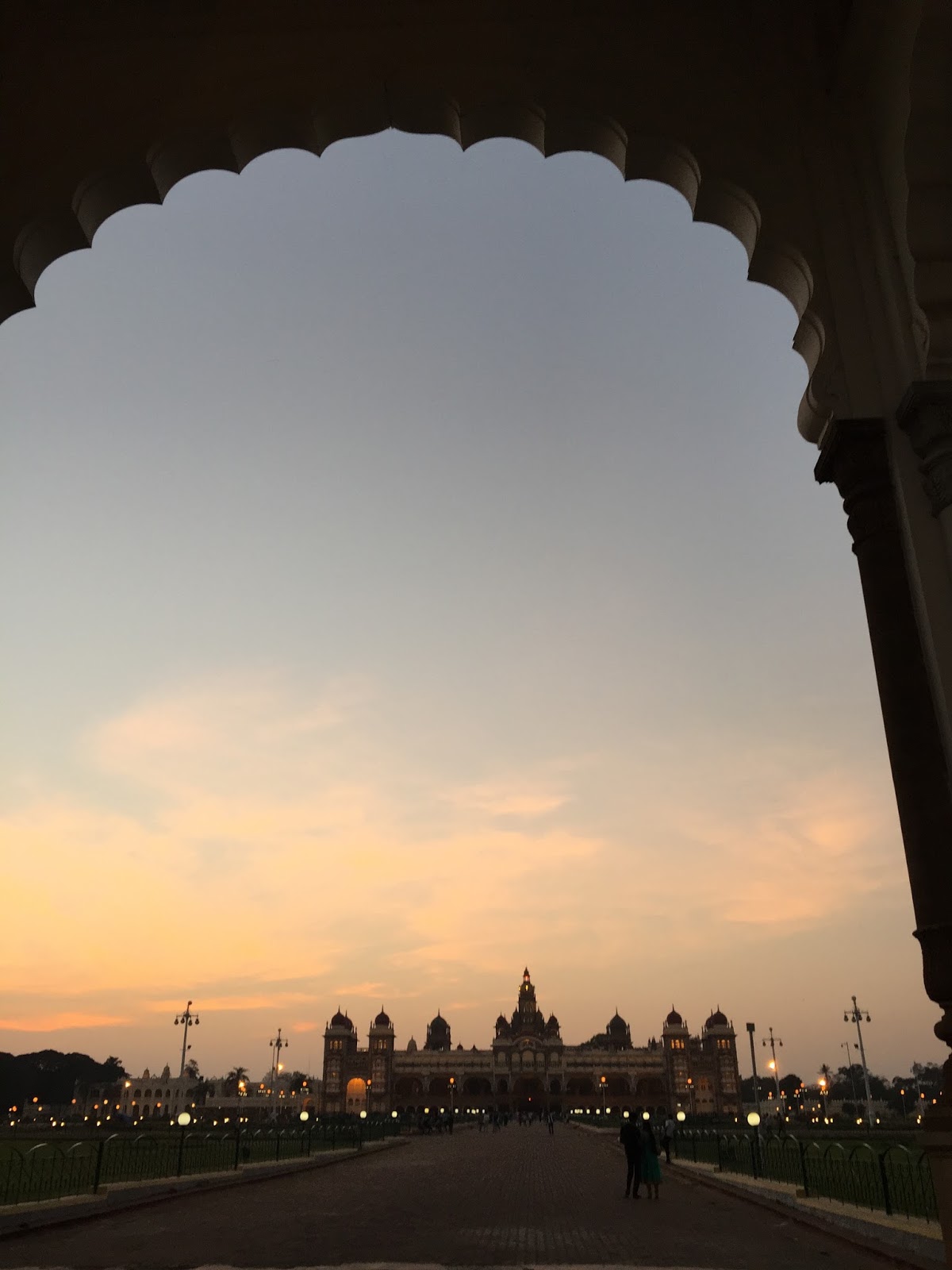
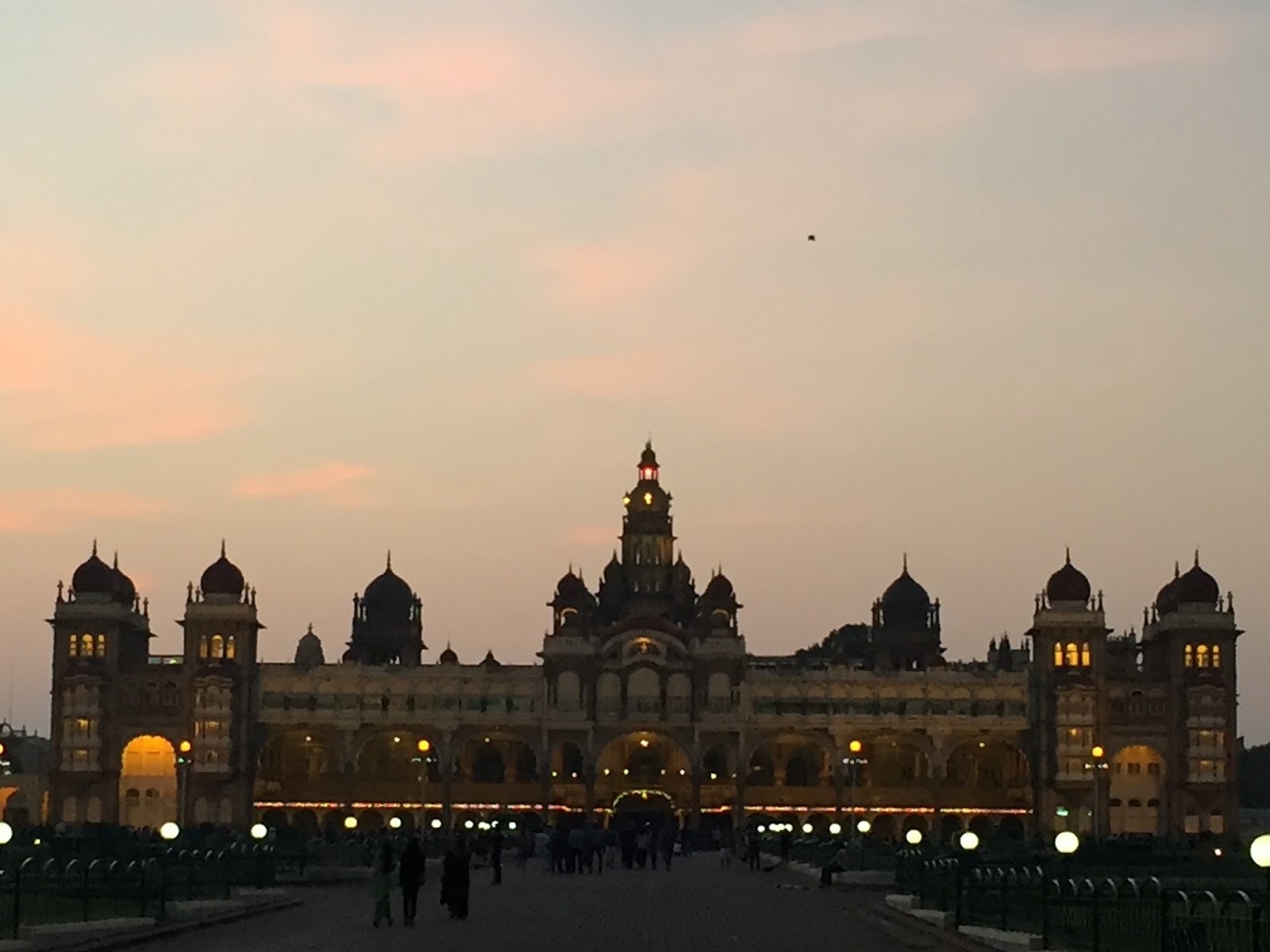
Mysore Palace Illuminated.
The gate.
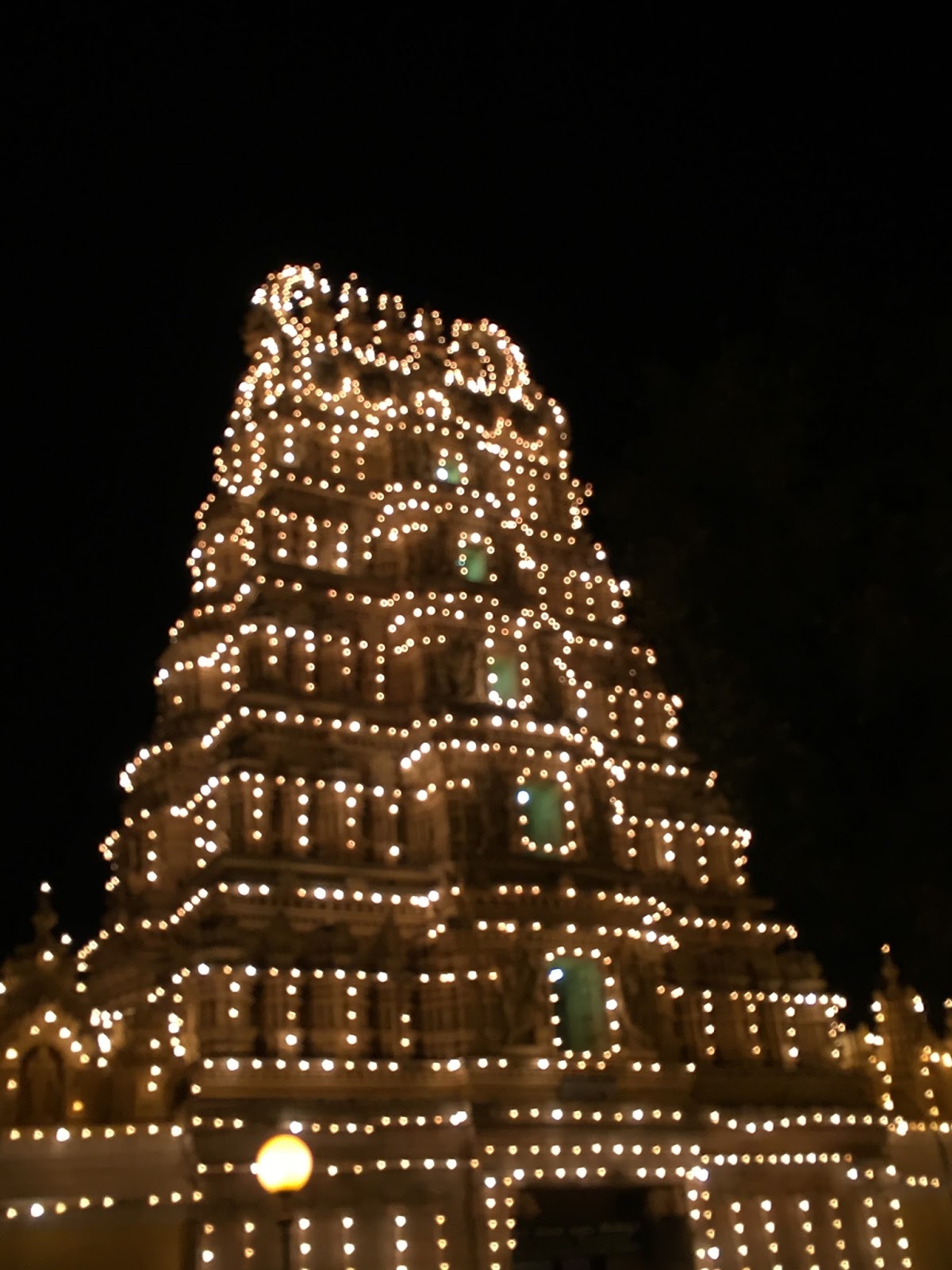
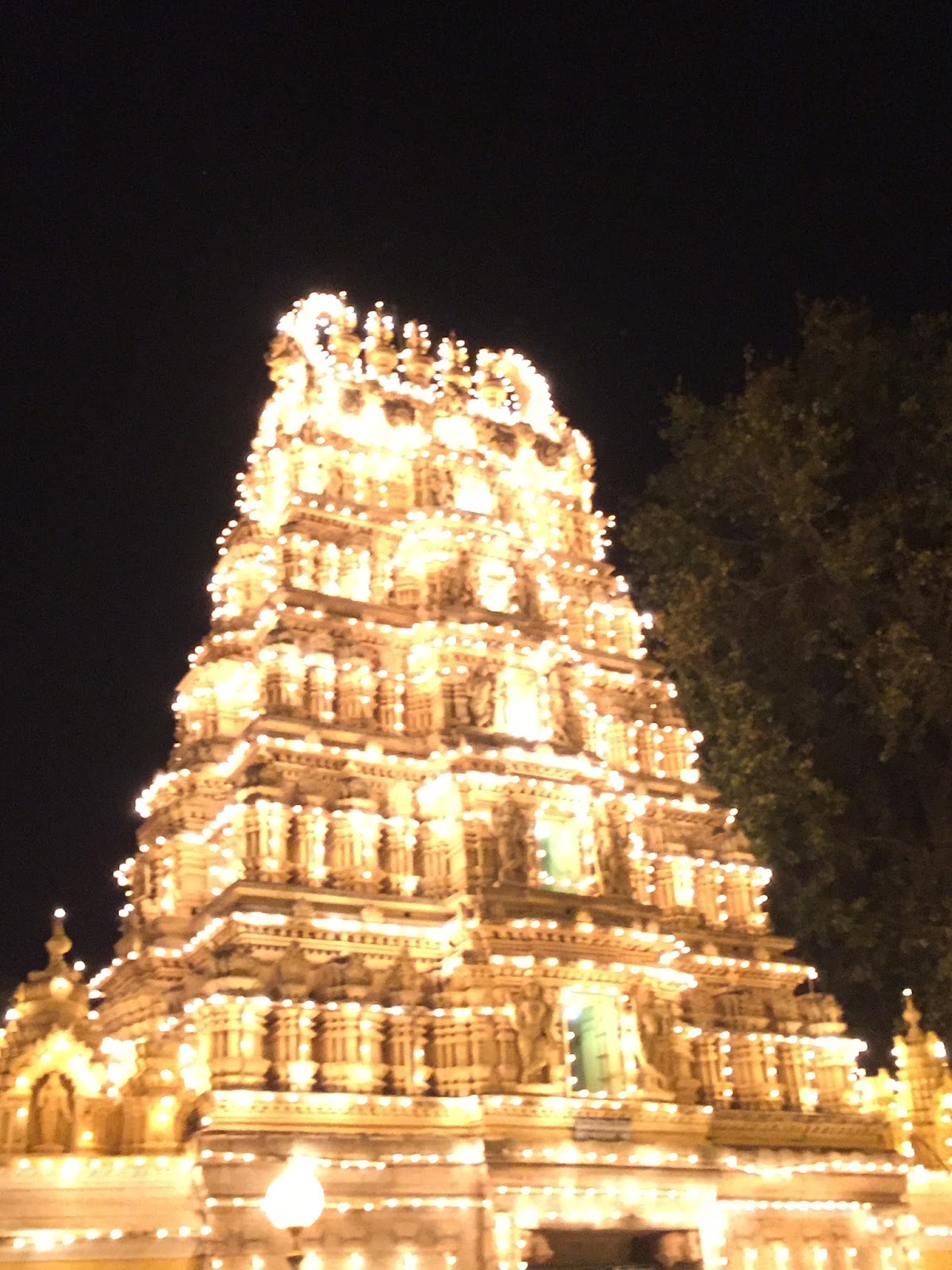
And the palace temples.
We are not alone, joined by mostly Indian crowds, families who have traveled here to see the breathtaking sights. As we must leave tomorrow for Bangalore and the airport, we celebrate with them the grandeur that is India.
Dear India: See you next time!