Simon Cleveland's Blog - Posts Tagged "sacrifices"
The Basenji Revelation - My debut novel and the story behind it
Here is how the Basenji mystery began
 The Basenji Revelation
I wish I could tell you that a razor thin line divided fact from fiction. I wish I could show you this line, so tiny now, almost unrecognizable. It has faded with time. When I try to recollect how the gruesome account emerged from the all-encompassing suburban madness, I’m always reminded of the day I saw the piece of paper. Indeed now I know it all began that day.
A couple of years ago I went out for a walk in one of Northern Virginia’s parks. On the way back, I lost the main path and wandered for nearly an hour amidst the thick shrubs and tall trees, while the sunlight slowly faded away. In the midst of my distress and quite accidentally I stepped on something. ‘A leaf,’ I thought and the story would’ve ended there had I not bent down to remove it form my shoe.
It wasn’t a leaf. It was a picture, a bit faded, torn in a couple of places (perhaps by winds of the late winter of that year) and its corners a bit yellowish (perhaps scorched by the sunlight of recently departed Indian summer). Someone must have cut it out from a magazine and later lost it on a picnic trip. Who knew? Curious to examine the image on it, I brought it closer to my face and then…gasped. The imprint (in black and white) was of a statue - a dog-headed creature with a torn male torso.
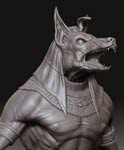
Was it the ugliness of this incompatible combination that stirred the chill in me at that moment? Probably not. It was most likely the cold wind that blew across my face, or the drizzle that suddenly appeared out of nowhere. Whatever the reason, it called out of the darkness a vision and with it a horrific tale began to emerge in my mind.
I found my way out of the forest that evening, but could not shake the tale away. At first it clung desperate with its tiny roots to the back of my brain, struggling to survive the torments of the ensuing confusion. With time, it purposefully implanted itself on my cortex, where it remains until today.
But back then, it tormented me. It forced me to look for answers. In a branch of the Fairfax County Public Library, buried under books on Egyptology, African religions, human and animal sacrifices the essence of the vision took shape. Soon after, The Basenji Revelation was born.
And what about the fact? Indeed, there are facts. Plenty of them. The key was held in the discovery of the Ancient Egyptian Tomb - KV39 (its entrance pictured below).

But before I found what the key was, I had to reread the account of the discovery of Tutankhamun's tomb by Howard Carter. One of the first pictures the archaeologist took when he uncovered the tomb shows the statue of Anubis guarding the Pharaoh's sarcophagus. Was Anubis the god of the Basenjis?

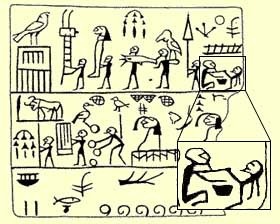
I found evidence of unexplained human sacrifices in Ancient Egypt that bear witness to rituals involving the killing of human beings. In several fragmented scrolls kneeling figures sticks weapons into the chests of bound victims. Bowl between the assailants and their victims may have been intended to catch the latter.

Also present in the drawings is some kind of fence-like sign, drawn above the sacrificial scenes. On the label fragment discovered in the area of Egyp called Aha, a figure of authority, identified by his long stick, observes the killing. Behind the victim there is an image of the same statue I found in the park - that in later periods was associated with the god Anubis (the Basenji god). It is not known if this fetish may have been related to the practice of human sacrifice or not, but it certainly fired up my curiosity.
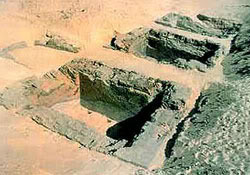
The more I researched the history, the more I stumbled upon grizzly details that beckoned me to dig deeper. I found out that the rulers of the 1st Egyptian Dynasty were not only buried along with food, drink and objects, but with people who had been sacrificed along with them, to be with them in the afterlife. There were 33 sacrificial burials (as pictured below) in Aha, 68 in Semerkhet, 136 in Den and 512 in Djer.
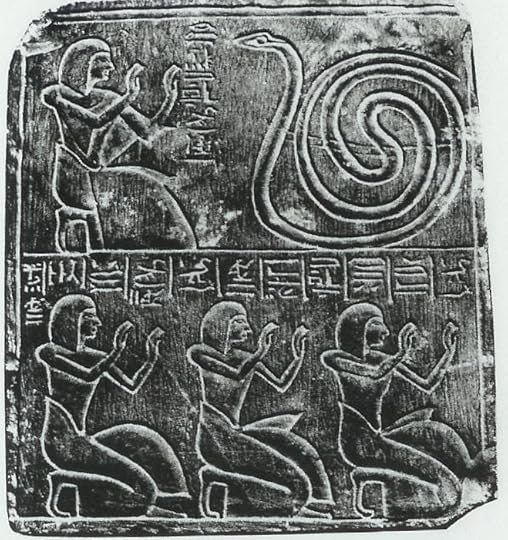
Next, I stumbled up a few surviving scrolls that shed some dark light on the perpetrator of these inhumane deeds. Some believed it was Apep the Serpent. This carving from an ancient tomb depicts the Serpent Apep, Osiris' eternal foe. Here, a deceased and his three sons attempts to placate Apep, who eats the souls of the dead in the Underworld.
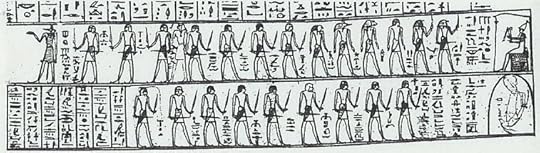
But who was Apep and more importantly why were there some many references inscribed upon the Pharaohs' tombs about a diety called Sutekh (or Seth)? I kept searching and searching and found a page from the Papyrus Jumilhac that Anubis (also named Khentamentiu), the Sons of Horus and other deities defeated and imprison Sutekh. In this page from the Papyrus, Sutekh (far right) is shown upside down below the throne of Osiris.
You may wonder how The Basenji Dogs played a role in this ancient testament. I did. The answer came to me one day when I stumbled upon a discovery listed in an old encyclopedia. It was about a discovery of an ancient mummy called "Unknown Man E" in 1881 found along with numerous royal mummies in the Dier el-Bahri cache.
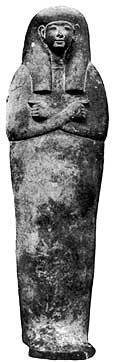
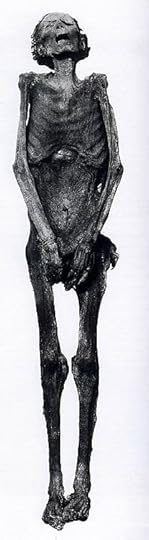
When Egyptologists unwrapped the body of the "Unknown Man E," a horrible sight awaited them. Even before the unwrapping, they knew there was something unusual about this mummy. It had been enshrouded with a sheep skin (a material the ancient Egyptians considered ritually unclean in a funerary context) and placed in an unmarked coffin magical symbols deemed necessary to ensure the deceased's survival in the afterlife. And, worse, the body emitted a horrible odor unlike the often aromatic fragrance of many other Egyptian mummies. Yet even these indications failed to prepare the unwrappers for the gruesome sight that emerged when the bandages came off. An account written by a certain Dr. Mathey, an eyewitness at the unwrapping, gives the unpleasant details:
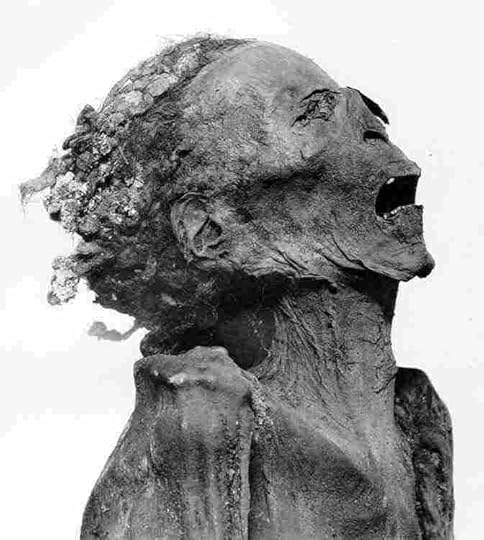
"It is difficult to give an adequate description of the face thus laid bare. I can only say that no countenance has ever more faithfully recreated a picture of such affecting and hideous agony. His features, horribly distorted, surely showed that the wretched man must have been deliberately asphyxiated, most probably by being buried alive."
The fact that the man had his hands and feet tightly bound, and that his internal organs had not been removed in accordance with the normal embalming practices of the times, seemed at to support this disturbing conclusion.
.. I needed to tell people about the Besenji Revelation. The book I wrote contains the account of my discoveries.
..A heed of caution..
There is a certain kind of search for meaning in the midst of any horror story. This book is my attempt to portray this search and I truly hope that it’ll serve as a wake-up call to all fans of the mysterious, metaphysical and supernatural. I hope readers will get caught up in the helplessness and vulnerability exhibited in the actions of the main characters. I hope they’ll remember the confusion and insanity that takes place in the story. I hope they’ll soak up the all consuming human emotions. And I truly hope they’ll ask themselves ‘Why not accept the unacceptable, that life is as frail as its emotions and if so, why not worship this frailty?’
The Basenji RevelationI wish I could tell you that a razor thin line divided fact from fiction. I wish I could show you this line, so tiny now, almost unrecognizable. It has faded with time. When I try to recollect how the gruesome account emerged from the all-encompassing suburban madness, I’m always reminded of the day I saw the piece of paper. Indeed now I know it all began that day.
A couple of years ago I went out for a walk in one of Northern Virginia’s parks. On the way back, I lost the main path and wandered for nearly an hour amidst the thick shrubs and tall trees, while the sunlight slowly faded away. In the midst of my distress and quite accidentally I stepped on something. ‘A leaf,’ I thought and the story would’ve ended there had I not bent down to remove it form my shoe.
It wasn’t a leaf. It was a picture, a bit faded, torn in a couple of places (perhaps by winds of the late winter of that year) and its corners a bit yellowish (perhaps scorched by the sunlight of recently departed Indian summer). Someone must have cut it out from a magazine and later lost it on a picnic trip. Who knew? Curious to examine the image on it, I brought it closer to my face and then…gasped. The imprint (in black and white) was of a statue - a dog-headed creature with a torn male torso.
Was it the ugliness of this incompatible combination that stirred the chill in me at that moment? Probably not. It was most likely the cold wind that blew across my face, or the drizzle that suddenly appeared out of nowhere. Whatever the reason, it called out of the darkness a vision and with it a horrific tale began to emerge in my mind.
I found my way out of the forest that evening, but could not shake the tale away. At first it clung desperate with its tiny roots to the back of my brain, struggling to survive the torments of the ensuing confusion. With time, it purposefully implanted itself on my cortex, where it remains until today.
But back then, it tormented me. It forced me to look for answers. In a branch of the Fairfax County Public Library, buried under books on Egyptology, African religions, human and animal sacrifices the essence of the vision took shape. Soon after, The Basenji Revelation was born.
And what about the fact? Indeed, there are facts. Plenty of them. The key was held in the discovery of the Ancient Egyptian Tomb - KV39 (its entrance pictured below).
But before I found what the key was, I had to reread the account of the discovery of Tutankhamun's tomb by Howard Carter. One of the first pictures the archaeologist took when he uncovered the tomb shows the statue of Anubis guarding the Pharaoh's sarcophagus. Was Anubis the god of the Basenjis?
I found evidence of unexplained human sacrifices in Ancient Egypt that bear witness to rituals involving the killing of human beings. In several fragmented scrolls kneeling figures sticks weapons into the chests of bound victims. Bowl between the assailants and their victims may have been intended to catch the latter.
Also present in the drawings is some kind of fence-like sign, drawn above the sacrificial scenes. On the label fragment discovered in the area of Egyp called Aha, a figure of authority, identified by his long stick, observes the killing. Behind the victim there is an image of the same statue I found in the park - that in later periods was associated with the god Anubis (the Basenji god). It is not known if this fetish may have been related to the practice of human sacrifice or not, but it certainly fired up my curiosity.
The more I researched the history, the more I stumbled upon grizzly details that beckoned me to dig deeper. I found out that the rulers of the 1st Egyptian Dynasty were not only buried along with food, drink and objects, but with people who had been sacrificed along with them, to be with them in the afterlife. There were 33 sacrificial burials (as pictured below) in Aha, 68 in Semerkhet, 136 in Den and 512 in Djer.
Next, I stumbled up a few surviving scrolls that shed some dark light on the perpetrator of these inhumane deeds. Some believed it was Apep the Serpent. This carving from an ancient tomb depicts the Serpent Apep, Osiris' eternal foe. Here, a deceased and his three sons attempts to placate Apep, who eats the souls of the dead in the Underworld.
But who was Apep and more importantly why were there some many references inscribed upon the Pharaohs' tombs about a diety called Sutekh (or Seth)? I kept searching and searching and found a page from the Papyrus Jumilhac that Anubis (also named Khentamentiu), the Sons of Horus and other deities defeated and imprison Sutekh. In this page from the Papyrus, Sutekh (far right) is shown upside down below the throne of Osiris.
You may wonder how The Basenji Dogs played a role in this ancient testament. I did. The answer came to me one day when I stumbled upon a discovery listed in an old encyclopedia. It was about a discovery of an ancient mummy called "Unknown Man E" in 1881 found along with numerous royal mummies in the Dier el-Bahri cache.
When Egyptologists unwrapped the body of the "Unknown Man E," a horrible sight awaited them. Even before the unwrapping, they knew there was something unusual about this mummy. It had been enshrouded with a sheep skin (a material the ancient Egyptians considered ritually unclean in a funerary context) and placed in an unmarked coffin magical symbols deemed necessary to ensure the deceased's survival in the afterlife. And, worse, the body emitted a horrible odor unlike the often aromatic fragrance of many other Egyptian mummies. Yet even these indications failed to prepare the unwrappers for the gruesome sight that emerged when the bandages came off. An account written by a certain Dr. Mathey, an eyewitness at the unwrapping, gives the unpleasant details:
"It is difficult to give an adequate description of the face thus laid bare. I can only say that no countenance has ever more faithfully recreated a picture of such affecting and hideous agony. His features, horribly distorted, surely showed that the wretched man must have been deliberately asphyxiated, most probably by being buried alive."
The fact that the man had his hands and feet tightly bound, and that his internal organs had not been removed in accordance with the normal embalming practices of the times, seemed at to support this disturbing conclusion.
.. I needed to tell people about the Besenji Revelation. The book I wrote contains the account of my discoveries.
..A heed of caution..
There is a certain kind of search for meaning in the midst of any horror story. This book is my attempt to portray this search and I truly hope that it’ll serve as a wake-up call to all fans of the mysterious, metaphysical and supernatural. I hope readers will get caught up in the helplessness and vulnerability exhibited in the actions of the main characters. I hope they’ll remember the confusion and insanity that takes place in the story. I hope they’ll soak up the all consuming human emotions. And I truly hope they’ll ask themselves ‘Why not accept the unacceptable, that life is as frail as its emotions and if so, why not worship this frailty?’