
Sunny Nash's Blog: Sunny Nash - Race Relations in America
February 21, 2026
Remote Communication Technologies
 Sunny Nash
Author- Journalist
Editorial Project Manager
Interviewing is especially useful to me as a journalist, oral historian and author, and especially difficult during disasters and pandemics. Covid-19 made me aware that I could continue to produce my work in a virtual world, even with the nation virtually shut down. Since then, I have developed practical methods to teach others in ways of communicating with teams and operating seamlessly.
However, this is not the case for many who do not have the training and equipment to transition seamlessly to digital existence. Populations do exist that only use technology as consumers, but not as innovators and producers.
Now that I know I can survive in near isolation and continue my study, work and collaborate, I may be able to help others make the change of mindset. The mindset is the key to conquering obstacles that oppress populations, causing people to think they are incapable of changing themselves and their world. Because people seem permanently connected to each other and to their devices means that becoming innovators is more and more part of human survival.
In the past, some thought face-to-face meetings and interviews were required to facilitating collaboration. Technology makes live meetings and interviews seem passé or at least nonessential in our remote world. Relying on interviews as essential to our practice is possible with technology, whereas , face-to-face meetings, in some instances, are optional, if not . discouraged, avoided and prohibited to save money getting the job done in spite of budgets cuts and demotions..
My state of professional normalcy has been transformed since the Pandemic altered my habits and everyone else's. However, my productivity is heightened without the hustle-bustle of constant travel. I watch news broadcasts of airport traffic and smile to myself sitting comfortably at home.
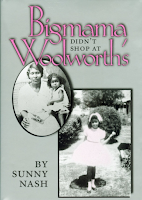
My grandmother, Bigmama, always told me, when there seems to be nothing promising on the horizon, look again. Unfortunately, there are those who are not tech-savvy and do not see opportunities on the horizon. Check out my book:
Bigmama Didn’t Shop At Woolworth’s.
 David Caruso
, Director,
David Caruso
, Director, Center for Oral History,
Science History
Institute, Philadelphia
I received my Oral History Certification at the Science History Institute in Philadelphia. Instructor and Director of the Institute’s Center for Oral History, David Caruso, emphasized research methodologies, legal forms, technique, meticulous transcription, archival preservation and technology. My training with Professor Caruso sent me thinking. I have always used remote recording in my journalism practice. I started my broadcast career in radio. The conventional telephone was my primary tool. How remote was that?
At Shure Audio Institute, I studied acoustics, amplification, microphonic reduction, sound design and digital audio systems, earning certifications in microphone technology, wireless technology, networking, and information technology (IT) for audio-video professionals. I decided to apply these skills, my radio experience and training toward creating an affordable method to control that invisible enemy of any recording--microphonics, better known as distracting, unwanted noise, undesirable in any production. In fact, I spent decades in soundproof cubicles of recording studios, radio stations and television editing suites, acquiring technical skills in sound design while performing as a studio musician, recording engineer, radio news broadcaster and television producer.
Many of my oral history projects involve senior members of ethnic groups that are underrepresented in oral history archives due to deteriorating race relations in America, which systematically ignores human qualities. These stories go untold by untrained, ill-equipped storytellers, and lack of access to oral history repositories. So, you see the myth? Even though everyone with a cell phone may think they can be oral historians, are unfamiliar with oral history methodologies of the academic discipline.
Perfecting audio or other production techniques takes time, training, new skill acquisition and periodic equipment upgrades. There is also the element of change that must be accommodated as technology advances and new pandemics descend. I try to keep up with technology advances and transformations to improve my practice without breaking my bank.© 2026 Sunny Nash. All Rights Reserved Worldwide.
Sunny Nash - Race Relations in America

September 27, 2023
Wilma Rudolph Ran for Freedom
 Wilma Rudolph
Fraternal Order of Eagles Award Wilma Rudolph
In 1960, Wilma Rudolph of Tennessee State University made national headlines on radio, television, black media and mainstream newspapers when she became the first U.S. female to win three gold medals in track and field at the 1960 Rome Olympics.
With all that gold being earned at the 2016 Summer Olympics in Rio, we should remember the first African Americans to win Olympic gold medals, lest we forget that in 1960 Wilma Rudolph fought Jim Crow and helped lay the groundwork for black gold medalists in the 2016 Summer Olympic in Rio.
Wilma Rudolph had Polio

Wilma Rudolph
Wilma Rudolph was a four-and-a-half-pound premature baby born in 1940 in Clarksville, Tennessee. She did not go to traditional school for one year, but was home schooled due to infantile paralysis, caused by the polio virus, which she contracted at age four. Still a sickly child at age seven, she was enrolled into a segregated and underfunded Tennessee school by her parents who did not have the best jobs or health insurance. By age 12, Rudolph's treatments at the Fisk University Medical College Hospital in Nashville, Tennessee, had straightened her twisted leg and given her the normal physical health she had never enjoyed before.
Wilma Rudolph - College Graduate 1963
Wilma Rudolph
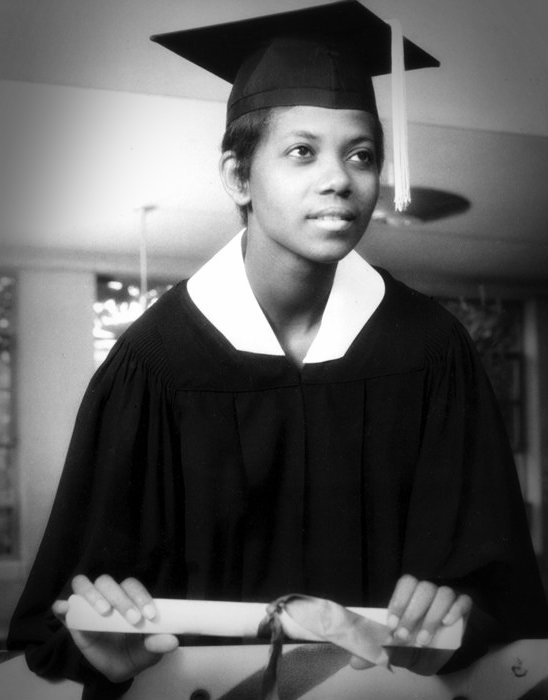 Wilma Rudolph
Tennessee State University 1963 had overcome childhood polio and fought her way to good health by the time she reached her teens. Her athletic abilities made her a high school basketball star, garnered for her attention from college coaches, gained her a college education and eventually placed her in the history books alongside Rosa Parks, Martin Luther King and other civil rights activists.
Wilma Rudolph was a track and field athlete and an activist for civil rights. During the time of her victories, the United States was in the midst of a bloody civil conflict on the streets of southern cities. Politicians were grappling with the notion of granting African Americans civil rights, voting rights and civil justice. In the light of this national turmoil, all African American achievements were being sought by the Civil Rights Movement to further the cause of social change.
Wilma Rudolph - Fastest Woman on Earth in 1960
 Wilma Rudolph, fastest woman on earth after returning from Rome Olympics in 1960
Just as television was beginning to become the main bearer of news and celebrity, Rudolph's track victories helped her to pick up the civil rights struggle against Jim Crow when she got the chance to run track in college. She became an important vehicle for the Civil Rights Movement while she getting college education, which she would use later to influence a new generation of track stars and school students. The most important vehicle out of poverty and low-paying jobs was education, one of the primary goals of 1950s civil rights efforts by Martin Luther King and Rosa Parks. Civil rights and
Civil rights and women's rights pioneer, Wilma Rudolph did her part to break down racial and gender barriers, inspiring women and African Americans when she protested that her hometown victory parade in Clarksville, Tennessee, after the 1960 Olympics, be an integrated event and not segregated, as Jim Crow laws had previously dictated.
Wilma Rudolph's 1960 Rome Olympics track victory came after Alice Coachmen's track and field victory in the 1948 London Olympics was announced on radio: Coachman became the first African American woman to win a gold medal in the history of the Olympics.
In tenth grade, Wilma Rudolph became a record-setting Burt High School basketball star. Tennessee State University (TSU) track coach, Ed Temple, invited her to put on her running shoes and come to a summer track camp at TSU, where she received a full college scholarship after graduating from high school. At TSU, Rudolph earned a place on Temple's track and field team, the Tigerbells .
When Wilma Rudolph competed in the 1956 Melbourne Olympics, her first Olympic competition, she won a bronze medal. During the Melbourne Olympics in November 1956, 16-year-old Rudolph's attention was also on civil rights at home, where Jim Crow laws prevailed in education, housing and jobs. In June 1956, the Montgomery Bus Boycott ignited by Rosa Parks (article) ended in victory and hurled Dr. Martin Luther King, Jr. (article) and his movement of peaceful protest into the national spotlight. The Civil Rights Movement was in causing a nationwide tide of protest.
 Female Students Woolworth's Sit-insSeven months before Rudolph 1960 Olympics victory, North Carolina black female college students protested with male students against segregated lunch counters in
Woolworth's sit-ins
(article), solidifying women's participation in racial protests nationwide and joining Rosa Parks in the female civil rights legacy.
Female Students Woolworth's Sit-insSeven months before Rudolph 1960 Olympics victory, North Carolina black female college students protested with male students against segregated lunch counters in
Woolworth's sit-ins
(article), solidifying women's participation in racial protests nationwide and joining Rosa Parks in the female civil rights legacy. Wilma Rudolph was invited to the White House by President John F. Kennedy after her victory at the 1960 Rome Olympics.
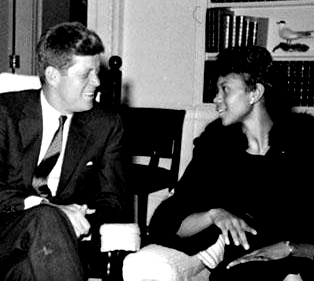 President John F. Kennedy & Wilma Rudolph
Oval Office, The White House, 1960All eyes--young and old, black and white--were on Wilma Rudolph, considered to be the fastest woman on earth at the time. Rudolph returned from Rome in 1960 a television and media celebrity.
Nicknamed, "The Tornado," Wilma Rudoloh was the first woman to win the James E. Sullivan Award for Good Sportsmanship (1961), Rudolph was the first U.S. female athlete to win the European Sportswriters' Award, Sportsman of the Year. She won the Christopher Columbus Award for Most Outstanding International Sports Personality (1960), The Penn Relays (1961), the New York Athletic Club Track Meet and The Millrose Games. In 1962, she retired from track at age 22 and graduated from college in 1963 with a degree in elementary education.
Wilma Rudolph was a school teacher and inspiration to the generation of track stars who followed her to the Olympics and beyond.
 Florence “Flo Jo” Joyner
and Wilma Rudolph
In 1963 Wilma Rudolph was selected to represent the U.S. State Department as a Goodwill Ambassador at the Games of Friendship in Dakar, Senegal. Later that year, she was invited by Dr. Billy Graham to join the Baptist Christian Athletes in Japan. Rudolph taught school, became a sports media commentator on national television and inspired a new generation of American girls and female runners like Florence Joyner.
Wilma Rudolph died of brain cancer in 1994 at age 54. The Clarksville, Tennessee, portion U.S. Route 79 was renamed in her honor and, in 1997, Tennessee Governor Don Sundquist set aside June 23 as "Wilma Rudolph Day."
Sunny Nash - Race Relations in America
September 1, 2023
Our Stories Before we had air conditioning and before out...
Before we had air conditioning and before outdoor entertaining was fashionable, my mother prepared lavish cold-cut suppers to serve in our backyard. Sometimes, if the budget allowed, she cooked a few vegetables, sausage links or other meats on her barrel grill. She had a ton of grilling recipes from books and magazines that she was always anxious to try out on company. She learned her grilling skills from a host of pit bosses in and out of our family.
 Black Cowboys of Texas
My mother talked about Saturday Night Suppers at Uncle Tinney's house when she was a young girl living on an isolated farm.
Black Cowboys of Texas
My mother talked about Saturday Night Suppers at Uncle Tinney's house when she was a young girl living on an isolated farm.
Uncle Tinney was only one of the black cowboys in our family. The closest one to me was my father, who had been a cowboy since he was born practically. And I do not mean simply dressing up like a rodeo dude. My mother said, "Uncle Tinney was not really a cowboy. He had been a cowhand on a local ranch and learned his style of cooking from real cowboys. Ask my father--a real cowboy--and learn the difference between a cowboy and a cowhand.
My father was a rancher, who came from a ranching tradition that required him to be more than proficient on horseback and open fire pits on the range. He knew about Saturday Night Suppers, but not those at Uncle Tinney's place. The Saturday Night Suppers my father attended were generally on the range attending the herd when some need arose that needed attention. I always wanted to spend the night out on the range, but my mother said, "No."
Uncle Tinney was married to my grandmother's sister, part Comanche through their father. My great grandfather knew about the old way and taught it to his offspring and in-laws of offspring.I have memories of my great grandfather. He lived his last years with my grandmother's oldest sister, whom I visited during some holidays while my great grandfather was still alive. I developed an interest in his old stories when I was in elementary school before he died. That could be the way Uncle Tinney learned some of his outdoor cooking techniques. My mother said Uncle Tinney dug a hole in the ground behind his house and lit a slow fire in the hole, while real cowboys dug holes and lit fires on the range. I wanted to dig a hole behind our house and light a slow fire, but my mother said, "No."
Then Uncle Tinney placed a whole pig or most of a pig wrapped in corn shucks in the hole and smoked the pig all day Friday. On Saturday just before the supper, he took out the tender meat, falling off the bone. With fresh white bread, his wife, my great aunt, baked in their outdoor oven, Uncle Tinny made sandwiches to sell at the supper. Everybody from miles around, black, white and brown, came to eat, drink Uncle Tinney's home-brewed beer, listen to Cousin Roy play is guitar and sing out of tune, and kick up dust dancing in the side yard.
 Ojibwa Woman Cooking
An Ethnographic Biography
of Paul Peter Buffalo "My father taught all of us children how to hunt, clean and cook wild meat outdoors," my grandmother said. "That's the old way, the only way when he was a boy. Our people were starving. Wild meat and small game were how we survived because there was no money or store to buy meat. 'And why should you buy meat?' Bigmama's father would ask, 'when you can go out the back door and bag a rabbit or a squirrel, skin it and cook it over an open fire for supper.' So that is what we did," Bigmama said. "Very much in the old way of our prairie ancestors." Civilization changed greatly during the period between Bigmama's childhood and my own.
 Bigmama Didn’t Shop
At Woolworth’s
Sunny Nash
Bigmama Didn’t Shop
At Woolworth’s
Sunny Nash
Hard Cover Bigmama Didn't Shop at Woolworth's
Amazon Kindle Bigmama Didn't Shop at Woolworth's Sunny Nash is an author, producer, photographer and leading writer on U.S. race relations. She writes books, blogs, articles and reviews, and produces media and images on U.S. history and contemporary American topics, ranging from Jim Crow laws to social media networking. Sunny Nash is the author of Bigmama Didn't Shop At Woolworth's (Texas A&M University Press), about life with her part-Comanche grandmother during the Civil Rights Movement.
Sunny Nash’s book is recognized by the Association of American University Presses as essential for understanding U.S. race relations. Nash's book is also listed in the Bibliographic Guide for black studies at the Schomburg Center for Research in Black Culture in New York; and recommended for Native American collections by the Miami-Dade Public Library System in Florida. Nash uses her book to write articles and blogs on race relations in America through topics relating to her life--from music, film, early radio and television, entertainment, social media, Internet technology, publishing, journalism, sports, education, employment, the military, fashion, performing arts, literature, women's issues, adolescence and childhood, equal rights, social and political movements--past and present—to today's post-racism. © 2023 Sunny Nash. All Rights Reserved Worldwide. www.sunnynash.blogspot.com ~Thank You~
Sunny Nash - Race Relations in America
April 6, 2022
Nothing Really Wrong

Sunny Nash
Early in my writing career, I was a staff editor at a small magazine. One day, my boss stopped me in the hallway and asked how I felt about my position. Was that a trick question, I thought? I did not say how much I really wanted a byline for my portfolio. I did not say how I thought I was passed over for writing assignments and given only proofreading chores to clean up the slop of other favored staff editors, who did occasionally get to write for a byline. I kept those things to myself because I already knew the truth would not be welcome in these quarters.
I was a demographic statistic that ticked a box on a form, a box marked 'grateful' to have a job anywhere in an industry among so-called colleagues, who ignored my potential contributions in favor of low-standard status quo. But none of that really mattered to me anymore. I had a secret moonlit counterpunch up my sleeve, ready to knockout any doubt about who I was, who I am and who I will become.
So, I said, "Nothing is really wrong."
"I didn't think so," my boss replied, strutting away confidently.
Watching her strut down the hallway shrouded in homemade snobbery, it all hit me like a ton of soiled bed linen and musty pillows! She had to prevent my star from shining. To her, I represented the competition to her next promotion by her own male boss. Oh, yes! My little boss lady was scared to death of my taking over her position, a position I thought beneath any female dog, knowing all about what she had done to land herself in that broken-down bunk, in the first place, and to keep wallowing there. Seeing her disappear down the hallway, revealed to me at that moment I had nothing to fear from her at all. In fact, I had nothing to fear from anyone! No one can hold me back, except me, as long as I use my vertical, rather than horizontal, strategies to fulfill my intellectual and professional aspirations.
Below is a portion of the gadgets in my toolbox, filled with self-constructed, unscientifically-tested doohickeys, donkey-rigged doodads, widgets, thingamajigs and my mammy-made wardrobe suggestions, which all work for me and could, perhaps with your personal modifications, help you toward your independent standard of best practices in life.
Learn everything the system offers
Embrace all knowledge
Understand and use new concepts
Seek advantages in technology
Seize opportunities to be innovative
Stay ahead of the pack
Abandon trends before they become untrendy
Do not be afraid to compete
Avoid the passé
Study the past to conquer the future
Good looks do count, but do not use them
Dress cheap from the "Children's Place"
Wear comfortable shoes, boots are preferable
Eat to live, do not live to eat
Greed is not attractive
Value humanity
Appreciate the planet
Do your best
And other stuff...
Take it from me, whomever we allow to define who we are controls whoever we become. I decided the day of my little boss lady's question that I would take ownership of me; throw away the key; break the mold; and any other worn-out cliché that can be applied to my situation. Let no one crack my head open ever again and pour in their poison about who I am and what I can do.
This life belongs to me! I, alone, own it!
The night following my little boss lady's question, I went home and wrote a song to fit the occasion, not limited to the position I held in that organization, but including the total person I knew could become. It was my decision to spend my time and money on education, training, traveling, learning and creating what would benefit me and, quite possibly, humankind. When I had finished the song, I felt free for the first time and it didn't matter that my little boss lady dismissed me as her inferior because I knew the truth that she was yet to learn.
Staring down at my letter of resignation on her desk the next day, she was shocked as she asked, "Who will hire a black writer in this town? There are no black magazines here!"
I said, "That's not a problem you have to ponder."
She watched as I laid the key to my cubicle on her desk atop my letter of resignation, and left her office, quietly closing the door behind me. I knew which way I was headed and never looked down again.
Writing my song, " Nothing Really Wrong," helped me to change the direction of my life. I think my song may help you change the direction of your life if, in fact, your life needs changing.
A version of this essay was first published in 2021 World Pulse: An independent, women-led, global social network for social change.
Sunny Nash is a journalist and author of "Bigmama Didn't Shop at Woolworth's" about life with her part Comanche grandmother during the Civil Rights Movement. The book is selected by the Association of American University Press as a book for understanding U.S. Race Relations, and recommended by the Miami-Dade Public Library System for Native Collections.
Article Source: https://EzineArticles.com/expert/Sunny_Nash/214753
Sunny Nash - Race Relations in AmericaDecember 26, 2020
The Day After Christmas
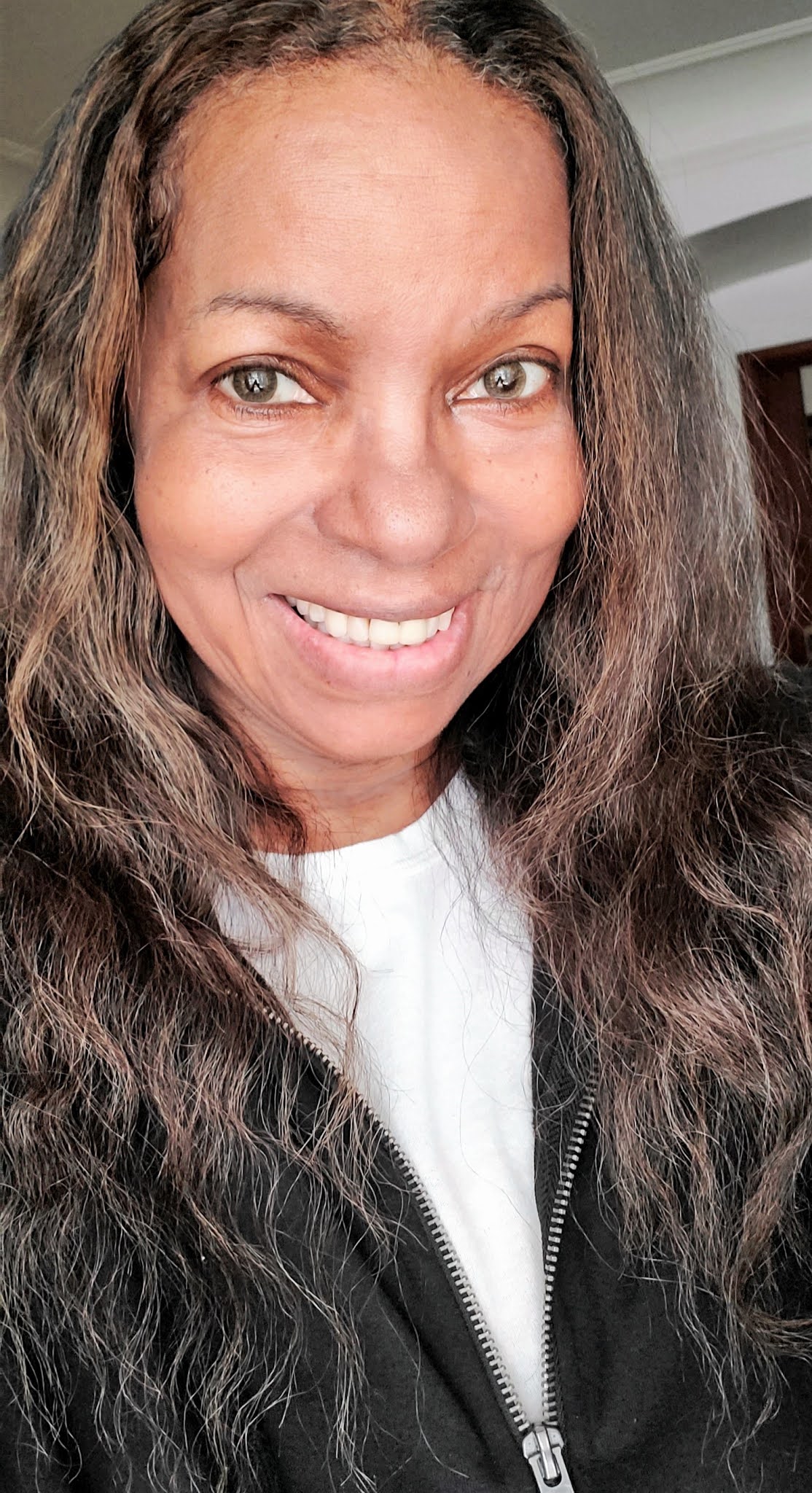 Sunny Nash
Author-Journalist
The following vignette is from my book:
Bigmama Didn't Shop At Woolworth's
__________________________
The sky was hazy that Friday, December 26, 1958. Hanging low just above the houses, dense, moist gray clouds spawned a fine cold mist that drifted to the ground, freezing everything it touched. Pointed tin rooftops and tall leafless trees glistened in the distance like Colorado postcards. Near the ground, electrical wires sacked under the weight of ice, and the slippery front steps of our house and the porches of our Candy Hill neighbors shimmered under a frosty crust. Still ill with the mumps, I could do nothing but read and look out of the window. The house smelled of peppermint, oranges, turkey, nutmeg, and, of course, cedar; but are small brown Christmas tree had shed nearly all its tiny dried branches, leaving little to hold up the sparkling red balls my mother had so carefully placed upon them. Fear of burning down our house had prompted her to stop the flashing of colorful lights on Christmas night. My grandmother had warned her that she was putting up the tree too early.
Through our living room window, when my grandmother let me out of bed for a few minutes that day, I noticed nothing moving on the street—not a person, not a car, not a dog or cat. I didn’t expect to see a cat out in wretched whether, not the way they tiptoed around lightly in a spring shower, trying to keep their feet from touching the ground and getting wet.
No one I knew personally, except a yellow-slickered trash man who lived around the corner, owned the proper winter clothing to be out that day after Christmas. The winter before, a storm had blown in while I was at school. My woolen overcoat absorbed cold moisture and soaked my sweater underneath. I came down with the flu. The cough hung on until spring.
At times, my clear plastic rain slicker kept out rain but welcomed cold that seemed to chill me to the bone. On East 19th Street, now East Martin Luther King Street, the students’ main route to Washington Elementary School on East 20th Street, was so thick and sticky with mud that it pulled off our shoes and sent us home in soggy socks. During entire winters when I was a child, my toes stayed cold. I was plagued with sore throat and lost my voice every other week.
 Bigmama Didn't Shop
 At Woolworth's It was my guess act, by this time, our Candy Hill neighbors—after tossing out their shiny gift paper and picking their turkeys clean—were huddled around a pot-bellied wood stove or a kerosene heater or a gas jet burner, trying to keep warm.
I can’t remember what was in the box with my name on it; presents didn’t matter to me that year, and Christmas dinner was a blur along in my bed. I was preoccupied with the loss of my brother. His seventh birthday would have been December 26, had he not died a few months before. Our one-day-late Christmas gift, as my mother always called him fondly, was gone. And my broken heart was not prepared for any festivities or joyous celebration.
My hot breath fogged the window pane. I traced fragile stick figures with my fingertip. Through my delicate drawings, I saw a lonely road out front.
December 25, 2020
My Mother & The Thinkers
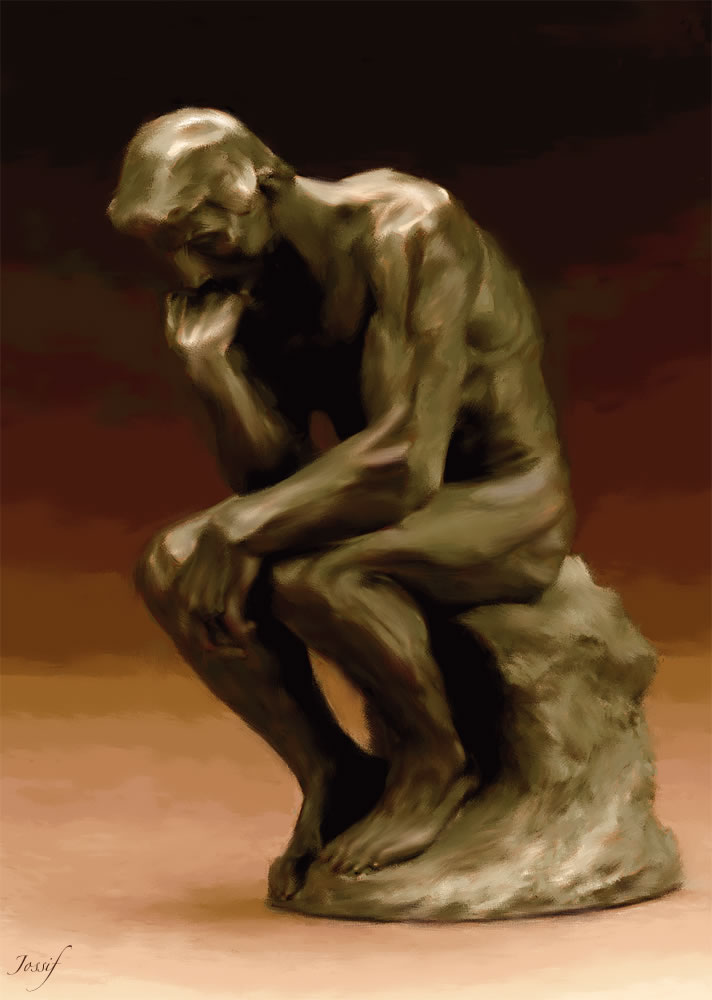 Rodin - The ThinkerWhen I was nine, my mother brought home a book on the French sculptor, François-Auguste-René Rodin (1840-1917).
 My mother loved art, any art--books, literature, paintings, sculpture, music, film, dance, photography, architecture, history, philosophy and intelligent conversation. But I was as confused about her handing this book over to me after she had read it as I was about her making me take ballet and piano lessons, which I am now convinced she insisted upon so that I could notate music to the songs she was writing, another story for another time.
I remember that on the cover of the book was Rodin's The Thinker, a bronze and marble sculpture, which is now in the Musée Rodin in Paris. "Why do I have to read this book about Rodin?" I asked, mispronouncing his name in my childish innocence and ignorance.
"Because I said you have to read it," my mother answered. "And because I refuse to raise an ignorant child who can't pronounce Rodin correctly."
"Oh," was all I could muster. "But why do I have to read this?"
"So you will learn to say his name correctly... Rodin," she pronounced it for me again and made me repeat it. "You can't go to college mispronouncing famous names." I knew I did not dare argue with her or just pretend I to read the book because she would quiz me on it like she did everything else. So, I read it.
 Rodin Museum in Paris, FranceWhen Rodin was 76 years old, he donated his own works of art and his art collection by other artists to the French government. My mother told me about his donation, which is now in the Rodin Museum.
 Rodin Museum: Le Baiser
My mother said people who create, participate in and appreciate art are better thinkers than those who do not.
Rodin Museum: Le Baiser
My mother said people who create, participate in and appreciate art are better thinkers than those who do not.
"Those interested in literature, music and art can handle conversation," she said. "It has to do with the way their brains work and how they decide to live; maybe because they use their minds in a different way."
Contrary to what I thought before starting the book about Rodin, I did find it interesting. Rodin's early education was not considered good enough to gain him entrance into the elite art academy and still he went on to be a foremost figure in the development of modern sculpture. His piece, The Thinker, became my favorite work of art, representing a superior intellectual quality like my mother's that I wished to possess.
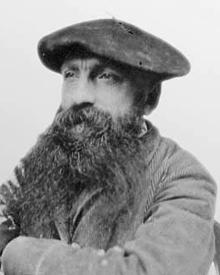 François-Auguste-René Rodin
(1840-1917)
How could my mother have known this man, this book and this sculpture would have that impact on me?
François-Auguste-René Rodin
(1840-1917)
How could my mother have known this man, this book and this sculpture would have that impact on me?
Was she teaching me something about my own intellect, also considered inferior because I was attending a Jim Crow school at the time?
My mother knew the book about Rodin was not the type of reading material our school library offered.
She wanted me to know about people and places far away from my Jim Crow world, one of the reasons we traveled to other states where I could see what the rest of the world had to offer me. Starting when I was four years old m y mother took me to the movies at the segregated theater downtown. Once the lights went down, I was transported to wherever the movie took me. . We would lose ourselves in the beautiful clothes and exotic locations.
"Do not be afraid to explore art, film, books and traditions of other cultures," she always said. "That's how you learn." My mother believed in a global education.
While reading the book on Rodin, I learned that he was born in 1840 in Paris, France. That was the same time that, on this side of the Atlantic, slavery in America was still flourishing in the Deep South. Even as the Civil Rights Movement was in progress, it was unlikely that a little black girl would have been able to discover the genius of Rodin or others without someone like my mother to make the suggestion. At my mother's insistence on exposing me to higher concepts, I was reading about Rodin during the civil rights movement.
There were people whom my mother admired in the world who were not directly associated with the sciences or the arts, but she believed if she could get inside their homes, she would find art hanging on the walls, many shelves of books and the music of the masters playing in the background.
"Did you know Albert Einstein was also a musician?" My mother asked me.
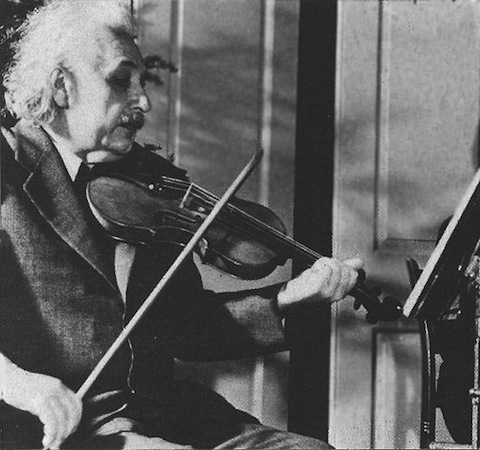 The Musical Mind of Albert Einstein: Great Physicist, Amateur Violinist and Devotee of Mozart"Who is that?" I asked her.
The Spring before I started first grade, Albert Einstein died. My mother was anxious to have me understand not only what the world had lost when this genius died, but also what the world had in him.
"A genius," she said.
"What's that?"
"A very smart person," she said.
"Like you?" I asked.
She laughed. "No, much smarter than me. He loved Mozart and used his music to help him develop his theories."
There she goes again, I thought. I didn't understand what all of that meant. I was only five years old!
And my mother's intellectual admiration did not stop at theoretical physicists. "I'll bet Dr. Martin Luther King and Rosa Parks know who Albert Einstein is," my mother said. Rosa Parks started the Montgomery Bus Boycott at the end of 1955 after I was in first grade. My mother kept up with all that news the same way she had kept up with the Supreme Court ruling in Brown v the Board of Education. She bought magazines and newspapers on her way home from work.
 Rosa Parks Booking Photo, Montgomery Bus Boycott"You can hear culture in people's voices and in the way they use language," my mother said. "Reserved and elegant, those are the thinkers. Thinkers become doers."
 As history has recorded, both Rosa Parks and Dr. Martin Luther King, Jr., wrote books about their lives and experiences during the Civil Rights Movement, documenting those thoughts and the resulting actions.
We had a television in 1955, but there were a couple of problems. In our town, there was only one local station and it was quite conservative and limited broadcasts to those that were none offensive to the majority community. That meant very little to no coverage of Rosa Parks, the Montgomery Bus Boycott, Martin Luther King and the Civil Rights Movement. Secondly, my mother had her doubts that sitting in front of a screen too much was safe for the eyes or the brain. So, she restricted my television viewing to her approved list of programming.
 Rosa Parks
&
Martin Luther King
Rosa Parks
&
Martin Luther King
(Articles)
My mother received civil rights news through delivery of national black publications to our home on a weekly basis. She required me to read articles and then discuss them with her afterwards. Topics were confusing to me and not always a pleasant experience. I always enjoyed our discussions of art history more, perhaps because, as a child, art history was less intimidating than civil rights. When my mother made me read articles and books she had selected, I read them to be ready for her quizzes.
I read books and articles, and examined art because my mother said a person could not be just a collector of books and art. Art hanging on walls or books on shelves did not pass my mother's sniff test. The person who possessed the books and art had to know something about what was in the books, know about the art or know something about the artist who produce the art. An amateur artist herself, she liked to paint animals, birds and landscapes. My really wanted to me to be interested in art, too.
 Brownie Camera
My grandmother bought me a Brownie camera when I was eight in exchange for not bothering her gun again.
Brownie Camera
My grandmother bought me a Brownie camera when I was eight in exchange for not bothering her gun again. She got really upset when I sneaked the gun out of the house and tried to buy bullets at the corner market. But the storekeeper called my house and told my grandmother what I was up to. I tried to explain that I had a good reason, but no one would listen.
My grandmother said my punishment was to use the camera to shoot whatever or whoever I needed to shoot, but not without asking them first. "Do not go sneaking around behind people's backs taking pictures of them," she said. "That is a good way to make enemies and to lose your camera privileges." Like I lost my gun privileges, I thought, hoping she wouldn't tell my mother about the gun.
My mother didn't ask why my grandmother bought me the camera, but she restricted my photography even further: Do not photograph people! She felt I would not be sufficiently respectful of their privacy and she was probably right. Although, looking back on it, I wouldn't call what I was doing photography. My photographs were awful. But my mother was delighted that I was interested in photography. "It's a form of fine art," she said.
I wrote a story, Shooting Without A Gun, in my book, Bigmama Didn't Shop At Woolworth's , about Bigmama's gun and the camera. Take a look and join my channel.
My mother didn't say much about the incident with me and Bigmama's gun, but I am certain she had all to do with my grandmother giving me that camera.
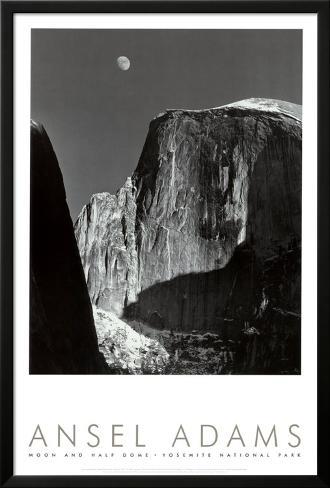 Ansel Adams
Moon and Half Dome
Yosemite National Park, 1960My mother was particularly fond of sunsets, water, night skies, old buildings and sand. When I was about 11 years old, my mother bought postcards with Ansel Adams photography, saying I should model my own style of photography on his style, which she thought was magnificent.
I had no photographic style. "Aim high!" She scolded. "And be sure and pack your camera when we go to the beach next weekend." My mother had a friend in Houston who was from a wealthy mortuary family with property in Galveston and one son my age. During the season, we often met her and her son at their beach cottage for weekends. My mother was always happy when her friend's older son, who was a professional photographer, joined us at the beach and let me tag along while he photographed nature scenes and explained lighting and photo composition.
The summer of my 15th birthday, Aunt Clara took me to the mountains, where I wasted rolls of film trying to take shots as my mother had instructed, only to find out after the photographs were developed that I was no Ansel Adams, nor was I even close. I was very disappointed when I got home from vacation, and my mother and I reviewed my shots. Then, I realized the photography exercise was for my benefit. She was trying to help me develop an eye.
I did eventually develop an eye for photography. My images were published in a significant reference book on the history of photography.
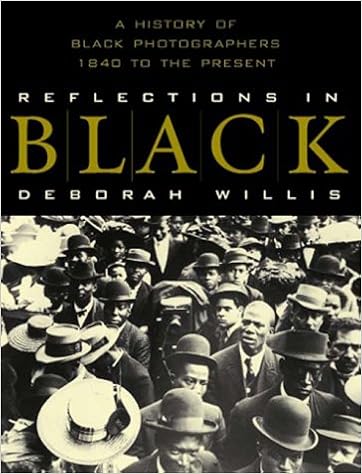 Reflections in Black:A History of Black Photographers 1840 to the PresentMy photography has been collected by a number of prestigious museums and libraries, published in books, newspapers and magazines, and exhibited around the world with a Smithsonian Exhibition, Reflections in Black: A History of Black Photographers 1840 to the Present. I credit my mother for my success by insisting that I take all those terrible pictures when I was a kid.
My mother was totally absorbed in art--the art of others in galleries, her own art creations, my crude and amateur photography or pictures in books. And she liked volumes, not just for the quantity, but for the matching binding.
"Sets of books make you feel like you're in a library," she said. "The feel of art books and the smell of them make me want to paint or get knee-deep in some clay. You can't pretend to love art or know what's in books. Love and knowledge of these subjects come out in conversation, and if you're pretending, you will soon look the fool. Anybody with money can be advised on what art pieces to buy," she said. "The real test is finding a way to surround yourself with art if you are on a tight budget."
And a tight budget was something my mother knew all about. "But we can't let the lack of money keep us from enjoying the finer things," she said. "People need art in their lives, all people--rich and poor!"
 Converted Bus Bookmobile
When I was a little girl, our town did not allow us to use the segregated public library in the 1950s. Jim Crow laws ordered the public library to offer bookmobile services to neighborhoods. A bookmobile was a converted station wagon, van or bus with rows shelves with books, mostly outdated and tattered. The bookmobile was most active in summer and parked in public parks.
Converted Bus Bookmobile
When I was a little girl, our town did not allow us to use the segregated public library in the 1950s. Jim Crow laws ordered the public library to offer bookmobile services to neighborhoods. A bookmobile was a converted station wagon, van or bus with rows shelves with books, mostly outdated and tattered. The bookmobile was most active in summer and parked in public parks. Back then, until we were allowed to use the library, my mother and I took a Greyhound Bus 100 miles away to Houston to use the Houston Public Library. The trip to Houston was an all day affair, but worth it, even if we didn't qualify for library cards, not because we were not white, but because we were from out of town. We sat among all those art books on the shelves and read until it was time for us to catch our bus back home. My mother used the library, like she used movies, to imagine places we had never been, to see images from faraway places that one day we might see and to teach me to see myself as the Jim Crow south could not.
From those movies and books, she imagined scenes, learned to paint oil landscapes and restored damaged art she bought in second-hand stores. She collected art, museum, gallery and exhibition books and often dragged me to out-of-town galleries and museums that allowed African Americans to enter if could afford a ticket. Afterwards, she bought greeting cards and program booklets that were not too expensive and she required me to make detailed critiques of shows we had seen.
My mother collected interior design, architecture and art magazines, too. "Be careful with those," she told me. "They're not cheap." Sketching out plans for home improvement projects was a favorite past-time that my mother loved. Using her architecture and art magazines, and Vogue pattern decorating book, she measured and made multiple drawings before presenting them to my father to see if he could build whatever it was she wanted. Usually, he couldn't or wouldn't produce her final design or, if he did, she wasn't satisfied with the shortcuts he took. So, she went on to construct whatever small project she wanted to create.
Art, music and literature were my mother's weapons against excuses, which she refused to accept. "Most often," she said, "You get what you give."
 Auguste Rodin:
Master of Sculpture
I searched the Internet and could not find a copy of the Rodin book my mother gave me all those years ago. Perhaps the book is out of print. But I found some other interesting selections devoted to Rodin and others that trace art history from the Renaissance to Rodin and the birth of modern art.
Auguste Rodin:
Master of Sculpture
I searched the Internet and could not find a copy of the Rodin book my mother gave me all those years ago. Perhaps the book is out of print. But I found some other interesting selections devoted to Rodin and others that trace art history from the Renaissance to Rodin and the birth of modern art.Over the years, my mother's interests and book collections changed and I do not know what happened to the book about Rodin that she made me read. The book was probably not responsible for getting me a college scholarship or even getting me through Texas A&M University's Department of Journalism and Broadcast Communications. But my mother knew Rodin would have an influence on me at a time when I needed it most.
~30~
 Sunny Nash
Author-Journalist
Bigmama Didn’t Shop
At Woolworth’s
Sunny Nash
Hard Cover Bigmama Didn't Shop at Woolworth's
Amazon Kindle Bigmama Didn't Shop at Woolworth's Sunny Nash, former nationally syndicated newspaper columnist, is the author of a nonfiction book about life before and during the Civil Rights Movement with her part-Comanche grandmother, Bigmama Didn’t Shop At Woolworth’s, selected by the American Association of University Presses as a Book for Understanding U.S. Race Relations, and recommended by the Miami-Dade (Florida) Public Library System for Native American Collections.
Sunny Nash is an award winning writer and three-time winner of Arts Council for Long Beach Professional Artist Fellowship Awards: 2003, 2009 and 2014. Her most recent Arts Council for Long Beach award is a 2016 mini-grant for cultural heritage preservation programs, How a Child Build Legacy , designed to encourage young students to prepare archives of their accomplishments and plan for their future achievements.
Sunny Nash earned a Bachelor of Arts in Journalism & Mass Communication, Texas A&M University; Postgraduate Media Studies Certificate, Cronkite School of Journalism & Mass Communications, Arizona State University; Postgraduate Diploma, Instructional Technology, University of California, San Diego; Constitution Studies, James Madison’s Montpelier Center for the Constitution; and Postgraduate Digital Literacy Certificate, Simmons College Graduate School of Library & Information Science, Boston. Sunny Nash’s international studies include Intellectual Property Law, World Intellectual Property Organization Academy, Geneva, Switzerland; Diplomacy, Culture and Communication, United Nations; Research Methodology, Digital Preservation, Online Archival Information Systems, University of London; and Archival Data Governance, National Archives of Australia, Melbourne.
© 2020 Sunny Nash. All Rights Reserved Worldwide. www.sunnynash.blogspot.com ~Thank You~
Sunny Nash – Race Relations in America Sunny Nash - Race Relations in America
August 28, 2020
Labor Day - The End of Ice Cream Summer
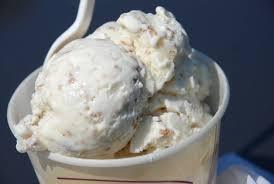 Grape Nut Ice Cream by Kristin Taylor
Similar to a recipe my mother used,
this healthy choice ice cream features
grape juice flavoring.
My mother used
fresh seasonal fruits to flavor her
homemade vanilla ice cream recipe.The establishment of Labor Day as a U.S. national holiday and the invention of the ice cream cone make an interesting historical intersection.
Labor Day predates the American ice cream cone by a decade.
I've been working on this post for a while now, and thought I should get it out before Labor Day became a distant memory and summer had drifted down into autumn with the falling leaves.
Established in 1894 as a national American holiday commemorating American workers, Labor Day seems to have been hijacked by the general American public as a three-day weekend to party! For some, Labor Day marks the end of wearing white as part of our summer wardrobes for the remainder of the year.
When I was a little girl, I watched my mother fold all the white items in our wardrobe and pack them away on the Sunday before Labor Day. Why did we have to give up our favorite summer fashions because of a date on the calendar? I din't care what the calendar said, the weather was still hot in September and, besides, I liked my white shorts and shirts, now relegated to gym class. Anticipating the coming Monday, Labor Day, was also the last day of ice cream summer. I confess, Labor Day was not my favorite holiday, except for homemade ice cream.
 Green Tea Ice Cream
 Vanilla Ice Cream
Chocolate Syrup Topping I loved my mother's homemade ice cream, flavored with fresh fruit, mint, powdered green tea or chocolate syrup.
The recipe that produced our end of summer treat wasn't my mother's recipe and she never claimed it as her own. It was a recipe that had been passed down through our family for many generations. My mother simply added her own twists to the summer delight and she liked to serve her homemade ice cream in homemade ice cream cones.
 Ice Cream Cone"I can stretch the ice cream farther serving it in cones," she said. "And cones are cheaper to make than ice cream."
My mother made her own ice cream cones from a recipe she found in a book from a second-hand store that also sold used furniture and other household goods that she sometimes purchased at very discounted prices if they were in good condition, but they, especially, had to be in good taste and in keeping with my mother's exquisite sense of decor and impeccable style.
 Agnes B. Marshall
Inventor of Ice Cream Cone
Published in 1888Some books my mother collected on various subjects said the ice cream cone was popularized in America at the St. Louis World's Fair in 1904, making ice cream cones 112 years old today. "Ice cream cones may have become known in America in 1904," my mother said, "But they have been around much longer in the rest of the world."
In 1888, 128 years ago, English author and dessert chef, Agnes Bertha Marshall, published Book of Cookery, containing the ice cream cone recipe my mother mimicked in her own kitchen when I was young.
The ice cream cone recipe was different from the one Mrs. Shields sold in her 1950s neighborhood confectionery down the street from where we lived. Mrs. Shields bought her cones wholesale off the back of a truck from a traveling salesman. Her ice cream was store-bought, too, which, according to most her the neighbors who bought her goods, were also very over priced.
Agnes Bertha Marshall was the authority on cold sweet treats, according to my mother. Marshall wrote so many books on the preparation of desserts made from flavored ices, the English author earned the title, Queen of Ices.
 Labor Day, a National Holiday
 Celebrating the American WorkerIce Cream Cones and Labor Day Go Hand-in-Hand
Don't get me wrong, my mother was knowledgeable about and appreciated the real history of Labor Day and many other things in the human experience, on which she did not hesitate educating me. The historical marker for Labor Day, as well as many other historical date markers were common discussions in our house. My mother used the calendar for some of the liveliest history lessons, which she called history stories trying to make me think of these conversations as everyday dinner table banter instead of what the conversations really were--an extension of school!
I guess you could surmise that my mother was a history buff and did her best to turn me into one, too. Not only was she a history buff, but a science buff, a math buff, an art buff, language buff; you name it! If it had to do with education, the subject made her a buff. She scoured used book store shelves and, yard and estate sales looking for suitable material to use against all of my free time. At the time when I was growing up, public policy prevented us from entering most libraries. Occasionally, a neighbor that worked for the city as a library janitor brought my mother worn library books discarded from shelves due to overuse, wear-and-tear and abuse.
Repairing a book with a broken spine or torn pages, and erasing pencil marks from margins, my mother complained, "Some people should not be allowed to check out library books because they don't know how to handle them! And they won't let us into the public library!"
I was not allowed to celebrate something unless I had an understanding of what the something was and, sometimes, not even then; as in my grandmother's lesson on Halloween, another story. But I will keep this discussion focused on ice cream cones and Labor Day.
My great grandmother's homemade ice cream recipe marked the end of summer.
 Vintage White Mountain
Ice Cream Freezer
Similar the the the 100-plus-year-old
antique, wooden ice cream freezerin the possession of my family for decades after my great-grandmother died.On Labor Day, my mother made her grandmother's 100-plus-year-old homemade ice cream recipe given to her by her grandmother to use with the 100-plus-year-old antique wooden ice cream freezer, also a gift from her grandmother. I remember the freezer well. It stayed in the family for years, coming first into the possession of my grandmother via her mother, then my mother.
I remember taking turns with invited neighborhood children cranking the ice cream freezer. My mother usually made vanilla but occasionally mixed in fresh seasonal fruit or berries or mint from our garden or powdered green tea, all of which my mother also used in our teatime rituals.
I don't know what finally happened to my great grandmother's ice cream freezer, which would be mine by now. I only have a vague memory of the wooden boards coming off. Overuse, I guess.
 Sausage and Veggies on the GrillBefore the arrival of Labor Day, during ice cream summer, many of our evenings in the backyard included my mother's cookouts, where she invited neighbors to join in the fun.
If neighbors had something to throw on the fire or place on the table, it was welcomed. However, if they didn't have a contribution to the feast, my mother welcomed them empty-handed anyway, dividing up what she already had so that everyone got a little taste of some part of her delicious offering.
As flatbed trucks drove slowly down neighborhood streets and stopped at various corners letting people off, many of our neighbors and their children my own age were only getting home from their summer jobs toiling from sunup to sundown in blazing sun picking cotton on nearby farms.
"You can't throw an outdoor ice cream supper and let your neighbors stare from the heat of their yards," my mother said. "If you don't have something to offer them, keep your supper inside your house, no matter how hot is tets in there! Especially on Labor Day!"
Bigmama Didn’t Shop
At Woolworth’s
Sunny Nash
Hard Cover Bigmama Didn't Shop at Woolworth's
Amazon Kindle Bigmama Didn't Shop at Woolworth's Author of Bigmama Didn’t Shop At Woolworth's, Sunny Nash is recognized as a leading author on U.S. Race Relations.
Sunny Nash's book, which she fondly refers to as "The Bigmama Book," is about life with her part-Comanche grandmother during the Civil Rights Movement. The book is awarded the distinction, Book for Understanding U.S. Race Relations by the American Association of University Presses; and recommended for Native American Collections by Miami-Dade County Library System. Nash writes a popular blog, Sunny Nash - Race Relations in America, based on period themes from her book.
Robin Fruble of Southern California wrote, "Every white person in America should read this book (Bigmama Didn't Shop At Woolworth's)! Sunny Nash writes the story of her childhood without preaching or ranting but she made me realize for the first time just how much skin color changes how one experiences the world. But, if your skin color is brown, it matters a great deal to a great number of people. I needed to learn that. Sunny Nash is a great teacher," Fruble said.
© Copyright 2020. Sunny Nash. All rights reserved.
© 2020 Sunny Nash. All Rights Reserved Worldwide.
~Thank You~
Sunny Nash - Race Relations in America
June 9, 2017
The Japanese Way of Tea & My Global Education
 Blue Willow China When I was six, my mother bought me a miniature China Tea Set--cups, saucers and teapot--made of matching imported China, unlike the unmatched China sets we used at our mealtime. When I opened the China tea set, I loved the look and feel of the cool smooth surface, but as my fingers glided over it, I had no idea of its significance to my life and the value it would be to my mother's homeschooling plans--my global education, a college scholarship and professional success.
 Rosa Parks Booking Photo
Montgomery Bus BoycottThe year I received the China tea set was 1955, the year Rosa Parks went to jail for starting the Montgomery Bus Boycott.
At the age of six, I was vaguely aware of Rosa Parks and Dr. Martin Luther King, Jr. I did not hear of the civil rights activists or the Civil Rights Movement from teachers in my segregated school. My teachers seemed wary of such discussions. I later learned from my parents that the teachers may have been warned not to talk about the Civil Rights Movement for fear that they may start trouble among the student body.
+Thurgood+Marshall.jpg) Thurgood Marshall (center)
Thurgood Marshall (center)Brown v Board of EducationI learned about Jim Crow laws, the Civil Rights Movement and the names of civil rights activists like Rosa Parks from hearing their names in conversations between my mother, father and Bigmama when they talked about current events like the Montgomery Bus Boycott and Brown v the Board of Education.
 Rosa Parks
Anti-Rape ActivistAt the time, though, they probably had no idea of Rosa Parks' involvement in the protection of black women from rape and lynching from the ills of Jim Crow laws and tradition in the South. I didn't fully understand what Jim Crow laws were until much later in my life. I just knew they were bad for black people and people who were not white. This was confusing to me at times because none of the relatives I knew personally were white, though there was talk in the family about them. And many relatives I knew did not look black. I was too young to know the difference.
When I was six, I knew Rosa Parks and Dr. Martin Luther King had something to do with fighting Jim Crow laws during the Montgomery Bus Boycott. Jim Crow laws affected everything about our lives and the schools I attended until I graduated from high school; and later getting into a college of my choice. But Jim Crow laws did not affect the global education my mother presented to me with my toy China tea set and other tools, such as an erector set for building structures I imagined. She also discovered meditation, which she adapted to her global education.
My mother would use that China tea set to teach me about a world outside of Jim Crow, under which my ancestors had lived for nearly a century at that time and my family would live for years to come.
When I saw my mother sitting on the porch staring into the distance, almost trance-like, I knew she was in meditation upon something beautiful or strange or realizable. I learned later that the something she was in meditation upon was me. Living within the circumstances of Jim Crow laws did not give a person an excuse to do less than the best they could offer, my mother always told me.
"Even the house you live in," she said. "Make it a home. Make your home the best home you can. Organize it. Keep it immaculate. Decorate it. It's where you live. Respect where you live. Take care of your home and it will take care of you; shelter you, nurture you, be standing when you need it!"
My mother understood what I needed to hear and gave freely and loudly. From primary school through college education with a lot of homeschooling in between, my mother yelled her demands and threatened me if I did not do the work. And she never complimented me unless I had shown extraordinary skill at something. There were no gold stars for mere participation.
"We will find a way of paying for college," she said. "But you have to try to get a college scholarship to help out. If you don't study in high school with college in mine, I don't know if we should strain to pay for college. Maybe you won't study in college and our money will be wasted. Maybe you're not college material. But I won't hold that against you, even though I was smart enough to go to college and would have gone if I had had the chance when I graduated from high school."
Learning to accept and appreciate differences in people is global education.
My mother accepted the way other people lived, even if she didn't approve of their lifestyle. "I do not expect others to let me tell them what to think or how to live," my mother said. "Listen but make your own decision based on what you know. And do not follow or be bullied into going into a certain direction just because others do. Do not be afraid of thinking for yourself. And, likewise, do not bully others into thinking like you." Like you're doing me now, I thought, but had sense enough not to say it out loud.
My mother encouraged me to learn another language. She had learned Spanish when she began her supervisory career in food services and wanted to teach me Spanish so that she could practice her language skills before going off to work and giving orders.
[image error] Image: Early 17th century Japan Stoneware
Momoyama period (1573–1615),
Metropolitan Museum, New YorkIn one of our many reference books my mother had purchased over the years, she found items about the Japanese event, The Way of Tea. Sasaki Sanmiis, born in 1893 in Kyoto, wrote the original Japanese classic, Sado-saijiki, which was translated into English in 1960. My mother found translations, which cover Japanese tea tradition throughout the calendar year with descriptions, poetry and The Way of Tea: Reflections . She was fascinated by all of this tradition and ceremony, perhaps because so much of her African and Native American traditions were a mystery to her.
Admitting to me that she was probably not saying the words correctly, my mother still enjoyed trying to pronounce of the names and words describing the ceremonies. "I would love to learn to speak Japanese," she said. "That way, I would have a better understanding of these rules of the tea. "Eastern languages are very different from English and Spanish," she said. "It wouldn't hurt, though, if you learned Spanish."
Using my little toy tea set, my mother taught me about the world's fascination with tea, tea traditions, world economies built around tea and legitimate historical political movements named for the beverage, including the Boston Tea Party, one event leading to the American Revolution. From 1775 to 1783, the Founding Fathers, delegates to the Constitutional Convention, along with the other of their kind, had witnessed America's victory in the American Revolutionary War against Great Britain. Jim Crow laws were not far behind.
My mother especially loved the Japanese ceremonies, but she taught me about all tea traditions and the people who created them. Traditionally, powdered green tea is used in the Chanoyu, Japanese Tea Ceremony. Matcha ceremonial-grade tea is different from other green and black teas brewed from dried flakes of loose tea leaves or tea leaves manufactured into tea bags. Loose tea leaves or those in tea bags are steeped in hot water and then discarded. The ceremonial tea is ground to a fine power that is made to dissolve in water, which preserves its essence, making its consumption more potent and effective than tea leaves. Although we didn't have the real Japanese tea, we used the tea my mother could afford and the tea she could find. Then, we substituted what we had and pretended. It is said that using the powdered green tea within the rules of the ceremony makes the five human senses most acute, encouraging high mental concentration, emotional calm and mental composure.
My mother and I did not have the powdered green tea for our tea celebrations, but we read about the power of the tea when certain rituals were performed in conjunction with its consumption. This thinking was certainly parallel to my mother's thinking, in that, it led to control of one's behavior through control of one's own mind.
"Thinking about something is good," my mother told me. "But thinking deeply about something is better." She explained that thinking deeply means rolling it over again and again in my brain and examining thoroughly what was being thought about, not to come up with a better answer, but to come up with a better understanding of the answer. That was meditation, the same thing I had seen her doing so many times.
Of course, my mother and I did not have Japanese, Chinese, English or any other exotic tea. We used Lipton Tea because it was cheap and available at the corner store. We emptied the tea leaves into the little tea pot of my China tea set
 . My mother said the loose leaves made a stronger brew. I didn't really like the taste of hot tea, but I sipped it with my mother--our pinkies pointed toward the sky--because she said I should know about such things. Then, I hosted pretend tea parties for my young cousins and friends. But I didn't bore them with what my mother and I had read about tea, since my friends and I were only drinking pretend tea, not even Lipton, just tap water.
"You can find meaning where there seems to be none," my mother said. "People have been doing that throughout time. Whatever you're doing, do it the best you can. Give it your full concentration. Challenge yourself with every little thing that comes your way; think of them as opportunities. Do all you can with whatever it is that you have or that you are doing."
My mother made ordinary things, like sipping a cup of tea, into something special. Finding meaning in the simplest of things, she taught me how to make my life rich without reference to money.
"What does all of this tea talk have to do with me," I asked, watching my mother prepare my lesson. "Japanese tea ceremonies have nothing to do with us."
My mother saw differently, though. "You're wrong," she said. "We are everybody. To learn about us, you must learn about all people. If you leave someone out of your study, you leave out part of your."
~~~~~~~~ My Mother ~~~~~~~~
 Littie NashLittie Nash was one of the great global thinkers. She did not waste compliments on me. She reserved accolades to celebrate real accomplishments, not just because I dragged myself out of bed before noon on Saturday or because I made an 'A' on my report card.
 "Some things you have to do," my mother said. "And those things pass, not without notice, but without an all-day hullabaloo."
To support me, my mother sponsored my piano, ballet, tennis and swimming lessons, dance performances, recitals, literary and classical music club memberships, summer camps, out-of-state vacations, school trips and science fair exhibits, still managing to squeeze out of our tight budget money for the dentist to install braces on my teeth.
It took a great deal of courage and imagination during the era of Jim Crow laws for my mother to give me what she thought I needed. Jobs for African Americans were scarce and good jobs were mostly nonexistent for them. Black men were economically and politically marginalized and black women were publicly disrespected on a routine basis.
Bigmama Didn’t Shop
At Woolworth’s
Sunny Nash
Hard Cover Bigmama Didn't Shop at Woolworth's
Amazon Kindle Bigmama Didn't Shop at Woolworth's In the 1990s, I wrote columns for Hearst and Knight-Ridder newspapers--stories from my childhood with my part-Comanche grandmother during the Civil Rights Movement. Texas A&M University published a collection of the stories about which Robin Fruble of Southern California said:
"Every white person in America should read this book! Sunny Nash writes the story of her childhood without preaching or ranting but she made me realize for the first time just how much skin color changes how one experiences the world. But if your skin color is brown, it matters a great deal to a great number of people. I needed to learn that. Sunny Nash is a great teacher," Fruble said.
Sunny Nash is an author, producer, photographer and leading writer on U.S. race relations. She writes books, blogs, articles and reviews, and produces media and images on U.S. history and contemporary American topics, ranging from Jim Crow laws to social media networking. Sunny Nash is the author of Bigmama Didn't Shop At Woolworth's (Texas A&M University Press), about life with her part-Comanche grandmother during the Civil Rights Movement.
Sunny Nash’s book is recognized by the Association of American University Presses as essential for understanding U.S. race relations. Nash's book is also listed in the Bibliographic Guide for black studies at the Schomburg Center for Research in Black Culture in New York; and recommended for Native American collections by the Miami-Dade Public Library System in Florida. Nash uses her book to write articles and blogs on race relations in America through topics relating to her life--from music, film, early radio and television, entertainment, social media, Internet technology, publishing, journalism, sports, education, employment, the military, fashion, performing arts, literature, women's issues, adolescence and childhood, equal rights, social and political movements--past and present—to today's post-racism.
© 2019 Sunny Nash. All Rights Reserved Worldwide. www.sunnynash.com ~Thank You~
Tweet
Sunny Nash - Race Relations in America
April 12, 2017
Arts Council for Long Beach Awards Sunny Nash for Inspiring Students
 (Photo by Victor Ladd © 2017)
Sunny Nash and Bobbie Smith Elementary Students
Viewing Nash's Historical Artifacts Sunny Nash’s innovative approach to personal empowerment--How a Child Builds Legacy--is a cultural heritage preservation program that guides young students to think of their potential contributions to family, neighborhood, society and humanity.
In addition to this Arts Council for Long Beach (ACLB) grant, Sunny Nash is a three-time winner of ACLB Professional Artist Fellowships (2003, 2009 and 2014).
"Cultural heritage preservation is another way of saying: Saving the story of you, which becomes your legacy. What I want to show you today are a few things to do to build your legacy," Sunny Nash told the students at Bobbie Smith Elementary School.
“My legacy began with my earliest realizations that I exist," Nash said. When I was quite young, about your ages, I developed the desire to leave my mark for kids in the future like you to understand how my family lived and what we did in our lives. I wanted to save my family's legacy to show how individual choices can make a difference to a family; and how collective family choices to educate themselves and live by certain principles can make a difference to society.”
 (Photo by Victor Ladd © 2017)
Sunny Nash
Talking to Students about Legacy How a Child Builds Legacy Sponsors Arts Council for Long BeachCity of Long BeachCultural Alliance Long BeachBuilding Future LeadersEducator Alta CookeCommunity Activist Carolyn Smith WattsRobin Perry & Associates
Sunny Nash created How a Child Builds Legacy--an exhibition of family artifacts, published journalism, interactive student discussions, guest speakers and a Time Capsule--as a model for students understand the control they possess over the direction of their own lives and to assume responsibility for what their legacy will become.
 (Photo by Sunny Nash © 2017)
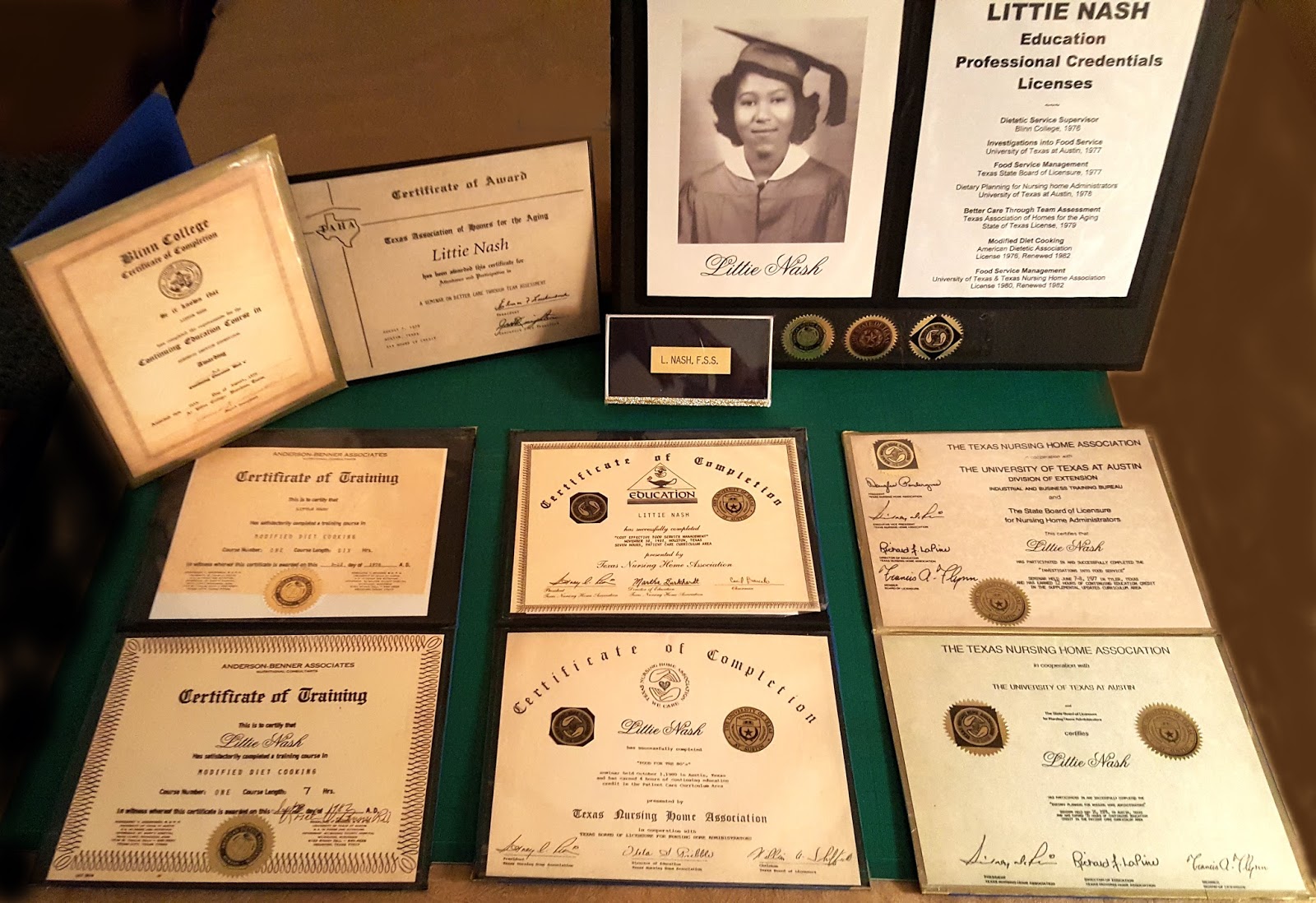
Educational Achievements of Littie Nash
Sunny Nash's Mother The exhibition highlights Nash's family accomplishments earned before and during the Civil Rights Movement. Sharing civil rights history behind those accomplishments helps students realize:
If those people can do all that, maybe I can do something, too.
 (Photo by Sunny Nash © 2017)
Bobbie Smith Elementary Students
Viewing Sunny Nash's Published Journalism
"I was impressed with the students' knowledge of Civil Rights and American History," Nash said.
"When knowledge of the past and the opportunity to imagine themselves beyond their immediate circumstances, students can experience positive changes in the way they see their future," Nash said. "Knowledge makes it easier for them to put their lives into a larger historical context and to place themselves into the American story."
 (Photo by Sunny Nash © 2017)
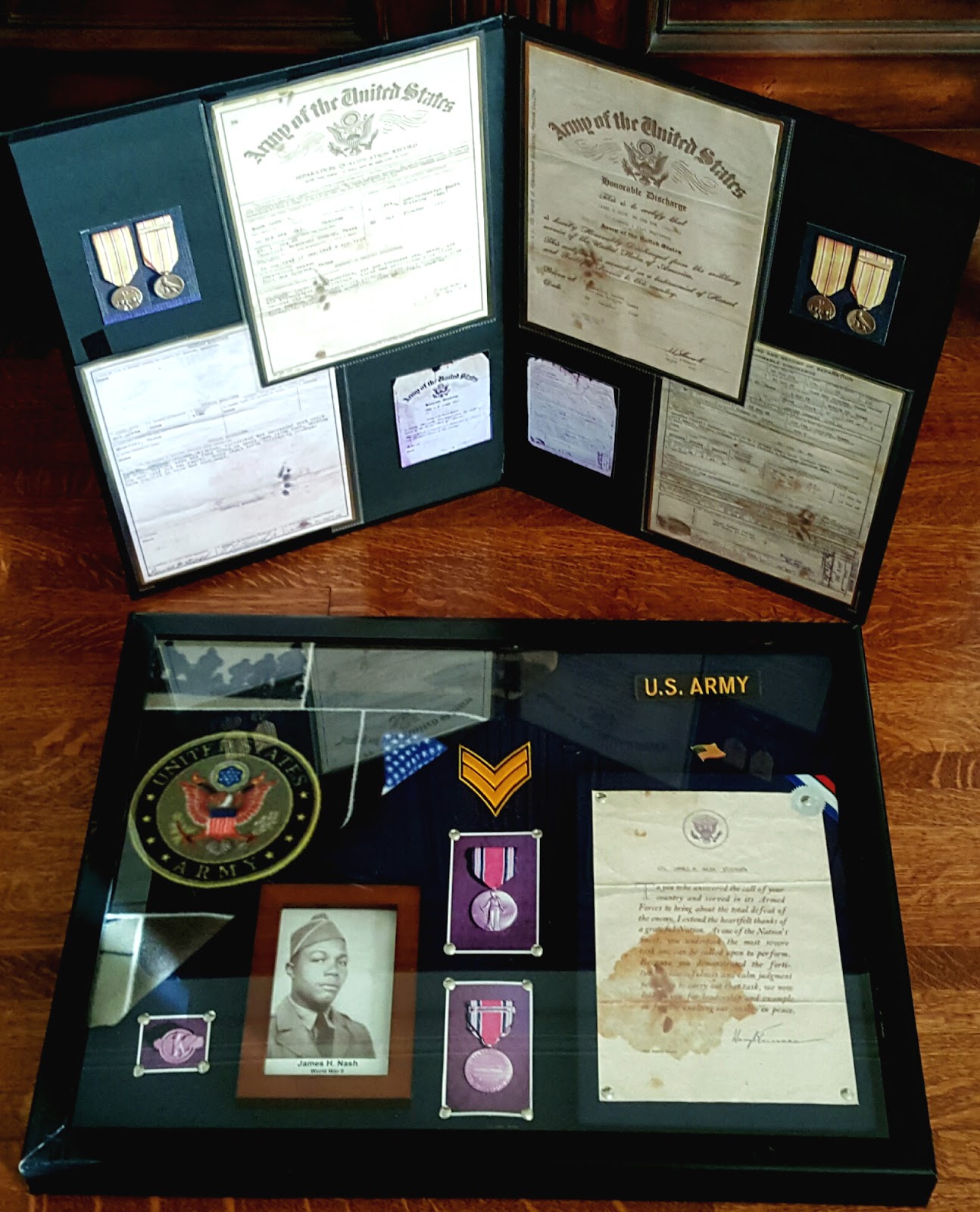
Military Achievements of James Nash
Sunny Nash's Father Nash's program is not just "old school." She told students how to use technology in the legacy building process, such as cellphone video and images, which she uses to produce and collect artifacts and exhibit pieces.
"If I take pictures, video and audio with a cellphone," Nash told the children. "I download my digital files and save them in a retrievable format as soon as possible. Suppose something happens to the phone? The backup feature of the service does not preserve the highest quality image, which means your original is lost if you do not take action to save it from the device."
 (Photo by Sunny Nash © 2017)
Bobbie Smith Elementary Students
Viewing Sunny Nash's Published Journalism For creating and preserving a lasting archive, Nash does not recommend public sharing on social media and free cloud storage. She said those options save images in fairly low resolution, making reproduction and printing low quality.
"And what happens to your pictures and movies if the service experiences a glitch or service goes out of business?" She asked students. "To produce the highest quality for later use, save your archive to a device or drive, such as a flash drive or an external hard drive you can connect to a device. Digitizing my photo files at high quality allowed me to print my images and share them with you today."
"However, if public, cloud or social media archiving and storage are all you have," Nash said. "That's all you have. And some means of preserving the data is better than no means of preserving the data."
 (Photo by Victor Ladd © 2017)
After seeing Sunny Nash’s Legacy,
students contribute their own Legacy aspirations
to Time Capsule
“I want children to lift their vision,” said Nash, who conducted after school classical music and literature programs for Long Beach Unified School District 2005-08. “I like sharing memories from my childhood, which I wrote as a syndicated newspaper column, published as a book, now part of my personal legacy.”
(Photo by Victor Ladd © 2017)
After seeing Sunny Nash’s Legacy,
students contribute their own Legacy aspirations
to Time Capsule
“I want children to lift their vision,” said Nash, who conducted after school classical music and literature programs for Long Beach Unified School District 2005-08. “I like sharing memories from my childhood, which I wrote as a syndicated newspaper column, published as a book, now part of my personal legacy.”While celebrating the anniversary of the naming of Bobbie Smith Elementary School in Long Beach, California, students start building legacy with Nash's Time Capsule, for which they wrote and placed inside the capsule how they want to be remembered by future generations.
The Time Capsule is a gift from Bobby Smith to the students, who will decide when the Time Capsule is opened.
 (Photo by Victor Ladd © 2017)
Bobbie Smith Presents Time Capsule
To Principal, Monica Alas
Bobbie Smith, for whom Smith Elementary is named, said, “I am very pleased to have Sunny Nash present her work and interact with students at Smith Elementary. I have known and worked with Sunny on many projects through the years and appreciate her dedication to contribute to the culture of Long Beach.”
(Photo by Victor Ladd © 2017)
Bobbie Smith Presents Time Capsule
To Principal, Monica Alas
Bobbie Smith, for whom Smith Elementary is named, said, “I am very pleased to have Sunny Nash present her work and interact with students at Smith Elementary. I have known and worked with Sunny on many projects through the years and appreciate her dedication to contribute to the culture of Long Beach.”Monica Alas, Smith Elementary Principal, said, “Mrs. Bobbie Smith has been a role model to students since the school was re-named in December of 2015. Her partnership with Sunny Nash benefits our students with the exhibition highlighting authentic published journal entries and unique art collection.”
Bobbie Smith makes frequent appearances at Bobbie Smith Elementary School in Long Beach, California
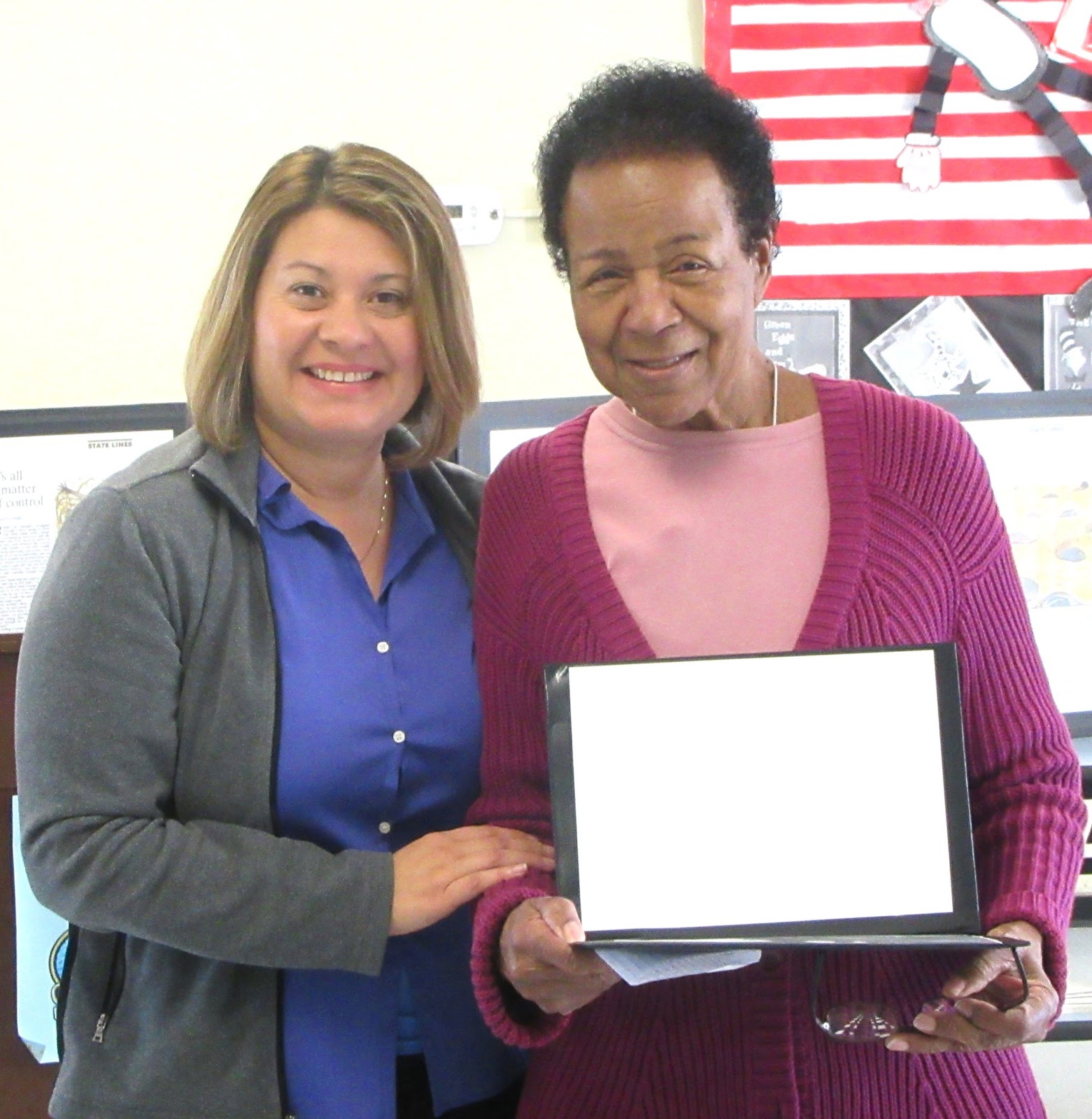 (Photo by Victor Ladd © 2017)
 Principal Monica Alas Thanks Guest Speaker and
former colleague of Bobbie Smith for her support
and participation Alta Cooke, first African American High School Principal in Long Beach (Jordan), delivered a six-point speech on legacy building to Smith Elementary School students. "I want students to fulfill a positive image of self," Cooke said. "That image ultimately shines from within, and programs like Sunny's will help students develop their inner image."
Using her exhibit, Nash encourages students to preserve digital data, daily journals, artwork, report cards, awards, memorabilia, photographs and keepsakes to create a record of their lives. Emphasizing academic commitment and continued scholarship, Nash shares with students how her interest in preservation while in elementary school evolved into a journalism career, became her tool for contributing to national and global conversations and won awards for Cultural Heritage Preservation Programs.
“The concept Sunny Nash is presenting to the students is a good fit for what our organization promotes,” said Keith Lilly of Building Future Leaders. “Students need to learn ways they can become involved in preserving their heritage. It’s a lesson about life.”
 (Photo by Victor Ladd © 2017)
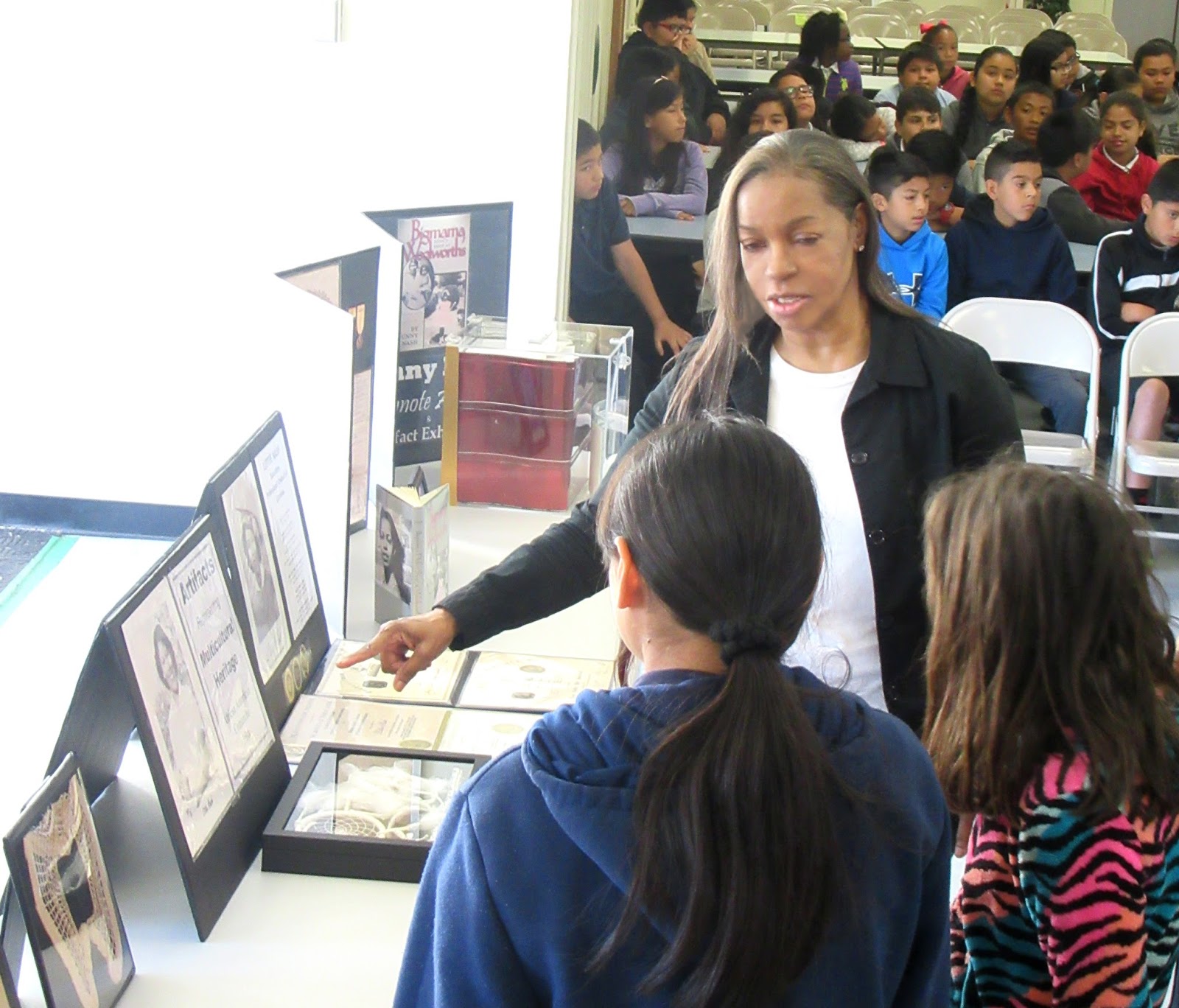
 Sunny Nash pointing out artifacts from her own Legacy
To help students understand how to build their own “Cultural Alliance Long Beach (CALB) supports universal concepts of art, as more than traditional forms of creative expression,” said Victor Ladd, CALB Vice President. “Art embraces traditional forms, as well as the preservation of expressions of cultural heritage, which Sunny Nash demonstrates in her presentation to Long Beach students.”
Nash displayed a collection of family artifacts belonging to her parents and grandparents, and a selection of newspaper columns she wrote about life with her part-Comanche grandmother before and during the Civil Rights Movement.
 (Photo by Victor Ladd © 2017)
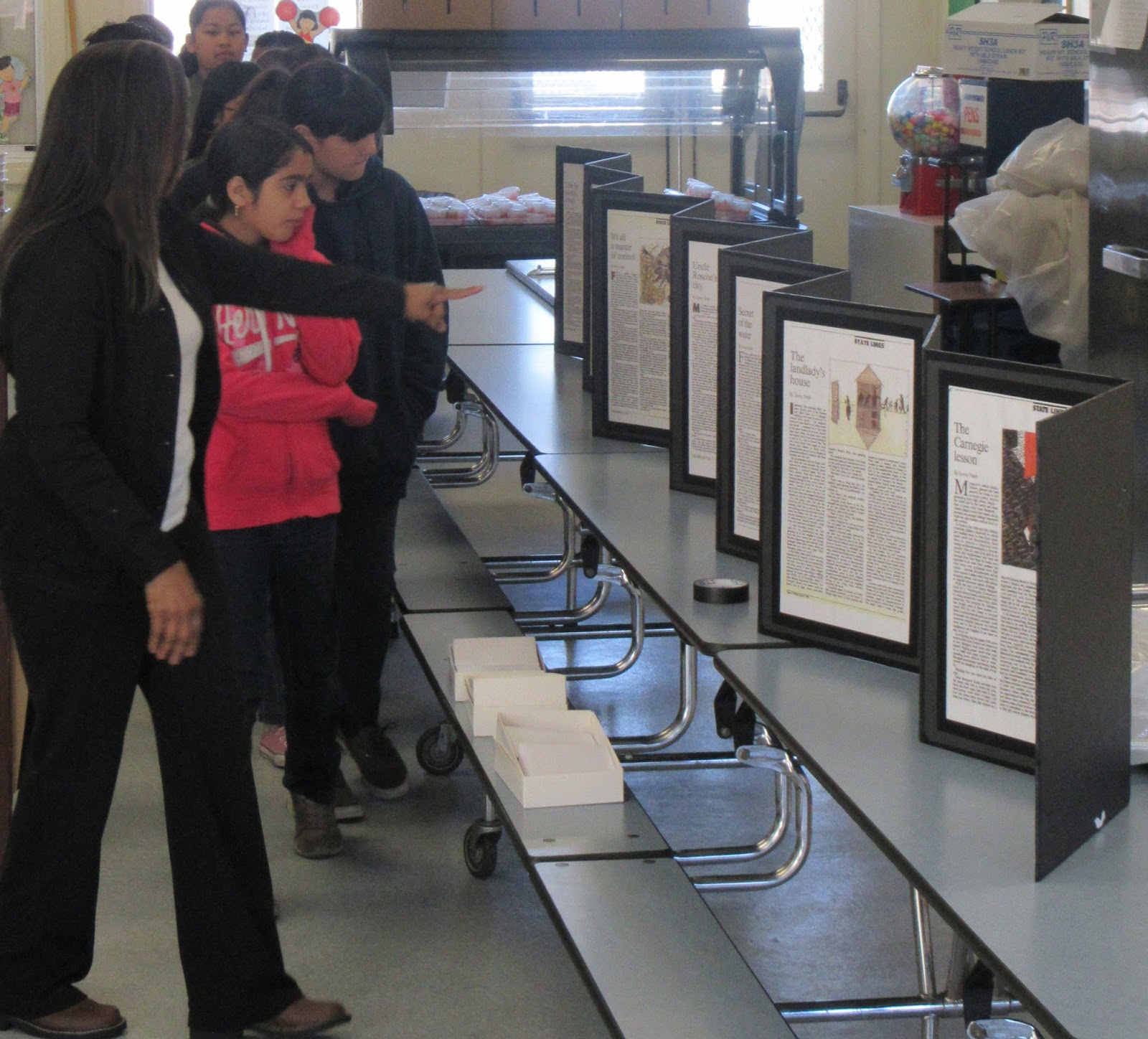
Sunny Nash and Students
View Her Published Journalism The newspaper columns were published originally in the State Lines section of Texas Magazine in The Houston Chronicle (Sunday Edition). The column and other articles Nash authored were syndicated nationally in Hearst and Knight-Ridder papers.
Selections from Nash's newspaper columns were collected into her book, Bigmama Didn’t Shop At Woolworth’s , recognized by the Association of American University Presses as a book for understanding U.S. race relations, and recommended by Miami-Dade Public Library System for Native American Collections.
Nash previewed a portion of the How a Child Builds Legacy exhibition at the Khmer Parent Association Mother Daughter Conference, where her efforts were honored with a California State Senate Citation by Senator Ricardo Lara and a Jeannine Pearce Award .
“How a Child Builds Legacy provides tools we all need to assert control over our environment--our lives, our legacy--to determine how we want to live and to be remembered,” Nash said. “Don’t all human beings deserve a chance to use tools that help them find meaning in life?”
~30~
Sunny NashAuthor-Journalist
Bigmama Didn’t Shop
At Woolworth’s
Sunny Nash
Hard Cover Bigmama Didn't Shop at Woolworth's
Amazon Kindle Bigmama Didn't Shop at Woolworth's Sunny Nash, former nationally syndicated newspaper columnist, is the author of a nonfiction book about life before and during the Civil Rights Movement with her part-Comanche grandmother, Bigmama Didn’t Shop At Woolworth’s, selected by the American Association of University Presses as a Book for Understanding U.S. Race Relations, and recommended by the Miami-Dade (Florida) Public Library System for Native American Collections.
Sunny Nash is an award winning writer and three-time winner of Arts Council for Long Beach Professional Artist Fellowship Awards: 2003, 2009 and 2014-15. Her most recent Arts Council for Long Beach award is a 2016-17 grant for cultural heritage preservation programs, How a Child Build Legacy , designed to encourage young students to prepare archives of their accomplishments and plan for their future achievements.
Sunny Nash earned a Bachelor of Arts in Journalism & Mass Communication, Texas A&M University; Postgraduate Media Studies Certificate, Cronkite School of Journalism & Mass Communications, Arizona State University; Postgraduate Diploma, Instructional Technology, University of California, San Diego; Constitution Studies, James Madison’s Montpelier Center for the Constitution; and Postgraduate Digital Literacy Certificate, Simmons College Graduate School of Library & Information Science, Boston. Sunny Nash’s international studies include Intellectual Property Law, World Intellectual Property Organization Academy, Geneva, Switzerland; Diplomacy, Culture and Communication, United Nations; Research Methodology, Digital Preservation, Online Archival Information Systems, University of London; and Archival Data Governance, National Archives of Australia, Melbourne.
© 2017 Sunny Nash. All Rights Reserved Worldwide. www.sunnynash.blogspot.com ~Thank You~
Sunny Nash - Race Relations in America
Before Rosa Parks, Sojourner Truth - Ain't I A Woman?
 Sojourner Truth (1797-1883)One of the first civil rights, woman's suffrage and anti-slavery activists was abolitionist, Sojourner Truth, whose feelings about the evils of slavery matched President Abraham Lincoln's own anti-slavery sentiments, which he began to form in his childhood. Widely advertised, Truth's speeches not only chastised America about slavery but also punctuated the difference in the positions of black and white womanhood in America.
 Sojourner Truth was born only ten years before the Founding Fathers began deliberations on a new U.S. Constitution to replace the old Articles of Confederation. She was six years old when the Bill of Rights was ratified, the document she would later use in her career to build her case for human rights.
Ten years before Union victory in the Civil War freed U.S. southern slaves under the order of the future President Abraham Lincoln, Sojourner Truth delivered her famous Ain't I A Woman? speech at the Women's Convention in Akron, Ohio, in December 1851. Sojourner Truth was as significant a figure in the anti-slavery issues of her 1850-60s generation just as Rosa Parks, the Montgomery Bus Boycott and Martin luther King were to anti-Jim Crow laws in the modern Civil Rights Movement of the 1950-60s.
 Rosa Parks & E.B. Nixon
Montgomery Bus Boycott It seems that racism and discrimination has always been rooted in sex.
In 1944, the rape of a 24-year-old mother and sharecropper, Recy Taylor, was walking home from Rock Hill Holiness Church in Abbeville, Alabama, when seven white men, armed with knives and shotguns, ordered her into their green Chevrolet. They raped and left her for dead. The president of the local NAACP branch office sent his best investigator and organizer to Abbeville. Her name was Rosa Parks and this was not the last battle against racism Parks would launch. The Montgomery Bus Boycott became a civil rights movement with the help of Martin Luther King that changed the world. The civil rights movement was also part of woman's a movement that began one hundred years earlier with Sojourner Truth
Sojourner Truth (1797-1883): Ain't I A Woman?Delivered 1851, Women's Convention, Akron, Ohio
Well, children, where there is so much racket there must be something out of kilter. I think that 'twixt the Negroes of the South and the women at the North, all talking about rights, the white men will be in a fix pretty soon. But what's all this here talking about?
That man over there says that women need to be helped into carriages, and lifted over ditches, and to have the best place everywhere. Nobody ever helps me into carriages, or over mud-puddles, or gives me any best place! And ain't I a woman? Look at me! Look at my arm! I have ploughed and planted, and gathered into barns, and no man could head me! And ain't I a woman? I could work as much and eat as much as a man - when I could get it - and bear the lash as well! And ain't I a woman? I have borne thirteen children, and seen most all sold off to slavery, and when I cried out with my mother's grief, none but Jesus heard me! And ain't I a woman?
Then they talk about this thing in the head; what's this they call it? [member of audience whispers, "intellect"] That's it, honey. What's that got to do with women's rights or negroes' rights? If my cup won't hold but a pint, and yours holds a quart, wouldn't you be mean not to let me have my little half measure full?
Then that little man in black there, he says women can't have as much rights as men, 'cause Christ wasn't a woman! Where did your Christ come from? Where did your Christ come from? From God and a woman! Man had nothing to do with Him.
If the first woman God ever made was strong enough to turn the world upside down all alone, these women together ought to be able to turn it back , and get it right side up again! And now they is asking to do it, the men better let them.
Obliged to you for hearing me, and now old Sojourner ain't got nothing more to say.
Sojourner Truth was a slave in New York before the north freed slaves.
 Hardenbergh Estate, Ulster County, New YorkCabin Believed to Be Birthplace of Sojourner TruthSojourner Truth was born Isabella, around 1797 to slave parents, Elizabeth and James, from the Gold Coast of Africa. Nicknamed Betsy and Baumfree, her parents were owned by Dutch Revolutionary War Colonel, Johannes Hardenbergh of Ulster County, New York. Because they spoke only Dutch, their owners' language, they were classified as Afro-Dutch, as were many slaves on neighboring estates in that part of New York. The first U.S. Census indicates that the slave population in New York grew to 21,324 by 1790, making New York the largest slave-owning state north of the Mason-Dixon line, a distinction New York held for the two centuries the state practiced slavery: .
After the deaths of her original owners, Isabella was sold away from her family at a New York auction. At nine years old, still speaking only Dutch, the young girl learned English under brutal circumstances, while living through a succession of New York slave owners. For the next 20 years, until 1826, Isabella survived terror, cruelty, beatings and rape on a daily basis. One year before New York emancipated its slaves in 1827, Isabella, at age 29, planned her escape and walked away from her owners without permission, taking only her infant daughter. The rest of her children, still slaves at the time, had to be left behind with their father, a husband chosen for Isabella by their owners.
The year following Isabella's departure from her owners, New York law required slave owners in that state to free their slaves. Many former owners indentured their former property and some sold their former slaves illegally into the South where slavery was still legal. Isabella went to court to win the freedom of her 5-year-old son, who had been sold to an Alabama plantation, and became the first black woman to win such a case against a white man. All of this was taking place about the time that Thomas "Daddy" Rice was touring with his new Jim Crow minstrel show and the North was busy constructing a body of black codes to control its newly freed slaves.
In 1843, Isabella changed her name to Sojourner Truth and reinvented herself, becoming associated with a number of questionable female and male religious groups and characters for financial and moral support. Eventually, she found the message she wanted to spread--the abolition of slavery and Jim Crow laws, and women's suffrage. She began preaching the gospel, traveling and speaking about the abolition of slavery and women's rights. To increase her fame, brand her image and spread her message, Truth embraced the new services professional photographers provided, creating portable images and publication of images onto to cards with printed messages. Professional photography began in earnest in America during the Civil War when Truth was most actively seeking publicity for her lectures. To increase her income, she solicited the assistance of a white associate, Olive Gilbert, to help her write her memoir, Narrative of Sojourner Truth, a Northern Slave, Emancipated from Bodily Servitude by the State of New York, in 1828, by Sojourner Truth, introduction by anti-slavery advocate and publisher, William Lloyd Garrison.
From Narrative of Sojourner Truth:
In process of time, Isabella found herself the mother of five children, and she rejoiced in being permitted to be the instrument of increasing the property of her oppressors! Think, dear reader, without a blush, if you can, for one moment, of a mother thus willingly, and with pride, laying her own children, the 'flesh of her flesh,' on the altar of slavery–a sacrifice to the bloody Moloch! But we must remember that beings capable of such sacrifices are not mothers; they are only 'things,' 'chattels,' 'property.' But since that time, the subject of this narrative has made some advances from a state of chattelism towards that of a woman and a mother; and she now looks back upon her thoughts and feelings there, in her state of ignorance and degradation, as one does on the dark imagery of a fitful dream. One moment it seems but a frightful illusion; again it appears a terrible reality. I would to God it were but a dreamy myth, and not, as it now stands, a horrid reality to some three millions of chattelized human beings. I have already alluded to her care not to teach her children to steal, by her example; and she says, with groanings that cannot be written, 'The Lord only knows how many times I let my children go hungry, rather than take secretly the bread I liked not to ask for.' All parents who annul their preceptive teachings by their daily practices would do well to profit by her example. Another proof of her master's kindness of heart is found in the following fact. If her master came into the house and found her infant crying, (as she could not always attend to its wants and the commands of her mistress at the same time,) he would turn to his wife with a look of reproof, and ask her why she did not see the child taken care of; saying, most earnestly, 'I will not hear this crying; I can't bear it, and I will not hear any child cry so. Here, Bell, take care of this child, if no more work is done for a week.' And he would linger to see if his orders were obeyed, and not countermanded. When Isabella went to the field to work, she used to put her infant in a basket, tying a rope to each handle, and suspending the basket to a branch of a tree, set another small child to swing it. It was thus secure from reptiles and was easily administered to, and even lulled to sleep, by a child too young for other labors. I was quite struck with the ingenuity of such a baby-tender, as I have sometimes been with the swinging hammock the native mother prepares for her sick infant–apparently so much easier than aught we have in our more civilized homes; easier for the child, because it gets the motion without the least jar; and easier for the nurse, because the hammock is strung so high as to supersede the necessity of stooping.
 Abraham Lincoln's Thank You Note
to Sojourner Truth
After White House Meeting Sojourner Truth became invaluable to Union Civil War efforts speaking against slavery and recruiting black troops. Truth was also active in the women's movement, advocating for the inclusion of African American women in the political struggle and the benefits for women's voting rights and legal protection under the Constitution.
Sojourner Truth described in a letter meeting Abraham Lincoln on November 17, 1864. "I must say, and I am proud to say, that I never was treated by any one with more kindness and cordiality than were shown to me by that great and good man, Abraham Lincoln, by the grace of God president of the United States for four years more. He took my little book, and with the same hand that signed the death-warrant of slavery.”
American Black History is a concise yet thorough treatment of 500 years of African American history from its origins in the civilizations of Africa through the grim early years in America and the quest for freedom and civil rights. Richly illustrated, the book vividly details the rise of slavery, abolitionist movement, Civil War, Reconstruction, blacks in U.S. wars, the Harlem Renaissance, emergence of the civil rights era and the arduous struggle for the full claims of citizenship. Lively portraits of key cultural and political figures such as Harriet Tubman, Sojourner Truth, Frederick Douglass, W. E. B. Du Bois, Martin Luther King, Malcolm X and countless others make clear the enormous contributions of blacks in America. Tests, answer key and bibliography are included. (112 pages).
 Rosa Parks
Sojourner Truth was like Rosa Parks, several generations later. Igniting the Montgomery Bus Boycott in 1955 when she and
Martin Luther King
were arrested for remaining in her seat after being ordered by the bus driver to move for a white rider. Both Sojourner Truth and Rosa Parks were women of conviction for their beliefs. Both women lived through their respective eras of
Jim Crow laws
. “People always say that I didn't give up my seat because I was tired,” Rosa Parks wrote in her autobiography, “but that isn't true. I was not tired physically, or no more tired than I usually was at the end of a working day. I was not old, although some people have an image of me as being old then. I was forty-two. No, the only tired I was, was tired of giving in.”
Rosa Parks
Sojourner Truth was like Rosa Parks, several generations later. Igniting the Montgomery Bus Boycott in 1955 when she and
Martin Luther King
were arrested for remaining in her seat after being ordered by the bus driver to move for a white rider. Both Sojourner Truth and Rosa Parks were women of conviction for their beliefs. Both women lived through their respective eras of
Jim Crow laws
. “People always say that I didn't give up my seat because I was tired,” Rosa Parks wrote in her autobiography, “but that isn't true. I was not tired physically, or no more tired than I usually was at the end of a working day. I was not old, although some people have an image of me as being old then. I was forty-two. No, the only tired I was, was tired of giving in.” ~30~
Sunny NashAuthor-Journalist
Bigmama Didn’t Shop
At Woolworth’s
Sunny Nash
Hard Cover Bigmama Didn't Shop at Woolworth's
Amazon Kindle Bigmama Didn't Shop at Woolworth's Sunny Nash, former nationally syndicated newspaper columnist, is the author of a nonfiction book about life before and during the Civil Rights Movement with her part-Comanche grandmother, Bigmama Didn’t Shop At Woolworth’s, selected by the American Association of University Presses as a Book for Understanding U.S. Race Relations, and recommended by the Miami-Dade (Florida) Public Library System for Native American Collections.
Sunny Nash earned a Bachelor of Arts in Journalism & Mass Communication, Texas A&M University; Postgraduate Media Studies Certificate, Cronkite School of Journalism & Mass Communications, Arizona State University; Postgraduate Diploma, Instructional Technology, University of California, San Diego; Constitution Studies, James Madison’s Montpelier Center for the Constitution; and Postgraduate Digital Literacy Certificate, Simmons College Graduate School of Library & Information Science, Boston. Sunny Nash’s international studies include Intellectual Property Law, World Intellectual Property Organization Academy, Geneva, Switzerland; Diplomacy, Culture and Communication, United Nations; Research Methodology, Digital Preservation, Online Archival Information Systems, University of London; and Archival Data Governance, National Archives of Australia, Melbourne.
© 2017 Sunny Nash. All Rights Reserved Worldwide. www.sunnynash.blogspot.com ~Thank You~
Sunny Nash – Race Relations in America
Sunny Nash - Race Relations in America
Sunny Nash - Race Relations in America

- Sunny Nash's profile
- 5 followers


![[image error]](http://www.metmuseum.org/toah/images/h2/h2_2002.447.28.jpg)