
Samuel Griswold's Blog: SamuelGriswold.org
March 27, 2023
Check Out Kabbology!
 Rabbi Nachman of Breslov once said, “Whoever is able to write a book and does not, it is as if he has lost a child.” As an author, it is a quote that is especially meaningful to me. For, like raising a child, writing a book is a labor of love. In both cases, you invest a lot of time, thought and emotions into guiding them to be the best that they can be.
I remember being a young child, myself, and hearing my dad say that “we have only one purpose in life, and that is to leave this world a little better than we found it.” This thought has been a core principle that has guided me throughout my life, and it is what motivates me to write.
In a word, I write about freedom. Like the story of the Exodus from Egypt, I tell of escaping political oppression and of spiritual liberation from materialism, suffering and limited thought. For spiritual enlightenment is connected to political liberty. Rarely do individuals living in tyranny in this world have the luxury of contemplating otherworldly phenomena.
Click Here to continue reading this introduction to my Kabbology newsletter!


July 27, 2022
Farmer To Assassin
 "I can still remember the day that I returned home to find my wife and children horrifically raped and murdered. It is a day that changed my life forever. No longer was I a simple farmer, but a fervent jihadist and, eventually, a master assassin. I became a ghost that lived in the shadows with no life, but my assigned mission. That is my story, as told in the historical thriller novel, True Identity, by Samuel Griswold. Learn about me and my latest high-profile target by subscribing to SamuelGriswold.substack.com. You'll get twice monthly excerpts from True Identity sent directly to your email inbox for FREE! If you want even more behind-the-scenes information and insights from author Samuel Griswold, you can become a Premium Subscriber for just $6 per month. Pay upfront for an entire year and get 50% off premium access to the author and characters of True Identity and future novels... that's a whole year for just $36!"
- Mujo (the assassin hired to kill the U.S. President in True Identity)
July 24, 2022
Agent With Amnesia
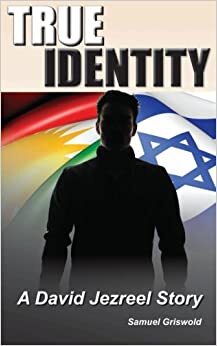 "Imagine being an undercover agent, deep in enemy territory, who's developed amnesia and lost all memory of who they are. That is my story, as told in the historical thriller novel, True Identity, by Samuel Griswold. You can read about me and learn if I'm able to prevent the assassination of the newly elected American President by subscribing to SamuelGriswold.substack.com. You'll get twice monthly excerpts from True Identity sent directly to your email inbox for FREE! If you want even more behind-the-scenes information and insights from author Samuel Griswold, you can become a Premium Subscriber for just $6 per month. Pay upfront for an entire year and get 50% off premium access to the author and characters of True Identity and future novels... that's a whole year for just $36!"
- Mysterious Stranger (and main character of True Identity)
April 6, 2022
Is Zelensky Today's Judah Maccabee?
Published on fightingfascism.substack.com on March 15, 2022
President Zelensky of Ukraine has been compared to Winston Churchill and King David, but should we now also compare him to Judah Maccabee?
Recent reports claim that Russian President Vladimir Putin is recruiting Syrians to fight in Ukraine. Apparently, he feels they are going to be more effective that the nearly 200,000 Russian troops he already has in Ukraine. Or, maybe he figures that hired terrorists will be more loyal and brutal than young Russian conscripts being asked to fight neighbors and fellow Slavs. So, I ask again, does this make Vlodomir Zelensky, Ukraine's Jewish president, today's Judah Maccabee? For those who don't know the story of Hanukkah, let me explain.
Putin is recruiting Syrians to fight in Ukraine...
Following the death of Alexander the Great, his empire was divided between his three top generals. Seleucus Nicator came to rule the area around Syria, Lebanon and Israel, founding the Seleucid Empire. One of his successors, King Antiochus IV, ascended the throne in 175 B.C. Fearing the rising power of Rome, he decided to pursue the conquest of Egypt, in the hope that by increasing the size and power of his kingdom, he might be able to resist Rome. This sounds very similar to Vladimir Putin trying to conquer Ukraine due to fear of an expanding NATO. Antiochus was also called a madman and Putin's current sanity has been questioned too.
Before Antiochus could invade Egypt, he would have to first unite the diverse cultural and religious elements of his kingdom in order to consolidate political support for his cause. Under Alexander, Hellenization had been inclusive and allowed for cultural variation. But, for Antiochus, it became forced assimilation and a form of totalitarian rule with him at its helm. His interests and those of the nation were seen as the same. One could argue that this was a form of proto-fascism. Again, we see similarities with Putin, who sees his interests as one with those of Russia and does not recognize Ukrainians as culturally, or historically, distinct from Russians.
Hellenization became a form of totalitarian rule...
To succeed in his plan of annexing Egypt, Antiochus knew he would need to assimilate and reduce the influence of the Jews in his realm. As neighbors with shared history, the Jews had a loyalty to Egypt and would potentially fight on their behalf. Marching his army into Jerusalem, he forced out the Jewish High Priest, Onias III, and installed his brother, Joshua, who was loyal to Antiochus. Upon becoming High Priest, himself, Joshua changed his name to the more Hellenized name of Jason and began implementing Antiochus' will. Jewish cultural and religious practices were subjugated to those of the Greek mainstream society around them. Jews were forced to conform to the totalitarian vision of Antiochus. The Seleucid king also got access to the temple treasury to help fund his war efforts.
Although restless, the population was not at rebellion stage until Antiochus decided to sell the role of High Priest to Menelaus, who was not in the hereditary line of Moses' brother, Aaron. As a condition of his appointment, Menelaus promised to raise tax revenue. When he failed, he was summoned to Syria to appear before the king. While he was away, Jason seized control of the priesthood and attempted to gain control of government. Upon failing, he fled, and Antiochus reinstated Menelaus, as High Priest, and slaughtered thousands of rebellious Jews. The people revolted again, after the king had returned home to Syria, and he came back with his army to suppress them. He also outlawed the practice of Judaism altogether. This led to a three year rebellion, led by Judah Maccabee (known as The Hammer), that drove Antiochus from the Kingdom of Judah and created the first independent Jewish state in more than 400 years.
Putin wants to subjugate Ukrainians to a dominant Russian culture...
Again, we see similarities with Vladimir Putin, who wishes to subjugate Ukrainians to a dominant Russian culture, including repressing their Catholic faith in favor of his preferred Russian Orthodox Church. It's Ukraine's Jewish President, Vlodomir Zelensky, of the Servant of the People Party, that is uniting his people and standing strong against Russian aggression.
Some might argue with comparing Zelensky to Judah Maccabee. He is not just a hero to Jews, but a modern day hero of humanity. But, Jews everywhere can and should take pride that it is one of our own that is leading the battle for freedom against the onslaught of fascist totalitarianism.
Samuel Griswold
President Zelensky of Ukraine has been compared to Winston Churchill and King David, but should we now also compare him to Judah Maccabee?
Recent reports claim that Russian President Vladimir Putin is recruiting Syrians to fight in Ukraine. Apparently, he feels they are going to be more effective that the nearly 200,000 Russian troops he already has in Ukraine. Or, maybe he figures that hired terrorists will be more loyal and brutal than young Russian conscripts being asked to fight neighbors and fellow Slavs. So, I ask again, does this make Vlodomir Zelensky, Ukraine's Jewish president, today's Judah Maccabee? For those who don't know the story of Hanukkah, let me explain.
Putin is recruiting Syrians to fight in Ukraine...
Following the death of Alexander the Great, his empire was divided between his three top generals. Seleucus Nicator came to rule the area around Syria, Lebanon and Israel, founding the Seleucid Empire. One of his successors, King Antiochus IV, ascended the throne in 175 B.C. Fearing the rising power of Rome, he decided to pursue the conquest of Egypt, in the hope that by increasing the size and power of his kingdom, he might be able to resist Rome. This sounds very similar to Vladimir Putin trying to conquer Ukraine due to fear of an expanding NATO. Antiochus was also called a madman and Putin's current sanity has been questioned too.
Before Antiochus could invade Egypt, he would have to first unite the diverse cultural and religious elements of his kingdom in order to consolidate political support for his cause. Under Alexander, Hellenization had been inclusive and allowed for cultural variation. But, for Antiochus, it became forced assimilation and a form of totalitarian rule with him at its helm. His interests and those of the nation were seen as the same. One could argue that this was a form of proto-fascism. Again, we see similarities with Putin, who sees his interests as one with those of Russia and does not recognize Ukrainians as culturally, or historically, distinct from Russians.
Hellenization became a form of totalitarian rule...
To succeed in his plan of annexing Egypt, Antiochus knew he would need to assimilate and reduce the influence of the Jews in his realm. As neighbors with shared history, the Jews had a loyalty to Egypt and would potentially fight on their behalf. Marching his army into Jerusalem, he forced out the Jewish High Priest, Onias III, and installed his brother, Joshua, who was loyal to Antiochus. Upon becoming High Priest, himself, Joshua changed his name to the more Hellenized name of Jason and began implementing Antiochus' will. Jewish cultural and religious practices were subjugated to those of the Greek mainstream society around them. Jews were forced to conform to the totalitarian vision of Antiochus. The Seleucid king also got access to the temple treasury to help fund his war efforts.
Although restless, the population was not at rebellion stage until Antiochus decided to sell the role of High Priest to Menelaus, who was not in the hereditary line of Moses' brother, Aaron. As a condition of his appointment, Menelaus promised to raise tax revenue. When he failed, he was summoned to Syria to appear before the king. While he was away, Jason seized control of the priesthood and attempted to gain control of government. Upon failing, he fled, and Antiochus reinstated Menelaus, as High Priest, and slaughtered thousands of rebellious Jews. The people revolted again, after the king had returned home to Syria, and he came back with his army to suppress them. He also outlawed the practice of Judaism altogether. This led to a three year rebellion, led by Judah Maccabee (known as The Hammer), that drove Antiochus from the Kingdom of Judah and created the first independent Jewish state in more than 400 years.
Putin wants to subjugate Ukrainians to a dominant Russian culture...
Again, we see similarities with Vladimir Putin, who wishes to subjugate Ukrainians to a dominant Russian culture, including repressing their Catholic faith in favor of his preferred Russian Orthodox Church. It's Ukraine's Jewish President, Vlodomir Zelensky, of the Servant of the People Party, that is uniting his people and standing strong against Russian aggression.
Some might argue with comparing Zelensky to Judah Maccabee. He is not just a hero to Jews, but a modern day hero of humanity. But, Jews everywhere can and should take pride that it is one of our own that is leading the battle for freedom against the onslaught of fascist totalitarianism.
Samuel Griswold
November 11, 2017
November 2017... Jewish Book Carnival
As a Jewish author and blogger, I am proud to host the November Jewish Book Carnival ! Posted the 15th of each month, the Carnival brings together those who blog about Jewish books and authors in a monthly round up of literary links. Please read, comment and share each of this month's submissions and thanks to all who contributed!
On her blog, My Machberet, Erika Dreifus routinely curates pre-Shabbat Jewish literary links. Here’s one recent batch.
Chava Pinchuck paid a visit to Gefen Publishers in Jerusalem last month.
Over on the Jewish Book Review , Rivka Levy finds out about a new online magazine that's hoping to create a new forum to help 'out of the orthobox' orthodox Jewish authors to find their audience - and vice versa.
Jama Rattigan reviews of The Knish War on Rivington Street by Joanne Oppenheim and Jon Davis.
Heidi Rabinowitz announces the Grand Finale episode of The Book of Life Podcast. Be a part of it by calling in with your comments - your voice may end up on the show! And in the meantime, enjoy this podcast episode about the Yiddish Book Center.
Ann Koffsky will host the December 2017 Jewish Book Carnival. Be sure to check in on December 15th and thanks for supporting Jewish authors and literacy!
July 3, 2017
Book Review: The Golem and the Jinni
The Golem and the Jinni: A Novel (P.S.)[image error]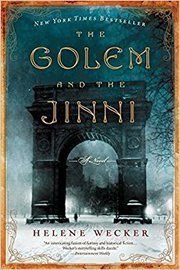 I first discovered The Golem and the Jinni by Helene Wecker when searching online for Jewish Fantasy books similar to my own spiritual thriller, True Identity. Upon realizing this was her first novel, I was also anxious to read the writings of another new author.
Although the main characters are supernatural beings, The Golem and the Jinni is not a book about fantasy realms, or mythological creatures. It is not a Jewish Lord of the Rings or Narnia-like novel. Set in 1899 Manhattan, it focuses upon being true to one's nature and finding one's place in a new environment. it is about personal discovery and the need to have friends to open up to for support.
Chava is a golem, a creature of earth, created by an elderly Kabbalist, who has spent his life learning dark mystical secrets in an effort to evade death and the consequences of sinful choices. When the master for whom she was created unexpectedly dies during their long cross-Atlantic journey from Europe to New York City, she finds herself without direction, or purpose, in a strange new land. Without a master to serve, she finds she has a telepathic link with anyone nearby and must learn to resist the urge to fulfill their various wishes and desires. Controlling her nature becomes her focus. Afraid of her own strength and uniqueness, she fears personal responsibility and it's consequences. She thinks not of herself, but of the needs of others.
Achmed is a jinni of the Syrian desert who finds himself in the shop of a New York City metal smith who is repairing the bottle that has imprisoned him for the last thousand years. Free from the bottle, he is still held captive by an iron wrist band that keeps him in human form and allows only minimal use of his supernatural abilities. He longs for the freedom he had previous to his captivity, a life without concern for the consequences his actions have on others.
A late-night encounter on a New York City street brings these two opposite beings together. Each of them is instantly aware that the other one, like themselves, is different from the humans that surround them. Able to be honest and share their deepest secrets with each other, they become best friends who both grow from the relationship. Chava learns to be more open and free in her behavior, and Achmed realizes the impact of his choices upon others. Together, they overcome many challenges including a final showdown with one who wishes to enslave both of them.
I would highly recommend reading The Golem and the Jinni and consider it one of the best novels that I have read in a long time, perhaps ever. It amazes me that this is Helene Wecker's first novel, as it is very well written with deep characters, detailed settings and provocative contemplation of faith, relationships and personal identity. I find it interesting that she chose to place the jinni in a Lebanese/Syrian Christian neighborhood and not a Muslim one. I suspect her intent was to focus on the personal growth of her characters while avoiding the political controversies that could come from ones of Muslim and Jewish faith. The golem is, of course, set in a Jewish neighborhood and experiences a broad array of faith perspectives from the ultra-Orthodox to the extreme secular without ever claiming any one of them as her own. I'm anxious to see what Helene Wecker writes next and count myself among her fans.
Samuel Griswold
Author of the spiritual thriller, True Identity
True Identity[image error]
I first discovered The Golem and the Jinni by Helene Wecker when searching online for Jewish Fantasy books similar to my own spiritual thriller, True Identity. Upon realizing this was her first novel, I was also anxious to read the writings of another new author.Although the main characters are supernatural beings, The Golem and the Jinni is not a book about fantasy realms, or mythological creatures. It is not a Jewish Lord of the Rings or Narnia-like novel. Set in 1899 Manhattan, it focuses upon being true to one's nature and finding one's place in a new environment. it is about personal discovery and the need to have friends to open up to for support.
Chava is a golem, a creature of earth, created by an elderly Kabbalist, who has spent his life learning dark mystical secrets in an effort to evade death and the consequences of sinful choices. When the master for whom she was created unexpectedly dies during their long cross-Atlantic journey from Europe to New York City, she finds herself without direction, or purpose, in a strange new land. Without a master to serve, she finds she has a telepathic link with anyone nearby and must learn to resist the urge to fulfill their various wishes and desires. Controlling her nature becomes her focus. Afraid of her own strength and uniqueness, she fears personal responsibility and it's consequences. She thinks not of herself, but of the needs of others.
Achmed is a jinni of the Syrian desert who finds himself in the shop of a New York City metal smith who is repairing the bottle that has imprisoned him for the last thousand years. Free from the bottle, he is still held captive by an iron wrist band that keeps him in human form and allows only minimal use of his supernatural abilities. He longs for the freedom he had previous to his captivity, a life without concern for the consequences his actions have on others.
A late-night encounter on a New York City street brings these two opposite beings together. Each of them is instantly aware that the other one, like themselves, is different from the humans that surround them. Able to be honest and share their deepest secrets with each other, they become best friends who both grow from the relationship. Chava learns to be more open and free in her behavior, and Achmed realizes the impact of his choices upon others. Together, they overcome many challenges including a final showdown with one who wishes to enslave both of them.
I would highly recommend reading The Golem and the Jinni and consider it one of the best novels that I have read in a long time, perhaps ever. It amazes me that this is Helene Wecker's first novel, as it is very well written with deep characters, detailed settings and provocative contemplation of faith, relationships and personal identity. I find it interesting that she chose to place the jinni in a Lebanese/Syrian Christian neighborhood and not a Muslim one. I suspect her intent was to focus on the personal growth of her characters while avoiding the political controversies that could come from ones of Muslim and Jewish faith. The golem is, of course, set in a Jewish neighborhood and experiences a broad array of faith perspectives from the ultra-Orthodox to the extreme secular without ever claiming any one of them as her own. I'm anxious to see what Helene Wecker writes next and count myself among her fans.
Samuel Griswold
Author of the spiritual thriller, True Identity
True Identity[image error]
June 13, 2017
June 2017... Jewish Book Carnival
 As a Jewish author and blogger, I am proud to host the February Jewish Book Carnival! Posted the 15th of each month, the Carnival brings together those who blog about Jewish books and authors in a monthly round up of literary links. Please read, comment and share each of this month's submissions and thanks to all who contributed!
Heidi Rabinowitz interviews author Fawzia Gilani-Williams about her cross cultural picture book, Yaffa and Fatima, Shalom Salaam.
The newest episode of The Book of Life Podcast , hosted by librarian Heidi Rabinowitz, features an interview with the author and publisher of Almost a Minyan , a picture book that is traditional and groundbreaking at the same time, depicting an egalitarian, multiracial, observant Jewish community.
The Whole Megillah interviews Marisa Scheinfeld about her photography and book, The Borscht Belt: Revisiting the Remains of America's Jewish Vacationland.
A beautiful Jerusalem evening of stories shared by Etgar Keret and Maira Kalman was this month's highlight at Life Is Like a Library.
On My Machberet , Erika Dreifus writes about Love Nailed to the Doorpost , the latest collection from poet Richard Chess.
Author Samuel Griswold reviews the book Jewish Spiritual Parenting: Wisdom, Activities, Rituals and Prayers for
Raising Children with Spiritual Balance and Emotional Wholeness by Rabbi Paul Kipnes and Michelle November.
Erika Dreifus will host the July 2017 Jewish Book Carnival at My Machberet . Be sure to check in on July 15th and thanks for supporting Jewish authors and literacy!
June 11, 2017
Jewish Spiritual Parenting, a book review....
Jewish Spiritual Parenting: Wisdom, Activities, Rituals and Prayers for Raising Children with Spiritual Balance and Emotional Wholeness[image error]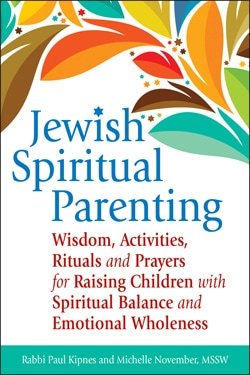 Judaism is all about making ordinary moments holy and giving them meaning. Ever since I can remember, my parents taught me that our only mission in life is to leave this world a little better than we found it. I later learned this is Tikkun Olam, or Repair of the World, a cornerstone of Jewish belief. Since becoming a father myself, it has become a primary focus of mine to pass on my Jewish heritage to my son, so he may reach is own spiritual understanding of our faith and pass this legacy on to future generations. And so, I was very excited to discover the book
Jewish Spiritual Parenting
by Rabbi Paul Kipnes and his wife, Michelle November.
Judaism is all about making ordinary moments holy and giving them meaning. Ever since I can remember, my parents taught me that our only mission in life is to leave this world a little better than we found it. I later learned this is Tikkun Olam, or Repair of the World, a cornerstone of Jewish belief. Since becoming a father myself, it has become a primary focus of mine to pass on my Jewish heritage to my son, so he may reach is own spiritual understanding of our faith and pass this legacy on to future generations. And so, I was very excited to discover the book
Jewish Spiritual Parenting
by Rabbi Paul Kipnes and his wife, Michelle November.
Jewish Spiritual Parenting: Wisdom, Activities, Rituals and Prayers for Raising Children with Spiritual Balance and Emotional Wholeness is all about teaching our children how to find the sacred in everyday life through ageless Jewish wisdom that is as relevant today, as it was for our ancestors (maybe more!). Jewish concepts such as Tzimtzum (Divine expansion and contraction), L'dor Vador (from generation to generation), Shutafut (partnership) and B'tzelem Elohim (in the image of God) are creatively interpreted as guides for parents to instill a deep and meaningful Jewish identity in their children that will hopefully lead to their being better citizens of this world.
An aspect of this book that I find valuable is the fact that the authors draw upon their experiences as a rabbi and Jewish educators, but also as parents themselves. Each lesson incorporates not only Jewish philosophy, but related stories of how they incorporated this wisdom into the raising of their own children. Thus, readers are able to see first-hand examples for better understanding.
The book begins with a discussion of the many ways we, as Jews, define God. One quickly learns that there are as many unique ways of understanding God as there are Jews in the world, and all are compatible with Judaism itself. Through open discussion between parents and children, they encourage a spiritual sharing of ideas about God that lead to greater clarity and understanding.
Drawing upon the teachings of Maimonides about friendship, readers learn how to use Shutafut (partnership) as a parenting strategy and how we can learn from the failures of our ancestors (as told in Torah and Midrash).
Tzimtzum is the Kabbalistic concept of how the Ein Sof, or limitless Divinity, contracted itself to make a space for creation. Rabbi and Michelle Kipnes use this philosophy to show parents when they should reach out and when they should hold back to allow their children space to grow.
It was Elie Wiesel who said that "Without memory, there is no culture. Without memory, there would be no civilization, no society, no future." This is the Jewish concept of L'dor Vador, from generation to generation. In this lesson, the authors encourage parents to build relationships between their children and older generations through sacred storytelling and dedicated times for grandparents and elders to share their life experiences.
B'tzelem Elohim is the teaching that we are all created in the image of God. In this lesson, we learn how to celebrate the uniqueness of each of our children, so that we can build a rapport and guide each of them in ways that are better suited to their understanding and personal growth.
These are just a few of the many lessons included in Jewish Spiritual Parenting . I would definitely recommend this book not only for prospective and new parents, but also for those parents with older children who want to transmit and teach the values of their Jewish faith and heritage in a way that is meaningful and can be useful for everyday life and growth. Ultimately, we can only be guides for our children on their journey through life. As Anne Frank said, "Parents can only give good advice, or put them on the right paths, but the final forming of a person's character lies in their own hands."
Samuel Griswold
Author of Spiritual Thriller, True Identity
True Identity[image error]
Judaism is all about making ordinary moments holy and giving them meaning. Ever since I can remember, my parents taught me that our only mission in life is to leave this world a little better than we found it. I later learned this is Tikkun Olam, or Repair of the World, a cornerstone of Jewish belief. Since becoming a father myself, it has become a primary focus of mine to pass on my Jewish heritage to my son, so he may reach is own spiritual understanding of our faith and pass this legacy on to future generations. And so, I was very excited to discover the book
Jewish Spiritual Parenting
by Rabbi Paul Kipnes and his wife, Michelle November.Jewish Spiritual Parenting: Wisdom, Activities, Rituals and Prayers for Raising Children with Spiritual Balance and Emotional Wholeness is all about teaching our children how to find the sacred in everyday life through ageless Jewish wisdom that is as relevant today, as it was for our ancestors (maybe more!). Jewish concepts such as Tzimtzum (Divine expansion and contraction), L'dor Vador (from generation to generation), Shutafut (partnership) and B'tzelem Elohim (in the image of God) are creatively interpreted as guides for parents to instill a deep and meaningful Jewish identity in their children that will hopefully lead to their being better citizens of this world.
An aspect of this book that I find valuable is the fact that the authors draw upon their experiences as a rabbi and Jewish educators, but also as parents themselves. Each lesson incorporates not only Jewish philosophy, but related stories of how they incorporated this wisdom into the raising of their own children. Thus, readers are able to see first-hand examples for better understanding.
The book begins with a discussion of the many ways we, as Jews, define God. One quickly learns that there are as many unique ways of understanding God as there are Jews in the world, and all are compatible with Judaism itself. Through open discussion between parents and children, they encourage a spiritual sharing of ideas about God that lead to greater clarity and understanding.
Drawing upon the teachings of Maimonides about friendship, readers learn how to use Shutafut (partnership) as a parenting strategy and how we can learn from the failures of our ancestors (as told in Torah and Midrash).
Tzimtzum is the Kabbalistic concept of how the Ein Sof, or limitless Divinity, contracted itself to make a space for creation. Rabbi and Michelle Kipnes use this philosophy to show parents when they should reach out and when they should hold back to allow their children space to grow.
It was Elie Wiesel who said that "Without memory, there is no culture. Without memory, there would be no civilization, no society, no future." This is the Jewish concept of L'dor Vador, from generation to generation. In this lesson, the authors encourage parents to build relationships between their children and older generations through sacred storytelling and dedicated times for grandparents and elders to share their life experiences.
B'tzelem Elohim is the teaching that we are all created in the image of God. In this lesson, we learn how to celebrate the uniqueness of each of our children, so that we can build a rapport and guide each of them in ways that are better suited to their understanding and personal growth.
These are just a few of the many lessons included in Jewish Spiritual Parenting . I would definitely recommend this book not only for prospective and new parents, but also for those parents with older children who want to transmit and teach the values of their Jewish faith and heritage in a way that is meaningful and can be useful for everyday life and growth. Ultimately, we can only be guides for our children on their journey through life. As Anne Frank said, "Parents can only give good advice, or put them on the right paths, but the final forming of a person's character lies in their own hands."
Samuel Griswold
Author of Spiritual Thriller, True Identity
True Identity[image error]
April 5, 2017
Book Review: The Book of Names by Gregory/Tintori
The Book of Names: A Novel[image error]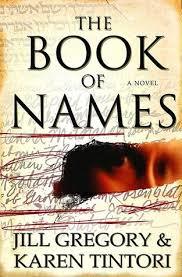 I first discovered The Book of Names by Jill Gregory and Karen Tintori when searching for novels similar to my own "True Identity" ... spiritual, suspense thrillers with a Kabbalistic, Jewish theme that I could compare and learn from to become a better author myself.
The Book of Names centers on the Talmudic concept of the Lamed Vovniks, or the thirty-six righteous individuals who see the Divine Presence with a clear vision and whose presence prevents the world's destruction. The identity of these pure souls is a secret, as they themselves are unaware of their special status. But then archaeologists discover the remnants of the Book of Adam, a manuscript said to be written by the first man himself and to contain the names of all creatures in every generation. Among those names are those of the Lamed Vovniks... past, present and future.
The Gnoseos are a secret cult with members from many nations who see the world as evil and its destruction as the way for them to escape its clutches and ascend to the realm of spirit. For them, God is a prison guard and all forms of evil acts are justified to destroy his/her creation and attain their goal. Through the use of assassins known as Dark Angels, they systematically kill each of the Lamed Vovniks in order to remove their protective shield over creation. Standing in their way are a group of rabbis, the Mossad and their young female agent, and a political science professor from Georgetown.
David Shephard was raised Jewish, but hasn't seen the inside of a synagogue since his Bar Mitzvah. A freak childhood accident almost kills him. Since then, he's been hearing random names in his mind and writing them down in a journal. Little does he know that knowledge of these names will one day save the world.
Evaluation:
As a Jewish author and student of Kabbalah, I was captivated by the promise of this story. It was a fast-paced read with lots of action. But, the detailed descriptions of Kabbalistic principles interspersed throughout the text tended to keep me from being totally immersed in the novel, a hazard I understand, as it's a problem that I've had to conquer in my own writings. I also found some discrepancies in the plot premise itself. For example, the Gnoseos sought the destruction of our world in order to ascend to a spiritual existence, yet they kidnapped young women in order to repopulate their new world. And, at times, the descriptions of violence seemed shallow and repetitive.
Overall, I found The Book of Names to be a fun read and informative for those less knowledgeable of Jewish mystical belief and practice. I'd give it 3 out of 5 stars and would definitely recommend you give it a chance. The Book of Names: A Novel[image error]
I first discovered The Book of Names by Jill Gregory and Karen Tintori when searching for novels similar to my own "True Identity" ... spiritual, suspense thrillers with a Kabbalistic, Jewish theme that I could compare and learn from to become a better author myself.The Book of Names centers on the Talmudic concept of the Lamed Vovniks, or the thirty-six righteous individuals who see the Divine Presence with a clear vision and whose presence prevents the world's destruction. The identity of these pure souls is a secret, as they themselves are unaware of their special status. But then archaeologists discover the remnants of the Book of Adam, a manuscript said to be written by the first man himself and to contain the names of all creatures in every generation. Among those names are those of the Lamed Vovniks... past, present and future.
The Gnoseos are a secret cult with members from many nations who see the world as evil and its destruction as the way for them to escape its clutches and ascend to the realm of spirit. For them, God is a prison guard and all forms of evil acts are justified to destroy his/her creation and attain their goal. Through the use of assassins known as Dark Angels, they systematically kill each of the Lamed Vovniks in order to remove their protective shield over creation. Standing in their way are a group of rabbis, the Mossad and their young female agent, and a political science professor from Georgetown.
David Shephard was raised Jewish, but hasn't seen the inside of a synagogue since his Bar Mitzvah. A freak childhood accident almost kills him. Since then, he's been hearing random names in his mind and writing them down in a journal. Little does he know that knowledge of these names will one day save the world.
Evaluation:
As a Jewish author and student of Kabbalah, I was captivated by the promise of this story. It was a fast-paced read with lots of action. But, the detailed descriptions of Kabbalistic principles interspersed throughout the text tended to keep me from being totally immersed in the novel, a hazard I understand, as it's a problem that I've had to conquer in my own writings. I also found some discrepancies in the plot premise itself. For example, the Gnoseos sought the destruction of our world in order to ascend to a spiritual existence, yet they kidnapped young women in order to repopulate their new world. And, at times, the descriptions of violence seemed shallow and repetitive.
Overall, I found The Book of Names to be a fun read and informative for those less knowledgeable of Jewish mystical belief and practice. I'd give it 3 out of 5 stars and would definitely recommend you give it a chance. The Book of Names: A Novel[image error]
February 13, 2017
February 2017... Jewish Book Carnival
As a Jewish author and blogger, I am proud to host the February Jewish Book Carnival! Posted the 15th of each month, the Carnival brings together those who blog about Jewish books and authors in a monthly round up of literary links. Please read, comment and share each of this month's submissions and thanks to all who contributed!
In January, Jill at Rhapsody in Books reviewed the book Unkosher Slaughter by Jane Berman, who has lived in Israel since 1969. This engrossing crime story takes place in a fictional Orthodox Israeli kibbutz, Kerem El, and begins with the murder of Rebbe Elijah Lachmann, the spiritual leader of the kibbutz.
The Book of Life Podcast features an interview by Canadian Correspondent Anne Dublin with Eva Wiseman, author of the historical/paranormal teen romance Another Me.
Winter is a good season for both Jewish books and knitting, and at "Life Is Like a Library," Chava Pinchuck looks at both here....
At The Whole Megillah , Barbara Krasner interviews Susan Lynn Meyer, author of Skating with the Statue of Liberty, the sequel to the 2011 Sydney Taylor Honor Book for Older Readers winner, Black Radishes.
Author’s Notebook | Susan Lynn Meyer, Skating with the Statue of Liberty
Deborah Kalb interviews a variety of authors on her blog, deborahkalbbooks.blogspot.com. Here's a link to a recent interview she did with Adrienne Ross Scanlan on her new book, Turning Homeward.
The Fig Tree Books blog suggests "Five Free and Easy Ways to Support Jewish Literature"—and asks for your additional recommendations.
It's not technically on Erika Dreifus's My Machberet blog , but on a page of her website, Erika has updated a list of awards and prizes for Jewish literature (a compilation that now includes an exciting new fiction prize from the Association of Jewish Libraries).
The 2017 Sydney Taylor Book Award Blog Tour brought us interviews with gold and silver medal winning authors and illustrators. The Association of Jewish Libraries blog, People of the Books , has links to all the interviews here....
Rabbi Deborah Miller of BooksandBlintzes.com reviewed the children's book, Almost A Minyan by Lori S. Kline and Susan Simon.
And Samuel Griswold tells us about the Largest Synagogue Library in the Southeast....
Barbara Krasner will host the March 2017 Jewish Book Carnival at The Whole Megillah. Be sure to check in on March 15th and thanks for supporting Jewish authors and literacy!
SamuelGriswold.org
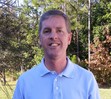
This is my official author blog. Here you will find updates on books, research and topics of interest to me and my readers. Please check in often and enjoy!
- Samuel Griswold's profile
- 1 follower

