
Nicole Hardy's Blog
May 25, 2014
Introducing Isla Mcketta and Rebecca Bridge, two Seattle writers...

Introducing Isla Mcketta and Rebecca Bridge, two Seattle writers who, together, have written a fabulous book of writing prompts called Clear Out the Static in Your Attic. Also, if you meet Isla while she’s wearing a strapless dress, like I did, you may be consumed with face-punching envy for her creamy, perfect skin. If writers cared about superficial things, which we don’t, because we’re SERIOUS.
Isla’s double short:
Micheline Aharonian Marcom encouraged me to tell my inner editor to go take a break sometimes—there would be plenty of time to invite him back later. She was right. Trusting that my editing self will always come back when I need him helps me loosen up when necessary and edit the hell out of the work when it’s time for that.
And Rebecca says,
Maureen Seaton told me once that when you find yourself unable to find anything to put down on the page, then get to the canvas or the musical instrument or whatever other creative outlet you have. The process of actively creating will fill your tank back up. Like most other things in life, she was right.
Find out more about Isla’s new novel Polska, 1994 and follow them both on Twitter @islaisreading and @rebeccabridge for insight, humor, and (please, Rebecca) advice about where to buy awesome tights.


April 26, 2014
Karen Finneyfrock, poet and author of the soon-to-be-released YA...
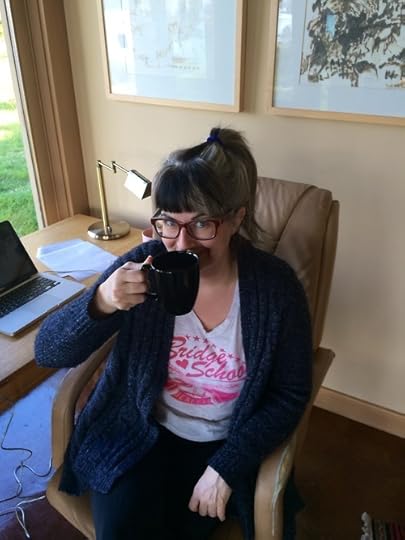
Karen Finneyfrock, poet and author of the soon-to-be-released YA novel Starbird Murphy and the World Outside (which just received a starred review from Publisher’s Weekly!) reminded me this weekend, while we were away on a retreat:
"Remember, joy is part of the process."
Then an otter galloped by.
Read more about Karen’s poetry and novels at karenfinneyfrock.com
April 22, 2014
Philip Shaw is king of doing the day job with gusto as well as...
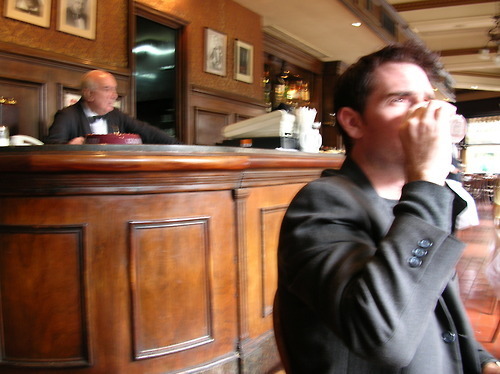
Philip Shaw is king of doing the day job with gusto as well as managing the most (intimidatingly) dedicated daily writing practice I’ve maybe ever seen. Sometimes it makes me want to punch his face.
I was handed a belief that any act of creating relies on processes that can universally be applied. The creator of a thing, whether it be house // bridge // pizza // cocktail // double shot of espresso // story or even an invention yet unheard of, must break down the variables that influence the creation of that said thing. The creator must determine, for themselves (and there is creativity in even this process of process), what variables can be influenced and what variables must simply be accepted as they are. By identifying the choices they make in influencing or accepting the variables at play, they craft the outcome. That was it: The rules I was given.
My epiphanic moment of inspiration, that simultaneously blew my mind and dashed any hope I had for mastery, was delivered by an artist that I apprenticed with right out of school. He knew the same rules. Talked about them in the same way I was taught to think about them. We had to use the rules everyday to make things that would allow us to get paid. It was my job to control a lot of the variables, at least the ones that he could trust me with. Then one day he told me that while I was taking care of the things that needed to be considered for our work, he was acting inside himself to attack what he thought were the most important variables of all. Ones that would make what we did pretty great or just okay. He called them the Variables of Imagined Truths and he broke them down into: The Imagined Truth of the Creator, the Imagined Truth of the Creation, and the Imagined Truth of the Audience.
Since then I have heard a similar way of thinking (perhaps just less poetically described) scratched at in writing workshops, where we discuss knowing what you want to say, knowing your characters, and knowing your readers. Yet, my mind is still blown by his descriptions and so I don’t quite see those processes as the same thing.
I am still obsessed with that way of looking at things that he gave me twenty years ago. For me, this idea that I must determine what the person I am today wants to make; and determine what my characters want to happen to them (even if they are thwarted in their desires); and then influence what an imagined audience could use of my work to add to their life… that’s what keeps me going.
Watch for Philip’s work via Red Hen Press. He won their poetry contest. Also, he titles his photos cleverly. This one is PSpresso. Get it? Mine, on the other hand was called nicolecoffeeface. That’s why I don’t do what he does, for a living.
April 19, 2014
This is Daniel Jones, famed and beloved editor of the New York...
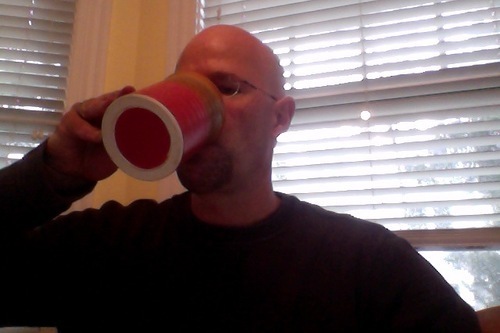
This is Daniel Jones, famed and beloved editor of the New York Times Modern Love column, author of the newly released Love, Illuminated which reveals what he’s learned from reading ten years worth of peoples’ traumatizing and hilarious love-related essays.
The double short Dan’s passing on?
"Writer’s block is not about having nothing to say. It’s about being too impatient to take the time you need to say it well."
A very special thanks to Dan for finding me in the slush pile, and for risking life and limb while ACTUALLY DRINKING COFFEE in this photo. Commitment, people.
April 15, 2014
Meet Steve Barker, co-founder of Seattle’s rowdiest, most...
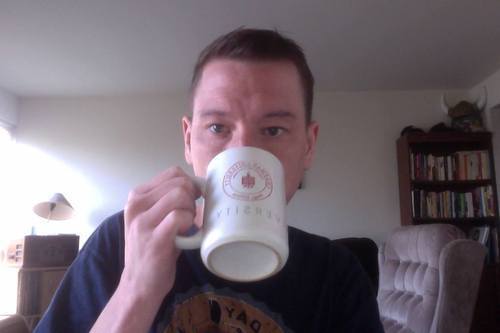
Meet Steve Barker, co-founder of Seattle’s rowdiest, most star-studded free reading series Cheap Wine & Poetry and Cheap Beer & Prose.
I sort of cheated on this onet—Steve posted this Chuck Klosterman bit on his FB page, and I asked if I could steal it for my blog.
"Sometimes writing is like talking to a stranger who’s exactly like yourself in every possible way, only to realize that this stranger is boring as shit."
It’s funny because it’s true. Thanks, Steve, for letting me hijack your FB moment. That’s what friends are for.
Did you know Steve is also the host of Ordinary Madness, a podcast which features writers, rappers, singer-songwriters, bloggers, arts organizers and a bajillion other cool people and things.
In closing, I’d like to present to you Steve’s most recent essay, What Can Brown Do for Me? linked here for your reading pleasure.
Meet Krista Svalbonas, visual artist and dance party queen....

Meet Krista Svalbonas, visual artist and dance party queen.
Krista’s Double Short is a double shot:
1. "To live a creative life, we must lose our fear of being wrong." Joseph Chilton Pearce
2. “Whether you succeed or not is irrelevant, there is no such thing. Making your unknown known is the important thing.” Georgia O’Keeffe
New Yorkers, and those of you nearby, Krista’s having a solo show June 14th —July 6th at Matteawan Gallery; pass it on.
April 14, 2014
This is Katie Kate Voss, who was one of my former high school...

This is Katie Kate Voss, who was one of my former high school students. (Whoa.) I love her now even more than I loved her then—she even makes a cameo in the last scene of my memoir. Kate has recently gone all in on trying to make a go of music full time—a move I wholeheartedly applaud.
Kate’s Double Short:
After countless years of education with countless teachers and even a career in education for a decade, I got the best advice from an 8 year-old student.
I grew up playing the piano and any kid who grew up playing an instrument is told “practice makes perfect.” This is the worst advice I’ve ever heard! But I didn’t know that at the time.
When we are young, we don’t know that “perfect” is an abstract, unattainable fantasy that we will chase for our entire careers while pumping out beautiful songs or imagery or poems and in the meantime think all our art and our voices are worthless because they are not “PERFECT”.
When you combine perceived societal expectations and your own impossible standards of perfection you’re left with a self-loathing artist who leads a miserable existence of never measuring up.
So one day, as a fresh, bright-eyed music teacher at the ripe old age of 23, I was giving my “you should practice more” speech (in the most fun and encouraging way possible) when I found myself regurgitating that horrible advice from my childhood: “You know, practice makes perfect,” I said, with mild enthusiasm and only slightly believing the words coming out of my mouth.
And she said the single best thing I have ever heard: “Well, I like to say 'practice makes progress'”.
My jaw dropped. My mind was blown. That’s it! That’s the key! Life is not a destination, it’s a journey! Practice doesn’t make perfect, it makes progress!!! That’s why you practice!!!!!
From that moment on, I approached the “you should practice more” speech very differently with my students. And approached my own practices differently. From my vocals to piano to mantras to aerobics. I re-learned that whatever you choose to do in life, you will get better at it by practicing it.
Kindness, jump-roping, bee keeping, basket weaving…Practice makes progress. Thanks for the lesson, wise 8 year old student.
Dear Kate—all I want in life is to do some jump roping with you. And you, readers, if you’d like to hear Kate’s angelic/sultry voice—go to katevoss.com to check out her performance schedule or click here for some Sweet Georgia Brown.
This is Katie I mean KATE Voss, who was one of my former high...
This is Katie I mean KATE Voss, who was one of my former high school students. (Whoa.) I love her now even more than I loved her then—she even makes a cameo in the last scene of my memoir. Kate has recently gone all in on trying to make a go of music full time—a move I wholeheartedly applaud.
Kate’s Double Short:
After countless years of education with countless teachers and even a career in education for a decade, I got the best advice from an 8 year-old student.
I grew up playing the piano and any kid who grew up playing an instrument is told “practice makes perfect.” This is the worst advice I’ve ever heard! But I didn’t know that at the time.
When we are young, we don’t know that “perfect” is an abstract, unattainable fantasy that we will chase for our entire careers while pumping out beautiful songs or imagery or poems and in the meantime think all our art and our voices are worthless because they are not “PERFECT”.
When you combine perceived societal expectations and your own impossible standards of perfection you’re left with a self-loathing artist who leads a miserable existence of never measuring up.
So one day, as a fresh, bright-eyed music teacher at the ripe old age of 23, I was giving my “you should practice more” speech (in the most fun and encouraging way possible) when I found myself regurgitating that horrible advice from my childhood: “You know, practice makes perfect,” I said, with mild enthusiasm and only slightly believing the words coming out of my mouth.
And she said the single best thing I have ever heard: “Well, I like to say 'practice makes progress'”.
My jaw dropped. My mind was blown. That’s it! That’s the key! Life is not a destination, it’s a journey! Practice doesn’t make perfect, it makes progress!!! That’s why you practice!!!!!
From that moment on, I approached the “you should practice more” speech very differently with my students. And approached my own practices differently. From my vocals to piano to mantras to aerobics. I re-learned that whatever you choose to do in life, you will get better at it by practicing it.
Kindness, jump-roping, bee keeping, basket weaving…Practice makes progress. Thanks for the lesson, wise 8 year old student.
Dear Kate—all I want in life is to do some jump roping with you. And you, readers, if you’d like to hear Kate’s angelic/sultry voice—go to katevoss.com to check out her performance schedule or click here for some Sweet Georgia Brown.
Meet Krista Bremer, who just published this essay in NYT...

Meet Krista Bremer, who just published this essay in NYT Magazine’s Lives column, and whose memoir My Accidental Jihad is to be released in fewer than ten days! Also, she’ll be in Seattle, at Town Hall, on Wednesday.
Krista’s double short:
"writing may not make you a living, but it will definitely make you a life."
In my experience the most valuable compensation for writing is not financial. It’s making meaningful connections with strangers through the written word, cultivating friendships with people who share your passion, discovering meaning in your experience through writing about it - and even fine-tuning your powers of observation for the sake of your craft. Over time, writing has changed my life from the inside out - and brought me far greater rewards than a simple paycheck could provide.
Special thanks to Vermont Studio Center for bringing Krista and me together—we were mere doors away, simultanously FREAKING OUT in our studios, worried about deadlines, and getting this or that scene right, and trying to interpret the mysteries hidden in our editors’ comments. Can’t wait to see her on my bookshelf.
April 12, 2014
Martha Silano, author of the recently released poetry collection...
Martha Silano, author of the recently released poetry collection Reckless Lovely (one of the best titles I’ve ever heard, like, ever) offers a triple-short Double Short:
“Lower your expectations” – William Stafford
I hesitate to pass on this advice because it might easily be misinterpreted. Here’s the thing: the lowering Stafford refers to should happen during one (and only one) crucial stage of the writing process: when you first sit down to write. Many hours of painstaking, nit-picky high-expectations will follow your initial impulse to put words onto the page. When you whip out your notebook and start scribbling away, banish the thought that what comes sailing out of your pen will be New Yorker quality. Expect the first draft to suck. Embrace the sloppiness, the clichés, the weak similes, think of your bad choices as placeholders for more accurate/interesting words you will find later. Let yourself write a shitty first draft. Often the best lines emerge from the first-go garble of letting go. No one is looking over your shoulder, least of all the editor at The Atlantic. Go ahead: write badly, reminding yourself you will fix it up later, after you’ve kidded yourself into believing you’ve written a decent first draft.
Check out Martha’s blog, Blue Positive, and/or follow her on Twitter: @marthasilano


