
Lowell
A couple of weeks ago we took advantage of some school vacation days and rented a car for a little trip to Massachusetts to do something I've been wanting to do for a long time: we visited the old textile mill town of Lowell. Have you heard of it?
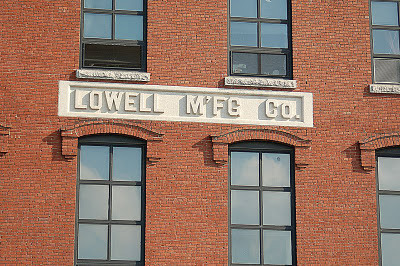 Lowell was the first planned industrial town in the U.S. Its planners found a perfect location for a mill town (the river drops 13 feet, and a series of old logging canals lent themselves perfectly to powering the mills), traveled to England to learn the secrets of the mills there, and then returned to the U.S. and proceeded to build a mill city of their own.
Lowell is important to the history of our country on many levels: from the perspective of the industrial revolution, our economic development (and a demonstration of economic cycles) as a country, and in relation to the history of the cotton trade. Among others.
Now it's a National Park. And a great one.
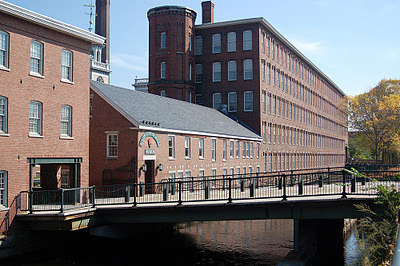
The canals and the restored architecture are incredibly scenic.
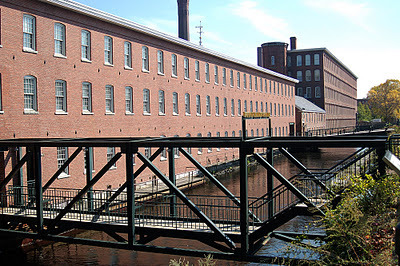
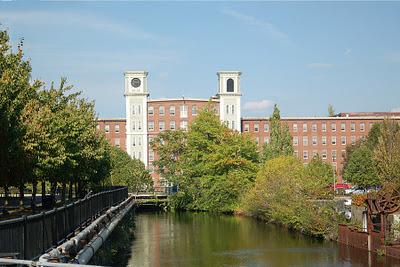
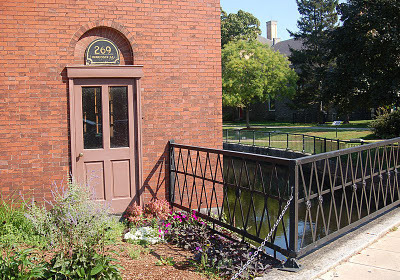
The Boott Cotton Mill has been restored and turned into an amazing museum.
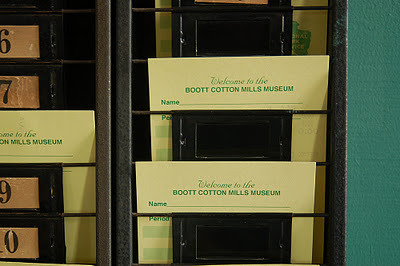
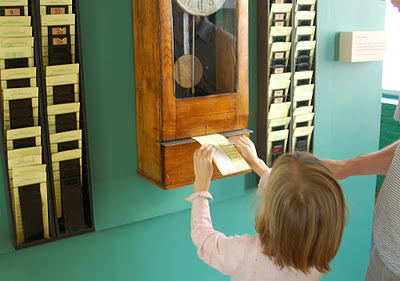
When you first enter you punch in at the time clock--just like the workers did:
The ground floor houses the looms themselves, and the noise on the floor when just a few of the looms are in operation would be deafening if it weren't for the earplugs provided. I can't even imagine what it would have been like for the workers (who worked without earplugs and lost their hearing, no doubt).
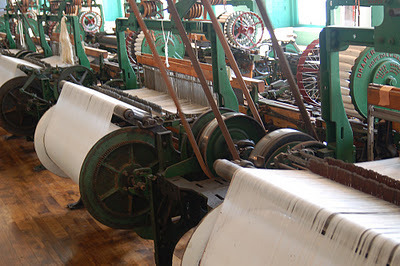
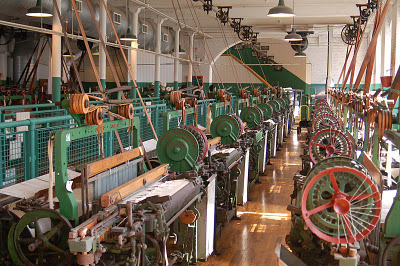
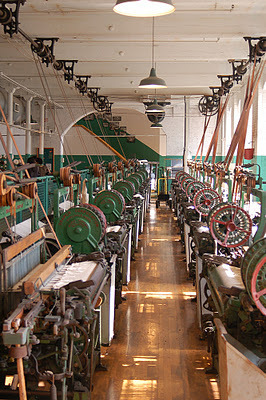
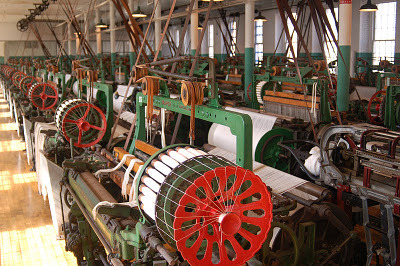
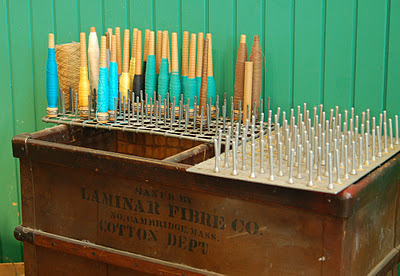
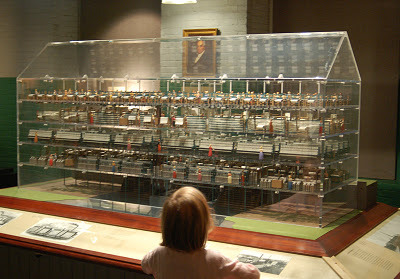
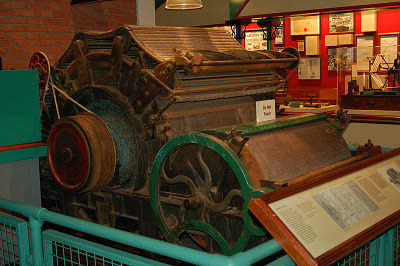
Upstairs you'll find a wonderful exhibit that demonstrates all the parts of a vertical mill (a vertical mill does everything from making the yarns from the raw cotton to finishing the fabric). I loved this exhibit, and the ranger on duty was a wealth of information and enthusiasm (which was great because I was nearly bouncing up and down, I was so excited about this. Fellow textile geeks unite!). S loved working a table loom (my apologies to the museum--we completely filled the warp and you'll need to prepare another loom for the rest of the people who come to visit), and I flipped out over the giant carding machine and all the other fantastic equipment and exhibits.
vertical mill model:
giant carding machine:
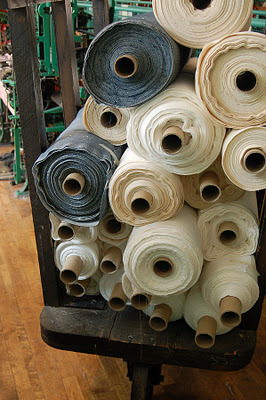
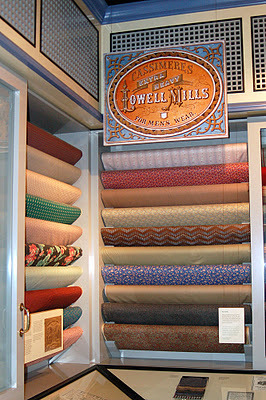
examples of the textiles produced at the mill over the years:
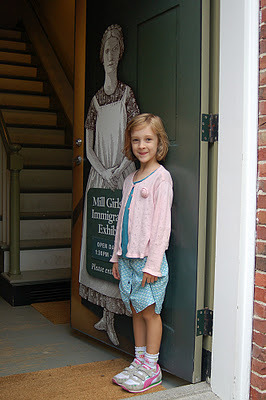
Right next door to the mill you can also explore one of the boarding houses to experience life as a mill girl. S was rather intrigued by this part since her beloved American Girl doll, Samantha, had a friend who worked in a textile mill.
When the mills first opened, the owners were trying to create a Utopian work environment, and they hired local farm girls to work in the mills. The girls were very well cared for and were given many opportunities for self-improvement, but the mills were so successful that competition surged. This, of course, put pressure on the mills to drop prices and pay and to increase the number of hours that the girls were required to work. Eventually the girls went on strike because the working conditions were very bad. Immigrants were later hired to replace the mill girls, and the working conditions soon resembled the conditions in England that the planners had hoped to avoid when they opened the mills. See? It's fascinating stuff--or it will be if you visit, at least.
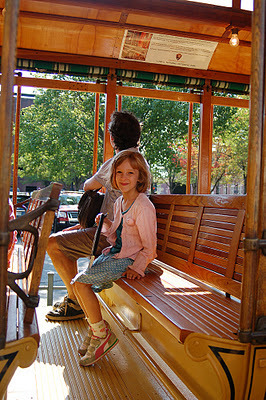
We took a trolley tour of the canals, which included tons of fascinating information about the history of the town, the development of the canals, and lots of beautiful views:
I really want to go back again, I loved this town and the museum so much. I'd also like the visit the Slater Mill Museum someday, too.
We took a little side trip to Boston on Saturday and visited some friends... (does anyone in this photo look familiar?)

as well as some feathered friends. Do you recognize this scene?
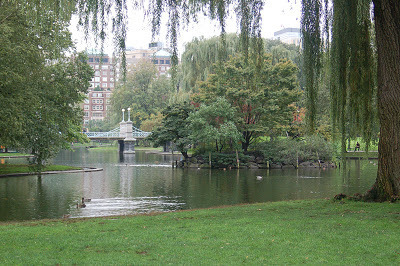 here's a hint:
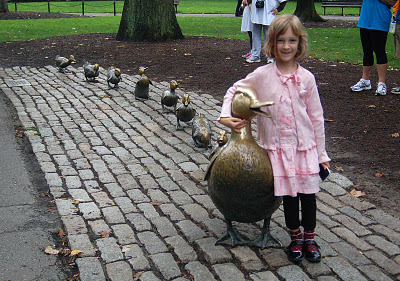
Yup. Make Way For Ducklings, complete with ducklings.
 S wanted a self-portrait of herself with the mama. This pose garnered a lot of chuckles from other visitors:

It's a funny photo from the perspective of the iPod, too.
 Lowell was the first planned industrial town in the U.S. Its planners found a perfect location for a mill town (the river drops 13 feet, and a series of old logging canals lent themselves perfectly to powering the mills), traveled to England to learn the secrets of the mills there, and then returned to the U.S. and proceeded to build a mill city of their own.
Lowell is important to the history of our country on many levels: from the perspective of the industrial revolution, our economic development (and a demonstration of economic cycles) as a country, and in relation to the history of the cotton trade. Among others.
Now it's a National Park. And a great one.
The canals and the restored architecture are incredibly scenic.


The Boott Cotton Mill has been restored and turned into an amazing museum.
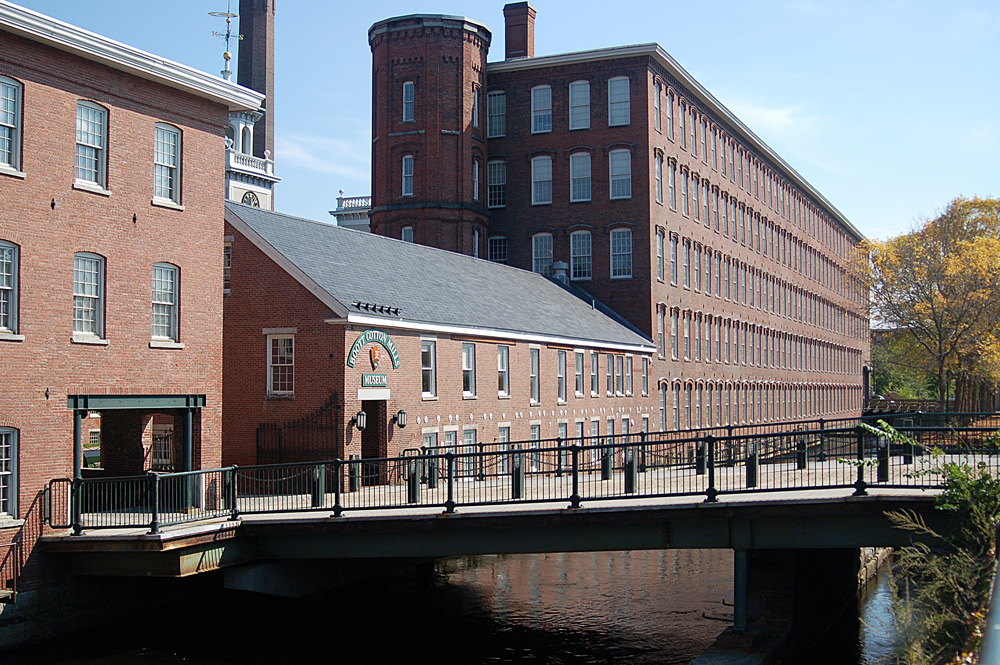
When you first enter you punch in at the time clock--just like the workers did:


The ground floor houses the looms themselves, and the noise on the floor when just a few of the looms are in operation would be deafening if it weren't for the earplugs provided. I can't even imagine what it would have been like for the workers (who worked without earplugs and lost their hearing, no doubt).


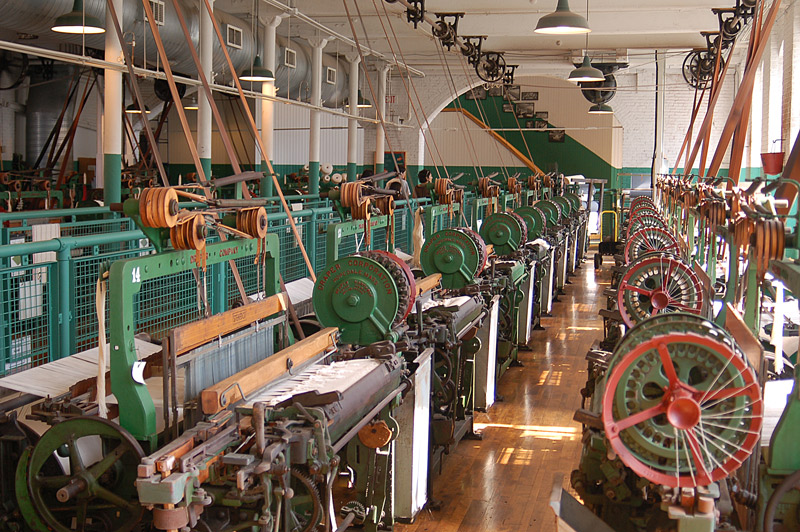


Upstairs you'll find a wonderful exhibit that demonstrates all the parts of a vertical mill (a vertical mill does everything from making the yarns from the raw cotton to finishing the fabric). I loved this exhibit, and the ranger on duty was a wealth of information and enthusiasm (which was great because I was nearly bouncing up and down, I was so excited about this. Fellow textile geeks unite!). S loved working a table loom (my apologies to the museum--we completely filled the warp and you'll need to prepare another loom for the rest of the people who come to visit), and I flipped out over the giant carding machine and all the other fantastic equipment and exhibits.
vertical mill model:

giant carding machine:

examples of the textiles produced at the mill over the years:

Right next door to the mill you can also explore one of the boarding houses to experience life as a mill girl. S was rather intrigued by this part since her beloved American Girl doll, Samantha, had a friend who worked in a textile mill.
When the mills first opened, the owners were trying to create a Utopian work environment, and they hired local farm girls to work in the mills. The girls were very well cared for and were given many opportunities for self-improvement, but the mills were so successful that competition surged. This, of course, put pressure on the mills to drop prices and pay and to increase the number of hours that the girls were required to work. Eventually the girls went on strike because the working conditions were very bad. Immigrants were later hired to replace the mill girls, and the working conditions soon resembled the conditions in England that the planners had hoped to avoid when they opened the mills. See? It's fascinating stuff--or it will be if you visit, at least.

We took a trolley tour of the canals, which included tons of fascinating information about the history of the town, the development of the canals, and lots of beautiful views:

I really want to go back again, I loved this town and the museum so much. I'd also like the visit the Slater Mill Museum someday, too.
We took a little side trip to Boston on Saturday and visited some friends... (does anyone in this photo look familiar?)

as well as some feathered friends. Do you recognize this scene?
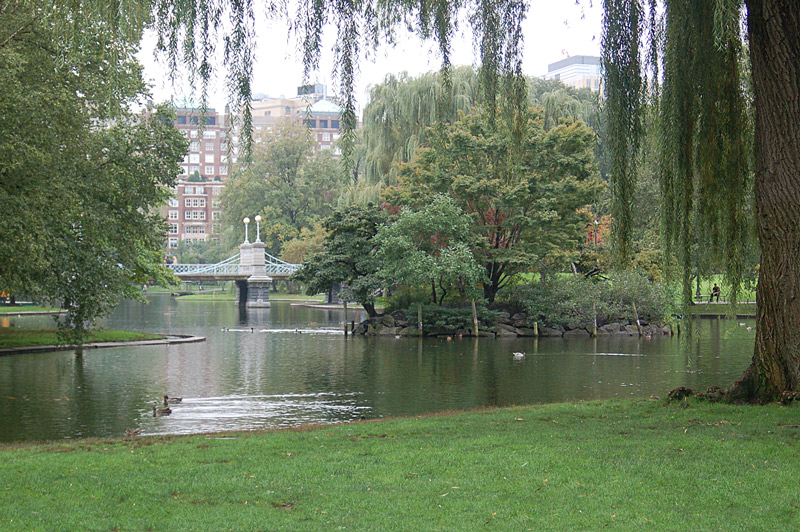 here's a hint:
Yup. Make Way For Ducklings, complete with ducklings.
 S wanted a self-portrait of herself with the mama. This pose garnered a lot of chuckles from other visitors: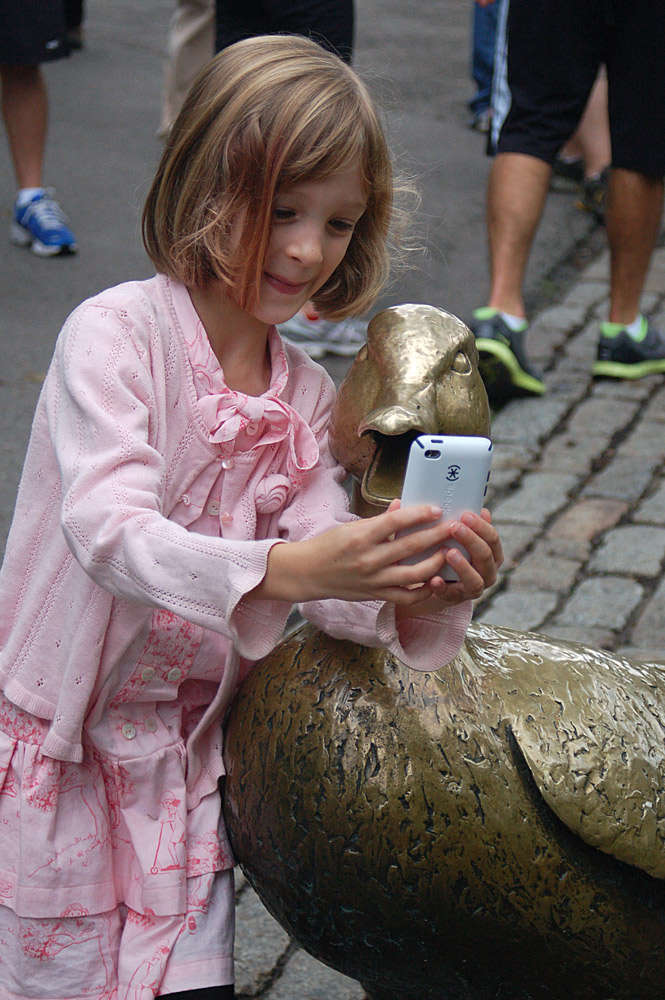
It's a funny photo from the perspective of the iPod, too.


No comments have been added yet.
Liesl Gibson's Blog

- Liesl Gibson's profile
- 4 followers
Liesl Gibson isn't a Goodreads Author
(yet),
but they
do have a blog,
so here are some recent posts imported from
their feed.

