The Heart of Hope

Hey Lovebugs,
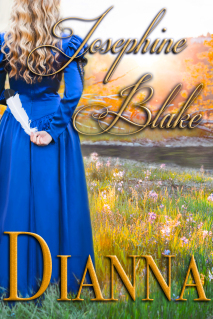
This 20 page short story is told from the perspective of Parker Jameson. Parker is an important character in my new release Dianna, and his unique behavior in the book sparks many questions.
Who is Parker Jameson?
Where did he come from?
How did he end up working on the Crowley Ranch?
It’s time you found out.
The Heart of Hope
Parker Jameson’s Story: Part One
Parker rose with the sun. His eyes peeling open most unwillingly, he gazed around the drab stone walls of the cell.
“G’morning, Beautiful!” chuckled a thin, reedy voice from the other side of the bars.
Parker groaned.
“Hank,” he greeted the sheriff’s deputy with his usual grunt and made to sit up. His head spun, and he had to reach out for the bars of his cell to steady himself.
“`Elluva night for ya,” said Hank. He stood up and scooted out from behind his short desk, a jingling set of keys in his hand.
“Musta been,” grumbled Parker, still trying to orientate himself. He stretched out a calloused hand to feel his sore face and cringed when he found the swollen flesh surrounding his right eye. “Who hit me?”
“Not quite sure.” Hank was searching lazily for the right key to Parker’s cell door. “By the time the sheriff found ya, you was out cold in the middle of the street.”
“Sounds about right.” Parker stood slowly and stretched his arms above his head, his body cracking in unpleasant places as he did so. Hank located the right key, and with a jingle and a screech that caused Parker to wince horribly, the cell door swung open.
“Yer hats on the hook by the door,” said Hank.
“Where’s my gun?”
“Ye didn’t have it on ya.”
Parker cursed under his breath, gazing around the tiny jail in some vain hope that his belt and holster would present itself.
“It’d be better if ya left it at home on yer drinkin’ nights, Park.”
Parker shrugged off the comment and clomped towards the door, retrieving his hat from the hook as he stepped out into the grey morning light.
Birds were starting to chirp as he made his unsteady way down the nearly empty streets of Cheyenne. Their noise did nothing to help clear his head. He passed the baker on his way to open the shop for the morning but didn’t stop to chat. Merely muttering a ‘goodmorning’, Parker let his feet carry him over the uneven dirt to the room he rented over the bookshop.
He made his way stealthily through the space between the bookshop and the building next to it and stopped at a set of stairs that lead up to the second-story entrance of his small room. Cocking his head to the side to listen, he made out distinct shuffling noises coming from interior of the shop. Parker then stood on his tiptoes to peer into the small window there.
The hunched shape of his landlady came into view, her back to the window. Parker smiled ruefully. If Hattie heard the sound of his feet going up the stairs at the crack of dawn, he’d be in for a thorough tongue lashing. Something he generally avoided at all costs. She had a way of making him feel ashamed of himself. Something neither his mother nor his father had ever managed.
Hattie turned then, and Parker caught a glimpse of her austere expression and beady eyes as she carried a stack of new books to the shelf just behind her.
Her flyaway, charcoal grey hair, squat stature and pointed nose gave his landlady the look of an aged raccoon. She generally wore a pair of thick-rimmed spectacles over her eyes, but at the moment, they dangled haphazardly from the neck of her blouse, constantly in danger of falling and shattering on the hardwood floor.
Shaking his head, Parker waited a few uncomfortable minutes for Hattie’s prominent backside to make its way to the front of the shop, then darted up the stairs as quietly as he could. He held his breath on the threshold, listening for the tell-tale shout that meant his landlady had heard his boot-clad feet on the stairs. When it didn’t come, he breathed a sigh of relief and shut the door quietly behind him.
The dim, early morning light from the single square window above the bed showed him just enough of the cramped space for him to make his way over the floorboards without knocking anything over. The room was sparsely furnished. An old rocking chair sat in the corner at the end of the bed next to a stacked set of drawers. A small nightstand with chipped red paint bore a small gas lamp and a dog-eared copy of Sleepy Hallow.
Parker shrugged out of his shirt and tossed it carelessly over the seat of the rocking chair before bending to yank off his boots. His entire body ached. With a groan, he stripped off the rest of his clothes and sank onto the mattress, a hand over his eyes to ward off the slowly brightening light of the sun.
Stupid, he thought. You’re an irresponsible moron, Parker Jameson.
He lifted a canteen from the foot of the bed and guzzled down the stale remnants of yesterday’s water. Grimacing, he screwed the cap back on and glared at the insignia scribbled over the surface. A raised ‘J’ crossed with two silver plated revolvers.
“You’re a fool,” he muttered to the canteen. He squashed it angrily into the mattress, and, his mouth still tasting of cotton and vomit, Parker stretched out on the bed and closed his eyes.
Moments later, or so it felt to Parker, he woke to a clattering on the stairs and his bedroom door slamming open against the far wall.
“Good Lord, Hattie!” he yelped, swiftly yanking the bed covers up to his chin.
“The Good Lord won’t help you now!” shouted Hattie, and she walloped him with the broom in her hand.
“Ouch, Hattie, get off!” Parker yelled, shielding his face from her onslaught. She whacked him again. “Hattie, what in the-“
She narrowed her bespectacled gaze at him, pointing her finger accusingly under his nose.
“I heard talk at the market today,” she said furiously. “That you were causing a ruckus in the tavern last night. That you started in with Amos Gregory! Amos- Gregory!” She punctuated the last two words with a blow.
Parker scrambled away from the old woman as fast as he could, dragging the bed sheet with him.
“Alright, alright!” he said, one arm over his head, the other clutching at the thin sheet that was his only covering, apart from his drawers. “I might have had a bit of a disagreement with the man.”
“A bit of a disagreement!” She aimed another whack at his naked legs.
“Look, Hattie, I couldn’t just sit there and listen to him-“
“When your boss’s son starts a’ runnin’ his mouth, it’s your job to sit there with a smile on your face and take it!”
“Hattie,” said Parker, reaching out a placatory hand. “He was insulting everyone from the Mayor to your dear departed husband; I wasn’t going to stand for that.”
The bristly end of the broom fell a few degrees, and Hattie’s eyes grew even narrower. “He insulted my Frank?” Her voice lowered dangerously as she uttered the name of her late husband, who’d been a good, hardworking gentleman, well-liked by anyone he met.
Parker gave a slow nod of ascent and the corner of his unshaven mouth pulled up in a grimace.
“I wasn’t about to sit there and listen to that,” he shrugged his thin shoulders. “I took a few swings at ‘im. Caught a few good ones by the look of my knuckles, but one of his dogs must have grabbed me before I could whip him good and proper.”
“Good and proper?” Hattie said, incredulously. “The boy’s still with the Doc. Looks a right ‘ole mess, to tell you the truth.” She gave him a shifty grin. “I went to have a peep after I left the mercantile.”
“Did you now? And was his pa just tending to him like a mother hen?”
“More like a wolf,” she said scathingly. “Practically licking his injuries. They’ll be out to gettin’ even with you now, boy. You best keep outta sight for a bit.”
“I can’t keep out of sight,” grumbled Parker, sitting down on the edge of the bed and running a hand over the new lump on the top of his head. “I’ve got to get searching for another job.”
“Ain’t nobody gonna’ want to hire you knowing Colton Gregory and his ilk are on your tail.”
“Well, then we best not let them know it,” muttered Parker.
Hours later, Parker took hold of a hay bale and hefted it over the nearby fence. He wasn’t a beefy man, by any means, but he was more than capable. His arms were strong, even if he was on the thinner side, and he had endured much hotter days than this before.
Sweat beaded on his back and over his heavy brow. The summer heat was torching his skin, and his throat was dry as a bone.
“That’ll do for today, son,” said a voice behind him. Jeremy Dixon leaned his tall frame against a nearby fence post and beckoned Parker over to him.
Parker swiped at his forehead with the filthy kerchief from his back pocket and ambled across the yard.
“You did good work today,” said Jeremy, when Parker was within earshot. “I hate to say that I can’t keep you on.”
“You heard about my run-in with Amos,” said Parker. It was not a question. He’d half-expected Jeremy to toss him out on his ear the moment he’d come back from town that afternoon.
“If I told you I wasn’t worried ‘bout the Gregory’s, I’d be lying,” sighed Jeremy, and he took off his hat and beat it uncomfortably against his leg. “They own everything from here to Timbuktu, it feels like, and if they dam up the creek on their end…” Jeremy trailed off. He didn’t need to say anything further.
“I understand, Mister Dixon, I truly do.”
The two men shook hands. Then Jeremy handed Parker his day’s wages, looking apologetic.
“I don’t like them any more than you do,” he said. “But them’s the facts.”
“I quite understand,” Parker repeated. He tipped his hat to Jeremy and went in search of his horse.
He met the same behavior at four separate ranches that month, and things didn’t improve the month after that. Parker was getting desperate. He needed steady work. It wasn’t just himself that he was concerned for either. However much she bleated that Parker was nothing more than a nuisance to her, he knew that Hattie relied on his rent to pay her mortgage.
“Don’t you worry your head about me,” she’d said when he confronted her about the fact. “I’m doing just fine on my own, thanks.”
But Parker wasn’t fooled.
The days were getting hotter, and the nights were growing shorter when Parker finally conceded that Hattie might have had a point. Perhaps he should have kept his mouth and his fists to himself that night. He shook his head.
Perched on the roof of the post office, he unscrewed the lid of his canteen and took a hearty swig. He’d been lucky that the postmaster hadn’t recognized him when he asked the man if there was any work that needed doing around the shop. Warren Bram had offered him a flat rate to repair the leaking post office roof, and though the money wasn’t great, Parker had accepted at once.
Another day’s work done, Parker gathered his tools, waved goodbye to the postmaster and headed off for home. On his way, he passed the tavern he had visited recently with such disastrous consequences. He paused outside the door, listening to the echoes of raucous laughter within, and had to stop himself from entering and searching out Amos Gregory to give him another well-deserved punch in the nose.
“You look thirsty,” said an unfamiliar voice behind him, as Parker made to turn his back on the tavern.
“Not tonight, I’m not,” he answered over his shoulder, not even bothering to turn around and see who it was that had spoken to him.
“I hear you’ve been lookin’ for work, son.”
Parker spun back around. The man in front of him was tall and broad shouldered, and there was a slightly animalistic look in the smile he shot at Parker. He was completely unfamiliar, and more than a few years his senior.
“Been lookin’ for a while, yeah,” responded Parker. He did not feel the way he had felt so often when confronting a prospective employer. Excited, eager to make a good impression. No, tonight, he was angry; he was dog-tired, and there was a bottle of lousy moonshine calling his name at home.
“I been looking for a few hands out at my place,” the stranger said. “Good pay. Lodging.”
“Good pay would do it for me,” muttered Parker, giving the man a once over, his interest piqued, despite himself.
“It’s a long ways out,” said the man, shoving off the wall of the tavern and approaching Parker slowly, his eyes hidden in the shadow of his wide-brimmed hat.
“I’m alright with that,” nodded Parker. “Work is work.”
The man nodded, his eyes skating over Parker’s slight form. “You up to it?”
“I’m up to anything.”
The man clapped Parker on the shoulder. “That’s what I like to hear. I’ll be ready to leave town when the sun rises. My land’s about a day and a half’s ride. Pack what you need.”
“Thank you, Mister-“ Parker hesitated, waiting.
“Crowley. Phillip Crowley.”
“Pleasure to make your acquaintance, Mister Crowley.” Parker stuck out his hand. The man grasped his fingers in a grip that nearly snapped them in two.
“Pleasures all mine,” he said, and he flashed Parker a bear-like grin.
Parker met Crowley just outside of town, heading East.
“Long day in the saddle,” said Crowley, hoisting himself onto his horse.
“I’m no stranger to long rides,” said Parker.
“Good man.”
They rode for hours, neither saying much, apart from wondering aloud if they should rest the horses, or make camp for the night.
Parker tried several times to strike up a conversation with the man, watching Crowley for signs of encouragement, but his new boss, it soon transpired, was not a chatty sort. He seemed perfectly at ease by the silence between them, and although silence was not Parker’s strong suit, he gradually became accustomed to it.
They made camp next to a trickling stream. The horses waded into the water to satiate their thirst while their riders filled their canteens and drank deeply. Parker caught sight of his reflection in the water as he went to fill his canteen for the second time.
He was weak jawed, or so his father had always told him. His eyes were strangely colorless, and his hair resembled the muddy water at his feet. He looked very like his mother: sharp eyes, beaky nose and low cheekbones on a skinny, pallid face. His appearance had never endeared him to the few women in town, and though he tried to be a kind, hardworking man, he knew that appearance counted for much in a woman’s eyes. That had always been his experience anyway.
Parker cleared his throat and spat into his reflection. He had long-since learned to live with his mother’s bad looks, as well as the temper he had inherited from his good-for-nothing father. The temper he could manage; his unfortunate facial structure, well… Parker hoped he would be rewarded for enduring that hardship when his maker finally came to call.
They slept under the stars. The night was cloudless and unusually bright for all the tiny specks of light in the sky. Parker thought he would never see anything as beautiful as those stars. He’d slept in the open before, of course, but that night he felt hopeful for the first time in months. And his hope made the stars beam all the more brightly. He folded his arms behind his head and gazed up at them long after Phillip Crowley’s snores had drowned out the chirping of the crickets.
It was late afternoon when they crested a large hill, and Parker got his first look at Crowley’s land. He gave a low whistle. Nestled between two hills, the small crop of buildings would have a breathtaking view of the mountainous horizon in the distance. Crowley smiled his first smile in Parker’s presence at that moment. The effect was to make his face far less bear-like. His smile injected a human quality into the man that he seemed to have previously lacked.
“Welcome to the Crowley Ranch, Mister Jameson.” Parker beamed.
As they made their way down the gently sloping hill to the largest of the cluster of houses, a woman came out the front door and sidled out to meet them. Even from a distance, Parker could see the curve in her hips. His mouth went slightly dry as he realized this must be Mister Crowley’s wife. He hadn’t expected the man to be married, but their relationship was evident in the happy embrace they bestowed on one another as Crowley slid from his saddle.
“Parker, this is my lovely wife, Molly,” he said, turning to face Parker with his arm around the woman’s waist.
“Pleasure to meet you, ma’am,” Parker said, tripping over an upturned stone as he extended a hand out to her.
She took it, and her hands were soft and unnervingly smooth. He released her as soon as it was prudent.
“Molly, this is Parker, he’s come to lend us a hand.”
“You boys must be hungry,” she said, and she tugged Crowley towards the large main house. “I’ll fix something up. Darrel and Wilson might have left you something from breakfast.”
“Those two?” laughed Crowley. “They’d strip a raw carcass dry in a heartbeat. What makes you think they’d’ve left us anything?”
Molly giggled prettily, and her blue eyes flashed to Parker’s grey ones. “How about some food, Parker?”
“I’d love some,” he croaked.
Crowley threw him a searching look as his wife’s blonde head disappeared back inside the house. Parker smiled uncomfortably.
“The only women I ever spoke to was my own mother, my Aunt Stacy, and my landlord,” he admitted shamefacedly.
Comprehension dawned suddenly in Crowley’s eyes, and he clapped a heavy hand on Parker’s shoulder. Parker’s knees buckled just the tiniest bit, but he tried not to let his boss see.
“C’mon then,” he said. “I’ll show you around while Molly rustles us up a bite or two.”
Parker was impressed by the slow and steady function of Crowley’s land, and he wasn’t afraid to admit it to the man.
The barn was vast and held at least ten stalls.
“We breed horses here, mostly,” Crowley said. “The foals and mares are kept here, the stallions: over there…” He pointed to several large paddocks, and a field that stretched over a few acres of his land. The stallion pasture butted up against a backdrop of trees. Above them, a string of mountains was visible, casting an ominous shadow in the late afternoon sunlight.
A cool breeze lifted the hair on the back of Parker’s neck as he looked towards the horizon, and he felt comfortable. Peaceful, almost as if he belonged on this chunk of land, as if… he had come home.
He shook his shaggy, dish-water blonde head and tuned his ears to hear what Crowley was telling him about his daily duties.
Just then, a teen boy came hurtling onto the path in front of them. Without sparing a glance for Parker, he shouted:
“Pa, them Indians are headin’ up this way again. I seen them comin’ from the top of the hill.”
“What was you doin’ up there?” growled Crowley, suddenly furious.
“I was taking the new colt and his momma up to graze by the apple trees,” said the boy defensively.
Crowley let out a grumble, then addressed Parker.
“Something I forgot to mention,” he said sourly. “We’ve got a bit of a problem here with the locals.”
“What do you need me to do?” said Parker, and Crowley grinned at him.
“Grab up our horses. We’ll meet them before they get too close to the house. I don’t like havin’ them near my home.”
Parker tried hard to conceal his fear. From what he’d heard about the savages in this area, they weren’t the friendly sort. He knew Crowley had purposely avoided mentioning their presence to him out of fear he would turn down the job and head back to Cheyenne. It made him feel slightly less guilty about the secret he was keeping from his boss.
The horses thundered beneath them, Parker swallowed, and kept his eyes narrowed on the skyline.
“Most men hightail it outta’ here at the mention of Indians!” shouted Crowley over the pounding of the horses’ hooves.
“Well, I’m not ‘most men’,” Parker yelled back.
“True, but I knew that when I heard you were on the outs with the Gregorys for cuffing that knuckle-headed son of theirs round the ears.”
Parked nearly fell from his horse with shock. Regaining his grip, he turned to cast an incredulous look at the older man, but Crowley merely pointed to a place a few hundred yards ahead of them. “There they are.”
Four dark-skinned men stood next to speckled horses beneath the nearest apple tree, almost as if they were waiting for them to arrive.
“Whoa!” Crowley slowed his horse to a walk as they neared the group, all of whom’s eyes were fixed interestedly on the two approaching men.
“Matchitehew,” said Crowley, addressing one of the four men. It took Parker a moment to realize that his boss recognized one of the Indians.
“Crowley,” a tall, square-jawed man stepped forward. His skin was the color of dried, cracked earth, and his long hair hung loose around his face. “I need speak with you.”
“Alright then,” said Crowley, leaning his forearms on his saddle horn and peering down at the Indian.
Parker shifted nervously in his seat, his eyes on the knives he could make out tucked into the waistband of the largest man. The Indian met his gaze and glowered at him. Parker swallowed but glared back defiantly. He wasn’t about to be pushed around by this lot.
“Make trade,” said the Indian who’d first spoken.
Crowley nodded to show he understood. “What are ya after?”
The Indian inclined his head to one of his fellows, and the man unwrapped a leather-bound package from the back of his horse.
“We want three cows,” he said, and he handed the package to Crowley, who unfolded the parcel and leant sideways to show Parker what it contained.
Inside were four folded and tanned deerskins, and a beaded bag that looked as though it had taken a good deal of time and effort to make. Parker was impressed with the gift, but Crowley, apparently, was not.
“I’ll give you two,” he said, matter-of-factly.
The Indian frowned and muttered something to his companions, who responded in foreign, guttural tones. After a moment, he shook his head.
“Three.”
“No thanks,” said Crowley. “That all?”
The Indian glared at him. “Make trade,” he said.
“What else you got for me?”
Parker couldn’t suppress the feeling that his boss might be pushing his luck. The Indians drew back into a tight huddle, and the one who had a bit of English kept his eyes on Crowley as he conferred with the others.
Parker didn’t have a clue what was going on, but Crowley seemed entirely at ease. After a few more moments of whispered conversation, the speaker drew back to the fore.
“We want three cows, and we kill what kills your animals three times.”
“The cougar?” Crowley shook his head and chuckled. “The things you people know… I’d be real happy to be rid of that critter. Yeah, alright, three cows it is. But you only get one today. You can have the other two when I have the cougar’s head.”
The Indians conferred once more, and then the speaker nodded. “We wait,” he said.
Crowley tipped his hat at the group. “We’ll be back in just a bit.” The speaker nodded again and turned away
Parker’s mind was full of questions, and he asked the first of them while they raced across the plains to the pasture over the way.
“Why do you trade with them?”
“I don’t always,” said Crowley, climbing from the back of his horse and tethering it to the nearby fence post. “But it keeps me on their good side. Makes ‘em like havin’ me here. Also, I know it was a pretty lousy season for the buffalo. Normally buffalo migrate over their way several times a year, but this year they headed the other direction, and I watched them chase those critters all over the country.
“They got women and children at home too, you know. Can’t just let ‘em starve. Not when I can spare a few head. And anyways,” Crowley cast a sheepish look in Parker’s direction. “Molly loves the beadwork.”
The admiration in his voice was carefully hidden beneath a decent pretense of manliness. He was trying to appear dismissive, but Parker could tell that Crowley cherished his wife.
All of the sudden, a paralyzing wave of loneliness cascaded over Parker. It’d been a long time since he’d seen that kind of connection between a man and a woman.
He sometimes thought he spotted it in Hattie’s face when she spoke of her husband. There was love there. Even though the man she had given her heart to was far gone from this world, she was just as in love with him as she had been on the day they wed.
Parker had never had that sort of connection.
He watched the half-shamefaced smile on his boss’s lips as he approached his wife. She stood waiting on the front stoop, her hand on her hip, and shaking her head. He saw Crowley mutter a few words to her and watched her roll her eyes skyward.
The easy interaction between the two caused a powerful ache in Parker’s stomach. Eventually, he turned away from the pair rather than watch them any longer.
Crowley was coming back now. “Bring me one of the heifers from that pen over there?” he asked. Parker nodded and nudged his horse across the yard. He returned moments later, leading a spotted female by a long rope around its neck.
“She’ll do,” Crowley said, and together they rode back over the fields to the hill where the cluster of wary men stood waiting.
Hours later, Parker was seated around a long kitchen table in the main house, shaking hands with the two other men that worked on the Crowley Ranch. They were a pair of thickset brothers, who went by the names Wilson and Darrel. Both had a mean, mule-like look to them, and shook Parker’s whole body with their handshakes.
Broad-shouldered, and loud, the only way Parker could tell the two apart was by the color of their hair. Wilson’s head looked as though it had been thatched with thick, yellow hay. While Darrel’s was nearly white with its blondness, and the texture of cotton-wool.
“While you’re with us,” said Crowley, scooting backwards slightly in his seat to allow his wife to place a steaming bowl of beef and onion stew in front of him. “You can stay in the loft above the barn. I think you’ll find it comfortably furnished.”
“Much obliged,” said Parker around a mouthful. He reached across the table to seize a roll from the basket.
Molly strolled over from the stove, a heavy pan of apple crumble in her hands, her eye-catching hips swaying in time to music none of the rest of them could hear.
Parker had never tasted anything so wonderful in his life. Everything he had put in his mouth had left it watering for more. By the time Molly leant over next to him and sat the crumble down on the table, his belt was feeling uncomfortably tight.
“Thank you, Parker,” Molly whispered unexpectedly in his ear. He nearly jumped out of his skin.
“For what?” he muttered back. The other three men were guffawing loudly at the other end of the table, none of them paying any attention to the words being exchanged between the two.
“For standing beside Phillip today while he dealt with the Indians.”
“Oh,” he couldn’t think what else to say, so he compromised by taking an extra large gulp of water and choking on it. That was the moment Molly Crowley became his friend. Her smile was full of a kindness he’d never known, and he wanted nothing more than to sit there like a lump on a log and let her smile at him for days on end.
“Careful there, man!” laughed Crowley from the head of the table. “Darrel’s known for putting nails in the water cups!” He elbowed his man in the ribs, and they both chuckled appreciatively. Molly cast her husband a coy smile as she sat down with her own bowl of stew. This diverted Crowley’s attention for a moment. “Dinner was wonderful, Molly, darling.”
“It ought to be. That steer had a long enough time to ripen up,” laughed Molly. She pursed her lips and blew softly on her steaming spoon.
“Bright and early morning for us, boys,” sighed Mister Crowley, his eyes on his wife. “Best ya’ll head out and get some good rest.”
Parker made his way over to the washbasin with his dishes, thanked Molly for the delicious meal, and meandered outside after the others, whistling softly.
He followed Wilson and Darrel’s retreating backs for a moment before turning right. They each waved their hands in cheery fair wells as he moved into the musty interior of the barn, his eyes having a hard time adjusting to the impenetrable darkness.
After a moment, he made out a light glimmering brightly from the uppermost level and fumbled his way over to the ladder he remembered seeing against the far wall earlier that day.
He stepped off the ladder onto a dim landing and found the source of the light at once. A small gas lamp hung from an iron peg on the wall. Beside it was an open doorway. Parker lifted the lamp from its hook and made his way into the room. It wasn’t bad.
A large straw-stuffed mattress lay in the corner of a room that was easily three times as large as the one he rented above Hattie’s bookshop. There was a writing desk, a dressing table, and mirror, as well as a stack of thick bound books.
His things had also been brought up. He had left them just inside the barn door. Parker gave a sigh.
He hadn’t thought Crowley would want to keep him on once he discovered the news about the Gregorys. But it looked as though his new boss may have sought him out because of the issue, and brought him to the ranch because he had known Parker was desperate.
“Indians,” Parker muttered to himself, running a hand through his sweat-greased hair. “There had to be Indians.”
Parker’s story will continues next week. I must admit that when I sat down to write it, I was surprised by the amount he had to tell me. There’s more to Parker than meets the eye.
Click HERE to read The Heart of Hope: Part Two
Sign up for the Rumor Mill Newsletter for Updates!!

To Purchase Josephine Blake’s Newest Release: Dianna
Click HERE
For an exclusive sneak peek at the first chapter of the book
Click HERE
Connect with Josephine Blake on Facebook and Pinterest!