Honeybees Are Dying Due to Stress!
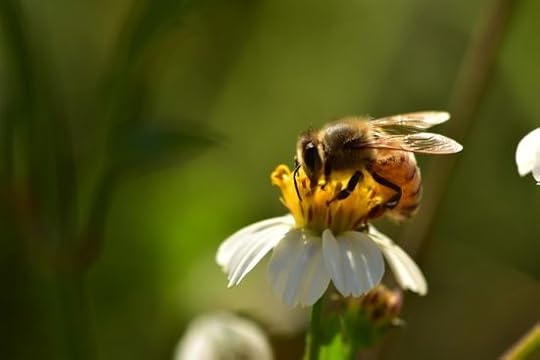
News about honeybee colony collapse has been widespread since 2006 when beekeeper Dave Hackenberg discovered that 400 out of 2,400 hives have been forsaken by bees. These bees disappeared, leaving no trace of a single dead body in the vicinity—a phenomenon different from the die-offs in the past where dead bees are retrieved after parasite attacks. This unexplained honeybee disappearances is known as colony collapse disorder.
While the root of CCD is not yet proven by science, USDA ARS describes CCD as “a syndrome specifically defined as dead colony with no adult bees and with no dead bee bodies but with a live queen, and usually honey and immature bees, still present.”
Though CCD may be mistaken as the leading cause of loss among managed bee colonies, USDA ARS collects data proving that beekeepers reporting dead colonies due to CCD have declined since 2010. ARS confirms, “CCD is far from the only major threat to the health of honey bees and the economic stability of commercial beekeeping in the United States.”
So what drives honeybee colony loss?
However, several research studies have pointed out several factors that stress bees and trigger colony loss.
Dietary stress. Beekeepers take their managed beehives on a cross-country tour to pollinate various agricultural products such as corn, wheat, and berries. Beekeepers and their bee colonies stay for three weeks or more in one place, depending on the pollination timeframe. In turn, the hardworking bees feed on the only food source for a certain period.
Loss of floral sources and unsuitable nest sites. Beekeepers and their bees travel from one place to another. Most of the time they stay on the road, feed on protein supplements, and breathe in dusts. Bees lost their natural grazing ground. Bees lost their flowers.
Exposure to pests, pesticides, and pathogens. Varroa destructor, tracheal mite, small hive beetles, microsporidian parasites, RNA virus, and pesticides are common causes of bee colony losses even in the past.
Climate change. Moreover, global climate change is another factor that can aggravate the condition.
In 2015, Goulson et al. arrived to a conclusion that one stressor may not cause honeybee colony loss but a combination of several stressors may.
For example, some pesticides act synergistically rather than additively. Both pesticide exposure and food stress can impair immune responses, rendering bees more susceptible to parasites. It seems certain that chronic exposure to multiple interacting stressors is driving honeybee colony losses and declines of wild pollinators, but the precise combination apparently differs from place to place.
Saving honeybees
Most studies suggest that evading pesticide use and resorting to natural farming methods of pest control will less likely expose the bees to harmful chemicals. Other honeybee management strategies, such as intensifying floral resources, propagating bee-friendly flowers, and nurturing graze land will lessen dietary stress and improve breeding ground.
Tune in to the next article about honeybees and the United States agriculture.
Share your thoughts on beekeeping business.
References
USDA Agricultural Research Service. n.d. “ARS Honey Bee Health and Colony Collapse Disorder.” Accessed February 13, 2017. https://www.ars.usda.gov/oc/br/ccd/index/.
Wallace-Wells, David. 2015. “The Blight of the Honey Bee.” NYMag, June 15. Accessed February 13, 2017. http://nymag.com/daily/intelligencer/2015/06/bees-are-literally-worrying-themselves-to-death.html.
Holland, Jennifer S. 2013. “The Plight of the Honeybee.” National Geographic, May 10. Accessed February 13, 2017. http://news.nationalgeographic.com/news/2013/13/130510-honeybee-bee-science-european-union-pesticides-colony-collapse-epa-science/.
Goulson, Dave, Elizabeth Nicholls, et al. 2015. “Bee Declines Driven by Combined Stress from Parasites, Pesticides, and Lack of Flowers.” Science 347. Accessed February 15, 2017. doi: 10.1126/science.1255957.
vanEngelsdorp, Dennis, JD Evans, et al. 2009. “Colony Collapse Disorder: A Descriptive Study.” PLOS ONE 4 (8): e6481. Accessed February 13, 2017. doi: 10.1371/journal.pone.0006481.
Martin, Stephen J. 2001. “The Role of Varroa and Viral Pathogens in the Collapse of Honeybee Colonies: A Modelling Approach.” Journal of Applied Ecology 38: 1082–1093. Accessed February 13, 2017. doi: 10.1046/j.1365-2664.2001.00662.x.
Naug, Dhruba. 2009. “Nutritional Stress Due to Habitat Loss May Explain Recent Honeybee Colony Collapses.” Biological Conservation 142 (10): 2369–2372. Accessed February 13, 2017. doi: 10.1016/j.biocon.2009.04.007.
Nazzi, Francesco, Sam P. Brown, et al. 2012. “Synergistic Parasite-Pathogen Interactions Mediated by Host Immunity Can Drive the Collapse of Honeybee Colonies.” PLOS Pathogens 8(6): e1002735. Accessed February 13, 2017. doi: 10.1371/journal.ppat.1002735.
Henry, Mickaël, Maxime Beguin, et al. 2012. “A Common Pesticide Decreases Foraging Success and Survival in Honey Bees.” Science 336(6079): 348–350. Accessed February 13, 2017. doi: 10.1126/science.1215039.
Highfield, Andrea C., Aliya El Nagar, et al. 2009. “Deformed Wing Virus Implicated in Overwintering Honeybee Colony Losses.” Applied and Environmental Microbiology 75(22): 7212–7220. Accessed February 13, 2017. doi: 10.1128/AEM.02227-09.
Genersch, Elke. 2010. “Honey bee Pathology: Current Threats to Honey Bees and Beekeeping.” Applied Microbiology and Biotechnology 87(1): 87–89. Accessed February 13, 2017. doi: 10.1007/s00253-010-2573-8.
Ellis, James, D., Jay D. Evans, Jeff Pettis. 2015. “Colony Losses, Managed Colony Population Decline, and Colony Collapse Disorder in the United States.” Journal of Apicultural Research 46(1): 134–136. doi: 10.3896/IBRA.1.49.1.30.
The post Honeybees Are Dying Due to Stress! appeared first on Picky The Marvelous Chicken.