
The World of Wilders
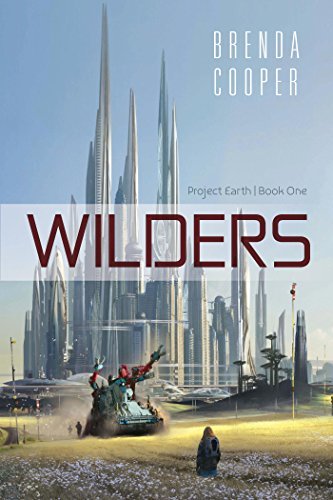
Recently, I was honored to receive an Advance Readers Copy of science fiction author Brenda Cooper's latest novel, Wilders. I thoroughly enjoyed reading it and found the world it explores, and its major characters, to be fascinating! I’d like to share this world with my blog followers, so let’s dive in.
# # #
Hi, Brenda. First, please excuse one “SF fanboy” question up-front. As I reviewed your writing resumé, I admit I was a bit awed. What was it like to collaborate with a science fiction legend like Larry Niven on a writing project?
He’s brilliant. He’s particularly brilliant at plot and big ideas, and to this day he’s better at both than I am. He’s also a good collaborator, who does his share of work (at least). Since I was a brand new writer at that time, he taught me a lot. I was really very lucky.
Now to Wilders: you paint a vivid picture of a (not-too-distant?) world in which humanity struggles to recover from unrestrained exploitation of our natural resources that has pushed us to the brink of extinction as a species. Many humans have retreated to the relative safety of domed “megacities” that provide a refuge from the harsh conditions of a devastated land. Seattle, Washington, and Vancouver, British Columbia, have combined resources to create “Seacouver,” a home to millions (or billions). How far in Earth’s future do you envision this world residing? How much of it do you consider purely a cautionary tale vs. a plausible (and harrowing) potential reality?
That’s really a lot of questions! Although I didn’t name a date quite as specifically as Kim Stanley Robinson names 2140, I set Wilders roughly fifty years into the future. I think we could very well be in a world like this by the late 2060’s. People are already moving into cities. E.O. Wilson’s Half-Earth: Our Planet's Fight for Life lays out the steps we need to take to re-wild better than I’ve seen anywhere else. I already had the idea that I wanted a lot of empty land, but when I read Half Earth part way through the first draft of Wilders, I chose to amp up that aspect of the future world I was creating.
On some level, Wilders has to be a cautionary tale since even fifty years out is a long time when you look at the speed of change right now. It’s plausible if there are no other wildcards – no other things we just don’t see. As a futurist, I know there will be. Some technology or new ability of phase shift in politics will make the real world even more different fifty years from now than I’ve depicted here.
The amount of climate change is plausible. I don’t see any way forward where we escape climate change since carbon emissions are not – so far – easily reversible. We can’t wake up one day, change our ways overnight, and have the atmosphere change back to something safer a day later. But Wilders is actually fairly positive. In its world, we found ways to limit carbon. But not until sometime in our future – and another decade or more of wanton burning of fossil fuels will doom many ecosystems as we know them today.
Coryn Williams, the protagonist, is a compelling character touched by tragedy at a tender age. We’re introduced to her when both her parents die on the cusp of her junior high school graduation. She and her older sister Lou are orphaned, isolated, and Lou’s departure for a “rewilding” engagement outside the city leaves Coryn utterly alone except for her companion robot, Paula. The subject matter and themes of this story are very mature, but this does have elements of a young adult novel in terms of the protagonist’s perspective. Did you imagine this as a tale primarily aimed at young adults, or is the main character’s youth incidental? Do you sometimes feel that this age group offers us the greatest hope for dealing with the climate crisis in the real world?
I have a habit of starting my characters young. I did that in The Silver Ship and the Sea and The Creative Fire. But Wilders is meant as an adult book, although one that I hope teens also read. It is about a post-climate change Earth, but it’s also about robotics. One of the key themes is our dependence on technology, and Coryn starts this book quite dependent on her robotic companion. There were two choices for that – dumb, or young. I chose young. A girl and her robot go into the woods…. So Wilders is aimed at all ages, and Coryn’s age was a choice.
Younger people offer a great hope for for the future, at least if we teach them how to hope. I think we had better not wait for them though, we had better act now.
You draw a stark contrast between the world of “Inside,” where megacity-dwellers have the advantage of ubiquitous technology and expansive material comforts, and “Outside,” where wilders fight to resurrect blighted ecosystems while average people fight simply to survive the challenges of extreme weather, depleted resources, failing infrastructure, and violent competition for food and shelter. In spite of their apparent comforts, many Insiders struggle against a malaise that often leads to suicide while Outsiders seem to live with more vigor, despite the lethal hardships they face. Is this intended to draw a distinction between physical health and mental health, between sustaining the body and the spirit? How have your own experiences living in the Pacific Northwest inspired this viewpoint?
Well, I love Seattle. Truly. I don’t live in it – I live on an acre and half outside of the city, but we’re close enough to go in for meetings, events, and social nights out. So I don’t think the issue is about living in the city vs. living in the outside. I think it’s about dependence of technology, and about goals and dreams. Inside of my future cities, people are on a basic income. They have to contribute something for that, but it’s not much. They CAN earn more for more sophisticated jobs, so there is upward mobility. But people don’t need to strive very hard. Cities – even today – can be lonely places. Future Seacouver is mostly a fabulous place, and many people have great lives there. They even have a space program. But others struggle with first world problems. Depression, loneliness, malaise – these are more problems of the rich than the poor. Outside, there’s little time to focus on loneliness and no one is sending you enough money to live on. At some level, I believe humans are better off when they have concrete goals about something greater than themselves. Whether that’s Lou saving buffalo or unhappy people fighting the cities, the people outside have goals. So yes, at some level, I think many of them are healthier. Great question.
Julianna Lake, the former mayor of Seattle and one of the founders of Seacouver, is another strong character. She’s mysterious, hard for Coryn (and the reader) to pin down, but we sense that she’s conflicted over the tension between the worlds of “Inside” and “Outside.” Who or what inspired this pivotal character? Did your own experience in government inform the way you shaped her, her motivations, and her concerns for her people?
I love Julianna. I didn’t expect her. But I have had a conversation with myself over the ultra-rich and powerful for a long time. They can solve problems others can’t (think the Gates Foundation) but the huge split in income in America today is very bad for us. Julianna is rich (as are almost all politicians), but she’s passionate even in her waning years where we see her in Wilders. At one point (way too late to change) I thought I should have written the book about Julianna and Jake instead of Coryn. I love Coryn’s story, and she’s a good introduction to a world that will become more complex as I write more in it, but maybe I will eventually write a whole novel about this fictional woman I didn’t know anything about until I was halfway through the first draft of Wilders.
The Wilders are “environmental stewards” charged with healing the ravaged landscape and restoring decimated animal and plant species so that the Outside can once again sustain a healthy population, both human and otherwise. Although they live fairly primitive lives in many ways (riding horses as their primary mode of transportation, living modestly in ranch-style housing), the Wilders leverage powerful technology called ecobots to assist them in their mission. How do you see natural and technological forces being combined to solve the problems faced by your main characters in the world of Wilders?
Well, we will need technology. Absolutely. A friend and fabulous futurist, Gray Scott, introduced me to the idea of ecobots. I’ve written a lot about robotics, and I am certain they will be part of our future. I see that as both good and bad, and as complex.
We will need technology to make headway on our environmental problems. We’ll tag bigger mammals. We may need nano-bees to pollinate. We’ll certainly use sensors. We may need geoengineering (scary, but likely nonetheless). We’ll use drones. We are already doing most of this on some level. We’re tool users, and we can make pretty fine tools these days. Imagine what we can do in fifty years?
I’m a cybersecurity professional by day. Hackers (or crackers) play a key and nuanced role on both sides of the central conflict between Insiders and Outsiders in Wilders. How dangerous do you consider hacking in a modern, interconnected world, both in the novel and in your real-world IT experience?
It’s truly, deadly dangerous. I’m responsible for IT security for a city (my staff is directly responsible, but I am accountable and I consider it a crucial part of my job). We are attacked constantly. We are attacked by thieves, by state-actors, by children, by terrorists, by pranksters, and by organized crime. The nation’s banking, government, transportation, utility, and other infrastructure is in severe danger. We spend a lot of time and effort on security and so does every IT vendor. What if the world were a kinder place and all that effort could go to something positive?
That said, I think hacking will continue to be a part of life. I hope we find a way to make that less so, but systems are powerful, and power attracts idiots. By the actual time of Wilders, I suspect systems will be quantum and access will be almost all biometric, but I didn’t waste time in the book dealing with that since that’s not what the book is about.
Along those lines: the megacities in Wilders — in particular, Seacouver — are more than just sophisticated systems of networked infrastructure. And Paula, Coryn’s companion robot, appears much more than simply a “personality simulation.” What role does artificial intelligence play in the world of Wilders?
Smart cities – all of the successful cities of the future – will rely on interconnected systems where the reaction time needs to be faster than humans can provide. So we’ll need very, very smart computer systems with tight interfaces. For the moment, I’ve left the question of just how smart these systems might be open. Perhaps I’ll come back and answer that more deeply.
Science fiction has a rich history of ecological or environmental tales, from Frank Herbert’s Dune and Kim Stanley Robinson’s Mars Trilogy to Ursula Le Guin’s The Word for World is Forest. (And I believe Ms. Le Guin is a Pacific Northwesterner like yourself? ;-) What science fiction stories have most inspired you when it comes to environmental themes? How did they shape your thinking as you crafted Wilders?
Yes, Ursula lives up here. Yes, Ursula is wonderful. I’ve met her once, and listened to her speak more than once, but we seldom see her out any more. I love her work. I read every story in the climate change anthologies Loosed upon the World: The Saga Anthology of Climate Fiction and I'm With the Bears: Short Stories from a Damaged Planet. I’ve read almost everything Kim Stanley Robinson ever wrote. I’ve read Paolo Bacigalupi’s work and Tobias Buckell's work. I read a lot of science writing on the topic as well. I also read fiction writers like Rick Bass and poetry on the topic. I’m probably most inspired by Robinson and Bacigalupi and Buckell. They do their homework, and they produce fabulous worlds. I’m kind of a worldbuilding nut – it’s one my favorite parts of writing.
I see that the cover art for Wilders says that this is Book 1 of Project Earth. How many novels do you foresee in this series, and when might we see the next one?
Well, I know there will be one more, probably June or July of 2018. There’s a lot more to explore. I’d like to write the book about Julianna, and to write about some other parts of the country and the world in this future. Whether or not I will be able to do that depends on the audience. This is business, and if enough readers love this world, I’ll be able to continue writing in it.
It’s been a pleasure speaking with you, Brenda, and learning about your fictional worlds. I look forward to reading more of your novels!
# # #
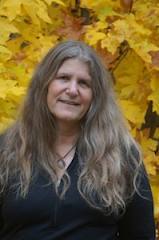
Brenda Cooper is an award-winning author of science fiction and fantasy as well as an IT professional and a well-known futurist. You can learn more about her and her published works on her web site. Her latest novel, Wilders can be purchased on Amazon and through other major online booksellers.
#SFWApro


No comments have been added yet.
Work in Progress
Random musings from a writer struggling to become an author.
- Brian Burt's profile
- 51 followers

