Accidental Arson
The door dinged once, a chime that was just background noise to most people, as she walked into the small coffee shop. Forty years ago, the place might have been described as a hole in the wall; now, however, it was just a shithole. Bare brick facades lined each wall, though she couldn’t be entirely sure they were in fact facades. The floor was naked concrete, cracked and paint-splattered, occupied my mismatched tables and misfit chairs. It wouldn’t be surprising if each piece of furniture in the joint had been pilfered from a landfill.
He was situated at a table to the back near the till, predatory eyes watching her from over the rim of his Styrofoam cup. The right side of her head was shaved, the hipster fashion that seemed to be a throwback to the days of Cowboys and Indians, but he couldn’t deny he found it hot. Her hair was red, not the bright color that only comes out of a box, but a natural red intermixed with blonde and brunette. The dress she wore was black and stopped at her knees, bright sunflowers dancing around its fabric. Wearing flats and high socks, she still stood at least six feet tall.
Of all the elements of her appearance, though, his gaze settled on her eyes. He could see the brown of her irises, a chocolate that could almost be described as warm if it weren’t for the set of her stare. Her eyes appeared bored, lazy, uncaring. It was a farce, he knew, a tactic to set an opponent on their heels. Hell, he had used it enough times on subjects of his own.
That gaze tried to set a fire in him. If he wasn’t here to eviscerate her, he would want to fuck her.
“All the wind blows and the angels sing,” he mumbled, the sound barely a breath escaping his mouth.
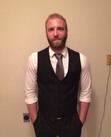
She moved towards his table with definitive purpose, her feet knowing exactly where the rest of her was headed. His dress shoes were scuffed, his slacks wrinkled, his tie eschew. There was a week old beard, more scruff than anything else, lining his jaw and cheeks, and his fingernails appeared chewed, wrapped around that coffee cup as they were.
If she didn’t already know what he looked like cleaned up, she would think this was his normal appearance. But it was just an illusion, an act meant to distract her, to catch her off guard. Maybe it worked on the other people he had interviewed.
“Paul I take it?” she greeted when she had reached his table, a bubbly inflection in her voice alerting him that the game had already begun.
“Yes ma’am,” he responded, keeping his ass firmly in its chair as he reached out to shake her hand. She had a firm grip, one of calluses and strength, one that betrayed nothing. “And you must be Holly…?”
He waited for several seconds for her to give him her last name as she settled herself into the chair opposite him, but the name wasn’t forthcoming. Clearing his throat once, he pulled a notepad and a pen from his inside jacket pocket. At the same time, she removed a manila folder from her oversized purse.
“Let’s start with the basics. Can I have your full name and where you’re from?”
Holly smiled, though bared her teeth would probably be a better phrase.
“Before I give you that information, information I know you already have, your paper wants to write a human interest piece about a small funeral home?”
“Something like that,” he answered. She could smell the lie wafting over his nicotine-stained teeth, like a politician’s backhanded promise. When she remained silent, he cleared his throat again. “Holly Michaels. You were born and raised in Tulsa, Oklahoma, before moving to Texas twelve years ago. You attended the Dallas Institute of Funeral Service, and have worked in three funeral homes since graduating. Of course I know all of this already, but this interview would go smoother if you would answer the questions.”
“Oh, I’ll answer your questions. Just as soon as I understand why you want to interview me. I’m nothing special or newsworthy.”
“Yeah, well, don’t journalists get to decide what is newsworthy? Besides, special is a subjective term.”
“Maybe they do. And maybe special is subjective. But if it is, your definition of special and mine don’t have to coincide. So maybe you could explain why your paper finds me special.”
“We like to do pieces on professions that people seem to forget exist but are extremely important. After all, where would we be as a society without funeral homes and the morticians that work in them? Someone has to do something with the dead.”
Paul took a sip of coffee, grimacing at the cold bitterness that slid down his throat. Holly mulled over his answer, selecting her words carefully.
“Ask your questions then.”
He removed the cap of his pen, flipped to a new page in the pad, and looked back up, his grey eyes meeting her brown. He lost the staring contest.
“What made you want to pursue a career in mortuary science?”
She sighed once before answering, the puff of air clearing the cobwebs of memory from her head.
“I guess I was just that weird kid who poked dead things with a stick, wanted to have a closer look, was never freaked out about the idea of mortality. Got to see my first autopsy at fourteen, took a career aptitude test in high school and got funeral director, and had the opportunity to work in a funeral home at seventeen. Left home to go to school for it and that’s really it.”
His pen moved to the cadence of her words, writing each word down as if they mattered.
“Not exactly an exciting story,” she said when his writing had ceased.
“There you go again, using subjective terms as if they have any bearing on objective reality.”
“According to Kierkegaard, objective reality can only be experienced subjectively. So these subjective terms have a lot of bearing, don’t you think?”
“Never been a fan of existentialism,” Paul responded, licking the tip of his pen. “The idea that I’m to blame for where my life ends up regardless of what happens outside of my control is bullshit.”
“Whatever you say.”
He had no desire to stick with these fluff questions, but he had to ease into the accusatory ones. She seemed too sharp to be caught off guard by allegations, however, and he still had no clue what she was hiding in that folder. There was no way she knew, but it was enough of a reason to remain cautious.
“What does a typical day in a funeral home look like?”
“Well, it starts with a phone call that leads to a body. We pick the deceased up, take them back to the mortuary, and start the miles and miles of paperwork. Once all the necessary forms have been started, we set up a meeting with the family, if the deceased had a family, plan the service, finish the paperwork, get the permits, embalm or cremate the body, and have the service.”
“Sounds like you really do have this down to an exact science.”
“Every profession in human history has been boiled down to an exact science. You think caring for the dead would be any different?”
Paul chose not to take the bait, seeing the carnivorous twinkle in Holly’s eye, knowing she was holding something back. There really was no way she knew…did she?
“Do you ever wonder what kind of people they were in life?”
“Every time I see a body. It’s hard not to, you know? I’m sure you wonder about the people you interview, who they are outside of the scant moments you get to spend with them. The difference being you know those people are still out in the world, still living and doing things. The people I wonder about will never take another breath, will never see another sunrise, will never love or laugh or cry again.”
“That has to be a heavy burden to bear. How do you cope?”
“Actually, it isn’t that heavy. When I was in school, I got the opportunity to hold a human brain. In that moment I literally had someone’s thoughts, someone’s feelings, someone’s hopes and desires and fears, someone’s very consciousness in my hands. A brain is nothing more than an inert piece of grey matter. So even though in life that ten pound piece of flesh had housed everything that made that person a person, in death those things are gone. That experience really reinforced this idea that there is a disconnect between the body and the self for me. So I might wonder about who they were, but I know that their body doesn’t really contain that essence.”
“Does this disconnect between the body and the self that you discovered that day in school change any thoughts you had about violent acts?”
And there it was, the real reason for the interview, the real reason Paul had wanted to chat. She had wondered how long it would take him to finally get to it, like waiting for a guy to finally ask for her number when she knew that was the only reason he was talking to her.
“You want to know about the fire?”
There was no shock on her face, no indication that Holly was surprised by this line of questioning. Her brown eyes remained bored, lazy. Hungry. Paul could swear she smiled ever so slightly, a smile of terrible beauty usually reserved for the dead.
“Yes,” the journalist finally said after taking another swig of coffee, “I want to know about the fire.”
“The funeral home burned down, an accident caused by a candle left overnight and heavy curtains, a fire made worse by flammable embalming fluids.”
“You really expect me to believe that?” Paul asked, sitting forward in his chair, his eyes becoming granite, ready to land the killing blow. “I have a fire investigator’s report that indicates an accelerant was used.”
“You mean this report?” Holly asked, pulling the first sheet out of her folder and sliding it across the old table to the journalist. He perused it, his stare softening as he did. “You’ll notice there was no indication of an accelerant. The fire was an accident, an accident that cost me my job. How dare you accuse me of arson.
“But I’m not the first person you’ve accused of something they didn’t do.” She removed the next several sheets of paper from her folder. They were copies of sealed ethics investigations, pink slips from various publications for fabricating evidence, an indictment for extortion. There was no way…
“How did you get this?” Paul demanded, his teeth threatening to crack under the pressure of the truth. “This is bullshit!”
“No, this is your legacy. I had nothing to do with that fire. And if you try to publish anything that implicates me in anyway, these get published in every paper in the area. I’m surprised you haven’t been blacklisted already if I’m being honest.”
Holly’s eyes remained bored, lazy as she extricated herself from the table and the journalist still poring over the documents she had presented. She didn’t look back once as she left the coffee shop. He wouldn’t be the first, she knew; there would be other journalists and reporters, law enforcement officials and members of the public that had questions. It was sheer luck that the first person to dig into the fire had lacked journalistic integrity. The next one would be cleaner.
She was smart, though, would figure out a way to keep the arson secret for as long as she had to.