An Interview with J.J. Green
And it's live. My latest anthology, called The Renegade, is live on all major stores. Make sure you check it out if you want some scifi shorts to fill in those little spare moments.
In my interview today, I am talking to J.J. Green, author of the Shadows of the Void and Carrie Hatchett, Space Adventurer series.
First question, and one that a lot of people ask me when they find out I'm an author: Were you good at English at school?
I was better at English language than English literature at school, mainly because succeeding in English literature involved doing homework! I was a poor student in both senses of the word.
But I loved to write. When I was eleven, I wrote a story inspired by the novel Starlight Barking, Dodie Smith's sequel to 101 Dalmations. My teacher liked it so much she asked me to read it to the class. When I finished and lifted my head, I realised that my whole class in my rowdy comprehensive school had listened quietly as I read. Later, when I was doing my O' levels, my angry English teacher was haranguing the class about their bad attitude. He said (shouted), there's only one person in this class who can write stories, and that's Jenny. So...(insert dire warning of what would happen if my classmates didn't buck their ideas up).
After that and other encouragement from other teachers and lecturers, writing was always my vocation, but I lacked the self-confidence and means to do it. I also had all those hurdles beginner writers face of procrastination, over-editing, failure to finish things etc.
Give us an insight into your main character. What does she do that is so special?
Jas Harrington is the main character in my Shadows of the Void series, and her personality is heavily influenced by her upbringing, as I think most people's are. She's the sole survivor of the largest colony disaster ever, which took place on Mars. Consequently, she's grown up in institutions and has no real sense of a family or home.
Adding to her problems, Jas was almost sent to Earth too late to avoid the excessive height and weakened bone structure of Martians who never leave the planet. So she's very tall and she has the colouring caused by gene therapy all Martians undergo to help them resist the effects of radiation. All this makes her stand out - in a bad way - in the Earth orphanage.
She becomes a good fighter who doesn't let down her guard easily, and she has a strong sense of justice. She wants to protect people, but she doesn't like them to become too close. Shadows of the Void is partially about how Jas changes.
Can you tell us a little about how the series progresses from there?
Shadows of the Void is a ten-book space opera series that begins in the far reaches of the galaxy on uninhabited and colony worlds, moves to the battle for Earth, and finally spreads out into the wider galactic empire. The Shadows aren't aliens in the traditional sense - they're creatures from another dimension, and they invade ours by killing and then replicating their victims with their own personalities inserted.
Being unable to tell the difference between your friend and a Shadow who wants to kill you is one of the biggest problems the characters face at the beginning of the story, especially as the Shadows retain the memories and knowledge of their victims.
Do you have any advice for other authors on how to market their books?
Don't believe that old adage that people shouldn't judge a book by its cover. The truth is, people judge books by their covers every time, even when they don't think they do. One of the main advantages and disadvantages of indie publishing is that you get to choose your own covers, which means that you have the opportunity to find something that fits the genre and looks appealing and you aren't vulnerable to someone else's potential incompetence in this area.
I spent and still spend hours studying covers. I'm artistically challenged, so it took me a long time to understand what makes a good cover. If you're lucky, you won't have to do this. Some people just have a knack for knowing what works and what doesn't.
Studying English literature tells students that to write full time they have to write like Hemingway. This just isn't true. You have to write competently in a genre that sells, and you have to have eye-catching covers that encourage readers to choose your book out of all the others.
What is your favourite motivational phrase?
This is something I made up, and I'm afraid it isn't anything very eloquent or mystical. Over the years of building a regular writing habit and forcing myself to do boring tasks like formatting paperbacks for Createspace or updating front and back matter for an ever-increasing number of books, I needed something that would get me over the myriad excuses not to work that would pop into my mind. I eventually thought up a phrase that tackles every single one of them bluntly and effectively.
My motivational phrase is 'Do it anyway'. I acknowledge that my writing is crap or that I'm tired or peckish or that the floor really needs sweeping, but that I'm going to do my intended task anyway. My subconscious hasn't found a way around that one yet and I don't think it never will.
That's a good thing to live by, even outside of writing. Thank you for taking the time to talk to me.
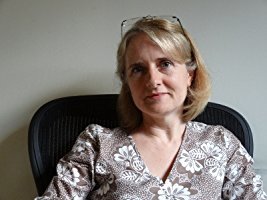 J.J. Green was born in London's East End within the sound of the church bells of St. Mary Le Bow, Cheapside, which makes her a bona fide Cockney. She first left the U.K. as a young adult and has lived in Australia and Laos. She currently lives in Taipei, Taiwan, where she entertains the locals with her efforts to learn Mandarin. Writers she admires include Philip K. Dick, Ursula Le Guin, Douglas Adams, Connie Willis and Ann Leckie.
Green writes science fiction, fantasy, weird, dark and humorous tales, and her work has appeared in Lamplight, Perihelion, Saturday Night Reader and other magazines and websites. Follow her on Facebook and Twitter.

In my interview today, I am talking to J.J. Green, author of the Shadows of the Void and Carrie Hatchett, Space Adventurer series.
First question, and one that a lot of people ask me when they find out I'm an author: Were you good at English at school?
I was better at English language than English literature at school, mainly because succeeding in English literature involved doing homework! I was a poor student in both senses of the word.
But I loved to write. When I was eleven, I wrote a story inspired by the novel Starlight Barking, Dodie Smith's sequel to 101 Dalmations. My teacher liked it so much she asked me to read it to the class. When I finished and lifted my head, I realised that my whole class in my rowdy comprehensive school had listened quietly as I read. Later, when I was doing my O' levels, my angry English teacher was haranguing the class about their bad attitude. He said (shouted), there's only one person in this class who can write stories, and that's Jenny. So...(insert dire warning of what would happen if my classmates didn't buck their ideas up).
After that and other encouragement from other teachers and lecturers, writing was always my vocation, but I lacked the self-confidence and means to do it. I also had all those hurdles beginner writers face of procrastination, over-editing, failure to finish things etc.
Give us an insight into your main character. What does she do that is so special?
Jas Harrington is the main character in my Shadows of the Void series, and her personality is heavily influenced by her upbringing, as I think most people's are. She's the sole survivor of the largest colony disaster ever, which took place on Mars. Consequently, she's grown up in institutions and has no real sense of a family or home.
Adding to her problems, Jas was almost sent to Earth too late to avoid the excessive height and weakened bone structure of Martians who never leave the planet. So she's very tall and she has the colouring caused by gene therapy all Martians undergo to help them resist the effects of radiation. All this makes her stand out - in a bad way - in the Earth orphanage.
She becomes a good fighter who doesn't let down her guard easily, and she has a strong sense of justice. She wants to protect people, but she doesn't like them to become too close. Shadows of the Void is partially about how Jas changes.
Can you tell us a little about how the series progresses from there?
Shadows of the Void is a ten-book space opera series that begins in the far reaches of the galaxy on uninhabited and colony worlds, moves to the battle for Earth, and finally spreads out into the wider galactic empire. The Shadows aren't aliens in the traditional sense - they're creatures from another dimension, and they invade ours by killing and then replicating their victims with their own personalities inserted.
Being unable to tell the difference between your friend and a Shadow who wants to kill you is one of the biggest problems the characters face at the beginning of the story, especially as the Shadows retain the memories and knowledge of their victims.
Do you have any advice for other authors on how to market their books?
Don't believe that old adage that people shouldn't judge a book by its cover. The truth is, people judge books by their covers every time, even when they don't think they do. One of the main advantages and disadvantages of indie publishing is that you get to choose your own covers, which means that you have the opportunity to find something that fits the genre and looks appealing and you aren't vulnerable to someone else's potential incompetence in this area.
I spent and still spend hours studying covers. I'm artistically challenged, so it took me a long time to understand what makes a good cover. If you're lucky, you won't have to do this. Some people just have a knack for knowing what works and what doesn't.
Studying English literature tells students that to write full time they have to write like Hemingway. This just isn't true. You have to write competently in a genre that sells, and you have to have eye-catching covers that encourage readers to choose your book out of all the others.
What is your favourite motivational phrase?
This is something I made up, and I'm afraid it isn't anything very eloquent or mystical. Over the years of building a regular writing habit and forcing myself to do boring tasks like formatting paperbacks for Createspace or updating front and back matter for an ever-increasing number of books, I needed something that would get me over the myriad excuses not to work that would pop into my mind. I eventually thought up a phrase that tackles every single one of them bluntly and effectively.
My motivational phrase is 'Do it anyway'. I acknowledge that my writing is crap or that I'm tired or peckish or that the floor really needs sweeping, but that I'm going to do my intended task anyway. My subconscious hasn't found a way around that one yet and I don't think it never will.
That's a good thing to live by, even outside of writing. Thank you for taking the time to talk to me.
J.J. Green was born in London's East End within the sound of the church bells of St. Mary Le Bow, Cheapside, which makes her a bona fide Cockney. She first left the U.K. as a young adult and has lived in Australia and Laos. She currently lives in Taipei, Taiwan, where she entertains the locals with her efforts to learn Mandarin. Writers she admires include Philip K. Dick, Ursula Le Guin, Douglas Adams, Connie Willis and Ann Leckie.Green writes science fiction, fantasy, weird, dark and humorous tales, and her work has appeared in Lamplight, Perihelion, Saturday Night Reader and other magazines and websites. Follow her on Facebook and Twitter.


No comments have been added yet.