In a conversation with Chitrangada Mukherjee- the author of 'Secret Diary of an Incurable Romantic'
Hey book lovers, today we have on board the beautiful Chitrangada Mukherjee. Born and raised in the scenic north-eastern state of Tripura, the author post graduated in History from the Presidency College in Kolkata, a city which made her a thinker. A love affair resulting in marriage brought her to the south of India, where she worked as a tele-caller, teacher, news reader, soft skills trainer, quiz show hostess, and content writer. Five years ago she decided to leave her cushy IT job and embrace motherhood. While at home, she started to introspect about her true calling. She found it in writing. Apart from writing and reading, she loves listening to music on her headphones, grass walking, and gazing at the ocean. Chennai is her home now, where she lives with her seven-year-old daughter and husband. Secret Diary of an Incurable Romantic is her second novel. So without further ado, let's get started: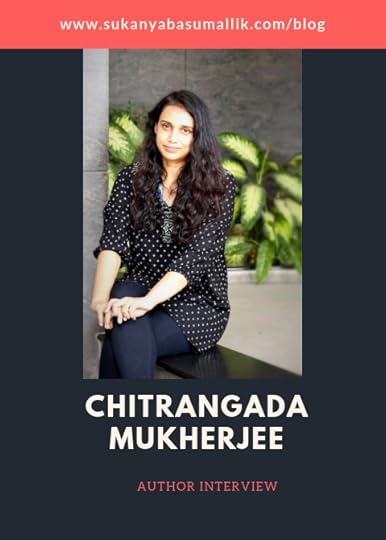 1.One fictional character that resembles you the most?A combination of Bridget Jones (Bridget Jone’s Diary), Elizabeth Bennet (Pride and Prejudice) and Nel Abbot (Into the Water)Secret Diary of an Incurable Romantic is a sort of book which has a lot going on.2.What were the challenges that you faced while writing the book?I didn’t struggle at all while writing this book. In fact, I laughed aloud and was cheerful the entire time. And I’m glad readers have got the humour and are calling this book ‘hilarious’. Some have called it a “happy-sad” tale and I find this a more apt descriptor. Anyway, the challenge came in much later, when I was editing the book. Editing a book requires looking at you work objectively and that translates into ruthlessly cutting down on chapters; re-writing; plotting; sequencing etc.3.How did reading influence your writing/ belief-system?I don’t have favourites. And I am quite selective about the books I read. I’m not a voracious reader; I’m a temperamental one. I pick and choose my books carefully. Having said that, I would like to name a few which are on top of my mind and whose work I admire: Kamala Das, Helen Fielding, JK Rowling, Jhumpa Lahiri, SJ Watson, Gillian Flynn, Han Kang, Jane Austen, Stephen Chbosky and Agatha Christie.4.Few quickies :Money or fame?Both Commercial fiction or literary fiction? BothBlogging or vlogging? BothInterviews or book reviews? BothAudiobooks or ebooks? None. I’m partial towards paperbacks and hardcovers – call me old-fashioned if you like.Plotter or panster? Planster (a bit of both)5. How long does it take to write the first draft? You've written 2 books now. Did you slow down or speed up your writing process?It takes 3 months to write the first draft, if I’m convinced about the plot and the characters. My speed is just the same.6. How was your experience? Did it differ from your expectations?I’ve had a great time writing and seeing my book publish online and in book stores. The love and adulation received from readers and critics’ is way more than I had expected. I’m a very happy person, right now.7. What do you think is the most exciting thing about a book release?Sharing your thoughts and stories with readers and their appreciation is the award for all the hard work you put in and the days you spend working in isolation.8. What are the pros and cons of traditional publishing?I had to publish my first book independently, so I’ve done the self-publishing bit too. My first book was a psychological thriller and after waiting for months, I asked a friend to do a cover design and another friend to convert it into an e-book and upload on amazon; I didn’t spend a penny from my pocket. Self-publishing is fast, you don’t have to wait to fit-into a publisher’s calendar. But that’s where the benefit ends. In traditional publishing, the publisher helps you to market your book and it’s a credible way to get recognised for your work. Publishers and the literary community doesn’t take self-published authors seriously; maybe because the quality of a self-published book, particularly in terms of editing is not at par with a book published by a renowned publisher – in most cases, not all. In self-publishing, you will have to spend from your pocket, if you opt for a paperback or hardcover version of your book. When you publish traditionally, you don’t spend a rupee.9. Who's your favourite author so far and why?As I said, no favourites. But I do lean towards writers like Kamala Das or Jhumpa Lahiri or Ottessa Moshfegh when I’m looking for inspiration.10. Could you kindly introduce us to your latest book in brief?After writing my first book, which was a profound, sad and disturbing tale, I was looking to write something frothy and light. Also I wanted to explore the fun and quirky side of me. Taking inspiration from the works of Helen Fielding and Marian Keyes, I created the character of Madhubala Ray, who is thirty-something, grieving and yet not ready to give up on life. Later, I created the other characters and a story line which would unfold in the course of a year and in the place where I live -- Chennai. I chose the diary format to tell this tale because I find it interesting and highly personal; so it would be like having a conversation with an interesting person for the reader.11. A lesson that you've learnt throughout the process of publishing your book babies ?I've learnt to be patient and slightly indifferent to success and failure. I've also learnt the marketing side of publishing a book, which I didnt know - earlier. And most importantly, I've discovered that the only craft that I want to dedicate my life to is -- writing. 12. Your advice to aspiring authors? We all have that one book in us, so write it. But before you do, think hard about what new can you offer and if you will be able to pull it off. Choose your genre carefully and spend some time researching on the type of reads available in the genre. Work on the language, I do. The best way to work on language skills is to read and then write. Work on plotting, I plot all day and fail and then try once again like the proverbial spider. Work on editing your manuscript, I always do – it’s a must. And make sure you work with an editor before publishing your book. Once you publish your book, market it well.
1.One fictional character that resembles you the most?A combination of Bridget Jones (Bridget Jone’s Diary), Elizabeth Bennet (Pride and Prejudice) and Nel Abbot (Into the Water)Secret Diary of an Incurable Romantic is a sort of book which has a lot going on.2.What were the challenges that you faced while writing the book?I didn’t struggle at all while writing this book. In fact, I laughed aloud and was cheerful the entire time. And I’m glad readers have got the humour and are calling this book ‘hilarious’. Some have called it a “happy-sad” tale and I find this a more apt descriptor. Anyway, the challenge came in much later, when I was editing the book. Editing a book requires looking at you work objectively and that translates into ruthlessly cutting down on chapters; re-writing; plotting; sequencing etc.3.How did reading influence your writing/ belief-system?I don’t have favourites. And I am quite selective about the books I read. I’m not a voracious reader; I’m a temperamental one. I pick and choose my books carefully. Having said that, I would like to name a few which are on top of my mind and whose work I admire: Kamala Das, Helen Fielding, JK Rowling, Jhumpa Lahiri, SJ Watson, Gillian Flynn, Han Kang, Jane Austen, Stephen Chbosky and Agatha Christie.4.Few quickies :Money or fame?Both Commercial fiction or literary fiction? BothBlogging or vlogging? BothInterviews or book reviews? BothAudiobooks or ebooks? None. I’m partial towards paperbacks and hardcovers – call me old-fashioned if you like.Plotter or panster? Planster (a bit of both)5. How long does it take to write the first draft? You've written 2 books now. Did you slow down or speed up your writing process?It takes 3 months to write the first draft, if I’m convinced about the plot and the characters. My speed is just the same.6. How was your experience? Did it differ from your expectations?I’ve had a great time writing and seeing my book publish online and in book stores. The love and adulation received from readers and critics’ is way more than I had expected. I’m a very happy person, right now.7. What do you think is the most exciting thing about a book release?Sharing your thoughts and stories with readers and their appreciation is the award for all the hard work you put in and the days you spend working in isolation.8. What are the pros and cons of traditional publishing?I had to publish my first book independently, so I’ve done the self-publishing bit too. My first book was a psychological thriller and after waiting for months, I asked a friend to do a cover design and another friend to convert it into an e-book and upload on amazon; I didn’t spend a penny from my pocket. Self-publishing is fast, you don’t have to wait to fit-into a publisher’s calendar. But that’s where the benefit ends. In traditional publishing, the publisher helps you to market your book and it’s a credible way to get recognised for your work. Publishers and the literary community doesn’t take self-published authors seriously; maybe because the quality of a self-published book, particularly in terms of editing is not at par with a book published by a renowned publisher – in most cases, not all. In self-publishing, you will have to spend from your pocket, if you opt for a paperback or hardcover version of your book. When you publish traditionally, you don’t spend a rupee.9. Who's your favourite author so far and why?As I said, no favourites. But I do lean towards writers like Kamala Das or Jhumpa Lahiri or Ottessa Moshfegh when I’m looking for inspiration.10. Could you kindly introduce us to your latest book in brief?After writing my first book, which was a profound, sad and disturbing tale, I was looking to write something frothy and light. Also I wanted to explore the fun and quirky side of me. Taking inspiration from the works of Helen Fielding and Marian Keyes, I created the character of Madhubala Ray, who is thirty-something, grieving and yet not ready to give up on life. Later, I created the other characters and a story line which would unfold in the course of a year and in the place where I live -- Chennai. I chose the diary format to tell this tale because I find it interesting and highly personal; so it would be like having a conversation with an interesting person for the reader.11. A lesson that you've learnt throughout the process of publishing your book babies ?I've learnt to be patient and slightly indifferent to success and failure. I've also learnt the marketing side of publishing a book, which I didnt know - earlier. And most importantly, I've discovered that the only craft that I want to dedicate my life to is -- writing. 12. Your advice to aspiring authors? We all have that one book in us, so write it. But before you do, think hard about what new can you offer and if you will be able to pull it off. Choose your genre carefully and spend some time researching on the type of reads available in the genre. Work on the language, I do. The best way to work on language skills is to read and then write. Work on plotting, I plot all day and fail and then try once again like the proverbial spider. Work on editing your manuscript, I always do – it’s a must. And make sure you work with an editor before publishing your book. Once you publish your book, market it well.


No comments have been added yet.