How to Create a Voice Style Guide That Will Solve Inconsistency Problems
Voice is a mystical thing. Every editor and agent is on the lookout for a manuscript with a strong, unique voice. Most can give examples of great voices, but when it comes down to the nuts and bolts of how an author actually pulls that off . . . well, let’s just say you’re on your own.
Probably the only way to teach yourself how to find the right voice for a story is simply by writing. A lot. And experimenting. Hanging out with your character and getting to know them. Digging down deep and trying out different flavors, rhythms, and textures of voice. Keep digging until it really rings true.
But that’s not to say that there aren’t some concrete things you can do to help you build your voice muscles. I’m sharing a behind-the-scenes look at one very non-mystical, very do-able task for finding a voice: Create your very own style guide for this particular voice.
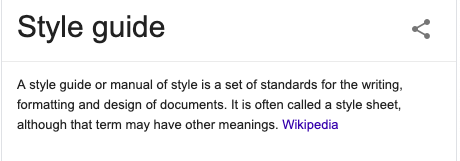
When companies want to be certain that multiple people working on a website or a document all write with one consistent voice or with the same conventions, they use a collection of guidelines called a style guide. The purpose of a style guide is to steer the writer as they make deliberate choices about words and conventions to elicit the targeted tone, mood, or perception.
You can use the same concept when creating a voice for a character or a narrator. Once you find the voice you want, try to describe the voice so well that another writer could copy it.
That other writer is you, of course—the tomorrow you and the next-week you and so on. I often struggle with my own consistency from day to day, especially in the early stages of a novel. Sometimes I feel like a different writer from one writing day to the next, and sometimes my characters feels a little squishy–sloshing around, switching names, changing backstories. Poor things. Life is tough when you’re a fictional character.
It’s not unusual for me to be halfway through the first draft of a novel before the voice really starts to sing. That’s when you I like to start thinking about the voice I’ve discovered and what makes it unique. But I don’t go back just yet and rewrite the previous scenes.

When you feel that voice coming into focus, start writing down a collection of words that describe it. Those words might be adjectives, emotions, even nouns that elicit a certain mood or tone. This is the beginning of your style guide.
Are you writing a novel from more than one point of view? Are you working on two different projects at the same time? Style guides are fantastic because you can create a different style guide for each voice. That will help you be sure they sound distinguishable and irresistibly unique.
Maybe you have to take a break from a certain project and come back to it weeks or even months later. Read over the style guide as well as the pages you’ve already written. That’s bound to help you slip into that voice again and continue writing.
To create a voice style guide, start by checking out these examples for ideas about how they work and what they look like. These are the more business or academic examples, so think about how that translates into the creative application we’re talking about.
When I started writing a dual-POV novel, I knew I needed the two voices to be distinct, but I struggled with that. That’s when I decided to write a style guide for each. Here’s what I included:
Voice and Tone: How would you describe this character’s dominant expression? How does she present herself to the world? Try pairing a strong adjective with a noun that describes what kind of person she is. Example: Non-nonsense organizer. You can also write a list of ” _________ but not _________” statements. Examples: Witty, but not sarcastic. Straightforward, but not simplistic. Feisty, but not abrasive.
Body Language: What kinds of body language does she favor? How does her backstory reflect in the way she carries herself? What kinds of triggers might alter her body language? When you’re writing dialogue and you need the perfect beat for a certain line, you can take a peek at your body language style guide for some help. Examples: Because her mother constantly corrected her posture, when she feels threatened or insecure, she sits or stands a little straighter without even realizing it.
Speech Patterns: Does she have any quirky phrasing or syntax idiosyncrasies? How does her background affect her speech? Make a list of her personality traits and how each one could manifest in her speech patterns. Example: She is a rule-follower and she is well educated, so she takes great pains to use grammatically correct language.
Thought Process: Get out that list of personality traits again. This time think about how each one of these traits might affect her thought process. Thought process is something that becomes more important when you are writing from a very deep POV. Example: She tends to go about tasks in methodical, systematic ways. That tells me that her thoughts will generally move logically from one idea to the next. Rarely does she have thoughts that come out of nowhere.
Word Bank: Make lists of words or phrases that your character tends to use. Think about exclamations, verbs, nouns, modifiers, expressions of emotion. Examples: “My stars!” is very different from “What the hell?” And there are all kinds of words for a bathroom, depending on one’s background and on the context. Would your character say toilet, john, powder room, little girls’ room, the commode, the crapper or would they make up their own funny name for it? Whatever it is, write it down so you can be consistent. Remember to go easy on repeated words or phrases. If you’re too heavy handed with it, you’ll annoy readers.
Now, I’ll be the first to admit that a style guide is not the only element involved in creating a strong voice. But if you’re struggling to find the right voice for your character, a style guide can get you on the right path. Or, if you feel like you know the voice but it’s not coming through strong enough, see if a style guide will help you bring it out more.