Read the Introduction for “The New Nicene Creed”
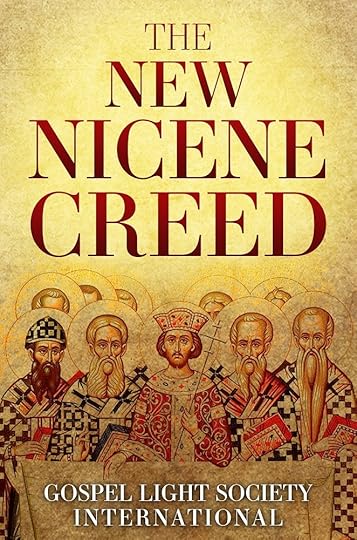
If you have attended a Lutheran, Anglican, Methodist, or Presbyterian church, you may have heard something similar to the words which are referred to as the Nicene Creed. Now, Baptists (which I consider myself to be), as a rule, do not subscribe to any creed. Coming out of the Protestant Reformation, Baptists decided that, unlike other Protestant denominations, they would be non-creedal. Baptists state that “the final authority for faith and practice is the Bible, not words about the Bible.” And even though I am a Baptist, I like Biblical creeds.
However, while we should not hold any creed to the level of inspired Scripture, there are elements from church tradition that we can learn from and at least should be aware of.
The Nicene Creed is one of those things.
What is a creed? According to Merriam-Webster, a creed is a “statement of basic beliefs; an idea or set of beliefs that guides the actions of a person or group.” Thus, the Nicene Creed is a statement of what the early church believed.
Why this book? Why does the Nicene Creed need “important revisions and updates for the modern era”?
First, I believe it is important to increase knowledge about the basic beliefs of Christianity especially in this day and time when secularism, agnosticism, atheism, and non-religion appear to be making a larger footprint in the world. Parents can teach the Creed to their children, pastors can teach it to their congregations, Christian schools (and even public and non-Christian private schools) can teach it to their students as it is a succinct, easy-to-remember summary of the basic beliefs of Christianity.
The second reason this book is necessary is because although the Nicene Creed is not inspired Scripture—it was put together by various men throughout history—it is a near-perfect statement. Even with the revisions and updates presented in this little book, it isn’t perfect. However, unlike God’s infallible Word, when necessary, we should be open to revising man-made statements that were developed under the cloud of human perspectives with all of the faultiness that entails.
So, let’s take a look at how we’ve updated the Nicene Creed for the modern era.