Soft vs Hard Magic Systems
So... I was wondering this morning about the practicalities of designing either a 'soft' or 'hard' magic system within a book.
Establishing strong characters and an equally compelling story line should, in my opinion, always be the first port of call for any genre. But magic systems are also the calling cards of Fantasy - they make the genre distinctive.
Harry Potter has wands and spells; the Mistborn Trilogy has a strict system of rules and limitations, requiring the consumption of metals for magic and for the 'magic user' to have been born able to use one or all of the metals; and then you have Tolkien's Lord of the Rings (LoTR), where the limitations and extent of magic are shrouded in mystery.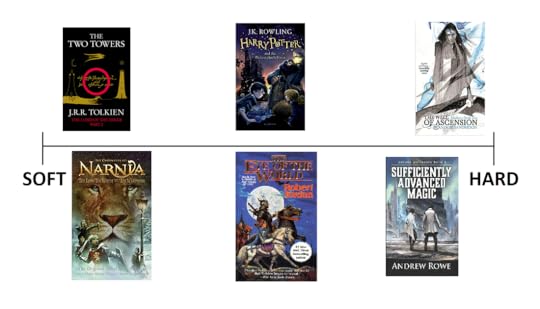 I had an English Literature teacher who found the use of magic in books utterly abhorrent; he felt it undermined any clever writing and effectively allowed characters a get-out-of-jail-free card when things got a bit sticky.
Proponents of hard magic systems argue that by having a clearly designed magic system with a set of rules and limitations ensures a better functioning novel - characters can't cheat their way out of trouble and readers understand how the magic works.
Soft magic systems, as present in the likes of LoTR, work quite well in the sense that magic isn't used so much to get characters out of trouble but rather to project a sense of wonder about the world as you explore it.
Things get a little blurry between the two distinctions when you factor in how 'nebulous' or 'rational' a magic system in a particular book is.
A rational magic system will establish consistent laws that the characters have to follow when wielding magic. A nebulous magic system things are bit more... iffy; take, for instance, Gandalf. In LoTR we see brief flashes of awesome power but we don't really know the full extent of his powers, its limitations, how it works, etc, etc.
Brandon Sanderson (author of the Mistborn Trilogy) laid out a set of guidelines for the building of magic systems in Fantasy:
Sanderson's First Law: An author’s ability to solve conflict with magic in a satisfying way is directly proportional to how well the reader understands said magic.
Sanderson's Second Law: Weaknesses (also Limits and Costs) are more interesting than powers.
Sanderson's Third Law: Expand on what you have already, before you add something new. If you change one thing, you change the world.
Hope you enjoyed reading this!
- Farrell
Establishing strong characters and an equally compelling story line should, in my opinion, always be the first port of call for any genre. But magic systems are also the calling cards of Fantasy - they make the genre distinctive.
Harry Potter has wands and spells; the Mistborn Trilogy has a strict system of rules and limitations, requiring the consumption of metals for magic and for the 'magic user' to have been born able to use one or all of the metals; and then you have Tolkien's Lord of the Rings (LoTR), where the limitations and extent of magic are shrouded in mystery.
I had an English Literature teacher who found the use of magic in books utterly abhorrent; he felt it undermined any clever writing and effectively allowed characters a get-out-of-jail-free card when things got a bit sticky.Proponents of hard magic systems argue that by having a clearly designed magic system with a set of rules and limitations ensures a better functioning novel - characters can't cheat their way out of trouble and readers understand how the magic works.
Soft magic systems, as present in the likes of LoTR, work quite well in the sense that magic isn't used so much to get characters out of trouble but rather to project a sense of wonder about the world as you explore it.
Things get a little blurry between the two distinctions when you factor in how 'nebulous' or 'rational' a magic system in a particular book is.
A rational magic system will establish consistent laws that the characters have to follow when wielding magic. A nebulous magic system things are bit more... iffy; take, for instance, Gandalf. In LoTR we see brief flashes of awesome power but we don't really know the full extent of his powers, its limitations, how it works, etc, etc.
Brandon Sanderson (author of the Mistborn Trilogy) laid out a set of guidelines for the building of magic systems in Fantasy:
Sanderson's First Law: An author’s ability to solve conflict with magic in a satisfying way is directly proportional to how well the reader understands said magic.
Sanderson's Second Law: Weaknesses (also Limits and Costs) are more interesting than powers.
Sanderson's Third Law: Expand on what you have already, before you add something new. If you change one thing, you change the world.
Hope you enjoyed reading this!
- Farrell


No comments have been added yet.