IN A FREEWHEELING CONVERSATION WITH PLAYWRIGHT/WRITER/ACTOR DON CUMMINGS…
I have always wanted to use the word “freewheeling.” And now I have. And as it happens, it is absolutely not applicable to the discussion I had with Don Cummings. And just to be sure about that, I confirmed the definition, which includes: “loose and undisciplined.”
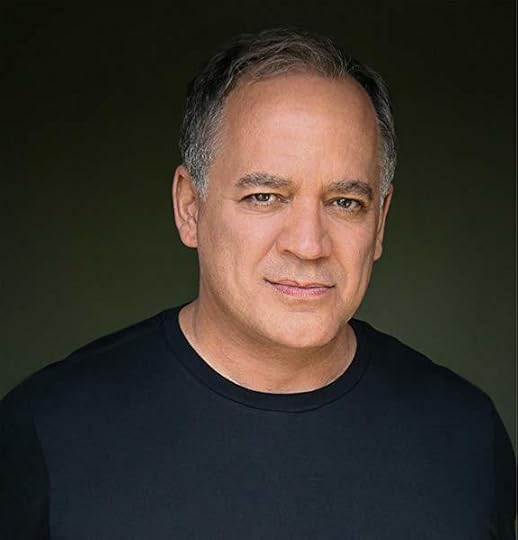 Yeah, no. My conversation with Don was the opposite of that. It’s not that Don speaks in complete sentences. He speaks in complete paragraphs. Complete, incisive, well-thought-out paragraphs. We talked for over two hours. During that time, he might have said “like” and “you know” once each. Tops.
Oh, and in the interest of full disclosure—
Yes, that is a phrase I have wanted to use for many years.
This is my first opportunity to employ it in print. Proving, once again, that
it is never too late…
So, full disclosure: Don is a relatively new and, in short order, treasured friend of mine. I met him at a reading. It was rapidly clear that he is smart and warm and funny. I subsequently read and reviewed his memoir, Bent But Not Broken. As you can see, I loved it:
https://www.nyjournalofbooks.com/book-review/bent-not-broken
From reading Don’s work, I knew that he is tremendously
talented. And so I’d like to take this opportunity to officially announce my
candidacy for president of the Don Cummings: The Man and The Man’s Writing Fan
Club.
Y’all better vote for me after you read this essay. Because,
seriously, who’s gonna do a better job?
The catalyst for this particular lunch Don and I had was the
world premiere of Don’s play, The Water
Tribe, a joint production of VS. Theatre Company and Ensemble Studio
Theatre/LA at VS. Theatre, 5453 West Pico Blvd. in Los Angeles. Previews are on
January 10, 11, 12, and it opens Friday, January 17, with performances Fridays
and Saturdays at 8, Sundays at 2, through February 9, 2020.
I’ve read the play. Are you surprised to hear that I loved
it? I can’t wait to see it performed. And if you’re in the L.A. area, you
shouldn’t miss it. Tickets are available at: https://www.estlosangeles.org.
A bit of background on Don before I get to the substance of
our discussion. He was born in Bronxville and grew up in Suffern, both in the
Great State of New York. He attended Tufts University and spent a semester in
college studying in Paris. Right after college, Don went to the Neighborhood
Playhouse School of the Theatre in New York City for two years to study acting
with Sanford Meisner.
Don and his husband Adam Waring, a TV writer and
entertainment exec, are “annoying Francophiles.” With their poodle/bichon
Maude, they live “on the edge of Hollywood, just south of the border; we can
see Hollywood from our window.”
Before I met with Don, I asked our mutual friend Carole
Real, a truly wonderful writer, to send me a list of questions she would want
to ask a fellow playwright. Her list, as with all her creations, is lovely and
inspiring, and it formed the basis, along with my observations from reading The Water Tribe, of my discussion with
Don. I am joyously indebted to her. In a word, Carole ROCKS.
Yes, she is so sublimely
fabulous, she deserves all caps.
Don and I got together at a restaurant in the Los Feliz
section of Los Angeles. The first place we went to had a line out the door for
counter service, and we were, like, yeah, fuck this standing around waiting for
maybe, what, half an hour bullshit, so we walked across Hillhurst to a place
Don knew that I had passed many times but had yet to try, and it’s now one of
my favorite restaurants. Lots of vegetarian options. Yay for that.
Other than pausing to tell the charming server that the
potato salad was the best I have ever tasted, and that was not hyperbole, we
spent just about all our time talking about writing and creating as it
pertained to Don’s new play and about writing and creating in general. I
recorded Don’s answers, of course, and about halfway through, I told him that
the transcript of his words should be the foundation of a book or the outline
for a master class on plays, writing, and storytelling.
That was not hyperbole. I typed his answers and I sent them
to Don as is. I hope he takes my suggestion and shares them with the world in
some fuller form. If he does, I expect my name to be listed first in the Acknowledgements section.
Don told me what his impetus was for writing The Water Tribe. As you can imagine,
water and tribes figure prominently in the story. Each of those words is
significant for Don as the conjurer of this tale. A big part of the motivation
began on a trip with Adam:
“When we were in Africa, I was
really moved by the pain of this woman in this Maasai tribe, and she really
kept staring at me and it was more than just interest. I decided, I don’t know
if it’s true, but I decided that she wanted out of there and it was really very
upsetting.
And I don’t know if I’m exactly
an atheist and I’m also against a lot of organized groups in general, so I
really wanted to write the play that was almost like a Bernard Shaw play, to
prove that tribes are terrible, and how everything about them is oppressive and
horrible.
And then I read about it, and if people are not in tribes,
they will die.”
As a side note: I’m a very social person, and I also need
lots of chances to be alone. I think that puts me into the category of
“extroverted introvert,” no? I share Don’s skepticism about group thinking. And
I found myself wide-eyed and nodding with recognition when Don spoke of the vital
need to be part of a community. It’s one of the reasons I’m a proud Democrat
(well, specifically a Femocrat); I believe we rise and fall together.
Regarding the significance of water in this story:
“The water actually came from
the Flint, Michigan thing. Did you know that Flint, Michigan is the tip of the
iceberg?
There are hundreds and hundreds
of municipalities in the United States that do not have drinking water; Newark,
tons of places in western Pennsylvania, everywhere.
Obviously the people in Africa have a lot of problems with
that. And the women. They get raped because they’re on their way five
kilometers back to their place when they go to get water and it’s very unsafe.”
Because virtually every activity has its hard parts and its
easier parts, Don discussed the easiest aspects and the hardest challenges of
writing The Water Tribe:
“The easiest thing was knowing
who the characters were. That came to me effortlessly. I knew the number of
characters. I knew I wanted a young couple and then there needed to be some
foils, and that all came to me and it was pretty easy.
The hardest part about writing
this play, and it’s the hardest part I have with every play, is not knowing
when it’s done. I don’t mind editing and killing my darlings, that’s fine, but
it was knowing which things to kill. And there was some stuff in this play,
about four or five items that were going on, that are just gone. And I would
say the hardest part wasn’t removing them, the hardest part was gaining
awareness that they needed to be removed. And without the help of others, I
would not have known it.”
Don spoke of where he would
like to see the play go after the premiere at VS. Theatre, and that included
the play staying in southern California “at the Taper or the Geffen or South
Coast Rep,” and a regional theater life with other companies performing it.
And then he got me teary when he told me what he would like
audiences to take away from his play, and so I want to quote his response in
full:
“I’m not going to answer this
with a particular response to what the story is, not about what people think
happens.
This is so general, but that’s
okay; I hope that people will listen to each other, in general listen to other
people, with a more compassionate understanding that everyone struggles. That’s
what I want. That’s it.”
May I echo Don’s lovely wish;
now more than ever…compassion, understanding, kindness.
 I told Don that among the many things that struck me in reading The Water Tribe are his creation and expression of the protagonist, a woman. I confessed that I didn’t think I could do an honorable job of giving voice to a male protagonist in my comedic novels. Don explained his process in creating Claudia, the character who is the focus of his play:
“I have a lot of strong,
amazing women that I grew up with, so I’m used to having that around me. Part
of the reason why I became a playwright was because I was an actor. And part of
being an actor is that you’re constantly putting yourself in the shoes of
others, so it wasn’t that hard for me.
I’ve always had a ton of female
friends, so I don’t even really exactly understand this drastic line between
the two emotionally. I don’t feel distant from women, so I feel that I understand
them, and the truth is the lead character’s emotional life is based on my
emotional life. Of course it has changed and it’s fiction, but the feeling of
fear of abandonment and being not connected to others is something I feel. And
so it’s universal, and if it’s a man or a woman, it doesn’t make a difference.”
Don and I also talked about playwriting
in general, including the play he would pick if the world were to suddenly spin
off its axis and he were only able to see one work again for the rest of his
life:
“I would want to see The Three Sisters over and over again. I
want it to constantly change, and I want it to not only change in casting, but
I want it to constantly change in style, because for me it’s kind of a perfect
play. It’s probably the play that I’ve read the most.
That play, Burn This, and Who’s Afraid
of Virginia Woolf? are probably the three plays I’ve read the most. But if
I was in some kind of purgatory and I could just see one of them over and over
again, I think The Three Sisters has
the biggest world and the most room for variation.”
I asked Don if playwrights are
ever satisfied with their plays:
“I’m going to go in the opposite
direction. I think most playwrights always find something they think they could
do better, something could be better, this and that. I am not that person
because I like to move on to the next thing. And actually the truth is I’m
usually more satisfied. I feel that my job is to make sure the stuff on the
page is correct for me, and I have not been in a situation where I’ve had plays
and I feel like they need to be drastically changed, because I do work on them
for a long time before they’re up on their feet. Some painters have the
attitude, oh, I want to go back and retouch a little thing, or there are
novelists who, even when their novel is published, not only do they want to
change it, but they actually sit around and do. They take their published
manuscript and start tinkering with it. To me, that’s nuts. I like to move on,
so I’m actually usually pretty satisfied.”
Before we left the restaurant,
Don on his way to pick up something called a “jigsaw” (which is not, as I
assumed, a puzzle, but, apparently, an important tool in creating a stage set)
in the Valley because he is doing whatever needs to be done to get the show on,
and me to a quick stop at a pet store to buy yet another cozy bed for our three
rescued senior dogs, which I would then awkwardly carry the two-mile walk back
to my house because I may be an Angelina but I’m also, once and forever, a New
Yorker and I don’t need no stinkin’ car to cover a distance of 40 short NYC
blocks on a gorgeous day, I asked Don who he’d like to thank for this
production opportunity. I’m going to quote him in full again, because if Don
considers these people worthy of thanks, so do I and, in addition, I really
appreciate the values and sentiments Don highlights via the words he chooses to
express his gratitude:
“I really want to thank
Ensemble Studio Theatre/LA, especially for the development process. Without the
playwrights unit, this play would not be as good as it is, so that’s really
number one.
I have to thank Johnny Clark
for the space over at VS. Theatre Company. He’s always been a big supporter of
my work and we were always talking about the day when we could do something
together, and this is the one. So I’m glad that in an industry where people can
just say things and not mean them, he’s a great guy, he’s of his word, and at
VS. Theatre Company a lot of risk-taking wonderful new work happens. It’s a
great place. I’m really grateful to be a part of it at all.
And I have to thank Crystal
Jackson and Lizzy Ross, my co-producers, who are organizing everything. A big
thanks has to go to Tricia Small. Tricia Small is a tireless, super creative director
who has this incredible ability to not only work well with actors, but is
excited by design and the physical elements. A lot of directors are good at one
or the other. She really does it all. She’s willing to roll up her sleeves and
push her resources and her list of people who can help, including Adam Glover,
Tyler Matthew Burk, and Shara Abvabi, all deep creatives. She did all that and
more. I am super, super grateful.
And lastly my cast, Hannah
Prichard, Christopher Reiling, Jayne Taini, Jon Gentry, and Alexandra Daniels.
They’re having a great time, and, yes, I’m grateful that they’re doing it, but
I’m also really grateful that they formed a family and are having a good time.”
And now, having read this (and
having voted for me for Don’s Fan Club president…), I’ll bet you know who I
want to thank, right? Don. For his words, his work, his warmth, his wisdom, his
winning ways, his tolerance of my excessive love of alliteration.
If anyone’s looking for me on
opening night of The Water Tribe, I’ll
be that person sitting in an aisle seat desperately trying to dab at her tears
– of laughter and of heartbreak – before they make her mascara run down her
face…
The post IN A FREEWHEELING CONVERSATION WITH PLAYWRIGHT/WRITER/ACTOR DON CUMMINGS… appeared first on Heidi Mastrogiovanni.