
Farewell!
We've had a little glitch with the entries of Edith Maxwell's blog. If you entered her giveaway, please email her at Edith@EdithMaxwell.com so she can pick a giveaway winner. Thank you!
Singin' Hinnies Explained
We at Killer Characters found a draft that the late Sheila Connolly had written and had never published on our site.
So here it is, in fond memory of our colleague and friend, Sheila Connolly:
Have you ever had an experience where various pieces of your life, past and present, all seem to come together? I had one of those at the writers’ conference Malice Domestic this past year.
Oddly enough, this is a recipe I posted on Mystery Lovers’ Kitchen a couple of years ago. In high school I read every Mary Stewart book in print (stopping with The Crystal Cave). In one of them the author referred to a baked item as a “singin’ hinny,” which is apparently a traditional local pastry in England.
I never forgot the term, although I couldn’t remember which book it was from (it turned out to be The Ivy Tree from 1961) and why it figured in the plot. Many, many years later I stumbled over a recipe in one of Mary Berry’s cookbooks. But oddly, I never found an explanation for the name.
Until now. I love Ann Cleeves’ books, and the broadcast shows that are based on those books. She and Brenda Blethyn, who plays the title character of the show Vera, were guests of honor at Malice Domestic for 2018, and they were both wonderful.
I was seated and waiting for another author talk when Ann Cleeves came into the meeting room and sat down next to me. Now, I may be an author with plenty of credits to my name, but I’m still in awe of my idols. Somehow we got to talking about why police officer Vera always calls suspects and people she may not know well “pet.” I asked Ann if there were other terms of endearment used in Northumberland, where the series is set and produced. She said, “hinny.”
And I was struck by lightning. “As in ‘singin’ hinnies?’” I asked. She said yes. Eureka! Past and present collided!
In case you've forgotten, they’re sort of light, slightly sweet English muffins, with raisins or currants and cream and a few other basic ingredients. The eldest recipe I have for them comes from my British and Irish Cooking cookbook, which I bought when I first had an apartment in Cambridge in another millennium.
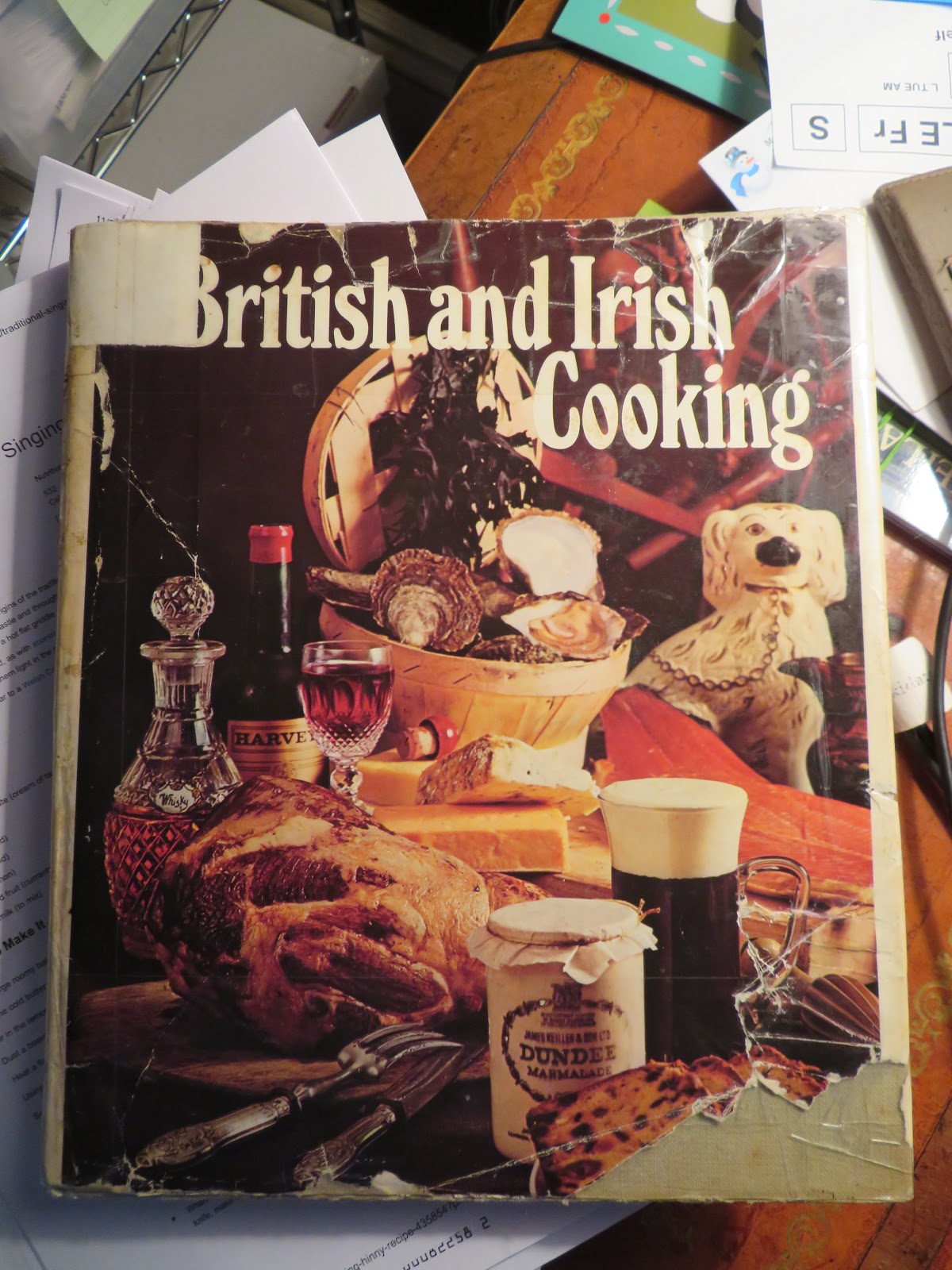 Looks well-used, doesn't it?But in fact there are plenty of recipes, which are all similar but slightly different. If you believe Wikipedia, they are also called bannocks, griddle cakes, or scones, in the north of England, and in Scotland they are known as “fatty cutties” (I kind of like that name).The "singin’” part is said to come from the sizzling of the lard or butter in the dough when you cook it on a griddle. (Note: mine didn't sing.)
So here’s the simple recipe!
Singin’ Hinnies
Ingredients:
3-1/4 cups all purpose flour
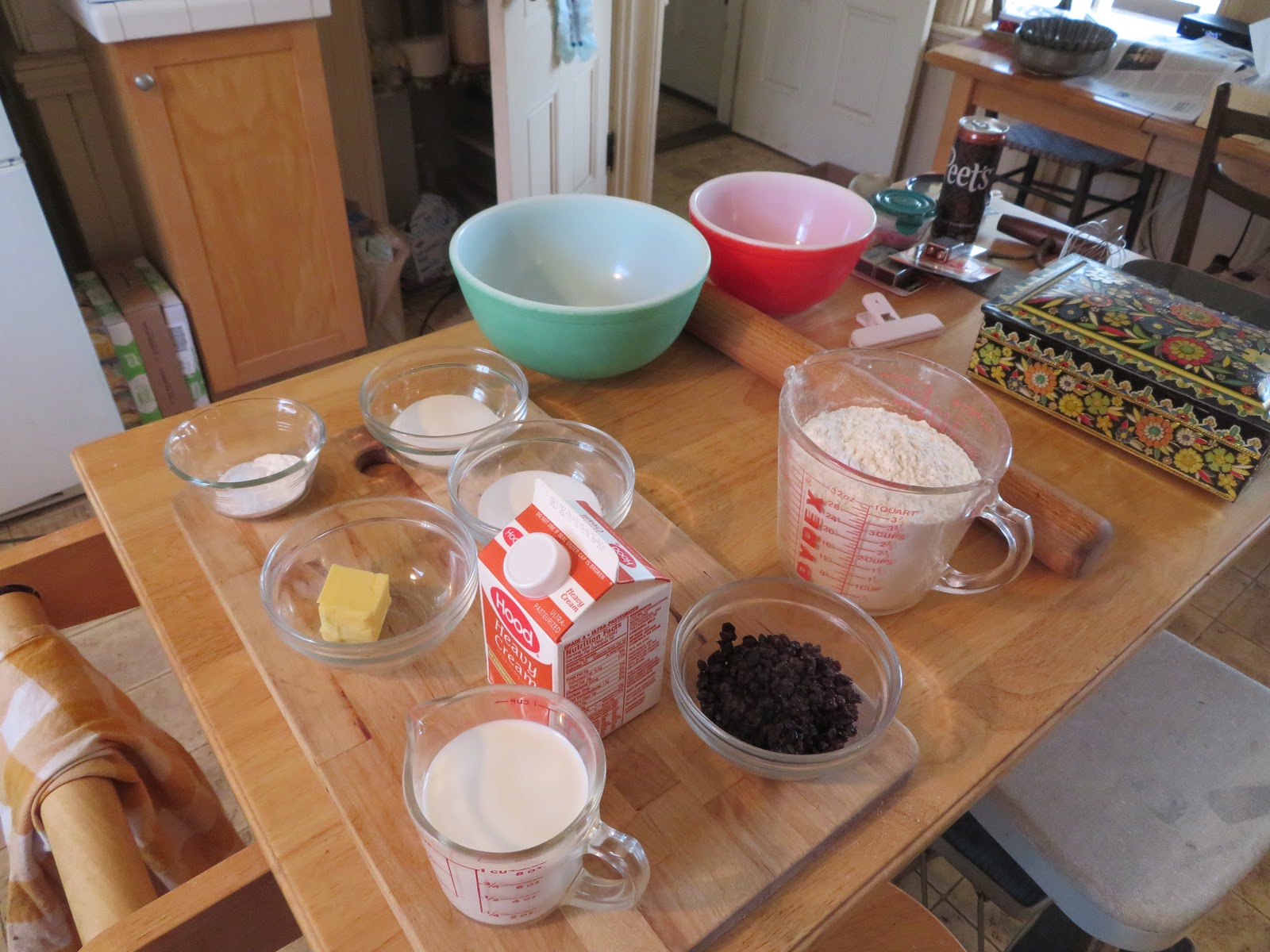
1/2 cup rice flour
1 tsp salt
1/4 cup sugar
2-1/2 tsp baking powder
1/2 cup currants
1/2 cup cream
3/4 cup milk
2 Tblsp melted butter
Instructions:
In a bowl, combine the flours, salt, sugar, baking powder and currants.
Mix the remaining ingredients together.
Add the liquid to the dry ingredients and blend into a soft dough (do not overwork or it will get tough).
Roll out the dough 1/4-inch thick on a lightly floured board.
Cut into 3-inch rounds and prick each evenly.
Place a griddle (which I just happen to have) or sturdy frying pan on the heat and oil lightly. Place the rounds on the griddle and cook until one side is golden brown, then flip them over and cook the other side.
You can serve them toasted or merely buttered and served warm.
Among the variations you can use cold butter and/or lard, lemon zest, plain flour only (no rice flour). You can also roll out a single round piece and cut into quarters, then cook.
http://sheilaconnolly.com/


date newest »
newest »
message 1:
by
Cathy
(new)
Dec 09, 2021 01:21AM
 This was fun reading about "singin' hinny", I just read the Ivy tree in the summer of 2021 and I don't remember the singin' hinny, but I'm always kind of skipping over words i don't know. I enjoyed her memory of Sheila Connelly going to the Malice Domestic Writers Conference and Ann Cleeves sitting right by her. i love Ann Cleeves books also. i will miss having new books from Sheila.
reply
|
flag
Dorothy St. James's Blog

- Dorothy St. James's profile
- 588 followers
Dorothy St. James isn't a Goodreads Author
(yet),
but they
do have a blog,
so here are some recent posts imported from
their feed.

