The Convention Flouter

Elizabeth Gilbert
Elizabeth Gilbert spent a year learning to find herself in Italy, India and Indonesia, and wrote about the experience in the memoir Eat, Pray, Love an immensely popular book, with sales of at least 12 million copies since publication of the first edition in 2006 or 2007.
Because the book is extraordinarily compelling. Gilbert was on a quest for spiritual and psychological healing after suffering deep emotional wounds from a divorce in her early 30s. She had what most people would consider an ideal life: married, financially secure, living comfortably in a country home near New York City while pursuing a highly successful career as a freelance journalist and author of acclaimed books of both fiction and nonfiction.
But she grew increasingly alienated from this conventional mode of living, with its expectation that a woman at her stage in life have a baby – which she didn’t want. It was a condition her husband could not comprehend, and their split was wrenchingly long and painful for her. Then she embarked on a love affair with another man, and it ended in heart-break. Like the folks in those Southwest Airlines TV ads, she asked herself, “Wanna get away?” and the answer was yes. She plotted her escape route in three equal parts: Italy, India, and Indonesia, in that order.
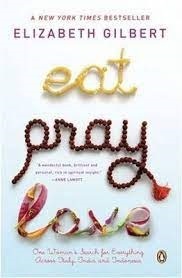 Lately, I’ve felt a bit of kinship with her. I, too, had to get away. But, while two of my three excursions were likewise to different countries, my reasons, for the most part, were less profound – dental, not spiritual. Nonetheless, they left me engrossed in three wonderful books, which I never would have read.
In Costa Rica, I found an old, tattered copy of the classic British romance novel by E. M. Forster, A Room With a View, and took it home to finish it. Seven months later, in Nicaragua, I polished off another classic, Doris Lessing’s The Grass Is Singing – then dived into Eat, Pray, Love, reading two thirds of it before returning home to Florida.
I had to put it aside for mundane matters: finishing work on my chompers and repairing a printer, household fixtures, and a car with an electrical problem that defied the wizardry of two tow truck operators, a mechanical neighbor, and three auto garages. I also had to spend a lot of time finding a place to rent in Tampa and renters for my Florida condo in preparation for a quest driven by a restive spirit similar, I suppose, to that which propelled Gilbert on her journey. I wanted to get away.
I took Eat, Pray, Love with me, and finished it between excursions to discover the attractions of the Tampa Bay area, which is spread over a vast expanse of flat, prosaic urban sprawl, devoid of buildings more than a few stories tall except for enticing downtown Tampa with several structures reaching almost 600 feet.
Not exactly the definition of Italy, where Gilbert decided to spend some time after taking a course in the language she’d always found to be particularly beautiful. Its sensuous appeal would perhaps deliver her from the depressing maelstrom she was caught in, a dive into the pursuit of pleasure. Not that she wanted another love affair in this land of romance – she in fact resisted one with a younger man – but the art, architecture, music, food and wine, and verdant and variegated topography offered a joie de vivre that she found irresistible.
Having satisfied her indulgences in these pleasures of the flesh, she was ready for the spiritual discipline and denial of the appetites in an Ashram in India. Everybody was assigned a job, and Gilbert’s was scrubbing floors – a sure way to neutralize the sensual appetites.
But cleansing her mind with this meditation business proved a lot harder than sanitizing the floors. One particular mantra, Om Namah Shivaya, drove her crazy. She found it torturous, and couldn’t get it to clear her mind. Finally, a monk gave her permission to try another mantra, and she found peace with it.

Ashram in India
Probably the most interesting points in the book are the characters she meets at her retreats. Like the hard-bitten guy in his 50s with a Texas drawl, whose done everything in life from construction work to soldiering in Vietnam to dealing in drugs, to selling high-end medical equipment. Richard assigns the handle Groceries to Gilbert and, on first meeting her, shares the observation, “Man, they got mosquitoes ’round this place big enough to rape a chicken.”
Gilbert spent four months in each country, and Indonesia was next. Her aim was to find balance between the ascetic life and pursuit of materialism. She’d been to the tiny island of Bali two years before on a magazine assignment to do a story about yogis, and reunited with Ketut Liyer, a medicine man. She bought a bicycle, and had an accident that injured a knee. Ketut sent her to a young female doctor, Wayan, who struggled to make ends meet while caring for her daughter, Tutti.
Wayan quickly healed the leg wound with a mixture of herbs, and Gilbert decided to help her find a place to live because she couldn’t afford her rent. Friends in the United States donated $15,000. But Wayan dilly-dallied in finding a house, and Gilbert finally had to be firm with her, which worked as the doctor profusely apologized and quickly found a home.
Meanwhile, Wayan was dismayed that Gilbert was divorced, which is a stigma in the Hindu archipelago, and the doctor insisted she needed to find a lover. Gilbert had suffered sufficiently in her love life that she was in no hurry.
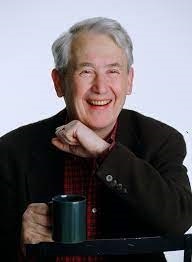
Frank McCourt
Then Felipe, an ex-Brazilian 20 years older, came into her life, and she couldn’t help falling in love as he showered her with kindness and devotion. The following weeks were paradisiacal, until it was time to leave. Felipe, whose real name was Jose Nunes, couldn’t leave Bali, home to his gem trader business and close to Australia, where his children lived. And New York was home base to Gilbert’s writing career. They decided to carry on a relationship from a distance, and that became the subject of her next book, Committed: A Love Story.
Eventually, the married and settled in a mansion in New Jersey. Sadly, the marriage ended after 10 years, and Gilbert entered into a gay relationship with a long-time friend, Syrian musician/documentary filmmaker Rayya Elias, while she was dying of cancer. Gilbert then fell in love with British photographer Simon MacArthur, who also had been a friend of Elias.
I am seldom drawn to memoirs, though one of my few favorite books is Angela’s Ashes, the late Frank McCourt’s Pulitzer Prize-winning memoir. It’s all in the telling. Eat, Pray, Love is a potpourri of vibrant metaphors and similes that have you squealing with delight; the imagery is fantastic. It is replete with self-deprecating, deliciously witty humor. Example: “The other day in prayer I said to God, ‘Look—I understand that an unexamined life is not worth living, but do you think I could someday have an unexamined lunch?’”
The language is earthiness tempered with eloquence, or vice versa. It is plain and direct, but spiced with uncommon words and phrases that reflect the depth of her knowledge and intelligence.
Most of all, Eat, Pray, Love is compelling for its unfailingly honest portrayal of a woman’s search for meaning in life.
Now, about that car. It performed well until two weeks into my stay in Tampa, when it wouldn’t start one morning despite the previous installation of a new battery and new starter. I got behind the wheel and depressed the clutch (the transmission is stick-shift) while my virile landlord, Danilo, pushed it down the short driveway’s incline. I released the clutch, and vroom, the car started. The owner of a shop a block away touched two copper strips with a test wire, and declared, “It’s the starter. I’m 100 percent sure of it.” He replaced it.
My car problems are in the rear-view mirror – for now.
The post The Convention Flouter appeared first on Bob Brink, Writer.