Private Health Becomes Public
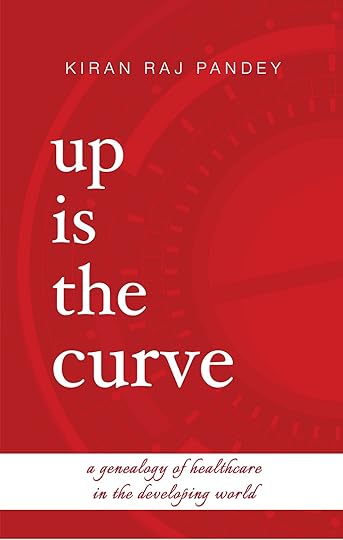 Up Is The Curve
February 28, 1918
Haskell County, Kansas, United States
Dean Nilson is a new recruit at Camp Funston, hauled in by the military machinery to support America’s involvement in the ongoing First World War. This February day, he is back home to Haskell County from his duty station a few hundred miles to the east at Camp Funston. The local newspaper, the Santa Fe Monitor, is pleased by the local son’s return from his services for the country and publishes a story. It writes, ‘Dean Nilson surprised his friends by arriving at home from Camp Funston on a five days furlough. Dean looks like soldier life agrees with him.’ At the end of his furlough, Dean returns to the Camp with little idea that he and his ilk from Haskell County reporting to work could be the kind of agents of death the world has never seen before, even in the ravaging wake of a world war.
Since January that year, the sparsely populated farmlands of Haskell County have seen an unusual spike of influenza. The local doctor, Loring Miner, is taken aback by the severity of the influenza outbreak that season; somehow the disease appears to pick the most healthy young adults and fell them like a bullet shot point-blank. In no time, many of the people struck by the epidemic are losing their lives to the disease. Dr. Miner is so alarmed by the epidemic that he writes a report for the Public Health Reports (now Morbidity and Mortality Weekly Report), a weekly publication of the U.S. Public Health Service.
As troops return to the Camp from their homes, Camp Funston starts to record a spike of a similarly fulminant variety of influenza. By the first week of March, a week after the Haskell natives returned to Funston, several recruits get sick of influenza. Within three weeks, more than a thousand of the 56,000 troops at the Camp are sick with the fulminant variety of influenza. In the next few weeks, Funston sends several of its troops to camps around the United States and to Europe. With them, the deadly variety of influenza probably arrives in Europe.
A century after the 1918 influenza pandemic, historians and epidemiologists still cannot point out the origin of the epidemic with certainty. However, the historian John Barry presents a convincing case that the most likely origin might have been the corn and hog land of Haskell County, Kansas. While there is no easy way to establish with confidence that Barry is right, his suggestion does appear to be the most plausible. Regardless, the 1918 influenza pandemic is easily one of the deadliest in human history. By the time the pandemic subsided in early 1919, almost 500 million people — a third of the world’s population at the time — were infected by influenza, resulting in the death of anywhere between 50–100 million people. In comparison, the War killed about 20 million people. More people were killed by influenza in one year than the War had managed to kill or wound in four. If the unfathomable devastation of the War was not terrible enough, an as-yet-undiscovered shifty little virus has been able to cause an order of magnitude greater damage to the world. The specter of this pandemic would haunt the world for a long time to come.
As the First World War drew to a close in Europe, the first order of business was to convene an apparatus to institutionalize and maintain the fragile peace. The Paris Peace Conference that began in January 1919 resulted in the signing of treaties of Versailles, Saint-Germain and Neuilly along with the Covenant of the League of Nations. The League of Nations was inaugurated in January 1920 after which the Paris Peace Conference ended. At the Paris Conference, US President Woodrow Wilson had collapsed, often speculated due to weakness from the flu. This was very symbolic of the kind of impact the flu epidemic had: at the time, the shadow of the epidemic was still fresh on everyone’s mind. In addition, because of the overall squalor during the War, pestilence had increased astronomically, giving rise to a typhus epidemic in Poland and Russia in 1919 that infected millions of people. Health scares like these had left matters of international cooperation in health on top of everyone’s agenda at the time of the formation of the League of Nations. As a result, close on the heels of the Paris Conference, the newly formed Council of the League of Nations called for an international health conference in London in April 1920 to help the Council plan and establish a permanent health office of the League of Nations.
Revolutionary advances in steam engines and railroads in the eighteenth and nineteenth century had led to the exponential expansion of international travel and trade. This, in turn, led to a phenomenal increase in the rate at which diseases were transmitted from one corner of the world to the other. Health scares like the flu, plague and cholera epidemics became a major public health threat and the reason for the disruption of international trade. As a response to these threats, as early as 1851, the first international sanitary conference was held in Paris to figure out the rules and regulations governing the movement of goods and people across the world. This marked the first time a conference was organized to address matters of international health cooperation. In addition, developments in Great Britain also contributed to the acceptance of the idea that combined social action and cooperation was necessary in matters of health.
In 1838, Edwin Chadwick, a proponent of the miasma theory, in his capacity as the secretary of the Poor Law Commission produced a report on the sanitary conditions of the London working class, followed by another one for Great Britain in 1842. The report, called General Report on the Sanitary Conditions, laid out with clarity how poor and filthy living conditions were resulting in the working class having half the life span of the richer class. This led to a societal impetus to consider sanitation as a means of ensuring the health of the general population. Health, until then a matter of personal concern and prayers, became a subject of social action: the personal became the public. The Public Health Act followed soon in 1848. This series of events in Great Britain helped establish the notion that health could be a matter that public bodies like governments needed to concern themselves with. The Paris sanitary conference of 1851 came in this backdrop.
The conference included delegates, a physician and a diplomat each, representing twelve countries in Europe. After a six-month- long deliberation, a convention and regulations were finalized and signed by the delegates. However, when most governments failed to ratify them, they fell off the scene. The failure was partly due to procedural difficulties; more importantly, before the causes of cholera, plague and yellow fever were known, there just was no common scientific consensus that delegates and governments could rally behind. Because of the lack of scientific knowledge, the physicians had so little to offer.
By the time the second international sanitary conference was organized in Paris in 1859, the physicians were not even invited. Not much came out of that five-month-long conference. The third one was held seven years later in 1866 in Constantinople, where it was agreed that cholera was endemic in India and nowhere else and that it was transmissible. While the air was thought to be the medium of transmission, a fleeting possibility that water too may be responsible was raised, citing John Snow’s work in London. Such was the nature of progress during those times. Several other sanitary conferences were held, mostly in Europe, that similarly beat about the bush and achieved little, if only because the scientific knowledge that could form the basis of a consensus agreement just did not exist. The best the conferences could aim for was to facilitate trade in Europe while keeping out pestilence from the outside world, which was thought to be the source of cholera, plague and yellow fever.
By the turn of the twentieth century, as a result of the work of scientists like Robert Koch, Alexandre Yersin, Kitasato Shibasaburo, Walter Reed and Carlos Finlay, significant scientific advances had been made into understanding the etiology of cholera, plague, yellow fever, as well as vectors that were responsible for their transmission. This new knowledge base formed the foundation of joint international action on common public health problems. Beginning in the early twentieth century, international health cooperation took the form of standing bodies to facilitate joint international action. Two international health bodies came into being at around the same time: the first, the Pan American Health Organization (PAHO), earlier called the Pan American Sanitary Bureau, established in 1902 with an initial mandate to primarily handle yellow fever epidemics along the trade routes in the Americas. The second such body was the international office of public health, more popularly known by its French name Office International d’Hygiène Publique (OIHP) established mainly by European countries in Paris in 1907. The OIHP essentially undertook the baton from the international sanitary conferences of Europe.
Both the PAHO and OIHP worked to come up with technical standards, and suggest rules and regulations for cooperation in order to control communicable diseases — all with the intent of facilitating trade among their member states. These organizations aggregated and transmitted to member states the latest surveillance information and also made available technical information on diseases of interest.
Although these organizations did important work for a few years, when the First World War broke out in Europe, their functions became limited. By the time the War was over, the fear of pestilence and epidemics was so high on everyone’s mind that the League of Nations covenant explicitly articulated the need to form a dedicated League of Nations Health Organization (LNHO). The fact that the devastating influenza and typhus epidemics of 1918 and 1919 had come not from the hinterlands of Asia or Africa — places Europeans were wont to blaming as a den of diseases — but from the middle of North America and Europe must have convinced Western countries of the need to address health issues with urgency. In its report, the London conference organized by the League of Nations wrote of the typhus epidemic in Poland, ‘the prevention of typhus in Poland and the spread of that disease across Poland is a matter which calls most urgently for united official international action’ and suggested that the League of Nations Health Office was the ‘the sole organization sufficiently strong and authoritative to secure that the measures required are taken.’ Such were the hopes for a health organization under the ambit of the League of Nations. The League was envisioned as an umbrella organization meant to bring all extant bodies of international cooperation under one roof, and the health office under it hoped to fulfill a similar umbrella role in matters of health. The initial ideas for the Health Organization were for it to subsume the other international health organizations like the OIHP, however, politics came in the way. The OIHP continued to remain independent and the LNHO had to maintain an uneasy existence alongside existing bodies like the OIHP and PAHO. The latter continued to exert themselves in matters related to international cooperation in health in their home turfs of Europe and the Americas and the Health Organization of the League of Nations had to seek new roles for itself.
…
Excerpted from the book Up Is The Curve — A genealogy of healthcare in the developing world. Available here: Nepal, India, UK. Worldwide delivery available here.
[image error]