A Clash of Ideas
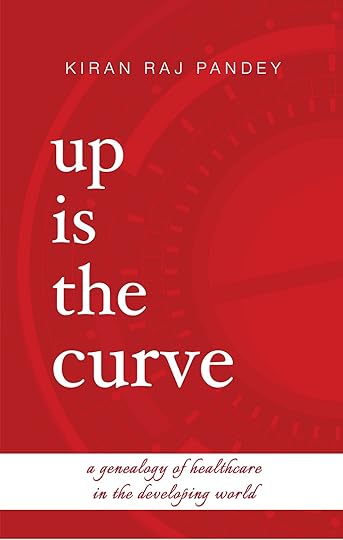 Up Is The Curve
October 16, 1973
Kuwait City, Kuwait
In one of the most egregious yet efficient land-grabs ever demonstrated under gunpoint, Israel expanded its territory by fourfold during the Six-Day War of 1967, taking vast swathes of the Sinai Peninsula, Golan Heights, West Bank and East Jerusalem. Egypt, Syria, and Jordan, from where most of the territory was seized, were left reeling from this loss. Seven years later, on October 6, 1973, Egypt and Syria hit back to avenge for their losses: they launched coordinated attacks against Israel during the festival of Yom Kippur that caught Israel off guard. An initially reluctant United States rapidly provided a $2.2 billion support to Israel’s war efforts when it was found that the Soviet Union was backing Israel’s opponents. In protest of the US support, the Arabs hit back with a decision that sent shock waves throughout the world. On October 16, 1973, a meeting of the leaders of the Organization of Arab Petroleum Exporting Countries (OAPEC) decided to increase oil prices by a whopping seventy per cent and embargoed oil supply to many countries including the United States. Within a period of three months, oil prices rose fourfold. The unfettered economic expansion in the US and western Europe that had followed the Second World War had already been showing signs of an incipient slowdown at the start of the seventies; the oil embargo proved to be the last straw. By late 1973, commodity prices began to rise, industrial output slowed down, and global economies in Western Europe and North America went into a recession.
Although the oil embargo was rather short — it was lifted in March 1974 amidst differences of opinion at the OAPEC — the economic recession continued until the next year. While economic ramifications of the chain of events triggered by the oil embargo were severe, the political implications, it may be argued, were even more consequential. In the industrialized economies of the global north, rising oil prices led to runaway inflation, wage pressures and economic hardships: there was a wave of major political discontent, the consequences of these set of events would continue to unfold throughout the rest of the century. But it was among nations of the global south that the oil embargo caused incipient political undercurrents to swell up and rise to momentous history-altering events.
Through the 1950s, the membership of the United Nations had ballooned rapidly, from fifty-one at the time of its founding to 110 by 1962. This continued further through the 1960s. The increasing presence of several post-colonial and developing nations at the United Nations began to seek political expression. One of the major outlets of this political force happened in 1968 at a conference of the United Nations Conference on International Trade and Development (UNCTAD) in New Delhi, where these nations announced the formation of a voting bloc called the G-77 to advance a common political and economic agenda at the global stage. The G-77 followed closely along the lines of the Non Aligned Movement that had started in the 1950s. In the years that followed, the G-77 worked with an aim to tilt the global politico-economic landscape in favor of the developing nations of Asia, Africa and Latin America. This proposal to radically re-haul the global balance of power was labeled the New International Economic Order (NIEO). To dictate favorable economic terms with the advanced economies of the global north, the proponents of NIEO had considered the possibility of arm-twisting advanced economies with a commodity cartel; the unanticipated success of OAPEC’s oil embargo in bringing the global economy to a standstill energized them. Within a few months of the oil embargo, in May 1974, members of the G-77 were able to bring to discussion a resolution supporting the NIEO at the United Nations General Assembly (UNGA) Special Sessions. The swelling ranks of global economic underclass at the UNGA, where one state counted for one vote, meant that the proposal was passed despite the protest of some powerful advanced economies.
The lifespan of the NIEO as a vision for redistributive global politico-economic justice was rather brief, brought down among other things by rifts between the members of the global south. However, before it had died an unceremonious but predictable death by the end of the decade, the NIEO was able to plant ideological offshoots with lasting consequences in many areas of global cooperation. One such offshoot of the NIEO was the World Health Organization’s proposal of Health for All by the Year 2000.
In September 1978, 3,000 delegates representing 134 governments and sixty-seven international organizations came together for an International Conference on Primary Health Care in Alma-Ata, Kazakhstan and passed a highly ambitious declaration to ensure health for all by the year 2000.9 Although the passing of the NIEO in 1974 proved to be the proximate political fillip for Alma-Ata declaration, as it came to be known, the appetite for such a global initiative had been building since at least the previous decade. Throughout the sixties and the seventies, there had been increasing dissatisfaction with the narrow and vertical focus on disease eradication, family planning and population control orientation of health systems and services across the developing world. In addition, attempts to build health systems in many developing countries were limited to building large hospitals in urban areas, often as a continuation of the legacy of colonial medical services that catered to the needs of the ruling class. In the 1970s, the successful build-up toward NIEO had spurred several post-colonial nations to reject the Western visions of development and modernization, including in health.
The attempt to transpose and transplant urban-oriented health systems of the rich world — even while more than half of the people living in rural areas lacked any meaningful access to health services — was increasingly questioned. Instead, several people and organizations went on to articulate alternate visions of health systems that were focused on meeting the health needs of people by means of simpler and more holistic interventions. As opposed to the relentless focus on medical intervention of hospital-based health systems, or the ‘shot-gun’ approach of the disease eradication efforts, these new ideas for health systems focused on community- centered care; this could tackle the broader and distal determinants of health in addition to providing relatively simpler curative health interventions. The body of evidence proving the effectiveness of community-centered health systems was building throughout this period. In the early 1960s, lay village health workers, called ‘barefoot doctors’, were able to drastically improve health conditions in rural China by means of simple interventions that combined preventive care with curative care, and traditional healing systems with western medicine. Similar efforts from Latin American countries like Costa Rica, Cuba, and elsewhere provided further proof-of-concept for these community-oriented health systems.
The work done in India, by Carl Taylor, provided some of the earliest scientific evidence and intellectual blueprint for the global movement toward community-centered health systems. Between 1960 and 1975, Taylor led the Narangwal Rural Health Study in North India where he was able to scientifically evaluate the effectiveness of training lay village workers to provide health and social interventions. By means of meticulous field audits, Taylor was able to show that village health workers were able to diagnose and treat pneumonia without radiography, administer prenatal care and offer nutritional and preventive health services to improve the health of rural populations. The work in Narangwal was later replicated elsewhere including in Jamkhed, India. Experience and evidence also came from the Philippines, Costa Rica, Israel and South Africa. In South Africa, a community-based care model that emphasized community participation in resource allocation and service prioritization emerged.
Carl E. Taylor was born in 1916 in Mussoorie, India, to American medical missionaries. After a childhood spent mostly in his parents’ clinic in the Himalayan foothills, he returned to the United States to go to medical school. Following his clinical training, he returned to India to run a mission hospital in Punjab. However, a few years of clinical practice led him to believe that populations, and not individuals, should be the targets of his efforts. He returned to the United States for a doctorate in public health. It was after this that he returned to Narangwal to do the breakthrough work in scientifically evaluating and establishing the effectiveness of health interventions provided by lay village health workers in treating pneumonia, malnutrition, and reproductive health problems. His work in Narangwal was formative in forming his views on a more grassroots-based approach toward health services.
What makes a difference in people’s health is not what physicians do, but what communities do, Taylor was once quoted to have said.12 Taylor, who had conducted the first health survey of Nepal in 1949 and founded the Department of Preventive Medicine at Christian Medical College Ludhiana, India in the 1950s, also later founded the Department of International Health at Johns Hopkins University. He went on to be a major architect of the Alma-Ata declaration.
Taylor’s views and ideas would later go global when they were taken up by the WHO and the UNICEF. At the WHO, the charge of selling that vision to the world befell on an extraordinarily charismatic figure — the son of a Baptist preacher, Halfdan Mahler.
Halfdan Mahler, the third Director-General of the World Health Organization, followed Marcolino Candau at the post. Mahler abandoned his initial thoughts of following his father into theology, choosing instead to go to medical school. After finishing his medical and public health training in 1948, he spent a few years doing TB and community health work, following which he spent a year in 1950 directing the Red Cross’s TB work in Ecuador. In 1951, at 28, he came to the WHO and was posted to India where he spent a decade as a Senior Officer in the National TB Program. After returning to Geneva from India in 1960, he led the WHO’s TB unit and rose through the ranks until he was prompted by Candau as an assistant Director-General in 1970, to rise as the Director-General three years later. Mahler’s upbringing as the son of a Baptist preacher had given him a strong moral compass that drew him toward the ideals of social justice. These values, along with his belief that existing health systems were not taking a broader stock of the overall determinants of health, led him to develop a strong ideological bias toward community health systems that provided a broad array of basic services.
Excerpted from the book Up Is The Curve — A genealogy of healthcare in the developing world. Available here: Nepal, India, UK. Worldwide delivery available here.
[image error]