November -- Courage, Endurance and Magic
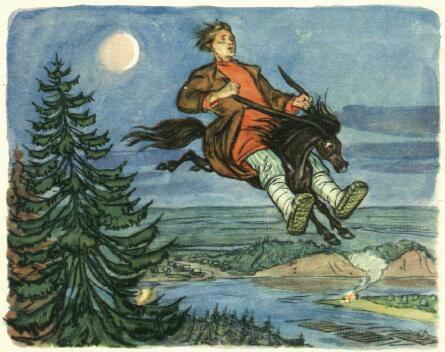
Fearless Ivan and His Faithful Horse Double-Hump
by Pyotr Yershov as retold by Jack Zipes. A story 0f courage, endurance, and magic.
 This is a wonderful story of a courageous, flawed, simple, and very likable young farmer, Ivan, and his magic horse, Double Hump. Like other classic tales, because Ivan is fearless and good-hearted, he is rewarded; his reward is the magic little horse, Double-Hump. Fearless Ivan, with the aid of Double-Hump, is able to overcome an extraordinary series of obstacles and dangers. And the ending is a very satisfying delight, offering hope to all if you have courage and endurance.
Yershov published the original version of this tale in the form of a poem in 1834. He borrowed from many Russian tales and the poem became a popular favorite. It remained so through the ensuing years despite efforts to suppress it in the mid-nineteenth century. This, no doubt was precipitated by the fact that the Tsar in the poem is a cruel and incompetent despot.
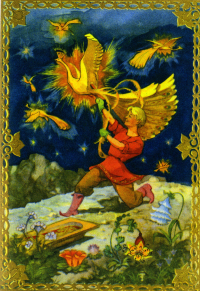
Jack Zipes has retold Pyotr Yershov's story of Ivan and it flows with charm and surprises. Zipes has also included several pages of relevant historical and biographical information. The charming illustrations by Russian artists are from another Jack Zipes book, Tales of Wonder, Retelling Fairy Tales through Postcards. The illustration above, by an unknown artist. shows Fearless Ivan capturing the Firebird.
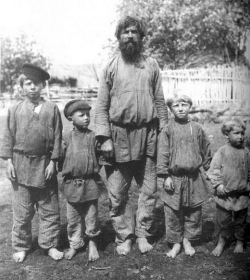 Russia, for centuries was a land of near constant conflict, with a society dominated by nobles, where rulers led by the sword, and where the peasants who worked the land were serfs, people with no freedom and no voice. . .a country with distances so vast that its territory, from east to west, extends over eleven time zones. The Orthodox Church was powerful and restrictive. The Tsars ruled with large armies and large conquests. At the time of Fearless Ivan, the country, except for travel by nobles, was isolated from the West; industrialization had not occurred, and there was no middle class.
"Both the oral and literary forms of the fairy tale are grounded in history: They emanate from specific struggles to humanize bestial and barbaric forces, which have terrorized our minds and communities in concrete ways." Jack Zipes
The photo of the serf family is by an unknown photographer.
................................
Pinocchio is Back
Pinocchio was created and evolved in the turbulent political and strife-torn world of nineteenth century Italy. The book was originally written -- and then rewritten and added to the original version -- by political activist and journalist Carlo Collodi.
Back Story and Collodi
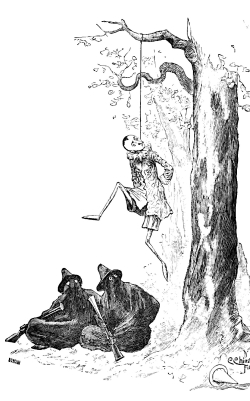 Asked to name the two most important things about Pinocchio, most Americans would answer: First, his nose grows when he lies, and second, he is a wooden puppet who dreams of becoming a real boy. At this, Carlo Collodi would most likely shake his head. The 19th-century Italian author, who wrote the book that inspired the Disney movie and countless other adaptations. . . including a version from the director Guillermo del Toro coming out later this year, saw his character very differently.
A radical political commentator who turned to children���s literature late in life, Collodi wrote a complex, unsettling novel���miles away from the morality tale that Pinocchio���s story has become. Collodi���s is a multilayered work of fiction that, although primarily aimed at young readers, is imbued with social criticism and pessimistic humor, and can be read, among other things, as an irreverent attack on established authority. . .
From an article, The Politics of Pinocchio , by Anna Momigliano in the Atlantic
The illustration is by Enrico Mazzanti.
Retellings
There have been a multitude of Pinocchio retellings over time in books, theater, and film, including Disney's very popular 1940's version. The Disney studio's recently made an unsuccessful revised version (see below)
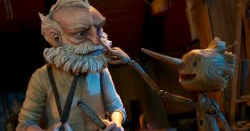 Today, the big news is that the master of fantasy, the Award winning director Guillermo del Toro (Pan's Labyrinth, The Shape of Water), has, after many years , created a version that can be seen on Netflix, beginning on December 9, 2022. Here are comments by del Toro:
In 2008, Guillermo del Toro announced that his next project, a darker adaptation of the Italian novel The Adventures of Pinocchio , was in development. He has called Pinocchio his passion project, stating that: "no art form has influenced my life and my work more than animation and no single character in history has had as deep of a personal connection to me as Pinocchio", and "I've wanted to make this movie for as long as I can remember".[8]
Link to del Toro's trailer of Pinocchio.
Disney's Two Pinocchios -- 1940 vs 2021
 The first Disney Pinocchio became well regarded hit. Disney's remake of Pinocchio missed the mark. Here, courtesy of Rotten Tomatoes, is a brief report:
CRITICS C
ONSENSUS 2021 version
-- "
Visually dazzling but soulless, the largely inert Pinocchio reaffirms that you should always let your conscience be your guide��� stay away from unnecessary remakes
." Read critic reviews
"
Just watch Disney's original 1940 Pinocchio instead.
"
. . .shying away from the story���s darker elements, while delivering on the themes of redemption and the power of parental love. Created with state-of-the-art stop motion animation, this is an enchanting and a magical experience."
The first Disney Pinocchio became well regarded hit. Disney's remake of Pinocchio missed the mark. Here, courtesy of Rotten Tomatoes, is a brief report:
CRITICS C
ONSENSUS 2021 version
-- "
Visually dazzling but soulless, the largely inert Pinocchio reaffirms that you should always let your conscience be your guide��� stay away from unnecessary remakes
." Read critic reviews
"
Just watch Disney's original 1940 Pinocchio instead.
"
. . .shying away from the story���s darker elements, while delivering on the themes of redemption and the power of parental love. Created with state-of-the-art stop motion animation, this is an enchanting and a magical experience."...........................
The Last Echoes of Pagan Myths
Seth Lerer points out that the comment, ""We are pioneers in an untrodden forest" made in 1884 to his staff by James A.H. Murray, as presiding editor of the Oxford English Dictionary, also describes how the Grimms felt about their work in publishing their "nursery and household tales".
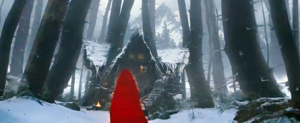 Lerer goes on to quote Wilhelm Grimm, who, in referring to these tales, wrote, "that these were the 'last echoes of pagan myths...A world of magic is opened up before us, one which still exists among us in secret forests, in underground caves, and in the deepest sea, and it is still visible to children...(Fairy tales) have existed among the people for several centuries.' And what we find inside those secret forests, caves and seas. . . fairy tales full of families, full of parents who bequeath a sense of self to children, full of ancestors and heirs whose lives play out, in little, the life of a nation from its childhood to maturity."
From Seth Lerer's book, Children's Literature, A Reader's History from Aesop to Harry Potter.
..............................
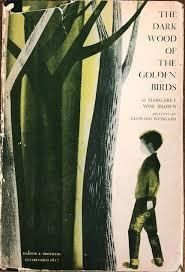 The Dark Wood of the Golden Birds: ���Goodnight Moon��� Author Margaret Wise Brown���s Little-Known Philosophical Children���s Book About Love and Loss
���There had never been such a quiet day before. It was the quietest day in the world.���
BY MARIA POPOVA The following article tells the backstory for The Dark Wood of the Golden Birds, an exceptional lost book,
"Margaret Wise Brown (May 23, 1910���November 13, 1952) never did anything half-heartedly. When the love of her life fell mortally ill, she did the hardest thing in life ��� facing the death of a beloved while remaining a pillar for their passage ��� the best way she knew how: she wrote her a love letter in the form of a children���s book.
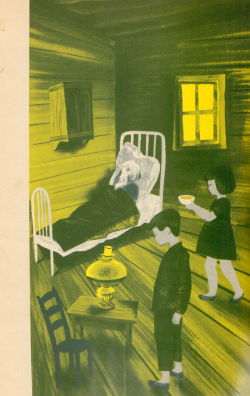 On the last day of spring in 1950, three years after Goodnight Moon had enraptured the world with its bright playfulness, The Dark Wood of the Golden Birds (public library) appeared, somber and numinous with its elegiac prose, and its haunting duotone of otherworldly greens and yellows, and its the simple dedication: ���For Michael Strange.���
In the decades since, the book has fallen out of print in a culture that has no room and no language for grief, and no tolerance for the darkest dimensions of life, which crack open our vastest capacity for light. It would take an act of countercultural courage and resistance for a modern publisher to bring this work of uncommon beauty and tenderness back into the fold of life.
Illustrated by Brown���s longtime collaborator and friend Leonard Weisgard, and written with her singular poetics, the story begins: The Golden Bird
It happened in the woods
a long time ago.
In the dark woods
where the golden birds
sang all through the night
and the day.
.........................................
Imaginative Independent Animation
Worlds Apart
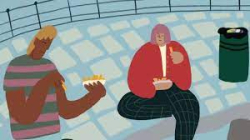 "A short animation that travels through a whirlwind of questions surrounding the science and religion debate. The film invites the viewer into the details of the conversations, where there is less conflict than it seems from far off."
Created by Emily Downe
Music by Jan Willem de With
Produced by Theos
Link: Worlds Apart Time 2.57
...........................
Contact
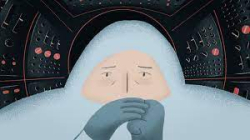
A special moment for mankind, done with style and imagination
A graduation film from Kingston University. Directed, designed, animated by Katy Wang
Sound and Music by Ambrose Yu
Written by Gabriel de Bruin ...
Link: Contact Time 7.16
..........................
The Peace of Wild Things
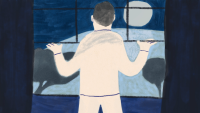
A wonderful video experience co-created by Charlotte Agar and Katy Wang.
Written and narrated by Wendell Berry. Adapted from his poem.
Music and Sound by David Kamp.
Link: The Peace of Wild Things Time: 1.16
...............................
How Ukrainian Children Understand the War
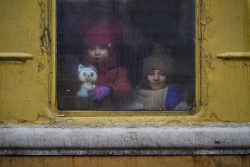 In their own words and drawings, new refugees share what they have been through. . .This article, by Zoeann Murphy and Dan Rosenzweig Ziff of the Washington Post is wonderful. It first appeared in mid-March and has stayed with me ever since. It includes videos of children explaining their drawings. The videos were made in a train station while they were waiting for another refugee train. Here is a Link to the article: Refugee Children.
Here is a sample of the article (March 15 2022)
 PRZEMYSL, Poland ��� The wave of refugees flooding through Europe is striking not just for its historic scale and speed but also because half of the 3 million people who have fled the war in Ukraine are children. That means one child has become a refugee nearly every second since the start of the war, said James Elder, a spokesperson for UNICEF. Many have had to say goodbye to their fathers before undertaking difficult and disorienting journeys with mothers and siblings, sometimes waiting more than a dozen hours in the cold before being allowed to cross into safer countries. Parents have agonized over how to explain what was happening. Some kids heard they were going on vacation. Others were told directly: Our homes are not safe, and Dad must stay behind to defend our country.
To understand how some of these children are experiencing the war, The Washington Post asked young refugees at the train station in Przemysl, Poland ��� near the Ukraine border ��� to draw what stood out about the past weeks.
The photo of the children looking out of the train window is courtesy of Daily Sabah.
The photo of the mother and her two children is courtesy of Credit Belge.
..................................
elizabethMontague
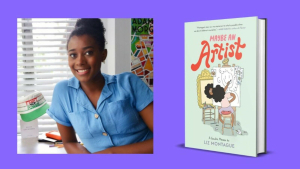 "Liz Montague is a cartoonist, writer, and illustrator whose work focuses on the intersection of self and social awareness. She began contributing to in 2019 as a cartoonist. She is the first Black cartoonist to have her work published in The New Yorker.
Liz is the creator of the popular Liz at Large cartoon series, which previously ran in Washington City Paper, and is passionate about documenting Social Change and Protest Movements.
er first book, Maybe an Artist came out this Fall to excellent reviews. She is currently working on a picture book for Penguin Random House as well as a young adult series for Scholastic. Liz fundamentally believes in representation, accessible information and drawing your feelings."
......................
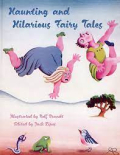 Haunting and Hilarious Fairy Tales
Jack Zipes has vividly retold and edited fairy tales that were retold and illustrated by Rolf Brandt. The book, Haunting and Hilarious Fairy Tales, is published by Little Mole and Honey Bear. Here is a lost treasure, a delightful manifestation of Zipe's Mission Statement. This blog has been delayed. I will post about the myriad stories in this book in our December blog.
......................
 Have we forgotten what a public library is for?
By Deborah E. Mikula and Loren Khogali Washington Post
In August, people in Jamestown, Mich., just outside Grand Rapids, signaled with their votes that they would rather defund ��� and possibly shutter ��� their only public library than keep books with LGBTQ themes on the shelves.
The impact of such a vote is deeply concerning. And the place from which it stems ��� a small but vocal minority trying to dictate what others can and cannot read ��� is even more troubling. . .
Across the United States, there has been a rising tide of efforts to undermine fundamental tenets of the First Amendment by suppressing intellectual inquiry and the right to read. As of August, the American Library Association (ALA) had documented 681 challenges to books this year, involving 1,651 different titles; in all of 2021, the ALA listed 729 challenges, directed at 1,597 books. Most of those challenges targeted non-White or LGBTQ authors or subjects.
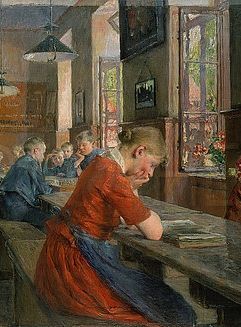
The illustration is by Gotthard Kuehl.
.................................
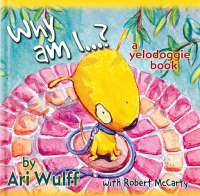 Why Am I ?
Here is a review from from Jack Zipes a world renowned scholar, authority, and writer about children's literature of the Yelodoggie Book, Why Am I ?.
"If children want to find out and delight about their identity, I strongly suggest you surprise them with Why am I. . . ? a colorful book about a curious tiny dog who searches for answers about his identity. This existential story will make your heart beat with joy."
Jack Zipes, professor emeritus of German, comparative literature, and cultural studies; also publisher of lost stories.
.....................................................................................
Snow Valley Heroes
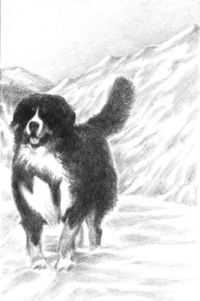 Don Blankenship, Former Teacher, Reviewer at Good Books for Kids, Amazon Reviewer and dog lover wrote
"I love this series of books and this first, Planet of the Dogs, sets the stage for those works that follow���This book can be, and should be, read on several different levels. First, it is completely appropriate for children from about the age of eight and up. While not a beginning reader by any means, the story could be read to children of a younger age and I feel there would be complete understanding with little explanation of the reader's part.
Secondly, this book is quite sneaky about throwing in wonderful facts about dogs, such as their ability and method of communication, life style, temperament and abilities.
Thirdly, this book makes some very insightful observations of the general human condition.
Fourthly, these books are excellent motivators, not only for reading, but for generally living life as it should be led. Finally, the entire work is almost irresistible to dog lovers."
The illustration is by Stella Mustanoja McCarty.
..................................................................................................................................................................
���There is no faith which has never yet been broken, except that of a truly faithful dog��� Konrad Lorenz
..................................................................................................................................................................