The Hill He Created
You know when you’re listening to a song that you’ve heard a million times and then a lyric just stands out to you that you’ve never noticed before? This happened to me when I was listening to the song So Will I by Hillsong.
The song marvels at the power and creativity that God expressed during creation (click here to watch on YouTube). In the song, there is a line that says:
On a hill you created
the light of the world abandoned in darkness to die
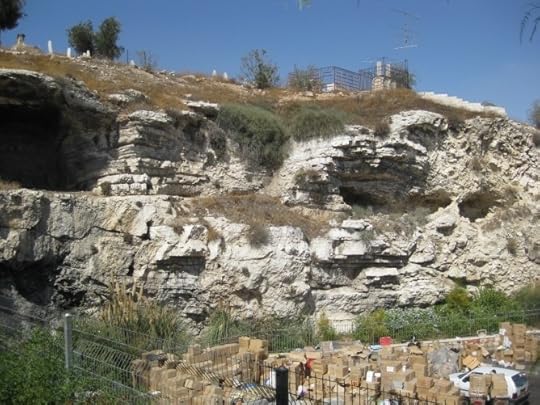 The song is obviously referring to the death of Jesus, who was taken to a hill outside of Jerusalem to be crucified. That hill is called Golgotha, which means skull. From the photos here, you can see what looks to be a skull etched into the rock wall.
It’s important that the hill was outside the city of Jerusalem because #1 historically, unclean things were dealt with outside the city (Number 5:1-4) and #2 we are supposed to recall the Old Testament practice of taking the unclean parts of a sacrifice outside the city, which symbolizes the removal of sin from the people (Leviticus 4:12). Today, we sometimes use the term scapegoat in reference to a person who is being blamed for something they are not responsible for. It’s the same idea. Jesus is the sacrifice that took on our sin so that we could be at peace with God.
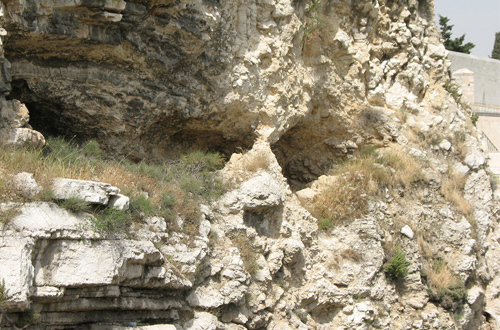 But remarkably, the thing that struck me as I heard this is that God, who created every nook and cranny on the earth, foreknew that this would be the place he would later send his son to die.
This struck me so suddenly and with force. It’s an emotional discovery to realize that God created the spot where he would die. And to take this further, he created every place that memorializes the sin in our own lives: the places we were wronged or wronged others. He sees those places and that pain. He knows what that feels like. He can empathize with us in our pain.
The song goes on to say that Jesus was abandoned in darkness. This idea comes from the final moments of Jesus’s life found in Matthew 27: “Now from the sixth hour, there was darkness over all the land until the ninth hour… Jesus cried out, ‘My God, my God, why have you forsaken me?'” It is debated and the bible doesn’t literally say that Jesus was abandoned, but the darkness (which lasted for 3 hours from noon to 3pm) as well as Jesus’s words point to the fact that God does turn his face from his son because of the sin.
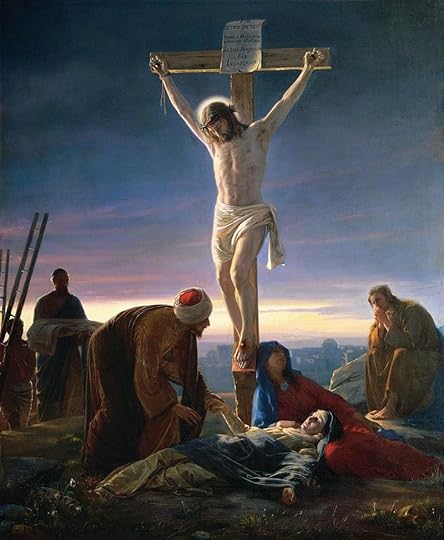 In Isaiah, there’s a similar verse: “It’s your sins that have cut you off from God. Because of your sins, he has turned away” (Isaiah 59:2). So it was at this time that Jesus was bearing the weight of our sin, which caused God to turn away in judgement. And it is because Jesus died and was judged in our place that we are now seen as righteous.
Another key point is that Jesus is quoting Psalm 22, which begins with the same words. Though the Psalm begins in this dark way, if we read on, we come to read prophesy about Jesus’s death. It predicted that he would be mocked, poured out like water, thirsty, pierced, and that they cast lots for his clothes. He says these final words so that the Jewish priests who murdered him would remember the Psalm and realize they had just killed the Christ.
But the Psalm ends with hope: “he has not hidden his face from him” (verse 24). In the end, we know that God restored Jesus to his rightful place of honor and that we who accept Jesus into our hearts will also be freely granted that place of honor.
Ultimately, the death of Jesus on the cross at Golgotha is steeped in symbolism and begs us to recall not only the Old Testament sacrifice practices that point to Jesus as the ultimate sacrifice but Psalm 22 as well. We should have confidence in that Jesus was Christ, son of God. That he was killed in our place as a sacrifice so that we could be right with God!