Books in Review: What Are You Waiting For
This book is one I’ve appreciated from the first time I heard about it. I’d been a fan of Dannah’s work for quite a while when I got this book last in my college years. This book is the next level to her most popular book on sexual purity, And the Bride Wore White. It was released toward the end of the purity movement (2011) and while it falls into some of the pitfalls of the purity movement, it still does a good job of remaining biblically grounded and not shying away from difficult questions that some Christian authors used to dance around. It may be one worth checking out ~ Bethel 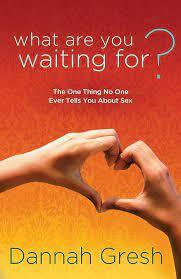 In her book What Are You Waiting For, author Dannah Gresh addresses many of the difficult questions that teen girls and young adults have about sexuality, including the most significant question: Why should we wait until we are married to have sex? This question is addressed by exploring the meaning of the word that the Old Testament uses to talk about sex – yada. This word describes a deep and intimate knowing that not only is used to a married couple having sex, but also the deep knowing and trust that God wants to have with us. Seeing sexuality through this lens helps us to see God’s plan in a new light and illustrates the problem with doing things our own way. She then dives deep into the questions that many want answers to but most are afraid to ask when it comes to what is appropriate with our sexuality and how to repent and start over if you recognize that you have fallen short of God’s plan for your sexuality. It goes deeper and is intentional about addressing many girls’ questions about sexuality while remaining grounded in Scripture. It even gives biblical guidelines for qualities you can look for in a man who honors Him.
However, this book does have a few minor problems. This book was released toward the end of the purity movement and it does share a few of the same problems as many of the books that were part of that movement. In Dannah’s attempts to be honest and blunt, her wording and methods for resolution have the potential to cause guilt or shame for anyone who has struggled with sexual sin. Even the title indicates that you should be a virgin when you get married, which was one of the purity movement’s most faulty goals. As she has done in several of her books, she defines sin as “to miss the mark” and uses an archer’s target to illustrate that anything that doesn’t hit the bullseye on the target is sin. While I agree with the premise of this definition, it can come across as legalistic when you start pairing it with man-made methods of how to walk away from sin, which can lead to guilt and shame. As Christians, we have to be careful about the way that we define sin and make sure that we carefully explain God’s ability to redeem our sins for His glory so they can feel free to come into the light.
Secondly, this book encourages young women to find a godly older woman to confess their sins to and hold them accountable so that they can overcome their sins. This method was a common remedy of the purity movement and is largely based on common misconceptions about confessing our sins to others as it’s encouraged in James 5:16. That verses says that we should confess to one another and pray for each other, not to confess and then rely on them to help you get out of your sin. In my opinion, seeking an accountability mentor should not be a catch-all solution to overcoming sin, especially sexual sin.
Please understand that I am not saying that younger women shouldn’t learn and be taught by older godly women. Titus 2 encourages older women to teach younger women and I am not trying to discredit that. I also understand that when sin becomes any sort of addiction, a person probably will need outside help to overcome it, such as programs, support groups, or counseling. What I’m trying to communicate is that the Bible doesn’t talk about mentorship the way it is described in most Christian circles today (when a younger and older person meet for coffee once a week while the mentor does a colonoscopy on the young person’s personal life). Asking another sinner to hold you accountable in many cases diminishes the power of self-discipline (or self-control) God had already given to each one of us (2 Timothy 1:7). If you want to stop any sin, you have to be fully convinced in your own mind that it is a sin that you want to leave behind and never return. Once you have determined to walk away from your sins, then you can confess your sins to someone you trust, not to tattle tale on yourself out of guilt, but to give you other Christians in your corner praying with you through the battle.
Lastly, there were some assumptions made about a few of the specific sins addressed that were clearly assumptions that could not have been backed by readers, especially in Chapter 10 (which I am avoiding mentioning by name for the sake of younger readers).
Aside from these issues, this is a good book that could be a good tool for helping teen girls and young adults develop a biblically grounded view of sexuality. If this appeals to you, it’s worth checking out.
 Pre-Teen Rating. I wish there was an age-appropriate resource for this age group on these topics, or at least for their parents to facilitate discussion. I would not recommend this for a pre-teen
  Teen Rating. It would depend on their maturity level whether or not they can handle the difficult topics in this book. I would recommend that they are at least 16 years old unless they have a specific sexual struggle.
  Male Friendly Rating. While some sections of the book are not as bad, the chapters that get into the specifics about sexual struggles are not that male-friendly
  Singles Friendly Rating. This book is technically singles-friendly, but other books have been written that better address these topics for them specifically.
  Personal Rating. This is a good resource. I especially enjoy the discussion about the word “yada” and the use of Ephesians 5 to find traits for admirable men. However, parts of the material are dated and have a few problems with making assumptions, potentially creating guilt, and blunt terminology. It’s good for adult women and older teen girls, but I would struggle with recommending it to anyone else. Here are a few books I recommend that approach
these topics in a different way:
21 Myths (Even Good) Girls Believe About Sex
Sex and the Single Girl
In her book What Are You Waiting For, author Dannah Gresh addresses many of the difficult questions that teen girls and young adults have about sexuality, including the most significant question: Why should we wait until we are married to have sex? This question is addressed by exploring the meaning of the word that the Old Testament uses to talk about sex – yada. This word describes a deep and intimate knowing that not only is used to a married couple having sex, but also the deep knowing and trust that God wants to have with us. Seeing sexuality through this lens helps us to see God’s plan in a new light and illustrates the problem with doing things our own way. She then dives deep into the questions that many want answers to but most are afraid to ask when it comes to what is appropriate with our sexuality and how to repent and start over if you recognize that you have fallen short of God’s plan for your sexuality. It goes deeper and is intentional about addressing many girls’ questions about sexuality while remaining grounded in Scripture. It even gives biblical guidelines for qualities you can look for in a man who honors Him. However, this book does have a few minor problems. This book was released toward the end of the purity movement and it does share a few of the same problems as many of the books that were part of that movement. In Dannah’s attempts to be honest and blunt, her wording and methods for resolution have the potential to cause guilt or shame for anyone who has struggled with sexual sin. Even the title indicates that you should be a virgin when you get married, which was one of the purity movement’s most faulty goals. As she has done in several of her books, she defines sin as “to miss the mark” and uses an archer’s target to illustrate that anything that doesn’t hit the bullseye on the target is sin. While I agree with the premise of this definition, it can come across as legalistic when you start pairing it with man-made methods of how to walk away from sin, which can lead to guilt and shame. As Christians, we have to be careful about the way that we define sin and make sure that we carefully explain God’s ability to redeem our sins for His glory so they can feel free to come into the light.
Secondly, this book encourages young women to find a godly older woman to confess their sins to and hold them accountable so that they can overcome their sins. This method was a common remedy of the purity movement and is largely based on common misconceptions about confessing our sins to others as it’s encouraged in James 5:16. That verses says that we should confess to one another and pray for each other, not to confess and then rely on them to help you get out of your sin. In my opinion, seeking an accountability mentor should not be a catch-all solution to overcoming sin, especially sexual sin.
Please understand that I am not saying that younger women shouldn’t learn and be taught by older godly women. Titus 2 encourages older women to teach younger women and I am not trying to discredit that. I also understand that when sin becomes any sort of addiction, a person probably will need outside help to overcome it, such as programs, support groups, or counseling. What I’m trying to communicate is that the Bible doesn’t talk about mentorship the way it is described in most Christian circles today (when a younger and older person meet for coffee once a week while the mentor does a colonoscopy on the young person’s personal life). Asking another sinner to hold you accountable in many cases diminishes the power of self-discipline (or self-control) God had already given to each one of us (2 Timothy 1:7). If you want to stop any sin, you have to be fully convinced in your own mind that it is a sin that you want to leave behind and never return. Once you have determined to walk away from your sins, then you can confess your sins to someone you trust, not to tattle tale on yourself out of guilt, but to give you other Christians in your corner praying with you through the battle.
Lastly, there were some assumptions made about a few of the specific sins addressed that were clearly assumptions that could not have been backed by readers, especially in Chapter 10 (which I am avoiding mentioning by name for the sake of younger readers).
Aside from these issues, this is a good book that could be a good tool for helping teen girls and young adults develop a biblically grounded view of sexuality. If this appeals to you, it’s worth checking out.
Pre-Teen Rating. I wish there was an age-appropriate resource for this age group on these topics, or at least for their parents to facilitate discussion. I would not recommend this for a pre-teen Teen Rating. It would depend on their maturity level whether or not they can handle the difficult topics in this book. I would recommend that they are at least 16 years old unless they have a specific sexual struggle. Male Friendly Rating. While some sections of the book are not as bad, the chapters that get into the specifics about sexual struggles are not that male-friendly Singles Friendly Rating. This book is technically singles-friendly, but other books have been written that better address these topics for them specifically. Personal Rating. This is a good resource. I especially enjoy the discussion about the word “yada” and the use of Ephesians 5 to find traits for admirable men. However, parts of the material are dated and have a few problems with making assumptions, potentially creating guilt, and blunt terminology. It’s good for adult women and older teen girls, but I would struggle with recommending it to anyone else. Here are a few books I recommend that approachthese topics in a different way:
21 Myths (Even Good) Girls Believe About Sex
Sex and the Single Girl


No comments have been added yet.