
Fit Together: Health Goals, Toxin Swaps, and a Giveaway!
Welcome back to our Fit Together series!
Affiliate links are used in this post—many with discounts for you. Find more discounts here!
Part 1 struck a chord with so many of you—my and Ari’s phones have buzzed with texts, calls, and messages since it went live! We’re grateful our story encouraged you to consider positive changes in your health. Most of all, we’re glad it gave you hope. Change is possible!

We shared why we changed in Part 1, and today, we’re digging into part of how that change has happened. Let’s go!
Ari: A quick reminder: while I am a physician, this is not medical advice, but rather meant to be educational. Read more in Part 1.
Lara: Ever feel like you’re going through the motions, unsure how to spend your time more intentionally? Do you lack intentional focus in your health journey? Maybe you know there are things you could change, but you don’t know where to start. A lack of clarity can be super frustrating.
 Photo by Traci
  What’s The Problem?
Ari: Save yourself a lot of wasted mental and physical energy by writing down your specific health pain points. Maybe you’re frustrated with being sick too often or feel the effects of aging. Perhaps you lack energy during the day. What is it specifically for you?
Step 1: Name 1-3 pain points for which you’d like to find solutions.
Lara: Keep it simple. If you and I were walking together right now and I asked you, “What’s bugging you?” What would you say?
Ari: Lack of quality sleep, lack of energy, feeling weak, chronic pain (like Lara experienced!), being out of breath when you walk up the stairs, or a lack of motivation or stress resilience?
Lara: This might be the hardest thing you do on this journey. Writing down what’s been holding you back is often painful. It means seeing and facing it, which can bring some grief or emotion. Don’t be hard on yourself. Guilt, be gone!
Ari: Write down what’s bugging you, and then take a small step forward before you get overwhelmed about starting. One step forward gets the momentum going. You don’t need a plan for all your health issues to get started. My pain points were taking chronic medication that interfered with my gut health, dealing with elevated blood pressure, feeling worn out after work, and feeling distressed about physical changes associated with aging.
Lara: Taking just one step forward each time I identified a pain point helped me break through barriers on this journey. Act like the kind of person you want to be. Do the types of things they do. I was acting like a chronically ill person for a long time, which was understandable, but I got stuck there, and it perpetuated itself. As I shared in Part 1, there was a long period where I lost hope. Once I named the kind of person I wanted to be—strong, able to play with my kids, living a slower, faithful life, committed to the long game with my health—my actions changed.
What kind of person do you want to be? What matters to you in the big picture? What doesn’t? The answers to these questions will give you the oomph to begin something new, especially something that may take time and effort. Then, act like it right away with a micro-step! Send the email, make the call, make one of the swaps we’ll suggest below, read one of the articles we share that interests you, take a quick walk right now, take a single breath, or share a comment here for accountability—just do the thing. That first step will help you take the next. You will make little-by-little progress over time, and it will get you somewhere. You wouldn’t be reading this post if you didn’t have some fire to see this through. We’ll be here to cheer you on!
Ari: Now, what if you’re experiencing health symptoms, but you don’t know what the root cause is? Your pain point might be that you need to get some answers. In that case, testing can be a valuable tool. Our bodies are unique, and they have different functional needs. Your body may need nutrients that it is not getting–this can be determined with the proper tests and a medical professional to interpret the results.
Lara: Yes! My biggest problem, initially, was not knowing the root cause of my joint pain and inflammation. I didn’t know how to heal it because I had no idea what “it” was. It took several tests and labs, but now I know hypermobile Ehlers-Danlos Syndrome (hEDS) is the root cause.
Ari: In the next post, we’ll dig into testing—and all the specific tests we’ve done (it’s a lot, and some were more helpful than others). So, if that’s you and you need more answers, hang in there and stay tuned.
Step 2: With your pain points named, what does solving them look like? These are your goals. (I’ve heard a few things about setting goals from my wife over the years…)
My goals were stop my medications, get my blood pressure under control, have more energy throughout the day, and adopt new habits to slow the aging process. My big picture is all about being fit enough (in mind and body) to enjoy active time with my family for as long as possible. I also enjoy strength training and aerobic exercise and would like to continue these activities as I grow older.
Lara: Write down your specific goal(s). Take a note on your phone, a napkin, on the back of an envelope—anywhere. (I once started a business by writing down the goal on a sick bag on an airplane!) Get it in writing somewhere just for you. You are 42% more likely to achieve your goals if you write them down. I spent most of my career studying this and seeing its effects. Friends, there is power in handwriting. It works. For this reason, I can’t recommend PowerSheets enough. Get yourself a copy of Atomic Habits and a set of brand-new PowerSheets—an effective combo for real habit change.
You are 42% more likely to achieve your goals if you write them down.
Ari: What are your specific goals? Pick 1-3. Maybe your goal is to no longer take medication for an illness, like me, or to have enough energy to play with your kids after work—also like me. Or, as for Lara, to reduce chronic pain.
Lara: With a root cause in hand (hEDS), I now had a clear goal to tackle my problem: build as much stabilizing muscle as possible! Clarity leads to action. I shifted all my efforts to reduce inflammation and build muscle. This means eating a ton of protein daily, doubling the calories I was eating before, and focusing on solid form in the gym and physical therapy so I don’t hurt myself along the way. It has worked! Having a clear goal gave me focus, which produced focused results. The alternative is spreading yourself thin trying to fix many things that might not be the right things, and that’s not very fun.
 Our full garage gym transformation reveal is coming soon!Your Health Foundation
Ari: You’ve written down your pain points and have a few goals. Great! Now let’s look at obstacles that may stand in your way.
As you now know from our story, we were tired of being tired and so over taking chronic medication. Our bodies were pretty fatigued, though, and we were both worried we’d do more harm than good to our systems by making such big changes all at once. We needed to give ourselves the best chance at healing by reducing toxins.
Step 3: Reduce toxins with some simple and impactful swaps.
In our current world, there are things we take into our bodies every day that we don’t even think about because we either can’t see them with our eyes or we pass them off as inconsequential:
Pollution in our air
Contaminants in our water
Chemicals in our food
Toxins in household products
Emotional stress
Overstimulation from electronic media
Artificial light
Environmental toxins interfere with glucose and cholesterol metabolism and induce insulin resistance and obesity through multiple mechanisms, including inflammation, oxidative stress, endocrine disruption, mitochondrial injury, altered thyroid metabolism, immune system overload, and impaired central appetite regulation. Dude…
Lara: Looking into the world of toxins was an eye-opener to me. I used what I thought were healthy products in our home, and some things I used out of habit. I never researched what things like dryer sheets, household cleaners, fragrance-filled soaps, and clothing fabrics did to our bodies.
Ari: Although our world has made tons of advances over the last several hundred years, this has come at a price–toxins! While we’ll never be able to avoid all toxin exposure, there are ways to reduce it and help our bodies function better. It doesn’t matter how much you exercise or what supplements you take if you’re constantly ingesting things that work against you.
Lara: This can feel overwhelming at first—there’s so much to consider, and we’ve given you a lot of ideas below. But, perhaps there’s a fun mind shift here for you. Instead of looking at reducing toxin exposure as burdensome, think of the good ahead!  There is so much opportunity for positive change in your health—so many ways to feel better with micro-adjustments. The small things really are the big things.
When I started this functional medicine journey, I was encouraged by wise friends to get good at one habit or swap at a time. Don’t get overwhelmed trying to do it all at once. Once you get going, it’s fun to swap things out and feel the difference. I’m excited to hear what you think and a littttttle geeky about this stuff now. Don’t get me started talking about how much I love our wool dryer balls.
Ari: Life change can happen when you take it one day at a time (like flossing :)). Give your brain time to rewire and settle into new habits that will hopefully last a lifetime.
 Toxins, You’re Outta Here!
Lara: Our whole journey, as you remember in Part 1, was fueled primarily by Sarah’s Autism. She experienced debilitating anxiety, an inability to sleep, gut issues, and episodes at home and school. Our functional medicine practitioner recommended the following:
—Clean your water
—Clean your air
—Get a Squatty Potty
—Optimize her diet for healing
—Remove sleep barriers
—Remove toxins from the house
—Make healthy sleep routines happen
—Help her process her emotions (everything is connected!)
These things changed our family’s health faster than we imagined. We’ll focus on Air, Water, Home Products, and Beauty today—with a few extra ideas to get you started below, too!
Let’s make some less-toxic swaps, shall we?
Ari: We are constantly bombarded by various claims made about our health from numerous sources. My advice is not to believe everything you read. As a physician, I am constantly looking up the latest research to shape my medical practice and lifestyle choices. I recommend you do the same! We’ve included some references that support the claims we are making about toxins. I encourage you to be skeptical and to review them.
 Air
AirThe challenge: Breathing dirty air affects our immune function and our body’s healing ability.
— Reductions in air pollution can have immediate health benefits, such as improved children’s lung growth and longer adult life expectancy.
— Scientific studies have shown that pollutants within the house can be absorbed into children’s brains and affect development.
— In adults, ambient pollution is associated with stroke and depression and interferes with brain and immune function.
— Household air pollutants can cause high blood pressure.
— Here’s what poor air does to the body and what to do about it.
The solution: Reduce your exposure to damaging particles in the air.
How? Give one of these a try:
— Open doors or windows when you’re cooking—and whenever you can to let fresh air circulate.
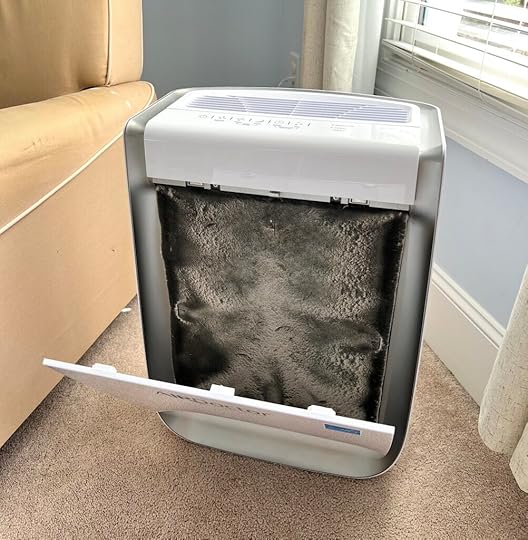
— Consider an in-house air filtration system. Call the Doctor. This photo above is from yesterday – what our AirDoctor took out of the air in the kids’ room. Crazy!
— Depending on where you live, sleep with windows open or cracked for good air circulation.
— Use good ventilation with candles, fire, or open-gas cooking.
— Take your shoes off and leave them out of the house—lots of yucky things hitch a ride on shoes and get into your indoor air. We found the cutest “Please Remove Your Shoes” sign for our front door and garage gym. (I ordered it in English Sky with gold letters!).
— Opt for natural beeswax candles—we’ve even made them with the kids using these kits as a fun, easy project!
— Use the right cooking oils.
— Vacuum regularly. Here’s our HEPA favorite at a good price.
— Exercise away from busy streets where there is excessive car exhaust.
— Get your house checked for mold.
— Perhaps the most impactful daily change we’ve made to help us breathe better (and it’s simple and free!): learn the power of nose breathing. We get 25% more oxygen by breathing in through the nose, and we filter the air more effectively than mouth breathing. This is a game changer for health, sleep, and stress reduction.
— Do your own research and remember: there’s no way to eliminate all exposure to air contaminants, but you can intentionally reduce them by significant levels. There are so many more things you can do and swap for cleaner air. We’d love to hear your ideas, too!
Ari: Mold, bacteria, pollen, dust, smoke, pet dander—we breathe all of this in daily. However, by filtering our indoor air, we can reduce these contaminants significantly.
Lara: I sleep better with cleaner air. We’ve spent a few nights away from our house, and I always wake up with a stuffed-up nose from wherever dust or particles are in the room. I told Ari that I am 100% bringing an AirDoctor with us when we travel from now on—it’s worth being the crazy person bringing an air filter to the AirBnB in order to have a great night’s sleep!
When we had a flood in our house, I was super-concerned about mold and VOCs from the repairs. The AirDoctor went to town and removed so much of what would have gone into our bodies. We feel more confident that our kids are benefitting from cleaner air. When we have all the doors closed and cook with hot oils, our AirDoctor senses the extra particles in the air and revs up to remove them. We have a small cat; her fine hairs would make my nose so itchy. Not anymore—I canceled our auto-ship on tissues. This also helps with nose breathing. In all of my strength training workouts, nose breathing helps produce more nitrous oxide, which means more energy for my lifts. Everything is connected, and one good change can lead to another.
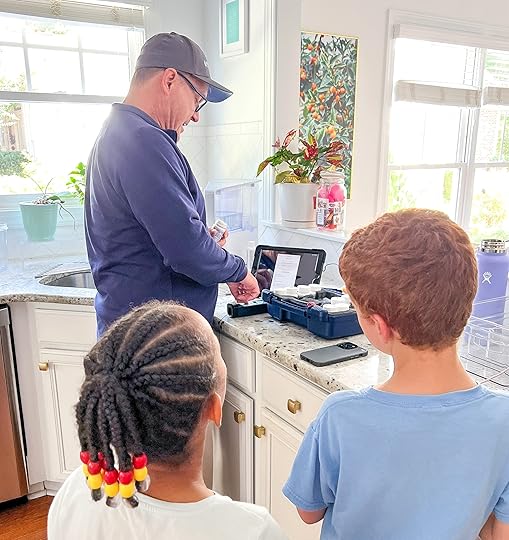 Getting our water officially tested. The kids loved it!Water
The Challenge: The majority of household water comes from contaminated sources. Just run a water report for your zip code and see what’s in there. Our water is full of environmental contaminants we don’t want in our bodies.
— The body is made of 60% water. It is the source of life for our cells and protection for our brain and spinal cord, and it metabolizes and transports carbohydrates and proteins that our bodies use as food.
— Our liver, kidneys, digestive tract, lymphatic system, respiratory system, and skin make up our detoxification pathway. They work around the clock to flush out toxins. Your water quality can help them or give your body more contaminants to detox.
— Most water surveys show that tap water contains high levels of PFAS (
The solution: Filter your water.
How? Try one of these:
Here are a few high, middle, and lower-investment ideas:
High: A whole-house water filtration system.Middle: A countertop or under-sink reverse osmosis water filter.Lower: Buy glass-bottled filtered water. Water in plastic bottles contains phthalates or bisphenol A, which are toxic petrochemicals. Basically, avoid drinking from plastic bottles altogether if you can. Mineral water bottled in quality glass is best. This adds up, though, over time. You might consider the middle option for long-term health.— Common and inexpensive filters are available, such as carbon filters like the ones Brita makes, but they remove very little. Reverse osmosis filters remove over 500x the microns that carbon filters will remove. Reverse osmosis filtering puts the water through a multi-step process to remove these microbes, pesticides, metals, and other toxins. Distilled water has also been recommended to us for drinking.
— If you filter your water, you can add back trace minerals.
— If you have a countertop filter, put that clean water into your ice trays. There’s nothing like a glass of filtered water with chlorine/metal/contaminate-filled ice cubes. Here are our favorite ice trays.
— We’ll talk about this much more in our post on Nutrition, but a staple in our daily water consumption now is Real Salt. Allow the clean water to easily absorb into your cells with a pinch of real salt for electrolytes first thing in the morning (or for a little more flavor and minerals, try our daily favorite, Redmond ReLyte—it’s made with Real Salt).
— Here’s a podcast rec from Andrew Huberman on how to optimize water quality and intake for health.
— Do your part for water safety and dispose of paint, chemicals, and medications correctly.
— Consider donating to Charity Water or similar organizations to help others, too.
Ari: We did none of these things at the beginning of this year. We started with an AquaTru countertop unit, which has been a positive upgrade for our health and well-being. We are adding whole-house filtration soon. Our AquaTru will still be our drinking water filter, and the whole house system will give us cleaner water for showers and daily-use water.
Lara: The gentleman from the water filtration company tested our water yesterday (pictured above). It was incredibly insightful! He showed us these ppm (parts per million – see the colorful chart here) readings: the left is our tap water, and the right is our AquaTru water. From 139 to 3.7! He was super impressed with our AquaTru.
 Household Products
The Challenge: Traditional household products like scented candles, cleaners, air fresheners, detergents, and mothballs release toxic volatile organic compounds (VOCs) into indoor air and are readily absorbed through our largest organ: our skin.
— VOCs in cleaning products (even many “green” ones!) affect the quality of air both indoors and outdoors. But they contaminate indoor air two to five times more than outdoor air, with some estimates putting it as high as ten times more. Some products emit VOCs for days, weeks, or even months.
The solution: Swap household products for less-toxic options.

How? Try one of these:
— Get the Environmental Working Group’s free guide to healthy household cleaning.
— We’ll cover more about kitchen items in our next post on Testing and Nutrition, but here are a few healthier swaps to get you started. Trade your Teflon-coated pans for cast iron or safe ceramic, your plastic cooking utensils for non-toxic teak wood Spurtles and your plastic cups and dishes for clean glass. We swapped out our old Teflon cookware set for a few select Our Place, Lodge, and Caraway pieces. I did a ton of research on this, and these swaps have been a game-changer. First of all, we have far less cookware now. You don’t need as many when you have just a few good pots and pans. I am cooking far more than I used to, and these non-stick surfaces make it easier and more fun. I rarely need to oil pans, and they clean like a dream. While the care instructions took some getting used to, this has been one of the best investments in our health. I can’t say enough about how much I love cooking on our cookware and with non-toxic dishes and utensils!
— We swapped our metal and plastic spatulas for non-toxic teak wood Spurtles. Friends, where have these been all my life?! They make cooking more ergonomic for my hands and more fun for everyone. Also, they are so beautiful we put them in a container on our kitchen counter for easy access.
— Toilet paper, oh, toilet paper! It’s a major source of toxic forever chemicals in water and it’s often made white with bleach. Swap for sustainable bamboo.
— We have these sustainable salt and pepper mills.
— We recycled our plastic colander (that was likely melting every time we put hot pasta through it—yikes) for a well-designed metal colander.
— Simple things like dryer sheets cost a ton of money over time and add chemicals to your clothes and air. Check out the infographic here. Try sustainable organic wool dryer balls instead. This was an easy swap for me, and I’ve never looked back. They cut drying time, and we love adding essential oils to them. A couple drops of eucalyptus and lavender oil on them make our laundry smell like a spa!
— We use a mix of vinegar, water, and essential oils for cleaning now. It’s cheap, and it works. We also love Aunt Fannie’s.
— Trade your plastic dish brushes for bamboo or another natural material. I just ordered these.
— Switch your laundry detergent for a less-toxic version like Molly’s Suds. We use the unscented powder, and it works well.
— We’re scratching the clean home surface here, so be sure to look at other things like furniture, rugs, synthetic clothing, and paint. They can bring VOCs into your home and body, too. I recently placed my first order with a sustainable, organic clothing brand and will report back soon. I’m also on the lookout for an Avocado mattress sale in November!
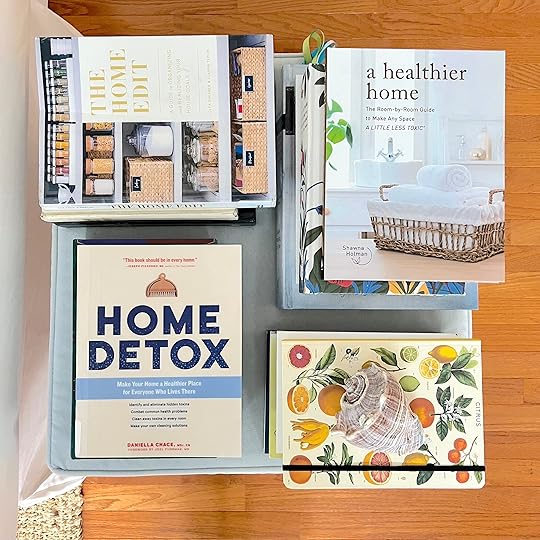
— Check your library for a copy of Home Detox by Daniella Chase and A Healthier Home by Shawna Holman. I got a copy of these this week and love what I’ve read so far—excellent summaries of basic how-to’s for reducing toxins in your home with more details than we have room for here.
— This is a great post with more swap ideas.
 My favorites!Clean Beauty + Personal Care
The Challenge: Traditional personal care products are laden with harmful chemicals.
— It has been estimated that 70% of personal care and makeup products are contaminated with harmful impurities like lead, mercury, and formaldehyde. Here’s a comprehensive list with risks that we found helpful.
— Phthalates in beauty products pose significant risks, including cancer, human reproductive and developmental toxicity, endocrine disruption, birth defects, and respiratory problems.
The Solution: Use clean products. Your skin is your largest organ and one of the body’s detox pathways—love it well.
How? Try one of these:
— Search your beauty products, lotions, and personal care items on EWG’s Skin Deep database.
— I’ve been a long-time fan of One Love Organics for all of these reasons. I LOVE this small business and their extraordinary skincare line. (I have something fun below for you from them!) My daily skincare routine includes Easy Does It Cleanser, Botanical Bio Retinol (super gentle on my sensitive skin), and the Botanical A Facial Cleanser. I faithfully make a purchase from them on Black Friday each year: the family size of Easy Does It. Grace and Ari love it now, too!
— Fluoride in our water and toothpaste can cause a whole host of health problems. This is one of those things that large companies pay a lot of money to tell you otherwise. Consider the switch to fluoride-free products and ask your dentist to hold off on using it when you visit. We use David’s toothpaste.
— Find more of our favorite Beauty and Personal Care finds organized here.
— We’re scratching the surface here, but we hope this gets your wheels turning! Bottom-line: read your labels, do your research, and make swaps where you can. We’d love to hear your swaps and what’s worked for you, too.
 A Word on Detoxing
Ari: We’ve talked about the products we use to reduce toxin exposure, but what about helping toxins to come out of our bodies? This happens naturally through our kidneys, liver, and gut. However, the best way we can actively promote detoxification is by sweating! When we sweat, a lot of the bad stuff in our blood moves into our sweat glands and ends up on our skin. So, sweat more! Obviously, this can be accomplished through exercise, but regular time in a sauna or steam room is probably the most efficient way to get your sweat on.
Lara: I can’t help but think of Richard Simmons—sweat it out, friends!
 Stress ‘n Stuff
Ari: To give our bodies the best chance at healing, Lara and I also needed to detox our lives of stress where possible. We started with our schedules and named the pain points that were keeping us from real rest:
We said no to weekend sports this year
We chilled out on after-school activities
We unscheduled our Saturdays to have time for an actual Sabbath
We started going to bed at… well, I’ll wait for our upcoming post on sleep.
Lara: After my Dad passed away last year, something clicked in me about stuff. Have you ever heard of Swedish death cleaning? After a loved one dies, you see the value of things and what lasts. More stuff = more to manage, less stuff = less to manage and less stress. I came home after Dad‘s funeral and started a year of clearing things out. When we had construction from a flood in our house and renovations in the spring, I could’ve kissed our dumpster it was so helpful. Less stuff, less stress. These two books got me thinking and encouraged me to let things go for the big picture: Being Mortal by Atul Gawande and The Gentle Art of Swedish Death Cleaning by Margareta Magnusson. (Also… I’ve been considering getting some friends together to do a year-long toxin-swap and declutter party—one room or area per month in 2024. If this interests you, let me know!)
Celebrate all the Tiny VictoriesLara: We hope this post gets your wheels turning on laying a solid health foundation to achieve your specific goals. Even if you make just one of these changes, it could bring a whole lot of good to your life. Where do you start with all of this? Where all good things begin: with what matters.
Ari: Share your answers to these as a comment here or write them for yourself:
—What are your health and wellness pain points?
—What are your goals to solve those pain points?
—What matters to you in the big picture? What doesn’t?
—What swaps interest you to reduce toxins?
Lara: If you need a boost of motivation, there’s nothing more motivating than tiny wins. You probably have one small action step you want to try from reading this post. What is it for you? Give it a whirl! Start with something small, and feel the positive change; it will give you more energy for the following change.
For example, I love feeling the strength of my muscles now. I did not always feel that way, though. Far from it! Just ask Ari. For most of the months in this year, I felt exceedingly weak, but I did see incremental change, even while feeling weak. By tracking my progress lifting weights, for instance, I could see my muscles gradually getting stronger. Eventually I felt strong, but it took celebrating little wins along the way to keep me going to that point. Celebrate all the tiny victories, and let them propel you forward to more!
And now, for a little surprise I’ve been cooking up… drumroll… 
 A Fit Together Healthy Home Giveaway
 We’re thrilled to partner with these amazing companies we love to give away some of our absolute favorite products that have helped us on this journey! You guys, we wish we could have won our own giveaway a few months ago!
ENTER TO WIN!
—An AirDoctor of your choice
—An AquaTru countertop unit
—A collection of my favorite clean beauty products from One Love Organics
—A Lodge Dutch Oven
—And our favorite wool dryer balls!
There will be a separate winner for each item, so there are many chances to win. US entrants only. International friends, I’m adding a $50 gift card to the small business of your choice so you can get in on the fun, too!
 How to enter:
—Leave a comment on this post. We can’t wait to hear your thoughts!
—Share this post with friends (tag me if you can!)—we hope to help many people make healthy swaps and feel the difference.
—Follow @LaraCasey @OneLoveOrganics @AirDoctorPro @AquaTru on Instagram. If you don’t have Instagram, sign up for their newsletters (mine is here)—they have such helpful resources. I’ll announce the winner on November 1, here on the blog.
YOUR TURN! We hope something in this post or our story encouraged you! What’s bugging you most in your health? What goals do you have? What matters to you? Any toxin swaps you’re going to try—or favorites you’ve done yourself? We’d love to hear!
P.S. Up next in our Fit Together series? Testing and Nutrition! Join my new email list to be the first to know when new posts are live.
The post Fit Together: Health Goals, Toxin Swaps, and a Giveaway! appeared first on Lara Casey.


 newest »
 So excited to follow along here and on the blog! Learning lots as we prepare to bring our first little into the picture in 2024. Thanks for compiling so much great information in one post!


