Maximising the magic of an author visit
I’ve seen a flurry of posts on various FB groups that I’m in from schools looking for authors to visit for World Book Day (WBD). As an author, it’s our busiest day (or in practice week) of the year. But, like a puppy is not just for Christmas, an author is not just for WBD. We LOVE visiting at any time of the year!
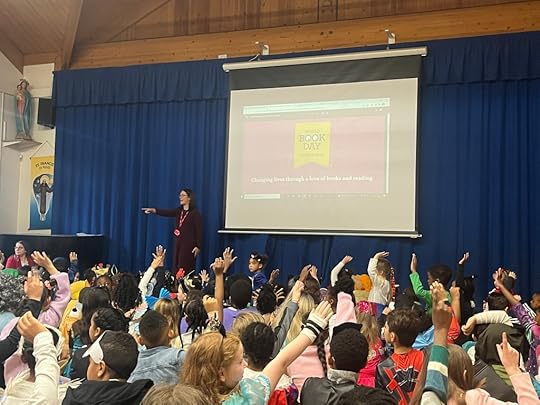
Whilst every school has its own processes for booking and preparing for an author visit, I thought it might be interesting to share a few tips from an author’s perspective on what teachers could do to help the event go smoothly after it has been booked.
Before the VisitUnless you’ve booked a “big” name (lucky you with the correspondingly big budget!), many of the pupils will likely be unfamiliar with the author. If timetabling permits, some introduction to the the author/ their books can help build excitement. This could take the form of posters around the school, book readings, themed art projects, and classroom discussions. I’ve had students study my website to prepare questions in advance, leading in one case to a discussion on why I hate custard!
Between sessionsWe know teachers are frantically busy, but as an author it can be quite daunting to be left to fend for yourself between sessions – it’s a bit like your first day at school: you are completely lost. I’ve had a panic attack about making a cup of coffee in the staff room! Honestly, it’s an absolute minefield – is the coffee communal? Have I picked someone’s special mug? Which milk am I supposed to use?
Outside the staffroom, a classroom assistant or student ambassador to guide the author from classroom to classroom if they are doing a series of events is really helpful. Obviously, check if the author has the necessary Enhanced Disclosure & Barring Service (DBS) approval (in the UK) or equivalent before appointing students to the role.
In your classroomPlease do let the author know if there are any issues within your class that they should be mindful of e.g. pupils where English is a second language, recent family trauma, etc. and be on stand-by to help with any disruptive pupils.
Personally, I like to wrap up any Q&A session with asking a teacher if there is anybody who has had their hand up for a really long time that I’ve missed. Without knowing the pupils, and despite my best efforts, it is easy to miss the quieter child with a half raised hand in a sea of people jumping up and down.
After the VisitIf you do any follow up activities, please do share them with the author! I always try to give positive feedback to pupils who send me stories to read after an event.
Encouraging students to write thank-you notes is not only an exercise in good manners but also a valuable writing exercise, allowing them to reflect on what they learned from the visit. Plus, for the author, receiving personalised messages of appreciation is totally heartwarming!
What would you add to this? Please let me know!