Roleplaying Games: My Journey
I like roleplaying games. I've always liked roleplaying games since I tried to start playing them back in the late 1980s.
Back then, at the start, I didn't really understand the difference between boardgames and roleplaying games. When I played boardgames, I always got caught up in the narrative of the game. I still do. If I played Risk, I would see the warfare and the military leaders, clustered around a tactical map, if it played Monopoly, I would be the entrepreneur walking down the street and gambling everything on my investments.
I wrote about this in What Boardgames Mean to Me (2023).
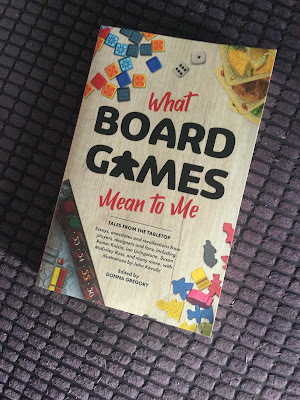
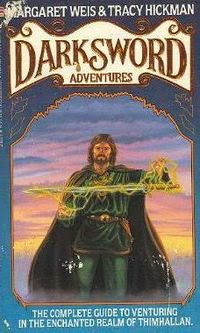 My first attempts at playing roleplaying games involved the Darksword Adventures book and Advanced Dungeons and Dragons first edition.
 Most of those experiments were failures. I remember building huge dungeon boards out of old cardboard, drawing squares on them and moving miniatures around. The problem was, I didn't understand the way roleplaying games need a bit of looseness in how you transition from the narrative into a tabletop game. That first bit should have been a strength for me, but I didn't get the change. I wanted to play a game where I took a turn, adventured, found stuff, fought stuff, rinse and repeat. I didn't need the storytelling, not because I didn't like the storytelling (I devoured all the stories in every RPG book I read), but because I was already there.
It took a few years for me to realise that roleplaying games are an opportunity to tell stories and that the tabletop element is actually the least immersive part of play. The moment when the rules are present is the moment when a game can feel less like a a story, the participants feel less like they are playing or being their characters.
 Advanced Dungeons and Dragons second edition was my proper starting point with roleplaying. After playing a few games, I started to try being a games master, then started picking holes in the rules, like all good games masters do. I ran a regular Sunday evening game in my own fantasy world. I loved the Dragonlance setting, but never quite found a way into it as an RPG game. I loved the novels and didn't want to replace the characters with characters created by my friends.
 Our game ran for years. Between 1994 and 2000, every Sunday from 7pm to late.I would spend most of my Sunday afternoon writing content. In 1995, I started a second game on Wednesdays at College. Eventually, both games merged into one. I kept running the sessions and played other games too, Rolemaster, GURPS, RIFTS, Paranoia, Vampire, Werewolf, Mage, Cyberpunk, Call of Cthulhu, and more.
My introduction to live roleplaying in 1996 also changed my perspective. I started to see characters as more than just numbers on a page. The people playing the different parts in a huge story demonstrated to me how much more meaningful and immersive a story can be when it involves more people.
 Live roleplaying – dressing up and playing the characters for real – sacrifices an element of control. Most games have referees, not games masters. The referee ensures the rules are adhered to, but doesn't try to shape the narrative. The rule systems for live roleplaying games tend to be lighter than tabletop roleplaying games, as many of the resolutions are resolved with either a competitive contest of skills (in games like the live version of Vampire: The Masquerade), or through a form of combat with 'larp safe' weapons.
During my time 'larping' I wrote different systems. I worked on the rules for some of the biggest fest games in the UK.
I retired from LARP in 2013. I'd fallen out of love with the games I was playing and it was time to move on. I still have most of my costumes. Maybe I'll go back to it some day.
My own roleplaying game remained a focus throughout. Gradually, the rules became less and less reliant on the existing publications from D&D and other fantasy systems. My preference for detailed 'simulation' rules relaxed as I realised the more intrusive the mechanics of a game are, the more they can be a distraction from immersion and narrative.
The world of my roleplaying game became the setting for the Wisimir novels. All the background work and source material became a rich base for a set of stories. Jack Von Drey's adventures in the city are part of a wider world, one that I used for my Sunday night sessions and that I set my first fantasy novel in – an awful piece of work that I regularly revisit and try to fix!
Roleplaying Games Now
These days, I get the chance to work on a variety of different roleplaying games. Karen and I did a lot of editing on Solemn Vale (pictured above). We also worked on Revolutionaries and I Am Zombie from Make Believe Games. We're continuing to work with Dirty Vortex on a variety of new projects that should emerge in the next few years.Being a Healthy Writer
An update on my health and fitness journey in 2024.
One of the downsides of giving up larp in 2013, was my fitness. I would work at the gym all winter to ensure I could run around in the summer.
However, that cycle wasn't good for me. I would push hard and injure myself. I have a weak left shoulder from a bike accident when I was seventeen, and a bad back owing to a twisted right leg that I've had since I was a young child.Time at the gym would lead to a hip injury or a shoulder injury. I would scale back and slow down, then start again, and get the same problems. I'd end up at the events in pain from one or the other.
In 2013, I went to an osteopath. I was given a programme of exercises to strengthen my back. I did them for a few weeks, then woke up one morning and couldn't walk.
A week later, and thanks to prescription anti-inflammatories, I was back to work, then back to the larp field. I finished the events for the year and retired.
This time, I'm working on trying to find a better balance.
This week, I started a regular walk and tried to stick to my sitting down plan. At the moment, I have a better balance with regards to work and life. I'm managing my to do list and trying to make sure I have leisure time too.
When projects are fun and interesting, it can be a little difficult to distinguish between work and play. Working on games or novels or music can blur the line. Sometimes you find yourself resenting the other work, or you find you don't get the same switch off you would get from setting aside the laptop and doing something else.
I play games I work on, that helps me be motivated to play them, it feels like progress, but it also doesn't really mean I'm stopping, like I should.
So we start with some small steps. Walking, regular breaks, leisure activities.
I'll let you know how it goes.