The Dolgellau Chalice
In my previous article, I discussed the unknown fate of the medieval Welsh Crown Jewels. For almost five hundred years, the whereabouts of the Honours of Gwynedd have been lost to history.
However, there may be one exception.
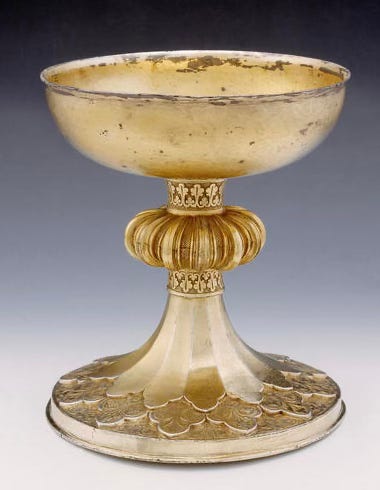
The piece in question is the so-called Dolgellau Chalice (see above, Royal Collection Trust / © His Majesty King Charles III 2023). Now in the possession of the National Museum of Wales in Cardiff, the chalice was discovered on the mountainside of Cwm Mynach, Snowdonia, in 1890. Two years later, it was acquired by one Baron Schroeder - or Schroder - who bequeathed it to the state on his death in 1910.
The chalice’s appearance is impressive. Indeed, few larger or finer have been documented in the whole of Britain. As the above image shows, the silver-gilt body contains a plain, flattened hemispherical bowl on a stem patterned with trefoil leaves above and below the central knop. The lower section, meanwhile, is divided into twelve lobes, connecting to a circular foot embossed with further trefoil-shaped lobes. Research into its makeup has confirmed a thirteenth-century pedigree, which compares with other vessels of the type. The same is true of many pieces of the missing Honours of Gwynedd.
Why it was made, when and for whom are less clear.
Since its discovery in 1890, there have been many theories of its origins. Among the most alluring is that it comprises the seal matrices of Llywelyn ap Gruffudd (the Last), his wife Eleanor de Montfort (the daughter of Simon de Montfort, 6th Earl of Leicester) and brother Prince Dafydd, the last independent ruler of Gwynedd. Though the theory is tantalising, it is not without foundation. Contemporary records confirm Edward I had the original matrices melted down and turned into a chalice in 1282, which he presented to the monks of Vale Royal Abbey in Cheshire. What became of the matrices’ chalice following the Dissolution of the Monasteries is unclear. Tradition tells us that it remained the property of the final abbot’s family; however, what happened next is anyone’s guess.
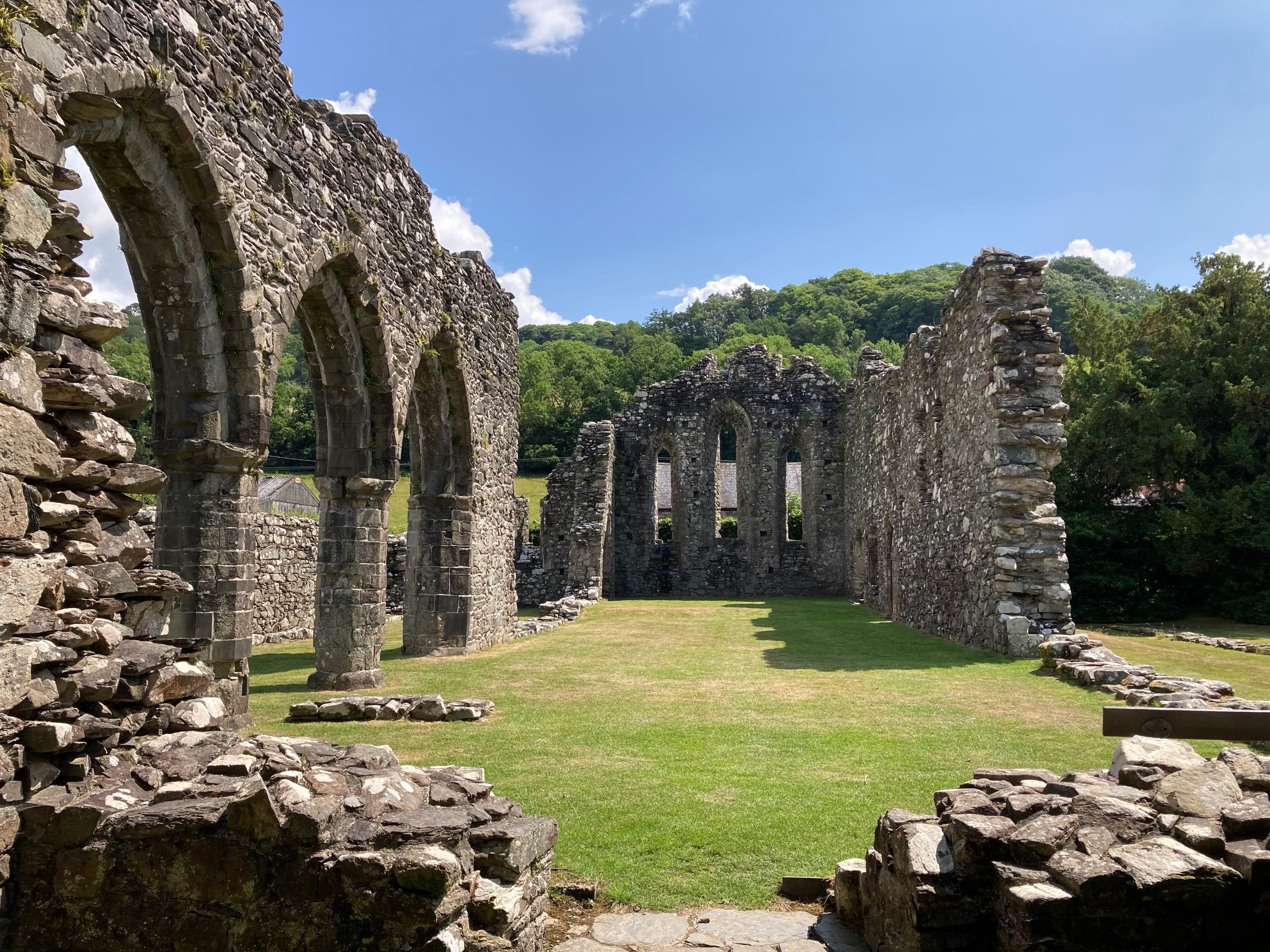
A possible clue to the Dolgellau Chalice’s earlier life can be found on the foot. The signature purports it to be the work of one Nicholas of Herford, presumably a reference to modern-day Hartford. The village is also in Cheshire, thus the same part of the world as Vale Royal Abbey. The Royal Collection Trust, which owns the chalice, states on its website that it may have been made for the monks of Cymer Abbey (see below). The suggestion is an interesting one. While this may suggest it was separate from the Honours of Gwynedd, its thirteenth-century origin would place it in the same time and location as at least one part of the Honours of Gwynedd. The Cross of Neith was deposited at Cymer around the time of Llywelyn ap Gruffudd’s death in 1282 before its transfer to London. This potentially tallies with the timing of Edward I’s melting down of the matrices of Llywelyn, Eleanor and Dafydd.
Of course, proving beyond doubt that they are one and the same is challenging.
As discussed in my previous two articles, long-standing legend tells that the Honours of Gwynedd and anything else that made up the Welsh Crown Jewels were buried along with Owain Glyndŵr.
The location of Glyndŵr’s grave remains a mystery.
Thanks for reading JPD’s History Substack! Subscribe for free to receive new posts and support my work.
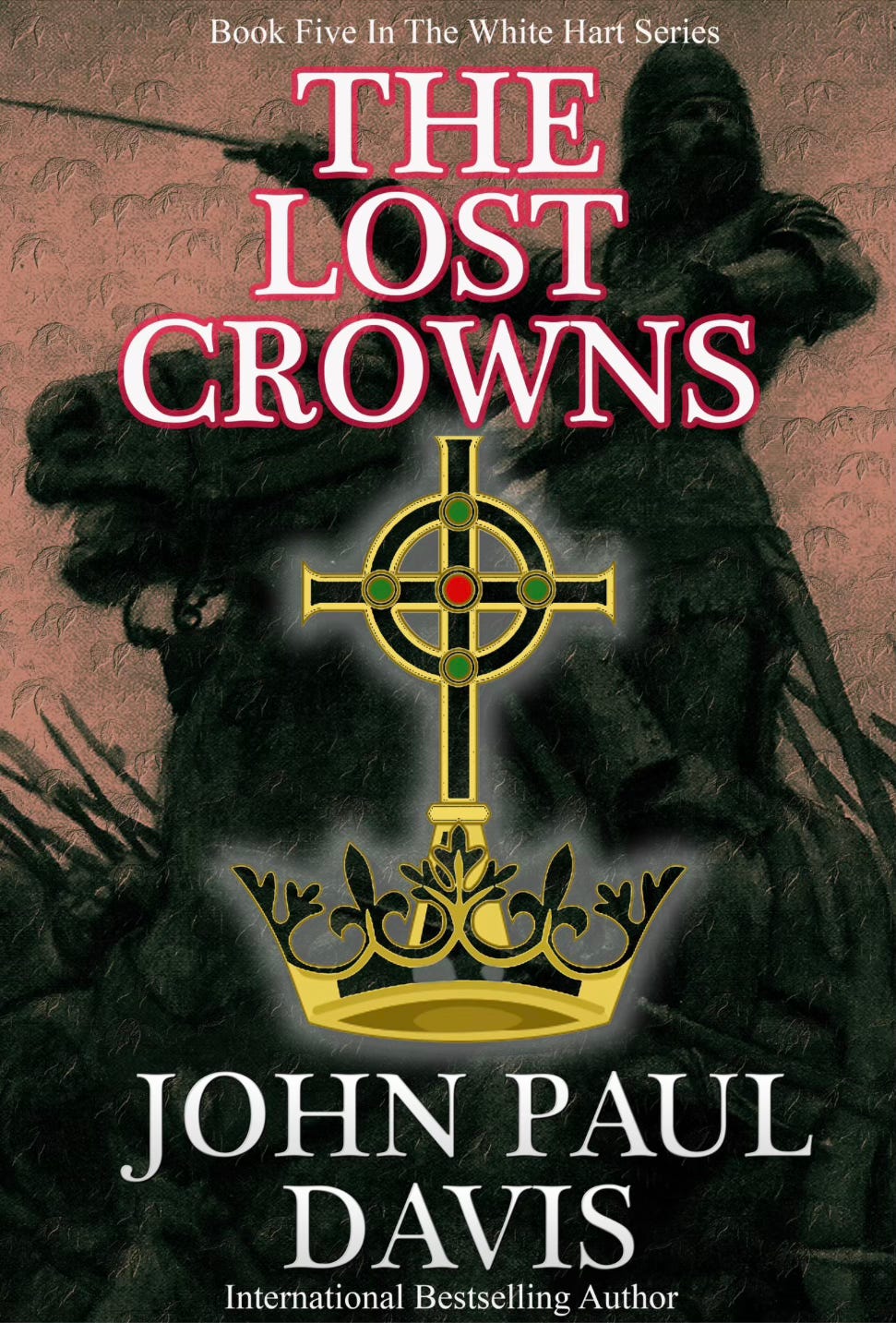
The story of the Dolgellau Chalice is mentioned in my latest thriller, The Lost Crowns, book 5 in the White Hart series. The book is available on Amazon for the introductory price of £0.99 and $0.99 and is free on Kindle Unlimited.
Thank you for reading JPD’s History Substack. This post is public so feel free to share it.